Феодоровская-костромская икона Богородицы называется Одигитрия. По сказанию предания она написана св. ев. Лукою, с начала XII века находилась в часовне вблизи города Кидекша. Псковский князь, Георгий Всеволодович, устрояя этот город, по желанию жителей, хотел перенести сюда образ. Но когда, по окончании молебного пения, приступили взять образ: то не могли сдвинуть с места. Князь заключил, что Богоматери угодно своею иконою здесь пребывать и он в 1164 году основал обитель, известную ныне под именем Городецкой-Феодоровской, по имени Городца, города Нижегородской губернии, и храма во имя Феодора Стратилата. В соборном храме этого монастыря, до разорения Городца в 1238 году татарами при Батые, Феодоровская икона находилась запрестольною. В 1239 году, августа 16 дня, костромской князь Василий Георгиевич Квашня был на охоте. Вблизи того места, где стоял князь с небольшою свитою, пробежал зверь: князь погнался за ним; заехал в чащу леса и вдруг прямо пред собою увидел на сосновом дереве икону Богоматери; изумленный видением, князь сошел с коня и хотел взять икону; но она поднялась на воздух. Князь повергся на колена и долго молился пред явленною иконою. Она спустилась на прежнее место. Князь немедленно отправился в Кострому и возвестил о чудесной иконе протоиерею и священникам, в присутствии множества граждан. Духовные в священных одеждах, с иконами, крестами, кадилами и свечами, по указанию князя, отправились к месту явления, воспевая молебные пения. Пришедши на указанное князем место, действительно все увидели икону Богоматери на сосновом дереве. Совершив пред нею молебное пение, все пали пред нею на колена. Восстав от земли, священники приступили к иконе, невозбранно взяли ее на руки свои и отправились в город. Жители города вышли навстречу Богоматери и с умилением припадали пред нею. Икона внесена была в соборный костромской храм.
The Theodorovskaya-Kostroma Icon of the Mother of God is called the Hodegetria. According to the account of tradition, it was painted by the holy Evangelist Luke; from the beginning of the 12th century it was located in a chapel near the city of Kideksha. The Prince of Pskov, George Vsevolodovich, while building that city, wished, at the desire of the inhabitants, to transfer the image there. But when, after the completion of a moleben, they began to take the image, they could not move it from its place. The prince concluded that the Mother of God was pleased to remain there with Her icon, and in 1164 he founded a monastery, known today under the name of the Gorodets-Theodorovskaya monastery, after the name of Gorodets, a city of Nizhny Novgorod province, and the church in the name of Theodore Stratelates. In the cathedral church of this monastery, until the destruction of Gorodets in 1238 by the Tatars under Batu, the Theodorovskaya Icon was kept behind the altar. In 1239, on the 16th day of August, the Kostroma prince Basil Georgievich Kvashnya was out hunting. Near the place where the prince stood with a small retinue, a beast ran by; the prince chased after it; he rode into a thicket of the forest and suddenly, directly before him, he saw on a pine tree an icon of the Mother of God; amazed by the vision, the prince dismounted from his horse and wished to take the icon; but it rose up into the air. The prince fell to his knees and prayed for a long time before the appeared icon. It descended to its former place. The prince immediately set out for Kostroma and announced the miraculous icon to the protopriest and the priests, in the presence of a multitude of citizens. The clergy, in sacred vestments, with icons, crosses, censers and candles, following the prince's direction, set out for the place of the appearance, singing molebens. Having come to the place indicated by the prince, they all indeed saw the icon of the Mother of God on a pine tree. Having performed a moleben before it, they all fell on their knees before it. Rising from the ground, the priests approached the icon, took it without hindrance into their hands, and set out for the city. The inhabitants of the city came out to meet the Mother of God and fell down before Her with compunction. The icon was brought into the Kostroma cathedral church.
Слух о явлении и перенесении в Кострому иконы Богоматери разнесся по окрестностям города и отовсюду стеклись бесчисленные толпы народа на поклонение ей. К литургии в собор пришел и князь Василий Георгиевич жители окружили князя и сказали ему: «вчера, до отбытия своего на охоту, мы видели эту самую икону несенную по городу человеком в богатой воинской одежде, очень похожим на св. великомученика Феодора Стратилата, как изображается он на иконе». «Предстательством своим и заступлением, поет Церковь в день явления иконы, Божия Матерь благоволила послать всечестную свою икону с рабом своим святым великомучеником Феодором Стратилатом в град Кострому. Днесь Феодор Стратилат тебе служит и почитающи Тя от места на место икону твою преносит». Чудесное видение благочестивых граждан Костромы, подтверждаемое гласом Церкви, а равно и храм, в котором икона поставлена, посвященные св. великомученику Феодору Стратилату, подали повод наименовать, обретенную князем, икону Богоматери Феодоровскою. Между купцами, проживавшими в Костроме по торговым делам, было несколько граждан опустевшего после татар Городца. Услышав о явлении чудотворной иконы, они вместе с прочими поспешили в собор и тотчас узнали святой образ, столько лет охранявший отечественный их город. На месте явления иконы на берегу реки Запрудни князь основал Запруденский монастырь Нерукотворенного образа Господня, потому что в этот день обрел он икону Богоматери, и доселе в 16 день августа бывает в сей монастырь крестный ход из города в воспоминание явления иконы Богоматери Василию Георгиевичу. Самая икона поставлена была в костромском соборном храме. Спустя несколько времени сгорел этот храм. Иконы не успели спасти от пожара, и князь, думая, что икона погибла в пламени, чрезвычайно печалился. Благочестивую его скорбь разделял и весь народ. Богоматерь услышала глас скорби и переменила печаль на радость. На третий день после пожара, разрывая пепел пожарища, обрели чудотворный образ нимало не повредившимся от огня.
The report of the appearance and the transfer of the icon of the Mother of God to Kostroma spread throughout the environs of the city, and from everywhere countless throngs of people flocked to venerate it. Prince Basil Georgievich also came to the cathedral for the Divine Liturgy. The inhabitants surrounded the prince and said to him: "Yesterday, before your departure for the hunt, we saw this same icon being carried through the city by a man in a rich military garment, very much resembling the holy Great Martyr Theodore Stratelates, as he is depicted on icons." "Through Her intercession and mediation," sings the Church on the day of the appearance of the icon, "the Mother of God was pleased to send Her most venerable icon with Her servant, the holy Great Martyr Theodore Stratelates, to the city of Kostroma. Today Theodore Stratelates serves Thee and, honoring Thee, carries Thy icon from place to place." The miraculous vision of the pious citizens of Kostroma, confirmed by the voice of the Church, as well as the church in which the icon was placed, dedicated to the holy Great Martyr Theodore Stratelates, gave occasion to name the icon of the Mother of God, found by the prince, the "of Theodore" Icon. Among the merchants living in Kostroma for trade, there were several citizens of Gorodets, which had been left desolate after the Tatars. Hearing of the appearance of the wonderworking icon, they hastened together with the others to the cathedral and immediately recognized the holy image that had for so many years guarded their native city. On the site of the appearance of the icon, on the bank of the Zaprudnya River, the prince founded the Zaprudensky Monastery of the Not-Made-by-Hands Image of the Lord, because on that day he found the icon of the Mother of God; and to this day, on the 16th day of August, a procession of the cross goes from the city to this monastery in remembrance of the appearance of the icon of the Mother of God to Basil Georgievich. The icon itself was placed in the Kostroma cathedral church. After some time, this church burned down. They did not manage to save the icon from the fire, and the prince, thinking that the icon had perished in the flames, was exceedingly grieved. All the people shared his pious sorrow. The Mother of God heard the voice of sorrow and changed grief into joy. On the third day after the fire, while sifting through the ashes of the conflagration, they found the wonderworking image completely unharmed by the fire.
Вскоре на месте погоревшего храма воздвигнут был новый – во имя великомученика Феодора Стратилата. Чудотворная икона украшена золотом, серебром, дорогими каменьями и многоценным жемчугом, помещена в киоте и поставлена в ново-созданной церкви, внутри св. алтаря, за престолом.
Soon, on the site of the burned church, a new one was erected—in the name of the Great Martyr Theodore Stratelates. The wonderworking icon was adorned with gold, silver, precious stones and costly pearls, placed in a kiot, and set in the newly-built church, inside the holy altar, behind the throne.
Между тем Костроме угрожала та же участь, какая постигла другие города России – участь совершенного разорения от татар за сопротивление; но Богоматерь чудесно спасла Кострому. Татары подступили к городу, с полною уверенностию в победе. Благочестивый князь, простирая руки к чудотворному образу Богоматери, молился: «мольбы твоих рабов приими, Богородице, заступнице и прибежище наше; и к кому прибегнем мы грешнии, кроме тебя, Владычице! Ты покров наш и заступление, и ныне не оставь нас погибнуть до конца, избави град сей и людей твоих и всякую страну христианскую от нашествия иноплеменных. Помяни рабов своих, и не презри слез и воздыхания нашего, да утешимся радостию, имея в Тебе помощницу нашу». Князь по примеру благочестивого предка своего вел. князя Андрея Боголюбского приказал поднять из собора чудотворную икону Богоматери; обнес ее пред полками, утверждая их в мужестве к предстоящей битве, и после сего с упованием и смирением повел войско противу татар. Священники, нося икону Богоматери за войском, пели молебны, да не презрят Бог и святая Богоматерь моления их, и да помогут благоверному князю и воинству его одержать победу над сопротивными. Когда же сошлись войска и татары обнажили мечи и напрягли луки свои: внезапно от чудотворного образа пресвятые Богородпцы воссияли божественные и пресветлые лучи, светлее солнечных, и, как огнь попаляющий, устремились на полки татар и пожигали их. Враги смешались, не выдержав блеска и пламени лучей; страх и трепет овладели врагами. Они не узнавали друг друга. Русские воины, ободренные помощию свыше, быстро напали на смятенных татар, и обратили их в бегство. Радостно возвращалось победоносное воинство в город, впереди его несли икону Богоматери, своим заступлением победившей врагов; священники пели ей благодарственное пение. Все жители Костромы вышли в сретение своей Заступнице и после молебствий чудотворная икона снова поставлена в собор. На том месте, где во время битвы находился чудотворный образ, по желанию князя, поставлен был крест, и место сие стали называть Святым, а также и близь лежащее озеро получило с сих пор название Святаго; впоследствии основалось на берегах его селение, и оно приняло имя Святаго (Святой веси) (см. 14-го марта).
Meanwhile, Kostroma was threatened with the same fate that had befallen other cities of Russia—the fate of complete destruction by the Tatars for resistance; but the Mother of God miraculously saved Kostroma. The Tatars approached the city, fully confident of victory. The pious prince, stretching out his hands to the wonderworking icon of the Mother of God, prayed: "Receive the supplications of Thy servants, O Theotokos, our intercessor and refuge; and to whom shall we sinners flee, except to Thee, O Lady? Thou art our protection and intercession, and now leave us not to perish utterly; deliver this city and Thy people and every Christian land from the invasion of foreigners. Remember Thy servants, and despise not our tears and sighing, that we may be comforted with joy, having Thee as our helper." The prince, following the example of his pious ancestor, the Great Prince Andrew Bogolyubsky, ordered the wonderworking icon of the Mother of God to be raised from the cathedral; he carried it before the regiments, confirming them in courage for the impending battle, and after this, with hope and humility, led the army against the Tatars. The priests, carrying the icon of the Mother of God behind the army, sang molebens, that God and the holy Mother of God might not despise their prayer, and that they might help the right-believing prince and his army to gain victory over the adversaries. When the armies met and the Tatars bared their swords and drew their bows, suddenly from the wonderworking image of the Most Holy Theotokos there shone forth divine and most bright rays, brighter than the sun, and, like a consuming fire, they rushed upon the Tatar regiments and burned them. The enemies were thrown into confusion, unable to bear the brilliance and flame of the rays; fear and trembling seized the enemies. They did not recognize one another. The Russian soldiers, encouraged by help from on high, swiftly attacked the confounded Tatars and put them to flight. Joyfully the victorious army returned to the city; before it they carried the icon of the Mother of God, Who by Her intercession had conquered the enemies; the priests sang a thanksgiving hymn to Her. All the inhabitants of Kostroma came out to meet their Intercessor, and after molebens, the wonderworking icon was again placed in the cathedral. On the spot where the wonderworking image had been during the battle, at the prince's wish, a cross was set up, and this place began to be called Holy; likewise, the lake lying nearby also received from that time the name Holy; later a settlement was founded on its shores, and it took the name Holy (Holy Village) (see March 14).
Евсевий (270–338), епископ палестинской Кесарии, знаменитый историк древней христианской Церкви, повествует: «Божественность Господа и Спасителя нашего Иисуса Христа, ради чудотворной своей силы прославляемая между всеми, привлекала к Нему надеждою исцеления от болезней и различных страданий бесчисленное множество даже чужестранцев, живших далеко от Иудеи. По этой причине и царь Авгарь, с великою славою управлявший народами, обитавшими за Евфратом, но страдавший тяжкою болезнию, неизлечимою человеческими средствами, как только услышал об имени и чудесах Иисуса, единогласно всеми свидетельствуемых, тотчас послал к Нему письмо, прося исцелить его от болезни. Хотя Спаситель тогда и не пошел к призывающему Его, однакож удостоил его собственным письмом, в коем обещал послать к нему одного из своих учеников для исцеления от болезни и вместе для спасения как его, так и всех близких ему людей, и недолго после того обещание было исполнено. Представлю и письменное о том свидетельство, говорит Евсевий, взятое из архива Эдессы, которая тогда была царственным городом. В тамошних общественных бумагах, в коих записано как древнее, так и сделанное при Авгаре, хранится и это свидетельство. Выслушаем самые письма, извлеченные нами из архива и буквально переведенные с сирийского языка, следующим образом. «Авгарь, эдесский владелец, приветствует Иисуса благого Спасителя, явившегося в стране Иерусалимской. Я слышал о Тебе и Твоих исцелениях, что Ты совершаешь их без всяких лекарств и трав. Говорят: Ты слепым даешь зрение, хромым хождение, очищаешь прокаженных, изгоняешь нечистых духов, исцеляешь страждущих долговременною болезнию и воскрешаешь мертвых. Слыша это о Тебе, я положил в своем уме одно из двух: или, что ты Бог и творишь это, сошедши с неба, или: Ты Сын Божий, если совершаешь такие дела. Итак я счел нужным просить Тебя сим письмом: посети и исцели меня от болезни. Я же и слышал, что иудеи ропщут на Тебя и хотят причинить Тебе зло. Город мой хотя очень не велик, но почетен и в нем для обоих нас будет довольно места. Так писал Авгарь, когда божественный свет лишь немного озарил его».
Eusebius (270–338), bishop of Palestinian Caesarea, the famous historian of the ancient Christian Church, relates: "The Divinity of the Lord and our Savior Jesus Christ, glorified among all for His wonderworking power, drew to Him, by the hope of healing from illnesses and various sufferings, a countless multitude even of foreigners who lived far from Judea. For this reason also King Abgar, who ruled with great glory over the peoples dwelling beyond the Euphrates, but who was suffering from a grievous illness, incurable by human means, as soon as he heard of the name and miracles of Jesus, unanimously attested by all, immediately sent a letter to Him, asking to be healed of his illness. Although the Savior did not then go to the one who called Him, He nevertheless honored him with His own letter, in which He promised to send to him one of His disciples for healing from illness and together for the salvation both of him and of all those close to him; and not long afterward the promise was fulfilled. I shall present also the written testimony of this," says Eusebius, "taken from the archives of Edessa, which was then a royal city. In the public documents there, in which both ancient matters and those done under Abgar are recorded, this testimony is also preserved. Let us hear the letters themselves, extracted by us from the archives and literally translated from the Syriac language, as follows: 'Abgar, the ruler of Edessa, greets Jesus the good Savior, Who has appeared in the land of Jerusalem. I have heard of Thee and of Thy healings, that Thou performest them without any medicines or herbs. They say: Thou givest sight to the blind, walking to the lame, cleansest lepers, castest out unclean spirits, healest those suffering from long-term illness, and raisest the dead. Hearing this about Thee, I have resolved in my mind one of two things: either that Thou art God and doest this, having come down from heaven, or that Thou art the Son of God, if Thou performest such deeds. Therefore I have thought it necessary to beseech Thee by this letter: visit and heal me from my illness. I have also heard that the Jews murmur against Thee and wish to do Thee harm. My city, though very small, is honorable, and in it there will be room enough for both of us.' Thus wrote Abgar, when the divine light had only slightly illumined him."
Письмо Авгаря послано было в Спасителю с живописцем Ананиею, который, вручив письмо, начал рассматривать лице Спасителя. Но как Анания от множества народа не мог подойти в Нему близко: то и стал на камне, который несколько возвышался от земли; отсюда устремил он взор свой на Христа, держа в руке хартию, на которой хотел изобразить лице Его. Но усилия его были напрасны от пременения Божественной, неизобразимой и непостижимой славы, и благодати лица Христова. Между тем Серцеведец видел желание Анании, призвал его к себе, потребовал воды, умылся, взял в четверосложенный плат, отерся им – и вдруг на этом убрусе отразилось подобие лица Его, – начертался Его образ нерукотворенный. Господь отдал плат Анании, сказав: «иди и вручи сие тому, кто послал тебя». Вместе с образом Господь послал письмо к Авгарю, которое Евсевий передает нам в своей истории. Вот содержание письма Христова к Авгару: «блажен ты, Авгарь, что уверовал в Меня, не видав Меня. Ибо писано о Мне, что видевшие Меня не уверуют в Меня, дабы невидевшие уверовали и были живы. Ты писал ко Мне, чтобы Я пришел к тебе: но Мне надлежит совершить здесь все, для чего Я послан, и по совершении вознестись к Пославшему Меня. Когда же вознесусь: пошлю к тебе одного из учеников Моих, который исцелит тебя от болезни и дарует жизнь и тебе и другим с тобою». Авгарь с благоговением принял от Анании нерукотворенный образ Спасителя и с тех пор исцелился от главной своей болезни, которая оставила впрочем следы на лице его, но и от того избавил его Фаддей, один из 70 апостолов, посланный в Эдессу ап. Фомою, по вознесении Христовом на небо. «Это происходило в 340 году. Акты сии, буквально переведенные с сирийского языка, кажется мне, говорит Евсевий, помещаются здесь не без пользы для читателей».
Abgar’s letter was sent to the Savior with the painter Ananias, who, having delivered the letter, began to examine the Savior’s face. But since Ananias could not approach Him closely because of the multitude of people, he stood on a stone that was somewhat raised from the ground; from there he fixed his gaze upon Christ, holding in his hand a parchment on which he wished to depict His face. But his efforts were in vain because of the changeable nature of the divine, indescribable and incomprehensible glory and grace of Christ’s countenance. Meanwhile, the Knower of hearts saw Ananias’s desire, called him to Himself, asked for water, washed, took a four-fold cloth, wiped Himself with it—and suddenly on this cloth the likeness of His face was reflected—His image, not made by hands, was imprinted. The Lord gave the cloth to Ananias, saying: “Go and deliver this to him who sent you.” Together with the image, the Lord sent a letter to Abgar, which Eusebius transmits to us in his history. Here is the content of Christ’s letter to Abgar: “Blessed art thou, Abgar, for thou hast believed in Me without having seen Me. For it is written of Me that those who see Me will not believe in Me, so that those who have not seen may believe and live. Thou didst write to Me that I should come to thee; but it is fitting for Me to accomplish here all that for which I was sent, and after its accomplishment to ascend to Him who sent Me. When I have ascended, I will send to thee one of My disciples, who will heal thee from thy illness and grant life both to thee and to those with thee.” Abgar reverently received from Ananias the Image Not-Made-by-Hands of the Savior, and from that time was healed of his principal illness, which, however, left traces on his face; but even from that he was delivered by Thaddeus, one of the seventy apostles, sent to Edessa by the Apostle Thomas after Christ’s ascension into heaven. “This took place in the year 340. These acts, literally translated from the Syriac language, seem to me,” says Eusebius, “to be placed here not without benefit for the readers.”
Авгар оказывал глубокое благоговение к образу. Начертив на нем слова: Христе Боже, всяк, уповая на Тя, не постыдится, Авгарь велел поставить Его в Эдессе над городскими воротами, на место стоявшего там эллинского божества, приказав, чтобы ходящие чрез эти ворота воздавали поклонение образу. Это повеление соблюдалось при нем и при сыне его. Но один из правнуков его, преданный идолопоклонству, хотел было снять образ и на ворота опять поставить идола: однако епископ эдесский, по непосредственному откровению Божию, пришел ночью ко вратам, где стоял образ, и употребил все, что могло служить к охранению святыни. Поставив пред ним зажженную лампаду, он закрыл его каменною доскою, заложил кирпичом и известью так, что место сделалось ровным с прочею поверхностию стены и было забыто, где сокрыт был образ. Сохранялось только между верующими предание о городе Эдессе, что он никогда не будет покорен врагами. В 545 году, во время осады Эдессы Хозроем I, царем персидским, когда жители этого города приведены были в уныние: эдесскому епископу Евлавию в видении явилась Невеста в небесном величии. Показав место, где сокрыт образ, она повелела ему взять его. По этому указанию Евлавий открыл икону, обрел неповрежденною во всех чертах, светильник неугосим, и на доске, пред светильником, другое совершенно точное изображение первого образа. Святитель с народом, в чувстве благоговейной радости, совершил по городским стенам крестный ход, при коем нерукотворенный лик Христа Спасителя обращали к стану персидскому, и все персидское воинство обратилось в бегство. 4-го апреля 622 года император Ираклий, выступая войною против персов, поднял на своих руках пред своими воинами нерукотворенный образ Спасителя и произнес клятву сражаться с врагами до смерти, а между собою жить в согласии. В 630 году Эдессою овладели арабы и не препятствовали покланяться нерукотворенному образу, о котором слава распространилась по всему востоку, так что в VIII веке, по примеру Церкви Эдесской, во многих местах христиане праздновали нерукотворенному образу. В X столетии, в 944 году, императоры Константин VΙΙ Порфирородный и тесть его Роман I, Лакапин, движимые христианским благочестием, купили икону у владельцев Эдессы, послав им в дар 200 пленных сарацын, 12,000 серебренников и обещав, что римские войска никогда не будут враждебно нападать на Эдессу и ее окрестности.
Abgar showed deep reverence for the image. Having inscribed upon it the words: “O Christ God, whoever hopes in Thee shall not be put to shame,” Abgar ordered it to be placed in Edessa above the city gates, in place of the pagan deity that stood there, commanding that those passing through these gates should render worship to the image. This command was observed during his lifetime and during that of his son. But one of his great-grandsons, devoted to idolatry, wished to remove the image and again set up an idol at the gates; however, the bishop of Edessa, by direct revelation from God, came at night to the gate where the image stood and employed everything that could serve for the protection of the shrine. Having placed a lit lamp before it, he covered it with a stone slab, walled it up with brick and lime so that the place became level with the rest of the wall’s surface, and it was forgotten where the image had been concealed. Only a tradition was preserved among the faithful concerning the city of Edessa, that it would never be conquered by enemies. In the year 545, during the siege of Edessa by Khosrow I, king of Persia, when the inhabitants of that city were cast down into despondency, the Bride appeared in heavenly majesty in a vision to Eulavius, the bishop of Edessa. Showing him the place where the image was concealed, she commanded him to take it. According to this indication, Eulavius uncovered the icon, found it undamaged in all its features, the lamp unquenchable, and on the board before the lamp, another completely exact copy of the first image. The hierarch, together with the people, in a feeling of reverent joy, performed a procession along the city walls, during which the Not-Made-by-Hands countenance of Christ the Savior was turned toward the Persian camp, and the entire Persian army fled. On the 4th of April, 622, the Emperor Heraclius, setting out to war against the Persians, raised the Not-Made-by-Hands image of the Savior upon his hands before his soldiers and pronounced an oath to fight against the enemies to the death, and to live among themselves in harmony. In the year 630, the Arabs took possession of Edessa and did not hinder the veneration of the Not-Made-by-Hands image, the fame of which spread throughout all the East, so that in the 8th century, following the example of the Church of Edessa, in many places Christians celebrated the feast of the Image Not-Made-by-Hands. In the 10th century, in the year 944, the Emperors Constantine VII Porphyrogennetos and his father-in-law Romanus I Lecapenus, moved by Christian piety, purchased the icon from the rulers of Edessa, sending them as a gift 200 captive Saracens, 12,000 silver pieces, and promising that the Roman armies would never make hostile attacks upon Edessa and its environs.
«Для принятия божественной иконы, говорит Георгий Кедрин, император Лакапин послал в Эдессу епископа самосатского, бывшего тогда в Византии. Между христианами эдесскими произошло волнение и неоднократно возобновлялось, потому что не хотели выдать неоцененную святыню, которая хранила в спасала город от неприятелей. Но градоначальник Амира – одних убеждением, других силою, иных страхом смерти, заставил уступить Шествие иконы сопровождалось славою чудес. В 15 день августа, когда императоры по обычаю торжествуют праздник Успения Богоматери во всечестном ее храме Влахернском, – рано утром пришли туда служители святыни и на горнем месте сего св. храма поместили кивот, хранящий в себе икону и послание. Прибывшие императоры благоговейно покланялись святыне. Отсюда препроводили образ с великим торжеством во храм, называемый Фарос. На другой день, 16 августа, после благоговейных лобзаний и поклонений священники и младшие императоры (старейший оставался дома, за слабостию своего здоровья) подняли киот при пении псалмов, при великолепном освещении, и обратно поплыли в столицу. Достигши берега, императоры пешие, весь сенат, предстоятель священнодействия и все духовенство с подобающим великолепием сопровождали ковчег, хранящий в себе святейшие и достопокланяемые залоги. Когда пришли к золотым воротам и вступили в город: псалмы, пение и песни духовные увеличились; блеск светильников безмерно умножился; лица со всех сторон стекались сопровождать священное шествие. Во время шествия блаженной иконы и досточестного послания срединою города, столько было от всей столицы пролито слез радости, столько вознесено к Богу молитв, благодарений и обетов, что никакое слово изобразить не может. По принесении в славный храм Премудрости Божией поставили всечестный образ пред царскими вратами алтаря. Отселе после поклонения и чествования иконы всем собором церковным носящие священную ношу отправились к царским чертогам и в палате вознесли божественную икону Спасителя на царский трон, где обыкновенно производятся важнейшие дела государственные, справедливо полагая, что непременно надобно освятить царственную кафедру, и чрез то сообщить восседающим на ней правду и милость. По совершении обычной ектения, божественная икона поднята и обратно несена в прежний храм, в Фарос. Там она поставлена на правой стороне к востоку, в славу верных, в соблюдение царей, безопасность всего царства и в заступление христиан».
“For the reception of the divine icon,” says George Kedrenos, “the Emperor Lecapenus sent to Edessa the bishop of Samosata, who was then in Byzantium. A disturbance arose among the Christians of Edessa and was repeatedly renewed, because they did not wish to surrender the priceless shrine, which preserved and saved the city from enemies. But the city governor, Amira—some by persuasion, others by force, and still others by fear of death—compelled them to yield. The journey of the icon was accompanied by the glory of miracles. On the 15th day of August, when the emperors, according to custom, celebrate the feast of the Dormition of the Mother of God in her all-honorable church of Blachernae—early in the morning the servants of the shrine came there and placed upon the high place of this holy church the ark containing the icon and the letter. The arriving emperors reverently venerated the shrine. From there they conveyed the image with great triumph to the church called the Pharos. On the next day, the 16th of August, after reverent kisses and prostrations, the priests and the junior emperors (the eldest remained at home due to the weakness of his health) lifted the ark with the singing of psalms, with magnificent illumination, and sailed back to the capital. Having reached the shore, the emperors on foot, the entire senate, the chief celebrant of the sacred service, and all the clergy, with befitting splendor, accompanied the ark containing the most holy and worshipful pledges. When they came to the Golden Gate and entered the city, the psalms, hymns, and spiritual songs increased; the brilliance of the lamps multiplied immeasurably; people from all sides flocked to accompany the sacred procession. During the procession of the blessed icon and the venerable letter through the midst of the city, so many tears of joy were shed by the whole capital, so many prayers, thanksgivings, and vows were raised to God, that no word can describe it. Having been brought into the glorious Church of the Wisdom of God, they placed the all-honorable image before the royal doors of the altar. From there, after the veneration and honoring of the icon by the whole church council, those bearing the sacred burden proceeded to the imperial chambers and in the hall raised the divine icon of the Savior onto the royal throne, where the most important affairs of state are customarily conducted, rightly deeming that it was absolutely necessary to sanctify the royal seat, and thereby to impart truth and mercy to those sitting upon it. After the completion of the usual litany, the divine icon was lifted up and carried back to the former church, to the Pharos. There it was placed on the right side toward the east, for the glory of the faithful, for the preservation of the emperors, the safety of the whole kingdom, and for the intercession of Christians.”
В память перенесения образа установлен Церковию в 16 день августа праздник. В XIII веке от константинопольского патриарха Германа Церковь приняла канон на перенесение нерукотворенного образа из Эдессы в Константинополь. Церковь прославляет нерукотворенный образ Господа, яко свидетельство неложного Его воплощения и иконопочитания. «Яко да твой образ зряще, нас ради воплощшагося и пострадавшаго волею, к Твоей любви распаляемся, юже за нас излия великия ради Твоея милости». Евангелие на утрени и на литургии в день перенесения нерукотворенного образа благовествует о самарянах, иже не прияша Господа, яко лице Его бе грядущее во Иерусалим (Лук.9:51–56); а Апостол о благодатном царстве Сына Божия, иже есть образ Бога невидимаго (Кол.1:12–17).
In memory of the translation of the image, the Church established a feast on the 16th day of August. In the 13th century, the Church received from Germanus, Patriarch of Constantinople, a canon on the translation of the Image Not-Made-by-Hands from Edessa to Constantinople. The Church glorifies the Not-Made-by-Hands image of the Lord as a testimony of His true incarnation and of the veneration of icons. “That beholding Thine image, O Lord, Who for our sakes wast incarnate and didst suffer willingly, we may be inflamed with love for Thee, which Thou didst pour out for us because of Thy great mercy.” The Gospel at Matins and at the Divine Liturgy on the day of the translation of the Image Not-Made-by-Hands tells of the Samaritans, who did not receive the Lord because His face was as though He were going to Jerusalem (Lk. 9:51–56); and the Apostle speaks of the gracious kingdom of the Son of God, who is the image of the invisible God (Col. 1:12–17).
О последующей судьбе нерукотворенного образа можно сообщить два предания. По первому: нерукотворенный образ, около половины XIV века, Иоанном Палеологом отдан был в дар генуэзцам, которые под начальством генуэзского дожа Леонарда Монтольто возвратили императору Иоанну Тенедос и другие места от ига сарацин. По завещанию Монтальто, умершего в 1384 году, образ, с благоговением хранимый им, отдан в базилианский монастырь св. Варфоломея и в 1384 году торжественно поставлен для всенародного поклонения. В 1654 году монастырь с иконою передан Варнавитянам. В 1810 году посланные из Франции в Геную комиссары объявили, что показанный образ не древней живописи и малоценный.
Concerning the subsequent fate of the Image Not-Made-by-Hands, two traditions may be reported. According to the first: the Image Not-Made-by-Hands, around the middle of the 14th century, was given as a gift by John Palaiologos to the Genoese, who, under the leadership of the Genoese Doge Leonardo Montalto, had restored Tenedos and other places to the Emperor John from the yoke of the Saracens. By the will of Montalto, who died in 1384, the image, reverently preserved by him, was given to the Basilian monastery of St. Bartholomew and in 1384 was solemnly placed for public veneration. In 1654, the monastery with the icon was transferred to the Barnabites. In 1810, commissioners sent from France to Genoa declared that the image shown was not of ancient painting and of little value.
По другому преданию нерукотворенный образ, по разграблении Константинополя в 1204 году крестоносцами, похищен из храма Фарос венецианским дожем Дандоло и отправлен на корабле в Венецию. Но корабль погиб в Мраморном море и святыня сокрылась в волнах. Греческие судовщики доселе с благоговением указывают место, где погиб корабль.
According to another tradition, the Image Not-Made-by-Hands, after the sack of Constantinople in 1204 by the Crusaders, was stolen from the Church of the Pharos by the Venetian Doge Dandolo and sent by ship to Venice. But the ship perished in the Sea of Marmara, and the shrine was hidden in the waves. Greek boatmen to this day reverently point out the place where the ship perished.
Св. Диомид, уроженец города Тарса, верою христианин, художеством врач, врачевал не только тела, но и души человеческие, ибо язычников научал вере во Христа и ко крещению приводил их. В царствование Диоклитиана прибыл в Никею и, по обычаю врачуя народ, при этом распространял славу имени Христова. Император послал воинов взять его и представить на суд. Воины везли его из Никеи в Никомидию; дорогою сошел он с телеги, помолился и умер. Воины в доказательство, что они исполнили порученное им дело, отрубили голову и представили ее императору, но сами при этом потеряли зрение. Император велел им отнесть голову и приложить к телу, на ее место. После сего воины прозрели и уверовали во Христа, истинного Бога.
St. Diomede, a native of the city of Tarsus, a Christian by faith and a physician by art, healed not only bodies but also human souls, for he taught pagans faith in Christ and led them to baptism. During the reign of Diocletian he arrived in Nicaea and, as was his custom, while healing the people, he spread the glory of the name of Christ. The emperor sent soldiers to take him and bring him to trial. The soldiers conveyed him from Nicaea to Nicomedia; on the way he stepped down from the cart, prayed, and died. The soldiers, as proof that they had carried out their commission, cut off his head and presented it to the emperor, but they themselves lost their sight. The emperor ordered them to take the head and place it back on the body. After this the soldiers regained their sight and believed in Christ, the true God.
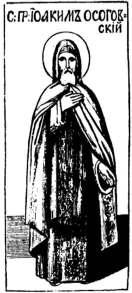
Преподобный Иоаким137 был один из четырех великих отшельников болгарских, возбудивших своими подвигами сотни и тысячи между болгарами к христианскому подвижничеству. Первым был св. Иоанн Рыльский; подвиги пр. Иоакима совершались в последней половине XI в.
The Venerable Joachim137 was one of the four great Bulgarian hermits who, by their ascetic labors, aroused hundreds and thousands among the Bulgarians to Christian asceticism. The first was St. John of Rila; the ascetic labors of the Venerable Joachim were accomplished in the latter half of the eleventh century.
Почувствовав непреодолимое желание подвизаться в уединении, Иоаким молил Господа указать ему место уединенное. Помолившись в малом храме с. Нового Градца, он сел на паперти церковной. Добрый и богатый боярин того места вступил в разговор с ним, и когда Иоаким сказал, что желал бы наедине подвизаться, но не знает удобного места, боярин указал ему на место самое удобное. – Под крылом горы Осоговской, говорил боярин, при р. Скупище в местности Бабин дол есть пещера глубокая, защищенная скалами, – вот тебе место, – спасайся там о Господе. Преподобный благодарил Бога за открывшееся место, близкое к его желаниям, и просил боярина по временам вспоминать о его нищете своею милостию.
Feeling an irresistible desire to struggle in solitude, Joachim prayed to the Lord to show him a solitary place. Having prayed in the small church of the village of Novi Grad, he sat down on the church porch. A good and wealthy boyar of that place entered into conversation with him, and when Joachim said that he wished to struggle in solitude but knew of no suitable place, the boyar pointed out to him the most suitable place. "Under the wing of Mount Osogovo," said the boyar, "by the river Skupishte, in the locality of Babin Dol, there is a deep cave, protected by cliffs—there is a place for you; save yourself there in the Lord." The Venerable One thanked God for the place that had been revealed, so close to his desires, and asked the boyar from time to time to remember his poverty with his charity.
Поселясь в пещере, он подвизался здесь не мало времени в посте и коленопреклонных молитвах, незнаемый никем. Уже пред кончиною его, по смотрению Божию, напали на него два зверолова. «Вы что-то печальны, сказал им старец при встрече. – На этой горе, отвечали они, всегда имели мы счастливый лов, а на этот раз бродили несколько дней и ничего не поймали. «Дети! отвечал старец, день к вечеру близится; отдохните у меня эту ночь, а завтра утром ступайте вот в ту сторону и с вершины горы идите в дом свой». Охотники на утро встретили на вершине горы самый счастливый лов. Один из них пришел к старцу благодарить его за совет. «Божие благословение с вами», сказал старец. С того времени в доме охотников появилось довольство. Спустя недолгое время охотники пришли посетить старца, но уже нашли его почившим. Благодарные, они до смерти своей приносили свечи на могилу преподобного. Кончина его последовала, как открыл он в загробном явлении своем, «пред великим мраком прежде осми лет»138.
Having settled in the cave, he struggled there for no little time in fasting and kneeling prayers, unknown to anyone. Already before his end, by God's dispensation, two hunters came upon him. "You seem sorrowful," the elder said to them at their meeting. "On this mountain," they replied, "we have always had a lucky catch, but this time we wandered for several days and caught nothing." "Children!" answered the elder, "the day draws toward evening; rest with me this night, and tomorrow morning go to that side and from the summit of the mountain go to your home." In the morning the hunters met with the most fortunate catch on the summit of the mountain. One of them came to the elder to thank him for his advice. "The blessing of God be with you," said the elder. From that time prosperity appeared in the hunters' house. After a short time the hunters came to visit the elder, but found him already reposed. Grateful, they brought candles to the grave of the Venerable One until their death. His end occurred, as he revealed in his posthumous appearance, "before the great darkness, eight years ago."138
Не мало времени прошло после того; при имп. Мануиле (1148–1179) Бог благоволил прославить раба своего. Священник села Осмидола страны Овчепольской Федор, овдовев, положил оставить мир и, слышав о месте подвигов блаж. Иоакима, отправился в Осоговской горе с решимостию подвизаться отшельнически таи же, где проводил равноангельскую жизнь Иоаким. Является ему во сне преподобный и спрашивает: «куда идешь ты»? Феодор сказал о своем желании. Преподобный оградил его крестным знамением и, вынув сосуд, отер водою ему голову, лице и руки. «Иди, чадо! с миром», прибавил преподобный. Проснувшись, Феодор от радости омыл лице свое слезами. Приняв иночество с именем Феофана, он построил храм на месте подвигов преподобного, – обрел гроб его и по неоднократному явлению преподобного открыл мощи его в общее назидание. При мощах совершались чудеса.
No little time passed after that; under the Emperor Manuel (1148–1179), God was pleased to glorify His servant. Theodore, a priest of the village of Osmidol in the Ovchepol region, having been widowed, resolved to leave the world, and having heard of the place of the ascetic labors of the blessed Joachim, he set out for Mount Osogovo with the determination to struggle as a hermit in the same place where Joachim had led a life equal to the angels. The Venerable One appeared to him in a dream and asked: "Where are you going?" Theodore told him of his desire. The Venerable One marked him with the sign of the cross and, taking out a vessel, wiped his head, face, and hands with water. "Go, child, in peace!" added the Venerable One. Upon waking, Theodore washed his face with tears of joy. Having received monasticism with the name Theophanes, he built a church on the site of the Venerable One's ascetic labors, found his grave, and, after repeated appearances of the Venerable One, uncovered his relics for the general edification. Miracles were performed at the relics.
Болгарское сказание о нем изд. Ламанским в зап. акад. VI, стр. 121–189. известно оно и гласняку ХI, 41. Оно многословно; берем нужное из него.
The Bulgarian account of him was published by Lamansky in the Proceedings of the Academy, VI, pp. 121–189. It is also known in Glasnik XI, 41. It is verbose; we take what is necessary from it.
В русских летописях солнечное затмение 19 марта 1113 г. (Погодина исслед. IV, 91). Если преподобный указывает на это затмение, то кончина его последовала в 1105 г.
In the Russian chronicles, a solar eclipse on March 19, 1113 (Pogodin's Investigations IV, 91). If the Venerable One refers to this eclipse, then his end occurred in 1105.
Опис. муз. стр. 451. В 1586 г. приезжал в Москву за сбором милостыни игумен Гервасий, „из великой горы Соговицы – обители пустынножителя Иоакима». Сношения России с востоком стр. 182, Спб. 1858 г.
Description of the Museum, p. 451. In 1586, Abbot Gervasius came to Moscow to collect alms, "from the great mountain of Sogovitsa—the monastery of the hermit Joachim." Russia's Relations with the East, p. 182, St. Petersburg, 1858.
Шафарика памятн. 2, 60. Сборник Ламанского: «в молбу и похвалу 4 звезды, иже в последние времена просиявше, Прохора пшинского, Иокима сърандодорского, Илариона мегленского и Гаврииа лесновского». Зан. акад. VI, 122. 123.
Šafárik's Monuments 2, 60. Lamansky's collection: "in prayer and praise of the four stars who shone forth in latter times, Prochorus of Pšinja, Joachim of Sarandapor, Hilarion of Moglen, and Gabriel of Lesnovo." Proceedings of the Academy VI, 122, 123.