† Преподобномучеников Василия и Феодора Печерских
† The Venerable Martyrs Basil and Theodore of the Kiev Caves
Был Инок Феодор, пишет о Печерской обители благоговейный Поликарп. Раздав все свое имение нищим, он вступил в монастырь и по благословению игумена поселился в варяжской пещере, соседней с пещерами Феодосия80. Много лет пробыл он тут в строгом воздержании. Но, по внушению врага спасения, родилась в нем скорбь о розданном имении. Ему представлялась мысль, что он долго проживет, изнеможет телом и не в состоянии будет довольствоваться монастырскою пищею. Занятый этими мыслями, оставив надежды на Бога, он предавался своей печали более и более, и близок был к отчаянию. Не скрывал он своей скорби и от других, а говорил о ней. Один из иноков, Василий, принял участие в нем.
There was a monk Theodore, writes the devout Polycarp concerning the Monastery of the Caves. Having distributed all his possessions to the poor, he entered the monastery and, by the blessing of the abbot, settled in the Varangian cave, adjacent to the caves of Theodosius80. He spent many years there in strict abstinence. But, at the instigation of the enemy of salvation, sorrow arose in him over the possessions he had given away. The thought came to him that he would live a long time, grow weak in body, and be unable to be satisfied with monastic food. Occupied with these thoughts, having abandoned hope in God, he gave himself over to his grief more and more, and was close to despair. He did not conceal his sorrow from others, but spoke of it. One of the monks, Basil, took pity on him.
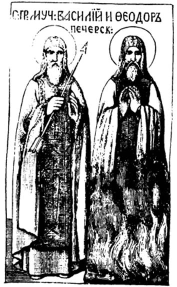
«Прошу тебя, брат Феодор! говорил тот, не теряй своей награды. Если хочешь имения: возьми все, что есть у меня; только дай слово пред Богом, что все розданное тобою будет подаянием моим. А ты с богатством будешь жить без печали, если даст Бог». Страх Божий пробудился в душе Феодора и слезами раскаяния спешил он омыть свое согрешение; он привязался сердечною любовию к брагу, который вразумил его.
"I beg you, brother Theodore!" said he, "do not lose your reward. If you desire possessions, take all that I have; only give your word before God that all you have given away shall be counted as my almsgiving. And you, with wealth, will live without sorrow, if God grants it." The fear of God awoke in Theodore's soul, and with tears of repentance he hastened to wash away his sin; he became bound to the brother who had admonished him with heartfelt love.
Но страсть сребролюбия еще не совсем погасла в его сердце. Раз брат Василий по делам службы ушел из монастыря. Диавол, явясь в образе ушедшего брата, внушил Феодору мысль просить у Бога стяжания и навел мысли его на сокрытое в пещере золото и дорогие сосуды. Нашедши сокровище, Феодор хотел выйти из монастыря с тем, чтобы, купив имение, жить в миру покойно. Василий, спустя три месяца, возвратился и открыл обман бесовский. Феодор стал внимательнее к себе – и чтобы в праздности не увлекаться вредными мыслями, поставил у себя в пещере жернов, брал из закромов зерновой хлеб и ночью перемалывал его. Много лет провел он в такой работе, не преставая молить Бога избавить его от помысла сребролюбия и наконец до того освободился от этого помысла, что золото и серебро считал ни за что. Долгими подвигами приобрел он власть над духами нечистыми, так что они повиновались ему. Тесная дружба соединяла Феодора с Василием. Они положили завет между собою не скрывать друг от друга ни одной мысли, но обсуживать и пересматривать помыслы вместе. Состарившийся Феодор перешел в старый монастырь, где выстроил себе келью вскоре после сожжения его половцами, а Василий стал жить на его месте в пещере.
But the passion of avarice had not yet entirely died out in his heart. Once, brother Basil went out of the monastery on matters of service. The devil, appearing in the form of the departed brother, suggested to Theodore the thought of asking God for possessions and turned his mind toward gold and precious vessels hidden in the cave. Having found the treasure, Theodore wished to leave the monastery in order to buy an estate and live peacefully in the world. Basil, after three months, returned and revealed the demonic deception. Theodore became more watchful over himself—and so as not to be carried away in idleness by harmful thoughts, he set up a millstone in his cave, took grain from the granaries, and ground it at night. He spent many years in such labor, ceaselessly praying to God to deliver him from the thought of avarice, and at last became so free from this thought that he counted gold and silver as nothing. By long struggles he acquired power over unclean spirits, so that they obeyed him. Close friendship united Theodore with Basil. They made a covenant between themselves not to conceal a single thought from one another, but to discuss and examine their thoughts together. The aged Theodore moved to the old monastery, where he built himself a cell shortly after its burning by the Polovtsy, while Basil began to live in his place in the cave.
До Мстислава, сына Святополка, дошел слух, что Феодор нашел много сокровища в пещере. Призвав Феодора, князь спросил его: точно ли нашел он сокровище? «Правда, князь, видел я сокровище в пещере», отвечал Феодор». «И много золота, серебра, сосудов? Кем, слышно, все это положено?» поспешно спросил князь. Старец отвечал: «в житии св. Антония рассказывается, что здесь была поклажа варягов, да и сосуды – латинские, – почему и пещера поныне называется варяжскою пещерою. Золота и серебра там многое множество». – Покажи же мне эти сокровища, сказал князь, я поделюсь с тобою и ты будешь другом мне и отцу моему Святополку (Святополк тогда был в Турове). Старец отвечал: «Бог видит мое сердце, добрый князь: возлюбленный брат мой Василий часто говорил мне, чтобы не погубил я души прелестию богатства и мы закопали латинское добро в землю. По милости своей Бог отнял у меня память и теперь я не знаю, где оно сокрыто». Мстислав, не довольствуясь таким ответом, приказал сильно мучить Феодора; его мучили до того, что власяница была смочена кровию его; затем приказано было повесить его стремглав в сильном дыму и подложить под него огонь. Князь велел бить и Василия без пощады; быв шумен от вина и рассвирепев, он взял стрелу и пустил ее в Василия. Оба друга скончались в следующую затем ночь. Спустя немного времени и сам Мстислав застрелен был на городской стене, по пророчеству Василия. Он бился с Давидом Игоревичем и тогда узнал стрелу, которою застрелил Василия: «умираю, сказал он, за преподобных Василия и Феодора». Так повествует блаж. Поликарп81.
A report reached Mstislav, the son of Sviatopolk, that Theodore had found much treasure in the cave. Summoning Theodore, the prince asked him: Did he truly find a treasure? "It is true, prince, I saw a treasure in the cave," answered Theodore. "And much gold, silver, and vessels? By whom, it is said, was all this deposited?" the prince asked hastily. The elder answered: "In the life of St. Anthony it is related that here was the deposit of the Varangians, and the vessels are Latin—this is why the cave is still called the Varangian cave. Of gold and silver there is a great multitude."—"Then show me these treasures," said the prince, "I will share with you, and you will be a friend to me and to my father Sviatopolk" (Sviatopolk was then in Turov). The elder answered: "God sees my heart, good prince: my beloved brother Basil often told me not to destroy my soul through the deceit of riches, and we buried the Latin goods in the earth. By His mercy, God has taken away my memory, and now I do not know where it is hidden." Mstislav, not satisfied with this answer, ordered Theodore to be severely tortured; he was tormented until his hairshirt was soaked with his blood; then he was ordered to be hung headfirst in thick smoke and a fire lit beneath him. The prince ordered Basil to be beaten without mercy; being drunk with wine and enraged, he took an arrow and shot it at Basil. Both friends reposed the following night. After a short time, Mstislav himself was shot on the city wall, according to the prophecy of Basil. He was fighting with David Igorevich and then recognized the arrow with which he had shot Basil: "I am dying," he said, "for the Venerable Basil and Theodore." Thus relates the blessed Polycarp81.
По летописи, Печерский монастырь сожжен был половцами в 1096 г.82; а Феодор, уже состарившийся, построил после того келью в обители и жил уже недолго; кн. Мстислав, по летописи 15 июля 1099 г., на стене владимирской крепости, неожиданно «сквозь отверстие доски поражен был стрелою под пазуху и в следующую ночь скончался»83. По этому видно, что блаж. кончину св. Феодора и Василия надобно отнесть к 1098 г. и согласно с святцами к 11 августа84. Мощи св. Феодора и Василия похоронены были в варяжской пещере, в которой подвизались они, а потом перенесены были в Антониеву пещеру, где и ныне покоятся85. Закладенный вход в варяжскую пещеру ныне видят близ затвора пр. Лаврентия. Недавний и неоднократный осмотр этой пещеры показал, что в ней было довольно затворнических келий с седалищами. Составленные из разноцветных песков келии и седалища представляются как бы покрытыми полосатою материею. Итак там, где прежде скрывались бродяги, занимавшиеся грабежом, подвизались потом рабы Божии и освятили разбойнический притон своими молитвами и подвигами86.
According to the chronicle, the Monastery of the Caves was burned by the Polovtsy in 109682; and Theodore, already aged, built a cell in the monastery afterward and lived only a short time. Prince Mstislav, according to the chronicle, on July 15, 1099, on the wall of the Vladimir fortress, unexpectedly "through an opening in the plank was struck by an arrow under the armpit and died the following night"83. From this it is evident that the blessed repose of the Venerable Theodore and Basil must be assigned to the year 1098 and, according to the Menology, to August 1184. The relics of the Venerable Theodore and Basil were buried in the Varangian cave, in which they had asceticized, and were later transferred to the Anthony Cave, where they now repose85. The sealed entrance to the Varangian cave is now seen near the enclosure of the Venerable Laurence. A recent and repeated examination of this cave showed that it contained a fair number of recluses' cells with seats. The cells and seats, composed of multicolored sands, appear as if covered with striped fabric. Thus, where vagabonds engaged in robbery once hid, servants of God later asceticized and consecrated the robbers' den with their prayers and labors86.
История св. Феодора и Василия представляет нам в опыте мысли св. писания: «те, которые хотят обогащаться, впадают в искушения и в сети и во многие безрассудные и вредные похоти, которые погружают людей в бедствие и гибель» (1Тим.6:9). «Как трудно имеющим богатство войти в царствие Божие» (Лк.18:24). «Любостяжатель есть идолослужитель» (Ефес.5:5). Богатых в настоящем веке увещавай, чтобы они не высоко о себе думали и уповали не на богатство ненадежное, но на Бога живого; – чтобы они благодетельствовали, обогащались добрыми делами, были щедры и общительны (Тим.6:17, 18).
The history of the Venerable Theodore and Basil presents to us in experience the thoughts of Holy Scripture: "For those who desire to be rich fall into temptation and a snare, and into many foolish and harmful lusts which drown men in destruction and perdition" (1 Tim. 6:9). "How hard it is for those who have riches to enter the kingdom of God" (Lk. 18:24). "For a covetous man is an idolater" (Eph. 5:5). Charge those who are rich in this present age not to be haughty, nor to trust in uncertain riches but in the living God; that they do good, that they be rich in good works, ready to give, willing to share (1 Tim. 6:17, 18).