Orthodox Translations

August 1010 августа

Old Calendar: civil August 23 · New Calendar: civil August 10

History

Св. муч. Лаврентия архидиакона, Сикста папы и других с ними

St. Martyr Laurence the Archdeacon, Pope Sixtus, and Others with Them

E1.TAI draft

После мученической кончины Стефана папы в 257 году, место его занял Сикст и управлял церковию одиннадцать месяцев, после чего был взят с двумя диаконами, как глава христиан, и после двукратного допроса, за исповедание имени Христова, обезглавлен вместе с ними (7 авг. 258). Когда вели его в темницу, архидиакон Лаврентий воскликнул к нему: «куда, отче, спешишь без архидиакона своего?» Св. Сикст сказал ему пророчески: «не оставлю тебя, сын мой; чрез три дня и ты пойдешь за мною; иди тем временем и церковное имущество раздай по своему усмотрению нищим и нуждающимся». Пред самою казнию Сикста за городом у Марсова капища, воскликнул к нему Лаврентий: «не оставь меня, отец! потому что я уже роздал порученное мне сокровище». Воины, слыша о сокровище, схватили Лаврентия, а папу и двух клириков обезглавили. Ночью верные похоронили тела мучеников.

After the martyric death of Pope Stephen in the year 257, Sixtus took his place and governed the Church for eleven months, after which he was seized with two deacons, as the head of the Christians, and after being interrogated twice, for confessing the name of Christ, he was beheaded together with them (7 Aug. 258). When they were leading him to prison, the Archdeacon Laurence cried out to him: "Where, father, are you hastening without your archdeacon?" St. Sixtus said to him prophetically: "I shall not leave you, my son; in three days you also will follow me; go meanwhile and distribute the church property according to your discretion to the poor and needy." Just before the execution of Sixtus outside the city near the temple of Mars, Laurence cried out to him: "Do not leave me, father! for I have already distributed the treasure entrusted to me." The soldiers, hearing of the treasure, seized Laurence, and the pope and the two clerics were beheaded. By night the faithful buried the bodies of the martyrs.

E1.0AI draft

Префект римский, вызвав Лаврентия из темницы, сказал ему: «не противься и покажи нам сокровища!» Он хотел оправдать свое требование законом, по которому имущества казненных за государственные преступления конфисковались в пользу государства. Лаврентий отвечал: «дай мне времени на два или на три дня, и я тебе покажу их!» Префект согласился.

The Roman prefect, summoning Laurence from prison, said to him: "Do not resist and show us the treasures!" He wished to justify his demand by the law, according to which the property of those executed for state crimes was confiscated to the state. Laurence answered: "Give me two or three days' time, and I shall show them to you!" The prefect agreed.

E1.1AI draft

Лаврентий в три дня собрал множество нищих, вдов, сирот, слепых и других увечных и, приведши их к палате префекта, сказал: «вот обладатели сокровищ и кто вручает свои имения им, с избытком получит их обратно в царстве небесном. Тогда святого подвергли пыткам и требовали отречения от Христа; наконец положили его на железный одр, имевший вид решетки, а под одр положены были горячие угли, и тело святого пеклось как мясо». «Принеси жертву богам», кричали палачи. «Я принес себя в жертву моему Господу», отвечал мученик. Слуги все больше подкладывали огня и разжигали решетку; все предстоявшие ужасались жестокости судьи, велевшего испечь живого человека. Мученик же благодарил Бога, укреплявшего его, и наконец сказал префекту: «обороти часть тела, достачно уже изжаренную, и сделай опыт над другою». Префект велел оборотит. Тогда Лаврентий сказал: «готово, ешь и разбирай, приятнее ли жареное мясо или сырое». После сего возвел глаза к небу и предал дух свой Богу. – Христиане взяли тело его с места мучения и похоронили.

In three days Laurence gathered a multitude of beggars, widows, orphans, the blind, and other cripples, and, leading them to the prefect's palace, said: "Behold the possessors of the treasures, and whosoever entrusts his possessions to them shall receive them back with abundance in the heavenly kingdom." Then the saint was subjected to tortures and they demanded that he renounce Christ; finally they laid him on an iron bed resembling a gridiron, and beneath the bed were placed hot coals, and the saint's body was baked like meat. "Offer sacrifice to the gods," shouted the torturers. "I have offered myself as a sacrifice to my Lord," answered the martyr. The servants kept adding more fire and heating the gridiron; all present were horrified at the cruelty of the judge, who had ordered a living man to be roasted. The martyr, however, thanked God, who strengthened him, and finally said to the prefect: "Turn over the part of the body that is already sufficiently roasted, and make a trial on the other." The prefect ordered it turned. Then Laurence said: "It is ready; eat and judge whether roasted meat or raw is more pleasant." After this he raised his eyes to heaven and gave up his spirit to God. – The Christians took his body from the place of martyrdom and buried it.
E1.2AI draft

† Преставление блаж. Лаврентия, юродивого Калужского

† Repose of the Blessed Laurence, Fool-for-Christ of Kaluga

E2.TAI draft

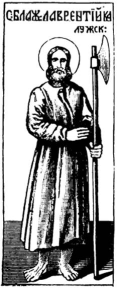
Городище на левом берегу р. Яченки, в полверсте от нынешнего города Калуги, остается памяником древней Калуги для тревожных времен XV и XVI стол. место, защищенное провалами земли, было очень удобно для города73, – здесь жил князь Симеон Иоаннович, в 1505 г. получивший в свое заведывание калужский удел от своего отца74. Он был князь добрый. Оттого в его доме по временам живал раб божий Лаврентий. Об отце и матери Лаврентия ничего неизвестно, говорит старинная записка. Он ходил зимою и летом босой, в рубашке и овчинном кожухе: так изображается он на старинных иконах. – У князя в доме живал он только по временам, юродствуя в глазах людей, но не пред Богом. Более всего проводил он времени там, где ныне монастырь его имени. Здесь, в полуверсте от города его времени, на вершине горы, покрытой густым лесом, стоял уединенный храм Рождества Христова: вблизи храма стояла хижина блаж. Лаврентия; ночью выходил он из нее на паперть храма и совершал молитвы, а для слушания дневной молитвы храма прокопан был от хижины в земле ход к храму и Лаврентий, незримый людьми, ходил к церкви слушать ее молитвы75. Подвигами самоотречения он столько возвысился в духе, что еще при жизни прославился чудом. Древнее известие говорит: «в 1512 г. напали на город (Калугу) агаряны; против них вышел князь (Симеон) с гражданами: а праведный Лаврентий, бывший в его доме, внезапно говорит громким голосом: «дайте мне вострый топор; псы напали на князя Симеона; надобно оборонить его от псов; и схватив (топор) ушел. Тогда как князь Симеон бился в то время с насада (судна) на Оке, а агаряны во множестве обступили князя, внезапно оказался на насаде праведный Лаврентий и укреплял его и все войско словами: «не бойтесь». В тот же час князь победил агарян и прогнал их, а праведный Лаврентий опять явился в дому княжеском и юродствуя шумел: «оборонил князя Симеона от псов». – Князь, возвратясь с сражения, рассказал, как явился праведник и его помощию побеждены враги, напавшие на город Калугу76. С топором, насаженным на длинном топорище, изображается праведный Лаврентий и на древних иконах. По летописям, это нападение крымских татар было в мае 1512 г. и совсем неожиданное. Менгли-Гирей доселе был в дружбе с великим князем московским. Золото литовского короля и тайные интриги произвели то, что сыновья Менгли-Гирея с толпами хищников неожиданно ворвались в Россию, грабили как разбойники одоевские места, после Калуги бросились на Рязань: но воеводы великого князя спешили встретить их в поле и хищники поспешно ушли в улусы77. Таким образом Калуга обязана была своим спасением от разорения, а князь и сохранением своей жизни праведному Лаврентию. В ркп. святцах читаем: «св. праведный Лаврентий, иже Христа ради юродивый, чудотворец (в другом сп. что в Рожественском монастыре), преставися в л. 7023 (1515) м. августа в десятый д.». Вероятно, князь Симеон, обязанный праведнику спасением, в память его устроил иноческую обитель.

The ancient settlement on the left bank of the Yachenka River, half a verst from the present city of Kaluga, remains a monument of ancient Kaluga from the troubled times of the 15th and 16th centuries; a place protected by landslips was very convenient for a city73 – here lived Prince Simeon Ioannovich, who in 1505 received the Kaluga appanage from his father74. He was a good prince. Therefore, in his house the servant of God Laurence sometimes dwelt. Nothing is known of Laurence's father and mother, says an ancient record. He went barefoot winter and summer, in a shirt and a sheepskin coat: thus he is depicted on ancient icons. – He lived in the prince's house only from time to time, playing the fool in the eyes of men, but not before God. He spent most of his time where the monastery named after him now stands. Here, half a verst from the city of his time, on the summit of a hill covered with dense forest, stood a solitary church of the Nativity of Christ: near the church stood the hut of the blessed Laurence; at night he would come out of it onto the church porch and offer prayers, and for hearing the daytime prayer of the church, a passage was dug from the hut through the earth to the church, and Laurence, unseen by men, would go to the church to hear its prayers75. By feats of self-denial he so elevated himself in spirit that even during his life he became renowned for a miracle. An ancient account says: "In the year 1512 the Hagarenes attacked the city (of Kaluga); Prince (Simeon) went out against them with the citizens: and the righteous Laurence, who was in his house, suddenly said in a loud voice: 'Give me a sharp axe; dogs have fallen upon Prince Simeon; I must defend him from the dogs'; and seizing (the axe) he went away. While Prince Simeon was at that time fighting from a nasád (a boat) on the Oka, and the Hagarenes surrounded the prince in great numbers, suddenly the righteous Laurence appeared on the nasád and strengthened him and the whole army with the words: 'Fear not.' At that same hour the prince defeated the Hagarenes and drove them away, and the righteous Laurence again appeared in the prince's house and, playing the fool, shouted: 'I have defended Prince Simeon from the dogs.' – The prince, returning from the battle, related how the righteous man had appeared and how by his help the enemies who had attacked the city of Kaluga were vanquished76. With an axe mounted on a long handle the righteous Laurence is depicted also on ancient icons. According to the chronicles, this attack by the Crimean Tatars occurred in May 1512 and was quite unexpected. Mengli-Girey had until then been on friendly terms with the Grand Prince of Moscow. The gold of the Lithuanian king and secret intrigues brought it about that the sons of Mengli-Girey with hordes of marauders unexpectedly burst into Russia, plundering the Odoev lands like robbers, and after Kaluga rushed upon Ryazan: but the voivodes of the Grand Prince hastened to meet them in the field and the marauders hastily withdrew to their uluses77. Thus Kaluga owed its deliverance from devastation, and the prince the preservation of his life, to the righteous Laurence. In the manuscript Menologia we read: "St. righteous Laurence, Fool-for-Christ, wonderworker (in another copy, that in the Nativity Monastery), reposed in the year 7023 (1515) on the tenth day of the month of August." It is probable that Prince Simeon, indebted to the righteous man for his salvation, established a monastic community in his memory.

E2.0AI draft
Engraving

В 1565 г. царь Иоанн писал в своей жалованной грамоте монастырю: «монастырь Рождества Христова, где лежит Лаврентий, Христа где юродивый»78. Это дает видеть, что и тогда уже местно чтили праведного. В ркп. житии праведного записано несколько посмертных чудес его. Первое из них относится к 1621 г. Это – исцеление параличного боярина Кологривова. Он не владел ни руками, ни ногами, ни языком. Его принесли и положили близь гроба св. Лаврентия. Во время пения молебна, когда читали евангелие, расслабленный проговорил, поднял правую руку и стал полагать ею на себе крестное знамение; потом встал, подошел в раке и приложился к ней. По окончании молебна он уже свободно говорил и стал здоров, каким был прежде. Затем исцелены бесноваты посадский и две слепые девицы. В 1641 г. принесен был к раке праведника сын калужского гражданина: он болен был ногами и добрый отец принес его на себе; но у раки праведника больной выздоровел и уже сам мог идти в дом свой79. В обители евангелие м. 1686 с надписью: «царевна Татиана Михаиловна пожалова – в обитель преп. Лаврентия чудотворца».

In 1565 Tsar John wrote in his charter of grant to the monastery: "The monastery of the Nativity of Christ, where Laurence lies, the Fool-for-Christ"78. This shows that even then the righteous one was locally venerated. In the manuscript Life of the righteous man several posthumous miracles are recorded. The first of them dates to 1621. It is the healing of the paralyzed boyar Kologrivov. He had no use of his hands, nor of his feet, nor of his tongue. He was brought and laid near the grave of St. Laurence. During the singing of the moleben, when the Gospel was being read, the paralytic spoke, raised his right hand and began to make the sign of the cross with it; then he rose, approached the reliquary and venerated it. After the moleben he spoke freely and became healthy, as he had been before. Then a townsman possessed by a demon and two blind maidens were healed. In 1641 the son of a Kaluga citizen was brought to the reliquary of the righteous man: he was ill in his legs and his good father carried him on his back; but at the reliquary of the righteous man the sick man recovered and was able to go home by himself79. In the monastery there is a Gospel of 1686 with the inscription: "Tsarevna Tatiana Mikhailovna granted – to the monastery of the Venerable Laurence the Wonderworker."

E2.2AI draft

Примечания Notes

Щекатова словарь 3, 157. 158.

Shchekatov's Dictionary 3, 157. 158.

N73AI draft

Никон. лет. V, 179. Завещание в. к. Иоанна в собр. гр. I ч. 144.

Nikon Chronicle V, 179. Testament of Grand Prince John in Collection of State Documents I, part 144.

N74AI draft

Калуж. епар. ведом. 1862 г. I, 4. 5.

Kaluga Diocesan Gazette 1862, I, 4. 5.

N75AI draft

Записка – там же стр. 6.

Record – ibid., p. 6.

N76AI draft

Собр. л. VIII, 253. Карам. 7, 32. 33.

Collection of Chronicles VIII, 253. Karamzin 7, 32. 33.

N77AI draft

Калуж. епар. вед. 1862 г. 5. 85. 102. Здесь же сказано, что память праведного Лаврентия совершается в Калуге 10 августа, в день кончины его. В словаре 162 ошибки.

Kaluga Diocesan Gazette 1862, 5. 85. 102. Here it is also said that the memory of the righteous Laurence is celebrated in Kaluga on 10 August, the day of his repose. In the Dictionary (p. 162) there are errors.

N78AI draft

Описание чудес Лаврентия в обители известно по списку, писанному при игумене Карионе, который был настоятелем – игуменом с 1698 г., архимандритом с 1708 г. и скончался в 1722 г. Вероятно им описаны как чудеса, так и служба праведнику. Калуж. вед. 8–13.102.

The description of the miracles of Laurence in the monastery is known from a copy written under Abbot Karion, who was the superior – abbot from 1698, archimandrite from 1708, and reposed in 1722. It was probably he who described both the miracles and the service to the righteous man. Kaluga Gazette 8–13. 102.

N79AI draft