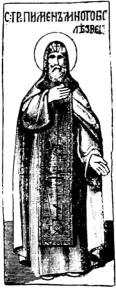
Преподобный Пимен путем тяжкой болезни достиг царствия небесного66. Он родился больным и больным вырос. Много раз просил он родителей отдать его в монастырь; им жаль было расставаться с единственным сыном, наследником. Болезнь усилилась так, что не было надежды на выздоровление и родители отнесли его в Печерский монастырь, прося молитв о его здоровье. В обители, по просьбе родителей, молились об исцелении страдальца; но страдалец уже чувствовал высокую цену страданий и молитва его о продолжении болезни была услышана Господом. – Об одном еще молился больной Пимен – удостоить его ангельского чина. И вот в одну ночь пришли какие-то иноки, совершили над ним чин пострижения и облекли его в иноческие одежды. Никто не слыхал, как привили они, и никто не звал, как в запертой церкви, в раке преп. Феодосия, явились волоса Пимена. Только звуки пения слышны были некоторыми, и когда взошли к Пимену, нашли его постриженным и свеча горела в руке его; принесли «книгу пострижения» и Пимен нашел, что пострижение его совершалось согласно с книгою67. Много лет провел Пимен в тяжкой болезни. Прислуживавшие ему тяготились им и часто оставляли без хлеба и воды, голодным и в жажде: но Пимен все терпел с радостию. В пещеру его принесли другого больного, чтобы ухаживать за один раз: но и обоих часто оставляли без присмотра. «Брате! сказал раз Пимен лежавшему с ним; служащие гнушаются нами; если Бог исцелит тебя, станешь ли ты исполнять эту службу? «Больной обещался служить больным до смерти своей. По слову Пимена он встал здоровым и стал служить болящему. Раз он обленился в служении и вновь постигла его болезнь: но Пимен опять исцелил его. «Маловерный! сказал ему тогда Пимен, разве ты не знаешь, что равную награду получают и больной и тот, кто служит ему? Терпение бедных не пропадает даром: здесь скорбь и туга, там – радость и веселие. Потому-то терплю я все. Бог, который исцелил тебя от болезни, может и мне возвратить здоровье: но я не желаю того. Претерпевший до конца спасется. Пусть весь я сгнию в этой жизни: только бы там плоть моя оставалась без истления; пусть здесь будет смрадный запах: только бы там наслаждаться благоуханием неизреченным. Что значит эта смрадная и тесная храмина, как не суд прежде суда того, мучение прежде муки бесконечной»? Двадцать лет провел Пимен в страдании. Пред смертию он стал здоров, простился со всею братиею, причастился в церкви св. Таин, поклонился гробу св. Антония и указал место для его погребения. «На этом месте», сказал он при том, «похоронены в нынешнем году два брата, один в схиме, другой без схимы. Первый не думал о значении схимы и только пред смертию облечен в нее, – не быв достойным ее; теперь он без схимы. Другой постоянно желал быть в схиме, его не облекли в нее. Праведный Бог, защищающий сердца наши, по смерти даровал ему схиму». Когда откопана была земля, нашли точно так, как говорил Пимен Преподобный покойно предал дух свой Богу. «В день преставления его, прибавляет повествователь Поликарп, явились три столба над трапезою и отсюда перешла на верх церкви, о чем сказано в летописце. – Впрочем знает только Бог, показавший это знамение, для сего ли блаженного было оно, или по иному смотрению». По древней летописи, явление огненного столпа над трапезою, явившегося в двух местах на церкви, было 11 февраля 1110 года68. Потому блаженную кончину преп. Пимена надобно отнесть к 1110 году, как и относит одна летопись69. – Мощи преп. Пимена почивают в Антониевой пещере70.
The Venerable Pimen attained the Kingdom of Heaven through the path of grievous illness66. He was born ill and grew up ill. Many times he asked his parents to give him to a monastery; but they were sorry to part with their only son and heir. The illness grew so severe that there was no hope of recovery, and his parents carried him to the Kiev-Pechersk Monastery, asking for prayers for his health. In the monastery, at the parents' request, they prayed for the healing of the sufferer; but the sufferer already sensed the high value of sufferings, and his prayer for the continuation of his illness was heard by the Lord. – The sick Pimen prayed for one thing more: that he might be deemed worthy of the angelic rank. And behold, one night certain monks came, performed the rite of tonsure over him, and clothed him in monastic garments. No one heard how they entered, and no one knew how, in the locked church, upon the reliquary of the Venerable Theodosius, Pimen's hair appeared. Only the sounds of singing were heard by some, and when they went in to Pimen, they found him tonsured, and a candle was burning in his hand. They brought the "Book of Tonsure," and Pimen found that his tonsure had been performed in accordance with the book67. For many years Pimen lived in grievous illness. Those who served him grew weary of him and often left him without bread and water, hungry and thirsty; but Pimen endured everything with joy. Another sick man was brought into his cave, so that they might care for both at once; but often both were left without attention. "Brother," Pimen once said to him who lay with him, "those who serve us abhor us; if God heals you, will you perform this service?" The sick man promised to serve the sick until his death. At Pimen's word, he rose up healthy and began to serve the ailing one. Once he grew lazy in his service, and illness again befell him; but Pimen healed him again. "O you of little faith!" Pimen then said to him, "do you not know that the sick man and he who serves him receive an equal reward? The patience of the poor is not in vain: here there is sorrow and distress, there – joy and gladness. Therefore I endure all things. God, who healed you from illness, can also restore health to me; but I do not desire it. He who endures to the end shall be saved. Let me rot entirely in this life, provided that there my flesh remain incorrupt; let there be a stench here, provided that there I may enjoy ineffable fragrance. What is this stinking and narrow chamber, if not a judgment before that Judgment, a torment before the endless torment?" For twenty years Pimen lived in suffering. Before his death he became well, took leave of all the brethren, partook of the Holy Mysteries in church, bowed before the tomb of St. Anthony, and indicated the place for his burial. "In this place," he said thereupon, "two brothers were buried this year, one in the schema, the other without the schema. The first did not think of the significance of the schema and was clothed in it only before death, not being worthy of it; now he is without the schema. The other constantly desired to be in the schema, but they did not clothe him in it. The righteous God, who defends our hearts, granted him the schema after death." When the earth was dug up, they found it exactly as Pimen had said. The Venerable One peacefully surrendered his spirit to God. "On the day of his repose," adds the narrator Polycarp, "three pillars appeared above the refectory, and from there they moved to the top of the church, as is told in the chronicle. – However, God alone knows, who showed this sign, whether it was for this blessed one or according to another dispensation." According to the ancient chronicle, the appearance of a fiery pillar above the refectory, which appeared in two places on the church, occurred on February 11, 111068. Therefore the blessed end of the Venerable Pimen must be assigned to the year 1110, as one chronicle also assigns it69. – The relics of the Venerable Pimen repose in the Anthony Cave70.
Кондак преподобному: «Долговременную болезнь благодарне претерпевшаго, приидите сошедшеся, восхвалим Пимена многотерпеливаго: иже бо иногда за смрад болезни бе гнушаем, сей ныне благоухание испущает с верою к раце мощей его приходящим и прогонит злосмрадие страстей от вопиющих; прииди, Пимене, к нам и ничтоже успеет враг на ны».
Kontakion to the Venerable One: "Having long-endured illness with thankfulness, come, let us assemble and praise Pimen the much-patient; for he who once was abhorred for the stench of his illness, now emits fragrance to those who with faith draw near to the reliquary of his relics, and drives away the foul stench of passions from those who cry: Come, Pimen, to us, and the enemy shall prevail nothing against us."