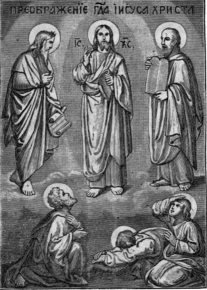
Когда ученики Иисуса Христа узнали и исповедали в Нем Христа Сына Божия: ты еси Христос Сын Бога живаго (Мф.16:16), однакож полного откровения славы его ожидали на земле (Мф.20:20–28. Деян.1:6): Господь объявил, что Ему должно много пострадать, умереть и в третий день воскреснуть (Мф.16:21), ибо царство Его не от мира сего (Ин.18:36), но внутреннее (Лк.17:21), духовное и вечное (Пс.144:13. Дан.2:44), и что последователи Его для сохранения веры в Него и для спасения душ своих должны быть готовы все претерпеть (Мф.16:24–26), и ожидать себе славы не на земле, но на небеси. Чтобы явить эту небесную духовную славу ученикам своим, которая последует за временными страданиями (Мф.5:11), Господь в 33 лето своей земной жизни, в последний год своей проповеди евангелия, чрез 6 дней после беседы о своих страданиях, смерти, воскресении и обязанностях последователей своих, преобразился. Для сего Господь взошел на высокую галилейскую гору – Фавор, в сопровождении трех учеников своих – Петра, Иакова и Иοанна, которые, как говорит Церковь, хотели делить с Господом его страдания и смерть (Мф.20:22. Лк.22:33), и коих число было достаточно для законного засвидетельствования истины преображения (2Кор.13:1). «Господь вземлет троих, говорит св. Ефрем Сирин, достаточных по закону свидетелей преображения своего, которые по духу представляли в лице своем и всех прочих. Но поскольку будущий предатель – Иуда был недостоин Божественного лицезрения и страшного видения, то Господь оставляет с ним прочих, чтобы не имел он никакого извинения впоследствии». На горе при видимом отрешении от земного и при невозмущаемом безмолвии Господь молится Отцу светов (Иак.1:17) и во время молитвы слава Божества Его открылась, сколько могли вместить ее ученики Его. Лице Господа просияло как солнце, одежды сделались белы как свет, изображая славу, в которую праведники облекутся и телесно по всеобщем воскресении мертвых. На горе явились во славе свидетели преображения Господня и из иного мира – Моисей и Илия; по гласу Церкви, начальники закона и пророков, некогда удостоенные видения Божественной славы Господа, – один на Синае, другой на Хориве, своим явлением на Фаворе свидетельствуя, что Христос есть Бог, глаголавый древле законом и пророки, есть творец и исполнитель закона и пророков и обладает и землею, небом и преисподнею. Как Владыке неба и Царю земли и Господу преисподних во время преображения – предстали Христу с земли апостолы, с неба Илия Фесвитянин, а из мертвых Моисей. Моисей и Илия беседовали с Сыном Божиим о исходе Его, его же хотяше скончати во Иерусалиме (Лк.9:31), т. е. о кончине Богочеловека на кресте.
When the disciples of Jesus Christ came to know and confessed Him as Christ, the Son of God: Thou art the Christ, the Son of the living God (Mt. 16:16), yet they still awaited the full revelation of His glory on earth (Mt. 20:20–28; Acts 1:6): the Lord declared that He must suffer much, die, and on the third day rise again (Mt. 16:21), for His kingdom is not of this world (Jn. 18:36), but is inward (Lk. 17:21), spiritual and eternal (Ps. 144:13; Dan. 2:44), and that His followers, in order to preserve faith in Him and for the salvation of their souls, must be ready to endure all things (Mt. 16:24–26) and to await glory for themselves not on earth, but in heaven. To manifest this heavenly, spiritual glory to His disciples—which follows after temporal sufferings (Mt. 5:11)—the Lord, in the thirty-third year of His earthly life, in the last year of His preaching of the Gospel, six days after His discourse concerning His sufferings, death, resurrection, and the duties of His followers, was transfigured. For this purpose the Lord went up onto a high Galilean mountain—Tabor—accompanied by three of His disciples: Peter, James, and John, who, as the Church says, wished to share with the Lord His sufferings and death (Mt. 20:22; Lk. 22:33), and whose number was sufficient for the lawful witness to the truth of the Transfiguration (2 Cor. 13:1). "The Lord takes three," says St. Ephraim the Syrian, "sufficient according to the law as witnesses of His Transfiguration, who in spirit represented in their persons all the rest. But since the future betrayer—Judas—was unworthy of the divine vision and the fearful sight, the Lord leaves the others with him, so that he might have no excuse afterwards." On the mountain, with a visible detachment from earthly things and in undisturbed silence, the Lord prays to the Father of lights (Jas. 1:17), and during prayer the glory of His Divinity was revealed, as much as His disciples could contain it. The Lord's face shone like the sun, His garments became white as light, depicting the glory with which the righteous will be clothed even bodily after the general resurrection of the dead. On the mountain there appeared in glory witnesses of the Lord's Transfiguration from the other world—Moses and Elijah; according to the voice of the Church, the heads of the Law and the Prophets, once vouchsafed a vision of the divine glory of the Lord—one on Sinai, the other on Horeb—by their appearance on Tabor testified that Christ is God, who spoke of old through the Law and the Prophets, is the author and fulfiller of the Law and the Prophets, and has dominion over earth, heaven, and the underworld. As the Master of heaven and King of earth and Lord of the underworld, at the time of the Transfiguration there stood before Christ: from the earth the apostles, from heaven Elijah the Tishbite, and from the dead Moses. Moses and Elijah conversed with the Son of God concerning His departure which He was about to accomplish at Jerusalem (Lk. 9:31), that is, concerning the death of the God-Man on the cross.
Намерение Иисуса Христа – показать ученикам своим горнюю божественную славу свою, оправдалось совершенно. Небесная слава Богочеловека столько восхитила их, что они желали всегда созерцать ее, пребывая на горе. Наставниче, говорил ап. Петр Господу, добро есть нам зде быти: и сотворим сени три, едину Тебе, и едину Моисеови, и едину Илии. При сих словах светлый облак осенил их и был слышан глас Бога Отца: сей ест Сыт Мой возлюбленный: того послушайте. Во время гласа устрашенные ученики, не могши взирать на сияние лица Господа, как сильнейшее человеческого зрения, пали на землю. Иисус Христос, приступив, прикоснулся к ним и сказал: возстаните, и не бойтеся. Возведши очи свои, они никого не видели, кроме Господа (Мф.16:1–9. Лк.9:18–36).
The intention of Jesus Christ—to show His disciples His heavenly, divine glory—was completely fulfilled. The heavenly glory of the God-Man so enraptured them that they wished to contemplate it forever, remaining on the mountain. Master, said the Apostle Peter to the Lord, it is good for us to be here: let us make three tabernacles, one for Thee, and one for Moses, and one for Elijah. At these words a bright cloud overshadowed them, and the voice of God the Father was heard: This is My beloved Son: hear Him. At the voice, the terrified disciples, unable to gaze upon the radiance of the Lord's face, as it was stronger than human sight, fell to the ground. Jesus Christ, drawing near, touched them and said: Arise, and be not afraid. Lifting up their eyes, they saw no one except the Lord (Mt. 16:1–9; Lk. 9:18–36).
В память славного преображения Господа на Фаворе установлен Церковию праздник Преображения Господня. Начало этого праздника скрывается в древних временах христианства. В ΙV веке св. Елена на горе Фавор соорудила храм в честь Преображения Господня, разрушенный Саладином в XIII веке. В IV веке между сочинениями отцов Церкви встречаются многие поучения на день Преображения Господня, как-то: у св. Ефрема Сирина, св. Иоанна Златоустого; в V веке у св. Прокла епископа цареградского, св. Льва Великого, и проч. В V веке Анатолий Константинопольский, в VIII св. Иоанн Дамаскин и Козьма Маиумский сочинили на праздник Преображения многие песнопения, коими прав. Церковь ныне прославляет преображение Господа.
In memory of the glorious Transfiguration of the Lord on Tabor, the Church established the feast of the Transfiguration of the Lord. The origin of this feast is hidden in the ancient times of Christianity. In the fourth century, St. Helena built a church on Mount Tabor in honor of the Transfiguration of the Lord, which was destroyed by Saladin in the thirteenth century. In the fourth century, among the writings of the Fathers of the Church, many homilies for the day of the Transfiguration of the Lord are found, such as those by St. Ephraim the Syrian, St. John Chrysostom; in the fifth century, by St. Proclus, Bishop of Constantinople, St. Leo the Great, and others. In the fifth century Anatolius of Constantinople, and in the eighth, St. John of Damascus and Cosmas of Maiuma composed many hymns for the feast of the Transfiguration, with which the Orthodox Church now glorifies the Transfiguration of the Lord.
Впрочем в XII веке праздник Преображения не был еще всеобщим па Западе. Пофон, пресвитер тревирский или трирский, живший в этом веке, говорил об нем, как о нововведении в некоторых западных монастырях. В XV веке (в 1457 году) папа Каллист III учредил праздник Преображения Господня повсюдным в западной Церкви и установил в этот праздник самый чин Богослужения, который доселе там отправляется, – установил по следующему обстоятельству. Султан Магомет II, по взятии Константинополя, устремился для осады Белграда. Гуниад – военачальник Ладислава V, короля Венгерского, укрепился в этом городе. Молитвы благочестивых воодушевляли осажденных. Совершенное поражение неверных и победа одержанная христианами при весьма слабых силах 6 августа 1456 года, в день Преображения, была всеми призвана за чудесную помощь Божию.
However, in the twelfth century the feast of the Transfiguration was not yet universal in the West. Potho, a presbyter of Trevir or Trier, who lived in that century, spoke of it as an innovation in some Western monasteries. In the fifteenth century (in the year 1457), Pope Callistus III established the feast of the Transfiguration of the Lord as universal in the Western Church and appointed for this feast the very order of Divine Service which is still performed there—he established it on the following occasion. Sultan Mehmed II, after the capture of Constantinople, hastened to lay siege to Belgrade. Hunyadi, the military commander of Ladislaus V, King of Hungary, fortified himself in this city. The prayers of the pious inspired the besieged. The complete defeat of the infidels and the victory won by the Christians with very weak forces on August 6, 1456, on the day of the Transfiguration, was recognized by all as a miraculous help from God.
Праздник Преображения Господня, по важности события, есть великий и дванадесятый. Он есть день нового Богоявления для учеников Иисуса Христа, которые при первом во время Его крещения еще не были призваны в звание апостолов, есть день телесного и видимого явления божественной славы Сына Божия апостолам, которая для них была еще сокровенна под кровом плоти Его (Лк.18:31–34). «Человек зримый, но Бог крыемый, на Фавор Христос восходит», поет Церковь.
The feast of the Transfiguration of the Lord, by the importance of the event, is a great and twelfth feast. It is the day of a new Theophany for the disciples of Jesus Christ, who at the first Theophany during His Baptism had not yet been called to the rank of apostles; it is the day of the bodily and visible manifestation of the divine glory of the Son of God to the apostles, which was still hidden from them under the veil of His flesh (Lk. 18:31–34). "Man seen, but God hidden, Christ ascends Tabor," sings the Church.
Преображение Господне служит явлением нового небесного царства славы, о котором не помышляли ученики Христовы и для достижения которого верующие, как предсказал Сам Спаситель на тайной вечери, должны питаться с Ним хлебом и вином новым (Мф.26:29. Лк.22:16–18); и сверх того к празднику Преображения Господня созревают новые плоды: посему на Литургии этого праздника Прав. Церковь благословляет и освящает начатки плодов. Обыкновение священное и знаменательное. Начатки плодов приносили к алтарю и в Ветхом Завете, по закону Моисееву (Исх.23:19. Лев.23:10. Числ.18:12–13), во славу Божию (Притч.3:9). Правилами апостольскими и соборными определено также приносить некоторые начатки, напр. новые колосья и плоды овощные для освящения их молитвою и благословением, чтобы в сих начатках благословить и освятить все плоды земные для употребления во славу Божию и в пользу верующих. В Постановлениях апостольских сохранилась молитва на освящение начатков. Приношением и благословением их прав. Церковь внушает, что в ней, как в обществе священном, все – от человека до растения – должно быть посвящено Богу, как собственность Божия и на употребление ее призвано благословение Божие. Ибо Господня земля и исполнение ея, и вси живущии на ней (Пс.23:1). Приношением и благословением плодов Церковь обязует нас воздерживаться от них до благословения их и тем, между прочим, содействует предохранению нас от болезней, кои могут произойти без благословения от употребления незрелых плодов, а вкушением от освященных плодов низводит благословение Божие на приносящих достояние свое в жертву Богу.
The Transfiguration of the Lord serves as a manifestation of the new heavenly kingdom of glory, of which the disciples of Christ did not think, and for the attainment of which believers, as the Savior Himself foretold at the Mystical Supper, must eat with Him new bread and wine (Mt. 26:29; Lk. 22:16–18); and moreover, by the feast of the Transfiguration of the Lord, new fruits ripen: therefore, at the Divine Liturgy of this feast, the Orthodox Church blesses and sanctifies the firstfruits of the fruits. A sacred and significant custom. Firstfruits were brought to the altar even in the Old Testament, according to the Law of Moses (Ex. 23:19; Lev. 23:10; Num. 18:12–13), for the glory of God (Prov. 3:9). By the Apostolic and Conciliar Canons it is also determined to bring certain firstfruits, for example, new ears of grain and vegetable fruits, for their sanctification by prayer and blessing, so that in these firstfruits all the fruits of the earth might be blessed and sanctified for use to the glory of God and for the benefit of the faithful. In the Apostolic Constitutions a prayer for the sanctification of firstfruits has been preserved. By the offering and blessing of them, the Orthodox Church teaches that in her, as in a sacred society, everything—from man to plant—must be dedicated to God, as God's property, and the blessing of God is invoked upon its use. For the earth is the Lord's, and the fullness thereof, and all that dwell therein (Ps. 23:1). By the offering and blessing of fruits, the Church obliges us to abstain from them until their blessing, and thereby, among other things, helps to protect us from illnesses which may arise without blessing from the consumption of unripe fruits, while by partaking of the sanctified fruits it brings down the blessing of God upon those who offer their possessions as a sacrifice to God.
По преданию от св. отец, со времени праздника Преображения Господня, постановлено употреблять «гроздие, идеже обретается. Если же кто от братий снест гроздие прежде праздника: то запрещение за непослушание да приимет и не вкусит гроздие во весь месяц август. От сего да навыкнут и прочии повиноваться. Гроздию же на трапезе после сего праздника трижды в неделю подобает предлагатися – в понедельник, в среду и пятницу». Ради праздника постановлено разрешать на трапезе и рыбу, если бы он случился в среду или пятницу.
According to the tradition of the holy Fathers, from the time of the feast of the Transfiguration of the Lord, it is established to use "grapes, where they are found. But if any of the brethren eats grapes before the feast: let him receive a penance for disobedience and not taste grapes for the whole month of August. From this let the rest also learn obedience. And after this feast, grapes are to be offered at table three times a week—on Monday, Wednesday, and Friday." For the sake of the feast, it is established to allow fish at table, if it should fall on a Wednesday or Friday.
Празднованием Преображению Господню Церковь торжественно исповедует и прославляет соединение Божества и человечества в лице Иисуса Христа и Его добровольные и истинные страдания нас ради и нашего ради спасения. Св. Ефрем Сирин в беседе своей на день Преображения говорит: «Господь возвел апостолов на гору для того, чтобы открыть им: кто Он и чей Сын (Мф.17:5), чтобы явить им славу своего Божества и показать, что Он есть тот самый Избавитель Израиля, Который обещан был через Пророков». Равно Моисей и Илия своим явлением да горе свидетельствовали о Божестве Преобразившегося, что Он есть Тот, который древле глаголал Моисею и Илии, и вместе видели, по словам Церкви, в лице Господа на горе два естества. Исповедуя и возвещая Божество Спасителя, праздник Преображения внушает, что страдания и смерть Сына Божия добровольны и спасительны. «Да егда (апостолы) узрят Тя распинаема, Церковь возглашает, страдание разумеют вольное, мирови же проповедят, яко ты воистину Отчее сияние».
By the celebration of the Transfiguration of the Lord, the Church solemnly confesses and glorifies the union of Divinity and humanity in the person of Jesus Christ and His voluntary and true sufferings for us and for our salvation. St. Ephraim the Syrian, in his homily on the day of the Transfiguration, says: "The Lord led the apostles up the mountain in order to reveal to them who He is and whose Son (Mt. 17:5), to manifest to them the glory of His Divinity and to show that He is that same Deliverer of Israel who was promised through the Prophets." Likewise, Moses and Elijah, by their appearance on the mountain, testified to the Divinity of the Transfigured One, that He is the One who spoke of old to Moses and Elijah, and together they saw, in the words of the Church, in the person of the Lord on the mountain two natures. Confessing and proclaiming the Divinity of the Savior, the feast of the Transfiguration teaches that the sufferings and death of the Son of God are voluntary and salvific. "That when they (the apostles) see Thee crucified," the Church exclaims, "they may understand the suffering as voluntary, and preach to the world that Thou art truly the Father's radiance."
Утверждая веру Православных во св. Троицу и в соединение в лице Иисуса Христа Божества и человечества, праздник Преображения ниспровергает заблуждения тех лжеучителей, коих нечестие обличают великие праздники Богоявления и Рождества Христова.
Confirming the faith of the Orthodox in the Holy Trinity and in the union in the person of Jesus Christ of Divinity and humanity, the feast of the Transfiguration overthrows the errors of those false teachers whose impiety is exposed by the great feasts of Theophany and the Nativity of Christ.
Преображением Своим Господь благоволил некогда предохранить учеников Своих от уныния и возвести к высшему упованию среди бедствий, кои имели постигнуть их в мире (Мф.16:22, 28): так Церковь празднованием преображению Господа в небесную славу, уготованную и всем нам, нравственно утешает и нас во время земного страдания, исполненного лишений и скорбей, внушая, что за кратковременными печалями воссияет слава вечного блаженства, в которой будет участвовать и тело наше. А идущим по пути креста праздник Преображения Господня внушает, что для благодатного преображения нашего из тьмы греха во свет истины и добродетели, открывающей двери рая,, необходимы безпристрастие к прелестям мира и молитва. Ибо Господь для преображения Своего не без причины взошел на высоту, удалявшую Его от дольнего мира, и вознесши тело Свое на гору, отсюда молитвенно и духом вознесяя на небо и преобразился во славу, которая долу была сокровенна. «Сиянием добродетелей просвещшеся, взыдем на гору святую, да узрим божественное Господне преображение. Гору превысокую – сердце очищено от страстей имущии, узрим Христово преображение, просвещающее ум наш».
By His Transfiguration the Lord was once pleased to preserve His disciples from despondency and to raise them to a higher hope amidst the calamities which were to befall them in the world (Mt. 16:22, 28): thus the Church, by celebrating the Lord’s Transfiguration into that heavenly glory which is prepared for us all, morally comforts us also during our earthly suffering, full of deprivations and sorrows, teaching that after brief griefs there will shine forth the glory of eternal blessedness, in which our body also shall share. And to those walking the way of the cross, the feast of the Lord’s Transfiguration teaches that for our gracious transformation from the darkness of sin into the light of truth and virtue, which opens the gates of paradise, detachment from the allurements of the world and prayer are necessary. For the Lord, for His Transfiguration, not without reason ascended to a height that removed Him from the world below, and having raised His body upon the mountain, from there, raising Himself in prayer and in spirit to heaven, He was transfigured into that glory which was hidden below. “Having been illumined by the radiance of virtues, let us ascend the holy mountain, that we may behold the divine Transfiguration of the Lord. Those who have a heart cleansed of passions as a most high mountain, let us behold Christ’s Transfiguration, enlightening our mind.”