В этот день совершилось перенесение мощей св. первомученика. В 415 году в одну ночь пятницы в третий час явился Лукиану, пресвитеру того места, где погребен был Стефан, в сонном видении, муж престарелый, высокий ростом, святолепный, украшенный сединами, с длинною бородою, одетый в белую одежду, испещренную золотовидными украшениями, которые изображали собою кресты, с золотым жезлом в руке, которыми он прикоснулся до пресвитера, и трижды воззвал: Лукиане, Лукиане, Лукиане, иди во град Иерусалим, и скажи св. Иоанну архиепископу: доколе быть нам затворенным? Во время твоего святительства нам подобает быть явленными: открой немедленно гробы наши, потому что наши мощи лежат в небрежении, – то дождем мочимы, то ногами неверных попираемы; не столько о себе пекуся, сколько о тех святых, которые почивают со мною, и великой чести достойны. Открой мощи их, да отверзет Бог двери милосердия Своему миру, объятому многими бедами. Пресвитер в ужасе спросил явившегося ему: «кто ты, и кто те, которые с тобою?» Я Гамалиил, отвечал явившийся, Павла апостола Христова питатель и учитель: почивает же со мною камением побиенный от иудеев и первосвященников иерусалимских за веру Христову Стефан архидиакон, которого я, поверженного на съедение псам, зверям и птицам, взял ночью и принес в сию мою весь, положил в пещере моей во гробе, уготованной мне, чтобы иметь с ним участие в воскресении и благодати Господней. В другом же гробе, в той же пещере положен Никодим, от Самого Христа Господа Вере святой наученный и крещение святое (по вознесении Господнем) от апостолов приявший. О крещении и вере его во Христа уведав, иудеи исполнились гнева и хотели его убить, как и Стефана, но не сделали этого из уважения во мне, а отняли у него начальство и имение в пользу храма и, прокленши его, изгнали его из града со многими для него озлоблениями и бесчестием. Я принял его в мою весь и пропитывал до кончины его. Когда он скончался: я похоронил его близь мощей первомученика Стефана. Там же и Авива, сына моего любезнейшего, крещение святое от Христовых апостолов со мною купно принявшего, двадцать лет имевшего от рождения, прежде меня умершего, предал я погребению в третьем гробе, в стене пещерной ископанном. С ним вместе завещал я умирая положить и мое тело». Пресвитер еще спросил: «где нам искать вас?» Гамалиил отвечал: «пред весию на полуденной стороне, на ниве, которая нарицается Делагаври» (т. е. нива мужей Божиих). Сказав это, явившийся стал невидим. Явление повторилось пресвитеру до трех раз. Он прибыл в Иерусалим и поведал о троекратном видении архиепископу Иоанну. Итак, мощи святых обретены, как открыто было в видении, и положены – мощи Никодима, Гамалиила и Авива в церкви, вскоре построенной на месте обретения, а св. Стефана перенесены в Иерусалим и положены в Сионском храме. Отсюда вскоре мощи первомученика перенесены в Константинополь, во храм св. Лаврентия, а потом в новоустроенный в Царь-граде во имя первомученика. Как обретение, так и перенесение мощей его сопровождалось чудесами, о которых упоминал в V веке блаженный Августин. Память перенесения мощей св. Стефана в Константинополь совершается в православной Церкви, со времени события, 2 августа.
On this day took place the translation of the relics of the holy Protomartyr. In the year 415, on a Friday night at the third hour, there appeared to Lucian, the presbyter of that place where Stephen was buried, in a dream vision, a man of advanced age, tall in stature, of holy countenance, adorned with grey hairs, with a long beard, clothed in a white garment embroidered with gold-like ornaments which depicted crosses, with a golden staff in his hand, with which he touched the presbyter, and called out three times: "Lucian, Lucian, Lucian, go to the city of Jerusalem and tell St. John the Archbishop: How long shall we remain shut up? In the time of your hierarchate it is fitting for us to be revealed: open our tombs immediately, for our relics lie in neglect—now soaked by rain, now trampled by the feet of unbelievers; I care not so much for myself as for those saints who repose with me and are worthy of great honor. Open their relics, that God may open the doors of His mercy to His world, which is encompassed by many calamities." The presbyter in terror asked him who appeared: "Who are you, and who are those with you?" "I am Gamaliel," answered the one who appeared, "the nourisher and teacher of Paul the Apostle of Christ: and with me reposes Stephen the Archdeacon, stoned to death by the Jews and the high priests of Jerusalem for the faith of Christ, whom I, when he was cast out to be devoured by dogs, beasts, and birds, took by night and brought to this my estate, and laid in my tomb in the cave prepared for me, that I might have a share with him in the resurrection and grace of the Lord. In another tomb in the same cave is laid Nicodemus, who was taught the holy faith by Christ the Lord Himself and received holy baptism (after the Lord's Ascension) from the apostles. When the Jews learned of his baptism and faith in Christ, they were filled with wrath and wished to kill him as they did Stephen, but refrained out of respect for me; they took away his office and property for the temple, and, cursing him, drove him from the city with much abuse and dishonor. I received him into my estate and supported him until his end. When he died, I buried him near the relics of the Protomartyr Stephen. There also I buried Abibus, my most beloved son, who received holy baptism together with me from the apostles of Christ, being twenty years old from birth, and who died before me, in a third tomb hewn in the wall of the cave. With him I commanded, when dying, that my body also be laid." The presbyter further asked: "Where shall we seek you?" Gamaliel answered: "Before the estate on the southern side, on the field which is called Delagavri" (that is, the field of the men of God). Having said this, the one who appeared became invisible. The appearance was repeated to the presbyter up to three times. He went to Jerusalem and told the Archbishop John of the threefold vision. Thus the relics of the saints were found, as was revealed in the vision, and the relics of Nicodemus, Gamaliel, and Abibus were placed in a church soon built on the site of the finding, while those of St. Stephen were translated to Jerusalem and placed in the Church of Zion. From there, soon after, the relics of the Protomartyr were translated to Constantinople, to the church of St. Laurence, and later to a newly built church in Constantinople in the name of the Protomartyr. Both the finding and the translation of his relics were accompanied by miracles, of which the blessed Augustine made mention in the 5th century. The commemoration of the translation of the relics of St. Stephen to Constantinople is celebrated in the Orthodox Church, from the time of the event, on August 2.
В V веке Анатолий Константинопольский, в VΙΙΙ Дамаскин, в IX Феофан написали многие песнопения в честь первомученика, ныне поемые Церковию во дни, посвященные памяти его.
In the 5th century, Anatolius of Constantinople, in the 8th, Damascene, and in the 9th, Theophanes composed many hymns in honor of the Protomartyr, which are now sung by the Church on the days dedicated to his memory.
Прославляя ап. Стефана, Церковь взывает словами св. Григория Нисского: «Владыка вчера плотию пришел к нам, и раб днесь от плоти исшел: вчера Царствующий родился плотию, днесь раб камением побивается: того ради божественный Стефан и скончавается первомучеником». «Первый сеялся еси на земли небесным делателем, всехвальне Стефане; первый на земли за Христа кровь взлиял еси, блаженне; первый от Него победы венцем уязвился еси на небесех, страдальцев начало, венечниче мучеников, первострадальне».
Glorifying the Apostle Stephen, the Church cries out with the words of St. Gregory of Nyssa: "Yesterday the Master came to us in the flesh, and today the servant departs from the flesh; yesterday the King was born in the flesh, today the servant is stoned to death; therefore the divine Stephen is perfected as the Protomartyr." "Thou wast the first sown on the earth by the heavenly husbandman, O all-praised Stephen; thou wast the first to pour out thy blood on earth for Christ, O blessed one; thou wast the first to be crowned by Him with the crown of victory in heaven, O beginning of the athletes, O crown of the martyrs, O first sufferer."
Вступил на престол в 253 году, многих обратил ко Христу в обличал еретиков. В 257 году, по повелению императора Валериана, убит во время совершения литургии в двух верстах от Рима.
He ascended the throne in the year 253, converted many to Christ, and refuted heretics. In the year 257, by order of the Emperor Valerian, he was killed while celebrating the Divine Liturgy, two versts from Rome.
Св. Фруктуоз есть первый известный епископ города Таррагоны, в Испании. Древняя запись о мученической кончине его и диаконов с ним такова.
St. Fructuosus is the first known bishop of the city of Tarragona in Spain. The ancient record of his martyrdom and that of the deacons with him is as follows.
В царствование императора Валериана, в консульство Эмилиана в Басса, 16 января в день солнца (в воскресенье) взяты были епископ Фруктуоз и диаконы Авгурий и Евлогий. – Епископ покоился уже в своей спальне, когда шесть бенефициариев (соответствующие нашим жандармам, из заслуженных солдат) вошли в дом и сказали ему: «иди с вами; презус (praeses) велел представить тебя и твоих диаконов». Фруктуоз ответил: «мы пойдем, только позвольте надеть мне башмаки». – Когда они были приведены, то немедленно отправлены в темницу. Тут их посещали братья (т. е. верующие), прислуживали им и просили молитв о себе. На другой день епископ в тюрьме крестил некоего Рогациана, дотоле бывшего оглашенным (готовившимся ко крещению).
In the reign of the Emperor Valerian, in the consulship of Aemilianus and Bassus, on January 16, the day of the sun (Sunday), Bishop Fructuosus and the deacons Augurius and Eulogius were taken. The bishop was already resting in his bedchamber when six beneficiarii (corresponding to our gendarmes, from among veteran soldiers) entered the house and said to him: "Come with us; the praeses has ordered that you and your deacons be brought before him." Fructuosus answered: "We will go, only allow me to put on my sandals." When they were brought, they were immediately sent to prison. There the brethren (that is, the faithful) visited them, ministered to them, and asked for their prayers. On the next day, the bishop baptized in prison a certain Rogatian, who had until then been a catechumen (preparing for baptism).
Чрез шесть дней, именно 21 января, они выведены были на суд. Презус (praeses) Эмилиан сказал: «введите епископа Фруктуоза, Авгурия и Евлогия». Из канцелярии суда последовал ответ: «они здесь». – Презус сказал епископу: «слышал ли повеление императоров?» Епископ: «Я не знаю, что повелели они; но я христианин». Презус: «они повелели чтить богов». Епископ: «Я почитаю единого Бога, сотворившего небо и землю, и море, и все, что в них». Презус: «Признаешь ли, что есть боги»? Епископ: «Не признаю». Презус: «Скоро ты уверишься в существовании их». Епископ обратил взоры ко Господу и начал тихо молиться. Эмилиан промолвил: «кто не молится богам, не уважает лика императора, к кому еще может молиться в надежде быть услышану»? – Затем сказал Авгурию: «не слушай болтовни Фруктуоза». Диаков Авгурий: «я молюсь Богу всемогущему». Эмилиан сказал тогда Евлогию: «Не молишься ли ты Фруктуозу»? Евлогий: «не Фруктуозу я молюсь, а Тому, Кого умоляет Фруктуоз». Тогда презус спросил Фруктуоза: «Ты епископ?» Фруктуоз: «Я епископ». Эмилиан: «ты был епископ, и больше не будешь». И осудил всех трех исповедников на сожжение живыми.
After six days, namely on January 21, they were brought out for trial. The praeses Aemilianus said: "Bring in Bishop Fructuosus, Augurius, and Eulogius." From the court chancellery came the answer: "They are here." The praeses said to the bishop: "Have you heard the command of the emperors?" The bishop: "I do not know what they have commanded; but I am a Christian." The praeses: "They have commanded to honor the gods." The bishop: "I honor the one God, who made heaven and earth, and the sea, and all that is in them." The praeses: "Do you acknowledge that there are gods?" The bishop: "I do not acknowledge them." The praeses: "Soon you will be convinced of their existence." The bishop lifted his eyes to the Lord and began to pray quietly. Aemilianus said: "He who does not pray to the gods, and does not respect the image of the emperor, to whom else can he pray in hope of being heard?" Then he said to Augurius: "Do not listen to the chatter of Fructuosus." The deacon Augurius: "I pray to God Almighty." Aemilianus then said to Eulogius: "Do you not pray to Fructuosus?" Eulogius: "I do not pray to Fructuosus, but to Him whom Fructuosus entreats." Then the praeses asked Fructuosus: "Are you a bishop?" Fructuosus: "I am a bishop." Aemilianus: "You were a bishop, and you will be so no longer." And he condemned all three confessors to be burned alive.
Когда Фруктуоз с диаконами приведен был в амфитеатр, то весь народ выказывал ему сострадание, потому что даже и у язычников пользовался он любовью. Но когда некоторые предложили ему вина для подкрепления, то Фруктуоз сказал: «еще не наступило время разрешать пост». Тогда был четвертый час дня, а древние христиане в среду в пяток постились до девятого часа. Утешив сопровождавших и преподав им благословление, блаженный епископ с диаконами бестрепетно принял мученическую смерть (259 года).
When Fructuosus with the deacons was brought into the amphitheatre, all the people showed him compassion, for even among the pagans he was beloved. But when some offered him wine to strengthen him, Fructuosus said: "The time for breaking the fast has not yet come." It was then the fourth hour of the day, and the ancient Christians on Wednesdays and Fridays fasted until the ninth hour. Having comforted those who accompanied him and given them his blessing, the blessed bishop with the deacons fearlessly accepted martyrdom (in the year 259).
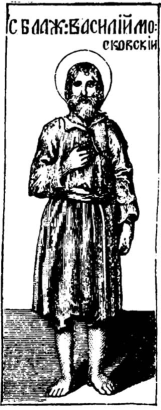
Блаж. Василий воспитался близь Москвы1. В летах живой молодости (шестнадцати лет), оставив дом родительский, проводил он жизнь юродивого. Без крова и пристанища ходил по Москве едва не нагой и зимою переносил такие морозы, от которых трескалась земля, а летом жарился на солнце; днем ходил по улицам, безответно принимая толчки, а на ночь ложился на паперти церковной и проводил время в молитве. Ни дружбы, ни знакомства не было у него ни с кем, – для всех он был чужим: до того лишал себя всякого утешения земного! Только у одной бедной вдовы иногда преклонял он голову: ум блаженного Василия постоянно был занят молитвою и богомыслием. На гробнице его висят тяжелые вериги, которые носил на себе блаженный, и без того так мало покоивший плоть свою. Столько высокий по духу, блаж. Василий говорил мало и не рассыпал наставлений2. Святое писание ни для кого не одобряет многословия и говорливости. «Много говорить – не миновать греха; а кто сдерживает уста свои, тот умен». (Прит.10:13). «Кто стережет уста свои, тот бережет душу свою: а кто широко открывает уста, тому беда». (Прит.13:4). Так учит богодухновенная мудрость. Св. Писание, поручив дело учительства известным лицам, от всех и каждого требует жизни чистой и святой, и такой жизни усвояет силу самого сильного наставления. «Вы сияете как светила в мире, писал апостол; так живите, чтобы быть вам чистыми, невинными чадами Божиими, непорочными посреди нечестивого и развращенно города» (Фил.2:15). Такова была жизнь блаж. Василия! Припомнив себе страшное время малолетнего Иоанна Грозного, можем представить себе, каким укором жизнь Василия была тогда людям развратным, и как утешала она невинно страдавших от произвола диких страстей. – Не легко было праведнику смотреть на грехи людские. Любя людей, он плакал за них и слезами своими призывал их к покаянию. В 1547 г. «Василий юродивый, говорит летопись, прииде в монастырь Воздвижения, иже зовется на острове, и ста пред церковию, к ней же умильно зря и умно молитву творя, плакашеся неутешно; людие же видяще его, дивляхуся». На следующий день в Москве был страшный пожар, начавшийся с Островского храма; оба города, старый и новый, сгорели; храмы, дома, дворец в. князя исчезли, «медь яко вода разливашеся»3.
The Blessed Basil was raised near Moscow1. In the years of lively youth (at sixteen years of age), leaving his parental home, he led the life of a Fool-for-Christ. Without shelter or refuge, he walked about Moscow almost naked, enduring in winter such frosts that the earth cracked, and in summer scorching in the sun; by day he walked the streets, silently receiving blows, and at night he lay down on the church porch and spent the time in prayer. He had neither friendship nor acquaintance with anyone—he was a stranger to all: so much did he deprive himself of every earthly comfort! Only at the home of one poor widow did he sometimes rest his head; the mind of the blessed Basil was constantly occupied with prayer and the contemplation of God. On his tomb hang the heavy chains which the blessed one wore on himself, who already so little gave rest to his flesh. So lofty in spirit, the blessed Basil spoke little and did not scatter teachings2. Holy Scripture approves of neither verbosity nor talkativeness for anyone. "In the multitude of words there wanteth not sin: but he that refraineth his lips is wise" (Prov. 10:19). "He that keepeth his mouth keepeth his life: but he that openeth wide his lips shall have destruction" (Prov. 13:3). Thus teaches divinely inspired wisdom. Holy Scripture, having entrusted the work of teaching to certain persons, requires of all and each a pure and holy life, and ascribes to such a life the power of the strongest instruction. "Ye shine as lights in the world," wrote the Apostle; "so live that ye may be blameless and harmless, the sons of God, without rebuke, in the midst of a crooked and perverse generation" (Phil. 2:15). Such was the life of the blessed Basil! Recalling the terrible time of the young Ivan the Terrible, we can imagine what a reproach Basil's life was then to dissolute people, and how it comforted those who innocently suffered from the tyranny of wild passions. It was not easy for the righteous man to look upon human sins. Loving people, he wept for them and by his tears called them to repentance. In 1547, "Basil the Fool-for-Christ," says the chronicle, "came to the Monastery of the Exaltation, which is called 'on the Island,' and stood before the church, gazing tenderly at it and mentally making prayer, weeping inconsolably; the people, seeing him, marveled." The next day a terrible fire broke out in Moscow, beginning from the Island church; both cities, the old and the new, burned down; churches, houses, the palace of the Grand Prince vanished, "bronze melted like water"3.
Внимательные к спасению своему замечали, что когда Василий проходил мимо дома, в котором безумно веселились, пели песни и пьянствовали, он со слезами обнимал углы того дома. «Что это значит»? спрашивали Василия. «Ангелы скорбные, прерывая молчание, отвечал он, стоят у этого дома и сокрушаются о грехах людских, а я со слезами упрашивал их молить Господа о обращении грешников». Блаженный возвышался до чудных состояний духовных. «Его видели ходящим по морю как по суху, видели люди неверные и дивились; придя в Россию говорили они: мы видели такого человека ходящим по морю. Свидетельство верное: дано врагами». Это были персидские купцы, спасенные Василием на море во время бури4.
Those attentive to their own salvation noticed that when Basil passed by a house where people were madly making merry, singing songs, and drinking, he would embrace the corners of that house with tears. “What does this mean?” they asked Basil. “The sorrowful angels,” he replied, breaking his silence, “stand at this house and grieve over human sins, and I with tears besought them to pray the Lord for the conversion of sinners.” The blessed one rose to wondrous spiritual states. “He was seen walking on the sea as on dry land; unbelieving people saw him and marveled; coming to Russia, they said: ‘We saw such a man walking on the sea.’ A true testimony: given by enemies.” These were Persian merchants, saved by Basil on the sea during a storm4.
Митроп. Макарий, узнав о блаженном Василие, сообщил о нем царю, и оба славили Бога, воспитавшего в их время такого подвижника. Раз царь Иоанн стоял в храме и думал, как украсить ему свой новый дворец на Воробьевых горах. После службы Василий зашел из храма к царю. «Где ты был, Василий? Я не видал тебя в храме». «А я видел тебя, отвечал Василий, только ты был не в храме, а на Воробьевых горах. Всякое ныне житейское отложим попечение, поет нам Церковь». Грозному вздумалось пригласить юродивого на свои именины. Подносили заздравную чашу. Юродивый три раза принимал ее и выливал за окошко. Грозный забушевал, приняв действие юродивого за пренебрежение к царю. – «Не кипятись, Иванушка, сказал юродивый; надобно было заливать пожар в Новгороде, и он залит». – Грозный не был из числа доверчивых людей; послан был нарочный в Новгород и оказалась правда на стороне блаженного.
Metropolitan Macarius, learning of the blessed Basil, informed the Tsar about him, and both glorified God, Who had raised up such an ascetic in their time. Once Tsar John stood in church and thought about how to adorn his new palace on the Sparrow Hills. After the service, Basil came from the church to the Tsar. “Where were you, Basil? I did not see you in church.” “But I saw you,” answered Basil, “only you were not in church, but on the Sparrow Hills. ‘All worldly care now let us set aside,’ the Church sings to us.” The Terrible one thought to invite the Fool-for-Christ to his name-day feast. They offered a cup for health. The Fool-for-Christ took it three times and poured it out the window. The Terrible one raged, taking the Fool’s action as contempt for the Tsar. “Do not boil over, Ivanushka,” said the Fool; “it was necessary to quench a fire in Novgorod, and it is quenched.” The Terrible one was not among the trusting; a messenger was sent to Novgorod, and the truth proved to be on the side of the blessed one.
Один богатый вельможа любил блаж. Василия, и Василий по временам бывал у него. Раз Василий пришел к нему в лютый мороз. Сострадательный боярин стал упрашивать его, чтобы по крайней мере в такое время защитил тело свое от мороза одеждою. «Хочется тебе это?» сказал юродивый. – «Искренним сердцем люблю тебя, – брат, прими в знак любви моей», говорил боярин. Блаженный с улыбкою сказал: «пусть так, – и я люблю тебя». Боярин с радостию надел на Василия богатую лисью шубу. Блаженный по обычаю побежал по улице. Недобрые люди, увидав юродивого в богатой шубе, вздумали обманом взять ее у него. Один лег на дороге, притворясь умершим товарищи стали просить Василия подать что-нибудь на погребение бедняка. Отдавая шубу, Василий сказал: «лукавнующие потребятся». Когда отошел он, обманщики нашли товарища мертвым.
A certain rich nobleman loved the blessed Basil, and Basil would sometimes visit him. Once Basil came to him in a bitter frost. The compassionate boyar began to entreat him to at least in such weather cover his body from the frost with clothing. “Do you wish this?” said the Fool. “With a sincere heart I love you, brother; accept this as a token of my love,” said the boyar. The blessed one said with a smile: “So be it—and I love you.” The boyar joyfully put a rich fox-fur coat on Basil. The blessed one, as was his custom, ran down the street. Wicked people, seeing the Fool in a rich fur coat, thought to take it from him by deceit. One lay down on the road, pretending to be dead; his comrades began to ask Basil to give something for the burial of the poor man. Giving away the fur coat, Basil said: “The deceitful shall be cut off.” When he had gone away, the deceivers found their comrade dead.
В последнее свое время блаженный лежал на одре, тяжко больной. Царь и царица Анастасия с детьми Иоанном и Феодором пришли к нему испросить молитв его за них. Блаженный, находясь уже при смерти, сказал царевичу Феодору: «все достояние прародителей твоих будет твоим, – ты – наследник». И вслед затем скончался. Это было 2 августа 1552 г. Из 88 лет жизни своей блаж. Василий провел в подвигах юродства 72 года. – Царь с боярами нес одр его. Митр. Макарий с собором духовных отпевал погребенного5. Тело блаженного погребено было на кладбище Троицкой церкви на рву, где в 1554 г. царь Иоанн приказал строить Покровский собор в память покорения Казани6.
In his last days, the blessed one lay on a bed, grievously ill. The Tsar and Tsarina Anastasia with their children John and Theodore came to him to ask for his prayers for them. The blessed one, being already near death, said to Tsarevich Theodore: “All the inheritance of your forefathers will be yours—you are the heir.” And thereupon he reposed. This was on August 2, 1552. Of the 88 years of his life, the blessed Basil spent 72 years in the labors of foolishness-for-Christ. The Tsar with the boyars bore his bier. Metropolitan Macarius with a council of clergy sang the funeral service for the buried one5. The body of the blessed one was buried in the cemetery of the Trinity Church on the Moat, where in 1554 Tsar John ordered the building of the Cathedral of the Intercession in memory of the conquest of Kazan6.
В 1588 г. «проявился блаженный Василий московский, говорит летопись, и Быша многа исцеления от мощей его». По воле ц. Феодора тогда же сооружена была серебряная риза над мощами его и установлено праздновать память его в день его кончины7.
In 1588, “the blessed Basil of Moscow was manifested,” says the chronicle, “and many healings were wrought from his relics.” By the will of Tsar Theodore, a silver reliquary was then constructed over his relics, and the celebration of his memory was established on the day of his repose7.
Загробные чудеса бл. Василия были разнообразны и совершались как при гробе его, так и в местах отдаленных для призывавших помощь святого.
The posthumous miracles of the blessed Basil were varied and were performed both at his tomb and in distant places for those who called upon the help of the saint.
Боярский сын Копятов, житель Вологды, целый год был болен ногами. Он собрался на костылях идти к гробу бл. Василия. Довольно пути прошел он: но наконец совсем обессилел. «Помоги мне, блаженный», воззвал он из глубины сердечной. Вслед затем услышал ответный голос: «если хочешь получить исцеление, иди к гробу моему». И в ту же минуту почувствовал исцеление. Уж не для исцеления, а по чувству благодарности пришел он здоровый блаженному и рассказал о бывшем с ним.
The boyar’s son Kopyatov, a resident of Vologda, was ill in his legs for a whole year. He set out on crutches to go to the tomb of the blessed Basil. He walked a considerable part of the way, but at last grew completely weak. “Help me, O blessed one,” he cried out from the depths of his heart. Thereupon he heard a voice in reply: “If you wish to receive healing, go to my tomb.” And in that same moment he felt himself healed. No longer for healing, but out of a feeling of gratitude, he came healthy to the blessed one and told of what had happened to him.
Псковитянка Евдокия была и слепа и не владела правою рукою. Решась брести к гробу блаженного, во Ржеве она очень изнемогла и призывала на помощь блаженного. На дороге блаженный исцелил ее своим явлением и она исполнила обет свой при гробе его.
A woman of Pskov, Eudocia, was both blind and had no use of her right hand. Resolving to make her way to the tomb of the blessed one, she grew very faint in Rzhev and called upon the blessed one for help. On the road, the blessed one healed her by his appearance, and she fulfilled her vow at his tomb.
Убогий Осип был немым от рождения, скитался по Покровской улице Москвы для милостыни; по временам нападали на него припадки беснования и тогда опасен бывал он для встречавшегося с ним. Его с трудом привлекли ко гробу блаженного; когда отпели молебен и окропили его св. водою, он стал говорить спокойно и смысленно.
A poor man, Joseph, was mute from birth and wandered along Pokrov Street in Moscow for alms; at times fits of demonic possession came upon him, and then he was dangerous to anyone he met. With difficulty they brought him to the tomb of the blessed one; when they had sung a moleben and sprinkled him with holy water, he began to speak calmly and coherently.
Черноризец Герасим двенадцать лет был без ног и питался милостынею у Спасских ворот. «Сколько лет ползаешь ты на коленах?» спросил явившийся ему Василий. «Двенадцать лет и все, что имел, роздал врачам, но без пользы», отвечал старец. «Для чего же ты, сказал ему Василий, не веришь святым, от которых можно получать исцеление без всякой платы? Веруешь ли, что Бог может исцелить тебя?» «Верую, Господи, сказал бедняк; верую, прибавил он, что твоими молитвами помилует меня Бог». – Хорошо, сказал явившийся, ступай же к гробу юродивого. Герасим пошел и совсем выздоровел8.
The monk Gerasim had been without the use of his legs for twelve years and lived on alms at the Spassky Gate. “How many years have you been crawling on your knees?” asked Basil, who appeared to him. “Twelve years, and all that I had I gave to physicians, but without benefit,” answered the elder. “Why then,” said Basil to him, “do you not believe in the saints, from whom healing can be received without any payment? Do you believe that God can heal you?” “I believe, O Lord,” said the poor man; “I believe,” he added, “that by your prayers God will have mercy on me.” “Good,” said the one who had appeared, “go then to the tomb of the Fool-for-Christ.” Gerasim went and was completely healed8.
«Преблаженный Василий! с юности заботился ты стать в день суда без страха и боязни, и смело, отвергнув все и удовольствия телесные, последовал за Христом; собирал богатство духовное трудами и терпением, с свечою всегда готовою. И весело взошел ты на небо. Моли спастись душам нашим».
“O most blessed Basil! From youth you took care to stand on the day of judgment without fear and trembling, and boldly, having rejected all bodily pleasures, you followed after Christ; you gathered spiritual riches by labors and patience, with your lamp ever ready. And joyfully you ascended to heaven. Pray for our souls to be saved.”
«Как истинный и непобедимый страдалец, явился ты с чистотою душевною и телесною, для Христа, изнурив тело всякою нуждою. Потому и получил от Него дар исцелений. И ныне, блаженный Василий, моли о нас славящих твое успение».9
“As a true and invincible sufferer, you appeared with purity of soul and body, for Christ’s sake, having worn down your body with every deprivation. Therefore you received from Him the gift of healings. And now, O blessed Basil, pray for us who glorify your falling asleep.”9
Пролог 2 авг. Минея на август, М. 1646. Степ. книга 2, 245. 246. Видение бывшее Василию в 1521 г. Слава Богоматери (3,40–42. М. 1853 г.) некоторые приписывают Василию Блаженному. Но а) по сказанию о чинах, видение было Василию «Новогородцу» (Вивлиоф. VΙ, 195–198); а блаженный Василий был москвич; б) Василий блаженный стал известным при Грозном царе.
Prologue, August 2. Menaion for August, Moscow, 1646. Book of Degrees 2, 245, 246. The vision that appeared to Basil in 1521. The Glory of the Mother of God (3, 40–42. Moscow, 1853) some attribute to Basil the Blessed. But a) according to the account of ranks, the vision was to Basil “of Novgorod” (Vivliof. VI, 195–198); and the blessed Basil was a Muscovite; b) the blessed Basil became known under the Terrible Tsar.
Степ. кн. 2, 245–248. Карамз. 8, пр. 173. День страшного пожара, июня 24, верно показан в царственной книге: в степенной неточность. – Этому пожару предшествовали не столько сильные пожары, апр. 12 и 20.
Book of Degrees 2, 245–248. Karamzin 8, note 173. The day of the terrible fire, June 24, is correctly shown in the Tsar’s Book: in the Book of Degrees there is an inaccuracy. – This fire was preceded by less severe fires, on April 12 and 20.
Собр. л. 4, 320. Новый летоп. стр. 28. Память блажен. Василия в уставе 1608 г. у Румян. в опис. муз. стр. 712. Иконы блажен. Василия в Хутынском монас. по описи 1642 г. Зап. археол. общ. IX. 431 459.
Collection of Chronicles 4, 320. New Chronicler, p. 28. The memory of the blessed Basil in the Typicon of 1608, in Rumyantsev, Description of the Museum, p. 712. Icons of the blessed Basil in the Khutyn Monastery according to an inventory of 1642. Notes of the Archaeological Society IX, 431, 459.
Стихира и тропарь службы 2 авг. в минее М. 1646 г. Служба бл. Василию в синод. ркп. № 313. Царского № 563.
Sticheron and troparion of the service for August 2 in the Menaion, Moscow, 1646. Service to the blessed Basil in a Synodal manuscript No. 313. Tsarsky No. 563.