Из числа первых семи диаконов Апостольской Церкви (Деян.6:5), Прохор был спутником Ап. Петра и потом Иоанна Богослова; основал епископскую кафедру в Никомидии и, проповедуя в Антиохии, убит язычниками. Никанор убит Иудеями тогда же, как пострадал и Стефан архидиакон. Тимон епископствовал в Бостре Аравийской, а Пармен в подвигах проповеди скончался мученически и похоронен в г. Соли, на о. Кипре. Воспоминаются в соборе LXX 4 января, Никанор – 28 дек., а Тимон – 30 декабря.
Of the first seven deacons of the Apostolic Church (Acts 6:5), Prochorus was a companion of the Apostle Peter and later of John the Theologian; he founded the episcopal see in Nicomedia and, while preaching in Antioch, was killed by pagans. Nicanor was killed by the Jews at the same time that Stephen the Archdeacon also suffered. Timon was bishop in Bostra of Arabia, and Parmenas, in the labors of preaching, died a martyr and was buried in the city of Soli on the island of Cyprus. They are commemorated in the Synaxis of the Seventy on January 4, Nicanor on December 28, and Timon on December 30.
Павел, в мире – Прокопий, был сын Греческого императора и Михаила Куропалата, прозванного Рангавеем. Рождение его радостно и торжественно праздновал Константинополь; между тем, не царская слава, но сияние в убогой кельи, превышающее своим тихим блеском всякую славу мирскую, предстояло впоследствии дитяти, рождённому для престола...
Paul, in the world Procopius, was the son of the Greek emperor and of Michael Curopalates, surnamed Rhangabe. Constantinople joyfully and solemnly celebrated his birth; yet it was not royal glory, but the radiance of a humble cell, surpassing in its quiet splendor all worldly glory, that awaited in time the child born for the throne...
Едва только Прокопий был отнят от груди, отец его, благочестивый, миролюбивый человек, тяготясь придворными смутами и вообще всей суетой мирской, тем более ощутительной, чем выше поставлен человек по своему положению, отказался от престола и поступил в выстроенный им самим монастырь, названный – Мирелеон, где и скончался в иночестве.
Scarcely had Procopius been weaned when his father, a pious, peace-loving man, burdened by courtly disturbances and by all the vanity of the world—all the more palpable the higher a man is placed by his station—renounced the throne and entered the monastery he himself had built, called Myrelaeon, where he ended his life in monasticism.
Престол после Михаила Куропалата занял Лев Армянин и, опасаясь в малолетнем Прокопии будущего соперника в правах на престол, он решился изувечить его посредством варварского оскопления.
After Michael Curopalates, the throne was occupied by Leo the Armenian, and fearing in the young Procopius a future rival in rights to the throne, he resolved to mutilate him by barbarous castration.
Прокопию предоставлены были однако же средства к высшему образованию, которым он, благодаря своим природным богатым умственным дарованиям, соединённым с благодатными душевными свойствами, унаследованными от благочестивых родителей, превосходно воспользовался, так что не замедлил прославиться среди современного мира.
Procopius was nevertheless provided with the means for a higher education, which, thanks to his rich natural intellectual gifts, joined with the gracious spiritual qualities inherited from his pious parents, he made excellent use of, so that he soon became renowned among the contemporary world.
Но, умудрённый и умственным и душевным своим развитием, Прокопий рано сознал всю пустоту блеска и величия земного; тяготился он и своей собственной славой и даже боялся её, как опасного искушения для естественного человеческого самолюбия, и потому решился оставить мир.
But, made wise by both his intellectual and spiritual development, Procopius early recognized all the emptiness of earthly splendor and greatness; he was burdened even by his own fame and even feared it as a dangerous temptation for natural human self-love, and therefore resolved to leave the world.
В одежде нищего вышел он однажды из Константинополя и отправился на Афонскую гору. Осмотрев сначала обители и изучив жизнь иноков, впервые почувствовал он невыразимое спокойствие и остался жить в обители Ксиропотам, основанной императрицею Пульхерией и незадолго перед тем опустошённой пиратами, избившими иночествующих в ней.
In the garb of a beggar he once departed from Constantinople and set out for Mount Athos. Having first examined the monasteries and studied the life of the monks, he for the first time felt an inexpressible peace and remained to live in the monastery of Xeropotamou, founded by the Empress Pulcheria and shortly before laid waste by pirates, who had slain the monks dwelling in it.
Здесь на развалинах обители построил он себе небольшую келью и поселился в ней для молитвенных подвигов, к которым так располагала и дивная природа среди живописнейшей местности и невозмутимая тишина пустынного уединения. Недалеко от него жил другой пустынник – Косьма; с ним сблизился Прокопий и принял от него пострижение в иночество с именем Павла. Тогда он стал подвизаться суровым подвигом: спал даже на голой земле, имея камень вместо изголовья.
Here, on the ruins of the monastery, he built himself a small cell and settled in it for ascetic labors of prayer, to which both the wondrous nature amid the most picturesque locale and the unbroken silence of desert solitude disposed him. Not far from him lived another hermit, Cosmas; Procopius drew close to him and received from him the tonsure into monasticism with the name Paul. Then he began to struggle in a severe asceticism: he slept even on the bare ground, having a stone instead of a pillow.
Строгая жизнь Павла удивляла самих иноков и служила для них образцом для подражания. Хотя и скрывал он от всех своё звание и свою учёность, но не мог скрыть своей добродетели, которая прославила его и вдали от мира и более или менее способствовала к тому, что люди узнали путь к нему и извлекли его из его тайного убежища, чтобы позаимствоваться от него добром и правдой.
The strict life of Paul amazed even the monks themselves and served them as a model for imitation. Although he concealed from all his rank and his learning, he could not conceal his virtue, which glorified him even far from the world and more or less contributed to the fact that people learned the way to him and drew him from his secret refuge, to partake of goodness and truth from him.
Император Роман, вступивший на престол Греческий, пожелал разыскать родственного ему Прокопия. Посланные для этой цели нашли его наконец на Святой Горе, узнав его – в иноке Павле, и, несмотря на нежелание его расстаться с возлюбленным уединением, убедили его отправиться с ними в Константинополь, чтобы повидаться с державным и другими родственниками, желавшими этого.
The Emperor Romanus, who had ascended the Greek throne, desired to seek out his kinsman Procopius. Those sent for this purpose finally found him on the Holy Mountain, recognizing him in the monk Paul, and, despite his unwillingness to part with his beloved solitude, they persuaded him to go with them to Constantinople, to see the sovereign and other relatives who desired this.
Снова торжественно и радостно встретил Константинополь царственного – но уже не младенца, а подвижника, явившегося в столицу во всём уничижении своего иноческого сана. Вельможи и простой народ припадали к нему, как к ангелу, и просили его благословения. И для большей славы Сам Бог прославил его исцелением тяжко заболевшего в то время императора Романа, как только Павел помолился о больном и возложил на него руки. Полюбив всей душой Павла и желая пользоваться его беседами, император просил его остаться при Дворе, чтобы заняться воспитанием и образованием детей своих. Не отказался от этого труда любящий Павел, и радовался некоторое время император, как отец – видя детей своих под драгоценнейшим влиянием Божьего человека. Но снова, и теперь больше прежнего, заскорбело сердце пустынника среди всех торжеств и великолепия жизни при Дворе, и выше сил его было выносить зрелище смут и разгара страстей людских. Душа его томилась по успокоительной пустыне, и однажды он сказал императору: «государь, как рыба без воды, так и инок без условий келейной жизни, и пустынного безмолвия жить не может; он мёртв для Бога и безжизнен для того, чтобы в точности исполнять свой долг и обязательства в отношении к Богу. Мир – не иноческая стихия. Поэтому позволь мне возвратиться в мою пустыню, где беседа с Богом составляет высшее благо моей души» ...
Once again Constantinople solemnly and joyfully met the royal one—but no longer an infant, but an ascetic, who appeared in the capital in all the lowliness of his monastic rank. Nobles and common people fell down before him as before an angel and asked for his blessing. And for greater glory, God Himself glorified him by the healing of the Emperor Romanus, who had fallen gravely ill at that time, as soon as Paul prayed for the sick man and laid his hands upon him. Having loved Paul with all his soul and desiring to enjoy his conversations, the emperor asked him to remain at court, to undertake the upbringing and education of his children. The loving Paul did not refuse this labor, and for a time the emperor rejoiced as a father, seeing his children under the most precious influence of the man of God. But again, and now more than before, the heart of the hermit grieved amid all the celebrations and splendor of life at court, and it was beyond his strength to bear the spectacle of disturbances and the kindling of human passions. His soul yearned for the soothing desert, and once he said to the emperor: "Sovereign, as a fish cannot live without water, so a monk cannot live without the conditions of cell life and desert silence; he is dead to God and lifeless for the exact fulfillment of his duty and obligations toward God. The world is not a monastic element. Therefore allow me to return to my desert, where converse with God constitutes the highest good of my soul..."
Не хотелось императору разлучаться с незаменимым наставником своим и детей своих, не желал он также и удерживать его насильно, и потому отпустил его на Афон, предоставив ему при этом средства возобновить разрушенную пиратами Ксиропотамскую обитель во всём подобающем ей под царским покровительством великолепии.
The emperor did not wish to part with his irreplaceable teacher and that of his children, nor did he wish to detain him by force, and so he let him go to Athos, providing him at the same time with the means to restore the Xeropotamou monastery, destroyed by pirates, in all the splendor befitting it under royal patronage.
Настала радость и для Афона при возвращении славного инока Павла. Трудами его восстановлена была из развалин обитель, в которую собралось множество иноков, желавших достойным образом проходить иноческое житие под мудрым руководством опытного Павла. Тяготясь, однако же, молвой и многолюдством, Павел, устроив обитель и поручив управление ею одному из благочестивейших братий, сам удалился в подгорие Афона, где надеялся обрести полное безмолвие среди строгого уединения. Но и сюда пришли к нему преданные ему и в непродолжительное время пустыня, в которой поселилось до 60-ти учеников Павла, приняла вид обители, которую приходилось устроить на основании правил и условий пустынной жизни и оградить её вместе с тем от внешних нападений при небезопасном её положении, открытом с моря. Таким образом стараниями Павла возникла новая обитель во имя св. Георгия, которая и до сих пор сохранила своё название Святопавловской в память своего основателя.
Joy came also to Athos at the return of the glorious monk Paul. By his labors the monastery was restored from ruins, and a multitude of monks gathered there, desiring worthily to pursue the monastic life under the wise guidance of the experienced Paul. Burdened, however, by fame and the multitude of people, Paul, having established the monastery and entrusted its governance to one of the most pious brethren, himself withdrew to the foothills of Athos, where he hoped to find complete silence amid strict solitude. But even here his devoted disciples came to him, and in a short time the desert, in which up to sixty disciples of Paul settled, took on the appearance of a monastery, which had to be organized on the basis of the rules and conditions of desert life and at the same time protected from external attacks, given its unsafe position, open to the sea. Thus, by the efforts of Paul, a new monastery arose in the name of St. George, which to this day retains its name of St. Paul's Monastery in memory of its founder.
Вскоре по основании этой обители, в которой сам Павел был настоятелем, наступило время кончины его, которую предузнал он заранее. Прощаясь с плачущими о нём братиями, умирающий, сам заплакав, сказал им: – «перестаньте плакать, братия! Не смущайте сердца моего вашими слезами. Что делать! Настало время, которого постоянно жаждала душа моя, но страшилась плоть моя» ...
Soon after the founding of this monastery, in which Paul himself was abbot, the time of his end arrived, which he had foreseen beforehand. Bidding farewell to the brethren weeping for him, the dying man, himself weeping, said to them: "Cease weeping, brethren! Do not trouble my heart with your tears. What is to be done! The time has come which my soul has constantly yearned for, but my flesh has feared..."
Побеседовав с братиями последними отеческими наставлениями, приобщился он св. Таин и, произнеся всегдашнюю свою молитву: «Упование моё – Отец, прибежище моё – Сын, покров мой – Дух Святой, Троица Святая, слава Тебе!» с просиявшим от неземного восторга лицом, предал душу свою Богу. Это было 28-го июля 820-го года. Погребение Павла было торжественно совершено в Константинополе в присутствии императора, патриарха и всего клира407. Впоследствии, во время разгрома Константинополя крестоносцами, мощи св. Павла Ксиропотамского были перевезены в Венецию.
Having conversed with the brethren in final fatherly instructions, he partook of the Holy Mysteries and, uttering his constant prayer: "My hope is the Father, my refuge is the Son, my protection is the Holy Spirit, O Holy Trinity, glory to Thee!" with a face radiant with unearthly rapture, he surrendered his soul to God. This was on July 28 of the year 820. The burial of Paul was solemnly performed in Constantinople in the presence of the emperor, the patriarch, and all the clergy407. Later, during the sack of Constantinople by the Crusaders, the relics of St. Paul of Xeropotamou were transferred to Venice.
Памятником высокого духовного настроения и образования преп. Павла сохранились: Слово на Введение во храм Пресвятой Богородицы, канон сорока мученикам и канон (писанный ямбическими стихами) честному кресту. Император Роман старший, в царской своей грамоте (хрисовуле), данной Павлу на устроение обители на горе Афонской, называет его величайшим из философов.
As monuments of the lofty spiritual disposition and education of the Venerable Paul, there have been preserved: a Discourse on the Entry into the Temple of the Most Holy Theotokos, a canon to the Forty Martyrs, and a canon (written in iambic verse) to the Precious Cross. The Emperor Romanus the Elder, in his imperial charter (chrysobull) given to Paul for the establishment of the monastery on Mount Athos, calls him the greatest of philosophers.
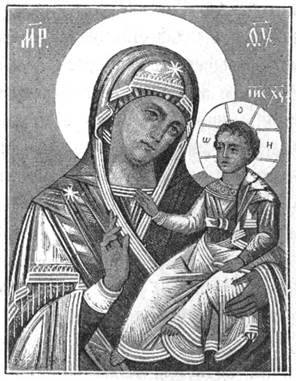
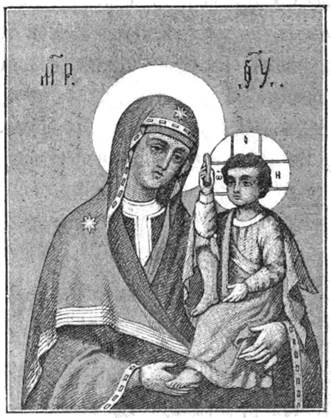
Смоленская икона Богоматери называется Одигитрия и по сказанию предания написана св. Лукой. О древности этой иконы в России сказания различны. Говорят: сей иконой благословлена на путь в Россию Греческая царевна Анна – супруга св. равноапостольного князя Владимира – сестра Греческого императора Василия II. Иные говорят, что Смоленская икона привезена из Греции в Россию в 1046 году, когда Константин Мономах, выдавая дочь свою царевну за Всеволода Ярославича, князя Черниговского, благословил её иконой в путь, отчего она и названа Одигитрия – путеводительница. А Владимир Мономах, сын Всеволодов, перенёс икону в Смоленск и поставил её в соборном храме Успения Богоматери, который он заложил 3 мая 1101 года. С того времени икона называется Смоленской.
The Smolensk Icon of the Mother of God is called the Hodegetria, and according to the account of tradition, it was painted by St. Luke. Accounts concerning the antiquity of this icon in Russia vary. Some say that this icon blessed the Greek princess Anna—the wife of St. Vladimir, Equal-to-the-Apostles, and sister of the Greek Emperor Basil II—on her journey to Russia. Others say that the Smolensk Icon was brought from Greece to Russia in the year 1046, when Constantine Monomachus, giving his daughter the princess in marriage to Vsevolod Yaroslavich, Prince of Chernigov, blessed her with the icon for the journey, whence it was called Hodegetria—the Guide. And Vladimir Monomachus, the son of Vsevolod, transferred the icon to Smolensk and placed it in the cathedral church of the Dormition of the Mother of God, which he founded on May 3, 1101. From that time the icon is called the Smolensk Icon.
В 1237 году, когда полчища Батыевы приступили к Смоленску и жители Смоленска не видели ни откуда помощи, Сама Одигитрия была необоримой воеводой беззащитного города. Ночью в кафедральном соборе, где стоит чудотворная её икона, повелено было от Неё пономарю церковному объявить Меркурию, жителю Смоленска: «Меркурий, изыди скоро, в броне воинской, ибо тебя зовёт Владычица». Меркурий пришёл во храм Богоматери, пал перед иконой и слышал голос от иконы: «угодник Мой Меркурий, посылаю тебя оградить дом Мой. Властитель Ордынский втайне хочет в нынешнюю ночь напасть на город Мой со всей своей ратью и с исполином силы своей, чтобы опустошить город; но Я умолила Сына и Бога Моего о доме Моём, да не предаст его в работу вражескую. Изыди в сретение врага, втайне от народа, святителя и князя, не ведующих о нападении ратных, и силой Христа Бога победишь исполина; Сама Я буду с тобой, помогая рабу Своему; но там вместе с победой ожидает тебя венец мучения, который прими от Христа». Со слезами поклонился Меркурий до земли святой иконе Богоматери и вышел из храма и града; призывая на помощь Божию Матерь, Меркурий проник в средину врагов и убил исполина ратного. Мужественно ожидал Меркурий нашествия врагов и отразил их силу, побораемый свыше молниеносными мужами в присутствии светлой жены, лик которой ужасом объял врагов. После поражения врагов и Меркурий поражён был в голову и таким образом кровью запечатлел свой подвиг.
In the year 1237, when the hordes of Batu approached Smolensk and the inhabitants of Smolensk saw help from nowhere, the Hodegetria Herself was the invincible voivode of the defenseless city. At night, in the cathedral church where Her wonderworking icon stands, it was commanded from Her to the sexton of the church to declare to Mercury, a resident of Smolensk: “Mercury, go forth quickly, in military armor, for the Lady calls you.” Mercury came to the church of the Mother of God, fell down before the icon, and heard a voice from the icon: “My servant Mercury, I send you to guard My house. The ruler of the Horde secretly wishes this very night to attack My city with all his army and with his giant of strength, to lay waste the city; but I have entreated My Son and My God concerning My house, that He not deliver it into bondage to the enemy. Go forth to meet the enemy, in secret from the people, the hierarch, and the prince, who know nothing of the attack of the warriors, and by the power of Christ God you shall conquer the giant; I Myself will be with you, helping My servant; but there, together with victory, the crown of martyrdom awaits you, which receive from Christ.” With tears Mercury bowed to the ground before the holy icon of the Mother of God and went out of the church and the city; calling upon the Mother of God for help, Mercury penetrated into the midst of the enemies and slew the giant of the army. Courageously Mercury awaited the onslaught of the enemies and repelled their force, being aided from on high by lightning-like men in the presence of a radiant woman, whose countenance filled the enemies with terror. After the defeat of the enemies, Mercury also was struck on the head and thus sealed his exploit with blood.
В 1398 г. во время нашествия Тамерлана на южные пределы России, иконой Смоленской Божией Матери Витовт благословил дочь свою Софию – супругу великого князя Василия Димитриевича, бывшую в Смоленске для свидания с отцом, и ею перенесена была икона из Смоленска в Москву и поставлена в Благовещенском соборе. Жители столицы оказывали святыне великое благоговение. Через 58 лет, в 1456 г., в царствование великого князя Василия Васильевича Тёмного, при митрополите Ионе, Мисаил, епископ Смоленский, и тамошний наместник со многими сановниками города, прибывшие в свите от Польского короля Казимира в Москву к великому князю, просили его отпустить икону их в Смоленск. Князь советовался с митрополитом, архиереями и боярами, и наконец решился вручить жителям Смоленска Смоленскую икону Одигитрии, повелев снять с неё список, для поставления его на месте её, и ежедневно совершал перед ним молебствие. На отпущение иконы совершили празднество. После литургии митрополит и прочие духовные столицы с крестным ходом, в сопровождении великого князя, детей его, бояр, войска и многочисленного народа, проводили за город две версты до бывшего тогда в предместии Москвы Саввина монастыря и, по совершении молебствия, со слезами отпустили икону Владычицы. На месте молебствия, в 1524 году, при великом князе Василии Иоанновиче, построен Ново-Девичий монастырь, в память взятия Смоленска и присоединения к Российской державе. В этом монастыре в 1525 году поставили икону, списанную с Смоленской Одигитрии, и 28 июля назначили празднование явлению Смоленской иконы Божией Матери, с крестным ходом, который и доныне отправляется в Москве в Новодевичий монастырь, в возблагодарение за возвращение Смоленска от Литвы. В 1812 году икона Смоленской Одигитрии взята была из Смоленска и препровождена в Ярославль Смоленским епископом (Фальковским).
In the year 1398, during the invasion of Tamerlane into the southern borders of Russia, Vytautas blessed his daughter Sophia—the wife of Grand Prince Basil Dimitrievich, who was in Smolensk to visit her father—with the Smolensk Icon of the Mother of God, and by her the icon was transferred from Smolensk to Moscow and placed in the Annunciation Cathedral. The inhabitants of the capital showed great reverence to the shrine. Fifty-eight years later, in 1456, during the reign of Grand Prince Basil Basilievich the Dark, under Metropolitan Jonah, Misael, Bishop of Smolensk, and the local viceroy with many dignitaries of the city, who had arrived in the retinue of the Polish King Casimir in Moscow to the Grand Prince, asked him to release their icon to Smolensk. The prince consulted with the metropolitan, the bishops, and the boyars, and finally decided to entrust to the inhabitants of Smolensk the Smolensk Icon of the Hodegetria, having ordered a copy to be made from it, to be placed in its stead, and daily performed a moleben before it. A feast was held for the sending forth of the icon. After the Divine Liturgy, the metropolitan and the other clergy of the capital, with a procession of the cross, accompanied by the Grand Prince, his children, the boyars, the army, and a multitude of people, escorted it two versts out of the city to the Savvin Monastery, which was then in the suburb of Moscow, and after performing a moleben, with tears they sent forth the icon of the Lady. On the site of the moleben, in 1524, under Grand Prince Basil Ioannovich, the Novo-Devichy Monastery was built, in memory of the taking of Smolensk and its annexation to the Russian state. In this monastery, in 1525, they placed the icon copied from the Smolensk Hodegetria, and on July 28 they appointed a celebration of the appearance of the Smolensk Icon of the Mother of God, with a procession of the cross, which to this day is conducted in Moscow to the Novodevichy Monastery, in thanksgiving for the return of Smolensk from Lithuania. In 1812, the Smolensk Hodegetria Icon was taken from Smolensk and sent to Yaroslavl by the Bishop of Smolensk (Falkovsky).
В Смоленске пребывает и другая Смоленская икона Богоматери, особенно чтимая гражданами. Эта икона написана в 1602 году и первоначально находилась в Днепровской башне городской стены Смоленска. В 1728 году она поставлена была в деревянной церкви, построенной на башне; а потом в 1800 году в новоустроенной каменной, что над проезжими воротами. Эта Смоленская икона Божией Матери в 1812 году, августа 5, при оставлении Смоленска нашими войсками взята была воинами и постоянно находилась при войске, которое во всех делах против неприятеля хранило её в рядах своих. Войска с благоговением видели среди себя образ Богоматери и почитали его великим залогом помощи от Всевышнего. Накануне достопамятного дня Бородинской битвы чудотворную икону носили среди воинов для благословения и ободрения их на предстоявший великий подвиг борьбы за веру и отечество. По одержании каждой победы над неприятелем прав. воины приносили перед иконой благодарственные молебствия. Когда Всемогущий благословил Российское оружие, и с покорением врагов город Смоленск очищен был от них, чудотворная Смоленская икона Богоматери, по воле военачальника, обратно препровождена в Смоленск, для поставления на прежнем месте и прославления Господа сил, дивно карающего кичливых врагов народного спокойствия. С иконой посланы были в Смоленск многие приношения для неё. Икона прибыла в Смоленск 5-го ноября, и этот день для жителей Смоленска сделался незабвенным памятником и праздником изгнания врагов из отечества, помощью и заступлением Богородицы.
In Smolensk there also remains another Smolensk icon of the Mother of God, especially venerated by the citizens. This icon was painted in 1602 and originally was located in the Dnieper Tower of the city wall of Smolensk. In 1728 it was placed in a wooden church built on the tower; and later, in 1800, in a newly built stone church over the gateway. This Smolensk Icon of the Mother of God, on August 5, 1812, upon the abandonment of Smolensk by our troops, was taken by the soldiers and constantly remained with the army, which kept it in its ranks in all engagements against the enemy. The troops with reverence saw among themselves the image of the Mother of God and regarded it as a great pledge of help from the Most High. On the eve of the memorable day of the Battle of Borodino, the wonderworking icon was carried among the soldiers for blessing and encouragement for the great exploit of struggle for faith and fatherland that lay before them. After each victory over the enemy, the Orthodox soldiers offered before the icon thanksgiving molebens. When the Almighty blessed the Russian arms, and with the subjugation of the enemies the city of Smolensk was cleared of them, the wonderworking Smolensk Icon of the Mother of God, by the will of the commander, was sent back to Smolensk, to be placed in its former place and to glorify the Lord of hosts, who wondrously punishes the arrogant enemies of the people’s peace. Many offerings for it were sent with the icon to Smolensk. The icon arrived in Smolensk on November 5, and this day became for the inhabitants of Smolensk an unforgettable memorial and feast of the expulsion of the enemies from the fatherland, by the help and intercession of the Theotokos.
В день праздника в честь Смоленской Божией Матери Церковь умиленно вопиет: «к Богородице прилежно ныне притецем грешнии и смиреннии, и припадем в покаянии зовуще из глубины души: Владычице, помози на ны милосердовавши, потщися погибаем от множества прегрешений: Тя бо едину надежду имамы. Не умолчим никогда, Богородице, силы Твоя глаголати недостойнии. Аще бо не Ты предстояла молящи, кто бы нас избавил от толиких бед? кто же бы сохранил доныне свободны? Не имамы иные помощи, не имамы иные надежды, разве Тебе, Владычице». Церковь молится перед Смоленской иконой Богоматери избавить нас от многих бед. Действительно в XVI в., когда установлен праздник в честь её, и В особенно в XV-м, тяготели над Россией многие беды: беды от внешних врагов – от Татар и Поляков; беды внутренние – от междоусобий; беды преимущественно для Церкви от унии, орудием коей в XV в. был Московский митрополит Исидор, родом Далмат, и многие другие беды, особенно в 1812 году бывшие, от которых кто бы нас избавил, кто же бы сохранил доныне свободны, аще бы не предстояла Владычица молящи?
On the day of the feast in honor of the Smolensk Mother of God, the Church tenderly cries out: “To the Theotokos let us now diligently hasten, we sinners and humble, and let us fall down in repentance, crying from the depth of the soul: O Lady, help us, having had mercy on us; make haste, for we perish from the multitude of transgressions; for Thee alone we have as our hope. We shall never cease, O Theotokos, to declare Thy power, we who are unworthy. For if Thou didst not stand before us interceding, who would have delivered us from so many troubles? who would have preserved us free until now? We have no other help, we have no other hope, save Thee, O Lady.” The Church prays before the Smolensk Icon of the Mother of God to deliver us from many troubles. Indeed, in the 16th century, when the feast in its honor was established, and especially in the 15th, many troubles weighed upon Russia: troubles from external enemies—from the Tatars and Poles; internal troubles—from civil strife; troubles especially for the Church from the Union, the instrument of which in the 15th century was the Moscow Metropolitan Isidore, a Dalmatian by birth, and many other troubles, especially those in 1812, from which who would have delivered us, who would have preserved us free until now, if the Lady had not stood before us interceding?
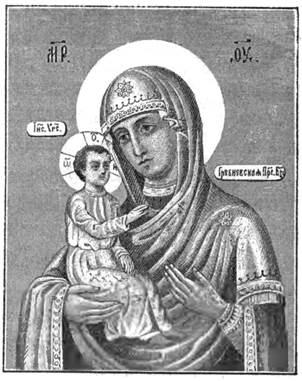
Когда великий князь Дмитрий Иоаннович Донской возвращался, после победы над Мамаем, с берегов Дона в Москву и достиг города Гребени на реке Чири, впадающей в Дон; жители сего города поднесли ему икону Богоматери, прославившуюся у них чудотворениями и получившую от сего наименование Гребневской. Великий князь с верой принял сию икону и, по прибытии в Москву, велел поставить её в Московском Успенском соборе.
When Grand Prince Demetrius Ioannovich Donskoy was returning, after the victory over Mamai, from the banks of the Don to Moscow and reached the city of Greben on the river Chira, which flows into the Don, the inhabitants of this city presented to him an icon of the Mother of God, which had been glorified among them by wonderworkings and received from this the name Grebnevskaya. The Grand Prince received this icon with faith and, upon his arrival in Moscow, ordered it to be placed in the Moscow Dormition Cathedral.
Правнук Донского великий князь Иоанн Васильевич, собираясь в 1471 г. в поход против Новгорода, дал обет построить церковь в честь Успения Богоматери, её чудотворной иконы Гребневской, которую брал с собой в поход. Обет его увенчался Шелонской битвой 1472 года; он исполнил его сооружением в Московском посаде деревянной церкви в честь Успения Богоматери, тогда как большой Успенский собор ещё не был кончен строением. В эту церковь Иоанн III поставил образ Гребневской Богоматери, украсив его серебром и драгоценными каменьями. На киоте образа велел написать акафист Пресвятой Богородице, в похвалу её и в благодарность за дарование ему сына Василия.
The great-grandson of Donskoy, Grand Prince John Basilievich, preparing in 1471 for a campaign against Novgorod, made a vow to build a church in honor of the Dormition of the Mother of God, of Her wonderworking Grebnev Icon, which he took with him on the campaign. His vow was crowned by the Battle of Shelon in 1472; he fulfilled it by building in the Moscow suburb a wooden church in honor of the Dormition of the Mother of God, at a time when the great Dormition Cathedral was not yet finished being built. Into this church John III placed the Grebnev Icon of the Mother of God, adorning it with silver and precious stones. On the icon case he ordered the akathist to the Most Holy Theotokos to be inscribed, in praise of Her and in thanksgiving for the granting to him of his son Basil.
С этим св. образом Русские дружины отразили в 1612 году Поляков на Сретенской улице. Летопись говорит, что «от церкви Гребневской Богоматери князь Дмитрий Трубецкой двинулся на освобождение Китая и Кремля от Польской сволочи и Русских изменников».
With this holy image the Russian squads repelled the Poles in 1612 on Sretenka Street. The chronicle says that “from the church of the Grebnev Mother of God, Prince Demetrius Trubetskoy moved to liberate Kitai-gorod and the Kremlin from the Polish rabble and Russian traitors.”
В пожар 1687 года церковь Гребневской Богоматери вся объята была пламенем, так что не успели вынести и образа её; но он чудесно сохранён и, по словам летописи, «внезапу обретеся на воздухе». В XVIII столетии церковь Гребневская обновлена была из усердия к чудотворному её образу. Царевна Наталия Алексеевна – сестра императора Петра Великого, украсив чудотворный образ от своих сокровищ, пешая сопровождала его из Преображенского села в церковь Успения Божией Матери на бору, и там, совершив молебное пение, поставила святыню на своё место. Возобновлению сей церкви особенно содействовал Стефан Яворский; им засвидетельствованы и чудеса, бывшие от Гребневской иконы.
In the fire of 1687, the church of the Grebnev Mother of God was completely engulfed in flames, so that they did not even have time to carry out its icon; but it was miraculously preserved and, according to the chronicle, “suddenly appeared in the air.” In the 18th century, the Grebnev church was renovated out of zeal for its wonderworking image. Tsarevna Natalia Alexeevna—the sister of Emperor Peter the Great—having adorned the wonderworking image from her own treasures, accompanied it on foot from the village of Preobrazhenskoe to the Church of the Dormition of the Mother of God on the Bor, and there, having performed a moleben, placed the shrine in its place. Stephen Yavorsky especially contributed to the renovation of this church; he also attested to the miracles that occurred from the Grebnev Icon.
В церковь Гребневскую доныне не престают стекаться Московские жители на поклонение чудотворной иконе: многие поднимают её к себе в дома. С тёплой верой притекающим не иссякает источник исцелений и утешений от святыни.
To the Grebnev church, to this day, the inhabitants of Moscow do not cease to flock to venerate the wonderworking icon: many take it up into their homes. For those who draw near with warm faith, the source of healings and consolations from the shrine does not run dry.
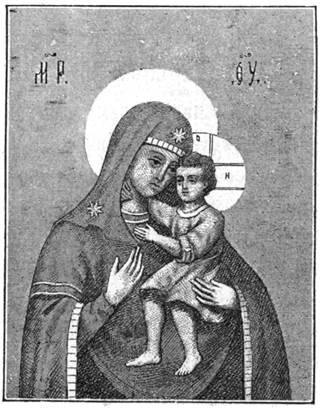
Икона Богоматери Одигитрии на Песочне обретена была в 1624 г. Недалеко от Костромы в селе Савицком жил боярский сын Емилиан Исаев Севрюг. Он лишился зрения и тщетно искал себе помощи у врачей. Однажды – это было в 1724 г. – его крестьяне, пася его овец и лошадей в пустыне, называемой Игрица, при реке Песочне, пришли к церкви чрезвычайно ветхой, которая готова была разрушиться. Вошедши в церковь, пастухи увидели образ Богоматери, держащей на руках Предвечного Младенца, как будто только что написанный. Удивляясь тому, как в ветхой церкви явился новописанный образ, они помолившись пошли к своему господину и рассказали то, что видели. Благочестивый Емилиан, обрадованный этим, тотчас послал в Кострому за своим духовным отцом, Троицкого собора священником Феодором чтобы он пришёл отслужить молебен. По прибытии священника Емилиан, собравши родственников, отправился в ветхий храм, где найдена была икона Богоматери. Молебен совершён был с водоосвящением. Когда священной водой священник стал кропить икону, вода вбиралась в неё, как в губку, только на очах долго держалась и потом св. вода потекла с очей, как струи. Священник покропил также св. водой слепого Емилиана, и он тотчас прозрел. Прославляя Господа, чудодействующего через икону Богоматери, возвратились все присутствовавшие домой и рассказали о чудесном явлении иконы и благотворном исцелении от неё. На месте явления иконы устроен Песоченский монастырь, в 15 верстах от Костромы на правом берегу Волги.
The Icon of the Mother of God Hodegetria at Pesochen was uncovered in 1624. Not far from Kostroma, in the village of Savitskoye, there lived a boyar's son, Emilian Isaev Sevryug. He had lost his sight and sought help from physicians in vain. One day—this was in 1724—his peasants, while pasturing his sheep and horses in a wilderness called Igritsa, by the river Pesochen, came upon an exceedingly dilapidated church, ready to collapse. Entering the church, the shepherds saw an image of the Mother of God holding the Eternal Child in her arms, as if freshly painted. Marveling that a newly-painted image had appeared in a decrepit church, they prayed and then went to their master and told him what they had seen. The pious Emilian, rejoicing at this, immediately sent to Kostroma for his spiritual father, the priest Theodore of the Trinity Cathedral, that he might come and serve a moleben. Upon the priest's arrival, Emilian, having gathered his relatives, set out for the dilapidated church, where the icon of the Mother of God was found. A moleben was served with the blessing of water. When the priest began to sprinkle the icon with holy water, the water was absorbed into it like a sponge; only on the eyes did it linger long, and then the holy water flowed from the eyes like streams. The priest also sprinkled the blind Emilian with holy water, and he immediately regained his sight. Glorifying the Lord, who works miracles through the icon of the Mother of God, all those present returned home and told of the miraculous appearance of the icon and the beneficial healing from it. On the site of the icon's appearance, the Pesochen Monastery was established, 15 versts from Kostroma on the right bank of the Volga.
Чудотворную икону Смоленской Божией Матери, что на Песочне, ежегодно носят в Кострому. Во вторник на 9-й неделе после Пасхи отправляется духовенство из Костромы, в сопровождении множества граждан, в Песоченский монастырь; здесь служат всенощную. На другой день, отслужив рано литургию, отправляются духовенство и народ в Кострому с чудотворной иконой Богоматери и идут очень скоро, чтобы поспеть к поздней литургии в город. Икону несут одни священники. В двух деревнях, лежащих на дороге, в часовнях поют молебны. Когда подходят к Костроме, в соборе начинается звон. При переправе через Волгу звонят в прибрежных приходах. Весь почти город выходит на сретение иконы.
The wonderworking icon of the Smolensk Mother of God, that at Pesochen, is carried annually to Kostroma. On Tuesday of the 9th week after Pascha, the clergy from Kostroma set out, accompanied by a multitude of citizens, for the Pesochen Monastery; there they serve an All-night Vigil. The next day, having served an early Divine Liturgy, the clergy and people set out for Kostroma with the wonderworking icon of the Mother of God, and they walk very quickly in order to arrive in time for the late Divine Liturgy in the city. The icon is carried by priests alone. In two villages lying along the road, molebens are sung in the chapels. When they approach Kostroma, the bells begin to ring in the cathedral. During the crossing of the Volga, the bells ring in the riverside parishes. Almost the entire city comes out to meet the icon.
В начале царствования Михаила Феодоровича Шведы сделали нападение на Россию и, разоряя окрестности города Пскова, грабили всюду дома, церкви и монастыри. В это время в обители Богоматери Печерской, в пределах Пскова, жил один Богоугодный старец схимонах Дорофей. При нашествии Шведов, устрашивших всю Псковскую область, он решился в 1616 году оставить обитель Печерскую и возвратиться на свою родину, в село Никульское, близ города Мологи. С таким намерением пришёл он однажды к утреннему пению и стал перед иконой Печерской Богоматери: вдруг слышит он от иконы её голос, который повелевал ему взять образ Богоматери Одигитрии и с ним идти на родину; голос указывал и место, где находится сия икона, и обещал даровать ему спокойное пристанище на родине. Старец, обрадованный сим Божественным гласом, немедленно после утрени пошёл на указанное место, увидел образ Богоматери Одигитрии, повергся перед ним на землю и молился. Когда после молитвы он взял его на руки, – вдруг образ чудотворный просиял перед ним; краски на иконе показались ему так ярки и свежи, как будто она была совершенно новая. Старец, восхищённый чудной иконой Богоматери, полученной им, пришёл к настоятелю, рассказал о чудесном образе и о чудесно полученном повелении идти на родину с сим образом, и просил у настоятеля благословения удалиться из обители. Настоятель, не доверяя словам старца, никак не соглашался отпустить его. Старец был очень опечален отказом и, пришедши в келью, прибегнул с молением к Богоматери, прося её помощи и утешения; в такой молитве провёл он весь день и ночь. Ночью Богоматерь явилась во сне настоятелю и, с гневом взирая на него, сказала: «зачем ты препятствуешь старцу Дорофею идти с Моим образом на родину? Этим упорством ты противишься Моей воле». Настоятель пробудился от сна и чувствовал от сего видения великий ужас. Немедленно объявив братии о видении, он пошёл на то место, где был образ Богоматери Одигитрии, и, взяв его оттуда, с благоговением отдал старцу Дорофею и благословил его идти на родину. Старец принял от настоятеля образ и благословение и отправился в путь, решившись, по прибытии на родину, поставить этот образ в своей приходской церкви, во имя Всемилостивого Спаса, Он достиг уже Мологского стана и реки Юги; был уже только в семи верстах от села Никульского, как вдруг почувствовал усталость, поставил икону на дерево и сам лёг под ним и заснул. Пробудясь, он хотел идти опять в путь, подошёл снять икону с дерева, но никак не мог сдвинуть её с места; покушался раза три, но икона оставалась недвижимой. Старец приведён был в крайнее недоумение, и услышал от иконы голос: «зачем напрасно стараешься снять образ Мой: Я желаю, чтобы здесь, где ты находишься теперь, сооружена была обитель для иноков, в ней и да пребудет образ Мой навсегда, и с ним благодать Моя и сила». Старец, выслушав голос сей, не смел уже снимать иконы с дерева, но устроил себе келью, та внёс в неё икону и поселился сам, провождая день и ночь в усердных молитвах перед иконой Богоматери. Жители окрестных селений узнали о пришествии старца и о принесённом им чудотворном образе Богоматери, и отовсюду начали приходить на поклонение к сему образу, приводя с собой одержимых различными недугами и болезнями. Немощные по мере веры получали исцеление.
At the beginning of the reign of Michael Theodorovich, the Swedes made an incursion into Russia and, ravaging the environs of the city of Pskov, plundered houses, churches, and monasteries everywhere. At that time, in the monastery of the Mother of God of the Caves, within the region of Pskov, there lived a God-pleasing elder, the schemamonk Dorotheus. During the invasion of the Swedes, which terrified the entire Pskov region, he resolved in 1616 to leave the Monastery of the Caves and return to his homeland, the village of Nikulskoye, near the city of Mologa. With this intention, he came one day to Matins and stood before the icon of the Mother of God of the Caves: suddenly he heard from her icon a voice, which commanded him to take the icon of the Mother of God Hodegetria and go with it to his homeland; the voice also indicated the place where this icon was located, and promised to grant him a peaceful refuge in his homeland. The elder, rejoicing at this divine voice, immediately after Matins went to the indicated place, saw the icon of the Mother of God Hodegetria, prostrated himself before it on the ground, and prayed. When after prayer he took it in his hands—suddenly the wonderworking icon shone before him; the colors on the icon appeared to him so bright and fresh, as if it were completely new. The elder, enraptured by the wondrous icon of the Mother of God he had received, came to the abbot, told him of the miraculous image and of the miraculously received command to go to his homeland with this image, and asked the abbot's blessing to depart from the monastery. The abbot, not trusting the elder's words, would by no means agree to let him go. The elder was greatly grieved by the refusal and, coming to his cell, had recourse to prayer to the Mother of God, asking for her help and consolation; he spent the whole day and night in such prayer. At night, the Mother of God appeared in a dream to the abbot and, looking at him with anger, said: "Why do you hinder the elder Dorotheus from going with My icon to his homeland? By this stubbornness you oppose My will." The abbot awoke from sleep and felt great terror from this vision. Immediately announcing the vision to the brethren, he went to the place where the icon of the Mother of God Hodegetria was, and taking it from there, with reverence gave it to the elder Dorotheus and blessed him to go to his homeland. The elder received the icon and the blessing from the abbot and set out on the journey, resolving, upon arriving in his homeland, to place this icon in his parish church, dedicated to the All-Merciful Savior. He had already reached the Mologa district and the river Yug; he was only seven versts from the village of Nikulskoye, when suddenly he felt fatigue, placed the icon on a tree, and himself lay down under it and fell asleep. Upon awakening, he wished to continue on his way, approached to take the icon from the tree, but could not move it from its place; he tried three times, but the icon remained immovable. The elder was thrown into extreme perplexity, and heard a voice from the icon: "Why do you vainly strive to take down My image: I desire that here, where you now are, a monastery be built for monks, and in it shall My image abide forever, and with it My grace and power." The elder, having heard this voice, no longer dared to take the icon from the tree, but built himself a cell, brought the icon into it, and settled there himself, spending day and night in fervent prayers before the icon of the Mother of God. The inhabitants of the surrounding villages learned of the elder's arrival and of the wonderworking icon of the Mother of God he had brought, and from everywhere they began to come to worship this icon, bringing with them those afflicted with various ailments and diseases. The infirm, according to the measure of their faith, received healing.
По смерти старца, в 1623 г., в его кельи уже не осталось жителя; священники села Никульского решились взять из неё икону Богоматери и перенести в церковь. Икона перенесена была; но на другой день, пришедши к утрене, они не нашли её в церкви, а обрели её в кельи старца на прежнем месте, и перед ней горящую свечу. Священники вторично взяли икону и поставили в церкви, но на другой день, как и прежде, образ скрылся и опять найден был в пустыне; священники уверились, что их намерение не угодно Богоматери, и оставили икону в пустыне. Чудеса от иконы умножились; священники почли нужным довести о них до сведения Варлаама, митрополита Ростовского. Митрополит донёс патриарху Филарету. Патриарх, с согласия царя Михаила Феодоровича, отправил митрополиту грамоту с дозволением построить монастырь и церковь на месте чудотворного образа Богоматери. Через несколько времени сооружена деревянная церковь во имя Успения Богоматери и кельи для монашествующих. Таким образом положено основание обители, получившей своё наименование от старца Дорофея и реки Юги – Югская Дорофеева пустынь, которая и донын славна по находящейся в ней иконе Богоматери Одигитрии.
After the elder's death, in 1623, no inhabitant remained in his cell; the priests of the village of Nikulskoye decided to take the icon of the Mother of God from it and transfer it to the church. The icon was transferred; but the next day, coming to Matins, they did not find it in the church, but discovered it in the elder's cell in its former place, with a burning candle before it. The priests took the icon a second time and placed it in the church, but the next day, as before, the image disappeared and was again found in the wilderness; the priests became convinced that their intention was not pleasing to the Mother of God, and left the icon in the wilderness. Miracles from the icon multiplied; the priests deemed it necessary to report them to Barlaam, Metropolitan of Rostov. The Metropolitan reported to Patriarch Philaret. The Patriarch, with the consent of Tsar Michael Theodorovich, sent the Metropolitan a charter granting permission to build a monastery and a church on the site of the wonderworking image of the Mother of God. After some time, a wooden church was built in honor of the Dormition of the Mother of God, and cells for monastics. Thus was laid the foundation of the monastery, which received its name from the elder Dorotheus and the river Yug—the Yug Dorotheus Hermitage, which to this day is renowned for the icon of the Mother of God Hodegetria located therein.
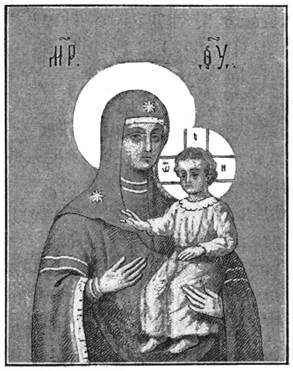
Шуйская икона Богородицы находится в соборном храме Воскресения Христова города Шуи, Владимирской губернии. Она написана в 1654 году по окончании бывшего в этом году морового поветрия, от которого Шуя избавилась предстательством Богородицы. О написании и подлинности чудес этой иконы сохранились следующие сказания.
The Shuya Icon of the Mother of God is located in the cathedral church of the Resurrection of Christ in the city of Shuya, Vladimir Governorate. It was painted in 1654 after the end of the plague that occurred that year, from which Shuya was delivered through the intercession of the Mother of God. Concerning the painting and the authenticity of the miracles of this icon, the following accounts have been preserved.
«В царствование благочестивейшего Государя Царя и Великого Князя всея России Михаила Феодоровича, в области града Суздаля, в обители святого Николая чудотворца, иже на Шархме реце, бе некий монах Иоаким, житие проводя затворническое, пребывая присно в келии своей, никаможе исходя, ищя своего спасения, многую добродетель творяше и тою Богу благоугождаше, непрестанно же вечер, утро и полдень на молитве пребываше и тою Богу беседоваше». Преподобный Иоаким был иконописец, и его иконам «Господь подаяше благодать Свою, и доднесь подает угодника Своего ради, еже чудодействовати, приходящим к тем с верою. О чесом и доднесь известно есть, яко во граде Шуе обретается образ Пресв. Богородицы, рукописания того святаго отца Иоакима, от негоже и доднесь с верою приходящим всяких болезней и язв исцеления бывает помощью Пресв. Богородицы, молитв ради и моления того святаго отца. В помянутом граде Шуе в соборной церкви Воскресения Христова имеется чудотворный образ Пресв. Богородицы честнаго ея явления, именуемыя Смоленския. Об этом святом образе и о происходящих от него чудесах лета 7175 (1667) июля во 2 день, по грамоте святейшаго патриарха Иоасафа Московского, преосвященным собором: Ипацкого монастыря архимандритом Кириллом, из Суздаля Спасоевфимиева монастыря архимандритом Павлом, Николаевского Шартомского монастыря Варлаамом, Золотниковския пустыни Феоктистом, из Суздаля же Васильевского монастыря архимандритом Феодосием, Суздальской соборной церкви с протопопом Симеоном, было настоящее свидетельство по церковному чиноположению, и прежния чудеса, кои совершились над окрестными и людьми и (на кого была ссылка), свидетельствованы и явилися быти истинны».
"In the reign of the most pious Sovereign Tsar and Grand Prince of All Russia Michael Theodorovich, in the region of the city of Suzdal, in the monastery of St. Nicholas the Wonderworker, on the river Shartkhma, there was a certain monk Joachim, leading a life of seclusion, always remaining in his cell, going nowhere, seeking his own salvation, practicing many virtues and thereby pleasing God, and constantly—evening, morning, and noon—remaining in prayer and thereby conversing with God." The Venerable Joachim was an iconographer, and to his icons "the Lord imparted His grace, and to this day imparts it for the sake of His saint, that they may work miracles for those who come to them with faith. Concerning which, even to this day it is well known that in the city of Shuya there is found an image of the Most Holy Theotokos, the handiwork of that holy father Joachim, from which even to this day healings of various diseases and afflictions occur for those who come with faith, through the help of the Most Holy Theotokos, by reason of the prayers and supplication of that holy father. In the aforementioned city of Shuya, in the cathedral church of the Resurrection of Christ, there is a wonderworking image of the Most Holy Theotokos of her venerable appearance, called the Smolensk. Concerning this holy image and the miracles proceeding from it, in the year 7175 (1667), on the 2nd day of July, by decree of His Holiness Patriarch Joasaph of Moscow, by the most reverend council: Archimandrite Cyril of the Ipatiev Monastery, Archimandrite Paul of the Spaso-Euthymius Monastery of Suzdal, Barlaam of the St. Nicholas Shartom Monastery, Theoctistus of the Zolotnik Hermitage, Archimandrite Theodosius of the St. Basil Monastery of Suzdal, together with the Archpriest Simeon of the Suzdal Cathedral Church, a proper testimony was made according to the church order, and the former miracles, which were wrought upon the neighboring people and (those to whom reference was made), were attested and found to be true."
Иные полагают, что св. Павел был погребён в обители Перивлептос, что ныне – Армянский Сулу – монастырь (см. «Письма с Вост <...> ч. 1, с. 300).
Others suppose that St. Paul was buried in the monastery of Peribleptos, which is now the Armenian Sulu Monastery (see "Letters from the East <...> part 1, p. 300).