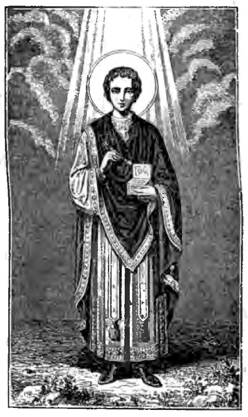
В царствование Римского императора Максимиана, когда как бы в предчувствии близкого торжества веры Христовой происходило сильнейшее гонение на христиан, пострадал и св. великомученик Пантелеймон. Он родился в г. Никомидии (в Вифинии) от матери – христианки, Еввулы (пам. её марта 30-го), и отца язычника, – Евсторгия. Пантолеон, потеряв мать в детском возрасте, был воспитан в язычестве. Желая доставить сыну своему высшее образование, Евсторгий отдал его в лучшее языческое училище, где, казалось, изгладились из памяти мальчика все христианские понятия, внушённые ему его матерью. Но семя было живо... действовали, без сомнения, и загробные молитвы праведной души его матери, и душа юноши оказалась почвой удобной для восприятия высокой истины...
In the reign of the Roman Emperor Maximian, when, as if in anticipation of the imminent triumph of the faith of Christ, the fiercest persecution against Christians was taking place, St. Great Martyr Panteleimon also suffered. He was born in the city of Nicomedia (in Bithynia) to a Christian mother, Eubula (her commemoration is on March 30), and a pagan father, Eustorgius. Pantoleon, having lost his mother in childhood, was raised in paganism. Desiring to provide his son with a higher education, Eustorgius sent him to the best pagan school, where, it seemed, all the Christian concepts instilled in the boy by his mother were erased from his memory. But the seed was alive... the posthumous prayers of his mother's righteous soul were undoubtedly also at work, and the youth's soul proved to be soil receptive to the reception of the lofty truth...
По окончании учения в училище, Пантолеон стал обучаться врачебному искусству у знаменитого в то время придворного врача Евфросина и делал такие быстрые успехи, что на него уже было обращено внимание императора, который выразил желание приблизить к себе умного и отличавшегося успехами в науке молодого человека.
Upon completing his studies at the school, Pantoleon began to learn the medical art from the famous court physician Euphrosynus, who was renowned at that time, and he made such rapid progress that the emperor's attention was already drawn to him, and he expressed a desire to draw close to himself the intelligent young man who was distinguished by his success in science.
В это время произошло в жизни Пантолеона событие, давшее неожиданное направление его деятельности и решившее его дальнейшую судьбу. Это была встреча его с пресвитером Никомидийской церкви Ермолаем.
At this time, an event occurred in Pantoleon's life that gave an unexpected direction to his activity and decided his future fate. This was his meeting with the presbyter of the Nicomedia church, Hermolaus.
Ермолай жил в Никомидии, скрываясь с немногими христианами от язычников, когда при наступившем гонении великолепный здешний христианский храм был разрушен и до 20,000 христиан сожжены, а епископ Анфим и многие пресвитеры погибли мученической смертью. Из окна уединённого домика, в котором Ермолай нашёл себе убежище, он заметил мимоходящего благообразного юношу Пантолеона и прозорливо угадал в нём избранный сосуд благодати Божией... Он однажды пригласил юношу войти к себе в дом и расспросил его об его родителях, о вере и всей жизни его, и вступил с ним в беседу, в которой передал ему в главных чертах учение христианское. Слова старца возбудили в Пантолеоне, прозванном впоследствии Пантелеймоном (всемилостивым) воспоминания раннего детства: те же слова слышал он от своей покойной матери-христианки и вспомнил, как она часто молилась, призывая имя Христа...
Hermolaus lived in Nicomedia, hiding with a few Christians from the pagans, when, during the onset of persecution, the magnificent local Christian church was destroyed and up to 20,000 Christians were burned, while Bishop Anthimus and many presbyters perished by a martyr's death. From the window of a secluded little house in which Hermolaus had found refuge, he noticed the comely youth Pantoleon passing by and, with foresight, discerned in him a chosen vessel of God's grace... He once invited the youth to enter his house and questioned him about his parents, his faith, and his entire life, and entered into conversation with him, in which he conveyed to him the main points of Christian teaching. The elder's words awakened in Pantoleon, later surnamed Panteleimon (the All-merciful), memories of early childhood: he had heard the same words from his deceased Christian mother and recalled how she often prayed, calling upon the name of Christ...
С этих пор Пантелеймон стал всякий день заходить к Ермолаю и с наслаждением слушал то, что открывал ему Боговдохновляемый служитель Божий о Иисусе Христе. Точно что-то родное вливалось в чистую душу юноши – этот готовый храм для принятия Духа Святого. Он окончательно утвердился в вере христианской, когда, идя однажды от своего учителя и увидев на дороге дитя, умершее от укушения ехидны, которая лежала тут же, воззвал к Иисусу Христу с глубокой верой, да явит Он силу Свою и воскресит дитя, – и дитя ожило, а ехидна испустила дыхание... Это чудо всемогущества и благости Христа было для Пантелеймона благодатным и полным просвещением, и он немедленно принял св. крещение от Ермолая. Приняв после того и св. Тайны, он провёл в доме пресвитера ещё несколько дней.
From that time on, Panteleimon began to visit Hermolaus every day and listened with delight to what the God-inspired servant of God revealed to him about Jesus Christ. It was as if something native was pouring into the youth's pure soul—this ready temple for receiving the Holy Spirit. He was finally confirmed in the Christian faith when, one day, walking from his teacher and seeing a child on the road who had died from the bite of a viper, which lay nearby, he called upon Jesus Christ with deep faith, that He might show His power and raise the child—and the child came to life, and the viper breathed its last... This miracle of Christ's omnipotence and goodness was for Panteleimon a grace-filled and complete enlightenment, and he immediately received holy Baptism from Hermolaus. After receiving the Holy Mysteries, he spent several more days in the presbyter's house.
Сделавшись обладателем истинного сокровища, Пантелеимон желал разделить его с отцом своим. И Бог помог ему убедить отца принять христианство. Это совершилось по следующему поводу: когда Пантелеймон получил уже некоторую известность, как хороший врач, то к нему привели однажды слепого, который рассказал, что он уже обращался у ко всем врачам, но никто из них не мог помочь ему.
Having become the possessor of the true treasure, Panteleimon desired to share it with his father. And God helped him to persuade his father to accept Christianity. This came about on the following occasion: when Panteleimon had already gained some renown as a good physician, a blind man was once brought to him, who related that he had already consulted all the physicians, but none of them had been able to help him.
– Всё почти имение моё я растратил на лечение, – жаловался больной, – но никто не возвратил мне зрения... И теперь я готов отдать всё остальное моё имущество тому, кто излечит меня от слепоты...
"I have spent almost all my property on treatment," the sick man complained, "but no one has restored my sight... And now I am ready to give all my remaining possessions to the one who heals me of blindness..."
– Свет глазам твоим возвратит Отец света, Бог истинный, – сказал Пантелеймон; – мною, недостойным рабом Своим, совершит Он твоё исцеление! – прибавил он, вдохновляемый пламенной верой... – Всё же, чем ты обещаешь пожертвовать, раздай бедным.
"The Father of lights, the true God, will restore light to your eyes," said Panteleimon; "through me, His unworthy servant, He will accomplish your healing!" he added, inspired by fervent faith... "And all that you promise to give, distribute to the poor."
– Сын мой, – сказал Пантелеймону бывший при этом отец его, встревоженный его словами, – зачем ты обещаешь то, чего не можешь исполнить? Каким образом ты надеешься исцелить больного, которого все другие врачи признали неисцелимым?
"My son," said his father, who was present, alarmed by his words, "why do you promise what you cannot fulfill? How do you hope to heal a sick man whom all other physicians have declared incurable?"
– Но ведь и сам Евфросин не имел успеха в лечении этого ослепшего, – возразил Евсторгий, думая, что его сын говорит о знаменитом своём учителе.
"But even Euphrosynus himself had no success in treating this blind man," objected Eustorgius, thinking that his son was speaking of his famous teacher.
Между тем, Пантелеймон, подойдя к слепцу и прикоснувшись к глазам его, сказал ему: «во имя Господа моего Иисуса Христа говорю тебе: прозри!» И немедленно ослепший прозрел.
Meanwhile, Panteleimon, approaching the blind man and touching his eyes, said to him: "In the name of my Lord Jesus Christ, I say to you: receive your sight!" And immediately the blind man received his sight.
Вместе с тем духовно прозрел и Евсторгий... и, поражённый чудом, уверовал во Христа, также как и получивший исцеление слепой, и обоих их повёл Пантелеймон к пресвитеру Ермолаю, который, научив их истинам веры, совершил над ними св. крещение.
At the same time, Eustorgius also received spiritual sight... and, struck by the miracle, believed in Christ, as did the blind man who had received healing; and Panteleimon led them both to the presbyter Hermolaus, who, having taught them the truths of the faith, performed holy Baptism over them.
По обращении своём Евсторгий скоро и мирно скончался. Пантелеймон сделался наследником богатого имения его; он стал пользоваться им, как истинный христианин, т. е. щедрой рукой употреблял его в пользу нуждающихся и прежде всего отпустил на волю рабов. Помогая деньгами бедным, вдовам и сиротам, посещая заключённых в темницы, он сверх того ещё и безвозмездно лечил больных и исцелял их не столько лекарствами, сколько призыванием имени Иисуса Христа. Весь народ узнал «всемилостивого», безвозмездного врача и стал обращаться к нему особенно с тех пор, как распространился слух об исцелении им слепого. Такая славная известность молодого врача возбудила зависть в других врачах. Наблюдая за его действиями, чтобы найти в них что-нибудь предосудительное, они узнали, что он действует именем Христа и распространяет веру во Христа, которую так строго преследовало в то время правительство; это было совершенно достаточной причиной, чтобы погубить любимца народа, и враги Пантолеона поспешили донести на него императору, предостерегая его, что если он не примет мер против этого хулителя богов, который сам верует в какого-то распятого Христа и Ему приписывает всю славу своих исцелений, то он успеет многих отвратить от истинного богопочитания. В доказательство своих показаний они указали на слепца, уверовавшего в Того Христа, именем Которого он получил исцеление. Призванный прозревший слепец засвидетельствовал истину своего исцеления именем Христа, после того как ни один из врачей не принёс ему никакой пользы, засвидетельствовал также свою веру в исцелившего его единого истинного Бога и, отказавшись отречься от Него и поклониться богам, был осуждён на смертную казнь.
After his conversion, Eustorgius soon reposed peacefully. Panteleimon became the heir of his rich estate; he began to use it as a true Christian, that is, with a generous hand he employed it for the benefit of the needy, and first of all set his slaves free. Helping the poor, widows, and orphans with money, visiting those imprisoned in dungeons, he also treated the sick without charge and healed them not so much with medicines as by invoking the name of Jesus Christ. All the people came to know the "All-merciful," the free physician, and began to turn to him especially after the rumor of his healing of the blind man spread. Such glorious fame of the young physician aroused envy in other physicians. Observing his actions in order to find something reprehensible in them, they learned that he acted in the name of Christ and spread the faith in Christ, which the government so strictly persecuted at that time; this was a completely sufficient reason to destroy the people's favorite, and the enemies of Pantoleon hastened to denounce him to the emperor, warning him that if he did not take measures against this blasphemer of the gods, who himself believed in some crucified Christ and ascribed to Him all the glory of his healings, he would succeed in turning many away from the true worship of God. In proof of their testimony, they pointed to the blind man who had believed in that Christ, in whose name he had received healing. The summoned blind man, who had received his sight, testified to the truth of his healing by the name of Christ, after none of the physicians had brought him any benefit; he also testified to his faith in the one true God who had healed him, and, refusing to deny Him and worship the gods, was condemned to death.
– Да, ты можешь верить, государь, что я действительно не признаю ложных богов и всей душой, всем разумением моим уверовал в единого истинного Бога – Христа, Который воскрешает мёртвых, даёт прозрение слепым, исцеляет страдающих неисцелимыми болезнями... – неустрашимо отвечал новый исповедник.
"Yes, you may believe, O Emperor, that I truly do not acknowledge false gods, and with all my soul, with all my understanding, I have believed in the one true God—Christ, Who raises the dead, gives sight to the blind, heals those suffering from incurable diseases..." the new confessor answered fearlessly.
Император попытался разубедить в заблуждении известного ему с хорошей стороны Пантелеймона, которого он имел в виду приблизить к себе в качестве врача, но видя, что убеждениями не поколебать твёрдости христианина, он прибегнул к угрозам, напомнил ему о мученической кончине старца Анфима.
The emperor attempted to dissuade from his error Panteleimon, whom he knew from the good side and whom he had intended to draw close to himself as a physician, but seeing that persuasion could not shake the Christian's firmness, he resorted to threats, reminding him of the martyr's end of the elder Anthimus.
«Если старец Анфим мог с твёрдостью перенести страдания, – отвечал Пантелеймон, – то тем более следует мне не бояться их, так как я молод и силён... и смерть за Христа почитаю высшим счастьем».
"If the elder Anthimus could endure sufferings with firmness," answered Panteleimon, "then all the more should I not fear them, for I am young and strong... and I consider death for Christ the highest happiness."
После этого подвергли Пантелеймона жесточайшим пыткам: строгали тело его железными гвоздями, сажали в котёл с расплавленным оловом, бросали в воду с камнем на шее, отдавали на растерзание зверям. Но Бог чудным образом сохранял невредимым мученика, проявлявшего чудную силу терпения среди всех истязаний. Народ в изумлении восклицал: «истинно велик Бог христианский!» и многие обращались ко Христу; некоторые же все эти Божественные чудеса приписывали действию волшебства.
After this, they subjected Panteleimon to the most cruel tortures: they scraped his body with iron nails, placed him in a cauldron of molten tin, threw him into the water with a stone around his neck, gave him over to be torn apart by wild beasts. But God miraculously preserved the martyr unharmed, who displayed a wondrous power of patience amidst all the torments. The people cried out in amazement: "Truly great is the Christian God!" and many turned to Christ; some, however, attributed all these Divine miracles to the action of sorcery.
– Не волшебству, а христианскому верованию научил меня пресвитер Ермолай, – отвечал Пантелеймон, знавший, что не устрашится исповедать Христа поучавший всех веровать в Него.
"Not sorcery, but the Christian faith was taught me by the presbyter Hermolaus," answered Panteleimon, knowing that he who taught all to believe in Christ would not be afraid to confess Him.
Между тем Ермолай уже получил откровение от Бога, что ему предстоит пострадать за веру. Он явился к царю вместе с своими служителями Ермиппом и Ермократом. Царь обещал Ермолаю великие милости, если он убедит Пантолеона отречься от своей веры в распятого Христа.
Meanwhile, Hermolaus had already received a revelation from God that he was to suffer for the faith. He appeared before the emperor together with his servants Hermippus and Hermocrates. The emperor promised Hermolaus great favors if he would persuade Pantoleon to renounce his faith in the crucified Christ.
– Мы не имеем власти сделать это, – но сами готовы принять смерть за веру в Господа Иисуса Христа, – отвечал Ермолай и другие христиане, и углубились в молитву – в ожидании мученической кончины...
"We have no power to do this—but we ourselves are ready to accept death for faith in the Lord Jesus Christ," answered Hermolaus and the other Christians, and they immersed themselves in prayer, awaiting their martyr's end...
В это время внезапно произошло землетрясение, и вслед затем явился вестник и объявил, что идолы, стоявшие в капище, упали с мест своих и разбились...
At that time, an earthquake suddenly occurred, and immediately afterward a messenger appeared and announced that the idols standing in the temple had fallen from their places and shattered...
Это было объяснено волхвованием христиан, и в успокоение язычников император повелел немедленно казнить Ермолая, Ермиппа и Ермократа, Пантелеймона же отвести пока в темницу.
This was explained as sorcery by the Christians, and to pacify the pagans, the emperor ordered the immediate execution of Hermolaus, Hermippus, and Hermocrates, and that Panteleimon be taken to prison for the time being.
Не успев и после того отвратить Пантелеймона от веры Христа, царь присудил его к казни мечом. Радостно и с молитвой принял смерть великомученик – 27-го июля, 305 г. Христиане с благоговением похоронили тело его, описали жизнь и кончину его, чтобы сохранилась память о нём. Бог же прославил его нетлением и многочисленными чудесами, не истощающимися и поныне для всех с верою призывающих ходатайство его перед Богом.
Even after this, failing to turn Panteleimon from the faith of Christ, the emperor condemned him to death by the sword. Joyfully and with prayer did the Great Martyr accept death—on the 27th of July, 305 A.D. The Christians reverently buried his body, and described his life and end, that his memory might be preserved. God glorified him with incorruption and with numerous miracles, which are not exhausted even to this day for all who with faith invoke his intercession before God.
Память св. Пантелеймона издревле особенно чтилась на востоке359; церкви, во имя его построенные в Севастии Армянской и в Константинополе, относятся к IV веку. Мощи его были перенесены в Царьград. Часть мощей его ныне находится в Пантелеймоновом Афонском монастыре (населённом с давних времён преимущественно Русскими).
The memory of St. Panteleimon was from ancient times especially venerated in the East359; churches built in his name in Sebaste of Armenia and in Constantinople date from the fourth century. His relics were translated to Constantinople. A portion of his relics is now found in the Panteleimon Monastery on Mount Athos (populated from ancient times chiefly by Russians).
Св. Пантелеймон у западных христиан почитается помощником врачей, у нас же призывается в особенную молитвенную помощь при таинстве елеосвящения, в молитве за немощного и неспящего, и при освящении воды360.
St. Panteleimon is honored by Western Christians as a helper of physicians; among us he is invoked for special prayerful aid at the mystery of Holy Unction, in the prayer for one who is weak and sleepless, and at the blessing of water360.
Дочь стратига Анфуса, оставив родительский дом, подвизалась сначала уединённо в пещерах, потом, встретившись с старцем Сисинием, продолжала подвижничество под его руководством и, восходя из силы в силу, достигла той высоты духовного развития, когда и сама могла руководить других. Многие прибегали с великой пользой к её советам, и наконец её управлению вверили себя многие девы Мантинейской обители361. Она пострадала вместе с 90 сёстрами от лютого гонителя иконопочитания императора Константина Копронима, о котором так говорит Сербская летопись: «ненавистный кровопийца-волк старался погасить славу святых, – запрещал называть кого-либо святым, а велел просто называть одним именем, и Богородицу велел именовать не Богородицей, а матерью Христовой; светлые душой чины иночествующих поносил, как бешеный пёс; закалал их, как агнцев, наполнял ими темницы: в одной, называемой претор, содержал 354 иноков и одним отрезал носы, другим – уши, иным выколол глаза, другим, обмазав бороды смолой, обуглил; св. Стефана, венец иноков, и других многих замучил до смерти» (Гласник X, 251. 252)362.
Anthusa, the daughter of a strategos (military commander), having left her parental home, first struggled in solitude in caves; then, having met the elder Sisinnius, she continued her ascetic labors under his guidance, and, ascending from strength to strength, attained that height of spiritual development at which she herself could guide others. Many resorted with great profit to her counsels, and finally many virgins of the Mantinea monastery entrusted themselves to her governance361. She suffered together with 90 sisters at the hands of the fierce persecutor of icon-veneration, the emperor Constantine Copronymus, of whom the Serbian Chronicle speaks thus: "The hateful bloodthirsty wolf strove to extinguish the glory of the saints—he forbade calling anyone a saint, but ordered that they be called simply by their name alone, and commanded that the Theotokos be called not the Theotokos, but the mother of Christ; the bright-souled ranks of monastics he reviled like a mad dog; he slaughtered them like lambs, filled prisons with them: in one, called the praetorium, he held 354 monks, and from some he cut off noses, from others ears, from others he gouged out eyes, and others, having smeared their beards with pitch, he burned; St. Stephen, the crown of monks, and many others he tortured to death" (Glasnik X, 251. 252)362.
Узнав, что, не смотря на запрещение, Анфуса игуменья безбоязненно продолжает поддерживать иконопочитание в своей обители, да ещё и брата своего убедила стать в число защитников святых икон, деспот повелел беспощадно избить бичами Анфусу и её сестёр. Впрочем, после истязаний Анфусу оставили в покое, потому что она предсказала императрице, супруге гонителя, рождение двойней. Это было в 754 году. После того как это предсказание исполнилось в точности, императрица стала почитать игуменью Анфусу и даже в честь её назвала родившуюся дочь также Анфусой363, и обогатила обитель её многими приношениями. – Вскоре после этого блаж. Анфуса скончалась в глубокой старости.
Learning that, despite the prohibition, Abbess Anthusa fearlessly continued to uphold icon-veneration in her monastery, and moreover had persuaded her own brother to stand among the defenders of the holy icons, the despot commanded that Anthusa and her sisters be mercilessly beaten with whips. However, after the tortures, Anthusa was left in peace, because she predicted to the empress, the spouse of the persecutor, the birth of twins. This was in the year 754. After this prediction was fulfilled exactly, the empress began to honor Abbess Anthusa and even named the daughter born to her Anthusa in her honor363, and enriched her monastery with many offerings. — Soon after this, the blessed Anthusa reposed in extreme old age.
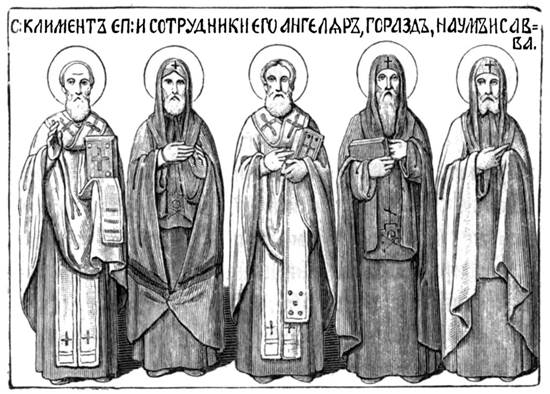
Просветители Славян св. Кирилл и Мефодий воспитали для Церкви Божией ревностных, самоотверженных деятелей и искренних рабов Божиих. – Таким был св. Климент, и впоследствии архиепископ Величский. Таковы были сотрудники его Горазд, Наум, Ангелярий и Савва364.
The Enlighteners of the Slavs, Sts. Cyril and Methodius, raised up for the Church of God zealous, self-sacrificing workers and sincere servants of God. — Such was St. Clement, afterwards Archbishop of Velica. Such were his co-laborers Gorazd, Nahum, Angelarius, and Sabbas364.
Св. Мефодий, архиепископ всей Моравии, предсказав свою близкую кончину († 885 апреля 6), назначил преемником своим опытнейшего из сотрудников своих св.Горазда, и родом Моравлянина, знавшего в совершенстве языки Славянский, Греческий и Латинский365. Немецкое духовенство, корыстолюбивое и испорченное романизмом, увидев, с какой ревностью принялся новый архиепископ управлять доверенной ему паствой, поняло, что в нём может воскреснуть второй Мефодий, бывший столько горьким для него. – Потому оно поспешило употребить все меры, чтобы посадить на его место Викинга. Кто был этот Викинг? Он посвящён Мефодием в помощника ему, но был самым коварным и самым злостным врагом его. Викинг, при дурном сердце, был пропитан ересью (об исхождении Святого Духа и от Сына) и старался упоить ею Святополка и других, за что святой Мефодий предавал его анафеме. Впоследствии сами Немцы прогнали Викинга, как отъявленного дурного человека366. Но теперь он был нужен им, и они всё делали по его желанию, как согласному с их намерениями. Народ чтил св. Мефодия и дорожил учениками его, но Немцы действовали через Святополка. Они донесли князю, что ученики Мефодия распространяют в народе учение ложное, несогласное с учением папы, мало того, они замышляют против власти князя. Святополк, выслушав обвинённых и обвинителей, нашёл первых правыми и последних обвинил. Но Святополк занят был войной с Арнульфом и предоставил духовенству романизма свободу действовать по своей воле. Немцы приступили к насилиям. «Кто может высказать, говорит современник, сколько зла они (Немцы) сделали этим насилием, принуждая православных принять дурной догмат (πονηρῷ δόγματι)? Некоторые сделались отступниками от православия». Но были и такие, которые решились отстоять своё верование. Хитрый Викинг был на стороне врага Святополка – Арнульфа, как показали последствия; но он умел обойти Святополка, так что тот предоставил ему действовать его именем. Викинг велел схватить Горазда, Климента, Наума, Ангелярия и множество других приверженцев православия и заключить в темницу. Спустя 80 дней, видя твёрдость исповедников Евангельской истины, вывели их из заключения и после сильных истязаний отдали солдатам с тем, чтобы выпроводили их за Дунай и при том не одной дорогой.
St. Methodius, Archbishop of all Moravia, having foretold his imminent end († April 6, 885), appointed as his successor the most experienced of his co-laborers, St. Gorazd, a Moravian by birth, who knew perfectly the Slavonic, Greek, and Latin languages365. The German clergy, covetous and corrupted by Romanism, seeing with what zeal the new archbishop undertook to govern the flock entrusted to him, understood that in him a second Methodius, who had been so bitter to them, might arise. — Therefore they hastened to use every measure to place Wiching in his seat. Who was this Wiching? He had been consecrated by Methodius as his assistant, but was the most treacherous and most malicious enemy of him. Wiching, with a corrupt heart, was imbued with the heresy (concerning the procession of the Holy Spirit also from the Son) and strove to intoxicate with it Svatopluk and others, for which St. Methodius subjected him to anathema. Later the Germans themselves drove out Wiching as a notorious evil man366. But now he was needed by them, and they did everything according to his desire, as being in agreement with their intentions. The people honored St. Methodius and treasured his disciples, but the Germans acted through Svatopluk. They reported to the prince that the disciples of Methodius were spreading among the people a false teaching, not in agreement with the teaching of the pope; moreover, they were plotting against the prince's authority. Svatopluk, having heard both the accused and the accusers, found the former to be in the right and accused the latter. But Svatopluk was occupied with war against Arnulf and left the clergy of Romanism free to act according to their own will. The Germans resorted to violence. "Who can express," says a contemporary, "how much evil they (the Germans) did by this violence, compelling the Orthodox to accept the evil dogma (πονηρῷ δόγματι)? Some became apostates from Orthodoxy." But there were also those who resolved to defend their faith. The cunning Wiching was on the side of Svatopluk's enemy—Arnulf, as the consequences showed; but he knew how to circumvent Svatopluk, so that the latter allowed him to act in his name. Wiching ordered that Gorazd, Clement, Nahum, Angelar, and a multitude of other adherents of Orthodoxy be seized and cast into prison. After 80 days, seeing the firmness of the confessors of the Gospel truth, they brought them out of confinement and, after severe tortures, handed them over to soldiers with orders to escort them beyond the Danube, and moreover not by the same road.
«Следуя примеру Спасителя, продолжает современник, повелевшего Апостолам, если изгонят их из одного града, отправиться в другой, исповедники отправились в Болгарию, где надеялись найти утешение себе. Климент, Наум и Ангеляр пошли в Белгород, а Савва иГоразд другим путём дошли до владений кн. Бориса»367.
"Following the example of the Savior," continues the contemporary, "Who commanded the Apostles that if they were cast out of one city, they should depart to another, the confessors departed to Bulgaria, where they hoped to find consolation. Clement, Nahum, and Angelar went to Belgrade, while Sabbas and Gorazd by another route reached the domains of Prince Boris"367.
О пребывании св. Горазда в юго-западной Болгарии свидетельствуют два древние памятника, один – список Болгарских архиепископов, составленный около 1156 г., где он в ряду Болгарских архиепископов поставлен между Мефодием и Климентом, другой – храм и монастырь св. Горазда, находящиеся близ Берата в Албании, где почивают и мощи святого под спудом368. Пётр Сицилиец, писавший сочинение своё о манихеях при патр. Фотии (до 889 г.) и посвятивший его Болгарскому архиепископу, посвящал его конечно столько просвещённому святителю, каков был Горазд, скончавшийся, как вероятно, не прежде 896 г.369. Так как св.Савва вместе с Гораздом отправился в Болгарию, то конечно он вместе с ним подвизался в юго-западной Болгарии.
Concerning the sojourn of St. Gorazd in southwestern Bulgaria, two ancient monuments bear witness: one is a list of Bulgarian archbishops, compiled around 1156, in which he is placed in the series of Bulgarian archbishops between Methodius and Clement; the other is a church and monastery of St. Gorazd, located near Berat in Albania, where the relics of the saint also repose hidden beneath the ground368. Peter of Sicily, who wrote his work on the Manichaeans under Patriarch Photius (before 889) and dedicated it to the Bulgarian archbishop, dedicated it of course to so enlightened a hierarch as was Gorazd, who reposed, as is probable, not before 896369. Since St. Sabbas together with Gorazd set out for Bulgaria, of course he struggled together with him in southwestern Bulgaria.
Святой Климент с Ангеляром и Наумом при первом вступлении в Болгарию встретились с трудным искушением. «На берегу Дуная в селении, утомлённые путём и недостатком пищи, искали они страннолюбивого и Богобоязненного человека, кто бы мог упокоить их. Они нашли такого и были приняты. У него был сынок, цветущий красотой юности. Едва вошли странники в дом, умер этот сын, прекрасный собой, единственная радость, надежда рода. Можете представить, как страдал отец, чего не говорил он в такой скорби, потерпев несчастие при входе странников? «Хороша награда за страннолюбие! говорил он: для того отворил я вам дом, чтобы навсегда затворился он, оставшись без наследника!.. Но вы не избегнете наказания, хотя бы знали все чары. Вы в руках отца, который оплакивает от вас сына, – вы расплатитесь за все дела свои – тюрьмой и казнью». Они страдали не менее отца. – Нежные и сострадательные души дерзнули делать более того. Они решились обратиться к молитве. Смягчая раздражение скорбного и гневного отца, они говорили: «мы не волшебники, человек Божий; мы предаём проклятию занимающихся чарами и служим Богу истинному; – если же ты думаешь, что мы виновны в смерти сына твоего, будь покоен, надеемся, что Господь дарует ему жизнь для нас». Они помолились над отроком и – о, чудо! – представили скорбному отцу живого сына. Обрадованный отец просил прощения у рабов Божиих в его дерзостях и предлагал им всё, что есть у него, в благодарность за спасение сына. Довольные добрыми расположениями его, они приняли необходимое для их пути и в Белграде явились к коменданту Боритокану. Он расспросил их, кто они, и, увидав, что они рабы Божии, дал знать о них князю Борису, у которого он был воеводой: он знал, что Борис любит таких людей. Дав им успокоиться от дальнего пути, он послал потом князю этот дорогой подарок, объяснив ему, что это именно такие люди, которых он так усердно ищет. – Когда пришли они к Борису, то приняты были с честью, приличной людям достойным почёта и уважения. Князь расспрашивал их о их жизни. Они рассказали ему о себе с начала до конца. Князь, выслушав всё, сердечно благодарил Бога, пославшего таких служителей, столько нужных для Болгарии, подавшего учителей и насадителей веры, не каких-либо обыкновенных, а исповедников и мучеников. – Давши им одежды, приличные священным лицам, для помещения их назначил покои лучшие и велел доставлять всё нужное содержание. Сам он пожелал беседовать с ними каждый день, слушал древние истории и сказания о житии святых и устами их перечитывал то, что находится в писаниях». – Те, которые при дворе его отличались знатностью и богатством, приходили к святым, как ученики к учителям, и спрашивали о нужном для спасения души и, принимая из этих источников, передавали домашним духовную воду. Каждый просил их побывать у него в доме, считая посещение учителей за освящение, веруя, что где бывают телом эти три учителя, там – Сам Господь. – Святые уклонялись многолюдства. Не иначе посещали они дома, как по указанию и дозволению князя. Так один из Болгар, сановник, по имениЕхач, просил князя дозволить принять в своём доме Наума и блаж. Климента и, когда дозволил князь, принял учителей с искренней радостью и со всем почётом. – «И у Чеслава освящается жилище водворением Ангелярия; князь ему оказал милость дозволением принять учителя, но недолго пришлось Чеславу наслаждаться присутствием блаженного: Ангелярий, пожив у него некоторое время, безмятежно предал дух свой в руки ангелов». Климент и Наум жили у хача в полном почёте; но они доставляли ему более дорогие дары, сея духовное, а пожиная вещественное370.
St. Clement, together with Angelar and Naum, upon their first entry into Bulgaria, encountered a grievous temptation. “On the bank of the Danube, in a village, wearied by the journey and lack of food, they sought a hospitable and God-fearing man who might give them rest. They found such a one and were received. He had a son, blooming with the beauty of youth. Scarcely had the strangers entered the house when this son died—beautiful, the only joy, the hope of the family. You can imagine how the father suffered, what he did not say in such grief, having suffered misfortune at the entry of the strangers. ‘A fine reward for hospitality!’ he said. ‘Was it for this that I opened my house to you, that it might be closed forever, left without an heir? But you shall not escape punishment, even if you know all sorcery. You are in the hands of a father who mourns his son because of you—you shall pay for all your deeds with prison and execution.’ They suffered no less than the father. — Tender and compassionate souls, they dared to do more. They resolved to turn to prayer. Softening the irritation of the sorrowful and angry father, they said: ‘We are not sorcerers, O man of God; we curse those who practice sorcery and serve the true God. If you think that we are guilty of your son’s death, be at peace; we trust that the Lord will grant him life for our sake.’ They prayed over the youth, and—O wonder!—presented the sorrowful father with a living son. The overjoyed father begged forgiveness from the servants of God for his insolence and offered them all that he had, in gratitude for the salvation of his son. Content with his good disposition, they accepted what was necessary for their journey, and in Belgrade they appeared before the commandant Boritocan. He questioned them as to who they were, and seeing that they were servants of God, informed Prince Boris, whose voivode he was, of them; for he knew that Boris loved such men. Having allowed them to rest from the long journey, he then sent this precious gift to the prince, explaining that these were precisely the men he so earnestly sought. — When they came to Boris, they were received with honor befitting men worthy of esteem and respect. The prince questioned them about their life. They told him everything about themselves from beginning to end. The prince, having heard all, heartily thanked God, Who had sent such servants, so needful for Bulgaria, and had given teachers and planters of the faith—not ordinary ones, but confessors and martyrs. — Having given them vestments befitting sacred persons, he appointed for their dwelling the best chambers and ordered that all necessary sustenance be provided. He himself desired to converse with them daily, listened to ancient histories and accounts of the lives of the saints, and through their lips read again what is found in the Scriptures.” — Those who at his court were distinguished by nobility and wealth came to the saints as disciples to teachers, and asked about what was needful for the salvation of the soul, and, receiving from these sources, conveyed spiritual water to their households. Each begged them to visit his house, considering the visit of the teachers a sanctification, believing that where these three teachers were present in body, there the Lord Himself was. — The saints avoided crowds. They visited houses only by the direction and permission of the prince. Thus one of the Bulgarians, a dignitary named Ekhach, asked the prince to allow him to receive Naum and blessed Clement in his house, and when the prince permitted, he received the teachers with sincere joy and all honor. — “And the dwelling of Cheslav was sanctified by the sojourn of Angelar; the prince showed him favor by permitting him to receive the teacher, but Cheslav was not long to enjoy the presence of the blessed one: Angelar, having lived with him for some time, peacefully surrendered his spirit into the hands of the angels.” Clement and Naum lived with Ekhach in full honor; but they bestowed upon him more precious gifts, sowing spiritual things while reaping material ones370.
«Кн. Борис, повествует древний биограф, так как не переставал всячески заботиться о том, как бы священным мужам доставить всякий случай к исполнению дела Божия, по вразумлению Божию, отделяет от Котокия Кутмичивицу и поставляет над ней начальником Довету; Довете же даёт блаж. Климента или лучше Довету поручает Клименту... Климент посылается учителем Кутмичивицы и по всей стороне жителям отдавались приказания, чтобы этого святого принимать с усердием и доставлять ему всё в изобилии... Сам Борис предоставил блаж. Клименту три дворца в Деболе и кроме того около Ахриды и Главеницы подарил ему места для отдохновения». – Климент не обманывал собой надежд князя. Объезжая страну, он «и язычникам громко проповедовал спасение Божие» и всем излагал понятия о спасительных догматах и заповедях. В каждом округе были у него избранные ученики, а число их простиралось до 3050; «с ними беседуя, раскрывал он более глубокие места св. Писания. Нас недостойных, говорит жизнеописатель, особенно приблизил он к себе. И мы никогда не видали его праздным: он или учил детей, одним показывая отличие букв, другим объясняя смысл писанного, иных водя руку для писания, или же предавался молитве, внимал чтению, писал книги». Ещё при Борисе, когда не был он епископом, построил он монастырь св. Пантелеймона в Ахриде. Увидав, что кн. Борис опоясал Болгарию семью кафедральными храмами, и он положил построить свой собственный монастырь в Ахриде. Так в Ахриде было три церкви, одна кафедральная и две построенные св. Климентом, «которые были меньше, но по округлости казались приятнее». Так он и красотой священных зданий привлекал Болгар к благочестию371.
“Prince Boris,” relates the ancient biographer, “since he never ceased to care in every way to provide the sacred men with every opportunity to fulfill the work of God, by God’s inspiration separated Kutmichevitsa from Kotokion and placed over it Doveta as governor; and to Doveta he gave the blessed Clement, or rather, he entrusted Doveta to Clement... Clement was sent as teacher of Kutmichevitsa, and throughout the whole region orders were given to the inhabitants to receive this saint with zeal and to supply him with everything in abundance... Boris himself granted the blessed Clement three palaces in Devol, and besides that, near Ohrid and Glavenitsa, he gave him places for rest.” — Clement did not disappoint the prince’s hopes. Traveling through the country, he “preached salvation from God even to the pagans” and set forth to all the concepts of the saving dogmas and commandments. In each district he had chosen disciples, and their number reached 3,050; “conversing with them, he unfolded the deeper passages of Holy Scripture. Us unworthy ones,” says the biographer, “he especially drew near to himself. And we never saw him idle: he either taught children, showing some the distinction of letters, explaining to others the meaning of what was written, guiding others’ hands in writing, or he gave himself to prayer, hearkened to reading, or wrote books.” Even under Boris, when he was not yet a bishop, he built the monastery of St. Panteleimon in Ohrid. Seeing that Prince Boris had girded Bulgaria with seven cathedral churches, he also resolved to build his own monastery in Ohrid. Thus in Ohrid there were three churches: one cathedral and two built by St. Clement, “which were smaller, but by their roundness seemed more pleasing.” Thus even by the beauty of sacred buildings he attracted Bulgarians to piety371.
«Шёл восьмой год учительства Климентова» и это был последний год правления Борисова. «Начальство принимает сын его Владимир372; четвёртый год прожив с властью, стал тот простым человеком; наследником всего стал брат его Симеон373. Так как молва весьма славила Климента, то кн. Симеон пригласил его к себе. Личное свидание и беседы вполне убедили князя в высоких достоинствах Климента. Тогда Климент поставляется в епископы Дрембицы или Велицы»374, в землю Дреговичей и Сакулатов, ещё с VII века начавших мало-по-малу принимать христианство, по внушениям небесного вождя вм. Димитрия Солунского375. К несчастью их, у них доселе не было епископа Болгарина. Климент «первый из Болгар является епископом». Это было в 896 г.376.
“The eighth year of Clement’s teaching was passing,” and this was the last year of Boris’s reign. “His son Vladimir372 took up the rule; having lived with power for four years, he became a common man; his brother Symeon373 became heir of all. Since rumor greatly glorified Clement, Prince Symeon invited him to his presence. Personal meeting and conversations fully convinced the prince of Clement’s high merits. Then Clement was appointed bishop of Drembitsa or Velitsa”374, in the land of the Dregovichs and Sakulats, who from the 7th century had begun little by little to accept Christianity, through the admonitions of the heavenly leader, the Great Martyr Demetrius of Thessalonica375. To their misfortune, they had until then no bishop who was a Bulgarian. Clement “is the first of the Bulgarians to appear as a bishop.” This was in 896 A.D.376.
Блаженный во время учительства своего приготовил много людей, которые в состоянии были давать отчёт о своей вере. Теперь в сане епископа с утешением «поставил он из них чтецов, иподиаконов, диаконов и пресвитеров»377. – Но ещё много надлежало ему трудиться для просвещения своей паствы, и он трудился неутомимо. Народ и большинство клира и незнакомы были с Богослужением церковным и особенно с его значением высоким. Святитель «не давал сна очам», поучая всех и вводя стройный порядок в служение; «научал клир церковному благоустройству и всему, что касается до псалмопения и молитв, так что наконец клирики его паствы были ничем не ниже других, славившихся в этом роде... На Болгарском языке не было праздничных поучений»; священники, не зная Греческого языка, не знали сами и не объясняли народу значения праздников. Климент «сочинил слова, простые и понятные, на все праздники и стал для Болгар вторым Павлом. Из слов его стали научаться тайнам празднеств, совершаемых в славу Христа и Богоматери. Не оставлен им без похвал Креститель, и узнаёшь о чудных обретениях главы его; встретишься с жизнью пророков, Апостолов, мучеников. Желаешь ли узнать, как жили преподобные? Много найдёшь написанного о том на Болгарском языке премудрым Климентом»378.
During his teaching, the blessed one had prepared many people who were able to give an account of their faith. Now, in the rank of bishop, with consolation “he appointed from among them readers, subdeacons, deacons, and presbyters”377. — But much labor still lay before him for the enlightenment of his flock, and he labored tirelessly. The people and the majority of the clergy were unfamiliar with church services and especially with their lofty significance. The Hierarch “gave no sleep to his eyes,” teaching all and introducing orderly arrangement into the services; “he taught the clergy church order and everything pertaining to psalmody and prayers, so that at length the clergy of his flock were in no way inferior to others who were renowned in this regard... There were no festal homilies in the Bulgarian language”; the priests, not knowing Greek, themselves did not know and did not explain to the people the meaning of the feasts. Clement “composed simple and understandable discourses for all the feasts, and became a second Paul for the Bulgarians. From his discourses they began to learn the mysteries of the feasts celebrated to the glory of Christ and the Mother of God. The Forerunner was not left without praise by him, and one learns of the wondrous findings of his head; one encounters the lives of the prophets, Apostles, and martyrs. Do you wish to know how the Venerable lived? Much is to be found written about that in the Bulgarian language by the wise Clement”378.
Не раннее сказание говорит: «изобрёл он также другие знаки письмен, отличные от тех, которые изобрёл мудрый Кирилл. И посредством их похвальные слова и священные песнопения предал на письме»379. Всего вероятнее, что неранний сказатель видел сочинения Климента, написанные глаголическими буквами380. В том не сомневаются ныне, что у Славян были свои письмена до изобретения азбуки Кирилловой, только те письмена во многом были неудобные381. После того надобно положить, что блаж. Климент при пособии изобретения Кириллова усовершил древние резы, и таким образом составилась глаголица382.
A later account says: “he also invented other signs of writing, different from those which the wise Cyril invented. And by means of them he committed to writing panegyrical discourses and sacred hymns”379. It is most probable that the later narrator saw Clement’s works written in Glagolitic letters380. It is now doubted by none that the Slavs had their own writings before the invention of the Cyrillic alphabet, only those writings were in many respects inconvenient381. After that, one must suppose that the blessed Clement, with the aid of Cyril’s invention, perfected the ancient notches, and thus the Glagolitic script was formed382.
В Главенице, говорит ещё сказатель Болгарский, сохранились «столбы, на которых начертано письмо о приобщении всего народа ко Христу».
In Glavenitsa, says the Bulgarian narrator further, there have been preserved “pillars on which is inscribed a writing concerning the joining of the whole people to Christ.”
По древнему житию, тогда как Болгарская страна, покрытая дикими лесами, не имела плодовых деревьев, Климент выписал из Греции плодовые деревья и прививками облагородил дикие.
According to the ancient Life, while the Bulgarian land, covered with wild forests, had no fruit trees, Clement imported fruit trees from Greece and by grafting improved the wild ones.
По известию современника, Бог прославил блаж. Климента благодатью чудес. Раз возвращался он из Главеницы в Охриду, и ему встретились двое расслабленных и слепец. – Сострадая о их несчастии, возвёл он очи к небу, прикоснулся к несчастным, расслабленные вскочили как елени и слепцу засиял свет.
According to the account of a contemporary, God glorified the blessed Clement with the grace of miracles. Once he was returning from Glavenitsa to Ohrid, and there met him two paralytics and a blind man. — Compassionating their misfortune, he raised his eyes to heaven, touched the unfortunate ones; the paralytics leaped up like deer, and light shone upon the blind man.
Преклонённый старостью и истомлённый трудами, хотел он отказаться от управления епархией. «Подари мне, говорил он князю, немногие дни, чтобы побеседовал я с собой и Богом в монастыре моём». Князь опечалился такой просьбой и отвечал: «что ты говоришь, отец наш? Могу ли допустить, чтобы при жизни твоей другой сидел на твоей кафедре? Если опечалил я тебя чем-нибудь, прости грех неведения». – Старец уступил воле князя. Но когда возвратился в монастырь, впал в болезнь и, предвидя близкую смерть, оставил Болгарии прощальный подарок. – Недостававшую триодь, ту, которая поётся с новой недели до Пятидесятницы, теперь он докончил. Сделал завещание о написанных им книгах и другом имуществе, одну часть оставив кафедре, другую монастырю. Переселился к Господу июля 27 дня 6924 (916), и священное тело его положено было в монастыре, в могиле, им самим приготовленной, на правой стороне притвора383.
Bowed down by age and wearied by labors, he wished to decline the governance of his eparchy. "Grant me," he said to the prince, "a few days, that I may converse with myself and with God in my monastery." The prince was grieved by such a request and answered: "What are you saying, our father? Can I permit that during your lifetime another should sit upon your cathedra? If I have grieved you in anything, forgive the sin of ignorance." — The elder yielded to the prince's will. But when he returned to the monastery, he fell into illness and, foreseeing his imminent death, left Bulgaria a farewell gift. — The missing Triodion, that which is sung from New Sunday until Pentecost, he now completed. He made a testament concerning the books written by him and his other property, leaving one portion to the cathedra and another to the monastery. He departed to the Lord on July 27, 6924 (916), and his sacred body was laid in the monastery, in a grave prepared by himself, on the right side of the narthex383.
Св. Наум, – по житию его, впрочем не древнему, младший из учеников св. Кирилла и Мефодия, сопровождал Климента в Деволу (страну, прилежащую к Охридскому озеру), был помощником его в Евангельской проповеди в стране дикой и «содействовал ему во всём до самой смерти его. Остальное же время (след. после 916 г.) провёл в Деволе и здесь путеводил людей своим мудрым учением, освобождая их от давних отеческих заблуждений и направляя на путь православия. Прожив в святости и благочестии, прошедши через многие труды и подвиги, вознёсся к Судии всех подвигов, а св. мощи свои – оставил источником исцелений»385. Константин, пресвитер Болгарский, говорит, что он по убеждению о. Наума занимался составлением бесед на воскресные дни в 896 г.386. Поныне ещё существует на юго-восточной оконечности Охридского озера монастырь св. Наума, очень обширный и с постройками прочными. – По местному преданию монастырь построен кн. Борисом-Михаилом и служил приютом пр. Науму. Среди монастыря стоит небольшой, но уже ветхий и осевший, каменный храм св. Наума. На южной стене храма в 1711 г. написан св. Наум в монашеском одеянии; у северной стены придел с древней иконой пр. Наума и здесь же под спудом мощи его. Больные, особенно душой, не только христиане, но и магометане приходят сюда и ложатся на гроб святого: пр. Наум для всех известен, как чудотворец. При храме есть каморка с крепким замком для заключаемых здесь беснующихся387. В Охридском митрополичьем храме древние иконы с изображением св. Климента в архиерейском облачении и св. Наума в монашеской одежде; в Битольском храме два придела в их же имя388.
St. Naum — according to his life, though not an ancient one, the youngest of the disciples of Sts. Cyril and Methodius — accompanied Clement to Devol (a land adjoining Lake Ohrid), was his helper in the evangelical preaching in that wild country, and "assisted him in everything until his very death. The remaining time (that is, after 916) he spent in Devol, and here he guided the people by his wise teaching, freeing them from their long-standing ancestral errors and directing them onto the path of Orthodoxy. Having lived in holiness and piety, having passed through many labors and ascetic feats, he ascended to the Judge of all feats, and his holy relics he left as a source of healings"385. Constantine, presbyter of Bulgaria, says that it was at the persuasion of Father Naum that he undertook the composition of homilies for the Sunday days in the year 896386. To this day there still exists at the southeastern extremity of Lake Ohrid the monastery of St. Naum, very extensive and with solid buildings. — According to local tradition, the monastery was built by Prince Boris-Michael and served as a refuge for the Venerable Naum. In the midst of the monastery stands a small but already decrepit and settled stone church of St. Naum. On the southern wall of the church, in 1711, St. Naum was painted in monastic garb; at the northern wall there is a side-chapel with an ancient icon of the Venerable Naum, and here also, beneath the bushel, lie his relics. The sick, especially those ailing in soul — not only Christians, but also Mohammedans — come here and lie upon the grave of the saint: the Venerable Naum is known to all as a wonderworker. Attached to the church there is a small chamber with a strong lock for the demon-possessed who are confined there387. In the metropolitan church of Ohrid there are ancient icons depicting St. Clement in hierarchal vestments and St. Naum in monastic garb; in the church of Bitola there are two side-chapels in their name388.
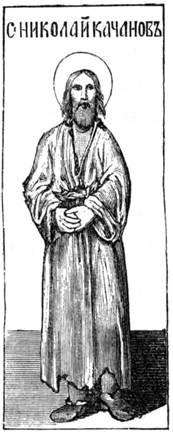
Иные изумляются богатству, говорит древний сочинитель похвалы блаж. Николаю389, другие хвалят славу и власть; третьим нравится вкусная пища. Но стоит ли всё это удивления? Всё это – не вечно, исчезает вместе с здешней жизнью, – а иным и в этой жизни не послужило на пользу. Во всяком же случае не остались с ними навсегда ни богатство, ни слава, ни вкусная пища, ни удовольствия, – всё являлось на время и как сон прошло и минуло владельцев своих. Только добродетель бессмертна, вечна и блаженна; потому она и достойна удивления и хвалы. Сколько было людей богатых и сильных! И где они? Слава святых – неугасима. Таков блаж. Николай Качанов, юродивый для Христа» ...
"Some marvel at wealth," says the ancient author of the eulogy of the blessed Nicholas389, "others praise glory and power; still others delight in savory food. But is all this worthy of wonder? All this is not eternal; it vanishes together with this present life — and for some it did not even serve for benefit in this life. In any case, neither wealth, nor glory, nor savory food, nor pleasures remained with them forever — all appeared for a time and, like a dream, passed away and departed from its possessors. Only virtue is immortal, eternal, and blessed; therefore it is worthy of wonder and praise. How many rich and powerful men there were! And where are they? The glory of the saints is unquenchable. Such was the blessed Nicholas Kachanov, a fool for Christ's sake..."
По известию сего писателя, как и по другому краткому житию, родители блаж. Николая, Максим и Иулиания, были люди почётные в Новгороде и по роду, и по состоянию, а что важнее, они были люди благочестивые; мать его проводила жизнь праведную и по кончине своей известна с именем праведницы, предварив смерть сына 9 годами390. Под влиянием такого примера блаж. Николай с юности возлюбил благочестие, усердно ходил в храм Божий и не делил забав забывчивости; утешением его была молитва. «Из уст его, говорит древнее известие, текла молитва к Богу, как благовонное кадило; он любил чистоту, пост, коленное преклонение. Когда он проводил такую добродетельную жизнь, то люди, в том числе и знатные, стали ублажать и славить его. Блаженный не желал славы человеческой, по слову пророческому: когда умножится слава дома его, не оставит ли всего? И он начал юродствовать для Господа. Юродивый ходил по городу, творил неприличия, а в устах его всегда была молитва к Богу... Господь сказал в Евангелии: «иже любит отца или матерь паче Мене, несть Ми достоин; иже не приимет креста своего и во след Мене не грядет, несть Ми достоин». Так и сей блаженный Николай Качанов оставил всё для Господа, – сёла, имение, множество рабов, стяжал полное нестяжание, терпением и мужеством своим перенёс много страданий, терпя морозы зимние и нищету. Мученики в одно известное время претерпели страдание, а он во все дни жизни своей терпел муки, переносил насмешки и толчки невежд, молясь за них же».
According to the account of this writer, as also according to another brief life, the parents of the blessed Nicholas, Maximus and Juliana, were people of honor in Novgorod both by lineage and by estate, and — what is more important — they were pious people; his mother led a righteous life and after her death was known by the name of a righteous woman, having preceded her son's death by 9 years390. Under the influence of such an example, the blessed Nicholas from his youth loved piety, diligently went to the church of God, and did not share in the amusements of heedlessness; his consolation was prayer. "From his mouth," says the ancient account, "prayer flowed to God like fragrant incense; he loved purity, fasting, and kneeling. When he was leading such a virtuous life, people, including the noble, began to bless and praise him. The blessed one did not desire human glory, according to the prophetic word: when the glory of his house is multiplied, will he not abandon everything? And he began to play the fool for the Lord's sake. The fool walked about the city, committing improprieties, but in his mouth there was always prayer to God... The Lord said in the Gospel: 'He that loveth father or mother more than Me is not worthy of Me; and he that taketh not his cross and followeth after Me is not worthy of Me.' So also this blessed Nicholas Kachanov left everything for the Lord's sake — villages, property, a multitude of slaves — and acquired complete non-acquisition; by his patience and courage he endured many sufferings, bearing winter frosts and poverty. The martyrs endured suffering at one known time, but he endured torments all the days of his life, bearing the mockery and shoves of the ignorant, praying even for them."
«Был в Новгороде богатый вельможа. Случилось ему давать пир, на который созвал он знать Новгорода. Блаженный Николай шёл по своему обыкновению по улице. Вельможа встретился с ним, – он хорошо его знал, – и, поклонясь до земли, сказал ему: «раб Христов! сотвори любовь, приди ко мне покушать хлеба моего». Блаженный отвечал: «как Богу угодно, так и будет». Спустя немного времени блаженный пришёл в дом вельможи. Вельможи тогда не было в доме; прислуга стала издеваться над юродивым: одни толкали его, другие и били, иные насмехались и говорили неприличные слова, которые непристойно и повторять. Вышед из дома, поскакал он по улицам, как обыкновенно делывал. Вельможа возвратился в дом, собрались гости. – Хозяин приказал слугам подавать вино, мёд и всякие напитки, какие были в доме его. Те пошли к бочкам с сосудами. Бочки были полны, но теперь в них не было ни капли. Слуги в страхе сказали господину о случившемся. Тот, не веря слугам, пошёл сам и увидел то же самое, что говорили слуги. Что делать? Гости созваны, без вина оставаться нельзя. Хозяин поспешил послать в Варяжский двор купить напитки. Потом, вспомнив о блаж. Николае, спрашивает слуг: «был здесь юродивый Николай Качанов? я очень звал его». Слуги отвечали: «он был в доме твоём, и некоторые невежды наделали ему много оскорблений; он же, не сказав ни слова, вышел из дому». Добрый хозяин, поняв грех своих слуг, послал лучших из своих слуг и велел отыскать, где бы то ни было, блаж. Николая. «Если где найдёте его, зовите его ко мне со всем смирением, чтобы оказал мне грешному своё милосердие», сказал господин. Посланные нашли блаж. Николая и, поклонясь ему до земли, сказали: «раб Христов! прости нам согрешение, которое сотворили слуги господина нашего, пойди с нами к господину нашему». Блаженный отвечал: «как Богу угодно, так и будет». Всегда незлобивый, блаженный пошёл вместе с ними к боярину. Предварённый о том вельможа с радостью встретил его на крыльце («на всходе»), поклонился ему до земли, посадил его вместе с вельможами, – блаженный был также из знаменитого рода. «Блаженный Николай! прости мне согрешение слуг моих и благослови внесть пития», сказал хозяин, когда сели все на места. Блаженный Николай отвечал: «пусть будет, как хочешь ты». – Он поклонился и пошёл с слугами к бочкам. Бочки оказались полными, как и были прежде. Блаженный, поняв явившуюся благодать в доме хозяина и не желая славы человеческой, сказал боярину: «не сказывай никому о посланной тебе благодати, пока Бог не возьмёт меня отсюда». И тайно вышел из дома.
"There was in Novgorod a rich nobleman. It happened that he was giving a feast, to which he summoned the nobility of Novgorod. The blessed Nicholas was walking along the street as was his custom. The nobleman met him — he knew him well — and, bowing to the ground, said to him: 'servant of Christ! show love, come to me to eat of my bread.' The blessed one answered: 'As God wills, so shall it be.' After a short time the blessed one came to the nobleman's house. The nobleman was not then at home; the servants began to mock the fool: some shoved him, others even beat him, still others scoffed and spoke improper words, which it is unseemly even to repeat. Coming out of the house, he ran through the streets, as he was wont to do. The nobleman returned home, and the guests gathered. — The host ordered the servants to serve wine, mead, and every kind of drink that was in his house. They went to the barrels with vessels. The barrels had been full, but now there was not a drop in them. The servants in fear told their master what had happened. He, not believing the servants, went himself and saw the same thing that the servants had said. What was to be done? The guests were invited; one could not remain without wine. The host hastened to send to the Varangian court to buy drinks. Then, remembering the blessed Nicholas, he asks the servants: 'was the fool Nicholas Kachanov here? I earnestly invited him.' The servants answered: 'he was in your house, and some ignorant ones inflicted many insults upon him; but he, without saying a word, went out of the house.' The good host, understanding the sin of his servants, sent the best of his servants and ordered them to find the blessed Nicholas wherever he might be. 'If you find him anywhere, call him to me with all humility, that he may show mercy to me a sinner,' said the master. The messengers found the blessed Nicholas and, bowing to him to the ground, said: 'servant of Christ! forgive us the transgression which the servants of our master have committed, and come with us to our master.' The blessed one answered: 'As God wills, so shall it be.' Always without malice, the blessed one went with them to the boyar. Forewarned of this, the nobleman joyfully met him on the porch ("on the steps"), bowed to him to the ground, and seated him together with the nobles — for the blessed one was also of a renowned family. 'Blessed Nicholas! forgive me the transgression of my servants and bless that the drinks be brought in,' said the host, when all had taken their places. The blessed Nicholas answered: 'Let it be as you wish.' — He bowed and went with the servants to the barrels. The barrels proved to be full, as they had been before. The blessed one, perceiving the grace that had appeared in the host's house and not desiring human glory, said to the boyar: 'Tell no one of the grace sent to you, until God takes me from here.' And he secretly went out of the house.
По житию блаж. Феодора юродивого, Феодор не дозволял Николаю бывать на Торговой стороне, на которой сам жил; он обыкновенно прогонял его с Волховского моста или по мосту на Софийскую сторону. Эта вражда двух блаженных была только урок для буйной вольницы Новгородской, а не вражда двух сердец. Раз вот что было при этой вражде. Николай гнался за Феодором до Волхова, и Феодор, не попав на мост, пошёл по воде как по мосту, а Николай бросил в него попавшийся ему кочан.
According to the life of the blessed Theodore the Fool, Theodore did not allow Nicholas to be on the Trade Side, where he himself lived; he usually drove him away from the Volkhov Bridge or across the bridge to the Sophia Side. This enmity of the two blessed ones was only a lesson for the turbulent freemen of Novgorod, and not enmity of two hearts. Once this happened during this enmity. Nicholas chased Theodore as far as the Volkhov, and Theodore, not reaching the bridge, walked upon the water as upon a bridge, while Nicholas threw at him a cabbage head that he had chanced upon.
Блаженный Николай преставился июля 27 1392 года и погребён был на конце кладбища Яковлевского собора, на дороге: так сам он желал.
The blessed Nicholas reposed on July 27, 1392, and was buried at the edge of the cemetery of St. James's Cathedral, by the road: for so he himself had desired.
Из посмертных чудес блаж. Николая самое знаменитое было следующее: живший близ гроба блаж. Николая Никифор, так говорит древняя повесть, дал взаймы Исааку и его сыну «полгривеньки серебра». Он хотел взять с него заёмное письмо, и так как ни он, ни сын его не умели писать, то позвал клирика Иоанна и упросил его написать письмо. Тот отказывался, но наконец написал. Когда пришёл срок платежа, Никифор просил возвратить серебро. Но должник в ответ стал браниться. «Никифор, взяв приставников, отвёл Исаака к городским судьям и представил письмо». Исаак, не боясь ни Бога, ни суда Божия, объявил, что он ничего не знает ни о долге, ни о письме. «Иоанна тогда не было в городе, он ходил в Ладогу, в её придел, в Богоявленский монастырь на р. Сясь, по нужде; а к тому же случился праздник перенесения мощей святителя Николая». По возвращении сказали ему, как Исаак оболгал писанное им письмо. В скорби о беде такой он пошёл ко гробу блаж. Николая и со слезами молился угоднику Божию. – «Блаженный угодник Христов Николай! так говорил он в молитве, ты не оставил надежды моей прежде того, когда я был в нужде – в Москве, ты велел мне идти в свой путь и надзирал за мной в дороге; не оставь меня и теперь». Возвратясь в дом, лёг он в полдень отдохнуть. Думая о случившемся, впал в какое-то забытьё. Ему явился блаж. Николай и сказал: «не скорби, брат, и не бойся, – завтра иди к судьям, – Бог оправдает твоё рукописание. Исаак сознается перед всеми, что он оболгал тебя». На утро Иоанн отправился к судьям и рассказал, как он писал долговое письмо. Исаак с гневом отрёкся от слов своих. Прошло три дня. Люди, узнав о деле, стали укорять Исаака. Наконец Исаак убоялся Бога, пошёл на паперть св. Апост. Иакова и здесь перед всеми сознался, что он оболгал Иоанна. Так оправдались слова блаж. Николая и его молитвой защищена невинность! По летописям, в 1554 г. «над гробом блаженного Николая Качанова» заложен был каменный храм «во имя св. влкм. Пантелеймона»391. По высокому уважению к блаж. Николаю, храм сей скоро стали называть храмом «св. Николая чудотворца Качанова»392. – По уставу Софийского собора 27 июля сам архиепископ совершал литургию в сём храме, а вечерню и молебен отправлял игумен393. Память блаж. Николая чтится и во всей Церкви394.
Among the posthumous miracles of the blessed Nicholas, the most famous was the following: Nikephoros, who lived near the tomb of the blessed Nicholas, so says the ancient account, lent Isaac and his son “half a grivna of silver.” He wished to take a promissory note from him, and since neither he nor his son knew how to write, he summoned the cleric John and begged him to write the note. He refused, but at last wrote it. When the time of payment came, Nikephoros asked for the silver to be returned. But the debtor in reply began to revile him. “Nikephoros, taking constables, brought Isaac to the city judges and presented the note.” Isaac, fearing neither God nor the judgment of God, declared that he knew nothing either of the debt or of the note. “John was not then in the city; he had gone to Ladoga, to its chapel, to the Theophany Monastery on the Syas River, on business; and besides, the feast of the translation of the relics of St. Nicholas occurred.” Upon his return, they told him how Isaac had slandered the note he had written. In grief over such a calamity, he went to the tomb of the blessed Nicholas and with tears prayed to the saint of God. – “Blessed Nicholas, servant of Christ!” he said in prayer, “you did not abandon my hope before, when I was in need – in Moscow, you bid me go on my way and watched over me on the road; do not abandon me now.” Returning home, he lay down at midday to rest. Thinking over what had happened, he fell into a kind of stupor. The blessed Nicholas appeared to him and said: “Grieve not, brother, and fear not – tomorrow go to the judges – God will vindicate your handwriting. Isaac will confess before all that he has slandered you.” In the morning John went to the judges and told how he had written the debt note. Isaac angrily denied his words. Three days passed. The people, learning of the matter, began to reproach Isaac. At last Isaac feared God, went to the porch of St. James the Apostle, and there before all confessed that he had slandered John. Thus were the words of the blessed Nicholas justified, and by his prayer was innocence defended! According to the chronicles, in 1554, “over the tomb of the blessed Nicholas Kachanov” a stone church was founded “in the name of the holy Great Martyr Panteleimon”391. Out of high reverence for the blessed Nicholas, this church soon came to be called the church of “St. Nicholas the Wonderworker Kachanov”392. – According to the rule of the Cathedral of St. Sophia, on July 27 the archbishop himself celebrated the Divine Liturgy in this church, while Vespers and the moleben were performed by the abbot393. The memory of the blessed Nicholas is honored throughout the whole Church394.
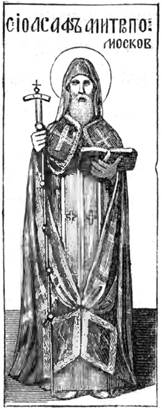
Блаж. Иоасаф, из дворян Скрыпицыных, принял иночество в обители преп. Сергия и с 1529 г. был игуменом её. В. кн. Василий любил и уважал его. Игумен Иоасаф принимал (1530 г.) от купели наследника престола Иоанна. Потом, согласно с давним желанием в. кн. Василия, облёк его больного, перед смертью, в иночество395. Февр. 6-го 1539 г. Иоасаф избран в митрополита Московского, на место отказавшегося от кафедры Даниила396. В своём исповедании веры, назначенный в митрополита писал: «во всём следую древним святейшим патриархам, соблюдающим истинную непорочную веру христианскую, уставленную св. Апостолами и преданную Богоносными отцами, а не ту, которую принёс Исидор с несвященного Латинского собора, просиявшего злочестием. К тому же обещаюсь не делать ничего из одного угождения в. князю или многим князьям, хотя бы грозили мне смертью, принуждая сделать что-либо вопреки Божественным и священным правилам»397. Блаженный Иоасаф выполнил обещание своё с полной твёрдостью. Бояре в малолетство Иоанна делали, что хотели, и Шуйские злодействовали. Надобно было положить предел кровавым произволам Шуйских, а более способным к тому был кн. Бельский. Святитель (в мар. 1540 г.) выпросил у в. князя приказание освободить кн. Бельского из заключения, и умный, добрый боярин введён был в верховный совет бояр. Легко было предвидеть, что Шуйские жестоко отплатят за то доброму пастырю; но он предоставил себя воле Божией. Надежды на Бельского стали оправдываться: грабежи и насилия остановлены398. Митрополит делал всё, что мог, для блага России. Он удержал в. князя в Москве и одушевил всех мужеством, когда приближался к Москве Сагибгирей399. По его ходатайству, возвращены милости и отчины князю Владимиру Андреевичу, брату вел. князя, и дана свобода страдальцу князю Димитрию Андреевичу, 49 лет сидевшему в тюрьме и оковах400. Но князь Иван Шуйский (в янв. 1542 г.) успел схватить и отправить Бельского на Белоозеро, где его удушили. – Тогда толпа неистовых едва не убила святителя: в келью его бросали камни; в покоях самого в. князя не нашёл он защиты; на Троицком подворье готовы были убить его, и только именем пр. Сергия игумен Алексий умолил пощадить жизнь святителя. Его отправили в заточение – в Белоозерский монастырь401. В 1553 г. бывший митрополит Московский Иоасаф встретил царя покорителя Казани в лавре Сергия402. Он выпросил себе милость провести последние годы на месте иноческого обета. Ему и здесь были неприятности: с ним жили тогда здесь те, которые сами по себе мало хотели жить в обители и которых загнали в монастырь только беды жизни мирской; они часто оскорбляли блаж. Иоасафа припадками своего мирского своеволия403; невольными и вольными скорбями блаж. Иоасаф очищал душу свою для светлых радостей неба и мирно скончался 27 июля 1555 г. Мощи его почивают под спудом в южном притворе Троицкого собора404.
The blessed Joasaph, of the noble family of Skripitsyn, received the monastic tonsure in the monastery of the Venerable Sergius and from 1529 was its abbot. Grand Prince Basil loved and respected him. Abbot Joasaph received (in 1530) the heir to the throne, John, from the baptismal font. Later, in accordance with the long-standing wish of Grand Prince Basil, he clothed him, when ill, before his death, in monasticism395. On February 6, 1539, Joasaph was elected Metropolitan of Moscow, in place of Daniel, who had resigned the see396. In his confession of faith, the appointed metropolitan wrote: “In all things I follow the ancient most holy patriarchs, who keep the true and immaculate Christian faith, established by the holy Apostles and handed down by the God-bearing Fathers, and not that which Isidore brought from the unholy Latin Council, which shone forth with impiety. Moreover, I promise to do nothing out of mere pleasing of the Grand Prince or of many princes, even if they threaten me with death, compelling me to do anything contrary to the Divine and sacred canons”397. The blessed Joasaph fulfilled his promise with complete firmness. The boyars, during John’s minority, did as they pleased, and the Shuiskys committed outrages. It was necessary to put a limit to the bloody arbitrary acts of the Shuiskys, and the one most capable for this was Prince Belsky. The Hierarch (in March 1540) obtained from the Grand Prince an order to release Prince Belsky from confinement, and the wise, good boyar was introduced into the supreme council of boyars. It was easy to foresee that the Shuiskys would cruelly repay the good shepherd for this; but he committed himself to the will of God. Hopes for Belsky began to be justified: robberies and violence were stopped398. The Metropolitan did all that he could for the good of Russia. He kept the Grand Prince in Moscow and inspired all with courage when Sahib Giray approached Moscow399. Through his intercession, favors and patrimonies were returned to Prince Vladimir Andreevich, the Grand Prince’s brother, and freedom was given to the sufferer Prince Demetrius Andreevich, who had sat in prison and chains for 49 years400. But Prince Ivan Shuisky (in January 1542) succeeded in seizing Belsky and sending him to Beloozero, where he was strangled. – Then a crowd of frenzied men nearly killed the Hierarch: stones were thrown into his cell; in the very chambers of the Grand Prince he found no protection; at the Trinity metochion they were ready to kill him, and only by the name of the Venerable Sergius did Abbot Alexis beg them to spare the Hierarch’s life. He was sent into exile – to the Beloozero Monastery401. In 1553, the former Metropolitan of Moscow, Joasaph, met the Tsar, the conqueror of Kazan, in the Lavra of St. Sergius402. He obtained for himself the favor of spending his last years at the place of his monastic vows. Even here he had unpleasantness: there lived with him then those who themselves had little desire to dwell in the monastery and whom only the misfortunes of worldly life had driven into the monastery; they often offended the blessed Joasaph with outbursts of their worldly self-will403; through involuntary and voluntary sorrows the blessed Joasaph purified his soul for the bright joys of heaven and peacefully reposed on July 27, 1555. His relics lie hidden under a covering in the southern narthex of the Trinity Cathedral404.
Святитель усердно занимался исправлением книг для пользы общей. В сборнике его читаем: «Божией благодатию и Пречистые Богородицы помощью переписал жития св. преп. отец. Писал же с разных списков, тщася обрести правый. И обретохв спискахмнога неисправлена. – И елика возможна моему худому разуму, сия исправлял; а яже невозможна, сия оставих, да имущий разум больший нас, тии исправят не исправленная и пополнят недостаточная»405.
The Hierarch zealously occupied himself with the correction of books for the common benefit. In his collection we read: “By the grace of God and the help of the Most Pure Theotokos, I copied the lives of the holy Venerable Fathers. I wrote from various copies, striving to find the correct one. And I found in the copiesmany things uncorrected. – And as much as was possible for my poor understanding, I corrected; but what was impossible, I left, that those having greater understanding than we may correct the uncorrected and supply the deficiencies”405.
Ещё цел саккос его, устроенный, по надписи, «во второе лето святительства его», золотого глазета (алтабаса), с серебряным четвероконечным крестом, на коем наведён чернью другой, восьмиконечный крест406.
His sakkos is still preserved, made, according to the inscription, “in the second year of his hierarchate,” of gold brocade (altabas), with a silver four-pointed cross, upon which is superimposed in black enamel another, eight-pointed cross406.
Сообщение о многочисленных, чудесах, совершавшихся и совершающихся целителем Пантелеймоном, см. в книге: «Житие, страдание и чудеса св. великомуч. Пантелеймона», 5-е изд. 1876 г.
An account of the numerous miracles performed and being performed by the healer Panteleimon is found in the book: “Life, Suffering and Miracles of the Holy Great Martyr Panteleimon,” 5th ed., 1876.
Положение этой обители хотя в точности не определено, но ясно видно, – говорит архим. Сергий в «Месяцесл. Вост.», что она была на пути из Каппадокии в Константинополь, вероятно, в Пафлагонии (т. II, ч. 2, стр. 217)
The location of this monastery, although not precisely determined, is clearly seen, says Archimandrite Sergius in “Mesiatseslov Vostoka,” to have been on the road from Cappadocia to Constantinople, probably in Paphlagonia (vol. II, part 2, p. 217).
Феофилакта – βἰος Κλήμεντος ἀρχιεπισκόπου. Русский перевод с Греческим текстом – в материалах для истории письмен. Μ. 1856. г. Сочинитель называет себя самым близким учеником Климента и в конце упоминает о Скифском мече, упившемся в крови Болгарской. Последнее намекает на войну Святослава с Болгарами 967 г.
Theophylact – βἰος Κλήμεντος ἀρχιεπισκόπου. Russian translation with Greek text – in materials for the history of literature. M. 1856. The author calls himself the closest disciple of Clement and at the end mentions the Scythian sword, drunk with Bulgarian blood. The latter alludes to the war of Sviatoslav with the Bulgarians in 967.
«Весьма знающий оба языка, Славянский и Греческий», говорит жизнь Климента § 15. По житию св. Мефодия, «сей есть вашей земля свобод муж научен добре в Латинския книги».
“Very knowledgeable in both languages, Slavonic and Greek,” says the Life of Clement § 15. According to the Life of St. Methodius, “this man of your land is a free man, well learned in Latin books.”
Миклошич: Homo turbulentus et ambitiosus ipsisque Bavaris invisus. Nam cum an. 894 Arnulpho se insinuasset pro Cancellario ipse cum creasset episcopum passaviensem, an. 899 deiectus est ab illa sede a Salisburgense episcopo. De eo chronicon passaviense, ed. in Mittheilungen Francof. 1846 s. 17. Vichingum, der war ein Wellgescheiter Herr, das evangelium den. Mähren predict er, wird Bischof mehr durch Gewalt, als Einheiligkeit.
Miklosich: Homo turbulentus et ambitiosus ipsisque Bavaris invisus. Nam cum an. 894 Arnulpho se insinuasset pro Cancellario ipse cum creasset episcopum passaviensem, an. 899 deiectus est ab illa sede a Salisburgense episcopo. De eo chronicon passaviense, ed. in Mittheilungen Francof. 1846 s. 17. Vichingum, der war ein Wellgescheiter Herr, das evangelium den. Mähren predict er, wird Bischof mehr durch Gewalt, als Einheiligkeit.
Карта Охриды и её окрестностей при путешествии Григоровича, Каз. 1848 г.; его же изыскание о Славянских Апостолах, стр. 6. Розенкампф о Кормчей, прим. 73.
Map of Ohrid and its environs from the journey of Grigorovich, Kazan, 1848; his investigation of the Slavonic Apostles, p. 6. Rosenkampf on the Kormchaya, note 73.
Petri siculi historia Manichoeorum, Ingolst. 1604. Bipl. Patr Lugd. t. XVI p. 753 s. Климент и Наум отправлены в юго-западную Болгарию 886 г. и архиепископом Болгарским стал Климент только в 896 г. (См. ниже пр. 36. 40). Последнее не иным чем объяснить можно, как тем, что до того времени ещё жив был св. Горазд, архиепископ Болгарский.
Petri siculi historia Manichoeorum, Ingolst. 1604. Bipl. Patr Lugd. t. XVI p. 753 s. Clement and Naum were sent to southwestern Bulgaria in 886, and Clement became Archbishop of Bulgaria only in 896 (See below notes 36, 40). The latter can be explained by nothing other than that until that time St. Gorazd, Archbishop of Bulgaria, was still alive.
Vita s. Clementis § 17–19. 13. Краткое житие св. Климента, издан. Григоровичем § 8. 11. Составитель краткого жития писал не раньше XII столетия иное под руководством пространного жития, о чём говорит и сам в § 5, другое по живым памятникам, напр. § 8–11, а иное по слухам вовсе неверным, например о крещении кн. Бориса, о времени посвящения Климента в епископа.
Vita s. Clementis § 17–19. 13. The brief Life of St. Clement, published by Grigorovich § 8. 11. The compiler of the brief Life wrote no earlier than the 12th century, partly under the guidance of the extensive Life, as he himself says in § 5, partly from living monuments, e.g., § 8–11, and partly from completely unreliable hearsay, for example concerning the baptism of Prince Boris, concerning the time of Clement’s consecration as bishop.
«Осьмой год учительства Климентова не был последним годом жизни кн. Бориса, как напротив иные понимали, а только был последним годом правления Бориса. Так показывает связь речи у биографа Климентова. Потому сомнение г. Палаузова (век к. Симеона, стр. 28) о времени смерти Бориса – напрасное; равно несправедливо мнение Харьковского вестника (1864 г. II, 499) о времени прибытия Климентова в юго-западный край Болгарии, – Биограф Климента, под влиянием желания говорить красноречиво, иногда выражается неясно и не точно, и события выставляет не всегда в порядке времени.
“The eighth year of Clement’s teaching was not the last year of Prince Boris’s life, as some have understood on the contrary, but was only the last year of Boris’s reign. So the connection of the speech in Clement’s biographer shows. Therefore, the doubt of Mr. Palauzov (The Age of Tsar Simeon, p. 28) about the time of Boris’s death is groundless; equally unjust is the opinion of the Kharkov Herald (1864, II, 499) about the time of Clement’s arrival in the southwestern region of Bulgaria. – Clement’s biographer, under the influence of a desire to speak eloquently, sometimes expresses himself unclearly and imprecisely, and does not always present events in chronological order.”
То же Болгарин в прологе XIV века. «И еще ему (Борису) живу сущу в чернечстве и в него место сущу Володимерю, сыну его первому, бысть благословение Божие и Михайлово на Семеоне и прия стол, съгнав брата».
The same Bulgarian in a prologue of the 14th century: “And while he (Boris) was still living in monasticism, and in his place was Vladimir, his first-born son, the blessing of God and of Michael was upon Simeon, and he received the throne, having driven out his brother.”
Vita s. Clementis § 20. В списке епархий имп. Льва показаны две «Велички»., одна в округе митрополии Филиппополя Фракийского, другая в ведении митрополита «Филиппов Македонии». Tafel, р. 49. 50. Климент был на кафедре Велички Македонской. У Лакеня – Or ehr. 2, 290, в Греческом перечне Болгарских архиепископов сказано: «Климент, назначенный в епископа Тивериополя или Велички, получил потом от Болгарского царя Бориса в управление третью часть Болгарского царства, т. е. от Солуня до Иерихо и Канин или Супиата». – Если Величка Климента то же, что Тивериополь, то иначе называлась она у Славян Струмницей (см. мая 2 пр. 18). Другие указанные здесь города находятся на побережье южной Албании: Иерихо и Канина – у Авлон, Сопоти – в Дельвинском округе. – Г. Григорович осматривал две Главеницы, остался с уверенностью, что Главеница Климента была та, которая находилась в провинции Драча, на пути из Элбасани до Драча (Краткое житие Климента, стр. 26). По списку имп. Льва, в митрополии Драча кафедра «Главеницы иди Акрокеравнии» (Tafel.р. 50). – На западе Охриды средняя полоса нынешней Албании, от Драча до Акрокеравнийского залива, занята была Славянами ещё в начале VII века; они покорили себе и бывшие здесь колонии Валахов – Римлян. Климент не был перемещён из Велички в Охриду: в известии ученика его место кафедры его, перед самой смертью его, отличается от Охридского монастыря. Когда стал жить независимый Болгарский архиепископ в Охриде, пока остаётся неизвестным, хотя и известно, что имп. Василий 2 грамотой 1017 г. утвердил за Охридским архиепископом Иоанном права независимого Болгарского архиепископа (Зап. акад. наук V, 260, 261. Времен. кн. 5). Тем не менее видно, что св. Климент, будучи Величским архипастырем, заведовал и Охридой.
Vita s. Clementis § 20. In the list of dioceses of the Emperor Leo, two “Velichkas” are shown, one in the district of the metropolis of Philippopolis in Thrace, the other under the authority of the metropolitan of “Philippi in Macedonia.” Tafel, pp. 49, 50. Clement was on the see of Velichka in Macedonia. In Lequien – Or. chr. 2, 290, in the Greek list of Bulgarian archbishops it is said: “Clement, appointed bishop of Tiberiopolis or Velichka, later received from the Bulgarian Tsar Boris the administration of a third part of the Bulgarian kingdom, i.e., from Thessalonica to Jericho and Kanina or Supiata.” – If Clement’s Velichka is the same as Tiberiopolis, then it was otherwise called by the Slavs Strumitsa (see May 2, note 18). The other cities indicated here are located on the coast of southern Albania: Jericho and Kanina near Avlona, Sopoti in the Delvino district. – Mr. Grigorovich examined two Glavenitsas and remained convinced that Clement’s Glavenitsa was the one located in the province of Dyrrachium, on the road from Elbasan to Dyrrachium (Short Life of Clement, p. 26). According to the list of the Emperor Leo, in the metropolis of Dyrrachium there is the see of “Glavenitsa or Acroceraunia” (Tafel, p. 50). – To the west of Ohrid, the middle zone of present-day Albania, from Dyrrachium to the Acroceraunian Gulf, was occupied by Slavs as early as the beginning of the 7th century; they also subdued the colonies of Vlachs-Romans that were there. Clement was not transferred from Velichka to Ohrid: in the account of his disciple, the place of his see, just before his death, is distinguished from the monastery of Ohrid. When an independent Bulgarian archbishop began to reside in Ohrid remains unknown, although it is known that Emperor Basil II, by a charter of 1017, confirmed for the Archbishop of Ohrid, John, the rights of an independent Bulgarian archbishop (Notes of the Academy of Sciences V, 260, 261; Vremennik, book 5). Nevertheless, it is evident that St. Clement, being the archpastor of Velichka, also had charge of Ohrid.
Если св. Климент прибыл в Болгарию в сентябре 885 г. и оставался учителем 11 лет, то в епископа посвящён он в сентябре 896 г.; тогда как кн. Борис жил иноком в монастыре.
If St. Clement arrived in Bulgaria in September 885 and remained a teacher for 11 years, then he was consecrated bishop in September 896; at that time Prince Boris was living as a monk in a monastery.
О сочинениях св. Климента, ныне известных, см. истор. учение об отцах § 291. Там не упомянуты только «заповедания о праздницех», а это поучение есть в сборнике XII века Сергиевой лавры.
On the writings of St. Clement now known, see Historical Teaching on the Fathers § 291. There only the “commandments concerning feasts” are not mentioned, and this instruction is found in a 12th-century collection of the Holy Trinity–St. Sergius Lavra.
В древнейшем списке глагольской азбуки она названа Болгаркой. Поныне ещё встречаются рукописи, писанные в Македонии глаголическими и самый язык их – древнеславянский с оттенками Болгарского наречия. Срезневский в 9 и 10 тетр. древностей 1865 г., стр. 122–125. 1. 129–135. Изв. арх. общ. 1, 358–372.
In the most ancient copy of the Glagolitic alphabet, it is called Bulgarian. To this day, manuscripts written in Macedonia in Glagolitic are still encountered, and their language itself is Old Church Slavonic with shades of the Bulgarian dialect. Sreznevsky in the 9th and 10th fascicles of Antiquities, 1865, pp. 122–125, 129–135. Proceedings of the Archaeological Society 1, 358–372.
Свидетельства: а) черноризец Храбр: «Славяне, погани (язычники суще, чрътами и резами чьтяху и гатаху» б) Пасхальная хроника (ed). Niebur р. 45): «народы, у которых есть свои письмена, – Скифы, Сарматы» и проч. в) Константин Порфирородный (de adm. imperio, с. 31) говорит, что Хорваты, принимая христианство, собственными подписями подтвердили клятву не воевать с христианами Греческими и Римскими, г) Суд Любуши говорит о досках праводатных. д) Ибн-Фоцлан показывает у Славян надписи на столпах могильных, Ибн-эль-Недим свидетельства – нарезанные на дереве, Массуди – начертания на камнях.
Testimonies: a) the Monk Khrabr: “The Slavs, being pagans, read and divined by lines and incisions”; b) the Paschal Chronicle (ed. Niebuhr, p. 45): “Peoples who have their own writings – the Scythians, the Sarmatians,” etc.; c) Constantine Porphyrogennetos (De adm. imp., ch. 31) says that the Croats, upon accepting Christianity, confirmed by their own signatures an oath not to war with Greek and Roman Christians; d) the Judgment of Libuše speaks of “tables of law”; e) Ibn Fadlan shows among the Slavs inscriptions on grave pillars, Ibn al-Nadim testifies of carvings on wood, and Masudi of inscriptions on stones.
В глаголице знаки ф и ш взяты из кириллицы и след. первая образовалась под влиянием последней. Так думал и Шафарик, хотя потом два раза переменял свои мысли. Изв. акад. I, 374–376. II, 300–304. Неудобства глаголицы, двусмысленность букв её, указываемые Срезневским в Изв. археогр. общ. 1, 360–361, также указывают на образование её из народных резов. Поелику же она удержала древние народные знаки, то это одно и было причиной, почему глаголица, не смотря на сбивчивое значение букв и их некрасоту, так долго держалась у Славян. – Что касается до того мнения, что будто глаголица изобретена богомилами (Палаузова, век Симеона, стр. 130), то это мнение не только не подтверждается никаким историческим свидетельством, но против него и то, что глагольскими буквами писались Евангелия, толкования пророков, Богослужебные православные книги, и не видно ни одного богомильского сочинения, писанного глаголицей.
In the Glagolitic alphabet, the signs for f and sh are taken from the Cyrillic alphabet, and consequently the former was formed under the influence of the latter. So thought Šafárik, although he later changed his mind twice. Proceedings of the Academy I, 374–376; II, 300–304. The inconveniences of the Glagolitic alphabet, the ambiguity of its letters, pointed out by Sreznevsky in the Proceedings of the Archaeographical Society 1, 360–361, also indicate its formation from folk incisions. Since it preserved ancient folk signs, this alone was the reason why the Glagolitic alphabet, despite the confusing meaning of its letters and their lack of beauty, held on so long among the Slavs. – As for the opinion that the Glagolitic alphabet was invented by the Bogomils (Palauzov, The Age of Simeon, p. 130), this opinion is not only unsupported by any historical testimony, but is also contradicted by the fact that Gospels, commentaries on the Prophets, and Orthodox liturgical books were written in Glagolitic letters, and not a single Bogomil work written in Glagolitic is known.
Vita s. Clementis § 24–27. Г. Пазаузов писал: «в сане епископа Велического Климент оставался почти 28 лет». Нет, если он посвящён в 896 году, то был епископом 20 лет.
Vita s. Clementis § 24–27. Mr. Palauzov wrote: “In the rank of Bishop of Velichka, Clement remained almost 28 years.” No, if he was consecrated in 896, then he was bishop for 20 years.
Григоровича путешеств., стр. 116. 119. 129. Краткое житие: «преставившись в блаженную жизнь, оставил здесь в (Охриде) святой гроб, сокровище бесценное... Каждый день исцеляются здесь разные болезни; св. обитель стала врачебницей всем прибегающим к гробу». Законный день памяти св. Климента – 27 июля; но по каким-то случаям он бывал и в другие дни. См. поклонника св. горы, стр. 336.
Grigorovich’s Travels, pp. 116, 119, 129. Short Life: “Having reposed into the blessed life, he left here (in Ohrid) his holy tomb, a treasure beyond price... Every day various illnesses are healed here; the holy monastery has become a hospital for all who come to the tomb.” The appointed day of memory of St. Clement is July 27; but for some reasons it has also been observed on other days. See The Devotee of the Holy Mountain, p. 336.
Житие св. Наума на Греческ. языке, взятое из Мосхопольского издания 1742 года, напечатано с Русск. переводом в Русск. бес. 1859 года, II 136–144. Оно почти всё состоит из извлечения из Климентова жития; о самом Науме говорит очень мало.
The Life of St. Nahum in Greek, taken from the Moschopolis edition of 1742, was printed with a Russian translation in Russkaya Beseda, 1859, II, 136–144. It consists almost entirely of extracts from the Life of Clement; it says very little about Nahum himself.
Так читал Медведев в своём списке бесед Константина (оглавление книг § 128). В Синодальном списке сказано: «убежден бывже верными етеры человекы – преложити от Гречьска языка в Словеньск» (Опис. Синод. ркп. № 163). Это значит, что Константина убеждал не один Наум.
Thus Medvedev read in his copy of the Discourses of Constantine (Table of Contents of Books § 128). In the Synodal copy it is said: “Having been persuaded by certain faithful men – to translate from the Greek language into Slavonic” (Description of Synodal Manuscripts, No. 163). This means that it was not Nahum alone who persuaded Constantine.
Григоровича, стр. 112. 116. 151. В 1634 году приезжал в Москву за милостыней настоятель монастыря св. Наума с грамотой, подписанной всеми архипастырями Болгаро-Сербской Церкви. Сношения с востоком 2. 158–162. 51–55.
Grigorovich, pp. 112, 116, 151. In 1634, the abbot of the monastery of St. Nahum came to Moscow for alms with a letter signed by all the archpastors of the Bulgarian-Serbian Church. Relations with the East 2, 158–162, 51–55.
Два чуда и похвала бл. Николаю в ркп. сборниках Уварова (Царского) № 185, 135. Синод. б. № 477. Краткое житие у Толстого 2, № 368. В прологе только сказано: «в той же день (27 июля) святого блаженного Николая Качанова, Христа ради юродивого, Новгородского чудотворца», но жития нет. В минее июльской (Μ. 1646 г.) помещена служба прав. Николаю; но служба та самая, которая сочинена прав. Андрею юродивому (октябр. 2) с историческими событиями жизни Андрея.
Two miracles and a eulogy to Blessed Nicholas in manuscript collections of Uvarov (Tsarsky) Nos. 185, 135; Synodal Library No. 477. Short Life in Tolstoy 2, No. 368. In the prologue it is only said: “On the same day (July 27) of the holy blessed Nicholas Kachanov, Fool-for-Christ, Wonderworker of Novgorod,” but there is no Life. In the July Menaion (M. 1646) a service to the Righteous Nicholas is included; but that service is the very one composed for the Righteous Andrew the Fool (October 2) with the historical events of Andrew’s life.
Макария древности 1, 200. 204. 207. В часовне, построенной на месте её погребения, старинная надпись: «преставилась праведная Иулиания в л. 6892 (1384) при вел. кн. Московском Димитрии Иоанновиче, при архиепископе Новгородском Алексии, погребена на сём месте, где и ныне почивает под спудом».
Macarius, Antiquities 1, 200, 204, 207. In the chapel built on the site of her burial, an ancient inscription: “The Righteous Juliana reposed in the year 6892 (1384) under the Grand Prince of Moscow Demetrius Ioannovich, under Archbishop Alexis of Novgorod, and was buried in this place, where she now rests under a bushel.”
В переписи церквей 1580 году сказано: «на Яковлеве улице в церкви Николы чудотворца Качанова попу Максиму Савину идёт годовые руги 6 руб... Всего в церкви Николы чудотворца Качанова руги и на вино и на темьян и на воск 15 руб. 23 алтына и 2 деньги». Времен. Μ. общ. ист.. кн. 24, стр. 27. 28. Макария древности 1, 201–204.
In the census of churches of 1580 it is said: “On Yakovleva Street, in the church of Nicholas the Wonderworker Kachanov, the priest Maxim Savin receives an annual stipend of 6 rubles... In total, for the church of Nicholas the Wonderworker Kachanov, stipend and for wine and for incense and for wax, 15 rubles, 23 altyns, and 2 dengas.” Vremennik of the Moscow Society of History, book 24, pp. 27, 28. Macarius, Antiquities 1, 201–204.
В месяцеслове Евангелия XVI века: «июля 27 преставление иже Христа ради уродивагоМикулы Качанова», Тоже – в святцах устава XVI века Толстого 1. № 100, сл. Уч. записки акад., кн. 2. вып. 2, стр. 117. Месяцеслов СПб. 1856 года. Выше прим. 186. В Отценском списке святцев 1718 года: «мощи под спудом, служба есть, память июля 27 дня».
In the month-word of a 16th-century Gospel: “July 27, the repose of him who was a Fool-for-Christ, Mikula Kachanov.” Likewise – in the saints’ calendar of a 16th-century rule of Tolstoy 1, No. 100, see Scholarly Notes of the Academy, book 2, issue 2, p. 117. Month-word of St. Petersburg, 1856. Above, note 186. In the Otenets list of saints’ calendars of 1718: “Relics under a bushel, service exists, memory July 27.”
Никон. л. 7. 33. Степ. кн. 2, 239. Царств. кн. 100. Львов. л. 4 139, кн. Димитрий – брат св. князя Иоанна – Игнатия. См. мая 19 числа.
Nikon Chronicle 7, 33. Book of Degrees 2, 239. Royal Book 100. Lvov Chronicle 4, 139. Prince Demetrius – brother of St. Prince John – Ignatius. See May 19.
Царств. кн. 100–102. Никон. л. 7, 33. 34. Ист. акт. 1. 329. II <...> (В отсканированном варианте книги в данном месте текст отсутствует – Редакция Азбуки веры) царя Иоанна к Курбскому, стр. 184. Львов. л. 4, 152–154.
Royal Book 100–102. Nikon Chronicle 7, 33, 34. Historical Acts 1, 329. II <...> (In the scanned version of the book, the text is missing at this point – Editorial Board of the Alphabet of Faith) Tsar John’s letter to Kurbsky, p. 184. Lvov Chronicle 4, 152–154.