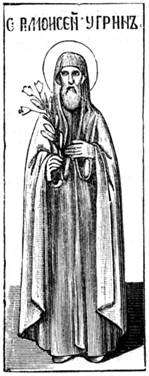
Здесь почивает «тот, кто выше Иосифа», говорил небесный голос Иоанну Многострадальному о преп. Моисее350. Подвиг Моисея – кровавый подвиг за целомудрие, чудное мужество, не уступившее шагу перед нападениями самой неистовой похоти женской351.
"Here reposes one who is greater than Joseph," said a heavenly voice to John the Much-Suffering concerning the Venerable Moses350. The exploit of Moses was a bloody struggle for chastity, a wondrous courage that yielded not a step before the onslaughts of the most unbridled female lust351.
Моисей был брат Георгия и Ефрема и вместе с ними служил у св. кн. Бориса. В 1015 г., когда св. Борис был умерщвлён на р. Альте, он один уцелел из свиты князя и скрылся у Предиславы, сестры св. князей. В 1018 г. тесть Святополка Болеслав, король Польский, овладел Киевом и, преследуемый Ярославом, захватил двух сестёр его и множество бояр; в числе других взят был в плен и Моисей и отведён в Польшу352. Там он целые пять лет томился в оковах.
Moses was the brother of George and Ephraim, and together with them served the holy Prince Boris. In the year 1015, when the holy Prince Boris was slain on the River Alta, Moses alone survived from the prince's retinue and hid himself with Predislava, the sister of the holy princes. In 1018, Bolesław, the King of Poland and father-in-law of Svyatopolk, took possession of Kiev and, pursued by Yaroslav, captured two of his sisters and many boyars; among the captives was Moses, who was taken to Poland352. There he languished in chains for five whole years.
Крепкий телом, красивый собой, он обратил на себя внимание одной знатной и богатой Польки. Воспламенённая страстью к прекрасному пленнику, она говорила ему с лукавым состраданием: «какие терпишь ты мучения!» «Так Богу угодно», отвечал Моисей. «Я освобожу тебя и сделаю известным человеком, – только будь покорен мне, – или я сама буду принадлежать тебе», говорила панна. Моисей указал в ответ на печальные последствия увлечения женщинами. «Но я выкуплю тебя и желаю иметь тебя моим мужем, ты – красавец». «Не желаю я, отвечал Моисей, ни знатности, ни имений, ни денег: душевная чистота для меня дороже всего. Пять лет страдал я; – быть может Господь избавит меня за то от муки вечности. Зачем же терять мне дорогую награду для временных утешений? И что за свобода – быть рабом жены? С юных лет решился я не знать жены». Панна выкупила его дорогой ценой, одела его в богатое платье, велела готовить ему роскошный стол; затем осыпала его ласками и поцелуями страсти. Моисей оставался твёрд, – он только усилил строгость к себе в пище. Раздражённая Полька приказала запереть его в темницу и морила голодом. Моисей молился.
Strong of body and handsome of countenance, he attracted the attention of a certain noble and wealthy Polish woman. Inflamed with passion for the beautiful captive, she said to him with feigned compassion: "What torments you endure!" "Such is the will of God," replied Moses. "I will free you and make you a man of note—only be submissive to me, or I myself will belong to you," said the lady. Moses pointed in reply to the sad consequences of yielding to women. "But I will ransom you and desire to have you as my husband; you are a handsome man." "I desire neither rank, nor estates, nor money," answered Moses; "purity of soul is dearer to me than all else. For five years I have suffered; perhaps the Lord will deliver me thereby from eternal torment. Why should I lose my precious reward for the sake of temporal pleasures? And what kind of freedom is it to be a slave to a wife? From my youth I resolved to know no wife." The lady ransomed him at a high price, clothed him in rich garments, ordered a sumptuous table to be prepared for him, and then showered him with caresses and passionate kisses. Moses remained steadfast—he only increased the severity of his fasting. Enraged, the Polish woman ordered him to be locked in a dungeon and starved. Moses prayed.
По воле панны доверенные её уговаривали Моисея жениться, на молодой вдове; «и князь не отказался бы от руки прекрасной и богатой вдовы», говорили Моисею; выставляли при том и святость брака и то, что брачная жизнь не помешала патриархам угождать Господу. «Всё это – правда, друзья мои, отвечал Моисей; праведники спаслись и в брачной жизни, но я грешный не могу спастись с женой. Надобно быть верным слову своему. Если и возвращусь я живым в Россию, не вступлю ни с кем в брак, хочу быть черноризцем. Христос сказал в Евангелии:всяк, иже оставит отца или матерь, или жену, или чада, или сёла имене Моего ради, сторицей приимет и живот вечный наследит (Мф.19:29). Кого слушать мне, Христа ли, или вас? И Павел говорит: «не оженивыйся печется о Господних, како угодити Господеви, а оженивыйся печется о мирских, како угодити жене» (1Кор.7:32–33). Спрашиваю вас, – кому выгоднее угождать: жене или Господу? Умные люди пишут: слуги, слушайте господ своих, но в добром, а не в худом. Будьте же уверены, что земные удовольствия не разлучат меня со Христом».
At the lady's bidding, her confidants urged Moses to marry a young widow; "even a prince would not refuse the hand of a beautiful and wealthy widow," they said to Moses; they also set forth the sanctity of marriage and that married life had not prevented the patriarchs from pleasing the Lord. "All this is true, my friends," answered Moses; "the righteous were saved even in married life, but I, a sinner, cannot be saved with a wife. One must be faithful to one's word. Even if I return alive to Rus', I will not enter into marriage with anyone; I wish to be a monk. Christ said in the Gospel: 'Every one that hath left father or mother, or wife, or children, or lands for My name's sake, shall receive a hundredfold and inherit eternal life' (Mt. 19:29). Whom shall I heed—Christ or you? And Paul says: 'He who is not married cares for the things of the Lord, how to please the Lord; but he who is married cares for worldly things, how to please his wife' (1 Cor. 7:32–33). I ask you—whom is it more profitable to please: a wife or the Lord? Wise men write: servants, obey your masters, but in good, not in evil. Be assured, then, that earthly pleasures will not separate me from Christ."
Выслушав суждения Моисея о брачной жизни, панна не отстала от своего намерения. Она приказала подать Моисею прекрасного коня и показать ему все обширные её имения. Крестьянам дано знать, чтобы принимали его, как своего господина и её супруга. «Напрасно беспокоишься, милостивая госпожа: ни богатства, ни почести не обольстят меня», сказал Моисей. – А ты не помнишь, что куплен мной за деньги? сказала вспыхнувшая панна; живым не выпущу тебя из рук моих. «Бог – моя защита, ничего не боюсь», отвечал Моисей. Вслед затем Господь послал ему возможность выполнить давний обет души: к нему пришёл Афонский черноризец, саном иерей, и постриг его в монашество.
Having heard Moses' reasoning on married life, the lady did not abandon her intention. She ordered a fine horse to be brought to Moses and showed him all her vast estates. The peasants were instructed to receive him as their master and her husband. "You trouble yourself in vain, gracious lady: neither wealth nor honors will seduce me," said Moses. "Do you not remember that you were bought by me for money?" said the inflamed lady; "I will not let you go from my hands alive." "God is my protection; I fear nothing," replied Moses. Thereupon the Lord sent him the means to fulfill his soul's long-standing vow: an Athonite monk, a priest by rank, came to him and tonsured him into monasticism.
Узнав о том, что пленник уже инок, искусительница запылала злобой. Не могши отыскать Афонца, она приказала бить Моисея палками, пока не сбросит с себя чёрной одежды. Его били немилосердно. «Бейте, говорил Моисей, но не требуйте от меня невозможного». Панна пожаловалась королю. Болеслав дозволил ей делать с Моисеем, что хочет, и в её угоду приказал выгнать всех черноризцев из своих владений. Полька доходила до крайнего бесстыдства с Моисеем; когда же и меры бесстыдства оказались безуспешными, велела сделать его евнухом, но так, чтобы не забыл он о том до гроба.
Learning that her captive was now a monk, the temptress blazed with malice. Unable to find the Athonite, she ordered Moses to be beaten with rods until he cast off his black habit. They beat him mercilessly. "Strike," said Moses, "but do not demand of me the impossible." The lady complained to the king. Bolesław allowed her to do with Moses as she wished, and to please her ordered all monks to be driven from his domains. The Polish woman went to the utmost shamelessness with Moses; but when even shameless measures proved fruitless, she ordered him to be made a eunuch, in such a way that he would remember it to his grave.
Наглое нечестие страстей не оставлено без мщения Божия. – В одну ночь Болеслав внезапно умер; поднялся мятеж в земле Ляхов; народ взволнованный перебил епископов и бояр своих. – Во время мятежа погибла и нечестивая Полька. Это случилось в 1027 г.353. Не один год томила блаженного неистовая женщина354. Нескольким годам надобно было пройти, прежде чем страдалец мог оправиться в здоровье, чтобы идти в Киев355; всего вероятнее, что Моисей возвратился из Польши в 1031 г. в числе прочих пленников, когда Ярослав возвратил России города Червонной Руси. Свободный и несколько оправившийся пришёл он в пещеру к преп. Антонию356. Здесь провёл он десять лет в посте и молитвах, но постоянно полубольной. За великую победу над нечистой страстью Господь дал ему власть врачевать эту страсть и в других. Один брат, боримый плотью, пришёл к преподобному и молил его помочь ему в беде. «Обещаюсь, говорил брат, выполнить всё, что велишь ты». Во всю жизнь не говори ни с одной женщиной, сказал преподобный. Брат обещался. Тогда Моисей коснулся тела брата своим посохом, без которого не мог ходить от прежних мук; нечистая страсть утихла, и брат освободился от искушений её. Преподобный, предузнав близкую свою кончину, причастился св. Таин и мирно почил 26 июля при жизни пр. Антония, вероятно, в 1043 году.
The insolent impiety of the passions did not remain without God's vengeance. One night Bolesław died suddenly; a rebellion arose in the land of the Poles; the enraged people slew their own bishops and boyars. During the rebellion, the impious Polish woman also perished. This occurred in the year 1027353. The blessed one was tormented by the frenzied woman for more than one year354. Several years had to pass before the sufferer could recover his health enough to go to Kiev355; it is most likely that Moses returned from Poland in 1031, among the other captives, when Yaroslav recovered the cities of Red Rus'. Free and somewhat recovered, he came to the cave of the Venerable Anthony356. Here he spent ten years in fasting and prayer, but constantly half-ill. For his great victory over the impure passion, the Lord gave him power to heal this passion in others. One brother, tormented by the flesh, came to the venerable one and begged him to help him in his distress. "I promise," said the brother, "to fulfill all that you command." "Speak with no woman for your whole life," said the venerable one. The brother promised. Then Moses touched the brother's body with his staff, without which he could not walk because of his former torments; the impure passion subsided, and the brother was freed from its temptations. The venerable one, foreseeing his approaching end, partook of the Holy Mysteries and peacefully reposed on July 26, during the lifetime of the Venerable Anthony, probably in the year 1043.
Мощи пр. Моисея почивают в пещере Антониевой. – «Молись погребённому здесь Моисею», сказал небесный голос страдавшему от нечистой страсти Иоанну. И сам Иоанн нетленной костью пр. Моисея утишил беснование той же страсти в бедном брате. Так тот, кто столько страдал для чистоты телесной, и по смерти своей – лучший врач против волнений нечистой плоти357.
The relics of the Venerable Moses repose in the Anthony Cave. "Pray to Moses buried here," said a heavenly voice to John, who was suffering from the impure passion. And John himself, with an incorrupt bone of the Venerable Moses, quieted the raging of the same passion in a poor brother. Thus he who suffered so much for bodily purity is, even after his death, the best physician against the disturbances of the impure flesh357.
«Другаго тя Иосифа, великий чистоты и целомудрия рачителю, всечестне и равноангельне Моисее, восхваляюще грешнии, молимтися прилежно, моли Христа Бога, яко да исцелит наша страсти и подаст велию милость».
"Another Joseph are you, O great zealot of purity and chastity, all-honorable and angel-like Moses; we sinners, praising you, pray earnestly to you: pray to Christ God that He may heal our passions and grant great mercy."