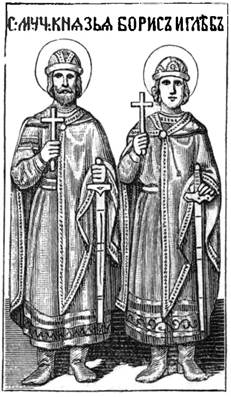
Св. князья Борис и Глеб – прекрасные цветки новопросвещённой Русской земли, ранние яркие звёзды, отрадно засветившие с первым появлением христианского небосклона над Россией.
The holy princes Boris and Gleb are the beautiful blossoms of the newly-enlightened Russian land, the early bright stars that shone forth consolingly with the first appearance of the Christian firmament over Russia.
По глубокой нежной любви к новой вере братья-князья были лучшими из сыновей св. Владимира275. Новая вера отражалась в душе и жизни их, как в чистой воде небесный луч света. Дети одной матери – матери-христианки276, рождённые не задолго до крещения Владимира, они росли и развивались в благочестии, не тронутые заразой язычества. – Под влиянием такого живого благочестия, каким дышал равноапостольный отец, под влиянием тех дивных подвигов любви христианской, которыми так цвела жизнь христианина Владимира, юные князья впивали в себя благочестие с самой первой юности своей. Они оба любили только назидательные книги, как любил и праведный отец. «Борис, говорит древний биограф, научен быв грамоте, брал книги и прилежно читал их», особенно же жития и подвиги святых; а Глеб, младший его, слушал брата со вниманием нежным и полным, как бы наслаждаясь самым приятным для него. Братья так часто и так внимательно читали полезные для души писания, что целые изречения, целые места из книг глубоко печатались в нежных душах их, и они могли повторять их себе в поле и в городе, в доме и храме; так это видим и в истории страдания их277. И как сильно поражались сердца их тем, что они встречали в святых книгах! Читая о страданиях мучеников, св. Борис обливался слезами и молился: «Господи Иисусе Христе! удостой меня участвовать в св. произволении святых Твоих; научи меня идти по их следам. Молю Тебя, Господи! да не увлечётся душа моя суетой мира сего; просвети сердце моё, чтобы оно знало Тебя и Твои заповеди; даруй мне дар, какой даровал Ты угодникам Твоим»278. Братья любили отца своего, любили друг друга; любили отца не только по движениям сердца к отцу, но любили в нём наставника своего, любили в нём живой пример благочестия. «Свет очей моих, говорил Борис, оплакивая смерть отца, не буду я более наслаждаться благим учением и мудростью твоей»279. Такова же была любовь их между собой, любовь святая! Когда пришлось назначать им уделы, отец назначил (в 1010 году) для них Ростов и Муром, чтобы иначе значительные пространства не разделяли любящих братьев280. И на севере предание сохранило место братского стана их: это – на р. Нерли невдали от Суздаля, где в память о их святой любви стоит Кидекшанский храм281. Правила жизни святой, в каких воспитывались они у отца, открылись на деле и в новом кругу их жизни. Вера – первый предмет любви святой, – так учил их отец. И они, прибыв в уделы, делали, что могли, для распространения святой веры. «Св. Борис, благочестно властвуя, обращал неверных к св. вере», говорит древнее известие282. То же говорит предание и о св. Глебе283. Нестор пишет о св. Борисе: «много показа милосердие во области своей, не точию же к убогим, но и ко всем людем, якоже чудитися милосердию его и кротости; бе бо блаженный кроток и смирен» Указав ту же сердечную мягкость и доброту в Глебе, о обоих братьях говорит: «пребыста в научении Божиих словес, милостыню творяще нищим и убогим и вдовам, яко не имети у себе иичтоже, разве одежды». – Дивно ли, что отец любил таких детей более, чем других? «Отец любил их, видя на них благодать Божию», говорит преподобный284. – Возроставшая злость Святополка, открывшаяся непокорность Ярослава, слух о движении Печенегов тревожили душу состарившегося Владимира. Он вызвал к себе из Ростова любимого сына Бориса. Близившийся ко гробу Владимир хотел при том объявить Бориса наследником своего престола, минуя не только Святополка, но и Ярослава, так опечалившего старость его. Печенеги требовали быстрых и сильных мер против них. А Владимир лежал больной. Он указал Борису на опасность христианской отчизны и желал, чтобы вышел он против врагов. «Готов на всё по твоей воле», отвечал Борис и поспешил против Печенегов285.
By their deep and tender love for the new faith, the brother-princes were the best of the sons of St. Vladimir275. The new faith was reflected in their soul and life, as a ray of heavenly light is reflected in pure water. Children of one mother—a Christian mother276—born not long before Vladimir's baptism, they grew and developed in piety, untouched by the contagion of paganism. Under the influence of such living piety as breathed in the Equal-to-the-Apostles father, under the influence of those wondrous deeds of Christian love with which the life of the Christian Vladimir so flourished, the young princes imbibed piety from their very earliest youth. They both loved only edifying books, as their righteous father also loved. "Boris," says the ancient biographer, "having been taught letters, took books and read them diligently," especially the lives and struggles of the saints; and Gleb, his younger brother, listened to his brother with tender and full attention, as if delighting in that which was most pleasant to him. The brothers read writings profitable for the soul so often and so attentively that whole sayings, whole passages from books were deeply imprinted upon their tender souls, and they could repeat them to themselves in the field and in the city, at home and in church; this we also see in the account of their suffering277. And how strongly were their hearts struck by that which they encountered in the holy books! Reading of the sufferings of the martyrs, St. Boris would be bathed in tears and pray: "Lord Jesus Christ! Vouchsafe me to partake in the holy will of Thy saints; teach me to walk in their footsteps. I pray Thee, O Lord! Let not my soul be carried away by the vanity of this world; enlighten my heart, that it may know Thee and Thy commandments; grant me the gift which Thou hast granted to Thy saints"278. The brothers loved their father, they loved one another; they loved their father not only by the impulses of the heart toward a father, but they loved in him their teacher, they loved in him a living example of piety. "Light of my eyes," said Boris, lamenting the death of his father, "I shall no longer enjoy your good instruction and wisdom"279. Such also was their love for each other, a holy love! When it became necessary to assign them appanages, the father assigned (in the year 1010) Rostov and Murom to them, so that otherwise significant distances might not separate the loving brothers280. And in the north, tradition has preserved the place of their brotherly encampment: it is on the river Nerl, not far from Suzdal, where the Kideksha church stands in memory of their holy love281. The rules of holy life in which they were raised by their father were revealed in deed also in the new circle of their life. Faith—the first object of holy love—so their father taught them. And they, having arrived at their appanages, did what they could for the spread of the holy faith. "St. Boris, ruling piously, converted the unbelievers to the holy faith," says an ancient account282. Tradition says the same of St. Gleb283. Nestor writes of St. Boris: "He showed much mercy in his domain, not only to the poor, but to all people, so that they marveled at his mercy and meekness; for the blessed one was meek and humble." Having pointed out the same heartfelt gentleness and kindness in Gleb, he says of both brothers: "They continued in the teaching of God's words, giving alms to the poor and needy and widows, so that they kept nothing for themselves except clothing."—Is it any wonder that the father loved such children more than others? "The father loved them, seeing the grace of God upon them," says the Venerable one284.—The growing malice of Svyatopolk, the manifest disobedience of Yaroslav, the rumor of the movement of the Pechenegs troubled the soul of the aged Vladimir. He summoned from Rostov his beloved son Boris. The dying Vladimir wished, moreover, to declare Boris the heir to his throne, bypassing not only Svyatopolk but also Yaroslav, who had so grieved his old age. The Pechenegs required swift and strong measures against them. But Vladimir lay ill. He pointed out to Boris the danger to the Christian fatherland and desired that he go out against the enemies. "I am ready for everything according to your will," answered Boris, and hastened against the Pechenegs285.
Св. Борис и Глеб и по расположениям души, и по своим делам были такими, какими желает быть вера небесная. Не таков был Святополк. В душе его жило язычество с дикими страстями своими. Он уже возмущался против отца и против чистой веры, но вовремя был предупреждён. Освобождённый добрым отцом из темницы, он жил теперь в Вышгороде, где легче было, чем в Турове, наблюдать за этим диким зверем286. Жадный до власти Святополк смотрел на Бориса, как на врага своего, думая по себе, что готов он оспаривать у него власть. Июля 15 1015 г. святой Владимир умер в Вышгороде287. Окружавшие почившего напрасно старались скрыть смерть его до возвращения Бориса. «Святополк сел на отцовском столе». Он поспешил задобрить Киевлян: «созвал их и роздал им богатые подарки; они приняли, но сердце их не было с ним», так как знали, каков он, да и «братья их были с Борисом». – Святополк положил сидеть на престоле, во что бы то ни стало. Для власти считал он всё дозволенным, для неё решился и на смерть и братьев. – Борис узнал о смерти отца на р. Альте, близ Переяславля, где стоял он после напрасной погони за бежавшими Печенегами. Смерть отца поразила его тяжкой скорбью: а он горько плакал по отце. Окружавшие его предложили ему: «идём мы или с тобой, или без тебя, и силой выгоним того (Святополка) из города, а тебя возведём, как предал нам отец твой». – «Нет», отвечал св. Борис, «не подниму я руки на старшего брата моего; умер отец мой, пусть он будет вместо отца». Такова душа, дышащая христианством! Войско разошлось и с св. Борисом остались немногие из дружины его. Святополк послал звать Бориса в Киев, обещая ему лучший удел. А между тем тайно явился в Вышгород и, призвав известных ему бояр, сказал: «вы преданы мне?» – Готовы положить головы, отвечали они. «Если так, сказал Святополк, то, не говоря никому ни слова, идите, убейте Бориса»288. Был вечер субботы. – Борису дали знать, что его хотят убить. Он велел поставить шатёр и в нём стал со слезами молиться Богу. Он молился до того, что ослабел. Лёг в постель и опять горько плакал, молясь Богу; потом читал книгу. Ему сказали, что уже идут убийцы. – Он велел священнику петь утреню; сам читал шестопсалмие. Убийцы – слышали это. Узнал и Борис, что они стоят у шатра, и сам читал псалмы, а потом канон. Окончилась утреня. Он ещё стал перед иконой и молился: «Господи! Ты пострадал за грехи наши; удостой меня пострадать для Тебя; умираю я не от врагов, а от брата; не поставь ему того во грех». – Затем простясь со всеми, спокойно лёг на постель. Какая чудная покорность воле Вышнего! Какая дивная любовь к другим! Какое спокойствие неземное в глазах смерти! Убийцы, как звери, ворвались в шатёр, ударили Бориса копьём и, думая, что он уже мёртвый, вышли вон. Но рана, нанесёнрая Борису, не была смертельна: она только доводила его до временного нечувствия. Блаженный вскочил и вышел из шатра с молитвой на устах. Один из злодеев ударил его в грудь копьём289. Верный слуга, Венгерец Юрий, хотел прикрыть собой господина своего и был убит. Злодеи остервенились и, не могши снять с шеи Юрия золотой гривны, которою почтил его добрый князь его, отрезали голову. Затем, обвернув тело Бориса в шатёр, они повезли его, ещё дышавшего, к Святополку. По приказанию брата-зверя, два Варяга докончили убийство. Тело св. Бориса тайно привезли в Вышгород и схоронили при церкви св. Василия290. Так скончался св. князь Борис, июля 24 дня. – «Он был высок и статен, с круглым лицом, тонкий, со взором ясным и весёлым, с малой бородой и усами, так как был ещё молод»291.
Sts. Boris and Gleb, both by the dispositions of their soul and by their deeds, were such as the heavenly faith desires them to be. Not so was Svyatopolk. In his soul lived paganism with its wild passions. He had already risen up against his father and against the pure faith, but was forestalled in time. Freed from prison by his good father, he now lived in Vyshgorod, where it was easier than in Turov to keep watch over this wild beast286. Greedy for power, Svyatopolk looked upon Boris as his enemy, judging by himself that he was ready to dispute power with him. On July 15, 1015, St. Vladimir died in Vyshgorod287. Those surrounding the deceased tried in vain to conceal his death until Boris's return. "Svyatopolk sat upon his father's throne." He hastened to win over the Kievans: "he summoned them and distributed rich gifts to them; they accepted them, but their heart was not with him," since they knew what he was like, and also "their brothers were with Boris."—Svyatopolk resolved to sit on the throne at any cost. For the sake of power he considered everything permissible; for its sake he decided even upon the death of his brothers.—Boris learned of his father's death on the river Alta, near Pereyaslavl, where he had halted after a vain pursuit of the fleeing Pechenegs. His father's death struck him with heavy grief; and he wept bitterly for his father. Those around him proposed: "Let us go, either with you or without you, and by force drive him (Svyatopolk) out of the city, and raise you up, as your father commanded us."—"No," answered St. Boris, "I will not lift my hand against my elder brother; my father is dead, let him be to me in place of my father." Such is a soul breathing Christianity! The army dispersed, and only a few of his retinue remained with St. Boris. Svyatopolk sent to summon Boris to Kiev, promising him a better appanage. Meanwhile, he secretly appeared in Vyshgorod and, summoning certain boyars known to him, said: "Are you devoted to me?"—"We are ready to lay down our heads," they answered. "If so," said Svyatopolk, "then, without saying a word to anyone, go and kill Boris"288. It was the evening of Saturday.—Boris was informed that they intended to kill him. He ordered a tent to be pitched and within it began to pray to God with tears. He prayed until he grew weak. He lay down on his bed and again wept bitterly, praying to God; then he read a book. He was told that the murderers were already approaching.—He ordered the priest to sing Matins; he himself read the Six Psalms. The murderers heard this. Boris also knew that they were standing by the tent, and he himself read the psalms, and then the canon. Matins ended. He again stood before the icon and prayed: "Lord! Thou didst suffer for our sins; vouchsafe me to suffer for Thee; I die not at the hands of enemies, but at the hand of my brother; lay it not to him as sin."—Then, having taken leave of all, he calmly lay down on his bed. What wondrous submission to the will of the Most High! What marvelous love for others! What unearthly calm in the face of death! The murderers, like wild beasts, burst into the tent, struck Boris with a spear, and, thinking him already dead, went out. But the wound inflicted upon Boris was not mortal; it only rendered him temporarily insensible. The blessed one sprang up and came out of the tent with a prayer on his lips. One of the villains struck him in the chest with a spear289. A faithful servant, the Hungarian George, tried to cover his master with his own body and was killed. The villains grew enraged and, being unable to remove from George's neck the golden grivna with which his good prince had honored him, cut off his head. Then, wrapping Boris's body in the tent, they carried him, still breathing, to Svyatopolk. By order of the brother-beast, two Varangians completed the murder. The body of St. Boris was secretly brought to Vyshgorod and buried at the church of St. Basil290. Thus reposed St. Prince Boris, on the 24th day of July.—"He was tall and stately, with a round face, slender, with a clear and cheerful gaze, with a small beard and mustache, for he was still young"291.
Святополку мало было смерти Борисовой. Он послал убить и Глеба. Действуя везде коварно, отправил он к брату гонца с приглашением: «иди скорее, отец болен и зовёт тебя». – Глеб спешил в Киев292. Спустившись Окой на Волгу, он Волгой плыл вверх до устья Тмы или Тмаки. Здесь на косогоре, пересечённом рвами, конь его упал в ров, и Глеб повредил себе ногу. Приблизясь затем Вогузой к Днепру, перевезли ладьи у с. Волочка в Днепр. Наконец Глеб был у Смоленска, плывя по р. Смядыне, как Ярослав по известию, полученному из Киева от сестры Преславы, прислал сказать ему, что отец умер, а брат Борис убит Святополком. Глеб оплакал смерть отца и ещё более плакал о брате, которого нежно любил. «Не услышу я более кротких наставлений твоих, любимый брат. Если получил ты дерзновение у Господа, моли, дабы и я пострадал, как ты; лучше быть с тобой, чем в этом злом мире», так говорил горюющий Глеб, рано узнавший пустоту мира. Между тем убийцы, посланные Святополком, при неизбежном тогда водяном пути сообщений, знали, что Глеб не минует Смоленска, и приближались по реке к Смоленску. Спутники Глеба увидали их и схватились за оружие, чтобы защитить любимого князя. – Добрый князь сказал им: «братцы! если не будем мы драться с ними, то, взяв меня, не осмелятся они покуситься на жизнь мою, – а поведут к брату; если же вступим в бой, то и меня убьют, и вас также; плывите к берегу, прошу вас, а я один останусь на средине реки». Жаль было им оставить князя беззащитным, но воля его была решительна; он повторял, что тем спасут ему жизнь. И они в тревоге мыслей послушались, поплыли к берегу с слезами на глазах, озирались и ждали, что будет. Святой берёг жизнь слуг своих, свою же участь предал он воле Божией. – Убийцы, приблизившись к лодке святого, остановили её и схватились за оружие. Напрасно Глеб старался удержать их от злодеяния; напрасно говорил, что ни перед ними, ни перед братом ни в чём он не виноват. – Свирепый Горясер закричал повару святого: «бери нож и зарежь господина твоего, иначе погибнешь сам». Повар, родом из Торков, не так как Венгерец Юрий, павший за Бориса, вынул нож, взял Глеба за шею, чтобы отнять жизнь. Глеб молчал, обратясь всей душой ко Господу. Став на колено, Торчанин заколол святого, как агнца кроткого, – перерезал ему гортань. Так взошёл в вечные обители юный праведник 5 сентября 1015 года. Убийцы вынесли тело его из лодки и бросили между колодами, в глухом лесу293.
Svyatopolk was not satisfied with Boris's death alone. He sent men to kill Gleb as well. Acting everywhere with deceit, he dispatched a messenger to his brother with an invitation: "Come quickly, your father is ill and calls for you." Gleb hastened to Kiev292. Descending the Oka into the Volga, he sailed up the Volga as far as the mouth of the Tma or Tmaka. Here, on a hillside cut by ravines, his horse fell into a ravine, and Gleb injured his leg. Then, drawing near the Dnieper by the Voguza, they portaged the boats near the village of Volochek into the Dnieper. Finally, Gleb was near Smolensk, sailing along the river Smyadyn, when Yaroslav, upon news received from Kiev from his sister Predslava, sent word to him that their father had died and that brother Boris had been killed by Svyatopolk. Gleb wept over his father's death and wept even more for his brother, whom he tenderly loved. "I shall no longer hear your gentle instructions, beloved brother. If you have obtained boldness before the Lord, pray that I too may suffer as you have; it is better to be with you than in this evil world," thus spoke the grieving Gleb, who had early learned the emptiness of the world. Meanwhile, the murderers sent by Svyatopolk, given the inevitable water route of communication at that time, knew that Gleb could not avoid Smolensk, and were approaching the city by river. Gleb's companions saw them and seized their weapons to defend their beloved prince. The good prince said to them: "Brethren! If we do not fight with them, then, having taken me, they will not dare to attempt my life—but will lead me to my brother; if we join battle, then they will kill me, and you as well; row to the shore, I beg you, and I alone will remain in the middle of the river." It grieved them to leave the prince defenseless, but his will was resolute; he repeated that by this they would save his life. And they, in anxiety of mind, obeyed, rowed to the shore with tears in their eyes, looking back and waiting to see what would happen. The saint spared the lives of his servants, but his own fate he committed to the will of God. The murderers, drawing near the saint's boat, stopped it and seized their weapons. In vain did Gleb try to restrain them from the evil deed; in vain did he say that he was guilty of nothing before them or before his brother. The savage Goryaser cried out to the saint's cook: "Take a knife and cut your master's throat, otherwise you will perish yourself." The cook, a Torchinian by birth, unlike the Hungarian George who had fallen for Boris, drew out a knife, took Gleb by the neck to take his life. Gleb was silent, turning with his whole soul to the Lord. Kneeling, the Torchinian stabbed the saint, like a gentle lamb—cut his throat. Thus the young righteous one entered the eternal dwellings on September 5, 1015. The murderers carried his body out of the boat and threw it between logs in a dense forest293.
За смертью св. страдальцев последовало кровавое волнение во всей России. – Святополк, решась удержать власть за собой, убил ещё брата Святослава и вступил в отчаянную борьбу с Ярославом. – То с дикими Печенегами, то с Поляками, обливал он родную страну кровью Русских. Это продолжалось четыре года. – В 1019 г. на р. Альте, на месте страшного злодейства, Ярослав нанёс решительное поражение братоубийце и занял стол отца. Теперь, когда «утёр он пот с дружиной», одной из первых забот его было отдать почесть страдальцам-братьям. Он стал собирать сведения, как и где похоронены они. Так как убийцы тайно перевезли тело Бориса в Вышгород, а Ярослав был тогда в Новгороде; то только теперь по расспросам узнал Ярослав, что св. Борис похоронен в Вышгороде у церкви св. Василия. О Глебе же и не все знали и то, что он убит в Смоленске. Ярослав послал отыскать дорогие останки св. Глеба. Долго искали, но не находили их и не прежде, как через год (в 1020 г.), св. тело найдено случайно охотниками294. – Священники со свечами и кадилами перенесли его в лодку, и оно привезено в Вышгород. Здесь положили его вместе с телом Бориса. Чудное дело! Тело св. Глеба, лежавшее 5 лет на открытом воздухе, оказалось совершенно целым, нимало не повредившимся от перемен воздушных, было бело и цвело, как живое. – Скоро у могилы мучеников начали являться знамения и чудеса. То видели ночью огненный столп, то слышалось необыкновенное пение. Иные стали приходить и благоговейно поклоняться могиле мучеников. Другие ещё не верили, как последовало поразившее всех чудо. Шли бродячие Варяги мимо могилы святых, и один стал ногами на саму могилу, как из неё вырвался огонь и обжёг ноги до того, что дерзкий не мог ходить. Вслед затем храм св. Василия сгорел от свечки, забытой по неосторожности. «Это допустил Бог с тем, справедливо замечает пр. Нестор, чтобы тела святых вынуты были из земли и честно положены были в новом храме, что и совершилось». Передавая известие о истреблении храма, Ярославу рассказали всё о св. мучениках; а он сообщил митрополиту Иоанну. Наскоро построена была часовня на месте храма. И митрополит с духовенством пришёл крестным ходом к могиле святых, откопали землю, с благоговением открыли гробы и увидели тела святых, как бы живые. С радостью благоговейной принесли св. мощи в часовню и поставили открыто, на правой её стороне295. Новые два чуда, исцеление хромого и слепого, ещё более убедили всех в прославлении страстотерпцев Господом. – Митрополит доложил великому князю, что в Вышгороде надобно немедленно построить храм в честь мучеников и установить праздник. Приступили к делу: зимой приготовили лес и летом ко дню кончины святого Бориса окончили храм с 5-ю куполами; храм украшен был «иконами и иными письмены и всякими красотами»; по воле Ярослава «написана была икона святых князей, чтобы входящие в храм, видя лики их, как бы их самих, с благоговейной любовью покланялись и лобызали». Июля 24 храм освящён м. Иоанном, в присутствии в. князя и многочисленного стечения народа; мощи св. мучеников положены в церкви открыто. – Князь и митрополит были ещё в церкви, как ползавший у раки святых хромой встал и стал ходить в виду всех. Все прославили Бога, дивного во святых Своих. В этот раз празднество продолжалось 8 дней. Митрополит ещё несколько раз служил в храме мучеников, рукоположил для него пресвитеров и диаконов и поставил старейшину над ними296. Ярослав угощал духовенство и народ, роздал множество милостыни нищим и определил выдавать для содержания Борисоглебской церкви и её причта десятую часть из Вышегородской дани. Тогда же установлено было праздновать память св. мучеников в 24 день июля, в день убиения св. Бориса297. Это было в 1021 г.298.
After the death of the holy passion-bearers, a bloody turmoil followed throughout all Russia. Svyatopolk, resolved to retain power for himself, also killed his brother Svyatoslav and entered into a desperate struggle with Yaroslav. Now with the wild Pechenegs, now with the Poles, he drenched his native land with the blood of Russians. This continued for four years. In 1019, on the Alta River, at the site of the terrible crime, Yaroslav inflicted a decisive defeat on the fratricide and occupied his father's throne. Now, when "he wiped the sweat from his brow with his retinue," one of his first concerns was to honor his suffering brothers. He began to gather information about how and where they were buried. Since the murderers had secretly transported Boris's body to Vyshgorod, and Yaroslav was then in Novgorod, only now, through inquiries, did Yaroslav learn that St. Boris was buried in Vyshgorod at the church of St. Basil. As for Gleb, not everyone even knew that he had been killed in Smolensk. Yaroslav sent men to seek the precious remains of St. Gleb. They searched long but did not find them, and not until a year later (in 1020) was the holy body found by chance by hunters294. Priests with candles and censers carried it to a boat, and it was brought to Vyshgorod. Here they laid it together with the body of Boris. A wondrous thing! The body of St. Gleb, which had lain in the open air for five years, proved completely intact, in no way damaged by the changes of weather; it was white and bloomed as if alive. Soon signs and miracles began to appear at the grave of the martyrs. At times a pillar of fire was seen at night; at times extraordinary singing was heard. Some began to come and reverently bow before the grave of the martyrs. Others still did not believe, until a miracle occurred that struck everyone. Wandering Varangians were passing by the grave of the saints, and one stepped with his feet directly onto the grave, when fire burst forth from it and burned his legs so severely that the insolent man could not walk. Following this, the church of St. Basil burned down from a candle carelessly left behind. "God permitted this," the Venerable Nestor rightly observes, "so that the bodies of the saints might be taken out of the earth and honorably placed in a new church, which indeed came to pass." Reporting the news of the destruction of the church, they told Yaroslav everything about the holy martyrs; and he informed Metropolitan John. A chapel was hastily built on the site of the church. And the Metropolitan with the clergy came in a procession to the grave of the saints; they dug up the earth, reverently opened the coffins, and saw the bodies of the saints as if alive. With reverent joy they brought the holy relics into the chapel and placed them openly, on its right side295. Two new miracles—the healing of a lame man and a blind man—convinced everyone still more of the glorification of the passion-bearers by the Lord. The Metropolitan reported to the Grand Prince that a church in honor of the martyrs must be built immediately in Vyshgorod and a feast day established. They set to work: in winter they prepared timber, and by summer, on the day of St. Boris's death, they completed a church with five domes; the church was adorned "with icons and other paintings and every kind of beauty"; by Yaroslav's will, "an icon of the holy princes was painted, so that those entering the church, seeing their faces as if they themselves were present, might with reverent love worship and kiss it." On July 24, the church was consecrated by Metropolitan John, in the presence of the Grand Prince and a great multitude of people; the relics of the holy martyrs were placed openly in the church. The Prince and Metropolitan were still in the church when a lame man who had been crawling at the shrine of the saints stood up and began to walk before the eyes of all. Everyone glorified God, who is wondrous in His saints. On this occasion, the feast continued for eight days. The Metropolitan served several more times in the church of the martyrs, ordained presbyters and deacons for it, and appointed a superior over them296. Yaroslav feasted the clergy and the people, distributed much alms to the poor, and decreed that a tenth part of the Vyshgorod tribute be given for the maintenance of the Boris and Gleb Church and its clergy. At that time it was also established to celebrate the memory of the holy martyrs on the 24th day of July, the day of St. Boris's murder297. This was in the year 1021298.
В 1072 г. храм Ярославов найден ветхим. Великий князь Изяслав построил новый храм. – Мощи св. мучеников торжественно перенесены были в храм Изяславов. При этом открылись новые знамения небесной славы мучеников. К празднику собрались князья: Изяслав, Святослав и Всеволод, митрополит Георгий, епископы Пётр Переяславский, Неофит Черниговский, Михаил Юрьевский и Стефан Белгородский299, в числе игуменов «был преп. отец наш Феодосий, игумен монастыря Печерского, сиявший между ними как солнце», говорит Нестор. Сперва перенесены были мощи св. Бориса. Впереди шли черноризцы с свечами, диаконы, священники, далее епископы и митрополит; за ними св. мощи несены были тремя князьями. Когда в новом храме открыли раку, храм наполнился благоуханием. – Митрополит Грек, дотоле не совсем веривший славе князей Русских, в страхе пал перед ракой и молился о прощении греха своего. Каменную раку св. Глеба везли на возке, но в дверях она остановилась. Митрополит сказал, чтобы все пели: Господи, помилуй; при гласе общей молитвы рака двинулась и поставлена была в храме. Рукой св. Глеба митрополит благословил князей, и больной кн. Святослав прикладывал к руке болевшие глаза, шею и темя. Это перенесение мощей совершилось во 2 д. мая, и день сей положено праздновать каждый год300.
In 1072, Yaroslav's church was found to be dilapidated. Grand Prince Izyaslav built a new church. The relics of the holy martyrs were solemnly translated into Izyaslav's church. On this occasion, new signs of the heavenly glory of the martyrs were revealed. For the feast there gathered the princes: Izyaslav, Svyatoslav, and Vsevolod; Metropolitan George; Bishops Peter of Pereyaslavl, Neophytus of Chernigov, Michael of Yuriev, and Stephen of Belgorod299; among the abbots "was our Venerable Father Theodosius, abbot of the Monastery of the Caves, who shone among them like the sun," says Nestor. First, the relics of St. Boris were translated. In front went the black-robed monks with candles, deacons, priests, then the bishops and the Metropolitan; after them the holy relics were borne by three princes. When they opened the reliquary in the new church, the church was filled with fragrance. The Metropolitan, a Greek who until then had not fully believed in the glory of the Russian princes, fell in fear before the reliquary and prayed for forgiveness of his sin. The stone reliquary of St. Gleb was brought on a cart, but at the doors it stopped. The Metropolitan said that all should sing: Lord, have mercy; at the sound of the common prayer, the reliquary moved and was placed in the church. With the hand of St. Gleb, the Metropolitan blessed the princes, and the ailing Prince Svyatoslav applied to the hand his ailing eyes, neck, and crown of his head. This translation of the relics took place on the 2nd day of May, and it was established to celebrate this day each year300.
В новом храме совершились три замечательных чуда. Немой и с отнявшеюся ногой человек ходил только на деревяшке и питался подаяниями, особенно у храма мучеников. Старшина Вышегородских огородников Ждан Николай каждый год кормил нищих в д. св. Николая. В этот праздник явился к Ждану и немой хромец, но как-то не досталось ему ничего. Оставшись голодным, он впал в исступление: ему виделось, что сидит он в церкви князей, и они из алтаря подходят к нему, – перекрестив уста его, помазали скорченную ногу маслом и протянули её. Увидавшие хромого, нашли его почти без чувств и принесли в храм мучеников; но он неожиданно встал и стал здоровым. – Другое чудо: в Дорогобуже одна служанка, по приказанию госпожи, работала в день св. Николая. Явившиеся ей св. мученики сказали: «зачем ты работаешь в день святого отца нашего Николая? Вот мы накажем тебя». Она стала как бы мёртвой и месяц лежала в расслаблении. Потом встала, но с сухой рукой. Госпожа прогнала её от себя, как неспособную к работе, а дитя её оставила у себя. Судьи на том основании, что служанка лишилась руки по милости незаконного распоряжения госпожи, возвратили несчастной матери дитя её и заставили госпожу отказаться от наёмной цены. Спустя три года эта женщина, узнав об исцелении хромого, пришла в Вышгород накануне праздника Успения Богоматери. На следующее утро рассказала она старшему священнику Лазарю вот что: мне явились два юноши и старший, сняв перстень с своей руки, сказал: «надень на руку и исцелеет твоя рука». – Лазарь велел стоять ей у храма во время литургии. Когда певец возгласил прокимен: «величит душа моя», сухорукая побежала к алтарю, трепеща и тряся рукой. Это испугало многих; но оказалось, что рука её здорова. Третье ещё чудо: в одном городе слепец часто ходил в церковь св. вм. Георгия и молил его о возвращении зрения. Ночью явившийся мученик сказал: «что ты пристаешь ко мне? Если хочется тебе прозреть, иди к св. Борису и Глебу, – им дана благодать исцелять всякие болезни в стране Русской». Слепой пришёл в Вышгород, несколько дней молился мученикам и прозрел. – Прославляя мучеников, исповедал он вслух всех, что святые, подойдя к нему, перекрестили его три раза, и глаза его открылись301.
In the new church three remarkable miracles occurred. A man who was mute and had a withered leg walked only with a wooden crutch and lived on alms, especially near the church of the martyrs. The elder of the Vyshgorod market-gardeners, Zhdan Nicholas, fed the poor every year on the feast of St. Nicholas. On this feast day the mute cripple also came to Zhdan, but somehow nothing was given to him. Left hungry, he fell into a frenzy: it seemed to him that he was sitting in the church of the princes, and they came to him from the altar—having made the sign of the cross over his mouth, they anointed his withered leg with oil and stretched it out. Those who saw the cripple found him almost unconscious and brought him to the church of the martyrs; but he unexpectedly rose and became healthy. — Another miracle: in Dorogobuzh a maidservant, by order of her mistress, worked on the feast of St. Nicholas. The holy martyrs, appearing to her, said: "Why do you work on the feast day of our holy father Nicholas? We shall punish you." She became as if dead and lay in paralysis for a month. Then she arose, but with a withered hand. Her mistress drove her away as unfit for work, but kept her child with her. The judges, on the grounds that the maidservant had lost her hand through the unlawful order of her mistress, returned the child to the unfortunate mother and compelled the mistress to forfeit the hire-price. Three years later this woman, having learned of the healing of the cripple, came to Vyshgorod on the eve of the feast of the Dormition of the Mother of God. The next morning she told the senior priest Lazar the following: two youths appeared to me, and the elder, taking a ring from his hand, said: "Put it on your hand and your hand will be healed." — Lazar bade her stand by the church during the Liturgy. When the chanter intoned the prokeimenon: "My soul magnifies the Lord," the woman with the withered hand ran to the altar, trembling and shaking her hand. This frightened many; but it turned out that her hand was healthy. A third miracle: in one city a blind man often went to the church of the Holy Great Martyr George and prayed for the restoration of his sight. At night the martyr appeared and said: "Why do you importune me? If you wish to see, go to Sts. Boris and Gleb—to them has been given the grace to heal all manner of illnesses in the Russian land." The blind man came to Vyshgorod, prayed to the martyrs for several days, and received his sight. — Glorifying the martyrs, he confessed before all that the saints, approaching him, had made the sign of the cross over him three times, and his eyes were opened301.
Великий князь Святослав начал было строить каменный храм в честь мучеников, но скончался († 1079 г.), не кончив храма. Всеволод кончил постройку, но храм обрушился. – После Всеволода († 1093 г.) княжили Святополк Изяславич в Киеве, Олег Святославич в Чернигове и Владимир Мономах в Переяславле. Нападения Половцев на давали свободы заняться построением храма. Между тем совершилось следующее чудо. Святополк по клевете посадил в темничную яму («погреб») двух невинных. Несчастные молились мученикам. И раз ночью, когда двери ямы были заперты, один из заключённых очутился на свободе, без оков, которые лежали у ног его. Призвав сторожа, сказал он ему: «веди меня в церковь мучеников». – Здесь перед всеми рассказал он вот что: «когда мы спали, вошли мученики и спросили: зачем вы здесь? Мы отвечали, что по воле князя, которому оклеветали нас. Святые сказали: «иди ты в церковь и расскажи, что видел, а товарищ останется здесь и ещё слепым; спустя три дня мы исцелим его, и тогда явитесь к князю и скажите ему: «зачем ты мучишь, не дознав правды? Если не переменишься, будешь наказан». Узник прибавил: «чтобы лучше увериться, пойдём к яме». Оказалось, что замок у дверей ямы не испорчен и входная лестница лежала поверх ямы; другого узника нашли слепым, но без оков. Оба были освобождены из ямы, и слепой в воскресный день прозрел. Затем рассказали о всём князю Святополку. Князь раскаялся в грехе; но видно не совсем искренно. Сын кн. Святослава Олег, согласно с желанием отца, построил каменный храм мученикам. Оставалось освятить храм и перенести в него мощи мучеников. Но Святополк не захотел того только потому, что не им создан храм. По смерти его в 1113 г., сел на престоле великого князя Владимир Мономах. Он и прежде того оказывал великое усердие к мученикам, – делал много приношений в Вышгород, оковал (в 1102 г.) раку мучеников серебром и золотом и на р. Альте создал в честь их великолепный храм. – В 1115 г. Мономах пригласил князей и собор духовных в Вышгород. Мая 1 освящён был храм; 2 мая совершено было перенесение св. мощей. Торжество было великолепное; тут были митрополит Никифор, 4 епископа, 5 игуменов и необозримое множество народа; празднование продолжалось три дня. Мономах оковал потом раки мучеников новыми серебряными вызлащенными досками с изображениями страстотерпцев, повесил серебряные лампады и поставил хрустальные, вызлащенные подсвечники302. Тогда же составлена была особая служба мученикам на 2 мая303.
Grand Prince Svyatoslav began to build a stone church in honor of the martyrs, but died († 1079 A.D.) without finishing the church. Vsevolod completed the building, but the church collapsed. — After Vsevolod († 1093 A.D.) the princes were Svyatopolk Izyaslavich in Kiev, Oleg Svyatoslavich in Chernigov, and Vladimir Monomakh in Pereyaslavl. The incursions of the Polovtsy gave no freedom to occupy themselves with building a church. Meanwhile the following miracle occurred. Svyatopolk, on the basis of slander, cast two innocent men into a prison pit ("pogreb"). The unfortunate ones prayed to the martyrs. And one night, when the doors of the pit were locked, one of the prisoners found himself free, without fetters, which lay at his feet. Summoning the guard, he said to him: "Lead me to the church of the martyrs." — Here before all he related the following: "When we were sleeping, the martyrs entered and asked: 'Why are you here?' We answered that it was by the prince's will, to whom we had been slandered. The saints said: 'Go you to the church and tell what you have seen, but your companion will remain here and be blind; after three days we shall heal him, and then you shall appear before the prince and say to him: "Why do you torment without having learned the truth? If you do not change, you will be punished."'" The prisoner added: "To be better convinced, let us go to the pit." It turned out that the lock on the pit door was not damaged and the entrance ladder lay on top of the pit; the other prisoner was found blind, but without fetters. Both were freed from the pit, and the blind man received his sight on a Sunday. Then they told everything to Prince Svyatopolk. The prince repented of his sin; but apparently not entirely sincerely. Prince Svyatoslav's son Oleg, according to his father's wish, built a stone church for the martyrs. It remained to consecrate the church and translate the relics of the martyrs into it. But Svyatopolk did not wish this, only because the church was not built by him. After his death in 1113 A.D., Vladimir Monomakh ascended the throne of the Grand Prince. Even before this he had shown great zeal for the martyrs—he made many offerings to Vyshgorod, adorned the reliquary of the martyrs with silver and gold (in 1102 A.D.), and built a magnificent church in their honor on the River Alta. — In 1115 A.D. Monomakh invited the princes and a council of clergy to Vyshgorod. On May 1 the church was consecrated; on May 2 the translation of the holy relics was accomplished. The celebration was magnificent; there were present Metropolitan Nikephoros, four bishops, five abbots, and an innumerable multitude of people; the feast lasted three days. Monomakh later adorned the reliquaries of the martyrs with new silver-gilt plaques bearing images of the Passion-bearers, hung silver lamps, and placed crystal-gilt candlesticks302. At that time a special service to the martyrs was composed for May 2303.
Окончим сказание наше повторением свящ. песней, какие пела Церковь св. мученикам ещё при Ярославе.
Let us conclude our narrative by repeating the sacred hymns that the Church sang to the holy martyrs already under Yaroslav.
«Приидите, новокрещенные соборы Русские, и увидим, как без вины судится Борис, завистью брата: копием пронзили тело его и пролили кровь, по наущению диавола; и Глеб зарезан ножом, рукою того же брата Святополка, и брошен между колодами. Они увенчаны, а тот погиб без следа. Они молят Христа Бога о спасении душ наших».
"Come, newly-baptized congregations of Russia, and let us see how Boris was judged without guilt, through the envy of his brother: they pierced his body with a spear and shed his blood, at the instigation of the devil; and Gleb was cut with a knife, by the hand of that same brother Svyatopolk, and cast among logs. They are crowned, while he perished without trace. They pray to Christ God for the salvation of our souls."
«Чудесами вашими кипит Вышгород славный; вы источаете из гроба исцеления как реки, немощных исцеляете и печальных утешаете».
"With your miracles glorious Vyshgorod seethes; you pour forth healings from the tomb like rivers, you heal the infirm and comfort the sorrowful."
«Доколе, душа моя, пребываешь в злых делах, оскверняясь ими? Почему не трепещеши смертного часа? Почему не плачешь и не взываешь ко Христу: Боже! молитвами мучеников Твоих, Романа и Давида, избавь меня от огня вечного и спаси меня»304.
"How long, O my soul, do you abide in evil deeds, defiling yourself with them? Why do you not tremble at the hour of death? Why do you not weep and cry out to Christ: O God! by the prayers of Thy martyrs, Romanus and David, deliver me from the eternal fire and save me"304.