† Преставление преп. Корнилия Переяславского
† The Repose of the Venerable Cornelius of Pereslavl
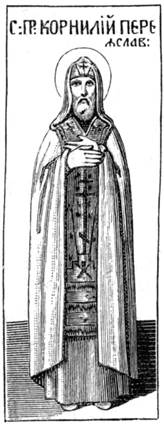
Пр. Корнилий, в мире Конон273, сын Рязанского купца, в юных летах скрылся из дома родительского и в Лукияновой пустыне, в 25 вер. от Переяславля, прожил 5 лет у старца Павла. Потом пришёл в Переяславскую обитель св. Бориса и Глеба, что на песках; здесь было тогда только три монаха и строитель Сергий; монастырь был самый бедный. Конона долго не соглашался принять Сергий, потому что он был ещё молод, – по виду полагали ему «не более 15 лет», – к тому же он ничего не говорил о себе; но терпение Конона довело его до цели. Он не отходил от ворот обители, и его приняли в обитель, признав его глухим и немым. Конон усердно ходил в храм и усердно трудился по послушанию, – молол рожь, носил дрова в трапезу хлебную, таскал воду, – делал всё, что приказывали; а в трапезе не садился с старцами, но после всех довольствовался тем, что оставалось; к тому же принимал пищу только три раза в неделю. Так прожил он 5 лет и по просьбе его пострижен был в иночество. С того времени никто не видал его спавшим на постели, а послушания по-прежнему выполнял он с полным усердием. Число братии уже увеличилось в обители, и некоторые смеялись над Корнилием, как над юродивым; он терпел и молчал. Спустя три года просил он у строителя дозволения жить в затворе. Строитель, видя подвижническую жизнь его, выстроил ему келийцу и благословил жить в ней. Корнилий затворился и безвыходно подвизался в посте и молитвах. Но раз нашли его у кельи едва живым, – келья была заперта изнутри и отворено было только оконце. – Корнилий пролежал больным три месяца с и ничего не ел, а принимал только воду и сок. Выздоровев, остался он, по убеждению настоятеля, жить с братией, усердно ходил в храм, исправлял должность пономаря, служил в трапезе, – копал землю, садил овощи и плодовые деревья. В саду его росли превосходные яблоки, и он с любовью раздавал их безденежно. Строгий пост и подвиги так иссушили его, что он походил на сухое дерево; и однако не переставал трудиться. – Своими руками выкопал для братии колодезь, и вода колодезя его была весьма вкусная и чистая. Он не прерывал молчания своего и теперь, когда жил с братиями. Так прожил он 30 лет, оставаясь во мнении других глухим и немым. Перед кончиной, о которой дал он знать знаками, пошёл он к общему духовному отцу, игумену Никольской обители Варлааму, исповедался, причастился св. Таин и по просьбе его облечён был в схиму; только теперь, по просьбе духовника, рассказал о себе, кто он, откуда, как шла жизнь его. Возвратясь в обитель, особоровался св. маслом и в тот же день скончался. Это было 22 июля 1693 г. Он был похоронен в часовне, вблизи первоначального схимника Адриана убиенного. Спустя 9 лет, при построении нового храма, обретены были нетленные мощи его. При освящении храма в честь Смоленской иконы Богоматери в 1705 г. святитель Димитрий Ростовский, в ведении которого стоял тогда Переяславль, свидетельствовал мощи, и они положены были в новом храме, под спудом. Святитель написал тропарь и кондак преподобному; тогда же написана была икона преподобного. – В ркп. житии записано всего 17 чудес, совершившихся при мощах преподобного до июля 1717 г.; имя его внесено и в ркп. святцы. – Икона его с надписью: «образ пр. Корнилия, Переславского чудотворца».
The Venerable Cornelius, in the world Konon273, the son of a Ryazan merchant, fled from his parental home in his youth and lived for five years with the Elder Paul in the Lukianova Hermitage, 25 versts from Pereslavl. Afterwards he came to the Pereslavl monastery of Sts. Boris and Gleb, which is on the sands; at that time there were only three monks and the Superior Sergius; the monastery was very poor. For a long time Sergius would not agree to receive Konon, because he was still young—by appearance they judged him "no more than 15 years old"—and moreover he said nothing about himself; but Konon's patience brought him to his goal. He did not depart from the monastery gates, and he was received into the monastery, being taken for deaf and mute. Konon diligently attended church and labored diligently in obedience—he ground rye, carried firewood to the refectory and the bakery, hauled water—he did everything that was commanded; and at meals he did not sit with the elders, but after all the others contented himself with what was left; moreover he partook of food only three times a week. Thus he lived for five years and, at his request, was tonsured into monasticism. From that time no one saw him sleeping on a bed, and he continued to fulfill his obediences with full zeal as before. The number of brethren had already increased in the monastery, and some mocked Cornelius as a fool; he endured and was silent. After three years he asked the Superior for permission to live in seclusion. The Superior, seeing his ascetic life, built him a small cell and blessed him to live in it. Cornelius shut himself up and struggled without leaving it in fasting and prayers. But once they found him near his cell barely alive—the cell was locked from within and only the little window was open. Cornelius lay ill for three months and ate nothing, receiving only water and juice. Having recovered, he remained, at the persuasion of the abbot, to live with the brethren, diligently attending church, fulfilling the office of sexton, serving in the refectory—digging the earth, planting vegetables and fruit trees. In his garden grew excellent apples, and he lovingly distributed them free of charge. Strict fasting and labors so dried him up that he resembled a withered tree; yet he did not cease from labor. With his own hands he dug a well for the brethren, and the water of his well was very tasty and pure. He did not break his silence even now, when he lived with the brethren. Thus he lived for 30 years, remaining in the opinion of others as deaf and mute. Before his end, which he made known by signs, he went to the common spiritual father, Abbot Barlaam of the St. Nicholas Monastery, made his confession, partook of the Holy Mysteries, and at his request was clothed in the schema; only then, at the request of his confessor, did he tell about himself—who he was, whence he came, how his life had passed. Returning to the monastery, he received the Holy Unction and died that same day. This was on July 22, 1693 A.D. He was buried in a chapel, near the original schemamonk Adrian who had been slain. Nine years later, during the construction of a new church, his incorrupt relics were uncovered. At the consecration of the church in honor of the Smolensk Icon of the Mother of God in 1705 A.D., St. Demetrius of Rostov, under whose jurisdiction Pereslavl then stood, witnessed the relics, and they were placed in the new church, under a bushel. The Hierarch composed a troparion and kontakion to the Venerable One; at the same time an icon of the Venerable One was painted. In the manuscript Life, a total of 17 miracles are recorded, which occurred at the relics of the Venerable One up to July 1717 A.D.; his name is also entered in the manuscript calendar of saints. His icon bears the inscription: "Image of the Venerable Cornelius, Wonderworker of Pereslavl."
Кондак преподобному, сочинение св. Димитрия: «Вышняя получити желая, в вышних Живущему неленостно поработал еси, блаженне; да наследиши горняя, презрел еси дольняя, не токмо очи отвратив не видети суеты, но и устнам своим молчание наложив не глаголати суетная: обаче немолчным сердцем воспел еси Богу. – Не умолчи убо и ныне о нас моляся, Корнилие преподобне»274.
Kontakion to the Venerable One, composition of St. Demetrius: "Desiring to obtain the things on high, thou didst labor without sloth for Him Who dwelleth on high, O blessed one; that thou mightest inherit the heavenly, thou didst despise the earthly, not only turning away thine eyes from seeing vanity, but also laying silence upon thy lips so as not to speak vain things; yet with a ceaseless heart thou didst sing unto God. Cease not, therefore, even now to pray for us, O Venerable Cornelius."274