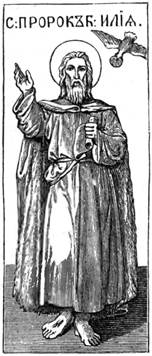
Пророк Илия (3Цар.16:29, 17–19) родился в городе Фесвии Галаадской в колене Левиином, в племени Аарона, от отца именем Саваха. Святой Епифаний Кипрский сообщает о рождении Илии поучительное предание. Святитель говорит: «когда родился Илия, отец его Савах видел в видении, что мужи благообразные приветствовали его, пеленали огнём и питали пламенем огненным. Видение это он объявил в Иерусалиме священникам, которые ему сказали: «не бойся, сын твой будет жить во свете и судить Израильтян мечом и огнём». «Илия» значит «крепость Господня». По месту своего рождения он называетсяФесвитянин; жил за 900 лет до Рождества Христова; был строгий подвижник и ревнитель веры в Бога истинного; пылал к Богу Божественным огнём любви, как Серафим. По наружности был муж космат и поясом длинным препоясан о чреслех своих (4Цар.1:8). Призванный возвещать людям волю Божию при Ахааве, царе Израильском, бывшем в супружестве с язычницей Иезавелью, во дни грубого идолопоклонства, введённого в царстве Израильском Иеровоамом и усиленного Ахаавом, Илия с дерзновением молил Бога обратить прельщённых идолослужением на путь истинного благочестия, и ожесточённых побудить к покаянию гневом небесным. Именем Божиим Илия объявил Ахааву о наказании его и народа трёхлетним бездождием и голодом. Молитвой пророка заключилось небо, и три лета шесть месяцев ни одной капли дождя и росы не пало на землю (Иак.5:17–18). Последовали засуха и голод, и исполнилось слово пророка Моисея на непокорного Израиля: будет небо над главой твоей медяно, и земля под тобой железна (Втор28:23). Сохраняя Илию от убийственных рук Иезавели, Господь, во время бедствия, послал обличителя нечестия в сокровенное место, а, чтобы избавить его от голода, постигшего землю Израилеву, дал ему для пития воду потока Хорафа, и чтобы внушить пламенному ревнителю благочестия сострадание к людям, томящимся от голода и жажды, повелел хищным птицам питать его. Через год поток иссох от сильного зноя, и Господь послал Илию в Сарепту Сидонскую к бедной вдовице, дабы он видел ближе бедствие, тяготеющее над богатыми, а тем более над бедными, и вместе веру многих из них в Бога истинного, и умерял свою пламенную ревность. Бедная вдова, имея горсть муки и немного елея, составлявшие единственный дневной запас для неё и детей её, не пожалела отдать ему и последнее, в надежде на Бога, исполняющего алчущих благами (Лк.1:53). Действительно, по Божественному слову пророка, и последний малый запас муки и масла служил около двух лет неистощимой и достаточной пищей для пророка, вдовы и её семейства. В награду за пропитание пророка она удостоилась знамения особенного благоволения Божия. У неё умер сын; Илия молитвой, троекратным на него дуновением и призыванием всемогущего Господа жизни:Господи Боже мой, да возвратится душа отрочища сего в он, воскресил умершего. Жена совершенно уразумела, якоИлия человек Божий и глагол Господень во устах его истинен. После трёх лет бездождия и голода, когда сам Ахаав преклонился к покаянию и искал пророка, пророк явился к царю, и для довершения обращения его и народа его к Богу единому истинному от богов ложных, которые подвергли царство Израильское трёхлетнему и тяжкому бедствию, Илия побудил царя собрать на гору Кармил старейшин Израиля и жрецов Ваала и Астарты. Собрался многочисленный народ и жрецы; ревнитель Божий обличил Ахаава и народ в идолослужении и, чтобы очевиднее показать, сколь ничтожны боги языческие и всемогущ Бог истинный, изведший Израиля из Египта, Илия молился Господу послушать его огнём, и своею дивной молитвой свёл с неба огонь на приготовленную жертву, после того как жрецы Ваала долго и напрасно умоляли его послать огонь на жертву их. Столь ясно видя всемогущество Бога истинного, все люди, бывшие на Кармиле, пали на землю и исповедали: воистину,Господь Бог, Той есть Бог. Народ, по повелению Илии, схватил и убил жрецов, как обманщиков. По слову и молитве пророка отверзлось небо и дождь напоил жаждущую землю. Ахаав познал своё заблуждение.
The Prophet Elijah (3 Kgdms. 16:29, 17–19) was born in the city of Tishbe in Gilead, of the tribe of Levi, in the lineage of Aaron, from a father named Sabah. St. Epiphanius of Cyprus relates an instructive tradition concerning the birth of Elijah. The Hierarch says: “When Elijah was born, his father Sabah saw in a vision that men of comely appearance greeted him, swaddled him with fire, and fed him with a flame of fire.” He declared this vision in Jerusalem to the priests, who said to him: “Fear not; your son shall dwell in the light and shall judge Israel with sword and fire.” “Elijah” means “the strength of the Lord.” From the place of his birth he is called the Tishbite; he lived 900 years before the Nativity of Christ; he was a strict ascetic and a zealot for faith in the true God; he burned toward God with the divine fire of love, like a Seraphim. In appearance he was a hairy man, and girt with a long girdle about his loins (4 Kgdms. 1:8). Called to proclaim the will of God to men in the days of Ahab, king of Israel, who was married to the pagan Jezebel, in the time of gross idolatry introduced into the kingdom of Israel by Jeroboam and intensified by Ahab, Elijah with boldness prayed to God to turn those deceived by idol-worship to the path of true piety, and to move the hardened to repentance by heavenly wrath. In the name of God, Elijah declared to Ahab the punishment of him and the people by a three-year drought and famine. By the prophet’s prayer the heaven was shut up, and for three years and six months not a drop of rain or dew fell upon the earth (Jas. 5:17–18). Drought and famine followed, and the word of the prophet Moses was fulfilled upon disobedient Israel: Thy heaven that is over thy head shall be brass, and the earth that is under thee shall be iron (Deut. 28:23). Preserving Elijah from the murderous hands of Jezebel, the Lord, during the calamity, sent the reprover of impiety to a hidden place; and, to deliver him from the famine that had come upon the land of Israel, gave him water from the brook Cherith to drink; and, to instill in the fiery zealot of piety compassion for the people languishing from hunger and thirst, commanded ravenous birds to feed him. After a year the brook dried up from the intense heat, and the Lord sent Elijah to Zarephath of Sidon, to a poor widow, that he might see more closely the calamity weighing upon the rich, and even more upon the poor, and together with it the faith of many of them in the true God, and might moderate his fiery zeal. The poor widow, having a handful of meal and a little oil, which constituted the only daily provision for herself and her children, did not begrudge giving him even the last, in hope in God, Who fills the hungry with good things (Lk. 1:53). Indeed, by the divine word of the prophet, that last small supply of meal and oil served for about two years as an inexhaustible and sufficient food for the prophet, the widow, and her household. As a reward for sustaining the prophet, she was deemed worthy of a sign of God’s special favor. Her son died; Elijah, by prayer, by breathing upon him three times, and by calling upon the almighty Lord of life: O Lord my God, let this child’s soul return into him, raised the dead child. The woman fully knew that Elijah was a man of God, and that the word of the Lord in his mouth is true. After three years of drought and famine, when Ahab himself inclined to repentance and sought the prophet, the prophet appeared to the king, and to complete the turning of him and his people to the one true God from the false gods, which had subjected the kingdom of Israel to a three-year and grievous calamity, Elijah urged the king to gather the elders of Israel and the priests of Baal and Astarte to Mount Carmel. A numerous people and the priests assembled; the zealot of God reproved Ahab and the people for idolatry, and, to show more clearly how insignificant the pagan gods are and how almighty is the true God, Who brought Israel out of Egypt, Elijah prayed to the Lord to hear him by fire, and by his wondrous prayer brought down fire from heaven upon the prepared sacrifice, after the priests of Baal had long and vainly besought him to send fire upon their sacrifice. Seeing so clearly the omnipotence of the true God, all the people who were on Carmel fell to the ground and confessed: Truly, the Lord God, He is God. The people, at Elijah’s command, seized and killed the priests as deceivers. At the word and prayer of the prophet, the heaven was opened and rain watered the thirsty land. Ahab acknowledged his error.
Иезавель негодовала на пророка Божия за убиение жрецов её и грозила умертвить его. Илия скорбел духом о бессилии своём истребить идолопоклонство и просил себе смерти. Ангел Господень повелел Илии удалиться в Аравию на гору Хорив, где он сподобился беседовать с Богом и получить от Него утешение. Илия скорбел и говорил: ревнуя поревновах по Господе о Бозе Вседержителе, яко оставиша завет Твой сынове Израилевы олтари Твоя раскопаша, пророки Твоя избиша оружием, и остах аз един, и ищут души моея изъяти ю. На другой день Господь воззывает Илию на гору и, после грозных явлений бури, землетрясения и пламени, в коих Господь не явил Себя, являет, и Илия ощущает присутствие Господа во гласе хлада тонка. Сим знамением Милосердый поучает пламенеющего ревностью по Боге пророка человеколюбию и снисхождению и внушает ему, что не весь ещё Израиль отступил от Бога; ещё 7,000 мужей не преклонили колен Ваалу.
Jezebel was indignant at the prophet of God for the slaying of her priests and threatened to kill him. Elijah grieved in spirit over his powerlessness to destroy idolatry and asked for death for himself. An angel of the Lord commanded Elijah to withdraw into Arabia, to Mount Horeb, where he was vouchsafed to converse with God and receive consolation from Him. Elijah grieved and said: I have been very jealous for the Lord God of hosts, because the children of Israel have forsaken Thy covenant, thrown down Thine altars, slain Thy prophets with the sword; and I alone am left, and they seek my life to take it away. On the next day the Lord summons Elijah to the mountain and, after the terrible manifestations of storm, earthquake, and flame, in which the Lord did not reveal Himself, He reveals Himself, and Elijah perceives the presence of the Lord in a still small voice. By this sign the Merciful One teaches the prophet, burning with zeal for God, love for mankind and condescension, and suggests to him that not all Israel has yet departed from God; still 7,000 men have not bowed the knee to Baal.
Впрочем, Бог внял желанию пророка Своего и повелел ему избрать преемником себе в деле пророческого служения – Елисея. Елисей возделывал землю, Илия пришёл к нему и поверг на него милоть свою; и остави Елисей волы, и тече вслед Илии и служаше ему. Ахааву, павшему в новые и тяжкие преступления, Илия по внушению Божию грозно возвестил о близкой погибели его, Иезавели и всего дома его. Ахаав плакал о грехах своих, облёкся во вретище, постился и хождаше скорбен. Бог возвестил Илии о кающемся Ахааве: сего ради не наведу зла во днех его: но во днех сына его наведу зло на дом его (3Цар. XXI).
Nevertheless, God hearkened to the desire of His prophet and commanded him to choose Elisha as his successor in the work of prophetic service. Elisha was tilling the ground; Elijah came to him and cast his mantle upon him; and Elisha left the oxen, and ran after Elijah, and ministered unto him. To Ahab, who had fallen into new and grievous crimes, Elijah, by divine inspiration, sternly announced the imminent destruction of him, Jezebel, and all his house. Ahab wept over his sins, put on sackcloth, fasted, and walked softly. God declared to Elijah concerning the repenting Ahab: Therefore I will not bring the evil in his days: but in his son’s days will I bring the evil upon his house (3 Kgdms. XXI).
Внутренний огонь св. ревности к Богу в Илии явлен был ещё неоднократно, посредством видимого огня небесного, который, по слову пророка, дважды сходил и истреблял войнов, коих Охозия, сын и преемник Ахаавов на царстве и в идолопоклонстве, посылал взять Илию (4Цар. I). Наконец на огненной колеснице Илия вознесён, подобно Еноху, живой на небо. Елисей зряше и вопияше: отче, отче, колесница Израилева и конница его – помощь и защиша Израиля!и не увиде его ктому. И взя милоть Илиину Елисей падшую к верху его (4Цар.2:11–12), и получил сугубую благодать от Бога. По выражению Церкви, Илия «с плотию сый бессмертен уверяет мертвых востание». Через 7 лет по взятии Илии на небо он ревность свою по Боге явил и с небес; от него прииде к Иораму царю Иудейскому писание обличения □ и наказания за идолослужение (2Пар.21:12–20).
The inner fire of holy zeal for God in Elijah was manifested yet repeatedly, by means of visible heavenly fire, which, at the prophet’s word, twice descended and consumed the soldiers whom Ahaziah, the son and successor of Ahab on the throne and in idolatry, sent to take Elijah (4 Kgdms. I). Finally, on a fiery chariot, Elijah was taken up, like Enoch, alive into heaven. Elisha saw it and cried: My father, my father, the chariot of Israel and the horsemen thereof—the help and defense of Israel! And he saw him no more. And Elisha took up the mantle of Elijah that fell from him (4 Kgdms. 2:11–12), and received a double portion of grace from God. In the words of the Church, Elijah, “being immortal with the flesh, assures the resurrection of the dead.” Seven years after Elijah’s being taken up to heaven, he manifested his zeal for God even from heaven; from him came a writing of reproof and punishment to Jehoram, king of Judah, for idolatry (2 Chr. 21:12–20).
К пророку Илии, – столь ревностному проповеднику правды Божией и столь высокому орудию благодати, люди во все времена имели великое уважение и благоговение. Современники пророка, ясно видя в нём благодать Божию, называли его человеком Божиим (3Цар.17:18), во устех которого глагол Господень истинен (3Цар.17:24); в знак особенного благоговения к нему повергались перед ним на землю (3Цар.18:7; 4Цар.1:13); исповедали перед ним великую благодать Святого Духа, живущую и действующую в нём (3Цар.18:12; 4Цар.2:15–16). Сирах пишет о великом пророке: «востал Илия пророк, как огонь, и слово его, как свеща, горело. Он навёл на них глад, и ревностью своею умалил их. Словом Господним заключил небо и свёл трижды огонь с неба. Как ты прославился, Илия, своими чудесами, и кто сравнится с тобою в славе! Ты воздвигнул мёртвого от смерти и из ада, словом Вышнего. Ты низвёл царей в пагубу, и знаменитых с ложа их. Ты слышал на Синае обличение и на Хориве суд отмщения. Ты помазал царей для воздаяния и пророков преемниками по себе. Ты вознесён вихрем огненным на колеснице с огненными конями. Ты предопределён в обличительных пророчествах на времена будущие утишить гнев Божий при его воспламенении, обратить сердце отца к сыну, и восстановить колена Иаковлевы. Блаженны те, кои увидят тебя и украсятся любовью» (Сир.48:1–11). Составитель первой книги Маккавейской с похвалой упоминает между прочими знаменитыми и благочестивыми мужами Ветхого Завета и о пророке Илии: Илия егда возревнова ревностью закона, взяся даже на небо (1Макк.2:58).
To the Prophet Elijah—so zealous a preacher of God’s righteousness and so exalted an instrument of grace—people in all ages have had great respect and reverence. The prophet’s contemporaries, clearly seeing in him the grace of God, called him a man of God (3 Kgdms. 17:18), in whose mouth the word of the Lord is true (3 Kgdms. 17:24); as a sign of special reverence for him, they prostrated themselves before him on the ground (3 Kgdms. 18:7; 4 Kgdms. 1:13); they confessed before him the great grace of the Holy Spirit, living and acting in him (3 Kgdms. 18:12; 4 Kgdms. 2:15–16). Sirach writes of the great prophet: “Then stood up Elijah the prophet as fire, and his word burned like a lamp. He brought a famine upon them, and by his zeal he diminished them. By the word of the Lord he shut up the heaven, and brought down fire from heaven three times. How wast thou glorified, Elijah, in thy wondrous deeds! and who may glory like unto thee! Who didst raise up a dead man from death, and from the grave by the word of the Most High. Who didst bring down kings to destruction, and honorable men from their beds. Who heard rebuke in Sinai, and judgments of vengeance in Horeb. Who didst anoint kings for retribution, and prophets to succeed after thee. Who wast taken up in a whirlwind of fire, in a chariot of fiery horses. Who art ordained for reproofs in their seasons, to pacify the wrath of God’s judgment before it break forth into fury, to turn the heart of the father unto the son, and to restore the tribes of Jacob. Blessed are they that saw thee, and they that have been adorned with love” (Sir. 48:1–11). The author of the first book of Maccabees mentions with praise, among other famous and pious men of the Old Testament, also the Prophet Elijah: Elijah, for being zealous and fervent for the law, was taken up into heaven (1 Macc. 2:58).
Во время земной жизни Иисуса Христа Иудеи, взирая на великие чудеса Его, считали Его за пророка Илию (Мф.16:14). В день преображения Господня Илия, как представитель пророков, во свете явился с Моисеем на горе и беседовал с Господом. Апостол Пётр, бывший очевидцем преображения Господня, желал между прочим сотворить едину сень и Илии. От времён Апостольских почитание пророка Илии продолжается в Церкви Христовой и даже вне её непрерывно. В III веке преп. Харитон на месте пустынного пребывания пр. Илии основал обитель Илиотов. В IV столетии, в день пророка Илии св. Амвросий Медиоланский, Августин и Златоуст говорили поучения, которые показывают, что праздник сему пророку в IV веке совершаем был в разных Церквах христианских. Св. Иоанн Златоуст, беседуя во храме св. мучеников в день пророка Илии, между прочим произнёс об нём: «множество времени не затмило его памяти, как и следовало. Такова добродетель». Даже и доселе, слишком через 2780 лет, благоговейные предания не затмились о пророке Илии; – доселе Палестинские предания с благоговением указывают места, освящённые стопами ног великого пророка Божия. В XI веке Иоанн, архиепископ Евхаитский, и позднее иеромонах Пахомий Логофет на день пророка Илии написали многие песнопения, доныне поемые Церковью в этот день.
During the earthly life of Jesus Christ, the Jews, beholding His great miracles, considered Him to be the Prophet Elijah (Mt. 16:14). On the day of the Lord’s Transfiguration, Elijah, as the representative of the prophets, appeared in light with Moses on the mount and conversed with the Lord. The Apostle Peter, who was an eyewitness of the Lord’s Transfiguration, desired, among other things, to make one tabernacle also for Elijah. From Apostolic times, the veneration of the Prophet Elijah has continued in the Church of Christ and even outside it without interruption. In the third century, the Venerable Chariton founded the monastery of the Eliotes on the site of the Prophet Elijah’s desert sojourn. In the fourth century, on the day of the Prophet Elijah, St. Ambrose of Milan, Augustine, and Chrysostom delivered homilies which show that the feast of this prophet was celebrated in various Christian churches in the fourth century. St. John Chrysostom, preaching in the church of the holy martyrs on the day of the Prophet Elijah, said among other things concerning him: “A multitude of time has not obscured his memory, as was fitting. Such is virtue.” Even to this day, after more than 2,780 years, the reverent traditions concerning the Prophet Elijah have not been obscured; – to this day, the Palestinian traditions reverently point out the places sanctified by the footsteps of the great prophet of God. In the eleventh century, John, Archbishop of Euchaita, and later the hieromonk Pachomius the Logothete composed many hymns for the day of the Prophet Elijah, which are still sung by the Church on this day.
Св. пророка Илию почитают даже Монголы – Буряты Забайкальские. День пр. Илии чтут Татары и в этот день не работают.
St. Elijah the Prophet is venerated even by the Mongols – the Buryats of Transbaikalia. The Tatars honor the day of the Prophet Elijah and do not work on this day.
В песнопениях своих Церковь называет Илию пророком и провидцем великих дел Божиих, Ангелом во плоти, основанием пророков, предтечей второго пришествия Христова, и празднует ему, как «вещанием некогда уставившему водоточные облаки», в самое жаркое время года, когда для произращающей земли особенно нужны дожди, прося его молить о нас единого Человеколюбца, дабы не отяготели над страной нашей бездождие и голод, как древле постигли царство Израильское, по слову пророка Илии. Издревле в нашем отечестве в день пророка Илии во многих местах совершают крестные ходы и молебствия по полям для освящения их и для умилостивления Господа молитвами пророка Илии, который во дни своей земной жизни постоянно ходил с силой своей проповеди и чудес.
In her hymns, the Church calls Elijah a prophet and seer of the great works of God, an angel in the flesh, the foundation of the prophets, the forerunner of the second coming of Christ, and celebrates him as “him who once by his word established the water-bearing clouds,” at the hottest time of the year, when rains are especially needed for the fruitful earth, asking him to pray for us to the only Lover of mankind, that drought and famine may not weigh heavily upon our land, as of old they befell the kingdom of Israel according to the word of the Prophet Elijah. From ancient times in our fatherland, on the day of the Prophet Elijah, in many places, processions of the cross and molebens are performed in the fields for their sanctification and for propitiating the Lord through the prayers of the Prophet Elijah, who during the days of his earthly life constantly walked with the power of his preaching and miracles.
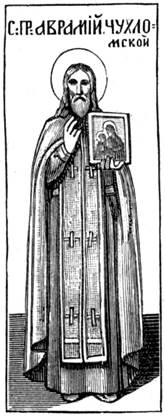
Преп. Аврамий264 с молодых лет возлюбил Господа и был пострижен в иночество преп. Сергием; в его обители он сперва выполнял послушания в хлебне и поварне, потом носил дрова и воду для братии; после долгого искуса, как укрепившийся в духовной жизни, он удостоен был сана священства, но испросил у преп. Сергия дозволение провести несколько времени в совершенном безмолвии. Потом, стремясь к высшему духовному совершенству, по благословению Сергия удалился он в дикую тогда страну Галичскую и здесь стал подвизаться.
The Venerable Abramius264 from his youth loved the Lord and was tonsured into monasticism by the Venerable Sergius; in his monastery he first performed obediences in the bakery and kitchen, then carried wood and water for the brethren; after a long probation, as one strengthened in the spiritual life, he was deemed worthy of the priesthood, but he asked the Venerable Sergius for permission to spend some time in complete silence. Then, striving for higher spiritual perfection, with the blessing of Sergius he withdrew to the then wild Galich region and there began to asceticise.
В одно время молился он под горой и услышал голос: «Аврамий, взойди на гору, там икона Богоматери». Он взошёл на гору и увидел в ярком свете икону, стоящую на дереве. Он поставил здесь келью. Сухой хлеб утолял голод его и чистая вода источника прохлаждала жажду. Поселянин неожиданно нашёл пустынника под горой и по просьбе его обещался тайно приносить ему по одному хлебцу в неделю. Потом о дивном пустыннике и его чудной иконе услыхал Галичский князь Димитрий Феодорович и едва упросил преподобного посетить Галич265. Преподобный достиг Галича озером и встречен был духовенством и народом при входе в город, там, где ныне Староторжский Николаевский девичий монастырь; – набожный князь встретил св. икону в Спасском храме; здесь преподобный отпел молебен Богоматери с водоосвящением, и многие больные получили исцеление. Набожный князь доставил преподобному средства основать на месте явления св. иконы храм и обитель в честь успения Богоматери266. И озеро, на берегу которого поселился отшельник Аврамий, называется Чухломским или Чудским, и та возвышенность, на которой провёл он последние свои годы, называется по памятникам «Чудским городком»267. – Это уже показывает, с какими людьми пришлось иметь дело преп. Аврамию. – Чудь Галичской страны хотя уже знакома была с христианством, но поверхностно и слабо; обычаи и нравы были грубы, язычество ещё жило в сердцах и открывалось в делах; волхвы давней старины ещё более значили для многих, чем чистая святая вера. Так говорит о Галичской Чуди и житие пр. Аврамия. И так была нужда явить славу христианства и особенным чудом и особенным подвижником. Преподобный боролся в Чудской стороне и с нуждами обители и с Чудской грубостью. Он часто собирал к себе суеверов и убеждал их расстаться с суевериями, указывая на чудеса христианства; а ещё чаще молился он за них перед иконой Богоматери. И не бесплодны были труды его. Те, которые получали исцеление от иконы Богоматери, и сами искренно убеждались в превосходстве св. веры и других убеждали в том же. Успенская обитель процвела и стала многолюдной; преподобный назначил ей в настоятеля ученика своего Порфирия, а сам удалился в пустыню268.
On one occasion he was praying at the foot of a mountain and heard a voice: “Abramius, go up onto the mountain; there is an icon of the Mother of God.” He went up onto the mountain and saw an icon standing on a tree in a bright light. He set up a cell there. Dry bread satisfied his hunger, and pure water from a spring quenched his thirst. A villager unexpectedly found the hermit at the foot of the mountain and, at his request, promised secretly to bring him one loaf of bread a week. Later, Prince Demetrius Theodorevich of Galich heard about the wondrous hermit and his miraculous icon and with difficulty persuaded the Venerable One to visit Galich265. The Venerable One reached Galich by the lake and was met by the clergy and people at the entrance to the city, where the St. Nicholas Staryi Torzhok Convent now stands; – the devout prince met the holy icon in the Church of the Savior; there the Venerable One sang a moleben to the Mother of God with the blessing of water, and many of the sick received healing. The devout prince provided the Venerable One with the means to found a church and monastery in honor of the Dormition of the Mother of God on the site of the appearance of the holy icon266. And the lake, on the shore of which the hermit Abramius settled, is called Chukhloma or Chudskoe, and that elevation on which he spent his last years is called in the records “the Chudskoe fortified settlement”267. – This already shows what kind of people the Venerable Abramius had to deal with. – The Chud of the Galich region, although already acquainted with Christianity, was only superficially and weakly so; their customs and manners were coarse; paganism still lived in their hearts and manifested itself in deeds; the sorcerers of ancient times still meant more to many than the pure holy faith. Thus speaks the life of the Venerable Abramius concerning the Galich Chud. And so there was a need to manifest the glory of Christianity both by a special miracle and by a special ascetic. The Venerable One struggled in the Chud region both with the needs of the monastery and with Chud coarseness. He often gathered the superstitious to himself and urged them to part with their superstitions, pointing to the miracles of Christianity; and even more often he prayed for them before the icon of the Mother of God. And his labors were not fruitless. Those who received healing from the icon of the Mother of God were themselves sincerely convinced of the superiority of the holy faith and convinced others of the same. The Dormition Monastery flourished and became populous; the Venerable One appointed his disciple Porphyry as its abbot, and himself withdrew into the wilderness268.
За 30 вёрст от Успенской обители, на берегу небольшого озера, нашёл он красивое место и стал здесь подвизаться отшельнически. Спустя несколько времени ученики узнали о месте, куда скрылся любимый учитель, и пришли умолять его, чтобы возвратился к ним в обитель. Преподобный согласился только на то, чтобы остались при нём некоторые из учеников. Для них построил он храм в честь положения пояса Богоматери; с помощью набожных людей вскоре устроилась здесь общежительная обитель. Она называлась великой пустыней Аврамиевой269.
Thirty versts from the Dormition Monastery, on the shore of a small lake, he found a beautiful place and began to asceticise there as a hermit. After some time, the disciples learned of the place where the beloved teacher had hidden himself and came to beseech him to return to them in the monastery. The Venerable One only agreed that some of the disciples should remain with him. For them he built a church in honor of the Placing of the Girdle of the Mother of God; with the help of devout people, a cenobitic monastery was soon established there. It was called the Great Wilderness of Abramius269.
Убегая многолюдства, Аврамий удалился на р. Вочу. – Ученики нашли его здесь и стали ставить около его хижины кельи. Любящий отец благословил им построить храм в честь собора Богоматери. Образовалась и здесь обитель, для которой Аврамий назначил в игумена ученика своего иеромонаха Пафнутия.
Fleeing from the multitude, Abramius withdrew to the River Vocha. – The disciples found him there and began to set up cells around his hut. The loving father blessed them to build a church in honor of the Synaxis of the Mother of God. A monastery was also formed here, for which Abramius appointed his disciple, the hieromonk Paphnutius, as abbot.
Преподобный ещё раз скрылся от учеников своих. В 13 верстах от Вочской обители он нашёл себе такое место, где пребывание его более, чем где-нибудь, могло иметь последствия благодетельные. Он поселился под горой, на которой был «Чудский городок»; это было гнездо старого Чудского суеверия; здесь нужно было много света и силы небесной, чтобы рассеять остававшийся мрак язычества. Когда собрались сюда ревнители духовной жизни, Аврамий с любовью основал на Чудском городке храм в честь покрова Богоматери; сам на старческих плечах своих носил землю для укрепления крутого берега и ревностно трудился вместе с учениками при устроении обители. Скоро в новой Покровской обители оказалось до 100 человек братии. Чудное действие производит на сердца община подвижников благочестия. «Бедный, посетив обитель иноков, говорит святой Златоуст, идёт из монастыря с утешением для бедности; посещает иноков богатый и возвращается от них лучшим, с здравыми понятиями о вещах; когда приходит к ним облечённый саном, пропадает здесь вся надменность; здесь и волков обращают в агнцев; если загорелось в ком желание вести подобную прекрасную жизнь, – пока горячо в тебе это желание, спеши к ангелам и разгоришься ещё более»270. Таково было значение Аврамия в Чудской стороне! Он сам жил уединённо под горой; но сюда приходили к нему ученики для исповедания помыслов своих; сюда же приходили и окрестные жители и получали полезные наставления. Чухломская страна чтила его, как своего просветителя. За год до кончины передал он управление обителью ученику своему Иннокентию и остальное время проводил в совершенном безмолвии. Причастившись св. Таин, он мирно почил 20 июля 1375 года. Мощи его почивают под спудом, в приделе храма, посвящённом его имени271.
The Venerable One once again hid himself from his disciples. Thirteen versts from the Vocha Monastery, he found for himself a place where his sojourn could have more beneficial consequences than anywhere else. He settled at the foot of a mountain on which stood “the Chudskoe fortified settlement”; this was a nest of ancient Chud superstition; here much light and heavenly power were needed to dispel the remaining darkness of paganism. When zealots of the spiritual life gathered here, Abramius lovingly founded on the Chudskoe fortified settlement a church in honor of the Protection of the Mother of God; he himself carried earth on his aged shoulders to strengthen the steep bank and labored zealously together with his disciples in the establishment of the monastery. Soon there were up to 100 brethren in the new Protection Monastery. A community of ascetics of piety works a wondrous effect upon hearts. “A poor man,” says St. Chrysostom, “visiting a monastery of monks, departs from the monastery with consolation for his poverty; a rich man visits the monks and returns from them better, with sound notions of things; when one clothed with rank comes to them, all haughtiness disappears here; here even wolves are turned into lambs; if a desire to lead such a beautiful life has been kindled in anyone, – while this desire is hot within you, hasten to the angels and you will be inflamed yet more”270. Such was the significance of Abramius in the Chud region! He himself lived in seclusion at the foot of the mountain; but his disciples came to him here for the confession of their thoughts; the surrounding inhabitants also came here and received profitable instruction. The Chukhloma region honored him as its enlightener. A year before his repose, he handed over the governance of the monastery to his disciple Innocent and spent the remaining time in complete silence. Having partaken of the Holy Mysteries, he peacefully reposed on July 20, 1375. His relics rest under a cover, in a side-chapel of the church dedicated to his name271.
Галичская или Чухломская икона явилась Аврамию, Галичскому или Чухломскому чудотворцу, в XIV веке, около 1350 года. Постриженный в инока Сергием Радонежским, по его благословению, Аврамий для строжайших подвигов смирения удалился в Галичскую пустыню Костромской губернии, к озеру Галичскому, напротив города Галича. Здесь он молился Богоматери: «Пречистая Богородице Христа моего! Заступница всего рода христианского! Будь и о мне грешном ходатаицей и молитвенницей к Сыну Своему и Богу, да призрит на смирение моё. Ради Его имени я изшёл в пустыню сию. Тебя, Матерь сладкого мне Христа, предлагаю молитвенницей о мне, ибо Ты и пристанище всем». По молитве он сел немного почить, и вдруг слышит голос с горы: «Аврамий! взойди на гору, где стоит икона Моей Матери». Ужаснулся преподобный и взглянул на гору. На вершине её он увидал свет, сияющий паче луча солнечного. Преподобный оградился крестным знамением, взошёл на гору, где сиял свет, и увидел на дереве икону Богоматери с Предвечным Младенцем Иисусом. Аврамий встрепетал и пал ниц на землю, не будучи в силах снести великого сияния, и долго лежал и плакал от умиления. Вдруг услышал он опять: «Аврамий, встань и укрепись». Аврамий поднялся от земли; невыносимого света уже не было на иконе; Аврамий со слезами молился. Икона сама спустилась на руки преподобного. Он слезами омочил икону и с умилением повторял слова Евангельские: «откуда мне сие, яко прииде Мати Господа моего ко мне!» Поставив икону на дереве, он обратился с молитвой к Господу; всю ночь был без сна, воспевая благодарственные песни Богоматери.
The Galich or Chukhloma Icon appeared to Abramius, the Wonderworker of Galich or Chukhloma, in the 14th century, around the year 1350. Having been tonsured a monk by Sergius of Radonezh and with his blessing, Abramius withdrew to the Galich wilderness of Kostroma province, to Lake Galich, opposite the city of Galich, for the strictest ascetic labors of humility. Here he prayed to the Mother of God: "O Most Pure Theotokos of my Christ! Intercessor for all the Christian race! Be also for me, a sinner, an advocate and supplicant to Thy Son and God, that He may look upon my humility. For His name's sake I have gone forth into this wilderness. Thee, the Mother of my sweet Christ, I offer as my supplicant, for Thou art a haven for all." After prayer he sat down to rest a little, and suddenly he heard a voice from the mountain: "Abramius! ascend the mountain, where the icon of My Mother stands." The Venerable one was terrified and looked at the mountain. On its summit he saw a light shining brighter than a sunbeam. The Venerable one marked himself with the sign of the cross, ascended the mountain where the light shone, and saw on a tree the icon of the Mother of God with the Preëternal Child Jesus. Abramius trembled and fell prostrate on the ground, unable to bear the great radiance, and lay for a long time weeping from compunction. Suddenly he heard again: "Abramius, arise and be strengthened." Abramius rose from the ground; the unbearable light was no longer on the icon; Abramius prayed with tears. The icon itself descended into the hands of the Venerable one. He moistened the icon with tears and with compunction repeated the words of the Gospel: "Whence is this to me, that the Mother of my Lord should come to me?" Placing the icon on the tree, he turned in prayer to the Lord; he was without sleep the whole night, singing hymns of thanksgiving to the Mother of God.
Через несколько времени Аврамию пришёл помысл – удалиться с явленной иконой в пустыню, куда направит путь его Богоматерь. Помышляя о сём, он задремал и немного заснул; во сне услышал голос от иконы: «Аврамий, пребудь на месте сём, и спасёшься, и обитель воздвигнешь во упокоение Мне, тебе и учеников твоих. Я не оставлю, снабжая и соблюдая их во все дни жизни твоей, и по твоём к Богу отшествии не отступлю от обители твоей, покрывая её и даруя ей всякое изобилие». Аврамий пробудился и со слезами благодарил Богоматерь за обетование. И так он поставил часовню на той горе, которую избрала Богоматерь, и стал тут жить в безмолвии.
After some time, a thought came to Abramius—to withdraw with the revealed icon into the wilderness, whither the Mother of God would direct his path. Thinking on this, he dozed and fell asleep a little; in his sleep he heard a voice from the icon: "Abramius, abide in this place, and thou shalt be saved, and thou shalt raise up a monastery for a resting-place for Me, for thee, and for thy disciples. I will not forsake them, providing for and preserving them all the days of thy life, and after thy departure to God I will not depart from thy monastery, covering it and granting it every abundance." Abramius awoke and with tears thanked the Mother of God for the promise. And so he set up a chapel on that mountain which the Mother of God had chosen, and began to live there in silence.
Несколько времени Аврамий уединялся на горе, не знаемый никем; но после слух о нём и о чудотворной иконе дошёл до князя Галичского Димитрия Феодоровича, и он послал просить Аврамия с иконой к себе; Аврамий сначала отказывался, но, уступив вторичному молению князя, переехал на лодке Галичское озеро. Во вратах города встретил его весь священный собор со множеством народа, и сам князь с семейством; он взял икону на свои руки, внёс в соборную церковь и поставил на приличном месте. Перед иконой отпел молебен сам преподобный Аврамий со всем клиром, освятил воду и окропил ею князя и народ. Недужные со всего города принесены были перед икону Богоматери, и когда преподобный окропил их водой святой, и они приложились к иконе Богоматери, – все получили исцеление. На другой день преподобный рассказал князю о явлении иконы и о обетовании Божией Матери касательно устроения монастыря на месте явления. Князь пожертвовал имение на построение монастыря и содействовал скорейшему его окончанию. Сначала выстроена и освящена была церковь во имя Успения Богоматери, а по времени образовался при ней и монастырь, называемый ныне Городецкий Покровский. Посему и Галичская икона иногда называется Городецкой.
For some time Abramius dwelt in solitude on the mountain, known to no one; but afterwards word of him and of the wonderworking icon reached Prince Demetrius Theodorevich of Galich, and he sent to ask Abramius to come to him with the icon; Abramius at first refused, but yielding to the prince's second entreaty, he crossed Lake Galich by boat. At the city gates, the entire sacred council with a multitude of people met him, and the prince himself with his family; he took the icon into his own hands, brought it into the cathedral church, and placed it in a suitable spot. The Venerable Abramius himself, with all the clergy, sang a moleben before the icon, blessed water, and sprinkled the prince and the people with it. The infirm from all the city were brought before the icon of the Mother of God, and when the Venerable one sprinkled them with holy water and they venerated the icon of the Mother of God, all received healing. The next day the Venerable one told the prince about the appearance of the icon and about the promise of the Mother of God concerning the establishment of a monastery at the place of the appearance. The prince donated an estate for the building of the monastery and assisted in its speedy completion. First a church was built and consecrated in the name of the Dormition of the Mother of God, and in time a monastery was formed at it, now called the Gorodetsk Protection Monastery. Therefore the Galich Icon is sometimes called the Gorodetsk Icon.
Ркп. житие пр. Аврамия – в июльской минее Сергиевой лавры № 5, в импер. б-ке № 710. Сочинитель жития говорит: «иноцы тоя обители принесоша мало нечто написано о житии преп. Аврамия, ветхо и издрано, аз же едва прочтох»; далее: «случися мне грешному Протасию быти в той обители и видящу чудеса. Пребывшу в монастыри том три лета, содержа жезл паствы». Итак, сочинитель игумен Чухломский Протасий. Едва ли это не тот же игумен Протасий, который в 1546 г. открывал мощи пр. Павла Обнорского и оставил записку о пр. Павле. См. окт. 7 д.
Manuscript Life of the Venerable Abraham—in the July Menaion of the Sergius Lavra, No. 5, in the Imperial Library, No. 710. The author of the Life says: "the monks of that monastery brought a little something written about the life of the Venerable Abraham, old and tattered, and I could barely read it"; further: "it happened to me, the sinner Protasius, to be in that monastery and to see the miracles. Having remained in that monastery for three years, holding the staff of the flock." Thus, the author is Hegumen Protasius of Chukhloma. It is hardly not the same Hegumen Protasius who in 1546 uncovered the relics of the Venerable Paul of Obnora and left a note about the Venerable Paul. See October 7.
Ркп. житие: «бе же тогда в Галиче содержай град и землю Галичскую благов. князь Дмитрий Феодорович, внук благ. кн. Василия Константиновича, а Константин – четвёртый сын в. кн. Ярослава Всеволодовича» Далее сказано, что в. кн. Димитрий Иоаннович выгнал кн. Дмитрия Феодоровича из Галича и отдал Галич сыну своему кн. Юрию. См. родосл. книгу в времен. Моск. общ. ист. X, 73. 74.
Manuscript Life: "At that time, the city and land of Galich was held by the Right-believing Prince Demetrius Theodorevich, grandson of the Right-believing Prince Basil Constantinovich, and Constantine was the fourth son of Grand Prince Yaroslav Vsevolodovich." Further it is said that Grand Prince Demetrius Ioannovich expelled Prince Demetrius Theodorevich from Galich and gave Galich to his son, Prince George. See the genealogical book in the Proceedings of the Moscow Society of History, X, 73, 74.
Ист. ак. I, 98. В Солигалицком летописце Воскресенского монастыря Чухломское озеро называется Чудским. Ж. м. внутр. д., ч. 22, стр. 5. 6
Historical Acts, I, 98. In the Soligalich Chronicle of the Resurrection Monastery, Lake Chukhloma is called Lake Chudsk. Journal of the Ministry of Internal Affairs, part 22, pp. 5, 6.
Ист. иер. 3, 748. Сведен. о монаст. 159. 162; ркп. святцы: «пр. Аврамий игумен Городецкий, иже на Чухломе озере, Галичский чудотворец, ученик Сергиев, преставися в л. 6883 (1375) мес. июля в 20 д.». Тот же год кончины – и в житии пр. Аврамия, по списку импер. б-ки. – По переписи 1662 г., за Городецким Аврамиевым Покровским монастырём – 310 дворов.
History of the Hierarchy, 3, 748; Information on Monasteries, 159, 162; manuscript calendar of saints: "The Venerable Abraham, Hegumen of Gorodetsk, who is on Lake Chukhloma, Wonderworker of Galich, disciple of Sergius, reposed in the year 6883 (1375) on the 20th day of July." The same year of his end is also in the Life of the Venerable Abraham, according to the copy of the Imperial Library. — According to the census of 1662, the Gorodetsk Abraham Protection Monastery had 310 peasant households.