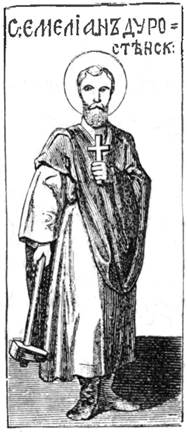
«Ученик Христов Емелиан, из Фракийского города Доростола (Дуростена), был раб Грека, а верой христианин», говорит древнее известие230. Если же господин Емелиана был Грек, то этим даётся видеть, что раб Емелиан был не Грек. Кто же он был родом? На правом берегу Дуная жили Славяне, а колонистами между ними были воины Римские и Греческие, впоследствии ставшие аристократами власти и богатства; бедные Славяне самой большей частью несли здесь тяжкую долю рабства231. Так св. Емелиан был Славянин. Страдание его происходило так: отступник Юлиан послал в Дуростен префекта – деспота беспощадного, с тем, чтобы всех христиан Дуростена предать мукам, если откажутся чтить богов. Префект явился в город с пышностью сатрапа. Кто здесь христиане? спросил он при первом представлении к нему граждан. Испуганные слухом о жестоком префекте, граждане отвечали, что между ними не видно ни одного христианина, все кланяются богам. В восторге от мысли, что одно имя его рассеяло христианскую веру в Дуростене, надменный префект задал роскошный пир гражданам. Горько было блаженному Емелиану слышать хвастовство язычника и видеть, что недостаток твёрдости в христианах обращается в позор христианству. Во время пирования префекта, он, взяв молот, идёт в капище и раздробляет идолов. – Поклонники язычества, не зная, кто так отделал богов их, по подозрению схватили невинного земледельца. Емелиан, услышав о том, является к защитникам богов и объявляет: «я раздробил сильных богов ваших». Те представляют его к префекту. «Кто научил тебя так обесчестить богов?» «Бог и душа моя», спокойно отвечал исповедник, и прибавил: «теперь и умный префект и каждый другой должны видеть, как бессильны, как глухи и немы идолы ваши, считаемые за богов! Точно камень и дерево, обделанные в идолов; ни один не подал и голосу в свою защиту». – Префект, раздражённый смелым голосом правды, велел растянуть исповедника по земле и бить воловыми жилами. Слуги били его немилосердно, кровь лилась ручьями. «Как смел ты бесчестить идолов? Я научу тебя чтить их», кричал свирепый префект. Страдалец отвечал: «поступок мой – не бесчестие, а слава и хвала Богу истинному». Префект велел переворотить его и бить по груди и чреву. Долго снова били страдальца. «Раб или свободный ты?» спросил префект. «Раб градоначальника», отвечал страдалец. Префект велел взыскать с градоначальника в царскую казну фунт серебра, за то, что держит у себя слугу непокорного богам, с города вытребовал фунт золота, за то, что граждане сказали, будто нет между ними христиан, а Емелиана велел сжечь. Не скажут ли, что это – глупый деспотизм? Скажут неправду: это – чистый либерализм, дозволяющий всякому языческому нечестию полную свободу и провозглашающий всякое слово, сказанное в пользу истины вечной, – нетерпимым делом. За городом, на берегу Дуная, разложен и зажжён был огромный костёр; мученика бросили в костёр; сильным пламенем многие из язычников были сильно опалены, тогда как тайные христиане, стоявшие тут же, не потерпели вреда. Последние, тайно явясь к жене префекта, скрытной христианке, просили, чтобы дозволено было похоронить останки мученика. По просьбе жены, дано разрешение, и св. мощи похоронены были в 3-х верстах от города. Святой мученик пострадал 18 июля 362 года232.
"The disciple of Christ, Emelian, from the Thracian city of Durostorum (Durostenus), was a slave of a Greek, and by faith a Christian," says an ancient account230. If the master of Emelian was a Greek, this shows that the slave Emelian was not a Greek. Who, then, was he by birth? On the right bank of the Danube lived Slavs, and among them as colonists were Roman and Greek soldiers, who later became the aristocracy of power and wealth; the poor Slavs, for the most part, bore here the heavy lot of slavery231. Thus St. Emelian was a Slav. His passion occurred as follows: the apostate Julian sent to Durostorum a prefect—a merciless despot—with the command to deliver all the Christians of Durostorum to torments if they refused to honor the gods. The prefect appeared in the city with the pomp of a satrap. "Who here are Christians?" he asked at his first presentation to the citizens. Frightened by the rumor of the cruel prefect, the citizens answered that among them not a single Christian was to be seen; all bowed down to the gods. In ecstasy at the thought that his mere name had scattered the Christian faith in Durostorum, the haughty prefect gave a luxurious feast to the citizens. Bitter it was for the blessed Emelian to hear the boasting of the pagan and to see that the lack of firmness in Christians turned into shame for Christianity. During the prefect's feasting, he took a hammer, went to the pagan temple, and shattered the idols. The worshippers of paganism, not knowing who had so dealt with their gods, seized an innocent farmer on suspicion. Emelian, hearing of this, appeared to the defenders of the gods and declared: "I have shattered your mighty gods." They brought him before the prefect. "Who taught you to so dishonor the gods?" "God and my soul," the confessor calmly replied, and added: "Now both the wise prefect and everyone else must see how powerless, how deaf and dumb are your idols, which are considered gods! They are exactly stone and wood fashioned into idols; not one of them raised a voice in its own defense." The prefect, enraged by the bold voice of truth, ordered the confessor to be stretched upon the ground and beaten with ox sinews. The servants beat him mercilessly; blood flowed in streams. "How dared you dishonor the idols? I will teach you to honor them!" shouted the savage prefect. The sufferer replied: "My deed is not dishonor, but glory and praise to the true God." The prefect ordered him turned over and beaten on the chest and belly. For a long time they beat the sufferer again. "Are you a slave or free?" asked the prefect. "A slave of the city governor," answered the sufferer. The prefect ordered a pound of silver to be exacted from the city governor into the imperial treasury for keeping a servant disobedient to the gods, and from the city he demanded a pound of gold because the citizens had said that there were no Christians among them; and he ordered Emelian to be burned. Will some say that this is foolish despotism? They will speak falsely: this is pure liberalism, allowing every pagan impiety full freedom and proclaiming every word spoken in favor of eternal truth as an intolerable act. Outside the city, on the bank of the Danube, a huge pyre was laid and kindled; the martyr was thrown into the fire; by the strong flame many of the pagans were severely scorched, while the secret Christians standing nearby suffered no harm. The latter, secretly appearing to the prefect's wife, a secret Christian, asked that they be permitted to bury the martyr's remains. At the wife's request, permission was given, and the holy relics were buried three versts from the city. The holy martyr suffered on July 18, 362 A.D.232
Мужество св. Емелиана одушевило твёрдостью и других, которые дотоле скрывались от страха. Свирепый префект рад был, узнав о других христианах, на которых указали. В угоду повелителю своему, отступнику Юлиану, он готов был терзать христианина, лишь бы он стал язычником. Так вслед за св. Емелианом преданы были истязаниям святые Васс, Максим, Павел, Секунда, Доната, Марин иЮст, и все они скончались мученически. Так показано в древнем мартирологе.
The courage of St. Emelian inspired firmness in others who had hitherto hidden themselves from fear. The savage prefect was glad to learn of other Christians whom they pointed out. To please his master, the apostate Julian, he was ready to torment a Christian, provided he would become a pagan. Thus, after St. Emelian, the holy Bassus, Maximus, Paul, Secunda, Donata, Marinus, and Justus were given over to tortures, and all of them died as martyrs. Thus it is shown in the ancient martyrology.
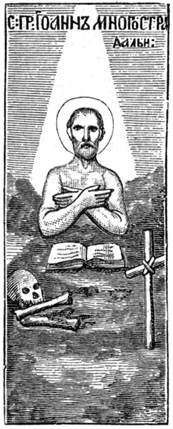
Преп. Иоанн представляет собой пример тяжкой борьбы с плотской похотью, окончившейся славной победой, при совокупном действии твёрдой воли и благодати небесной. «Послушай, говорил Иоанн одному брату, находившемуся в унынии от борьбы с страстными помыслами, я расскажу тебе, что было со мной. От самой юности много я страдал, мучимый похотью плоти, и не знаю, чего не делал я для своего спасения. Два и три дня пребывал я без пищи, часто и по целой неделе не ел я ничего, томил себя жаждой, носил на себе тяжёлые вериги. В таком страдании провёл я три года и всё не находил желанного покоя. Я пошёл в пещеру, где лежит отец наш Антоний, и пробыл тут день и ночь, молясь перед его гробом. Тогда услышал я глас: «Иоанн! тебе надобно затвориться здесь, чтобы по крайней мере невидением и молчанием ослабить брань, и Господь поможет тебе молитвами Своих преподобных». С того времени поселился я в сей скорбной и тесной пещере. Вот уже 30 лет я здесь, и только недавно нашёл покой, а всю жизнь провёл боримый страстями. Жестока была моя жизнь в постоянной борьбе с плотской страстью. Не имея сил выносить эту борьбу, я думал бежать отсюда. Наконец, я возложил на себя тяжёлые (ещё новые) вериги и выкопал себе яму по плечи; при наступлении Великого поста, влез в неё и своими руками засыпал себя землёй, так что только руки и голова остались у меня свободными. Так, подавляемый землёй, провёл я весь пост, не имея возможности двинуть ни одним членом тела. Но и тут не вдруг прекратилось вожделение плотское. Ноги мои, засыпанные землёй, были как в огне, так что корчились жилы, трещали кости, жар обнимал желудок и все члены мои. Но я забывал лютую болезнь и в душе своей радовался, что через это утихали нечистые движения. Подлинно, я лучше желал сгореть в этом огне для Бога, чем выйти из ямы. Враг спасения навёл на меня страх, желая выгнать меня из пещеры. Я увидел страшного змия, который хотел пожрать меня, дыша пламенем, осыпая меня искрами, и много дней продолжалось это действие лукавого. В самую ночь Светлого Воскресения этот змий так напал на меня, что вся моя голова, казалось, была в его пасти. Тогда воззвал я из глубины сердца: «Господи Боже мой и Спасителю мой! почто оставил Ты меня? Помилуй меня, Ты един человеколюбивый; избавь меня от скверного беззакония моего, чтобы не увязнуть мне в сети неприязненного; избавь меня от уст врага моего; блесни молнию и прогони его». Лишь только произнёс я эти слова, вдруг блеснула молния; змий исчез, и я не видал его с тех пор. Свет Божественный осиял меня, как солнце, и я услышал голос: «Иоанн! вот тебе помощь; отселе внимай себе, чтобы не случилось тебе худшее и не пострадал ты в будущем веке». Я поклонился и сказал: «Господи! зачем же Ты оставлял меня так долго мучиться?» «По силе терпения твоего, сказано в ответ, навёл Я на тебя искушение, чтобы ты был выжжен, как золото; крепким и сильным слугам назначает господин тяжкую работу, а немощным и слабым – малую и лёгкую; ты молись о себе погребённому здесь, он может помочь тебе в этой борьбе; он выше Иосифа». Я не знал имени умершего; уже после узнал, что это был Моисей Угрин. Молись и ты, брат, сему преподобному Моисею».
The Venerable John presents an example of a severe struggle with fleshly lust, ending in a glorious victory, through the combined action of firm will and heavenly grace. "Listen," said John to a certain brother who was in despondency from the struggle with passionate thoughts, "I will tell you what happened to me. From my very youth I suffered much, tormented by the lust of the flesh, and I do not know what I did not do for my salvation. For two and three days I remained without food; often for a whole week I ate nothing; I tormented myself with thirst; I wore heavy chains upon myself. In such suffering I spent three years and still did not find the desired peace. I went into the cave where our father Anthony lies, and remained there a day and a night, praying before his tomb. Then I heard a voice: 'John! You must shut yourself up here, so that at least by not seeing and by silence you may weaken the battle, and the Lord will help you through the prayers of His venerable ones.' From that time I settled in this sorrowful and narrow cave. For thirty years I have been here, and only recently found peace; all my life I spent struggling with passions. Cruel was my life in constant battle with fleshly passion. Not having the strength to endure this struggle, I thought of fleeing from here. Finally, I put on heavy (still new) chains and dug myself a pit up to my shoulders; at the beginning of Great Lent, I climbed into it and with my own hands covered myself with earth, so that only my hands and head remained free. Thus, pressed down by the earth, I spent the whole fast, unable to move a single member of my body. But even then the fleshly desire did not cease at once. My legs, covered with earth, were as if on fire, so that my sinews writhed, my bones cracked, heat seized my stomach and all my members. But I forgot the fierce pain and rejoiced in my soul that through this the impure movements were quieted. Truly, I preferred to burn in this fire for God rather than come out of the pit. The enemy of salvation brought fear upon me, wishing to drive me out of the cave. I saw a terrible serpent, which wanted to devour me, breathing flame, showering me with sparks, and for many days this action of the evil one continued. On the very night of Bright Resurrection, this serpent attacked me so fiercely that my whole head, it seemed, was in its jaws. Then I cried out from the depths of my heart: 'O Lord my God and my Savior! Why hast Thou forsaken me? Have mercy on me, O Thou who alone lovest mankind; deliver me from my foul lawlessness, that I may not be caught in the net of the adversary; deliver me from the mouth of my enemy; flash forth lightning and drive him away.' No sooner had I uttered these words than suddenly lightning flashed; the serpent vanished, and I have not seen it since. Divine light shone upon me like the sun, and I heard a voice: 'John! Behold, help is given you; from now on take heed to yourself, lest something worse befall you and you suffer in the age to come.' I bowed down and said: 'Lord! Why didst Thou leave me to suffer so long?' 'According to the measure of your patience,' was the answer, 'I brought temptation upon you, that you might be refined like gold; for strong and mighty servants the master appoints heavy work, but for the weak and feeble, small and light work; pray for yourself to him who is buried here; he can help you in this struggle; he is greater than Joseph.' I did not know the name of the deceased; only later did I learn that it was Moses the Hungarian. Pray also, brother, to this venerable Moses."
Так рассказывал блаж. Иоанн свою историю брату. Поликарп говорит об этом брате: «к нему (Иоанну) приходил некто из братии нашей»233. Значит, этот брат ещё жив был при Поликарпе, писавшем в 1230 г. Но Поликарп не говорит, чтобы жив был сам преп. Иоанн. Итак надобно положить, что преп. Иоанн блаженно почил не прежде 1160 г. Кончина его последовала 18 июля234. Св. мощи его почивают в пещере Антония, и он остаётся поныне так, как умер: честная глава и крестообразно сложенные руки – на виду, прочее всё в земле235.
Thus the blessed John related his story to the brother. Polycarp says of this brother: "A certain one of our brethren came to him (John)"233. This means that this brother was still alive at the time of Polycarp, who wrote in 1230 A.D. But Polycarp does not say that the Venerable John himself was alive. Therefore it must be assumed that the Venerable John reposed blessedly no earlier than 1160 A.D. His end occurred on July 18234. His holy relics repose in the cave of Anthony, and he remains to this day as he died: his honorable head and his arms crossed on his chest are visible; all the rest is in the earth235.
«Столп целомудрия вражими боренми непобедим сый, аки столп многострадальное водруженно оставил еси нам тело твое, всечестне Иоанне, емуже в немощех душевных и телесных покланяющеся, молим тя, преподобне, моли Христа Бога непрестанно о всех нас».
"A pillar of chastity, unconquered by the assaults of the enemy, thou hast left us thy much-suffering body as a pillar set firm, O all-honorable John; and as we venerate it in our infirmities of soul and body, we pray thee, O Venerable One, pray unceasingly to Christ God for us all."
Преп. Леонтий основал в Новгородском уезде монастырь Карихов, в котором и сам скончался 18 июля 1492 года. Мощи его почивают под спудом в нынешней приходской церкви села Карихова.
The Venerable Leontius founded the Karihov Monastery in the Novgorod district, in which he himself reposed on July 18, 1492 A.D. His relics rest under the ground in the present parish church of the village of Karihovo.
Преп. Памва, современник Антония Великого, был один из знаменитых подвижников, спасавшихся в Нитрийской пустыне в Египте, прославившийся в особенности постничеством, нестяжательностью и осторожностью в слове. При поступлении в иночество, так как он был безграмотен, то просил одного отшельника выучить его некоторым псалмам. Когда тот, прочитывая вслух для Памвы псалмы, дошёл до 38-го, то Памва, услышав слова: «буду я наблюдать за путями моими, чтобы не согрешать мне языком моим», – сказал: – теперь довольно, отец мой, буду изучать этот урок... И с тех пор более всего полюбил молчание. Между тем, даже и много лет спустя после того, прославившись уже своей святостью и мудростью, преп. Памва, по поводу этого изречения св. пророка Давида, говорил: «девятнадцать лет я твержу этот урок и едва привык исполнять его на деле» ...
The Venerable Pambo, a contemporary of Anthony the Great, was one of the renowned ascetics who attained salvation in the Nitrian desert in Egypt, especially famed for fasting, non-acquisitiveness, and caution in speech. Upon entering monasticism, since he was illiterate, he asked a certain hermit to teach him some psalms. When the hermit, reading the psalms aloud for Pambo, reached the 38th, Pambo, hearing the words: "I will take heed to my ways, that I sin not with my tongue," said: "That is enough now, my father; I will study this lesson." And from that time on he loved silence above all. Meanwhile, even many years later, having already become renowned for his holiness and wisdom, the Venerable Pambo, regarding this saying of the holy prophet David, said: "For nineteen years I have repeated this lesson and have scarcely become accustomed to fulfilling it in deed."
Неграмотный в начале своего подвижничества, Памва, однако же, был глубоко-просвещённым учителем Св. Писания впоследствии и имел многих прославившихся учеников: Диоскора – бывшего впоследствии епископом Ермопольским, Аммония, Евсевия и Евфимия и ещё воспоминаемого в житии преп. Илариона Великого 25 октября Драконтия епископа и исповедника Христова (21 мая), пострадавшего в изгнании от ариан. Многие великие святители желали пользоваться его мудрыми советами. Так однажды св. Афанасий Великий, архиепископ Александрийский, просил преп. Памву прийти в Александрию для духовной беседы.
Illiterate at the beginning of his asceticism, Pambo, however, was a deeply enlightened teacher of Holy Scripture afterwards and had many renowned disciples: Dioscorus—who later became bishop of Hermopolis, Ammonius, Eusebius and Euthymius, and also Dracontius, bishop and confessor of Christ (May 21), who suffered in exile from the Arians and is commemorated in the life of the Venerable Hilarion the Great on October 25. Many great hierarchs desired to avail themselves of his wise counsels. Thus, on one occasion St. Athanasius the Great, Archbishop of Alexandria, asked the Venerable Pambo to come to Alexandria for a spiritual conversation.
Прибыв в этот город и проходя по улицам вместе с сопровождавшими его братиями, преп. Памва встретил женщину, разукрашенную роскошной, изысканной одеждой. Взглянув на неё и прозрев душевную нечистоту её, прикрываемую блестящей наружностью, старец заплакал. Когда же братия спросили: отчего он плачет? – то человек Божий отвечал: «по двум причинам плачу я... во-первых о гибели души этой разряженной женщины, во-вторых – о самом себе: о том, что не имею такого внимательного попечения об украшении души моей, как эта женщина об украшении своего тела... Эта женщина всеми силами заботится о том, чтобы понравиться людям... я же могу ли сказать о себе, что столько же забочусь о том, чтобы угодить Богу?» ...
Having arrived in that city and walking through the streets together with the brethren accompanying him, the Venerable Pambo met a woman adorned in luxurious, exquisite clothing. Looking at her and perceiving the spiritual impurity of her soul, concealed by her brilliant outward appearance, the elder wept. When the brethren asked: why are you weeping?—the man of God answered: "I weep for two reasons... first, for the perdition of the soul of this finely dressed woman; second, for myself: that I have not such careful concern for the adornment of my soul as this woman has for the adornment of her body... This woman strives with all her might to please people... can I say of myself that I strive as much to please God?"...
Преп. Пимен говорил о преп. Памве, что у него три дела: пост, молчание и рукоделие. Он занимался плетением рогожи и корзинок, которые потом менял на хлеб, и во всю свою жизнь не съел ни одного куска хлеба, который получил бы даром. При работе ум подвижника был всегда занят Богомыслием и потому просвещался и восходил из силы в силу, совершенствуясь в то же время и в смирении, так что часто, не доверяя себе, не вдруг отвечал он обращавшимся к нему с вопросами, но иногда после нескольких дней молитвы, в которой испрашивал просвещения свыше.
The Venerable Pimen said of the Venerable Pambo that he had three practices: fasting, silence, and manual labor. He occupied himself with weaving mats and baskets, which he then exchanged for bread, and throughout his whole life he did not eat a single piece of bread that he had received for nothing. At his work, the mind of the ascetic was always occupied with the thought of God, and therefore it was enlightened and ascended from strength to strength, perfecting itself at the same time also in humility, so that often, not trusting himself, he would not answer at once those who turned to him with questions, but sometimes after several days of prayer, in which he besought enlightenment from on high.
Нестяжательность преп. Памвы была также совершенная. Незадолго до его кончины посетила его одна благочестивая, богатая Римлянка, по имени Меланья, употреблявшая богатство своё на бедных, на монастыри и церкви. Она и преподобному Памве предложила богатое приношение. Памва, плетя в то время корзину, не оставляя работы своей, сказал только Меланьи: – «да воздаст тебе Бог по усердию твоему!» – и, не оглянувшись на приношение, приказал бывшему при нём ученику – принять дар и доставить пустынникам в Ливию, у которых бесплодная земля и потому – большая бедность... – «У нас же земля – плодородная, и мы можем довольствоваться трудами своими» ... – прибавил он.
The non-acquisitiveness of the Venerable Pambo was also perfect. Shortly before his repose, a certain pious, wealthy Roman woman, by the name of Melania, who used her wealth for the poor, for monasteries and churches, visited him. She also offered a rich gift to the Venerable Pambo. Pambo, at that time weaving a basket, without leaving his work, said only to Melania:—"May God reward you according to your zeal!"—and, without looking back at the gift, ordered the disciple who was with him to accept the offering and deliver it to the hermits in Libya, whose land was barren and who therefore suffered great poverty...—"For our land is fertile, and we can be content with our own labors"...—he added.
– Дочь моя! – возразил Памва, – Тот, во имя Которого ты принесла дар твой, Тот, Кто землю измеряет горстью и ставит горы мерой, неужели не знает меры твоего приношения? Если бы ты предлагала его мне, то могла бы сказать об этом, но ты даёшь его Богу, для Которого две лепты вдовы были драгоценнее, чем золото богатых...
—My daughter!—replied Pambo,—He in Whose name you have brought your gift, He Who measures the earth with His handful and sets the mountains by measure, does He not know the measure of your offering? If you were offering it to me, you might speak of this, but you give it to God, for Whom the two mites of the widow were more precious than the gold of the rich...
Чувствуя приближение смерти, преп. Памва вспомнил о благочестивой Меланьи, призвал её к себе и, простившись с ней, подарил ей на память последнюю корзину, которую он сплёл.
Sensing the approach of death, the Venerable Pambo remembered the pious Melania, called her to him, and, having bid her farewell, gave her as a keepsake the last basket which he had woven.
Прощаясь с братиями, подвижник сказал им: «с тех пор, как я поселился в этой пустыне, не было дня, в который я не работал бы до утомления... не помню также, чтобы произнёс я какое-нибудь слово, в котором должен бы был каяться и стыдиться его в этот час, но всё-таки чувствую, что отхожу к Богу, как бы ещё и не начав служить Ему» ...
Bidding farewell to the brethren, the ascetic said to them: "From the time I settled in this desert, there has not been a day in which I did not work to the point of weariness... I also do not remember having uttered any word of which I would have to repent and be ashamed at this hour, but nevertheless I feel that I am departing to God as one who has not yet even begun to serve Him"...
Σϰλαϱηνιοι долго были однозначащи с названием раба. См. прим. 1, и июня 22 д. Прокопий de aedificiis с. 7, р. 83: «Юстиниан вновь выстроил укреплённый город Адину, вблизи города Палматы для того, чтобы Славяне обыкновенно скрывающиеся там и нападающие на путешественников не мешали путям сообщения». Палмата, по Певтингеровой карте на юго-востоке от Дуростена (Доростоля), на расстоянии 14 Римских миль, или 19 вёрст. Не вдали же от Дуростена, на Дунае, Ореховец.
Σϰλαϱηνιοι were for a long time synonymous with the term slave. See note 1, and June 22. Procopius, De Aedificiis, c. 7, p. 83: "Justinian rebuilt the fortified city of Adina, near the city of Palmata, so that the Slavs, who usually hid there and attacked travelers, would not hinder the routes of communication." Palmata, according to the Peutinger Map, is to the southeast of Durostorum (Dorostol), at a distance of 14 Roman miles, or 19 versts. Not far from Durostorum, on the Danube, is Orekhovets.
Так в печ. патерике. Так и у митр. Сильвестра, где вместе сказано: «память его отправляется в 18 д. Липца» (июля).
Thus in the printed Patericon. Thus also in Metropolitan Sylvester, where it is also said: "his memory is celebrated on the 18th day of Lipets" (July).