Марина была дочь идольского жреца в Антиохии Писидийской218; лишившись своей матери скоро после своего рождения, она была отдана отцом своим на воспитание кормилице, жившей в селении, в окрестностях города. Здесь, когда ей было 12 лет, Марина имела случай узнать христиан, которые, избегая преследования, воздвигнутого в то время по повелению Диоклитиана на христиан, скрывались в горах и пустынях, и под видом нищих распространяли между народом слово Божие. Таким образом и Марина услышала «благую весть» и приняла её всем сердцем своим. Услышав о Христе и о том, что Он сделал для людей и чему научил людей для их спасения и вечного счастья в соединении с Ним в Его Царстве, молодая Марина всей душой полюбила Христа и только и помышляла о том, чтобы узнавать о Нём более и более и научиться жить по Его закону. С жадностью искала она и пользовалась всеми случаями беседовать о жизни и учении Христа и скорбела, что не могла немедленно принять св. крещения, так как ни в городе, ни в окрестностях его не было ни одного христианского священника для совершения этого таинства.
Marina was the daughter of a pagan priest in Antioch of Pisidia218; having lost her mother soon after her birth, she was given by her father to be raised by a nurse who lived in a village in the outskirts of the city. Here, when she was twelve years old, Marina had occasion to become acquainted with Christians who, fleeing the persecution raised at that time against Christians by order of Diocletian, hid themselves in the mountains and deserts, and under the guise of beggars spread the word of God among the people. Thus Marina also heard the "good tidings" and received them with all her heart. Hearing about Christ and about what He had done for men and what He had taught men for their salvation and eternal happiness in union with Him in His Kingdom, the young Marina loved Christ with all her soul and thought only of learning more and more about Him and of learning to live according to His law. With eagerness she sought and used every opportunity to converse about the life and teaching of Christ, and she grieved that she could not immediately receive holy Baptism, since there was not a single Christian priest in the city or its outskirts to perform this mystery.
Любовь к Иисусу Христу так горела в сердце молодой Марины, что она не могла скрывать её и открыто исповедовала веру свою в распятого Спасителя, хотя и знала, каким за это может подвергнуться жестоким преследованиям. Действительно, вскоре первый возненавидел её отец, с ужасом узнавший, что его дочь – христианка; это было тяжёлым испытанием для Марины, но она осталась тверда в своих чувствах и ещё более привязалась к Отцу Небесному, возложив на Него одного всё упование, испрашивая у Него силы пребыть верной в служении Ему.
Love for Jesus Christ burned so strongly in the heart of the young Marina that she could not conceal it and openly confessed her faith in the crucified Savior, although she knew what cruel persecutions she might thereby undergo. Indeed, her father soon became the first to hate her, learning with horror that his daughter was a Christian; this was a grievous trial for Marina, but she remained firm in her feelings and became even more attached to the Heavenly Father, placing all her hope in Him alone, imploring from Him the strength to remain faithful in His service.
Однажды, выйдя в поле за городом посмотреть овец отца своего, Марина встретила игемона Олимврия, проезжавшего в город – жестокого гонителя христиан. Поражённый красотой этой пятнадцатилетней девушки, он остановился и стал расспрашивать у неё, кто она. – «Если ты дочь свободных родителей, – немедленно предложил он Марине, – то я хочу иметь тебя своей женой, если же ты – раба, то я выкуплю тебя и потом женюсь на тебе».
Once, having gone out into the field outside the city to look after her father's sheep, Marina met the governor Olybrius, who was passing through to the city—a cruel persecutor of Christians. Struck by the beauty of this fifteen-year-old girl, he stopped and began to ask her who she was. "If you are the daughter of free parents," he immediately proposed to Marina, "then I wish to have you as my wife; but if you are a slave, I will ransom you and then marry you."
Простосердечно отвечала на расспросы Олимврия Марина и не утаила от него, что она – христианка. Тогда он приказал своим людям вести её в город и передать на попечение какой-нибудь почётной женщины, надеясь, что ему удастся уговорить её отречься от христианской веры и принять его предложение. – На другой же день по приезде в город игемон призвал на суд Марину и стал уговаривать её принести жертву богам, обещая ей всевозможные блага, в противном же случае угрожал ей погибелью.
Marina answered Olybrius's questions with simplicity of heart and did not conceal from him that she was a Christian. Then he ordered his men to lead her into the city and entrust her to the care of some honorable woman, hoping that he might succeed in persuading her to renounce the Christian faith and accept his proposal. The very next day after his arrival in the city, the governor summoned Marina to judgment and began to urge her to offer sacrifice to the gods, promising her every possible benefit, but in the contrary case threatening her with destruction.
– Ничего не хочу я кроме того, чтобы остаться верной рабой моего Спасителя! – отвечала Марина, – и угроз твоих я не должна бояться, они не должны остановить меня принять всякие страдания за Того, Кто Сам пострадал за всех людей...
"I desire nothing except to remain a faithful servant of my Savior!" answered Marina, "and I ought not to fear your threats; they ought not to hinder me from accepting every suffering for Him Who Himself suffered for all men..."
Кровь её полилась под сокрушительными ударами, всё тело было истерзано; многие из присутствовавших, жалея её, со слезами уговаривали послушаться игемона, и сам он прикрывал глаза, чтобы не видеть растерзанного тела мученицы...
Her blood poured forth under crushing blows; her whole body was mangled; many of those present, pitying her, tearfully urged her to obey the governor, and he himself covered his eyes so as not to see the martyr's torn body...
После истязаний Марина была отведена в темницу. Здесь предстояло ей ещё более тяжёлое испытание: страх и уныние охватили её душу; измученную телесно, стали смущать её мрачные видения, но Бог жив был в душе её и оградил её от искушения. Он посетил её радостным видением, среди которого послышались утолившие её изнеможенную душу слова: «радуйся, Марина! ты победила злобу врага... радуйся: скоро, как мудрые девы, войдёшь ты в чертог твоего бессмертного Жениха»... И в то же время почувствовала мученица, что раны её заживают и силы её возвращаются... Она чувствовала присутствие невидимого Бога и вся душа её преисполнилась неизреченной радости и благодарственного моления... В таком чудном состоянии провела она остальное время своего заточения в темнице и, когда вновь приведена была на суд, то поразила всех, увидевших её в полном блеске прежней красоты и здоровья, как будто и не терпела она истязаний, истерзавших её...
After the tortures, Marina was led away to prison. Here an even more grievous trial awaited her: fear and despondency seized her soul; tormented bodily, she began to be troubled by dark visions, but God was alive in her soul and shielded her from temptation. He visited her with a joyful vision, amid which words were heard that soothed her exhausted soul: "Rejoice, Marina! You have overcome the malice of the enemy... rejoice: soon, like the wise virgins, you shall enter the bridal chamber of your immortal Bridegroom"... And at the same time the martyr felt that her wounds were healing and her strength was returning... She felt the presence of the invisible God, and her whole soul was filled with ineffable joy and prayer of thanksgiving... In such a wondrous state she spent the remaining time of her imprisonment, and when she was again brought to judgment, she amazed all who saw her in the full splendor of her former beauty and health, as if she had never suffered the tortures that had mangled her...
Видя это, множество язычников, сознав чудную силу истинного Бога, обратились к Нему. Число обратившихся ещё увеличилось при виде терпения мученицы, когда она была предана новым истязаниям. Снова растерзанное тело её опаляли огнём. Она же, непоколебимая среди страданий, молилась: – «Господи, давший мне силу пройти через огонь ради имени Твоего, удостой меня пройти и через воду крещения, чтобы прийти мне к Тебе омытой от грехов!»
Seeing this, a multitude of pagans, recognizing the wondrous power of the true God, turned to Him. The number of converts increased still more at the sight of the martyr's patience when she was subjected to new tortures. Her body, again torn, was scorched with fire. She, unshaken amid her sufferings, prayed: "Lord, Who hast given me strength to pass through fire for the sake of Thy name, vouchsafe me also to pass through the water of Baptism, that I may come to Thee washed clean from sins!"
И действительно, как бы наведённый на мысль о новом роде мучения этими словами, игемон вздумал утопить мученицу, и её, крепко связанную, опустили в огромный чан с водой.
And indeed, as if prompted to a new kind of torment by these words, the governor conceived the idea of drowning the martyr, and she, tightly bound, was lowered into a huge vat of water.
– Господи! разреши узы мои и да будет мне эта вода в желаемое крещение и в возрождение к жизни вечной! – воскликнула святая исповедница... – И в ту же минуту произошло землетрясение... узы Марины расторглись, и она, стоя в воде, воспевала хвалу Господу. Народ, поражённый дивными знамениями во время её страданий, уверовал во Христа в числе 15,000, и все были преданы смерти по повелению Олимврия, испуганного таким распространением гонимых им последователей Христова учения. Марина в числе прочих была обезглавлена.
"Lord! loose my bonds, and let this water be for me the desired Baptism and a rebirth unto eternal life!" cried the holy confessor... And at that very moment an earthquake occurred... Marina's bonds were broken, and she, standing in the water, sang praise to the Lord. The people, amazed at the wondrous signs during her sufferings, believed in Christ to the number of 15,000, and all were put to death by order of Olybrius, who was frightened by such a spread of the followers of Christ's teaching whom he persecuted. Marina, among the rest, was beheaded.
Страдания её были описаны очевидцем. У западных христиан она называется то Мариной, то – Маргаритой (20 июля) и почитается помощницей в родах.
Her sufferings were described by an eyewitness. Among Western Christians she is called sometimes Marina, sometimes Margaret (July 20), and is venerated as a helper in childbirth.
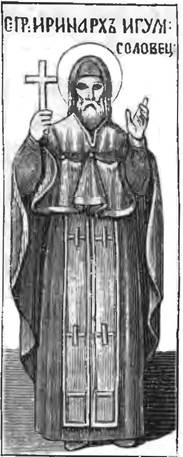
Преп. Иринарх, приняв пострижение в Соловецкой обители, ревностно подражал житию преп. отец Зосимы и Савватия219. Высокие добродетели его доставили ему известность. В 1614 г., по смерти игумена Антония, он по царской грамоте поставлен был в игумена Соловецкой обители. – В это время игумен Соловецкий был лицом весьма значительным для целого северного края. На него возлагалась защита севера от Шведов и Датчан. – Хотя с Шведами заключён тогда мир, но и на них нельзя было полагаться; а Датчане, увлекаясь надеждой на счастье Шведов, потребовали от России, чтобы отдана им была вся Лапландия, и приготовились поддерживать требование своё морской войной. Царь Михаил, предоставив блаж. игумену Иринарху, кроме беспошлинной продажи соли и рыбы, казённую подать с монастырских крестьян и ещё казённую 10 долю с рыболовных промыслов на Норвежском берегу моря, предписывал привести все крепостные строения монастыря в полное оборонительное состояние на случай войны220. Сколько забот и трудов игумену! На восточной стороне монастыря проведена вторая каменная стена с двумя огромными башнями; внутри монастыря построены два корпуса для военных людей; на северной и южной стороне обители проведены глубокие рвы, выложенные камнем. В Сумском и Кемском острогах сделаны новые укрепления. В них и в обители число военных людей увеличено до 1040 человек, на содержании монастыря. Датчане в 1623 г. на четырёх военных кораблях являлись у Корельского острова, ограбили некоторых Русских промышленников, но ни на что более не отважились и возвратились221. При таких заботах об ограждении обители от внешних бед, преп. Иринарх как сам был примером духовной жизни, так ревновал возбуждать и поддерживать в подчинённых ему иноках заботу о жизни духовной. Эта ревность заставила его просить царя, дабы словом царской власти напомнил он забывчивым инокам о их обязанностях. И царь писал от 9 февраля 1621 г.: «известно нам стало, что в Соловецком монастыре некоторые из братии дерзают жить не по священному уставу, не по правилам св. Апостолов и Богоносных отцов, не по преданию преп. отцов Зосимы и Савватия Соловецких чудотворцев, хотят ходить по своим волям. Мы, слыша это, дивимся, что в такой знаменитой лавре начинают жить так слабо, ни во что считая отеческие предания. Как только придёт к вам наша грамота, вы, Богомольцы наши, введите строгий надзор и не допускайте исполнять свою волю тем, которые захотят жить слабо, уклоняться к мирским делам или держать (хмельное) питьё, выходить из монастыря и творить молитвы; строго надзирайте, чтобы братия и послушники жили по правилам св. отцов, а не по своим похотям, и усердно ходили бы в церковь. Пусть новоначальные будут в полном послушании у вас, Богомольцев наших, игумена и известных старцев, а по самоволию ничего бы не делали, – бесчиния в обитель не вносили бы. Остерегайтесь, чтобы для дел неправедных не хулилось имя Божие между неверующими и чтобы таким слабым житием не навести гнева Божия. Тех, которые из братии не будут слушать, вы смиряйте по монастырскому преданию и не попускайте самовольничать»222. Под духовным руководством преп. Иринарха образовалось несколько искренних рабов Божиих, каков преп. Елеазар. Блаженный игумен не только дал благословение блаж. Елеазару завести скитское житие на острове, но доставлял ему средства для устроения скита и писал о нём к патр. Филарету; по его ходатайству патриарх прислал грамоту на построение храма в скиту, а царь прислал утварь для храма223. Во всё время правления своего преп. Иринарх отличался снисходительною кротостью в отношении к другим и строгостью к себе. Проведя последние два года свои без дел начальственных, в подвигах безмолвной молитвы, он преставился 17 июля 1728 г. Мощи его почивают под спудом в часовне его имени224.
The Venerable Irinarch, having received the tonsure in the Solovki monastery, zealously imitated the life of the Venerable Fathers Zosimas and Sabbatius219. His lofty virtues made him well known. In 1614, after the death of Abbot Anthony, he was appointed abbot of the Solovki monastery by a royal charter. – At that time, the abbot of Solovki was a person of great significance for the entire northern region. He was entrusted with the defense of the north against the Swedes and Danes. – Although peace had been concluded with the Swedes at that time, they could not be relied upon; and the Danes, carried away by hope of the Swedes' success, demanded that all of Lapland be ceded to them, and prepared to support their demand with a naval war. Tsar Michael, having granted to the blessed Abbot Irinarch, besides the duty-free sale of salt and fish, the state tax from the monastery's peasants and also the state tenth share of the fishing industries on the Norwegian seacoast, commanded that all the fortress buildings of the monastery be put into a full state of defense in case of war220. What cares and labors for the abbot! On the eastern side of the monastery a second stone wall was built with two enormous towers; inside the monastery two buildings were constructed for military men; on the northern and southern sides of the monastery deep moats were dug, lined with stone. In the Sumsky and Kemsky stockaded forts new fortifications were made. In them and in the monastery the number of military men was increased to 1040 men, at the monastery's expense. The Danes in 1623 appeared at Korelsky Island with four warships, plundered some Russian fishermen, but dared nothing more and returned221. Amid such cares for the protection of the monastery from external calamities, the Venerable Irinarch, being himself an example of spiritual life, likewise zealously strove to arouse and maintain in the monks subject to him a concern for the spiritual life. This zeal moved him to ask the Tsar that by a word of royal authority he might remind forgetful monks of their duties. And the Tsar wrote on February 9, 1621: "It has become known to us that in the Solovki monastery some of the brethren dare to live not according to the sacred rule, not according to the canons of the holy Apostles and God-bearing Fathers, not according to the tradition of the Venerable Fathers Zosimas and Sabbatius, the Solovki Wonderworkers, and wish to walk according to their own wills. We, hearing this, marvel that in such a renowned Lavra they are beginning to live so weakly, counting the fathers' traditions as nothing. As soon as our charter comes to you, you, our Pilgrims, introduce strict supervision and do not permit those who wish to live weakly, to turn aside to worldly affairs or to keep (intoxicating) drink, to go out of the monastery and to perform prayers, to fulfill their own will; strictly oversee that the brethren and novices live according to the rules of the holy fathers, and not according to their own lusts, and diligently attend church. Let the new initiates be in full obedience to you, our Pilgrims, the abbot and the known elders, and let them do nothing by self-will, and let them not introduce disorder into the monastery. Beware, lest for unrighteous deeds the name of God be blasphemed among the unbelievers, and lest by such a weak life you bring down the wrath of God. Those of the brethren who will not listen, humble them according to the monastery tradition and do not permit them to be self-willed."222 Under the spiritual guidance of the Venerable Irinarch several sincere servants of God were formed, such as the Venerable Eleazar. The blessed abbot not only gave his blessing to the blessed Eleazar to establish a skete life on the island, but also supplied him with means for building the skete and wrote about him to Patriarch Philaret; through his intercession the patriarch sent a charter for the construction of a church in the skete, and the Tsar sent utensils for the church223. Throughout the entire time of his rule, the Venerable Irinarch was distinguished by condescending meekness toward others and strictness toward himself. Having spent his last two years without administrative duties, in the labors of silent prayer, he reposed on July 17, 1728. His relics lie hidden in a chapel bearing his name224.
Преп. Иринарх не раз являлся с помощью небесной жителям сурового севера в борьбе их с природой. Напр. в 1629 г. Двинские жители рассказывали о себе в Соловецкой обители. Весной отправлялись они в устье моря за морским зверем. Неожиданно поднялась буря и понесла их от берега в открытое море; несколько дней носила их буря, и они начали призывать святых в помощь; является во сне юровщику старец в одежде священника и с крестом в правой руке. «Призывайте, сказал он, на помощь Соловецких чудотворцев, и скоро явится вам великая милость». Затем внезапно поднялся ветер с моря и понёс охотников к берегу; у берега одна из станиц нашла множество зверей морских, и те стали их добычей225.
The Venerable Irinarch more than once appeared with heavenly help to the inhabitants of the harsh north in their struggle with nature. For example, in 1629 the Dvina inhabitants related about themselves in the Solovki monastery. In the spring they set out to the mouth of the sea for sea animals. Unexpectedly a storm arose and carried them from the shore into the open sea; the storm tossed them for several days, and they began to call upon the saints for help; there appears in a dream to the overseer an elder in priestly vestments and with a cross in his right hand. "Call upon the Solovki Wonderworkers for help," he said, "and soon great mercy will appear to you." Then suddenly a wind arose from the sea and carried the hunters toward the shore; near the shore one of the companies found a multitude of sea animals, and these became their prey225.
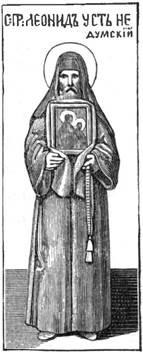
Блаж. Леонид, родившийся поселянином в Пошехонском уезде, на 50 году видел сон, повелевавший ему идти в Моржевскую Николаевскую пустынь, что на Двине, взять там икону Пресв. Богородицы Одигитрии и с ней устроить храм на р. Лузе в Туриной горе. Он не решился следовать этому видению, считая его простым сном, и отправился в Кожеозерский монастырь, где постригся и прожил около трёх лет226. Отсюда пришёл он в Соловецкий монастырь, где трудился в пекарне. Сновидение повторилось ему здесь ещё раз. Он перешёл в Моржевскую пустынь и спустя год открыл настоятелю своё видение. Получив икону Одигитрии, он отправился на р. Лузу и близ Туриной горы, при р. Якутице (в 80 вер. от Устюга), устроил себе хижину из хвороста; потом, уступая насилию поселян, отошёл по р. Лузе на две версты и здесь с помощью селянина построил себе келью и часовню; посвящённый в иеромонаха в 1608 г., построил
The blessed Leonid, born a peasant in Poshekhonsky district, at the age of 50 saw a dream commanding him to go to the Morzhevskaya St. Nicholas Hermitage, which is on the Dvina, to take there the icon of the Most Holy Theotokos of Hodegetria and with it to build a church on the Luza River at Turina Gora. He did not decide to follow this vision, considering it a mere dream, and set out for the Kozheozersky monastery, where he was tonsured and lived for about three years226. From there he came to the Solovki monastery, where he labored in the bakery. The dream was repeated to him there once more. He moved to the Morzhevskaya Hermitage and after a year revealed his vision to his superior. Having received the icon of Hodegetria, he set out for the Luza River and near Turina Gora, on the Yakunitsa River (80 versts from Ustyug), built himself a hut of brushwood; then, yielding to the violence of the peasants, he moved two versts down the Luza River and there, with the help of a peasant, built himself a cell and a chapel; having been ordained a hieromonk in 1608, he built
он храм во имя Введения Божией Матери, где поставил икону Одигитрии227. Ныне это – в 80 вер. от города Лальска. Болота, окружавшие это место, делали обитель почти неудобной для общежития. Для осушения их Леонид прокопал канал от реки Лузы до Чёрного озера, от Чёрного озера до Святого и от Святого до Чёрной речки; всего прорыто им 840 саж. Во время этого труда Леонид ужален был у Чёрного озера змеёй и сначала встревожился мыслью о последствиях яда; но потом, с упованием на Бога, положил не думать и остался здоров. По этому случаю назвал он канал Недумой рекой, и обитель назвалась Усть-недумской. Край тот, где поселился труженик, был край пустынный и глухой. Он долго и после назывался «Луской Пермцей», т. е. частицей страны диких Пермяков228. Отселе понятно, какое значение имела пустынь Леонида для этого дикого края в церковном и гражданском отношении. Преп. Леонида справедливо чтут просветителем «Пермцы». Сколько борьбы вынес он с природой негостеприимной! Канал, проведённый трудами его, значительно осушил болота; но Луза во время разливов затопляла пустынную обитель. Потому преподобный вынужден был наконец перенести постройки на мыс, возвышающийся над Чёрным озером. Здесь построенный храм освящён был мая 25-го 1652 г., а в 1654 г. июля 17-го преп. Леонид окончил труженическую жизнь свою на 100 году от рождения. Власяница его поныне сохраняется в бывшей монастырской, ныне приходской, Введенской церкви; здесь же почивают мощи его под спудом229.
a church in the name of the Entry of the Mother of God, where he placed the icon of Hodegetria227. Now this is 80 versts from the town of Lalsk. The swamps surrounding this place made the monastery almost unsuitable for communal life. To drain them, Leonid dug a canal from the Luza River to the Black Lake, from the Black Lake to the Holy Lake, and from the Holy Lake to the Black River; in all he dug 840 sazhens. During this labor Leonid was bitten by a snake at the Black Lake and at first was troubled by the thought of the consequences of the venom; but afterwards, with hope in God, he resolved not to think about it and remained healthy. On this account he named the canal the Neduma River, and the monastery was called Ust-Neduma. That region where the toiler settled was a desolate and remote region. For a long time afterwards it was called "Luskaya Permtsa," that is, a small part of the land of the wild Permyaks228. From this it is understandable what significance Leonid's hermitage had for this wild region in ecclesiastical and civil terms. The Venerable Leonid is justly honored as the enlightener of "Permtsa." How much struggle he endured with inhospitable nature! The canal dug by his labors significantly drained the swamps; but the Luza during floods inundated the desert monastery. Therefore the venerable one was finally compelled to move the buildings to a promontory rising above the Black Lake. The church built here was consecrated on May 25, 1652, and on July 17, 1654, the Venerable Leonid ended his laborious life at the age of 100 years from birth. His hairshirt is preserved to this day in the former monastery, now parish, Church of the Entry; here also his relics lie hidden229.
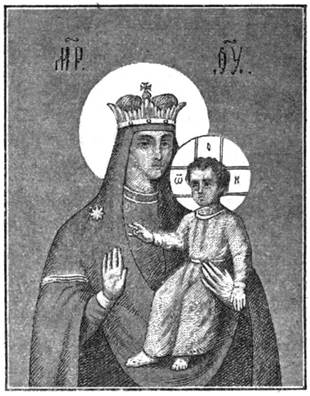
Святогорских икон Богородицы две. Они пребывают в мужском монастыре Опочского уезда Псковской губернии, основанном на хребте горы, которая прежде называлась Синичьей, а по явлению св. икон Божией Матери некоему Тимофею Юродивому, названа Святой. Первая Святогорская икона, которая называется иконой Умиления, явилась Тимофею в 1563 году. Однажды вечером он видел на воздухе, а потом на Синичьей горе ту самую икону, которая находилась в приходской церкви пригорода Вороночи. При сём появлении Тимофей слышал голос, что через шесть лет на той же горе воссияет благодать Божия. Через 6 лет – в 1569 году явилась вторая икона Богородицы – Одигитрии. От явленных Святогорских икон совершились многие чудеса и исцеления, о коих, по тщательном исследовании их подлинности, Псковский царский наместник, князь Георгий Токмаков, донёс государю. Государь посылал новых следователей и, совершенно удостоверившись в истине, повелел поставить на месте явления икон часовню и совершить в неё крестный ход из Вороночи. Некогда часовня, в которую принесены были чудотворные иконы, вся сгорела, но иконы остались невредимы. По обследовании этого события устроили на Св. горе храм во имя Успения Богородицы, а потом и монастырь для пребывания св. чудотворных икон Умиления и Одигитрии. Сии иконы ежегодно в первую пятницу поста св. Апостолов приносятся во Псков и в следующий воскресный день обходят с ними около внутренней второй стены Пскова. С 29 августа до 8 сентября бывает хождение с ними в Новоржев и Опочку.
There are two Svyatogorsk icons of the Mother of God. They reside in the men's monastery of the Opochets district of Pskov province, founded on the crest of a mountain which was formerly called Sinichya, and after the appearance of the holy icons of the Mother of God to a certain Timothy the Fool-for-Christ, was called Holy. The first Svyatogorsk icon, which is called the Icon of Tenderness, appeared to Timothy in 1563. One evening he saw in the air, and afterwards on Sinichya Mountain, that same icon which was in the parish church of the suburb of Voronoch. At this appearance Timothy heard a voice that in six years the grace of God would shine forth on that same mountain. After 6 years – in 1569 – the second icon of the Mother of God appeared – of Hodegetria. From the revealed Svyatogorsk icons many miracles and healings were performed, about which, after a careful investigation of their authenticity, the Pskov royal viceroy, Prince George Tokmakov, reported to the sovereign. The sovereign sent new investigators and, being fully assured of the truth, commanded that a chapel be erected at the place of the appearance of the icons and that a procession with crosses be made to it from Voronoch. Once the chapel into which the wonderworking icons had been brought burned down entirely, but the icons remained unharmed. After investigation of this event, a church was built on Holy Mountain in the name of the Dormition of the Mother of God, and afterwards a monastery for the abiding of the holy wonderworking icons of Tenderness and Hodegetria. These icons are brought annually to Pskov on the first Friday of the Fast of the holy Apostles, and on the following Sunday they are carried around the inner second wall of Pskov. From August 29 to September 8 there is a procession with them to Novorzhev and Opochka.
«Сказание – о преп. отце Иринархе, – игумене Соловецкого монастыря, о явлении и чудесех» напис. бывшим игуменом Колязинским Иларионом в 1644 г. Царского № 744.
"Narrative – of the Venerable Father Irinarch, – Abbot of the Solovki Monastery, of his Appearances and Miracles" written by the former Abbot of Kolyazin, Hilarion, in 1644. Tsar's No. 744.
Опис. Соловецк. м-ря, стр. 129. 244. 305. В ркп. святцах преподобный Иринарх поставлен без показания дня и года кончины.
Description of the Solovki Monastery, pp. 129. 244. 305. In the manuscript menologia the Venerable Irinarch is placed without indication of the day and year of his death.
Кожеозерский монастырь в Моск. вед. 1852 г. № 33. 34. Здесь был он келарем и след. жил не один год (Словарь энциклопед. 3. 153).
The Kozheozersky Monastery in Moskovskie Vedomosti, 1852, Nos. 33, 34. Here he was cellarer and consequently lived for more than one year (Entsiklopedichesky Slovar, 3, 153).
Ист. иер. 6, 581–583. Свед. о монаст. 76. 77. По грамоте 1691 г. «за Недумской пустыней» было «15 дворов половничьих» тех, которые обрабатывали монастырскую землю, с удержанием половины доходов в свою пользу (А. э. 4, 452).
History of the Hierarchy, 6, 581–583. Information on Monasteries, 76, 77. According to a charter of 1691, "the Nedumskaya Hermitage" had "15 sharecropper households" of those who worked the monastery land, retaining half the income for themselves (Acts of History, 4, 452).