Пидахфоя (ныне село Петахтун, в 50 верстах от Севастии, ныне Сиваш) – город митрополии Севастийской, где епископствовал Афиноген. Страдал вместе с десятью учениками своими в Севастии, в 311 году, при Максимине 2-м, императоре. Судия сначала велел обнажить десять учеников, повесить, жестоко бить и строгать железными гребнями, потом обезглавить.
Pidachthoe (now the village of Petachtun, 50 versts from Sebasteia, now Sivas) – a city of the metropolitanate of Sebasteia, where Athenogenes was bishop. He suffered together with his ten disciples in Sebasteia, in the year 311, under Maximin II, the emperor. The judge first ordered the ten disciples to be stripped, hanged, severely beaten, and scraped with iron combs, and then beheaded.
После того жестоко бичевали епископа, и наконец судья приговорил его к смерти. Афиноген просил судью исполнить казнь в Пидахфое, местопребывании и отечестве его. Судья снизошёл на эту просьбу. Когда святого исповедника вели к его городу, то он пел псалмы и песнь «Свете тихий» (о которой это есть самое древнее упоминание). Афиноген был обезглавлен в своём жилище, и верующие на том же месте похоронили тело его. Составитель «Истории Трапезунда и окрестной страны» (изд. в Константинополе в 1870 году на Греч. языке) говорит, что «в притворе (εἰς τὸν νάρϑηϰα) древней церкви, теперь мечети, существует надпись: Ἐνϑάδε ϰεῖται Ἀϑηνογένης – то есть: здесь покоится Афиноген».
After this, the bishop was cruelly scourged, and finally the judge condemned him to death. Athenogenes asked the judge to carry out the execution in Pidachthoe, his place of residence and homeland. The judge acceded to this request. When the holy confessor was being led to his city, he sang psalms and the hymn "O Gladsome Light" (of which this is the most ancient mention). Athenogenes was beheaded in his dwelling, and the faithful buried his body on the same spot. The compiler of the "History of Trebizond and the Surrounding Country" (published in Constantinople in 1870 in Greek) says that "in the narthex (εἰς τὸν νάρϑηϰα) of an ancient church, now a mosque, there exists an inscription: Ἐνϑάδε ϰεῖται Ἀϑηνογένης – that is: here rests Athenogenes."
В 308 г. в царствование Максимиана многие христиане Фиваиды осуждены были на тяжёлые работы за исповедание Христа. Из них присланы были в Кесарию Палестинскую к префекту Фирмилиану из Палестинских каменоломень 97 исповедников, вместе с жёнами и новорождёнными младенцами.
In the year 308, during the reign of Maximian, many Christians of the Thebaid were condemned to hard labor for confessing Christ. From among them, 97 confessors were sent to Caesarea in Palestine to the prefect Firmilian from the Palestinian quarries, together with their wives and newborn infants.
Префект велел раскалённым железом прижечь им сгибы и жилы левой ноги, а ножом извлечь сначала правый глаз вместе с оболочками и зрачком, а потом через прижигание уничтожить его в самом корне. Между исповедниками-Египтянами были две девы – Фея (Хиония) и Алевтина (Валентина) и неустрашимый Павел. Девы после страшных истязаний были сожжены, а Павел приговорён к смерти. Он молился на месте казни за все народы христианские о даровании им мира, за обращение Иудеев, Самарян и всех язычников, за толпу народа, окружавшего его, за императора и судью, и всех правителей, и за палача; молился о том, чтобы Господь не вменил согрешения мучителей в отношении к нему, и после молитвы сам преклонил обнажённую шею под меч палача. Вскоре за этим приведены были из Египта и Кесарии 130 исповедников и, потерпев истязания, были сосланы частью в Палестинские, частью в Киликийские рудники217.
The prefect ordered the joints and sinews of their left leg to be burned with red-hot iron, and with a knife to extract first the right eye together with its membranes and pupil, and then through cauterization to destroy it at its very root. Among the Egyptian confessors were two virgins – Thea (Chionia) and Alevtina (Valentina) – and the fearless Paul. The virgins, after terrible tortures, were burned, and Paul was condemned to death. He prayed at the place of execution for all Christian peoples, for the granting of peace to them, for the conversion of Jews, Samaritans, and all pagans, for the crowd of people surrounding him, for the emperor and the judge and all rulers, and for the executioner; he prayed that the Lord would not count the sin of the tormentors against him, and after prayer he himself bowed his bare neck under the executioner's sword. Soon after this, 130 confessors were brought from Egypt and Caesarea and, having suffered tortures, were sent partly to the Palestinian and partly to the Cilician mines217.
При взятии Персами Карфагена в начале VI столетия попала к ним в плен девочка в отроческом возрасте, по имени Юлия, дочь знатного Карфагенского гражданина. Родители её были христиане и рано позаботились о том, чтобы внушить ей христианские чувства, научить её христианским верованиям. И какое счастье это было для Юлии, что родители её не замедлили этим святым делом! Это было настоящее богатство, которым они обеспечили своё дитя и спасли её душу от погибели, предстоявшей ей среди чужих людей, да ещё язычников.
When the Persians captured Carthage at the beginning of the sixth century, a young girl of adolescent age, by the name of Julia, the daughter of a noble Carthaginian citizen, fell into captivity among them. Her parents were Christians and early took care to instill in her Christian feelings and to teach her Christian beliefs. And what a blessing this was for Julia, that her parents did not delay in this holy work! This was true wealth, with which they provided for their child and saved her soul from the perdition that awaited her among strangers, and pagans at that.
Проданная в рабство одному купцу, Юлия, помня внушения своей матери, старательно исполняла их; можно сказать, что она доблестно переносила свою тяжёлую участь и в кратковременной своей жизни просияла вечной славой.
Sold into slavery to a certain merchant, Julia, remembering her mother's instructions, diligently fulfilled them; one might say that she valiantly bore her heavy lot and in her brief life shone forth with eternal glory.
Прибыв в чужую страну, обращённая в рабу чужим людям, Юлия, вспоминая убожество и кротость Христа на земле, смиренно покорилась своей участи и старательно исполняла все возложенные на неё обязанности. Поэтому купец, которому она была продана в неволю, очень дорожил ею, и, хотя принуждал её сначала отречься от Христа, но, поняв, что она скорее умрёт, чем согласится на это, он оставил её в покое и, по мере того, как она вырастала, доказывая всё более и более свою верность и усердие, поступая по словам Апостола, служила «в простоте сердца, не при глазах только работая, как человекоугодники, но как раба Христова, исполняя волю Божию от души, служа с усердием, как Самому Богу, а не людям» (Еф.6:6–7), он доверял Юлии всё более и более по делам своего домашнего хозяйства.
Having arrived in a foreign land, turned into a slave to strangers, Julia, recalling the poverty and meekness of Christ on earth, humbly submitted to her lot and diligently fulfilled all the duties laid upon her. Therefore the merchant to whom she was sold into bondage valued her greatly, and although at first he forced her to renounce Christ, when he understood that she would rather die than agree to this, he left her in peace and, as she grew, proving more and more her faithfulness and zeal, acting according to the words of the Apostle, serving "with simplicity of heart, not with eye-service, as men-pleasers, but as a servant of Christ, doing the will of God from the soul, serving with good will, as to the Lord, and not to men" (Eph. 6:6–7), he entrusted Julia more and more with the affairs of his household.
Целый день трудилась невольница, а вечером утешалась молитвой и чтением свящ. Писания. Ей было уже за двадцать лет, когда, отправляясь однажды из города по делам своим, купец взял и её с собой. В Корсике, куда пристал на пути корабль, купец вышел со всеми бывшими на корабле, чтобы принять участие в жертвоприношении богам, которое совершалось здесь в то время. Юлия же одна оставалась на корабле. Между тем, как она с грустью думала о несчастных, не знающих истинного Бога, заблуждающихся язычниках, некоторые из них пришли на корабль и, заговорив с ней, узнали, что она – христианка. Они донесли о ней своему старейшине, и тот спросил у купца, почему не все его служители пришли воздать честь богам?
The slave-girl labored all day, and in the evening consoled herself with prayer and reading of the Holy Scriptures. She was already over twenty years old when, setting out once from the city on business, the merchant took her with him. In Corsica, where the ship put in along the way, the merchant went ashore with all those on the ship to take part in a sacrifice to the gods that was being performed there at that time. Julia alone remained on the ship. Meanwhile, as she sadly thought about the unfortunate, deluded pagans who knew not the true God, some of them came to the ship and, speaking with her, learned that she was a Christian. They reported this to their chief, and he asked the merchant why not all his servants had come to pay honor to the gods.
– Нет, они все здесь, кроме одной невольницы, которую никакими средствами я не мог заставить отречься от заблуждения христиан, и я давно предал бы её смерти, если бы не дорожил ею, как необыкновенно-усердной и верной слугой.
– No, they are all here, except for one slave-girl, whom by no means could I force to renounce the error of the Christians, and I would long ago have put her to death, if I did not value her as an extraordinarily zealous and faithful servant.
– Я тебе говорю, что это невозможно и что она скорее умрёт, чем отречётся от своего Христа... Продать же её я не желаю, потому что никакие деньги не заменят мне её верной службы.
– I tell you, this is impossible, and she would rather die than renounce her Christ... I do not wish to sell her, because no money can replace her faithful service to me.
Раздосадованный отказом купца, старейшина не захотел отказаться от своего намерения – принудить христианку принести жертву богам. Он угостил, упоил купца, и когда тот крепко заснул, – послал на корабль за невольницей и, когда её к нему привели, он стал принуждать её почтить богов, обещая ей выкупить её за это у купца и отпустить её на свободу.
Annoyed by the merchant's refusal, the chief did not wish to give up his intention to force the Christian woman to offer sacrifice to the gods. He feasted the merchant, made him drunk, and when he had fallen fast asleep, he sent to the ship for the slave-girl, and when she was brought to him, he began to force her to honor the gods, promising to buy her from the merchant for this and set her free.
Видя, что ни угрозами, ни убеждениями нельзя поколебать твёрдость молодой невольницы, старейшина велел мучить её, надеясь, что она не устоит перед страданиями.
Seeing that neither threats nor persuasion could shake the firmness of the young slave-girl, the chief ordered her to be tortured, hoping that she would not withstand the sufferings.
По откровению, бывшему инокам монастыря на о-ве Горгоне, недалеко от Корсики, они прибыли сюда взять с креста останки мученицы и похоронили её в своей обители. Мощи св. Юлии, прославленные многими чудесами, были «в 763 году перенесены с острова Тосканского Горгоны Дезидерием, королём Лонгобардов, в Бресчию, в основанный им женский монастырь».
By a revelation made to the monks of a monastery on the island of Gorgona, not far from Corsica, they came there to take the remains of the martyr from the cross and buried her in their monastery. The relics of St. Julia, glorified by many miracles, were "in the year 763 translated from the Tuscan island of Gorgona by Desiderius, king of the Lombards, to Brescia, to the women's monastery founded by him."
В 16 день июля и в V или VI неделю по Пятидесятнице Церковь совершает память св. Вселенских шести соборов:Первого, бывшего в 325 году по Рождестве Христове в присутствии Константина Великого и 318 св. отец, вопреки Арию единомыслием веры уяснивших в первых восьми членах Символа Веры единосущие в трёх ипостасях Богоначального естества и единое поклонение Отцу, Сыну и Св. Духу, – определивших время празднования Пасхи и предавших в руководство Церкви 20 правил благочиния.
On the 16th day of July and in the fifth or sixth week after Pentecost, the Church celebrates the memory of the holy Six Ecumenical Councils: The First, held in the year 325 after the Nativity of Christ in the presence of Constantine the Great and 318 holy fathers, who, against Arius, by unanimity of faith elucidated in the first eight articles of the Creed the consubstantiality in three hypostases of the God-originating nature and the one worship of the Father, Son, and Holy Spirit, – who determined the time of the celebration of Pascha and handed down to the Church for guidance 20 canons of good order.
Второго, бывшего в Константинополе в 381 году при императоре Феодосии Великом, в числе 150 св. отец, подтвердивших, вопреки Македонию, патриарху Константинопольскому, равное поклонение Св. Духу, купно с Богом Отцом и Сыном; указавших важность и непреложность веры, проповеданной Первым Вселенским собором; распространивших изложение восьмого члена веры; присовокупивших четыре последние члена и предавших в руководство Церкви 7 правил благочиния.
The Second, held in Constantinople in the year 381 under the Emperor Theodosius the Great, with 150 holy fathers, who confirmed, against Macedonius, Patriarch of Constantinople, the equal worship of the Holy Spirit together with God the Father and the Son; who pointed out the importance and immutability of the faith preached by the First Ecumenical Council; who expanded the exposition of the eighth article of the faith; who added the four final articles and handed down to the Church for guidance 7 canons of good order.
Третьего, бывшего в Ефесе в 431 году в числе 200 св. отец при Феодосии II, исповедавших против Нестория нераздельное в лице Иисуса Христа соединение Божества и человечества, и бессеменно родившую Его непорочную Приснодеву собственно и истинно Богородицей: подтвердивших неизменность Символа Веры и предавших в руководство Церкви 8 правил благочиния.
The Third, held in Ephesus in the year 431 with 200 holy fathers under Theodosius II, who confessed, against Nestorius, the indivisible union of Divinity and humanity in the person of Jesus Christ, and the immaculate Ever-Virgin who bore Him without seed to be properly and truly the Theotokos; who confirmed the immutability of the Creed and handed down to the Church for guidance 8 canons of good order.
Четвёртого, бывшего в Халкидоне в 451 году, при Маркиане, в числе 630 св. отец, исповедавших Господа Иисуса Христа совершенным в Божестве и совершенным в человечестве, Богом истинным и человеком истинным, из души и тела; единосущным Отцу по Божеству и единосущным нам по человечеству; по всему нам подобным кроме греха; рождённым прежде век от Отца по Божеству; по человечеству ради нашего спасения – от Марии Девы Богородицы; единым Христом, Сыном Господа, единородным, в двух естествах неслитно, неизменно, нераздельно познаваемым, и в сих двух естествах славимым: а суемудрого Евтихия, архимандрита Константинопольского, который говорил, что великое таинство спасительного домостроительства совершилось призраком, извергших, и с ним Нестория, патриарха Александрийского, и Диоскора, архиепископа Александрийского, из коих один был защитником и поборником разделения, а другой смешения Божества и человечества во Иисусе Христе, и предавших 30 канонов благочиния в руководство Церкви.
The Fourth, held in Chalcedon in the year 451, under Marcian, with 630 holy fathers, who confessed the Lord Jesus Christ as perfect in Divinity and perfect in humanity, true God and true man, consisting of soul and body; consubstantial with the Father according to Divinity and consubstantial with us according to humanity; in all things like unto us except sin; begotten before the ages from the Father according to Divinity; according to humanity, for the sake of our salvation, from Mary the Virgin Theotokos; one and the same Christ, Son of the Lord, Only-begotten, acknowledged in two natures unconfusedly, unchangeably, indivisibly, and glorified in these two natures; and who cast out the vain-minded Eutyches, archimandrite of Constantinople, who said that the great mystery of the saving dispensation was accomplished in appearance, and with him Nestorius, Patriarch of Alexandria, and Dioscorus, Archbishop of Alexandria, of whom one was a defender and champion of division, and the other of confusion of Divinity and humanity in Jesus Christ, and who handed down 30 canons of good order for the guidance of the Church.
Пятого, бывшего при императоре Юстиниане Великом в Константинополе в 553 году, в числе 165 св. отец, утвердивших истину учения, изложенного Четвёртым Вселенским собором, и осудивших Феодора Мопсуетского – Несториева учителя, Оригена, Дидима и Евагрия, также написанное Феодоритом противу правые веры и противу дванадесяти глав блаженного Кирилла, и так называемое письмо Ивы.
The Fifth, held under the Emperor Justinian the Great in Constantinople in the year 553, with 165 holy fathers, who confirmed the truth of the teaching set forth by the Fourth Ecumenical Council, and condemned Theodore of Mopsuestia – the teacher of Nestorius, Origen, Didymus, and Evagrius, as well as the writings of Theodoret against the right faith and against the twelve chapters of the blessed Cyril, and the so-called letter of Ibas.
Еретики, осуждённые соборами Ефесским и Халкидонским, восстали против собора Халкидонского, утверждали, что он, осудив Евтихия, оправдал Нестория и в подтверждение сего указывали на сочинения Феодора, епископа Мопсуетского, Феодорита Кирского и Ивы Едесского, которые будто бы не были осуждены Халкидонским собором, между тем как благоприятствовали учению Нестория. Феодор хотел разумение св. Писания и всё учение веры основать на началах одного разума; потому отверг важнейшие догматы Прав. Церкви, не признавал во Христе воплощённого Бога Слова, не почитал св. Матери Его Богородицей, отвергал исполнение пророчеств в лице Иисуса Христа, все чудеса и проч.Феодорит, епископ Кирский, бывший в дружеской связи с Несторием, до его заблуждения и во время Ефесского собора, по неведению о перемене мыслей Нестория и по неосторожности, в чём сам впоследствии раскаялся, написал 12 глав против известных 12 анафем св. Кирилла Александрийского на Нестория. Ива Едесский, в послании к Марию Персу, осуждал Равулу, своего предшественника, за то, что он предал анафеме Феодора Мопсуетского будто бы безвинно и не уважил его трудов для пользы Церкви. Это послание для одних служило соблазном, других располагало к образу мыслей Феодора, и через то к ереси Нестория. В то же время начали распространяться на Востоке ложные мысли Оригена (186–254), кои и прежде уже не раз были осуждаемы Прав. учителями Церкви. Они осуждены были ещё при жизни самого Оригена епископом Александрийским Димитрием, потом Феофилом Александрийским (в 399) на соборе из епископов Египетских и Ливийских. Таким образом V Вселенским собором утверждены только прежние решения об Оригене. Ложные мнения Оригена состояли в том, что он 1) отвергал равенство лиц Св. Троицы; 2) души человеческие считал сотворёнными прежде тел и заключёнными в тела в наказание за грехи, сделанные душами прежде соединения с телами; 3) душа Иисуса Христа соединилась с Словом прежде воплощения; 4) небесные светила суть одушевлённые силы, в которых обитает душа разумная; 5) мучения загробные будут иметь конец, – и 6) Иисус Христос, Спаситель человеков, вторично пострадает для спасения демонов и проч. Дидим иЕвагрий были учениками Оригена.
The heretics condemned by the Councils of Ephesus and Chalcedon rose up against the Council of Chalcedon, asserting that by condemning Eutyches it had justified Nestorius, and in confirmation of this they pointed to the writings of Theodore, Bishop of Mopsuestia, Theodoret of Cyrus, and Ibas of Edessa, which supposedly had not been condemned by the Council of Chalcedon, even though they favored the teaching of Nestorius. Theodore wished to base the understanding of Holy Scripture and the entire teaching of the faith upon the principles of reason alone; therefore he rejected the most important dogmas of the Orthodox Church, did not acknowledge in Christ the incarnate God the Word, did not honor His holy Mother as the Theotokos, denied the fulfillment of the prophecies in the person of Jesus Christ, all the miracles, and so forth. Theodoret, Bishop of Cyrus, who had been on friendly terms with Nestorius before his error and during the Council of Ephesus, out of ignorance of Nestorius’ change of mind and through carelessness—for which he later repented—wrote twelve chapters against the well-known twelve anathemas of St. Cyril of Alexandria against Nestorius. Ibas of Edessa, in his epistle to Mari the Persian, condemned Rabula, his predecessor, for having anathematized Theodore of Mopsuestia, as it were without cause, and for not having respected his labors for the benefit of the Church. This epistle served as a stumbling block for some and disposed others toward Theodore’s way of thinking, and thereby toward the heresy of Nestorius. At the same time, the false ideas of Origen (186–254) began to spread in the East, which had already been condemned more than once by the Orthodox teachers of the Church. They had been condemned even during Origen’s own lifetime by Demetrius, Bishop of Alexandria, and later by Theophilus of Alexandria (in 399) at a council of Egyptian and Libyan bishops. Thus the Fifth Ecumenical Council only confirmed the earlier decisions concerning Origen. The false opinions of Origen consisted in the following: 1) he denied the equality of the Persons of the Holy Trinity; 2) he considered human souls to have been created before bodies and to be confined in bodies as punishment for sins committed by the souls before their union with bodies; 3) the soul of Jesus Christ was united with the Word before the Incarnation; 4) the heavenly luminaries are animate powers in which a rational soul dwells; 5) the torments of the afterlife will have an end; and 6) Jesus Christ, the Savior of men, will suffer a second time for the salvation of demons, and so forth. Didymus and Evagrius were disciples of Origen.
И Шестого, бывшего при Константине Погонате, также в Константинополе в 691 году, вопреки Сергия, епископа Константинопольского, и его последователей, в числе 170 св. отец, утвердивших, что во Иисусе Христе две естественные воли и два естественные действия нераздельны и неслиянны; подтвердивших правила Вселенских и Поместных соборов и изложивших 102 правила благочиния в утверждение Церкви.
And the Sixth, held under Constantine Pogonatus, also in Constantinople in the year 691, against Sergius, Bishop of Constantinople, and his followers, with 170 holy fathers, who affirmed that in Jesus Christ there are two natural wills and two natural actions, undivided and unconfused; who confirmed the canons of the Ecumenical and Local Councils and set forth 102 canons of good order for the establishment of the Church.
Празднование св. отцам шести Вселенских соборов, бывших в разные времена, без сомнения началось не вдруг, но распространялось мало-по-малу, после Первого Вселенского собора. На постепенное установление празднования св. шести соборам Вселенским указуется писаниями св. отец разных веков. Так св. Григорий Двоеслов, писатель VI века, в послании своём к Иоанну, патриарху Константинопольскому, и прочим патриархам писал о четырёх Вселенских соборах: «приемлю и почитаю 4 собора, как 4 книги св. Евангелия, т. е. со всей преданностью содержу и всецело храню Никейский, на коем ниспровергнуто лжеучение Ария; – Константинопольский, на коем обличено заблуждение Евномия и Македония; Ефесский, на коем отвергнуто нечестие Нестория; Халкидонский, на коем отвергнуто безумие Евтихия и Диоскора». В VII веке св. патриарх Иерусалимский – Софроний, в соборном послании к Сергию, Константинопольскому патриарху, писал: «св. отцы, желая показать, что учение их не новое, а согласное с соборами, часто перечисляют оные. Мы принимаем четыре великие, священные Вселенские собора, бывшие для утверждения Божественных догматов церковных, сияющие Евангельским блеском и украшенные качествами Евангельскими. Сверх сих четырёх великих, достоуважаемых, священнейших и равночестных соборов, я принимаю иПятый Вселенский собор, бывший кроме и после тех соборов, собиравшийся для подтверждения знаменитого Халкидонского собора». В IX веке о шести Вселенских соборах писал Никифор, архиепископ Константинопольский, и называет их святыми, Богодвижимыми.
The commemoration of the holy fathers of the six Ecumenical Councils, which took place at different times, undoubtedly did not begin all at once, but spread little by little after the First Ecumenical Council. The gradual establishment of the commemoration of the six holy Ecumenical Councils is indicated by the writings of the holy fathers of various centuries. Thus St. Gregory the Dialogist, a writer of the sixth century, in his epistle to John, Patriarch of Constantinople, and to the other patriarchs, wrote concerning the four Ecumenical Councils: “I receive and honor the four Councils as the four books of the Holy Gospel, that is, with all devotion I hold and entirely preserve the Nicene, at which the false teaching of Arius was overthrown; — the Constantinopolitan, at which the error of Eunomius and Macedonius was exposed; the Ephesian, at which the impiety of Nestorius was rejected; the Chalcedonian, at which the madness of Eutyches and Dioscorus was rejected.” In the seventh century, St. Sophronius, Patriarch of Jerusalem, in his conciliar epistle to Sergius, Patriarch of Constantinople, wrote: “The holy fathers, wishing to show that their teaching is not new but in agreement with the Councils, frequently enumerate them. We accept the four great, sacred Ecumenical Councils, which were held for the confirmation of the divine dogmas of the Church, shining with evangelical splendor and adorned with evangelical qualities. Besides these four great, venerable, most sacred, and equally honored Councils, I also accept the Fifth Ecumenical Council, which was held in addition to and after those Councils, having assembled for the confirmation of the renowned Council of Chalcedon.” In the ninth century, Nicephorus, Archbishop of Constantinople, wrote concerning the six Ecumenical Councils and calls them holy and God-inspired.
При воспоминании св. отец шести Вселенских соборов Церковь в чтении Евангельском предлагает ходатайственную молитву Иисуса Христа, указанную в первом Страстном Евангелии и в VΙΙ-ю по Пасхе неделю св. отец Первого Вселенского собора (Ин.17:1–13, зач. 56).
When commemorating the holy fathers of the six Ecumenical Councils, the Church, in the Gospel reading, presents the intercessory prayer of Jesus Christ, indicated in the first Passion Gospel and on the seventh Sunday after Pascha, the Sunday of the holy fathers of the First Ecumenical Council (Jn. 17:1–13, pericope 56).
А словами Апостольского чтения поучает: поминайте наставники ваша, иже глаголаша вам слово Божие: ихже взирающе на скончание жительства, подражайте вере их. В научения странна и различна не прилагайтеся. Повинуйтеся наставником вашим и покоряйтеся: тии бо бдят о душах ваших, яко слово воздати хотяще: да с радостью сие творят, а не воздыхающе: несть бо полезно вам сие (Евр.13:1–17).
And by the words of the Apostolic reading she teaches: Remember them which have the rule over you, who have spoken unto you the word of God: whose faith follow, considering the end of their conversation. Be not carried about with divers and strange doctrines. Obey them that have the rule over you, and submit yourselves: for they watch for your souls, as they that must give account, that they may do it with joy, and not with grief: for that is unprofitable for you (Heb. 13:1–17).
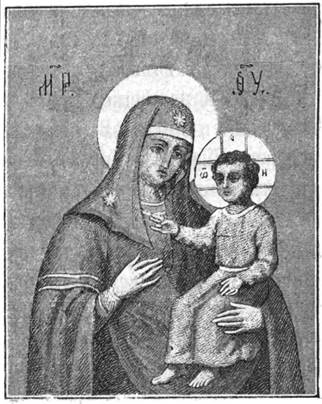
Чирская или Псковская икона Богоматери первоначально находилась в церкви Чирска – веси Псковской губернии, а потому называется Чирской. В 1420 году 16 сентября при державе благоверного великого князя Василия I Димитриевича, при архиепископе Новгородском и Псковском Симеоне, при Псковском князе Феодоре Александровиче, во время морового поветрия, бывшего во Пскове, от Чирской иконы Богоматери из обоих глаз истекли слёзы. Об этом возвестили властям Пскова. Отсюда посланы были священнослужители принести чудотворную икону во Псков. В сретение ей из города совершён был крестный ход, при стечении многочисленного народа и участии самого князя. Все с благоговением молились. Граждане Пскова на раменах своих внесли икону в город и поставили в соборную церковь Св. Троицы, в соблюдение и утверждение града, и установили ежегодный праздник 16 июля в воспоминание знамения, бывшего от св. иконы. По перенесении во Псков, Чирская икона стала называться и Псковской.
The Chira or Pskov Icon of the Mother of God was originally located in the church of Chira, a village of Pskov Province, and is therefore called the Chira Icon. In the year 1420, on the 16th of September, during the reign of the Right-believing Grand Prince Basil I Dimitrievich, under Simeon, Archbishop of Novgorod and Pskov, and under Theodore Alexandrovich, Prince of Pskov, during a plague that occurred in Pskov, tears flowed from both eyes of the Chira Icon of the Mother of God. This was announced to the authorities of Pskov. Clergymen were sent from there to bring the wonderworking icon to Pskov. To meet it, a procession of the cross was made from the city, with the gathering of a great multitude of people and the participation of the prince himself. All prayed with reverence. The citizens of Pskov carried the icon into the city on their shoulders and placed it in the cathedral church of the Holy Trinity, for the preservation and strengthening of the city, and established an annual feast on the 16th of July in remembrance of the sign that had come from the holy icon. After its translation to Pskov, the Chira Icon came to be called also the Pskov Icon.