† Преставление св. князя Владимира Равноапостального
† The Repose of St. Prince Vladimir, Equal-to-the-Apostles
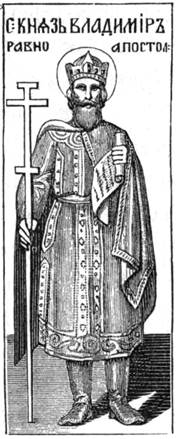
В жизни кн. Владимира было два периода, – период языческий и период христианский, и это не по одним наружным делам. Язычество столько же полно отразилось в его расположениях и делах, сколько полно открылась в делах его вера святая, небесная190.
In the life of Prince Vladimir there were two periods—the pagan period and the Christian period—and this not only in outward deeds. Paganism was reflected as fully in his dispositions and actions as the holy, heavenly faith was fully revealed in his deeds190.
Рано лишась умной бабки своей св. Ольги, он остался на воле страстей языческой юности. В отце видел он только отважного воина, беспощадно лившего кровь человеческую для своей славы; сын рабыни, он подвергался насмешкам гордой Рогнеды и воспитал в себе мстительность. Так под надзором язычества воспитались в нём – мстительность, сластолюбие и жажда власти. В 970 г. получил он от отца Новгород. В 976 году Ярополк умертвил брата Олега. Страшась такого брата, Владимир ушёл за море и оттуда привёл с собой наёмное войско. Прежде всего принудил он гордую Рогнеду разделить с ним ложе, умертвил отца и братьев её. Потом пошёл с войском к Киеву. Ярополк ушёл в Родню; но, положась на обещание Блуда и Владимира, возвратился в Киев, – и был убит по воле Владимира. Став единодержавным князем России, Владимир с мечом в руке искал себе славы: завоевал Галицию, смирил Вятичей и Радимичей, победил Камских Болгар, вёл войну с Печенегами и распространил пределы власти своей от Буга до моря Балтийского. От шума бранных дел возвращался он к шуму пиров и – неудержимо предавался сладострастью. По примеру каганов Казарских, у него было, кроме 5 жён, до 500 наложниц. Но ужасное братоубийство, победы, купленные кровью, жизнь грязно-плотская не могли не падать и на совесть язычника, а тщеславие вызывало на то, чтобы казаться достойным известности. И Владимир, поставя перед своим теремом богов, приносил им тучные жертвы, даже проливалась перед ними кровь человеческая.
Having lost his wise grandmother, St. Olga, early, he remained at the mercy of the passions of pagan youth. In his father he saw only a daring warrior, mercilessly shedding human blood for his own glory; the son of a slave-woman, he endured the mockeries of the proud Rogneda and nurtured vengefulness in himself. Thus, under the tutelage of paganism, there were nurtured in him vengefulness, love of pleasure, and thirst for power. In 970 he received Novgorod from his father. In 976 Yaropolk killed his brother Oleg. Fearing such a brother, Vladimir fled across the sea and from there brought a hired army. First of all, he forced the proud Rogneda to share his bed, and killed her father and brothers. Then he went with his army to Kiev. Yaropolk fled to Rodnya; but, trusting in the promise of Blud and Vladimir, he returned to Kiev—and was killed by Vladimir's order. Having become the sole ruler of Russia, Vladimir sought glory with sword in hand: he conquered Galicia, subdued the Vyatichi and Radimichi, defeated the Kama Bulgars, waged war with the Pechenegs, and extended the borders of his power from the Bug to the Baltic Sea. From the noise of warlike deeds he returned to the noise of feasts and—unrestrainedly gave himself over to sensuality. Following the example of the Khazar khagans, besides five wives he had up to 500 concubines. But the terrible fratricide, the victories bought with blood, the filthy, fleshly life could not but weigh upon the conscience of the pagan, and vainglory urged him to appear worthy of renown. And Vladimir, having set up gods before his palace, offered them rich sacrifices; even human blood was shed before them.
После того как душа, чувствуя нужду в мире, искала и не находила покоя у идолов глухих и мёртвых, вдвойне тяжело стало Владимиру, – от страстей алчных, и от идолов пустых. Он стал припоминать теперь своё детство и наставления, которые слышал от бабки Ольги; те наставления разливали свет и покой; тревожной душе хотелось теперь снова послушать их191. – К в. князю, недовольному старой верой, явились проповедники новых вер. Первые явились послы Болгарские веры Магометовой. Описание Магометова рая нравилось сластолюбивому князю, но обрезание казалось не нужным, и ещё более запрещение – пить вино: «вино есть веселие Русских», сказал князь севера сурового. Послы Немецких папистов говорили о величии невидимого Вседержителя и о ничтожности идолов. Князь чувствовал справедливость такой проповеди, но, зная жажду преобладания в папе, сказал: идите обратно, отцы наши не принимали веры от папы. Выслушав Иудеев, он спросил: где их отечество? «В Иерусалиме», отвечали они, «но Бог в гневе рассеял нас». – «Как же смеете предлагать свою веру, за которую под гневом вы?» сказал Владимир. Явился Греческий проповедник и, рассказав историю веры Божией, изобразил перед ним страшный суд Божий. «Страшно быть на левой стороне», сказал Владимир, «но – надобно ещё подумать». Отпустив Греческого посла с уважением, в. князь собрал совет старшин и бояр и передал на их рассуждение, что слышал от разных послов. Решено послать своих послов и испытать каждую веру на месте. Возвратясь в Киев, посланные с восторгом говорили о вере Греческой. «Если бы Греческий закон не был лучше других, бабка твоя Ольга, умнейшая из людей, не решилась бы принять его», сказали бояры и старцы в. князю. Владимир решился принять крещение, но ещё не решился, где принять его. Князь, славный завоеваниями, не хотел унижаться перед Грецией, которая так неприлично обошлась с Ольгой и которая так коварно умертвила отца его Святослава. Он положил завоевать веру.
After the soul, feeling the need for peace, sought and found no rest from the deaf and dead idols, it became doubly hard for Vladimir—from the greedy passions and from the empty idols. He now began to recall his childhood and the instructions he had heard from his grandmother Olga; those instructions spread light and peace; his troubled soul now wished to hear them again191.—Preachers of new faiths appeared before the Grand Prince, who was dissatisfied with the old faith. The first to appear were envoys of the Bulgar faith of Mohammed. The description of Mohammed's paradise pleased the pleasure-loving prince, but circumcision seemed unnecessary, and even more so the prohibition against drinking wine: "Wine is the joy of the Rus," said the prince of the harsh north. The envoys of the German papists spoke of the majesty of the invisible Almighty and the worthlessness of idols. The prince felt the justice of such a sermon, but, knowing the pope's thirst for supremacy, he said: Go back; our fathers did not accept the faith from the pope. Having heard the Jews, he asked: where is their fatherland? "In Jerusalem," they answered, "but God in His wrath has scattered us." "How then dare you offer your faith, for which you are under wrath?" said Vladimir. A Greek preacher appeared and, having recounted the history of God's faith, depicted before him the terrible judgment of God. "It is terrible to be on the left side," said Vladimir, "but—one must think further." Having dismissed the Greek envoy with respect, the Grand Prince gathered a council of elders and boyars and submitted to their deliberation what he had heard from the various envoys. It was decided to send their own envoys and to test each faith on the spot. Returning to Kiev, the envoys spoke with rapture of the Greek faith. "If the Greek law were not better than the others, your grandmother Olga, the wisest of people, would not have resolved to accept it," said the boyars and elders to the Grand Prince. Vladimir resolved to receive baptism, but had not yet decided where to receive it. The prince, famous for his conquests, did not wish to humble himself before Greece, which had treated Olga so improperly and which had so treacherously killed his father Svyatoslav. He resolved to conquer the faith.
Через год после совещания о вере Владимир пошёл с войском к Корсуню и, взяв его, потребовал руки царевны у двора Константинопольского. Ему отвечали: пусть примет св. веру. «Я давно испытал и полюбил её», говорил Владимир. Между тем на деле не столько, он был готов к великой перемене, сколько казалось ему самому; ещё нужно было для него особенное посещение Божие. Прежде чем Анна, сестра императоров, прибыла в Корсунь с духовенством и свящ. вещами, с князем языческим случилось то же самое, что было с Савлом: он ослеп. Прибывшая царевна предложила ему не медлить крещением, как средством к здравию. Он согласился. Епископ Корсунский возложил руку на выходящего из купели князя. Владимир, в крещении Василий, прозрел и душевно и телесно и в восторге воскликнул: «теперь я увидел Бога истинного». Некоторые из дружины Владимира, поражённые чудом, крестились тогда же вслед за князем. Владимир возвратился в Киев новым, с памятниками боевой и христианской славы своей192.
A year after the deliberation about the faith, Vladimir went with his army to Korsun and, having taken it, demanded the hand of the princess from the court of Constantinople. They answered him: let him receive the holy faith. "I have long tested and loved it," said Vladimir. Meanwhile, in reality, he was not so ready for the great change as it seemed to himself; a special visitation of God was still needed for him. Before Anna, the sister of the emperors, arrived in Korsun with the clergy and sacred objects, the same thing happened to the pagan prince as had happened to Saul: he became blind. The arrived princess proposed that he not delay baptism, as a means to health. He agreed. The Bishop of Korsun laid his hand on the prince as he came up from the font. Vladimir, in baptism Basil, received his sight both spiritually and bodily and exclaimed in rapture: "Now I have seen the true God." Some of Vladimir's retinue, struck by the miracle, were baptized then and there after the prince. Vladimir returned to Kiev a new man, with monuments of his military and Christian glory192.
Владимир искал лучшей веры не для себя одного; он искал её, как повелитель народа, для народа своего. И представители народа вместе с ним испытывали и одобряли веру лучшую. Дознав опытом над собой превосходство христианской веры православной, Владимир ещё более утвердился в намерении своём ввести христианство между подданными. Прежде всего крестились сыновья его. Потом уничтожены были
Vladimir sought the better faith not for himself alone; he sought it as the ruler of the people, for his people. And the representatives of the people together with him tested and approved the better faith. Having learned by experience the superiority of the Orthodox Christian faith, Vladimir was even more confirmed in his intention to introduce Christianity among his subjects. First of all, his sons were baptized. Then the
идолы: одни сожжены, другие изрублены. Перуна, главного идола, велел Владимир привязать к хвосту лошади, совлечь с горы и бросить в Днепр; суеверный народ проливал слёзы, сожалея о старине своей, и долго следовал за уплывшим болваном, которого отталкивали от берега воины; но по доброте своей не смел роптать. В то же время Владимир велел объявить, чтобы на другой день все жители, не исключая жён и детей, собрались на берег Днепровский для принятия крещения, под опасением немилости князя за ослушание. Киевляне давно уже знали Греческую веру, знали о совещаниях и решимости бояр относительно сей веры. «Если бы новая вера не была лучшей, князь и бояре не приняли бы её», так говорил народ и спешил исполнить волю уважаемого князя. Необозримые толпы людей, старцы и юноши, матери с детьми грудными, явились на берегу реки; – явился и Владимир с собором священников. Народ вступил в Почайну, одни по шею, другие по груди; взрослые держали на руках младенцев. Священники с берега читали молитвы. Владимир, объятый восторгом, молился Господу и поручал Ему себя и народ свой. «В сей день, справедливо говорит летописец, земля и небо ликовали»193. По одному известию, крещение Киевлян совершилось 1 августа, что согласно и с рядом событий 988 г.194.
idols were destroyed: some were burned, others were cut to pieces. Perun, the chief idol, Vladimir ordered to be tied to a horse's tail, dragged down from the hill, and thrown into the Dnieper; the superstitious people shed tears, regretting their antiquity, and long followed the floating idol, which the soldiers pushed away from the shore; but, out of their kindness, they dared not murmur. At the same time, Vladimir ordered it to be proclaimed that on the next day all the inhabitants, not excluding wives and children, should gather on the bank of the Dnieper to receive baptism, under threat of the prince's displeasure for disobedience. The people of Kiev had long known the Greek faith; they knew of the deliberations and the decision of the boyars concerning this faith. "If the new faith were not better, the prince and the boyars would not have accepted it," so the people said, and hastened to fulfill the will of their respected prince. Countless crowds of people, old men and youths, mothers with infants at the breast, appeared on the riverbank;—Vladimir also appeared with a council of priests. The people entered the Pochayna, some up to their necks, others up to their chests; the adults held infants in their arms. The priests read prayers from the shore. Vladimir, filled with rapture, prayed to the Lord and entrusted himself and his people to Him. "On this day," the chronicler rightly says, "earth and heaven rejoiced"193. According to one account, the baptism of the people of Kiev took place on August 1, which is also in accordance with the sequence of events of 988194.
Крещение жителей стольного города без сомнения было важным делом для Равноапостольного. Здесь были представители народа, – старшины и бояре, которые так много противодействовали святой вере при Аскольде и Святославе. Когда они приняли крещение, то для больших и малых городов, тем более для сёл, это весьма много значило. В Новгороде и Ростове Владимир личными распоряжениями содействовал насаждению христианства; потом отправил он сыновей своих и с ними священников в разные города – передать лучшую веру подданным. «Крест освятил города», с восторгом говорит митр. Иларион. Летописец пишет о Владимире: «и начал ставить по городам церкви и священников и приводить людей ко крещению по городам и сёлам». Утверждая христианскую веру в России, блаж. Владимир распространял и просвещение: в Киеве открыто было училище. Богослужебные и учительные книги получены были из Болгарии195. Храмы строились преимущественно на местах, где стояли идолы, и украшались по образцам Греческим196. Особенная заботливость великого князя обращена была на храм Десятинный, посвящённый славе Богоматери; он был украшен великолепно197; освящение его не только праздновал сам великий князь, но предложил праздновать и впоследствии198; Десятинным назван храм от того, что в Пользу его назначена была десятая часть доходов великого князя.
The baptism of the inhabitants of the capital city was undoubtedly an important matter for the Equal-to-the-Apostles. Here were the representatives of the people—the elders and boyars, who had so much opposed the holy faith under Askold and Svyatoslav. When they received baptism, this meant a great deal for the larger and smaller towns, and even more for the villages. In Novgorod and Rostov, Vladimir by his personal arrangements furthered the planting of Christianity; then he sent his sons and with them priests to various cities—to transmit the better faith to his subjects. "The Cross sanctified the cities," says Metropolitan Hilarion with rapture. The chronicler writes of Vladimir: "And he began to build churches in the cities and to appoint priests and to bring people to baptism in the cities and villages." Establishing the Christian faith in Russia, blessed Vladimir also spread enlightenment: a school was opened in Kiev. Liturgical and instructional books were received from Bulgaria195. Churches were built chiefly on the places where idols had stood, and were adorned after Greek models196. The special care of the Grand Prince was directed to the Church of the Tithes, dedicated to the glory of the Mother of God; it was magnificently adorned197; its consecration was not only celebrated by the Grand Prince himself, but he also ordered it to be celebrated thereafter198; it was called the Church of the Tithes because a tenth part of the Grand Prince's revenues was assigned for its benefit.
Внутренняя жизнь кн. Владимира со времени благодатного крещения получила во всём другое направление.
The inner life of Prince Vladimir from the time of his grace-filled baptism received a completely different direction in everything.
Владимир, сластолюбивый язычник, став христианином, послал сказать Рогнеде: «приняв Христов закон, я должен иметь одну жену, ту, которая сочеталась со мной браком христианским; итак, если хочешь, выбери себе мужа между боярами». Рогнеда отвечала: «я – княгиня; и ужели тебе одному дорого Небесное Царство, а мне оно не нужно? прошу дозволить мне быть невестой Христовой»199. Всем прочим жёнам и наложницам предоставлена была свобода жить по убеждению совести. Повествователь, близкий ко времени Владимира, говорит, что Владимир глубоко каялся о прежней нечистой жизни и говорил: «Господи! был я как зверь, много худого делал я в язычестве, – жил совершенно скотски; Ты укротил меня; слава Тебе, Боже»200.
Vladimir, the pleasure-loving pagan, having become a Christian, sent word to Rogneda: "Having accepted the law of Christ, I must have one wife, she who was joined to me in Christian marriage; therefore, if you wish, choose for yourself a husband from among the boyars." Rogneda answered: "I am a princess; and is the Heavenly Kingdom precious only to you, while I have no need of it? I ask permission to be a bride of Christ"199. To all his other wives and concubines freedom was granted to live according to the conviction of their conscience. A narrator close to the time of Vladimir says that Vladimir deeply repented of his former impure life and said: "Lord! I was like a beast; I did much evil in paganism—I lived completely like an animal; Thou hast tamed me; glory to Thee, O God"200.
Владимир христианин усердно занимался тем, чтобы упрочить внутреннее благоденствие своих владений, которые прежде распространял мечом. Он заботился «об устройстве гражданском, о порядке военных дел и об уставе земли»201. Блаженный Иларион митр., обращаясь к Владимиру, говорит: «ты часто, собираясь с новыми отцами, нашими епископами, с великим смирением советовался с ними, как установить закон сей (христианский) среди людей, недавно познавших Господа»202. – Христианский князь Владимир без нужды не поднимал оружия на соседей, так как занят был участью своих подданных; со всеми соседними государями жил мирно. С богатыми Болгарами (Волжскими) заключил он (1006 г.) торговый договор: Русские купцы с печатями посадников могли свободно вести торговлю во всех Болгарских городах; Болгарским купцам предоставлено то же в России, но запрещено торговать по сёлам203. Дикие Печенеги, «самые жестокие из всех язычников», как называл их бывший у них проповедник204, вынуждали св. Владимира браться за оружие, но он принял другие меры против них. Одно из их нападений было так неожиданно, что Владимир успел выйти против них только с малой дружиной и, разбитый, едва скрылся от врагов под мостом. Он дал обет построить храм в честь праздника – дня спасения своего и, спасённый 6 августа, построил храм в Василеве в честь Преображения Господня. «Не хорошо, сказал он потом, что около Киева мало городов». И велел строить города по р. Десне, Остру, Трубежу, Суле и Стугне, как сторожевую линию против дикарей205; для населения новых военных городов набраны «лучшие мужи», самые отважные, из Новгородцев, Кривичей, Чуди и Вятичей. Эта мера имела и то благодетельное последствие, что мало знакомые, или и вовсе незнакомые с святой верой теперь сблизились с столицей Русского христианства и хорошо узнали его206. Происки папизма немногим были лучше нападений дикарей. Святой Владимир охотно скрепил мир с Польшей родственным союзом, женив сына Святополка на дочери Болеслава. – Но вместе с дочерью Польского короля прибыл ко двору Туровского князя бискуп Рейнберг; бискуп немедленно пустил в ход интриги, – расположил Святополка к папизму и склонял к восстанию против отца. Благоверный заключил в темницу Святополка с женой и бискупом; Болеслав явился с войском в Россию, но скоро согласился на мир207.
As a Christian, Vladimir diligently occupied himself with securing the internal well-being of his dominions, which he had previously extended by the sword. He cared for "civil order, the organization of military affairs, and the statute of the land"201. Blessed Hilarion, the Metropolitan, addressing Vladimir, says: "You often, gathering together with the new fathers, our bishops, with great humility took counsel with them, how to establish this law (the Christian one) among a people who had but recently come to know the Lord"202. – The Right-believing Prince Vladimir did not take up arms against his neighbors without need, being occupied with the welfare of his subjects; he lived in peace with all neighboring sovereigns. With the wealthy Bulgars (of the Volga) he concluded (in 1006) a trade treaty: Russian merchants with the seals of the posadniks could freely conduct trade in all Bulgar cities; Bulgar merchants were granted the same in Russia, but were forbidden to trade in the villages203. The wild Pechenegs, "the most cruel of all pagans," as a former preacher among them called them204, forced St. Vladimir to take up arms, but he adopted other measures against them. One of their attacks was so unexpected that Vladimir managed to go out against them only with a small retinue and, defeated, barely hid from the enemy under a bridge. He made a vow to build a church in honor of the feast of the day of his deliverance and, saved on August 6, built a church in Vasilev in honor of the Transfiguration of the Lord. "It is not good," he said afterwards, "that there are few towns around Kiev." And he ordered towns to be built along the rivers Desna, Oster, Trubezh, Sula, and Stugna, as a line of defense against the savages205; for the population of the new military towns, "the best men," the most valiant, were gathered from the Novgorodians, Krivichians, Chuds, and Vyatichians. This measure also had the beneficial consequence that those little acquainted, or even completely unacquainted with the holy faith, now drew near to the capital of Russian Christianity and came to know it well206. The intrigues of papism were little better than the attacks of the savages. St. Vladimir willingly sealed peace with Poland by a family alliance, marrying his son Svyatopolk to the daughter of Bolesław. – But together with the daughter of the Polish king, Bishop Reinbern arrived at the court of the Prince of Turov; the bishop immediately set intrigues in motion – he inclined Svyatopolk toward papism and incited him to rebellion against his father. The Right-believing Prince cast Svyatopolk into prison together with his wife and the bishop; Bolesław appeared with an army in Russia, but soon agreed to peace207.
Жестокий и мстительный в язычестве, Владимир христианин стал примером кроткой и нежной любви ко всем. Любовь его к несчастным до того было простёрлась, что он не хотел наказывать и преступников. Епископы представили ему, что умножились злодейства и надобно их наказывать. «Боюсь греха», отвечал он. «Бог поставил тебя для наказания злодеев и для милости добрым», сказали пастыри. И Владимир стал наказывать преступников, но осмотрительно208. Бедным и нуждающимся отворен был вход к нему, и он раздавал им щедрой рукой пищу, одежду, деньги, покоил странников, выкупал должников, возвращал свободу рабам; мало и того было ему: больные, думал он, не в силах прийти ко мне за помощью, и велев развозить по улицам мясо, рыбу, хлеб, овощи, квас и мёд. Слова Евангелия: блаженны милостивые – проникли в самую глубину души его. Праздники Божии проводил он в веселии любви христианской. Три трапезы тогда были готовы у него: первая для митрополита с епископами, иноками и священниками, вторая – для нищих, третья – для себя с боярами и мужами209.
Cruel and vengeful in paganism, Vladimir as a Christian became an example of meek and tender love towards all. His love for the unfortunate extended so far that he did not wish to punish even criminals. The bishops pointed out to him that crimes had multiplied and that they must be punished. "I fear sin," he answered. "God has appointed you for the punishment of evildoers and for mercy to the good," said the pastors. And Vladimir began to punish criminals, but with discretion208. The poor and needy had free access to him, and he distributed to them with a generous hand food, clothing, money; he gave rest to strangers, ransomed debtors, restored freedom to slaves; and even this was too little for him: the sick, he thought, are not able to come to me for help, and he ordered meat, fish, bread, vegetables, kvass and honey to be carted through the streets. The words of the Gospel: Blessed are the merciful – had penetrated to the very depths of his soul. The feasts of God he spent in the joy of Christian love. Three tables were then prepared by him: the first for the Metropolitan with the bishops, monks and priests, the second for the poor, the third for himself with the boyars and men209.
Такова была христианская жизнь благов. Владимира!
Such was the Christian life of the Right-believing Vladimir!
Блаженная кончина его последовала 15 июля 1015 года и тело его положено было в созданном им Десятинном храме210.
His blessed repose occurred on July 15, 1015, and his body was placed in the Church of the Tithes which he had built210.
При великом князе Ярославе Церковь уже чтила память просветителя России, как и бабки его Ольги и сыновей Бориса и Глеба211. Митр. Иларион в 1050 г. в похвальном своём слове Владимиру называет его вторым Константином, Апостолом Русской земли, и, обращаясь к нему, говорит: «за благие дела ныне получив воздаяние на небесах, – благач яже уготова Бог любящим Его, и наслаждаясь лицезрением Его, помолися Господу о земле своей и людях, над которыми благоверно ты властвовал; наипаче же помолись о сыне твоем, благоверном кагане нашем Георгии»212. Точно также и черноризец Иаков, ученик преп. Феодосия, называет Владимира святым и угодником Божиим213. Тем не менее мощи благов. Владимира не были открыты и прославлены. Черноризец Иаков успокаивал современников, которые тревожились сомнениями по сему предмету, и говорил: «не будем дивиться, возлюбленные, если он по смерти не творит чудес: многие праведники не творили чудес и однако святы», и потом приводит слова Златоуста, который учил, что «святые люди узнаются не по чудесам, а по делам»214. По видению 1581 г. св. Василий Киевский князь – молитвенник за Россию215. Во время Батыя останки Равноапостольного погребены были под развалинами Десятинного храма и только в 1635 г. были обретены. Ныне глава благов. князя – в Софийском соборе, малые частицы – в разных местах216.
Under Grand Prince Yaroslav, the Church already venerated the memory of the Enlightener of Russia, as well as that of his grandmother Olga and his sons Boris and Gleb211. Metropolitan Hilarion, in his eulogy to Vladimir in 1050, calls him a second Constantine, an Apostle of the Russian land, and, addressing him, says: "For your good deeds, having now received a reward in the heavens – the good things which God hath prepared for them that love Him, and enjoying the vision of Him, pray to the Lord for your land and the people over whom you ruled right-believingly; and above all, pray for your son, our right-believing kagan George"212. Likewise, the monk James, a disciple of the Venerable Theodosius, calls Vladimir holy and a saint of God213. Nevertheless, the relics of the Right-believing Vladimir were not uncovered and glorified. The monk James reassured his contemporaries, who were troubled by doubts on this matter, and said: "Let us not marvel, beloved, if he does not work miracles after death: many righteous men did not work miracles and yet are holy," and then he cites the words of Chrysostom, who taught that "holy people are known not by miracles, but by deeds"214. According to a vision of 1581, St. Basil, Prince of Kiev – intercessor for Russia215. During the time of Batu, the remains of the Equal-to-the-Apostles were buried under the ruins of the Church of the Tithes and were only uncovered in 1635. At present, the head of the Right-believing Prince is in the Cathedral of St. Sophia, and small particles are in various places216.