«Уже не закалаем мы друг друга в жертву бесам», говорил в 1051 г. блаж. митр. Иларион, который был сам из Русских158. – Итак не то в России, пока было в ней было язычество159.
“No longer do we slay one another as a sacrifice to demons,” said the blessed Metropolitan Hilarion, himself a Rus’ man, in the year 1051158. – Such was not the case in Rus’ while paganism still held sway therein159.
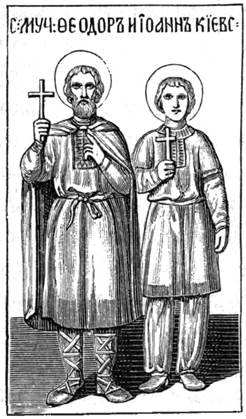
«В 983 г., пишет преп. Нестор, Владимир ходил на Ятвягов и взял землю их. – Возвратясь в Киев, совершал он вместе с своими людьми жертвоприношения идолам. Старцы и бояре сказали: «бросим жребий на отрока и девицу; на кого падёт, того принесём богам». Был тогда один Варяг. – Двор его стоял там, где стоит церковь св. Богородицы, построенная Владимиром. Он пришёл из Греции и тайно содержал христианскую веру. – У него был сын, прекрасный душой и телом. Жребий, так Богу было угодно, пал на сего сына. Посланные советом, придя, сказали отцу: «дай сына богам, выбрали его себе боги, чтобы принесли мы его в жертву». Варяг отвечал: «у вас – не боги, а дерево, ныне целое, а завтра истлевшее; они не едят, не пьют, не говорят, а сделаны руками из древа; Бог – един, Которому служат и поклоняются Греки; Он сотворил небо и землю, звёзды и луну, солнце и человека. А эти боги что сотворили? сами сотворены они. Не дам сына моего бесам». Те пошли и пересказали слова его народу. Взяв оружие, разломали они двор его. Он стоял с сыном на сенях. Ему кричали: «подай сына твоего!» Он отвечал: «если боги ваши – боги, пусть пошлют одного из среды своей и тот возьмёт сына; а вы к чему хлопочете за них?» Они подняли крик, подсекли сени под ними и умертвили их. Никто не знает, где похоронили их. Так сии отцы победили врага и получили венец небесный с св. мучениками и праведниками»160. Здесь не назван по имени ни отец, ни сын. В Софийской, Воскресенской и Никоновой летописях сын наименован Иоанном161. По прологу XV в. видим июля 12 память Киевских мучеников Феодора и Иоанна162. – Так как само слово варанг на Вендском наречии означает меч и мечника, то и Варяг-Феодор, как Варяг Рюрик, был конечно поморский Славянин, явившийся на службу к браннолюбивому Святославу и попавший в плен во время войны Святослава с Греками в 976 г.163. Повествование Нестора о мучениках даёт видеть, что во время Нестора уже чтили святых мучеников-Варягов. То же видно и по словам блаж. Симона, который, говоря о св. Леонтии Ростовском, писал: «се третий гражданин небесный бысть Русского мира, с онема Варягома венчався от Христа».
“In the year 983,” writes the Venerable Nestor, “Vladimir went against the Yatvingians and took their land. – Returning to Kiev, he together with his people offered sacrifices to the idols. The elders and the boyars said: ‘Let us cast lots upon a youth and a maiden; upon whomsoever it falls, him will we sacrifice to the gods.’ There was at that time a certain Varangian. – His court stood where now stands the church of the Most Holy Theotokos, built by Vladimir. He had come from Greece and secretly held the Christian faith. – He had a son, fair in soul and body. The lot, as God so willed, fell upon this son. Those sent by the council came and said to the father: ‘Give your son to the gods; the gods have chosen him for themselves, that we may offer him as a sacrifice.’ The Varangian answered: ‘Your gods are not gods, but wood—whole today, but tomorrow rotted; they neither eat nor drink nor speak, but are made by hands from timber; God is One, Whom the Greeks serve and worship; He made heaven and earth, the stars and the moon, the sun and man. But what have these gods created? They themselves are created. I will not give my son to demons.’ They went and reported his words to the people. Taking up arms, they broke down his court. He stood with his son on the porch. They cried out to him: ‘Give us your son!’ He answered: ‘If your gods are gods, let them send one from among themselves, and let him take my son; but why do you trouble yourselves for them?’ They raised a shout, cut down the porch beneath them, and killed them. No one knows where they buried them. Thus did these fathers conquer the enemy and receive the heavenly crown with the holy martyrs and the righteous”160. Here neither the father nor the son is named by name. In the Sophia, Resurrection, and Nikon Chronicles, the son is called John161. According to a Prologue of the 15th century, we see under July 12 the commemoration of the Kiev martyrs Theodore and John162. – Since the very word “Varangian” in the Wendish dialect means “sword” and “swordsman,” the Varangian Theodore, like the Varangian Rurik, was doubtless a Pomeranian Slav who had come into the service of the war-loving Svyatoslav and had been taken captive during Svyatoslav’s war with the Greeks in 976163. Nestor’s account of the martyrs shows that already in Nestor’s time the holy Varangian martyrs were venerated. The same is evident from the words of the blessed Simon, who, speaking of St. Leontius of Rostov, wrote: “Behold, the third citizen of heaven of the Rus’ world, crowned by Christ together with those two Varangians.”
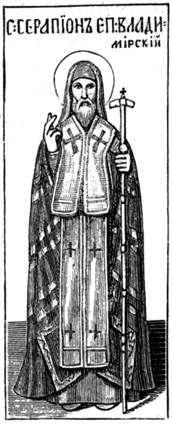
Преп. Серапион проводил подвижническую жизнь в Киевской Печерской обители. Время жизни его было самое горькое. Бедствия следовали одно за другим и всего тяжелее было порабощение Татарское. В 1230 г. мая 3-го сильное землетрясение привело всех в ужас. Для Печерской обители оно было тем поразительнее, что последовало в день памяти преп. Феодосия. Μ. Кирилл, в. князь, бояре, множество Богомольцев стояли за литургией в великой Печерской церкви, как величественный храм треснул в четырёх местах; в лаврской трапезе камни падали со свода на полы. Это землетрясение чувствовали и на севере, во Владимире. Мая 14-го было необыкновенное затмение солнца; осенью того же года озимь побита была морозом; затем два года свирепствовали голод и мор164. Наконец страшный Батый опустошил Россию и наложил на неё тяжкое иго подданства. Блаж. Серапион бедствиями времени обучался сокрушению о грехах и страхом Божиим отгонял от души приражения страстей. В одном из поучений своих писал он: «сколько раз видели мы солнце погибшее, луну померкшую, перемены в звёздах. Видели своими глазами и трясение земли. Земля, утверждённая и неподвижная, движется по повелению Божью, колеблется от грехов наших, не может носить беззаконий наших... Что потом было у нас? Не глад ли? Не мор ли несколько раз? Не частые ли войны? Однако мы не покаялись. И вот пришёл на нас, по попущению Божию, народ немилостивый, опустошил нашу землю, взял наши города, разорил святые церкви»165. За высокие добродетели свои блаж. Серапион был избран и посвящён в архимандрита Феодосиевой лавры. Затем м. Кирилл назначил его ещё для высшего сана. По летописи, в 1274 г. первосвятитель, прибыв из Киева на север, посвятил Серапиона, архимандрита Киевского Печерского монастыря, в епископа Владимиру и Нижнему-Новгороду166, а в надписи правил собора 1274 г. сказано, что Серапион посвящён в епископа архипастырями, собравшимися на сей собор во Владимир167. Впрочем, блаж. Серапион недолго управлял Владимирской паствой. И не дивно: тот, кто печальные события 1230 г. видел с таким духовным разумением, в 1274 г. был без сомнения уже глубоким старцем. Он скончался № 12 июля 1275 г. и погребён во Владимирском Успенском соборе168. Уже по списку XIV в. в надписи 3 слова его называется он святым, в трёх других – преподобным, а в надписи 5 слова – блаженным. По ркп. святцам он поставлен в числе святых.
The Venerable Serapion led an ascetic life in the Kiev Caves Monastery. The time of his life was most bitter. Calamities followed one after another, and most grievous of all was the Tatar enslavement. In the year 1230, on May 3rd, a great earthquake filled all with terror. For the Caves Monastery it was all the more striking because it occurred on the day of the commemoration of the Venerable Theodosius. Metropolitan Cyril, the Grand Prince, the boyars, and a multitude of pilgrims were standing at the Divine Liturgy in the great Caves church, when the majestic temple cracked in four places; in the Lavra refectory, stones fell from the vault onto the floor. This earthquake was felt also in the north, in Vladimir. On May 14th there was an extraordinary eclipse of the sun; in the autumn of that same year the winter crops were killed by frost; then for two years famine and pestilence raged164. Finally, the terrible Batu devastated Rus’ and laid upon it the heavy yoke of subjection. The blessed Serapion, through the calamities of the time, learned contrition for sins and by the fear of God drove away the assaults of passions from his soul. In one of his homilies he wrote: “How many times have we seen the sun perishing, the moon darkened, changes in the stars. We have seen with our own eyes also the shaking of the earth. The earth, established and immovable, moves by the command of God, it trembles because of our sins, it cannot bear our lawlessness... What then happened among us? Was it not famine? Was it not pestilence several times? Were there not frequent wars? Yet we did not repent. And behold, there came upon us, by God’s permission, a merciless people, laid waste our land, took our cities, destroyed the holy churches”165. For his high virtues, the blessed Serapion was chosen and consecrated as archimandrite of the Theodosian Lavra. Then Metropolitan Cyril appointed him for a still higher rank. According to the chronicle, in 1274 the chief hierarch, having come from Kiev to the north, consecrated Serapion, archimandrite of the Kiev Caves Monastery, as bishop of Vladimir and Nizhny Novgorod166; but in the heading of the canons of the Council of 1274 it is said that Serapion was consecrated bishop by the chief pastors gathered at this council in Vladimir167. However, the blessed Serapion did not long govern the Vladimir flock. And this is not surprising: he who had seen the sorrowful events of 1230 with such spiritual understanding was in 1274 undoubtedly already a deep elder. He reposed on July 12, 1275, and was buried in the Vladimir Dormition Cathedral168. Already in a 14th-century manuscript, in the heading of his third homily he is called a saint, in three others—a venerable one, and in the heading of the fifth homily—blessed. According to manuscript menologia, he is numbered among the saints.
Летопись говорит о нём: «бе учителен и силен в Божественном Писании»169. Ныне известны 7 слов его, дышащие искренним благочестием христианского пастыря душ170.
The chronicle says of him: “He was instructive and mighty in Divine Scripture”169. Seven of his homilies are known today, breathing the sincere piety of a Christian pastor of souls170.
«Дети, так говорит он в одном поучении, я чувствую в сердце своём великую скорбь о вас. Ибо вовсе не вижу вашего обращения от дел беззаконных. Не так скорбит мать, видя детей своих больными, как скорблю я, грешный отец ваш, видя вас болящих делами беззаконными. Много раз беседовал я с вами, желая отвратить вас от худых навыков. Но не вижу в вас никакой перемены. Разбойник ли кто из вас? Не отстаёт от разбоя. Вор ли кто? Не пропускает случая украсть. Имеет ли кто ненависть к ближнему? Не имеет покоя от вражды. Обижает ли кто другого, захватывая чужое? Не насыщается грабежом. Лихоимец ли кто? Не перестаёт брать мзду. Но по слову пророка, всуе мятется, сокровиществует и не весть, кому соберет я (Пс.38:7). Бедный, он не подумает о том, что в как родился нагим, так и умрёт, не имея ничего кроме проклятия вечного... Умоляю вас, братия и дети, исправьтесь, обновитесь добрым обновлением; перестаньте делать зло; убойтесь Бога, сотворившего вас; вострепещите суда Его страшного. К кому идём? К кому приближаемся, выходя из сей жизни? Что скажем? Какой дадим ответ? Страшно, дети, подпасть гневу Божию... Вот уже к сорока годам приближается наше томление и мука, тяжкие дани не прекращаются; и голод и мор, и всласть хлеба мы съесть не можем. Воздыхание и печаль сушат кости наши. А что нас довело до сего? наши беззакония, наши грехи, наше непослушание, наша нераскаянность. Молю вас, братия: вникни каждый в свои мысли, рассмотри сердечными очами дела свои, возненавидь их, откажись от них, раскайся, и гнев Божий минует. Милость и Господня излиётся на нас. Господь сотворил нас великими, а мы непослушанием становимся малы. Не погубим, братия, своего величия. Не слышащие о делах и законе спасаются, а исполняющие закон (Рим.2:13). Согрешили мы? Прибегнем к покаянию, обратимся с любовью к Богу, прольём слёзы, подадим милостыню нищим, поможем бедным. Скажем и мы с Давидом: «Господи, виждь смирение наше, остави вся грехи наша (Пс.24:18),» Отврати ярость Твою от нас. Еда во веки прогневаешися на ны, или простреши гнев Твой от рода в род?» (Пс.64:5–6). Ты Бог наш; Тебя прославляем с безначальным Отцом и с Пресвятым Духом, ныне и присно и во веки».
“Children,” he says in one homily, “I feel in my heart great sorrow for you. For I see no turning of you from lawless deeds at all. A mother does not grieve so much seeing her children sick, as I, your sinful father, grieve seeing you sick with lawless deeds. Many times have I spoken with you, desiring to turn you away from evil habits. But I see no change in you. Is any of you a robber? He does not cease from robbery. Is any a thief? He does not miss a chance to steal. Does anyone have hatred for his neighbor? He has no peace from enmity. Does anyone wrong another, seizing what is another’s? He is not satisfied with plunder. Is anyone a lover of gain? He does not cease taking bribes. But according to the word of the prophet, In vain he is troubled, he heapeth up treasures and knoweth not for whom he shall gather them (Ps. 38:7). Wretched man, he does not think that as he was born naked, so he will die, having nothing but eternal curse... I beseech you, brethren and children, correct yourselves, be renewed with a good renewal; cease to do evil; fear God, Who created you; tremble at His terrible judgment. To Whom do we go? To Whom do we draw near, departing from this life? What shall we say? What answer shall we give? It is terrible, children, to fall under the wrath of God... Behold, for nearly forty years our torment and affliction have continued; the heavy tributes do not cease; and famine and pestilence, and we cannot eat our fill of bread. Sighing and sorrow dry up our bones. And what has brought us to this? Our lawlessness, our sins, our disobedience, our impenitence. I pray you, brethren: let each one examine his own thoughts, consider with the eyes of the heart his deeds, hate them, renounce them, repent, and the wrath of God will pass. Mercy and the Lord’s will be poured out upon us. The Lord made us great, but through disobedience we become small. Let us not destroy our greatness, brethren. Not the hearers of the law are justified, but the doers of the law (Rom. 2:13). Have we sinned? Let us flee to repentance, turn with love to God, shed tears, give alms to the poor, help the needy. Let us also say with David: ‘Lord, behold our humility, forgive all our sins (Ps. 24:18),’ Turn away Thy wrath from us. Wilt Thou be angry with us forever, or stretch out Thy wrath from generation to generation?’ (Ps. 64:5–6). Thou art our God; Thee we glorify, with the Father without beginning and the Most Holy Spirit, now and ever and unto the ages.”
В слове о мятеже жизни говорит: «многие вельможные преждевременно сведены в ад, как псы... Известного у людей нет ничего, всё – неприятности. Один захватил землю соседа, другой отнял имущество и село, а и без того чужой дом у него. Иные, не насыщаясь имением, захватывают и продают свободных людей бедных... Правды нет в мире: дети бесчестят родителей, отцы отказываются от детей, мужья блудодействуют при жёнах... Бог дал нам богатство, чтобы разделяли мы его с бедными: а мы ещё обижаем сирот, насилия творим вдовам, обираем бедных и за деньги обвиняем правого».
In a homily on the turmoil of life he says: “Many nobles have been prematurely brought down into hell, like dogs... Nothing among men is certain, all is unpleasantness. One has seized his neighbor’s land, another has taken away property and a village, and even without that he has another’s house. Others, not satisfied with possessions, seize and sell free poor people... There is no justice in the world: children dishonor parents, fathers disown children, husbands commit adultery in the presence of their wives... God gave us wealth that we might share it with the poor: but we still wrong orphans, do violence to widows, rob the poor, and for money condemn the righteous.”
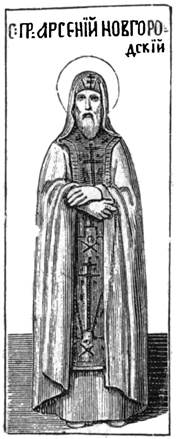
Местом рождения преп. Арсения, в мире Амвросия171, был Ржев – Владимиров. В доме родителей своих обучен он был кожевенному ремеслу, но ещё более воспитал он к себе святую ревность к благочестию. По смерти отца (Григория) мать его Пелагия, впоследствии инокиня Аполлинария, заставила его вступить в брак; но Амвросий горел ревностью жить в чистом, непорочном, девстве. Спустя 5 месяцев после брака скрылся он из дома матери. Пять лет занимался он в Новгороде кожевенной работой, не давая знать о себе своим; он испытывал сам себя тайным подвигом, тайно постился и молился. Потом написал письмо к матери и жене, где утешал их Евангельским обещанием блаженства для тех, которые оставляют для Господа мать, жену, детей, имущество. Благочестивый строитель храмов и обителей, Феодор Дмитриевич Сырков, узнав благочестивую жизнь Амвросия, предложил ему свою готовность доставлять средства для построения новой обители, и Амвросий принял иночество с именем Арсения. В 1562 г. обитель и храм в честь Рождества Богородицы построены были Арсением на Ярославовом дворище, на торговой стороне, на правом берегу Волхова, в соседстве с храмом св. Мироносиц172. Преп. Арсений, основав обитель, продолжал вести жизнь строгую, носил вериги, довольствовался весьма малым, одежда на нём до того была бедна и ветха, что если бы бросить её на площади, и бедняк не поднял бы её; когда ходил он в ней по улицам или сидел на мосту, дети смеялись над ним, и всё это не отвлекало его от умной молитвы, которой постоянно был он занят, тихо проливая слёзы. В последние годы жил он в затворе, почему в святцах и называется затворником. «Блаженны плачущие, потому что они утешены будут», сказал Спаситель (Мф.5:5). Эти плачущие – те, которые считают земную жизнь местом удаления из отчизны, и потому не принимают земных утешений. Таков был преп. Арсений! Из очей его постоянно текли слёзы. Он плакал по небесной отчизне, тем более, что видел беды готовые обрушиться на легкомыслие гордых Новгородцев. Он плакал, но мы согрешили бы, если бы подумали, что жизнь его была безотрадна. Тот, кто не допускает до себя земных утешений и даже отягчает жизнь свою добровольно для Господа, наслаждается надеждами на вечность блаженную, наслаждается душевным миром, перед которым смех и весёлости людского легкомыслия – горе (Лк.6:25). В 1570 г. Грозный царь, по неистовой жестокости предав тысячи Новгородцев разным смертям, захотел построить себе дворец на Ярославовом дворище173; но узнав об Арсении и его обители, явился к нему с дарами и с наружным смирением. Преп. затворник не принял даров его и сказал: «много невинных послал ты в Царство Небесное». Грозный смолчал. Собираясь потом во Псков, он опять пришёл к Арсению и просил благословения на путь свой. «Завтра, государь, готов и я в путь свой», сказал Арсений. Иоанн обрадовался, мечтая, что затворник пойдёт за ним во Псков. Но преподобный на следующее утро приобщился св. Таин и потом преставился июля 12-го 1570 г. Он положен был в том же затворе, где и подвизался. По обретении нетленных мощей его над ними построена часовня. В 1634 г. писали: «на Торговой стороне, в монастыре Арсеньеве мощи преп. Арсения лежат под спудом, от мощей его приходящим с верой исцеления бывают. Тропарь и кондак ему составлен, а празднество ещё не установлено». Вскоре после того составлена была и служба174.
The birthplace of the Venerable Arsenius, in the world Ambrose171, was Rzhev–Vladimirov. In the house of his parents he was taught the leatherworking trade, but even more he nurtured in himself a holy zeal for piety. After the death of his father (Gregory), his mother Pelagia, later the nun Apollinaria, compelled him to enter into marriage; but Ambrose burned with zeal to live in pure, undefiled virginity. Five months after the marriage he fled from his mother’s house. For five years he occupied himself with leatherworking in Novgorod, not letting his family know of him; he tested himself by secret ascetic labor, secretly fasting and praying. Then he wrote a letter to his mother and wife, wherein he consoled them with the Gospel promise of blessedness for those who leave for the Lord’s sake mother, wife, children, and property. The pious builder of churches and monasteries, Theodore Dmitrievich Syrkov, learning of the pious life of Ambrose, offered him his readiness to supply means for the building of a new monastery, and Ambrose received monastic tonsure with the name Arsenius. In the year 1562, a monastery and a church in honor of the Nativity of the Theotokos were built by Arsenius at Yaroslav’s Court, on the Trade Side, on the right bank of the Volkhov, in the neighborhood of the church of the Holy Myrrhbearers172. The Venerable Arsenius, having founded the monastery, continued to lead a strict life; he wore chains, was content with very little; his clothing was so poor and worn that if it were thrown into the square, even a beggar would not pick it up; when he walked in it through the streets or sat on the bridge, children laughed at him, and all this did not distract him from the prayer of the mind, with which he was constantly occupied, quietly shedding tears. In his last years he lived in seclusion, wherefore in the saints’ calendars he is called a recluse. “Blessed are they that mourn, for they shall be comforted,” said the Savior (Mt. 5:5). These mourners are those who consider earthly life a place of exile from the fatherland, and therefore do not accept earthly consolations. Such was the Venerable Arsenius! From his eyes tears constantly flowed. He wept for the heavenly fatherland, the more so because he saw the calamities ready to fall upon the frivolity of the proud Novgorodians. He wept, but we would sin if we thought that his life was joyless. He who does not admit earthly consolations to himself and even burdens his life voluntarily for the Lord, enjoys the hopes of blessed eternity, enjoys the peace of soul, before which the laughter and merriment of human frivolity are woe (Lk. 6:25). In the year 1570, the Terrible Tsar, in his furious cruelty having delivered thousands of Novgorodians to various deaths, wished to build himself a palace at Yaroslav’s Court173; but learning of Arsenius and his monastery, he came to him with gifts and with outward humility. The Venerable recluse did not accept his gifts and said: “Many innocent ones have you sent into the Kingdom of Heaven.” The Terrible one was silent. Then, preparing to go to Pskov, he again came to Arsenius and asked for a blessing on his journey. “Tomorrow, O Sovereign, I too shall be ready for my journey,” said Arsenius. John rejoiced, dreaming that the recluse would follow him to Pskov. But the Venerable one, on the following morning, partook of the Holy Mysteries and then reposed on July 12, 1570. He was buried in the same cell of seclusion where he had asceticised. Upon the uncovering of his incorrupt relics, a chapel was built over them. In 1634 it was written: “On the Trade Side, in the Arseniev Monastery, the relics of the Venerable Arsenius lie hidden; from his relics healings come to those who approach with faith. A troparion and kontakion have been composed for him, but a feast has not yet been established.” Soon after that, a service was also composed174.
В 1785 г. мощи св. Арсения перенесены в храм Кириллова монастыря, где и ныне покоятся; здесь построен и придел в честь преп. Арсения175.
In 1785, the relics of St. Arsenius were translated to the church of the Cyril Monastery, where they now repose; there also a side-chapel was built in honor of the Venerable Arsenius175.
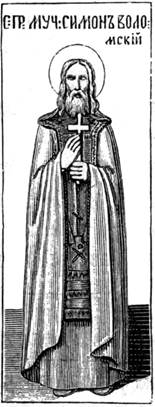
Преп. Симон, в мире Симеон176, поселянин вотчины Волоколамского монастыря, в 1610 году после путешествий по обителям принявший иночество в Пинегской Макариевой обители, в 1613 г. поселился в 80 верстах к юго-западу от Устюга, на р. Кичменге, в лесу Воломском. Здесь он пять лет прожил один, незнаемый людьми; питался овощами, которые сам садил, а иногда выпрашивал хлеба в каком-либо поселении. – Когда понемногу стали являться к нему ревнители благочестия, по грамоте царя Михаила и по благословению Ростовского митрополита Варлаама, построил он храм в честь креста Господня, и в 1620 г. посвящён был в настоятеля своей обители. Строгий подвижник, служивший для других примером трудолюбия, простоты сердечной, поста и молитв, июля 12 1641 г. злодейски умерщвлён был в своей обители177. Это было так. Преподобный рубил лес, как подошли к нему три крестьянина и стали требовать, чтобы отдал им царскую грамоту на землю обители; они навалили на него колоду и грозили смертью; преподобный едва упросил отпустить его в обитель за грамотой. Монастырские люди бросились искать злодеев, но те скрылись. Когда приблизился праздник блаженного Прокопия Устюжского, народ пошёл на поклонение святому, и большая часть братии Симоновой пустыни отправилась также в Устюг. Злодеи, узнав о том, воспользовались благоприятным для них временем. Ночью, найдя преподобного одного в пустыни, стали терзать его пытками, требуя царской грамоты; потом послали его в церковь искать грамоту. Преподобный со слезами молился Богоматери, причастился святых Таин и затем сказал: «теперь делайте, что хотите». Злодеи осыпали его ругательствами и побоями, потом отсекли ему голову и бросили тело близ кельи. – Тело преподобного похоронено было с честью по левую сторону созданного им храма. – В 1646 г. после чудес, совершившихся над мощами его, началось почитание его и сочинена служба ему, с описанием жития и чудес. Ныне мощи преподобного почивают в крестном храме упразднённой Воломской обители178.
The Venerable Simon, in the world Simeon176, a peasant of the domain of the Volokolamsk Monastery, having received monastic tonsure in the Pinega Macarius Monastery in 1610 after journeys to various monasteries, settled in 1613 eighty versts to the southwest of Ustyug, on the River Kichmenga, in the Volom forest. Here he lived alone for five years, unknown to men; he fed on vegetables which he himself planted, and sometimes begged bread in some settlement. – When little by little zealots of piety began to come to him, by the charter of Tsar Michael and with the blessing of Barlaam, Metropolitan of Rostov, he built a church in honor of the Cross of the Lord, and in 1620 was consecrated as superior of his monastery. A strict ascetic, who served as an example to others of love of labor, simplicity of heart, fasting and prayer, on July 12, 1641, he was wickedly murdered in his monastery177. It happened thus. The Venerable one was cutting wood when three peasants approached him and began to demand that he give them the tsar’s charter for the monastery’s land; they threw a log upon him and threatened him with death; the Venerable one barely begged them to let him go to the monastery for the charter. The monastery people rushed to seek the malefactors, but they hid themselves. When the feast of the blessed Procopius of Ustyug drew near, the people went to venerate the saint, and the greater part of the brethren of the Simon Hermitage also set out for Ustyug. The malefactors, learning of this, took advantage of the favorable time. At night, finding the Venerable one alone in the hermitage, they began to torment him with tortures, demanding the tsar’s charter; then they sent him into the church to look for the charter. The Venerable one prayed with tears to the Mother of God, partook of the Holy Mysteries, and then said: “Now do what you will.” The malefactors showered him with abuse and blows, then cut off his head and threw the body near the cell. – The body of the Venerable one was buried with honor on the left side of the church he had built. – In 1646, after miracles performed over his relics, his veneration began and a service was composed for him, with a description of his life and miracles. Now the relics of the Venerable one repose in the church of the Cross of the abolished Volom Hermitage178.
Кто доставил венец славы преп. Симону? Рабы страсти к корысти. Что ждёт за гробом слугу корысти? Меняются образы, в каких является страсть к земной выгоде; но не изменяется воля Божия, грозная для жадных к земной корысти.
Who bestowed the crown of glory upon the Venerable Simon? Slaves of the passion for gain. What awaits the servant of gain beyond the grave? The forms in which the passion for earthly profit appears change; but the will of God, terrible for those greedy for earthly gain, does not change.
Прокл из села Калипта близ Анкиры, в царствование Траяна, за непочтение к богам языческим был осуждён на распятие и расстреляние. Когда его вели к месту казни, юный Иларий, племянник его, поклонился ему и сказал: «и я христианин! Иларий был заключён в тюрьму, а Прокла распяли и пускали в него стрелы, пока он не умер. Верные похоронили тело его. На третий день (15 июля) Илария, за непреклонность в вере, бичевали жестоко, и потом, оцепивши ноги, повлекли за город, где и отрубили голову. Тело его похоронено близ Проклова.
Proclus, from the village of Calyptus near Ancyra, in the reign of Trajan, was condemned to crucifixion and being shot with arrows for not honoring the pagan gods. When he was being led to the place of execution, the young Hilarius, his nephew, bowed to him and said: “I too am a Christian!” Hilarius was cast into prison, while Proclus was crucified and arrows were shot at him until he died. The faithful buried his body. On the third day (July 15), Hilarius, for his steadfastness in the faith, was severely scourged, and then, having his feet bound, was dragged outside the city, where his head was cut off. His body was buried near that of Proclus.
Дядя императора Никифора Фоки, наставник и духовный отец Афанасия Афонского (5 июля), подвизался на горе Малее в Кименской обители, где и игуменствовал. Скончался около 940 года.
The uncle of the Emperor Nicephorus Phocas, the instructor and spiritual father of Athanasius of Athos (July 5), he asceticised on Mount Malea in the Cymena Monastery, where he also served as abbot. He reposed around the year 940.
В Ипатьевском Костромском монастыре в Троицком соборе есть придел в честь преподобного, ради тезоименитства царя Михаила Феодоровича, который и взят (1613 г.) на царство из Ипатьевского монастыря. Икона преп. Михаила, находящаяся в приделе его имени, прославилась чудотворениями в начале нынешнего столетия (архимандрита Димитрия Месяцеслов, 12 июля).
In the Hypatian Monastery of Kostroma, in the Trinity Cathedral, there is a side-chapel in honor of the Venerable One, for the sake of the namesake of Tsar Michael Feodorovich, who was chosen (in 1613) to the throne from the Hypatian Monastery. The icon of the Venerable Michael, located in his namesake side-chapel, became renowned for miracles at the beginning of the present century (Archimandrite Dimitri’s Menologion, July 12).
О ней говорит историк Евагрий (Ист. VI, 20): «во времена Хозроя Младшего пребывала в нашей стране Голиндуха, живая мученица. Испытавши тяжкие муки от магов Персидских, она претерпела продолжительные и сильные страдания и совершила многие чудеса. Жизнь её описал «Стефан, епископ Иерапольский». Но так как само творение Стефана не дошло до нас, то приходится довольствоваться сведениями, находящимися о ней в истории Феофилакта Симокатты, по суду издателей Acta Sanctorum (Julii, tom. 3, pag. 511) наиболее достоверными.
The historian Evagrius speaks of her (Hist. VI, 20): “In the time of Chosroes the Younger, there dwelt in our country Golinduch, a living martyr. Having endured grievous torments from the Persian Magi, she suffered prolonged and severe pains and performed many miracles.” Her life was described by “Stephen, Bishop of Hierapolis.” But since the work of Stephen itself has not come down to us, we must be content with the information about her found in the history of Theophylact Simocatta, which, according to the judgment of the editors of the Acta Sanctorum (Julii, tom. 3, pag. 511), is the most reliable.
Говорят, что в то время, как Хозрой возвратился на царство (т. е. после изгнания, а это случилось в 593 году), жила в Иераполе женщина, по имени Голиндуха. Родилась она в Вавилонии в семье магов. Отец её, из знатных, заведовал сбором податей в Персии. Достигши возраста, она выдана была за вельможу. Некогда, сидя с мужем за обедом, она вдруг лишилась чувств и осталась неподвижной. Когда она пришла в себя, то видевшие эту случайность, если только можно назвать случаем это неземное восхищение, спрашивали Голиндуху: что с ней? Она отвечала, что где-то под землёй устроены страшные муки, напротив великие блага ожидают чтущих Бога Всевышнего, Которого почитают христиане, и за то осмеиваются Персами. Тогда муж начал смеяться над ней, а, уразумевши затем её неизменное намерение принять христианство, стал отводить её от сего намерения бичеваниями, угрожая и смертью, которой Персы, по обычаю предков, казнят отступников от учения магов. Но она, укрепляясь любовью к Богу, заключила слух свой для его внушений, и он говорил на ветер. Было ей и другое Божественное откровение; ибо явившийся в сонном видении ангел, показавши прежде виденное, предсказал и близкую кончину мужа её. Предсказание исполнилась, и Голиндуха, оставивши Вавилонию, пришла в Низиб, где рассказала о себе христианским священникам и приняла святое крещение (с именем Марии).
It is said that at the time when Chosroes returned to the throne (i.e., after his exile, which occurred in 593), there lived in Hierapolis a woman named Golinduch. She was born in Babylonia into a family of Magi. Her father, a nobleman, was in charge of tax collection in Persia. Having reached maturity, she was given in marriage to a nobleman. Once, while sitting at dinner with her husband, she suddenly lost consciousness and remained motionless. When she came to herself, those who had witnessed this occurrence, if indeed one can call this heavenly rapture an occurrence, asked Golinduch: “What is the matter with you?” She replied that somewhere beneath the earth terrible torments are prepared, while on the contrary great blessings await those who honor the Most High God, Whom the Christians worship, and for this they are mocked by the Persians. Then her husband began to mock her, and, having later understood her unchangeable intention to embrace Christianity, began to dissuade her from this intention with scourgings, threatening her also with death, by which the Persians, according to ancestral custom, punish apostates from the teaching of the Magi. But she, strengthened by love for God, closed her ears to his exhortations, and he spoke to the wind. She also had another divine revelation; for an angel appearing in a dream, having shown her what she had seen before, also foretold the imminent death of her husband. The prophecy was fulfilled, and Golinduch, leaving Babylonia, came to Nisibis, where she told the Christian priests about herself and received holy Baptism (with the name Mary).
Маги, узнавши об этом, стали искать её, пришли в Низиб и, после напрасных усилий отвлечь от христианства, заключили на долгое время в тюрьму. Но с помощью Божией, при посредстве ангела Его, она освободилась из-под стражи и достигла Римских земель. В Иерусалиме, помолившись у гроба великого Бога и Спасителя нашего Иисуса Христа и облобызавши крест Его, пришла в Иераполь, предсказала многое, случившееся с Хозроем, именно о его бегстве к Римлянам и возвращении, и тут скончала свою святую жизнь (см. Четьи-Мин. 12 июля).
The Magi, learning of this, began to seek her out, came to Nisibis and, after vain efforts to turn her from Christianity, cast her into prison for a long time. But with God’s help, through the mediation of His angel, she freed herself from guard and reached the Roman lands. In Jerusalem, having prayed at the tomb of the great God and our Savior Jesus Christ and having kissed His Cross, she came to Hierapolis, foretold many things that happened to Khosrow, namely concerning his flight to the Romans and his return, and there ended her holy life (see the Chet’i-Minei, July 12).
Нестор в летоп.: «Жряху бесом, нарицающе я богы, привожаху сыны своя и дщери и жраху бесом, оскверняху землю требами своими, и осквернися кровми эемля Русска и холм от». 1, 34. Лев диакон о Русских Святослава: «мужчин и женщин задушают (εναποδηαξαντες) по их отеческому обычаю» (ed. Bonn. 149).
Nestor in the Chronicle: “They sacrificed to demons, calling them gods, brought their sons and daughters and sacrificed to demons, defiled the earth with their offerings, and the Russian land and the hill were defiled with blood.” 1, 34. Leo the Deacon concerning the Russians of Sviatoslav: “They suffocate (εναποδηαξαντες) men and women according to their ancestral custom” (ed. Bonn. 149).
Опис. Румянц. муз. стр. 455. См. Снегирева памятники, стр. 42. В минее Макария: «св. муч. Варяга и сына его Иоанна, в Киеве убиенных». Так под 12 мая. То же в печ. прологе. Ркп. святцы Отенские 1718 г.: «св. муч. Феодор Варяг и сын его Иоанн убиени быша от в. кн. Владимира, 9 егда бе в поганстве и идолослужении, в л. 6491 июля во 12 д.; мощи же их неизвестны, где погребены, понеже погани беша».
Description of the Rumyantsev Museum, p. 455. See Snegirev’s Monuments, p. 42. In the Menaion of Macarius: “The holy martyrs the Varangian and his son John, slain in Kiev.” Thus under May 12. The same in the printed Prologue. Manuscript Menologia of Otena, 1718: “The holy martyrs Theodore the Varangian and his son John were slain by Grand Prince Vladimir, when he was still in paganism and idolatry, in the year 6491, July 12; their relics are unknown, where they are buried, for they were pagans.”
Гедеонов о Варяжском вопросе в Запис. акад. т. II, стр. 159–165, 1 т. III. Известно, что Норманская школа, сколько ни билась, не отыскала в мнимом Норманском периоде Русской истории ни законов, ни обычаев, ни религии Норманнов. Подпорой её оставались только имена лиц, казавшиеся ей Норманскими. Но г. Гедеонов лишил её и этой последней опоры, доказав филологическим разбором и историческими свидетельствами, что мнимые Норманские имена суть чистые Славянские. Сл. прим. 111.
Gedeonov on the Varangian Question in Notes of the Academy, vol. II, pp. 159–165, 1 vol. III. It is known that the Norman school, however much it struggled, did not find in the supposed Norman period of Russian history any laws, customs, or religion of the Normans. Its support remained only the names of persons, which seemed to it Norman. But Mr. Gedeonov deprived it even of this last support, proving by philological analysis and historical evidence that the supposed Norman names are pure Slavic ones. Cf. note 111.
Четыре слова отысканы в Лаврской Златой Чепи XIV в. и изданы в приб. к твор. отц. 1843 г. Пятое найдено и изд. Шевыревым в поездке в Кириллов м. 2, 36. Изв. 2 отд. акад. III, 90–96. Ещё два изд. в Правосл. собес. июль 1860 г.
Four sermons were found in the Lavra Golden Chain of the 14th century and published in Additions to the Works of the Holy Fathers, 1843. The fifth was found and published by Shevyrev in Journey to the Kirillov Monastery 2, 36. News of the 2nd Department of the Academy III, 90–96. Two more were published in The Orthodox Interlocutor, July 1860.
И по летописи, в 1570 г. на Ярославовом дворе снесено несколько дворов для расширения площади. Собр. л. 3, 163. Сл. Соловьева ист. VI, 226, 227.
And according to the chronicle, in 1570, several courtyards were removed on Yaroslav’s Court to enlarge the square. Collection of Chronicles 3, 163. Cf. Soloviev’s History VI, 226, 227.
Опис. Новгор. святыни 1634 г. в Чтен. общ. ист. 1862 г. кн. IV. Святцы: «преп. Арсений затворник в муж. монастыре Рождества Богородицы, родом Порховитин (?). Обретоша мощи и принесоша к женам Мироносицам в церковь». По Отенскому списку: «пр. Арсений в Новеграде на торговой стороне, на Ярославле дворище, в монаст. Арсениево именуемом, близ р. Волхова, преставися в л. 7088 (1580) июля в 12 д., мощи под спудом, служба есть». Год кончины показан неверно.
Description of the Shrines of Novgorod, 1634, in Readings of the Society of History, 1862, book IV. Menologia: “The Venerable Arsenius the Recluse in the men’s monastery of the Nativity of the Mother of God, by birth a Porkhovite (?). They uncovered his relics and brought them to the Church of the Myrrh-bearers.” According to the Otena list: “The Venerable Arsenius in Novgorod on the Trade Side, at Yaroslav’s Court, in the monastery called Arsenius’s, near the Volkhov River, reposed in the year 7088 (1580), July 12; relics under a bushel, a service exists.” The year of his death is shown incorrectly.
Ркп. святцы; «пр. Симон строитель Воздвиженского монастыря на Волмах на р. Кичменге, убиен бысть от разбойник в л. 7149 м. июля в 12 д.»
Manuscript Menologia: “The Venerable Simon, builder of the Monastery of the Exaltation of the Cross on Volmy on the Kichmenga River, was slain by robbers in the year 7149, July 12.”