Отцы Четвёртого Вселенского собора, происходившего в 451 году в Халкидоне, написавши определение веры, положили его в раку мощей великомученицы; приложили к нему и еретическое исповедание, которое, впрочем, найдено было после у ног святой. О сём упоминают сами отцы в послании к Льву, папе Римскому, говоря: «действующим был Бог, а увенчавшей в чертоге собрание добропобедная Евфимия, которая, принявши от нас определение веры, представила его как собственное исповедание своему Жениху, через благочестивейшего императора и христолюбивую императрицу утишивши всякое волнение противников, укрепивши исповедание веры».
The Fathers of the Fourth Ecumenical Council, which took place in the year 451 in Chalcedon, having written the definition of the faith, placed it in the reliquary of the relics of the Great Martyr; they also placed beside it the heretical confession, which, however, was later found at the feet of the saint. The Fathers themselves make mention of this in their epistle to Leo, the Pope of Rome, saying: "God was the one at work, while the all-victorious Euphemia was the one who crowned the assembly in the council chamber; she, having received from us the definition of the faith, presented it as her own confession to her Bridegroom, and through the most pious emperor and the Christ-loving empress, having stilled every disturbance of the opponents, strengthened the confession of the faith."
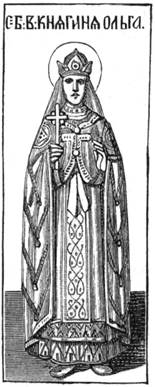
По известию преп. Нестора, кн. Ольга была природная Славянка, родившаяся во Пскове или точнее в той стороне, где и основался потом Псков. – Игорь Рюрикович, говорит он, «поят себе жену Ольгу от Плескова»126. – Известие поздней повести известного Василия, будто она была «от рода Варяжска» и родилась «близ предел власти Немецкой», само себя обличает в несправедливости, указывая при Ольге Немцев в пределах Русских, тогда как они явились здесь только в конце XII столетия. Столько же несправедливо та же повесть выдаёт Ольгу за лицо незнатного происхождения127; Ольга, по истории, не только законная жена кн. Игоря, тогда как служанка Малуша была только наложницей, но она ещё при жизни Игоря посылает от своего имени послов в Царьград вместе с послами Игоря и у неё свой город Вышгород. Затем нет причин не принимать того показания Иоакимовой летописи, что Ольга была из рода Гостомысла, славного умом и влиянием своим на племена Славянские, того самого, по совету которого, для прекращения между родами неурядиц, был призван из Вендской, Славянской, страны Рюрик-сокол. По той же летописи, Ольга называлась Прекрасою, по красоте лица и души, а Ольгой назвал её по своему имени опекун Игоря Олег, когда выдавал её за Игоря128.
According to the account of the Venerable Nestor, Princess Olga was a native Slav, born in Pskov, or more precisely in that region where Pskov was later founded. – Igor, son of Rurik, he says, “took for himself a wife, Olga, from Pleskov”126. – The account of the later narrative of the well-known Basil, that she was “of the Varangian race” and was born “near the borders of the German domain,” itself betrays its own injustice, by pointing to the presence of Germans within Russian borders during Olga’s time, whereas they appeared there only at the end of the twelfth century. Equally unjust is that same narrative in presenting Olga as a person of ignoble birth127; Olga, according to history, was not only the lawful wife of Prince Igor (whereas the servant Malusha was merely a concubine), but she also, during Igor’s lifetime, sent envoys to Constantinople in her own name together with Igor’s envoys, and she had her own city of Vyshgorod. There is therefore no reason not to accept that testimony of the Joachim Chronicle, that Olga was of the line of Gostomysl, renowned for his wisdom and his influence over the Slavic tribes—the very one by whose counsel, for the cessation of discord among the clans, Rurik the Falcon was summoned from the Wendish, Slavic land. According to the same chronicle, Olga was called Prekrasa (the Beautiful), for the beauty of her face and soul, and the name Olga was given her by Igor’s guardian Oleg, after his own name, when he gave her in marriage to Igor128.
По смерти супруга Игоря († 946 г.) кн. Ольга управляла Россией, как Любуша у Чехов, вдова Доброслава у Сербов, Драгомира в Богемии; сын Ольги Святослав остался после Игоря только 4 лет «детеск»129. И Ольга управляла делами с умом и волею мужчины. Возмутившихся Древлян не только наказала она за смерть мужа Игоря, но до того усмирила, не потеряв ни одного из верных подданных, что ввела между ними свои установления о быте их, а на возмутившийся Коростень наложила тяжёлую дань. Усмирив Древлянскую землю, Ольга возвратилась в Киев130. Пробыв здесь год, в 947 г. отправилась в Новгородский край и «учредила на Мсте погосты и дани, а по Луге оброки и дани». Это путешествие её надолго осталось памятным в народе. Летописец говорит: «по всей земле» (Новгородской) остаются её ловища» (места для ловли зверей), «знаменья» (знаки на бортных деревьях) «и места» (дачи) «и погосты» (места сельского управления). «Во Пскове» стоят «её сани». По Днепру и Десне известны её «перевесища» (торговые весы, для сбора пошлин); на Десне же село её «Ольжичи»131. Ольга объехала все места от Киева по Днепру и Десне до Новгорода и Пскова, осмотрела всё глазом правительницы, сама испытала и определила, где какой могут иметь промысл подданные её, и в Новгородской стороне сделала особенные распоряжения по р. Мсте и Луге. По Луге установила оброки, а по Мсте – погосты, дани же – там и здесь. Это означает, что по Мсте назначила она центральные места хозяйственного управления своего, то, что иначе называется волостными управлениями с соответственным тому населением; а с местностей по Луге Новгородцы предоставили Ольге назначить определённые платежи за пользование землями, но эти земли не могла она заселять своими людьми, как могла заселять земли по р. Мсте. Ольга не вела войны с Новгородцами, как вела с Древлянами, но умела заставить гордых Новгородцев принять те же распоряжения, какие ввела она у Древлян. Не напрасно вельможи Владимира говорили Владимиру, что бабка его Ольга – умнейшая из людей. Возвратясь в Киев, Ольга покойно управляла Россией132.
After the death of her husband Igor († 946 A.D.), Princess Olga governed Russia, as Libuše did among the Czechs, the widow Dobroslava among the Serbs, and Dragomira in Bohemia; Olga’s son Svyatoslav remained after Igor only four years old, "a child"129. And Olga governed affairs with the mind and will of a man. She not only punished the rebellious Drevlians for the death of her husband Igor, but subdued them so thoroughly, without losing a single one of her faithful subjects, that she introduced among them her own regulations concerning their way of life, and imposed a heavy tribute upon the rebellious city of Korosten. Having subdued the Drevlian land, Olga returned to Kiev130. After remaining there for a year, in 947 she set out for the Novgorod region and "established along the Msta river pogosts and tributes, and along the Luga river rents and tributes." This journey of hers long remained memorable among the people. The chronicler says: "throughout the whole land" (of Novgorod) there remain her "hunting grounds" (places for trapping animals), "marks" (signs on bee-trees), "and places" (estates) "and pogosts" (centers of rural administration). "In Pskov" stand "her sleigh." Along the Dnieper and the Desna her "weighing stations" (commercial scales for collecting duties) are known; on the Desna also is her village "Olzhichi"131. Olga traveled through all the places from Kiev along the Dnieper and the Desna as far as Novgorod and Pskov, surveying everything with the eye of a ruler, herself testing and determining where her subjects might carry on what kind of livelihood, and in the Novgorod region she made special arrangements along the Msta and Luga rivers. Along the Luga she established rents, and along the Msta—pogosts, and tributes—in both places. This means that along the Msta she appointed central places for her economic administration, what is otherwise called volost administrations with a corresponding population; while from the localities along the Luga, the Novgorodians allowed Olga to assign fixed payments for the use of the lands, but these lands she could not settle with her own people, as she could settle the lands along the Msta river. Olga did not wage war with the Novgorodians, as she had with the Drevlians, but she knew how to compel the proud Novgorodians to accept the same arrangements that she had introduced among the Drevlians. Not in vain did the nobles of Vladimir say to Vladimir that his grandmother Olga was the wisest of people. Having returned to Kiev, Olga governed Russia in peace132.
И язычник, особенно лучший язычник, поверяет жизнь свою совестью и гражданский быт – мыслями о вечном Боге. Ольга была очень способна понимать себя и окружающий её быт. – Чудесное событие с Русским воеводой Бравалином в Суроже (942 года) не могло не произвести впечатления на Ольгу. – В Киеве были христиане при ней и до неё133. Она видела их жизнь, могла узнать о вере их, могла сличать их веру и жизнь с язычеством Славянским. Светлый, проницательный ум её понял, что язычество не могло воспитать таких людей, каковы христиане. Беседа с христианскими учителями (одного из них видим с ней на пути её в Царьград) открыла ей небесную чистоту и высоту христианского учения. И сердце её пленилось Евангельскою истиной. Но с одной стороны большинство старшин и народа, принадлежа язычеству, не расположено было к христианству, и Ольга опасалась принять крещение в Киеве, чтобы не поднялось из того волнение в народе134. С другой стороны, она желала выслушать наставления в вере самые точные, в самой столице христианства, чтобы в деле самом важном не допустить какой-либо ошибки; она хотела видеть в опытах всё лучшее в лучшей вере, чтобы верить ей с полным убеждением ума и сердца. Весьма верно объясняет значение путешествия Ольги в Константинополь препод. Нестор. «Эфиопская царица, говорит он, ходила к Соломону слушать премудрость его и видела опыты мудрости его: точно так и блаж. Ольга искала мудрости Божией. Ищущие мудрости находят её... Блаж. Ольга в зрелых летах отыскивала умного значения всему в мире и вот нашла драгоценный жемчуг – Христа»135. Ольга была в Константинополе в 957 г.136. Она прибыла туда конечно в урочное для Русских время, каковым был, по свидетельству Константина, конец июня и начало июля. Между первым приёмом её при дворе – 9 сентября и вторым 18 октября прошло у неё более месяца. Довольно времени заставили её прождать в гавани, на что она после и жаловалась137. Эта задержка, без сомнения, зависит от того, что, буквально придерживаясь всех форм договора с Игорем, требовали, чтобы Ольга представила грамоту от Русского князя для посольства Русского. Во всяком случае Ольга пробыла в Константинополе никак не менее трёх месяцев. Чем же занималась она в это время? Так как цель её путешествия состояла в том, чтобы лучшим образом изучить святую веру и креститься; то в исполнении этой двойной цели состояли и занятия её в столице. «Супруга Русского князя, приводившего флот против Греков, по имени Ольга, по смерти супруга своего прибыла в Константинополь и, когда показала решимость свою принять служение чистой вере, была крещена и возвратилась, удостоенная почестей, достойных её намерения», так говорит Скилитза. Кедрин пишет: «Ольга, жена князя Русского, того, который приводил флот против Греков, по смерти супруга явилась в Константинополь и, когда доказала великую ревность свою к истинному благочестью, была крещена и принята с почестями, приличными её сану, и возвратилась в свой дом»138. В этих словах, кроме подтверждения главному событию – пребыванию Ольги в Цареграде, виден сам порядок занятий её в Цареграде. Первым делом её было открыть патриарху свои искренние намерения о вере, потом, выслушав наставления в вере, принять крещение, наконец уже видеться с двором. Патриархом был тогда Полиевкт, славный и по святости жизни, и по высокой образованности. Ольга поднесла ему в знак любви своей к святой вере золотое блюдо, с изображением Спасителя на драгоценном камне139. По древнему прологу патриарх крестил её сам. Нестор говорит то же и прибавляет, что «император был восприемным отцом её». Ольга, продолжает Нестор, быв просвещена крещением, радовалась душой и телом. Патриарх сказал ей: «благословенна ты между женами Русскими, что возлюбила свет и отвергла мрак: благословлять тебя будут сыны Русские до последнего рода». Потом патриарх преподал ей наставления о церковном уставе, о молитве, о посте, о милостыне, о сохранении чистоты телесной. Она стояла с наклонённой головой и, как губа напаяемая, внимала учению его. Потом, поклонясь патриарху, сказала: «твоими молитвами да сохранит меня Господь от всякой неприязненной сети». Преподав благословение, патриарх назначил ей способного священника140. Сентября 9 Ольга принимаема была со всем посольством своим при дворе. «Когда Ольга, пишет император Константин, прибыла во дворец, за ней шли особые княжеские её родственницы, многие почётнейшие прислужницы, поверенные (апокрисиарии) Русских князей и купцы». Император принял Ольгу, окружённый высшими чинами. От Русского посольства поднесены были дары. В зале Юстиниана принимала великую княгиню императрица. В другой зале, в присутствии императорской фамилии, Ольга разговаривала с императором. Обед был в Юстиниановой зале; императрица сидела на троне; великая княгиня сидела за столом с придворными дамами первого класса. Во время стола пели два хора певчих – певчие храма св. Апостолов и певчие св. Софии, а Свита великой княгини, за исключением особ княжеских, обедала за другим столом. После обеда подносили великой княгине и её свите подарки. Октября 18 был другой обед: великая княгиня сидела в особой зале с императрицей и её детьми; император с Русской свитой сидел в другой141. Обед 18 октября был конечно прощальный. Отправляясь в дом, говорит Нестор, Ольга была у патриарха для испрошения его благословения; она говорила ему: «народ мой и мой сын – язычники (погани); когда бы Бог соблюл меня от всякого зла!» «Чадо верное! отвечал ей патриарх: крестясь во Христа, ты облеклась во Христа: Он сохранит тебя»142. По древнему прологу, патриарх дал на благословение Ольге крест, которой долго сохранялся в Киеве и после Ольги143. «Ольга привела с собой в Киев, говорит Иоакимова летопись, умных иереев, построила деревянный храм Софии и украсила его иконами, которые прислал ей патриарх». Этот храм св. Софии сгорел в 1017 г. (после кончины Ольги); так пишет Дитмар и он же говорит, что в 1018 году встречали короля Болеслава – «в монастыре «св. Софии»144. Если же блаж. Ольга привела с собой иереев и построила в Киеве храм христианский, то конечно не она одна возвратилась из Константинополя христианкой. В самом деле, с нею были в столице христианской «родственники и родственницы её», в том числе «племянник», до 10 «знатнейших жён», 18 «почётных служительниц», 22 поверенных великой княгини и Русских князей, 43 купца, до 10 чиновников. Вероятно-ли, чтобы никто из этих людей не последовал примеру вел. княгини в Цареграде? Скорее можно положить, что немногие не последовали и едва ли не одни те, которые уже были крещены. Ольга брала без сомнения с собой таких, которые были с ней одинаковых мыслей о вере.
And the pagan, especially the better pagan, entrusts his life to his conscience and his civil existence to thoughts of the eternal God. Olga was very capable of understanding herself and the life surrounding her. — The miraculous event with the Russian voivode Bravlin in Sourozh (in the year 942) could not but have made an impression on Olga. — There were Christians in Kiev during her time and before her133. She saw their life, could learn about their faith, and could compare their faith and life with the paganism of the Slavs. Her bright, penetrating mind understood that paganism could not have nurtured such people as the Christians were. Conversation with Christian teachers (we see one of them with her on her journey to Constantinople) revealed to her the heavenly purity and height of Christian teaching. And her heart was captivated by the Gospel truth. But on the one hand, the majority of the elders and the people, belonging to paganism, were not disposed toward Christianity, and Olga feared to receive baptism in Kiev, lest it should stir up unrest among the people134. On the other hand, she desired to hear the most precise instruction in the faith, in the very capital of Christianity, so as not to commit any error in a matter of such importance; she wanted to see in experience everything that was best in the best faith, so as to believe in it with full conviction of mind and heart. The Venerable Nestor explains the significance of Olga's journey to Constantinople very accurately. "The Ethiopian queen," he says, "went to Solomon to hear his wisdom and saw the proofs of his wisdom: exactly so did blessed Olga seek the wisdom of God. Those who seek wisdom find it... Blessed Olga in her mature years sought the intelligent meaning of everything in the world, and behold, she found the precious pearl—Christ"135. Olga was in Constantinople in the year 957136. She arrived there, of course, at the appointed time for the Rus', which, according to the testimony of Constantine, was the end of June and the beginning of July. Between her first reception at court—on September 9—and the second on October 18, more than a month passed. She was made to wait a considerable time in the harbor, about which she later complained137. This delay, without doubt, arose from the fact that, strictly adhering to all the forms of the treaty with Igor, they demanded that Olga present a letter from the Russian prince for the Russian embassy. In any case, Olga remained in Constantinople for no less than three months. With what, then, did she occupy herself during this time? Since the purpose of her journey consisted in studying the holy faith in the best possible way and being baptized, the fulfillment of this twofold purpose also constituted her occupations in the capital. "The wife of the Russian prince who led a fleet against the Greeks, by name Olga, after the death of her husband arrived in Constantinople, and when she showed her determination to accept the service of the pure faith, she was baptized and returned, honored with dignities worthy of her intention," so says Scylitzes. Cedrenus writes: "Olga, the wife of the Russian prince, the one who led a fleet against the Greeks, after the death of her husband appeared in Constantinople, and when she proved her great zeal for true piety, she was baptized and received with honors befitting her rank, and returned to her home"138. In these words, besides the confirmation of the main event—Olga's sojourn in Constantinople—the very order of her occupations in Constantinople is evident. Her first task was to open her sincere intentions concerning the faith to the patriarch; then, after hearing instruction in the faith, to receive baptism; and finally, to meet with the court. The patriarch at that time was Polyeuctus, renowned both for the holiness of his life and for his high education. Olga presented to him, as a sign of her love for the holy faith, a golden dish with an image of the Savior on a precious stone139. According to the ancient Prologue, the patriarch himself baptized her. Nestor says the same and adds that "the emperor was her godfather." Olga, Nestor continues, having been enlightened by baptism, rejoiced in soul and body. The patriarch said to her: "Blessed are you among the women of Rus', for you have loved the light and rejected darkness: the sons of Rus' will bless you unto the last generation." Then the patriarch gave her instruction concerning the church rule, prayer, fasting, almsgiving, and the preservation of bodily purity. She stood with bowed head and, like a sponge being soaked, attended to his teaching. Then, bowing to the patriarch, she said: "By your prayers may the Lord preserve me from every hostile snare." Having given his blessing, the patriarch appointed a capable priest for her140. On September 9, Olga was received with her entire embassy at court. "When Olga," writes the Emperor Constantine, "arrived at the palace, there followed behind her the special princesses, her relatives, many most honorable attendants, the representatives (apocrisiarii) of the Russian princes, and merchants." The emperor received Olga, surrounded by the highest officials. Gifts were presented by the Russian embassy. In the Hall of Justinian, the empress received the Grand Princess. In another hall, in the presence of the imperial family, Olga conversed with the emperor. The dinner was in the Hall of Justinian; the empress sat on the throne; the Grand Princess sat at table with the ladies of the first rank. During the meal, two choirs of singers sang—the singers of the Church of the Holy Apostles and the singers of Hagia Sophia—while the Grand Princess's retinue, except for the princesses, dined at another table. After dinner, gifts were presented to the Grand Princess and her retinue. On October 18, there was another dinner: the Grand Princess sat in a special hall with the empress and her children; the emperor sat in another with the Russian retinue141. The dinner of October 18 was, of course, a farewell dinner. Setting out for home, says Nestor, Olga went to the patriarch to ask for his blessing; she said to him: "My people and my son are pagans; would that God might preserve me from every evil!" "Faithful child!" the patriarch answered her: "having been baptized into Christ, you have put on Christ: He will preserve you"142. According to the ancient Prologue, the patriarch gave Olga a cross as a blessing, which was preserved for a long time in Kiev even after Olga143. "Olga brought with her to Kiev," says the Joachim Chronicle, "wise priests, built a wooden church of Hagia Sophia, and adorned it with icons which the patriarch had sent her." This church of Hagia Sophia burned down in 1017 (after Olga's repose); so writes Thietmar, and he also says that in 1018 King Bolesław was met "in the monastery of Hagia Sophia"144. If, then, blessed Olga brought priests with her and built a Christian church in Kiev, then certainly she was not the only one who returned from Constantinople as a Christian. Indeed, with her in the Christian capital were "her relatives, male and female," including a "nephew," up to 10 "most noble women," 18 "honorable attendants," 22 representatives of the Grand Princess and the Russian princes, 43 merchants, and up to 10 officials. Is it likely that none of these people followed the example of the Grand Princess in Constantinople? It is rather more probable that few did not follow it, and hardly any except those who were already baptized. Olga, without doubt, took with her those who shared her thoughts concerning the faith.
По возвращении в Киев, благов. Ольга, глубоко убеждённая в превосходстве небесной веры, могла ли не желать того, чтобы и другие, остающиеся во мраке языческом, обратились к свету христианскому? Прежде всего, как любящая мать, говорила она о святой вере сыну своему. «Я познала истинного Бога, сын мой, и радуюсь. Познаешь ты, и ты будешь радоваться. – Христианская вера – свет и радость душе; она животворным действием своим на душу сама говорит о своём неземном происхождении, о своём достоинстве Божественном; прими эту веру и не только не будешь жалеть, но станешь считать себя самым счастливейшим, как я себя считаю счастливейшей», так говорила кн. Ольга князю сыну. – И как умно это наставление! Но, к сожалению, Святослав слишком любил славу и думал только о битвах. На просьбы матери он отвечал: «как мне одному принять иной закон? моя дружина будет смеяться над тем». Он не только не обнаруживал расположения к св. вере, но, весь занятый мечтами о власти и славе, не раз выражал и гнев на предложение матери: «се же к тому и гневашеся на матерь». Каково же было матери видеть непокорного сына и непокорного в деле спасения души своей! Но не все были глухи к проповеди благов. княгини, как глух был сын её: некоторые принимали св. крещение. К сожалению и затем следовали скорби для равноапостольной. Святослав, сам не хотевший и слышать о святой вере, не препятствовал другим принимать её; но он как бы не видал того, что языческая дружина его нагло смеялась над принимавшими св. крещение; подчас же и сам он, вместе с дикой дружиной, оскорблял христиан злыми насмешками. «Небрежаше (Святослав) того (учения Ольги), ни во уши принимаше, и аще кто хотяше креститися – ругахуся тому». Так говорит преп. Нестор. В Иоакимовой летописи читаем, что ещё при жизни св. Ольги «от вельмож и смерть мнози (христиане) прияша и вельми от неверных ругаеми бываху»; а по смерти Ольги в 971 году языческая дружина, обвинив христиан в погибели войска за Дунаем, до того возбудила Святослава против них, что он убил и брата своего (двоюродного) Глеба (Хлеба)145, и множество христиан было предано смерти. Каково же было благ. Ольге смотреть на такое расположение большинства к святой вере! Но она терпела и терпением располагала сердца других к св. вере; она молилась, постоянно молилась и от благости небесной ожидала лучшего для своей отчизны. «Она молилась за сына и за народ свой день и ночь». Для неё утешением было то, что, как видела она, очень многие, в том числе и бывший с ней в Цареграде племянник, глубоко, пламенно любили святую веру и готовы были пролить за неё кровь. Это подавало ей надежду на лучшую будущность. Благов. Ольга после крещения своего жила ещё 12 лет. Во столько времени, при ревности её к святой вере, без сомнения, познакомила она многих с святой верой. Само по себе вероятно известие, встречающееся ещё в древних памятниках, что святая Ольга посеяла первые семена святой веры в юном внуке Владимире и его братьях146. Более, чем вероятно само по себе, что, когда Святослав занимался войной с разными соседями и почти не жил в Киеве, равноапостольная пользовалась этим временем для свободного сеяния святой веры за пределами Киева. Вышгород, как место исключительно принадлежавшее ей, был при ней без сомнения городом христиан. То же должно положить и о других поселениях, состоявших в прямой зависимости от неё; а таковыми были места, с которых доход поступал на содержание великой княгини, матери великого князя, и её двора. В одной летописи сказано, что св. Ольга «умирая отдала село своё Будутино святой Богородице»147. Таким образом, в отсутствие войнолюбивого сына своего, равноапостольная посещала свою родину Псков и там посеяла семена святой веры. На берегу реки Великой стоял крест Ольгин, к сожалению, сгоревший в 1509 г. и в 1623 г. заменённый другим, доселе целым148. По писцовым книгам невдали от Пскова показываются Перино – Ольгин городок тож, Житник –Ольгин дворец тож149. По преданию, св. Ольга впоследствии прислала средства построить и украсить храм Святой Троицы вблизи креста своего и здесь-то по её воле основался город Псков. Крест святой Ольги стоял еще у «Николы на р. Нарове»150; а в XVI веке видели кресты её и в других местах Псковской стороны151. Кресты кн. Ольги сами по себе были учителями о новой вере для Псковской страны, где долго и после неё стояли идолы, хотя и с другим значением: «Услад каменное изображение, имеющее в руках крест, и Корс, который стоит на змее с мечом в одной руке и с огненной стрелой в другой»152.
Upon her return to Kiev, could the blessed Olga, deeply convinced of the superiority of the heavenly faith, not desire that others remaining in pagan darkness should turn to the Christian light? First of all, as a loving mother, she spoke to her son about the holy faith. "I have come to know the true God, my son, and I rejoice. You will come to know Him, and you too will rejoice. The Christian faith is light and joy to the soul; by its life-giving action upon the soul, it itself speaks of its heavenly origin, of its divine dignity. Accept this faith, and not only will you not regret it, but you will consider yourself most happy, just as I consider myself most happy," thus spoke Princess Olga to her son the prince. And how wise this instruction was! But, unfortunately, Sviatoslav loved glory too much and thought only of battles. To his mother's entreaties he replied: "How can I alone accept a different law? My druzhina will mock me for it." Not only did he show no inclination toward the holy faith, but, wholly occupied with dreams of power and glory, he more than once expressed anger at his mother's proposal: "he was also angry with his mother for this." How hard it was for a mother to see a disobedient son, and disobedient in the matter of the salvation of his own soul! But not all were deaf to the preaching of the blessed princess, as her son was deaf: some received holy Baptism. Unfortunately, sorrows followed even then for the Equal-to-the-Apostles. Sviatoslav, who himself did not wish to hear of the holy faith, did not hinder others from accepting it; but he seemed not to see that his pagan druzhina insolently mocked those who received holy Baptism; at times, he himself, together with his savage druzhina, insulted Christians with evil mockery. "Sviatoslav paid no heed to that (Olga's teaching), nor did he take it to heart, and if anyone wished to be baptized, they mocked him." So says the Venerable Nestor. In the Ioakim Chronicle we read that even during the life of St. Olga "many (Christians) received death from the nobles and were greatly mocked by the unbelievers"; and after Olga's death in 971, the pagan druzhina, accusing the Christians of the destruction of the army beyond the Danube, so incited Sviatoslav against them that he killed even his own brother (cousin) Gleb (Khleb)145, and many Christians were put to death. How hard it was for the blessed Olga to look upon such an attitude of the majority toward the holy faith! But she endured, and by her endurance disposed the hearts of others toward the holy faith; she prayed, constantly prayed, and from heavenly goodness awaited better things for her fatherland. "She prayed for her son and for her people day and night." For her it was a consolation that, as she saw, very many, including the nephew who had been with her in Constantinople, deeply and fervently loved the holy faith and were ready to shed their blood for it. This gave her hope for a better future. The blessed Olga lived another twelve years after her Baptism. In that time, with her zeal for the holy faith, she undoubtedly acquainted many with the holy faith. The report found even in ancient sources—that St. Olga sowed the first seeds of the holy faith in her young grandson Vladimir and his brothers146—is in itself probable. It is more than probable in itself that, when Sviatoslav was occupied with war against various neighbors and scarcely lived in Kiev, the Equal-to-the-Apostles used this time for the free sowing of the holy faith beyond the borders of Kiev. Vyshgorod, as a place belonging exclusively to her, was undoubtedly a Christian city during her time. The same must be assumed of other settlements directly dependent on her; such were the places from which income went to support the Grand Princess, the mother of the Grand Prince, and her court. One chronicle says that St. Olga "at her death gave her village of Budutino to the Most Holy Theotokos"147. Thus, in the absence of her war-loving son, the Equal-to-the-Apostles visited her homeland of Pskov and there sowed the seeds of the holy faith. On the bank of the Velikaya River stood Olga's Cross, which, unfortunately, burned down in 1509 and was replaced in 1623 by another, still intact148. According to the cadastral books, not far from Pskov are shown Perino—also called Olga's Town—and Zhitnik—also called Olga's Palace149. According to tradition, St. Olga later sent means to build and adorn a church of the Holy Trinity near her cross, and it was here, by her will, that the city of Pskov was founded. The cross of St. Olga also stood at "St. Nicholas on the Narova River"150; and in the 16th century, her crosses were seen in other places of the Pskov region151. The crosses of Princess Olga were themselves teachers of the new faith for the Pskov land, where long after her time idols still stood, though with a different meaning: "Uslad, a stone image holding a cross in its hands, and Kors, who stands on a serpent with a sword in one hand and a fiery arrow in the other"152.
Тогда как святая мать подвизалась для лучшего счастья своей отчизны, сын её Святослав, рыская за чужими землями, едва не потерял своей: стеснённые Печенегами, беспомощные Киевляне доведены были до того, что готовы были передать и себя и матерь его с Киевом Печенегам. Возвратясь поспешно в Киев, Святослав прогнал Печенегов; но готов был опять поспешить за Дунай, тогда как мать его лежала на одре смертном. Благов. Ольга сказала с скорбью сыну: «погреби меня и тогда иди, куда хочешь». Спустя три дня, 11 июля 969 г., св. Ольга скончалась; она завещала не совершать над ней языческой тризны и не насыпать кургана языческого, а послала на поминовение её деньги патриарху, и духовник её совершил над ней погребальное пение, в присутствии оплакивавшей её семьи княжеской.
While the holy mother labored for the better happiness of her fatherland, her son Sviatoslav, roaming after foreign lands, nearly lost his own: hard-pressed by the Pechenegs, the helpless people of Kiev were brought to the point of being ready to surrender both themselves and his mother, together with Kiev, to the Pechenegs. Returning hastily to Kiev, Sviatoslav drove off the Pechenegs; but he was ready to hasten again beyond the Danube, even while his mother lay on her deathbed. The blessed Olga said with sorrow to her son: "Bury me, and then go where you will." Three days later, on July 11, 969, St. Olga reposed; she commanded that no pagan funeral feast be held over her and that no pagan burial mound be raised, but that money be sent to the Patriarch for her commemoration, and her confessor performed the funeral chant over her, in the presence of the princely family mourning her.
Преп. Нестор, оканчивая свои известия о благоверной Ольге, пишет: «она предтекла христианству в земле нашей, как зарница перед солнцем, как заря перед светом полным; как луна в ночи, так светила она между людьми неверующими. Она первая из Руси взошла в Царство Небесное. Её хвалят сыны Русские как начальницу. Она и по смерти молит Бога за Русь. Её все славят, видя её лежащую в теле много лет»153. Эти прекрасные слова пр. Нестора показывают нам и то, что во время Нестора уже чтила Церковь Ольгу между святыми и мощи её открыто почивали. От черноризца Иакова узнаём не только то, что «тело св. Ольги почивает во гробе, как спящее, столько лет нетленное», но и то, что «малый каменный гроб её стоит в церкви св. Богородицы, в той, которую построил блаженный князь Владимир»154. По другим сведениям, тело благов. Ольги положено было в Десятинном храме благоверным внуком её Владимиром, при м. Леонтии155.
The Venerable Nestor, concluding his account of the blessed Olga, writes: "She was a forerunner of Christianity in our land, like the morning star before the sun, like the dawn before the full light; as the moon in the night, so she shone among unbelieving people. She was the first from Rus' to enter the Heavenly Kingdom. The sons of Rus' praise her as their leader. Even after death she prays to God for Rus'. All glorify her, seeing her lying in the body for many years"153. These beautiful words of the Venerable Nestor show us also that already in Nestor's time the Church honored Olga among the saints and her relics rested openly. From the monk James we learn not only that "the body of St. Olga rests in the tomb, as if sleeping, incorrupt for so many years," but also that "her small stone coffin stands in the church of the Holy Theotokos, in that which the blessed Prince Vladimir built"154. According to other accounts, the body of the blessed Olga was placed in the Church of the Tithes by her blessed grandson Vladimir, under Metropolitan Leontius155.
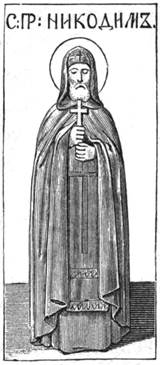
Албанский Славянин, препод. Никодим156, по воле родителей был женат и имел детей. Связи и знакомства с Турками затемнили душу его, и он, увлечённый чувственной жизнью магометанства, отрёкся от веры Христовой. Увлечение его магометанством до того было сильно, что он, не смотря на слёзы домашних, потурчил детей своих, кроме одного, которого тайно отправили на Афонскую гору. Когда узнал он, где скрывается сын, то, воспламенённый фанатизмом, понёсся туда, чтобы вырвать у иноков сына и отомстить за него. Благий Бог, ищущий спасения нашего, устроил по-Своему. Когда Никодим прибыл в Афон и тут искал сына, постнические подвиги, молитва, безмолвие пустынников, кроткое обращение с каждым поразили его до глубины души. Он вспомнил своё минувшее, когда и для его сердца не были чужды надежды на вечность духовного блаженства; он сравнил рай Магометов с раем Христовым и увидел, что сколько первый был грязен и нечист, столько же другой светел и благоуханен; он сравнил жизнь пустынников христианских с жизнью магометан и увидел, что сколько те кротки, добры, ласковы, готовы всем жертвовать для других, столько же другие дики, необузданны, горды и своевольны. Он вспомнил, что одна надежда на спасение для грешников, каковы все люди, – Христос Сын Божий; что же ждёт его несчастного, который отрёкся от Христа? И он горько заплакал о себе самом, о своём падении. Не сходя с горы, он возвратился к христианству, прокляв Магомета, и принял иночество. Три года оплакивал он своё падение и изнурял себя подвигами. Услышав от некоторых отцов, что тому, кто отрёкся от Христа перед людьми, полезно исповедовать Его перед людьми, он решился на подвиг мученичества. Чтобы не обмануться в своём желании, он обратился за советом к блаженному старцу Акакию, жившему в Кавсокаливском скиту. Долго плакал он у ног старца, прося уврачевать его больного. Старец поднял его с любовью, помолился о нём, потом тихо сказал что-то ему, дал ему свой старческий жезл, с словами: «иди с Богом! Бог тебе помощь! подвиг совершишь и венец получишь». Никодим, едва двигаясь от изнурения постного, отправился по благословению старца. Ещё на св. горе Господь укрепил его на великий подвиг видением, – открыл ему и муки, которые вытерпит он, и место, где отсечена будет глава его. Утешенный благостью Божией, Никодим твёрдо пошёл на подвиг свой. Он прибыл прямо на родину свою и тут вслух Турок исповедал, что он христианин и магометанство признаёт жалким заблуждением. Турки представили его к паше. И перед пашой он исповедал, что хотя принимал он магометанство, но убеждён, что вера христианская – вера, не заменимая ничем, а магометанство – жалкое заблуждение, страшное для того, кто дорожит вечностью своей. – Взбешённый паша велел сбросить его с террасы своего дома. Он уверен был, что христианин раздроблен будет на части падением. Но Никодим, по благодати Божией, остался невредим – и снова явился к паше. Паша затрепетал, думая, что перед ним привидение. Между тем толпа фанатиков с криком требовала казни для того, кто унизил Магомета. Паша отдал Никодима на волю беснующейся толпы. Неистовые фанатики трое суток терзали страдальца, вынуждая отречься от Христа. Когда наконец увидели, что не преодолеть им твёрдости исповедника Христова, лишили его головы на том самом месте, которое указано было ему в видении. Подвиг окончился июля 11 1722 г. Мощи преп. Никодима, перенесённые на Афон, источают исцеления прикасающимся к ним с верой157.
The Venerable Nicodemus156, an Albanian Slav, was married by the will of his parents and had children. Ties and acquaintances with Turks darkened his soul, and he, carried away by the sensual life of Mohammedanism, renounced the faith of Christ. His infatuation with Mohammedanism was so strong that, despite the tears of his household, he turned his children into Turks, except for one, whom they secretly sent to Mount Athos. When he learned where his son was hiding, inflamed with fanaticism, he rushed there to tear his son away from the monks and take revenge for him. The good God, Who seeks our salvation, arranged things according to His will. When Nicodemus arrived on Athos and sought his son there, the ascetic labors, prayer, silence of the hermits, and gentle treatment of everyone struck him to the depths of his soul. He remembered his past, when hopes for the eternity of spiritual blessedness were not foreign to his heart either; he compared the paradise of Mohammed with the paradise of Christ and saw that as much as the former was filthy and unclean, so much the latter was bright and fragrant; he compared the life of Christian hermits with the life of Mohammedans and saw that as much as the former were meek, good, kind, ready to sacrifice everything for others, so much the latter were wild, unbridled, proud, and self-willed. He remembered that the only hope of salvation for sinners, as all men are, is Christ the Son of God; what then awaits him, the unhappy one, who renounced Christ? And he wept bitterly for himself, for his fall. Without leaving the mountain, he returned to Christianity, cursing Mohammed, and received monastic tonsure. For three years he lamented his fall and exhausted himself with ascetic labors. Hearing from some fathers that it is beneficial for one who has renounced Christ before men to confess Him before men, he resolved upon the feat of martyrdom. In order not to be deceived in his desire, he turned for advice to the blessed elder Acacius, who lived in the Kavsokalyva Skete. For a long time he wept at the elder's feet, begging him to heal him, the sick one. The elder raised him up with love, prayed for him, then quietly said something to him, gave him his elder's staff, with the words: "Go with God! God be your help! You will accomplish the feat and receive the crown." Nicodemus, barely moving from exhaustion by fasting, set out with the elder's blessing. While still on the Holy Mountain, the Lord strengthened him for the great feat by a vision—revealing to him both the torments he would endure and the place where his head would be cut off. Comforted by the goodness of God, Nicodemus went forth firmly to his feat. He arrived directly in his homeland and there, in the hearing of the Turks, confessed that he was a Christian and that he considered Mohammedanism a wretched delusion. The Turks brought him before the pasha. And before the pasha he confessed that although he had accepted Mohammedanism, he was convinced that the Christian faith is a faith irreplaceable by anything, while Mohammedanism is a wretched delusion, terrible for one who values his eternity. The enraged pasha ordered him to be thrown from the terrace of his house. He was certain that the Christian would be shattered to pieces by the fall. But Nicodemus, by the grace of God, remained unharmed—and again appeared before the pasha. The pasha trembled, thinking that before him was a ghost. Meanwhile, a crowd of fanatics shouted, demanding execution for the one who had humiliated Mohammed. The pasha gave Nicodemus over to the will of the frenzied crowd. For three days the raging fanatics tormented the sufferer, forcing him to renounce Christ. When at last they saw that they could not overcome the steadfastness of the confessor of Christ, they beheaded him in that very place which had been shown to him in the vision. The feat ended on July 11, 1722 A.D. The relics of the Venerable Nicodemus, translated to Athos, pour forth healings to those who touch them with faith157.
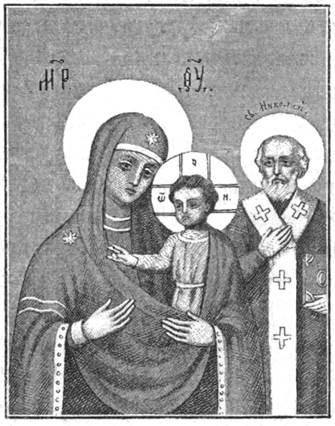
В 1539 году на старом Пыршенском городище, заросшем лесом, в Ржевском уезде, два хищника из деревни Дрябков, придя на совет с ожидавшимися подобными же злодеями, вдруг увидели на дереве честной Крест Господень, изображённый на иконе. Это явление расстроило планы их, и они объявили о своей находке другим крестьянам. Эти, удостоверившись в справедливости сказанного им, пригласили некоего иеромонаха Стефана для совершения молитв (ближайшая церковь находилась в 14 верстах). Стефан, сопровождаемый сотней мужчин, женщин и детей из четырёх окрестных деревень, в день Пятидесятницы, 25-го мая, пришёл на городище и воздал благодарение Богу. Между тем настала непогода и всё покрылось тучами, только на городище было светло, и вдруг Стефан увидел в саженях трёх от первого дерева на сосне иконуПресв. Богородицы Одигитрии с Предвечным Младенцем на левой руке и предстоящим святителем Николаем. Св. икона очень небольшая, сочинения и письма древних иконописцев, по замечанию рукописного сказания об обретении икон. Инок Стефан и весь народ возблагодарили Бога и по вере их благодать исцелений источалась множеству болящих.
In the year 1539, at the old Pyrshino fortified settlement, overgrown with forest, in the Rzhev district, two robbers from the village of Dryabkov, having come to confer with similar villains expected to join them, suddenly saw on a tree the venerable Cross of the Lord, depicted on an icon. This appearance disrupted their plans, and they announced their find to other peasants. These, having verified the truth of what was told them, invited a certain hieromonk Stephen to perform prayers (the nearest church was 14 versts away). Stephen, accompanied by a hundred men, women, and children from four surrounding villages, on the day of Pentecost, May 25th, came to the settlement and gave thanks to God. Meanwhile, bad weather set in and everything was covered with clouds, but only over the settlement it was bright, and suddenly Stephen saw, about three sazhens from the first tree, on a pine tree, an icon of the Most Holy Theotokos of Hodegetria with the Pre-eternal Child on her left arm and St. Nicholas the Hierarch standing before Her. The holy icon is very small, of the composition and painting of ancient iconographers, according to the observation of the manuscript account of the uncovering of the icons. The monk Stephen and all the people gave thanks to God, and according to their faith, the grace of healings flowed forth to a multitude of the sick.
Стефан, составивши подробную запись о иконах и благодатных исцелениях, отправился в Москву и через бывшего Ржевского наместника представил её митрополиту Иосифу. Скоро подошли и доверенные Оковицкой волости с письменным донесением о совершившихся чудотворениях. Митрополит после соборного обсуждения с двумя епископами (Сарским и Коломенским) донёс об этом великому князю, а великий князь тотчас послал боярина и священника обследовать дело на месте. Посланные сами сделались очевидными свидетелями многих чудес и удостоверили истину прежних донесений. Тогда великий князь повелел на том месте, где явился Крест Господень, поставить церковь в честь Креста (праздник 1-го авг.), а на месте, где была икона Одигитрии, велел устроить церковь Богородицы с приделом во имя Николая Чудотворца. Священники и диаконы Московского Успенского собора освятили их 5-го и 9-го октября того же года. В 1540 году св. иконы, по благоговейному желанию великого князя, принесены были в Москву (через Ржев и Волоколамск) и находились тут с января по июнь месяц, а потом снова возвращены на Пыршенское городище (которое начало заселяться и теперь есть село Оковцы на реке Пыршне), куда достигли 11 июля, каковой день и установлен для празднования иконам. См. священника Успенского Историческая записка о селе Оковцах, Москва, 1873 г. Ныне Оковцы – в Осташковском уезде, но иконы по-старому называются Ржевскими. Во время смут междуцарствия они были в Новгороде, но в 1667 году, по воле патриарха, возвращены.
Stephen, having compiled a detailed record of the icons and the gracious healings, set out for Moscow and, through the former Rzhev viceroy, presented it to Metropolitan Joseph. Soon the trusted men of the Okovtsy volost also arrived with a written report of the miracles that had taken place. The Metropolitan, after conciliar discussion with two bishops (of Sarai and Kolomna), reported this to the Grand Prince, and the Grand Prince immediately sent a boyar and a priest to investigate the matter on site. The envoys themselves became eyewitnesses of many miracles and confirmed the truth of the previous reports. Then the Grand Prince commanded that a church be erected on the spot where the Cross of the Lord had appeared, in honor of the Cross (the feast of August 1st), and on the spot where the icon of Hodegetria had been, he ordered a church of the Theotokos to be built, with a side-chapel in the name of Nicholas the Wonderworker. The priests and deacons of the Moscow Dormition Cathedral consecrated them on October 5th and 9th of the same year. In 1540, the holy icons, according to the devout desire of the Grand Prince, were brought to Moscow (via Rzhev and Volokolamsk) and remained there from January to June, and then were returned again to the Pyrshino settlement (which began to be settled and is now the village of Okovtsy on the Pyrshna River), where they arrived on July 11th, which day was established for the celebration of the icons. See priest of the Dormition Historical Note on the Village of Okovtsy, Moscow, 1873. Now Okovtsy is in the Ostashkov district, but the icons are still called Rzhev icons. During the Time of Troubles of the interregnum, they were in Novgorod, but in 1667, by the will of the patriarch, they were returned.
Повесть о св. княгине Ольге – в начале степ. книг. I, 6–11. Эта повесть составляет прибавление к степ. книге, пришитое во время митр. Макария, если не после него. Она стоит здесь без всякой связи с степ. книгой. За ней следует оглавление степ. книги, т. е. начало её. Об Ольге степ. книга повторяет слова Нестора. I, 80. Эта повесть – сочинение известного баснослова Василия. Из неё сделано было им извлечение для пролога, но туда оно не попало. Извлечение напечат. у преосвященного Макария в истор. Русск. Церкви I, 228–229. Помещённое в печат. прологе краткое житие святой Ольги встречается в ркп. прологе XV в., у Румянцева № 321. Странно, как тенденции о Василия сходятся с тенденциями нынешних западников.
The Tale of St. Princess Olga – at the beginning of the Books of Degrees. I, 6–11. This tale constitutes an addition to the Book of Degrees, appended during the time of Metropolitan Macarius, if not after him. It stands here without any connection to the Book of Degrees. It is followed by the table of contents of the Book of Degrees, i.e., its beginning. On Olga, the Book of Degrees repeats the words of Nestor. I, 80. This tale is a composition of the well-known fabulist Basil. An extract from it was made by him for the Prologue, but it did not find its way there. The extract is printed by His Grace Macarius in his History of the Russian Church I, 228–229. The brief life of St. Olga placed in the printed Prologue is found in a manuscript Prologue of the 15th century, at Rumyantsev No. 321. It is strange how the tendencies of Basil coincide with the tendencies of today's Westernizers.
Лавровского о Иоакимовой летописи, стр. 57. Харьков 1856 г. Иоакимова летопись – в Отечеств. Зап. 1856 г. о призвании Рюрика из Славянск. поморья и о Славянск. значении имён Рюрика, Игоря, – Олега – Гедеонов: «о Варяжском вопросе, гл. XIII–XV». В Запис. императорской академии наук. И Нестор ясно говорит, что Варяги Рюрика – не Шведы, не Норвежцы, не Датчане, не Англо-Норманны. – Замечание это было нужно сделать в его время: в XI в. Варяжская дружина Греческих императоров состояла уже не из одних Вендских мечников, а и из кондотьеров Швеции, Норвегии, Новманской Англии... Дании.
Lavrovsky on the Joachim Chronicle, p. 57. Kharkov 1856. The Joachim Chronicle – in Otechestvennye Zapiski, 1856, on the calling of Rurik from the Slavic Pomerania and on the Slavic meaning of the names Rurik, Igor, Oleg – Gedeonov: "On the Varangian Question, ch. XIII–XV." In the Notes of the Imperial Academy of Sciences. And Nestor clearly says that the Varangians of Rurik are not Swedes, not Norwegians, not Danes, not Anglo-Normans. – This remark was necessary to make in his time: in the 11th century, the Varangian retinue of the Greek emperors already consisted not only of Wendish swordsmen, but also of condottieri from Sweden, Norway, Norman England... Denmark.
Собр. л. I, 25. Древлянские мужи «седяху – в великих сустугах, гордящеся». Сустуг известен и ныне у Мордвы, – медное грудное украшение. Недавно найденный сустуг X века – медное грудное украшение с шестью рядами («перегородами») спускающихся цепочек с бубенчиками (Ж. Μ. Внутренн. дел 7. 39, стр. 165, 166). По Переславской летописи (Μ. 1851 г., стр. 12) Ольга говорила Древлянам: «прошу у вас дайте жертву богам, дайте со двора по три голубя и по три воробья». И Константин Багрянородный писал о Русских, что они «приносили в жертву живых птиц».
Collection of Chronicles I, 25. The Drevlyan men "sat – in great sustugs, boasting." The sustug is known even today among the Mordvins – a copper chest ornament. A recently found sustug of the 10th century – a copper chest ornament with six rows ("partitions") of descending little chains with bells (Journal of the Ministry of Internal Affairs 7. 39, pp. 165, 166). According to the Pereslavl Chronicle (M. 1851, p. 12) Olga said to the Drevlyans: "I ask of you, give a sacrifice to the gods, give from each household three pigeons and three sparrows." And Constantine Porphyrogennetos wrote of the Rus, that they "offered live birds as sacrifice."
Ныне дер. Староселье на левом берегу Днепра, невдали от устья Десны, почти против Вышгорода. – См. Черниг. епарх. изв. 1863 г. № 15. По Львов. I, 69, «есть село её у Киева близ Десны именуемо и до днесь Олжище. По Днепру же перевоз её (Ольги) и доныне словет».
Now the village of Staroselye on the left bank of the Dnieper, not far from the mouth of the Desna, almost opposite Vyshgorod. – See Chernigov Diocesan News, 1863, No. 15. According to the Lvov Chronicle I, 69, "there is her village near Kiev, close to the Desna, called Olzhishche to this day. And her ferry (Olga's) across the Dnieper is still spoken of to this day."
Собр. л. I. 25. IV, 174. V, 104. IX, 29. Гражданские дела Ольги отчётливо объяснены г. Беляевым: Русь в первые сто лет, стр. 123–145. О двух дворцах Ольги в Киеве – Закревский. Киев, стр. 205.
Collection of Chronicles I. 25. IV, 174. V, 104. IX, 29. The civil affairs of Olga are clearly explained by Mr. Belyaev: Rus in the First Hundred Years, pp. 123–145. On the two palaces of Olga in Kiev – Zakrevsky. Kiev, p. 205.
Нестор относит к 955 г. Но 9 сент. в среду и 18 окт. в воскресенье, когда по описанию имп. Константина Ольга угощаема была во дворце императора, были в 957 г., а не в 955 г. Нестор передаёт ошибочные слухи о сношениях императора с Ольгой. При точном известии современного императора разногласия старых писателей о времени крещения, показанные св. Димитрием (ч. мин. июл. 11) – разрешаются или разрушаются сами собой.
Nestor dates this to the year 955. But September 9, a Wednesday, and October 18, a Sunday—when, according to the description of Emperor Constantine, Olga was entertained in the imperial palace—fell in the year 957, not 955. Nestor transmits erroneous rumors about the emperor’s dealings with Olga. In light of the precise account of the contemporary emperor, the disagreements of older writers concerning the time of her baptism, as shown by St. Demetrius (Menaion, July 11), are resolved or fall away of themselves.
Собр. л. 1, 26. «Аще ты, рцы, такоже постоиши у мене в Почаве, яко же аз в Суду, то тогда ти дам». Banduriip. 59.
Collection of Chronicles I, 26. “If you, say, will likewise stand with me in Pochaina as I stood in the Sud, then I will give it to you.” Banduri p. 59.
Это блюдо видел в Софийском храме Новгор. архиеп. Антоний, кот. писал о том так: «и блюдо велико служебное Ольгы Русской, когда взяли дань, ходивши к Царюграду; в блюде же Ольгине камень драгой, на том же камне написан Христос и от того Христа емлют печати людие на все добро; у того же блюда все по верхови жемчугом учинено». Ркп. путеш. Антония. О блаж. п. Полиевкте так говорит современник: «славный монашеской жизнью, посвятившийся совершеннейшему житию с юности, отличался всякой добродетелью и здравым учением; в нём многие видели другого Иоанна Златоустого, и он был таким на деле» (Hist. Bysant. XXI, р. 208 Venet).
This dish was seen in the Church of St. Sophia by Anthony, Archbishop of Novgorod, who wrote of it thus: “And there is a great service dish of Olga of Rus’, when she took tribute, having gone to Constantinople; and in Olga’s dish is a precious stone, and on that stone is inscribed Christ, and from that Christ people take seals for every good thing; and that dish is all adorned with pearls around the rim.” Manuscript of Anthony’s journey. Of the blessed Patriarch Polyeuctus a contemporary speaks thus: “Glorious in monastic life, having devoted himself to the most perfect way of life from youth, he was distinguished by every virtue and sound teaching; in him many saw another John Chrysostom, and such he was in deed” (Hist. Byzant. XXI, p. 208 Venet).
Constantini de cerem, lib. 2, c. 15. Полный перевод пространного описания и с объяснениями у Беляева: Русь в первые сто лет, стр. 146–153.
Constantini de cerem. lib. 2, c. 15. A full translation of the lengthy description, with explanations, in Belyaev: Rus’ in the First Hundred Years, pp. 146–153.
В Сербском прологе XIII века: «сподобися св. крещения от патриарха и приимше от него крест, прииде в свою землю, иже ныне стоит в Киеве в с. Софии, в алтаре на десной стране, имея письмена: обновися в Русивстей земли крест от Ольги, благоверные княгини, матери Святослава» (Востокова опис. муз. 453). Тоже в печ. прологе и Ч. Минее июл. 11. Μ. Иларион также говорит в похвале Владимиру: «ты же и бабка твоя Ольга, принесшая крест из нового Иерусалима, из Константинополя и поставившая его в земле своей, вы утвердили веру». По Польскому известью (Киевлянин на 1850 г., стр. 148–150), крест сей похищен из Киева Римским бискупом Андреем, который хотел отвезти его в Краков, но вынужден был чудесной силой оставить его в Люблине, где и сам умер в 1434 г.
In a Serbian Prologue of the 13th century: “She was accounted worthy of holy baptism from the patriarch, and having received from him a cross, she came to her own land, which cross now stands in Kiev in St. Sophia, in the altar on the right side, having this inscription: ‘The cross was renewed in the land of Rus’ by Olga, the right-believing princess, mother of Svyatoslav’” (Vostokov’s Description of the Museum, 453). Likewise in the printed Prologue and the Menaion for July 11. Metropolitan Hilarion also says in his Praise of Vladimir: “You and your grandmother Olga, who brought the cross from the new Jerusalem, from Constantinople, and set it up in your land, you have confirmed the faith.” According to a Polish account (Kievlyanin for 1850, pp. 148–150), this cross was stolen from Kiev by the Roman bishop Andrew, who wished to take it to Krakow, but was compelled by a miraculous power to leave it in Lublin, where he himself died in 1434.
Pertz 5, 870. О пожаре 1017 г. говорит и Нестор: «Ярослав иде в Киев и погореша церкви». Собр. л. 1, 62. В святцах Синод. Апостола 1307 г. под 11 мая: «священие святые Софыя в Кыеве в л. 6460 (952)». Без сомнения, здесь разумеется освящение Софийского храма 957 г. Освящение Ярославова Софийского храма доставлено здесь под 4 ноября.
Pertz 5, 870. Of the fire of 1017, Nestor also speaks: “Yaroslav went to Kiev, and the churches burned down.” Collection of Chronicles I, 62. In the calendar of the Synodal Apostolos of 1307, under May 11: “The consecration of holy Sophia in Kiev in the year 6460 (952).” Without doubt, the consecration of the Church of St. Sophia in 957 is meant here. The consecration of Yaroslav’s Church of St. Sophia is placed here under November 4.
В Сербском прологе XIП в.: «в тыжде день светою мученику, Рушкою царю, Борыса и Хлеба» (Экзар. 91, прим. 10). Племянник в. кн. Ольги, по словам имп. Константина, был с ней в Константинополе. Стриттера Изв. Визант. III, 53.
In a Serbian Prologue of the 13th century: “On the same day, the holy martyrs, the Rus’ian princes, Boris and Khleb” (Exarch. 91, note 10). The nephew of Grand Princess Olga, according to the words of Emperor Constantine, was with her in Constantinople. Stritter’s Byzantine Accounts III, 53.
Иаков мних в похвале св. Владимиру пишет: «взыска спасение и прия от бабы своей Олзе, како прияла св. крещение... То все слышав от бабе своей Олзе... тоя и житие подража... то слышав и разгшется Св. Духом сердце его, хотя св. крещения». Степ. кн. 1, 87. Владимир скончался в глубокой старости (decrepitæ statis. Димаратр VII, 52); а от смерти Ольги (969 г.) до кончины Владимира (1015 г.) прошло только 46 лет. Четь-минея июл. 11. И Нестор пишет, что в 968 г. во время приступа Печенегов к Киеву «затворися Валга в граде со унуки своими, Ярополком и Ольгом и Владимиром, в граде Киеве». Собр. л. 1, 27.
James the Monk, in his Praise of St. Vladimir, writes: “He sought salvation and received it from his grandmother Olga, how she received holy baptism... All this he heard from his grandmother Olga... her life he imitated... Hearing this, his heart was inflamed by the Holy Spirit, desiring holy baptism.” Book of Degrees I, 87. Vladimir died in extreme old age (decrepitae aetatis. Dithmar VII, 52); and from the death of Olga (969) to the end of Vladimir (1015) only 46 years passed. Menaion for July 11. And Nestor writes that in 968, during the Pecheneg assault on Kiev, “Olga shut herself up in the city with her grandsons, Yaropolk, Oleg, and Vladimir, in the city of Kiev.” Collection of Chronicles I, 27.
Надпись нынешнего креста и часовня древнего места креста – у гр. Толстого: святыни и древности Пскова, стр. 29. 30. 73. 74. О кресте Ольги говорит и Василий. Степ. кн. 1, 30.
The inscription on the present cross and the chapel at the ancient site of the cross—in Count Tolstoy’s Sanctuaries and Antiquities of Pskov, pp. 29, 30, 73, 74. Of Olga’s cross, Basil also speaks. Book of Degrees I, 30.
Дер. Ольги городок и Житник – у устья р. Великой. Другие памятники пребывания Ольги в Псковской стороне: Ольгины ворота, Ольгины слуды (подводные каменные плиты в одном из рукавов р. Великой), несколько ниже с. Выбутина или погоста Лыбуты; ниже Ольгиных ворот место Буденик – древнее с. Будятино. В летописи (собр. л.4:194) под 1394 г. Ольгина гора. Толстого древн. Пскова, стр. 76. 78.
The village of Olgin Gorodok and Zitnik—at the mouth of the Velikaya River. Other memorials of Olga’s sojourn in the Pskov region: Olga’s Gates, Olga’s Sludy (submerged stone slabs in one of the branches of the Velikaya River), somewhat below the village of Vybutino or the churchyard of Lybuty; below Olga’s Gates, the place Budenik—the ancient village of Budyatino. In the chronicle (Collected Chronicles IV:194) under the year 1394, Olga’s Hill. Tolstoy’s Antiquities of Pskov, pp. 76, 78.
О крестах Василий в ркп. кратком житии Ольги: «нача требища и кумиры сокрушати по многим местам и в местах нача кресты Христовы поставляти; кресты же те Христовы знамения и чудеса творят и до сего дне, иде же святая поставила». То же говорит он в пространном житии, степ. кп. 1, 30.
Concerning the crosses, Basil in the manuscript Short Life of Olga: “She began to destroy pagan shrines and idols in many places, and in those places she began to set up crosses of Christ; and those crosses of Christ work signs and wonders to this day, wherever the saint set them up.” The same he says in the lengthy Life, Book of Degrees I, 30.
Этих идолов видел пред городом Псковом Давид Вундерер, бывший в Пскове и Москве в 1589 г. Он писал: «идолы поставлены жрецами за много лет перед тем и доныне составляют предмет обожания для жителей» (D. Wundrerers Reisen durch Rusland. Schveden 1589. 1590 in franktki Archi 1812). Последнее неправда. Идолы оставались как не легко сокрушённые памятники былого и притом получившие уже другое значение; последнее ясно видно по кресту Услада.
These idols were seen before the city of Pskov by David Wunderer, who was in Pskov and Moscow in 1589. He wrote: “The idols were set up by priests many years before and to this day constitute an object of adoration for the inhabitants” (D. Wunderers Reisen durch Russland, Schweden 1589, 1590, in Frankfurter Archiv 1812). The latter is untrue. The idols remained as monuments of the past not easily destroyed, and moreover had already acquired a different significance; the latter is clearly evident from the cross of Uslad.
Собр. л. 1, 28–29. V, 107. VII, 286. VIII, 289. IX, 37. Сербский пролог XIII в.: «преставися (Ольга) м. иулия в 11 д. поживши л. 75. нача болети и призва сына своего Святослава, заповеда ему погребсти её с землею равно, а могилы не сути (не насыпать могилы-кургана), но посла злато патриарху Цареграда и преставися» ... (Извест. акад.5:375). – По Феодосиеву патерику (Изв. акад.5:137): «умре Ольга м. июля в 11 д. и бе заповедала Ольга послать злато патриарху».
Collection of Chronicles I, 28–29. V, 107. VII, 286. VIII, 289. IX, 37. Serbian Prologue of the 13th century: “She reposed (Olga) on the 11th day of July, having lived 75 years. She began to be ill and called her son Svyatoslav, commanding him to bury her level with the earth, and not to heap up a mound, but to send gold to the patriarch of Constantinople, and she reposed...” (Proceedings of the Academy 5:375). – According to the Theodosian Patericon (Proceedings of the Academy 5:137): “Olga died on the 11th day of July, and Olga had commanded to send gold to the patriarch.”
Степ. кн. 1, 34. 39. 160. Печ. прилог 11 июля. Сербский пролог XVII в.: «Бога должника себе сотвори: Иже ю тако нетлением прослави... И взем тело от земли бабы своея нетленно, вложиша в раку древяну и поставиша в церкви святые Богородицы» (Оиис. муз. 453. 454). Герберштейн: «причислена к лику святых внуком Владимиром, уже крестившимся; ей посвящён 11 д. июля». Служба св. кн. Ольге – у Царского № 563, Румянцева № 397.
Book of Degrees I, 34, 39, 160. Printed Prologue for July 11. Serbian Prologue of the 17th century: “She made God her debtor: for He glorified her thus with incorruption... And taking the body of his grandmother from the earth, incorrupt, they placed it in a wooden reliquary and set it in the church of the Most Holy Theotokos” (Description of the Museum, 453, 454). Herberstein: “She was numbered among the saints by her grandson Vladimir, who was already baptized; the 11th day of July is dedicated to her.” The service to St. Princess Olga—in Tsarsky’s No. 563, Rumyantsev’s No. 397.