Панкратий святой, уроженец Антиохийский, в юности был с родителем своим в Палестине и слышал и учение Христово; по вознесении же Спасителя, когда в Антиохию прибыл некто из Апостолов, крестился вместе с родителем своим (около 40 года), и в 45 году поставлен Апостолами Петром и Павлом во епископа Сицилийскому городу Тавромину. Прибывши в Тавромин, он, обличая бессилие идолов и проповедуя спасение во Христе, постепенно обратил к святой вере многих граждан и устроил церковь. Когда же стала множиться паства его, некто Архаган, родом Хананеянин (из Африканских Финикиян), пригласивши его в языческое капище бога Скамандра, бросил через отверстие пола в горную расщелину, а другие язычники забросали его там камнями. В настоящее время мощи его почивают в Риме.
Saint Pancratius, a native of Antioch, in his youth was with his parent in Palestine and heard the teaching of Christ. After the Ascension of the Savior, when one of the Apostles arrived in Antioch, he was baptized together with his parent (around the year 40), and in the year 45 he was ordained by the Apostles Peter and Paul as bishop of the Sicilian city of Tauromenium. Arriving in Tauromenium, he, denouncing the powerlessness of idols and preaching salvation in Christ, gradually converted many of the citizens to the holy faith and built a church. When his flock began to increase, a certain Archagan, a Canaanite by birth (from the African Phoenicians), having invited him to the pagan temple of the god Scamander, threw him through an opening in the floor into a mountain chasm, and other pagans stoned him there. At the present time his relics repose in Rome.
Феодор был сын благочестивых родителей – Симеона и Марии, живших в г. Едессе. Он был испрошен ими у Бога великими молитвами и назван именем Феодора, что значит: дар Божий, по бывшему им ещё до рождения сына видению о нём.
Theodore was the son of pious parents, Simeon and Mary, who lived in the city of Edessa. He was asked of God by them through great prayers and was named Theodore, which means "gift of God," according to a vision concerning him that they had even before his birth.
Обрадованные и благодарные Богу за исполнение молитвы их, Симеон и Мария все свои старания употребили, чтобы воспитать в нём преданного Богу христианина. С самого раннего возраста начали они обучать его и грамоте, но долго это обучение шло безуспешно; мальчик сам сознавал и огорчался своей неспособностью к учению; между тем, получив уже понятие о Боге и о том, что Богу всё возможно, он усердно молил Бога дать ему разум и понятливость, и действительно, в чём не могли помочь ему даже любящие родители, в том явился помощником Сам Бог, с любовью принимающий детскую молитву. Феодор скоро обогнал даже в учении всех своих сверстников.
Rejoicing and grateful to God for the fulfillment of their prayer, Simeon and Mary used every effort to raise him as a Christian devoted to God. From a very early age they began to teach him letters, but for a long time this instruction was unsuccessful; the boy himself was aware of and grieved over his inability to learn. Meanwhile, having already received an understanding of God and that all things are possible with God, he earnestly prayed to God to grant him understanding and comprehension. And indeed, in that which even his loving parents could not help him, God Himself, Who lovingly accepts a child's prayer, became his helper. Theodore soon surpassed even all his peers in learning.
Феодору не было ещё 20-ти лет, когда скончались его родители. Половину оставшегося после них имения он отдал сестре своей (матери Василия, епископа Амасийского, описавшего впоследствии житие дяди своего Феодора), остальную же часть раздав бедным, удалился в Иерусалим, где вскоре принял пострижение в лавре св. Саввы; 12 лет прожил он здесь в общежитии и 24 года – в затворе и так прославился строгим подвижничеством, что когда в Едессе скончался бывший там епископ, то Антиохийский патриарх, по указанию патриарха Иерусалимского, рукоположил в епископа города Едессы – Феодора. Не желал отшельник расстаться с дорогой для него уединённой своей кельей; во время путешествия в Едессу на место своего назначения скорбь овладела им даже до такой степени, что он решился скрыться тайным образом от своих спутников, но, заснув перед тем, он услышал во сне, что Сам Бог говорит ему: «не уподобись рабу ленивому, который талант свой скрыл в землю, но будь подобен тому, который, получив пять талантов, приобрёл другие пять; не отказывайся нести возложенного на тебя ига Христова». Вразумлённый этими словами, Феодор покорился воле Божией и, приняв епископский престол, пас вручённую ему паству и словом, и делом, так как подавал собой пример добродетельной жизни. Много потрудился он также в борьбе с различными ересями, смущавшими в то время Едесских христиан.
Theodore was not yet twenty years old when his parents reposed. Half of the inheritance left after them he gave to his sister (the mother of Basil, Bishop of Amasea, who later described the life of his uncle Theodore), and distributing the remaining part to the poor, he withdrew to Jerusalem, where he soon received the tonsure in the Lavra of St. Sabbas. He lived there for twelve years in the cenobitic community and twenty-four years in seclusion, and became so renowned for his strict asceticism that when the bishop of Edessa reposed, the Patriarch of Antioch, at the direction of the Patriarch of Jerusalem, ordained Theodore as bishop of the city of Edessa. The hermit did not wish to part with his beloved solitary cell; during the journey to Edessa to his appointed place, sorrow so overcame him that he resolved to hide himself secretly from his companions. But before falling asleep, he heard in a dream that God Himself was saying to him: "Do not be like the slothful servant who hid his talent in the earth, but be like him who, having received five talents, gained another five; do not refuse to bear the yoke of Christ laid upon you." Instructed by these words, Theodore submitted to the will of God and, having accepted the episcopal throne, shepherded the flock entrusted to him both by word and deed, setting an example of a virtuous life. He also labored much in the struggle against various heresies that were troubling the Christians of Edessa at that time.
Отлучившись однажды из Едессы по делам своей Церкви, Феодор исцелил и обратил к Иисусу Христу магометанского калифа Моавию, который впоследствии под именем Иоанна скончался 3 мая мучеником с тремя своими отроками христианами от своих подданных за исповедание Иисуса Христа.
Having once departed from Edessa on business of his Church, Theodore healed and converted to Jesus Christ the Mohammedan caliph Moavia, who later, under the name John, died as a martyr on May 3 together with three of his Christian youths at the hands of his subjects for confessing Jesus Christ.
Во время епископства Феодора подвизались близ Едессы у два брата: Феодосий Столпник, к которому Феодор нередко приходил для беседы, и Иоанн пустынник в стране Вавилонской. Феодосий, сблизясь с Феодором, поведал ему о себе, что сначала он и брат его Иоанн жили в пустыне, в отдельных пещерах, недалеко друг от друга. Однажды, когда они, ходя по пустыне, собирали зелень, то Иоанн, остановившись около одного места, вдруг, как бы поражённый чем-то, быстро перескочил через это место и поспешно удалился в пещеру. Феодосий, желая узнать, чем был так поражён и, казалось, испуган Иоанн, подошёл к тому месту и увидел груду рассыпанного золота. Обрадовавшись находке, он скинул с себя верхнюю одежду, насыпал в неё золота так много, что едва мог донести до своей пещеры, и на другой день отправился в город. Там на эти деньги соорудил церковь, устроил монастырь и при нём больницу и странноприимный дом и обеспечил остальными деньгами дальнейшее содержание своих благотворительных учреждений. Возвращаясь в пустыню, Феодосий думал: – вот какое Богоугодное дело я совершил, а брат мой не сумел употребить на пользу найденный дорогой клад... Подходя к пещере, вдруг увидел Феодосий ангела, который и прежде нередко являлся в пустыне ему и его брату и укреплял их в подвигах. Теперь предстал он с грозным видом и сказал: «зачем ты тщеславишься и возносишься над братом твоим? говорю тебе истину: весь твой долговременный труд, все твои благодетельные учреждения не стоят того чувства, которое побудило брата твоего перескочить через золото. Не через груду золота перескочил он, но на лёгких крылах перелетел через ту великую пропасть, которая лежит между раем и адом, как сказано о ней в Евангельской притче о богаче и Лазаре... и теперь ждёт его успокоение на «ложе Авраамовом» ... тебе же не увидать больше в этом мире ни брата твоего, ни меня, пока не умилостивишь Бога многими слезами» ...
During Theodore's episcopacy, two brothers were ascetics near Edessa: Theodosius the Stylite, to whom Theodore often came for conversation, and John the Hermit in the land of Babylon. Theodosius, becoming close to Theodore, told him about himself: that at first he and his brother John lived in the wilderness, in separate caves not far from each other. Once, when they were walking through the wilderness gathering greens, John, stopping near a certain place, suddenly, as if struck by something, quickly leaped over that place and hastily withdrew into his cave. Theodosius, wishing to know what had so struck and seemingly frightened John, approached that place and saw a heap of scattered gold. Rejoicing at the find, he took off his outer garment, scooped so much gold into it that he could barely carry it to his cave, and the next day set off for the city. There, with this money, he built a church, established a monastery, and with it a hospital and a hospice for strangers, and secured with the remaining money the further maintenance of his charitable institutions. Returning to the wilderness, Theodosius thought: "Behold, what a God-pleasing deed I have accomplished, but my brother did not know how to put to good use the treasure found by the wayside..." As he approached the cave, Theodosius suddenly saw an angel, who had often appeared before in the wilderness to him and his brother and strengthened them in their struggles. Now he appeared with a stern countenance and said: "Why do you vaunt yourself and exalt yourself over your brother? I tell you the truth: all your long labor, all your beneficent institutions are not worth the feeling that moved your brother to leap over the gold. He did not leap over a heap of gold, but on light wings he flew over that great chasm which lies between paradise and hell, as is said of it in the Gospel parable of the rich man and Lazarus... and now rest awaits him in the Bosom of Abraham... but you shall see neither your brother nor me again in this world until you propitiate God with many tears..."
И ангел стал невидим; и пещеру, в которой подвизался Иоанн, Феодосий нашёл пустой... и скорбь наполнила сердце его, и вот 49 лет утоляет он её стоянием на столпе, но обрёл теперь отраду и успокоился видением ангела, возвестившего ему мир и спасение. – Утешен был наконец старец Феодосий и вестью о брате своём Иоанне, которого имел случай встретить и посетил Феодор – вместе с обращённым им ко Христу калифом – в глубокой пустыне, – в тёмной пещере, – и увидел его достигшим великого совершенства духовного. Под влиянием Иоанна, по всей вероятности, принявший веру Христову калиф, скрывавший до тех пор своё обращение от народа, после свидания с великим подвижником возымел святую решимость исповедать веру свою всенародно... Весть о мученической кончине своей сообщил исповедник Христов – калиф Иоанн – сам, явясь в сновидении просветившему его епископу Феодору. Проснувшись, Феодор сообщил об этом Столпнику Феодосию. Вскоре мирно скончался и Столпник, имея более 100 лет от роду. Феодор предал его тело земле.
And the angel became invisible; and the cave in which John had been asceticising, Theodosius found empty... and sorrow filled his heart. And for forty-nine years he assuaged it by standing on a pillar, but now he found consolation and was comforted by the vision of the angel, who announced peace and salvation to him. The elder Theodosius was finally comforted also by the news of his brother John, whom Theodore—together with the caliph converted by him to Christ—had the opportunity to meet and visit in the deep wilderness, in a dark cave, and saw him having attained great spiritual perfection. Under the influence of John, in all probability, the caliph who had accepted the Christian faith, having until then concealed his conversion from the people, after meeting with the great ascetic conceived the holy resolve to confess his faith publicly... The confessor of Christ, the caliph John, himself announced the news of his martyrdom, appearing in a dream to Bishop Theodore who had enlightened him. Upon waking, Theodore told this to the Stylite Theodosius. Soon the Stylite also peacefully reposed, being more than one hundred years old. Theodore committed his body to the earth.
Через три года после того, Феодор снова уведел во сне убиенного калифа Иоанна. – «Иди, зовёт тебя Христос! Ему угодно, чтобы мы вместе были в Царствии Его» ... возвестил бывший ученик бывшему своему учителю, и Феодор уразумел близкую кончину свою. Устроив все дела, благословив паству свою, он отправился в Иерусалим, и там, приютившись на последние дни жизни в прежней отшельнической кельи своей в лавре св. Саввы, он мирно скончался 9 июля 848 г.
Three years after that, Theodore again saw the slain caliph John in a dream. 'Come, Christ calls you! It is His will that we be together in His Kingdom,' announced the former disciple to his former teacher, and Theodore understood his own imminent end. Having arranged all affairs and blessed his flock, he set out for Jerusalem, and there, having taken shelter for the last days of his life in his former hermit's cell in the Lavra of St. Sabbas, he peacefully reposed on July 9, 848 A.D.
В житии св. Феодора воспоминается ещё благородный, богатый и знаменитый муж св. Адер, наставленный в правилах добродетели св. Феодосием Столпником. Бросив своё богатство, жену и 3 сыновей, он ушёл в лавру св. Саввы Освященного, принял там иночество с именем Афанасия и скончался мирно в пустыне. По кончине своей он явился в сновидении жене своей и сказал ей, что двух старших сыновей он берет с собой, а меньшего пусть она воспитает, так как ему предстоит быть патриархом Иерусалимским... Действительно два старших сына вдовы вскоре умерли, но когда захворал третий, то смущённая мать поспешила отнести его к Феодосию Столпнику, чтобы он исцелил дитя своими молитвами. Но на половине пути младенец умер. В это время, по Божиему усмотрению, встретила растерявшаяся от горя мать женщину, которая за порочное поведение своё почиталась презренной... Со слезами она стала умолять эту женщину, чтобы она помолилась Богу за её ребёнка и воскресила бы его своими молитвами... Та откровенно призналась ей в своём недостоинстве, но при неотступном молении матери взяла дитя, стала бить себя в грудь и сказала: – «Господи! я недостойна даже имени Твоего произнести моими нечистыми устами... не смею поднять глаза мои на небо, но молю Тебя – не ради меня, грешной, а ради этой несчастной матери воскреси этого невинного младенца!» И младенец ожил... И был впоследствии патриархом Иерусалимским, как было возвещено о нём.
In the life of St. Theodore, there is also remembered the noble, rich, and illustrious man St. Ader, instructed in the rules of virtue by St. Theodosius the Stylite. Abandoning his wealth, wife, and three sons, he went to the Lavra of St. Sabbas the Sanctified, received monasticism there with the name Athanasius, and peacefully reposed in the wilderness. After his death, he appeared in a dream to his wife and told her that he was taking his two elder sons with him, and that she should raise the youngest, for he was destined to be the Patriarch of Jerusalem... Indeed, the two elder sons of the widow soon died, but when the third fell ill, the troubled mother hastened to take him to Theodosius the Stylite, that he might heal the child with his prayers. But halfway there, the infant died. At that time, by God's providence, the mother, distraught with grief, met a woman who, because of her depraved conduct, was considered contemptible... With tears she began to implore this woman to pray to God for her child and to raise him from the dead by her prayers... The woman frankly confessed her unworthiness to her, but at the mother's persistent entreaty, she took the child, began to beat her breast, and said: 'O Lord! I am unworthy even to pronounce Your name with my unclean lips... I dare not lift my eyes to heaven, but I pray to You—not for my sake, a sinner, but for the sake of this unfortunate mother, raise this innocent child!' And the child came back to life... And he later became the Patriarch of Jerusalem, as had been announced concerning him.
Мать и женщина, привлекшая милосердие Божие силой своей смиренной молитвы, в которой вера и покаяние покрыли грех, неизвестные по имени, скончались мирно в иночестве.
The mother and the woman who drew down God's mercy by the power of her humble prayer, in which faith and repentance covered sin, unknown by name, both peacefully reposed in monasticism.
Феодосий Столпник, по Божиему откровению, духовно прозрел озарёнными необычайным светом и грешницу молящуюся, и умершее дитя, и плачущую мать125.
Theodosius the Stylite, by God's revelation, spiritually saw with eyes illumined by an extraordinary light both the sinful woman praying, and the dead child, and the weeping mother125.
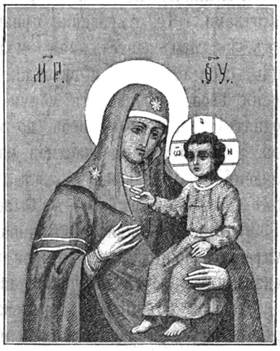
На острове Кипре известны пять чудотворных икон Богоматери (о Киккской см. 15 ноября). Список с одной из этих (по сторонам изображения Богоматери написаны свмч. Антипа и муч. Фотиния) передал преп. Сергий в 1378 году ученику своему Леонтию, первому игумену Стромынского Успенского монастыря, основанного по желанию великого кн. Димитрия Донского. По упразднении монастыря в 1764 г., икона осталась в церкви села Стромыни (Богородского уезда, Москов. губ.). В 1841 году в неделю Православия перед сей иконой получила исцеление расслабленная девица (архим. Димитрия Месяцеслов, 9 июля).
On the island of Cyprus, five wonderworking icons of the Mother of God are known (concerning the Kykkos Icon, see November 15). A copy of one of these (on the sides of the image of the Mother of God are depicted the Hieromartyr Antipas and the Martyr Photinia) was given by Venerable Sergius in the year 1378 to his disciple Leontius, the first abbot of the Dormition Monastery at Stromyn, founded at the wish of the Right-believing Grand Prince Demetrius of the Don. After the abolition of the monastery in 1764, the icon remained in the church of the village of Stromyn (Bogorodsk District, Moscow Province). In 1841, on the Sunday of Orthodoxy, before this icon a paralyzed maiden received healing (Archimandrite Demetrius, Menologion, July 9).
Колочская икона Пресв. Девы Марии явилась в 1413 году, в княжение Василия Димитриевича, в области брата его, князя Андрея Димитриевича, в пределах Можайска, верстах в 15 от этого города, на берегах реки Колочи, в Смоленской губернии. Здесь обрёл её некто Лука, житель селения Колоч, и с благоговением перенёс в дом свой. В доме его был расслабленный с давних уже лет. Услышав о явлении св. иконы, он с верой приложился к ней своим челом, очами и устами, и получил совершенное исцеление. Об этом чудесном исцелении сделалось известно в окрестностях, и многие, особенно страждущие, с верой начали притекать к явленной иконе на поклонение Заступнице и получать от Неё благодатную помощь. Лука принёс икону в Можайск, где встретил её сам князь Андрей Димитриевич с многочисленным народом. Из Можайска она принесена была в Москву и встречена митрополитом Фотием с священным собором и множеством народа. При сретении многие больные получили здравие. От усердия православных собраны были значительные приношения, и на месте явления иконы построена во имя Богородицы церковь для пребывания в ней явленной и чудотворной её иконы. Впоследствии при этой церкви, из имения Луки и на собранные им пожертвования православных, благоверным князем Андреем устроен монастырь, именуемый Колонский илиМожайский. Лука принял в сём монастыре иноческое пострижение.
The Koloch Icon of the Most Holy Virgin Mary appeared in the year 1413, during the reign of Basil Demetrievich, in the domain of his brother, Prince Andrew Demetrievich, within the borders of Mozhaisk, some 15 versts from that town, on the banks of the River Koloch, in Smolensk Province. There a certain Luke, a dweller of the village of Koloch, found it and with reverence brought it into his house. In his house there was a man who had been paralyzed for many years. Hearing of the appearance of the holy icon, he with faith applied to it his brow, his eyes, and his lips, and received perfect healing. This miraculous healing became known in the surrounding region, and many, especially the afflicted, began with faith to flock to the revealed icon to venerate the Intercessor and to receive gracious help from Her. Luke brought the icon to Mozhaisk, where Prince Andrew Demetrievich himself, together with a great multitude of people, met it. From Mozhaisk it was brought to Moscow and was met by Metropolitan Photius with the sacred council and a multitude of people. At the meeting, many of the sick received health. Through the zeal of the Orthodox, considerable offerings were gathered, and on the site of the icon’s appearance a church was built in the name of the Mother of God for the dwelling of Her revealed and wonderworking icon. Later, at this church, from the estate of Luke and from the offerings gathered by him from the Orthodox, a monastery was established by the Right-believing Prince Andrew, called the Kolonsky or Mozhaisk Monastery. Luke received monastic tonsure in this monastery.
После св. Феодора, еп. Едесского, осталось 100 глав или правил аскетической жизни. См. о них в «Учении об отцах Церкви» Филарета Черн. § 276.
After St. Theodore, Bishop of Edessa, there remain 100 chapters or rules of ascetic life. See concerning them in the Teaching on the Fathers of the Church by Philaret of Chernigov, § 276.