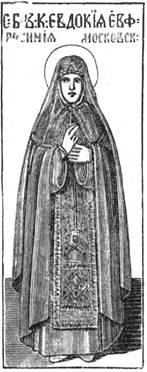
Вл. Евдокия, дочь Димитрия Константиновича кн. Суздальского, в 1367 г. стала супругой в. князя Димитрия Иоанновича94. «Земля Русская рада была этому браку», говорит древний повествователь95, и было о чём радоваться. Союз дочери кн. Димитрия Суздальского с князем Димитрием Иоанновичем служил залогом прекращения борьбы Суздальского князя с князем Московским, пролившей много крови Русской. И молодой князь, вступивший в брак, радовал собой всех: «будучи ещё молод, говорит тот же повествователь, он прилежал к делам духовным, не любил пустых разговоров, не терпел срамных слов, от худых людей уклонялся, а с добрыми любил беседовать, с благоговением слушал свящ. Писание, заботлив был о храмах Божиих, мужественно стоял на страже за землю Русскую, злобой был дитя, а умом полный муж»96. Счастлива была княжна, найдя себе такого супруга. И жизнью своей показала, что она была достойна его. Она была супругой нежной, кроткой, набожной. «Оба супруга, продолжает повествователь, жили в браке чисто, не предаваясь стремлениям чувственности и внимательны были к своему спасению». Было кому поддерживать такие расположения молодых супругов. Святитель Алексей был отцом и хранителем их во всём. Св. Феодор, игумен Симоновский и племянник пр. Сергия, был духовником их. Княгиня и рождала, и воспитывала детей в страхе Божием. Восприемником одного из сыновей был препод. Сергий. Княгиня поддерживала супруга своего в его борьбе с различными скорбями, поддерживала своей молитвой и своей любовью. Когда в. князь Димитрий решился идти против грозных полчищ Мамая, князь-супруг, совсем готовый в поход, молился в храме архистратига Михаила, призывая на себя молитвы небожителей; – с ним здесь молилась и супруга; здесь же в горьких слезах она и простилась с ним97. В продолжение всего грозного времени войны «великая княгиня Евдокия, говорит летопись, раздала много милостыни бедным и сама постоянно ходила в церковь, молилась днём и ночью»98. Надежды христианские не остались в стыде. Князь Димитрий 8 сентября одержал такую победу над татарами, что с того времени уже не Россия трепетала орды, а орда стала бояться сил России. Димитрий благодарил Господа, Москва с торжеством встречала победителя Куликовского; – княгиня встретила супруга у Спасских ворот и молилась с ним в соборах. Благочестивый князь увековечил память Куликовской битвы установлением поминальной субботы Димитриевой. В. княгиня положила при первой возможности запечатлеть памятником благодарность свою Богоматери за великое дело 8 сент.99. «Была радость на Руси, говорит летопись, но была и жалость: оскудела земля воеводами и войском». Истощение России доставило Татарам лёгкую возможность одержать временный успех над Россией. Спустя два года после Куликовской битвы Тохтамыш, усилившийся уничтожением Мамая, быстро подошёл к Москве с огромным числом войск; Димитрий уехал в Кострому собирать полки, тогда как князья Рязанский, Суздальский и Тверской спешили искать милости у Тохтамыша безмолвной покорностью. – В испуганном кремле началось волнение, поднялись споры и от споров дошли до драк; одни хотели сражаться, другие спешили грабить и малодушно бежать, но никто – повиноваться. – Не пускали из кремля ни м. Киприана, ни великой княгини, и едва наконец выпустили. Татары едва не захватили в. княгини в Переяславле, – она через Ростов удалилась в Кострому. Татары ворвались в кремль и наполнили его трупами и пеплом, потом рассыпались для грабежа по окрестным городам; но лишь только услышали, что князь Владимир стоит у Волока, а в. князь ведёт полки из Костромы, поспешили убраться из России вон. Много слёз пролили князь и княгиня, возвратясь в Москву опустошённую; на счёт в. князя похоронено было до 24,000 человек100. Благочестивая княгиня более, чем прежде, обратила тайные помыслы души своей к жизни загробной. В 1383 г. старший сын её Василий задержан был в орде, и в том же году скончался отец её: одна горесть увеличивала другую. К этому-то скорбному времени относится благочестивый подвиг её – основание Вознесенской женской обители. «Монастырь честен возгради», говорит о ней степенная книга; «внутрь царствующего града Москвы пречестную девическую обитель воздвиже, во имя Вознесения Христа Бога нашего», говорит пролог. – По летописи видим сей монастырь уже в 1387 г.101. В 1389 г. посетила благ. княгиню самая тяжкая скорбь. В. кн. Димитрию было 39 лет; но он так изнемог, что не надеялся больше жить и приготовил духовное завещание. Княгиня только что родила последнего сына. Князь-супруг, чувствуя близкий конец, велел позвать её и детей к нему. «Вот отхожу я к Богу моему, говорил князь; ты, дорогая княгиня моя, будь и отцом, и матерью детям моим, наставляй и укрепляй их в благочестии, чтобы были послушны по заповедям Божиим, боялись Господа и чтили тебя во всю жизнь»102. В духовном завещании своём князь высказал вполне, как высоко уважал он свою супругу, какие надежды имел он на её ум и добродетели. Разделив волости детям своим, он говорил: «вы, дети мои, живите за одно, а матери своей слушайтесь во всём. Если кто из сыновей моих умрёт, то княгиня моя наделит его уделом остальных сыновей моих; кому что даст она, тому то и есть; дети мои из воли её не выйдут. Если у кого из сыновей моих уменьшится отчизна, против того, чем я благословил его, то княгиня моя наделит из уделов сыновей моих; а вы, дети мои, слушайтесь своей матери. Если Бог возьмёт к себе сына моего, князя Василия, то удел его идёт следующему за ним сыну, а уделом последнего княгиня поделит сыновей моих; а вы, дети мои, слушайтесь своей матери, – что кому даст она, то того есть... Который сын не станет слушаться матери, на том не будет моего благословения». Так понимает супругу свою умный Димитрий Иоаннович. Он предоставляет ей безотчётную власть распределять сыновьям отчины в известных случаях. Ей самой назначил князь по нескольку волостей из уделов каждого сына с тем, чтобы по смерти её возвратились эти волости в те уделы, которым принадлежат они; но теми волостями, которые приобрёл сам Димитрий и отдал супруге или которые приобрела сама супруга его, она имеет полную власть распоряжаться по своему усмотрению – «отдать ли кому-либо из сыновей, или же отдать на молитвы за свою душу»103.
Grand Princess Eudocia, daughter of Prince Demetrius Constantinevich of Suzdal, became the wife of Grand Prince Demetrius Ioannovich in 136794. "The Russian land rejoiced at this marriage," says an ancient narrator95, and there was cause for rejoicing. The union of the daughter of Prince Demetrius of Suzdal with Prince Demetrius Ioannovich served as a pledge of the cessation of the struggle between the Prince of Suzdal and the Prince of Moscow, a struggle that had shed much Russian blood. And the young prince who entered into marriage gladdened all with his character: "being still young," says the same narrator, "he applied himself to spiritual matters, loved not idle talk, endured not shameful words, shunned evil men, but loved to converse with the good, listened with reverence to Holy Scripture, was solicitous for the churches of God, stood courageously on guard for the Russian land, was a child in malice, but a full man in understanding"96. The princess was happy to have found such a spouse. And by her life she showed that she was worthy of him. She was a tender, meek, and devout wife. "Both spouses," continues the narrator, "lived in marriage purely, not giving themselves over to the impulses of sensuality, and were attentive to their salvation." There were those to support such dispositions in the young spouses. Hierarch Alexis was their father and guardian in all things. St. Theodore, abbot of Simonov and nephew of Venerable Sergius, was their confessor. The princess both bore and raised her children in the fear of God. The godfather of one of her sons was Venerable Sergius. The princess supported her husband in his struggle with various sorrows, supporting him with her prayer and her love. When Grand Prince Demetrius resolved to go against the terrible hordes of Mamai, the prince-husband, fully prepared for the campaign, prayed in the church of the Archangel Michael, calling upon the prayers of the heavenly inhabitants; – with him there prayed also his wife; there, in bitter tears, she also bid him farewell97. Throughout all the terrible time of war, "the Grand Princess Eudocia," says the chronicle, "distributed much alms to the poor and herself constantly went to church, praying day and night"98. Christian hopes were not put to shame. Prince Demetrius, on September 8, gained such a victory over the Tatars that from that time it was no longer Russia that trembled before the Horde, but the Horde that began to fear the might of Russia. Demetrius gave thanks to the Lord; Moscow triumphantly greeted the victor of Kulikovo; – the princess met her husband at the Spassky Gates and prayed with him in the cathedrals. The pious prince perpetuated the memory of the Battle of Kulikovo by establishing the commemorative Demetrius Saturday. The Grand Princess resolved, at the first opportunity, to seal with a monument her gratitude to the Mother of God for the great deed of September 899. "There was joy in Rus'," says the chronicle, "but there was also sorrow: the land was impoverished of voivodes and troops." The exhaustion of Russia gave the Tatars an easy opportunity to gain a temporary success over Russia. Two years after the Battle of Kulikovo, Tokhtamysh, who had grown strong by the destruction of Mamai, quickly approached Moscow with a huge number of troops; Demetrius departed for Kostroma to gather regiments, while the princes of Ryazan, Suzdal, and Tver hastened to seek favor from Tokhtamysh by silent submission. – In the frightened Kremlin, turmoil began, disputes arose, and from disputes they came to fighting; some wanted to fight, others hastened to plunder and flee cowardly, but no one – to obey. – They would not let Metropolitan Cyprian nor the Grand Princess out of the Kremlin, and finally released them with difficulty. The Tatars nearly captured the Grand Princess in Pereyaslavl – she withdrew through Rostov to Kostroma. The Tatars burst into the Kremlin and filled it with corpses and ashes, then scattered to plunder the surrounding towns; but as soon as they heard that Prince Vladimir was standing at Volok and the Grand Prince was leading regiments from Kostroma, they hastened to get out of Russia. Many tears did the prince and princess shed upon returning to devastated Moscow; at the Grand Prince's expense, up to 24,000 people were buried100. The pious princess, more than before, turned the secret thoughts of her soul to the life beyond the grave. In 1383, her eldest son Basil was detained in the Horde, and in the same year her father died: one grief compounded the other. To this sorrowful time belongs her pious feat – the founding of the Ascension Convent for women. "She built an honorable monastery," says the Book of Degrees concerning her; "within the reigning city of Moscow she raised up a most honorable convent for virgins, in the name of the Ascension of Christ our God," says the Prologue. – From the chronicle we see this monastery already in 1387101. In 1389, the most grievous sorrow visited the pious princess. Grand Prince Demetrius was 39 years old; but he was so exhausted that he no longer hoped to live and prepared his spiritual testament. The princess had just given birth to her last son. The prince-husband, feeling his end near, ordered her and the children to be called to him. "Behold, I am departing to my God," said the prince; "you, my dear princess, be both father and mother to my children, instruct and strengthen them in piety, that they may be obedient according to the commandments of God, fear the Lord, and honor you all their lives"102. In his spiritual testament, the prince fully expressed how highly he respected his wife, what hopes he placed in her mind and virtues. Having divided the districts among his children, he said: "You, my children, live in unity, and obey your mother in all things. If any of my sons dies, then my princess shall allot his portion to my remaining sons; whatever she gives to whom, that is his; my children shall not depart from her will. If any of my sons' patrimony diminishes, compared to that with which I have blessed him, then my princess shall allot from the portions of my sons; and you, my children, obey your mother. If God takes to Himself my son, Prince Basil, then his portion goes to the son next after him, and the princess shall divide the portion of the last among my sons; and you, my children, obey your mother – what she gives to whom, that is his... Whichever son does not obey his mother, upon him shall not be my blessing." Thus does the wise Demetrius Ioannovich understand his wife. He entrusts to her absolute authority to distribute patrimonies to her sons in certain cases. To her herself the prince assigned several districts from the portions of each son, on condition that after her death these districts should return to those portions to which they belong; but those districts which Demetrius himself acquired and gave to his wife, or which his wife herself acquired, she has full power to dispose of as she sees fit – "whether to give to any of her sons, or to give for prayers for her soul"103.
Предав земле любимого супруга, княгиня положила исполнить во всей точности волю его – заменять, сколько может, отца детям, – оберегать и физическую и духовную жизнь их. Потому-то без сомнения, оставшись вдовою, она не поступила, по примеру других вдов-княгинь, в монастырь, хотя и желала того. Предпоследний сын её Иван скоро умер, но остались, кроме Василия – великого князя, Юрий, Андрей, Пётр и младенец Константин. В 1390 г. вместе со всеми сыновьями своими почтительно встречала она за Москвой в Котле святит. Киприана104. Получив по завещанию супруга богатые имения, она положила выполнить в лучшем виде долг благодарности Богоматери за 8 сентября в память дорогого супруга: построила на своём дворе каменный храм в честь Рождества Богоматери и украсила его лучшими иконами, книгами, дорогими сосудами и другой утварью. Святит. Киприан (11 февр. 1393 г.) освятил его в присутствии всей семьи в. княгини. По просьбе благоч. княгини положено было праздновать в Москве 8 сентября с особенной торжественностью, в благодарность за Куликовскую победу. Как ни богато украшен был освящённый храм, благочестивая княгиня хотела сделать более для дома Богоматери. Через два года он расписан был лучшими иконописцами – Феофаном Греком и Симоном Черным с их учениками105. Княгиня щедро расточала свои средства на восстановление и украшение храмов, которых так много было разрушено и опустошено в нашествие Тохтамыша. На её иждивение построен был Горицкий монастырь в Переяславле106. В 1395 г. страшный Тамерлан готов был сделать то же с Москвой, если не более, что сделал Тохтамыш. Общий ужас не мог не потревожить и набожной княгини, как нежной матери детей; вместе со всеми она проливала молитвы к Богоматери, и Матерь Божия спасла Москву107. Не нужно говорить о том, что княгиня была матерью для всех нищих; она благотворила бедным пустыням, в том числе блаж. Кириллу Белозерскому в его северной, дикой пустыни108.
Having committed her beloved husband to the earth, the princess resolved to fulfill his will in all exactness – to replace, as much as she could, a father to her children – to guard both their physical and spiritual life. For this reason, doubtless, remaining a widow, she did not enter a monastery, following the example of other widowed princesses, although she desired to do so. Her penultimate son John soon died, but there remained, besides Basil – the Grand Prince – George, Andrew, Peter, and the infant Constantine. In 1390, together with all her sons, she respectfully met Hierarch Cyprian beyond Moscow at Kotly104. Having received, by her husband's testament, rich estates, she resolved to fulfill in the best manner the debt of gratitude to the Mother of God for September 8, in memory of her dear husband: she built on her own court a stone church in honor of the Nativity of the Mother of God and adorned it with the finest icons, books, precious vessels, and other utensils. Hierarch Cyprian (February 11, 1393) consecrated it in the presence of the Grand Princess's entire family. At the request of the pious princess, it was established that September 8 be celebrated in Moscow with special solemnity, in thanksgiving for the Kulikovo victory. However richly adorned the consecrated church was, the pious princess wished to do more for the house of the Mother of God. Two years later it was painted by the finest iconographers – Theophanes the Greek and Simon the Black, with their disciples105. The princess generously lavished her means on the restoration and adornment of churches, of which so many had been destroyed and devastated during the invasion of Tokhtamysh. At her expense, the Goritsky Monastery was built in Pereyaslavl106. In 1395, the terrible Tamerlane was ready to do to Moscow the same, if not more, than Tokhtamysh had done. The universal terror could not but disturb the devout princess, as a tender mother of children; together with all, she poured forth prayers to the Mother of God, and the Mother of God saved Moscow107. There is no need to say that the princess was a mother to all the poor; she gave charity to poor hermitages, including that of Blessed Cyril of Beloozero in his northern, wild hermitage108.
Княгиня Евдокия вела жизнь подвижническую; но это известно было только Господу, а перед людьми она являлась пышной княгиней, носила богатые одежды, украшалась жемчугом, являлась везде с весёлым лицом. Такая жизнь вдовы-княгини порождала худые толки. Люди всегда и везде любят судить о других худо. Худая молва о матери, дошедшая до детей, оскорбляла их, и Юрий Дмитриевич не мог скрыть своего беспокойства от матери. Любовь к тайному подвижничеству вступила теперь в борьбу с любовью к детям. Княгиня-мать решилась удовлетворить той и другой, сколько могла. Она созвала детей в свою молельную, сняла часть одежды – сыновья испугались, увидя худобу её тела, изнурённого постом и измученного веригами. Она просила детей не открывать того другим, что они узнали, и советовала не обращать внимания на людские толки о ней. Явившийся ангел возвестил ей о близкой её кончине. Она онемела после сего видения и знаками давала знать, чтобы написали ей ангела; два лика ангельские поданы были ей, и она не была довольна; когда же подан был образ архангела Михаила, она обрадовалась и стала говорить. Он – архистратиг точно в таком виде являлся мне, сказала при том блаж. княгиня. Образ сей, говорит древний повествователь, доселе стоит в храме Рождества Богоматери.
Princess Eudocia led an ascetic life; but this was known only to the Lord, while before people she appeared as a splendid princess, wore rich garments, adorned herself with pearls, and appeared everywhere with a cheerful countenance. Such a life of the widow-princess gave rise to evil talk. People always and everywhere love to judge others ill. The evil rumor about the mother, having reached her children, offended them, and Yuri Dmitrievich could not hide his unease from his mother. Love for secret asceticism now entered into a struggle with love for her children. The princess-mother resolved to satisfy both, as much as she could. She called her children into her prayer room and removed part of her clothing—the sons were frightened, seeing the emaciation of her body, worn down by fasting and tormented by chains. She asked her children not to reveal to others what they had learned, and advised them not to pay attention to people's talk about her. An angel who appeared announced to her her imminent repose. She became mute after this vision and made signs that they should paint an angel for her; two angelic faces were presented to her, and she was not satisfied; when the image of the Archangel Michael was presented, she rejoiced and began to speak. "He—the Chief Commander—appeared to me in exactly this form," said the blessed princess at that time. This image, says the ancient narrator, stands to this day in the church of the Nativity of the Theotokos.