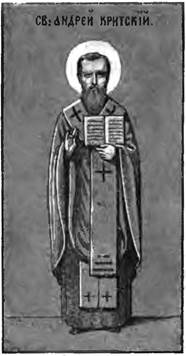
Родился в Дамаске в половине VII века; первоначальное образование получил дома; на 14-м году удалился для подвижнической жизни в Иерусалимскую обитель св. Саввы Освящённого. Скоро сделался известен строгой своей жизнью. Феодор, правитель патриархии (не имевшей в то время патриарха по причине стеснения от магометан), избрал Андрея своим секретарём. В 679 г. он отправился вместе с двумя доверенными Иерусал. патриарха на VΙ Вселенский собор.
He was born in Damascus in the middle of the seventh century; he received his initial education at home; in his fourteenth year he withdrew to the monastery of St. Sabbas the Sanctified in Jerusalem for an ascetic life. He soon became known for his strict life. Theodore, the governor of the patriarchate (which at that time had no patriarch due to oppression by the Mohammedans), chose Andrew as his secretary. In 679 he set out together with two trusted men of the Patriarch of Jerusalem for the Sixth Ecumenical Council.
Возвратясь в Иерусалим с определениями собора, Андрей продолжал вести подвижническую жизнь и изучать слово Божие и писания св. отцов. Спустя несколько времени, он был вызван в Константинополь и посвящён патриархом в диаконы Софийской церкви; сверх того, получил отрадное назначение питателя сирот. При императоре Юстиниане 2-м Андрей был поставлен в архиепископа Критского; ревностно проповедовал пастве своей слово Божие, мудро управлял ею и охранял своими молитвами. Действию молитв своего пастыря Критяне приписали удаление Сарацын, которые напали было на остров во время святительства Андрея.
Having returned to Jerusalem with the decrees of the Council, Andrew continued to lead an ascetic life and to study the word of God and the writings of the holy fathers. After some time, he was summoned to Constantinople and ordained a deacon of the Church of Hagia Sophia by the patriarch; in addition, he received the gratifying appointment of caretaker of orphans. Under the Emperor Justinian II, Andrew was appointed Archbishop of Crete; he zealously preached the word of God to his flock, governed it wisely, and protected it by his prayers. The Cretans attributed the repulsion of the Saracens, who had attacked the island during Andrew's hierarchate, to the effect of their shepherd's prayers.
Скончался св. Андрей на пути из Константинополя, куда ездил по церковным делам. Предузнав свою кончину, он сказал своим спутникам, что «не увидит более Крита» и действительно, доехав до острова Митилены, заболел и мирно преставился – в 713 году. Есть предположение, что это было тогда, как он возвращался с собора в 712 г. против монофелитов, которые во Христе признавали только одну Божественную волю. Как относился к этому собору отличавшийся глубоким умом и знанием свящ. Писания Андрей, можно судить по его стихам, в которых он прямо пишет, что «два во Христе действия, два в Нём хотения».
St. Andrew died on the way from Constantinople, whither he had traveled on church business. Having foreknown his end, he said to his companions that "he would see Crete no more," and indeed, having reached the island of Mytilene, he fell ill and peacefully reposed—in the year 713. There is a supposition that this occurred when he was returning from the council of 712 against the Monothelites, who acknowledged in Christ only one divine will. How Andrew, distinguished by his profound intellect and knowledge of Holy Scripture, regarded this council can be judged from his verses, in which he directly writes that "there are two energies in Christ, two wills in Him."
По смерти Андрея Критского осталось не мало его сочинений духовного содержания. «Он обогатил Церковь многими творениями, в которых опытные видят основательное знание и богатство учёности, речь приятную и стройную»80.
After the death of Andrew of Crete, no small number of his writings of spiritual content remained. "He enriched the Church with many works, in which the experienced see solid knowledge and a wealth of learning, speech pleasant and harmonious"80.
О священных песнях его Церковь поёт: «блаженный Андрей, сияющий светом Св. Троицы, ты воспел священные песни благозвучно, явился миру светилом, светлейшим солнца... Ты – верное правило Богословия, ясно открывающее славу всеславной Троицы... Матерь Господа воспел ты медоточивыми словами, святых Апостолов и сословие блаженных мучеников».
Concerning his sacred hymns, the Church sings: "Blessed Andrew, shining with the light of the Holy Trinity, thou hast sung sacred hymns melodiously, hast appeared to the world as a luminary, brighter than the sun... Thou art the sure rule of Theology, clearly revealing the glory of the all-glorious Trinity... Thou hast sung of the Mother of the Lord with honeyed words, of the holy Apostles and the company of blessed martyrs."
Особенно известен Андрей Критский своим великим каноном, состоящим из 250-ти тропарей, который читается по частям в первые четыре дня Великого поста и весь за утренней службой четверга на 5-ой неделе.
Andrew of Crete is especially known for his Great Canon, consisting of 250 troparia, which is read in parts during the first four days of Great Lent and in its entirety at the Matins service of Thursday of the fifth week.
Этот канон, – говорит архиеп. Черниговский Филарет81, велик не по числу только стихов, но и по внутреннему достоинству, по высоте мыслей, по глубине чувств и по силе выражений. В нём духовный взор созерцает события обоих Заветов в духовном свете. Лица священной истории то представляют ему высокие образцы святой жизни, то примерами падения возбуждают к строгому отрезвлению: в том и другом случае изображают тайны внутренней жизни. Ум созерцает высокие духовные истины, осуществлённые в жизни патриархов, судей, царей, пророков Ветхозаветных; поучается им в Евангельских притчах; а сердце с полной жаждой спасения ищет себе в священных событиях возбуждения и то поражается глубокой скорбью о грехах, то восторгается сладким упованием на Бога, всегда готового принимать грешников. «С чего начну оплакивать злосчастной моей жизни деяния? Какое начало положу, Христе, моему сетованию? Но Ты, Милосердый, подай мне прегрешений оставление». Так подвижник начинает свой сокрушённый плач и обращается к первому греху человека, лишившему всё человечество Богосозданных украшений. «Грех лишил меня Боготканной одежды и как листьями смоковницы облёк меня деянием стыда в обличение моих страстных стремлений» ...
This canon, says Archbishop Philaret of Chernigov81, is great not only in the number of its verses, but also in its inner worth, in the loftiness of its thoughts, in the depth of its feelings, and in the power of its expressions. In it, the spiritual gaze contemplates the events of both Testaments in a spiritual light. The persons of sacred history now present to it lofty examples of holy life, now by examples of falling arouse to strict sobriety: in both cases they depict the mysteries of the inner life. The mind contemplates lofty spiritual truths, realized in the lives of the Patriarchs, Judges, Kings, and Prophets of the Old Testament; it is instructed by them in the Gospel parables; and the heart, with a full thirst for salvation, seeks for itself in the sacred events both arousal and is now struck with deep sorrow for sins, now enraptured with sweet hope in God, ever ready to receive sinners. "Wherewith shall I begin to lament the deeds of my wretched life? What beginning shall I lay, O Christ, for my lamentation? But do Thou, O Merciful, grant me remission of transgressions." Thus the ascetic begins his contrite lament and turns to the first sin of man, which deprived all humanity of its God-created adornments. "Sin stripped me of the God-woven garment and clothed me, as with fig leaves, with a deed of shame for the reproach of my passionate desires"...
После изображения опустошений, какие производили страсти в жизни даже великих мужей, певец призывает грешную душу искать вместе с Авраамом отечества небесного; в Исааке показывает жертву послушания и в Измаиле пример дерзости, порождаемой ласкаемой плотью; гибельные действия похоти велит усматривать в действии огня Содомского. Под образами двух жён Иакова разумей, говорит, двоякую жизнь, деятельную и созерцательную. Жезл Моисеев, рассекающий море – крест Христов, которым душа христианская творит дела чудные. Таким образом, по порядку времён беседуют с душой, кающейся цари и пророки Израиля. Наконец в девятой песни певец вспоминает Божественные слова и деяния Спасителя; пощением Его убеждает себя к посту и с мытарем смиренно вопиет: – «Боже, милостив буди мне грешному!» – С Ханаанской женой и слепцами молит: «помилуй меня, Сын Давидов!» Подобно блуднице слезами моет ноги Спасителя и с разбойником благоразумным взывает: «помяни меня, Господи, во Царствии Твоем!»
After depicting the devastations that the passions wrought even in the lives of great men, the hymnographer calls upon the sinful soul to seek together with Abraham the heavenly fatherland; in Isaac he shows the sacrifice of obedience, and in Ishmael an example of insolence engendered by pampered flesh; he bids us perceive the deadly effects of lust in the action of the Sodomite fire. Under the images of Jacob's two wives, understand, he says, the twofold life, active and contemplative. The rod of Moses dividing the sea is the Cross of Christ, by which the Christian soul works wondrous deeds. Thus, in order of time, the kings and prophets of Israel converse with the repentant soul. Finally, in the ninth ode, the hymnographer recalls the divine words and deeds of the Savior; by His fasting he persuades himself to fast, and with the publican humbly cries:—"O God, be merciful to me a sinner!"—With the Canaanite woman and the blind men he prays: "Have mercy on me, O Son of David!" Like the harlot, with tears he washes the Savior's feet, and with the wise thief he cries out: "Remember me, O Lord, in Thy Kingdom!"
Подобное содержание великого канона неоспоримо свидетельствует о целесообразности предписания Церкви читать его в особенности в дни покаяния – в Великом посту, и будет служить во все века великим пособием в этом великом деле.
Such content of the Great Canon indisputably testifies to the appropriateness of the Church's prescription to read it especially during the days of repentance—in Great Lent, and it will serve throughout all ages as a great aid in this great work.
В душевной же пользе, получаемой от него – благодарственная похвала из рода в род вдохновенному составителю дивного канона, которым многие люди возвращаются к Богу: сознав свою греховность и Его милосердие, снова видят Лицо Его...
And in the spiritual benefit received from it—a grateful praise from generation to generation to the inspired composer of the wondrous canon, by which many people return to God: having acknowledged their sinfulness and His mercy, they again behold His Face...
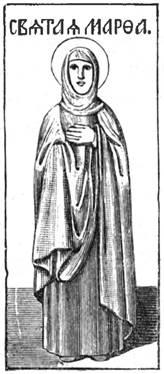
Мать св. Симеона Столпника, подвизавшегося на Дивной горе, с юных лет была благочестива82. Она не желала выходить замуж. Но родители обещали руку её известному для них жениху. Не смея противиться воле родителей, но вместе убеждённая в святости девства, Марфа долго и от глубины души молилась в храме св. Предтечи о том, дабы открыта была воля Божия о ней. Св. Предтеча повелел ей исполнить волю родителей и дать согласие на брачную жизнь. Потом она молила Предтечу, дабы ниспослано было благословение на чадорождение, и обещала посвятить плод свой Господу. Предтеча объявил ей во сне, что родится ей дивный сын, которого должна она назвать Симеон. Марфа разрешилась без страдания в 521 г. и, спустя два года, ребёнок крещён был в храме Предтечи. В время землетрясения 526 г. муж погребён был под развалинами дома, как и многие другие Антиохийцы; а Марфа с сыном молилась в то время в храме Предтечи и спаслась.
The mother of St. Simeon the Stylite, who struggled on the Wonderful Mountain, was pious from her youth82. She did not wish to marry. But her parents had promised her hand to a suitor known to them. Not daring to oppose her parents' will, but at the same time convinced of the holiness of virginity, Martha prayed long and from the depths of her soul in the church of St. Forerunner that the will of God concerning her might be revealed. St. Forerunner commanded her to fulfill her parents' will and to give consent to married life. Then she prayed to the Forerunner that a blessing might be sent down upon childbearing, and promised to dedicate her fruit to the Lord. The Forerunner declared to her in a dream that a wondrous son would be born to her, whom she should name Simeon. Martha was delivered without pain in 521, and two years later the child was baptized in the church of the Forerunner. During the earthquake of 526, her husband was buried under the ruins of the house, as were many other Antiochians; but Martha with her son was praying at that time in the church of the Forerunner and was saved.
Она часто постилась и особенно наблюдала пост среды и пятка. Усердно посещала храм Божий и приносила для него свечи, ладан и масло. Первою являлась в храм и последней выходила из него. Если где бывал храмовой праздник, Марфа являлась на всенощное служение и молилась благоговейно. В доме каждую полночь стояла на молитве, проливая слёзы.
She often fasted and especially observed the fast of Wednesday and Friday. She diligently attended the church of God and brought for it candles, incense, and oil. She was the first to come to church and the last to leave it. If there was a patronal feast anywhere, Martha would appear at the all-night service and pray reverently. At home, every midnight she stood at prayer, shedding tears.
Благоговейное пребывание её в храме служило назиданием для других. Она никогда не уставала за Богослужением храма, – как другие, которые однако не устают, проводя ночь в пляске. Никогда не садилась в храме, занятая благоговением перед величием Божиим. Один добрый человек, заметив, что Марфа всегда приходит раньше других в храм и стоит на молитве без отдыха, сказал ей: «присядь, почтенная мать, тебе нужен отдых». Марфа отвечала: «слуги постоянно стоят перед господами, которые те же люди, как и они: как же сметь мне садиться в храме Божием, где совершаются страшные тайны Царя Всевышнего». Она глубоко уважала священников и прислуживала им с любовью.
Her reverent presence in the church served as an edification for others. She never grew weary during the church services—unlike others, who yet do not grow weary spending the night in dancing. She never sat down in church, being occupied with reverence before the majesty of God. A certain good man, noticing that Martha always came earlier than others to church and stood at prayer without rest, said to her: "Sit down, honored mother, you need rest." Martha replied: "Servants constantly stand before masters, who are the same men as they: how then dare I sit down in the church of God, where the terrible mysteries of the Most High King are celebrated." She deeply respected the priests and served them with love.
Любовь её к другим простиралась до самоотвержения. Посещая больницы, она сама прислуживала больным то в том, то в другом; для умирающих давала всё нужное к погребению, равно как крещающимся приносила чистое бельё, приготовленное её руками.
Her love for others extended to self-denial. Visiting hospitals, she herself ministered to the sick, now in one way, now in another; for the dying she provided everything necessary for burial, and likewise for those being baptized she brought clean linen prepared by her hands.
Идя к сыну на Дивную гору, увидела она на дороге больных и избитых (разбои своевольных и набеги дикарей были тогда нередки): изорвав свою одежду, перевязала раны их, омыв те наперёд вином и елеем.
Going to her son on the Wonderful Mountain, she saw on the road sick and beaten men (robberies by lawless men and raids by savages were not uncommon then): tearing her own garment, she bound up their wounds, having first washed them with wine and oil.
В ней был особенный дар, ниспосланный Богом за её добродетели: она укрощала самых свирепых бесноватых одним своим присутствием. Потому часто приглашали её к этим несчастным, и она всегда готова была на услуги.
There was in her a special gift, sent by God for her virtues: she tamed even the most savage demoniacs by her mere presence. Therefore she was often summoned to these unfortunates, and she was always ready to serve.
Никто не видал её гневной или ссорящейся, напротив – она любила мирить ссорящихся, и мирила успешно. Приёмами кротости и любви, напоминанием о виновности всех и каждого перед Богом, разумным советом тушила она раздоры семейные и возвращала покой домам гнева и ненависти.
No one ever saw her angry or quarreling; on the contrary, she loved to reconcile those who quarreled, and she reconciled them successfully. By means of gentleness and love, by reminding everyone of their guilt before God, by wise counsel, she extinguished family discords and restored peace to houses of anger and hatred.
Слава сына, великого подвижника, окружала её уважением, но не ослабляла смирения её. Напротив, она боялась и за сына и нередко предлагала ему зорко смотреть за собой, а вместе молилась за него.
The fame of her son, the great ascetic, surrounded her with respect, but did not weaken her humility. On the contrary, she feared for her son and often advised him to watch himself carefully, and at the same time she prayed for him.
За год до смерти извещена она была свыше, сколько остаётся ей жить. Она пришла сказать о том сыну, но тот уже извещён был о том же и объявил о недалёкой смерти пустынникам. Когда приблизился назначенный срок смерти Марфы, она опять пришла к сыну и в продолжительном разговоре, как мать горячо заботливая о его духовном совершенстве, умоляла его быть верным Господу и своим обетам до смерти. «Сын мой, говорила она ему, вверяю тебя Господу Иисусу; молила и молю Его, да сохранит Он тебя от искушений греха. Умоляю и тебя быть твёрдым в любви к Господу. Для Господа будь сострадателен к бедным всякого сорта; будь гостеприимен для пришельцев, продолжай склоняться до самых малых и невинных; молись о всех, особенно об отечестве; не гнушайся заблудших. Не забывай в молитвах отца твоего Иоанна и меня грешную». Она рассказала тогда сыну, каких милостей небесных удостоена была в своей жизни. Это было в понедельник, накануне которого она приобщилась св. Таин. Ночью видела она во сне, что ходит в великолепном доме, изумляясь невиданной красоте его, и ей сказано было, что этот дом приготовлен для её вечного покоя. Прощаясь с иноками, сказала она, что уже не увидится более с ними. И точно, на возвратном пути она занемогла и была доставлена другими в дом свой, что был в Дафнийском предместье Антиохии; в следующий день благодарила она Господа за Его милости к ней; присутствующие подумали, что Господь любит её по молитвам сына; но она сказала, что сама она любит Господа и провела жизнь в усердных трудах для Него. Затем мирно почила 5 июля 551 г. перед смертью завещала она похоронить её между бедняками; но, по желанию сына, тело её перенесено было в монастырь его и положено в устроенной иноками гробнице.
A year before her death, she was informed from on high how much longer she had to live. She came to tell her son of this, but he had already been informed of the same and announced to the hermits her imminent death. When the appointed time of Martha’s death drew near, she again came to her son and, in a lengthy conversation, as a mother ardently concerned for his spiritual perfection, besought him to be faithful to the Lord and to his vows until death. “My son,” she said to him, “I entrust you to the Lord Jesus; I have prayed and do pray Him, that He may preserve you from the temptations of sin. I beseech you also to be steadfast in love for the Lord. For the Lord’s sake, be compassionate to the poor of every sort; be hospitable to strangers; continue to bow down even to the least and most innocent; pray for all, especially for the fatherland; do not disdain the erring. Forget not in your prayers your father John and me, a sinner.” She then told her son of what heavenly mercies she had been vouchsafed in her life. This was on Monday, on the eve of which she had partaken of the Holy Mysteries. At night she saw in a dream that she was walking in a magnificent house, marveling at its unseen beauty, and it was said to her that this house was prepared for her eternal rest. Bidding farewell to the monks, she said that she would see them no more. And indeed, on the return journey she fell ill and was brought by others to her home, which was in the Daphnian suburb of Antioch; the next day she gave thanks to the Lord for His mercies toward her; those present thought that the Lord loved her because of her son’s prayers; but she said that she herself loved the Lord and had spent her life in zealous labors for Him. Then she peacefully reposed on July 5, 551 A.D. Before her death she bequeathed that she be buried among the poor; but, at her son’s wish, her body was transferred to his monastery and placed in a tomb prepared by the monks.
Братия обители, по погребении её, поставили лампаду над гробом её, дабы горела она день и ночь. И лампада горела. Потом, спустя довольно времени, перестали зажигать её. Святая, явясь больному эконому, сказала: «не имею я нужды в вашем светильнике, просвещаемая светом небесным: но для вас нужно, чтобы горел светильник; когда зажигаете его, то побуждаете меня молиться за вас». Затем исцелила больного.
The brethren of the monastery, after her burial, placed a lamp over her tomb, that it might burn day and night. And the lamp burned. Later, after a considerable time, they ceased to light it. The Saint, appearing to a sick steward, said: “I have no need of your lamp, being illumined by the heavenly light; but it is needful for you that the lamp should burn; when you light it, you move me to pray for you.” Then she healed the sick man.
Св. Феодор пострадал в 310 году за невыдачу священных книг, которые всюду разыскивали гонители для уничтожения. С ним вместе пострадали и многие другие.
St. Theodore suffered in the year 310 for not surrendering the sacred books, which the persecutors were searching for everywhere in order to destroy them. Many others suffered together with him.
Житие её in Act. Sanet, maii V, 403–431. Четь-Минее июл. 4. Биограф, описывая поминовение о Марфе, совершавшееся через год по смерти её, говорит: «все бывшие при этом воскликнули вместе с нами: кресту Твоему покланяемся». Итак, биограф был современник св. Марфе и ученик пр. Симеона Дивногорца.
Her Life in Acta Sanctorum, May V, 403–431. Chet’i-Minei, July 4. The biographer, describing the commemoration of Martha performed a year after her death, says: "All who were present cried out together with us: 'We worship Thy Cross.'" Thus, the biographer was a contemporary of St. Martha and a disciple of the Venerable Simeon of the Wondrous Mountain.