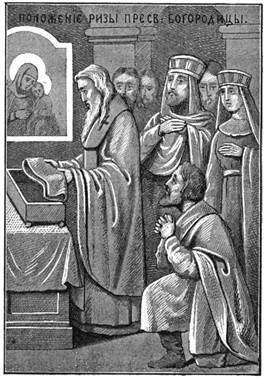
Во дни греческого императора Льва Великого (457–474), как пишет. Никифор Каллист, св. братья Галвий и Кандид, высокого сана, путешествуя в Палестину на поклонение святым местам, обрели там в доме одной Еврейки девицы ризу Пресвятой Богородицы. Эта риза досталась девице по наследству от другой девицы Еврейки, была хранима ими с великим благоговением и преемственно, со времени блаженного успения Богоматери, передаваема от одной девы к другой.
In the days of the Greek Emperor Leo the Great (457–474), as Nikephoros Kallistos writes, the holy brothers Galvius and Candidus, men of high rank, while traveling to Palestine to venerate the holy places, found there in the house of a Jewish maiden the robe of the Most Holy Theotokos. This robe had come to the maiden by inheritance from another Jewish maiden, and had been preserved by them with great reverence and, from the time of the blessed Repose of the Mother of God, handed down successively from one virgin to another.
Удостоверясь свидетельством людей благочестивых и чудодейственной силой ризы, что она точно есть риза Пресвятой Владычицы нашей Богородицы, набожные путешественники приобрели её себе и, по прибытии в Константинополь, сначала хранили в своей домовой церкви. Когда же о святыне, хранимой ими, узнали многие по благодатным от неё знамениям, Галвий и Кандид объявили о своей драгоценности императору и патриарху Геннадию (458–461). По общему совету риза принята и с великою радостью и торжеством положена в 458 году во храме Божией Матери, построенном императором Маркианом и Пульхерией в Константинополе, на берегу залива, называемом Влахернским: отчего и сам храм называется Влахернским. В этом храме риза Богоматери, говорил Никифор Каллист в XIV веке, «и доселе сохраняется, как непреодолимая и всегдашняя защита для града, подавая различные исцеления и чудесами своими побеждая естество и время».
Having been assured by the testimony of pious people and by the wonderworking power of the robe that it was indeed the robe of the Most Holy Lady, our Theotokos, the devout travelers acquired it for themselves and, upon their arrival in Constantinople, first kept it in their house church. When many came to know of the shrine preserved by them through the gracious signs from it, Galvius and Candidus declared their treasure to the emperor and to Patriarch Gennadius (458–461). By common counsel, the robe was received and with great joy and solemnity placed in the year 458 in the church of the Mother of God, built by the Emperor Marcian and Pulcheria in Constantinople, on the shore of the gulf called Blachernae; whence the church itself is called the Blachernae Church. In this church the robe of the Mother of God, said Nikephoros Kallistos in the 14th century, "is preserved even to this day, as an invincible and perpetual defense for the city, bestowing various healings and overcoming nature and time by its miracles."
Со времени положения ризы Богородицы во Влахернском храме Церковь ежегодно 2 июля празднует положение честные ризы Пресв. Владычицы нашей Богородицы, благодаря св. Деву, что Она даровала ризу тела Своего, как «державное граду обложение».
From the time of the placing of the robe of the Theotokos in the Blachernae Church, the Church annually on July 2 celebrates the Placing of the Precious Robe of our Most Holy Lady the Theotokos, thanking the holy Virgin that She granted the robe of Her body as "a sovereign enclosure for the city."
В 626 году чудотворную силу ризы Богоматери испытали Персы и Авары, в 673 и 716 годах Сарацыны; а в 866 году Аскольд и Дир, витязи Русские. Во время осады Царьграда Аварами, Сарацынами, Аскольдом и Диром чудотворная риза Богоматери при молитвах многочисленного народа носима была по стенам города, и буря, при этом случае поднявшаяся, сокрушила флот осаждавших неприятелей. Аскольд и Дир, стремившиеся покорить Византию, Промыслом Божиим покорены были Иисусу Христу, приняли веру христианскую и под сенью её окончили земную жизнь свою. В IX веке Иосиф Студит написал канон на день положения ризы Богородицы, ныне поемый Церковью в этот день. Первоначальные буквы канона, или краегранесие, заключают в себе речение: «ризу почитаю Пречистые Девы», и между прочими похвалами ризе он взывает: «честней ризе прикоснемся, еюже Владыку объемши, яко отроча носила». Апостол на литургии в день положения ризы Богоматери Церковь произносит о скинии и её принадлежностях, прообразовавших Пресв. Деву Марию (Евр.9:1–9); а Евангелие общее дням Богородичным (Лк.10:28–42,11:27–28).
In 626 the Persians and Avars experienced the wonderworking power of the robe of the Mother of God, in 673 and 716 the Saracens, and in 866 Askold and Dir, the Russian warriors. During the sieges of Constantinople by the Avars, the Saracens, and Askold and Dir, the wonderworking robe of the Mother of God was carried along the walls of the city amid the prayers of a great multitude, and a storm that arose on that occasion shattered the fleet of the besieging enemies. Askold and Dir, who had striven to subdue Byzantium, were by the Providence of God subdued to Jesus Christ, received the Christian faith, and ended their earthly life under its shelter. In the 9th century, Joseph the Studite composed a canon for the day of the Placing of the Robe of the Theotokos, now sung by the Church on this day. The initial letters of the canon, or acrostic, contain the phrase: "I honor the robe of the Most Pure Virgin," and among other praises to the robe he cries out: "Let us touch the most precious robe, wherewith having embraced the Lord, She bore Him as a child." The Epistle at the Divine Liturgy on the day of the Placing of the Robe of the Mother of God the Church reads concerning the tabernacle and its appurtenances, which prefigured the Most Holy Virgin Mary (Heb. 9:1–9); and the Gospel is common to the feasts of the Theotokos (Lk. 10:38–42, 11:27–28).
Митрополит Русский Пимен под 1387 годом упоминает, что он в день положения ризы Богоматери был во Влахерне и целовал там св. раку, в ней же лежат риза и пояс Богородицы. Часть ризы Богоматери, усердием князя Василия Голицына, принесена и в Россию и хранится ныне в Московском Успенском соборе.
The Russian Metropolitan Pimen, under the year 1387, mentions that on the day of the Placing of the Robe of the Mother of God he was at Blachernae and there venerated the holy reliquary in which lie the robe and the girdle of the Theotokos. A portion of the robe of the Mother of God, through the zeal of Prince Basil Golitsyn, was also brought to Russia and is now preserved in the Moscow Dormition Cathedral.
Ювеналий вступил на престол в 420 году и много подвизался о православии. Ибо когда начала (в 429 г.) распространяться ересь Нестория, то св. Ювеналий утверждал православное учение и на Третьем Вселенском соборе в Ефесе (431 г.) предал лжеучение проклятию. В конце царствования Феодосия Младшего возникла ересь Евтихия и Диоскора, и преемник Феодосия, Маркиан, созвал (451 г.) Вселенский собор в Халкидоне; в числе отцов собора находился и Ювеналий. Но когда он в январе 452 года возвратился в Иерусалим, то нашёл, что некоторый монах Феодосий возмутил уже Палестину известием, что Халкидонский собор извратил веру и вводит несторианство; клирики принуждали его анафематствовать соборные определения и даже подослали к нему убийцу. Но убийца ошибся и поразил епископа Скифопольского. Тогда Ювеналий бежал в Константинополь, а Феодосий целых восемнадцать месяцев распоряжался в Иерусалиме, как патриарх, и преследовал православных. Наконец волнения усмирены военной силой, Феодосий бежал на Синай и там безвестно скрылся, а Ювеналий в июле 453 года снова занял престол. Скончался в 458 году. В истории Богослужения известен тем, что он праздник Рождества Христова перенёс на 25 декабря с 6 января; ибо дотоле ещё совместно праздновали Рождеству Христову и Богоявлению, то есть 6 января.
Juvenal ascended the throne in 420 and labored much for Orthodoxy. For when the heresy of Nestorius began to spread (in 429), St. Juvenal affirmed the Orthodox teaching and at the Third Ecumenical Council in Ephesus (431) consigned the false teaching to anathema. At the end of the reign of Theodosius the Younger, the heresy of Eutyches and Dioscorus arose, and the successor of Theodosius, Marcian, convened (451) the Ecumenical Council in Chalcedon; among the fathers of the Council was Juvenal. But when he returned to Jerusalem in January 452, he found that a certain monk, Theodosius, had already stirred up Palestine with the news that the Council of Chalcedon had perverted the faith and was introducing Nestorianism; the clergy compelled him to anathematize the conciliar definitions and even sent an assassin against him. But the assassin erred and struck the bishop of Scythopolis. Then Juvenal fled to Constantinople, while Theodosius for a full eighteen months governed in Jerusalem as patriarch and persecuted the Orthodox. At last the disturbances were quelled by military force; Theodosius fled to Sinai and there disappeared without trace, and Juvenal in July 453 again occupied the throne. He reposed in 458. In the history of divine services he is known for having transferred the feast of the Nativity of Christ to December 25 from January 6; for until then the Nativity of Christ and Theophany were still celebrated together, that is, on January 6.
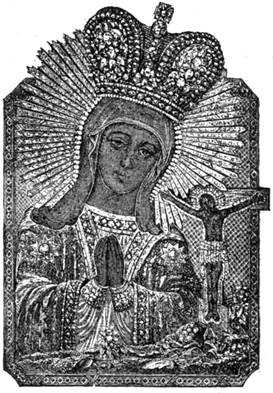
С давних пор в городе Ахтырке была приходская церковь во имя Покрова Пресвятой Богородицы. При ней в 1739 году был священником Даниил Васильев, человек добродетельный и благочестивый. При наступлении сенокоса он купил новую косу и, желая испытать её доброту, вышел на свой огородик и начал косить траву; но не более двух раз махнул косой, как увидел в траве икону Богоматери с распятием Господа Иисуса, блистающую неизреченным светом. Священник поражён был таким страхом, что коса выпала из дрожащих его рук. Оградившись крестным знамением, он начал читать молитвы Богоматери, какие только мог припомнить. Поклонясь троекратно иконе Богоматери, он внёс её в дом свой и поставил на приличном месте. В продолжении трёх мет эта икона находилась в доме священника. Домашние его заметили, что в этой комнате, где стояла икона, невозможно было ночевать от какого-то непонятного страха. Через три года в праздник Покрова священник вошёл в ту комнату, где стояла икона, и также неожиданно, как в первый раз, поражён был сильным, ярким, подобно солнечному сиянию, светом от иконы. Такой свет от иконы видал он неоднократно, но не говорил об этом никому из посторонних, ни даже своим домашним. Однажды в сонном видении явилась ему Богоматерь и повелела обретённую им икону её своими руками омыть чистой водой и накрыть покрывалом. Священник тотчас пробудился от сна, отёр пыль с иконы, омыл её водой и собрал воду в особый сосуд, намереваясь по утру отнести её в реку. С сими мыслями он заснул и в ту же ночь видит, будто он идёт к реке, неся с собой сосуд воды, которой омыл икону; вдруг на пути встречает его Богоматерь в образе чудной Девы и говорит: «куда ты идёшь с этой водой? Возвратись в свой дом и храни воду; она целительна будет для страждущих лихорадкой». Священник встал от сна и, имея в своём доме дочь, страждущую этой болезнью, пожелал узнать истину бывшего ему видения и дал ей пить этой воды. Дочь его тотчас выздоровела; равно и другие, страдавшие лихорадкой, как скоро пили сию воду, немедленно выздоравливали.
From ancient times in the city of Akhtyrka there was a parish church in honor of the Protection of the Most Holy Theotokos. In 1739 the priest there was Daniel Vasiliev, a virtuous and pious man. At the beginning of haymaking he bought a new scythe and, wishing to test its quality, went out into his little garden and began to cut the grass; but he had swung the scythe no more than twice when he saw in the grass an icon of the Mother of God with the Crucifixion of the Lord Jesus, shining with ineffable light. The priest was struck with such fear that the scythe fell from his trembling hands. Having made the sign of the cross, he began to recite the prayers to the Mother of God that he could recall. Having bowed three times before the icon of the Mother of God, he brought it into his house and placed it in a suitable place. For three years this icon remained in the priest's house. His household noticed that in the room where the icon stood, it was impossible to sleep because of some incomprehensible fear. After three years, on the feast of the Protection, the priest entered the room where the icon stood, and again, as unexpectedly as the first time, he was struck by a strong, bright light from the icon, like the radiance of the sun. He saw such light from the icon repeatedly, but told no one outside, not even his own household. Once in a dream vision the Mother of God appeared to him and commanded him to wash the icon he had found with his own hands in clean water and to cover it with a veil. The priest immediately awoke from sleep, wiped the dust from the icon, washed it with water, and collected the water in a special vessel, intending to take it to the river in the morning. With these thoughts he fell asleep, and that same night he saw as if he were going to the river, carrying the vessel of water with which he had washed the icon; suddenly on the way the Mother of God met him in the form of a wondrous Virgin and said: "Where are you going with this water? Return to your house and keep the water; it will be healing for those suffering from fever." The priest rose from sleep and, having in his house a daughter suffering from this illness, wished to ascertain the truth of the vision he had seen and gave her some of this water to drink. His daughter immediately recovered; likewise others suffering from fever, as soon as they drank this water, were immediately healed.
Между тем священник заметил на иконе на красках язвинки, призвал к себе иконописца и поручил ему поправить икону. Иконописец взял её, принёс домой и поставил на приличном месте. Через два дня, когда уже иконописец хотел приступить к работе, ночью услышал во сне голос от иконы, который назвал его по имени и сказал: «встань, время уже тебе отнести икону туда, где взял её; лучше сего ты поправить её не можешь». Иконописец в ужасе проснулся, с благоговением взял икону и на рассвете того же дня отнёс её к священнику, объявив о слышанном им голосе. Священник, видя над иконой особенную благодать Богоматери, решился внести икону в приходскую церковь, и здесь-то сия икона особенно просияла славой чудотворений.
Meanwhile the priest noticed some blemishes on the paint of the icon, summoned an iconographer, and entrusted him with restoring the icon. The iconographer took it, brought it home, and placed it in a suitable place. After two days, when the iconographer was already about to begin the work, at night he heard a voice from the icon in his sleep, which called him by name and said: "Arise, it is time for you to take the icon back to where you took it; you cannot restore it better than this." The iconographer awoke in terror, reverently took the icon, and at dawn of that same day brought it to the priest, declaring what he had heard. The priest, seeing the special grace of the Mother of God upon the icon, resolved to bring the icon into the parish church, and there this icon especially shone with the glory of wonderworkings.
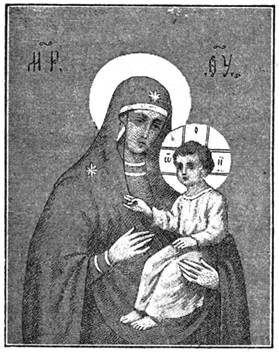
В 1487 году в пределах Рязанских, в пустом месте, именуемом Старое, близ села Феодотьева явилась икона Богоматери, названная от сего Феодотьевской. По повелению великого князя Рязанского и благословению архиерея икона перенесена в Рязань для ограждения и спасения Рязани и поставлена с подобающей честью в соборном храме Успения. В 1611 году, по воле Феодорита, Рязанского архиепископа, снят был с неё список и послан в село Феодотьево. В 1714 г. икона Феодотьевской Богомотери поновлена, и сделан был для неё киот. На иконе Богомладенец изображается на левой руке Богоматери, правой рукой благословляет, а в левой держит свиток.
In 1487, within the borders of Ryazan, in a deserted place called Staroye, near the village of Feodotievo, an icon of the Mother of God appeared, named from this place the Feodotiev Icon. By command of the Grand Prince of Ryazan and with the blessing of the bishop, the icon was transferred to Ryazan for the protection and salvation of Ryazan and was placed with due honor in the cathedral church of the Dormition. In 1611, by the will of Theodoret, Archbishop of Ryazan, a copy was made from it and sent to the village of Feodotievo. In 1714 the Feodotiev Icon of the Mother of God was renewed, and a kiot was made for it. On the icon, the God-child is depicted on the left hand of the Mother of God, blessing with His right hand, and holding a scroll in His left.
В доме одного Рязанского жителя, отставного сержанта, лежала больная свояченица Ксения. Она была лишена зрения и в продолжении 13 недель не раскрывались её глаза. Марта 19-го 1812 года икона Феодотьевской Богоматери находилась у их соседа; сестра больной пошла туда, чтобы принести икону в свой дом.
In the house of a certain Ryazan resident, a retired sergeant, lay his sick sister-in-law Xenia. She had lost her sight, and for thirteen weeks her eyes had not opened. On March 19, 1812, the Feodotiev Icon of the Mother of God was at their neighbor's house; the sister of the sick woman went there to bring the icon to their own house.
В это время больная как бы вздремала, и во сне явилась ей неизвестная жена и сказала: «встань, к тебе скоро придёт великая гостья, и ты увидишь её». Больная отвечала: «я слепа и не могу увидеть». – «Поверь мне, увидишь», отвечала неведомая жена. Больная очнулась и недоумевала, что бы значило это видение. Вскоре принесли икону, начали служить молебен; во время акафиста глаза больной стали как бы волноваться, что было заметно для всех. Под конец молебна, когда стали петь: «о Всепетая Мати», глаза больной внезапно разверзлись, она ясно увидела свет и сказала: «слава Богу, слава Богу».
At that time the sick woman seemed to doze off, and in her sleep an unknown woman appeared to her and said: "Arise, a great guest will soon come to you, and you will see her." The sick woman answered: "I am blind and cannot see." — "Believe me, you will see," answered the unknown woman. The sick woman came to herself and wondered what this vision might mean. Soon the icon was brought, and a moleben began to be served; during the akathist, the sick woman's eyes began to stir, as it were, which was noticeable to all. Toward the end of the moleben, when they began to sing: "O All-Hymned Mother," the sick woman's eyes suddenly opened, she clearly saw the light, and said: "Glory to God, glory to God."