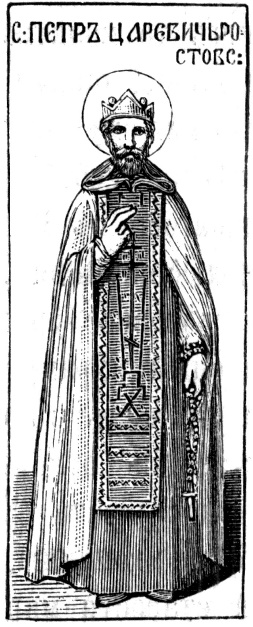
Святых славных и всехвальных первоверховных Апостолов Петра и Павла
The holy, glorious, and all-praised, foremost leaders among the Apostles, Peter and Paul.
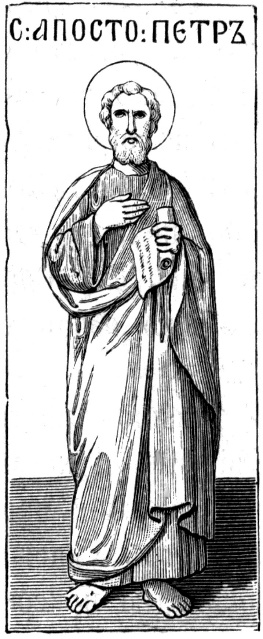
Святой Апостол Пётр, прежде Апостольства своего называемый Симон, родом из Вифсаиды, Еврей, сын Ионин, старший брат Андрея Первозванного, был рыбарь, женат (Мф.8:14–15. 1Кор.9:5) и имел детей. По выражению св. Златоустого, был человек пламенный, некнижный, простой, бедный и Богобоязненный. Первоначально он приведён был к Господу братом своим Андреем и тогда же – при первом воззрении Своём на простого рыбаря – Господь пред-нарёк ему имя Кифа по-Сирски или Пётр по-Гречески, т. е. камень (Ин.1:40–42). Но Пётр оставался при своих обычных занятиях, доколе Сам Спаситель не призвал Петра от ловитвы рыб в число премудрых ловцов человеков, причём показал Пётр своё высокое послушание и глубокое смирение; сделался последователем Христу (Мф.4:18–19; Лк. 5:10–11) и был отличный ученик Господа. По избрании Петра в число Апостолов Господь посетил его убогий дом и исцелил тёщу его от горячки (Мк.1:19–31). Между трёх избраннейших учеников Своих Господь удостоил Петра быть свидетелем Своей Божественной славы на Фаворе, Своей Божественной силы при воскрешении дочери Иаира (Мк.5:37) и Своего по человечеству уничижения в саду Гефсиманском. Господь отличал Петра, который сам отличал себя от других простотой правого сердца, особенной преданностью и горячностью к Иисусу Христу. Пётр столько был ревностен и усерден к Иисусу Христу, что чаще, прежде, скорее и пламеннее других Апостолов выказывал к Нему свою веру и готовность, и по своей великой ревности, до сошествия Святого Духа, нередко и чаще других учеников Христовых обнаруживал свои человеческие немощи, которые Господь премудро обличал и исправлял. Так некогда из среды учеников, смущённых видением не узнанного Господа, шедшего по водам, Пётр возопил:Господи, аще Ты еси, повели ми приити к Тебе по водам. По повелению Господа Пётр пошёл по водам. Но от маловерия начал утопать и был спасён и обличён Господом в маловерии (Мф.14:25–31). После того как Спаситель учением и чудесами Своими явил Себя народу Сыном Божиим, будучи в Кесарии Филипповой или Панее, Он спросил учеников: за кого они почитают Его? Пётр по внушению Божию от лица всех Апостолов исповедал Его Христом, Сыном Божиим. Это твёрдое исповедание Петра Господь похвалил и указал на сие исповедание, как на соответственное значение имени его – камень и необходимое для Церкви, чтобы врата адовы не одолели её. Похвалив исповедание Петра, Господь не лице его похвалил и не главенство его перед другими Апостолами выставил. Исповедание независимо от лица, произнёсшего оное, было твёрдо и похвально, а исповедник мог отступить от слов своих и пасть. Так, после своего примерного исповедания, Пётр, вопреки словам Господа, по особенному к Нему усердию, начал пререкать Ему, что Он не пострадает, и услышал от Него строгое перед учениками обличение и уничижение, которое со смирением перенёс (Мф.16:15–23). Когда многие из учеников Христовых, не могши вместить слов Господа о таинстве св. причащения, отошли от Него и Он сказал обеманадесяте: еда и вы хощети ити, Симон Пётр отвечал: Господи, к кому идем; глаголы живота вечного имаши (Иоан. V). Не смотря на твёрдое исповедание Иисуса Христа Петром, Господь в особенности молился об нём, да не оскудеет вера его, и на готовность Петра страдать и умереть вместе с Господом, Господь предрёк ему, что он трижды отречётся от Него (Лк.22:32–34.) Когда Иуда предатель с толпой народа пришёл в сад Гефсиманский к Небесному Подвигоположнику, чтобы предать Его на страдания и смерть, Пётр по ревности своей к Иисусу Христу один из Апостолов отважился защищать Его, но вскоре глубоко пал, трижды отрёкшись от Христа. Впрочем, горькими слезами раскаяния омыл своё отречение; первый из Апостолов вошёл во гроб Спасителя по воскресении Его и первый из Апостолов удостоился узреть Воскресшего (Лк.24:34). Некогда Воскресший явился на море Тивериадском. Пётр, услышав об этом, по великой своей любви к Господу ввержеся в море, чтобы скорее приблизиться к Иисусу Христу, а друзии кораблецем приидоша; но в сие же время Господь троекратно вопросил Петра: любиши ли Мя паче сих, и Пётр оскорбел от сего вопрошения, коим Господь напомнил ему о недавнем троекратном его отречении и коим ещё раз по воскресении Своём восстановил его в Апостольском звании.
The holy Apostle Peter, before his Apostleship called Simon, was by birth from Bethsaida, a Hebrew, the son of Jonah, the elder brother of Andrew the First-called, a fisherman, married (Mt. 8:14–15; 1 Cor. 9:5), and had children. In the words of St. Chrysostom, he was a man of ardent spirit, unlettered, simple, poor, and God-fearing. At first he was brought to the Lord by his brother Andrew, and then—at the first glance of the Lord upon the simple fisherman—the Lord forenamed him Cephas in Syriac or Peter in Greek, that is, a stone (Jn. 1:40–42). But Peter remained at his usual occupation until the Savior Himself called Peter from the catching of fish into the number of wise fishers of men, at which time Peter showed his high obedience and deep humility; he became a follower of Christ (Mt. 4:18–19; Lk. 5:10–11) and was a distinguished disciple of the Lord. After the election of Peter into the number of the Apostles, the Lord visited his humble home and healed his mother-in-law of a fever (Mk. 1:19–31). Among His three most chosen disciples, the Lord deemed Peter worthy to be a witness of His Divine glory on Tabor, of His Divine power at the raising of Jairus's daughter (Mk. 5:37), and of His humiliation according to humanity in the Garden of Gethsemane. The Lord distinguished Peter, who himself distinguished himself from others by the simplicity of a right heart, by special devotion and fervor toward Jesus Christ. Peter was so zealous and diligent toward Jesus Christ that more often, sooner, more quickly, and more ardently than the other Apostles he showed his faith and readiness toward Him, and, because of his great zeal, before the descent of the Holy Spirit, he not infrequently and more often than the other disciples of Christ revealed his human weaknesses, which the Lord wisely reproved and corrected. Thus once, from among the disciples troubled by the sight of the unrecognized Lord walking on the water, Peter cried out: Lord, if it be Thou, bid me come unto Thee on the water. At the Lord's command, Peter walked on the water. But from little faith he began to sink and was saved and reproved by the Lord for his little faith (Mt. 14:25–31). After the Savior, by His teaching and miracles, had shown Himself to the people as the Son of God, being in Caesarea Philippi, or Paneas, He asked the disciples: whom did they consider Him to be? Peter, by divine inspiration, on behalf of all the Apostles confessed Him as the Christ, the Son of God. This firm confession of Peter the Lord praised and pointed to this confession as corresponding to the meaning of his name—stone—and as necessary for the Church, that the gates of hell should not prevail against it. Having praised Peter's confession, the Lord did not praise his person nor set forth his primacy over the other Apostles. The confession, independent of the person who uttered it, was firm and praiseworthy, but the confessor could fall away from his words and fall. Thus, after his exemplary confession, Peter, contrary to the Lord's words, out of special zeal for Him, began to contradict Him, saying that He would not suffer, and heard from Him a severe reproof and humiliation before the disciples, which he bore with humility (Mt. 16:15–23). When many of Christ's disciples, unable to contain the Lord's words about the mystery of holy Communion, departed from Him, and He said to the twelve: Will ye also go away? Simon Peter answered: Lord, to whom shall we go? Thou hast the words of eternal life (Jn. 6:68–69). Notwithstanding Peter's firm confession of Jesus Christ, the Lord prayed especially for him, that his faith fail not, and to Peter's readiness to suffer and die together with the Lord, the Lord foretold him that he would deny Him three times (Lk. 22:32–34). When Judas the traitor with a crowd of people came into the Garden of Gethsemane to the Heavenly Author of the contest, to deliver Him up to suffering and death, Peter, out of his zeal for Jesus Christ, was the only one of the Apostles who dared to defend Him, but soon fell deeply, having denied Christ three times. However, with bitter tears of repentance he washed away his denial; he was the first of the Apostles to enter the Savior's tomb after His resurrection, and the first of the Apostles was deemed worthy to behold the Risen One (Lk. 24:34). Once the Risen One appeared on the Sea of Tiberias. Peter, hearing of this, out of his great love for the Lord cast himself into the sea to draw nearer to Jesus Christ more quickly, but the other disciples came in the boat; yet at that same time the Lord asked Peter three times: Lovest thou Me more than these? and Peter was grieved by this question, by which the Lord reminded him of his recent threefold denial and by which, once more after His resurrection, He restored him to his Apostolic rank.
По вознесении Иисуса Христа Апостол Пётр предложил собранию учеников Христовых избрать в число 12 Апостолов, умалённое отпадением Иуды предателя, – одного из тех, которые, как говорил Апостол Пётр, находились с нами во всё время, когда пребывал и обращался с нами Господь Иисус. И так, по молитве соборной, жребием избран был Матфий (Деян.1:15–16).
After the ascension of Jesus Christ, the Apostle Peter proposed to the gathering of Christ's disciples to choose into the number of the twelve Apostles, diminished by the falling away of Judas the traitor, one of those who, as the Apostle Peter said, had companied with us all the time that the Lord Jesus went in and out among us. And so, after conciliar prayer, Matthias was chosen by lot (Acts 1:15–16).
По сошествии Св. Духа на Апостолов, облёкшего их Божественной силой свято жить и учить, действовать и управлять, прежняя ревность Петра ко Христу совершенно освятилась, возвысилась и явилась неколебима. Благодать Св. Духа обнаруживалась в могущественном учении, в чудесах, знамениях и постоянной готовности Петра терпеть все за имя Христово. Прежде при вопросе слуг архиерейских он из страха отрёкся от Христа; теперь, преследуемый синедрионом, он нетрепетно – с великим дерзновением проповедует Христа воскресшего (Деян. 4:13–31), даже перед лицом врагов, распявших Его и запрещавших проповедать об Нём (Деян.4:19,5:29) и радуется, терпя за имя Господа Иисуса Христа побои и поругание (Деян.5:40–41).
After the descent of the Holy Spirit upon the Apostles, which clothed them with divine power to live and teach, to act and govern in holiness, Peter's former zeal for Christ was completely sanctified, elevated, and appeared unshakable. The grace of the Holy Spirit was manifested in his powerful teaching, in miracles, signs, and in Peter's constant readiness to endure all for the name of Christ. Formerly, at the question of the high priest's servants, he denied Christ out of fear; now, persecuted by the Sanhedrin, he fearlessly—with great boldness—preaches Christ risen (Acts 4:13–31), even before the face of enemies who had crucified Him and forbade preaching about Him (Acts 4:19; 5:29), and rejoices, suffering beatings and reviling for the name of the Lord Jesus Christ (Acts 5:40–41).
Сила слова Апостола Петра была столь могущественна, что вдруг обращал он ко Христу по три и пяти тысяч человек, и сопровождалась чудесными знамениями. По слову Петра обличаемые в преступлении падали мёртвыми (Деян.5:5,10); а мёртвые воскресали (Деян.9:40); больные исцелялись (Деян.9:33–34) даже от прикосновения к ним одной тени проходящего Петра (Деян.5:15).
The power of the Apostle Peter's word was so mighty that he would suddenly convert to Christ three and five thousand people at a time, and it was accompanied by miraculous signs. At Peter's word, those convicted of transgression fell dead (Acts 5:5, 10); and the dead were raised (Acts 9:40); the sick were healed (Acts 9:33–34), even by the touch of the passing Peter's shadow (Acts 5:15).
Впрочем ревность, которая отличала Ап. Петра от других Апостолов и учеников Христовых, не давала ему первенства власти, но только первенство чести по трудам Апостольским. О делах Церкви он предлагал Собору (Деян.1:15;15:7) так же, как и другие (Деян.15:7,12–14). Дела решались общим голосом Апостолов и пресвитеров со всей Церковью (Деян.1:23–26; 6:2–6;15:22–23). Ап. Павел, говоря об Апостолах, почитаемых столпами, поставляет на первом месте Иакова, а потом Петра и Иоанна (Гал.2:9), себя же причисляет к ним (2Кор.11:5) и сравнивает с Петром (Гал.2:7–8). Собор посылал Петра на дело служения так же, как и других учеников Христовых (Деян.8:14); и, как некогда все верующие препирались с Петром за то, что он отверз дверь веры язычникам, думая, что Евангелие назначено только для обрезанных (Деян.11:2); так некогда и Ап. Павел в лице ему противу стал (Гал.2:11). Таким образом из деяний Петра и прочих Апостолов не видно главенства его перед ними, и, следовательно, оно не дано ему Спасителем. Если бы Господь установил его, оно ясно обнаружилось бы в действиях св. Апостолов.
However, the zeal that distinguished the Apostle Peter from the other Apostles and disciples of Christ did not give him primacy of authority, but only primacy of honor in Apostolic labors. He proposed matters of the Church to the Council (Acts 1:15; 15:7) just as others did (Acts 15:7, 12–14). Matters were decided by the common voice of the Apostles and elders with the whole Church (Acts 1:23–26; 6:2–6; 15:22–23). The Apostle Paul, speaking of the Apostles who were reputed to be pillars, places James first, then Peter and John (Gal. 2:9), and numbers himself among them (2 Cor. 11:5) and compares himself with Peter (Gal. 2:7–8). The Council sent Peter to the work of ministry just as it did the other disciples of Christ (Acts 8:14); and, as once all the believers contended with Peter because he had opened the door of faith to the Gentiles, thinking that the Gospel was intended only for the circumcised (Acts 11:2); so once the Apostle Paul withstood him to the face (Gal. 2:11). Thus, from the acts of Peter and the other Apostles, his primacy over them is not evident, and consequently it was not given to him by the Savior. If the Lord had established it, it would have been clearly manifested in the actions of the holy Apostles.
Пётр был преимущественно Апостолом для Иудеев (Гал.2:7). В день сошествия Св. Духа на Апостолов в виде огненных языков, когда собрался народ и дивился сему необычайному явлению, Ап. Пётр умножил Церковь Иерусалимскую краткой своей проповедью присоединив в ней в этот день около 3000 душ (Деян. II) и вскоре после того – около 5000 человек (Деян. III; Деян.4:4). За свою проповедь он первый сделался и узником. Первое его заключение кончилось для него запрещением от начальников и старейшин Иудейских проповедать о Воскресшем и угрозами, если не перестанет учить (Деян.3:3–37). Пётр был и между теми Апостолами, которые первые потерпели поругание и побои за Евангелие, которое они, не смотря на угрозы начальников Иудейских, безбоязненно продолжали благовествовать (Деян. V). Вместе с прочими Апостолами Пётр участвовал на Соборе для избрания диаконов, чтобы, поручив им попечение о ежедневном раздаянии потребностей вдовицам и прочим нуждающимся, Апостолы беспрепятственнее могли проповедать слово Божие (Деян.6:1–7).
Peter was preeminently the Apostle to the Jews (Gal. 2:7). On the day of the descent of the Holy Spirit upon the Apostles in the form of fiery tongues, when the people gathered and marveled at this extraordinary phenomenon, the Apostle Peter increased the Jerusalem Church by his brief sermon, adding to it on that day about 3000 souls (Acts 2), and soon after—about 5000 people (Acts 3; Acts 4:4). For his preaching he was the first to become a prisoner. His first imprisonment ended with a prohibition from the Jewish rulers and elders to preach about the Risen One and with threats if he did not cease teaching (Acts 3:3–37). Peter was also among those Apostles who first suffered reviling and beatings for the Gospel, which, despite the threats of the Jewish rulers, they continued to preach fearlessly (Acts 5). Together with the other Apostles, Peter participated in the Council for the election of deacons, so that, entrusting them with the care of the daily distribution of necessities to the widows and others in need, the Apostles might more freely preach the word of God (Acts 6:1–7).
Доселе деятельность Ап. Петра ограничивалась Иерусалимом, куда приходил в 37 году по Р. X. новообращённый Ап. Павел соглядати Петра (Гал.1:18). По принятии жителями Самарии слова Божия, около 45 года по Р. X., когда Апостолы услышали, что Самаряне приняли слово Божие: послали к ним Петра и Иоанна; и это было первое Апостольское путешествие Петра. Засвидетельствовав и благовествовав слово Господне в Самарии, Пётр возвратился в Иерусалим, на пути проповедав Евангелие (Деян.8:14–25) во многих селениях Самарийских.
Until this time, the activity of the Apostle Peter was limited to Jerusalem, where the newly converted Apostle Paul came in the year 37 A.D. to see Peter (Gal. 1:18). After the inhabitants of Samaria received the word of God, around the year 45 A.D., when the Apostles heard that the Samaritans had received the word of God, they sent Peter and John to them; and this was the first Apostolic journey of Peter. Having testified to and preached the word of the Lord in Samaria, Peter returned to Jerusalem, preaching the Gospel on the way (Acts 8:14–25) in many villages of Samaria.
При втором своём путешествии из Иерусалима, Пётр, посещая Церкви в Иудее, Галилее и Самарии, пришёл к живущим в Лидде святым, т. е. верующим во Христа, где исцелил Енея от расслабления и многих обратил к Господу; был в Иоппии, где воскресил Тавифу, и многие уверовали в Господа (Деян.9:31–43); потом в Кесарии Палестинской или Стратонийской. Здесь Ап. Пётр, наученный видением Божественным, первый отверз дверь веры язычникам, крестив в Кесарии Корнилия, сотника Римского, и домашних его (Деян.10:7,11:1–18). Из Кесарии Пётр прибыл на Пасху в Иерусалим. Здесь, по повелению Ирода, воздвигшего гонение на Церковь Христову, Ап. Пётр был заключён в темницу уже в третий раз.
On his second journey from Jerusalem, Peter, visiting the Churches in Judea, Galilee, and Samaria, came to the saints living in Lydda, that is, the believers in Christ, where he healed Aeneas of paralysis and turned many to the Lord; he was in Joppa, where he raised Tabitha, and many believed in the Lord (Acts 9:31–43); then in Caesarea of Palestine, or Stratonian. Here the Apostle Peter, taught by a divine vision, was the first to open the door of faith to the Gentiles, baptizing in Caesarea Cornelius, a Roman centurion, and his household (Acts 10:7; 11:1–18). From Caesarea Peter came to Jerusalem for Passover. Here, by the command of Herod, who had raised a persecution against the Church of Christ, the Apostle Peter was imprisoned for the third time.
Чудесно освобождённый Ангелом из темницы, Пётр совершилтретье путешествие. Из Иерусалима прибыл опять в Кесарию и жил там (Деян.12:1–19). Вероятно, из Кесарии путешествовал св. Пётр для проповеди Евангелия по городам Финикии. Около 50 года он прибыл в Иерусалим и присутствовал на Апостольском соборе для решения спора, возбуждённого ревнителями Иудейства: должны ли христиане хранить обрезание и другие Ветхозаветные обряды? Ап. Пётр открыл собор своею речью (Деян.15:1–7).
Miraculously freed from prison by an Angel, Peter undertook a third journey. From Jerusalem he came again to Caesarea and dwelt there (Acts 12:1–19). It is probable that from Caesarea St. Peter travelled to preach the Gospel through the cities of Phoenicia. About the year 50 he came to Jerusalem and was present at the Apostolic Council to resolve the dispute stirred up by zealots of Judaism: whether Christians ought to keep circumcision and other Old Testament rites? The Apostle Peter opened the Council with his speech (Acts 15:1–7).
После собора Ап. Пётр предпринял из Иерусалима четвёртое Апостольское путешествие. Он отправился в Сирию; и путешествовал в Антиохию и в другие страны и города. По сказанию Евсевия и других писателей, Пётр проповедал потом слово спасения в Малой Азии – Каппадокии, Галатии, Понте, Вифинии. Из Вифинии Ап. Пётр возвратился опять в Антиохию и, рукоположив Евода епископом Антиохии, прибыл в Илион или Трою, для которой поставил епископом Корнилия, и возвратился во Иерусалим.
After the Council, the Apostle Peter undertook from Jerusalem a fourth Apostolic journey. He set out for Syria; and he travelled to Antioch and to other lands and cities. According to the account of Eusebius and other writers, Peter afterwards preached the word of salvation in Asia Minor – Cappadocia, Galatia, Pontus, Bithynia. From Bithynia the Apostle Peter returned again to Antioch and, having ordained Evodius bishop of Antioch, came to Ilium or Troy, for which he appointed Cornelius bishop, and returned to Jerusalem.
Из Иерусалима Апостол совершил пятое своё Апостольское путешествие в Египет. Из Вавилона Египетского, где был для проповеди сотрудник Ап. Петра – Марк, если слова: целует вы яже в Вавилоне соизбранная, и Марко сын мой (1Пет.5:13) понимать буквально, Пётр написал и своё первое соборное послание к христианам из Иудеев, бывшим в рассеянии в странах Малой Азии. В IV уже веке, когда образовалась мысль о долговременном пребывании Ап. Петра в Риме, некоторые говорили, что под именем Вавилона Ап. Пётр разумел Рим, и отсюда написал своё первое соборное послание. Но не легко поверить, чтобы Апостол, означая место написания своего послания, назвал его иносказательно. Поставив Марка епископом Александрии, св. Пётр возвратился в Иерусалим на день успения Богоматери.
From Jerusalem the Apostle made his fifth Apostolic journey to Egypt. From Egyptian Babylon, where Mark, the fellow-worker of the Apostle Peter, was for preaching, if the words: She that is elected together with you in Babylon saluteth you, and so doth Mark my son (1 Pet. 5:13) are understood literally, Peter wrote also his first catholic epistle to the Christians from among the Jews, who were in dispersion in the regions of Asia Minor. Already in the fourth century, when the idea of the Apostle Peter's long sojourn in Rome had taken shape, some said that by the name of Babylon the Apostle Peter meant Rome, and from there wrote his first catholic epistle. But it is not easy to believe that the Apostle, indicating the place of writing of his epistle, would call it allegorically. Having appointed Mark bishop of Alexandria, St. Peter returned to Jerusalem for the day of the Dormition of the Mother of God.
После успения Богоматери св. Апостол Пётр совершил из Иерусалима, кажется, уже последнее своё Апостольское странствие. Из Иерусалима он опять прибыл в Египет, и отсюда отплыл в Британию, из Британии в Грецию; был в Коринфе и в других городах Еллинских; наконец около 67 года прибыл в Рим. В Риме св. Ап. Пётр с великим усердием благовествовал веру Христову, умножал число христиан, поражал врагов и утверждал верующих. В Риме Ап. Пётр обличил обман Симона волхва, который выдавал себя за Христа, обратил ко Христу двух жён, любимых Нероном; из Рима около 67 года по Р. X. Ап. Пётр написал второе своё соборное послание к христианам, обратившимся из Иудеев и язычников, бывшим в рассеянии в пределах Малой Азии.
After the Dormition of the Mother of God, St. Apostle Peter made from Jerusalem, it seems, his last Apostolic journey. From Jerusalem he came again to Egypt, and from there sailed to Britain, from Britain to Greece; he was in Corinth and in other Hellenic cities; finally, about the year 67, he came to Rome. In Rome, St. Apostle Peter with great zeal preached the faith of Christ, increased the number of Christians, confounded the enemies and confirmed the faithful. In Rome, the Apostle Peter exposed the deception of Simon the magician, who gave himself out to be Christ, and converted to Christ two wives beloved of Nero; from Rome, about the year 67 A.D., the Apostle Peter wrote his second catholic epistle to the Christians, converted from among Jews and pagans, who were in dispersion in the regions of Asia Minor.
В Риме первоверховный Ап. Пётр предвозвещён был Господом об отложении телесе своего (2Пет.1:14), и это вскоре исполнилось. По повелению Нерона, который злился на Ап. Петра за погибель Симона волхва и за обращение любимых жён, Апостол 29 июня в 67 году по Р. X. был распят. Он просил мучителей распять себя головой вниз, желая сим образом смерти показать различие между своими страданиями и страданиями своего Божественного Учителя.
In Rome, the chief and foremost Apostle Peter was foretold by the Lord of the putting off of his tabernacle (2 Pet. 1:14), and this was soon fulfilled. By the command of Nero, who was enraged at the Apostle Peter for the destruction of Simon the magician and for the conversion of his beloved wives, the Apostle was crucified on the 29th of June in the year 67 A.D. He asked his tormentors to crucify him head downwards, desiring by this manner of death to show the difference between his sufferings and the sufferings of his Divine Teacher.
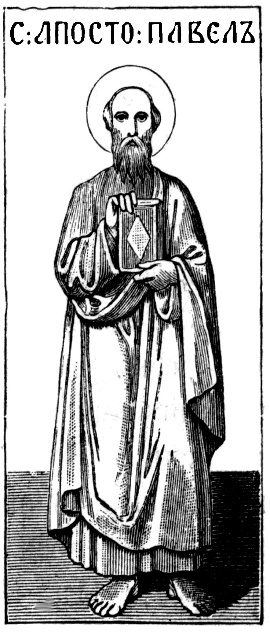
Святой Ап. Павел, называвшийся до Апостольства своего по-Еврейски Савл, был родом Еврей из колена Вениаминова, из знатного Киликийского города Тарса (Деян.21:39), имел право Римского гражданства, данное его предкам (Деян.22:25–29); по закону фарисей (Флп.3:5), Савл тщательно воспитан был в законе отеческом, так что пламенно ревновал по Боге (Деян.22:3). Он имел и внешнюю учёность (Деян.26:24,17:28. Тит.1:12), знал и ремесло скинотворства (Деян.18:3). Воспитание его вверено было законоучителю Гамалиилу, уважаемому всем народом (Деян.5:34). Но ученик вначале не только не показывал наклонности к христианству, какую имел его благоразумный начальник, напротив пламенная ревность Савла к Иудейству вдыхала ему сильную ненависть против христиан. Ещё в юности своей Савл одобрял убиение архидиакона Стефана и стерёг одежды побивавших его (Деян. 7:58,8:1,12:29). Дыша угрозами и убийством на учеников Господних, Савл терзал Церковь Христову, входя в дома христиан, влача мужчин и женщин и отдавая в темницы (Деян.8:3). Он даже выпросил у синедриона власть преследовать христиан повсюду и связанных приводить в Иерусалим; поручение синедриона исполнял со всем тщанием. Он повествует сам о себе (Деян.11:1–28,22:3–15,26:9–18): «я думал, что мне должно сильно действовать против имени Иисуса Назорея, и я делал это в Иерусалиме. Получив от первосвященников власть, я многих святых (т. е. христиан) заключал в темницы и, когда убивали их, я подавал на то голос. И по всем синагогам многократно мучил их и преследовал их даже и в чужих городах. В сих мыслях (около 35 года по Р. X.), идучи в Дамаск со властью и поручением от первосвященников, среди дня на дороге я увидел с неба свет, превосходящий солнечное сияние, который осиял меня и шедших со мной. Все мы пали на землю, и я услышал голос ко мне, говорящий на Еврейском языке: Савле, Савле, что Мя гониши; жестоко (трудно)ти есть противу рожна прати. Кто еси,Господи, в трепете и ужасе возопил я? Аз есм Иисус, Егоже ты гониши, отвечал таинственный голос. Господи, что мне повелишь делать? Востани и вниди во град, и речется, что ти подобает творити. Люди, шедшие с ним, стояли в оцепенении, голос слыша, а никого не видя. Савл встал с земли и с открытыми глазами никого не видел». Спутники, не менее его поражённые дивным событием, должны были вести его за руку; блеск света ослепил его. Прибыв в Дамаск, Савл три дня ничего не видел, не принимал пищи и пития, и пребывал в посте и молитве. В сём городе жил один из 70 учеников Христовых, св. Апостол Анания; Господь в видении открыл ему жилище Савла и повелел идти к нему. «Господи! отвечал Анания, я слышал от многих об этом человеке, сколько зла сделал он святым Твоим в Иерусалиме. И здесь имеет власть от первосвященников вязать всех, призывающих Твоё имя». Иди, сказал ему Господь, яко сосуд избран Ми есть пронести имя Мое перед языки и царьми и сынми Израилевыми. Анания нашёл Савла и, возложив на него руки, сказал: брат Савл! Господь Иисус, тебе явившийся, послал меня, чтобы ты прозрел и исполнился Св. Духа. И тотчас как-бы чешуя отпала от глаз Савла, вдруг стал он видеть; немедленно крестился и сделался, по выражению Златоустого, из волка агнцем, из терния виноградом, из плевел пшеницей, из врага другом, из богохульника Богословом. Вместо гонения имени Христова он стал проповедать в синагогах и всюду, что Иисус Христос есть Сын Божий, к величайшему удивлению всех, кои знали Савла гонителем христиан.
St. Apostle Paul, who before his Apostleship was called in Hebrew Saul, was by birth a Jew of the tribe of Benjamin, from the notable Cilician city of Tarsus (Acts 21:39); he had the right of Roman citizenship, given to his ancestors (Acts 22:25–29); according to the law, a Pharisee (Phil. 3:5); Saul was carefully brought up in the law of the fathers, so that he was fervently zealous for God (Acts 22:3). He also had external learning (Acts 26:24; 17:28; Titus 1:12), and knew the trade of tent-making (Acts 18:3). His upbringing was entrusted to the teacher of the law Gamaliel, respected by all the people (Acts 5:34). But the disciple at first not only showed no inclination toward Christianity, such as his prudent master had; on the contrary, Saul's fervent zeal for Judaism inspired in him a strong hatred of Christians. Even in his youth, Saul approved of the killing of the Archdeacon Stephen and guarded the garments of those who stoned him (Acts 7:58; 8:1; 12:29). Breathing threats and murder against the disciples of the Lord, Saul ravaged the Church of Christ, entering into the houses of Christians, dragging off men and women and committing them to prison (Acts 8:3). He even asked from the Sanhedrin authority to persecute Christians everywhere and to bring them bound to Jerusalem; he carried out the commission of the Sanhedrin with all diligence. He himself relates of himself (Acts 11:1–28; 22:3–15; 26:9–18): "I thought that I ought to act strongly against the name of Jesus of Nazareth, and this I did in Jerusalem. Having received authority from the chief priests, I shut up many of the saints (i.e., Christians) in prisons, and when they were put to death, I gave my vote against them. And I punished them often in every synagogue, and persecuted them even to foreign cities. In these thoughts (about the year 35 A.D.), as I went to Damascus with authority and commission from the chief priests, at midday on the road I saw from heaven a light surpassing the brightness of the sun, which shone round about me and those who journeyed with me. We all fell to the ground, and I heard a voice saying to me in the Hebrew language: Saul, Saul, why persecutest thou Me? It is hard for thee to kick against the goads. Who art Thou, Lord? I cried out in trembling and terror. I am Jesus, Whom thou persecutest, answered the mysterious voice. Lord, what wilt Thou have me to do? Arise, and go into the city, and it shall be told thee what thou must do. The men who journeyed with him stood speechless, hearing the voice but seeing no one. Saul arose from the ground, and with his eyes open he saw no one." His companions, no less struck than he by the wondrous event, had to lead him by the hand; the brightness of the light had blinded him. Arriving in Damascus, Saul for three days saw nothing, took no food or drink, and remained in fasting and prayer. In this city dwelt one of the seventy disciples of Christ, St. Apostle Ananias; the Lord revealed to him in a vision the dwelling of Saul and commanded him to go to him. "Lord!" answered Ananias, "I have heard from many about this man, how much evil he hath done to Thy saints in Jerusalem. And here he hath authority from the chief priests to bind all that call upon Thy name." Go, said the Lord to him, for he is a chosen vessel unto Me, to bear My name before the Gentiles, and kings, and the children of Israel. Ananias found Saul and, laying his hands on him, said: Brother Saul! The Lord Jesus, Who appeared to you, has sent me, that you might receive your sight and be filled with the Holy Spirit. And immediately there fell from his eyes as it were scales, and he suddenly received sight; he was straightway baptized and became, in the words of Chrysostom, from a wolf a lamb, from a thorn a vine, from tares wheat, from an enemy a friend, from a blasphemer a theologian. Instead of persecuting the name of Christ, he began to preach in the synagogues and everywhere that Jesus Christ is the Son of God, to the greatest astonishment of all who had known Saul as a persecutor of Christians.
Кто не признает сверхъестественной десницы Божией в обращении Савла, столь неожиданном и открытом? Упорный гонитель христианства вдруг делается неутомимым проповедником Евангелия! Жизнь, поступки, слова, послания Павла – всё свидетельствует об нём, как избранном сосуде благодати Христовой. Ни скорбь, ни теснота, ни гонение, ни голод, ни погода, ни опасность, ни меч, ни смерть, ни жизнь, ни Ангелы, ни начальства, ни власти, ни настоящее, ни будущее, ни высота, ни глубина, ни иная тварь какая могла ослабить в сердце Павла пламенную любовь к Богу, яже о Христе Иисусе Господе нашем (Рим.8:35,38–39). Своё обращение к Иисусу Христу и звание Апостола Савл запечатлел принятием нового имени Павла, которое как в сокровищнице скрывает память высоких христианских добродетелей, подвигов и могущественного учения Апостола языков: «когда услышу об Апостоле Павле, говорит св. Златоуст, то представляю себе, как он был в скорбях, в теснотах, в побоях, в темницах, в глубине (морской) день и ночь (2Кор.11:23–28), как он был восхищен на третье небо, слышал в раю неизреченные слова (XIII, 2–4); представляю себе это избранное орудие, невестоводителя Христова, который желал бы сам отлучен быть от Христа за братьев своих (Рим.9:3). «Ряд подвигов святого при воспоминании его имени открывается уму внимательных, точно как-будто какая золотая цепь».
Who will not acknowledge the supernatural right hand of God in the conversion of Saul, so unexpected and manifest? The stubborn persecutor of Christianity suddenly becomes an untiring preacher of the Gospel! The life, deeds, words, and epistles of Paul—all bear witness of him as a chosen vessel of the grace of Christ. Neither tribulation, nor distress, nor persecution, nor famine, nor weather, nor danger, nor sword, nor death, nor life, nor angels, nor principalities, nor powers, nor things present, nor things to come, nor height, nor depth, nor any other creature could weaken in the heart of Paul the fervent love for God, which is in Christ Jesus our Lord (Rom. 8:35, 38–39). His conversion to Jesus Christ and his calling as an Apostle, Saul sealed by receiving the new name Paul, which, as in a treasury, hides the memory of the high Christian virtues, labors, and mighty teaching of the Apostle of the Gentiles: "When I hear of the Apostle Paul," says St. Chrysostom, "I picture to myself how he was in afflictions, in distresses, in stripes, in prisons, in the deep (of the sea) day and night (2 Cor. 11:23–28), how he was caught up to the third heaven, heard unspeakable words in paradise (XIII, 2–4); I picture to myself this chosen instrument, the bridesman of Christ, who wished himself to be accursed from Christ for his brethren (Rom. 9:3). The series of the saint's labors, at the remembrance of his name, opens to the mind of the attentive, exactly like a golden chain."
На чудесно-избранный сосуд Господа (Деян.9:15) – св. Апостола Павла благодать Св. Духа изливалась многократно и чрезвычайно. После присоединения своего к Церкви Христовой, он имел премногае видения и откровения (2Кор.12:1,7). В деле Апостольского служения он совершил все свои путешествия по влечению Св. Духа (Деян.22:17–21,20:22–23; Гал.2:2). Дух Святой так осенял и управлял всеми силами ума и воли Апостола Павла, что иногда возбранял и не допускал Апостола до исполнения таких намерений, кои он ясно определительно предположил и уже готовился исполнить (Деян.16:6–7).
Upon the miraculously-chosen vessel of the Lord (Acts 9:15)—St. Apostle Paul—the grace of the Holy Spirit was poured out many times and in extraordinary measure. After his joining to the Church of Christ, he had abundance of visions and revelations (2 Cor. 12:1, 7). In the work of Apostolic service, he made all his journeys by the impulse of the Holy Spirit (Acts 22:17–21; 20:22–23; Gal. 2:2). The Holy Spirit so overshadowed and governed all the powers of the mind and will of the Apostle Paul, that sometimes He forbade and did not permit the Apostle to carry out such intentions as he had clearly and definitely proposed and was already preparing to fulfill (Acts 16:6–7).
Избранный быть свидетелем Господа перед всеми человеками (Деян.22:15), Павел совершал непрестанные путешествия в разные страны для проповеди Евангелия Иудеям и особенно язычникам (Гал.2:7–8). «Церквам Христовым во Иудее, пишет Апостол Павел, я лично не был известен, а только слышали оне, что бывший некогда гонителем их ныне проповедует веру, которую прежде старался истреблять, и прославляли за меня Бога» (Гал.1:22–24). Во время непрестанных своих Апостольских странствий Павел написал ΧΙV посланий, которые, как говорит св. Златоуст, ограждают Вселенскую Церковь на подобие стены, построенной из адаманта.
Chosen to be a witness of the Lord before all men (Acts 22:15), Paul made unceasing journeys to various countries for the preaching of the Gospel to Jews and especially to Gentiles (Gal. 2:7–8). "The churches of Christ in Judea," writes the Apostle Paul, "I was personally unknown to them, but they only heard that he who once persecuted them now preaches the faith which he once tried to destroy, and they glorified God in me" (Gal. 1:22–24). During his unceasing Apostolic wanderings, Paul wrote XIV epistles, which, as St. Chrysostom says, fence the Universal Church like a wall built of adamant.
Просвещенный верой Христовой и сделавшись ревностным проповедником христианства в Дамаске, отсюда с проповедью Евангелия Апостол Павел совершилпервое путешествие; он ходил в Аравию и вскоре опять возвратился в Дамаск.
Enlightened by the faith of Christ and having become a zealous preacher of Christianity in Damascus, from there the Apostle Paul undertook his first journey for the preaching of the Gospel; he went into Arabia and soon returned again to Damascus.
По трёхлетнем пребывании Павла в Дамаске, он имел второе путешествие. Христиане для сохранения жизни его от раздражённых Иудеев, побеждаемых его Боговдохновенным словом и чудесами, тайно препроводили его из Дамаска в Иерусалим, куда прибыл в 37 году по Рождестве Христовесоглядати Апостола Петра (Гал.1:18). Не зная об обращении Савла, ученики Христовы чуждались его, как гонителя христиан: Апостол Варнава представил его Апостолам и рассказал им о чудесном его обращении ко Христу и о ревностном им проповедании Евангелия. С тех пор Савл всегда обращался вместе с ними в Иерусалиме (Деян.9:22–28).
After Paul's three-year sojourn in Damascus, he undertook his second journey. The Christians, to preserve his life from the enraged Jews, who were overcome by his God-inspired word and miracles, secretly conveyed him from Damascus to Jerusalem, where he arrived in the year 37 A.D. to see the Apostle Peter (Gal. 1:18). Not knowing of Saul's conversion, the disciples of Christ shunned him as a persecutor of Christians: the Apostle Barnabas presented him to the Apostles and told them of his miraculous conversion to Christ and of his zealous preaching of the Gospel. From that time Saul always associated with them in Jerusalem (Acts 9:22–28).
Из Иерусалима Ап. Павел отправился в своё третье Апостольское странствие – в страны Сирские и Киликийские. Из Иерусалима по причине опасности от Еллинов-Евреев братия отпустили его в его отечественный город Тарс (Деян.9:29–30), а отсюда с Ап. Варнавой Павел ходил в Антиохию Сирийскую, прежде Ап. Петра. Целый год собираясь с тамошней Церковью, они приобрели здесь немалое число учеников, кои первые стали называться христианами. Как Иерусалим был матерью христиан из Иудеев, так Антиохия сделалась матерью Церквей из язычников. По случаю голода, Ап. Павел послан был из Антиохии с милостыней в Иерусалим (Деян.11:25–30), и по исполнении поручения возвратился в Антиохию (Деян.12:24).
From Jerusalem the Apostle Paul set out on his third Apostolic journey—to the regions of Syria and Cilicia. From Jerusalem, because of the danger from the Hellenistic Jews, the brethren sent him away to his native city of Tarsus (Acts 9:29–30), and from there, with the Apostle Barnabas, Paul went to Syrian Antioch, before the Apostle Peter. Assembling for a whole year with the Church there, they gained a considerable number of disciples, who were the first to be called Christians. As Jerusalem was the mother of Christians from among the Jews, so Antioch became the mother of the Churches from among the Gentiles. On the occasion of a famine, the Apostle Paul was sent from Antioch with alms to Jerusalem (Acts 11:25–30), and having fulfilled his commission, he returned to Antioch (Acts 12:24).
По достаточном утверждении Церкви Антиохийской Савл, по внушению Св. Духа, напутствованный постом, молитвой и рукоположением, отпущен был из Антиохии и совершил четвёртое путешествие (около 42–50 года) для проповеди Евангелия в разных отдалённых странах (Деян. XIII, XIV). Из Антиохии Ап. Павел, посланный Духом Святым, пришёл в Селевкию, а оттуда отплыл в Кипр и прошёл весь остров. В Пафе, главном городе острова, проконсул Павел, изумлённый силой проповеди Савла над волшебником Елимой или Вариисусом, которого он словом своим ослепил, уверовал во Христа, дивясь учению Господню: с этой поры Писание начинает называть Савла Павлом. Отправясь из Пафа, Павел проповедовал Евангелие в некоторых областях Малоазийских, как то: в Пергии – городе Памфилии, Антиохии Писидийской или главном городе Писидии в Малой Азии, где весь город собирался слушать слово Божие, которое распространялось по всей стране. Гонимый завистью Иудеев, Ап. Павел около 45 года удалился из Антиохии в Иконию, главный город Ликаонии, где проповедал так, что великое множество Иудеев и Еллинов уверовали во Иисуса Христа. Между обратившимися в это время ко Христу особенно известна первомученица Фекла. В Иконии Апостол находился довольно долго. Господь во свидетельство слову благодати Своей творил руками Апостола знамения и чудеса. Гонимый и здесь врагами Христа, Ап. Павел ушёл в Ликаонские города: в Листру и Дервию иокрестные места. В Листре язычники, изумлённые чудесным исцелением хромого Апостолом Павлом и спутником его Варнавой, назвали их богами – Павла Меркурием, потому что он первенствовал в слове, а Варнаву – Юпитером, и хотели было принести в честь них жертву, так что Апостолы едва уговорили народ не делать этого. Преследуемые в Листре неверующими, проповедники Евангелия удалились в Дервию. Приобретши здесь довольно учеников, они на возвратном пути опять были в Листре, Иконии и Антиохии Писидийской, утверждая души учеников и увещевая их пребывать в вере. Рукоположив пресвитеров для каждой Церкви, они пошли через Писидию в Памфилию, потом в Пергию, а оттуда отплыли в Антиохию Сирийскую, и таким образом Ап. Павел окончил своё четвёртое путешествие, во время которого благовествование распространилось от Иерусалима до Иллирика (Рим.15:19).
After the Church of Antioch had been sufficiently established, Saul, by the prompting of the Holy Spirit, and having been sent forth with fasting, prayer, and the laying on of hands, departed from Antioch and undertook his fourth journey (about 42–50 A.D.) for the preaching of the Gospel in various distant lands (Acts 13, 14). From Antioch the Apostle Paul, sent by the Holy Spirit, came to Seleucia, and from there sailed to Cyprus and traversed the whole island. In Paphos, the chief city of the island, the proconsul Paul, amazed at the power of Saul's preaching over the sorcerer Elymas or Bar-Jesus, whom he blinded by his word, believed in Christ, marveling at the teaching of the Lord: from this time Scripture begins to call Saul Paul. Setting out from Paphos, Paul preached the Gospel in certain regions of Asia Minor, such as: in Perga—a city of Pamphylia, in Pisidian Antioch or the chief city of Pisidia in Asia Minor, where the whole city gathered to hear the word of God, which spread throughout all the region. Persecuted by the envy of the Jews, the Apostle Paul about the year 45 withdrew from Antioch to Iconium, the chief city of Lycaonia, where he preached so that a great multitude of Jews and Greeks believed in Jesus Christ. Among those converted to Christ at this time, the first martyr Thecla is especially known. The Apostle remained in Iconium for a considerable time. The Lord, bearing witness to the word of His grace, worked signs and wonders by the hands of the Apostle. Persecuted here also by the enemies of Christ, the Apostle Paul withdrew to the Lycaonian cities: to Lystra and Derbe and the surrounding region. In Lystra, the pagans, amazed at the miraculous healing of a lame man by the Apostle Paul and his companion Barnabas, called them gods—Paul they called Mercury, because he was chief in speech, and Barnabas, Jupiter, and wished to offer sacrifice in their honor, so that the Apostles barely persuaded the people not to do this. Persecuted in Lystra by the unbelievers, the preachers of the Gospel withdrew to Derbe. Having gained a good number of disciples there, on their return journey they again visited Lystra, Iconium, and Pisidian Antioch, strengthening the souls of the disciples and exhorting them to continue in the faith. Having ordained presbyters for each Church, they went through Pisidia into Pamphylia, then to Perga, and from there sailed to Syrian Antioch, and thus the Apostle Paul ended his fourth journey, during which the good news spread from Jerusalem to Illyricum (Rom. 15:19).
Около 50 года по Р. X. св. Павел начал пятое своё Апостольское путешествие (50–56). По случаю спора о соблюдении обрядового закона он отправился из Антиохии в Иерусалим, а отсюда Собор Апостольский послал его с своим определением в Антиохию. По некотором времени пребывания в Антиохии Ап. Павел сказал Варнаве: «пойдём посетим братьев по всем городам, в которых мы проповедовали Слово Господне, и посмотрим: как они живут». Избрав нового спутника – Силу, Ап. Павел прошёл с ним Сирию и Киликию, утверждая Церкви (Деян. XV); достиг и до Дервии и Листры. Посещая Церкви, Апостолы предавали верным соблюдать определения, постановленные Апостолами и пресвитерами в Иерусалиме. Таким образом Церкви утверждались в вере и умножались ежедневно. Ап. Павел с своим спутником прошёл через Фригию, Галатийскую страну, Мисию, и прибыл в Троаду, иначе называемую Антигонией – город Азии. Тут Ап. Павлу ночью было видение: ему предстал Македонянин и просил: «приди в Македонию и помоги нам». После этого видения, пишет Апостол, мы решились отправиться в Македонию, заключая, что Господь призывает нас проповедовать там Евангелие. Отправясь из Троады, мы приплыли прямо в Самофракию – небольшой остров Архипелага, на другой день в Неаполь – город Македонии, а оттуда в Филиппы – некогда главный город, а потом Римское поселение Македонии. Но здесь их проповедь, сопровождавшаяся исцелением одной одержимой духом прорицательным служанки, которая прорицанием приносила большой доход своим господам, подвергла проповедников побоям и узам. Находясь в темнице, Апостолы около полуночи молились и воспевали хвалы Богу, узники же слушали их. Вдруг сделалось великое землетрясение, так что поколебалось основание темницы; и тотчас отворились все двери и оковы со всех спали. Это чудесное событие доставило Апостолам свободу и обратило начальника темницы ко Христу (Деян. XVI). Из Филипп они путешествовали в Фессалонику – главный город Македонии. Здесь благовествование их было, говорит Ап. Павел, не в слове точию, но и в силе и в Дусе Святе и во извещении мнозе (1Фес.1:5), и немалое число уверовали во Христа. Но Иудеи возмутили против них lg народ, и Апостолы должны были удалиться в Верию, где я многие также уверовали в Евангелие. Но пришедшие Иудеи из Фессалоники в Верию и здесь возмутили против Апостолов и народ; тогда братия немедленно отпустили Ап. Павла в Афины. В Афинах – этом древнем вместилище наук, Апостол скорбел духом, смотря на город наук, полный идолов. В ареопаге некоторые из учёных язычников, услышав проповедь Ап. Павла о воскресении мёртвых, смеялись, другие не хотели слушать его, а иные и уверовали (Деян. XVII). Из уверовавших известен Дионисий Ареопагит, который был первым епископом Афинским. Из Афин Ап. Павел прибыл в Коринф около 52 года по Р. X. и первоначально обратил проповедь свою к Иудеям, но с томлением духа благовествовал им, ибо они противились и злословили ему, и посему он обратился к язычникам. Из них многие уверовали. Тогда Господь ночью в видении сказал Павлу: «не бойся, говори, и не умолкай». Зане Аз семь с тобою; и никтоже приложит озлобити тя, и он пробыл там год и шесть месяцев, поучая Коринфян слову Божию. Из Афин или из Коринфа около 52 года по Р. X. Апостол написал первое послание к Солунянам (Деян.18:5; см. 1Фес.3:6), и вскоре затем и оттуда же второе послание к Солунянам. Из Коринфа Апостол путешествовал в Сирию и достиг Ефеса. Побывав в Кесарии и во время праздника Пасхи в Иерусалиме, он возвратился в Антиохию и таким образом окончил своё пятое странствие (Деян.18:1–22).
About the year 50 A.D., St. Paul began his fifth Apostolic journey (50–56). On the occasion of a dispute concerning the observance of the ceremonial law, he set out from Antioch to Jerusalem, and from there the Apostolic Council sent him with its decree to Antioch. After some time spent in Antioch, the Apostle Paul said to Barnabas: "Let us go and visit the brethren in every city where we have preached the word of the Lord, and see how they are doing." Having chosen a new companion—Silas—the Apostle Paul passed through Syria and Cilicia with him, strengthening the Churches (Acts 15); he reached even Derbe and Lystra. Visiting the Churches, the Apostles enjoined the faithful to keep the ordinances decreed by the Apostles and presbyters in Jerusalem. Thus the Churches were strengthened in the faith and increased in number daily. The Apostle Paul and his companion passed through Phrygia, the Galatian region, Mysia, and arrived at Troas, otherwise called Antigonia—a city of Asia. There a vision appeared to the Apostle Paul by night: a Macedonian stood before him and begged: "Come over to Macedonia and help us." After this vision, the Apostle writes, we resolved to set out for Macedonia, concluding that the Lord was calling us to preach the Gospel there. Setting out from Troas, we sailed straight to Samothrace—a small island of the Archipelago—the next day to Neapolis—a city of Macedonia—and from there to Philippi—once a chief city, and later a Roman colony of Macedonia. But here their preaching, accompanied by the healing of a certain slave girl possessed by a spirit of divination, who by her soothsaying brought great profit to her masters, subjected the preachers to beatings and imprisonment. Being in prison, about midnight the Apostles prayed and sang praises to God, and the prisoners listened to them. Suddenly there was a great earthquake, so that the foundations of the prison were shaken; and immediately all the doors were opened and everyone's chains were loosed. This miraculous event gained the Apostles their freedom and converted the jailer to Christ (Acts 16). From Philippi they journeyed to Thessalonica—the chief city of Macedonia. Here their preaching, says the Apostle Paul, was not in word only, but also in power, and in the Holy Spirit, and in much assurance (1 Thess. 1:5), and a considerable number believed in Christ. But the Jews stirred up the people against them, and the Apostles had to withdraw to Berea, where many also believed the Gospel. But the Jews who came from Thessalonica to Berea stirred up the people against the Apostles there as well; then the brethren immediately sent the Apostle Paul away to Athens. In Athens—that ancient seat of learning—the Apostle was grieved in spirit, seeing the city of learning full of idols. In the Areopagus, some of the learned pagans, hearing the Apostle Paul's preaching about the resurrection of the dead, mocked; others would not listen to him; and some believed (Acts 17). Among those who believed, Dionysius the Areopagite is known, who became the first bishop of Athens. From Athens the Apostle Paul arrived in Corinth about the year 52 A.D. and at first directed his preaching to the Jews, but he proclaimed to them with anguish of spirit, for they opposed and reviled him, and therefore he turned to the Gentiles. Many of them believed. Then the Lord said to Paul in a vision by night: "Be not afraid, but speak, and hold not thy peace. For I am with thee, and no man shall set on thee to hurt thee," and he remained there a year and six months, teaching the word of God to the Corinthians. From Athens or from Corinth, about the year 52 A.D., the Apostle wrote his first epistle to the Thessalonians (Acts 18:5; see 1 Thess. 3:6), and soon after, from the same place, his second epistle to the Thessalonians. From Corinth the Apostle journeyed to Syria and reached Ephesus. Having visited Caesarea and, during the feast of Passover, Jerusalem, he returned to Antioch, and thus ended his fifth journey (Acts 18:1–22).
Из Антиохии предпринято было Ап. Павлом шестое путешествие (56–63), которое было так же отдалённо и продолжительно, как два предшествовавшие. Проведя в Аитиохии несколько времени, Апостол языков отправился с проповедью Евангелия и проходил по порядку странуГалатийскую и Фригию, утверждая в вере всех учеников (Деян.18:23). Прошедши верхние страны Малой Азии, Павел прибыл в Ефес. Здесь Апостол распространял и утверждал слово Божие около трёх лет (Деян.20:31). В Ефесе он написал, по мнению некоторых, около 56 года, – послание к Галатам, обращённым ко Христу проповедью Ап. Павла. По иному сказанию, это послание написано в Риме. Полагают также, что из Ефеса около 57 года по Р. X., после первого пребывания к Коринфе (1Кор.16:8), написано ипервое послание к Коринфянам (Кор.16:5). В Ефесе и вообще в Азии так сильно возрастало и действовало Слово Божие, что все жители Азии слышали проповедь о Господе Иисусе, как Иудеи, так и Еллины. Немалые также чудеса Бог творил руками Ап. Павла, так что платки и полотенца, бывшие на теле его, возлагали на больных и у них прекращались болезни и злые духи выходили из них. Даже некоторые из Иудейских заклинателей, ходивших по селениям, над одержимыми от злых духов стали употреблять имя Иисуса, говоря: заклинаем вас Иисусом, Которого Павел проповедует, и славимо было имя Господа Иисуса. Многие из верующих приходили и исповедовались, открывая дела свои. А не мало было и таких, которые, занимавшись тайными знаниями, снесли в одно место книги и сожгли при всех, ценой на 50,000 драхм серебра. Ремесленники, делавшие идолов, говорили: этот Павел не только в Ефесе, но почти во всей Азии немалое число людей переуверил, говоря, что боги, делаемые руками, не суть боги. Надобно опасаться, что наше ремесло придёт в презрение и храм богини Дианы будет почитаем за ничто. Выслушав сие, они исполнились ярости и произвели в народе мятеж (Деян. XIX). Когда мятеж благоразумием городского книжника, прекращён был, Ап. Павел удалился из Ефеса и прибыл с проповедью Евангелия в Македонию – в Филиппы. Отсюда около 57 года, или около года спустя после первого послания, написал онвторое послание к Коринфянам и верным всей Ахаии (2Кор.1:1). Из Македонии неусыпный проповедник Евангелия, Ап. Павел во второй раз пришёл в Коринф и пробыл здесь три месяца, преподавая верующим обильные наставления (Деян.20:3). Из Коринфа перед последним своим путешествием в Иерусалим (Рим.15:25) и прежде прибытия своего в Рим (Римлян. I, II), около 58 года или несколько позднее, Ап. Павел писал послание к Римлянам и после того отправился на праздник Пятидесятницы в Иерусалим, – к матери всех христианских Церквей. Путь его в Иерусалим из Греции был через Азию, Троаду, где он воскресил юношу, упавшего из окна и убившегося до смерти, через Асс, Митилену – главный город острова Лесбоса, Хиос, Самос, Милет, куда он, призвав пастырей Ефесской Церкви, дал им свои последние наставления, и все верующие пролили слёзы, скорбя особенно о том, что они уже, как предрёк Апостол, не увидят лица его, и с молитвой, слезами и целованиями проводили его до корабля (Деян. XX). Отсюда Ап. Павел шёл через Родос, Патару и Тир. Здесь верующие по внушению Духа, говорили Павлу, чтобы он не ходил в Иерусалим, проводили его за город и с молитвой отпустили в Птолемаиду, откуда он прибыл в Кесарию, где также со слезами убеждали его не ходить в Иерусалим. Но Павел отвечал: «зачем вы плачете и растрогиваете сердце моё? Я готов не только быть узником, но и умереть в Иерусалиме за имя Господа Иисуса. Да будет воля твоя Господня». По прибытии в Иерусалим, братия приняли Павла с радостью. Он рассказал пресвитерам подробно о всём, что сотворил Бог у язычников служением его, и они прославили Бога (Деян.21:20). Так совершилось его путешествие.
From Antioch the Apostle Paul undertook his sixth journey (56–63 A.D.), which was as distant and lengthy as the two preceding ones. Having spent some time in Antioch, the Apostle of the Gentiles set out to preach the Gospel and passed in order through the country of Galatia and Phrygia, strengthening all the disciples in the faith (Acts 18:23). Having traversed the upper regions of Asia Minor, Paul arrived in Ephesus. Here the Apostle spread and confirmed the word of God for about three years (Acts 20:31). In Ephesus he wrote, according to some, about the year 56 A.D., the epistle to the Galatians, who were converted to Christ by the preaching of the Apostle Paul. According to another account, this epistle was written in Rome. It is also supposed that from Ephesus, about the year 57 A.D., after his first stay in Corinth (1 Cor. 16:8), he wrote the first epistle to the Corinthians (1 Cor. 16:5). In Ephesus and generally in Asia the Word of God so greatly increased and prevailed that all the inhabitants of Asia heard the preaching concerning the Lord Jesus, both Jews and Greeks. Moreover, God wrought no small miracles by the hands of the Apostle Paul, so that handkerchiefs and aprons that had been upon his body were laid upon the sick, and their diseases ceased, and evil spirits came out of them. Even some of the Jewish exorcists who went about from village to village began to use the name of Jesus over those possessed by evil spirits, saying: We adjure you by Jesus, whom Paul preaches, and the name of the Lord Jesus was magnified. Many of the believers came and confessed, revealing their deeds. And not a few were those who, having practiced secret arts, brought their books together and burned them before all, counting the price at 50,000 drachmas of silver. The craftsmen who made idols said: This Paul has persuaded and turned away a considerable number of people, not only in Ephesus, but almost throughout all Asia, saying that gods made with hands are not gods. There is danger that our trade will come into disrepute, and the temple of the goddess Diana will be counted as nothing. When they heard this, they were filled with rage and raised a riot among the people (Acts 19). When the riot was quelled by the prudence of the town clerk, the Apostle Paul departed from Ephesus and came with the preaching of the Gospel to Macedonia, to Philippi. From here, about the year 57 A.D., or about a year after the first epistle, he wrote his second epistle to the Corinthians and to the faithful throughout all Achaia (2 Cor. 1:1). From Macedonia the tireless preacher of the Gospel, the Apostle Paul, came a second time to Corinth and remained there three months, giving abundant instruction to the believers (Acts 20:3). From Corinth, before his last journey to Jerusalem (Rom. 15:25) and before his arrival in Rome (Rom. 1, 2), about the year 58 A.D. or somewhat later, the Apostle Paul wrote the epistle to the Romans and after that set out for the feast of Pentecost to Jerusalem, to the mother of all Christian Churches. His journey to Jerusalem from Greece was through Asia, Troas, where he raised up a youth who had fallen from a window and was killed dead, through Assos, Mitylene—the chief city of the island of Lesbos, Chios, Samos, Miletus, where, having summoned the pastors of the Ephesian Church, he gave them his final instructions, and all the believers shed tears, sorrowing especially that, as the Apostle had foretold, they would no longer see his face, and with prayer, tears, and kisses they escorted him to the ship (Acts 20). From there the Apostle Paul went through Rhodes, Patara, and Tyre. Here the believers, by the prompting of the Spirit, told Paul not to go to Jerusalem, escorted him out of the city, and with prayer sent him off to Ptolemais, whence he arrived in Caesarea, where also with tears they urged him not to go to Jerusalem. But Paul answered: "Why do you weep and break my heart? I am ready not only to be bound, but also to die in Jerusalem for the name of the Lord Jesus. Let the will of the Lord be done." Upon his arrival in Jerusalem, the brethren received Paul with joy. He related to the elders in detail all that God had wrought among the Gentiles through his ministry, and they glorified God (Acts 21:20). Thus his journey was accomplished.
Ап. Павел был в Иерусалиме не более 12 дней. Новое седьмое, продолжительное путешествие св. Павла было в узах. Оклеветанный Иудеями в Иерусалиме, что будто бы он учит повсюду всех против народа и закона Иудейского и храма Иерусалимского, Апостол подвергся побоям и узам (Деян.21:20–40). В ночном видении представ ему Господь, рече: дерзай, Павле: якоже бо свидетельствовал еси, яже о Мне во Иерусалиме, сице ти подобает и в Риме свидетельствовати. Лисий тысяченачальник, желая спасти жизнь Апостола от раздражённых Иудеев, которые сговорились убить его, под стражей препроводил Павла к правителю Феликсу в Кесарию (Деян. XXIII. 2Тим.4:17), перед которым обвиняли Павла как язву общества, называя его возбудителем мятежа между Иудеями по всей земле и начальником назорейской ереси, отважившимся осквернить храм. В Кесарии Апостол два года содержался в оковах (Деян. XXIV). От Феста, преемника Феликсова, св. Павел, хотя признаваемый невинным, но как требовавший суда у кесаря, в узах отправлен в Рим (Деян, XXV–XXVI), которого доселе он не видал (Рим.1:13). Во время плавания по Средиземному морю узник Апостол был пророком и утешителем для плавающих. По прибытии к острову Кандии он советовал сотнику помедлить у острова. «Я вижу, говорил он, что дальнейшее плавание сопряжено будет с затруднениями и с большим бедствием не только для груза и корабля, но и для самой жизни нашей». Но сотник не послушался, и все плывшие подверглись страшному кораблекрушению, так что не оставалось никакой надежды ко спасению. И как бывшие на корабле от страха долго не ели, то Павел, став посреди их, сказал: «государи мои! убеждаю вас ободриться; потому что ни одна душа из вас не погибнет, а только корабль. Ибо Ангел Бога, Которому служу, явился мне в сию ночь и сказал: «не бойся, Павел, се Бог даровал тебе всех плывущих с тобою» (т. е. ради тебя все спасутся). И так ободритесь. Нам надобно быть выкинутым на какой-нибудь остров. Потому прошу вас принять пищу; волос с головы не пропадёт ни у одного из вас». Сказав сие и взяв хлеб, он возблагодарил Бога перед всеми и начал есть. Тогда все ободрились и также приняли пищу. Корабль действительно сел на мель и разбился стремлением волн (Деян. ΧΧΥΙΙ). В Мальте, куда сошли с разбившегося корабля, когда Ап. Павел разводил огонь, ехидна повисла на руке его; но он не потерпел никакого вреда, и язычники говорили об Апостоле, что это бог. На острове Апостол чудесно исцелил одержимого горячкой через возложение на него руки. Когда сие чудо сделалось известным, то и прочие на острове, имевшие болезни, приходили и были исцеляемы. И за то все прибывшие на корабле почтены были великой честью и при отъезде снабжены нужным. Итак, Апостол прибыл узником в Рим, в котором жил целые два года и принимал всех приходящих к нему, проповедуя Царствие Божие и невозбранно уча о Господе Иисусе Христе со всей смелостью (Деян. ΧΧΥΙΙΙ). Из Рима, около 62 года, верховный Апостол написал послание к Филимону, гражданину города Колосс (Филим. IX, 22); Колоссянам, не видав Церкви их (Кол.1:4,8–9); кФилиппийцам (Флп.1:7,4:22); кЕфесеям (Еф.6:20) и около 63 года кЕвреям (Евр.13:23–24,10:34) на Еврейском языке, с которого оно переведено на Греческий св. Лукой.
The Apostle Paul was in Jerusalem no more than twelve days. The new seventh, lengthy journey of St. Paul was in bonds. Slandered by the Jews in Jerusalem, as though he taught everywhere all men against the people, the law of the Jews, and the temple of Jerusalem, the Apostle was subjected to beatings and bonds (Acts 21:20–40). In a night vision the Lord stood by him and said: Be of good cheer, Paul: for as thou hast testified of Me in Jerusalem, so must thou bear witness also in Rome. Lysias the tribune, wishing to save the Apostle's life from the enraged Jews, who had conspired to kill him, sent Paul under guard to the governor Felix in Caesarea (Acts 23; 2 Tim. 4:17), before whom they accused Paul as a pestilent fellow, calling him a mover of sedition among all the Jews throughout the world, and a ringleader of the sect of the Nazarenes, who had also attempted to profane the temple. In Caesarea the Apostle was kept in chains for two years (Acts 24). From Festus, the successor of Felix, St. Paul, though acknowledged innocent, but having appealed to Caesar, was sent in bonds to Rome (Acts 25–26), which he had not yet seen (Rom. 1:13). During the voyage on the Mediterranean Sea, the imprisoned Apostle was a prophet and comforter to those sailing. Upon arriving near the island of Crete, he advised the centurion to tarry at the island. "I perceive," he said, "that this voyage will be with hurt and much damage, not only of the lading and ship, but also of our lives." But the centurion did not listen, and all who sailed suffered a terrible shipwreck, so that no hope of salvation remained. And since those on the ship, from fear, had long not eaten, Paul, standing in their midst, said: "Sirs, I exhort you to be of good cheer; for there shall be no loss of any soul among you, but of the ship. For there stood by me this night an angel of God, Whom I serve, saying: 'Fear not, Paul; lo, God hath granted thee all them that sail with thee' (that is, for thy sake all shall be saved). Wherefore, be of good cheer. We must be cast upon a certain island. Therefore I pray you to take some food; there shall not a hair fall from the head of any of you." Having said this and taken bread, he gave thanks to God before all and began to eat. Then they all were of good cheer and also took food. The ship indeed ran aground and was broken by the violence of the waves (Acts 27). In Malta, where they came ashore from the broken ship, when the Apostle Paul was kindling a fire, a viper fastened on his hand; but he suffered no harm, and the pagans said of the Apostle that he was a god. On the island the Apostle miraculously healed one afflicted with a fever through the laying on of his hand. When this miracle became known, then the rest on the island who had diseases came and were healed. And for this, all who had arrived on the ship were honored with great respect and, upon departure, supplied with necessities. Thus the Apostle arrived as a prisoner in Rome, where he lived for two whole years and received all who came to him, preaching the Kingdom of God and teaching those things which concern the Lord Jesus Christ with all confidence, unhindered (Acts 28). From Rome, about the year 62 A.D., the chief Apostle wrote the epistle to Philemon, a citizen of the city of Colossae (Philem. 9, 22); to the Colossians, not having seen their Church (Col. 1:4, 8–9); to the Philippians (Phil. 1:7, 4:22); to the Ephesians (Eph. 6:20); and about the year 63 A.D., to the Hebrews (Heb. 13:23–24, 10:34) in the Hebrew language, from which it was translated into Greek by St. Luke.
Освобождённый от первых уз в Риме, Павел совершил восьмое и последнее своё Апостольское путешествие (63–67), во время коего он распространял и утверждал учение Евангелия в Азии, Крите (Тит.1:5), и по сказанию некоторых, даже в отдалённых местах Запада – в Испании (Рим.15:24). Около 66 года, в Филиппах, он написал первое послание к Тимофею, епископу Ефесскому (1Тим.1:3) и из Никополя, города Македонии,к Титу, епископу Критскому (Тит.3:12). Наконец св. Павел, подвизавшийся для освобождения мира от духовных уз греха, вторично прибыл в Рим узником, и здесь, содержимый под стражей, написалвторое послание к Тимофею: ибослово Божие не вяжется (2Тим.2:9,4:6–8). Так во всю землю изыде вещание и в концы вселенные глаголы (Рим.10:18) Апостолов и особенно Ап. Павла.
Freed from his first bonds in Rome, Paul undertook his eighth and last Apostolic journey (63–67 A.D.), during which he spread and confirmed the teaching of the Gospel in Asia, Crete (Titus 1:5), and, according to some accounts, even in the distant places of the West—in Spain (Rom. 15:24). About the year 66 A.D., in Philippi, he wrote the first epistle to Timothy, bishop of Ephesus (1 Tim. 1:3), and from Nicopolis, a city of Macedonia, to Titus, bishop of Crete (Titus 3:12). Finally, St. Paul, who had striven for the liberation of the world from the spiritual bonds of sin, arrived a second time in Rome as a prisoner, and here, being kept in custody, he wrote the second epistle to Timothy: for the word of God is not bound (2 Tim. 2:9, 4:6–8). Thus their sound went into all the earth, and their words unto the ends of the world (Rom. 10:18) of the Apostles, and especially of the Apostle Paul.
Непрестанные путешествия Ап. Павла в разные страны язычников для распространения Евангелия, сопровождаемые необычным могуществом проповеди, непрестанными чудесами, неусыпнымитрудами, неистощимым терпением и высокой святостью жизни, не служат ли ясным, непререкаемым свидетельством Божественной благодати, чрезвычайным образом призвавшей Савла в Апостола языков и руководившей его до конца жизни? Могущество проповеди его было столь велико, что Иудеи не могли противостоять силе учения Павлова (Деян.9:22). Язычники, желая слушать Божественное учение Ап. Павла, сами просили проповедать слово Божие, и весь город собирался слушать его (Деян.13:42–44). Слово Божие проповедью Павла быстро распространялось повсюду и обезоруживало всех (Деян.13:49,14:1,17:4,12,18:8). Его проповеди веровали не только простые, но и знатные и учёные (Деян.13:12,17:34,18:8).
Do not the unceasing journeys of the Apostle Paul into various pagan lands for the spread of the Gospel, accompanied by the extraordinary power of preaching, unceasing miracles, tireless labors, inexhaustible patience, and the high holiness of life, serve as a clear, undeniable testimony of Divine grace, which in an extraordinary manner called Saul to be the Apostle of the Gentiles and guided him to the end of his life? The power of his preaching was so great that the Jews could not withstand the force of Paul's teaching (Acts 9:22). The pagans, desiring to hear the Divine teaching of the Apostle Paul, themselves asked to have the word of God preached, and the whole city gathered to hear him (Acts 13:42–44). The word of God, through Paul's preaching, spread quickly everywhere and disarmed all (Acts 13:49, 14:1, 17:4, 12, 18:8). Not only the simple, but also the noble and learned believed his preaching (Acts 13:12, 17:34, 18:8).
Сила слова сопровождалась могуществомчудес; по слову его ослеп волшебник (Деян.13:11); исцелялись больные (Деян.14:10,16:18); даже платки и полотенца, бывшие на теле Павла, носили к больным и у них прекращались болезни и злые духи выходили из них (Деян.19:12). Силой Богодухновенного слова Павлова воскрес мёртвый (Деян.20:9–12).
The power of the word was accompanied by the might of miracles; at his word the sorcerer was blinded (Acts 13:11); the sick were healed (Acts 14:10, 16:18); even handkerchiefs and aprons that had been upon Paul's body were carried to the sick, and their diseases ceased, and evil spirits came out of them (Acts 19:12). By the power of Paul's God-inspired word, a dead man was raised (Acts 20:9–12).
Труды Апостольского служения св. Павла были беспримерны. Он сам о себе говорит: паче всех потрудихся (1Кор.15:10; см. 2Кор.11:23). Пастырям Ефесской Церкви Ап. Павел говорил: бдите, поминающе, яко три лета ночь и день не престаях уча со слезами единого когождо вас (Деян.20:31).
The labors of St. Paul's Apostolic service were unparalleled. He says of himself: I have labored more than all (1 Cor. 15:10; see 2 Cor. 11:23). To the pastors of the Ephesian Church, the Apostle Paul said: watch, remembering that for three years, night and day, I did not cease teaching each one of you with tears (Acts 20:31).
Любовь и терпение в трудах неусыпных Апостол являл неистощимые.Свободен бо сый от всех, всем себе поработих, да множайшыя приобрящу. Всем бых вся, да всяко некия спасу (1Кор. 9:9–22). Кто ны разлучит от любве Божия: скорбь ли, или теснота, или гонение, или глад, или ногота, или беда, или меч, якоже есть писано: яко Тебе ради умерщвляемы есмы весь день: вменихомся яко овцы заколения. Но во всех сих прееобеждаем за Возлюбльшего ны (Рим.8:36–37). За свои труды Апостол перенёс неисчислимые скорби: «был я, говорит он, в ранах, в темницах, и многократно при смерти. От Иудеев пять раз дано мне было по сорока ударов без одного; три раза били меня палками; однажды камнями побивали; три раза терпел я кораблекрушение, ночь и день пробыл во глубине морской. Много раз был я в опасностях от разбойников, от единоплеменников и от других народов, в опасностях в городе, в пустыне, в море, между лже-братьями; в труде и в изнурении, часто во бдении, в голоде и жажде, часто в посте, на стуже и в ноготе. Кроме посторонних приключений, ежедневное было ко мне стечение людей, забота лежала на мне о всех Церквах. Кто немощен, с которым бы и я не чувствовал немощи? Кто соблазняется, за которого бы и я не воспламенялся» (2Кор.10:23–29).
The Apostle displayed inexhaustible love and patience in his tireless labors. For being free from all, I enslaved myself to all, that I might gain the more. I became all things to all, that I might by all means save some (1 Cor. 9:9–22). Who shall separate us from the love of God: grief, or distress, or persecution, or famine, or nakedness, or peril, or the sword, as it is written: that for Thy sake we are put to death all the day long; we are counted as sheep for the slaughter. But in all these things we overcome for the sake of Him Who loved us (Rom. 8:36–37). For his labors, the Apostle endured countless sorrows: "I have been, he says, in wounds, in prisons, and many times at the point of death. From the Jews I received five times forty stripes save one; three times I was beaten with rods; once I was stoned; three times I suffered shipwreck, and spent a night and a day in the depths of the sea. Many times I was in danger from robbers, from countrymen and from other peoples, in danger in the city, in the desert, at sea, among false brethren; in toil and exhaustion, often in vigil, in hunger and thirst, often in fasting, in cold and nakedness. Besides external accidents, there was a daily gathering of people to me, and the care of all the Churches lay upon me. Who is weak, with whom I did not also feel weakness? Who is offended, for whom I did not also burn?" (2 Cor. 10:23–29).
Обращая в христианство Иудеев и язычников могущественною проповедью Евангелия, знамениями и чудесами, которые Господь творил руками Апостола Павла во свидетельство слову благодати Своея, он, подобно другим Апостолам, вёл жизнь святейшую. Все свои нужды и озлобления верховный Апостол переносил с глубоким смирением и со многими слезами среди искушений (Деян.20:19). «Меня ожидают узы и бедствия, но я, пишет он, ни на что не взираю и жертвую своей жизнью, только бы совершить с радостью свой путь и служение, которое принял я от Господа Иисуса (Деян.20:23–24); я всегда готов быть не только узником, но и умереть за имя Господа Иисуса» (Деян.21:13). Служа другим, Апостол ни у кого не ел хлеба даром, но занимался трудом и работой ночь и день, дабы не бременить кого и для верующих быть примером добродетели (2Фес.3:8). «Сами вы знаете, говорил Апостол Павел, что нуждам моим и бывшим при мне служили сии руки мои. Во всём показывал я вам, что так надобно, трудясь, поддерживать слабых и помнить слова Господа Иисуса: блаженнее есть паче даяти, нежели приимати (Деян.20:34–35).
Converting Jews and pagans to Christianity by the mighty preaching of the Gospel, by signs and miracles which the Lord wrought through the hands of the Apostle Paul to bear witness to the word of His grace, he, like the other Apostles, led a most holy life. The chief Apostle bore all his needs and afflictions with deep humility and with many tears amidst temptations (Acts 20:19). "Bonds and calamities await me, but I, he writes, regard nothing and sacrifice my life, only to complete with joy my path and the ministry which I received from the Lord Jesus (Acts 20:23–24); I am always ready not only to be a prisoner, but also to die for the name of the Lord Jesus" (Acts 21:13). Serving others, the Apostle ate no one's bread for free, but occupied himself with labor and work night and day, so as not to burden anyone and to be an example of virtue for the faithful (2 Thess. 3:8). "You yourselves know, said the Apostle Paul, that these my hands served my needs and those who were with me. In everything I showed you that it is necessary, by laboring, to support the weak and to remember the words of the Lord Jesus: it is more blessed to give than to receive (Acts 20:34–35).
Не смотря на непрестанные огорчения и посрамления, которые светильник мира – Апостол Павел терпел, он видел великое к себеуважение во всех своих современниках, даже неверующих и гонителях своих. Конечно и сами восстания и козни многочисленных врагов против невинного Апостола, св. проповедника правды, мира и спасения довольно свидетельствуют о силе и славе Апостола Павла. Язычники, взирая на его чудеса, воздавали ему великую честь (Деян.28:10). В Листре за чудесное исцеление хромого они признали Павла богом (Деян.14:11–18). Удивляясь, что ехидна, которая в Мальте секну в руку Апостола, не повредила ему, язычники говорили об нём, что он бог (Деян.28:3–6). Отроковица некая, имущая дух прорицательный, идучи за Павлом и его спутниками, кричала: сии человецы раби Бога Всевышнего суть, иже возвещают нам путь спасения (Деян.16:16–17). Имя Павлово употребляли Иудейские заклинатели при своих заклинаниях (Деян.19:13). Во время последнего прибытия Апостола Павла в Иерусалим пресвитеры, зная по опыту великое к Апостолу уважение всех жителей Иерусалима, говорили ему: верно соберётся множество народа, если услышат, что ты пришёл (Деян.21:22).
Despite the constant vexations and humiliations which the luminary of the world—the Apostle Paul—endured, he saw great respect for himself among all his contemporaries, even the unbelievers and his persecutors. Of course, the very uprisings and intrigues of numerous enemies against the innocent Apostle, the holy preacher of truth, peace, and salvation, sufficiently testify to the power and glory of the Apostle Paul. The pagans, beholding his miracles, paid him great honor (Acts 28:10). In Lystra, for the miraculous healing of a lame man, they considered Paul a god (Acts 14:11–18). Marveling that the viper which in Malta fastened on the hand of the Apostle did not harm him, the pagans said of him that he was a god (Acts 28:3–6). A certain maiden possessed with a spirit of divination, following Paul and his companions, cried out: these men are servants of the Most High God, who proclaim to us the way of salvation (Acts 16:16–17). Paul's name was used by Jewish exorcists in their incantations (Acts 19:13). During the Apostle Paul's last arrival in Jerusalem, the presbyters, knowing from experience the great respect of all the inhabitants of Jerusalem for the Apostle, said to him: surely a great multitude will gather if they hear that you have come (Acts 21:22).
Верующие с величайшим усердием охраняли Апостола Павла от врагов, чтобы не лишиться столь великого светильника (Деян.9:25,30,19:30,21:12). Больные довольны были от того и выздоравливали, если платки и полотенца, бывшие на теле Павла, возлагали на них (Деян.19:12). Прощаясь с ним, христиане проливали слёзы, молились об нём, повергались на выю его, целовали и провожали его (Деян.20:37–38). По ревности к нему некоторые из Коринфских христиан называли себя Павловыми (1Кор.1:12).
The faithful guarded the Apostle Paul from his enemies with the greatest zeal, so as not to be deprived of such a great luminary (Acts 9:25, 30, 19:30, 21:12). The sick were content and recovered if handkerchiefs and towels that had been on Paul's body were placed upon them (Acts 19:12). Bidding him farewell, Christians shed tears, prayed for him, fell upon his neck, kissed him, and accompanied him (Acts 20:37–38). Out of zeal for him, some of the Corinthian Christians called themselves Paul's (1 Cor. 1:12).
Говорят, Апостол Павел убедил любимую жену Нерона принять учение веры Христовой и оставить нечистую жизнь, и за то будто бы пострадал. Св. Златоуст считает это несправедливым. Но то несомненно, что Апостол Павел свои великие, беспримерные труды Апостольства запечатлел своей мученической смертью в Риме от Нерона, по словам Златоуста, за обращение его виночерпия, в 67 году по Рождестве Христове 29 июня, в одно время с Апостолом Петром, а по некоторым сказаниям через год после мученической кончины Апостола Петра, 68 лет от рождения. Подобно Апостолу Петру, Апостол Павел предвозвещён был от Бога о близкой своей смерти (2Тим.4:6). Пётр, как иноземец в Риме, осуждён был на распятие, – на казнь поноснейшую у язычников; но Павел, как Римский гражданин, был обезглавлен мечом.
It is said that the Apostle Paul persuaded Nero's beloved wife to accept the teaching of the Christian faith and to leave her impure life, and that for this he suffered. St. John Chrysostom considers this unjust. But it is certain that the Apostle Paul sealed his great, unparalleled labors of Apostleship with his martyr's death in Rome under Nero, according to Chrysostom, for the conversion of his cupbearer, in the year 67 A.D., on June 29, at the same time as the Apostle Peter, and according to some accounts, a year after the martyr's death of the Apostle Peter, at the age of 68. Like the Apostle Peter, the Apostle Paul was foretold by God of his imminent death (2 Tim. 4:6). Peter, as a foreigner in Rome, was condemned to crucifixion—a most shameful punishment among the pagans; but Paul, as a Roman citizen, was beheaded by the sword.
Св. Иоанн Златоуст прекрасно изображает в одной из своих бесед величие мощей св. Апостолов Петра и Павла, сделавших Рим важным гораздо более, нежели все иные обстоятельства. «Подобно великому некоему телу, беседует св. Златоуст, Рим имеет два светлые ока – телеса св. Апостолов Петра и Павла. Не столько блистает небо, озаряемое лучами солнца, сколько сей град блистает сими двумя светилами, озаряющими все концы вселенной. Какие два венца украшают сей город, какие златые цепи опоясывают его. какими обладает он источниками! Удивляюсь в Риме не множеству золота, не мраморным колоннам, не другим украшениям его, но сим столпам Церкви. О, кто дал бы мне ныне прикоснуться к Павлову телу, прильнуть ко гробу и увидеть прах того тела, которое восполняло в себе лишение скорбей Христовых, носило язвы Господа Иисуса и повсюду посеяло проповедь Евангелия, – прах тела, через которое вещал Христос, сиял свет ярче всякой молнии, гремел ужасный для демонов голос, через которое проглаголал Павел сии вожделенные слова: молилбыхся сам аз отлучен быти от Христа по братии моей (Рим.9:3), – через которое говорил он перед царями и не стыдился! Не столько страшен для нас гром, сколько ужасен для демонов голос и одежды Павловы. Этот голос связывал демонов, очищал вселенную, прекращал болезни, изгонял пороки, поселял истину; – в этом голосе почивал Сам Христос! О как желал бы я видеть прах этих уст, через которые Христос изглаголал великие и неизреченные тайны, которые изгоняли бесов, очищали грехи, заграждали уста гонителей, связывали язык философов, привели вселенную к Богу, научили любомудрствовать и самых варваров! Желал бы узреть и прах этого сердца, которое, не погрешая, можно назвать сердцем вселенной, источником бесчисленных благ, началом и стихией нашей жизни! Ибо из этого сердца разливался на всё дух жизни и передавался членам Христовым не посредством жил, но посредством благих желаний. Оно было так пространно, что вмещало в себе целые города, племена и народы, сгорало скорбью по каждом из погибающих, мучилось болезнями рождения о чадах несовершенных; – сердце превысшее небес, пространнейшее вселенной, блистательнейшее лучей солнечных, горячайшее огня, твердейшее алмаза! В этом сердце был поток, текущий и напояющий не лицо земли, но души человеческие. Оно жило новой, а не этой нашей жизнью, – было сердцем Христовым, скрижалью Духа Святого, книгой благодати! Желал бы увидеть я и прах этих рук, носивших узы, низводивших Духа через возложение их и написавших письмена: видите, колицеми книгами писал вам моею рукою (Гал.6:11); и прах этих очей, которые сначала потерпели омрачение, но прозрели для спасения вселенной, которые ещё в теле удостоились видеть Христа, – смотрели на земное, но не видели земного; – созерцали невидимое, не знали сна, бодрствовали ночью! – и прах этих ног, обтекавших вселенную, но не утруждавшихся, – которые когда забиты были в колоду, то поколебалась темница; и которые обходили обитаемую и необитаемую землю и несколько раз измеряли её своими стопами! О, как желал бы я увидеть гроб, в котором почивают все эти орудия света и правды – члены, живые ныне, но во дни земной жизни Павла – мёртвые, распявшиеся миру, члены воистину Христовы – во Христа облечённые, жилище Духа, святое здание, – члены, пригвождённые страхом Божиим, носившие на себе язвы Христовы! Тело Павла ограждает собой Рим надёжнее всяких укреплений и окопов, а с ним и тело Петра, которого Павел глубоко почитал; почему благодать и соединила их и сподобила его почивать и по смерти с Петром под одним кровом!»
St. John Chrysostom beautifully depicts in one of his homilies the greatness of the relics of the holy Apostles Peter and Paul, which made Rome far more important than all other circumstances. "Like some great body, discourses St. Chrysostom, Rome has two bright eyes—the bodies of the holy Apostles Peter and Paul. The heaven illumined by the rays of the sun does not shine so much as this city shines with these two luminaries, illuminating all the ends of the universe. What two crowns adorn this city, what golden chains encircle it, what springs it possesses! I marvel in Rome not at the abundance of gold, not at the marble columns, not at its other adornments, but at these pillars of the Church. O, who would grant me now to touch Paul's body, to cling to the tomb and to see the dust of that body which made up for the lack of Christ's sorrows, bore the wounds of the Lord Jesus and everywhere sowed the preaching of the Gospel—the dust of the body through which Christ spoke, shone a light brighter than any lightning, thundered a voice terrible to demons, through which Paul uttered those longed-for words: I myself would pray to be cut off from Christ for the sake of my brethren (Rom. 9:3)—through which he spoke before kings and was not ashamed! Thunder is not so terrible to us as Paul's voice and garments are terrible to demons. This voice bound demons, cleansed the universe, stopped diseases, drove out vices, planted truth;—in this voice Christ Himself dwelt! O how I would wish to see the dust of those lips, through which Christ uttered great and ineffable mysteries, which drove out demons, cleansed sins, silenced the mouths of persecutors, bound the tongues of philosophers, brought the universe to God, and taught even barbarians to philosophize! I would wish to see also the dust of that heart, which, without erring, may be called the heart of the universe, the source of countless blessings, the beginning and element of our life! For from this heart the spirit of life poured out upon everything and was transmitted to the members of Christ not through veins, but through good desires. It was so vast that it contained within itself entire cities, tribes, and peoples, burned with sorrow for each one perishing, suffered the pangs of childbirth for imperfect children;—a heart higher than the heavens, more spacious than the universe, more brilliant than the sun's rays, hotter than fire, harder than diamond! In this heart there was a stream flowing and watering not the face of the earth, but human souls. It lived a new life, not this life of ours,—it was the heart of Christ, the tablet of the Holy Spirit, the book of grace! I would wish to see also the dust of those hands, which bore chains, brought down the Spirit through their laying on, and wrote the letters: see with how many books I have written to you with my own hand (Gal. 6:11); and the dust of those eyes, which at first suffered darkness, but then saw clearly for the salvation of the universe, which while still in the body were deemed worthy to see Christ,—looked upon the earthly, but did not see the earthly;—contemplated the invisible, knew no sleep, kept vigil by night!—and the dust of those feet, which traversed the universe, but were not wearied,—which when fastened in the stocks, shook the prison; and which went about the inhabited and uninhabited earth and measured it several times with their steps! O, how I would wish to see the tomb in which all these instruments of light and truth repose—members now living, but during Paul's earthly life—dead, having crucified themselves to the world, members truly Christ's—clothed in Christ, the dwelling of the Spirit, the holy edifice,—members nailed by the fear of God, bearing the wounds of Christ upon themselves! Paul's body guards Rome more securely than any fortifications and entrenchments, and with it the body of Peter, whom Paul deeply revered; wherefore grace united them and deemed him worthy to rest even after death with Peter under the same roof!"
«Но, возлюбленные, и Павел был подобострастный нам человек; и у него было то же естество, которое имеем и мы. Только он явил величайшую любовь ко Христу, и потому взошёл превыше небес и сравнялся с ангелами. Итак, не дивиться только ему будем и не изумляться только его подвигам, но постараемся, по его внушению (1Кор.4:16), и подражать ему, дабы, по отшествии из сей жизни, сподобиться и нам узреть его и участвовать с ним в неизреченной славе, которую да сподобит Бог получить всем нам благодатью и человеколюбием Господа нашего Иисуса Христа».
«But, beloved, Paul was a man of like passions with us; he had the same nature which we also possess. Only he showed the greatest love for Christ, and therefore ascended above the heavens and became equal to the angels. Therefore, let us not only marvel at him and be astonished at his exploits, but let us strive, according to his exhortation (1 Cor. 4:16), to imitate him, that after our departure from this life we also may be vouchsafed to behold him and to share with him in that ineffable glory, which may God grant us all to obtain through the grace and love for mankind of our Lord Jesus Christ.»
Верховные Ап. Пётр и Павел стяжали мученические венцы в Риме, где погребены и св. мощи сих великих столпов Церкви Христовой. Судя по тому уважению, каким пользовались от своих современников Ап. Пётр и Павел ещё при жизни своей, и сообразно с учением и постановлениями Апостольскими, предписывающими христианам поминать наставников и праздновать дни их (Евр.13:7), начало празднования верховным Апостолам относится к Апостольским временам первенствующей Церкви. Действительно, гробницы их со времени преставления их известны были всем. На месте их погребения, как повествует в своей истории Евсевий, ссылаясь на слова Тертулллиана и епископа Гаия и Кая III века, поставлены были трофеи, кои конечно были для христиан священными местами молитвы, и где впоследствии, при Константине Великом, на месте древнего сооружён новый великолепный храм. Иероним пишет: «когда я был отроком и учился в Риме, то с своими сверстниками я обыкновенно ходил в воскресные дни на гробницы Апостолов и мучеников». Из писателей IV века видно также, что в этом веке в честь Ап. Петра и Павла воздвигнут был храм и в Константинополе, а равно и то, что праздник в честь их в этом веке был уже повсеместным в христианской Церкви. Духовные учители IV века Амвросий, Златоуст, Августин, Максим Туринский и многие другие оставили потомству свои поучения, произнесённые ими в день Ап. Петра и Павла. Св. Амвросий Медиоланский в IV веке в день Петра и Павла говорил: «этот день известен всем вам, братия, и всему миру известнейший, потому что сегодня память блаженнейших Петра и Павла. Празднование им не может утаиться ни в одной части мира». Св. Григорий Богослов в том же веке в обличительном слове на Юлиана говорил: «они (т. е. Ап. Пётр, Павел и другие) прославляются великими почестями и празднествами». Св. Златоуст в день Петра и Павла между прочим беседовал: «что больше Петра? Что равно Павлу делом и словом? Они превзошли всю природу земную и небесную. Связанные телом, они сделались превосходнее Ангелов. Итак, что скажем о учителях горнего и дольнего естества? Я не имею достойного слова восхвалить прославивших род наш, просветивших сушу и море, истребивших в сердцах людей неверных корень грехов и насадивших семена благочестия. Пётр есть предводитель Апостолов, Павел – учитель вселенной и причастник горних Сил. Пётр – узда беззаконных Иудеев, Павел призывает язычников; и усматривай высочайшую мудрость Господа, Который Петра избрал из рыбарей, Павла из скинотворцев. Петр – начало православия, великий священнослужитель Церкви, необходимый советник христиан, сокровищница горних даров, избранный Апостол Господа; Павел – великий проповедник истины, слава вселенной, на небеси человек и на земле Ангел, слава Церкви, орёл, парящий в высоте, духовная лира, орган Господень, бдительный кормчий Христовой Церкви. Пётр своей тенью укреплял расслабленных и освобождал от смерти; Павел своими одеждами прогонял болезни и диавола». В другой беседе св. Златоуст говорил: «Павел и Пётр не преставились ли от настоящей жизни, первый быв усечён, второй противоположным Господу образом прияв крестное мучение! И не за то ли особенно они и прославляются и воспеваются по всей вселенной?» Блаженный Августин в день Петра и Павла поучал: «сегодня Церковь с радостью прославляет двоих строителей имени христианского. Ибо сии двое избраны были для спасения двух народов; Пётр для спасения Иудеев, Павел для спасения язычников. Пётр, возделывая в Иудее древнее и не засеянное поле, под сенью закона бесплодное, и от теплоты истинного Солнца закрытое, оплодотворял его спасительною верой и благодатью. Павел посылается к язычникам на землю новую, вовсе бесплодную и невозделанную, чтобы он, неутомимый деятель, ралом креста Господня прорезал её и на поле бесплодном насадил новый виноград Христов». В другом своём слове Августин говорил в праздник Ап. Петра и Павла: «в настоящий день совершается торжество в честь св. Апостолов Петра и Павла, потому что, по свидетельству Римской Церкви, они восторжествовали над диаволом, сегодня получили победный венец. Хотя из предания известно, что они пострадали не в одно время, впрочем, память обоих торжествуется в один день потому, что Ап. Павел через год пострадал в тот же самый день, в который Пётр переселился от уз плоти во свет Ангелов. По моему мнению последний из Апостолов увенчан в тот же день, в который сподобился венца первый, с той целью, чтобы доказать, что, хотя они призваны в Апостольское служение в разное время (Пётр задолго до страдания Господа, а Павел после вознесения Его), впрочем оба наслаждаются одинаковым блаженством, и в отношении к обоим одинаковым образом обнаружилась благодать Божия. Первый избран из числа немощных мира, да посрамит сильных, ибо он до Апостольства был рыбарём; и в другом преизбыточествовал грех, да умножится благодать, ибо он до призвания гнал Церковь Божию. Так Просвещающий всякого человека, грядущего в мир, возжёг в Риме, столице народов, два светила для просвещения народов. В первом из них сияет слава смирения, а во втором слава милосердия Божия над преступным нечестием. Первый предостерегает нас от надмения, а второй от отчаяния. Будем помнить это, и помня не будем гордиться мирским величием, равно как отчаиваться в милосердии Божием, когда придёт нам на память наше нечестие».
The Chief Apostles Peter and Paul obtained the crowns of martyrdom in Rome, where the holy relics of these great pillars of the Church of Christ are also buried. Judging by the respect which the Apostles Peter and Paul enjoyed from their contemporaries even during their lifetime, and in accordance with the Apostolic teaching and ordinances, which prescribe that Christians should remember their teachers and celebrate their days (Heb. 13:7), the beginning of the celebration of the Chief Apostles dates back to the Apostolic times of the primitive Church. Indeed, their tombs were known to all from the time of their repose. At the place of their burial, as Eusebius relates in his history, citing the words of Tertullian and of the bishops Gaius and Caius of the third century, trophies were erected, which were undoubtedly for Christians sacred places of prayer, and where later, under Constantine the Great, a new magnificent church was built on the site of the ancient one. Jerome writes: “When I was a boy and studied in Rome, I used to go with my companions on Sundays to the tombs of the Apostles and martyrs.” It is also evident from writers of the fourth century that in that century a church in honor of the Apostles Peter and Paul was erected in Constantinople, and likewise that the feast in their honor was already universal in the Christian Church in that century. The spiritual teachers of the fourth century—Ambrose, Chrysostom, Augustine, Maximus of Turin, and many others—left to posterity their homilies delivered on the day of the Apostles Peter and Paul. St. Ambrose of Milan, in the fourth century, on the day of Peter and Paul said: “This day is known to all of you, brethren, and is most renowned throughout the whole world, because today is the memory of the most blessed Peter and Paul. Their celebration cannot be hidden in any part of the world.” St. Gregory the Theologian, in the same century, in his invective against Julian said: “They (i.e., the Apostles Peter, Paul, and others) are glorified with great honors and festivities.” St. Chrysostom, on the day of Peter and Paul, among other things discoursed: “What is greater than Peter? What is equal to Paul in deed and word? They surpassed all earthly and heavenly nature. Bound by the body, they became superior to the Angels. What then shall we say of the teachers of the nature above and below? I have no worthy word to praise those who have glorified our race, enlightened the land and the sea, destroyed in the hearts of unbelieving men the root of sins and planted the seeds of piety. Peter is the leader of the Apostles, Paul is the teacher of the universe and a partaker of the heavenly Powers. Peter is the bridle of the lawless Jews, Paul calls the Gentiles; and behold the most high wisdom of the Lord, Who chose Peter from among fishermen, Paul from among tentmakers. Peter is the beginning of Orthodoxy, the great high priest of the Church, the necessary counselor of Christians, the treasury of heavenly gifts, the chosen Apostle of the Lord; Paul is the great preacher of truth, the glory of the universe, a man in heaven and an Angel on earth, the glory of the Church, an eagle soaring on high, a spiritual lyre, an instrument of the Lord, the vigilant helmsman of Christ’s Church. Peter by his shadow strengthened the paralyzed and delivered from death; Paul by his garments drove away diseases and the devil.” In another homily St. Chrysostom said: “Did not Paul and Peter depart from this present life, the one having been beheaded, the other having undergone crucifixion in a manner opposite to the Lord? And is it not for this especially that they are glorified and hymned throughout the whole universe?” Blessed Augustine, on the day of Peter and Paul, taught: “Today the Church joyfully glorifies the two builders of the Christian name. For these two were chosen for the salvation of two peoples: Peter for the salvation of the Jews, Paul for the salvation of the Gentiles. Peter, cultivating in Judea the ancient and unsown field, barren under the shadow of the law and closed from the warmth of the true Sun, fertilized it with saving faith and grace. Paul is sent to the Gentiles, to a new land, utterly barren and uncultivated, that he, the tireless worker, might cut it with the plow of the Lord’s cross and plant on the barren field the new vine of Christ.” In another of his discourses Augustine said on the feast of the Apostles Peter and Paul: “On this present day the triumph is celebrated in honor of the holy Apostles Peter and Paul, because, according to the testimony of the Roman Church, they triumphed over the devil and today received the victorious crown. Although it is known from tradition that they suffered not at the same time, nevertheless the memory of both is celebrated on one day because the Apostle Paul suffered a year later on the very same day on which Peter passed from the bonds of the flesh into the light of the Angels. In my opinion, the last of the Apostles was crowned on the same day on which the first was vouchsafed the crown, with the purpose of proving that, although they were called to the Apostolic ministry at different times (Peter long before the Lord’s suffering, and Paul after His Ascension), nevertheless both enjoy the same blessedness, and in respect to both the grace of God was manifested in the same manner. The first was chosen from among the weak of the world, that he might confound the strong, for before his Apostleship he was a fisherman; and in the other sin abounded, that grace might abound, for before his calling he persecuted the Church of God. Thus He Who enlightens every man coming into the world kindled in Rome, the capital of the nations, two luminaries for the enlightenment of the nations. In the first shines the glory of humility, and in the second the glory of God’s mercy over sinful ungodliness. The first warns us against pride, the second against despair. Let us remember this, and remembering, let us not be proud of worldly greatness, nor despair of God’s mercy when our ungodliness comes to mind.”
В VI столетии праздник Ап. Петра и Павла в Церкви Константинопольской стал совершаться торжественнее. Феодор чтец пишет: один Римский сенатор Фест, по каким-то гражданским делам отправленный к царю Анастасию (491–518), прибыв в столицу, убеждал, чтобы память верховных Апостолов Петра и Павла празднуема была с особенной честью и благоговением. Посему хотя и прежде до просьбы Феста этот день был праздничным, – теперь стали проводить его с гораздо большей торжественностью». В VII веке св. Андрей Иерусалимский или Критский, в VIII в. Иоанн Дамаскин и Косьма Маиумский и многие другие написали хвалебные песни в честь Петра и Павла, ныне поемые Церковью в день их памяти.
In the sixth century, the feast of the Apostles Peter and Paul began to be celebrated more solemnly in the Church of Constantinople. Theodore the Lector writes: “A certain Roman senator, Festus, sent on some civil matters to the Emperor Anastasius (491–518), upon arriving in the capital, urged that the memory of the Chief Apostles Peter and Paul be celebrated with special honor and reverence. Therefore, although even before Festus’s request this day was a feast day, now they began to observe it with much greater solemnity.” In the seventh century, St. Andrew of Jerusalem or of Crete, in the eighth century John of Damascus and Cosmas of Maiuma, and many others wrote hymns of praise in honor of Peter and Paul, which are now sung by the Church on the day of their memory.
Празднуя Петру и Павлу, Прав. Церковь прославляет их первопрестольниками и вселенскими учителями, просветившими западный мрак; Петра – предначальником Апостолов, Павла паче иных потрудившимся; прославляет Петрову твёрдость и Павлов разум, и созерцает в них образ обращения согрешающих и исправляющихся, в Ап. Петре – образ отвергшегося от Господа и покаявшегося, в Ап. Павле – образ сопротивлявшегося проповеди Господней и потом уверовавшего.
Celebrating Peter and Paul, the Orthodox Church glorifies them as first-enthroned and universal teachers, who enlightened the darkness of the West; Peter as the chief of the Apostles, Paul as having labored more than others; it glorifies Peter’s firmness and Paul’s understanding, and contemplates in them the image of the conversion of sinners and of those who repent: in the Apostle Peter, the image of one who denied the Lord and repented; in the Apostle Paul, the image of one who opposed the Lord’s preaching and afterward believed.