Православная Церковь, празднуя каждому из двенадцати Апостолов порознь, равно благоговеет и перед всем их собором вместе. Ибо Писание и предание, восхваляя труды и мученическую смерть каждого отдельно из 12 Апостолов, прославляют всех их купно и равночестно. По словам Писания, все они суть друзи Божии (Ин.15:14), и егда сядет Сын Человеческий на престоле славы Своея, и они все сядут на двоюнадесяте престолу судяще обеманадесяте коленома Израилевома (Мф.19:28). А священное предание называет всех двенадцать славными и всехвальными. Посему для равнодостойного и одинакового прославления всех их вместе и для предохранения верующих от тех суетных споров разделений, в коих Ап. Павел обличает первых христиан, говоривших: аз Павлов, аз же Аполлосов, аз же Кифин (1Кор.1:12), Церковь соединяет дванадесять в один день для празднования всем им вместе, называя этот день Собором дванадесяти славных и всехвальных Апостолов. Они суть:
The Orthodox Church, celebrating each of the twelve Apostles individually, likewise venerates their entire Synaxis together. For Scripture and Tradition, praising the labors and martyrdom of each of the 12 Apostles separately, glorify them all together and with equal honor. According to the words of Scripture, they are all friends of God (Jn. 15:14), and when the Son of Man shall sit on the throne of His glory, they also shall sit upon twelve thrones, judging the twelve tribes of Israel (Mt. 19:28). And sacred Tradition calls all twelve glorious and all-praised. Therefore, for the equally worthy and identical glorification of them all together, and for the protection of the faithful from those vain disputes and divisions in which the Apostle Paul reproves the first Christians, who said: I am of Paul, and I of Apollos, and I of Cephas (1 Cor. 1:12), the Church unites the twelve into one day for the celebration of them all together, calling this day the Synaxis of the Twelve Glorious and All-Praised Apostles. They are:
Хотя собор Апостолов, прославляемых Церковию 30 июня, заключает в себе 13 Апостолов, но в книгах Богослужебных этот день называется Собором дванадесяти, потому и что это число Апостолов первоначальное и Христово (Мф.10:1–5); посему оно сохранилось и тогда, как к собору Апостолов причислен Ап. Павел.
Although the Synaxis of the Apostles glorified by the Church on June 30 includes 13 Apostles, in the liturgical books this day is called the Synaxis of the Twelve, both because this number of Apostles is the original and Christ's (Mt. 10:1–5); therefore it is preserved even when the Apostle Paul is numbered among the Apostles.
Начало Собора в честь дванадесяти относится к первым временам христианским, как можно заключать из постановлений Апостольских, предписывающих праздновать дни Апостолов. Евсевий в истории своей о Константине Великом пишет, что сей благочестивый государь в честь двенадцати Апостолов соорудил храм в новой своей столице, в Константинополе, возобновлённый императором Констанцием. Отцы Церкви в день Собора в честь 12 Апостолов произносили поучения. Так св. Иоанн Златоуст в похвальном слове 12 Апостолам говорил: «12 Апостолов избраны, и ни один из них не остался не увенчан. Здесь Пётр просвещает Рим; там Павел благовествует миру; Андрей вразумляет мудрецов Эллады; Симон научает Богопознанию варваров; Фома убеляет крещением Ефиоплян; кафедру Иакова чтит Иудея; престол Марка объемлет Александрию Нильскую; Матфей и Лука пишут Евангелие; Иоанн Богослов и по смерти своей, как живой, врачует Ефес; Варфоломей руководствует Ликаонян; Филипп спасает чудесами Иераполь. Все они не престают всюду благотворить всем. В гробах своих они оставили нетленные мощи. Будучи теперь врачами мира, они будут наконец его судиями». Хотя не все из перечисленных св. Златоустом Апостолов принадлежать к 12, но Церковь некоторых и из 70 Апостолов, напр. Евангелистов и Марка и Луку, прославляет издревле равночестно с 12 Апостолами, называя всех Евангелистов славными и всехвальными Апостолами. В IX веке Феофан, митрополит Никейский, в честь 12 Апостолов сложил канон, поемый ныне Прав. Церковью в день Собора их.
The origin of the Synaxis in honor of the Twelve dates back to the earliest Christian times, as may be inferred from the Apostolic Constitutions, which prescribe the celebration of the days of the Apostles. Eusebius, in his history of Constantine the Great, writes that this pious sovereign built a church in honor of the twelve Apostles in his new capital, Constantinople, which was restored by the Emperor Constantius. The Fathers of the Church delivered homilies on the day of the Synaxis in honor of the 12 Apostles. Thus, St. John Chrysostom, in his encomium to the 12 Apostles, said: "12 Apostles were chosen, and not one of them remained uncrowned. Here Peter enlightens Rome; there Paul preaches to the world; Andrew instructs the wise men of Greece; Simon teaches the barbarians the knowledge of God; Thomas whitens the Ethiopians with baptism; Judea honors the chair of James; the throne of Mark embraces Nile's Alexandria; Matthew and Luke write the Gospel; John the Theologian, even after his death, as if alive, heals Ephesus; Bartholomew guides the Lycaonians; Philip saves Hierapolis with miracles. All of them cease not everywhere to do good to all. In their tombs they have left incorrupt relics. Being now physicians of the world, they will finally be its judges." Although not all of the Apostles enumerated by St. Chrysostom belong to the Twelve, yet the Church glorifies some of the Seventy Apostles, for example, the Evangelists Mark and Luke, from ancient times with equal honor to the 12 Apostles, calling all the Evangelists glorious and all-praised Apostles. In the 9th century, Theophanes, Metropolitan of Nicaea, composed a canon in honor of the 12 Apostles, which is now sung by the Orthodox Church on the day of their Synaxis.
В день Собора в честь 12 Апостолов Церковь прославляет особенно Ап. Павла, яко каменя веры, и с Павлом весь дванадесяточисленный Собор.
On the day of the Synaxis in honor of the 12 Apostles, the Church especially glorifies the Apostle Paul, as the rock of faith, and with Paul, the entire twelve-numbered Synaxis.
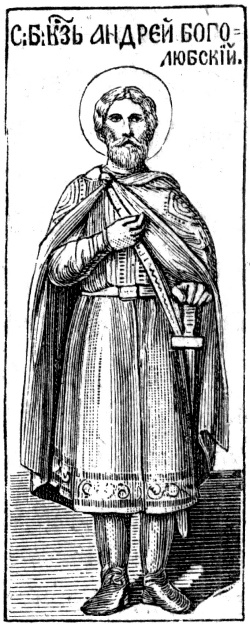
Благов. князь Андрей, сын в. кн. Юрия Долгорукого, как удельный князь, в разное время владел Пинском, Дорогобужем, Пересопницей, Вышгородом. В молодых летах отличался он воинской отвагой. Под Луцком (1150 г.) он гнал неприятелей и был окружён ими на мосту; конь его пробит был двумя копьями, камни сыпались на него градом; тяжёлый Немец занёс на него рогатину, но он с молитвой в душе отразил от себя удар и возвратился к своим целый306. В 1151 г. пылкий Андрей подвергался опасности под Киевом; бросясь на другую сторону реки, он гнал стрелков неприятельских к городу, но был оставлен своими; один из его дружины, схватив за узду коня Андреева, удержал его и тем спас от плена, если не от смерти. В 1152 г. в жаркой битве при р. Руте Андрей сильным ударом изломал своё копье, шлем слетел с головы его и щит упал на землю, но и на этот раз Господь спас набожного князя307.
The Right-believing Prince Andrew, son of Grand Prince Yuri Dolgoruky, as an appanage prince, at various times held Pinsk, Dorogobuzh, Peresopnitsa, and Vyshgorod. In his youth he was distinguished by military valor. Near Lutsk (1150 A.D.), he pursued the enemy and was surrounded by them on a bridge; his horse was pierced by two spears, stones rained down upon him like hail; a heavy German raised a pike against him, but with prayer in his soul he warded off the blow and returned safely to his own men306. In 1151 A.D., the impetuous Andrew was in danger near Kiev; rushing to the other side of the river, he pursued the enemy archers toward the city, but was abandoned by his own men; one of his retinue, seizing the bridle of Andrew's horse, held him back and thus saved him from captivity, if not from death. In 1152 A.D., in a fierce battle at the Ruta River, Andrew shattered his spear with a mighty blow, his helmet flew from his head and his shield fell to the ground, but even this time the Lord saved the devout prince307.
При личной храбрости, князь Андрей не любил в душе неумолкаемого шума южных усобиц, столько бед наносивших югу для призраков власти и славы308. Рождённый и воспитанный на севере, он стремился душой в свою отчизну Владимир и не раз просил отца отпустить его туда309. Туда звали Андрея и родные жёны, хотя вовсе не для него, а для себя310. В 1154 г., после многих кровавых битв, отец его стал в. князем Киева и дал сыну Вышгород с тем, чтобы в его храбрости иметь близкую опору себе. Но Андрей в следующем году, тайно, вопреки желаниям отца, отправился в северную отчизну. Он взял с собой из Вышгорода чудотворную икону Богоматери, доставленную туда из Константинополя. – С этой иконой, в 10 верстах от Владимира, лошади остановились и не шли вперёд, а явившаяся Богоматерь, во время ночной молитвы Андрея, объявила, что икона Её должна быть во Владимире, а не в Ростове; это значило и то, что Кучковичи лгали для корыстных целей своих, уверяя Андрея, будто Ростовцы с нетерпением ждут его. Благоверный князь велел изобразить Богоматерь в том виде, в каком явилась Она ему, и на месте видения велел строить обитель и храм в честь иконы Боголюбской311. Место это получило от него название Боголюбова, как ознаменованное знамением любви небесной, и оно стало любимым местом пребывания его. Поныне ещё цела каменная пристройка к Боголюбскому храму, где жил кн. Андрей и где довелось ему окончить жизнь. Оставаясь удельным князем Владимирским, он теперь заботился улучшать состояние княжества своего, – по мере способов своих.
Despite his personal bravery, Prince Andrew did not love in his soul the unceasing noise of southern feuds, which brought so many calamities upon the south for the sake of phantoms of power and glory308. Born and raised in the north, he yearned in soul for his patrimony of Vladimir and more than once asked his father to release him there309. Andrew was also summoned thither by his kinswomen, though not at all for his sake, but for their own310. In 1154 A.D., after many bloody battles, his father became Grand Prince of Kiev and gave his son Vyshgorod, so that in his valor he might have a close support. But Andrew, in the following year, secretly, contrary to his father's wishes, set out for his northern patrimony. He took with him from Vyshgorod the wonderworking icon of the Mother of God, which had been brought there from Constantinople. – With this icon, 10 versts from Vladimir, the horses stopped and would not go forward, and the Mother of God, appearing during Andrew's night prayer, declared that Her icon should be in Vladimir, not in Rostov; this also meant that the Kuchkovichi had lied for their own selfish purposes, assuring Andrew that the Rostovites were impatiently awaiting him. The Right-believing Prince ordered the Mother of God to be depicted in the form in which She had appeared to him, and at the place of the vision he ordered a monastery and a church to be built in honor of the Bogolyubsk Icon of the Mother of God311. This place received from him the name Bogolyubovo, as marked by a sign of heavenly love, and it became his beloved place of residence. To this day, the stone annex to the Bogolyubov church, where Prince Andrew lived and where he was to end his life, is still intact. Remaining the appanage prince of Vladimir, he now concerned himself with improving the condition of his principality, according to his means.
Когда умер отец Андрея Юрий, князь Суздальский и Киевский (1157 г.), Ростовцы и Суздальцы, узнав вблизи высокие качества Андрея, признали его своим князем, хотя и не того желал Юрий312. Так благоверный Андрей стал великим князем северной России. Теперь круг действий его расширился. И дела его можем мы рассмотреть: а) в отношении к соседним областям – к Болгарии, к Новгороду, к Киеву; б) дела в его собственном княжестве.
When Andrew's father Yuri, Prince of Suzdal and Kiev, died (1157 A.D.), the Rostovites and Suzdalians, having come to know Andrew's high qualities at close hand, acknowledged him as their prince, although Yuri had not desired this312. Thus the Right-believing Andrew became the Grand Prince of northern Russia. Now the sphere of his activity expanded. And we may examine his deeds: a) in relation to neighboring regions – to Bulgaria, to Novgorod, to Kiev; b) deeds within his own principality.
Болгары и прежде князя Андрея платили дань Суздальскому князю. При нём оказались оскорбления для Русских со стороны болгар-матометан. Великий князь Андрей решился образумить их, для славы имени Христа. Он отправился к ним с многочисленным войском. Чудотворная икона Богоматери и икона Спасителя, что замечательно для нашего времени, благословляющего именословно313, находились в войсках его вместе с крестом. Болгары не раз были разбиты, несколько городов их взято, торжество над ними было полное. Возвращающиеся чудные иконы всё духовенство и народ встретили торжественно на берегу реки Клязьмы сентября 21-го 1164 г. и на месте встречи поставлен был храм в честь Богоматери, к которому потом каждый год 21 сентября бывал крестный ход из собора. В то же самое время император Мануил одержал победы над магометанами Арабами. Потому поставлено было и в Греции, и в России праздновать кресту Христову в 1 день августа314.
The Bulgars, even before Prince Andrew, paid tribute to the Prince of Suzdal. In his time, offenses were committed against the Russians by the Mohammedan Bulgars. Grand Prince Andrew resolved to bring them to reason, for the glory of the name of Christ. He set out against them with a numerous army. The wonderworking icon of the Mother of God and the icon of the Savior – which is remarkable for our time, which blesses in the name-forming manner313 – were with his troops together with the cross. The Bulgars were repeatedly defeated, several of their cities were taken, and the triumph over them was complete. Upon the return of the wonderworking icons, all the clergy and people met them solemnly on the bank of the Klyazma River on September 21, 1164 A.D., and at the place of the meeting a church was built in honor of the Mother of God, to which thereafter every year on September 21 a procession of the cross was made from the cathedral. At the same time, the Emperor Manuel gained victories over the Mohammedan Arabs. Therefore it was established both in Greece and in Russia to celebrate the Cross of Christ on the 1st day of August314.
В отношении к Новгороду великий князь Андрей в самом начале правления своего объявил (1159 г.): «хочу искать Новгорода добром и лихом». Это значило, что по сознанию умного и дальновидного князя демократия богатого и сильного княжества не способна была доставлять всей пользы при раздробленной власти, и он положил смирить её, для пользы всей России; в продолжение всего княжения стремился он к этой цели и достиг её: Новгород слушался великого князя Андрея. В 1159 г. он сказал Новгородцам: «вы должны целовать крест в том, что будете признавать меня своим князем, а я буду заботиться о вашем счастье». И на другой год Новгородцы уже просили у Андрея себе князя; слова его были взвешены, поняты и приведены в исполнение315. В 1167 г. Новгородцы выгнали назначенного Андреем князя Святослава. Князь Андрей с войском объявил: «нету вам князя иного, разве Святослава». Новгородцы захотели стоять на своём, приняли князя не по воле великого князя Суздальского. Мало того – часть Новгородских владений уже платила дань князю Андрею. Но в 1169 г. Новгородцы захотели, чтобы эта часть вновь платила дань Новгороду. То и другое вызвало войну. Как ни сильно пострадало Суздальское войско под Новгородом, но Новгород вынужден был смириться перед великим князем Андреем316.
In relation to Novgorod, Grand Prince Andrew declared at the very beginning of his reign (1159 A.D.): "I wish to seek Novgorod by good or by ill." This meant that, in the awareness of the wise and far-sighted prince, the democracy of the wealthy and powerful principality was incapable of providing full benefit under fragmented authority, and he resolved to humble it for the good of all Russia; throughout his entire reign he strove toward this goal and achieved it: Novgorod obeyed Grand Prince Andrew. In 1159 A.D., he said to the Novgorodians: "You must kiss the cross, that you will acknowledge me as your prince, and I will care for your welfare." And the following year the Novgorodians already asked Andrew for a prince for themselves; his words were weighed, understood, and put into effect315. In 1167 A.D., the Novgorodians drove out Prince Svyatoslav, who had been appointed by Andrew. Prince Andrew declared with his army: "You have no other prince but Svyatoslav." The Novgorodians wished to stand their ground and accepted a prince not according to the will of the Grand Prince of Suzdal. Moreover, part of the Novgorod lands already paid tribute to Prince Andrew. But in 1169 A.D., the Novgorodians wanted this part to again pay tribute to Novgorod. Both matters led to war. However severely the Suzdal army suffered before Novgorod, Novgorod was compelled to humble itself before Grand Prince Andrew316.
В Киеве после Юрия, отца Андреева, в первые годы княжили князья, старшие князя Андрея. Когда же после блаженного князя Ростислава занят был Киев князем Мстиславом Изяславичем, это было обидно для князя Андрея. – Мстислав был троюродный племянник князя Андрея. Открылась (1169 г.) война, и сын Андрея посадил на Киевском столе князя дядю своего Глеба. Спустя два года Глеб умер, затем скоро умер и князь Владимир; в 1171 году по воле Андрея занял престол Киевский князь Роман Смоленский. Резкий отзыв князя Андрея о Ростиславичах вооружил против власти его многих южных князей. После несчастной Вышегородской осады Киевский престол занят был помимо воли Андрея; но скоро затем юг опять покорился сильному князю Суздальскому317.
In Kiev, after Yuri, Andrew’s father, in the first years there reigned princes who were senior to Prince Andrew. When, after the blessed Prince Rostislav, the throne of Kiev was occupied by Prince Mstislav Izyaslavich, this was offensive to Prince Andrew. – Mstislav was a third cousin once removed of Prince Andrew. War broke out (1169 A.D.), and Andrew’s son placed his uncle, Prince Gleb, on the throne of Kiev. Two years later Gleb died, and soon after Prince Vladimir also died; in 1171 A.D., by Andrew’s will, Prince Roman of Smolensk occupied the throne of Kiev. Prince Andrew’s harsh opinion of the Rostislavichs armed many of the southern princes against his authority. After the unfortunate siege of Vyshgorod, the throne of Kiev was occupied against Andrew’s will; but soon after, the south again submitted to the powerful Prince of Suzdal317.
Увеличив крепость Клязменского Владимира, заложил он великолепный собор в честь Успения Богоматери. С полным усердием наблюдал он сам за построением этого храма и не щадил издержек. Камень для храма привозим был из каменоломен Болгарских. Внутренняя отделка и украшение собора совершались самой щедрой рукой: дорогие каменья, серебро, золото покрывали иконы; несколько сосудов и крестов было золотых. Когда храм был готов, в нём поставлена чудная икона Богоматери: «на неё употребили более 30 гривенок (15 ф.) золота, кроме серебра и дорогих камней». Храм заложен был апреля 8-го 1158 г., а освящение совершено июня 21-го 1160 г. и в следующем году внутренние стены его были и расписаны. Князь назначил для собора лучшие имения с купленными поселенцами, десятую часть из стад и десятый торг; он назначил быть здесь кафедре и всё это утвердил грамотой. Он даже просил патриарха, чтобы для северной России назначен был особенный митрополит и кафедра его была бы во Владимире; но патриарх не согласился выполнить желание его, опасаясь раздоров318.
Having strengthened the fortress of Vladimir-on-the-Klyazma, he founded a magnificent cathedral in honor of the Dormition of the Mother of God. With full zeal he himself oversaw the construction of this church and spared no expense. Stone for the church was brought from the Bulgar quarries. The interior finishing and adornment of the cathedral were carried out with a most generous hand: precious stones, silver, and gold covered the icons; several vessels and crosses were of gold. When the church was ready, a wondrous icon of the Mother of God was placed in it: “more than 30 grivenkas (15 lbs.) of gold were used for it, besides silver and precious stones.” The church was founded on April 8, 1158 A.D., and its consecration took place on June 21, 1160 A.D., and in the following year its interior walls were also painted. The prince assigned to the cathedral the best estates with purchased settlers, a tenth part of the herds, and the tenth market; he appointed that the cathedra be there and confirmed all this by charter. He even asked the patriarch that a special metropolitan be appointed for northern Russia and that his cathedra be in Vladimir; but the patriarch did not agree to fulfill his wish, fearing discord318.
В 1165 г., оплакивая смерть сына своего Изяслава, Боголюбивый построил, для молитвы за усопшего, монастырь Покровский; это в версте от Боголюбова, при впадении реки Нерли в Клязьму319.
In 1165 A.D., mourning the death of his son Izyaslav, the God-loving prince built, for prayer for the departed, the Intercession Monastery; this is a verst from Bogolyubovo, at the confluence of the Nerl River with the Klyazma319.
Современник говорил, что благочестивый князь «церкви украси, монастыри многа созда, кормитель бе чернецов и черницам и убогим»320. Этот отзыв даёт право положить, что кроме двух обителей (Боголюбской и Покровской) св. князем Андреем построены были Владимирский Вознесенский монастырь, известный по летописи с 1187 г., Владимирский Спасский у золотых ворот, устроенных князем Андреем321, Владимирский Успенский девичий, от коего Княгинин 1200 г. отличается именем нового322. Козмодемьянский, коего игумен у Арсений решился внести тело убиенного князя в храм323. В управлении своей страной благоверный князь старался наблюдать строгую правду. Если он заставлял родных князей удалиться из Суздальской страны в Грецию324, то и отец я его не давал даже сыновьям своим уделов в Суздальском княжестве; князь Андрей не хотел видеть раздробленную и оттого слабую власть княжескую в земле Суздальской; он желал быть в состоянии делать добро другим столько, сколько хотелось ему по влечению сердца христианского. Сам проводя жизнь трезвую, чистую, деятельную, он награждал добрых, но преследовал пороки в других строгостью закона. По летописи, в народе говорили: «где закон, там и обид много». Это значило, что своеволию не нравится то, что полагает ему границы, ему «свой суд короче». Благоверный князь был сострадателен к несчастным до того, что иногда сам ухаживал за больными; а для бедных и заключённых в темницах развозили, по его приказанию, пищу и мёд325. Боголюбивый любил христианское просвещение и прилежно читал книги; особенно много заботился он о просвещении христианской верой магометан-Болгаров, язычников Черемис и Мордвы, Иудеев – жителей каждого торгового города; много заботился он и о присоединении папистов к св. православию. При дворе его много жило обращённых к св. вере326.
A contemporary said that the pious prince “adorned churches, founded many monasteries, was a nourisher of monks and nuns and the poor”320. This testimony gives the right to suppose that besides the two monasteries (Bogolyubov and Intercession), St. Prince Andrew built the Vladimir Ascension Monastery, known from the chronicle since 1187 A.D., the Vladimir Savior Monastery at the Golden Gates, built by Prince Andrew321, the Vladimir Dormition Convent for women, from which the Princess Convent of 1200 A.D. is distinguished by the name 'new'322, and the Monastery of Cosmas and Damian, whose abbot, Arsenius, resolved to bring the body of the murdered prince into the church323. In governing his country, the right-believing prince strove to observe strict justice. If he compelled his kinsmen-princes to depart from the Suzdal land to Greece324, then his father also did not give even his own sons appanages in the Suzdal principality; Prince Andrew did not wish to see the princely power fragmented and therefore weak in the land of Suzdal; he desired to be able to do good to others as much as he wished, according to the impulse of his Christian heart. Himself leading a sober, pure, and active life, he rewarded the good, but pursued vices in others with the strictness of the law. According to the chronicle, the people said: “where there is law, there are many offenses.” This meant that self-will dislikes that which sets boundaries for it; “its own judgment is shorter.” The right-believing prince was compassionate toward the unfortunate to such a degree that he sometimes himself cared for the sick; and for the poor and those imprisoned in dungeons, food and mead were distributed by his order325. The God-loving prince loved Christian enlightenment and diligently read books; he was especially concerned with the enlightenment by the Christian faith of the Mohammedan Bulgars, the pagan Cheremis and Mordvins, and the Jews – inhabitants of every trading city; he was also much concerned with the joining of Papists to holy Orthodoxy. At his court there lived many who had been converted to the holy faith326.
«Вам дано о Христе не только веровать в Него, но и пострадать за Него» (Флп.1:29), писал Апостол некоторым из учеников своих. Тот же дар дан и блаженному князю Андрею. За живую, пламенную любовь свою к Господу он удостоен страдальческой кончины. Это было на 63 году жизни его327.
“For unto you it is given in the behalf of Christ, not only to believe on Him, but also to suffer for His sake” (Phil. 1:29), wrote the Apostle to some of his disciples. The same gift was given also to the blessed Prince Andrew. For his living, fervent love for the Lord, he was vouchsafed a martyr’s end. This was in the 63rd year of his life327.
Близкий родственник князя Андрея, Яким Кучкович с зятем, озлобленный тем, что брат его казнён за какое-то преступление, Анбал Ясин, крещённый язычник, Ефрем Моизич, крещённый жид, составили заговор на жизнь Андрея и присоединили к себе ещё до 16 человек; одни из заговорщиков пылали злобой за то, что справедливый князь не дозволял им, вопреки их надеждам, весело жить на счёт других328; другие рвались от зависти и негодовали на князя за то, что он верного и лучшего слугу своего Прокопия отличал особенной любовью. Все они были осыпаны милостями князя и Анбал был полным распорядителем в домашнем хозяйстве князя; но страсть, тоже что ад, не скажет: довольно. В пятницу злодеи составили заговор и решили убить Андрея на другой день ночью. В глубокую ночь, вооружённые заговорщики пришли ко дворцу в Боголюбов, зарезали стражей, вломились в сени, подходили к спальне князя; но ужас напал на них, – они бросились бежать из сеней; в погребе княжеском напились вина и опьяневшие пошли опять в сени. У спальни один из них стал звать князя: «государь! государь князь великий!» Андрей, услышав голос, спросил: кто там? Ему отвечали: Прокопий. «Это не Прокопий», громко сказал князь спавшему в его комнате отроку. Убийцы, узнав по голосу, где князь, стали ломать и – выломали двери. Андрей вскочил, хотел схватить меч, который был всегда при нём (он принадлежал св. князю Борису); но меча не было, – ключник Анбал украл его днём. Двое убийц вскочив бросились на Андрея, но он был силен и сшиб одного с ног, как вбежали прочие; впотьмах они убили товарища вместо князя, потом, узнав, напали на князя. Долго отбивался князь, несмотря на то, что со всех сторон рубили его саблями и кололи копьями. – «Нечестивцы! кричал он им, зачем хотите вы сделать то же, что Горясер (убийца св. Глеба)? Какое зло сделал я вам? Господь отмстит вам за кровь мою и за неблагодарность к милостям моим». Наконец блаженный Андрей упал под ударами. Убийцы подумали, что дело кончено, – князь убит; гонимые страхом, схватили товарища и поспешили уйти из спальни. Князь поднялся на ноги, и в беспамятстве, стоная громко, вышел в сени. Убийцы услыхали стоны и воротились. Не найдя его в спальне, они испугались: «погибли мы, если не найдём его», сказали они. Зажгли свечи и следом крови дошли до князя; Андрей сидел под крыльцом. Зять Кучкова отрубил ему руку; другие вонзили в грудь мечи. Андрей успел сказать: «Господи! в руце Твои предаю дух мой», и скончался. Это было ночью с 29 на 30 июня 1174 года329. Утром следующего дня убив Прокопия, убийцы ограбили во дворце княжьем серебро, золото, дорогие камни, жемчуг, ткани и отправили ограбленное по домам. Затем и сами и через своих взволновали народ против верных чиновников князя; начались грабежи и убийства такие, что страшно было смотреть, говорит очевидец.
A close relative of Prince Andrew, Yakim Kuchkovich, together with his son-in-law, embittered because his brother had been executed for some crime, Anbal Yasin, a baptized pagan, and Ephraim Moizich, a baptized Jew, formed a conspiracy against Andrew’s life and joined to themselves up to 16 more men; some of the conspirators burned with malice because the just prince did not allow them, contrary to their hopes, to live merrily at the expense of others328; others were torn by envy and resented the prince because he distinguished his faithful and best servant, Procopius, with special love. All of them were showered with the prince’s favors, and Anbal was the full manager of the prince’s household; but passion, like hell, does not say: enough. On Friday the evildoers formed the conspiracy and decided to kill Andrew the next day at night. In the dead of night, the armed conspirators came to the palace in Bogolyubovo, cut down the guards, broke into the vestibule, and approached the prince’s bedchamber; but terror fell upon them – they rushed to flee from the vestibule; in the prince’s cellar they drank wine and, drunk, went again into the vestibule. At the bedchamber one of them began to call the prince: “Sovereign! Sovereign, Grand Prince!” Andrew, hearing the voice, asked: “Who is there?” They answered him: “Procopius.” “That is not Procopius,” said the prince loudly to the youth sleeping in his room. The murderers, having learned by the voice where the prince was, began to break down the doors – and broke them down. Andrew jumped up, wanted to seize his sword, which was always with him (it had belonged to St. Prince Boris); but the sword was not there – the steward Anbal had stolen it during the day. Two murderers, rushing in, threw themselves upon Andrew, but he was strong and knocked one off his feet, as the rest ran in; in the darkness they killed their comrade instead of the prince; then, recognizing him, they fell upon the prince. For a long time the prince fought back, despite the fact that they cut him from all sides with sabers and stabbed him with spears. – “Wretches!” he cried to them, “why do you wish to do the same as Goryaser (the murderer of St. Gleb)? What evil have I done to you? The Lord will avenge you for my blood and for your ingratitude for my favors.” At last the blessed Andrew fell under the blows. The murderers thought the deed was done – the prince was killed; driven by fear, they seized their comrade and hastened to leave the bedchamber. The prince rose to his feet, and, unconscious, groaning loudly, went out into the vestibule. The murderers heard the groans and returned. Not finding him in the bedchamber, they were frightened: “We are lost if we do not find him,” they said. They lit candles and followed the trail of blood to the prince; Andrew was sitting under the porch. Kuchkovich’s son-in-law cut off his hand; others thrust swords into his chest. Andrew managed to say: “Lord! Into Thy hands I commend my spirit,” and died. This was on the night of June 29–30, 1174 A.D.329 In the morning of the following day, having killed Procopius, the murderers plundered the prince’s palace of silver, gold, precious stones, pearls, and fabrics, and sent the plunder to their homes. Then they themselves and through their agents stirred up the people against the prince’s faithful officials; such robberies and murders began that it was terrible to behold, says an eyewitness.
Святое тело благоверного князя, брошенное в огороде, валялось без призора; добрый слуга Козма, отыскав его, стоял и горько плакал над ним. Увидев Анбала, идущего во дворец, Козма вскричал ему: «дай ковёр или что-нибудь покрыть князя». – «Оставь его, сказал с злобой Анбал; мы кинули его на съеденье псам». – «Изверг!» воскликнул добродушный слуга; «помнишь ли, в каком рубище пришёл ты к князю? Теперь ты в бархате, а князь, благодетель твой, лежит ногой». Анбал дал ковёр и епанчу; Козма прикрыл тем тело усопшего330 и положил в притворе церкви. На третий день, когда ещё мятеж не кончился, Козмодемьянский игумен Арсений отдал возможную почесть убиенному благотворителю-князю. «Долго ли нам ждать распоряжения старших? – сказал он. Неприлично так лежать князю. Отоприте церковь, и совершим должное». Тело внесли в церковь, совершили над ним погребальное пение и опустили в могилу, выложенную камнем331. – Между тем дурные люди, являясь из сёл, продолжали грабежи в городе. – С чудотворной иконой Богоматери добрый священник, служивший при ней, ходил по городу, уговаривая народ прекратить беспорядки своеволия, никогда не угодного Господу, – наконец волнение страстей утихло. На шестой день (5 июля) Владимирцы торжественно перенесли тело благоверного князя в свой собор и здесь похоронили. По словам летописи, князь Андрей был невысок ростом, но широк в плечах, красивый лицом, с волосами чёрными и кудрявыми, с высоким челом, с очами светлыми и большими332.
The holy body of the right-believing prince, thrown into the garden, lay unattended; the good servant Cosmas, having found it, stood and wept bitterly over it. Seeing Anbal walking toward the palace, Cosmas cried out to him: “Give a carpet or something to cover the prince.” – “Leave him,” said Anbal with malice; “we have thrown him to be eaten by dogs.” – “Monster!” exclaimed the kind-hearted servant; “do you remember in what rags you came to the prince? Now you are in velvet, while the prince, your benefactor, lies naked.” Anbal gave a carpet and a cloak; Cosmas covered the body of the deceased with them330 and placed it in the narthex of the church. On the third day, when the rebellion was not yet over, the abbot of the Monastery of Cosmas and Damian, Arsenius, paid the possible honor to the murdered benefactor-prince. “How long shall we wait for the orders of the elders?” he said. “It is unseemly for the prince to lie thus. Open the church, and let us perform what is fitting.” The body was brought into the church, the funeral chant was performed over it, and it was lowered into a grave lined with stone331. – Meanwhile, evil people, coming from the villages, continued the robberies in the city. – With the wonderworking icon of the Mother of God, the good priest who served before it walked through the city, urging the people to cease the disorders of self-will, which are never pleasing to the Lord – at last the agitation of passions subsided. On the sixth day (July 5), the people of Vladimir solemnly transferred the body of the right-believing prince to their cathedral and buried him there. According to the words of the chronicle, Prince Andrew was not tall of stature, but broad-shouldered, handsome of face, with black and curly hair, a high forehead, and bright, large eyes332.
Уже при великом князе Всеволоде летописец, описав кончину благоверного князя, обращался к нему с молитвой. «Молися Богу, говорил он, помиловати князя Всеволода, нашего государя, а своего родного брата, да подаст ему победы над врагами, долгую жизнь с княгиней и детьми, и в вечности блаженство»333. В последствии времени также не сомневались в блаженном покое благоверного князя334. Ныне мощи св. князя почивают открыто в серебряной раке, в приделе, посвящённом его имени. Здесь есть образ св. князя, шитый шелками царевной Софией. Св. мощи обретены нетленными и поставлены открытыми 15 октября 1402 г. На гробнице его надпись:
Already under Grand Prince Vsevolod, the chronicler, having described the end of the Right-believing Prince, turned to him in prayer. “Pray to God,” he said, “to have mercy on Prince Vsevolod, our sovereign, and your own brother, that He may grant him victories over enemies, a long life with his princess and children, and blessedness in eternity”333. In later times as well, there was no doubt concerning the blessed repose of the Right-believing Prince334. Now the relics of the holy prince rest uncovered in a silver reliquary, in a side-chapel dedicated to his name. Here there is an icon of the holy prince, embroidered in silks by Tsarevna Sophia. The holy relics were found incorrupt and placed uncovered on October 15, 1402. On his tomb is the inscription:
Никон. л. 2, 1511. «Смущашеся (Андрей) о нестроении братии своея братаничев и сродников и всего племени своего, яко всегда в мятежи и в волнении вси бяху и много крови лияшеся, вси желающе великого княжения Киевского, и нет никому ни с кем мира. И от сего вси княжения опустеша, – а от поля Половцы выплениша»...
Nikon. Chron. 2, 1511. “He (Andrew) was troubled by the disorder of his brethren, his nephews, and kinsmen, and all his tribe, for they were ever in turmoil and agitation, and much blood was shed, all desiring the great reign of Kiev, and there was peace for no one with anyone. And from this all the principalities were laid waste, and the Polovtsy plundered from the field”...
Летоп. под 1152 г. Андрей же (отцу): «на том есми целовали крест яко поити ни Суждалю – и иде во свою волость Владимерю». Собр. л. 2, 144.
Chronicle under the year 1152. Andrew (to his father): “We have kissed the cross on this, that we go to Suzdal – and he went to his own domain of Vladimir.” Collection of Chronicles 2, 144.
Летоп. у Карамз. 2, прим. 383. «Прииде из Киева в град Володимер князь Андрей Юрьевич без отча повеления, его же лестию подьяша Кучковичи».
Chronicle in Karamzin 2, note 383. “Prince Andrew Yuryevich came from Kiev to the city of Vladimir without his father’s command, whom the Kuchkovichi had deceitfully incited.”
Собр. л. 144. 148. 2, 77. 78. Переслав. л. 66. 72. Ркп. житие св. кн. Андрея у Доброхотова: древний Боголюбов город и монастырь, М. 1852 г. Слава Богоматери III, 1, 32–46. III, 2, 42–44. О пути кн. Андрея из Вышгорода во Владимир – во Владимирском сборнике 58. 59.
Collection of Chronicles 144. 148. 2, 77. 78. Pereslavl Chron. 66. 72. Manuscript Life of St. Prince Andrew in Dobrokhotov: The Ancient Bogolyubov Town and Monastery, M. 1852. Glory of the Mother of God III, 1, 32–46. III, 2, 42–44. On the journey of Prince Andrew from Vyshgorod to Vladimir – in the Vladimir Collection 58. 59.
Ныне в иконостасе Моск. Успенского собора; надпись говорит, что икона была при войске Боголюбского 1164 г. и что «князь с воинством его видеша от сего образа лучи огненны и весь полк покры». Икона писана не в России, а в Греции: это показывают Греческие слова, написанные на ней. Древн. Гос. Рос. VI, 44.
Now in the iconostasis of the Moscow Dormition Cathedral; the inscription says that the icon was with the army of Bogolyubsky in 1164 and that “the prince with his host saw from this image fiery rays covering the whole regiment.” The icon was painted not in Russia but in Greece: this is shown by the Greek words written on it. Antiquities of the Russian State VI, 44.
Собр. л. I, 150. 151. V, 162. IV, 11. VII, 77. Степ. кн. 1,299. Пролог авг. 1. «Аз же написах сие малое писание повелением ц. Мануиля и всего причта, да празднуем праздник сей во славуСпаса нашего и Пречистые Его Матери». Сочинитель повести, хотя и видел ц. Мануила, но он Владимирец, а не Грек. Праздник Спасу в 1 д. авг. – в кондакаре XII в. Чтен. Общ. Ист. М. 1846 г. № 3.
Collection of Chronicles I, 150. 151. V, 162. IV, 11. VII, 77. Book of Degrees 1, 299. Prologue, August 1. “And I wrote this little account by command of Emperor Manuel and all the clergy, that we should celebrate this feast to the glory of our Savior and His Most Pure Mother.” The author of the account, although he saw Emperor Manuel, was a Vladimirian, not a Greek. The feast of the Savior on August 1 – in a kontakion of the 12th century. Readings of the Society of Russian History, M. 1846, No. 3.
Козма, оплакивая благ. князя, говорит: «бывало придёт гость из Царя-града или из иной какой страны, из Руси ли, Латинянин ли, христианин ли, или язычник, ты приказываешь: ведите его в церковь и ризницу, пусть смотрит на истинное христианство и крестится, что и бывало; крестилось много». Собр. л. II, 115. Ркп. житие у Доброхотова, стр. 74. 76.
Kozma, lamenting the blessed prince, says: “It used to be that a guest would come from Constantinople or from some other land, from Rus or a Latin, a Christian or a pagan; you would command: ‘Lead him to the church and the sacristy, let him see true Christianity and be baptized,’ which indeed happened; many were baptized.” Collection of Chronicles II, 115. Manuscript Life in Dobrokhotov, pp. 74. 76.
Татищев III, 494. Отец Андрея женился в 1107 г., а Андрей был второй сын его и по смерти брата Ростислава оставался старшим (летоп. Сузд. под 1107. 1148. 1115 г.), след. родился он в 1111.
Tatishchev III, 494. Andrew’s father married in 1107, and Andrew was his second son, and after the death of his brother Rostislav he remained the eldest (Suzdal Chronicle under 1107. 1148. 1115), therefore he was born in 1111.
Степ. кн. I, 305 верно показывает положение дела: «окаяннии Кучковичи, надеющеся же к себе милости самодержца, неудобная содеваху».
Book of Degrees I, 305 correctly shows the state of affairs: “The accursed Kuchkovichi, hoping for the autocrat’s favor toward themselves, did unseemly things.”
В 1 Новг. л. «в л. 6682 (1174) убиша к. Андрея на кануне святых Петра и Павла в нощь» (Собр. л. III, 16). Лавр. сп.: «убиен же бысть в субботу на ночь и освете заутра мертв в неделю, на память 12 Апостол». След. убит ночью с 29 ч. на 30. Год здесь, в повести, не показан Киев. л.: «в л. 6683 (1175) убьен бысть вел. князь Андрей Суздальский, – м. июня в 28 д., канун св. Апостолов, день бе тогда суббота». Следует затем повесть, где повторяются слова, показанные в Лавр. сп. (II, 111. 114). Воскр. л.: «того же л. (6683=1175) убиен бысть князь Андрей Боголюбский». Далее: «бысть же в субботу на ночь, на память св. Ап. Петра и Павла» явились в дворец княэя. Блаженный конец прият м. июня в 29 д. на память св. Ап. Петра и Павла» (VII, 89. 90). Тоже в Соф. л., но только здесь ещё яснее сказано: «идущим им в субботу на ночь, а того дни был праздник» (Собр. л. V, 164. 165). Тоже в Никон. IX, 249. 250. В. 6682 г. июня 29 д. было в субботу, а 28 в пятницу. А в 6683 г. суббота была 28 июня. Итак, если утро, следовавшее за смертью, было 30 июня, то это было в 1174 г. и князь убит ночью с 29 на 30 ч. того года.
In the 1st Novgorod Chronicle: “In the year 6682 (1174) they killed Prince Andrew on the eve of the holy Peter and Paul in the night” (Collection of Chronicles III, 16). Laurentian copy: “He was killed on Saturday night, and at dawn he was found dead on Sunday, on the memory of the 12 Apostles.” Therefore he was killed on the night of the 29th to the 30th. The year is not shown here in the account. Kiev Chronicle: “In the year 6683 (1175) the Grand Prince Andrew of Suzdal was killed, – on June 28, the eve of the holy Apostles, the day was then Saturday.” Then follows the account, where the words shown in the Laurentian copy are repeated (II, 111. 114). Vosk. Chronicle: “In the same year (6683=1175) Prince Andrew Bogolyubsky was killed.” Further: “It was on Saturday night, on the memory of the holy Apostles Peter and Paul” they appeared in the prince’s palace. He received his blessed end on June 29, on the memory of the holy Apostles Peter and Paul (VII, 89. 90). The same in the Sophia Chronicle, but there it is even more clearly said: “As they went on Saturday night, and that day was a feast” (Collection of Chronicles V, 164. 165). The same in Nikon. IX, 249. 250. In the year 6682, June 29 was a Saturday, and the 28th a Friday. And in 6683, Saturday was June 28. Therefore, if the morning following the death was June 30, then this was in 1174, and the prince was killed on the night of the 29th to the 30th of that year.
«И свърже (Анбал) къвер и корзно и обви (Козма) его» (Андрея). Итак корзно – одежда, которой можно было обвивать тело, – иначе – княжеский плащ или мантия. Кн. Владимир «покры и (кн. Игоря, с которого сорвали одежду) корзном» (собр. л.1:1138), по Воскр. л. «одеждой своей» (собр. л. 7. 41), по Никон. л. «ризою, 2, 101. – Сл. христиан. древности православия 1863 г. IX, 74–76.
“And (Anbal) threw down the korzno and wrapped (Kozma) him (Andrew) in it.” Therefore korzno is a garment with which one could wrap the body – otherwise, a princely cloak or mantle. Prince Vladimir “covered him (Prince Igor, from whom they had torn the clothing) with a korzno” (Coll. of Chron. 1:1138), according to the Vosk. Chronicle “with his own garment” (Coll. of Chron. 7. 41), according to the Nikon. Chronicle “with a robe” (2, 101). – Cf. Christian Antiquities of Orthodoxy 1863, IX, 74–76.
Киев. л. Арсений: «отомкнете божницю, да отпою над ним; вложим и любо си вбуди любо си в гроб. – Клирошане – внесоша в божницу и вложиша и в гроб камень, отпевше над ним погребальное со игуменом Арсением». Последняя мысль, что тело, уже отпетое, положено в каменный гроб, яснее выражено в Воскр. и Никон. л. собр. л. II, 115. VII, 90. IX, 250. Итак, что это за каменный гроб и что за буда? «Будовать» – строить и преимущественно деревянную постройку, тогда как о каменной постройке на юге говорят: «муровать, смуровано». На севере будой называется поныне лодка, выдолбленная из одного дерева. Итак, буда – выдолбленный из дуба гроб, колода. «Камень гроб», по течению мыслей, – могила, выложенная камнем. – Летопись и при другом случае в том же смысле употребляет слово – гроб. «Егда же несяху (отпетое тело князя) ко гробу», – к могиле: «дивно знамение бысть». Собр. л. VII, 33.
Kiev Chronicle, Arsenius: “Open the chapel, that I may sing the service over him; let us put him either in a buda or in a grave. – The clerics brought him into the chapel and placed him in a stone coffin, having sung the funeral service over him with Abbot Arsenius.” The latter thought—that the body, already served, was placed in a stone coffin—is more clearly expressed in the Vosk. and Nikon. Chronicles, Collection of Chronicles II, 115. VII, 90. IX, 250. So what is this stone coffin and what is a buda? “Budovat” means to build, and primarily a wooden structure, whereas of a stone structure in the south they say: “murovat, smurovano.” In the north, a buda is still called a boat hollowed out from a single tree. Therefore, buda is a coffin hollowed out of oak, a dugout. “Stone coffin,” according to the flow of thought, is a grave lined with stone. – The chronicle in another instance uses the word coffin in the same sense. “When they carried (the served body of the prince) to the coffin,” – to the grave: “a wondrous sign occurred.” Collection of Chronicles VII, 33.
Собр. л. I, 156–158. 2, 111–116. 7, 89. 90. Степен, кн. I, 305–308. «Поп Микулица», ходивший с св. иконой по городу и потом с духовенством встречавший тело князя Андрея пред городом, прибыл с князем Андреем и св. иконой из Киевского Вышгорода. Синодал. летоп. № 349, у Карамз. 2, пр. 383. «Поят с собою крылошаны Вышегородскыя, попа Микулу».
Collection of Chronicles I, 156–158. 2, 111–116. 7, 89. 90. Book of Degrees I, 305–308. “Priest Mikulitsa,” who walked with the holy icon through the city and later with the clergy met the body of Prince Andrew before the city, had come with Prince Andrew and the holy icon from Kiev’s Vyshgorod. Synodal Chronicle No. 349, in Karamzin 2, note 383. “He took with him the clerics of Vyshgorod, Priest Mikula.”
Степ. кн. I, 308, говорит убийцам: «своему господину исходатайствовали вы вечную жизнь и Царство Небесное». Во Владимирском Успенском храме 1649 г. в иконостасе образ Спасителя представляет коленопреклонённых пред Спасителем – по левую сторону кн. Андрея Боголюбского, по правую – князя Александра Невского. Владимирский сборник 78. М. 1857 г.
Book of Degrees I, 308, says to the murderers: “You have obtained for your master eternal life and the Kingdom of Heaven.” In the Vladimir Dormition Church in 1649, in the iconostasis, an icon of the Savior depicts kneeling before the Savior – on the left side Prince Andrew Bogolyubsky, on the right Prince Alexander Nevsky. Vladimir Collection 78. M. 1857.