Orthodox Translations

June 2727 июня

Old Calendar: civil July 10 · New Calendar: civil June 27

History

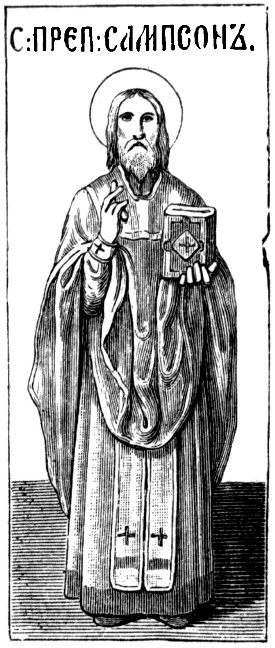
Преподобного Сампсона Странноприимца

The Venerable Sampson the Hospitaller

E1.TAI draft
Engraving

Странноприимство, т. е. принятие и упокоение бедных людей, не имеющих пристанища, издревле есть христианская священнейшая добродетель. Авраам, будучи пришельцем в земле Ханаанской, с усердием принимал под сень свою и угощал странников (Быт.18:1–9). Господь через Моисея узаконил Евреям: пришельца не озлобите, ниже оскорбите его: пришельцы бо бесте в земли Египетстей (Исх.22:21), и в Евангелии называет благословенными странноприемлющих (Мф.25:34–35). Посылая Апостолов на проповедь, Он заповедал им находить для себя пристанище у странноприемлющих (Лк.10:1–11). Апостол Павел между обязанностями епископа внушает ему бытьстраннолюбиву (1Тим.3:3) и между добрыми делами вдовицы поставляет: аще странные прият (1Тим.5:10), и всем христианам заповедует: страннолюбия не забывайте: тем бо неведяще нецыи странноприяша ангелы (Евр.13:2). Странничество, по изъяснению св. Апостола Павла, есть свидетельство, что мы не имамы зде пребывающего града, но грядущего взыскуем (Евр.13:14). Итак, странноприимцы служат спасительным пристанищем для бесприютных нищих, недужных и всех требующих помощи Христа ради. Таков был св. преподобный Сампсон странноприимец, который родился в Риме от богатых и именитых родителей, происшедших из царского рода. Хорошо обучился мирским наукам и особенно врачебной, не ради корысти и нужды, потому что сам был богат, но ради Бога, чтобы послужить нуждающимся. Сампсон любил и разумел и учение Божественного Писания, в котором много упражнялся. По смерти своих родителей, наследовав большое имущество, он по расположению сердечному подавал щедрую милостыню бедным, отпустил на волю своих рабов и сам стал рабом Божиим. Подражая Иисусу Христу, Сампсон сделался добровольным странником и питателем странников и всех бедных. Переселившись в Константинополь, он устроил дом для странников, нищих и больных, и для пользы и упокоения их посвятил всё своё имение, время и знания. Патриарх, узнав о его добродетелях, рукоположил его в пресвитера. Император Юстиниан, исцелённый от болезни силой его молитвы, устроил в награду ему по его желанию странноприимницу и больницу, в которых поставил начальником своего исцелителя. Здесь святой Сампсон провёл остаток своей Богоугодной жизни, неусыпно служа больным и нищим. По смерти святого странноприимца, в больнице, украшенной его именем, все приходившие с верой получали исцеление. Преподобный Сампсон скончался в 530 г. 28 июня. Кости св. Сампсона с благоговением сохраняются в Грузии в обители Гелата.

Hospitality, that is, the receiving and giving rest to poor people who have no shelter, has from ancient times been a most sacred Christian virtue. Abraham, while a sojourner in the land of Canaan, zealously received strangers under his tent and entertained them (Gen. 18:1–9). The Lord through Moses commanded the Jews: Thou shalt not vex a stranger, nor oppress him: for ye were strangers in the land of Egypt (Ex. 22:21), and in the Gospel He calls those who receive strangers blessed (Mt. 25:34–35). Sending the Apostles to preach, He commanded them to find lodging with those who practice hospitality (Lk. 10:1–11). The Apostle Paul, among the duties of a bishop, enjoins him to be a lover of hospitality (1 Tim. 3:3), and among the good works of a widow he includes: if she have lodged strangers (1 Tim. 5:10), and commands all Christians: Be not forgetful to entertain strangers: for thereby some have entertained angels unawares (Heb. 13:2). Sojourning, according to the explanation of the holy Apostle Paul, is a testimony that we have no continuing city, but seek one to come (Heb. 13:14). Thus, hospitallers serve as a saving refuge for homeless beggars, the sick, and all who need help for Christ's sake. Such was the holy Venerable Sampson the Hospitaller, who was born in Rome to rich and illustrious parents, descended from royal lineage. He was well instructed in worldly sciences, and especially in medicine, not for the sake of gain or need, for he himself was wealthy, but for God's sake, that he might serve the needy. Sampson also loved and understood the teaching of the Divine Scripture, in which he labored much. After the death of his parents, having inherited a great fortune, he gave generous alms to the poor according to the inclination of his heart, set his slaves free, and himself became a slave of God. Imitating Jesus Christ, Sampson became a voluntary wanderer and nourisher of strangers and all the poor. Having moved to Constantinople, he established a house for strangers, the poor, and the sick, and for their benefit and rest he devoted all his property, time, and knowledge. The Patriarch, learning of his virtues, ordained him a presbyter. The Emperor Justinian, healed from an illness by the power of his prayer, built for him as a reward, according to his wish, a hospice and a hospital, over which he placed his healer as director. Here the holy Sampson spent the remainder of his God-pleasing life, tirelessly serving the sick and the poor. After the death of the holy hospitaller, in the hospital adorned with his name, all who came with faith received healing. The Venerable Sampson reposed in the year 530, on June 28. The bones of St. Sampson are preserved with reverence in Georgia, in the monastery of Gelati.

E1.0AI draft

Имя св. Сампсона, как целителя и чудотворца, воспоминается при таинстве св. елеосвящения.

The name of St. Sampson, as a healer and wonderworker, is commemorated at the mystery of holy unction.

E1.1AI draft

† Память о блаженном старце Мартине

† Commemoration of the Blessed Elder Martin

E2.TAI draft
Engraving

В Царстве Христовом нет ни раба, ни свободного (Кол.3:11). Никакое звание не унижает христианина и никакое занятие не составляет непреодолимой преграды к совершенству духовному. Земледелец, дровосек, кожевник, повар в Царстве Христовом имеют то же значение, что военачальник, градоправитель, судья. Наоборот гражданская свобода – не то же, что духовная свобода; с ней одной человек может остаться не выше степного животного. – В Царстве Христовом нет места для гордости и своеволия. Смирение – основа и краса христианства. Оттого-то бывает, что, пренебрегаемые миром, но верные закону Божию, неожиданно и для них самих, оказываются великими перед Небом, удостаиваются посещения небожителей.

In the Kingdom of Christ there is neither slave nor free (Col. 3:11). No station degrades a Christian, and no occupation constitutes an insurmountable obstacle to spiritual perfection. The farmer, the woodcutter, the tanner, the cook have the same significance in the Kingdom of Christ as the military commander, the city governor, the judge. On the contrary, civil freedom is not the same as spiritual freedom; with it alone a man may remain no higher than a beast of the field. – In the Kingdom of Christ there is no place for pride and self-will. Humility is the foundation and adornment of Christianity. Hence it happens that those despised by the world, but faithful to the law of God, unexpectedly, even to themselves, prove great before Heaven, and are deemed worthy of a visitation from the heavenly dwellers.

E2.0AI draft

В городе Турове, ныне местечке Минской губернии, был монастырь св. князей Бориса и Глеба. Здесь была и кафедра Туровских епископов, впоследствии Минских. Здесь был повар Мартин. «Он служил при Туровских епископах Симеоне, Игнатии, Иоакиме и Георгии», из которых Иоаким известен по летописи в 1144–1146 (?) г.280. «Епископ Георгий уволил Мартина от поварской службы по его старости». Благочестивый старец не хотел расстаться с монастырём; он «принял монашество и жил в епископском монастыре св. мучеников на болонье» (на выгоне). «Живя один, он часто бывал болен: кишки у него выходили в лоно», вследствие прежних тяжёлых работ, от которых усердие его никогда не отказывалось. В припадках тяжкой болезни лежал он неподвижный, кричал от боли и не мог служить себе самому. «Раз, когда страдал он от той же болезни и лежал в келье, изнемогал он от жажды, так как никто не посещал его тогда и не служил ему, – около монастыря была сильная вода». – Монастырь стоял на р. Припяти, у которой под монастырём был рукав – Струмень; весной вода, разливаясь, покрывает окрестности, так что сообщение Турова с ближними деревнями бывает возможно только на лодках. «На третий день» беспомощного положения «входят к Мартину св. мученики Борис и Глеб, явно, в своём виде, как пишутся они на иконе, и говорят: «чем ты болен, старец?» Он рассказал им о своей болезни. «Не хочешь ли воды?» спросили они. – О! господа мои! отвечал он, уже давно жажду. Один взял ведро (ручку) и принёс для старца воды; а другой взял ковш и напоил старца. И старец спросил: «чьи вы детки»? – «Ярославовы, отвечали они». Св. братья называют старшего брата, в. кн. Ярослава Владимировича отцом своим. Таково уважение святых к старшим! И при жизни своей св. Борис называл Святополка отцом своим, как старшего брата281. Но когда Святополк «окаянными» делами своими лишил себя прав на всякое уважение, святые называют Ярослава отцом своим. «Старец Мартин подумал: верно это слуги Ярослава Георгиевича». В 1146 г. в. кн. Изяслав (Георгий) посадил в Турове сына своего Ярослава282. И старец сказал: «да умножит Господь Бог годы жизни вашей, господа мои, возьмите сами хлеб и соль и кушайте, а я уже не могу послужить вам». Они отвечали: «нет, побереги себе; мы уйдём, а ты не болей и усни». Они перестали быть видимы, а старец оказался здоровым, сам встал, прославил Бога и святых мучеников. Он жил ещё год. Об этом рассказал он духовному отцу своему283.

In the city of Turov, now a town in Minsk province, there was a monastery of the holy princes Boris and Gleb. Here was also the see of the bishops of Turov, later of Minsk. Here there was a cook named Martin. "He served under the bishops of Turov: Simeon, Ignatius, Joachim, and George," of whom Joachim is known from the chronicle in the years 1144–1146 (?)280. "Bishop George released Martin from his cook's service due to his old age." The pious elder did not wish to part from the monastery; he "received monastic tonsure and lived in the bishop's monastery of the holy martyrs on the meadow" (on the common pasture). "Living alone, he was often ill: his intestines came out into his lap," as a result of his former heavy labors, from which his zeal never shrank. In fits of severe illness he lay motionless, cried out from pain, and could not serve himself. "Once, when he was suffering from the same illness and lay in his cell, he was faint from thirst, since no one visited him then and served him—there was a great flood around the monastery." The monastery stood on the River Pripyat, which had a branch—the Strumen—under the monastery; in spring, the water, overflowing, covers the surroundings, so that communication between Turov and the nearby villages is possible only by boat. "On the third day" of his helpless condition "the holy martyrs Boris and Gleb enter to Martin, manifestly, in their own form, as they are painted on icons, and say: 'What is your illness, elder?' He told them of his sickness. 'Do you not want water?' they asked. — 'Oh, my lords!' he answered, 'I have been thirsty for a long time.' One took a bucket (by the handle) and brought water for the elder; and the other took a ladle and gave the elder to drink. And the elder asked: 'Whose children are you?' — 'We are Yaroslav's,' they answered." The holy brothers call their elder brother, Grand Prince Yaroslav Vladimirovich, their father. Such is the respect of saints for elders! Even during his life, St. Boris called Svyatopolk his father, as an elder brother281. But when Svyatopolk by his "accursed" deeds deprived himself of all right to respect, the saints call Yaroslav their father. "Elder Martin thought: surely these are servants of Yaroslav Georgievich." In 1146, Grand Prince Izyaslav (George) placed his son Yaroslav in Turov282. And the elder said: "May the Lord God multiply the years of your life, my lords; take bread and salt yourselves and eat, for I can no longer serve you." They answered: "No, keep it for yourself; we will go, and do you not be ill and sleep." They ceased to be visible, and the elder found himself healthy, arose by himself, glorified God and the holy martyrs. He lived another year. This he told to his spiritual father283.

E2.1AI draft

Память «об иноке Мартине» видим и в печ. прологе под 27 июня284.

The commemoration "of the monk Martin" is also seen in the printed Prologue under June 27284.

E2.2AI draft

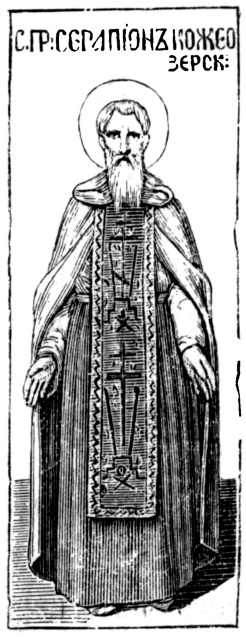
† Преставление преп. Серапиона Кожеозерского

† The Repose of the Venerable Serapion of Kozheozero

E3.TAI draft
Engraving

По ркп. святцам, «преп. отец Серапион, иже на Кожеозере, в Каргопольском уезде, новый чудотворец, преставился в л. 7000 июня в 27 д.». Преп. Серапион – прекрасное деревцо, принёсшее превосходные плоды св. любви, после того как дикой отраслью привился он ко Христу Господу285. В числе Казанских пленных татар, принявших св. крещение, был молодой мурза Туртас Гравирович, принявший при купели имя Сергия. Он жил в доме боярина Захария Ивавовича Плещеева, женившегося на Астраханской царице Ельякше, в крещении Иулиании. – Царь ласкал его286. Сергий так искренно, так глубоко полюбил св. веру, что решился расстаться с миром, чтобы выполнять самые высокие правила новой веры. Обойдя иноческие пустыни, на пустынном острове озера Кожи встретил он отшельника Нифонта, пленился жизнью его и остался жить с ним. Это было в 1560 г. Пищей для отшельников служила трава и частью ягоды; Сергий со всей точностью выполнял наставления Нифонта. После испытания, данного себе самому, Сергий просил старца постричь его в иночество; старец, видя искренность и чистоту желаний его, назвал его при пострижении Серапионом. Мало по малу узнали строгих отшельников, и молва о их высокой жизни стала привлекать к ним ревнителей духовной жизни; отшельническая жизнь Серапиона продолжалась почти 18 лет. Когда собралось к Нифонту и Серапиону довольное число иноков, Нифонт оправился в Москву просить земли для обители; но он скончался в Москве, не начав дела там. В обители не знали о судьбе Нифонта и по недостатку съестных припасов стали чувствовать голод. По состраданию к страждущим Серапион отправился испрашивать подаяния. Ему дали хлеба в зерне и жернова; по мхам и лому хвороста он принёс всё это на себе в обитель и спас братию от голодной смерти. Узнав о кончине Нифонта, блаж. Серапион отправился в Москву. Здесь получил он царскую грамоту от 30 сент. 1584 г., которой предоставлялась земля для новой обители по 4 версты во все стороны; а митрополитом дана грамота с благословением на устроение монастыря. Возвратясь на своё место, блаж. Серапион расчистил с иноками для пашни лес, оградил место обители оградой и соорудил храм в честь Богоявления Господня; потом отправился к новому патриарху Иову, чтобы получить антиминс, и наименован был строителем монастыря. Скоро потом построен и освящён другой храм, тёплый, в честь святителя Николая. Вот что говорил сам блаж. Серапион в просьбе своей к царю 1595 г.: «поставил он на Лонском озере, на Кожеозере, храм во имя Богоявления Господня, а другой тёплый – свят. Николая; устроил общий монастырь; а строение его продолжалось 36 лет. – Но ныне начали посылать с Москвы в их Богоявленский монастырь опальных людей, а им старцам и самим питаться нечем и беречь тех людей не кому; царской милостыни ни деньгами, ни хлебом не выдаётся; вотчинные земли Богоявленской обители, всего четыре обжи на р. Онеге, куплены, и они сами, приезжая, пашут пашню, а крестьян у них нет; сами же варят соль в Пияле для монастырского расхода; да на посаде, в Турчасове, куплен для приездов двор. – Мимо монастыря их проходили царские ратные люди, и они, помогая им и доставляя подводы, много задолжались». Вследствие сей просьбы царь освободил земли Кожеозерской обители от податей и повинностей287. В 1608 г., по прошению отягчённого старостью подвижника, поставлен был в игумена обители Аврамий, ученик его. Блаж. Серапион скончался 27 июня 1611 г., оставив после себя до 40 иноков в общежительной обители своей.

According to the manuscript menologia, "the Venerable Father Serapion, who was at Kozheozero in the Kargopol district, a new wonderworker, reposed in the year 7000, on the 27th of June." The Venerable Serapion is a beautiful sapling that brought forth excellent fruits of holy love, after being grafted as a wild branch onto Christ the Lord285. Among the Kazan captive Tatars who received holy Baptism was a young mirza, Turtas Gravirovich, who received the name Sergius at the font. He lived in the house of the boyar Zacharias Ivanovich Pleshcheev, who had married the Astrakhan Tsaritsa Elyaksha, in Baptism Juliana. The Tsar showed him favor286. Sergius so sincerely, so deeply loved the holy faith that he resolved to part with the world in order to fulfill the most exalted precepts of the new faith. Having visited the monastic hermitages, on a desolate island of Lake Kozha he met the hermit Niphon, was captivated by his life, and remained to live with him. This was in the year 1560. The food of the hermits consisted of grass and partly of berries; Sergius fulfilled Niphon’s instructions with all exactness. After a trial he imposed upon himself, Sergius asked the elder to tonsure him into monasticism; the elder, seeing the sincerity and purity of his desires, named him Serapion at his tonsure. Little by little the strict hermits became known, and the report of their lofty life began to attract zealots of the spiritual life to them; Serapion’s hermitic life continued for almost 18 years. When a sufficient number of monks had gathered around Niphon and Serapion, Niphon set out for Moscow to ask for land for the monastery; but he reposed in Moscow without having begun that matter there. In the monastery they knew nothing of Niphon’s fate and, due to a shortage of provisions, began to suffer hunger. Out of compassion for the suffering, Serapion set out to beg for alms. They gave him grain and millstones; through mosses and broken brushwood he carried all this on his back to the monastery and saved the brethren from death by starvation. Learning of Niphon’s repose, the blessed Serapion set out for Moscow. There he received a tsar’s charter dated September 30, 1584, which granted land for the new monastery for four versts in all directions; and the metropolitan gave a charter with a blessing for the establishment of the monastery. Returning to his place, the blessed Serapion, together with the monks, cleared the forest for arable land, enclosed the monastery site with a fence, and built a church in honor of the Theophany of the Lord; then he went to the new Patriarch Job to obtain an antimension, and was named the builder of the monastery. Soon afterward another church, a warm one, was built and consecrated in honor of St. Nicholas. Here is what the blessed Serapion himself said in his petition to the Tsar in 1595: "He built on Lake Lonsk, on Kozheozero, a church in the name of the Theophany of the Lord, and another warm one—of St. Nicholas; he established a cenobitic monastery; and its construction continued for 36 years. But now they have begun to send disgraced people from Moscow to their Theophany Monastery, and the elders themselves have nothing to eat and no one to guard those people; no tsar’s alms are given, either in money or in grain; the patrimonial lands of the Theophany Monastery, only four obzhas on the Onega River, were purchased, and they themselves, when they come, plow the arable land, for they have no peasants; they themselves boil salt in Piyala for the monastery’s needs; and in the posad, in Turchasovo, a courtyard was purchased for visits. Past their monastery tsar’s military men passed, and they, helping them and providing carts, fell heavily into debt." In consequence of this petition, the Tsar freed the lands of the Kozheozero Monastery from taxes and duties287. In 1608, at the request of the ascetic, weighed down by old age, his disciple Abraham was appointed abbot of the monastery. The blessed Serapion reposed on June 27, 1611, leaving after him up to 40 monks in his cenobitic monastery.

E3.0AI draft

Жизнь преп. Серапиона говорит нам: «мы погреблись со Христом крещением в смерть, дабы как Христос воскрес из мёртвых славой Отца, так и мы ходили во обновлённой жизни. Итак, да не царствует грех в смертном теле, чтобы вы повиновались ему в похотях (Рим.6:11–12).

The life of the Venerable Serapion says to us: “We were buried with Christ through baptism into death, that just as Christ was raised from the dead by the glory of the Father, even so we also should walk in newness of life. Therefore do not let sin reign in your mortal body, that you should obey it in its lusts” (Rom. 6:11–12).

E3.1AI draft

Примечания Notes

Собр. л. 1, 136. 2, 19. 25.

Collection of Chronicles 1, 136; 2, 19, 25.

N280AI draft

Собр. л. 1, 55.

Collection of Chronicles 1, 55.

N281AI draft

Собр. л. 1, 186. 2, 19. Догадка, будто старец Мартин разумел Пинского князя Ярослава Георгиевича, известного в 1184 г. (Карамз. 2, пр. 415. 3, пр. 64) вовсе не «всего естественнее» (Макария Ист. Русск. Церк. 3. 256). Напротив, вовсе непримирима со временем епископа Иоакима, тогда как Ярослав Юрьевич с 1416 г. князь Туровский и епископ Иоаким 1144–1147 г. точно современники в Турове.

Collection of Chronicles 1, 186; 2, 19. The conjecture that the elder Martin meant Yaroslav Georgievich, Prince of Pinsk, known in 1184 (Karamzin 2, note 415; 3, note 64) is by no means “the most natural” (Macarius, History of the Russian Church 3, 256). On the contrary, it is utterly irreconcilable with the time of Bishop Joachim, whereas Yaroslav Yurievich, from 1416 Prince of Turov, and Bishop Joachim, 1144–1147, are precisely contemporaries in Turov.

N282AI draft

«Слово о Мартине мнисе», помещённое в прологе Румянцева XV в. № 321 под 27 июня, напечатано у преосвящ. Макария в Ист. Русск. Церк. 3, 256. 257. Здесь в вариантах напечатан и другой текст, из Макариевской минеи; но последний текст во многом переделан против древнего. Русский перевод следует первому тексту.

“The Discourse on the Monk Martin,” placed in the Prologue of Rumyantsev of the 15th century, No. 321, under June 27, is printed by His Grace Macarius in the History of the Russian Church 3, 256–257. Here in the variants another text is also printed, from the Macarian Menaion; but the latter text is in many respects altered from the ancient one. The Russian translation follows the first text.

N283AI draft

См. пр. 182. Повесть о блаж. Мартине из пролога 27 июня перенесена в повествование о чудесах св. князей, помещённое в минее под 2 мая. Так видим её и в минее св. Димитрия под 2 мая.

See note 182. The story of the blessed Martin from the Prologue of June 27 is transferred to the narrative of the miracles of the holy princes, placed in the Menaion under May 2. Thus we see it also in the Menaion of St. Demetrius under May 2.

N284AI draft

Сведен. о блаж. Серапионе, извлечённые из рукоп. в статье: «Кожеозерский монастырь», помещённой в Моск. ведом. 1852 г. № 83. 34.

Information on the blessed Serapion, extracted from manuscripts in the article: “The Kozheozero Monastery,” published in the Moscow Gazette, 1852, No. 83, 34.

N285AI draft

О Ельякше Никон. л. 7, 235. Туртасово или Турчасов погост в грамоте 1549 г. (Ист. Ак. I, 218. 219) и в грамоте 1536 г. (А. Э. I, 152).

Concerning Elyaksha: Nikon Chronicle 7, 235. Turtasovo or Turchasov pogost in the charter of 1549 (Historical Acts I, 218–219) and in the charter of 1536 (Acts of History I, 152).

N286AI draft

Ист. Акт. I, № 246.

Historical Acts I, No. 246.

N287AI draft