Сей преподобный отец с юности проводил жизнь в воздержании и, оставив отечество своё, Малую Азию, прибыл в Фессалию и жил отшельником близ Солуни в куще под миндальным деревом, сияя добродетелями и уподобляясь ангелам, наставляя приходящих к нему на путь спасения. Угасив в себе страсти, он был невредим и от огня естественного и совершал чудеса. И угодив Богу, преставился от сей временной жизни около 540 года. Мощи его почивали в Солуни, в церкви его имени.
This venerable father from his youth led a life of abstinence and, having left his homeland, Asia Minor, came to Thessaly and lived as a hermit near Thessalonica in a hut under an almond tree, shining with virtues and becoming like the angels, instructing those who came to him on the path of salvation. Having quenched the passions within himself, he was unharmed even by natural fire and performed miracles. And having pleased God, he reposed from this temporal life around the year 540. His relics rested in Thessalonica, in the church named after him.
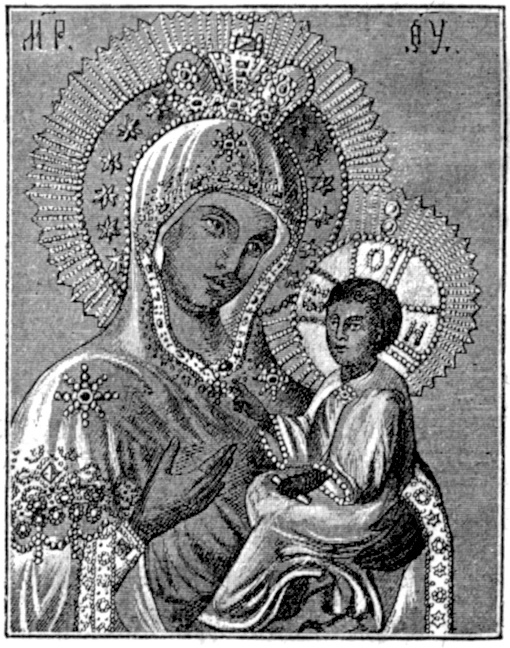
Тихвинская икона Богоматери первоначально, по сказанию предания, писана св. Лукой и послана была им вместе с Евангелием и книгой Деяний Апостольских в Антиохию к державному Феофилу, принявшему тогда веру Христову. По смерти его она перенесена была в Иерусалим, а оттуда в V веке по Рождестве Христове Евдокией, супругой Греческого царя Феодосия Младшего, в Константинополь, где для неё воздвигнут был храм, известный под именем Влахернского. Здесь она пребывала 539 лет. От неистовства иконоборцев св. икона перенесена была из Влахернского храма в обитель Пантократора и скрыта. По прекращении гонения св. икона возвращена была во Влахерну. За 76 лет до падения Константинополя, во дни великого князя Дмитрия Иоанновича Донского, при митрополите Пимене, в 1383 году, Влахернская икона Божией Матери с предвечным Младенцем, начертанным на левой руке, явилась в пределах Новгорода над водами Ладожского озера, в лучезарном свете, солнце-образно сияющая, шествуя по воздуху над водами, переносимая невидимо от места до места ангелами, и, притекши к городу Тихвину, остановилась при реке Тихвинке. В продолжение своего шествия она в пяти местах останавливалась и являлась и верующим, усердием коих на всех местах, ознаменованных и освящённых присутствием чудотворного образа Владычицы, созданы после храмы Божии. Равно на том месте, где икона совершенно остановилась, устроен был деревянный храм во имя Успения Богоматери, который неоднократным пожаром обращаем был в пепел. Но явленная и чудотворная Тихвинская икона Божией Матери, находившаяся в нём, всегда оставалась невредима. Наконец усердием великого князя Василия Иоанновича, вместо деревянного храма, для Тихвинской иконы Божией Матери в 1510 году создан каменный. В 1560 году, спустя 177 лет по явлении иконы, устроен иждивением и усердием великого князя Иоанна Васильевича Тихвинский мужской монастырь.
The Tikhvin Icon of the Mother of God, according to the account of tradition, was originally painted by St. Luke and was sent by him together with the Gospel and the book of the Acts of the Apostles to Antioch, to the sovereign Theophilus, who had then received the faith of Christ. After his death, it was transferred to Jerusalem, and from there, in the fifth century after the Nativity of Christ, by Eudocia, the wife of the Greek Emperor Theodosius the Younger, to Constantinople, where a church was built for it, known by the name of Blachernae. Here it remained for 539 years. From the fury of the iconoclasts, the holy icon was transferred from the Blachernae church to the monastery of Pantokrator and hidden. After the cessation of the persecution, the holy icon was returned to Blachernae. Seventy-six years before the fall of Constantinople, in the days of the Grand Prince Demetrius Ioannovich Donskoy, under Metropolitan Pimen, in the year 1383, the Blachernae Icon of the Mother of God, with the Eternal Child depicted on Her left arm, appeared within the borders of Novgorod above the waters of Lake Ladoga, in a radiant light, shining like the sun, moving through the air above the waters, carried invisibly from place to place by angels, and, having come to the town of Tikhvin, stopped at the River Tikhvinka. During its journey, it stopped at five places and appeared to the faithful, by whose zeal churches of God were afterwards built on all the places marked and sanctified by the presence of the wonderworking image of the Lady. Likewise, on the very spot where the icon finally stopped, a wooden church was built in the name of the Dormition of the Mother of God, which was reduced to ashes by repeated fires. But the revealed and wonderworking Tikhvin Icon of the Mother of God, which was in it, always remained unharmed. Finally, by the zeal of Grand Prince Basil Ioannovich, in place of the wooden church, a stone one was built for the Tikhvin Icon of the Mother of God in the year 1510. In 1560, 177 years after the appearance of the icon, the Tikhvin men's monastery was established by the expense and zeal of Grand Prince John Vasilievich.
В 1613 году, когда Шведы под предводительством Делагарди насильно овладели Новгородом и его окрестностями, обитель Тихвинская под защитой Владычицы вытерпела от врагов продолжительное тяжкое нападение, особенно по воцарении Михаила Феодоровича, когда Шведам избранием его на Русский престол нанесено было огорчение и вместе поражение отрядов их и на реке Усть в пределах Новгорода, и в самой обители Тихвина, откуда они были изгнаны. Услышав о своих неуспехах и поражениях, Делагарди с яростью приказал двинуть к Тихвину свои полки, чтобы отомстить обители за изгнание Шведов и разрушить её до основания. Устрашённые угрозами гордого и мстительного врага, окрестные жители с жёнами и детьми стеклись в монастырь, там с иноками и воинами затворились, надеясь не на крепость стен, а на неодолимое заступничество Царицы Небесной. Шведские войска явились в Тихвинском посаде, окружили обитель и с страшной злобой делали непрестанные нападения на жилище духовных воинов Христовых. Иноки же, затворившиеся в обители, объяты были страхом; иные, стоя на стенах монастырских, бились со врагами; другие, собравшись в церкви, со слезами молились Богу и Пречистой Его Матери перед чудотворной Её иконой и совершали всенощные моления.
In 1613, when the Swedes under the leadership of De la Gardie forcibly seized Novgorod and its environs, the Tikhvin monastery, under the protection of the Lady, endured a prolonged and grievous attack from the enemies, especially after the accession of Michael Theodorovich, when the Swedes, by his election to the Russian throne, were both offended and, at the same time, their detachments were defeated both on the River Ust within the borders of Novgorod and in the very monastery of Tikhvin, from which they were driven out. Hearing of his failures and defeats, De la Gardie in fury ordered his regiments to advance on Tikhvin, to take revenge on the monastery for the expulsion of the Swedes and to raze it to the ground. Terrified by the threats of the proud and vengeful enemy, the surrounding inhabitants, with their wives and children, flocked into the monastery, shut themselves up there with the monks and soldiers, hoping not in the strength of the walls, but in the invincible intercession of the Queen of Heaven. The Swedish troops appeared in the Tikhvin posad, surrounded the monastery, and with terrible malice made unceasing attacks on the dwelling of the spiritual soldiers of Christ. The monks who had shut themselves up in the monastery were seized with fear; some, standing on the monastery walls, fought with the enemies; others, gathered in the church, prayed with tears to God and His Most Pure Mother before Her wonderworking icon and performed all-night supplications.
Во время этой осады одной благочестивой женщине Марии, за два года перед тем пришедшей в монастырь слепой и получившей по вере своей зрение, когда она с неосохшими ещё глазами от молитвенных слёз погрузилась среди ночи в тонкую дремоту, явилась Пречистая Дева и сказала: «объяви всем, находящимся в обители, да возьмут икону Мою и обойдут по стенам вокруг и узрят милость Божию». Мария поведала о явлении и повелении Царицы Небесной. Радостью и упованием исполнились сердца осаждённых; чудотворный образ с молебным пением обнесён был по стенам ограды монастырской. В это время, когда православные призывали Божию Матерь на помощь себе, внезапно объял врагов страх. Они пришли в смятение и, никем не гонимые, бежали от обители.
During this siege, to a certain pious woman named Mary, who had come to the monastery blind two years before and had received her sight according to her faith, when she, with her eyes still moist from the tears of prayer, fell into a light slumber in the dead of night, the Most Pure Virgin appeared and said: "Declare to all who are in the monastery, let them take My icon and go around the walls with it, and they shall see the mercy of God." Mary told of the appearance and the command of the Queen of Heaven. The hearts of the besieged were filled with joy and hope; the wonderworking image was carried around the walls of the monastery enclosure with the singing of a moleben. At that time, when the Orthodox were calling upon the Mother of God for help, fear suddenly seized the enemies. They fell into confusion and, pursued by no one, fled from the monastery.
Спустя несколько времени враги снова и с большими силами окружили монастырь, и многие дни неотступно нападали на обитель. Православные опять со слезами стали притекать к чудотворному образу Богородицы и умоляли Её умилосердиться над страждущими. В монастыре находился послушник Соловецкого монастыря Мартиниан, человек чистый сердцем и Богобоязненный. В ночном видении явилась ему Богоматерь с святителем Николаем, с преподобными Варлаамом Хутынским и Зосимой Соловецким, и объявила: «близ погибели есть место сие многих ради нечистот греховных, имиже осквернися сие святое место Мое». В ужасе от видения воспрянул Мартиниан и со слезами поведал начальствовавшим в обители. Сквернодетельные лица изгнаны были из монастыря, притвор церковный очищен, усердными слёзными молениями умилостивляли Бога и Богородицу, да не предадут людей Своих в руки врагов.
After some time, the enemies again surrounded the monastery with greater forces, and for many days they attacked the monastery unceasingly. The Orthodox again began to flock with tears to the wonderworking image of the Theotokos and implored Her to have mercy on the suffering. In the monastery there was a novice of the Solovetsky Monastery, Martinian, a man pure in heart and God-fearing. In a night vision, the Mother of God appeared to him with St. Nicholas, with the Venerable Barlaam of Khutyn and Zosima of Solovki, and declared: "This place is near destruction because of the many impurities of sins with which this My holy place has been defiled." Martinian started up in terror from the vision and with tears told those in authority in the monastery. The workers of iniquity were expelled from the monastery, the church narthex was cleansed, and with fervent tearful prayers they propitiated God and the Theotokos, that He would not deliver His people into the hands of the enemies.
Чадолюбивый Господь, предстательством Пречистые Своея Матери, праведный Свой гнев претворил в милосердие. С этого времени осаждённые начали усиливаться и успешнее бороться со врагами. Уповая на милость Матери Божией, осаждённые внезапно устремились на врагов, и Она Своей помощью даровала православным победу и одоление на врагов.
The loving Lord, through the intercession of His Most Pure Mother, turned His righteous wrath into mercy. From that time, the besieged began to grow stronger and to fight more successfully against the enemies. Trusting in the mercy of the Mother of God, the besieged suddenly rushed upon the enemies, and She, by Her help, granted the Orthodox victory and triumph over the enemies.
Мстя за поражение и стыд свой, враги с усиленными отрядами подступили к обители, обложили её теснее и начали копать тайные рвы под врата и стены. 13 сентября, после нового явления Божией Матери в ночном видении Мартиниану и другому мужу именем Григорию и повеления отогнать врагов от дома Её, православные защитники обители и отечества удостоились дивной небесной помощи; Господь поразил врагов страшным чудом. Они увидели, что со стороны Москвы идут в обитель многочисленные полки вооружённых воинов, со многими светлыми крестоносными знамёнами, и испугались. Одна надежда на подземные подкопы удержала смятённых врагов от бегства. Осаждённые, услышав о новом явлении и повелении Богородицы от Мартиниана и Григория, укрепились упованием на помощь небесную и, совершив молебные пения со слезами перед чудотворной иконой Богоматери, но прежнему устремились на врагов. Их объял страх и трепет, они смутились, поколебались и со стыдом побежали, поражая себя взаимно в бегстве. Пленные из врагов говорили, что они в прошедшую ночь видели многочисленное воинство, шедшее в монастырь и из монастыря выходившее для нападения на них. Эта славная и дивная победа чудесно дарована православным Богоматерью в ночь Воздвижения животворящего Креста, 14 сентября 1614 года.
Avenging their defeat and shame, the enemies approached the monastery with reinforced detachments, besieged it more tightly, and began to dig secret tunnels under the gates and walls. On September 13, after a new appearance of the Mother of God in a night vision to Martinian and another man named Gregory, and a command to drive the enemies away from Her house, the Orthodox defenders of the monastery and the fatherland were vouchsafed wondrous heavenly help; the Lord struck the enemies with a terrible miracle. They saw that from the direction of Moscow numerous regiments of armed soldiers were coming into the monastery, with many bright cross-bearing banners, and they were afraid. Only the hope in the underground tunnels kept the confused enemies from fleeing. The besieged, hearing of the new appearance and command of the Theotokos from Martinian and Gregory, were strengthened by hope in heavenly help and, having performed molebens with tears before the wonderworking icon of the Mother of God, rushed upon the enemies as before. Fear and trembling seized them; they were confounded, wavered, and fled in shame, striking one another in their flight. Captives from among the enemies said that during the past night they had seen a numerous army, coming into the monastery and going out from the monastery to attack them. This glorious and wondrous victory was miraculously granted to the Orthodox by the Mother of God on the night of the Exaltation of the Life-giving Cross, September 14, 1614.
Не прошло года, как Шведский полководец в страшной злобе на обитель Тихвинскую, при которой столько употреблено напрасных усилий и понесено потерь, послал многочисленнейшие силы с приказанием разорить монастырь до основания, чудотворную икону Богоматери изрубить на части, и церковь, в которой она находится, разметать по полю. Когда эта угроза врага достигла слуха защитников монастыря, они устрашились и даже хотели с чудотворной иконой удалиться к Москве. Но икона пребыла на месте своём неподвижна; её никак не могли взять с места. Итак, слабая горсть защитников, возложив свою надежду на всесильную помощь Богородицы, затворились в обители и ожидали врага. Скорая Помощница правоверным и бодрая Хранительница Своей обители не допустила до неё врагов. Они поражены были новым чудом: им показалось многочисленное вооружённое воинство, стремившееся против них. Не надеясь противостать такой силе, враги, объятые великим страхом, в беспорядке бросились бежать от монастыря. С этой поры враги не дерзали уже более подступать к обители для её разорения. Победа над врагами единодушно и воинами и вождями приписана невидимой помощи Тихвинской Богоматери.
Not a year had passed when the Swedish commander, in terrible fury against the Tikhvin monastery, against which so many vain efforts had been made and losses sustained, sent very numerous forces with orders to raze the monastery to the ground, to hew the wonderworking icon of the Mother of God into pieces, and to scatter the church in which it was located across the field. When this threat of the enemy reached the ears of the defenders of the monastery, they were terrified and even wanted to withdraw with the wonderworking icon to Moscow. But the icon remained immovable in its place; they could by no means take it from its place. And so, a weak handful of defenders, placing their hope in the all-powerful help of the Theotokos, shut themselves up in the monastery and awaited the enemy. The swift Helper of the Orthodox and vigilant Guardian of Her monastery did not allow the enemies to reach it. They were struck by a new miracle: there appeared to them a numerous armed host, rushing against them. Not hoping to withstand such a force, the enemies, seized with great fear, fled in disorder from the monastery. From that time, the enemies no longer dared to approach the monastery for its destruction. The victory over the enemies was unanimously attributed, by both soldiers and commanders, to the invisible help of the Tikhvin Mother of God.
Спустя около года после чудесной победы, прибыли в стены Тихвина монастыря царские послы для заключения мира с Шведами. Сняв список с чудотворной иконы Божьей Матери, они отправились за пятьдесят пять вёрст, к реке Сяси, в деревню Столбово, недалеко от Ладоги, куда прибыли и Шведские послы, и там в 1617 году 17-го февраля заключили мир Столбовский, перед иконой Божьей Матери, столь дивно поборавшей православным, как главной порукой мира со стороны Русских. Оттуда послы отправились с той же иконой на принятие из рук врагов Новгорода, бывшего 7 лет во власти их, где с благодарственными слезами встречена была Царица Небесная, дивно избавившая от врагов не только обитель, но вместе и Великий Новгород, со всеми пределами его, и утвердившая в них власть православного царя.
About a year after the miraculous victory, the Tsar's envoys arrived within the walls of the Tikhvin monastery to conclude peace with the Swedes. Having taken a copy of the wonderworking icon of the Mother of God, they set out for fifty-five versts, to the River Syas, to the village of Stolbovo, not far from Ladoga, where the Swedish envoys also arrived, and there, on February 17, 1617, they concluded the Peace of Stolbovo, before the icon of the Mother of God, who had so wondrously fought for the Orthodox, as the chief guarantee of peace on the part of the Russians. From there, the envoys set out with the same icon to receive from the hands of the enemies the city of Novgorod, which had been in their power for seven years, where the Queen of Heaven was met with tears of gratitude, having wondrously delivered not only the monastery, but also Great Novgorod itself, with all its borders, from the enemies, and having established in them the authority of the Orthodox Tsar.
В память чудесного явления Тихвинской иконы Богородицы и одоления врагов предстательством Богоматери установлен Церковью в 26 день июня по всей России праздник в честь Тихвинской иконы Богоматери. В этот день Православная Церковь Всероссийская от лица России, благоговейно приявшей икону, прославляет её дивное и светозарное явление, просветившее своим пришествием пустое и непроходимое место, всей Российской стране показавшее твёрдое ограждение и защищение и даровавшее приснотекущий источник исцелений.
In memory of the miraculous appearance of the Tikhvin Icon of the Mother of God and the overcoming of enemies through the intercession of the Mother of God, the Church established on the 26th day of June throughout all Russia a feast in honor of the Tikhvin Icon of the Mother of God. On this day, the All-Russian Orthodox Church, on behalf of Russia, which reverently received the icon, glorifies its wondrous and radiant appearance, which by its coming enlightened a desolate and impassable place, showed to the entire Russian land a firm rampart and defense, and granted an ever-flowing fountain of healings.
Вера и благоговение к святой и чудотворной иконе Тихвинской издревле доселе выражается как особыми в честь её установлениями в монастыре, так и частным усердием верующих. Кроме праздника, торжествуемого Церковью в честь Тихвинской иконы Богоматери, древле после 26 числа декабря, по совершении собора в честь Богоматери, ездили из монастыря Тихвинского «с образы и праздничной святыней в Москву». Этот обычай продолжался до 1678 года. Ныне 24 раза в год совершается крестный ход с чудотворной Тихвинской иконой.
Faith and reverence for the holy and wonderworking Tikhvin Icon from ancient times until now have been expressed both by special institutions in the monastery in its honor, and by the private zeal of the faithful. Besides the feast celebrated by the Church in honor of the Tikhvin Icon of the Mother of God, in olden times after the 26th of December, upon the completion of the synaxis in honor of the Mother of God, they would travel from the Tikhvin Monastery “with icons and festal holy things to Moscow.” This custom continued until 1678. At present, twenty-four times a year a procession of the cross is made with the wonderworking Tikhvin Icon.
Частное усердие верующих к Тихвинской иконе Богоматери издревле доселе обнаруживается непрестанными перед иконой молитвами и приношениями ей от верующих. Храм, в котором находится чудотворная икона, никогда не бывает без поклонников. Если он заперт, Богомольцы стоят на паперти, откуда устроено пространное окно, через которое виден лик Царицы Небесной, и воссылают молитвы. Богомольцы нередко остаются на паперти на ночь.
The private zeal of the faithful for the Tikhvin Icon of the Mother of God from ancient times until now is manifested by unceasing prayers before the icon and by offerings to it from the faithful. The church in which the wonderworking icon is located is never without worshippers. If it is locked, pilgrims stand on the porch, where a spacious window has been made, through which the countenance of the Queen of Heaven is visible, and they send up prayers. Pilgrims often remain on the porch for the night.
На поклонение святой иконе издревле притекали и приносили свои посильные вклады в честь её лица всех сословий, и знатные и простые. Великий князь Василий Иоаннович, по особливой ревности и усердию к Пречистой Деве Богородице и Её чудотворной иконе, повелел от своих царских сокровищ создать каменную церковь в Тихвине. По создании и освящении её, великий князь, влекомый любовью к Пречистой Богородице, сам прибыл в Тихвин, чтобы видеть чудотворную Её икону, лобызать её и принести перед ней свои усердные молитвы. Благоверный сын его великий князь Иоанн Васильевич, подражая отцу своему, приходил также в Тихвин на поклонение чудотворной иконе и устроил при ней монастырь от царских щедрот. В 1734 году императрица Анна Иоанновна пожаловала для иконы редкий изумруд, замечательный по огромности и резьбе, с подписью: «Владычице, приими молитвы раб Твоих». Для поклонения иконе Тихвинской монастырь посетили: в 1747 году императрица Елисавета Петровна; в 1798 г. император Павел Петрович, который сам перенёс икону на настоящее место из Рождественского собора. Великая княгиня Екатерина Павловна, прибыв в обитель с супругом своим в 1809 году, приложила к иконе превосходный Бразильский топаз и дорогие бриллианты; ей же привезены от императрицы Марии Феодоровны бриллианты и голубой сапфир в 80 каратов. По самой дешевой цене все украшения на ризе золотой и драгоценной, не считая её, полагаются около 60,000 рублей сер. Перед иконой висит драгоценное приношение графа Шереметева в 1803 году, – золотая лампада ценой около 12,000 рублей сер.
To venerate the holy icon, from ancient times there have come and brought their modest offerings in its honor people of all estates, both noble and simple. Grand Prince Basil Ioannovich, out of special zeal and devotion to the Most Pure Virgin Theotokos and Her wonderworking icon, commanded that from his royal treasures a stone church be built in Tikhvin. Upon its construction and consecration, the Grand Prince, drawn by love for the Most Pure Theotokos, himself came to Tikhvin to see Her wonderworking icon, to kiss it, and to offer before it his fervent prayers. His Right-believing son, Grand Prince John Vasilievich, imitating his father, also came to Tikhvin to venerate the wonderworking icon and established a monastery there from royal bounty. In 1734, Empress Anna Ioannovna presented for the icon a rare emerald, remarkable for its size and carving, with the inscription: “O Lady, accept the prayers of Thy servants.” To venerate the Tikhvin Icon, the monastery was visited: in 1747 by Empress Elizabeth Petrovna; in 1798 by Emperor Paul Petrovich, who himself carried the icon to its present place from the Cathedral of the Nativity. Grand Princess Catherine Pavlovna, having come to the monastery with her husband in 1809, attached to the icon a superb Brazilian topaz and costly diamonds; she also brought from Empress Maria Feodorovna diamonds and a blue sapphire of 80 carats. At the very lowest price, all the adornments on the golden and precious riza, not counting the riza itself, are estimated at about 60,000 silver rubles. Before the icon hangs a precious offering of Count Sheremetev in 1803—a gold lampada worth about 12,000 silver rubles.
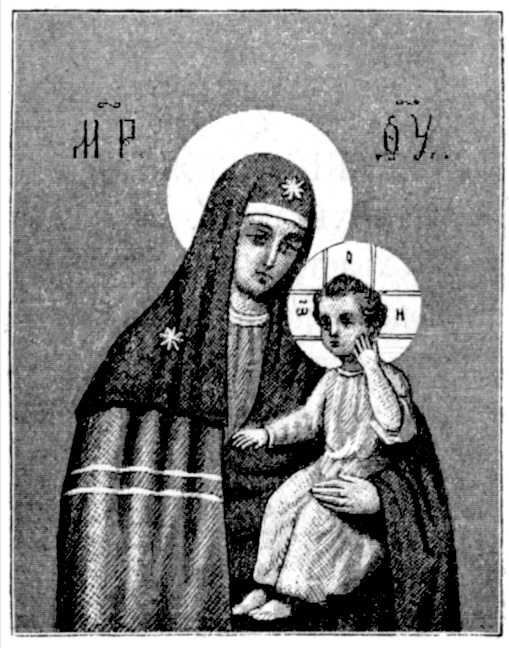
В 1654 году, во время морового поветрия в Казани, граждане просили поднять Смоленскую икону Богоматери из Семиезерской обители в бедствующий город. Игумен Предтечевой обители послан был за чудотворной иконой и, подняв её благоговейно, остановился на обратном пути за две версты до Казани, там, где теперь монастырь Введенский Кизический. Народ и духовенство встретили с умилением Владычицу, и, как только обнесли икону около стен кремлёвских, зараза видимо стала ослабевать. На другой день чудотворная икона обнесена была кругом всей Казани, и зараза прекратилась. Спустя неделю хотели возвратить в обитель чудотворный образ; жители во множестве стеклись во храм, чтобы проводить чудотворную икону. Но когда, по совершении всенощного, стали поднимать образ Богоматери, вдруг поднялась страшная буря; настала темнота, от которой ничего нельзя было видеть и из храма невозможно было выйти по причине свирепствовавшей бури. Это явление повторялось трижды. Градоначальники и народ увидели, что Божией Матери не угодно удалиться из города, где икона и пребывала во весь 1655 год. В этот год Казань избавлена была от язвы заступлением Богоматери. В 1655 году 25 июля язва опять показалась в Казани с большей против прежнего силой; это повторилось в следующий год. При этом двукратном появлении смертоносной язвы Седмиезерская икона приносима была в Казань и спасала город от погибели. Посему при митрополите Казанском Лаврентии (с 1658 года) в память прекращения заразы установлено в честь Седмиезерской иконы Богоматери другое празднество26 июня с крестным ходом, при котором св. икона ежегодно с великим торжеством приносится в Казань около того времени, когда наиболее свирепствовала зараза, – с 26 июня и совершаются с ней крестные ходы кругом Казани.
In 1654, during a plague in Kazan, the citizens requested that the Smolensk Icon of the Mother of God be brought from the Semiezersk Monastery to the afflicted city. The abbot of the Monastery of the Forerunner was sent for the wonderworking icon and, having reverently taken it up, stopped on the return journey two versts from Kazan, at the place where the Vvedensky Kizichesky Monastery now stands. The people and clergy met the Lady with compunction, and as soon as the icon was carried around the walls of the kremlin, the contagion visibly began to abate. On the next day the wonderworking icon was carried around all of Kazan, and the plague ceased. A week later they wished to return the wonderworking image to the monastery; the inhabitants flocked in multitude to the church to escort the wonderworking icon. But when, after the completion of the All-night Vigil, they began to lift the icon of the Mother of God, suddenly a terrible storm arose; darkness fell, so that nothing could be seen, and it was impossible to leave the church because of the raging storm. This phenomenon was repeated three times. The city authorities and the people saw that the Mother of God was not pleased to depart from the city, where the icon remained throughout the entire year 1655. In that year Kazan was delivered from the plague by the intercession of the Mother of God. In 1655, on July 25, the plague again appeared in Kazan with greater force than before; this was repeated in the following year. During this twofold appearance of the deadly plague, the Semiezersk Icon was brought to Kazan and saved the city from destruction. Therefore, under Metropolitan Laurence of Kazan (from 1658), in memory of the cessation of the plague, another feast was established in honor of the Semiezersk Icon of the Mother of God on June 26, with a procession of the cross, during which the holy icon is annually brought with great solemnity to Kazan around the time when the plague raged most fiercely—from June 26—and cross-processions are made with it around Kazan.
В 1771 году заступлением Богородицы иконы Седмиезерские граждане Казани сподобились избавиться от новой моровой язвы – чумы, которая распространялась из Москвы вниз по Волге и проникла уже в Казань. Тогда жители Казани вместе с градоначальником упросили архиепископа Вениамина принести в город чудотворную икону. Вскоре после этого посещения Заступницы моровая язва, не причинив значительного вреда, прекратилась в Казани и её окрестностях.
In 1771, through the intercession of the Mother of God of the Sedmiezersk Icon, the citizens of Kazan were vouchsafed deliverance from a new plague—the pestilence which spread from Moscow down the Volga and had already penetrated into Kazan. Then the inhabitants of Kazan, together with the city governor, begged Archbishop Benjamin to bring the wonderworking icon into the city. Soon after this visitation of the Intercessor, the plague, without causing significant harm, ceased in Kazan and its environs.
К Седмиезерской иконе оказывают великое благоговение не только православные христиане, но и прочие иноверные жители города Казани и Казанской губернии.
Great reverence is shown to the Sedmiezersk Icon not only by Orthodox Christians, but also by other heterodox inhabitants of the city of Kazan and the Kazan Governorate.