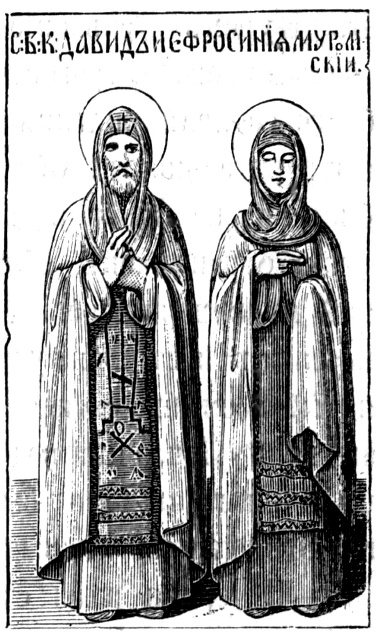
Блаженный Давид, в иночестве Пётр263, князь Муромский, был второй сын князя Юрия Владимировича Муромского. Старший брат его Владимир Юрьевич с 1170 г. наследовал после отца Муром. – После того как болгары опустошили (в 1183 г.) окрестности Мурома, Муромские князья Владимир и Давид вместе с несколькими другими вступили в землю болгаров с мечом и огнём и вознаградили потери поданных. В 1186 г. Владимир и Давид Юрьевичи участвовали в походе великого князя Всеволода против Рязанских князей, нападавших на своих братьев, князей Пронских264. – В 1196 г. три брата, князья Муромские, были у Всеволода на брачном пиру сына его; а в следующем году один Давид Юрьевич был у великого князя при выдаче дочери его в замужество265. По повести, пока жив был старший брат, «имеяше обычай блаженный Пётр всегда приходити к брату своему на поклонение»: так уважал он старшего брата! В конце 1203 г. (дек. 18 дня) князь Владимир умер и «на Муроме остался брат его Давид Юрьевич266.
The blessed David, in monasticism Peter263, Prince of Murom, was the second son of Prince Yury Vladimirovich of Murom. His elder brother, Vladimir Yuryevich, from 1170 succeeded his father in Murom. — After the Bulgars had devastated (in 1183) the environs of Murom, the Murom princes Vladimir and David, together with several others, entered the land of the Bulgars with sword and fire and compensated their subjects for their losses. In 1186, Vladimir and David Yuryevich took part in the campaign of Grand Prince Vsevolod against the princes of Ryazan, who had attacked their brothers, the princes of Pronsk264. — In 1196, the three brothers, the Murom princes, were with Vsevolod at the wedding feast of his son; and in the following year, David Yuryevich alone was with the Grand Prince at the giving of his daughter in marriage265. According to the account, as long as his elder brother lived, "the blessed Peter had the custom of always coming to his brother to pay homage": such was his respect for his elder brother! At the end of 1203 (December 18), Prince Vladimir died, and "in Murom remained his brother David Yuryevich"266.
По повести, когда св. князь принял правление после брата, пришлось ему испытать сильную борьбу с собой, но он вышел победителем. За несколько времени перед тем долго страдал он опасной болезнью – тело его покрыто было струпьями. – Славившаяся умом своим дочь «древолазца», бортника, излечила его мазью. По разговору и поступкам девушки князь признал высокие качества ума и сердца в дочери бортника и дал слово взять её в супругу себе; но потом нашёл неприличным для князя супружество с простой девушкой.
According to the account, when the holy prince assumed rule after his brother, he had to endure a great struggle with himself, but he emerged victorious. Some time before this, he had long suffered from a dangerous illness—his body was covered with sores. — A daughter of a "tree-climber," a beekeeper, who was famed for her wisdom, healed him with an ointment. From the speech and conduct of the maiden, the prince recognized the high qualities of mind and heart in the beekeeper's daughter and gave his word to take her as his wife; but afterward he considered it improper for a prince to marry a simple girl.
Болезнь возобновилась. Евфросиния вновь вылечила князя, и признательный князь выполнил своё слово, сочетался с ней браком. – Когда же после смерти брата вступил он на престол, муромская знать, конечно, подстрекаемая младшим братом и племянником, объявила: или пусть отпустит от себя супругу, оскорбляющую своим происхождением знатных жён, или же, оставит Муром. – Князь твёрдо помнил слова Господа: «что Бог сочетал, того человек да не разлучит. Кто отпустит жену свою и женится на другой, тот прелюбодей». Потому, верный долгу христианского супруга, князь согласился отказаться от княжества. Он остался после того с небогатыми средствами к жизни, и печальные мысли невольно приходили ему на ум. Но умная княгиня говорила ему: «не печалься, князь, – милостивый Бог не оставит нас в нищете». В Муроме скоро открылись раздоры непримиримые, искатели власти схватились за мечи и многие из вельможных потеряли жизнь. Бояры муромские принуждены были просить князя Давида и княгиню Евфросинию возвратиться в Муром. Так князь, верный долгу своему, восторжествовал и над врагами своими267.
The illness returned. Euphrosyne again healed the prince, and the grateful prince fulfilled his word and was joined with her in marriage. — When, after his brother's death, he ascended the throne, the Murom nobility, doubtless incited by his younger brother and nephew, declared: either let him send away his wife, who by her origin offended the noble wives, or else leave Murom. — The prince firmly remembered the words of the Lord: "What God has joined together, let man not put asunder. Whoever divorces his wife and marries another commits adultery." Therefore, faithful to the duty of a Christian spouse, the prince agreed to renounce the principality. He was left thereafter with meager means of livelihood, and sorrowful thoughts involuntarily came to his mind. But the wise princess said to him: "Do not grieve, prince—the merciful God will not abandon us in poverty." In Murom, irreconcilable strife soon broke out; seekers of power seized their swords, and many of the nobles lost their lives. The Murom boyars were compelled to ask Prince David and Princess Euphrosyne to return to Murom. Thus the prince, faithful to his duty, triumphed even over his enemies267.
По летописям видим затем князя Давида принимающим участие в событиях России. – В 1207 он уличает перед великим князем Всеволодом старших Рязанских князей в их неверности Всеволоду и дружинами своими помогает великому князю в войне с Пронскими и Рязанскими князьями. По окончании войны Всеволод отдал ему богатое Пронское княжество. В следующем году Пронские князья осадили его в Пронске. Добродушный Давид послал сказать им: «братья! Я – не сам собой занял Пронск; меня посадил тут Всеволод, – Пронск – ваш». И спокойно возвратился в Муром268. – Какое высокое бескорыстие! Какое глубокое уважение к долгу любви и чести! В 1214 г. князь Давид ходил вместе с великим князем Георгием против Ростовского князя, но на этот раз не было пролито крови, князья помирились269. В 1220 г. войска князя Давида с воеводой участвовали в славном походе против болгар270.
From the chronicles we then see Prince David taking part in the events of Russia. — In 1207, he exposed before Grand Prince Vsevolod the senior Ryazan princes in their unfaithfulness to Vsevolod, and with his retinues he aided the Grand Prince in the war against the princes of Pronsk and Ryazan. After the war ended, Vsevolod gave him the wealthy principality of Pronsk. The following year, the princes of Pronsk besieged him in Pronsk. The good-natured David sent word to them: "Brothers! I did not take Pronsk on my own; Vsevolod placed me here—Pronsk is yours." And he peacefully returned to Murom268. — What lofty selflessness! What deep respect for the duty of love and honor! In 1214, Prince David went together with Grand Prince George against the prince of Rostov, but this time no blood was shed; the princes made peace269. In 1220, the troops of Prince David, with their voivode, took part in the glorious campaign against the Bulgars270.
В Муроме правление князя Давида было правдолюбивое, но без суровой строгости, милостиво, но без слабости. Умная и благочестивая княгиня помогала супругу советами и делами благотворительности. Оба жили по заповедям Господа, всех любили и не любили ни гордости, ни неправедной корысти; покоили странников, облегчали участь несчастных, чтили иноческий и священнический чин, ограждая его от нужд. – Оба вели жизнь постническую, чистую, целомудренную271. – Один женатый возмущался нечистыми мыслями, смотря на прекрасную княгиню. «Почерпни воды из реки с этой стороны судна», сказала княгиня (это было во время плавания по реке Оке); тот почерпнул; «испытай, какова?» Тот исполнил приказание. – Почерпни воды с другой стороны судна и попробуй её, и сказала княгиня. И когда тот выполнил волю её, она спросила: «находишь ли разность между той и другой водой?» – Никакой, отвечал тот. Святая сказала тогда: «точно так одинаково естество женское; напрасно ты, оставляя свою жену, думаешь о чужой». Когда князь и княгиня достигли старости, то в одно время облеклись в иноческое одеяние, один с именем Петра, другая с именем Февронии272. На Пасхальной неделе 1228 г. умер сын князя Давида, потом на той же неделе преставился сам князь-инок, а в один день с ним почила и блаженная Феврония273. Князь и княгиня, согласно с завещанием, положены были в одном гробе274.
In Murom, the rule of Prince David was just, but without harsh severity; merciful, but without weakness. The wise and pious princess helped her spouse with counsel and works of charity. Both lived according to the commandments of the Lord, loved all, and loved neither pride nor unrighteous gain; they gave rest to strangers, eased the lot of the unfortunate, and honored the monastic and priestly orders, shielding them from need. — Both led a life of fasting, purity, and chastity271. — One married man was disturbed by impure thoughts when looking at the beautiful princess. "Draw water from the river from this side of the boat," said the princess (this was during a voyage on the Oka River); he drew it; "taste it—what is it like?" He did as commanded. — "Draw water from the other side of the boat and taste it," said the princess. And when he did her will, she asked: "Do you find any difference between the one water and the other?" — "None," he answered. The saint then said: "Just so is the nature of woman the same; in vain, leaving your own wife, you think of another." When the prince and princess reached old age, they at the same time took monastic garb, he with the name Peter, she with the name Fevronia272. In Paschal week of 1228, the son of Prince David died; then in the same week the prince-monk himself reposed, and on the same day the blessed Fevronia also fell asleep273. The prince and princess, according to their testament, were laid in a single coffin274.
В начале ΧVΙ века «по всем странам прошла весть, что в городе Муроме явились славные чудотворцы, дарующие исцеление приходящим к ним»275. – Собором 1547 г. положено местно праздновать память кн. Петра и Февронии; тогда же и написана и служба им276. – Впоследствии празднование стало повсеместным277, и вероятно вскоре после того, как царь и Иоанн Васильевич, на походе против Казани, в 1552 г. благоговейно «покланялся в Муроме сродникам своим великим чудотворцам, князю Петру и княгине Февронии»278. Блаженные Давид и Евфросиния в жизни своей были в образцом христианского супружества, готовые на все лишения для Евангельской заповеди о нерушимом союзе. И ныне они молитвами своими низводят небесное благословение на вступающих в брак. – Так показывают многие опыты загробной жизни их.
At the beginning of the 16th century, "through all lands the news spread that in the city of Murom there had appeared glorious wonderworkers, granting healing to those who came to them"275. — By the Council of 1547, it was decreed to celebrate locally the memory of Prince Peter and Fevronia; at that time also a service was composed for them276. — Later, the celebration became universal277, and probably soon after, when Tsar Ivan Vasilyevich, on his campaign against Kazan in 1552, reverently "bowed in Murom to his kinsmen, the great wonderworkers, Prince Peter and Princess Fevronia"278. The blessed David and Euphrosyne in their life were an example of Christian marriage, ready for every deprivation for the sake of the Gospel commandment concerning the indissoluble union. And now, by their prayers, they bring down heavenly blessing upon those entering into marriage. — So many experiences of their life after death show.
«Сыны человеческие! доколе быть вам с тяжёлым глупым сердцем? Почему вы любите суету и ловите ложь» (Пс.2:8)? «Что пользы, братия, если кто говорит, что он имеет веру, а дел не имеет? Может ли эта вера спасти его?» (Иак.2:14).
"O sons of men, how long will you be with a heavy, foolish heart? Why do you love vanity and pursue falsehood" (Ps. 2:8)? "What profit, brethren, if someone says he has faith but does not have works? Can that faith save him?" (Jas. 2:14).
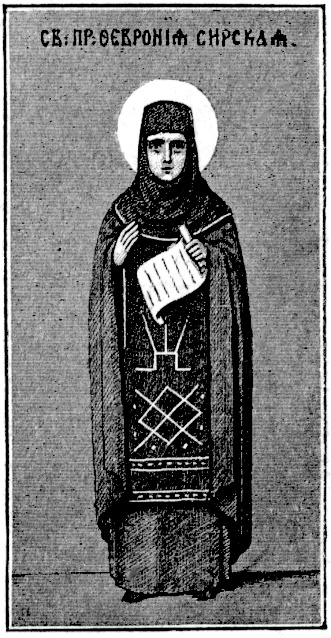
В Месопотамии, в горах соседних с Низибией, ещё в конце III столетия процветала община 50-ти девственниц, основанная диакониссой Платонидой (пам. 6 апреля), которая и управляла этой общиной. По смерти её начальство над общиной приняла также высокая подвижница – Вриенна (пам. 30 авг.). К ней на воспитание отдана была двухлетняя племянница её – Феврония, и под нежным и внимательным надзором своей тётки; проникнутая влиянием всей окружавшей её обстановки, девочка, возрастая, достигла высокого духовного развития. При этом, редкая красота была достойным соответствием её высоких душевных свойств.
In Mesopotamia, in the mountains near Nisibis, even at the end of the 3rd century, a community of fifty virgins flourished, founded by the deaconess Platonida (commemorated April 6), who also governed this community. After her death, the leadership of the community was taken up by another great ascetic—Vriena (commemorated August 30). To her care was given her two-year-old niece—Fevronia; and under the tender and attentive supervision of her aunt, imbued with the influence of all her surroundings, the girl, as she grew, attained high spiritual development. Moreover, rare beauty was a worthy complement to her high spiritual qualities.
Но эту красоту наружности – как опасный дар – великий соблазн для самолюбия – опытная воспитательница Вриенна тщательно укрывала под более чем скромным облачением молодой инокини, – и даже во время чтения свящ. Писания, которое возлагалось на Февронию еженедельно по пятницам, молодая чтица оставалась скрытой за занавесью от городских посетительниц, собиравшихся во множестве, чтобы слушать чтение Февронии с объяснением священного Писания. Но, и не показываясь никому, Феврония привлекала всех умным рассуждением о смысле свящ. Писания. По всему городу распространились слухи об уме молодой толковательницы, и все спешили слушать её. Между прочими· особенно заинтересовалась ею Иерия, знатная женщина, молодая вдова сенатора; она была язычница, но ум её стремился к истине, а сердце жаждало добра. Услышав о Февронии, она пожелала познакомиться с ней и побеседовать, так как она нуждалась в разумном и искреннем совете. Не без труда умолила она Вриенну допустить её к Февронии, не показывавшейся до сих пор никому из светских людей и не видавшей даже никогда светских нарядов. Иерия познакомилась с Февронией под видом странницы-послушницы и была принята ею, как сестра о Христе. После краткой беседы Феврония начала читать, и Иерия слушала чтение и беседу её с такой жадностью, что всю ночь провели они в этом Божественном занятии и на другой день даже с большим трудом могли уговорить её расстаться с своей молодой наставницей. Возвратясь домой, она передала родным впечатление, которое произвело на неё Евангельское учение, и стала убеждать их покинуть язычество и принять христианскую веру. Сама же она, как только услышала о Христе, так и постигла, что Он есть та истина, которой искала она, и немедленно приняла христианство и сделалась ревностной его исповедницей. Вслед за ней и все домашние её приняли крещение.
But this outward beauty—as a dangerous gift, a great temptation to self-love—the experienced instructress Vriena carefully concealed under the more than modest attire of the young nun—and even during the reading of Holy Scripture, which was entrusted to Fevronia weekly on Fridays, the young reader remained hidden behind a curtain from the city visitors who gathered in multitude to hear Fevronia's reading with explanation of Holy Scripture. But, even without showing herself to anyone, Fevronia attracted all by her wise discourse on the meaning of Holy Scripture. Throughout the whole city, reports spread of the wisdom of the young interpreter, and all hastened to hear her. Among others, Ieria, a noble woman, the young widow of a senator, was especially interested in her; she was a pagan, but her mind yearned for truth, and her heart thirsted for good. Hearing of Fevronia, she desired to meet her and converse, for she needed wise and sincere counsel. Not without difficulty did she persuade Vriena to admit her to Fevronia, who until then had not shown herself to any worldly person and had never even seen worldly attire. Ieria made Fevronia's acquaintance under the guise of a pilgrim-novice and was received by her as a sister in Christ. After a brief conversation, Fevronia began to read, and Ieria listened to her reading and discourse with such eagerness that they spent the whole night in this divine occupation, and the next day they could with great difficulty persuade her to part from her young teacher. Returning home, she conveyed to her relatives the impression that the Gospel teaching had made upon her and began to urge them to abandon paganism and accept the Christian faith. She herself, as soon as she heard of Christ, understood that He is the truth she had sought, and immediately accepted Christianity and became a zealous confessor of it. After her, all her household also received baptism.
После того Иерия большую часть времени проводила в общине, дорожа своим сближением с Февронией, которой предалась всей душой; со всем усердием ухаживала за ней, когда она опасно заболела и – сама смерть не разлучила этих сестёр о Христе...
After that, Ieria spent most of her time in the community, cherishing her closeness to Fevronia, to whom she had given herself with all her soul; she tended her with all diligence when she fell dangerously ill, and—death itself did not separate these sisters in Christ...
Между тем надвигалась грозная туча, наступало великое испытание для всех этих подвижниц общины: под жестоким гонением Диоклитиана предстояло сокрушиться её лучшему цветку, но вместе с тем предстояло ему и просиять в мире во всём своём блеске.
Meanwhile, a terrible cloud was gathering; a great trial was approaching for all these ascetics of the community: under the cruel persecution of Diocletian, its fairest flower was to be crushed, but at the same time it was to shine forth in the world in all its splendor.
В 310 г. Диоклитиан отправил на Восток для истребления христианства – брата умершего епарха Анфима – Селения и при нём – Лизимаха, сына Анфима, которому он обещал, если тот успешно исполнит возложенное на него поручение – назначить его епархом вместо покойного отца.
In the year 310, Diocletian sent to the East for the extermination of Christianity—Selenius, the brother of the deceased eparch Anthimus, and with him Lysimachus, the son of Anthimus, to whom he promised that if he successfully carried out the commission entrusted to him, he would appoint him eparch in place of his deceased father.
Тяжело было молодому Лизимаху, рождённому от матери-христианки, завещавшей ему на смертном одре покровительствовать христианам, участвовать, вместо того, в истребительном преследовании их... но, не смея возражать императору, он отправился при своём дяде Селении – с намерением в душе – противодействовать, сколько возможно, жестоким мерам Селения, человека крайне-жестокого и ненавидевшего христиан. – При Селении и Лизимахе состоял ещё граф Примус, родственник их, и Лизийах успокаивал себя надеждой на его содействие в пользу христиан.
It was grievous for the young Lysimachus, born of a Christian mother, who on her deathbed had bequeathed to him to protect Christians, to participate instead in their exterminatory persecution... but, not daring to contradict the emperor, he set out with his uncle Selenius—with the intention in his soul of opposing, as far as possible, the cruel measures of Selenius, a man extremely cruel and hating Christians. — With Selenius and Lysimachus there was also the Count Primus, their relative, and Lysimachus consoled himself with the hope of his assistance in favor of the Christians.
Великими жестокостями, однако же, успел уже ознаменовать своё прохождение по восточным странам лютый Селений. Скоро и Низибийцы узнали об ожидавших их ужасах: огня и меча и растерзания дикими зверями... не смотря на то, что Лизимах и склонившийся на его сторону граф Примус, сколько могли, сдерживали преследование и часто успевали предупреждать христиан, чтобы они спасались бегством и укрывались, где кто может...
The fierce Selenius, however, had already managed to mark his passage through the eastern lands with great cruelties. Soon the inhabitants of Nisibis learned of the horrors awaiting them: fire and sword and being torn apart by wild beasts... notwithstanding that Lysimachus and Count Primus, who had inclined to his side, restrained the persecution as much as they could and often succeeded in warning the Christians to save themselves by flight and to hide wherever they could...
При вести о приближении гонителей к Низибии и здешние отшельники, пресвитеры и сам епископ поспешили укрыться. Инокини монастыря Вриенны также выразили желание укрыться в каком-нибудь безопасном убежище.
At the news of the approach of the persecutors to Nisibis, the local hermits, the presbyters, and the bishop himself hastened to hide. The nuns of the monastery of Briena also expressed a desire to take refuge in some safe shelter.
– «Враг далеко, – возразила им Вриенна, – вы ещё не видели его, а уже хотите бежать. Борьба не началась, а уже вы падаете духом. Бедные дети мои! будьте тверды. Останемся здесь, примем смерть из любви к Тому, Кто Сам пострадал и умер за нас» ...
— “The enemy is far off,” Briena objected to them, “you have not yet seen him, and already you wish to flee. The struggle has not begun, and already you are losing heart. My poor children! Be steadfast. Let us remain here, let us accept death out of love for Him Who Himself suffered and died for us” ...
Видя однако же страх и трепет сестёр при мысли о грубых воинах, настоятельница предоставила им скрыться. Они уговаривали и Февронью бежать вместе с ними, но она лежала больной и предоставила себя воле Божией; при ней остались Вриенна и ещё одна престарелая инокиня Фомаида, которая и описала впоследствии, что произошло в опустевшей обители.
Seeing, however, the fear and trembling of the sisters at the thought of the coarse soldiers, the abbess allowed them to hide. They urged Febronia also to flee with them, but she lay ill and entrusted herself to the will of God; with her remained Briena and one other elderly nun, Thomais, who later described what took place in the deserted monastery.
Оставшись одни, беззащитные подвижницы стали молитвой приготовлять себя к предстоящему мученичеству. Вриенна, однако же, смущалась духом, опасаясь за свою слишком юную и ослабевшую теперь от болезни воспитанницу. С нежностью ободряла она её и уговаривала быть твёрдой в борьбе, напоминала, как радостно приняли в былое время смерть сёстры их общины: Ливия, которой отсекли голову, Леония, которую сожгли, и Евтропия, замученная на 12-м году вместе с матерью279...
Left alone, the defenseless ascetics began to prepare themselves by prayer for the impending martyrdom. Briena, however, was troubled in spirit, fearing for her too-young and now, from illness, weakened charge. With tenderness she encouraged her and urged her to be steadfast in the struggle, reminding her how joyfully the sisters of their community had accepted death in former times: Livia, who was beheaded; Leonia, who was burned; and Eutropia, tortured at the age of twelve together with her mother279...
С глубоким смирением слушала свою воспитательницу Феврония, сознавала она свою слабость и только молилась и просила молиться о ней: «молись обо мне, мать моя, – говорила она Вриенне, – чтобы Господь удостоил меня и дал мне силу пострадать за имя Его; тогда не убоюсь я мучений за Того, Кого возлюбила с самого детства» ... Так прошла ночь в молитве и в последней задушевной беседе.
With deep humility Febronia listened to her instructress, she acknowledged her weakness and only prayed and asked her to pray for her: “Pray for me, my mother,” she said to Briena, “that the Lord may deem me worthy and give me strength to suffer for His name; then I shall not fear torments for Him Whom I have loved from my very childhood” ... Thus the night passed in prayer and in a last heartfelt conversation.
На следующий день прибыл в Низибию Селений с отрядом своим; многие христиане были схвачены и отведены в темницу. Язычники указали Селению на общину Вриенны. Селений послал туда воинов, которые, выломав двери, бросились на настоятельницу и уже занесли меч над её головой. Феврония бросилась к ногам их и умоляла умертвить прежде её, чтобы ей не увидать смерти своей матери... Между тем прибыл граф Примус и велел воинам удалиться.
The next day Selenius arrived in Nisibis with his detachment; many Christians were seized and taken to prison. The pagans pointed out to Selenius the community of Briena. Selenius sent soldiers there, who, having broken down the doors, rushed upon the abbess and had already raised a sword over her head. Febronia threw herself at their feet and begged them to kill her first, so that she might not see the death of her mother... Meanwhile Count Primus arrived and ordered the soldiers to withdraw.
Между тем, Примус, возвратясь из обители, рассказал Лизимаху о том, что был там и что встретил только двух старух и одну молодую инокиню. – «Клянусь богами, – прибавил он, – что эта девушка так хороша, что я никогда не видал никого красивее её, и если бы она не была бедна, то нельзя было бы встретить лучшей невесты для тебя...
Meanwhile, Primus, having returned from the monastery, told Lysimachus that he had been there and had met only two old women and one young nun. — “I swear by the gods,” he added, “that this girl is so beautiful that I have never seen anyone fairer than her, and if she were not poor, one could not find a better bride for you...
– Нет, по завету матери моей не могу я взять девушку, посвятившую себя Богу своему, – сказал Лизимах, – но умоляю тебя, выведи этих инокинь из обители, спаси их от моего дяди...
— “No, by the testament of my mother I cannot take a girl who has dedicated herself to her God,” said Lysimachus, “but I implore you, lead these nuns out of the monastery, save them from my uncle...
Этот разговор между друзьями был подслушан одним воином, который передал о нём Селению. Селений сейчас же послал захватить в обители Февронию и объявить в городе, что завтра её будут судить, как христианку.
This conversation between the friends was overheard by a soldier, who reported it to Selenius. Selenius immediately sent to seize Febronia in the monastery and to announce in the city that the next day she would be tried as a Christian.
Воины надели на шею Февронии железное кольцо, сковали её оковами и повели из обители. На просьбы Вриенны и Фомаиды, чтобы и их взяли вместе с ней, им было отказано и Февронии едва дали помолиться и проститься с сёстрами.
The soldiers placed an iron ring around Febronia’s neck, bound her in chains, and led her from the monastery. To the entreaties of Briena and Thomais that they be taken together with her, they were refused, and Febronia was scarcely allowed to pray and take leave of the sisters.
Всех в городе поразила весть об участи Февронии, почитаемой всеми молодой чтицы и умной толковницы. Особенно же была велика скорбь Иерии; она поспешила в судебную палату; на дороге встретила Фомаиду в мирской одежде и вместе с ней пришла на место, куда приведена была связанная Феврония. Вскоре прибыли Селений и Лизимах. По приказанию Селения, Лизимах стал допрашивать христианку: – «свободная ты или раба?» – было его первым вопросом.
Everyone in the city was struck by the news of Febronia’s fate, she being revered by all as a young reader and wise interpreter. Especially great was the grief of Ieria; she hastened to the judgment hall; on the way she met Thomais in secular clothing and together with her came to the place where the bound Febronia had been brought. Soon Selenius and Lysimachus arrived. By order of Selenius, Lysimachus began to interrogate the Christian: — “Are you free or a slave?” was his first question.
«Раба», – отвечала Феврония. – «Чья же раба?» – «Раба Бога моего, Иисуса Христа». «Какое имя твоё?» – «Я – христианка и зовут меня Февронией». – «Клянусь богами, что я не должен был бы иметь к тебе никакого снисхождения! – вмешался Селений, – но не могу предаваться гневу на тебя, такую красивую и скромную. Послушай же, что я тебе скажу. Вот, я хочу сделать тебя невестой племянника моего Лизимаха. Посмотри на него: он молод, красив, знатен, богат. Хотя брат мой Анфим и я избрали уже для него богатую и знатную невесту, но теперь я тебе предлагаю выйти за него замуж; всё состояние моё будет твоим приданным, так как у меня нет своих детей. Император окажет щедрые милости Лизимаху, и тебе предстоит быть самой счастливой женой... Но знай и то, что если ты не примешь моего предложения, то клянусь всеми богами, ты не проживёшь более трёх часов... Выбирай».
“A slave,” answered Febronia. — “Whose slave then?” — “A slave of my God, Jesus Christ.” “What is your name?” — “I am a Christian and my name is Febronia.” — “I swear by the gods that I ought to show you no leniency!” Selenius interjected, “but I cannot give way to anger against you, so beautiful and modest. Listen then to what I tell you. Behold, I wish to make you the bride of my nephew Lysimachus. Look at him: he is young, handsome, noble, rich. Although my brother Anthimus and I had already chosen for him a rich and noble bride, now I offer you to marry him; all my fortune shall be your dowry, since I have no children of my own. The emperor will show generous favors to Lysimachus, and you are destined to be the happiest of wives... But know also that if you do not accept my proposal, then I swear by all the gods, you will not live more than three hours... Choose.”
– Жених мой Тот, Кому с детства обручилась я, – бессмертен, – отвечала Феврония. – Никакие лестные обещания и никакие угрозы не отвратят меня от Христа. Не трудись же понапрасну терять слова...
— “My Bridegroom is He to Whom I have been betrothed from childhood,” answered Febronia, “He is immortal. No flattering promises and no threats will turn me away from Christ. Do not trouble yourself, then, to waste words in vain...
Не ожидавший такого твёрдого ответа, Селений в яростном гневе приказал сорвать с Февронии её одежду и набросить на неё лохмотья, которые не прикрывали её наготы.
Not expecting such a firm answer, Selenius in furious anger ordered Febronia’s clothing to be torn off and rags thrown over her, which did not cover her nakedness.
– Если ты к обнажению моему присоединишь пытки и огнём, и железом, то я готова и на них... Мне ли не потерпеть за Бога моего, Который столько пострадал ради меня...
— “If to my exposure you add tortures by fire and by iron, I am ready for them as well... Should I not suffer for my God, Who suffered so much for my sake...
– Нет! до сих пор и лице моё было скрыто от постороннего взора, теперь же я принимаю всякую пытку ради Господа моего, – твёрдо отвечала Феврония.
— “No! until now even my face was hidden from the gaze of strangers, but now I accept every torture for the sake of my Lord,” Febronia answered firmly.
– Хорошо! Так пусть же ты узнаешь, что такое настоящая пытка! – решил рассвирепевший Селений и приказал, привязав христианку между четырьмя столбами, разложить под ней огонь и в то же время осыпать её градом ударов. Кровь мученицы полилась ручьями и тело отпадало клочками. Многие из зрителей не могли вынести этого зрелища и лишались чувств, другие требовали прекратить зверство, но Селений бесчеловечно подвергал свою жертву всё большим и большим истязаниям и тогда только прекратил пытку, когда сказали, что Феврония умерла.
— “Very well! Then let you learn what real torture is!” decided the enraged Selenius, and ordered that the Christian be tied between four posts, a fire kindled beneath her, and at the same time she be showered with a hail of blows. The martyr’s blood flowed in streams and her flesh fell away in shreds. Many of the spectators could not bear this spectacle and lost consciousness; others demanded that the brutality be stopped, but Selenius inhumanely subjected his victim to ever greater and greater torments and ceased the torture only when it was said that Febronia had died.
Фомаида также лишилась чувств... Иерия громко кричала: – «о Феврония! наставница моя! тебя отнимают у меня... и Фомаиды лишаюсь я» ... Между тем Февронию привели в чувство водой.
Thomais also lost consciousness... Ieria cried out loudly: — “O Febronia! my instructress! they are taking you from me... and I am losing Thomais as well” ... Meanwhile Febronia was revived with water.
Тогда мучитель велел возобновить пытку; выбиты были все зубы у Февронии; раны её опаляли огнём, доходившим до внутренностей. Истекая кровью, изнемогая от боли, она молилась: «Спаситель мой! не оставь меня в этот страшный час!»
Then the tormentor ordered the torture to be renewed; all Febronia’s teeth were knocked out; her wounds were scorched with fire, which reached her entrails. Flowing with blood, exhausted from pain, she prayed: “My Savior! forsake me not in this terrible hour!”
– Поклонишься ли ты богам? – кричал Селений и велел отрезать груди страдалицы. Она же молилась: «Господи! Ты видишь, как я страдаю... приими в Свои руки душу мою!»
— “Will you bow down to the gods?” shouted Selenius, and ordered the sufferer’s breasts to be cut off. She, however, prayed: “Lord! Thou seest how I suffer... receive my soul into Thy hands!”
Когда её отвязали от столба, то она не могла уже держаться на ногах и упала. – «Она умерла!» – сказал граф Лизимаху. – «Нет, – отвечал Лизимах, – она ещё будет бороться за веру – для спасения других; ты увидишь. Такова твёрдость христиан!»
When she was untied from the post, she could no longer stand on her feet and fell. — “She is dead!” said the count to Lysimachus. — “No,” answered Lysimachus, “she will yet struggle for the faith—for the salvation of others; you shall see. Such is the steadfastness of Christians!”
– Жестокость твоя оскорбляет человечество и нарушает всякое гражданское приличие! – смело обратилась к Селению знатная и влиятельная Иерия. – Побледнев от гнева, он велел представить её к допросу.
— “Your cruelty offends humanity and violates all civil decency!” the noble and influential Ieria boldly addressed Selenius. — Turning pale with anger, he ordered her to be brought for interrogation.
– «Не отринь и меня, Бог Февронии, – наставницы моей! Соедини меня с ней!» воскликнула мужественная женщина и подошла поспешно к судье. Селений хотел уже подвергнуть её допросу, но приближённые остановили его, предупредив, что подвергать истязаниям такую знатную женщину опасно, потому что народ и без того взволнован. Отпустив Иерию, Селений велел отрубить Февронии руки и ноги.
— “Reject not me also, O God of Febronia, my instructress! Unite me with her!” exclaimed the courageous woman, and she approached the judge hastily. Selenius was about to subject her to interrogation, but his attendants stopped him, warning that it was dangerous to subject such a noble woman to torments, because the people were already agitated. Dismissing Ieria, Selenius ordered Febronia’s hands and feet to be cut off.
Со слезами Лизимах смотрел на эту последнюю казнь её и, распорядившись, чтобы охраняли останки Февронии, с глубокой скорбью удалился к себе в комнату. Селений возвратился домой также смущённый; на него напал страх, а потом – бешенство, в порыве которого он ударился головой о мраморный столп и упал мёртвым.
With tears, Lysimachus watched this final execution of hers and, having given orders that the remains of Febronia be guarded, withdrew to his own room in deep sorrow. Selenius also returned home troubled; fear fell upon him, and then—fury, in a fit of which he struck his head against a marble pillar and fell dead.
Потом, призвав Примуса, просил устроить почётное погребение замученной христианки. Оно совершилось в тот же вечер, в обители, при многочисленном стечении народа, славившего Бога, Который дал силу мученице совершить до конца страшный подвиг. Примус и Лизимах приняли христианство. – Вскоре в честь мученицы начали строить храм в Низибии, который был освящён на шестом году после её кончины (316). В 318 г. скончалась блаженная старица Вриенна. В 320 г. почила при гробе св. Февронии «пламенная душой» Иерия. В 322 г. окончила подвижническую жизнь св. Фомаида.
Then, summoning Primus, he asked that an honorable burial be arranged for the martyred Christian woman. It took place that same evening, in the monastery, with a great multitude of people assembled, glorifying God, Who had given the martyr strength to complete her terrible feat to the end. Primus and Lysimachus received Christianity. — Soon, a church began to be built in honor of the martyr in Nisibis, which was consecrated in the sixth year after her repose (316). In 318, the blessed elder Bryenna reposed. In 320, Hieria, "fiery in soul," fell asleep at the tomb of St. Febronia. In 322, St. Thomais completed her ascetic life.
Мощи св. Февронии были перенесены в Царьград, в храм Иоанна Предтечи, вероятно, около 363-го года, когда Персы взяли Сиваполь (Низивию).
The relics of St. Febronia were translated to Constantinople, to the church of John the Forerunner, probably around the year 363, when the Persians took Sivapolis (Nisibis).
«Повесть о житии св. кн. Петра и Февронии, творение господина монаха Еразма», изданная без имени сочинителя в Памяти. Старин. Литер. 1, 26. 47, дополнила немногие верные сведения о св. князе вымыслами народного воображения. Таково сказание её об Агриковом мече. Агриков меч и в сказке о Добрыне. Еразм сам говорит: писавшего мене, елика слышах. Ясно, что он писал не по летописям, а по слухам. Потому нельзя и ожидать от него многих верных известий, а скорее много неверного. Еразмова повесть писана ок. 1540 г., а новая редакция её около 1560 г. В прологе из Еразмовой повести удержано вероятное, хотя и не всё, и отвергнуто всё сказочное.
"The Tale of the Life of Sts. Prince Peter and Febronia, the work of the lord monk Erasmus," published without the author's name in Pamyat. Starin. Liter. 1, 26. 47, supplemented the few reliable accounts of the holy prince with fictions of popular imagination. Such is its account of the sword of Agrik. The sword of Agrik also appears in the tale of Dobrynya. Erasmus himself says: "of me who wrote, as much as I heard." It is clear that he wrote not from chronicles, but from hearsay. Therefore one cannot expect from him many reliable reports, but rather much that is unreliable. Erasmus's tale was written around 1540, and a new redaction of it around 1560. In the Prologue, from Erasmus's tale, what is probable was retained, though not all, and everything fabulous was rejected.
Пересл. л. 82. 98.99. Собр. л. 1,156. Карамз. 3, пр. 76.153. Татищева III, 248–250. 270–272. И по повести, прежде св. Петра княжил в Муроме старший брат его, только неверно назван он Павлом. Точно также напрасно она называет св. князя в мирском быту Петром и в иночестве Давидом. Наоборот в миру он был Давидом. Собр. л. VII, 244. Родосл. кн. в X т. Времен. Общ. Ист., стр. 2. 194. М. 1851 г. сл. пр. 173. 177. Ошибка в имени св. князя перешла и в печ. полный месяцеслов М. 1840 г.
Peresl. Chron. 82. 98. 99. Collection of Chronicles 1, 156. Karamz. 3, note 76. 153. Tatishchev III, 248–250. 270–272. And according to the tale, before St. Peter, his elder brother reigned in Murom, only he is incorrectly called Paul. Likewise, it mistakenly calls the holy prince Peter in secular life and David in monasticism. On the contrary, in the world he was David. Collection of Chronicles VII, 244. Genealogical Book in X vol. Vremen. Obshch. Ist., p. 2. 194. M. 1851, cf. note 173. 177. The error in the name of the holy prince also passed into the printed complete Mesyatseslov, M. 1840.
Повесть о житии кн. Петра. Ркп. и печ. пролог 25 июня. Стихира службы: «от юности своей, работая Христу, познали вы Сущего в мире, как единого славного. Потому угождали Ему милостыней и молитвами. И по смерти подаёте вы исцеление всем почитающим вас, Пётр и Феврония».
The Tale of the Life of Prince Peter. Manuscript and printed Prologue for June 25. Sticheron from the service: "From your youth, serving Christ, you knew Him Who is in the world as the only glorious One. Therefore you pleased Him with almsgiving and prayers. And after death you grant healing to all who honor you, Peter and Febronia."
Родослов. кн., стр. 32. Собр. л. 1,191. VII, 134. 244. Ник. л. II. 358. Святцы: «св. благов. кн. Пётр и благов. кн. Феврония, Муромские чудотворцы (по сп. Общ. Ист. 231, «во иноцех») преставишася в л. 6735 м. июня в 25 д.». Год кончины по летоп. 1228. И если по летописи скончались в апреле, то 25 д. июня надобно признать за день открытия мощей. На иконе Русских святых князь и княгиня в иноческих одеяниях с надписью: «пр. кн. Пётр Муромский, пр. Феврония Муромская».
Genealogical Book, p. 32. Collection of Chronicles 1, 191. VII, 134. 244. Nik. Chron. II. 358. Svyatsy: "Sts. Right-believing Prince Peter and Right-believing Princess Febronia, Murom Wonderworkers (according to the list of Obshch. Ist. 231, 'in monasticism') reposed in the year 6735, month of June, on the 25th day." The year of their repose according to the chronicle is 1228. And if according to the chronicle they reposed in April, then June 25 must be recognized as the day of the uncovering of the relics. On an icon of Russian saints, the prince and princess are in monastic vestments with the inscription: "Venerable Prince Peter of Murom, Venerable Febronia of Murom."
Ак. Э. I, 213. Из двух канонов кн. Петру и Февронии один написан иноком Пахомием, написавшим житие и службу Яросл. кн. Константину, другой – «творение Михаила мниха», написавшего службу кн. Александру. Муз. Румянц. 593. 696. Царского № 563.
Akty E. I, 213. Of the two canons to Prince Peter and Febronia, one was written by the monk Pachomius, who wrote the life and service of Yaroslavl Prince Constantine; the other is "the work of the monk Michael," who wrote the service to Prince Alexander. Muz. Rumyants. 593. 696. Tsarskogo No. 563.
В святцах устава XVI в. (Толстого 1. № 100): июня 26 «благов. кн. Пётр и кн. Феврония, Муромские чудотворцы». В летописце 1715 года записали: «того же (1693 г.) июня 25 на память благов. кн. Петра и кн. Февронии, до иночества Давида и Евфросинии, Муромских новых чудотворцев», праздновали в соборе восшествие на престол ц. Иоанна и Петра Север. архив 1826 г, ч. 19. 225.
In the Svyatsy of a 16th-century Typikon (Tolstoy 1. No. 100): June 26 "Right-believing Prince Peter and Princess Febronia, Murom Wonderworkers." In a chronicler of 1715 they recorded: "On the same (1693) June 25, on the memory of the Right-believing Prince Peter and Princess Febronia, in monasticism David and Euphrosyne, Murom new Wonderworkers," they celebrated in the cathedral the accession to the throne of Tsars John and Peter. Sever. arkhiv 1826, part 19. 225.
Никон. л. VII, 130. По писцовой книге 1687 г., каменный храм, где «лежат муромские чудотворцы кн. Пётр и кн. Феврония», строен был царём Иоанном Васильевичем, «образ Муромских чудотворцев на золоте», обложенный серебром и каменьями, – приношение того же царя. Владим. сборн., стр. 141 м. 1857 г.
Nikon Chron. VII, 130. According to the cadastral book of 1687, the stone church where "the Murom Wonderworkers Prince Peter and Princess Febronia lie" was built by Tsar John Vasilievich; "an icon of the Murom Wonderworkers on gold," overlaid with silver and precious stones—an offering of the same Tsar. Vladim. sborn., p. 141, M. 1857.