Orthodox Translations

June 2323 июня

Old Calendar: civil July 6 · New Calendar: civil June 23

History

Св. муч. Агрипины

St. Martyr Agrippina

E1.TAI draft

Св. Агрипина девица, Римлянка, страдала в Риме в гонение Валерианово, 258 года. Её обнажённую бичевали палками до сокрушения костей и наконец связали верёвками так сильно, что она умерла в муках. Благочестивые христианки Васса, Павла и Агафоника перенесли тело её в Сицилию, в городок Мены (Menae) близ Сиракуз, и там похоронили; а в царствование Константина Великого положены мощи её там же в церкви, посвящённой её имени.

St. Agrippina, a virgin, a Roman, suffered in Rome during the persecution of Valerian, in the year 258. She was stripped and scourged with rods until her bones were broken, and finally bound with ropes so tightly that she died in torment. The pious Christian women Vassa, Paula, and Agathonica carried her body to Sicily, to the town of Menae near Syracuse, and buried it there; and during the reign of Constantine the Great, her relics were placed there in a church dedicated to her name.

E1.0AI draft

† Преставление преподобного Артемия Веркольского

† Repose of the Venerable Artemius of Verkola

E2.TAI draft
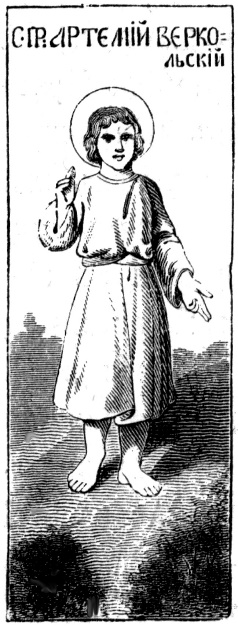
Engraving

Праведный Артемий родился в Двинском округе, на р. Пинеге, в селении Верколе, в 1532 году. Родители его, Козма и Аполлинария, воспитывали его в страхе Божием и с пяти лет он уже более, чем можно было ожидать от его возраста, чуждался всего обыкновенного в мирской, грешной жизни, – был тих, кроток, Богобоязлив, но к родителям был послушен; он делил с ними занятия земледелия, сколько мог, – по силам. Раз на 13 году был он вместе с отцом в поле. Неожиданно нашла туча, разразился гром, и Артемий пал мёртвый, хотя и не коснулась его молния, как это дознано после. Тело его положили в пустом месте, в сосновом лесу, не погребённым и вдали от церкви: мнение простоты сочло его состоящим под судом Божиим. Праведный отрок скончался 23 июня (1545 г.). Прошло 33 года после того. Клирик села Агафоник шёл лесом, мимо того места, где лежало тело, всеми забытое. Он увидел над тем местом свет, подошёл и нашёл нетленное тело отрока. По разнесшейся о том молве собрались крестьяне, перенесли тело и положили его в паперти церкви свят. Николая. Бог прославил мощи праведника чудесами. В тот год свирепствовала в Двинском округе злокачественная лихорадка, и очень многие умирали от неё, особенно дети. Сын селянина Каллиника сильно печалил отца своего болезнью: отец молился, потом пошёл – взял лоскут бересты, покрывавший нетленного Артемия, положил его на грудь умиравшего сына, и больной стал здоров. Обрадованный отец рассказал о том в селении и начали притекать с мольбами к праведному отроку. При перенесении мощей из паперти в придел, женщина, имевшая расслабленного младенца, приложила его к гробу блаженного, и младенческая рука в туже минуту окрепла. Крестьянин и крестьянка, страдавшие глазами, получили здоровье и ясное зрение от прикосновения к священной раке. Многие другие получали исцеления от разных болезней. – Новгородский митроп. Макарий свидетельствовал мощи праведника в 1610 г. и благословил перенести их в сам храм, в д. свят. Николая. Тогда же сочинена и служба блаженному Артемию. Праведный продолжал благотворить. Житель Холмогор Иларион доходил до отчаяния от скорби о потере зрения и хотел наложить на себя руки. В самый день памяти свят. Николая явился страждущему отрок с посохом в левой руке и с крестом в правой и, осеняя его крестом, сказал: «встань, исцеляет тебя Христос рукой раба Своего Артемия; иди в Верколу, приложись к его гробу и расскажи о всём священнику и крестьянам». Иларион исполнил приказание и прозрел. – Это было в 1623 г. Сын Мезенского воеводы Афанасия Пашкова также получил исцеление от Артемия и – признательный отец построил близ храма святителева храм в честь св. мученика, соименного праведному Артемию. Спустя 30 лет оба храма сгорели. – При царе Алексее Мих. дозволено было построить монастырь на том месте, где были обретены мощи, и в 1649 г. св. мощи перенесены были в обитель. По случаю пожаров три раза выносили их и из храма обители. В 1793 г. построен был каменный храм и освящён в честь праведного Артемия Веркольского. Память праведника чтится 23 июня и 20 октября230.

The Righteous Artemius was born in the Dvina district, on the Pinega River, in the village of Verkola, in the year 1532. His parents, Cosmas and Apollinaria, raised him in the fear of God, and from the age of five he already, more than could be expected of his age, shunned everything ordinary in worldly, sinful life—he was quiet, meek, God-fearing, but obedient to his parents; he shared with them the labors of agriculture, as much as he could, according to his strength. Once, in his thirteenth year, he was with his father in the field. Unexpectedly a cloud came, thunder crashed, and Artemius fell dead, although lightning had not touched him, as was later ascertained. His body was placed in a deserted spot, in a pine forest, unburied and far from the church: the opinion of simple folk considered him to be under the judgment of God. The righteous youth reposed on June 23 (1545). Thirty-three years passed after that. A cleric of the village, Agathonicus, was walking through the forest, past the place where the body lay, forgotten by all. He saw a light over that place, approached, and found the incorrupt body of the youth. Upon the rumor that spread about this, the peasants gathered, carried the body, and placed it in the porch of the church of St. Nicholas. God glorified the relics of the righteous one with miracles. That year a malignant fever raged in the Dvina district, and very many died from it, especially children. The son of the peasant Callinicus greatly grieved his father by his illness: the father prayed, then went—took a scrap of birch bark that covered the incorrupt Artemius, placed it on the chest of his dying son, and the sick one became well. The overjoyed father told of this in the village, and they began to flock with prayers to the righteous youth. Upon the translation of the relics from the porch into a side-chapel, a woman who had a paralyzed infant applied him to the coffin of the blessed one, and the infant's hand was strengthened that same moment. A peasant man and woman who suffered from eye ailments received health and clear vision from touching the sacred reliquary. Many others received healings from various illnesses. — Metropolitan Macarius of Novgorod attested to the relics of the righteous one in 1610 and blessed their translation into the church itself, into the church of St. Nicholas. At that time a service was also composed for the blessed Artemius. The righteous one continued to bestow blessings. A resident of Kholmogory, Hilarion, was driven to despair by grief over the loss of his sight and wanted to lay hands on himself. On the very day of the memory of St. Nicholas, a youth appeared to the sufferer with a staff in his left hand and a cross in his right, and, making the sign of the cross over him, said: "Arise, Christ heals you through the hand of His servant Artemius; go to Verkola, venerate his coffin, and tell everything to the priest and the peasants." Hilarion fulfilled the command and received his sight. — This was in 1623. The son of the Mezen voivode, Athanasius Pashkov, also received healing from Artemius, and the grateful father built near the Hierarch's church a church in honor of the holy martyr, namesake of the righteous Artemius. Thirty years later both churches burned down. — Under Tsar Alexis Mikhailovich, permission was given to build a monastery on the spot where the relics were found, and in 1649 the holy relics were translated into the monastery. On the occasion of fires, they were carried out from the monastery church three times. In 1793 a stone church was built and consecrated in honor of the Righteous Artemius of Verkola. The memory of the righteous one is honored on June 23 and October 20230.
E2.0AI draft

† Память о преп. Иосифе Заоникиевском

† Commemoration of the Venerable Joseph of Zaonikiev

E3.TAI draft
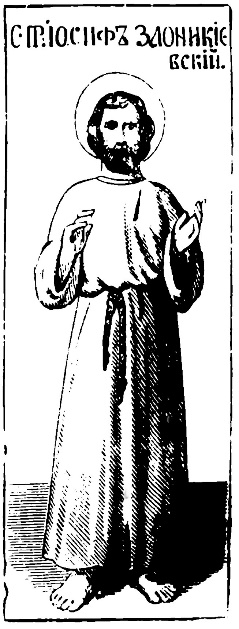
Engraving

За 16 вёрст от Вологды и ближе к ней был некогда тёмный лес; в 2 вер. от нынешней Заоникиевой пустыни по этому лесу шла из Москвы большая Белозерская дорога. В этом лесу имела притон шайка разбойника Аники, грабившего и убивавшего людей на Белозерской дороге; знаменитый разбойник оставил своё имя лесу, где и ныне показывают могилу его231. В этом лесу июня 23-го 1588 г. явилась благочестивому Илариону Владимирская икона Божией Матери, исцелившая его от давней болезни. Благодарный Иларион принял иночество с именем Иосифа и на месте явления иконы основал обитель с храмом. Так место грабежей и разбоев Богоматерь освятила Своим явлением с тем, чтобы населилось оно певцами славы Божией, день и, ночь воздыхающими о грехах и небесной отчизне. Самым искренним певцом был пр. Иосиф. Управление обителью предоставил он другому, а сам, прикрывая свои подвиги юродством для изнурения плоти, носил за пазухой каменья или песок и землю; в жестокие морозы ходил босиком; целые ночи стоял в своей часовне на молитве; под одеждой его была власяница столько колючая, что из-под неё струилась кровь. Многие смеялись над его странным видом, но он переносил всё незлобиво. Так прожил он 25 лет. Накануне кончины своей, приобщившись Св. Таин, блаженный исполнился духовной радостью и вспоминал о благодеяниях Божиих, явленных ему, в том числе о чудесном явлении иконы и также исцелении своём. На утро сказал одному из братии: «скажи о. игумену Феодосию, чтобы положил грешное тело моё в часовне, которую сам я построил». И в том же часе предал дух свой Господу. Мощи пр. Иосифа, почившего в 1612 г., покоятся в Заоникиевой пустыни232.

Sixteen versts from Vologda and closer to it there was once a dark forest; two versts from the present-day Zaonikiev Hermitage, through this forest ran the great Belozersk road from Moscow. In this forest a band of the robber Anika had its lair, plundering and killing people on the Belozersk road; the notorious robber left his name to the forest, where his grave is still shown231. In this forest, on June 23, 1588, the Vladimir Icon of the Mother of God appeared to the pious Hilarion, healing him of a long-standing illness. The grateful Hilarion received monastic tonsure with the name Joseph and founded a monastery with a church on the site of the icon's appearance. Thus the Mother of God sanctified a place of thefts and robberies by Her appearance, so that it might be populated with singers of the glory of God, sighing day and night over sins and the heavenly fatherland. The most sincere singer was the Venerable Joseph. He entrusted the governance of the monastery to another, while he himself, concealing his ascetic feats under foolishness for the mortification of the flesh, carried stones or sand and earth in his bosom; in severe frosts he walked barefoot; he stood whole nights in his chapel at prayer; under his clothing he wore a hairshirt so prickly that blood streamed from under it. Many laughed at his strange appearance, but he bore everything without malice. Thus he lived for 25 years. On the eve of his repose, having partaken of the Holy Mysteries, the blessed one was filled with spiritual joy and recalled the blessings of God shown to him, including the miraculous appearance of the icon and also his own healing. In the morning he said to one of the brethren: "Tell Father Abbot Theodosius to place my sinful body in the chapel which I myself built." And in that same hour he gave up his spirit to the Lord. The relics of the Venerable Joseph, who reposed in 1612, rest in the Zaonikiev Hermitage232.

E3.0AI draft

Праздник в честь Владимирской иконы Богоматери

Feast in honor of the Vladimir Icon of the Mother of God

E4.TAI draft

Во второй раз празднование иконы Божией Матери Владимирской Прав. Церковь совершает в благодарение за избавление отечества, невидимым заступлением Богородицы, от Ордынского царя Ахмата, в 1480 году, при великом князе Иоанне III Васильевиче. Ахмат, царь золотой Орды, шёл ограбить и разорить Москву и достиг уже реки Угры, которую православные называли поясом Богоматери, охраняющим Московские владения. Москва страшилась; мать великого князя с его сыном для безопасности уехала в Ростов. Князь, укрепляемый советами, молитвой и благословениями святителей, подвизался за веру и отечество против врагов.

For the second time, the celebration of the Vladimir Icon of the Mother of God is performed by the Orthodox Church in thanksgiving for the deliverance of the fatherland, through the invisible intercession of the Theotokos, from the Horde Tsar Akhmat, in 1480, under Grand Prince John III Vasilievich. Akhmat, the Tsar of the Golden Horde, came to plunder and devastate Moscow and had already reached the Ugra River, which the Orthodox called the girdle of the Mother of God, guarding the Moscow domains. Moscow was afraid; the mother of the Grand Prince, together with his son, departed for safety to Rostov. The Prince, strengthened by counsels, prayer, and the blessings of the Hierarchs, struggled for the faith and the fatherland against the enemies.

E4.0AI draft

Между тем, по предстательству Пресв. Богородицы, совершилось дивное избавление отечества. Великий князь повелел отступить своим войскам от Угры. На татар напал страх, и они, думая, что Русские устроили для них засады, начали отступать, сперва тихо, медленно, а ночью побежали, гонимые одним страхом. Это избавление от Ахмата было совершенным свержением с России ига татарского. В благодарность за окончательное освобождение Москвы и отечества от поносного ига Татар, заступлением Божией Матери, установлено в 1480 году 23-го июня, подобно первому, празднество сретению Владимирские иконы Богоматери, с крестным ходом в Сретенский монастырь.

Meanwhile, through the intercession of the Most Holy Theotokos, a wondrous deliverance of the fatherland was accomplished. The Grand Prince commanded his troops to withdraw from the Ugra. Fear fell upon the Tatars, and they, thinking that the Russians had set ambushes for them, began to retreat, at first slowly, gradually, and at night they fled, driven by fear alone. This deliverance from Akhmat was the complete casting off of the Tatar yoke from Russia. In gratitude for the final liberation of Moscow and the fatherland from the shameful yoke of the Tatars, through the intercession of the Mother of God, it was established in 1480, on June 23, like the first, a feast of the Meeting of the Vladimir Icon of the Mother of God, with a procession of the cross to the Sretensky Monastery.

E4.1AI draft

Примечания Notes

Ркп. житие и чудеса праведного Артемия со службой ему, составленные при м. Макарии, Синод. ркп. XVII в. № 868 и 590. Служба ему у Толстого 3, № 58 Пролог 20 октября.

Manuscript life and miracles of the Righteous Artemius with a service to him, composed under Metropolitan Macarius, Synodal manuscripts of the 17th century, Nos. 868 and 590. Service to him in Tolstoy 3, No. 58, Prologue, October 20.

N230AI draft

Стих об Анике с повестию изд. в 1 т. летоп. Рус. литт. 1859 г.

The verse about Anika with the narrative published in vol. 1 of the Chronicle of Russian Literature, 1859.

N231AI draft

Слава Богоматери III. 1, 63. Ист. иер. IV, 134. 135. Вологод. епарх. ведом. 1864 г., стр. 12. 74, 1865 г., стр. 410–415. 451–454. 462. В книге чудес: «оный Преосвященный (Павел, 1717–1725 г.), ревнуя по Господе Вседержителе, обретающегося во граде Вологде. Прежде отца Галактиона (сент. 24) в Духове монастыре службу, стихиры и канон сладкопесниве вчинити повеле и молебная на гробе (Преп. Иосиф) пети благослови».

Glory of the Mother of God III. 1, 63. History of the Hierarchy IV, 134, 135. Vologda Diocesan Gazette, 1864, pp. 12, 74; 1865, pp. 410–415, 451–454, 462. In the book of miracles: "the aforementioned Right Reverend (Paul, 1717–1725), zealously for the Lord Almighty, who is in the city of Vologda. Before the service to Father Galaktion (September 24) in the Spirit Monastery, he commanded that stichera and a canon be sweetly composed, and blessed that molebens be sung at the grave (of the Venerable Joseph)."

N232AI draft