О жизни св. Мефодия сохранилось мало сведений. Он больше известен своими красноречивыми сочинениями, которые свидетельствуют вместе с тем и об его обширном образовании.
Few details have been preserved about the life of St. Methodius. He is better known for his eloquent writings, which also testify to his extensive education.
«Мефодий, – пишет блаж. Иероним, – с блистательным и ясным красноречием написал несколько книг против Порфирия, также: «Пир десяти дев», превосходное сочинение против Оригена о воскресении, против него же о Пифониссе и свободном произволе, объяснение на книгу Бытия и Песнь Песней и множество других сочинений, которые читаются повсюду».
"Methodius," writes Blessed Jerome, "with brilliant and clear eloquence wrote several books against Porphyry, also: 'The Banquet of the Ten Virgins,' an excellent work against Origen on the Resurrection, against him also on the Pythoness and Free Will, an explanation of the Book of Genesis and the Song of Songs, and many other works which are read everywhere."
В изложении учения о свободе Мефодий говорит: – «если человек был сотворён чем-то, состоящим из элементов, бесчувственно служащих (Творцу) Богу, то не получал бы награды, достойной произволения, а был бы орудием виновника своего, не стоящим и наказания за зло. Человек не узнавал бы и лучшего, а знал бы только бытие. Потому Бог, желая почтить человека и соделагь способным узнавать лучшее, дал ему власть, но которой он может делать, что хочет, и его способность наклоняется к лучшему не с тем, чтобы опять отнять свободу, но как отец убеждает сына учиться наукам... Человек создан свободным: это не значит, что какое-либо зло уже существовало, для избрания которого будто бы получил он способность; но ему дана способность, которой он может повиноваться или не повиноваться Богу: в этом состоит произвол свободы. Созданный человек получает от Бога заповедь, и зло начинается с того, что уже не повинуется он Божественной заповеди; вот в чём одном и состоит зло – в неповиновении, которое человек сам начал» ...
In setting forth the teaching on freedom, Methodius says: "If man had been created as something composed of elements, serving the (Creator) God insensibly, he would receive no reward worthy of free will, but would be an instrument of his Maker, deserving no punishment for evil. Man would not even know what is better, but would know only existence. Therefore God, desiring to honor man and make him capable of knowing what is better, gave him authority by which he can do what he wills, and his capacity inclines toward the better, not in order to take away freedom again, but as a father persuades his son to learn the sciences... Man was created free: this does not mean that any evil already existed for the choosing of which he supposedly received the capacity; but he was given a capacity by which he can obey or disobey God: in this consists the free will of freedom. Created man receives a commandment from God, and evil begins from the moment he no longer obeys the Divine commandment; herein alone consists evil—in disobedience, which man himself began"...
На вопрос: для чего создан мир? – Мефодий отвечает: – «мы не в состоянии знать намерения и подобного нам человека, тем более тайны Божии. Но кое-что можем и знать о целях мира. Созданием мира Бог открыл славу Свою, и человек наслаждается созерцанием этой славы. Потому человек обязан быть провозвестником славы Божией» ...
To the question: why was the world created?—Methodius answers: "We are unable to know the intentions even of a man like ourselves, much less the mysteries of God. But we can know something of the purposes of the world. By the creation of the world God revealed His glory, and man enjoys the contemplation of this glory. Therefore man is obliged to be a proclaimer of the glory of God"...
В сочинении же о свободной воле, в обличение недовольных своей участью, св. Мефодий говорит: – «роптать за недостаток благ земных – не умно: человек должен быть выше всего земного; Бог сотворил человека для деятельности, а не для наслаждений, расслабляющих душу и тело. Совершенное равенство невозможно, разнообразие – принадлежность совершенства; бедность допускается или как наказание за грехи, или как предостережение от грехов». В конце этого сочинения Мефодий увещевает богатых помогать бедным.
In the work on free will, in rebuke of those discontented with their lot, St. Methodius says: "To murmur for the lack of earthly goods is unwise: man must be above all earthly things; God created man for activity, not for pleasures which weaken soul and body. Perfect equality is impossible; diversity is a mark of perfection; poverty is permitted either as a punishment for sins or as a warning against sins." At the end of this work Methodius exhorts the rich to help the poor.
Св. Анастасий Синаит называет Мефодия «богатым мудростью». Св. Епифаний отзывается о нём, как о «поборнике истины ревностном»; это указывает на сопряжённую со скорбями борьбу, венцом которой, по указанию древних повествователей о Мефодии, был – мученический подвиг; местом его – Халкида восточная, а временем, по вероятности – 310–311 год.
St. Anastasius of Sinai calls Methodius "rich in wisdom." St. Epiphanius speaks of him as a "zealous champion of the truth"; this points to a struggle accompanied by sorrows, the crown of which, according to the indication of ancient narrators about Methodius, was the martyr's feat; its place was Chalcis in the East, and the time, in all probability, the year 310–311.
Аристоклий был пресвитером церкви города Тамаса, на острове Кипре. Во время гонения при Диоклитиане и Максимиане, он убоялся пыток и скрывался в пещере горы Олимпа (верстах в 20 от Тамаса). Но однажды во время молитвы небесный свет осиял его и небесный голос повелел ему идти в Саламин, главный город острова, и открыто исповедать имя Христово. Укреплённый Божественным повелением, Аристоклий отложил страх и пошёл в путь. Идя дубравой, встретил храм св. Ап. Варнавы и при нём двух клириков, Димитриана и Афанасия, которые, узнав об откровении, пожелали идти с ним на смерть за Христа. Пришедши в Саламин, они стали славить имя Христово и обличать идолослужение. Язычники представили их правителю, а этот, испытав твёрдость их в вере, Аристоклию приказал отсечь голову, а Димитриана и Афанасия сжечь. Мученическая их кончина последовала в 306 году.
Aristocles was a presbyter of the church of the city of Tamassus, on the island of Cyprus. During the persecution under Diocletian and Maximian, he feared the tortures and hid in a cave of Mount Olympus (about 20 versts from Tamassus). But once during prayer, a heavenly light shone upon him and a heavenly voice commanded him to go to Salamis, the chief city of the island, and openly confess the name of Christ. Strengthened by the Divine command, Aristocles put aside fear and set out on the journey. Walking through a grove, he came upon the temple of St. Apostle Barnabas and with it two clerics, Demetrian and Athanasius, who, learning of the revelation, wished to go with him to death for Christ. Having come to Salamis, they began to glorify the name of Christ and to denounce idolatry. The pagans brought them before the governor, and he, having tested their steadfastness in the faith, ordered Aristocles to be beheaded, and Demetrian and Athanasius to be burned. Their martyrdom occurred in the year 306.
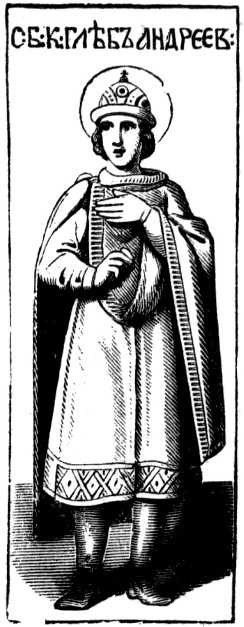
Благоверный кн. Глеб, сын благов. кн. Андрея Боголюбского, родился во Владимире в 1155 г. Св. Глеб – живой пример тому, как много значит добрая жизнь родителей для судьбы детей. Жизнь кн. Андрея во Владимире посвящена была преимущественно делам благочестия, – строению храмов и монастырей, делам благотворительности и молитвам. И вот под влиянием примера и наставлений св. родителя образовался св. сын. Боговдохновенный мудрец говорит: «приучай юношу при начале пути его; не отступит он от того и тогда, как состарится» (Прит.22:6). Жизнь кн. Глеба продолжалась недолго: он умер 20 лет. Но начиная с первого раскрытия самодеятельности, жизнь его посвящалась благочестью, а не греху: страх Божий располагал мыслями, чувствами, желаниями и поступками его; молитва низводила на его благодать небесную, тушившую страсти юности. Чистый, непорочный князь блаженно почил 20 июня 1175 г. Чистое тело его положено было во Владимирском соборе. И дух и тело его, как неповреждённые грехом, остались целы, – не боятся никаких неприязненных приражений. По надписи на гробнице князя, во время опустошения соборного храма при Батые (1238 г.) «гроб св. благов. кн. Глеба от пожара никакоже повредися, яко же и самем сопротивным ратником о сем дивитися». Другое чудо, из известных ныне, совершилось в 1410 г. во время грабежа татар в соборе. Один из этих питомцев алкорана, увидя гробницу кн. Глеба и думая найти в ней те сокровища, которых не открывал ключарь Патрикий, открыл гробницу; но из неё вырвалось пламя и татары в ужасе выбежали из храма. В 1608 г. ляхи делали два, три раза нападения на Владимир, почти беззащитный; но взять не могли. Во время этой осады, в самую полночь, сторожа собора заметили в соборе какое-то освещение и дали знать о том пономарю Герасиму. Он, отворив дверь, увидал свет, а у гробницы князя кто-то сидит и ему испуганному говорит: «не бойся, я не привидение; – Господь не предаст сего города в руки врагов: мы храним его и молим за него Господа и Пречистую Матерь Его; иди и скажи протоиерею и причту, что сказал я тебе; я лежу в этом гробе». Герасим от страха едва пришёл в себя и рассказал о всём протоиерею и всем настоятелям обителей. В эту же ночь ляхи удалились от Владимира, гонимые страхом. Мощи благов. князя открыты 30 ноября 1702 г. Тогда же написана служба ему, на 20 июня, и в честь его устроен в соборе придел. В 1818 г. устроена прекрасная серебряная рака для мощей его. Мощи святого, юного князя отличаются изумительною живостью, как ничьи другие: – рука его свободно поднимается, гнётся, наклоняется, совершенно как у живого228.
The Right-believing Prince Gleb, son of the Right-believing Prince Andrew Bogolyubsky, was born in Vladimir in the year 1155. St. Gleb is a living example of how much the good life of parents means for the fate of children. The life of Prince Andrew in Vladimir was devoted chiefly to works of piety—the building of churches and monasteries, works of charity, and prayers. And so, under the influence of the example and instructions of his holy parent, a holy son was formed. The God-inspired sage says: "Train up a youth in the beginning of his way; he will not depart from it even when he is old" (Prov. 22:6). The life of Prince Gleb was not long: he died at the age of 20. But from the first unfolding of his self-activity, his life was devoted to piety, not to sin: the fear of God disposed his thoughts, feelings, desires, and actions; prayer brought down upon him heavenly grace, which quenched the passions of youth. The pure, blameless prince reposed blessedly on June 20, 1175. His pure body was placed in the Vladimir cathedral. Both his spirit and his body, as undamaged by sin, remained intact—they fear no hostile assaults. According to the inscription on the prince's tomb, during the devastation of the cathedral church under Batu (1238), "the tomb of St. Right-believing Prince Gleb was in no way damaged by the fire, so that even the enemy warriors themselves marveled at this." Another miracle, among those known today, occurred in 1410 during the plundering of the cathedral by the Tatars. One of these nurslings of the Koran, seeing the tomb of Prince Gleb and thinking to find in it those treasures which the sacristan Patricius had not revealed, opened the tomb; but a flame burst forth from it, and the Tatars fled from the church in terror. In 1608, the Poles made two or three attacks on Vladimir, almost defenseless; but they could not take it. During this siege, at midnight, the watchmen of the cathedral noticed some illumination in the cathedral and informed the sexton Gerasim of it. He, opening the door, saw a light, and someone sitting at the prince's tomb said to him, frightened: "Fear not, I am not a specter;—the Lord will not deliver this city into the hands of enemies: we guard it and pray for it to the Lord and His Most Pure Mother; go and tell the protopriest and the clergy what I have said to you; I lie in this tomb." Gerasim barely came to himself from fear and told everything to the protopriest and all the abbots of the monasteries. That same night the Poles withdrew from Vladimir, driven by fear. The relics of the Right-believing prince were uncovered on November 30, 1702. At that time a service was written for him, for June 20, and a side-chapel was built in his honor in the cathedral. In 1818 a beautiful silver reliquary was made for his relics. The relics of the holy, youthful prince are distinguished by an astonishing lifelikeness, like no others:—his arm freely rises, bends, and inclines, completely as if alive228.
«Отцы, не огорчайте детей ваших, но воспитывайте их в учении и наставлении Господнем» (Еф.6:4). Жезл и учение дают мудрость, а чадо, оставленное на свою волю, приносит бесчестие своей матери. Научи сына своего, и он утешит тебя и доставит радость душе твоей» (Прит.29:15,18).
"Fathers, do not provoke your children to wrath, but bring them up in the discipline and admonition of the Lord" (Eph. 6:4). "The rod and reproof give wisdom, but a child left to himself brings shame to his mother. Teach your son, and he will comfort you and give delight to your soul" (Prov. 29:15, 17).
К изложенному житию св. князя Глеба, взятому из творений преосвященного Филарета Черниговского, считаем не лишним прибавить описание случая из жизни архимандрита Антония.
To the foregoing life of St. Prince Gleb, taken from the works of His Grace Philaret of Chernigov, we consider it not superfluous to add a description of an incident from the life of Archimandrite Anthony.
В «Православном Обозрении» за 1879 год была помещена биография наместника Троицкой Сергиевой лавры архимандрита Антония, в коей между прочим было упомянуто, что отец наместник, живши ещё в миру, сомневался в нетлении св. мощей и был убеждён в их истине мощами св. князя Глеба, почивающего во Владимирском соборе. Случай этот в биографии упомянут лишь мимоходом; но я слышал о нём подробно от самого покойного отца наместника лично, и рассказ его кажется мне так интересен, что я нахожу не лишним его обнародовать. Передам его словами самого отца наместника, которые я вскоре же после беседы с ним записал.
In the "Orthodox Review" for the year 1879, a biography of the vicar of the Holy Trinity–St. Sergius Lavra, Archimandrite Anthony, was published, in which, among other things, it was mentioned that Father Vicar, while still living in the world, doubted the incorruption of the holy relics and was convinced of their truth by the relics of St. Prince Gleb, reposing in the Vladimir cathedral. This incident was mentioned only in passing in the biography; but I heard about it in detail from the late Father Vicar himself personally, and his account seems to me so interesting that I find it not superfluous to make it public. I will convey it in the words of Father Vicar himself, which I wrote down soon after my conversation with him.
«Бывши ещё в миру», так рассказывал отец наместник, «жил я в имении князя Грузинского, селе Лыскове, Нижегородской губернии. Имея небольшое понятие в медицине, я занимался там лечением домашних князя и окрестных жителей. В числе моих пациентов были и раскольники, которых в нашем селе было очень много, по большей части богатые люди. Однажды, когда я был у одного из них, разговор наш коснулся разностей их обрядов с нашей Церковью. Раскольник, разумеется, оправдывал свои обряды и обвинял нашу Церковь в отступлении от православия и в принятии новшины; а я, как умел, защищал нашу Церковь и в доказательство её православия указывал ему на множество нетленных мощей, находящихся в нашей Церкви.
"While still in the world," so Father Vicar related, "I lived on the estate of Prince Gruzinsky, in the village of Lyskovo, Nizhny Novgorod province. Having some slight knowledge of medicine, I occupied myself there with treating the household of the prince and the surrounding inhabitants. Among my patients were also schismatics, of whom there were very many in our village, for the most part wealthy people. Once, when I was at the home of one of them, our conversation touched upon the differences of their rites from those of our Church. The schismatic, of course, justified his rites and accused our Church of departing from Orthodoxy and of accepting innovations; and I, as best I could, defended our Church and, as proof of its Orthodoxy, pointed out to him the multitude of incorrupt relics found in our Church.
« – Эх! Андрей Гаврилович! ответил мне раскольник, – да видали ли вы сами нетленные мощи? Поверьте мне, это всё монахи для доходов выдумали; ведь ни одних нет мощей и в вашей Церкви, а так только поставят гробницу, да накроют пеленой, а то пожалуй и положат что-нибудь наподобие мощей, да и говорят, что тут нетленные мощи! Ну, вестимо, простой народ верит, а монахи да попы доходы обирают. – Диавольские эти слова раскольника произвели на меня страшное впечатление; враг тотчас вложил мне мысль, что и в самом деле не правду ли он говорит. Я продолжал защищать Церковь; но в душе моей уже родилось сомнение. Когда пришёл я домой, мысль эта не оставляла меня и враг продолжал нашёптывать мне, что раскольник говорит правду. В самом деле, я никогда не видывал мощей и не имел хорошо понятия, что такое мощи; слыхал, что мощи – тела святых, не предавшиеся тлению; но как они почивают и в каком виде – я решительно не имел понятия. Теперь, после разговора с раскольником, я положил за непременное намерение побывать там, где есть какие-нибудь мощи, чтобы самому лично удостовериться в их нетлении. Случай к этому представился мне очень скоро.
“Ah, Andrei Gavrilovich!” the schismatic answered me, “but have you yourself seen incorrupt relics? Believe me, it is all invented by monks for profit; there are no relics at all in your Church—they simply set up a tomb, cover it with a shroud, or perhaps even put something resembling relics, and then say that incorrupt relics lie there! Well, of course, the common people believe it, while the monks and priests collect the income.” These devilish words of the schismatic made a terrible impression on me; the enemy immediately put the thought into me that perhaps he was indeed speaking the truth. I continued to defend the Church, but doubt had already been born in my soul. When I came home, this thought did not leave me, and the enemy kept whispering to me that the schismatic was telling the truth. In fact, I had never seen relics and had no clear understanding of what relics are; I had heard that relics are the bodies of saints that have not yielded to corruption, but how they repose and in what form—I had absolutely no idea. Now, after the conversation with the schismatic, I firmly resolved to visit a place where there are some relics, so that I might personally verify their incorruption. An opportunity for this presented itself very soon.
«Раз зимой случилось проезжать нашим селом генералу Безобразову с женой, сыном, дочерью и гувернёром. На дороге генерал почувствовал себя нездоровым и приехал к нам в село уже совсем больным. Остановившись на постоялом дворе, он спросил, нет ли в селе доктора? Ему рекомендовали меня. Пришедши к ним, я нашёл, что у больного лихорадка, прописал ему микстуры, посоветовал хорошенько пропотеть и объявил, что раньше трёх дней им ехать нельзя. В продолжение этих дней я почти постоянно бывал у них, не потому, чтобы болезнь того требовала, а так, чтобы провести время. Они рады были, что есть с кем промолвить слово в их невольном заточении, а я рад был, что такое образованное семейство заехало в наше уединение. В эти три дня мы так коротко познакомились, что как будто уже три года были знакомы. В разговоре я спросил их: откуда и куда они едут? Мне отвечали, что они едут из своего поместья в Муром и Владимир на поклонение св. мощам, и вместе с ответом предложили мне, не желаю ли я им сопутствовать, обещая на возвратном пути завезти меня домой. У них, как нарочно, для меня было и место. Генерал с семейством ехал в возке, а гувернёр в санях ехал один: с ним-то я и мог поместиться. Предложение это я принял с восторгом, испросив на это позволение князя. А между тем и генералу стало лучше, и мы ни мало не мешкая отправились. Приехавши в г. Арзамас уже вечером, мы остановились ночевать на постоялом дворе, который один только и был в городе и в котором не оказалось ни одной тёплой комнаты. Но делать было нечего, мы поместились и в холодной. Хозяйка дворничиха тотчас же затопила печь, а мы, и в ожидании тепла, в шубах согревались вокруг самовара. За чаем у нас зашёл разговор о том, нет ли в этом городе каких достопримечательностей для нашего обзора?
Once in winter, it happened that General Bezobrazov was passing through our village with his wife, son, daughter, and a tutor. On the road, the general felt unwell and arrived in our village already quite ill. Stopping at an inn, he asked whether there was a doctor in the village. They recommended me. Coming to them, I found that the patient had a fever, prescribed him some mixtures, advised him to sweat thoroughly, and declared that he could not travel for at least three days. During these days I visited them almost constantly, not because the illness required it, but simply to pass the time. They were glad to have someone to exchange a word with in their involuntary confinement, and I was glad that such an educated family had stopped in our solitude. In those three days we became so closely acquainted that it seemed we had known each other for three years. In conversation I asked them: where were they coming from and where were they going? They replied that they were traveling from their estate to Murom and Vladimir to venerate the holy relics, and together with the answer they proposed that I accompany them, promising to bring me back home on the return journey. As if on purpose, they had a place for me. The general and his family traveled in a carriage, while the tutor rode alone in a sleigh; with him I could sit. I accepted this proposal with delight, having asked the prince’s permission. Meanwhile, the general felt better, and we set off without any delay. Arriving in the city of Arzamas already in the evening, we stopped for the night at an inn, the only one in the city, which had not a single warm room. But there was nothing to be done; we settled into a cold one. The innkeeper’s wife immediately lit the stove, and we, waiting for warmth, warmed ourselves in our fur coats around the samovar. Over tea, a conversation arose about whether there were any sights in this city for us to see.
– А вот здесь есть, сказала генеральша, – в Алексеевской общине, одна юродивая Елена Афанасьевна, которая предсказывает будущее. Завтра пойдёмте к обедне в общину, а потом зайдёмте к ней. Только смотрите, прибавила она шутя, – говорят – она дерётся с теми, которые живут худо.
“Well, there is something here,” said the general’s wife, “in the Alexeevskaya Convent, a certain Fool-for-Christ, Elena Afanasyevna, who predicts the future. Tomorrow let us go to the convent for the Liturgy, and then we will visit her. Only mind,” she added jokingly, “they say she beats those who live badly.”
На предложение генеральши последовало общее согласие и положили завтра непременно побывать у Елены Афанасьевны. После ужина мы с гувернёром ушли ночевать в соседнюю комнату и я составил себе такой план: думаю, ежели генеральша говорит правду, что Елена Афанасьевна в некоторых случаях дерётся, то я со всеми вместе не пойду ни за что, а встану пораньше, так чтобы никто не видал, потихоньку уйду к утрени в общину, а после один и зайду к юродивой. Как задумал, так и сделал. После утрени прихожу в келью Елены Афанасьевны; в передней меня встретила её келейница; я спросил её: можно ли видеть Елену Афанасьевну?
The general’s wife’s proposal was met with general agreement, and it was decided that tomorrow we would certainly visit Elena Afanasyevna. After supper, the tutor and I went to sleep in the adjoining room, and I formed a plan: I thought, if the general’s wife is telling the truth that Elena Afanasyevna sometimes beats people, then I will not go with everyone else for anything; instead, I will get up early, so that no one sees me, quietly go to Matins at the convent, and afterward visit the Fool-for-Christ alone. As I planned, so I did. After Matins, I came to Elena Afanasyevna’s cell; in the anteroom, her cell-attendant met me; I asked her: may I see Elena Afanasyevna?
Я вошёл в довольно опрятно прибранную комнату; у стены стоял стол, на котором расставлены были тарелки с пряниками, орехами и тому подобными сластями; в том числе стояла тарелка со ржаными сухарями; среди комнаты стояла женщина лет пятидесяти с выразительными чертами лица, одетая в тёмном платье, голубой шали и чепце: это и была Елена Афанасьевна. Помня предостережение генеральши, я побоялся близко подойти к ней и раскланялся с нею, почти не отходя от двери.
I entered a fairly tidy room; against the wall stood a table on which were arranged plates with gingerbread, nuts, and similar sweets; among them was a plate with rye rusks. In the middle of the room stood a woman of about fifty with expressive features, dressed in a dark dress, a blue shawl, and a cap: this was Elena Afanasyevna. Remembering the general’s wife’s warning, I was afraid to approach her closely and bowed to her, almost without moving from the door.
– Я проезжающий вашим городом, отвечал я, – а об вас я так много слышал хорошего, что за обязанность вменил себе зайти к вам, чтобы засвидетельствовать моё почтение и попросить ваших святых молитв.
“I am a traveler passing through your city,” I replied, “and I have heard so much good about you that I considered it my duty to call on you to pay my respects and ask for your holy prayers.”
Я сделал два шага вперёд, а она подошла ко мне и с любопытством стала оглядывать меня с головы до ног сзади и спереди, как-бы какую диковинку. Я уже подумал, что она не хочет ли драться, и в душе стал раскаиваться, что пришёл к ней; но она, оглядев меня, только спросила, что это на меня надето?
I took two steps forward, and she came up to me and with curiosity began to examine me from head to toe, from behind and from the front, as if I were some curiosity. I already thought that she wanted to beat me, and in my soul I began to regret that I had come to her; but she, having looked me over, only asked what it was that I was wearing.
– Как это скверно! как это скверно! покачивая головою, говорила Елена Афанасьевна. Ни на что не похоже – сзади какой-то хвост, спереди вырезано, сзади опять разрезано! Как это скверно! опять повторила она. А это что такое у вас? спросила она, указывая на мою голову.
“How ugly! How ugly!” said Elena Afanasyevna, shaking her head. “It looks like nothing—a sort of tail at the back, cut out in front, slit again at the back! How ugly!” she repeated again. “And what is that on your head?” she asked, pointing to my head.
Я тогда носил причёску по тогдашней моде, т-е. у меня спереди волоса были взъерошены и стояли как петушиный гребень. Она подошла ко мне и взялась за мои волосы. Ну, думаю себе, наконец дождался потасовки; но она, вместо того, только пробрала мне спереди по средине пробор и старалась волоса мои заложить мне за уши.
At that time I wore my hair in the fashion of the day, that is, my hair in front was tousled and stood up like a rooster’s comb. She came up to me and took hold of my hair. Well, I thought to myself, I have finally waited for a thrashing; but instead, she only parted my hair down the middle in front and tried to tuck my hair behind my ears.
– Вот вам так лучше идёт, сказала она мне. – Как вам было бы хорошо эдакое длинное платье до земли, волоса бы длинные, как это было бы вам прекрасно!
“That suits you much better,” she said to me. “How good it would be for you to have a long robe down to the ground, and long hair—how splendid that would be for you!”
Мысль, не об саване ли она мне говорит, блеснула в уме моём. – Елена Афанасьевна, скажите Бога ради, что вы такое говорите мне? спросил я её. – Уж не умереть ли мне, и не саван ли вы разумеете под длинным платьем?
The thought flashed through my mind: is she speaking to me about a shroud? “Elena Afanasyevna, tell me, for God’s sake, what are you saying to me?” I asked her. “Is it that I am to die, and do you mean a shroud by the long robe?”
Наконец я стал прощаться с Еленой Афанасьевной. Она, взяв с тарелки пять ржаных сухариков, подала мне: это вашим больным, сказала она.
Finally I began to take my leave of Elena Afanasyevna. She, taking five rye rusks from the plate, gave them to me: “These are for your patients,” she said.
– Это вашим больным по сухарику, опять повторила она: – а это вам, прибавила. И стала насыпать мне во все карманы пряников и орехов.
“These are one rusk each for your patients,” she repeated again, “and this is for you,” she added. And she began to fill all my pockets with gingerbread and nuts.
Чудная была жизнь этой Елены Афанасьевны, как мне после рассказывали. Она была дочь Арзамасского воеводы. Когда достигла совершенных лет, отец её вознамерился сочетать её браком и стал предлагать некоторых женихов; но её девственная душа давно уже избрала себе единого небесного Жениха, гнушаясь всяким земным браком; всё стремление, вся любовь её чистого сердца были устремлены к Богу, и одно было её пламенное всегдашнее желание, чтобы соблюсти девство и провести жизнь в какой-нибудь иноческой обители. Поэтому на все предложения отца она отвечала отказом и умоляла его благословить её на монастырскую жизнь. Отец не хотел и слушать; то угрозами, то лаской принуждал её исполнить его волю. Так продолжалось несколько времени. Отец был неумолим, а бедная Елена молилась и ждала, чтобы Сам Господь устроил желание её сердца.
The life of this Elena Afanasyevna was remarkable, as I was later told. She was the daughter of the Arzamas voivode. When she reached maturity, her father intended to marry her off and began to propose various suitors; but her virginal soul had long since chosen for itself the one heavenly Bridegroom, abhorring every earthly marriage; all the striving, all the love of her pure heart were directed toward God, and her one fervent, constant desire was to preserve her virginity and spend her life in some monastic cloister. Therefore, to all her father’s proposals she answered with refusal and begged him to bless her for the monastic life. Her father would not even listen; he tried to force her to do his will, now with threats, now with caresses. This continued for some time. Her father was unyielding, while poor Elena prayed and waited for the Lord Himself to fulfill the desire of her heart.
В это время приехал в Арзамас в Алексеевскую общину известный старец Саровской пустыни отец Назарий. Елена Афанасьевна обратилась к нему с просьбой дать ей совет, что ей делать?
At that time, the renowned elder of the Sarov Hermitage, Father Nazarius, came to Arzamas to the Alexeevskaya Convent. Elena Afanasyevna turned to him with a request to give her advice on what she should do.
– Молиться и просить Бога, чтобы Он смягчил сердце отца, отвечал старец, – без воли отца тебе нельзя поступить в монастырь: ты знаешь, без письменного вида тебя нигде не примут; а кроме отца кто же тебе его может дать? Попробуй ещё просить его, быть может, Господь тебе поможет.
“Pray and ask God to soften your father’s heart,” replied the elder, “for without your father’s will you cannot enter a monastery; you know that without a written document no one will accept you anywhere; and besides your father, who can give it to you? Try asking him once more; perhaps the Lord will help you.”
– Есть ещё средство избавиться тебе замужества, сказал по некотором раздумье старец. – Но только не знаю, есть ли в тебе столько твёрдости, столько любви к Богу, чтобы решиться на это, – потому что нужно вместе с этим решиться на всевозможные лишения, укоризны и даже самые побои. Если ты чувствуешь в себе столько мужества, чтобы решиться претерпеть всё это, то мзда великая ждёт тебя от Бога; а ежели нет, то лучше уж покориться отцу. И замужем можно угодить Богу.
“There is still a way for you to escape marriage,” said the elder after some reflection. “But I do not know whether you have enough firmness, enough love for God, to resolve upon it—for you must also resolve upon all manner of privations, reproaches, and even beatings. If you feel within yourself enough courage to resolve to endure all this, then a great reward awaits you from God; but if not, then it is better to submit to your father. Even in marriage one can please God.”
Елена отвечала, что она готова не только терпеть побои, но даже саму смерть, лишь бы избавиться от ненавистного ей брака и беспрепятственно в чистоте работать Господу.
Elena replied that she was ready not only to endure beatings, but even death itself, if only she might be delivered from the marriage she loathed and serve the Lord in purity without hindrance.
– Притворись помешанной! отвечал старец. – Но только опять повторяю: положив руку на рало, уже не должно возвращаться вспять; ты должна положить твёрдое намерение претерпеть всё до конца жизни, и помни, что Сам Жених твой Господь с ангелами и всеми святыми свыше взирает на твой подвиг, и за каждую минуту твоих поношений, твоих страданий готовит тебе нетленные венцы в вечной жизни. Непрестанно проси Господа и Его Пречистую Матерь, чтобы укреплял тебя в твоём подвиге, и я недостойный буду молиться о тебе, да совершишь до конца своё намерение.
“Pretend to be mad!” answered the elder. “But only I repeat again: having put your hand to the plough, you must not turn back; you must firmly resolve to endure everything to the end of your life, and remember that your Bridegroom Himself, the Lord, with the angels and all the saints, looks down from on high upon your struggle, and for every minute of your reproaches, of your sufferings, He prepares for you incorruptible crowns in eternal life. Ceaselessly beseech the Lord and His Most Pure Mother to strengthen you in your struggle, and I, unworthy one, will pray for you, that you may complete your resolve to the end.”
Спустя немного времени после свидания её со старцем, выискался какой-то очень выгодный для видов её отца жених из числа окрестных помещиков, и отец решительно стал требовать от Елены согласия на замужество. Она было стала отказываться; но отец ещё более настаивал, угрожая проклятием за её противление. Наконец она согласилась. Их обвенчали и из церкви привезли в дом её родителя, где был приготовлен обед и приглашены были гости. У жениха не было в городе своего дома, и жил он в поместье: поэтому и свадьба была в доме воеводы. Дом этот был одноэтажный, а перед домом на немощёной улице стояла большая грязная лужа. Во время обеда все были веселы, все радовались, глядя на новобрачных, а более всех был счастлив её отец, что исполнилось его желание. Но скоро радость его и гостей обратилась в печаль. Среди обеда новобрачная вдруг вскрикнула, бросилась из растворенного окна на улицу, легла в лужу и начала в ней барахтаться. Все присутствующие были поражены, как громом; пришедши в себя от изумления, некоторые по-выбежали на улицу, чтобы помочь Елене, вытащили её из лужи; дорогое платье её было всё в грязи, а она сама коверкалась, кричала, рвала на себе волосы и украшения, смотрела на всех бессмысленными глазами и дралась с теми, которые были близ неё. Все признаки были, что Елена помешалась. Отец был в отчаянии; гости стали разъезжаться; новобрачный объявил, что он сумасшедшую не возьмёт себе в жёны, и поспешно уехал; по городу разнеслась молва, что дочь воеводы под венцом испортили. Елена осталась в доме отца и жила так несколько времени, – днём проказничала, а ночь всю проводила в молитвенном подвиге. Когда умер отец, проказы её ещё более увеличились, и она ими так надоела своим братьям, что они бедную Елену выгнали из дома в одном платье. Между тем в городе носились уже слухи, что Елена притворяется помешанной; некоторые монахини Алексеевской общины знали, зачем она приходила к отцу Назарию и что он ей советовал; от этих монахинь узнали некоторые в городе. Слух этот дошёл до её мужа, он взялся исправить Елену, и когда братья выгнали её из дому, он взял её к себе в поместье, – и тут-то начались её страдания за чистоту и любовь Божию. Он сначала ласками старался уговорить её, чтобы оставила мнимое юродство и начала брачную жизнь; потом, видя непреклонность её намерения, он уже мучением хотел заставить её исполнить его волю. Вбивши в стену железное кольцо, он раздевал Елену до нага, за косу привязывал к этому кольцу, бил её палкой или кнутом до тех пор, пока или сам выбивался из сил, или страдалица лишалась чувств. Но, изнемогая телом, она не изнемогала духом, и никакие мучения не могли поколебать её твёрдого намерения, так что и сам мучитель, видя безуспешность свою, ночью, зимой, вытолкал её навсегда из своего дома на улицу. Елена стала ходить по городу, не имея ни крова, ни пристанища, днём осыпаемая насмешками, а ночь страдая от холода и непогоды. Так она сама после рассказывала про себя; «много я натерпелась в это время, а в особенности в зимние ночи: на мне было одно только платье, да и то худое, и я дрожала от холода, и много раз думала, что не доживу до утра, замёрзну. Люди не принимали меня в свои жилища, и я, чтобы согреться, входила в хлев, где лежали свиньи. – Бессловесные животные были человеколюбивее для меня людей: когда я ложилась там, то свиньи тоже ложились вокруг меня и своим телом, казалось, хотели согреть меня, и я со слезами благодарила Создателя, что Он не до конца забыл меня и бессловесных вразумлял ко мне на сострадание!»
A short time after her meeting with the elder, a suitor from among the neighboring landowners, very advantageous in her father’s eyes, presented himself, and her father resolutely began to demand Elena’s consent to the marriage. She began to refuse; but her father insisted still more, threatening her with a curse for her opposition. At last she consented. They were married and brought from the church to her father’s house, where a dinner was prepared and guests were invited. The bridegroom had no house of his own in the town and lived on his estate; therefore the wedding was held in the voivode’s house. This house was one-story, and before it, on the unpaved street, lay a large muddy puddle. During the dinner all were merry, all rejoiced, looking at the newlyweds, and most of all her father was happy that his wish had been fulfilled. But soon his joy and that of the guests turned to sorrow. In the midst of the dinner, the bride suddenly cried out, threw herself from the open window into the street, lay down in the puddle, and began to flounder in it. All present were struck as if by thunder; coming to themselves from astonishment, some ran out into the street to help Elena, pulled her out of the puddle; her expensive dress was all in mud, and she herself writhed, screamed, tore her hair and ornaments, looked at everyone with senseless eyes, and fought with those who were near her. All the signs were that Elena had gone mad. Her father was in despair; the guests began to disperse; the bridegroom declared that he would not take a madwoman as his wife, and hastily departed; a rumor spread through the town that the voivode’s daughter had been spoiled at the wedding. Elena remained in her father’s house and lived thus for some time—by day she played the fool, and the whole night she spent in prayerful struggle. When her father died, her pranks increased still more, and she so annoyed her brothers with them that they drove poor Elena out of the house in only her dress. Meanwhile, rumors were already circulating in the town that Elena was pretending to be mad; some nuns of the Alexeevskaya community knew why she had come to Father Nazarius and what he had advised her; from these nuns some in the town learned of it. This rumor reached her husband; he undertook to correct Elena, and when her brothers drove her out of the house, he took her to his estate—and then began her sufferings for purity and love of God. At first he tried with caresses to persuade her to abandon her feigned foolishness and begin married life; then, seeing the steadfastness of her resolve, he tried by torture to force her to do his will. Having driven an iron ring into the wall, he would strip Elena naked, tie her by the braid to this ring, and beat her with a stick or a whip until either he himself was exhausted or the sufferer lost consciousness. But, exhausted in body, she was not exhausted in spirit, and no torments could shake her firm resolve, so that even the tormentor himself, seeing his lack of success, at night, in winter, pushed her out of his house forever into the street. Elena began to wander about the town, having neither shelter nor refuge, by day showered with mockery, and by night suffering from cold and bad weather. Thus she herself later told about herself: “I endured much in that time, especially on winter nights: I had only one dress, and that a poor one, and I shivered from cold, and many times I thought I would not live until morning, that I would freeze. People would not take me into their dwellings, and I, to warm myself, would go into a shed where pigs lay. The dumb animals were more humane to me than people: when I lay down there, the pigs too would lie down around me and with their bodies, it seemed, wanted to warm me, and I with tears thanked the Creator that He had not utterly forgotten me and had taught even the dumb beasts compassion for me!”
Наконец пришло от начальства предписание, чтобы Елену отправить в дом умалишённых. Но игуменья Алексеевской общины, зная духовную жизнь Елены, подала прошение, чтобы дозволили ей взять её на своё попечение в общину, где она обязывалась содержать её и не выпускать никуда. Ей дозволили: и вот с тех пор Елена Афанасьевна живёт в этой общине, служа примером благочестия, и за свои подвиги получила от Господа дар прозрения.
At last an order came from the authorities that Elena should be sent to a madhouse. But the abbess of the Alexeevskaya community, knowing Elena’s spiritual life, submitted a petition that she be allowed to take her under her care into the community, where she undertook to keep her and not let her out anywhere. Permission was granted; and from that time on Elena Afanasyevna has lived in this community, serving as an example of piety, and for her struggles she has received from the Lord the gift of foresight.
Я вбежал в комнату и по пророчеству Елены Афанасьевны нашёл в самом деле пятерых больных: семейство генерала и гувернёр лежали в бесчувственном положении, Господь помог мне: я в скором времени привёл их в чувство, дал им по сухарику от Елены Афанасьевны и рассказал им моё свидание с ней. А причина угара была та, что хозяйка позаботилась, чтобы нам было потеплее, закрыть пораньше печку: я от угара тем и спасся, что рано ушёл к утрене.
I ran into the room and, according to the prophecy of Elena Afanasyevna, indeed found five sick people: the general’s family and the tutor lay in an insensible state. The Lord helped me: I soon brought them to consciousness, gave each a little rusk from Elena Afanasyevna, and told them of my meeting with her. The cause of the fumes was that the landlady, wanting to keep us warmer, had closed the stove early; I was saved from the fumes only because I had left early for Matins.
Когда оправились мои больные, мы поехали дальше. Приезжаем в Муром. Я с нетерпением спешил в собор, где почивают мощи св. князей Петра и Февронии, чтобы проверить слова раскольника. Приходим туда. Мои спутники подошли прямо к св. мощам, начали усердно молиться, а потом и прикладываться; я последовал их примеру: положив несколько земных поклонов, с благоговением хотел приложиться к мощам; но к удивлению моему увидал, что тут вместо ожидаемых мной мощей лежит только икона во весь рост благоверных князей Петра и Февронии. Я попросил стоящего тут священника, чтобы открыл мне мощи.
When my sick ones recovered, we traveled on. We arrived in Murom. I hastened impatiently to the cathedral, where the relics of Sts. Princes Peter and Fevronia lie, to verify the words of the schismatic. We came there. My companions went straight up to the holy relics, began to pray fervently, and then to venerate them; I followed their example: having made several prostrations, I wanted with reverence to venerate the relics; but to my astonishment I saw that there, instead of the relics I expected, lay only an icon of the Right-believing Princes Peter and Fevronia at full length. I asked the priest standing there to open the relics for me.
– А!.. их тут нет! сказал я и отошёл прочь. Мне сейчас пришли на ум слова раскольника, и теперь ещё более показалось, что он говорил правду. В смущённом, расстроенном духе возвратился я к своим спутникам.
“Ah!.. they are not here!” I said and stepped aside. The schismatic’s words immediately came to my mind, and now it seemed even more that he had spoken the truth. In a troubled, disturbed spirit I returned to my companions.
– Извините, – я прикладывался тут и сам, но только мощей никаких не видал, а там просто лежит одна икона; да мне и священник сказал, что тут нет мощей.
“Excuse me—I venerated there myself, but I saw no relics at all; there is simply an icon lying there; and the priest himself told me that the relics are not there.”
– Ах, Боже мой! какой вы невер! сказала с ужасом генеральша, и начала с жаром уверять меня в действительности тут мощей и чудесах, бывающих от оных; но я на все её доказательства решительно сказал, что ни одним мощам не поверю до тех пор, пока собственными глазами не уверюсь в их нетлении.
“Ah, my God! What an unbeliever you are!” said the general’s wife with horror, and began with fervor to assure me of the reality of the relics there and of the miracles that occur from them; but to all her proofs I resolutely said that I would not believe in any relics until I myself was convinced with my own eyes of their incorruption.
– Ну хорош-ж! сказала торжественно генеральша. – Вот пойдёмте в Благовещенский монастырь, – там вы уверитесь; там мощи почивают на вскрытии.
“Well, fine!” said the general’s wife solemnly. “Let us go to the Annunciation Monastery—there you will be convinced; there the relics lie in the open.”
Приходим туда и прямо к гробнице, где почивают князь Константин с чадами. Мои благочестивые спутники предварительно попросили отслужить молебен; во время служения оного перед царскими дверями, я, чтобы лучше разглядеть мощи, подошёл к ним и стал ощупывать их головки. Хотя мощи и были на вскрытии, но покрыты пеленой, а это было для меня не удовлетворительно, всё-таки не видал мощей так, как-бы мне хотелось. Иеромонах, заметив это, подошёл ко мне и сказал, чтобы я отошёл и не трогал св. мощей. Я с досадой повиновался и отошёл в сторону. По окончании молебна все стали прикладываться; подошёл и я.
We came there and went straight to the tomb where Prince Constantine with his children lie. My pious companions first asked that a moleben be served; during the service before the royal doors, I, to get a better look at the relics, approached them and began to feel their heads. Although the relics were in the open, they were covered with a veil, and this was not satisfactory for me—still I had not seen the relics as I would have wished. The hieromonk, noticing this, came up to me and told me to step back and not touch the holy relics. I obeyed with vexation and stepped aside. After the moleben, everyone began to venerate; I also approached.
Он разгорячился, я тоже, и у нас с ним завязался жаркий спор, кончившийся тем, что иеромонах приказал мне выйти вон, или в противном случае угрожал отправить меня в полицию, как хулителя святыни. С бешенством в душе и ещё с большим предубеждением против святых мощей возвратился я на постоялый двор и решительно объявил моим компаньонам, что с этих пор я не верю ни одним мощам, и просил их, что ежели мы приедем в такое место, где есть мощи, так они бы мне и не говорили об них. Тщетно старались они убедить меня и навести на путь веры и истины, с которого я так страшно пошатнулся; враг так осетил мой рассудок, что все их доводы были без успеха, – я оставался при своём предубеждении против святых мощей. И что же последовало со мной за это? Сердцем овладела злоба, досада на всех и на всё; в духе немирность, страшное томление, тоска, хульные помыслы не только на одни мощи, но и на всё святое. Я чувствовал, что враг овладел мной, что я погибаю; но и не мог, и ни умел выйти из этого ужасного положения. Так приехали мы во Владимир. Чтобы облегчить свою совесть, я пошёл в собор, перед чудотворным образом Владимирские Божией Матери излить свою душу. Прихожу, собор только что отперли перед начатием обедни. В соборе никого не было. Я прошёл мимо мощей, не отдав им должного поклонения, прямо к образу Богоматери. Долго с усердием молился. Я сознавался в душе, что заблуждаюсь и грешу перед Богом, отвергая мощи Его угодников; но рассудок мой не мог убедиться в истине, и вот я просил Матерь Божию, чтобы Она не дала мне погибнуть, вразумила бы меня и наставила на путь правый. С верой приложившись к образу, почувствовал себя как-то легче. Оглянувшись, увидел священника, который только что вошёл в собор для служения литургии. Я обратился к нему с просьбой показать мне достопримечательное в их соборе.
He grew heated, and I did as well, and a heated argument flared up between us, ending with the hieromonk ordering me to leave, or else threatening to send me to the police as a reviler of the holy. With fury in my soul and an even greater prejudice against the holy relics, I returned to the inn and resolutely declared to my companions that from then on I did not believe in any relics, and I asked them that if we should come to a place where there were relics, they would not even mention them to me. In vain they tried to convince me and lead me onto the path of faith and truth, from which I had so terribly fallen away; the enemy had so ensnared my reason that all their arguments were unsuccessful—I remained in my prejudice against the holy relics. And what followed with me because of this? My heart was seized by malice, vexation at everyone and everything; in my spirit there was unpeacefulness, terrible anguish, melancholy, blasphemous thoughts not only against the relics but against everything holy. I felt that the enemy had taken hold of me, that I was perishing; but I could not, nor did I know how, to escape from this terrible state. Thus we arrived in Vladimir. To ease my conscience, I went to the cathedral, before the wonderworking Vladimir Icon of the Mother of God, to pour out my soul. I arrive; the cathedral had just been unlocked before the beginning of the Liturgy. There was no one in the cathedral. I walked past the relics without giving them due veneration, straight to the icon of the Mother of God. I prayed long and fervently. I confessed in my soul that I was erring and sinning before God by rejecting the relics of His saints; but my reason could not be convinced of the truth, and so I asked the Mother of God that She would not let me perish, that She would enlighten me and guide me onto the right path. Having venerated the icon with faith, I felt somehow lighter. Looking around, I saw a priest who had just entered the cathedral to serve the Divine Liturgy. I turned to him with a request to show me the noteworthy things in their cathedral.
– Главные достопримечательные драгоценности нашего собора, отвечал священник, – это святые мощи благоверных князей наших: вот среди собора, между двух столпов, почивает князь Георгий, убитый, в нашествие Батыя; а на левой стороне у иконостаса князь Андрей, за свою любовь к Богу прозванный Боголюбским и тоже убитый, но не от иноплеменных, а от своих присных, а тут по правую сторону, напротив, почивает сын его князь Глеб, в юности мирно скончавшийся не задолго до убиения отца.
“The chief noteworthy treasures of our cathedral,” replied the priest, “are the holy relics of our Right-believing princes: here in the middle of the cathedral, between two pillars, reposes Prince George, slain during the invasion of Batu; and on the left side by the iconostasis, Prince Andrew, called Bogolyubsky for his love of God, likewise slain, but not by foreigners, but by his own intimates; and here on the right side, opposite, reposes his son Prince Gleb, who in his youth reposed peacefully shortly before his father’s murder.”
Так рассказывал священник, указывая на гробницы угодников. Благородное обхождение, доброе выражение лица священника расположили меня в его пользу, и я решился объясниться с ним откровенно.
Thus spoke the priest, pointing to the tombs of the saints. The noble bearing and kindly expression of the priest’s face disposed me in his favor, and I resolved to speak openly with him.
– Батюшка, сказал я ему, – ради Бога, о чём я вас попрошу, исполните мою просьбу. Я не верю нетлению мощей, думая, что это обман, выдуманный для доходов. Чтобы уверить меня, ради Бога, ради спасения души моей, откройте мне которые-нибудь из мощей, чтобы я мог лично удостовериться в их нетлении. Я вам заплачу за это, что вам угодно. В соборе теперь нет никого; вам это легко сделать: только ради моего спасения выведите меня из этого заблуждения!
“Father,” I said to him, “for God’s sake, whatever I ask of you, fulfill my request. I do not believe in the incorruption of relics, thinking that this is a deception invented for profit. To convince me, for God’s sake, for the salvation of my soul, open some of the relics for me, so that I may personally verify their incorruption. I will pay you for this whatever you wish. There is no one in the cathedral now; it will be easy for you to do this: only for the sake of my salvation, lead me out of this delusion!”
Он подвёл меня к мощам св. князя Глеба, сделал перед ними три земных поклона и с одушевлением начал мне говорить. – Вот мощи святого князя Глеба, скончавшегося в 1275 году. С тех пор до времён Петра Великого они лежали в земле, а от его царствования доселе лежат на вскрытии для благочестивейшего чествования, но посмотрите, ни время, ни земля, ни воздух не смели коснуться освящённого тела.
He led me to the relics of St. Prince Gleb, made three prostrations before them, and began to speak to me with fervor. “Here are the relics of the holy Prince Gleb, who reposed in the year 1275. From that time until the days of Peter the Great they lay in the earth, and from his reign until now they lie uncovered for the most pious veneration; but look: neither time, nor earth, nor air have dared to touch the sanctified body.”
При этих словах священник снял покров св. мощей, и мне открылись мощи, лежащие в княжеской одежде. Священник благоговейно приподнял руку угодника, засучил на ней рукав, показал мне её по локоть: она была в полном нетлении, все составы, сама кожа были целы, как у недавно умершего, только желтоватого цвета.
At these words the priest removed the covering from the holy relics, and the relics, lying in princely attire, were revealed to me. The priest reverently lifted the hand of the saint, rolled up the sleeve on it, and showed it to me up to the elbow: it was in full incorruption; all the joints, the very skin, were intact, as in one recently deceased, only of a yellowish color.
– Не думайте, что это сделано, – продолжал священник; он взял обе ручки, которые были сложены на груди, поднял их и разложил не как у мёртвого, а как-бы у спящего. – Ужас напал на меня; мороз прошёл по коже.
“Do not think that this is contrived,” continued the priest; he took both hands, which were folded on the chest, raised them and spread them apart, not as in a dead man, but as in one sleeping. Terror seized me; a chill ran over my skin.
Вместо ответа, я упал в чувстве благоговения перед святыми мощами. Теперь я был вполне убеждён; я истинно верил и пламенно благодарил угодника Божия, что он благоволил так уверить меня; я просил Бога, чтобы Он не наказал меня за моё прежнее неверие; на душе стало так легко, слёзы радости невольно текли из глаз моих. – Батюшка! чем я могу заплатить вам за ваше благодеяние? сказал я с чувством благодарности священнику. – Я ему предложил было какую-то ассигнацию, но он благородно отказался.
Instead of answering, I fell down in a feeling of reverence before the holy relics. Now I was fully convinced; I truly believed and fervently thanked the saint of God that he had deigned to convince me so; I asked God that He would not punish me for my former unbelief; my soul became so light, tears of joy involuntarily flowed from my eyes. “Father! How can I repay you for your kindness?” I said with a feeling of gratitude to the priest. I offered him some banknote, but he nobly refused.
– Нет, благодарю вас; я сделал это не за деньги; вы просили меня сделать это ради Бога и ради вашего спасения: вот ради чего я решился исполнить вашу просьбу. Спасение души ближнего для меня всего дороже. Сказав это, он вежливо раскланялся и удалился в алтарь.
“No, thank you; I did this not for money; you asked me to do it for God’s sake and for the sake of your salvation: it is for this that I resolved to fulfill your request. The salvation of a neighbor’s soul is dearer to me than anything.” Having said this, he bowed courteously and withdrew into the sanctuary.
С восторгом прибежал я в гостиницу к моим спутникам, рассказал всё, что было со мной, и они от души порадовались моему обращению. С тех пор я свято верую в святость и нетление св. мощей, и это происшествие со мной послужило мне уроком, что надо беречься разговоров с еретиками и раскольниками» (Душеп. Чт. 1879 г. январь).
With delight I ran back to the inn to my companions, told them everything that had happened to me, and they rejoiced with all their hearts at my conversion. From that time on I have holy faith in the sanctity and incorruption of the holy relics, and this incident with me served as a lesson that one must beware of conversations with heretics and schismatics.” (Dushepoleznoye Chteniye, 1879, January.)
Доброхотова памятники древности во Владимире, стр. 13–15, 19. 24–26. 42. М. 1849 г. Ркп. сказание о жизни и чудесах св. кн. Глеба у Царского № 455, писанное в 1702 г.
Dobrokhotov’s Monuments of Antiquity in Vladimir, pp. 13–15, 19, 24–26, 42. Moscow, 1849. Manuscript account of the life and miracles of St. Prince Gleb, in Tsarsky’s collection, No. 455, written in 1702.