Родные братья, Персы родом; отец их был язычник, а мать христианка, которая и воспитала их в страхе Божием; пресвитер же Евноик научил их Божественным книгам. Придя в возраст, они поступили на службу к подвластному Персии царю Гиренскому (Гира, нын. Мешхед-Али, в Месопотамии) Аламундару. Однажды царь послал их к Римскому имп. Юлиану Отступнику для мирных переговоров по делам пограничным. Юлиан сначала любезно принял их и пригласил сопровождать его на какой-то языческий праздник в местности Оргия Тригон, близ Халкидона, в Вифинии. Во время приношения жертв и последовавшего за тем торжественного пирования, не видя при себе послов (которые стали вдали и молились Богу о просвещении заблудших), Юлиан послал сановника звать их на пир, но св. братья сказали: «донеси царю, что мы – христиане и не для того пришли сюда, чтобы отречься веры, а чтоб утвердить мир между Персией и Римским царством». Сановник передал слова их, и разгневанный Юлиан велел заключить их в тюрьму.
They were brothers by blood, Persians by birth; their father was a pagan, and their mother a Christian, who raised them in the fear of God; the presbyter Eunoi taught them the Divine books. Upon reaching maturity, they entered the service of Alamundar, the king of Giren (Gira, now Meshed-Ali, in Mesopotamia), who was subject to Persia. One day, the king sent them to the Roman Emperor Julian the Apostate for peace negotiations concerning border affairs. Julian first received them kindly and invited them to accompany him to a pagan festival in the locality of Orgia Trigon, near Chalcedon in Bithynia. During the offering of sacrifices and the solemn feast that followed, not seeing the envoys (who stood at a distance and prayed to God for the enlightenment of the lost), Julian sent a dignitary to summon them to the feast, but the holy brothers said: "Report to the emperor that we are Christians and have not come here to renounce our faith, but to establish peace between Persia and the Roman Empire." The dignitary conveyed their words, and the enraged Julian ordered them to be cast into prison.
На утро, призвавши их, стал говорить им: «вас, почтенные мужи, прислал царь ваш устроить взаимный мир, а этого достигают только приязнью и любовью друг к другу. Но какую-ж вы приязнь и любовь оказываете, когда не хотите принимать с нами участия в празднике в честь богов, которых и вы, Персы, почитаете? Потому что и Персы одинаково с нами почитают солнце, луну и звёзды, пресветлую силу огня и прочих богов. А если вы этого не делаете, то значит пришли не для утверждения мира, а для усиления вражды и брани». Святые отвечали: «не о богах переговариваться поручено нам, а о том, чтобы прекратились взаимные пограничные опустошения, и торговцы безопасно могли совершать свои дела, наши у вас, а ваши у нас. А если тебе угодно знать и о вере нашей, то знай, что мы хоть и Персы, но воспитаны в христианском благочестии. И в отечестве многие нудили нас к идолослужению, но по благости Божией мы пребыли тверды в вере; надеемся и теперь, что никто не сможет преклонить нас к нелепому и лживому служению». Юлиан: «вы ли, простецы и невежды, не знакомые с Греческой философией, дерзаете поносить веру, которую держим мы, в совершенстве умудрённые философией? Я сам перечитал христианские книги, не нашёл в них истины и отверг эту веру, чтобы и самому не потеряться в заблуждении. Ибо кто-ж из христиан сделал что доброе и достойное памяти? Потому и вы оставьте детские умствования и изберите лучшее. А если моего совета не послушаете, то муки вынудят вас к тому».
In the morning, having summoned them, he began to speak to them: "You, honored men, were sent by your king to arrange mutual peace, and this is achieved only through goodwill and love for one another. But what goodwill and love do you show when you refuse to join us in the festival in honor of the gods, whom you Persians also revere? For the Persians, like us, worship the sun, the moon, and the stars, the most radiant power of fire, and the other gods. If you do not do this, it means you have come not to establish peace, but to increase enmity and strife." The saints replied: "We were not entrusted to negotiate about gods, but about putting an end to mutual border devastations, so that merchants might safely conduct their affairs—ours among you, and yours among us. And if you wish to know about our faith as well, know that although we are Persians, we were raised in Christian piety. In our homeland, many compelled us to idolatry, but by the grace of God we remained steadfast in the faith; we hope now as well that no one will be able to bend us to a senseless and false worship." Julian: "Do you, simpletons and ignoramuses, unacquainted with Greek philosophy, dare to revile the faith which we, perfected in philosophy, hold? I myself have read the Christian books, found no truth in them, and rejected this faith, lest I too be lost in error. For what good and memorable thing has any Christian done? Therefore, abandon your childish reasoning and choose the better path. And if you do not heed my advice, torments will compel you to it."
Святые пребыли непреклонными в исповедании и обличали Юлиана, что он, быв просвещён крещением и воспитан в христианстве, отвергся Господа своего. Раздражённый царь велел бить их нещадно по обнажённому телу, потом строгать железом, вбивать острые лучинки под ногти; наконец отсечь головы и сжечь тела их. Последнее не было исполнено, и верующие с честью похоронили тела страдальцев. Это было в 362 году.
The saints remained unyielding in their confession and reproached Julian for having, though enlightened by baptism and raised in Christianity, renounced his Lord. The enraged emperor ordered them to be mercilessly beaten on their bare bodies, then scraped with iron, to have sharp splinters driven under their nails; finally, to be beheaded and their bodies burned. The last was not carried out, and the faithful honorably buried the bodies of the sufferers. This occurred in the year 362.
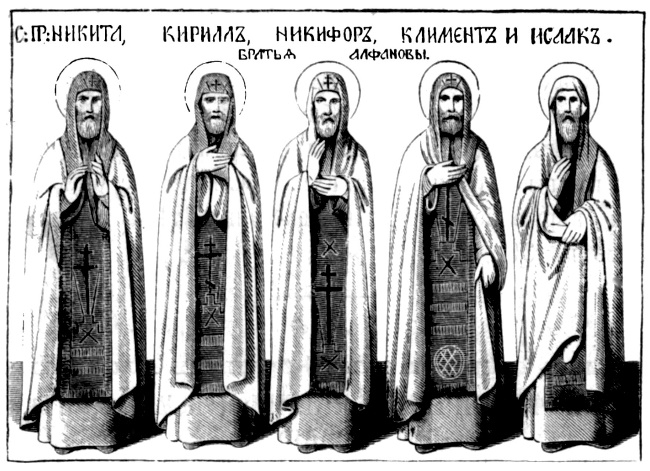
Сказание о праведных братьях, написанное в 1606 г., говорит, что родные по плоти Алфановы проводили праведную жизнь и основали Сокольницкую обитель207. А по летописям, «на Сокольи горе поставиша церковь древяну святаго Николу и монастырь (девичий) устроиша» в 1389208. После сего можем признать за несомненное, что праведные Алфановы были в родстве с известным по летописям Яковом Анфалом или Алфаном. В 1398 г. Двинские воеводы Анфал (ин. Алфан), Герасим и Родион, спаслись от смерти за сношения свои с Москвой только тем, что последние двое постриглись в монашество, а Яков Алфан убежал на Двину, тогда как брат его Иван Никитин был сброшен с моста и убит209. По современности основания монастыря с этими смутами, более чем вероятно, что праведный Никита Алфан был отец Якова и Ивана Никитичей Алфанов и что праведники подвергались бедам по родственной связи с Яковом, а тяжкими скорбями невинного страдания очистились для блаженной вечности. По рук. святцам праведные Алфановы называются людьми почётными210. Это также подтверждает мысль о связи Алфановых с печальной историей Якова Алфана211. В «сказании» о них описаны чудеса, происходившие от мощей их с 1562 года, и память о них положена на 17-е июня. В 1775 году по случаю пожара, истребившего Сокольницкую обитель, мощи праведных перенесены в Антониев монастырь, где почивают они поныне212; с этого времени память о них положено праздновать 4-го мая.
The account of the righteous brothers, written in 1606, says that the Alphanoi, brothers by blood, led a righteous life and founded the Sokolnik monastery207. And according to the chronicles, "on Sokolya Hill they built a wooden church of St. Nicholas and established a monastery (for nuns)" in 1389208. After this, we may accept as certain that the righteous Alphanoi were related to the Jacob Anfal or Alfan known from the chronicles. In 1398, the Dvina voivodes Anfal (otherwise Alfan), Gerasim, and Rodion saved themselves from death for their dealings with Moscow only by the latter two taking monastic tonsure, while Jacob Alfan fled to the Dvina, whereas his brother John Nikitin was thrown from a bridge and killed209. Given the contemporaneity of the monastery's foundation with these disturbances, it is more than probable that the righteous Niketas Alfan was the father of Jacob and John Nikitich Alphanoi, and that the righteous men suffered calamities due to their kinship with Jacob, and through the heavy sorrows of innocent suffering were purified for blessed eternity. According to manuscript menologia, the righteous Alphanoi are called honorable people210. This also confirms the idea of the Alphanoi's connection with the sad history of Jacob Alfan211. The "account" of them describes miracles that occurred from their relics from the year 1562, and their commemoration was set for June 17th. In 1775, due to a fire that destroyed the Sokolnik monastery, the relics of the righteous were transferred to the Antoniev Monastery, where they repose to this day212; from that time, their commemoration was appointed to be celebrated on May 4th.
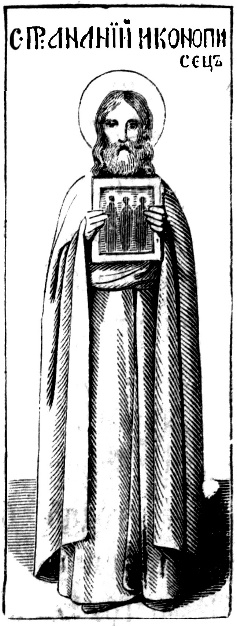
«Преп. Анания иконописец бысть в Антониеве (Новгородском) монастыре, преставися в лето 7089 (1581) июня в 17 день». Так сказано в ркп. святцах. По сказанию о чудесах преп. Антония, Анания писал «дивные иконы многих св. чудотворцев» и так строго выполнял иноческие обеты, что в продолжение 33 лет ни разу не выходил за ограду обители213.
"The Venerable Ananias was an iconographer in the Antoniev (Novgorod) Monastery; he reposed in the year 7089 (1581) on June 17th." Thus it is said in manuscript menologia. According to the account of the miracles of the Venerable Anthony, Ananias painted "wondrous icons of many holy wonderworkers" and so strictly fulfilled his monastic vows that for 33 years he never once went beyond the monastery enclosure213.
Мудрый ты был в юности твоей и подобно реке – полон разума! Душа твоя покрыла землю, и ты наполнил её загадочными притчами. Имя твоё пронеслось до отдалённых островов, и ты был любим за мир твой, за песни и изречения; за притчи и изъяснения тебе удивлялись страны!» Так превозносит Соломона мудрый Иисус сын Сирахов (Сир.47:16–19).
"Wise you were in your youth, and like a river—full of reason! Your soul covered the earth, and you filled it with enigmatic parables. Your name resounded to distant islands, and you were loved for your peace, for your songs and sayings; for your parables and explanations, nations marveled at you!" Thus does the wise Jesus, son of Sirach, extol Solomon (Sir. 47:16–19).
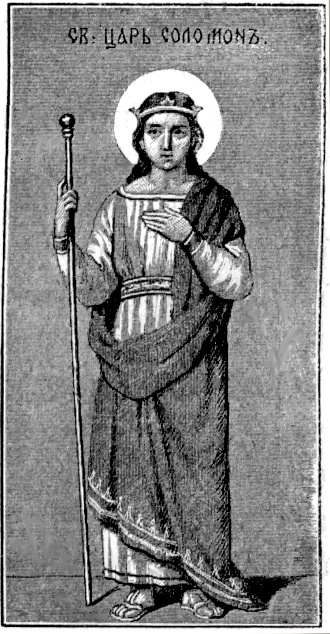
Избранная отрасль св. царя Давида, Соломон, ещё в отроческих летах был помазан на царство и провозглашён царём ещё при жизни отца своего. – По утверждении своём на престоле Израильском Соломон прежде всего, в исполнение завещания отца своего, обезопасил себя на престоле со стороны врагов своих и предпринял построение храма Богу истинному.
The chosen offshoot of the holy King David, Solomon, was anointed to the kingdom and proclaimed king while still in his youthful years, during his father's lifetime. — Upon his establishment on the throne of Israel, Solomon first of all, in fulfillment of his father's testament, secured himself on the throne against his enemies and undertook the building of a temple to the true God.
«Народ ещё приносил жертвы на высотах, ибо не был построен дом имени Господа до того времени». И Соломон пошёл в Гаваон, где находился главный жертвенник, чтобы принести там жертву Богу. Здесь явился ему Господь в ночном сновидении и сказал возлюбившему Его и ходящему по уставу Давида, отца своего, Соломону: – «проси, что дать тебе». – И сказал Соломон: ныне, Господи Боже мой! Ты поставил раба Твоего царём вместо Давида, отца моего; но я – отрок малый, не знаю ни моего выхода, ни входа. И раб Твой – среди народа Твоего, который избрал Ты, народа столь многочисленного, что по множеству его нельзя ни исчислить, ни обозреть. Даруй же рабу Твоему сердце разумное, чтобы судить народ Твой и различать, что – добро и что – зло; ибо кто может управлять этим многочисленным народом Твоим? – И благоугодно было Господу, что Соломон просил этого. И сказал ему Бог: за то, что ты просил этого, не просил себе долгой жизни, не просил себе богатства, не просил себе душ врагов твоих, но просил себе разума, чтобы уметь судить, вот, Я сделаю по слову твоему. Вот, Я даю тебе сердце мудрое и разумное, так что подобного тебе не было прежде тебя, и после тебя не восстанет подобный тебе. II то, чего ты не просил, Я даю тебе, и богатство, и славу, так что не будет подобного тебе между царями во все дни твои. И если будешь ходить путём Моим, сохраняя уставы Мои и заповеди Мои, как ходил отец твой Давид, Я продолжу дни твои».
"The people still offered sacrifices on the high places, for no house had been built for the name of the Lord until that time." And Solomon went to Gibeon, where the principal altar was, to offer a sacrifice to God there. Here the Lord appeared to him in a night vision and said to Solomon, who loved Him and walked according to the statutes of his father David: — "Ask what I shall give you." — And Solomon said: Now, O Lord my God! Thou hast set Thy servant as king in place of David, my father; but I am a small child, I know neither my going out nor my coming in. And Thy servant is among Thy people, whom Thou hast chosen, a people so numerous that by their multitude they can neither be counted nor surveyed. Grant then to Thy servant a discerning heart, to judge Thy people and to distinguish what is good and what is evil; for who can govern this numerous people of Thine? — And it was pleasing to the Lord that Solomon asked for this. And God said to him: Because thou hast asked for this, and hast not asked for a long life for thyself, nor for riches for thyself, nor for the souls of thine enemies, but hast asked for understanding, to know how to judge, behold, I will do according to thy word. Behold, I give thee a wise and understanding heart, so that there has been none like thee before thee, and none like thee shall arise after thee. And that which thou didst not ask, I give thee also: riches and glory, so that there shall be none like thee among kings in all thy days. And if thou walkest in My path, keeping My statutes and My commandments, as thy father David walked, I will prolong thy days.
И пробудился Соломон от сновидения своего, и сбылось оно в точности. И не замедлил проявиться дар разума – в суде его над двумя женщинами, обессмертивший славу его во веки: когда явились к нему две женщины, родившие одновременно младенцев, из которых один умер ночью, когда они спали в одной комнате, и вот, они спорили, кому из них принадлежит оставшийся в живых младенец, – то «сказал царь: подайте мне меч. И принесли меч царю. И сказал он: рассеките живое дитя надвое, и отдайте половину одной, и половину другой... И отвечала та женщина, которой сын был живой214, царю, ибо взволновалась вся внутренность её от жалости к сыну своему: о господин мой! отдайте ей этого ребёнка живого и не умерщвляйте его. А другая говорила: пусть же не будет ни мне, ни тебе, рубите... – И отвечал царь и сказал: «отдайте этой живое дитя, и не умерщвляйте его; она – его мать» ... (3-я книга Царств 3Цар.3:24–27). «И услышал Израиль, как рассудил царь, и стал бояться царя, ибо увидел народ, что мудрость Божия в нём, чтобы производить суд» ... «И был Соломон царём над всем Израилем». Он «владел всеми царствами от реки Евфрата до земли Филистимской и до пределов Египта. Они приносили дары и служили Соломону во все дни жизни его. И жили Иуда и Израиль спокойно, каждый под виноградником своим и под смоковницей своей, от Дана до Вирсавии, во все дни Соломона».
And Solomon awoke from his dream, and it came to pass exactly. And the gift of understanding was not slow to manifest itself—in his judgment between two women, which immortalized his glory forever: when two women came to him, who had given birth to infants at the same time, one of whom died during the night while they slept in the same room, and they disputed to which of them the surviving infant belonged—then "the king said: Bring me a sword. And they brought the king a sword. And he said: Cut the living child in two, and give one half to one, and the other half to the other... And the woman whose son was alive214 answered the king, for her whole heart was stirred with pity for her son: O my lord! Give her this child alive and do not kill him. But the other said: Let it be neither for me nor for thee; cut him... — And the king answered and said: 'Give this woman the living child, and do not kill him; she is his mother' ... (3 Kgdms. 3:24–27). 'And all Israel heard how the king had judged, and they began to fear the king, for the people saw that the wisdom of God was in him to render judgment' ... 'And Solomon was king over all Israel.' He 'ruled over all the kingdoms from the River Euphrates to the land of the Philistines and to the borders of Egypt. They brought gifts and served Solomon all the days of his life. And Judah and Israel lived in peace, each under his own vine and under his own fig tree, from Dan to Beersheba, all the days of Solomon.'"
«И дал Бог Соломону мудрость и весьма великий разум и обширный ум, как песок на берегу моря; он был мудрее всех людей, имя его было в славе у всех окрестных народов. И изрёк он три тысячи притчей, и песней его была тысяча и пять; и говорил он о деревах, от кедра, что в Ливане, до иссопа, вырастающего из стены; говорил и о животных, и о птицах, и о пресмыкающихся, и о рыбах. И приходили от всех народов послушать мудрости Соломона, от всех царей земных, которые слышали о мудрости его».
"And God gave Solomon wisdom and very great understanding and a vast mind, like the sand on the seashore; he was wiser than all men, and his name was in glory among all the surrounding nations. And he uttered three thousand proverbs, and his songs were a thousand and five; and he spoke of trees, from the cedar of Lebanon to the hyssop growing out of the wall; he spoke also of animals, and of birds, and of reptiles, and of fish. And people came from all nations to hear the wisdom of Solomon, from all the kings of the earth who had heard of his wisdom."
Построение храма, предпринятое Соломоном, продолжалось 7 лет; при этом было 70,000 человек носящих материалы, 80,000 каменосечцев, 30,000 рубящих кедровый лес в Тире, приставников, смотревших за работами – 3,600 человек. – «Когда совершена была вся работа для храма Господня, Соломон принёс посвящённое Давидом, отцом его, серебро и золото, и вещи отдал в сокровищницы храма Господня и созвал старейшин Израилевых и всех начальников колен, глав поколений сынов Израилевых, чтобы перенести ковчег завета Господня из города Давидова».
The building of the temple, undertaken by Solomon, continued for seven years; there were 70,000 men carrying materials, 80,000 stonecutters, 30,000 hewing cedar wood in Tyre, and overseers supervising the works—3,600 men. — “When all the work for the house of the Lord was completed, Solomon brought in the things which David his father had dedicated: the silver and the gold and the vessels, and put them in the treasuries of the house of the Lord. And he assembled the elders of Israel and all the heads of the tribes, the leaders of the fathers’ houses of the children of Israel, to bring up the ark of the covenant of the Lord out of the city of David.”
И, обратясь к народу и благословив собравшихся Израильтян, Соломон сказал: благословен Господь Бог Израилев, Который сказал Своими устами Давиду, отцу моему, и ныне исполнил рукой Своей! Он говорит: с того дня, как Я вывел народ Мой, Израиля, из Египта, Я не избрал города ни в одном из колен Израилевых, чтобы построен был дом, в котором пребывало бы имя Моё; но избрал Иерусалим для пребывания в нём имени Моего, и избрал Давида, чтобы быть ему над народом Моим, Израилем».
And turning to the people and blessing the assembled Israelites, Solomon said: “Blessed be the Lord God of Israel, who spoke with His mouth to David my father, and has now fulfilled it with His hand! He said: ‘Since the day that I brought My people Israel out of Egypt, I have chosen no city out of all the tribes of Israel in which to build a house, that My name might dwell there; but I chose Jerusalem for My name to dwell there, and I chose David to be over My people Israel.’”
«У Давида, отца моего, было на сердце построить храм имени Господа Бога Израилева. Но Господь сказал Давиду, отцу моему: хорошо, что у тебя лежит на сердце построить храм имени Моему; однако не ты построишь храм, а сын твой, исшедший из чресл твоих, он построит храм имени Моему. И исполнил Господь слово Своё, которое изрёк. Я вступил на место отца моего Давида и построил храм имени Господа Бога Израилева».
“It was in the heart of David my father to build a house for the name of the Lord God of Israel. But the Lord said to David my father: ‘Whereas it was in your heart to build a house for My name, you did well that it was in your heart. Nevertheless you shall not build the house, but your son who shall come forth from your loins, he shall build the house for My name.’ And the Lord has fulfilled His word which He spoke. I have succeeded my father David and have built the house for the name of the Lord God of Israel.”
«И стал Соломон перед жертвенником Господним, впереди всего собрания Израильтян, и воздвиг руки свои к небу и сказал: Господи Боже Израилев! нет подобного Тебе Бога на небесах вверху и на земле внизу! Поистине, Богу ли жить на земле? Небо и небо небес не вмещает Тебя, тем менее сей храм, который я построил имени Твоему... Но призри на молитву раба Твоего и на прошение его! услышь воззвание и молитву, которой раб Твой умоляет Тебя ныне! Да будут очи Твои отверсты на храм сей день и ночь, на сие место, о котором Ты сказал: Моё имя будет там; услышь молитву, которой будет молиться раб Твой на месте сём! При всякой молитве, при всяком прошении, какое будет от какого-либо человека во всём народе Твоём, когда они почувствуют бедствие в сердце своём и прострут руки свои к храму сему, Ты услышь с неба, с места обитания Твоего, и помилуй; соделай и воздай каждому по путям его, как Ты усмотришь сердце его, ибо Ты один знаешь сердце всех сынов человеческих!»
“And Solomon stood before the altar of the Lord in the presence of all the assembly of Israel, and spread forth his hands toward heaven; and he said: ‘Lord God of Israel, there is no God like You in heaven above or on earth beneath! But will God indeed dwell on the earth? Behold, heaven and the heaven of heavens cannot contain You, how much less this house which I have built for Your name… Yet regard the prayer of Your servant and his supplication! Hear the cry and the prayer which Your servant prays before You today! May Your eyes be open toward this house night and day, toward this place of which You have said, “My name shall be there”; hear the prayer which Your servant prays toward this place! Whatever prayer, whatever supplication is made by any man of all Your people Israel, when each one knows the affliction of his own heart and spreads out his hands toward this house, then hear from heaven, Your dwelling place, and be merciful; act and render to each according to all his ways, whose heart You know, for You alone know the hearts of all the sons of men!’”
«Когда Соломон произнёс моление и прошение к Господу, тогда встал с колен от жертвенника Господня, руки же его были распростёрты к небу и, стоя, он благословил всё собрание Израильтян. И царь, и все Израильтяне с ним принесли жертву Господу».
“When Solomon had finished praying all this prayer and supplication to the Lord, he arose from before the altar of the Lord, from kneeling on his knees with his hands spread up to heaven. And he stood and blessed all the assembly of Israel. And the king and all Israel with him offered sacrifice before the Lord.”
«И явился Соломону Господь во второй раз, как явился ему в Гаваоне, и сказал ему: Я услышал молитву твою и прошение твоё. Я освятил этот храм, который ты построил, чтобы пребывать имени Моему там вовек, и будут очи Мои и сердце Моё там во все дни» ...
“And the Lord appeared to Solomon the second time, as He had appeared to him at Gibeon, and said to him: ‘I have heard your prayer and your supplication. I have consecrated this house which you have built to put My name there forever, and My eyes and My heart will be there perpetually.’”
По окончании храма Соломон воздвиг стену вокруг Иерусалима и дворец для жены своей, дочери царя Египетского, а потом приказал устроить несколько крепостей.
After the completion of the temple, Solomon built a wall around Jerusalem and a palace for his wife, the daughter of the king of Egypt, and afterwards gave orders to build several fortresses.
Богатство Соломона было так велико, что «серебро во дни его не вменялось ни во-что. И сделал царь золото и серебро в Иерусалиме равноценным простому камню, а кедры, по множеству их, сделал равноценными сикоморам, которые на низких местах».
The wealth of Solomon was so great that “silver was not accounted of anything in his days. And the king made silver and gold in Jerusalem as common as stones, and he made cedars as numerous as the sycamore trees in the lowland.”
«И все цари земли искали видеть Соломона, чтобы послушать мудрости его, которую Бог вложил в сердце его. И каждый из них подносил от себя в дар сосуды серебряные и сосуды золотые, и одежды, оружие и благовония, коней и лошаков из года в год».
“And all the kings of the earth sought the presence of Solomon to hear his wisdom, which God had put in his heart. And each man brought his present: vessels of silver and vessels of gold, and garments, weapons, and spices, horses and mules, year by year.”
Все цари были данниками Соломона, и даже «царица Савская, услышав о славе его во имя Господа, пришла испытать его загадками. И пришла она в Иерусалим с весьма большим богатством: верблюды навьючены были благовониями и великим множеством золота, и драгоценными камнями, и пришла к Соломону и беседовала о всём, что было у неё на сердце. И объяснил ей Соломон все слова её» ...
All the kings were tributaries to Solomon, and even “the queen of Sheba, having heard of the fame of Solomon concerning the name of the Lord, came to test him with hard questions. And she came to Jerusalem with very great wealth, with camels that bore spices and very much gold and precious stones; and she came to Solomon and spoke with him about all that was in her heart. And Solomon answered all her questions.”
И нашла в Соломоне царица мудрости и богатства «ещё более чем слышала о том», и благословила Господа, поставившего Соломона царём творить суд и правду...
And the queen found in Solomon wisdom and wealth “even more than she had heard,” and she blessed the Lord who had set Solomon as king to execute justice and righteousness.
Так благословил Бог Соломона в то время, когда он был непорочен перед Ним, но когда Соломон, в угождение иным жёнам своим, построил капища для идолов, почитаемых ими, то навлёк на себя гнев Божий; Бог предал его вражде противников – Адера Идумеянина и Разона, бывшего рабом царя Сувского, который, убежав от своего господина, собрал шайку мятежников и укрепился в Дамаске. Оба они постоянно тревожили Иудеев своими набегами. Особенно беспокоило Соломона то, что пророк Ахия предсказал подданному его – Иеровоаму (Ефремлянину из Цареды), что он исторгнет царство из руки Соломоновой и что дастся ему власть над 10-ю коленами Израильскими... Соломон искал тогда умертвить Иеровоама, но Иеровоам спасся бегством в Египет, где и жил до смерти Соломона. – Впрочем, не пребыл без раскаяния и не затмилась истина в душе Соломона. О сокрушении духа его и о сознании правды и единого на потребу свидетельствуют слова его в «Екклезиасте»:
Thus God blessed Solomon at the time when he was blameless before Him; but when Solomon, to please his other wives, built shrines for the idols they worshipped, he brought down upon himself the wrath of God. God delivered him to the enmity of adversaries—Hadad the Edomite and Rezon, who had been a servant of the king of Zobah, who, having fled from his master, gathered a band of rebels and established himself in Damascus. Both of them constantly harassed the Jews with their raids. What especially troubled Solomon was that the prophet Ahijah foretold to his subject Jeroboam (an Ephraimite from Zeredah) that he would tear the kingdom out of the hand of Solomon and that authority over the ten tribes of Israel would be given to him… Solomon then sought to put Jeroboam to death, but Jeroboam fled to Egypt, where he lived until the death of Solomon. However, Solomon did not remain without repentance, nor was the truth obscured in his soul. The contrition of his spirit and his awareness of righteousness and of the one thing needful are testified to by his words in Ecclesiastes:
«Много таких вещей, которые умножают суету: что же для человека лучше? – Доброе имя лучше дорогой масти и день смерти – дня рождения. Сетование лучше смеха, потому что при печали лица сердце делается лучше».
“There are many things that increase vanity: what is better for man?—A good name is better than precious ointment, and the day of death than the day of one’s birth. Sorrow is better than laughter, for by the sadness of the countenance the heart is made better.”
«Соблюдающий заповедь не испытает никакого зла. Нечестивому же не будет добра, и, подобно тени, недолго продержится тот, кто не благоговеет перед Богом».
“He who keeps the commandment will experience no evil. But it will not be well with the wicked, nor will he prolong his days like a shadow, because he does not fear God.”
«Времени царствования Соломона в Иерусалиме над всем Израилем было сорок лет. И почил Соломон с отцами своими, и погребён был в городе Давида, отца своего, и воцарился вместо него сын его Ровоам» (от которого – во исполнение пророчества Ахии – при самом восшествии его на престол отложились 10 колен Израилевых).
“The time that Solomon reigned in Jerusalem over all Israel was forty years. And Solomon slept with his fathers, and was buried in the city of David his father; and Rehoboam his son reigned in his place” (from whom—in fulfillment of the prophecy of Ahijah—ten tribes of Israel seceded at his very accession to the throne).
Ркп. святцы: «святые и праведные братия по плоти Никита, Кирилл, Никифор, Климент, Исаакий Алфановы, посадницы Новгородские, иже на Сокольне, в девичье монастыре, быша в лето 6000 м. июня в 17 д.». Если назвав Алфановых посадниками сказали и более, чем надлежало сказать (опыт о посадниках, стр. 421), всё-таки должно допустить мысль о знаменитости Алфановых.
Manuscript calendar: “The holy and righteous brothers according to the flesh, Nikita, Cyril, Nikephoros, Clement, Isaac Alfanov, posadniks of Novgorod, who are at Sokoln in the convent, lived in the year 6000 from the creation of the world, June 17.” If calling the Alfanovs posadniks said more than was proper (Essay on Posadniks, p. 421), one must still admit the idea of the fame of the Alfanovs.
После сего показание «сказания», будто Алфановы скончались в 1115 г., надобно признать неудачной догадкой. Что это догадка, видно и по самому показанию – и по сличению с святцами (стр. 144).
After this, the statement of the “tale” that the Alfanovs died in 1115 must be recognized as an unsuccessful conjecture. That this is a conjecture is evident both from the statement itself and from comparison with the calendar (p. 144).
Отенские святцы: 1718 г. «мощи их под спудом; службы нет, тропарь и кондак есть, и образы их на гробе на доске написаны; чудеса есть; память июня в 17 д.». Здесь о времени жизни ни слова нет. С 1775 г. стали праздновать память праведников мая 4 д. Макария древн. I, 6.
Oten calendar of 1718: “Their relics are under a cover; there is no service, but there is a troparion and kontakion, and their images are painted on a board on the grave; there are miracles; commemoration June 17.” Here there is not a word about the time of their life. Since 1775 the memory of the righteous ones has been celebrated on May 4. Macarius, Antiquities I, 6.
Ркп. сказ. о чудесах Антония. В ист. иер. 3. 128 о времени Анании – ошибка, которую повторяет и о. Макарий (древности Новг. 2,21. I, 468).
Manuscript account of the miracles of Anthony. In History of the Hierarchy 3, 128 there is an error concerning the time of Ananias, which is repeated by Fr. Macarius (Antiquities of Novgorod 2, 21. I, 468).
Но был подменён умершим, заспанным на груди матери своей, подложившей его к груди другой женщины, во время сна её и присвоившей себе её младенца – живого...
But he was substituted by a dead child, who had been overlain on the breast of his mother, who had placed him at the breast of another woman during her sleep and had appropriated her infant—a living one—to herself.