Один из пастухов Фекойских, Амос был призван Богом к пророческому служению и пророчествовал при Озии, царе Иудейском, и обличал нечестие в Израильском царстве при Иеровоаме II-м. Не внимал предупреждениям и откровениям пророка, возвещавшего кару Божию, неблагодарный, не помнящий благодеяний Господних народ. – «И послал Амасия, священник Вефильский, к Иеровоаму, царю Израильскому, сказать: Амос производит возмущение против тебя среди дома Израилева; земля не может терпеть всех слов его. Ибо так говорит Амос: от меча умрёт Иеровоам, а Израиль непременно отведён будет пленным из земли своей. И сказал Амасия Амосу: провидец! пойди и удались в землю Иудину; там ешь хлеб и там пророчествуй. А в Вефиле больше не пророчествуй; ибо он – святыня царя и дом царский. И отвечал Амос и сказал Амасии: я не пророк и не сын пророка; я был пастух и собирал сикоморы. Но Господь взял меня от овец, и сказал мне Господь: иди, пророчествуй к народу Моему, Израилю. Теперь выслушай слово Господне: ты говоришь: не пророчествуй на Израиля и не произноси слов на дом Исааков. За это вот что говорит Господь: жена твоя будет обесчещена в городе; сыновья и дочери твои падут от меча; земля твоя будет разделена межевой вервию, а ты умрёшь в земле нечистой, и Израиль непременно будет выведен из земли своей» ... (Ам.7:10–17).
One of the shepherds of Tekoa, Amos was called by God to prophetic service and prophesied under Uzziah, King of Judah, and denounced iniquity in the kingdom of Israel under Jeroboam II. The ungrateful people, unmindful of the Lord's benefits, heeded not the warnings and revelations of the prophet, who proclaimed the punishment of God. — "Then Amaziah the priest of Bethel sent to Jeroboam king of Israel, saying, Amos hath conspired against thee in the midst of the house of Israel: the land is not able to bear all his words. For thus Amos saith, Jeroboam shall die by the sword, and Israel shall surely be led away captive out of their own land. Also Amaziah said unto Amos, O thou seer, go, flee thee away into the land of Judah, and there eat bread, and prophesy there: But prophesy not again any more at Bethel: for it is the king's chapel, and it is the king's court. Then answered Amos, and said to Amaziah, I was no prophet, neither was I a prophet's son; but I was an herdman, and a gatherer of sycomore fruit: And the Lord took me as I followed the flock, and the Lord said unto me, Go, prophesy unto my people Israel. Now therefore hear thou the word of the Lord: Thou sayest, Prophesy not against Israel, and drop not thy word against the house of Isaac. Therefore thus saith the Lord: Thy wife shall be an harlot in the city, and thy sons and thy daughters shall fall by the sword, and thy land shall be divided by line; and thou shalt die in a polluted land: and Israel shall surely go into captivity forth of his land" ... (Amos 7:10–17).
Не стерпел слов пророка Вефильский жрец, он вместе с сыном своим Озией до того били Амоса, что тот едва был доведён до своего дома, где вскоре и умер – в VIII в. до Р. X. Он жил почти за 200 лет до плена Вавилонского.
The priest of Bethel could not endure the words of the prophet; together with his son Uzziah, he beat Amos so severely that he was barely carried to his own house, where he soon died — in the eighth century B.C. He lived almost two hundred years before the Babylonian captivity.
Иероним, великий подвижник и учитель Церкви, светило IV-го века, родился в 330 г. от богатых родителей благородного происхождения, живших тогда в городке Стридоне – на пределах Далмации и Паннонии156 (по заключению Фил., архиеп. Черниг., в кн. «Учение об Отцах Церкви»157 Иероним был Славянин).
Jerome, the great ascetic and teacher of the Church, luminary of the fourth century, was born in 330 A.D. to wealthy parents of noble lineage, who then dwelt in the town of Stridon — on the borders of Dalmatia and Pannonia156 (according to the conclusion of Philaret, Archbishop of Chernigov, in his book "The Teaching of the Fathers of the Church"157, Jerome was a Slav).
Получив первое образование под влиянием строго-благочестивого отца, Иероним был отправлен в Рим для дальнейшего образования. О первых годах своего пребывания здесь он пишет: «когда я был ещё отроком в Риме и изучал свободные науки, то в дни воскресные – с теми, которые были со мной одних лет и мыслей, обыкновенно ходил я к гробам Апостолов и мучеников и часто спускался в катакомбы, где в глубине земной, по обеим сторонам пути, в стенах сокрыты тела погребённых».
Having received his first education under the influence of his strictly pious father, Jerome was sent to Rome for further education. Of the first years of his sojourn there he writes: "When I was still a boy in Rome and studied the liberal arts, on the Lord's days — with those who were of the same age and mind as myself — I was wont to go to the tombs of the Apostles and martyrs, and often descended into the catacombs, where in the depths of the earth, on both sides of the way, the bodies of the buried are hidden in the walls."
Юноша ревностно занимался науками, изучал философию; учителем Римской и Греческой словесности имел знаменитого Доната, но в это время многое ещё рассеивало и отвлекало пылкого Иеронима от того пути, которого исключительно он держался впоследствии. Со временем же путешествия и личные встречи с высокообразованными людьми возбуждали в нём всё более и более жажду к высшему образованию, сознание ошибочных увлечений юности и сосредоточенность помыслов на «едином на потребу», – до того, что он решился оставить светскую жизнь и предался изучению преимущественно духовных наук. Как в Риме, так и в Трире он то покупал, то сам списывал и просил друзей списывать рукописи. В Аквилее, встретив столько же образованных, сколько и благочестивых людей, прожил несколько времени в подвигах уединения. Потом, в Риме принял св. крещение, но, тяготясь среди шумной жизни в этом городе, в 373 г. вместе с послом папы по делам Антиохийским отправился на Восток. В этот дальний путь Иероним не взял с собой ничего, кроме книг. Ослабев от трудов пути и подвигов, он, по прибытии в Антиохию, захворал лихорадкой; среди болезни с ним произошёл окончательный нравственный переворот. «Мне казалось, – писал он впоследствии, – что меня привели на суд... Спрошенный о моей вере, я отвечал, что я – христианин. Но занимавший первое место говорил: «ты лжёшь, ты – цицеронианец, а не христианин: где сокровище твоё, там и сердце твоё». После того Иероним предался исключительно изучению священных книг и удалился в дикую Сирскую пустыню – Халкис. Здесь предался суровым подвигам. В одном из писем своих к друзьям он красноречиво описывает страшную борьбу духа с порывами плотскими и прославляет силу благодати, давшую ему победу над немощами своими. Чтобы заглушить в себе пламенное воображение, увлекаемое предметами мира, Иероним, будучи уже 44-х лет, углубился в изучение Еврейского языка у одного Иудея – христианина. Одним из утешений его было писать письма к друзьям своим на Запад. В одном из писем приложил он жизнь Павла Фивейского, описанную им. По случаю раздоров, происходивших в Антиохийской Церкви, Иероним вступил в сношения с папой Дамасом и перешёл в Антиохию, где принял сан священства, но, проникнутый сознанием высокого достоинства этого сана, по смирению своему уклонялся от совершения тайн. Епифаний Кипрский писал по этому поводу к Иоанну Иерусалимскому: «пресвитеры Иероним и Викентий по скромности и смирению не хотят совершать жертвы, какую могли бы совершать по своему сану».
The youth zealously applied himself to the sciences and studied philosophy; his teacher of Roman and Greek literature was the famous Donatus. But at this time much still distracted and drew away the ardent Jerome from that path which he afterwards exclusively followed. In time, however, his travels and personal encounters with highly educated men aroused in him ever more and more a thirst for higher learning, an awareness of the erroneous passions of his youth, and a concentration of his thoughts on the 'one thing needful' — to such a degree that he resolved to abandon the secular life and devoted himself chiefly to the study of the sacred sciences. Both in Rome and in Trier he either purchased manuscripts, or copied them himself, or asked friends to copy them. In Aquileia, meeting men as learned as they were pious, he lived for some time in labors of seclusion. Afterwards, in Rome, he received holy Baptism; but, burdened by the noisy life of that city, in 373 A.D. he set out for the East together with the pope's envoy on matters concerning Antioch. On this long journey Jerome took with him nothing but books. Weakened by the toils of the journey and by ascetic labors, upon arriving in Antioch he fell ill with a fever; during his illness a final moral transformation took place within him. 'It seemed to me,' he later wrote, 'that I was brought before the judgment seat... Asked concerning my faith, I answered that I was a Christian. But he who occupied the first place said: "Thou liest; thou art a Ciceronian, not a Christian: for where thy treasure is, there is thy heart also."' After that Jerome devoted himself exclusively to the study of the sacred books and withdrew into the wild Syrian desert — Chalcis. There he gave himself over to severe ascetic labors. In one of his letters to friends he eloquently describes the terrible struggle of the spirit against the impulses of the flesh and glorifies the power of grace, which gave him victory over his infirmities. In order to stifle within himself the ardent imagination carried away by the objects of the world, Jerome, already forty-four years of age, immersed himself in the study of the Hebrew language under a certain Jew who was a Christian. One of his consolations was to write letters to his friends in the West. To one of his letters he appended the Life of Paul of Thebes, which he had written. On account of the dissensions that arose in the Church of Antioch, Jerome entered into relations with Pope Damasus and removed to Antioch, where he received the rank of priesthood; but, penetrated with the consciousness of the high dignity of that rank, out of humility he refrained from celebrating the Mysteries. Epiphanius of Cyprus wrote on this matter to John of Jerusalem: 'The presbyters Jerome and Vincent, out of modesty and humility, do not wish to offer the sacrifice which they could offer according to their rank.'
Посетив Святые места в Палестине, Иероним был в Константинополе, где усладил свою душу высокими беседами Григория Богослова. – В начале 382 г. вместе с Павлином Антиохийским и Епифанием Кипрским Иероним возвратился в Рим. Папа Дамас удержал его при себе, как лучшего советника по делам Церкви. Великой и заслуженной славой пользовался он в это время в Риме! Он сделался как-бы центром и душой собраний для благочестивых целей и в домах Римских патрицианок – этих усердных и могущественных двигательниц по делам веры и благочестия в IV веке. К этому времени относится его сближение с знаменитой Павлой, которое так сильно повлияло на судьбу этой женщины, бывшей предметом удивления всего Рима, будущей основательницы обителей в Вифлееме158. Все спешили видеть Иеронима и наставляться его речами. Он сам простосердечно высказывает свои впечатления по этому поводу.
Having visited the Holy Places in Palestine, Jerome was in Constantinople, where he delighted his soul with the sublime discourses of Gregory the Theologian. — At the beginning of 382 A.D., together with Paulinus of Antioch and Epiphanius of Cyprus, Jerome returned to Rome. Pope Damasus kept him at his side as his best counselor in the affairs of the Church. Great and well-deserved glory did he enjoy at this time in Rome! He became, as it were, the center and soul of gatherings for pious purposes, in the houses of Roman patrician women — those zealous and powerful movers in matters of faith and piety in the fourth century. To this time belongs his close acquaintance with the famous Paula, which so strongly influenced the fate of that woman, the object of admiration of all Rome, the future foundress of monasteries in Bethlehem158. All hastened to see Jerome and to be instructed by his discourses. He himself ingenuously expresses his impressions on this matter.
«Суд едва ли не всех признавал меня достойным высшего священства. Блаженной памяти Дамас говорил моими словами; меня называли и святым, и смиренным, и знаменитым». – Такое почитание одних возбуждало вместе с тем и зависть в других. К тому же и самолюбие многих было раздражено... Иероним, почитатель девственной жизни, не щадил развратного Римского клира в своих сочинениях о девстве и сделался предметом язвительной вражды. Между тем покровительствующий ему папа Дамас умер, и Иероним решился оставить «Вавилон», чтобы снова искать успокоения в Святой Земле... Здесь он обошёл все освящённые стопами Спасителя места, чтобы лучше изучить историю Христа и Его Апостолов. Был снова в Египте; в Александрии слушал Дидима и так пишет о нём в одном из своих писем друзьям: «за многое благодарю, его: чего не знал я, тому научился, что знал, того не потерял под его наставлением. По возвращении из Египта, поселился в пещере Вифлеемской; назидал своими наставлениями две обители, устроенные на иждивение благочестивой Павлы, и сверх того поучал детей. – Чтобы усовершенствовать свои собственные познания, учился у знаменитого раввина Бар-Анании Еврейскому и Халдейскому языкам. – «Какого труда, – пишет Иероним, – какой цены стоило мне иметь ночного учителя Бар-Ананию! Он боялся Иудеев и для меня был вторым Никодимом» ... и «сколько трудов понёс я, сколько претерпел затруднений, сколько раз даже отчаивался, сколько раз даже бросал дело и по ревности к учению снова начинал, – свидетель – совесть моя, сам я, который страдал, и совесть тех, которые со мною жили. Но благодарю Господа: теперь я собираю сладкие плоды горького посева моего» ...
The judgment of almost all declared me worthy of the highest priesthood. Damasus of blessed memory spoke with my words; I was called both holy and humble and renowned. — Such veneration on the part of some aroused at the same time envy in others. Moreover, the self-love of many was irritated... Jerome, an admirer of the virginal life, did not spare the corrupt Roman clergy in his writings on virginity, and became the object of bitter enmity. Meanwhile, Pope Damasus, who had protected him, died, and Jerome resolved to leave "Babylon" in order to seek again repose in the Holy Land... There he walked through all the places hallowed by the footsteps of the Savior, the better to study the history of Christ and His Apostles. He was again in Egypt; in Alexandria he heard Didymus, and thus writes of him in one of his letters to friends: "For much I thank him: what I knew not, I learned; what I knew, I did not lose under his instruction." Upon his return from Egypt, he settled in the cave of Bethlehem; he edified with his instructions the two monasteries established at the expense of the pious Paula, and moreover taught children. — In order to perfect his own knowledge, he studied the Hebrew and Chaldean languages under the famous rabbi Bar-Ananiah. — "What labor," writes Jerome, "what cost did it require of me to have Bar-Ananiah as a night teacher! He feared the Jews, and for me he was a second Nicodemus"... and "how many toils I bore, how many difficulties I endured, how many times I even despaired, how many times I even abandoned the work and, out of zeal for learning, began it anew — my conscience is witness, and I myself, who suffered, and the conscience of those who lived with me. But I thank the Lord: now I gather the sweet fruits of my bitter sowing."
Приобретёнными сведениями делился Иероним сначала устно с образованными и благочестивыми начальницами женских обителей, потом, побуждаемый их же сочувствием и ревностью к распространению понимания Слова Божия, приступил и к письменному толкованию Нового Завета. В Вифлеемской же пещере окончил поверку и исправление Латинского перевода Ветхого Завета. – Между тем, на Западе возникли смущения, по случаю которых Иероним отвлёкся на время от своего любимого занятия свящ. Писанием; он приступил к ревностному опровержению Иовиниана, который вместе с Вигилянцием возмущал христианское общество спором о значении девства и мученичества; на Востоке же шла борьба мнений об Оригене. Епифаний Кипрский (в 394 г.) писал к епископу Иерусалимскому Иоанну, требуя от него произнести осуждение на Оригена. Иероним, в обители которого было составлено это резкое письмо, послал его в переводе на Запад. Между тем, в нём были невыгодные отзывы о бывшем друге Иеронима – Руфине. И это письмо и «книга против Иовиниана» возбудили большое неудольствие против Иеронима. Оскорблёнными чувствовали себя и Руфин и Иоанн Иерусалимский, и, не смотря на примирение в храме Воскресения Христова, между Руфином и Иеронимом возобновились горячие письменные пререкания, когда Руфин в предисловии к сделанному им переводу сочинения Оригена «О началах» упомянул об уважении Иеронима к Оригену. Пылкий и юношески до старости впечатлительный Иероним стал называть теперь «самым злым еретиком Оригена, которого прежде называл первым после Апостолов учителем Церквей... Личные отзывы, которыми обменивались при этом споре об Оригене бывшие друзья, также заходили за пределы умеренности. Замечательна та христианская любовь, с которою отнёсся по этому поводу к Иерониму другой знаменитый христианский деятель IV века – блаженный Августин, епископ Иппонский. – «Какой друг – пишет он Иерониму – не устрашится того, как бы не стать врагом, если между Иеронимом и Руфином происходит то, что мы оплакиваем? О участь бедная и достойная жалости! Несчастный я, который не могу найти вас где-либо вместе: я пал бы к ногам вашим, стал бы плакать, сколько могу, просить, сколько люблю, просить того и другого для себя, для каждого из вас, за других и особенно для немощных, за которых Христос умер».
Jerome shared the knowledge he had acquired first orally with the educated and pious superiors of women's monasteries; then, urged by their sympathy and zeal for spreading the understanding of the Word of God, he proceeded also to the written interpretation of the New Testament. In the cave of Bethlehem he likewise completed the revision and correction of the Latin translation of the Old Testament. — Meanwhile, disturbances arose in the West, on account of which Jerome was diverted for a time from his beloved occupation with Holy Scripture; he set himself to the zealous refutation of Jovinian, who, together with Vigilantius, was disturbing the Christian community with disputes about the significance of virginity and martyrdom; while in the East a struggle of opinions concerning Origen was underway. Epiphanius of Cyprus (in 394) wrote to John, bishop of Jerusalem, demanding that he pronounce condemnation upon Origen. Jerome, in whose monastery this sharp letter was composed, sent it in translation to the West. Meanwhile, it contained unfavorable remarks about Jerome's former friend — Rufinus. Both this letter and the "book against Jovinian" aroused great displeasure against Jerome. Both Rufinus and John of Jerusalem felt themselves offended, and, notwithstanding the reconciliation in the church of the Resurrection of Christ, heated written disputes were renewed between Rufinus and Jerome when Rufinus, in the preface to his translation of Origen's work "On First Principles," mentioned Jerome's respect for Origen. The ardent Jerome, youthful in his impressionability even into old age, now began to call Origen "the most wicked heretic, whom he had formerly called the first teacher of the Churches after the Apostles"... The personal remarks exchanged by the former friends in this dispute about Origen likewise overstepped the bounds of moderation. Remarkable is the Christian love with which another famous Christian figure of the fourth century — Blessed Augustine, bishop of Hippo — treated Jerome on this occasion. — "What friend," he writes to Jerome, "will not fear lest he become an enemy, if between Jerome and Rufinus there takes place what we lament? O poor and pitiable lot! Wretched am I, who cannot find you anywhere together: I would fall at your feet, would weep as much as I can, would entreat as much as I love, entreating each of you for myself, for each of you, for others, and especially for the weak, for whom Christ died."
Иероним сознался однако же в своём человеческом пристрастии... и хотя после того принимал ещё участие в споре Епифания Кипрского с Иоанном Иерусалимским об оригенизме и был даже в близких сношениях с Феофилом, считая его искренним и хваля его за действия против оригенистов, но не участвовал в низких делах его против св. Иоанна Златоустого и скорбел глубоко, когда уразумел яснее личность Феофила...
Jerome, however, confessed his human partiality... and although he afterwards still took part in the dispute of Epiphanius of Cyprus with John of Jerusalem concerning Origenism, and was even in close relations with Theophilus, considering him sincere and praising him for his actions against the Origenists, yet he did not participate in his base dealings against St. John Chrysostom, and grieved deeply when he came to understand more clearly the character of Theophilus...
В 396 г. Иероним возобновил свои занятия свящ. Писанием и вообще: «то – обличения, то – наставления, то – изъяснения смысла Боговдохновенных книг потоками текли с пера Иеронимова на Запад», небогатый и жаждавший в то время отечественных веропроповедников.
In 396 Jerome resumed his labors on Holy Scripture, and in general: "now reproofs, now instructions, now explanations of the meaning of the God-inspired books flowed in streams from Jerome's pen to the West," which was at that time poor in and thirsting for native preachers of the faith.
Отзывался блаженный Иероним великою своей душой и на бедствия Запада, страдавшего в то время от варваров-завоевателей, красноречиво побуждал он к раскаянию среди общих страшных испытаний. С любовью принимал в своих обителях, одевал и кормил, чем мог, прибывших на Восток в 410 г. многочисленных странников, лишённых крова на родине. – В 416 г. пострадал он от озлобленных им пелагиян (против которых он писал два сочинения) и которые достигли даже его изгнания из обители. Возвратясь в неё в 418-м г., Иероним скончался в 419-м г., на 89-м году своей жизни.
Blessed Jerome also responded with his great soul to the calamities of the West, which was then suffering from barbarian conquerors; eloquently he urged repentance amid the common terrible trials. With love he received in his monasteries, clothed and fed, as best he could, the numerous pilgrims who arrived in the East in 410, deprived of shelter in their homeland. — In 416 he suffered from the Pelagians, whom he had embittered (against whom he wrote two works), and who even achieved his expulsion from the monastery. Returning to it in 418, Jerome reposed in 419, in the 89th year of his life.
После него осталось очень много сочинений, о которых так отзывается наш святитель Димитрий Ростовский: «пойду в сокровищницу святого Иеронима, хотя нищего духом, яко законника, нищету хранить присягавшего, но духовным имением не убогого, и яко не последнего в Церкви Христовой учителя» ...159.
After him there remained very many works, of which our Hierarch Demetrius of Rostov speaks thus: "I will go into the treasury of St. Jerome, though poor in spirit, as one who, like a scribe, had sworn to keep poverty, yet not impoverished in spiritual wealth, and as not the last teacher in the Church of Christ"...159
«Сочинения Иеронима, – говорит преп. Иоанн Кассиан, – сияют по всему миру как священные светильники; он – муж, как учёности обширной, так испытанного и чистого учения, учитель православных».
"The works of Jerome," says Venerable John Cassian, "shine throughout the whole world like sacred lamps; he is a man both of vast learning and of tested and pure doctrine, a teacher of the orthodox."
«Заслуги учёности Иеронима, – говорит блаж. Августин, – таковы, что несчастным надо назвать того, кто не уважит столько трудов, и трудов столько святых и не возблагодарит Господа Бога».
"The merits of Jerome's learning," says Blessed Augustine, "are such that he must be called unfortunate who does not respect so many labors, and labors so holy, and does not give thanks to the Lord God."
«Пресвитер достопочтенный, человек Божий, своим учением во славу Божию и при помощи Божией столько способствовал усовершенствованию церковной Латинской образованности, сколько никто прежде него». Точно так же отзывается и преп. Иерониме Кассиодор.
"The venerable presbyter, a man of God, by his teaching, to the glory of God and with God's help, contributed as much to the perfection of ecclesiastical Latin learning as no one before him." In exactly the same manner Cassiodorus also speaks of Venerable Jerome.
Августин (Аврелий) родился в Тагасте, Нумидийской области, в 354-м году. Благочестивая мать его Моника старалась воспитать его в духе христианского учения, но склонный к развлечению, легко увлекавшийся молодой Августин не поддавался влиянию матери и стоил ей многих слёз. Одарённый однако же хорошими способностями, он пользовался, хотя и с недостаточным прилежанием, доставляемым ему научным образованием. В Мадавре слушал он уроки в словесных науках и отсюда отправился в Карфаген. В этом богатом городе встретил он ещё более соблазнов и сверх того имел несчастие подпасть под влияние манихеев, соответствующее тогдашнему настроению души его... Манихейство оправдывало все его увлечения, ссылаясь на злое начало, оно льстило и воображению его и чувственным наклонностям. В знаменитой «Исповеди» своей Августин сам впоследствии так рассказывает об отношениях своих к манихеям: «напал я на людей, гордо безумствующих, слишком плотских и говорливых; в устах их сети диавола и яд, приправленный примесью слогов из имени Бога и Господа нашего Иисуса Христа и Параклита Утешителя нашего Духа Св. Эти имена не отходили от уст их; звучали на языке их, но сердце их было пусто, чуждо истины». «Гордость моя утешалась, что я безвинен» ... «Что заставляло меня почти 9 лет, оставив веру, которую из детства внушали мне родители, следовать манихеям и слушать их? Что, как не то, что они устрашают суеверием и говорят, что нами вера овладевает прежде разума? Когда они никого не побуждают к вере, не исследовав наперёд истины: кто не обольстился бы такими обещаниями? Особенно юноша с жаждой к истине, юноша надменный и говорливый от состязаний с некоторыми учениями школы? А они нашли меня таким» ...
Augustine (Aurelius) was born in Tagaste, in the Numidian region, in the year 354. His pious mother Monica strove to raise him in the spirit of Christian teaching, but the young Augustine, inclined to amusement and easily carried away, did not yield to his mother's influence and cost her many tears. Endowed, however, with good abilities, he made use, though with insufficient diligence, of the scholarly education afforded him. In Madaura he attended lessons in the literary sciences, and from there he went to Carthage. In that wealthy city he encountered even more temptations, and moreover had the misfortune to fall under the influence of the Manicheans, which corresponded to the then disposition of his soul... Manicheism justified all his excesses, appealing to the evil principle; it flattered both his imagination and his sensual inclinations. In his famous "Confessions," Augustine himself later relates his relations with the Manicheans thus: "I fell upon people proudly raving, too carnal and talkative; in their mouths were the snares of the devil and poison seasoned with a mixture of syllables from the name of God and of our Lord Jesus Christ and of the Paraclete, our Comforter, the Holy Spirit. These names did not depart from their lips; they sounded on their tongue, but their heart was empty, alien to the truth." "My pride was consoled that I was blameless"... "What made me, for almost 9 years, abandoning the faith which my parents had instilled in me from childhood, follow the Manicheans and listen to them? What, except that they frighten with superstition and say that faith takes hold of us before reason? When they urge no one to believe without first examining the truth: who would not be seduced by such promises? Especially a youth thirsting for truth, a youth arrogant and talkative from contests with certain school teachings? And they found me such"...
Ещё изобильнее лились, слёзы благочестивой Моники при этом уклонении сына её от истины Христова учения; она умоляла епископа употребить все старания к обращению её погибающего сына... «Не может быть, чтобы дитя стольких слёз погибло» ... отвечает ей епископ. И сбылись слова его. Не была напрасною перед Богом слёзная молитва матери.
Even more abundantly flowed the tears of pious Monica at this deviation of her son from the truth of Christ's teaching; she begged the bishop to use every effort for the conversion of her perishing son... "It cannot be that a child of so many tears should perish"... the bishop answers her. And his words came true. The tearful prayer of the mother was not in vain before God.
По смерти отца, не имея прежних средств к жизни, Августин стал преподавать риторику в Тагасте; потом, побуждаемый честолюбием, открыл под своим именем училище красноречия в Карфагене, но так как число учеников не соответствовало его самолюбию, то он, против воли матери, переселился в Рим. В 384 г. он получил место преподавателя красноречия в Медиолане. Здесь встретился он с знаменитым св. Амвросием Медиоланским; сначала он пожелал слушать святителя ради прославленного его красноречия, но мало-по-малу ещё более красноречивые по содержанию, чем по форме проповеди св. Амвросия стали проникать в душу Августина, и он прозрел истину, скрывавшуюся от него, пока он пребывал под влиянием манихейства.
After the death of his father, lacking his former means of subsistence, Augustine began to teach rhetoric in Tagaste; then, urged by ambition, he opened a school of eloquence under his own name in Carthage, but since the number of students did not correspond to his self-esteem, he, against his mother's will, moved to Rome. In 384 he obtained the position of teacher of eloquence in Mediolanum. Here he met the famous St. Ambrose of Milan; at first he wished to hear the Hierarch for the sake of his celebrated eloquence, but little by little the sermons of St. Ambrose, even more eloquent in content than in form, began to penetrate Augustine's soul, and he discerned the truth that had been hidden from him while he remained under the influence of Manicheism.
– Человек Божий принял меня отечески и епископски полюбил меня, странника, – пишет в своей исповеди Августин об Амвросии, – и я стал любить его сперва не как наставника истины; нет, я совсем не надеялся найти сего в Церкви твоей, но как человека благосклонного ко мне; не учиться хотел я тому, что говорил Амвросий, а только слушать, как он говорил; но вместе с словами, которые любил я, входили в сердце моё и предметы, на которые не обращал я внимания; я не мог отделить их, и когда открывал я сердце, чтобы чувствовать, как прекрасно говорит он, входило то, как справедливо говорит он, и это – постепенно... И так положил я до тех пор состоять оглашенным в Церкви, пока не откроется ясно, куда направить мне путь» ...
— "The man of God received me paternally and with a bishop's love loved me, a stranger," writes Augustine in his Confession about Ambrose, "and I began to love him at first not as a teacher of truth; no, I had no hope at all of finding this in Thy Church, but as a man well-disposed toward me; I did not want to learn what Ambrose said, but only to hear how he spoke; but together with the words which I loved, there entered my heart also the subjects to which I paid no attention; I could not separate them, and when I opened my heart to feel how beautifully he speaks, there entered that how rightly he speaks, and this — gradually... And so I resolved to remain a catechumen in the Church until it should become clearly revealed whither I should direct my path"...
Между тем стал внимательнее Августин заниматься и чтением священного Писания и всё более и более прозревал истину и сознавал самого себя. – Поразило его между прочим повествование об отшельниках Египетских. – «Что это такое? Что мы делаем? – говорил он другу своему Алипию, – неучёные спешат и прежде нас восхищают Царствие, а мы с душевной нашей учёностью погружены в плоти и крови. Должны ли мы стыдиться следовать за ними потому только, что они впереди нас? Напротив, не постыднее ли не собраться с силами и для того, чтобы идти по следам их?»
Meanwhile, Augustine began to occupy himself more attentively with the reading of Holy Scripture, and more and more he discerned the truth and came to know himself. — Among other things, the narrative about the Egyptian hermits struck him. — "What is this? What are we doing?" he said to his friend Alypius, "the unlearned hasten and seize the Kingdom before us, while we with our soul's learning are sunk in flesh and blood. Should we be ashamed to follow them only because they are ahead of us? On the contrary, is it not more shameful not to gather our strength in order to walk in their footsteps?"
Однажды, во время переворота, совершавшегося в духе Августина, в то время, когда «всё в жизни колебалось» для него, среди пламенной молитвы из глубины растерзанной души услышал он голос: «возьми читай, возьми читай!» Встав, взял он книгу и на первой открывшейся странице прочёл:
Once, during the upheaval taking place in Augustine's spirit, at a time when "everything in life was wavering" for him, amid fervent prayer from the depths of his torn soul, he heard a voice: "take up and read, take up and read!" Rising, he took the book and on the first page that opened read:
«Ночь прошла, а день приблизился: и так отвергнем дела тьмы и облечёмся в оружия света. Как днём, будем вести себя благочинно, не предаваясь ни пированиям и пьянству, ни сладострастью и распутству, ни ссорам и зависти; но облекитесь в Господа нашего Иисуса Христа, и попечения о плоти не превращайте в похоти» ... (Рим.13:12–14).
"The night is far spent, the day is at hand: let us therefore cast off the works of darkness, and let us put on the armour of light. Let us walk honestly, as in the day; not in rioting and drunkenness, not in chambering and wantonness, not in strife and envying. But put ye on the Lord Jesus Christ, and make not provision for the flesh, to fulfil the lusts thereof." (Rom. 13:12–14).
С этой минуты совершилась благодатная перемена с сыном Моники, вымолившей у Бога спасение его, и печаль матери в радость обратилась... В 387 г. он принял крещение от св. Амвросия Медиоланского. По смерти матери, Августин роздал всё имение бедным, принял иночество и три года провёл в уединении и строгих подвигах. В 391 г. Валерий, епископ Иппонский, против его воли посвятил его в пресвитера, а в 395 г. настоял, чтобы Августин был посвящён в епископа – викария его. Подготовясь многой молитвой, Августин вступил в звание проповедника, устроил монастырь с строгими правилами общежития, предал всего себя служению вере: то писал против манихеев, то занимался изъяснением священного Писания. По смерти Валерия в продолжение 35-ти лет был деятельным пастырем Иппонским, и словами и писаниями боролся с еретиками; старался действовать на них любовью, но жестокости и даже злодеяния донатистов заставили его укрощать их и строгими мерами, не допуская однако же смертной казни». Мы не жалуемся на них, мы не гоним их, – говорил Августин, – и для нас будет весьма больно, если страдания (которым они подвергают) рабов Божиих будут отмщены воздаятельными казнями». В 411 году начал действовать и против ереси Пелагия, но в сочинениях своих не называл его по имени – ради того, «чтобы оскорблённый противник не сделался неизлечимее». С терпением великим и твёрдостью вёл борьбу с Пелагием, который то был осуждаем в Риме, то находил себе защиту и оправдание.
From that moment a blessed change was wrought in the son of Monica, who had begged his salvation from God, and the mother's sorrow was turned into joy... In A.D. 387 he received baptism from St. Ambrose of Milan. After his mother's death, Augustine distributed all his possessions to the poor, received the monastic tonsure, and spent three years in solitude and strict ascetic labors. In A.D. 391, Valerius, Bishop of Hippo, against his will, ordained him a presbyter, and in A.D. 395 insisted that Augustine be consecrated bishop—as his vicar. Having prepared himself through much prayer, Augustine entered upon the office of preacher, established a monastery with strict rules of common life, and gave himself wholly to the service of the faith: at one time writing against the Manichaeans, at another occupied with the interpretation of Holy Scripture. After the death of Valerius, for thirty-five years he was an active pastor of Hippo, contending with heretics both by word and by writing; he strove to act upon them with love, but the cruelties and even crimes of the Donatists compelled him to restrain them also by strict measures, though never permitting the death penalty. "We do not complain of them, we do not persecute them," said Augustine, "and it will be very grievous for us if the sufferings (to which they subject) the servants of God should be avenged by retributive punishments." In the year 411 he also began to act against the heresy of Pelagius, but in his writings he did not name him—for this reason, "lest the offended adversary should become incurable." With great patience and firmness he waged the struggle with Pelagius, who was at one time condemned in Rome, at another found protection and justification.
Мирно скончался блаженный Августин 28-го августа 430 г., во время осады Иппона Вандалами. Оставил после себя множество сочинений, число которых по удостоверению ученика и жизнеописателя его Поссидия простирается до 1030.
Blessed Augustine peacefully reposed on the 28th of August, A.D. 430, during the siege of Hippo by the Vandals. He left behind him many works, the number of which, according to the testimony of his disciple and biographer Possidius, reaches 1030.
Проповедование Слова Божия было любимым занятием Августина, которого он не оставлял даже тогда, когда в изнеможении едва мог говорить. Более всего заботился о том, чтобы быть понятным и назидательным: «пусть лучше, – говорил он, – порицают нас грамматики, чем не понимает народ». Красноречивым излиянием высоких чувств и постижений Августин нередко производил спасительное действие на души. К наиболее влиятельным из нравственных его сочинений принадлежит его «Исповедь» – в 13-ти книгах.
The preaching of the Word of God was Augustine's beloved occupation, which he did not abandon even when, in exhaustion, he could scarcely speak. He was most concerned with being clear and edifying: "Let the grammarians," he said, "rather censure me, than the people fail to understand." By the eloquent outpouring of lofty feelings and insights, Augustine often produced a saving effect upon souls. Among the most influential of his moral works is his Confessions—in thirteen books.
«Похвалы этого мира, – писал Августин к графу Дарию, посылая ему это сочинение, – гораздо опаснее гонений. Смотри в этой книге, кто я; ты должен верить мне, когда я сам о себе представляю свидетельство, и не слушать, что говорят другие... Прославь вместе со мной благого Бога за великое милосердие, какое явил Он ко мне, и моли Его, чтобы докончил Он во мне начатое Им и не попустил, чтобы я впал в развращение» ...
"The praises of this world," wrote Augustine to Count Darius, sending him this work, "are far more dangerous than persecutions. Look in this book at who I am; you must believe me when I myself bear witness concerning myself, and not listen to what others say... Glorify with me the good God for the great mercy which He has shown me, and pray to Him that He may complete in me what He has begun, and not permit me to fall into corruption."
Вообще, всё написанное Августином надолго осталось законом для Запада и его можно почитать одним из влиятельнейших отцов Церкви. Так и на 7-м Вселенском соборе назван он «великим учителем и плодовитым писателем Церкви».
In general, everything written by Augustine long remained a law for the West, and he may be regarded as one of the most influential Fathers of the Church. Thus, at the Seventh Ecumenical Council he was called "a great teacher and a prolific writer of the Church."
Орсисий был одним из самых ревностных учеников преп. Пахомия Великого (пам. его 15-го мая), которому ещё в молодых годах было поручено заведовать Хеновосской киновией. – «Говорю вам, что Орсисий сияет в доме Божием, как светильник золотой», отозвался о нём однажды преп. Пахомий в разговоре с своими учениками. – «Орсисий – Израиль видящий Господа», – выразился о нём и преп. Антоний. По смерти Пахомия Орсисий, хотя и против собственной воли, был избран начальником Тавеннисиотских иноков. – При благочестии Орсисий обладал и глубоким знанием священного Писания и даром слова и «сила слова его, казалось, росла в нём на утешение братий», говорит о нём один из современников. – «Не малое время» вёл Орсисий трудное дело управления многолюдной Тавеннисиотской обителью и скончался в глубокой старости не позже 376 года.
Orsisius was one of the most zealous disciples of the Venerable Pachomius the Great (commemorated on the 15th of May), who, while still in his youth, was entrusted with the oversight of the Chenoboskion cenobium. "I tell you that Orsisius shines in the house of God like a golden lamp," the Venerable Pachomius once said of him in conversation with his disciples. "Orsisius is an Israel seeing the Lord," the Venerable Anthony also said of him. After the death of Pachomius, Orsisius, though against his own will, was chosen as the head of the Tabennisi monks. — Along with piety, Orsisius possessed a deep knowledge of Holy Scripture and the gift of speech, and "the power of his word seemed to grow within him for the consolation of the brethren," says one of his contemporaries. — "For no small time" Orsisius conducted the difficult task of governing the populous Tabennisi monastery, and reposed in extreme old age, not later than the year 376.
Он оставил после себя вместо завещания перед смертью – изъяснение Ветхого и Нового Завета – в кратких размышлениях для нужд иноческих, написанное на Египетском языке, которое было переведено на греческий и блаж. Иеронимом на латинский язык.
He left behind him, instead of a testament before death, an exposition of the Old and New Testaments—in brief reflections for the needs of monastic life, written in the Egyptian language, which was translated into Greek and, by Blessed Jerome, into Latin.
В наставлении инокам преп. Орсисий, убеждая их жить по заповедям Божиим, обращается к начальникам общежития и старцам келий с следующими словами: «не переставай увещевать каждую душу, вверенную тебе, учи святой жизни, будь сам примером добрых дел, сильно берегись одного любить, а другого ненавидеть, чтобы не возненавидел Бог того, кого ты любишь» ...
In his instruction to monks, the Venerable Orsisius, urging them to live according to the commandments of God, addresses the superiors of the cenobia and the elders of the cells with the following words: "Cease not to exhort every soul entrusted to you, teach the holy life, be yourself an example of good works, earnestly beware of loving one and hating another, lest God hate him whom you love."
Странные это по-видимому слова... и странные слова: о ненавидении Божием... Но не принять ли их в том смысле, что излишней заботливостью и пристрастной любовью к человеку мы, во 1-х, как-бы устраняем от него высшее попечительство, во 2-х – не будучи в состоянии быть ему вполне полезными по нашей человеческой немощи и слепоте, скорее вредим ему крайней привязанностью, присваивающей себе какое-бы ни было усердное, но всё же недальновидное промышление о нём, вместо того, чтобы всецело предавать его Премудрому Промыслу Божию, и таким образом как-бы препятствуем действию Промысла совершаться над ним... Не такое ли уклонение Бога от человека, составляющего предмет излишней привязанности к нему другого человека, приравнивает преп. Орсисий к «ненавидению Божию», т. е. предоставлению пристрастно, излишне-любимого человеком человека – недостаточному человеческому же и предстательству, против которого и в молитве выражается опасение: «человеческому предстательству не ввери меня!»
Strange these words seem... and strange words: about the hatred of God... But should we not take them in this sense: that by excessive solicitude and partial love for a person, we, firstly, as it were remove from him the higher guardianship; secondly, being unable to be fully useful to him because of our human weakness and blindness, we rather harm him by extreme attachment, which appropriates to itself some kind of zealous, but still shortsighted, providence over him, instead of wholly entrusting him to the Wise Providence of God, and thus as it were hinder the action of Providence from being accomplished over him... Is it not such a withdrawal of God from a person who is the object of another's excessive attachment that the Venerable Orsisius likens to the "hatred of God," i.e., the abandonment of a person passionately, excessively loved by man, to insufficient human intercession, against which even in prayer the fear is expressed: "Commit me not to human intercession!"
И не ошибочно ли бывает иногда это человеческое предстательство до такой степени, что ставит любимое существо на ложный путь, например, хотя-бы развитием в нём из лишнего самолюбия, которое удаляет от него Божию благодать... Удаление же Божественной благодати не равняется ли томуненавидению Божию, против которого предостерегает опытный подвижник?..
And is not this human intercession sometimes mistaken to such a degree that it sets the beloved being on a false path, for example, by developing in him excessive self-love, which removes from him the grace of God... And does not the withdrawal of Divine grace equal that hatred of God against which the experienced ascetic warns?..
«Крестил я также Стефанов дом», говорит св. Ап. Павел в своём 1-м посл. к Коринфянам (1Кор.1:16). Св. Фортунат был учеником св. Павла: «я рад прибытию Стефана, Фортуната и Ахаика, – говорит о них Ап. Павел в 1-м посл. к Коринфянам, – они восполнили для меня отсутствие ваше, ибо они мой и ваш дух успокоили. Почитайте таковых» (1Кор.16:17–18). Ап. Фортунат проповедовал Евангелие и во время проповеди претерпел мученическую смерть.
"I also baptized the household of Stephen," says the Holy Apostle Paul in his first Epistle to the Corinthians (1 Cor. 1:16). St. Fortunatus was a disciple of St. Paul: "I am glad of the coming of Stephen, Fortunatus, and Achaicus," says the Apostle Paul of them in the first Epistle to the Corinthians, "for that which was lacking on your part they have supplied. For they have refreshed my spirit and yours. Therefore acknowledge ye them that are such" (1 Cor. 16:17–18). The Apostle Fortunatus preached the Gospel and during his preaching suffered a martyr's death.
Св. Вит, сын знатных родителей из города Мазары в Сицилии, в отроческих летах научен был истинной вере приставниками и воспитателями своими Модестом и Крискентией. Когда в 289 году правитель Сицилии Валериан издал повеление о публичном всеми чествовании богов языческих, то двенадцатилетний Вит обратил на себя внимание усердием к христианству и отвращением от идолов. Ни угрозы, ни бичевания не смогли заставить его воздать поклонение и принести жертвы идолам; посему и был он вместе с своими воспитателями подвергаем лютым пыткам, после коих и преставился ко Господу. Мощи его в IX веке перенесены из Рима в Прагу Чешскую по благоволению пап к новопросвещённым тамошним христианам.
St. Vitus, the son of noble parents from the city of Mazara in Sicily, was taught in his youth the true faith by his guardians and tutors, Modestus and Crescentia. When in the year 289 the governor of Sicily, Valerian, issued a decree concerning the public veneration of the pagan gods by all, the twelve-year-old Vitus drew attention to himself by his zeal for Christianity and his aversion to idols. Neither threats nor scourgings could compel him to offer worship and sacrifice to idols; therefore, together with his tutors, he was subjected to cruel tortures, after which he reposed in the Lord. His relics were translated in the ninth century from Rome to Prague in Bohemia, by the favor of the popes toward the newly enlightened Christians there.
Отечеством Дулы был Египет. Вся жизнь его протекла в одной из обителей Египетских в неповинном терпении посмеяний от братий своих. Будучи смирен, некрасив видом, разумом же велик и честен, он, уничижаемый, злословимый и оплёваемый всеми, в течение 20 лет, достиг наконец такого незлобия сердца, что уже не смущался оскорблениями, наносимыми ему от братий, а радовался и веселился духом, уничижающих его неповинными творя и молясь о них Богу, да не поставит им того в грех.
The homeland of Dulas was Egypt. His whole life passed in one of the Egyptian monasteries in innocent endurance of mockery from his brethren. Being humble, uncomely in appearance, yet great and honorable in mind, he, despised, reviled, and spat upon by all, for the space of twenty years attained at last to such meekness of heart that he was no longer troubled by the insults inflicted upon him by the brethren, but rejoiced and was glad in spirit, making those who humiliated him innocent and praying to God for them, that He would not lay it to their sin.
Но тягчайшее искушение для преподобного Дулы было через святотатца, который похитил и скрыл церковные сосуды в тайном месте и остался никому неведом. Утром, когда по обычаю стали собираться на утреннее славословие Господу, инок, поставленный смотреть за церковью, заметив покражу, возвестил настоятелю монастыря. По окончании утрени, настоятель объявил о сём всему собору братий, к изумлению всех о неслыханной дотоле вести. Подозрение пало на Дулу, тем более, что он после пропажи не был в церкви по болезни, между тем как прежде всегда ранее всех приходил на полунощницу. Некоторые из братий посланы были привести его в собор. Посланные застали преподобного Дулу на молитве; но святое занятие святого не удержало их от насмешек над ним; они привлекли его на собор, как преступника.
But the most grievous temptation for the Venerable Dulas came through a sacrilegious person who stole and hid the church vessels in a secret place and remained unknown to anyone. In the morning, when according to custom they began to gather for the morning praise of the Lord, the monk appointed to watch over the church, noticing the theft, announced it to the abbot of the monastery. After the end of Matins, the abbot declared this to the whole assembly of the brethren, to the astonishment of all at the unheard-of news. Suspicion fell upon Dulas, all the more because after the theft he had not been in church due to illness, whereas before he had always come to Midnight Office earlier than all. Some of the brethren were sent to bring him to the assembly. Those sent found the Venerable Dulas at prayer; but the holy occupation of the saint did not restrain them from mocking him; they dragged him to the assembly as a criminal.
Приведённый на собор, преподобный должен был вытерпеть всевозможные клеветы на него. «Я видел его, тайно ядущего зелие», говорил один. – «А я видел, как он крал хлеб и давал вне монастыря», жаловался другой. – «Он винопийца», клеветал третий, «и я сам видел это». – «Он уже несколько лет возмущает наше мирное житие», заключили все вместе, «и никто кроме его не мог украсть сосудов церковных».
Brought to the assembly, the Venerable one had to endure every kind of calumny against him. 'I saw him secretly eating herbs,' said one. — 'And I saw how he stole bread and gave it outside the monastery,' complained another. — 'He is a wine-drinker,' slandered a third, 'and I myself saw this.' — 'He has for several years disturbed our peaceful life,' they all concluded together, 'and no one but he could have stolen the church vessels.'
Слыша со всех сторон клеветы на преподобного, настоятель и старцы поверили им и затем приступили к допросу его. «Правда ли всё, что говорят на тебя? Если правда, то где ты скрыл церковные сосуды?» Преподобный с твёрдостью отвечал, что он вовсе не виновен в том, в чём его обвиняют; и видя, что не внимают его словам, предоставил Господу рассудить праведный Суд Свой, и на все вопросы ответствовал только: «простите мя, отцы святии, грешен есмь». По окончании допроса настоятель приказал снять с него монашеское одеяние и облечь в мирские одежды, прибавив: «таковые дела не суть монашеского образа», и передал его эконому. Претерпевши от него, как уже уличённый преступник, истязания и раны, святой Дула отослан был потом на суд городскому начальнику.
Hearing the slanders against the Venerable One from all sides, the abbot and the elders believed them and then proceeded to interrogate him. “Is all that they say against you true? If it is true, where have you hidden the church vessels?” The Venerable One firmly replied that he was entirely innocent of that of which they accused him; and seeing that they paid no heed to his words, he committed to the Lord the judgment of His righteous judgment, and to all questions answered only: “Forgive me, holy fathers, I am a sinner.” At the conclusion of the interrogation, the abbot ordered the monastic habit to be taken from him and that he be clothed in worldly garments, adding: “Such deeds are not of the monastic order,” and handed him over to the steward. Having suffered from him, as one already convicted of crime, tortures and wounds, the holy Dula was then sent for judgment to the city governor.
Здесь ожидали неповинного страстотерпца Христова новые истязания и мучения, ещё жесточайшие прежних. И преподобный Дула вытерпел их с таким великодушием, что и сами мучившие его удивлялись терпению праведника. И здесь, как на суде настоятеля, преподобный отец сначала исповедал себя невинным, а потом не отвечал ничего более, как только: «простите меня, грешен есмь». Не допытавшись от неповинного, где скрыты украденные сосуды, городской начальник повелел заключить его в темницу, а сам послал в обитель призвать к себе настоятеля с братией. Он рассказал им все мучения, каким подвергал святого мужа, и что не смотря на то, он не признал и не признаёт себя виновным, и спрашивал, как поступить с ним. «Сотвори якоже законы повелевают», ответствовали братия. – «Закон гражданский повелевает отсечь святотатцу руки», говорил начальник. «Да постраждет по закону и ириимет казнь по делам своим», ответствовали братия. Тогда начальник снова приказал вывести преподобного из темницы и снова допрашивал его перед всеми. Преподобный отвечал: «ужели вам хочется, чтобы я обвинил себя в том, чего я не делал! Я не хочу быть лжецом на себя самого, ибо вся ложь от диавола». Начальник положил отсечь преподобному руки, как святотатцу.
Here new tortures and torments, even more cruel than the former, awaited the innocent Passion-bearer of Christ. And the Venerable Dula endured them with such magnanimity that even his tormentors themselves marveled at the patience of the righteous one. And here, as at the abbot’s tribunal, the Venerable Father first confessed himself innocent, and then answered nothing more than: “Forgive me, I am a sinner.” Having failed to extract from the innocent man where the stolen vessels were hidden, the city governor ordered him to be confined in prison, while he himself sent to the monastery to summon the abbot with the brethren. He recounted to them all the torments to which he had subjected the holy man, and that despite this, he had not acknowledged and did not acknowledge himself guilty, and asked how they should proceed with him. “Do as the laws command,” the brethren answered. “The civil law commands that a sacrilegious thief have his hands cut off,” said the governor. “Let him suffer according to the law and receive punishment according to his deeds,” the brethren answered. Then the governor again ordered the Venerable One to be brought out of prison and again interrogated him before all. The Venerable One answered: “Do you indeed wish that I should accuse myself of that which I have not done! I do not wish to be a liar against myself, for every lie is from the devil.” The governor decreed that the Venerable One’s hands be cut off, as a sacrilegious thief.
Но Господь весть благочестивых от напасти избавляти (2Пет.2:9). Когда должна была совершиться казнь, святотатец, похитивший сосуды не вытерпел, сознался и объявил, что сосуды обретены; – и преподобный Дула избавлен был от неповинного мучения. Все братия с сокрушением сердечным испрашивали у него прощения за неправедное его осуждение и за мучения, которые он претерпел через них.
But the Lord knoweth how to deliver the godly out of temptations (2 Pet. 2:9). When the execution was about to take place, the sacrilegious thief who had stolen the vessels could not bear it, confessed, and declared that the vessels had been found; and the Venerable Dula was delivered from innocent suffering. All the brethren, with contrition of heart, begged his forgiveness for their unrighteous condemnation of him and for the torments which he had suffered through them.
По возращении своём в лавру, преподобный Дула оставался в живых только три дня. Он скончался тихой и мирной кончиной праведника, стоя на коленях в молитве и ко Господу; но за неповинные страдания свои при жизни причислен был братиями к лику страстотерпцев Христовых, и постановили совершать ежегодно память его 16 июня.
Upon his return to the Lavra, the Venerable Dula lived only three more days. He reposed with a quiet and peaceful death of a righteous man, kneeling in prayer to the Lord; but for his innocent sufferings during his life, he was numbered by the brethren among the ranks of Christ’s Passion-bearers, and they decreed that his memory be celebrated annually on June 16.
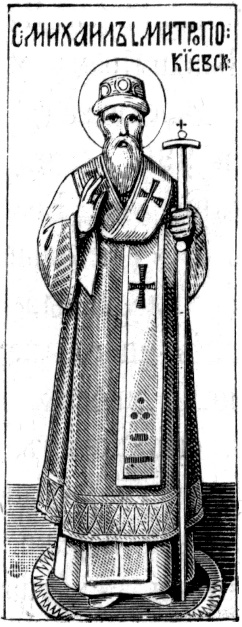
В великой церкви Киевской лавры с 1730 г. открыто почивают мощи св. Михаила, митрополита Киевского, перенесённые сюда из Антониевой пещеры161. Кальнофойский в своём описании Антониевой пещеры (1638 г.) говорил: «здесь лежит святой митрополит Михаил, тот, который послан был Цереградским патриархом с крестившимся Владимиром Святославичем для крещения Руси и крестил её»162.
In the great church of the Kiev Lavra, since 1730, the relics of St. Michael, Metropolitan of Kiev, have lain uncovered, translated here from the Anthony Cave161. Kalnofoisky, in his description of the Anthony Cave (1638), said: “Here lies the holy Metropolitan Michael, he who was sent by the Patriarch of Constantinople with the baptized Vladimir Svyatoslavich for the baptism of Rus’ and baptized it”162.
К сожалению, пр. Нестор в своей летописи ни слова не сказал о первом митрополите Михаиле, как не сказал он и о двух преемниках его163. Тем не менее не остаёмся мы без известий древних о первом митрополите Киевском. Современный св. Владимиру западный писатель говорит, что при Владимире «Греческий епископ пришёл в Россию и обратил к христианству самую средину страны»164. Длугош, повторявший Несторову историю св. Владимира, относительно епископа, действовавшего при крещении Киевлян, повторяет известие западного современника Владимирова, но точнее определяет это известие по указаниям Нестора. Он пишет, что вместе с священниками, крестившими народ в Днепре, действовал епископ «Корсунский» или прибывший из Корсуня165. Ничего нет удивительного, если западные писатели называют блаженного Михаила епископом: и Нестор включает митрополита в число епископов166. Для нас важно то, что при крещении России Владимиром, по верным памятникам, действовал святитель, хотя Нестор и не упоминает о нём. В летописи Иоакима читаем следующее: «Владимир послал в Царьград к царю и патриарху просить митрополита; весьма обрадованные тем, они прислали митрополита Михаила, человека учёного и благочестивого, родом болгарина, и с ним четырёх епископов, многих иереев, диаконов и демественников из Славян»167. – По грамоте св. князя Всеволода и по памятникам XII в. блаж. Михаил, первый митрополит Киева, действовал с Апостольскою ревностью при введении св. веры в Россию168. – В Киеве всего естественнее было сохраниться памяти о первом митрополите Киева. И этот отзыв сохранился из времён до-татарских. М. Сильвестр, показывая в Антониевой пещере мощи первого митрополита Михаила, указывает на надпись пещерную древнюю: «надпись, говорит, висит издавна», и конечно с того времени, как положены мощи св. Михаила в Антониевой пещере. По надписи, вот какое известие сообщает он о св. Михаиле: «когда крестился Русский государь Владимир Святославич, то взял от патриарха первого митрополита Михаила; он, прибыв в Киев, освятил святым крещением Русский народ и научил правой вере; за такие подвиги и жизнь благочестивую он поныне лежит нетленным в пещере св. Антония, как свидетельствует таблица, издавна висящая над ним»169. По степенной книге и Никоновой летописи, блаж. Михаил, выпрошенный Владимиром у патриарха ещё в Корсуни, не только усердно действовал в Киеве для св. веры, но сам отправлялся в 990 г. в Новгород, а с 991 г. в Ростов для проповедания св. Евангелия. – По тому и другому памятнику, он был «учительный, очень образованный, великий по жизни, весьма милостивый и кроткий, а где нужно, и строгий; после того, как много перенёс он трудов для Господа, истреблял идолов, многих неверных обратил к христианской вере, мирно он почил в 992 г. Благов. Владимир любил его и, когда умер он, сильно скорбел» о скорой потере его для новой церкви, «так что едва могли утешить его»170. По рукоп. святцам, он преставился 15 июня 992 г.171.
Unfortunately, the Venerable Nestor in his chronicle said not a word about the first Metropolitan Michael, just as he said nothing about his two successors163. Nevertheless, we are not left without ancient accounts of the first Metropolitan of Kiev. A contemporary Western writer of St. Vladimir says that under Vladimir “a Greek bishop came to Rus’ and converted the very heart of the country to Christianity”164. Dlugosz, who repeated Nestor’s account of St. Vladimir, concerning the bishop who acted at the baptism of the Kievans, repeats the account of the Western contemporary of Vladimir, but defines this account more precisely according to Nestor’s indications. He writes that together with the priests who baptized the people in the Dnieper, a bishop “of Korsun” or who had come from Korsun acted165. There is nothing surprising if Western writers call the blessed Michael a bishop: Nestor also includes the metropolitan among the bishops166. What is important for us is that at the baptism of Rus’ by Vladimir, according to reliable monuments, a Hierarch acted, although Nestor does not mention him. In the Chronicle of Joachim we read the following: “Vladimir sent to Constantinople to the emperor and patriarch to ask for a metropolitan; greatly rejoicing at this, they sent Metropolitan Michael, a learned and pious man, a Bulgarian by birth, and with him four bishops, many priests, deacons, and chanters from the Slavs”167. – According to the charter of the holy Prince Vsevolod and according to monuments of the 12th century, the blessed Michael, the first Metropolitan of Kiev, acted with Apostolic zeal in the introduction of the holy faith into Rus’168. – In Kiev it was most natural for the memory of the first Metropolitan of Kiev to be preserved. And this testimony has been preserved from pre-Tatar times. Metropolitan Sylvester, showing the relics of the first Metropolitan Michael in the Anthony Cave, points to an ancient cave inscription: “The inscription,” he says, “has hung from ancient times,” and certainly from the time when the relics of St. Michael were placed in the Anthony Cave. According to the inscription, this is the account he gives of St. Michael: “When the Russian sovereign Vladimir Svyatoslavich was baptized, he received from the patriarch the first Metropolitan Michael; he, having arrived in Kiev, consecrated the Russian people with holy baptism and taught them the right faith; for such labors and a pious life, he to this day lies incorrupt in the cave of St. Anthony, as the tablet, hanging from ancient times over him, testifies”169. According to the Book of Degrees and the Nikon Chronicle, the blessed Michael, requested by Vladimir from the patriarch while still in Korsun, not only zealously labored in Kiev for the holy faith, but himself went in 990 to Novgorod, and from 991 to Rostov, to preach the holy Gospel. – According to both monuments, he was “instructive, very learned, great in life, most merciful and meek, and where necessary, also strict; after he had borne many labors for the Lord, destroyed idols, converted many unbelievers to the Christian faith, he peacefully reposed in 992. The Right-believing Vladimir loved him and, when he died, grieved greatly” over the swift loss of him for the new Church, “so that they could scarcely comfort him”170. According to the manuscript Menologia, he reposed on June 15, 992171.
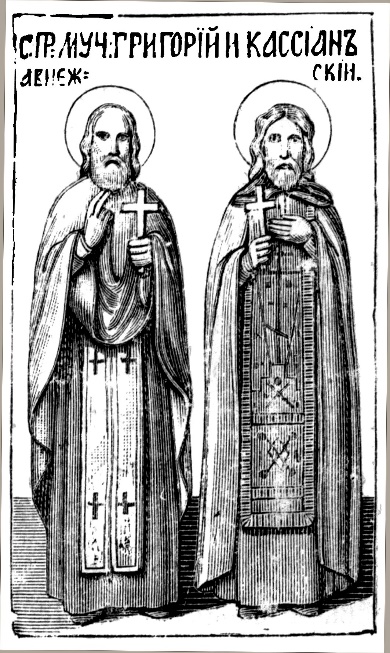
Когда преп. Стефан Махрищский полагал основание Махрищской обители, блаж. Григорий владел участком земли, невдали от бедной обители172. Воспламенённый любовью к Господу, Григорий отдал всё, что имел, и себя самого в распоряжение святого пустынника и удостоен был после иночества сана священства. Когда преп. Стефан удалился из обители, чтобы жить в безмолвной пустыни, он взял с собой любимого ученика Григория, и они прошли в глухие леса глубокого севера. В Вологодской стране, в Авнежском княжестве, что в нынешнем Тотемском уезде, поселились они близ реки Сухоны. Здесь у потока, называемого Юрьевым, поставили они (1370 г.) храм Св. Троицы и потом другой в честь великомучен. Георгия. – Им щедро давал пособия богатый землевладелец Константин Дмитриевич, который потом и сам принял монашество с именем Кассиана. Вскоре Авнежская обитель прославилась в окрестности; великий князь Димитрий Иоаннович прислал от себя монастырю вклады, но отозвал преп. Стефана в его Махрищскую обитель. Преп. Григорий остался начальником Авнежской обители, а Кассиан был при нём келарем. Они подвизались усердно для своего спасения и удостоились страдальческой кончины. – В 1392 г. обитель их разорена была Вятскими Татарами, а сами преп. Григорий и Кассиан июня 15 были убиты. – По внешнему виду преп. Григорий был уже сед и несколько плешив, а Кассиан с густыми волосами на голове, с недолгой и простой бородой. – Место обители их считалось собственностью Махрищской обители, но по кончине их совсем запустело и поросло лесом; так боялись тогда диких Татар! В 1524 году Авнежский селянин при чистке леса нашёл мощи преп. Григория и Кассиана; над ними поставили часовню. Завладевший участком земли, где была обитель, домогался, по страсти к корысти, уничтожить часовню; но впал в тяжкую болезнь и в раскаянии получил исцеление при могиле преп. пустынников. Махрищский настоятель Варлаам царским иждивением построил (1560 г.) над гробом преподобных монастырь с храмами Св. Троицы и великомучен. Георгия, как это было при жизни их. Митрополит Макарий поручил Вологодскому епископу Иоасафу освидетельствовать мощи, и затем установлено совершать местно память преп. Григория и Кассиана 15 июня. Обитель упразднена 1764 г., но придел Троицкого храма остаётся посвящённым имени преподобных, а на гробнице стоит древняя икона их с изображением деяний173.
When the Venerable Stephen of Makhrishchi was laying the foundation of the Makhrishchi monastery, the blessed Gregory owned a plot of land not far from the poor monastery172. Inflamed with love for the Lord, Gregory gave all that he had, and himself, into the disposal of the holy hermit, and was deemed worthy after monasticism of the rank of the priesthood. When the Venerable Stephen withdrew from the monastery to live in a silent hermitage, he took with him his beloved disciple Gregory, and they went into the deep forests of the far north. In the Vologda region, in the Avnega principality, in what is now the Totma district, they settled near the Sukhona River. Here, by a stream called Yuriev, they built (1370) a church of the Holy Trinity and later another in honor of the Great Martyr George. – They were generously aided by the wealthy landowner Constantine Dmitrievich, who later himself received monasticism with the name Cassian. Soon the Avnega monastery became renowned in the vicinity; Grand Prince Demetrius Ioannovich sent donations to the monastery from himself, but recalled the Venerable Stephen to his Makhrishchi monastery. The Venerable Gregory remained the superior of the Avnega monastery, and Cassian was the cellarer under him. They labored zealously for their salvation and were deemed worthy of a martyric end. – In 1392, their monastery was destroyed by the Vyatka Tatars, and the Venerable Gregory and Cassian themselves were slain on June 15. – In appearance, the Venerable Gregory was already gray-haired and somewhat bald, while Cassian had thick hair on his head, with a short and simple beard. – The site of their monastery was considered the property of the Makhrishchi monastery, but after their repose it became completely desolate and overgrown with forest; so greatly were the wild Tatars feared then! In 1524, a peasant of Avnega, while clearing the forest, found the relics of the Venerable Gregory and Cassian; a chapel was erected over them. The man who had taken possession of the plot of land where the monastery had been, driven by a passion for gain, sought to destroy the chapel; but he fell into a grievous illness and, in repentance, received healing at the grave of the Venerable hermits. The Makhrishchi abbot Barlaam, at the Tsar’s expense, built (1560) a monastery over the grave of the Venerable Ones, with churches of the Holy Trinity and the Great Martyr George, as it had been during their lifetime. Metropolitan Macarius commissioned the Bishop of Vologda, Joasaph, to examine the relics, and then the local commemoration of the Venerable Gregory and Cassian was established for June 15. The monastery was abolished in 1764, but the side-chapel of the Trinity church remains dedicated to the name of the Venerable Ones, and on their tomb stands an ancient icon of them with depictions of their deeds173.
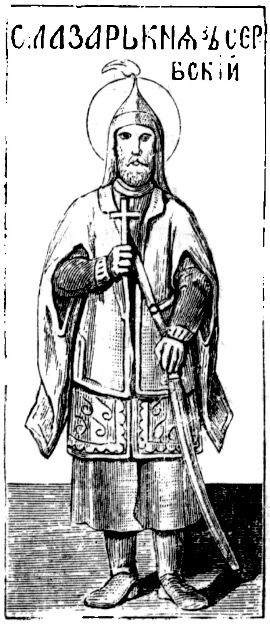
Блаженный Лазарь174 не был из потомков владетельного дома св. Неемани175. В честь св. Стефана Неемани те всегда соединяли с собственным своим именем имя Стефана. Но он был женат на Милице, происходившей от св. Стефана Неемани, через второго сына его Волкана176. Потому и он писался Стефан Лазарь. Звание князя дозволил ему носить царь Душан, как родственнику Нееманичей.
The blessed Lazarus174 was not of the descendants of the ruling house of St. Nemanja175. In honor of St. Stephen Nemanja, they always joined the name Stephen to their own name. But he was married to Milica, who was descended from St. Stephen Nemanja through his second son, Vukan176. Therefore he too was styled Stephen Lazarus. The title of prince was permitted him by Tsar Dušan, as a relative of the Nemanjić dynasty.
При царе Уроше он был правителем Сремской Придунайской области. Когда в 1371 г. погиб похититель царской власти последнего Уроша, Лазарь, не объявляя себя владетелем всей Сербии, употреблял меры к поправлению печального состояния её. Прежде всего обратил он внимание на дикие своеволия областных правителей. Герцеговинский наместник Николай Алтаман более походил на атамана разбойничьих шаек, чем на охранителя покоя и нравственности общественных: с шайками подобных себе испорченных людей он нападал на соседей и производил грабежи и убийства. Князь Лазарь с сильными отрядами преследовал его из одного места в другое; тот заперся в крепости Ужице; осадив его тут, Лазарь довёл дело до того, что Алтамана выдали Лазарю. Князь приказал лишить его зрения и вывести за границу. Потом разбил он у Браничева Радича Бранковича. Для довершения победы над разрушительным своеволием мечтательных кралей, Лазарь прошёл с войском Далматию и Боснию177. Выгнав Венгров из Срема и Мачвы, присоединил к Сербии знатную часть по правую и левую и сторону реки Тиссы до нынешнего Темесвара. – Для того, чтобы наместники не отделяли личных интересов от интересов всей Сербии, он выдал за них дочерей своих. После таких подвигов Лазаря вся Сербия объявила его верховным и властителем Сербии178.
Under Tsar Uroš he was the ruler of the Srem Danubian region. When in 1371 the usurper of the royal power of the last Uroš perished, Lazarus, without declaring himself the sovereign of all Serbia, took measures to remedy its grievous condition. First of all, he turned his attention to the wild lawlessness of the regional rulers. The governor of Herzegovina, Nicholas Altoman, resembled more the chieftain of a band of robbers than a guardian of public peace and morality: with bands of similarly corrupt men he attacked his neighbors and committed robberies and murders. Prince Lazarus with strong detachments pursued him from one place to another; he shut himself up in the fortress of Užice; besieging him there, Lazarus brought matters to such a point that Altoman was handed over to Lazarus. The prince ordered him to be deprived of his sight and expelled beyond the border. Then he defeated Radič Branković near Braničevo. To complete the victory over the destructive lawlessness of the would-be kings, Lazarus marched with his army through Dalmatia and Bosnia177. Having driven the Hungarians out of Srem and Mačva, he annexed to Serbia a considerable part on both the right and left banks of the Tisza River as far as present-day Timișoara. – In order that the governors might not separate their personal interests from the interests of all Serbia, he gave his daughters in marriage to them. After such exploits of Lazarus, all Serbia proclaimed him the supreme ruler and sovereign of Serbia178.
Церковь Сербская примирена была благочестием его с патриархом Цареградским. Тот негодовал на правителей Сербии за присвоение Сербскому архиепископу звания патриарха и за провозглашение Сербского владетеля Душана царём. Особенно это негодование стало сильно тогда, как царь Душан, И завоевав Греческие области, подчинил ведению Сербского патриарха церкви, дотоле бывшие в ведении Константинопольского патриарха, и выслал из своих областей Греков епископов. – Деспот Иоанн Углешь в 1368 г. передал церкви и своей области ведению Цареградского патриарха179. Блаженный Лазарь положил устроить дела мирным соглашением. По определению собора послан был умный инок Исаия в Константинополь. На соборе Цареградского патриарха определено оставить в силе права независимого Сербского архиепископа, предоставить ему и звание патриарха, но с тем, чтобы пользовался последним только в Сербии.
The Serbian Church was reconciled by his piety with the Patriarch of Constantinople. The latter had been indignant at the rulers of Serbia for appropriating the title of patriarch for the Serbian archbishop and for proclaiming the Serbian ruler Dušan as tsar. This indignation became especially strong when Tsar Dušan, having conquered the Greek regions, placed the churches that had previously been under the jurisdiction of the Patriarch of Constantinople under the authority of the Serbian patriarch, and expelled the Greek bishops from his domains. – Despot John Uglješa in 1368 transferred the churches of his region to the jurisdiction of the Patriarch of Constantinople179. The blessed Lazarus resolved to settle matters by peaceful agreement. By the decision of a council, the wise monk Isaiah was sent to Constantinople. At the council of the Patriarch of Constantinople, it was decreed to leave in force the rights of the independent Serbian archbishop, to grant him also the title of patriarch, but on condition that he should use the latter only within Serbia.
Десять лет после того Сербия наслаждалась спокойствием полным. Лазарь вызвал жителей в города, разорённые в несчастное время. Богатые рудники серебра, разрабатываемые в горах, оживили промышленность и торговлю.
For ten years thereafter, Serbia enjoyed complete tranquility. Lazarus summoned inhabitants to the cities that had been devastated during the unfortunate time. The rich silver mines worked in the mountains revived industry and trade.
а) Грамотой 1380 г. «благоверный Стефан князь Лазарь» дал больнице Хиландарской с. Елчаницу181 и он же распространил главный Хиландарский храм пристроенной папертью. В том же 1380 г. пожаловал он построенному им храму Введения Богоматери в Горнаке несколько сёл для основавшейся тут иноческой общины182.
a) By a charter of 1380, "the right-believing Stephen, Prince Lazarus" granted the village of Elčanica181 to the Hilandar hospital, and he also enlarged the main church of Hilandar with an added narthex. In the same year 1380, he granted several villages to the church of the Entry of the Theotokos in Gornak, which he had built, for the monastic community founded there182.
б) Русскому Пантелеймонову монастырю «князь Серблем и Подунавию» грамотой 1381 г. дал село Длабе и ему же в том же году отдал Спасскую церковь в Хвостне183, – приняв на себя звание ктитора монастыря Пантелеймонова184.
b) To the Russian Monastery of St. Panteleimon, "the Prince of the Serbs and the Danube region," by a charter of 1381, gave the village of Dlabe, and in the same year he also gave it the Church of the Savior in Hvostno183, having taken upon himself the title of ktetor of the Monastery of St. Panteleimon184.
в) В подкрылии горы Кучайны, писали впоследствии в Москву, находится царская священная обитель, называемая Олешковицы, в которой храм Св. Троицы есть строение святого между царями мученика, князя Лазаря»185.
c) At the foot of Mount Kučajna, it was later written to Moscow, there is a royal sacred monastery called Oleškovica, in which the church of the Holy Trinity is a construction of the holy martyr among kings, Prince Lazarus185.
г) Особенным же памятником ему служит «Задушбина» его, монастырь Раваница. В грамоте своей 1381 года писал он: «ревнуя бывшим прежде меня царям благочестивым, на престол коих вознёс меня Бог, решился я принести посильную жертву: построил с основания монастырь в честь Вознесения Господня и посильно украсил его, приготовил жилья для общежития братии, установленного Апостолами. Достаточно приготовил всего: доходы и сёла, насадил виноградники, другие купил... Всё, что отдаю я, не составляет ничьей собственности, – не учинил я никому насилия, всё или куплено, или приобретено меной, как кто хотел... Пусть не поставляется игумен со стороны; 12 благоговейных братий, по совещанию с князем, избирают из монастырской братии и, положив руку на Евангелие, скажут: сей достоин быть наставником общежитию нашему и пасти Христово стадо»186.
d) A particular memorial to him is his "Zadušbina," the Ravanica Monastery. In his charter of 1381 he wrote: "Emulating the pious tsars who were before me, to whose throne God has raised me, I resolved to offer a sacrifice according to my ability: I built from the foundations a monastery in honor of the Ascension of the Lord and adorned it as best I could, I prepared dwellings for the cenobitic life of the brethren, established by the Apostles. I prepared everything sufficiently: revenues and villages, I planted vineyards, others I bought... All that I give does not constitute anyone's property—I have done violence to no one; everything was either bought or acquired by exchange, as each one wished... Let no abbot be appointed from outside; twelve reverent brethren, after consultation with the prince, shall choose from among the monastic brethren and, placing their hand on the Gospel, shall say: 'This one is worthy to be the teacher of our community and to shepherd Christ's flock'"186.
Страшные беды близились к Сербии. Азиатские дикари Турки уже утвердились в Румелии, взяв Одрин-Адрианополь. Болгария почти вся пала перед ними. Эпир и Албания признали зависимость от султана. Насилия Турок не знали пределов.
Terrible calamities were approaching Serbia. The Asiatic savages, the Turks, had already established themselves in Rumelia, having taken Odrina-Adrianople. Bulgaria had almost entirely fallen before them. Epirus and Albania acknowledged dependence on the sultan. The violence of the Turks knew no bounds.
В 1387 г. Лазарь заманил в теснины Эпирские 20,000 Турок и едва спаслось 500 из них от меча Лазарева188. Гордые Османы заскрежетали зубами: они поклялись истребить Сербов. – Управившись с другими делами, султан Мурат двинул 300,000 войска против Сербии. – Он потребовал от Лазаря или полной покорности, или решительного боя. Князь почтительно отвечал (мая 24-го 1389 г.): «я получил писание ваше и понял, что вы повелеваете, чтобы пришёл я к вам, принёс дань и покорность и не назывался бы ни князем, ни королём. Все это не в моей власти. Меня поставили князья и вельможи всей Сербской земли. Я не могу покориться тебе, не нарушая клятвы, данной народу. Да и полезно ли это будет для тебя? Потерпи нам, подожди на месте, где остановился.
In 1387, Lazarus lured 20,000 Turks into the gorges of Epirus, and scarcely 500 of them escaped the sword of Lazarus188. The proud Ottomans gnashed their teeth: they swore to exterminate the Serbs. – Having settled other affairs, Sultan Murad moved 300,000 troops against Serbia. – He demanded from Lazarus either complete submission or a decisive battle. The prince respectfully replied (on May 24, 1389): "I have received your writing and understood that you command me to come to you, to bring tribute and submission, and not to call myself either prince or king. All this is not in my power. I was appointed by the princes and nobles of all the Serbian land. I cannot submit to you without breaking the oath I gave to the people. And would this even be profitable for you? Bear with us, wait at the place where you have stopped.
Я соберу народ мой. Если он скажет, чтобы покорился перед всеми поклонюсь тебе. Если же не захотят того, должен с ними выйти против тебя». Так я клялся им. Преследуя меня одного, ты будешь разорять землю. В таком случае, хотя бы не хотел, я должен стать против тебя». Султан обещал ждать ответа 17 дней. Некоторые из бывших при князе областных начальников советовали покориться. Но Лазарь отвечал им то же, что султану. Посланы были грамоты ко всем областным начальникам немедленно явиться с войском, если не хотят быть данниками султана189. Сильный Захолмский князь не успел прийти к сроку за отдалённостью. У Лазаря собралось до 60,000 войска. Оставалось идти с таким числом против 300,000. Июня 15 д. 1389 г. должна была произойти решительная битва. Этот день Лазарь каждый год праздновал; в этот день он положил основание своей Задушбине – Раванице. На этот раз накануне дня праздничного собрались к Лазарю для советов о битве. Лазарь был грустен. Рано утром следующего дня, по совету святителя, князь причастился св. Таин, причастилось и всё войско. Милош и три друга его поспешили в стан Мурата190. Он просил провести его в шатёр Мурата, чтобы открыть тайну. Явясь перед султаном, он поклонился ему и в ту же минуту выхватил меч и пронзил Мурата. От ужаса оцепенели слуги султана. Милош и три друга его бросились на коней, но их окружили и изрубили. Если бы Сербы воспользовались смятением, последовавшим за смертью султана, – напали на Турок: победа полная была бы на их стороне. Но Вук Бранкович, тайный приятель сына Вулкашинова, действовавшего теперь за магометан, распространил слух, что Милош отправился предателем в стан вражеский, и в стане Лазаря явился страх. Князю Лазарю пришлось возбуждать мужество в дружинах Сербских. Между тем сын Мурата – Баязет явился предводителем Турецкого полчища. Одушевлённые Лазарем Сербы решились дорого продать свою жизнь. Центром и крылом правым начальствовал Лазарь, левым крылом – Юрий Кастриот с албанцами. Вук Бранкович вызвался стоять с запасным войском позади, чтобы подкрепить сражающихся, когда явится нужда. – Быстрый напор Турок встречен был холодно, и немного спустя враги начали мешаться. Задние отряды, выдвинутые Баязетом, возобновили жестокую сечу. Пять часов продолжалась битва. Пора было подкрепить сражающиеся войска Сербов, но Бранкович не трогался с места. Лазарь бился в первых рядах; раненный, на истомлённом коне, он бросился сменить коня. Сербы дрогнули. Явясь снова в ряды своих, Лазарь силился удержать пошатнувшихся. Враги, пользуясь колебанием Сербов, ударили на них всеми силами. Сражавшиеся сербы то пали от меча, то взяты в плен; цел остался Бранкович, не тронувшийся с места со своими дружинами. Князь Лазарь, покрытый 16 ранами, взят был в плен и приведён с несколькими из своих к Баязету. Крепость сил была у него гигантская: он мог одним ударом рассечь двух людей с лошадью. Но теперь он был весь израненный. «Отрубить ему голову», сказал султан. – «Нет, прежде пусть мы лишимся жизни – не хотим видеть смерти его», сказала дружина князя. Так умер христианский князь191.
I will gather my people. If they say that I should submit, I will bow down before you all. But if they do not wish this, I must go out with them against you." So I swore to them. "Pursuing me alone, you will lay waste the land. In such a case, even if I did not wish it, I must stand against you." The sultan promised to wait for an answer for 17 days. Some of the regional commanders who were with the prince advised submission. But Lazarus answered them the same as he had the sultan. Letters were sent to all the regional commanders to appear immediately with their troops, if they did not wish to become tributaries of the sultan189. The powerful Prince of Zahumlje did not manage to arrive in time due to the distance. Lazarus gathered up to 60,000 troops. It remained to go with such a number against 300,000. On June 15, 1389, the decisive battle was to take place. This day Lazarus celebrated every year; on this day he had laid the foundation of his Zadušbina—Ravanica. This time, on the eve of the feast day, they gathered to Lazarus for counsel about the battle. Lazarus was sorrowful. Early in the morning of the following day, on the advice of the hierarch, the prince partook of the Holy Mysteries, and the whole army also partook. Miloš and three of his friends hastened to Murad's camp190. He asked to be led into Murad's tent to reveal a secret. Appearing before the sultan, he bowed to him and at the same moment drew his sword and pierced Murad. The sultan's servants were paralyzed with horror. Miloš and his three friends rushed to their horses, but they were surrounded and cut to pieces. If the Serbs had taken advantage of the confusion that followed the sultan's death—had they attacked the Turks—a complete victory would have been theirs. But Vuk Branković, a secret friend of the son of Vukašin, who was now fighting for the Muslims, spread the rumor that Miloš had gone as a traitor to the enemy camp, and fear appeared in Lazarus's camp. Prince Lazarus had to rouse the courage of the Serbian troops. Meanwhile, Murad's son Bayezid appeared as the leader of the Turkish horde. The Serbs, inspired by Lazarus, resolved to sell their lives dearly. The center and the right wing were commanded by Lazarus, the left wing by George Kastrioti with the Albanians. Vuk Branković volunteered to stand with the reserve troops in the rear, to reinforce the fighters when need arose. – The swift onslaught of the Turks was met coldly, and after a short time the enemy began to waver. The rear detachments, brought forward by Bayezid, renewed the fierce slaughter. The battle lasted five hours. It was time to reinforce the fighting Serbian troops, but Branković did not stir from his place. Lazarus fought in the front ranks; wounded, on an exhausted horse, he rushed to change his mount. The Serbs faltered. Appearing again in the ranks of his men, Lazarus strove to hold back those who were giving way. The enemies, taking advantage of the Serbs' hesitation, struck them with all their forces. The fighting Serbs either fell by the sword or were taken prisoner; Branković remained intact, having not moved from his place with his troops. Prince Lazarus, covered with 16 wounds, was taken prisoner and brought with several of his men before Bayezid. His strength was gigantic: he could cleave two men with their horse with a single blow. But now he was all wounded. "Cut off his head," said the sultan. – "No, let us first lose our lives—we do not wish to see his death," said the prince's retinue. Thus died the Christian prince191.
Тело страдальца князя, едва найденное, погребено в ближайшем храме Приштинской епископии. Спустя два года и 8 месяцев, оно оказалось нетленным и тогда перенесено в Задушбину князя – в Раваницкий монастырь; здесь оно положено было в мраморном гробе. Тогда же написана была служба св. кн. Лазарю. В ней молились: «иже вьса приведы от небытиа в бытие, иже от Девы неискусомужние нас ради въплъщсе, Измаила врага покоры борющего нас, деспоту нашему победу даруй молбами твоего Лазаря и Рождъшее Те, Слово Божие»192. В 1683 г., во время войны Турок с Немцами, старая Раваница совсем была опустошена магометанами, и иноки её перенесли мощи св. князя в одну из обителей Фрушской горы, названную новой Раваницей193.
The body of the suffering prince, found with difficulty, was buried in the nearest church of the Bishopric of Priština. Two years and eight months later, it was found incorrupt and was then transferred to the prince's Zadušbina—to the Ravanica Monastery; there it was placed in a marble coffin. At that time, a service was composed for St. Prince Lazarus. In it they prayed: "O Thou who hast brought all things from non-being into being, who for our sakes wast incarnate of the Virgin without knowing man, grant victory over the enemy Ishmael who fights to subdue us, to our despot, through the prayers of Thy Lazarus and of her who bore Thee, O Word of God"192. In 1683, during the war of the Turks with the Germans, old Ravanica was completely devastated by the Muslims, and its monks transferred the relics of the holy prince to one of the monasteries of Fruška Gora, which was named New Ravanica193.
Современный описатель подвига св. мученика Георгия Софийского пишет: когда князь Лазарь побеждён был Турками на Косовом поле, его одного прославил Бог: тело его доныне пребывает невредимым, чему был я очевидец; глава его отсечена и обагрена кровью; смотря, думаешь, как будто ныне она отсечена; – испускает благовоние... Ведь и Мурат тогда же убит и с ним пало несчётное число Турок: и однако не явились знамения ни на начальнике, ни на подчинённых, – все истлели194.
A contemporary describer of the feat of the holy martyr George of Sofia writes: when Prince Lazarus was defeated by the Turks on the Field of Kosovo, God alone glorified him: his body remains incorrupt to this day, of which I was an eyewitness; his head is cut off and stained with blood; looking at it, you think it was cut off only today; – it emits a fragrance... For Murad was also killed at that same time, and with him fell an uncountable number of Turks: and yet no signs appeared either on the commander or on his subordinates – all decayed194.
Живыми чувствами исторической правдивости дышат слова, вышитые золотом вдовой деспота Углеша инокиней Евфимией, на шёлковом покрове, приготовленном для Лазаревой гробницы.
The words embroidered in gold by the widow of Despot Uglješa, the nun Euphemia, on a silk coverlet prepared for Lazarus's tomb, breathe with living feelings of historical truthfulness.
«Среди благ мира сего воспитывался ты от юности, о новый мученик, князь Лазарь! Крепкая рука Господня являла тебя крепким и славным между властителями земли. Господствовал ты над страной отечественной и вручённых тебе христиан утешал счастьем. Мужественной душой и с решимостью святого вышел на змия супостата Церквей святых. «Нельзя терпеть того, положил ты, чтобы христианами обладали Измаильтяне; если же нельзя того достигнуть, пусть обагрюсь кровью моей, соединюсь с воинством Царя Небесного». Два желания твои исполнились. Змия убил ты и получил венец от Бога. Не оставляй же в забытье детей твоих, оставшихся сирыми после отшествия твоего. Ты переселился к небесным радостям, а любезные дети твои – в скорбях тяжких. Ими обладают Измаильтяне. Все мы требуем помощи твоей. Молим тебя: молись общему Владыке за возлюбленных чад твоих и за всех с любовью служащих им. Много скорбей тяготеют над детьми твоими. Вкушающие хлеб их поднимают на них ковы, забыв твои благодеяния, мученик! Ты переселился с земли, но знаешь страдания детей твоих и как мученик имеешь дерзновение перед Господом. Приклони колени перед венчавшим тебя... Странную меня ты покоил телесно: ныне прошу о сугубом – утиши жестокую бурю души и тела моего. Евфимия усердно приносит тебе сие, святой195.
"Amidst the blessings of this world you were nurtured from your youth, O new martyr, Prince Lazarus! The strong hand of the Lord showed you strong and glorious among the rulers of the earth. You ruled over the land of your fathers and comforted the Christians entrusted to you with happiness. With a courageous soul and with the resolve of a saint you went forth against the serpent, the adversary of the holy Churches. 'I cannot endure,' you resolved, 'that Christians should be ruled by the Ishmaelites; but if this cannot be achieved, let me be stained with my blood, let me be joined to the host of the Heavenly King.' Two desires of yours were fulfilled. You slew the serpent and received a crown from God. Do not, then, leave in forgetfulness your children, who remain orphans after your departure. You have passed over to heavenly joys, but your beloved children are in grievous sorrows. The Ishmaelites rule over them. We all require your help. We beseech you: pray to the common Master for your beloved children and for all who serve them with love. Many sorrows weigh heavily upon your children. Those who eat their bread raise plots against them, forgetting your benefactions, O martyr! You have passed over from the earth, but you know the sufferings of your children, and as a martyr you have boldness before the Lord. Bend your knees before Him who crowned you... Me, a stranger, you gave bodily rest: now I ask for a twofold thing – calm the fierce storm of my soul and body. Euphemia earnestly offers this to you, O saint195."
В 1550 г. Паисий, игумен Хиландарского монастыря, явясь с тремя старцами к царю Иоанну, поднёс ему в дар «образ святого краля Милютина и св. князя Лазаря и службу им»196.
In 1550, Paisius, abbot of the Hilandar Monastery, appearing with three elders before Tsar John, presented to him as a gift "an icon of the holy King Milutin and of the holy Prince Lazarus, and a service to them"196.
Замечательные, между прочим, письма преп. Иеронима о воспитании детей, перевед. в «Христ. Чт.» 1834 и 1838 гг.
Remarkable, among other things, are the letters of the Venerable Jerome on the upbringing of children, translated in "Christian Reading" for 1834 and 1838.
Надпись на раке святителя в опис. Киев. лавры, стр. 299. 300. М. Евгений и в опис. лавры (стр. 79), и в опис. Софийского собора (стр. 64) говорит, что по этой же надписи св. Михаил погребён был в Десятинной церкви и в Антониеву пещеру перенесён при игум. Феоктисте в 1103 г. В надписи нет этих известий: откуда взяты они, неизвестно. Но в том нельзя сомневаться, что в Антониевой пещере мощи св. Михаила положены гораздо после 991 г., так как в этом году ещё не было Антониевой пещеры.
Inscription on the reliquary of the Hierarch in the Description of the Kiev Lavra, pp. 299, 300. Metropolitan Eugene, both in the Description of the Lavra (p. 79) and in the Description of St. Sophia Cathedral (p. 64), says that according to this same inscription St. Michael was buried in the Church of the Tithes and was transferred to the Anthony Cave under Abbot Theoctistus in 1103. The inscription does not contain these pieces of information; whence they were taken is unknown. But there can be no doubt that the relics of St. Michael were placed in the Anthony Cave much later than 991, since in that year the Anthony Cave did not yet exist.
Писали неосторожно: «мы знаемпо летописи Несторовой, что святитель Михаил был родом из Сирии и во время крещения Владимирова прислан был к нему (к кому? к крещению?) в Херсонь»;
They wrote carelessly: "we know from the Chronicle of Nestor that the Hierarch Michael was a Syrian by birth and at the time of Vladimir's baptism was sent to him (to whom? to the baptism?) in Cherson";
Populus Ruthenorum – in flumine Dniepr ab episcopo Corsunensi et presbyteris ex Graecia adductis baptisatur. hist. Polon. I, 113. Слова Длугоша повторяют Меховита (per episcopum Korshcimiensem, p. 26 chron. Polon) и Стрыковский (od. biscupa Korsunskiego... p. 132 Kronika Polska).
Populus Ruthenorum – in flumine Dniepr ab episcopo Corsunensi et presbyteris ex Graecia adductis baptisatur. Hist. Polon. I, 113. The words of Długosz are repeated by Miechowita (per episcopum Korshczimiensem, p. 26 chron. Polon) and by Stryjkowski (od. biscupa Korsunskiego... p. 132 Kronika Polska).
Под 1090 г. говорит он, что Переяславская церковь освящена «Ефремом митрополитом», а в следующем году «собрашася епископи Ефрем Переяславский» и проч. Собр. л. I, 89. 90.
Under the year 1090 he says that the Church of Pereyaslavl was consecrated "by Ephraim the Metropolitan," and in the following year "the bishops assembled, Ephraim of Pereyaslavl," etc. Collection of Chronicles, I, 89, 90.
Переяслав. лет., стр. 34 Супральск. л., стр. 10. Кормчая 1286 г. В муз. Румянц. 310. 312. 313, Грамота Всеволода в Прав. Собесед. 1861 г. III, 212, у преосв. Макария в ист. 2, 359.
Chronicle of Pereyaslavl, p. 34; Chronicle of Suprasl, p. 10; Kormchaya of 1286, in the Rumyantsev Museum, 310, 312, 313; Charter of Vsevolod in Orthodox Interlocutor, 1861, III, 212, in the work of His Eminence Macarius, History, 2, 359.
Никон. л. I, 92–94. 103. 104. Степ. кн. I, 134–136. 143–146. 150. Здесь только одно известие о св. Михаиле, что будто он родом из Сирии, не может быть принято критикой, так как оно невероятно само по себе, тогда как известие Иоакимовой летописи – самое естественное.
Nikon Chronicle, I, 92–94, 103, 104. Book of Degrees, I, 134–136, 143–146, 150. Here only one piece of information about St. Michael, that he was supposedly a Syrian by birth, cannot be accepted by criticism, as it is improbable in itself, whereas the information of the Joachim Chronicle is the most natural.
Ркп. святцы: «святый первый митрополит Михаил, иже крестил Русскую землю, преставися в л. 6500 м. июня в 15 д. и положен бысть в пещере». И по описанию лавры, стр. 300, прим. 271, до 1730 г. память св. Михаила праздновали 15 июня, а после того положена память 30 сент.
Manuscript Menologion: "The holy first Metropolitan Michael, who baptized the Russian land, reposed in the year 6500, month of June on the 15th day, and was placed in the cave." And according to the Description of the Lavra, p. 300, note 271, until 1730 the memory of St. Michael was celebrated on June 15, and after that the memory was appointed for September 30.
Иером. Иоасафа сказание о обретении мощей преп. Григория и Кассиана в июньской минее Сергиевой лавры; его же житие преп. Стефана. См. обзор литер., стр. 211Λ
Hieromonk Joasaph's Account of the Uncovering of the Relics of the Venerable Gregory and Cassian in the June Menaion of the Trinity-Sergius Lavra; also his Life of the Venerable Stephen. See Survey of Literature, p. 211.
Ист. иер. III, 59–62. Свед. о мон. 73. 74. В ркп. уставе Румянцева 1608 г. (опис. № 449): «юня 15 явление мощей преп. отец наших Гурия (Григория) и Кассияна, иже в Авнеге». Служба им в ркп. 1592 г. у Царского № 563. В 1662 г. за Авнежскпм монастырём 18 дворов. Буслаева Словесн. и искус. 2, 352.
History of the Hierarchy, III, 59–62. Information on Monasteries, 73, 74. In the manuscript Typicon of Rumyantsev from 1608 (Description, No. 449): "June 15, the uncovering of the relics of our Venerable Fathers Gury (Gregory) and Cassian, who are at Avnega." A service to them in a manuscript of 1592 in Tsarsky's collection, No. 563. In 1662, the Avnega Monastery had 18 households. Buslaev, Literature and Art, 2, 352.
Житие св. кн. Лазаря, в гласнике XI, 108–115, очень бедно по содержанию: это – набор напыщенных, диких фраз, обличающих бедность мысли сочинителя. – Чтобы видеть кн. Лазаря, надобно пересмотреть другие памятники былого.
The Life of the Holy Prince Lazarus, in Glasnik XI, 108–115, is very poor in content: it is a collection of pompous, wild phrases, betraying the poverty of thought of the author. – To see Prince Lazarus, one must examine other monuments of the past.
Лазарь был из боярского дома Гербляновиичей, Раича ист. 3, 4. 5. Сербляк л. 144. Сам Лазарь говорит, что у него «брат чельник Млье и сестра Драгана». Хиландр. грам. 1381 г.
Lazarus was from the boyar house of Hrebeljanović. Raić, History, 3, 4, 5; Srbijak, fol. 144. Lazarus himself says that he had "a brother, čelnik Mlje, and a sister Dragana." Charter of Hilandar, 1381.
Описатель жизни св. Стефана деспота, сына Лазарева, пишет: «Влькан второй сын Симеона, брат же Саввы, великий князь, роди сына Жупана Димитра, в иноческом сане Давид именовался и светый, созда церковь при реце Лиме в месте Бродареве. С же роди сына Вратислава кнеза. Вратислав же роди Вратка кнеза; Вратко же роди дщерьМилицу. Сия ж бысть сьпружнпца великого кнеза Лазаря». Тоже цароставник у Раича 3, 3 и Никон. лет. 2, 289.
The describer of the life of St. Stephen the Despot, son of Lazarus, writes: 'Vukan, the second son of Simeon, brother of Sabbas, Grand Prince, begot a son, Župan Demetrius, who in the monastic rank was called David and was a saint; he built a church by the river Lim in the place Brodarevo. He begot a son, Prince Vratislav. Vratislav begot Prince Vratko; Vratko begot a daughter, Milica. She was the spouse of the Grand Prince Lazarus.' Likewise the Tsarostavnik in Raić, 3, 3, and the Nikon Chronicle, 2, 289.
Марко, сын Вулкашина, называл себя Призренским кралем; Владимир, незаконный сын Душана, также писался на монетах кралем (гласник VIII, 276. VI, 186. 189).
Marko, son of Vukašin, called himself King of Prizren; Vladimir, the illegitimate son of Dušan, also styled himself king on coins (Glasnik VIII, 276; VI, 186, 189).
Раича ист. 3, 1–17. Летоп. в гласнике 1, 166. V 77. 78. XI, 148. 149. Сын Вулкашина отказался и на общем собрании признавать верховную власть Лазаря; но Лазарь скоро выгнал его из Призренского кралевства его. Тронош. лет. § 40, 41.
Raić, History, 3, 1–17; Chronicle in Glasnik I, 166; V, 77, 78; XI, 148, 149. The son of Vukašin refused even at a general assembly to recognize the supreme authority of Lazarus; but Lazarus soon drove him out of his kingdom of Prizren. Chronicle of Tronoša, § 40, 41.
О постановлении второго патриарха Сербии – в муз. Румянцева, стр. 157. Раича ист. 3, 17–20; 2, 627. 628. Синаксарь сербляка лет. 145. На монетах «князь Лазарь», но в Византийской короне и со скипетром в руке (заи. археол. общ. 1, 359. 366. 367. Гласник V, 214). По другим памятникам, он то князь, то царь; последнее означало, что народ уважал его как царя, хотя он и не носил имени царя. – Сербляк (л. 145) говорит, что примирение Константинополя с Сербской Церковью было при патр. Феофане; но в 1376 г. патриархом Кон. был Филофей, столько же кроткий, сколько умный и просвещённый. В другом месте (л. 152) и Сербляк говорит, что примирение последовало при патр. Филофее.
On the establishment of the second Patriarch of Serbia – in the Rumyantsev Museum, p. 157. Raić, History, 3, 17–20; 2, 627, 628. Synaxarion of the Srbijak, fol. 145. On coins 'Prince Lazarus,' but in a Byzantine crown and with a scepter in his hand (Notes of the Archaeological Society, 1, 359, 366, 367; Glasnik V, 214). According to other monuments, he is sometimes prince, sometimes tsar; the latter meant that the people respected him as a tsar, although he did not bear the name of tsar. – The Srbijak (fol. 145) says that the reconciliation of Constantinople with the Serbian Church was under Patriarch Theophanes; but in 1376 the Patriarch of Constantinople was Philotheus, as gentle as he was wise and enlightened. In another place (fol. 152) the Srbijak itself says that the reconciliation took place under Patriarch Philotheus.
Это писано в 1583 г. Тогда приходили в Москву из Сербии за милостыней «Троицкого Олешковского монастыря священник Иоаким и Вознесенского монастыря священник Авксентий». Сношения России с Востоком, стр. 128. 132. СПб. 1859 г.
This was written in 1583. At that time there came to Moscow from Serbia for alms "the priest Joachim of the Trinity Monastery of Oleshkovo and the priest Auxentius of the Monastery of the Ascension." Relations of Russia with the East, pp. 128, 132. St. Petersburg, 1859.
По воле сына его Волка, при патр. Спиридоне, когда п. Ефрем жил на покое, написан летовник Георгия Амартола. Григоровича путеш. 23. 24.
By the will of his son Volk, under Patriarch Spyridon, when Patriarch Ephraim was living in retirement, the Chronicle of George Hamartolus was written. Grigorovich's Travels, 23, 24.
Гласник IV, 194. 195 выставляет достоверное предание, что Милош Обиличь, зять, кн. Лазаря и воевода Браничевский, основал близ Голубца мон. Тумане, поныне существующий. Милош ненамеренно застрелил инока Зосиму на молитве. Этот несчастный случай вызвал Милоша построить богатый монастырь. Не тот же ли несчастный случай усилил в нём решимость – пожертвовать своей жизнью, лишь бы убить страшного врага веры и отчизны – Мурата?
Glasnik IV, 194, 195 presents a reliable tradition that Miloš Obilić, son-in-law of Prince Lazarus and Voivode of Braničevo, founded the monastery of Tuman near Golubac, which still exists. Miloš accidentally shot the monk Zosimas at prayer. This unfortunate incident prompted Miloš to build a rich monastery. Did not the same unfortunate incident strengthen in him the resolve to sacrifice his life, if only to kill the terrible enemy of the faith and the fatherland – Murad?
Известие современного Русского паломника Игнатия, Никон. лет. 3, 161 и в сказаниях Русского народа, – Два сказания XV в. о Косовской битве у Гильфердинга в XIII т. Зап. Геогр. Общ. 271–273. Там же, стр. 265–270 народные сказания. Из них одно в полном виде напеч. в чтен. Общ. Ист. 1860 г., об историческом достоинстве их давно сказал Раич: «о Милоше в простой повести сказуемое на басни походит». Троношская летоп. в Гласнике V, 84. 85’. 88–92. 3, 51. 3. В Сербском прологе XIV в. под 15 июня: «в си же день, а в л. 7897 (1389), бысть бои кнеза Лазаря с Амуратом царём на Косове поли и ту многа труппя падоше от христиан и Турок. Сербле бо испръва разбили беху и царя Амурата убыше. И за пробежение некоих от Срьбских войск иреодолеша Турци и бысть велико съражение. Убыше же и славного Србского господина, кн. Лазаря. Все же погубенные и кровь свою нролявше хрнстиани Бог сподоби с всеми пострадавшими за име Его, Ему же слава». Гласник X, 341. 342.
Account of the contemporary Russian pilgrim Ignatius, Nikon Chronicle, 3, 161, and in Tales of the Russian People; – Two accounts of the 15th century about the Battle of Kosovo in Hilferding, Vol. XIII of the Notes of the Geographical Society, 271–273. Ibid., pp. 265–270, folk tales. One of them is printed in full in the Readings of the Society of History, 1860; their historical value was long ago stated by Raić: 'what is told about Miloš in the simple narrative resembles a fable.' Chronicle of Tronoša in Glasnik V, 84, 85, 88–92; 3, 51, 3. In the Serbian Prologue of the 14th century under June 15: 'On this day, in the year 7897 (1389), there was the battle of Prince Lazarus with Tsar Amurat on the Field of Kosovo, and there many corpses fell of Christians and Turks. For the Serbs at first had broken through and killed Tsar Amurat. And because of the flight of some of the Serbian troops, the Turks prevailed, and there was a great slaughter. And the glorious Serbian lord, Prince Lazarus, was also killed. All the Christians who perished and shed their blood, God deemed worthy with all who suffered for His name, to Whom be glory.' Glasnik X, 341, 342.
Раича Ист. 3, 69. 70. Сказание напеч. в Гласнике XII, 681–684. Ныне Равиница кн. Лазаря опять с иноками, хотя и немногими. Дантон в Христ. Чтен. 1865 г. 2, 141.
Rajić, History 3, 69, 70. The account is printed in Glasnik XII, 681–684. Now Ravanica of Prince Lazarus is again inhabited by monks, though few in number. Danton in Christian Reading, 1865, part 2, p. 141.
Сербский текст у Гильфердинга в Зап. Геогр. Общ. XIII, 280. 281. В Изв. Акад. 1, 347 Евфимия считается супругой кн. Лазаря. Но инокиня Евфимия – вдова деспота Углелиа и по житию св. Стефана деспота вместе с вдовой кн. Лазаря. Милицей являлась к султану. На завесе, шитой в 1399 г. по атласу серебром, золотом и шелками, инокиня Евфимия называет себя: «дъщи господина кн. Кесаря Воихне, лежащего зде, некогда же деспотица» (Гласник V).
The Serbian text in Hilferding's Notes of the Geographical Society XIII, 280, 281. In the Proceedings of the Academy 1, 347, Euthymia is considered the spouse of Prince Lazarus. But the nun Euthymia was the widow of the despot Uglješa, and according to the Life of St. Stephen the Despot, together with the widow of Prince Lazarus, Milica, she appeared before the Sultan. On the curtain embroidered in 1399 on atlas with silver, gold, and silks, the nun Euthymia calls herself: "daughter of the lord Prince Caesar Vojihna, lying here, formerly despotissa" (Glasnik V).
Сношения России с Востоком, стр. 54. СПб. 1858 г. Служба св. кн. Лазарю Сербскому на 15 июня, – у Царского № 563, в Сербск. ркп. Гласник 1, 160. Вершинского месяцеслов под 15 июня.
Relations of Russia with the East, p. 54. St. Petersburg, 1858. The service to St. Prince Lazarus of Serbia for June 15 — in Tsarsky's No. 563, in the Serbian manuscript, Glasnik 1, 160. Vershinsky's Menology under June 15.