Родом сицилианин, из Сиракуз; в юных летах постригся на острове Хиосе, а в 811 году, как доверенное лицо, послан был патриархом Никифором к папе Римскому в звании апокрисиария и прожил почти девять лет. В 821 году возвратился с письмом папы Пасхалиса к новому императору Михаилу Косноязычному, но этот обвинил Мефодия в измене, приказал наказать телесно, причём ему повредили челюсть, и заточить на острове св. Андрея (близ Никомидии) в тесную яму, где уже содержался разбойник. Выпущенный по смерти Михаила (в октябре 829), больше похожий на мертвеца и не имея ни волоска на голове, он жил в Константинополе частным человеком (потому что во всех монастырях были иконоборцы), посещал некоторые дома и кое-кого обратил на путь истины, потому что был святой жизни, глубоко знал св. Писание и творения отеческие. Года через два император Феофил, по указанию других, воспользовавшись его помощью в уразумении некоторой книги, назначил ему помещение между дворцовыми офицерами, часто призывал для собеседований об учёных предметах и во время походов брал с собой.
He was a Sicilian by birth, from Syracuse. In his youth he was tonsured on the island of Chios, and in the year 811, as a trusted person, he was sent by Patriarch Nikephoros to the Pope of Rome in the capacity of apocrisiarius, and lived there for almost nine years. In 821 he returned with a letter from Pope Paschal to the new emperor Michael the Stammerer, but the latter accused Methodius of treason, ordered him to be punished corporally, during which his jaw was injured, and to be imprisoned on the island of St. Andrew (near Nicomedia) in a narrow pit where a robber was already confined. Released after the death of Michael (in October 829), more like a corpse and having not a single hair on his head, he lived in Constantinople as a private person (because all the monasteries were filled with iconoclasts), visited certain homes, and turned some to the path of truth, for he was of holy life, deeply knew Holy Scripture and the patristic writings. About two years later, the emperor Theophilus, on the advice of others, availing himself of his help in understanding a certain book, assigned him quarters among the palace officials, often summoned him for conversations on learned subjects, and took him along on campaigns.
По смерти Феофила (20 января 842) возведённый императрицей Феодорой на патриарший престол (12 февраля 842), он созвал в Константинополе собор, на котором восстановлено почитание святых икон и положено ежегодно в первую неделю Великого поста совершатьТоржество Православия. Скончался в 846 году.
After the death of Theophilus (20 January 842), having been elevated to the patriarchal throne by the empress Theodora (12 February 842), he convened a council in Constantinople at which the veneration of holy icons was restored and it was established that annually on the first week of Great Lent the Triumph of Orthodoxy should be celebrated. He reposed in the year 846.
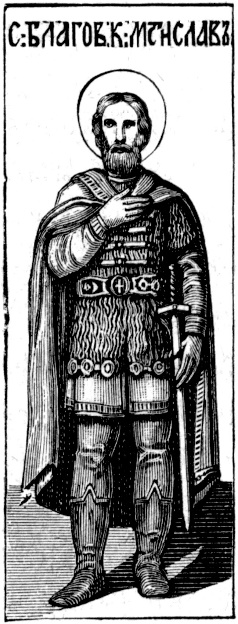
Благоверный князь Мстислав, в крещении Георгий, внук блаж. великого князя Мстислава и сын блаж. князя Ростислава, в 1166 г. участвовал в победе южных князей над Половцами, потом принимал участие в войнах князя Андрея Юрьевича с Киевом и Новгородом147. – Самый блистательный подвиг мужества его относился к 1173 г. Андрей Юрьевич, великий князь Владимирский, объявил Ростиславичам, что им нет места в южной России, – она его – собственность. Мстислав велел остричь послу голову и бороду и отправил его сказать Андрею: «доселе мы уважали тебя, как отца; но, когда ты говоришь с нами, как с слугами и людьми простыми, идём на суд Божий». – Андрей послал 50,000 северного войска; к этому грозному ополчению поневоле присоединились полки некоторых южных князей. У Мстислава была только своя дружина и дружина брата Давида. «Братья! ударим с помощью Господа и св. мучеников Бориса и Глеба», сказал Мстислав своим и понёсся с ними против неприятелей. Этот первый бой, исключивший множество людей из рядов неприятельских, дал знать неприятелю, что не так легко уничтожить Мстислава, как полагал Андрей. Девять недель стояли северные войска вокруг Вышгорода, где заключился Мстислав. Одни из союзных князей опасались могущества Андреева, другие – коварства Святослава Черниговского, и потому тайно желали счастья Ростиславичам; а храбрый Мстислав почти каждый день делал отважные вылазки против войска Андреева. Когда прибыл Луцкий князь Ярослав с Волынскими войсками и соединился с Мстиславом, страх напал на осаждающих. Они бросились бежать, кто куда мог. Мстислав смотрел со стороны и не верил глазам своим. Наконец, подняв руки к небу, прославил он защитников Вышгорода, св. князей Бориса и Глеба. Потом, вскочив на коня, бросился с дружиной за беглецами, топил, рубил, хватал их. Неприятельский стан, обозы, множество пленных стали добычей Мстислава. С того времени не было другого имени Мстиславу, кроме Храброго148.
The Right-believing Prince Mstislav, in baptism George, grandson of the blessed Grand Prince Mstislav and son of the blessed Prince Rostislav, in 1166 took part in the victory of the southern princes over the Polovtsy, and later participated in the wars of Prince Andrew Yuryevich with Kiev and Novgorod147. – His most brilliant feat of courage occurred in 1173. Andrew Yuryevich, the Grand Prince of Vladimir, declared to the Rostislavichi that there was no place for them in southern Rus – it was his property. Mstislav ordered the envoy’s head and beard to be shorn and sent him back to Andrew, saying: “Hitherto we have respected you as a father; but since you speak to us as to servants and common people, we go to the judgment of God.” – Andrew sent 50,000 northern troops; the regiments of certain southern princes were forced to join this fearsome host. Mstislav had only his own retinue and that of his brother David. “Brothers! Let us strike with the help of the Lord and the holy martyrs Boris and Gleb,” said Mstislav to his men, and he charged with them against the enemy. This first battle, which cut down many from the enemy ranks, made the foe realize that destroying Mstislav was not as easy as Andrew had supposed. For nine weeks the northern troops stood around Vyshgorod, where Mstislav had shut himself up. Some of the allied princes feared Andrew’s power, others the treachery of Sviatoslav of Chernigov, and therefore secretly wished success to the Rostislavichi; and the brave Mstislav made daring sorties almost every day against Andrew’s army. When Prince Yaroslav of Lutsk arrived with Volhynian troops and joined Mstislav, fear fell upon the besiegers. They fled, each wherever he could. Mstislav watched from the side and could not believe his eyes. At last, raising his hands to heaven, he glorified the defenders of Vyshgorod, the holy princes Boris and Gleb. Then, leaping onto his horse, he rushed with his retinue after the fugitives, drowning, cutting down, and capturing them. The enemy camp, baggage trains, and a multitude of prisoners became Mstislav’s booty. From that time Mstislav had no other name but the Brave148.
Мстислав не гордился в счастии. – Он примирился с князем Андреем и выпросил Киев для брата Романа. – Роман, отправляясь в Киев, оставил в Смоленске сына своего. Смоляне возмутились против молодого князя и предложили Мстиславу Смоленск. Мстислав принял (1175 г.) предложение. Между тем Святослав Черниговский выгнал Романа из Киева. – Мстислав возвратил Смоленск брату. «Береги его, сказал он Роману; я брал только для того, чтобы сохранить тебе». Он не хотел более вступаться в кровавые ссоры князей и для себя доволен был малым. Всеволод Владимирский велел вырезать глаза у князя Мстислава и Ярополка и засадил в тюрьму Рязанского князя Глеба, тестя Мстиславова. Мстислав просил Святослава вступиться за несчастного пленника, а прочее предал воле Божией. Несчастные слепцы, высланные с севера, усердно молились на Смядыне в храме св. князей Бориса и Глеба и внезапно прозрели. Это было великой радостью для благочестивого героя. – Новгородцы пригласили к себе исцелённых князей. Но Мстислав скоро умер. Новгородцы, опасаясь жестокого властолюбия Всеволода, звали к себе Мстислава Храброго. «Не пойду от братьев и из своей отчины», отвечал князь, дороживший тем, что дал ему Бог. «А мы разве – не твоя отчина?» сказали послы. На усердную просьбу Мстислав (1179) согласился. В Новгороде приняли его с восторгом. – Дав клятву оберегать Новгородцев, он тогда же вышел против хищных Эстонцев, которые перед тем осаждали Псков и не переставали грабить пограничные места. Мстислав прошёл с опустошением страну их до моря, взяв множество пленных и скота. На обратном пути (1180 г.) наказал он и Псков за мятеж. Он готовился к новым предприятиям против Всеволода. – Но неожиданно заболел, велел нести себя в церковь, причастился Св. Таин и в тот же день скончался. Это было 14 июня 1180 г.
Mstislav did not grow proud in good fortune. – He made peace with Prince Andrew and obtained Kiev for his brother Roman. – Roman, setting out for Kiev, left his son in Smolensk. The people of Smolensk rose up against the young prince and offered Smolensk to Mstislav. Mstislav accepted the offer (1175). Meanwhile Sviatoslav of Chernigov drove Roman out of Kiev. – Mstislav returned Smolensk to his brother. “Guard it,” he said to Roman; “I took it only to preserve it for you.” He wished no longer to involve himself in the bloody quarrels of the princes and was content with little for himself. Vsevolod of Vladimir had the eyes of Prince Mstislav and Yaropolk put out and imprisoned Gleb, Prince of Ryazan, Mstislav’s father-in-law. Mstislav asked Sviatoslav to intercede for the unfortunate captive, and committed the rest to the will of God. The unhappy blind men, sent away from the north, prayed fervently at Smyadyn in the church of the holy princes Boris and Gleb, and suddenly received their sight. This was a great joy for the pious hero. – The Novgorodians invited the healed princes to come to them. But Mstislav soon died. The Novgorodians, fearing the cruel lust for power of Vsevolod, summoned Mstislav the Brave. “I will not go away from my brothers and from my patrimony,” answered the prince, who treasured what God had given him. “But are we not your patrimony?” said the envoys. To their earnest request Mstislav (1179) agreed. In Novgorod he was received with delight. – Having sworn to protect the Novgorodians, he immediately set out against the predatory Estonians, who had earlier besieged Pskov and did not cease plundering the borderlands. Mstislav marched through their country with devastation as far as the sea, taking many captives and cattle. On the return journey (1180) he also punished Pskov for its rebellion. He was preparing new undertakings against Vsevolod. – But he suddenly fell ill, had himself carried into church, partook of the Holy Mysteries, and reposed that same day. This was on 14 June 1180.
Новгородцы горько оплакали смерть редкого князя. «Хорошо было бы нам, говорили они, умереть вместе с тобой. – Ты защитил свободу нашу от язычников, как дед твой Мстислав». А летописец прибавляет: «он был роста среднего, лицом красавец, а душа его была ещё лучше. Щедро расточал он милостыню и помогал обителям. Был храбр и мужествен; он рвался умереть за землю Русскую. Когда приходилось освобождать пленных у язычников, он говорил: «братья! если умрём за христиан, очистимся от грехов, – Бог причтёт нас к мученикам; и если не умрём теперь, умрём же когда-нибудь. Он не собирал ни золота, ни серебра, но раздавал то дружине своей, то церквам за свою душу»149.
The Novgorodians bitterly lamented the death of this rare prince. “It would be good for us,” they said, “to die together with you. – You defended our freedom from the pagans, as did your grandfather Mstislav.” And the chronicler adds: “He was of medium stature, handsome of face, and his soul was even better. He generously distributed alms and helped monasteries. He was brave and courageous; he yearned to die for the Russian land. When it came to freeing captives from the pagans, he said: ‘Brothers! If we die for Christians, we shall be cleansed of our sins – God will count us among the martyrs; and if we do not die now, we shall die sometime anyway.’ He gathered neither gold nor silver, but distributed it to his retinue or to churches for the sake of his soul”149.
Спрашивал его (Иоанна Предтечу) народ: «что нам делать?» Он сказал им в ответ: – у кого две одежды, тот дай неимущему и у кого есть пища, делай тоже. – И мытари сказали ему: «что нам делать?» Он отвечал им: не берите больше надлежащего. Спрашивали его и воины: «а нам что делать?» И сказал им: никого не обижайте, не клевещите и довольствуйтесь своим жалованьем (Лк.3:10–14). Благоверный князь жил по этим урокам и жизнью своей велит нам жить так же, в славу Божию.
The people asked him (John the Forerunner): “What shall we do?” He answered them: “He who has two tunics, let him give to him who has none; and he who has food, let him do likewise.” And the tax collectors said to him: “What shall we do?” He answered them: “Collect no more than what is appointed you.” The soldiers also asked him: “And what shall we do?” And he said to them: “Do not oppress anyone, do not slander anyone, and be content with your wages” (Lk. 3:10–14). The Right-believing Prince lived according to these lessons, and by his life he commands us to live likewise, to the glory of God.
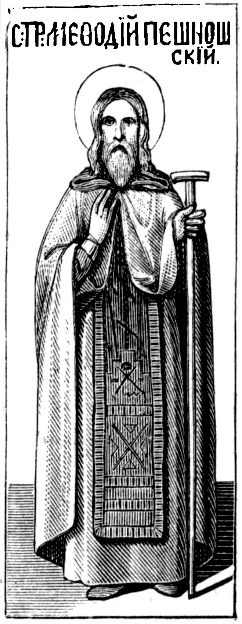
Преподобный Мефодий ещё в молодых летах пришёл в пустыню к преподобному Сергию и под руководством сего великого наставника иноческой жизни провёл несколько лет. Ревнуя жить в безмолвии, он по благословению Сергия удалился искать пустынное место и в версте от нынешней Пешношской обители, за рекой Яхромой, в дубовом лесу, на небольшом возвышении, поставил себе келью; место со всех сторон окружено болотами и лесами; место – вполне безмолвное! Здесь отшельник беседовал с одним Господом, – и очищал душу строгим постом и слезами. Однако жизнь его стала известна и, как живительный луч солнца, начала собирать к себе ревнителей подвижнической жизни; явилось к нему несколько учеников. Преподобный Сергий, посетив любимого ученика, дал ему совет построить обитель и храм на другом, более сухом и обширном месте и благословил то самое, где ныне стоит обитель. Преподобный Мефодий, как послушный сын, исполнил волю наставника. Он сам трудился при строении храма и келий,пеш, нося деревья через речку. От того-то за обителью осталось навсегда имя Пешношской, и речку, при которой стоит она, назвали Пешношей. Обитель Мефодия, основанная в 1361 г., была обителью трудолюбия для всех. Мефодий был её игуменом; но только по подвигам труда, поста и молитв он был первым между братией. Примером подвижнической жизни воспитал он добрых иноков. Строгий к себе, он был милостив к другим. По древним стихирам, составленным в честь его, каждый день при вратах обители его сидело множество нищих, и он питал их. По временам преподобный, как любитель безмолвия, удалялся за 2 версты от обители и здесь уединённо подвизался в молитве. Сюда же приходил к нему для духовных бесед преподобный Сергий. Потому эта местность названа была «беседой». Ныне здесь стоит часовня, и к ней бывает крестный ход 24 июня, так же как место начального уединённого жития Мефодиева в лесу поддерживается в памяти благоговейной другой часовней. «Собеседник и спостник великого Сергия», так называется Мефодий в древнем тропаре, переселился в блаженную вечность спустя 8 месяцев после великого отца Сергия151. – По рукописным святцам, «преподобный Мефодий, игумен Пешношской обители, ученик святому Сергию чудотворцу, преставися в л. 6900 (1392) м. июня в 14 д.» Мощи его почивают под спудом в церкви святых Сергия и Мефодия, а до 1732 г. почивали они в часовне. При раке преподобного стоит посох его, а в ризнице хранится деревянный потир, с коим совершал он святую литургию152.
The Venerable Methodius, while still in his youth, came to the wilderness to the Venerable Sergius and spent several years under the guidance of this great teacher of the monastic life. Zealous to live in silence, with the blessing of Sergius he departed to seek a desert place, and a verst from the present Peshnosha monastery, beyond the River Yakhroma, in an oak forest, on a small elevation, he built himself a cell; the place was surrounded on all sides by marshes and forests—a place of perfect silence! Here the hermit conversed with the Lord alone, and purified his soul by strict fasting and tears. Yet his life became known, and like a life-giving ray of the sun, it began to gather to itself zealots of the ascetic life; several disciples came to him. The Venerable Sergius, visiting his beloved disciple, advised him to build a monastery and church on another, drier and more spacious site, and blessed the very place where the monastery now stands. The Venerable Methodius, as an obedient son, fulfilled the will of his teacher. He himself labored at the building of the church and cells, carrying trees on foot across the river. Hence the monastery forever retained the name Peshnosha, and the river by which it stands was called the Peshnosha. The monastery of Methodius, founded in 1361, was a monastery of labor for all. Methodius was its abbot; but only by his feats of labor, fasting, and prayer was he first among the brethren. By the example of his ascetic life he raised up good monks. Strict with himself, he was merciful to others. According to the ancient stichera composed in his honor, each day at the gates of his monastery sat a multitude of beggars, and he fed them. At times the Venerable One, as a lover of silence, withdrew two versts from the monastery and there struggled in solitude in prayer. Hither also the Venerable Sergius came to him for spiritual conversations. Therefore this place was called “the Conversation.” Now a chapel stands there, and a procession of the cross is made to it on 24 June, just as the site of Methodius’s first solitary dwelling in the forest is preserved in reverent memory by another chapel. “The companion and fellow faster of the great Sergius,” as Methodius is called in the ancient troparion, passed into blessed eternity eight months after the great father Sergius151. – According to the manuscript saints’ calendars, “the Venerable Methodius, abbot of the Peshnosha monastery, disciple of St. Sergius the Wonderworker, reposed in the year 6900 (1392), on the 14th day of June.” His relics rest under a bushel in the church of Sts. Sergius and Methodius, and until 1732 they rested in a chapel. By his reliquary stands his staff, and in the sacristy is preserved a wooden chalice with which he celebrated the holy Divine Liturgy152.
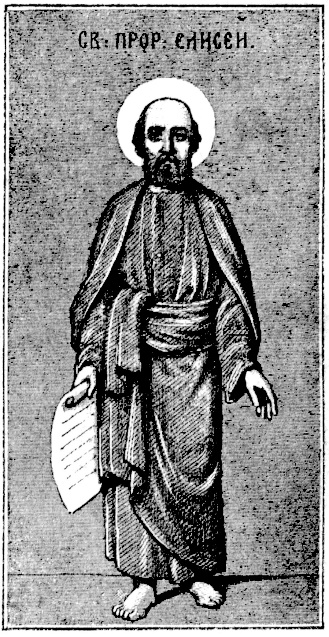
Святой пророк Елисей был преемником пророческого служения святого славного пророка Илии. Когда Бог, явившийся Илии на горе Хориве, внушил ему помазать вместо себя пророка, то это определение свыше пало на Елисея, сына Сафатова, из Авел-Махолы. – И нашёл (Илия) Елисея, сына Сафатова, когда он орал; двенадцать пар (волов) было у него, и сам он был при двенадцатой. Илия, проходя мимо него, бросил на него милоть свою. И оставил (Елисей) волов и побежал за Илиёй и сказал: позволь мне поцеловать отца моего и мать мою, и я пойду за тобой. Он сказал ему: пойди и приходи назад; ибо что сделал я тебе? – Он (Елисей), отошедши от него, взял пару волов и заколол их, и, зажегши плуг волов, изжарил мясо их и роздал людям, и они ели. А сам встал и пошёл за Илией и стал служить ему» (Третья книга Царств, 3Цар.19:19–21).
The holy prophet Elisha was the successor to the prophetic ministry of the holy and glorious prophet Elijah. When God, who appeared to Elijah on Mount Horeb, inspired him to anoint a prophet in his place, this decree from on high fell upon Elisha, the son of Shaphat, from Abel-meholah. – “And he (Elijah) found Elisha the son of Shaphat, while he was plowing; twelve yoke of oxen were before him, and he was with the twelfth. Elijah passed by him and cast his mantle upon him. And he (Elisha) left the oxen and ran after Elijah, and said: Let me kiss my father and my mother, and I will follow you. He said to him: Go, and come back again; for what have I done to you? – He (Elisha) departed from him, took a yoke of oxen and slew them, and, having kindled the plow of the oxen, roasted their flesh and gave it to the people, and they ate. Then he arose and went after Elijah, and became his servant” (The Third Book of Kings, 3 Kgdms. 19:19–21).
Видя усердие своего ученика, святой пророк Илия, приближаясь к кончине, сказал ему: – проси у меня, чего ты желаешь, прежде чем я буду взят от тебя. – «Дух, который в тебе, пусть будет на мне вдвойне» ... отвечал Илии Елисей, желавший более всего возможности совершать своё служение с чудодейственной силой для большего успеха... – «Трудного просишь ты», – сказал Илия, однако исполнил просьбу своего последователя, когда «сокрывался в вихре из глаз его» ... С тех пор Елисей ревностно предался пророческому служению своему, утверждая в вере народ Израильский и свидетельствуя о Духе Божием, в нём пребывающем, многочисленными чудесами. «И во дни свои не трепетал перед князем, и никто не превозмог его. Ничто не одолело его, и по успении его пророчествовало тело его. И при жизни своей совершал он чудеса, и по смерти были дивны дела его» ... (Кн. Премудр. Иисуса, сына Сирахова, Сир.48:13–15).
Seeing the zeal of his disciple, the holy prophet Elijah, drawing near to his end, said to him: “Ask of me what you desire, before I am taken from you.” – “Let the spirit that is in you be upon me doubly” … answered Elisha to Elijah, desiring above all to be able to perform his ministry with wonder-working power for greater success… – “You ask a difficult thing,” said Elijah, yet he fulfilled the request of his follower, when “he was taken up in a whirlwind from his sight” … From that time Elisha zealously devoted himself to his prophetic ministry, confirming the people of Israel in the faith and bearing witness to the Spirit of God abiding in him through numerous miracles. “And in his days he did not tremble before a prince, and no one prevailed over him. Nothing overcame him, and after his repose his body prophesied. And in his life he performed wonders, and after death his deeds were marvelous” … (The Book of Wisdom of Jesus, Son of Sirach, Sir. 48:13–15).
Народ видел в Елисее посланника Божия, назидался словом его и, хотя не пришёл к полному покаянию, всё же отклонялся отчасти от служения языческим богам, к которым привлечены были многие Израильтяне их нечестивыми царями.
The people saw in Elisha a messenger of God, were edified by his word, and, although they did not come to full repentance, yet they partly turned away from serving pagan gods, to which many Israelites had been drawn by their ungodly kings.
Между многими поучительными обстоятельствами из жизни пророка Елисея замечательно, как он однажды отнёсся к злобным детям... «И пошёл (Елисей) в Вефиль. Когда он шёл дорогой, малые дети вышли из города и насмехались над ним, и говорили ему: иди, плешивый! иди, плешивый! Он оглянулся и увидел их, и проклял их именем Господним. И вышли две медведицы из леса и растерзали из них сорок два ребёнка» ... (4Цар.2:23–24).
Among the many instructive circumstances from the life of the prophet Elisha, it is remarkable how he once dealt with malicious children… “And he (Elisha) went up to Bethel. As he was going along the road, little children came out of the city and mocked him, and said to him: Go up, you baldhead! Go up, you baldhead! He turned around and saw them, and cursed them in the name of the Lord. And two she-bears came out of the forest and tore forty-two of the children to pieces” … (4 Kgdms. 2:23–24).
Страшная кара постигла несчастных неразумных детей... Казалось бы, что невменяемость детского возраста должна была избавить их от такой кары, которой могло бы подлежать разве только какое-нибудь страшное и сознательное преступление взрослого человека, совершённое в состоянии полной вменяемости и ответственности, а не простая, свойственная детям смешливость и шаловливость, ответственность за которую ещё притом падает больше на их воспитателей, чем на них самих... Между тем кара совершилась. Прошли века, а память о ней уцелела и не перестаёт приводить в содрогание при мысли о кажущейся несоответственности её с проступком детей...
A terrible punishment befell the unfortunate, foolish children… It would seem that the non-accountability of childhood should have spared them from such a punishment, which might be incurred only by some terrible and conscious crime of an adult, committed in a state of full accountability and responsibility, and not by the simple, childish playfulness and mischievousness, the responsibility for which falls more upon their educators than upon themselves… Yet the punishment was carried out. Centuries have passed, but the memory of it has survived and never ceases to cause shuddering at the thought of its seeming disproportion to the children’s offense…
Но если и волос с головы нашей не падает без воли Божией, то могла ли произойти страшная смерть 42-х детей без участия Промысла Божественного? И могло ли сказаться и исполниться над ними проклятие пророка, если бы это не было по высшему внушению и изволению? И не провидел ли духом пророк, что, навлекая проклятием смерть на детей, он избавляет мир от злодеев, которыми сделались бы впоследствии эти дети, дурно, без внушения добра воспитанные своими родителями, которые поэтому и подлежали безусловной ответственности за проступок детей... И не одной ответственности, но и каре. И на гибель детей не следует ли смотреть, как на кару, постигшую преимущественно родителей в вечное назидание и напоминание того, как строго осуждает суд Божий небрежность в деле воспитания детей...
But if not a hair of our head falls without the will of God, could the terrible death of 42 children have occurred without the participation of Divine Providence? And could the prophet’s curse have been uttered and fulfilled upon them, if this were not by a higher inspiration and will? And did not the prophet foresee in spirit that, by bringing death upon the children through his curse, he was delivering the world from evildoers, which these children would later have become, poorly raised without instruction in good by their parents, who therefore bore absolute responsibility for the children’s offense… And not only responsibility, but also punishment. And should we not look upon the death of the children as a punishment that fell primarily upon the parents, for an eternal lesson and reminder of how strictly the judgment of God condemns negligence in the matter of raising children…
Не повторялосьтакое наглядное проявление гнева Божия, разразившегося над виновными детьми и родителями; но, тем не менее, факт этот, совершившийся однажды, свидетельствует навсегда о неизбежности строгой кары, которая должна постигнуть и тех, кто пренебрёг святым делом воспитания, и несчастные жертвы недобросовестного воспитания, доведённые до преступления раньше или позже. И если и не будут они преданы на растерзание свирепым зверям, как те 42 детей, которые подверглись проклятию пророка, то в том или другом виде, но не менее страшном неминуемо отразятся последствия небрежности родителей в отношении к душевному воспитанию детей...
Such a clear manifestation of the wrath of God, bursting forth upon the guilty children and parents, has not been repeated; nevertheless, this fact, having occurred once, bears eternal witness to the inevitability of the severe punishment that must overtake both those who have neglected the holy work of education and the unhappy victims of dishonest upbringing, who are led to transgression sooner or later. And even if they are not given over to be torn apart by wild beasts, like those 42 children who fell under the prophet’s curse, yet in one form or another, no less terrible, the consequences of parental negligence regarding the spiritual education of children will inevitably be reflected…
Иоанн (прозываемый Маврон), получив основательное образование, усердно был предан научным занятиям, извлекая из них, впрочем, главным образом пищу для души, руководство для своего спасения. В одном из стихотворений своих он пишет:
John (surnamed Mauropous), having received a thorough education, zealously devoted himself to scholarly pursuits, drawing from them, however, chiefly nourishment for his soul and guidance for his salvation. In one of his poems he writes:
Удовлетворяя себя занятиями по душе, Иоанн вместе с тем желал делиться своими познаниями и с другими, желал посвятить свою жизнь образованию юношества. В 1050 г. он был приглашён быть наставником словесности в Константинополе. Однако же, из жития его видно, что, оставив свой наставнический путь, он избрал путь послушнический – инока. Был учеником аввы Дорофея младшего, подвижника Хиликомского в Трапезонте. При императоре Алексии Комнине, в преклонных уже летах Иоанн был облечён в сан митрополита. При этом же императоре Господь прославил достойного пастыря особенным откровением. Когда между почитателями святителей Василия Великого, Григория Богослова, Иоанна Златоуста возникли споры о том, кому из них следует воздавать главную честь, и споры эти доходили до раскола, то святители явились Иоанну и сказали ему: – «мы – одно у Господа; в своё время каждый из нас, научаемый Святым Духом, писал, что нужно было для спасения других; между нами нет первого, нет второго. И так скажи, чтобы спорящие о нас прекратили спор; одной любви желали мы для всех на земле, одной любви желаем мы на небе. Соедини нас в один день и назначь, когда и как хочешь, торжество в показание нашего единомыслия». – Воля святителей была исполнена назначением празднования памяти их в 30 день января. Евхаитский пастырь скончался около 1095 г. Он оставил после себя много слов, посланий, канонов, в числе которых находится известный канон Сладчайшему Иисусу и Ангелу Хранителю153.
Satisfying himself with pursuits according to his soul, John at the same time desired to share his knowledge with others, desiring to devote his life to the education of youth. In 1050 he was invited to be a teacher of letters in Constantinople. However, from his life it is evident that, leaving his teaching path, he chose the path of obedience—that of a monk. He was a disciple of Abba Dorotheus the Younger, a ascetic of Chilicom in Trebizond. Under the Emperor Alexius Comnenus, already in advanced years, John was invested with the rank of metropolitan. Under this same emperor, the Lord glorified the worthy pastor by a special revelation. When disputes arose among the venerators of the Hierarchs Basil the Great, Gregory the Theologian, and John Chrysostom as to which of them should be given the chief honor, and these disputes reached the point of schism, the Hierarchs appeared to John and said to him: “We are one before the Lord; in his own time each of us, taught by the Holy Spirit, wrote what was necessary for the salvation of others; among us there is no first, no second. Therefore, tell those who dispute about us to cease their dispute; we desired one love for all on earth, one love we desire in heaven. Unite us in one day and appoint, when and how you wish, a celebration to show our unity of mind.” – The will of the Hierarchs was fulfilled by the appointment of the celebration of their memory on the 30th day of January. The pastor of Euchaita reposed around the year 1095. He left behind many homilies, epistles, and canons, among which is the well-known canon to the Most Sweet Jesus and to the Guardian Angel153.
Из жизни Елисея только и известен один предсмертный его подвиг, в котором выразились и благочестие старца, и помощь высшая, ниспосланная достоинству его по заступлению преп. Зосимы, в одно время с которым, вероятно, подвизался Елисей или недолго спустя после его кончины.
Of the life of Elisha, only his pre-repose ascetic feat is known, in which were expressed both the piety of the elder and the higher help sent down to his worthiness through the intercession of Venerable Zosima, at the same time as whom, or not long after his repose, Elisha likely struggled.
Подвижник-инок Елисей, чувствуя приближение смерти, пламенно желал принять схиму, но не было в том месте, где он жил, священноинока, который мог бы совершить пострижение. Поэтому, старцы иноки решились отвезти Елисея в Суму (за 60 вёрст), где при монастырском подворье находился иеромонах. Путешествие приходилось совершить по реке Выге, неудобной для плавания по быстроте течения и по множеству подводных каменных порогов; старцы часто смущались опасностями, но болящий ободрял их, говоря: «не бойтесь, здесь с нами отец наш Зосима» ... Благополучно вышли иноки в море и достигли реки Вирмы. Больной между тем всё более и более изнемогал и сокрушался о лишении схимы. Настала ночь; на Вирме старцы наняли в помощь себе несколько гребцов для ускорения плавания. Когда они были посреди Сумской губы, то поднялась сильная буря, сломала мачту, разорвала парус, выбила вёсла из рук гребцов; к тому же была такая тьма, что плаватели едва могли различать друг друга. Все растерялись, гребцы роптали и укоряли иноков, но больной был спокоен; он, казалось, созерцал видение из иного мира... «Не бойтесь, не скорбите, братия! – говорил он своим спутникам, сам едва дыша от изнеможения; – я вижу отца нашего Зосиму среди нас... он помогает нам» ... Вскоре после того ветер начал утихать, волны улеглись, плаватели же, не знавшие, где они, очутились близ Сумской пристани, которую уже не надеялись видеть, отдавшись произволу волн в темноте ночной, без паруса и без вёсел... Пристав к берегу, старцы с ужасом увидели, что больной лежит без признака жизни, и радость их мгновенно превратилась в печаль... С горькими слезами они взывали к преподобному Зосиме: «отец наш! надеясь на твои молитвы, какой мы вынесли труд, какую вытерпели в море беду, – и вот, теперь всё это напрасно... что надеялись получить, не получили» ... Но через несколько времени, тот, кого считали мёртвым, обнаружил движение и, как здоровый, осмысленно заговорил. Привезённый на подворье, Елисей принял пострижение в схиму и причастился Таин Христовых; затем, возблагодарив Бога и простившись со всеми, предал душу свою Богу. Тело его погребено было за алтарём церкви святителя Николая с южной стороны. Проходили годы, многими забыто было и имя его. Но спустя более столетия, гроб Елисея обнаружился на поверхности земли – и вскоре последовали явления преподобного и исцеления от него болящим. Для удостоверения в действительности всего происходящего, в 1668 г. был послан в Сумский острог царский стольник Александр Севастьянович Хитрово, который по исследовании поставил над гробом преподобного небольшую часовню. Второе исследование происходило в 1710 г. по указу архиепископа Холмогорского Рафаила, при Соловецком архимандрите Фирсе.
The ascetic monk Elisha, feeling the approach of death, ardently desired to receive the schema, but there was no hieromonk in the place where he lived who could perform the tonsure. Therefore, the elder monks decided to take Elisha to Suma (60 versts away), where at the monastery metochion there was a hieromonk. The journey had to be made along the Vyg River, which was inconvenient for navigation because of the swiftness of the current and the multitude of underwater stone rapids; the elders were often troubled by the dangers, but the sick man encouraged them, saying: “Fear not, here with us is our father Zosima” … The monks safely reached the sea and arrived at the Virma River. Meanwhile, the sick man grew weaker and weaker and grieved over being deprived of the schema. Night fell; on the Virma, the elders hired several rowers to help them speed their voyage. When they were in the middle of Suma Bay, a strong storm arose, broke the mast, tore the sail, knocked the oars from the rowers’ hands; moreover, there was such darkness that the voyagers could scarcely distinguish one another. All were bewildered; the rowers grumbled and reproached the monks, but the sick man was calm; he seemed to contemplate a vision from another world… “Fear not, grieve not, brethren!” he said to his companions, himself barely breathing from exhaustion; “I see our father Zosima among us… he is helping us” … Soon after that the wind began to abate, the waves subsided, and the voyagers, who did not know where they were, found themselves near the Suma wharf, which they had no longer hoped to see, having surrendered themselves to the will of the waves in the darkness of night, without sail and without oars… Having landed on the shore, the elders saw with horror that the sick man lay without signs of life, and their joy instantly turned to sorrow… With bitter tears they cried out to the Venerable Zosima: “Our father! Trusting in thy prayers, what labor we have endured, what misfortune we have suffered at sea—and now, all this is in vain… what we hoped to receive, we have not received” … But after a short time, he whom they had thought dead showed movement and, like a healthy man, spoke coherently. Brought to the metochion, Elisha received the tonsure into the schema and partook of the Holy Mysteries of Christ; then, having given thanks to God and bid farewell to all, he surrendered his soul to God. His body was buried behind the altar of the church of St. Nicholas on the south side. Years passed, and many forgot even his name. But more than a century later, Elisha’s coffin was uncovered on the surface of the earth—and soon there followed appearances of the venerable one and healings of the sick from him. To verify the reality of all that was happening, in 1668 the Tsar’s stolnik Alexander Sevastyanovich Khitrovo was sent to the Suma fort, who after investigation placed a small chapel over the venerable one’s coffin. A second investigation took place in 1710 by order of Raphael, Archbishop of Kholmogory, with the Solovki Archimandrite Firs.
Нифонт, сын священника в селении Лукови, в области Аргирокастрон, воспитан был дядей своим, бывшим эклисиархом в монастыре св. Николая, основанном Константином Мономахом, на месте, называемом ныне Месопотам. Всей душой проникнутый высоким содержанием священного Писания, молодой Нифонт стал чужд всего мирского и всецело предался Богомыслию и молитве. Едва только достиг он совершенного возраста, как был уже удостоен сана священства. Возрастая духом из силы в силу, почувствовал Нифонт непреодолимую потребность сосредоточиваться мысленно в полном безмолвии и уединении, поэтому удалился из монастыря на гору Геромериен, где и начал свой отшельнический подвиг под руководством одного опытного, уединённо подвизавшегося на этой горе старца с горы Синайской, но и это уединение «не удовлетворило пламенной души, жаждавшей безмолвия совершеннейшего и пустынных подвигов». Три года провёл Нифонт на Афонской горе – в повиновении безмолвствовавшему отшельнику Феогносту, скрывая своё священство, пока Феогност не узнал о нём и по смирению своему отказался быть руководителем послушника-пресвитера. Тогда 14 лет провёл Нифонт в соседственном скиту Великого Василия (в области лавры св. Афанасия) в крайнем безмолвии, раз в неделю только подкрепляя себя небольшим количеством хлеба сухого.
Niphon, the son of a priest in the village of Lukova, in the region of Argyrokastro, was raised by his uncle, who was an ecclesiarch in the monastery of St. Nicholas, founded by Constantine Monomachus, at a place now called Mesopotamon. Penetrated in his whole soul by the lofty content of Sacred Scripture, the young Niphon became estranged from all worldly things and gave himself wholly to the contemplation of God and to prayer. Scarcely had he reached full age when he was already deemed worthy of the rank of the priesthood. Growing in spirit from strength to strength, Niphon felt an irresistible need to concentrate his mind in complete silence and solitude; therefore he withdrew from the monastery to Mount Geromerien, where he began his hermitic struggle under the guidance of an experienced elder from Mount Sinai who was struggling in solitude on that mountain. But even this solitude “did not satisfy his ardent soul, which thirsted for more perfect stillness and desert struggles.” Niphon spent three years on Mount Athos—in obedience to the hesychast hermit Theognostus, concealing his priesthood, until Theognostus learned of it and, out of humility, refused to be the guide of a novice who was a presbyter. Then Niphon spent 14 years in the neighboring Skete of Great Basil (in the region of the Lavra of St. Athanasius) in extreme silence, strengthening himself only once a week with a small amount of dry bread.
Такой бесстрастной жизнью стяжал подвижник высшие духовные дары, которые как бы предварили для него ангельское состояние при земном естестве, и был удостоен дара чудотворений. – Прозорливо возвестил он о кончине своей послушнику своему Гавриилу и в то же время чудно исцелил его молитвой от смертельной болезни. В то время было моровое поветрие; Гавриил занемог; отец его сильно сокрушался о нём. Святой Нифонт, утешая его, сказал: – «не плачь, брат, сын твой, ради послушания моему недостоинству, теперь не умрёт» ... Потом помолился, и больной выздоровел. О себе же тогда Нифонт сказал: «вот, брат наш, Божией помощью, выздоровел, а я во время Петрова поста должен умереть» ... – Так и сбылось. В субботу первой недели, встав утром, Нифонт помолился, потом причастился Св. Таин и сказал своим ученикам: «возлюбленные мои! вот, настало время отойти мне к Богу, Которого с детских лет возлюбил я всей душой моей». – Видя смущение учеников, он прибавил: – «не смущаться и не плакать следует вам, но – радоваться, потому что во мне вы будете иметь молитвенника о вас перед Господом, только бы и сами вы исполняли заповеди Божии» ...
By such a dispassionate life the ascetic acquired the highest spiritual gifts, which, as it were, anticipated for him the angelic state while still in earthly nature, and he was deemed worthy of the gift of wonderworking. — He prophetically announced his own end to his novice Gabriel and at the same time miraculously healed him from a deadly illness through prayer. At that time there was a pestilence; Gabriel fell ill; his father grieved greatly over him. St. Niphon, comforting him, said: “Weep not, brother; thy son, for the sake of obedience to my unworthiness, shall not die now” … Then he prayed, and the sick man recovered. Concerning himself, Niphon then said: “Behold, our brother, by God’s help, has recovered, but I must die during Peter’s Fast” … And so it came to pass. On the Saturday of the first week, rising in the morning, Niphon prayed, then partook of the Holy Mysteries and said to his disciples: “My beloved! Behold, the time has come for me to depart to God, Whom from my childhood I have loved with all my soul.” — Seeing the confusion of his disciples, he added: “You should not be troubled and weep, but rather rejoice, because in me you will have an intercessor for you before the Lord, provided that you yourselves also fulfill the commandments of God” …
На другой день, приказав выкопать могилу и приготовить нужное для погребения, праведный человек Божий углубился в последнюю молитву, потом, попросив у всех прощения, благословил всех и, скрестив на груди руки, мирно отошёл в жизнь вечную – 14-го июня, 1330 г., на 97-м году жизни155.
On the next day, having ordered a grave to be dug and what was needed for burial to be prepared, the righteous man of God immersed himself in his final prayer; then, having asked forgiveness of all, he blessed everyone and, crossing his hands on his chest, peacefully departed into eternal life—on the 14th of June, A.D. 1330, in the 97th year of his life155.
Какое наследство мог бы завещать он людям лучшее, чем воспоминание о такой блаженной кончине, увенчавшей такую святую, преисполненную стремления к Богу жизнь?..
What better inheritance could he have bequeathed to men than the memory of such a blessed end, which crowned such a holy life, so filled with striving toward God?..
Сведен. о монаст. и церк. 410. М. 1852. Опис. святыни Новгор., стр. 7. СПб. 1850. Опис. Новг. Соф. соб., стр. 102. 103. Отенские святцы 1719 г.: «положен бысть в соборной церкви св. Софии в приделе Рождества Богородицы во гробе аспидном; мощи на верху земли, службы нет». По описанию 1634 г.: «мощи его нетленны, а рука ему правая выспрь». Чтен. общ. ист. 1862 г., кн. 4.
Information on Monasteries and Churches, p. 410. M. 1852. Description of the Shrines of Novgorod, p. 7. St. Petersburg, 1850. Description of the Novgorod St. Sophia Cathedral, pp. 102, 103. Otensk Menologion of 1719: “He was placed in the cathedral church of St. Sophia in the side-chapel of the Nativity of the Theotokos in a slate tomb; his relics lie on top of the earth; there is no service.” According to a description of 1634: “His relics are incorrupt, and his right hand is raised upward.” Readings of the Society of History, 1862, Book 4.
Ркп. служба преп. Мефодию – в трёх списках, из которых старейший писан в 1699 г. Калайдовича Описание монаст. св. Николая, что на Пешноше, стр. 6–9. 16. 25. 26. 29. М. 1837.
Manuscript service to the Venerable Methodius—in three copies, of which the oldest was written in 1699. Kalaydovich’s Description of the Monastery of St. Nicholas on Peshnosha, pp. 6–9, 16, 25, 26, 29. M. 1837.
У Калайдовича, стр. 15–17. 98. Он пишет: «память преподобного празднуется в обители и в окрестных селениях июня 14 д.», стр. 9. По ист. иер. V, 524. 550, преп. Мефодий преставился июня 4 д. 1392 г., а память празднуется в один день с памятью Мефодия патриарха, июня 14 д.
In Kalaydovich, pp. 15–17, 98. He writes: “The memory of the venerable one is celebrated in the monastery and in the surrounding villages on June 14,” p. 9. According to History of the Hierarchy V, 524, 550, the Venerable Methodius reposed on June 4, 1392, but his memory is celebrated on the same day as the memory of Methodius the Patriarch, June 14.