Акилина, уроженка города Библоса (нын. Есбил в Финикии), осиротела от отца через год по рождении и матерью своей воспитана в христианском благочестии. Когда Акилине минуло десять лет, правителем (проконсулом) Палестины сделался некто Волузиан, великий ненавистник христиан. Это было на седьмом году царствования Диоклитианова. Многие христиане пострадали тогда от правителя. В то время Анилина увещевала сверстниц своих познать истинного Бога и отвергнуть ничего не стоящих идолов. «Какого же Бога ты почитаешь?» – спрашивали её – «Бога единого, Который сотворил небо и землю и всё, что существует», отвечала она. – «Мы слышали», говорили подруги, «что ваш Бог распят Иудеями на кресте?» – «Смерть над Ним не имеет власти», говорила Анилина; «не только Сам Он воскрес, но и всех, верующих в Него, оживляет, искупляет от смерти и спасает. Он есть Спаситель всего рода человеческого, возрождает нас в новую жизнь и имеет снова прийти во славе, когда настанет общее воскресение». «Но почему-ж Иудеи, из рода коих Он был, не признают Его?» спрашивали юные язычницы. «Потому что они не возлюбили добра и истины».
Aquilina, a native of the city of Byblos (present-day Jbeil in Phoenicia), was orphaned of her father a year after her birth and was raised by her mother in Christian piety. When Aquilina was ten years old, a certain Volusian, a great hater of Christians, became governor (proconsul) of Palestine. This was in the seventh year of Diocletian's reign. Many Christians suffered at the hands of the governor at that time. At that time, Aquilina exhorted her companions to know the true God and to reject the worthless idols. "What kind of God do you worship?" they asked her. "The one God, Who created heaven and earth and all that exists," she replied. "We have heard," said her companions, "that your God was crucified by the Jews on a cross?" "Death has no power over Him," said Aquilina; "not only did He Himself rise, but He also gives life to, redeems from death, and saves all who believe in Him. He is the Savior of the whole human race, regenerates us into a new life, and will come again in glory when the general resurrection comes." "But why do the Jews, from whose race He came, not acknowledge Him?" asked the young pagan girls. "Because they did not love goodness and truth."
Так и подобным образом часто беседовала святая с сверстницами своими. И вот один из рабов правителя доносит ему, что есть в городе некая двенадцатилетняя девица, которая открыто поносит богов и проповедует распятого Господа. Проконсул приказал представить её к себе, а это было уже на втором году его управления, и сказал ей: «ты ли противишься царским повелениям, соблазняешь других не чтить богов наших, а покланяться распятому человеку? Принеси жертвы бессмертным богам; иначе я предам тебя мукам!» «Не боюсь мук», отвечала девица; «потому что верую в Спасителя, венчающего веру». «Пощади юность свою», говорил тот: «ты лишишься жизни, и Бог христианский не поможет тебе». Святая отвечала: «не прошу у тебя милости; она отлучит меня от Бога моего». Тогда Волузиан велел бить её по лицу и затем, обнажив, бичевать без милосердия. Он наконец предложил ей несколько дней свободы, чтобы она одумалась, но Анилина не пожелала и один час сомневаться в исповедании своём. После этого разожжённым железом пронзили голову мученицы сквозь уши и наконец обезглавили (в 293 году). Мощи её впоследствии были перенесены в Царьград.
Thus and in like manner did the saint often converse with her companions. And then one of the governor's slaves reported to him that there was in the city a certain twelve-year-old maiden who openly reviled the gods and preached the crucified Lord. The proconsul ordered her to be brought before him, and this was already in the second year of his administration, and he said to her: "Is it you who opposes the imperial decrees, seducing others not to honor our gods, but to worship a crucified man? Offer sacrifices to the immortal gods; otherwise, I will deliver you to torments!" "I do not fear torments," answered the maiden; "because I believe in the Savior, who crowns faith." "Spare your youth," he said; "you will lose your life, and the Christian God will not help you." The saint replied: "I do not ask for mercy from you; it would separate me from my God." Then Volusian ordered her to be struck on the face and then, having stripped her, to be scourged without mercy. He finally offered her a few days of freedom so that she might reconsider, but Aquilina did not wish even one hour to doubt her confession. After this, her head was pierced through the ears with red-hot iron, and finally she was beheaded (in the year 293). Her relics were later translated to Constantinople.
Трифиллий, родом Кипряцин, получил образование в Виритской (Бейрутской) школе законоведения и затем поступил в клир церкви Тримифунтской в епископство св. Спиридона, который и научил его духовному любомудрию. Царь Констанций некогда созвал епископов в Антиохию; в числе приглашённых был и Спиридон. Он взял с собой Трифиллия. Святитель был одет в худые одежды, имел в руке финиковый жезл и на голове худое покрывало; на груди у него висел глиняный сосудец с маслом от св. Креста в Иерусалиме. Служитель придворный, видя бедного старца и возбраняя ему вход, ударил его по щеке, но кроткий Спиридон обратил ему и другую. Узнав, что это епископ, служитель просил прощения и получил его. На торжественном обеде в царском дворце Трифиллий дивился великолепию и красоте палат, вельможам, царю, блеску и всему изысканному устроению. «Чему дивишься, брат!» – сказал Спиридон. «Разве пышность и слава царская делает царя праведнее других? Не одинаково ли с нищим умирает царь и предаётся земле? Не равно ли предстанет Судии? Лучше искать невещественных и вечных благ, любить славу не гибнущую».
Tryphillius, a Cypriot by birth, received his education at the Berytus (Beirut) school of jurisprudence and then entered the clergy of the Church of Tremithus during the episcopacy of St. Spyridon, who taught him spiritual wisdom. Emperor Constantius once summoned the bishops to Antioch; among those invited was Spyridon. He took Tryphillius with him. The Hierarch was dressed in poor garments, held a date-palm staff in his hand, and wore a poor covering on his head; on his chest hung a small clay vessel with oil from the Holy Cross in Jerusalem. A court servant, seeing the poor old man and barring his entry, struck him on the cheek, but the meek Spyridon turned the other cheek to him. Learning that he was a bishop, the servant begged forgiveness and received it. At the solemn banquet in the imperial palace, Tryphillius marveled at the splendor and beauty of the halls, the nobles, the emperor, the brilliance, and all the exquisite arrangement. "At what do you marvel, brother!" said Spyridon. "Does the pomp and glory of the emperor make him more righteous than others? Does not the emperor die and is committed to the earth just like the beggar? Does he not stand equally before the Judge? It is better to seek immaterial and eternal goods, to love glory that does not perish."
Вскоре после сего Трифиллий был поставлен во епископа городу Левкосии (нын. Никосии), но не переставал посещать духовного отца своего и учителя, св. Спиридона, и вразумляться от него. Однажды собравшиеся по церковным делам епископы острова просили Трифиллия сказать в церкви изустную проповедь народу. В проповеди случилось ему привести слова Спасителя к расслабленному: восстани и возьми одр твой (Мк.2:9), но вместо слова «одр» он сказал «ложе» – ϰράββατον. Спиридон, не стерпев перемены выражения Христова, встал с места своего и, сказав проповеднику: «разве ты лучше Сказавшего одр (ϰλίνη), что стыдишься слов Его?» вышел из церкви. Так он пристыдил ораторскую кичливость и научил Трифиллия кротости и смирению.
Soon after this, Tryphillius was appointed bishop of the city of Leucosia (present-day Nicosia), but he did not cease to visit his spiritual father and teacher, St. Spyridon, and to receive instruction from him. Once, the bishops of the island gathered for church affairs asked Tryphillius to deliver an extemporaneous sermon to the people in church. In the sermon, he happened to quote the words of the Savior to the paralytic: Arise and take up your bed (Mk. 2:9), but instead of the word "bed" he said "couch" – κράββατον. Spyridon, unable to bear the change of Christ's expression, rose from his place and, saying to the preacher: "Are you better than the One who said 'bed' (κλίνη), that you are ashamed of His words?" left the church. Thus he shamed oratorical vanity and taught Tryphillius meekness and humility.
Богоугодно же пожив, св. Трифиллий в нелицемерной любви ко всем и чистоте веры, в распространении света Богопознания и воздержании от всего худого, переселился в небесные обители в глубокой старости около 370 г. При нападении на Кипр магометан около 640 года, мощи его частью обгорели, но сохранившаяся глава и доселе хранится Никосийской Греческой церкви.
Having lived a God-pleasing life, St. Tryphillius, in unfeigned love for all and purity of faith, in spreading the light of the knowledge of God and in abstaining from all evil, passed over to the heavenly abodes in extreme old age around the year 370. During the Mohammedan attack on Cyprus around the year 640, his relics were partially burned, but the preserved head is still kept to this day in the Greek Church of Nicosia.
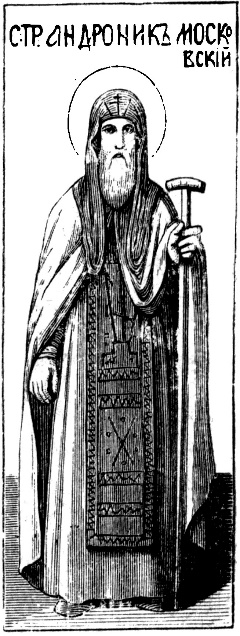
Блаж. Андроник, уроженец Ростова, рос и укрепился духовной жизни под надзором великого аввы, прп. Сергия Радонежского. Он был любимым учеником святого: это одно показывает, что он был в числе искренних ревнителей духовной жизни. О том же говорит и выбор святителя Алексия, павший на Андроника, при избрании настоятеля новой обители. Святитель, быв в лавре, сказал Сергию: «возлюбленный, хочу просить одного благодеяния у твоей духовной любви ко мне». – «Ничто не возбранено в моей обители для твоей святыни», отвечал Сергий. «Хочу, сказал Алексий, чтобы ты дал мне одного из твоих учеников, – я намерен с помощью Божией построить монастырь в исполнение обета моего. Когда плыл я из Царяграда, поднялась великая буря на море, так что корабль сокрушался от волн, и мы все отчаялись в жизни. Тогда дал я обет соорудить храм в честь того празднества, в какое счастливо достигнем пристани. Море улеглось, и мы вошли в пристань 16 августа. Потому положил я устроить обитель в честь нерукотворенной иконы Спасителя; приспело время исполнить обещание». «Доброе дело», сказал преп. Сергий: «да даст тебе Господь выполнить его! А всё, чего потребуешь от сына твоего, готово перед тобой». Тогда святитель попросил у него в настоятели обители ученика его Андроника, и преп. Сергий с любовью отдал его. Взяв с собой Андроника, святитель поручил ему построение обители и храма. Место избрано на речке Яузе, то самое, на котором кн. Всеволод Юрьевич встретил полчище Батыя кровопролитным боем. Преп. Сергий приходил молиться на избранном месте за новую обитель. Храм и обитель Всемилостивого Спаса устроены, и пр. Андроник поставлен был в игумена обители. Это было в 1361 г.134.
The blessed Andronicus, a native of Rostov, grew and was strengthened in spiritual life under the supervision of the great abba, the Venerable Sergius of Radonezh. He was a beloved disciple of the saint: this alone shows that he was among the sincere zealots of the spiritual life. The same is indicated by the choice of Hierarch Alexis, which fell upon Andronicus, when selecting the abbot for the new monastery. The Hierarch, having been at the Lavra, said to Sergius: "Beloved, I wish to ask one favor of your spiritual love for me." – "Nothing is forbidden in my monastery for your holiness," replied Sergius. "I wish," said Alexis, "that you give me one of your disciples – I intend, with God's help, to build a monastery in fulfillment of my vow. When I was sailing from Constantinople, a great storm arose at sea, so that the ship was shattered by the waves, and we all despaired of life. Then I made a vow to build a church in honor of the feast on which we might happily reach a harbor. The sea calmed, and we entered the harbor on August 16. Therefore, I resolved to establish a monastery in honor of the Icon of the Savior Not-Made-by-Hands; the time has come to fulfill the promise." "A good deed," said the Venerable Sergius: "may the Lord grant you to accomplish it! And everything you require from your son is ready before you." Then the Hierarch asked him for his disciple Andronicus as the abbot of the monastery, and the Venerable Sergius lovingly gave him up. Taking Andronicus with him, the Hierarch entrusted him with the building of the monastery and the church. The place was chosen on the Yauza River, the very spot where Prince Vsevolod Yurievich met Batu's horde in a bloody battle. The Venerable Sergius came to pray at the chosen place for the new monastery. The church and monastery of the All-Merciful Savior were built, and the Venerable Andronicus was appointed abbot of the monastery. This was in the year 1361.134
Препод. Андроник при строгом постничестве отличался кротостью и глубоким смирением, и эти качества привлекали к нему многих; многие приходили в обитель его поучаться закону Божию и принимали здесь иночество135. Ещё цел колодезь, в 100 саженях от обители, выкопанный трудами Андроника. – По благословению святителя Алексия в обители устроено было общежитие136. Препод. Сергий по временам посещал ученика своего и своим посещением одушевлял его любовью твёрдой к подвигам. Однажды, говорит предание, великий подвижник приходил поклониться образу Спаса, перед отправлением в дальний путь, и при прощании долго беседовал с Андроником. – На месте прощания их поставили потом часовню. Это – на пути во Владимир. А такое направление пути показывает, что это духовное беседование было тогда, как Сергий (1365 г.) отправлялся в Нижний-Новгород для умирения князя Бориса. Точно так позже того святитель Алексий и вел. кн. Димитрий останавливались в обители Андроника молиться перед иконой Спасителя, когда святитель (1381 г.) провожал вел. князя до Оки, на пути его к хану137.
The Venerable Andronicus, in his strict fasting, was distinguished by meekness and deep humility, and these qualities attracted many to him; many came to his monastery to learn the law of God and received monastic tonsure here135. A well, dug by the labors of Andronicus, still exists, 100 sazhens from the monastery. – With the blessing of Hierarch Alexis, a cenobitic rule was established in the monastery136. The Venerable Sergius from time to time visited his disciple and, by his visit, inspired him with steadfast love for ascetic labors. Once, tradition says, the great ascetic came to venerate the icon of the Savior before setting out on a long journey, and at their parting he conversed at length with Andronicus. – A chapel was later erected at the place of their parting. This is on the road to Vladimir. And such a direction of the journey shows that this spiritual conversation took place when Sergius (in 1365) was setting out for Nizhny Novgorod to pacify Prince Boris. Likewise, later, Hierarch Alexis and Grand Prince Demetrius stopped at the Andronicus monastery to pray before the icon of the Savior, when the Hierarch (in 1381) accompanied the Grand Prince to the Oka, on his way to the Khan137.
Духовная жизнь цвела в Андрониковой обители под надзором бдительного настоятеля; ученик Сергия пас стадо своё Богоугодно138. «СвятойАндроник», пишет преп. Иосиф Волоколамский, «сиял великими добродетелями. С ним жили ученики его Сава иАлександр, чудные, знаменитые иконописцы, Даниил и ученик его Андрей и многие другие таковые же. Иконописцы отличались таким подвижничеством, такой ревностью к посту и иноческой жизни, что удостоились Божественной благодати; они столько возвысились в святой любви, что никогда не занимались земным; ум и мысли их обращены были к невещественному, Божественному свету, а чувственное око их с любовью смотрело на написанные вещественными красками лики Владыки Христа, Пречистой Богоматери и всех святых. – В самый праздник светлого Воскресения Христова, сидя на скамейках и имея перед собой честные иконы, смотрели они на них неуклонно и исполнялись святой радостью и светом. Так поступали они и в другое время, когда не занимались писанием икон. – Потому Владыка Христос прославил их в последний час смерти. Сперва преставился Андрей, потом заболел и спостник его Даниил и, будучи при последнем издыхании, видел своего спостника Андрея в великой славе, с радостью приглашающего его в вечное и бесконечное блаженство»139. – Блаж. Андрей Рублёв в 1405 г. расписывал стены придворного Благовещенского храма и писал иконы его; в 1408 г. он и Даниил украшали соборный храм во Владимире140. – Затем украсили они стенописью Спасский храм в Андрониковой обители. Последние же труды их посвящены были, по просьбе преп. Никона, памяти преп. Сергия. «Преподобный, говорит летопись, поспешно собирает живописцев, мужей отличных, совершенных в добродетели, Даниила, спостника его Андрея и их помощников (поспешно совершает он дело, потому что предвидел духом скорое преставление тех живописцев, как это и было по окончании дела); при помощи Божией они усердно принялись за дело и весьма украсили разными чудными изображениями, изумляя поныне всех этим конечным трудом своим. Преподобные, оставив память о себе, спустя немного времени, в доброй старости прияли благий конец141. – По этому известью, преп. Андрей и Даниил преставились не позже 1424 г.142. Наставник их преп. Андроник почил прежде их. В 1403 г. инок Анфим списывал сборник Святославов «в монастыре Андроникове и при игуменстве Саввине143. По этим словам, при уважении пр. Андроника к пр. Сергию, надобно признать за несомненное, что Андроник, достигши глубокой старости, передал управление обителью ученику своему Савве, а сам, по примеру наставника своего, готовился к переходу в другую жизнь в глубоком безмолвии, и кончина его последовала июня 13 не позже 1404 г.144. Мощи преп. Андроника и его ученика преп. Саввы покоятся в храме Спасителя, под спудом145.
Spiritual life flourished in the Andronicus monastery under the watchful eye of its vigilant abbot; the disciple of Sergius tended his flock in a God-pleasing manner138. “The holy Andronicus,” writes the Venerable Joseph of Volokolamsk, “shone with great virtues. With him lived his disciples Sabbas and Alexander, wondrous and renowned iconographers, Daniel and his disciple Andrew, and many others like them. The iconographers were distinguished by such asceticism, such zeal for fasting and monastic life, that they were vouchsafed Divine grace; they were so elevated in holy love that they never occupied themselves with earthly things; their mind and thoughts were turned to the immaterial, Divine light, while their physical eye looked with love upon the faces of the Lord Christ, the Most Pure Mother of God, and all the saints, painted with material colours. – On the very feast of the bright Resurrection of Christ, sitting on benches and having before them the venerable icons, they gazed upon them unswervingly and were filled with holy joy and light. Thus they acted also at other times, when they were not engaged in writing icons. – Therefore the Lord Christ glorified them in the last hour of death. First Andrew reposed, then his fellow-ascetic Daniel fell ill and, being at his last breath, saw his fellow-ascetic Andrew in great glory, joyfully inviting him to eternal and infinite blessedness”139. – The blessed Andrew Rublev in 1405 painted the walls of the court Church of the Annunciation and wrote its icons; in 1408 he and Daniel adorned the cathedral church in Vladimir140. – Afterwards they adorned the Church of the Savior in the Andronicus monastery with wall-paintings. Their final labours were dedicated, at the request of the Venerable Nikon, to the memory of the Venerable Sergius. “The Venerable one,” says the chronicle, “hastily gathers painters, men of distinction, perfect in virtue, Daniel, his fellow-ascetic Andrew, and their helpers (he hastens the work because he foresaw in spirit the speedy repose of those painters, as indeed happened after the completion of the work); with God’s help they zealously set to work and greatly adorned [the church] with various wondrous images, astonishing all to this day with this final labour of theirs. The Venerable ones, having left a memory of themselves, after a short time, in good old age, received a blessed end”141. – According to this account, the Venerable Andrew and Daniel reposed no later than 1424142. Their teacher, the Venerable Andronicus, reposed before them. In 1403 the monk Anthimus copied the Svyatoslav Collection “in the Andronicus monastery and under the abbacy of Sabbas”143. From these words, given the respect of the Venerable Andronicus for the Venerable Sergius, it must be acknowledged as certain that Andronicus, having reached a great age, handed over the governance of the monastery to his disciple Sabbas, while he himself, following the example of his teacher, prepared for the transition to the other life in deep silence, and his end followed on June 13, not later than 1404144. The relics of the Venerable Andronicus and his disciple the Venerable Sabbas rest in the Church of the Savior, under the ground145.
Эта подвижница (во второй половине V века) найдена была с её сыном на безлюдном острове одним иеромонахом. Она рассказала ему о себе, что, воспитанная сиротой в доме одного доброго знатного человека, она, по желанию его, стала женой его сына. Когда, скоро после того, умер старый вельможа, то родные мужа Анны не давали ему покоя, упрекая за неравный брак; постоянно твердили ему: зачем не вступает он в брак с благородной и богатой женщиной? (Таково было языческое право мужа над женой). Зачем, – говорили они, – позорит он род свой супружеством с женщиной незнатного происхождения? –
This ascetic (in the second half of the fifth century) was found with her son on a deserted island by a certain hieromonk. She told him about herself, that, having been raised an orphan in the house of a good, noble man, she became, at his wish, the wife of his son. When, soon after that, the old nobleman died, the relatives of Anna’s husband gave him no peace, reproaching him for an unequal marriage; they constantly told him: why does he not enter into marriage with a noble and wealthy woman? (Such was the pagan right of a husband over his wife). Why, they said, does he disgrace his family by marriage with a woman of low birth? –
Чтобы положить конец этому домашнему смущению, чтобы освободить своего мужа, молодая женщина тайно ушла из дома его и скрылась на острове, где и проводила жизнь отшельницы... Между тем, через 8 месяцев у неё родился здесь сын; и вот, тридцать лет прожила она с ним на пустынном острове в отрешении от мира, в суровых подвигах, ведомых Единому Богу. Наконец прибыл на остров один иеромонах, который встретил Анну с её сыном и, выслушав её скорбный рассказ, доставил ей ту отраду, что мог совершить крещение над её сыном...146.
To put an end to this domestic disturbance, to free her husband, the young woman secretly left his house and hid herself on an island, where she led the life of a hermit... Meanwhile, after 8 months, a son was born to her there; and so, for thirty years she lived with him on the deserted island, in renunciation of the world, in severe ascetic labours, known only to the one God. Finally, a certain hieromonk arrived on the island, who met Anna with her son and, having heard her sorrowful tale, brought her the consolation of being able to perform the baptism of her son...146.
Никон. л. V, 14. III, 257. Летопись (Карамз. V, пр. 254) говорит, что в пожар 1547 г. в Благовещенском соборе «Деисус Андреева письма Рублева сгоре».
Nikon Chronicle, V, 14; III, 257. The Chronicle (Karamzin, V, note 254) says that in the fire of 1547 in the Cathedral of the Annunciation “the Deesis of the writing of Andrew Rublev was burnt.”
Собр. л. VI, 138. В Клинцовском подлиннике сказано, что пр. Андрей, пребывая в послушании у пр. Никона, в его присутствии написал лик Св. Троицы, в похвалу св. отцу Сергию. – Это тот самый образ, который ныне стоит в иконостасе на правой стороне царских врат (Древн. гос. Росс. 1, 23–25. Ровинского история иконописания, стр. 29. СПб. 1857 г.).
Collection of Chronicles, VI, 138. In the Klintsov Iconographic Manual it is said that the Venerable Andrew, being in obedience to the Venerable Nikon, in his presence painted the face of the Holy Trinity, in praise of the holy father Sergius. – This is the same icon which now stands in the iconostasis on the right side of the Royal Doors (Antiquities of the Russian State, I, 23–25; Rovinsky, History of Iconography, p. 29. St. Petersburg, 1857).
По ркп. святцам, «пр. отцы Андрей Рублёв и Даниил Чёрный, спостник его, иконописцы славний, преставися в л. 6938 (1430) и положены быша в Андроникове монастыре». Год кончины показан неверно, несогласно с житием Никона. – В сказании о иконописцах сказано, что они скончались при игум. Александре, ученике Андроника. Буслаева Словесн. 2, 380.
According to manuscript Menologia, “the Venerable fathers Andrew Rublev and Daniel the Black, his fellow-ascetic, glorious iconographers, reposed in the year 6938 (1430) and were buried in the Andronicus monastery.” The year of death is shown incorrectly, not in accordance with the life of Nikon. – In the account of the iconographers it is said that they died under Abbot Alexander, a disciple of Andronicus. Buslaev, Literature, 2, 380.
В ркп. уставе 1608 г. (Румянцева № 449) под 13 июня сказано: «на сий день Андроникова память». – По ркп. святцам, пр. Андроник преставился «в л. 6982 (1474) мес. июня в 13 д.». Вслед за святцами тот же год кончины показывали в Ист. иер. VI, 192. 197, в Словаре святых и у Писарева в Опис. монастыря. Но такое показание очевидно неверное. В 1361 г. Андронику не могло быть меньше 30 лет: он был уже иеромонахом. Потому в 1474 г. ему было бы не меньше 143 лет, а такая старость выходит из круга вероятия. В начальной записи конечно сказано было: «преставися в л. 6812 (1404) м. июня в 13 д.». Такое показание, вероятное по обстоятельствам жизни Андроника, оправдывается памятниками. В 1410 г. свидетелями завещания кн. Владимира Андреевича были Никон, игумен Троицкий, и Савва, игумен Спасский (Полевого ист. V, 274). В клятвенной записи кн. Даниила Холмского 1474 г. видим Андрониковского игумена Иоанна; а прежде того после Андроника и Саввы были игуменами Александр, Ефрем, Исаак.
In a manuscript Typicon of 1608 (Rumyantsev, No. 449) under June 13 it is said: “on this day the memory of Andronicus.” – According to manuscript Menologia, the Venerable Andronicus reposed “in the year 6982 (1474) on the 13th day of June.” Following the Menologia, the same year of death was shown in History of the Hierarchy, VI, 192, 197, in the Dictionary of Saints, and in Pisarev’s Description of the Monastery. But such a statement is obviously incorrect. In 1361 Andronicus could not have been less than 30 years old: he was already a hieromonk. Therefore in 1474 he would have been no less than 143 years old, and such an age exceeds the bounds of probability. In the original record it was of course said: “he reposed in the year 6812 (1404) on the 13th day of June.” Such a statement, probable from the circumstances of Andronicus’s life, is justified by the monuments. In 1410 the witnesses to the will of Prince Vladimir Andreevich were Nikon, Abbot of the Trinity, and Sabbas, Abbot of the Savior (Polevoy, History, V, 274). In the oath-charter of Prince Daniel Kholmsky of 1474 we see the Andronicus abbot John; and before that, after Andronicus and Sabbas, the abbots were Alexander, Ephraim, Isaac.
Иванчина-Писарева, стр. 20. 21. Сведен. о мон. 226. 247. По одному числу Святцев, «пр. Савва игумен Спасский, ученик Андроника, игумена того же мон., преставися в л. 6900 (1392) и положен обще с Андроником в том же Андрониевом мон.». Служба есть.
Ivanchina-Pisarev, pp. 20, 21. Information on Monasteries, 226, 247. According to one Menologion, “the Venerable Sabbas, Abbot of the Savior, disciple of Andronicus, abbot of the same monastery, reposed in the year 6900 (1392) and was buried together with Andronicus in the same Andronicus monastery.” A service exists.