В один день он пожелал пойти во внутреннюю пустыню и посмотреть тамошних подвижников. Взяв немного хлеба и воды на дорогу, он направил путь в пустыню и через четыре дня достиг одной пещеры, имевшей оконце: она была затворена. Пафнутий напрасно стучался; никто не давал отзыва. Тогда он отворил дверь и увидал старца, сидевшего и как-бы спавшего. Прикоснувшись к нему, нашёл его уже давно умершим, прикрыл его своей мантией и похоронил там же с молитвой. Утром пошёл дальше и через несколько дней увидел пещеру, подле ней финиковое дерево и небольшой источник воды. К вечеру увидел и самого пустынника, возвращавшегося из пустыни, без одежды и всего в волосах. После взаимных приветствий пустынник сказал о себе Пафнутию, что он сначала жил в одной общежительной обители в Фаваиде и трудился в ткании полотна; потом задумал работать один и, устроив себе близ города келью, питался плодами рук своих, а от избытка трудов своих давал нуждающимся. Но пришла одна женщина и ввела его в грех; скоро раскаявшись, покинул всё и бежал в пустыню, где нашёл эту пещеру. Одежды обветшали от времени, но на теле выросли волосы и служили вместо одежды. Пафнутий просил его молитв, и они расстались.
One day he desired to go into the inner desert and see the ascetics there. Taking a little bread and water for the journey, he directed his path into the desert, and after four days he reached a cave that had a small window: it was shut. Paphnutius knocked in vain; no one answered. Then he opened the door and saw an elder sitting as if asleep. Touching him, he found him to have died long before; he covered him with his own mantle and buried him there with prayer. In the morning he went further, and after several days he saw a cave, beside it a date-palm tree and a small spring of water. Toward evening he also saw the hermit himself, returning from the desert, without clothing and covered all over with hair. After mutual greetings, the hermit told Paphnutius of himself: that he had first lived in a cenobitic monastery in the Thebaid and labored at weaving linen; then he conceived the thought of working alone, and having built himself a cell near the city, he lived on the fruit of his hands, and from the abundance of his labors he gave to the needy. But a woman came and led him into sin; quickly repenting, he left everything and fled into the desert, where he found this cave. His garments had decayed with time, but hair had grown on his body and served him instead of clothing. Paphnutius asked for his prayers, and they parted.
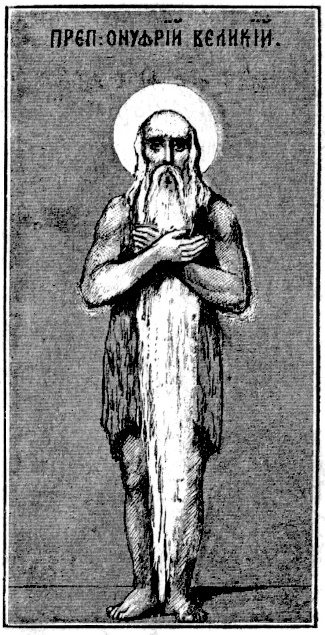
Пробывши несколько в монастыре, Пафнутий снова пошёл в пустыню и, подкрепляемый помощью свыше, на семнадцатый день дошёл до высокой горы и сел отдохнуть. И вот видит, что идёт пустынник, обросший густыми волосами; волосы на голове и бороде его простирались до земли и, как одежды, покрывали его. Он также присел отдохнуть и, увидев Пафнутия, сказал ему: «приди ко мне, человек Божий! Потому что и я подобный тебе человек и живу в этой пустыне Господа ради». И рассказал о себе, что имя ему – Онуфрий, живёт в пустыне шестьдесят лет, не видевши доселе ни одного человека. А прежде жил в монастыре близ города Ермополя. Но возымевши желание потрудиться в пустыне, взял немного хлеба и ночью отправился; при вступлении в пустыню убоялся и думал уже возвратиться в монастырь, но явившийся ангел ободрил его и обещал не отступать от него. Онуфрий продолжал путь и наконец, увидев пещеру, подошёл ко входу и сказал по обычаю: благослови! Он увидел святого старца и прожил у него не мало дней, поучаясь уставам пустынной жизни. Потом старец отвёл его далеко к небольшой пещере и сказал: «вот место, которое Господь уготовал тебе для жительства!» Он пробыл с Онуфрием тридцать дней, уча его добродетелям, и после того каждый год посещал его; придя в последний раз, скончался, и Онуфрий похоронил его близ своего жилища.
Having spent some time in the monastery, Paphnutius again went into the desert, and, strengthened by help from on high, on the seventeenth day he reached a high mountain and sat down to rest. And behold, he saw a hermit coming, overgrown with thick hair; the hair on his head and his beard reached to the ground and covered him like a garment. He also sat down to rest, and seeing Paphnutius, he said to him: "Come to me, O man of God! For I also am a man like you and live in this desert for the Lord's sake." And he told him of himself: that his name was Onuphrius, that he had lived in the desert for sixty years, having seen no man until then. But before that he had lived in a monastery near the city of Hermopolis. Having conceived a desire to labor in the desert, he took a little bread and set out by night; upon entering the desert he became afraid and thought to return to the monastery, but an angel appeared and encouraged him, promising not to depart from him. Onuphrius continued his journey and at last, seeing a cave, he approached the entrance and said according to custom: Bless! He saw a holy elder and lived with him for not a few days, learning the rules of the desert life. Then the elder led him far away to a small cave and said: "Behold the place which the Lord has prepared for you to dwell in!" The elder remained with Onuphrius for thirty days, teaching him the virtues, and after that visited him each year; coming for the last time, the elder reposed, and Onuphrius buried him near his dwelling.
После того Онуфрий рассказал, как он сначала, после прихода в пустыню, терпел от голода и жажды, от холода и зноя, и как потом Господь посылал ангела Своего приносить ему каждый день немного хлеба и воды, что продолжалось тридцать лет. Затем подана ему новая помощь; он нашёл близ своей пещеры источник воды и финиковое дерево. «Откуда ж ты?», спросил Пафнутий, «приобщаешься Святых Таин Христовых?» – «Ангел Господень приобщает меня, отвечал св. Онуфрий. Он повёл Пафнутия в свою пещеру и после молитвы продолжилась их благочестивая беседа. А к концу дня они увидели перед собой хлеб и воду, и вкусили пищи. Утром, после утреннего пения, Пафнутий, увидев изменившееся лицо Онуфрия, убоялся, но тот сказал: «Господь послал тебя похоронить тело моё; когда же воротишься в Египет, поминай меня!» Простившись с Пафнутием и помолившись, он лёг на землю и скончался. Небесный свет осиял праведника и ангелы вознесли душу его; а Пафнутий покрыл тело подшивкой одежды своей и вложил его в большой камень на подобие гроба, который покрыл другими камнями. Он стал молиться Господу, чтобы позволил ему жить на этом месте и хотел войти в пещеру, но вдруг пещера рухнула, дерево и источник засохли. Уразумев, что нет ему Божия благоволения жить там, Пафнутий помолился и пошёл в путь свой. Это было около 400 года по Р. Хр.
After that Onuphrius told how at first, after coming into the desert, he suffered from hunger and thirst, from cold and heat, and how afterwards the Lord sent His angel to bring him each day a little bread and water, which continued for thirty years. Then new help was given him; he found near his cave a spring of water and a date-palm tree. "But whence," asked Paphnutius, "do you partake of the Holy Mysteries of Christ?" "The angel of the Lord gives me Communion," answered St. Onuphrius. He led Paphnutius into his cave, and after prayer their pious conversation continued. And toward the end of the day they saw before them bread and water, and partook of food. In the morning, after the morning hymnody, Paphnutius, seeing the changed face of Onuphrius, was afraid, but he said: "The Lord has sent you to bury my body; when you return to Egypt, remember me!" Having taken leave of Paphnutius and prayed, he lay down on the ground and reposed. A heavenly light illumined the righteous man, and angels bore up his soul; and Paphnutius covered the body with the hem of his garment and placed it in a large hollow stone like a tomb, which he covered with other stones. He began to pray to the Lord that He would permit him to live in that place, and wished to enter the cave, but suddenly the cave collapsed, and the tree and the spring dried up. Understanding that there was no divine favor for him to live there, Paphnutius prayed and set out on his way. This was about the year 400 A.D.
Утешительно и не напрасно верование православной Церкви в общение умерших с живущими в земном мире, в помощь, оказываемую людям преставившимися к Богу святыми. И как естественно объясняется это верование! Не свойственно ли тем, кого Божественная любовь одушевляла во время их земной жизни – любить ещё более полной и совершенной любовью в том мире, который содержит всякое совершенство... И если «любовь не умирает», то она вечно существует и в душах, отшедших от мира, к пребывающим в мире и сближает их самой тесной связью; выражается участием их в судьбе ещё томящихся на земле братий своих. Участие же их – молитва, а молитва праведных умилостивляет Бога, и таким образом святые, молясь и ходатайствуя о живущих на земле более совершенной молитвой, чем та, которою могут молиться немощные и не освобождённые ещё от рабства греху люди, помогают людям достигать умилостивления Божьего.
Consoling and not in vain is the belief of the Orthodox Church in the communion of the departed with those living in the earthly world, in the help rendered to men by the saints who have reposed unto God. And how naturally is this belief explained! Is it not characteristic of those whom Divine Love animated during their earthly life—to love with an even fuller and more perfect love in that world which contains every perfection... And if "love does not die," it exists eternally also in the souls that have departed from the world, toward those who remain in the world, and draws them together by the closest bond; it is expressed by their participation in the fate of their brethren still languishing on earth. Their participation, however, is prayer, and the prayer of the righteous propitiates God; and thus the saints, praying and interceding for those living on earth with a more perfect prayer than that with which weak men, not yet freed from bondage to sin, can pray, help men to attain the propitiation of God.
Из бесчисленных подтверждений этого отрадного верования замечателен и случай из жизни воспоминаемого сегодня Церковью святого Петра Афонского.
Among the countless confirmations of this comforting belief, the incident from the life of St. Peter of Athos, commemorated today by the Church, is also remarkable.
Пётр был христианин, родом Грек, о звании родителей его – неизвестно, но сам он был полководцем, когда в 667 г. вёл войну с Арабами в Сирии и, взятый в плен, заточён в крепость Самару (на р. Евфрате). Не мало лет томился он в тяжкой неволе; усердно молил Бога о своём освобождении и при этом прибегал к помощи и ходатайству перед Богом святителя и чудотворца Николая. Святитель Николай, наш скорый помощник, явился Петру в сонном видении и ободрил его обещанием, что Господь пошлёт ему освобождение, и вместе с тем убеждал его не ослабевать в молитве...
Peter was a Christian, a Greek by birth; his parents' station is unknown, but he himself was a military commander when, in 667, he waged war with the Arabs in Syria and, taken captive, was imprisoned in the fortress of Samara (on the Euphrates River). He languished in grievous captivity for no few years; he earnestly prayed to God for his deliverance, and at the same time had recourse to the help and intercession before God of the Hierarch and Wonderworker Nicholas. St. Nicholas, our swift helper, appeared to Peter in a dream and encouraged him with the promise that the Lord would send him deliverance, and at the same time urged him not to grow weak in prayer...
Спустя несколько времени снова явился узнику святитель Николай, повторил ему то же, что говорил в первый раз, и советовал молиться прав. Симеону Богоприимцу, сказав, что он умолит Бога за него, как имеющий великое дерзновение у Бога.
After some time the Hierarch Nicholas again appeared to the prisoner, repeated to him what he had said the first time, and advised him to pray to the Righteous Simeon the God-Receiver, saying that he would entreat God for him, as having great boldness before God.
Между тем, среди тяжких страданий, Пётр не роптал, но стал внимательно испытывать себя: не сам ли он был причиной своего бедствия, не заслужил ли его чем-нибудь? – И вспомнил, что когда-то – не раз давал он обет оставить мир и поступить в иночество, но до сих пор не исполнил своего обещания... И, сознавая себя виновным, он благодушно и даже с благодарением терпел своё горе, как справедливо ниспосланное ему наказание... И в душе своей снова давал обет посвятить себя всецело на служение Богу, если только дождётся своего освобождения, и в слёзной молитве прибегал к святителю Николаю, прося его быть ходатаем и поручником о нём перед Богом. И не осталась без отзыва неусыпная молитва верующего. В третий раз явился Петру чудотворец Николай, в этот раз – вместе с Симеоном Богоприимцем, и чудным образом разрешили его от уз и вывели из темницы; действительно «в 676 г., по случаю размена пленных, Пётр был освобождён и отправился в Рим, в 681 г. пришёл на Афон, где после многолетних подвигов скончался в 734-м г. Мощи его были перенесены в обитель Климента, где сокрыты были от иконоборцев; около 880 г. опять они были открыты и поставлены в Карейский Богородичный храм Протата временно. В 969 г., по случаю смятений на Афоне, безмолвники Климентовой обители увезли их во Фракийское село Фотокоми и отдали епископу того места за 100 золотых монет»111. Здесь были от них многие чудеса, очевидцем которых, между прочими, был монах Николай, один из жизнеописателей святого, слышавший о жизни Петра от очевидцев или современников»112.
Meanwhile, amidst grievous sufferings, Peter did not murmur, but began carefully to examine himself: whether he himself was the cause of his calamity, whether he had deserved it by something? And he remembered that at one time—more than once—he had made a vow to leave the world and enter monasticism, but until now had not fulfilled his promise... And, recognizing himself as guilty, he bore his grief with good will and even with thanksgiving, as a punishment justly sent upon him... And in his soul he again made a vow to dedicate himself wholly to the service of God, if only he should live to see his deliverance, and with tearful prayer he had recourse to St. Nicholas, asking him to be an intercessor and surety for him before God. And the unceasing prayer of the believer did not remain unanswered. For the third time the Wonderworker Nicholas appeared to Peter, this time together with Simeon the God-Receiver, and in a wondrous manner they loosed him from his bonds and led him out of the prison; indeed, "in 676, on the occasion of an exchange of captives, Peter was freed and set out for Rome; in 681 he came to Athos, where after many years of ascetic labors he reposed in 734. His relics were translated to the monastery of Clement, where they were hidden from the iconoclasts; about 880 they were again uncovered and placed temporarily in the Karyes church of the Theotokos of the Protaton. In 969, on account of disturbances on Athos, the hesychasts of the monastery of Clement took them to the Thracian village of Photokomi and gave them to the bishop of that place for 100 gold coins."111 Many miracles were wrought from them there, of which, among others, the monk Nicholas, one of the biographers of the saint, who heard of Peter's life from eyewitnesses or contemporaries, was an eyewitness."112
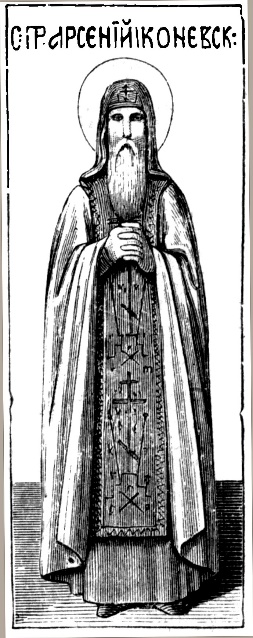
В 1373 г. в Новгородской Лисичьей обители, что близ Хутыня, облечён в монашество молодой человек с именем Арсения. Откуда и чей он сын, неизвестно; но потому, что уже умел он ковать медные изделия, видно, что воспитан он добрыми родителями. В Лисичьей обители терпеливо проходил он разные послушания и прожил 11 лет. Затем отправился в Афонскую гору и здесь в одном из монастырей подвизался три года. Он безвозмездно готовил для старцев Святогорских разную медную посуду и тем приобрёл любовь их. Возвращаясь в Россию, получил он от игумена Иоанна икону Божией Матери и устав общежития, с заповедью основать обитель на дальнем севере.
In 1373, in the Novgorod Lisichy Monastery, which is near Khutyn, a young man was clothed in monasticism with the name Arsenius. Whence he came and whose son he was is unknown; but from the fact that he already knew how to forge copper articles, it is evident that he was raised by good parents. In the Lisichy Monastery he patiently fulfilled various obediences and lived for eleven years. Then he set out for Mount Athos, and there he asceticised in one of the monasteries for three years. He gratuitously prepared various copper vessels for the elders of the Holy Mountain and thereby acquired their love. Returning to Russia, he received from the abbot John an icon of the Mother of God and the rule of the cenobitic life, with the command to found a monastery in the far north.
Посетив Лисичий монастырь и получив благословение игумена своего, отправился он странствовать по холодному северу. Он жил на Валааме, потом поплыл к устью реки Городецкой (по-Фински Воксы); здесь за бурей остаётся он долгое время и молится со слезами, да укажет Сам Господь место для желаемой обители. Буря утихает; странник садится на чёлн; но едва началось плавание, как снова поднялась буря и приносит странника к острову Коневцу. Преподобный поставил крест и остался здесь для подвигов. Это было в 1393 г.113.
Having visited the Lisichy Monastery and received the blessing of his abbot, he set out to wander through the cold north. He lived on Valaam, then sailed to the mouth of the Gorodetskaya River (in Finnish, Voksa); here, detained for a long time by a storm, he prays with tears that the Lord Himself might show the place for the desired monastery. The storm subsides; the wanderer sits in his skiff; but scarcely had the voyage begun when a storm again arose and brought the wanderer to the island of Konevets. The Venerable One set up a cross and remained there for ascetic labors. This was in 1393.113
Выстроив часовню на высоте острова, Арсений вёл скитскую жизнь. Трудна, тяжела была жизнь его на холодном и диком острове, но он терпел и подвизался в молитве. – Напрасно убеждал его инок Лаврентий возвратиться на Валаам по зову игумена Силы. Он решился с помощью Божией превратить остров служения лжи в обитель святости и истины. До его поселения на Коневце береговые жители пользовались островом для конского пастбища. Они верили, что скот их остаётся здесь целым и невредимым от того, что его берегут духи, живущие под огромным камнем, и в знак благоговейной признательности оставляли у камня каждую осень одного коня. Конь погибал от голода в какой-нибудь трущобе, а они верили, что благосклонно принят он в жертву духами. От того огромный камень называли Конь-каменем, а остров Коневым или Коневцем. Преподобный Арсений, узнав о таком языческом суеверии народа от рыбака Филиппа, ещё в начале поселения своего на острове, приступил к камню с молитвой, окропил его святой водой, и духи – наставники лжи – отлетели в виде воронов на Выборгский берег в большую губу, которая поныне называется: Чёртова лахта114. Это предание не в противоречии с несомненно известными событиями. ещё в 1227 г. Корелы здешних краёв были крещены115 и с того времени конечно переняли у Русских Русский язык, но не все расставались с поверьями язычества. Даже и в 1554 г. архиепископ Макарий писал, что в Водской пятине во всей Корельской земле до Коневых вод и за Ладожское озеро остаются в силе идолопоклоннические суеверия, благоговейное почтение камней, холмов, озёр116. Преподобный Арсений пять лет подвизался в скиту своём, показывая собой суеверам, что их духи, благотворители и каратели, не смеют коснуться до него. В 1398 г. преобразил он скит свой «на Коневском острове» в обитель общежития и построил храм в честь Рождества Богоматери, – изображённого на той иконе, которую принёс он с собой из Афона. Это было совершено по благословению Новгородского архиепископа Иоанна117.
Having built a chapel on the height of the island, Arsenius led a skete life. Difficult and heavy was his life on the cold and wild island, but he endured and struggled in prayer. – In vain did the monk Laurence urge him to return to Valaam at the call of Abbot Silas. He resolved, with God’s help, to transform the island of service to falsehood into a monastery of holiness and truth. Before his settlement on Konevets, the coastal inhabitants used the island for horse pasture. They believed that their cattle remained here safe and unharmed because spirits living under a huge stone guarded them, and as a sign of reverent gratitude they left one horse at the stone every autumn. The horse perished from hunger in some thicket, but they believed that it had been graciously accepted as a sacrifice by the spirits. For this reason the huge stone was called the Horse-stone, and the island was called Konevy or Konevets. The Venerable Arsenius, having learned of such pagan superstition of the people from the fisherman Philip, even at the beginning of his settlement on the island, approached the stone with prayer, sprinkled it with holy water, and the spirits—teachers of falsehood—flew away in the form of ravens to the Vyborg shore, into a large bay which to this day is called Chertova Lakhta114. This tradition is not in contradiction with reliably known events. As early as 1227, the Karelians of these regions were baptized115 and from that time, of course, adopted the Russian language from the Russians, but not all parted with pagan beliefs. Even in 1554, Archbishop Macarius wrote that in the Vodskaya Pyatina, throughout the entire Karelian land as far as the Konev waters and beyond Lake Ladoga, idolatrous superstitions, reverent veneration of stones, hills, and lakes remained in force116. The Venerable Arsenius struggled for five years in his skete, showing by his own example to the superstitious that their spirits, benefactors and punishers, dared not touch him. In 1398 he transformed his skete “on Konevets Island” into a cenobitic monastery and built a church in honor of the Nativity of the Mother of God—depicted on that icon which he had brought with him from Athos. This was done with the blessing of John, Archbishop of Novgorod117.
При архиепископе Симеоне преподобный Арсений снова отправился в Афонскую гору – испросить молитв и благословения для новой обители своей. Без него братия терпели во всём недостаток, готовы были оставить основавшуюся обитель; но старец Иоаким, прибывший на остров ещё в начале поселения на нём Арсения, крепко молился за них на высоте острова. «Скажи сетующим братиям, что Арсений скоро доставит им всякое продовольствие», сказала старцу во сне Богоматерь. И точно: скоро за тем преподобный Арсений возвратился и привёз с собой богатые запасы всего нужного, на двух судах. Эта высота с тех пор называется святой. В 1421 году необыкновенный разлив Ладожского озера118, смывший некоторые постройки бедной обители, заставил преподобного Арсения поставить обитель на нынешнем её месте, где мало по малу сооружён им каменный храм с деревянными кельями и оградой. Архиепископ Евфимий, поступивший на кафедру с Лисичьей горы, много содействовал преподобному в устроении новой обители. Коневец стал тогда известным для многих в Новгороде. Благочестивые Новгородцы стали посещать уединившуюся на острове обитель и доставляли ей свои пособия. Боярин Михаил Кобылка одарил обитель богатой милостыней. Арсений, следуя правилу странноприимства, с радушием угощал посетителей в своей келье. Но прозорливый Симон сказал Арсению: бесы радуются, когда игумен угощает у себя мирян. С того времени преподобный угощал посетителей не иначе, как в братской трапезе. – Святитель Евфимий также посещал Арсения на Коневце и в знак духовной дружбы подарил свой клобук. – Залив, где встречали и провожали владыку, назван Владычной лахтой. Это залив, давно занесённый песком и камнями, ныне уже порос травой, но сохраняет своё историческое название. По летописи святитель посещал Заволочье в 1446 г.119.
Under Archbishop Simeon, the Venerable Arsenius again set out for Mount Athos—to ask for prayers and a blessing for his new monastery. During his absence, the brethren suffered every kind of want and were ready to abandon the newly-founded monastery; but the elder Joachim, who had arrived on the island at the very beginning of Arsenius’s settlement there, prayed fervently for them on the height of the island. “Tell the sorrowing brethren that Arsenius will soon provide them with every supply,” the Mother of God said to the elder in a dream. And indeed: soon after this, the Venerable Arsenius returned and brought with him rich stores of everything needful, on two ships. This height has since been called holy. In 1421, an extraordinary flood of Lake Ladoga118, which washed away some of the buildings of the poor monastery, compelled the Venerable Arsenius to place the monastery on its present site, where little by little he built a stone church with wooden cells and a fence. Archbishop Euthymius, who had come to the see from Lisichya Gora, greatly assisted the Venerable One in the establishment of the new monastery. Konevets then became known to many in Novgorod. Pious Novgorodians began to visit the monastery secluded on the island and provided it with their aid. The boyar Michael Kobylka endowed the monastery with rich alms. Arsenius, following the rule of hospitality, cordially entertained visitors in his cell. But the perspicacious Simon said to Arsenius: the demons rejoice when an abbot entertains laymen in his cell. From that time on, the Venerable One entertained visitors only in the common refectory. – Hierarch Euthymius also visited Arsenius on Konevets and, as a sign of spiritual friendship, gave him his own klobuk. – The bay where they met and saw off the vladyka was named Vladychnaya Lakhta (Vladyka’s Bay). This bay, long since filled in with sand and stones, is now overgrown with grass, but retains its historical name. According to the chronicle, the Hierarch visited Zavolochye in 1446119.
Созревший в духовной жизни основатель обители и просветитель чудесной страны скончался на руках любящей братии 12 июня 1447 г.120. Тело его положено было в паперти храма, где скоро построен был придел во имя святого Онуфрия.
The founder of the monastery, matured in spiritual life and enlightener of the wondrous land, reposed in the arms of the loving brethren on June 12, 1447120. His body was laid in the narthex of the church, where soon a side-chapel was built in the name of St. Onuphrius.
Старец Моисей с рыбаками в осеннее время застигнут был бурей на озере; погибавшие обратились с молитвой к Господу, призывая на помощь и блаженного Арсения; явившийся чудный старец осенил их мантией и лодка благополучно пришла к берегу. В другое время Арсений явился во сне слепцу и велел идти ему на поклонение Коневской иконе Богоматери; послушный слепец прозрел у иконы. Коневский инок Леонтий, расслабленный всеми членами, получил исцеление при гробе преподобного. – В 1573 году обитель неожиданно спаслась от Шведов, разорявших Карелию; попавшемуся в плен Афанасию голос сказал: «если хочешь уйти, возьми с собой образ Спасителя, найденный здесь»; когда пленник вместе с другим подобным был уже на море в ладье, оба заснули от утомления и оба увидели преподобного Арсения, который говорил: встаньте, по морю плывёт змий. Пробудившиеся увидели Немецкое судно, шедшее на них, и вовремя принявшись за вёсла, успели скрыться от опасности121.
The elder Moses, together with fishermen, was caught by a storm on the lake in autumn; those who were perishing turned in prayer to the Lord, calling upon the blessed Arsenius for help; the wondrous elder appeared, overshadowed them with his mantle, and the boat came safely to shore. At another time, Arsenius appeared in a dream to a blind man and commanded him to go and venerate the Konevets Icon of the Mother of God; the obedient blind man received his sight at the icon. The Konevets monk Leontius, paralyzed in all his limbs, received healing at the grave of the Venerable One. – In 1573, the monastery was unexpectedly saved from the Swedes, who were ravaging Karelia; a voice said to Athanasius, who had been taken captive: “If you wish to escape, take with you the image of the Savior found here”; when the captive, together with another in like case, was already on the sea in a boat, both fell asleep from exhaustion, and both saw the Venerable Arsenius, who said: “Arise, a serpent is swimming across the sea.” Those who awoke saw a German vessel coming toward them, and taking up the oars in time, they succeeded in escaping the danger121.
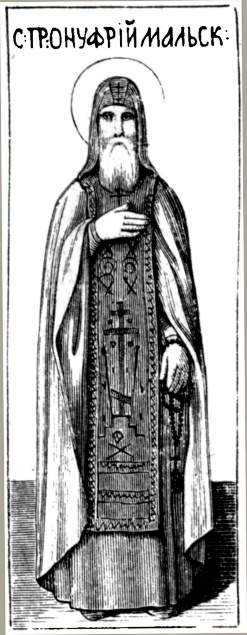
Преподобный Онуфрий основал обитель в честь Рождества Богородицы на Малах, в 4-х верстах от Изборска и в 56 верстах от города Пскова, и скончался 12-го июня 1592 года. По Рукописным святцам он новый чудотворец; мощи его почивают под спудом в Рождественской церкви, в которой придел посвящён его имени. Обитель его упразднена в 1764 г.122.
The Venerable Onuphrius founded a monastery in honor of the Nativity of the Mother of God at Maly, 4 versts from Izborsk and 56 versts from the city of Pskov, and reposed on June 12, 1592. According to the manuscript Menologia, he is a new wonderworker; his relics rest under a bushel in the Church of the Nativity, in which a side-chapel is dedicated to his name. His monastery was abolished in 1764122.
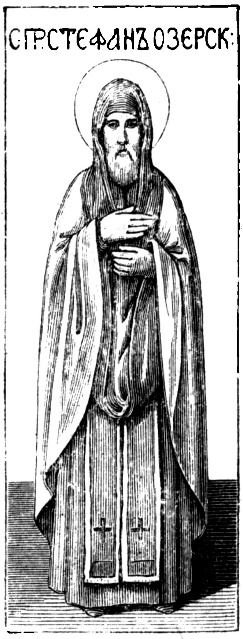
Отец блаженного Стефана служил при дворе князей Бородатых – отрасли князей Ярославских; в доме благочестивого родителя сын получил приличное воспитание123. Начало иночеству полагал он в Глушицкой обители, где провёл несколько лет. Потом странствовал по северным пустыням, жил несколько времени в Тихвине и, увлекаемый любовью к безмолвию, возвратился в родные Вологодские пределы: на восточном берегу Комельского озера, при истоке реки Комелы, в 35 верстах к югу от Вологды, поставил себе келью и потом часовню, а в ней иконы Божией Матери и св. Николая, и стал подвизаться, незнаемый людьми и знаемый единым Богом. – Много вытерпел он нужд и огорчений в своей пустыне: грубый рыболов, опасаясь, что преподобный овладеет ловлей рыбы в озере, то осыпал его жестокой бранью, то возмущал неприличными песнями. – Запас хлеба принесён был Стефаном небольшой – и ему грозил совершенный недостаток пищи. – Спустя более двух лет, нечаянно нашли его два зверолова и разделили с ним дорожный запас свой. От них узнал он тропу, ведшую к Белозерской дороге и деревням: иначе не мог он, и заставляемый крайностью, добраться до жилых мест. После того звероловы стали посещать Стефана, а от них узнали его и другие. Спустя три года одинокого пребывания в пустыне, пришли к Стефану два брата делить труды пустыни, потом явилось ещё несколько с подобными желаниями. Ещё прежде того, в летнюю ночь, жарко молился он в часовне, дабы Матерь Божия благословила место его для обители молитв; тогда в видении извещён он, что обитель должна устроиться в честь св. Николая. Ревнители пустынной жизни просили старца устроить храм молитвы. С одним из них отправился он в Москву испросить благословение у митрополита на построение храма и обители. М. Даниил с любовью принял старца, о котором прежде слышал, поместил его в своей келье и потом представил его великому князю Василию Иоанновичу. Посвящённый в сан священства и игумена Стефан получил от митрополита вместе с грамотой книги, сосуды и одежды для храма, а от великого князя грамоту на угодья. Храм и обитель устроены руками пустынников. – Это было в 1534 г. Так истинные рабы Божии считали нужным совершение бескровной жертвы в пустыне и приобщение Св. Таин. – Не так рассуждали о том они, как толкуют тёмные суеверы. Преп. Кассиян пишет: «мы не должны воздерживаться от приобщения Таин Господних потому, что признаём себя грешными; напротив того чаще и чаще должны прибегать к ним с жаждой для утверждения и очищения духа. – Гораздо справедливее с тем смирением сердца, по которому веруем и ясно сознаём, что достойно прикасаться к Св. Тайнам никогда не можем, – приобщаться их каждый воскресный день, нежели вознёсшись суетным самоубеждением думать, что мы через год бываем достойны приобщения их»124. – Преподобный Стефан во время уединённого пребывания в пустыне следовал древним пустынникам. – «Вси, иже в пустынях иночествующе, говорит Василий Великий (у Никона Чёрной горы в слове 53), идеже несть священника, причащение своё о себе держаще причащаются». В глубокой старости, накануне своей кончины преподобный Стефан оделся в приготовленное погребальное одеяние и приведённый в церковь приобщился Св. Таин от руки литургисавшего пресвитера, потом возвратился на одр свой и тихо скончался. По подлиннику, «Стефан святой, иже на озере строитель Николы чудотворца, надсед, брада с малою сединою»125. Он блаженно почил 12 июня 1542 г.126
The father of the blessed Stephen served at the court of the Princes Borodaty—a branch of the Princes of Yaroslavl; in the house of his pious parent, the son received a suitable upbringing123. He began his monastic life in the Glushitsa monastery, where he spent several years. Then he wandered through the northern wildernesses, lived for some time in Tikhvin, and, drawn by love of silence, returned to his native Vologda region: on the eastern shore of Lake Komel, at the source of the Komela River, 35 versts south of Vologda, he set up a cell for himself and later a chapel, and in it icons of the Mother of God and St. Nicholas, and began to struggle, unknown to men and known to God alone. – He endured many needs and vexations in his wilderness: a coarse fisherman, fearing that the Venerable One would take possession of the fishing in the lake, either showered him with harsh abuse or disturbed him with indecent songs. – The supply of bread brought by Stephen was small—and he was threatened with a complete lack of food. – After more than two years, two hunters accidentally found him and shared their traveling provisions with him. From them he learned of a path leading to the Belozersk road and to villages: otherwise, even when compelled by extreme need, he could not reach inhabited places. After that, the hunters began to visit Stephen, and others learned of him from them. After three years of solitary sojourn in the wilderness, two brothers came to Stephen to share the labors of the wilderness, and then several more appeared with similar desires. Even before that, on a summer night, he prayed fervently in the chapel that the Mother of God would bless his place for a monastery of prayer; then in a vision he was informed that the monastery should be established in honor of St. Nicholas. Zealots of the wilderness life asked the elder to build a church of prayer. With one of them he set out for Moscow to ask the metropolitan’s blessing for the building of a church and monastery. Metropolitan Daniel received the elder with love, of whom he had heard before, lodged him in his own cell, and then presented him to Grand Prince Basil Ivanovich. Ordained to the priesthood and the rank of abbot, Stephen received from the metropolitan, together with a charter, books, vessels, and vestments for the church, and from the Grand Prince a charter for the lands. The church and monastery were built by the hands of the hermits. – This was in 1534. Thus did true servants of God consider the offering of the bloodless sacrifice in the wilderness and the reception of the Holy Mysteries necessary. – They did not reason about this as dark superstitious people do. The Venerable Cassian writes: “We ought not to abstain from Communion of the Lord’s Mysteries because we consider ourselves sinners; on the contrary, we ought more and more frequently to approach them with thirst for the strengthening and purification of the spirit. – It is far more just, with that humility of heart by which we believe and clearly acknowledge that we can never worthily touch the Holy Mysteries, to commune of them every Sunday, than, being lifted up with vain self-persuasion, to think that we become worthy of communing of them once a year”124. – The Venerable Stephen, during his solitary sojourn in the wilderness, followed the ancient hermits. – “All who live as monks in the wilderness,” says Basil the Great (in Nikon of the Black Mountain, Discourse 53), “where there is no priest, keep their own Communion and commune themselves.” In extreme old age, on the eve of his repose, the Venerable Stephen clothed himself in the prepared burial garment and, being led into the church, partook of the Holy Mysteries from the hand of the priest who was celebrating the Liturgy; then he returned to his bed and quietly reposed. According to the iconographic original, “Stephen the saint, who was on the lake, builder of the monastery of Nicholas the Wonderworker, somewhat grey, beard with a little grey”125. He blissfully reposed on June 12, 1542126.
«Сеющий в плоть свою от плоти пожнёт тление; а сеющий в дух от духа пожнёт жизнь вечную», учит Апостол (Гал.6:8). – Жизнь духовная, сильно развившаяся в душе, не боится смерти, – она даёт о себе знать делами чудными и за гробом. Вологодский купец Гавриил, знавший преп. Стефана при его жизни и благотворивший обители его, плыл водой по торговым делам своим; поднялась страшная буря и волны грозили поглотить лодку. Гавриил стал призывать помощь угодников Божиих и между ними блаженного Стефана. И внезапно увидел у себя в лодке святолепного старца, который говорил ему: «не бойся, сын смирения, – Господь послал меня избавить тебя от потопления». «Кто ты?» спросил Гавриил, бывший в ужасе и от видения, и от явной смерти. – «Ты много милостыни подавал в обитель св. Николая, что на озере Комедьском, и мне смиренному строителю её Стефану», отвечал явившийся и исчез, а вслед затем утихла буря. В тот же 1542 г., как скончался блаженный Стефан, обитель его разорена была Татарами и при возобновлении её построили над гробом основателя обители деревянный храм, заменённый потом каменным. Тогда же, при построении деревянного храма, написана была икона преп. Стефана и поставлена над гробом его, – а другая поставлена в храме. Обитель закрыта в 1764 г. На память преп. Стефана, 12 июня, ежегодно бывает здесь большое стечение народа127. Недавно храм приписан к Вологодскому девичьему монастырю, который тем поставлен в состояние открыть общую трапезу для всех сестёр. Так преп. Стефан стал питать немощных и бедных молитвенниц128.
“He that soweth to his flesh shall of the flesh reap corruption; but he that soweth to the Spirit shall of the Spirit reap life everlasting,” teaches the Apostle (Gal. 6:8). – The spiritual life, when strongly developed in the soul, fears not death; it makes itself known by wondrous works even beyond the grave. The Vologda merchant Gabriel, who had known the Venerable Stephen during his life and had been a benefactor to his monastery, was sailing by water on his trading business; a terrible storm arose and the waves threatened to swallow the boat. Gabriel began to call upon the help of the saints of God, and among them the blessed Stephen. And suddenly he saw in his boat a saintly-appearing elder, who said to him: “Fear not, son of humility; the Lord has sent me to deliver you from drowning.” “Who are you?” asked Gabriel, who was in terror both from the vision and from imminent death. “You have given much alms to the monastery of St. Nicholas on Lake Komel, and to me, its humble builder Stephen,” answered the one who appeared, and vanished; and immediately thereafter the storm subsided. In that same year 1542, when the blessed Stephen reposed, his monastery was ravaged by the Tatars, and upon its restoration they built a wooden church over the tomb of the founder of the monastery, which was later replaced by a stone one. At that time, during the building of the wooden church, an icon of the Venerable Stephen was painted and placed over his tomb, and another was placed in the church. The monastery was closed in 1764. On the commemoration of the Venerable Stephen, June 12, a great gathering of people takes place here every year127. Recently the church was attached to the Vologda Convent, which thereby was enabled to open a common refectory for all the sisters. Thus the Venerable Stephen began to nourish the weak and poor nuns128.
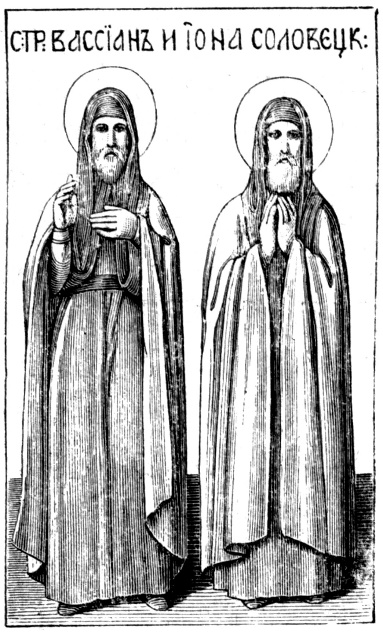
Преп. Вассиан и Иона образовались в духовной жизни наставлениями св. Филиппа, когда был он игуменом Соловецкой обители. Как совершалось преспеяние их в духовной жизни, о том не сохранилось известий; но по нетлению их несомненно, что они достигли высокой степени духовного совершенства. Самый последний подвиг жизни их свидетельствует, что они были чада послушания. – В 1561 г. по воле святого игумена Вассиан и Иона отправились на судах за известью на твёрдую землю. На возвратном пути из устья Двины буря разбила суда; тела утонувших Вассиана и Ионы выброшены были на восточный берег Унской губы129. Крестьяне Унского посада нашли нетленные тела преподобных и сперва хотели перевезти их в свой посад, но он стоял за 25 вёрст от того места, и они похоронили их там, где нашли. Мамант, старец Сергиевой лавры, управлявший соляными варницами в Уиском посаде, повинуясь чудесному во сне видению, 12 июня 1599 г. построил над мощами их часовню.
The Venerable Vassian and Jonah were formed in the spiritual life by the instructions of St. Philip when he was abbot of the Solovki monastery. How their progress in the spiritual life was accomplished, no accounts have been preserved; but from their incorruption it is undoubted that they attained a high degree of spiritual perfection. The very last feat of their life testifies that they were children of obedience. – In 1561, by the will of the holy abbot, Vassian and Jonah set out in vessels for lime to the mainland. On the return journey from the mouth of the Dvina, a storm shattered the vessels; the bodies of the drowned Vassian and Jonah were cast up on the eastern shore of Unskaya Bay129. The peasants of the Unsk settlement found the incorrupt bodies of the venerable ones and at first wanted to transport them to their settlement, but it stood 25 versts from that place, and they buried them where they had found them. Mamant, an elder of the Trinity–St. Sergius Lavra who managed the saltworks in the Unsk settlement, obeying a miraculous vision in a dream, on June 12, 1599, built a chapel over their relics.
Вслед затем близ часовни поставил себе келью отшельник, к нему пришли другие, а при мощах праведников совершались по временам чудеса. Инок Ефрем построил храм и отправился за антиминсом в Вологду, но был убит ляхами. Спустя 5 лет после того, как волнения, поднятые самозванцами, утихли, храм был освящён в честь Преображения Господня и образовалась Пертоминская обитель130. Вот один из многих опытов загробной деятельности святых Пертоминских! В обители их чувствовали недостаток в сене, нужном для скота. Более других скорбел о нужде благочестивый послушник Никита, скорбел и молился о помощи. В одну ночь после молитвы заснул он. И вот являются преп. Вассиан и Иона. «Ты призывал нас, говорят они; но нас не было в обители, – мы промышляли сена для скота; – Бог посылает тебе довольно сена, – не скорби; скажи братии – сено куплено, пусть пошлют в ближние поселения». Когда послали в Унскую волость, то купили до 90 возов и за цену небывалую, по 6 денежек за воз131.
Soon thereafter, a hermit placed a cell for himself near the chapel; others came to him, and at the relics of the righteous ones miracles were performed from time to time. The monk Ephraim built a church and set out for an antimension to Vologda, but was killed by Poles. Five years after the disturbances raised by the impostors had subsided, the church was consecrated in honor of the Transfiguration of the Lord, and the Pertominsk monastery was formed130. Here is one of many examples of the posthumous activity of the holy Pertominsk saints! In their monastery they felt a shortage of hay needed for the cattle. More than others, the pious novice Nikita grieved over the need; he grieved and prayed for help. One night after prayer he fell asleep. And behold, the Venerable Vassian and Jonah appear. “You have called us,” they say; “but we were not in the monastery; we were procuring hay for the cattle; God sends you sufficient hay; do not grieve; tell the brethren: the hay is bought, let them send to the nearby settlements.” When they sent to the Unsk volost, they bought up to 90 cartloads, and at an unheard-of price, six denezhkas per cartload131.
Ныне мощи пр. Вассиана и Ионы почивают под спудом в каменном храме Успения Богоматери, освящённом в 1691 г. Пётр I спасся здесь от бури, застигшей его на пути из Соловецкой обители в Архангельск; пробыв в обители три дня, он сам своими руками устроил огромный крест, нёс его на плечах своих из обители до берега и поставил с Голландской надписью: «сей крест поставил капитан Пётр в лето 1694132.
Now the relics of the Venerable Vassian and Jonah rest under a bushel in the stone church of the Dormition of the Mother of God, consecrated in 1691. Peter I was saved here from a storm that overtook him on his way from the Solovki monastery to Arkhangelsk; having stayed in the monastery for three days, he himself with his own hands fashioned a huge cross, carried it on his shoulders from the monastery to the shore, and set it up with a Dutch inscription: “This cross was set up by Captain Peter in the year 1694”132.
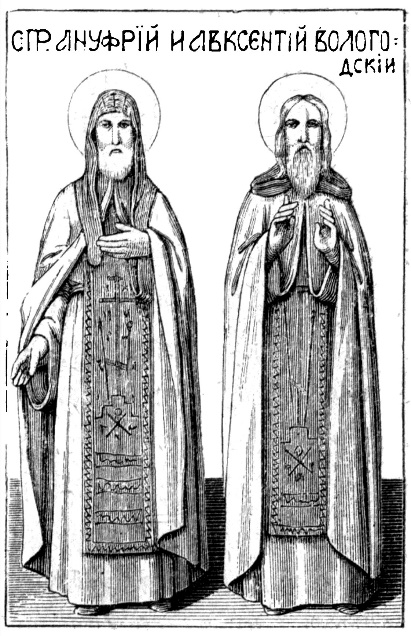
По ркп. описанию святых Вологодских, «преподобные отцы Онуфрий и Авксентий, иже в Перцовой пустыни, быша в то 7007 (1499)». Перцова пустынь, с 1764 г. закрытая, находилась на полпути от Грязовца к Арсениевой пустыни, в 35 верстах от Вологды. – В 1499 г. блаженные пустынники в первый раз поселились в здешнем, тогда крайне безмолвном, лесном месте. С терпением нужд всякого рода совершали они подвиги иночества. – Мощи их покоятся под спудом в храме Св. Троицы, ныне приходском133.
According to the manuscript description of the Vologda saints, “the Venerable Fathers Onuphrius and Auxentius, who were in the Pertseva hermitage, were in the year 7007 (1499).” The Pertseva hermitage, closed since 1764, was located halfway from Gryazovets to the Arsenieva hermitage, 35 versts from Vologda. – In 1499 the blessed hermits first settled in this then extremely silent, wooded place. With patience under every kind of privation they performed the feats of monasticism. – Their relics rest under a bushel in the church of the Holy Trinity, now a parish church133.
Таковы сведения о жизни Петра Афонского, передаваемые преосв. Порфирием по Ватопедской рукописи 1422 г. в его «Истории Афона» (см. «Месяцесл. Востока», архим. Серг., т. II, ч. 2, с. 166).
Such is the information about the life of Peter of Athos, transmitted by His Grace Porfiry according to the Vatopedi manuscript of 1422 in his “History of Athos” (see “Menaion of the East,” by Archimandrite Sergius, vol. II, part 2, p. 166).
Слава Богоматери 3. 2, стр. 70. 71. По Новгор. ркп., «6901 (1393) старец Арсений пришел на остров Коневец». Опис. Румянц. мув., стр. 43. Надпись на икове, начертанная 1699 г.: «Божиею милостию – некогда бывшу преп. отцу Арсению на св. горе Афонстей, потрудися тамо неколико время и прият благословение от игум. Иоанна св. горы Афонские и честную сию икону Пречистые Богородицы в лето 6901 и оттуду его благословлением со св. иконою прииде в великий Нов-град преп. Арсений ко архиеп. Иоанну Новгород., благословление от него прият и отъиде на Нево озеро в Коневский остров и вселися ту и с св. иконою, юже прият во святой горе. И созда церковь во имя Рождества Пресв. Богородицы и обитель» пр. Ист. иер. IV, 624.
Glory of the Mother of God 3. 2, pp. 70, 71. According to a Novgorod manuscript, “in the year 6901 (1393) the elder Arsenius came to the island of Konevets.” Description of the Rumyantsev Museum, p. 43. Inscription on an icon, written in 1699: “By the mercy of God – once the Venerable Father Arsenius was on the Holy Mount Athos, he labored there for some time and received a blessing from Abbot John of the Holy Mount Athos and this venerable icon of the Most Pure Theotokos in the year 6901, and from there, with his blessing, with the holy icon the Venerable Arsenius came to Great Novgorod to Archbishop John of Novgorod, received a blessing from him and departed to Lake Nevo to Konevets Island and settled there with the holy icon which he had received on the Holy Mount. And he built a church in the name of the Nativity of the Most Holy Theotokos and a monastery.” pr. History of the Hierarchy IV, 624.
Ркп. святцы: «пр. Арсений игумен Коневский преставися в л. 6900 (1392) мес. сент. в 9 д.» Сент. 6 день обретения мощей его; 1392 г. – год прибытия его на Коневец. В словаре святых 1836 г. и у пресс. Макария годом кончины показан 1444 г. Это претив летописи. См. пр. 90. По ист. иер. 4, 616. 618, преставился в 1447 г. июня 12 д. В Отенских святцах 1718 г. память июня 12 д., писано в летописце соборном, «бе в лето 6955 при архиепископе Новгородском Евфимие»
Manuscript calendar: “The Venerable Arsenius, Abbot of Konevets, reposed in the year 6900 (1392) on the 9th day of September.” September 6 is the uncovering of his relics; 1392 is the year of his arrival at Konevets. In the Dictionary of Saints of 1836 and by His Grace Macarius, the year of his repose is given as 1444. This contradicts the chronicle. See note 90. According to the History of the Hierarchy 4, 616, 618, he reposed in 1447, on June 12. In the Otensk calendar of 1718, the commemoration is on June 12; it is written in the cathedral chronicle, “it was in the year 6955 under Archbishop Euthymius of Novgorod.”
Истор. изображ. начала Конев. об. СПб. 1817 г., стр. 9–11. В 1610 г. Коневские иноки, по завоевании Карелии Шведами, переселились в Деревяницкий монастырь и возвратились на Коневец в 1718 г., а Ковевская икона Богоматери только в 1798 г. возвращена на Коневец. Ист. иер. IV. 619–626. Макария древн. 2, 91.
Historical Description of the Foundation of the Konevets Monastery. St. Petersburg, 1817, pp. 9–11. In 1610, the Konevets monks, after the conquest of Karelia by the Swedes, moved to the Derevyanytsky Monastery and returned to Konevets in 1718, and the Konevets Icon of the Mother of God was returned to Konevets only in 1798. History of the Hierarchy IV, 619–626. Macarius, Antiquities 2, 91.
В ркп. святцах показан день кончины «пр. Стефана игумена Комельского Николаевского мон.» – 12 д. июня, но не показан год. – В записке о Вологодских святцах † июн. 12-го 1542 г.
In the manuscript calendar, the day of repose is given as “the Venerable Stephen, Abbot of the Komel Nicholas Monastery” – June 12, but the year is not given. – In a note on the Vologda calendar, † June 12, 1542.