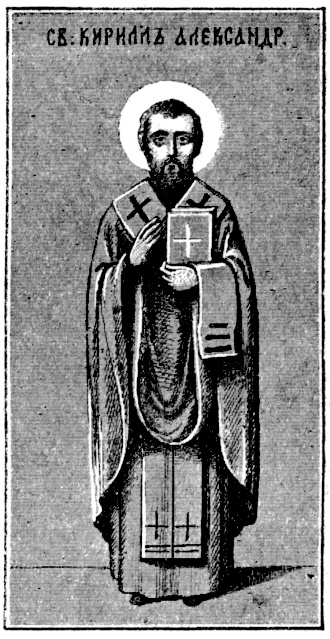
Кирилл, родом Египтянин, племянник патриарха Александрийского Феофила, родился во второй половине IV столетия, получил замечательное образование, почерпнутое им преимущественно, как он сам говорит, из учения писаний древних учителей, причём ему хорошо были известны и языческие писатели’. Довольно долго жил он с иноками в Нитрийской пустыне – под руководством благочестивого старца Серапиона. Потом был вызван в Александрию дядей своим патриархом Феофилом, и поставлен им в диаконы; продолжал своё духовное образование под руководством дяди; был с ним в 404-м году на соборе, осудившем святого Златоуста (и, к сожалению, долго ещё оставался предубеждённым против этого святителя под влиянием враждебных отношений к нему Феофила72.
Cyril, an Egyptian by birth, the nephew of Theophilus, Patriarch of Alexandria, was born in the second half of the fourth century. He received a remarkable education, drawn, as he himself says, chiefly from the teachings of the writings of the ancient teachers, and he was also well acquainted with pagan writers. He lived for a considerable time with monks in the Nitrian desert, under the guidance of the pious elder Serapion. Afterwards, he was summoned to Alexandria by his uncle, Patriarch Theophilus, and was ordained by him a deacon. He continued his spiritual education under his uncle's guidance and was with him in the year 404 at the council that condemned St. John Chrysostom (and, unfortunately, for a long time afterwards he remained prejudiced against this hierarch under the influence of Theophilus's hostile relations toward him72).
Ещё при жизни Феофила Кирилл успел приобрести общее уважение безукоризненною строгостью своей жизни и прославился, как красноречивый проповедник; поэтому, по смерти Феофила, в 412 г. был избран преемником своего дяди на патриаршем престоле Александрийском и вскоре оказался одним из самых влиятельных деятелей своего века, в особенности в делах Востока.
Even during Theophilus's lifetime, Cyril had acquired universal respect for the irreproachable strictness of his life and was renowned as an eloquent preacher. Therefore, upon the death of Theophilus in 412, he was chosen as his uncle's successor on the patriarchal throne of Alexandria and soon proved to be one of the most influential figures of his age, especially in the affairs of the East.
В это время Церковь страдала от различных ересей; великие испытания предстояли в борьбе с представителями этих разнообразных ересей, между которыми иные пользовались большой силой, опираясь на сочувствие к значительно распространённым лжеучениям. Кирилл выступил твёрдым и неуклонным до конца жизни борцом за православие. Первым делом его было изгнание из Александрии новатиан73, но так как они были значительно распространены в этом городе, то эта мера возбудила против Кирилла многочисленных врагов. Число их ещё увеличилось, когда он прибегнул и к другой крутой мере против Евреев, а именно – за произведённое ими в городе ночью смущение, среди которого они погубили множество христиан, Кирилл осудил иных на смерть, иных – на изгнание и конфискацию имущества. Этим восстановил он против себя и начальника города – Ореста, державшего сторону Иудеев, и он открыто стал действовать против патриарха; подал даже на него жалобу императору. Кирилл старался о примирении, но не успел предупредить смут в городе, которым содействовало ещё и то обстоятельство, что монахи Нитрийские, полагая, что Кирилл не в безопасности, явились на защиту его, публично осыпали ругательствами начальника города, а один из них Аммоний даже ранил Ореста в голову. За это он был предан смерти, узнав о чём, Кирилл послал взять тело Аммония и похоронить его с почестью. Это ещё усилило смуты в городе. К несчастью, Кирилл не сумел сдержать излишней ревности своих приверженцев и тем навлёк на себя упрёки в потворстве мятежникам, вражда между которыми обострилась до крайней степени и довела до многих гибельных последствий. Между прочими пострадала в это время девица Ипатия, дочь философа Феона, всеми уважаемая, добродетельная, учёная и даже сама преподававшая философию; она вышла из дома, чтобы примирить враждующих, но была умерщвлена разъярённой толпой... Тело её было рассечено на части и предано сожжению74.
At this time, the Church was suffering from various heresies; great trials lay ahead in the struggle with the representatives of these diverse heresies, some of whom wielded great power, relying on sympathy for their widely spread false teachings. Cyril came forth as a firm and unwavering champion of Orthodoxy until the end of his life. His first act was the expulsion of the Novatians73 from Alexandria, but since they were numerous in that city, this measure aroused many enemies against Cyril. Their number increased further when he resorted to another severe measure against the Jews, namely—for the disturbance they caused in the city by night, during which they destroyed many Christians—Cyril condemned some to death, others to exile and confiscation of property. By this he also turned against himself the prefect of the city, Orestes, who sided with the Jews, and he openly began to act against the patriarch; he even lodged a complaint against him with the emperor. Cyril strove for reconciliation, but could not prevent disturbances in the city, which were further abetted by the circumstance that the Nitrian monks, believing Cyril to be in danger, came to his defense, publicly heaped abuse upon the prefect of the city, and one of them, Ammonius, even wounded Orestes in the head. For this he was put to death; upon learning of it, Cyril sent to take the body of Ammonius and bury it with honor. This further increased the disturbances in the city. Unfortunately, Cyril was unable to restrain the excessive zeal of his adherents and thereby brought upon himself reproaches for conniving with the rebels, whose enmity became extremely bitter and led to many disastrous consequences. Among others, the maiden Hypatia, daughter of the philosopher Theon, universally respected, virtuous, learned, and herself a teacher of philosophy, suffered at this time; she went out from her house to reconcile the warring parties, but was slain by an enraged mob... Her body was cut to pieces and committed to the flames74.
Все эти беспорядки были наконец принятыми строгими мерами прекращены, но тогда возникли смуты в другом роде, смуты, угрожавшие миру и покою целой Церкви Христовой. Святителю Кириллу пришлось вступить в борьбу с ересью Нестория и с еретиками несторианами, между которыми Несторий распространял своё лжеучение посредством письменных бесед, рассылаемых по церквам и монастырям. Эти беседы произвели такое влияние между Египетскими иноками, что Кирилл счёл нужным употребить все меры для ограждения своей паствы. В увещательном письме к Несторию и в письмах к императору Феодосию Младшему, к сестре его Пульхерии и к другим двум сёстрам императора, он убедительно опровергал мнения Нестория (что Иисус Христос родился не Богом, а человеком и стал причисленным Божеству только святостью Своей жизни, и что поэтому Дева Мария не должна именоваться Богородицей), и вместе с тем ясно излагал истинное христианское учение о воплощении Сына Божия. Он убеждал также Римского папу Целестина принять решительные меры против опасной ереси Нестория. Целестин для рассмотрения этого нового учения созвал в Риме собор, который определил низложить патриарха Константинопольского Нестория, если он не откажется от лжеучения. Собор, созванный Кириллом в Александрии согласился с определениями Римского собора. Сверх того, Кирилл от имени собора отправил Несторию изложения 12 анафематизм, т. е. объявлений осуждения против двенадцати пунктов лжеучения. Несторий и его приверженцы отвечали на это обвинением с своей стороны Кирилла в ереси; спор ожесточался, а ересь, между тем, распространялась всё больше и больше. Тогда император Феодосий решился созвать новый (Третий) Вселенский Собор в г. Ефесе. Но и на соборе (открывшемся шестнадцатью днями позже назначенного срока – 7-го июня 431 г.) еретики одолевали и успели даже возбудить пробив Кирилла гнев императора...
All these disorders were finally quelled by strict measures, but then disturbances of another kind arose, disturbances that threatened the peace and tranquility of the whole Church of Christ. St. Cyril had to enter into struggle with the heresy of Nestorius and with the Nestorian heretics, among whom Nestorius spread his false teaching through written discourses sent to churches and monasteries. These discourses produced such an influence among the Egyptian monks that Cyril deemed it necessary to use every means to protect his flock. In an admonitory letter to Nestorius and in letters to the Emperor Theodosius the Younger, to his sister Pulcheria, and to the emperor's other two sisters, he convincingly refuted the opinions of Nestorius (that Jesus Christ was born not as God but as a man and became numbered with the Godhead only by the holiness of His life, and that therefore the Virgin Mary should not be called Theotokos), and at the same time he clearly set forth the true Christian teaching concerning the incarnation of the Son of God. He also urged Pope Celestine of Rome to take decisive measures against the dangerous heresy of Nestorius. Celestine, for the examination of this new teaching, convened a council in Rome, which decreed the deposition of Nestorius, Patriarch of Constantinople, if he did not renounce his false teaching. A council convened by Cyril in Alexandria agreed with the decrees of the Roman council. Moreover, Cyril, in the name of the council, sent to Nestorius an exposition of twelve anathematisms, that is, declarations of condemnation against twelve points of false teaching. Nestorius and his adherents responded to this by accusing Cyril in turn of heresy; the dispute grew more bitter, and the heresy, meanwhile, spread more and more. Then the Emperor Theodosius decided to convene a new (Third) Ecumenical Council in the city of Ephesus. But even at the council (which opened sixteen days later than the appointed time—on June 7, 431), the heretics prevailed and even succeeded in arousing the emperor's anger against Cyril...
Дело в том, что собор открыл заседания, не дождавшись Иоанна, патриарха Антиохийского с еретиками епископами (прибывшими только 28 июня) и в отсутствии Нестория, который отказался являться на собор, ссылаясь на отсутствие Сирских епископов (на поддержку которых он рассчитывал). На этом соборе – под председательством святителя Кирилла – произнесено было осуждение ереси Нестория; но против постановлений этого собора, состоявшегося в отсутствии многих подлежащих лиц, протестовал и донёс императору представитель его, граф Кондидиан, вследствие чего император остановил действия собора. Патриарх Иоанн, при общем открытом восстании против Кирилла приверженцев Нестория, отказался от приглашения присутствовать при общем совещании и решил составить свой собор из 43-х епископов, на котором анафематизмы Кирилловы были признаны еретическими; Кирилл и Мемнон Ефесский объявлены лишёнными сана, как нарушители церковных и императорских постановлений.
The fact was that the council began its sessions without waiting for John, Patriarch of Antioch, and the heretic bishops (who arrived only on June 28) and in the absence of Nestorius, who refused to appear before the council, pleading the absence of the Syrian bishops (on whose support he counted). At this council—under the presidency of St. Cyril—the condemnation of the heresy of Nestorius was pronounced; but the decrees of this council, held in the absence of many concerned persons, were protested against by the imperial representative, Count Candidian, who reported to the emperor, whereupon the emperor halted the council's proceedings. Patriarch John, amid the general open uprising against Cyril by the adherents of Nestorius, refused the invitation to be present at a common deliberation and decided to convene his own council of forty-three bishops, at which Cyril's anathematisms were declared heretical; Cyril and Memnon of Ephesus were declared deposed, as violators of ecclesiastical and imperial decrees.
Между тем, к 10-му июля прибыли послы папские; Несторий был снова осуждён на соборе, защищавшем Кирилла, а Кирилл и Мемнон были освобождены от приговора после того, как Иоанн Антиохийский отказался дать объяснение о винах их, и на сам собор Иоанна произнесено осуждение.
Meanwhile, by July 10, the papal legates arrived; Nestorius was again condemned at the council that defended Cyril, and Cyril and Memnon were released from the sentence after John of Antioch refused to give an explanation of their alleged offenses, and condemnation was pronounced upon John's council itself.
От императора, до которого долго не доходило сведений о делах на соборе, не получалось сначала никакого решения; окружённый ловкими приверженцами Нестория, он сам находился в недоумении. Наконец полномочный от него приехал с поручением примирить враждующие стороны, а Кирилла и Мемнона, так же как и Нестория взять под стражу. С полной твёрдостью и кротостью переносил Кирилл тяжёлые испытания. Не казались ли они ему теперь очистительным искуплением его собственных заблуждений и бывшей – под влиянием дяди его Феофила – неправоты в отношении к Иоанну Златоусту...
From the emperor, who for a long time received no reports of the council's proceedings, no decision was initially forthcoming; surrounded by the skillful adherents of Nestorius, he himself was in perplexity. Finally, his plenipotentiary arrived with a commission to reconcile the warring parties and to take Cyril and Memnon, as well as Nestorius, into custody. With complete firmness and meekness, Cyril bore these grievous trials. Did they not now seem to him a purifying atonement for his own errors and for his former—under the influence of his uncle Theophilus—injustice toward John Chrysostom...
Когда, однако же, народ в Константинополе узнал о взятии под стражу святителя, то многие пришли в негодование, – св. Далмат, покинув своё 44-х летнее уединение, во главе иноков и сопровождаемый народом, явился перед дворцом Феодосия и просил его вновь рассмотреть дело. Царь обещал вызвать уполномоченных от обеих сторон, и огромная толпа с радостными восклицаниями устремилась в церковь, воспевая псалом: «хвалите Бога во святых Его!» Когда же Далмат прочёл народу письмо, полученное им от Кирилла с изложением всего дела, то послышались многочисленные возгласы: «анафема Несторию!»
When, however, the people in Constantinople learned of the hierarch's imprisonment, many were indignant. St. Dalmatius, leaving his forty-four-year seclusion, at the head of the monks and accompanied by the people, appeared before the palace of Theodosius and asked him to re-examine the matter. The emperor promised to summon representatives from both sides, and a huge crowd with joyful cries rushed into the church, singing the psalm: "Praise God in His saints!" When Dalmatius read to the people the letter he had received from Cyril, setting forth the whole matter, numerous shouts were heard: "Anathema to Nestorius!"
Когда явились доверенные обоих соборов, и Кирилл представил тогда через своих доверенных свой апологетик императору, Феодосий, выслушав несколько раз послов, признал невинность святителей Кирилла и Мемнона. Таким образом истина наконец восторжествовала, император, поняв дело в точности, потребовал от Иоанна Антиохийского примирения с Кириллом и решил, что, по определению собора, Несторий должен быть осуждён.
When the representatives of both councils appeared, and Cyril then presented through his representatives his apology to the emperor, Theodosius, after hearing the envoys several times, acknowledged the innocence of the hierarchs Cyril and Memnon. Thus truth finally triumphed; the emperor, having understood the matter accurately, demanded from John of Antioch reconciliation with Cyril and decided that, according to the council's decree, Nestorius should be condemned.
После нескольких ещё обсуждений между епископами, состоялось наконец соглашение двухсот из них с постановлениями Ефесского собора, – святитель Кирилл с торжеством возвратился в Александрию, где и продолжал управлять Церковью до самой кончины своей – вследствие расстроенного трудами и заботами здоровья – в 444-м году.
After several further discussions among the bishops, an agreement was finally reached by two hundred of them with the decrees of the Council of Ephesus. St. Cyril returned in triumph to Alexandria, where he continued to govern the Church until his death—from health broken by labors and cares—in the year 444.
Он оставил по смерти много замечательных сочинений; главные из них: пять книг против Нестория; изъяснения на Пятокнижие Моисея, на пророчества Исаии, на двенадцать меньших пророков, на Евангелистов Иоанна и Луку, на послания; книга о поклонении духом и истиной; учение о Св. Троице.
He left behind many remarkable writings; the chief among them are: five books against Nestorius; commentaries on the Pentateuch of Moses, on the prophecies of Isaiah, on the twelve minor prophets, on the Evangelists John and Luke, on the epistles; a book on worship in spirit and truth; a treatise on the Holy Trinity.
Но время гонения, воздвигнутого на христиан Персидским царём Сапором II в 346-м году, были захвачены также богатый священник Павел и пять дев; первый был захвачен в особенности ради того, чтобы воспользоваться его деньгами. Рассчитывая на непоколебимую твёрдость христиан, доказанную бесчисленными опытами, Павлу объявили, что если он хочет, чтобы ему были возвращены отобранные у него деньги, то пусть он поклонится солнцу. Сребролюбивый священник оказался однако же чудовищным исключением между исповедниками Христовой веры... он ради денег отрёкся от Христа. Тогда, недовольный тем, что из его рук ускользает значительная сумма денег, правитель решил дело иначе: он велел отдать Павлу деньги только тогда, когда он собственными руками отсечёт головы пяти девам-христианкам. Это были: Фёкла, Марфа, Мария, Мариамна и Ама. На предложение поклониться солнцу, они объявили: «безумные пусть кланяются солнцу, но мы не воздадим сотворённому чести, принадлежащей Творцу» ... и за это были осуждены на смерть. Павел подошёл к ним с мечом в руках.
But during the time of the persecution raised against Christians by the Persian king Shapur II in the year 346, the wealthy priest Paul and five maidens were also seized; the former was captured especially in order to make use of his money. Relying on the unshakable firmness of Christians, proven by countless experiences, they declared to Paul that if he wished the money taken from him to be returned, he should worship the sun. The covetous priest, however, proved to be a monstrous exception among the confessors of the faith of Christ... for the sake of money he denied Christ. Then, dissatisfied that a considerable sum of money was slipping from his hands, the governor decided the matter otherwise: he ordered that the money be given to Paul only when he himself cut off the heads of the five Christian maidens. These were: Thecla, Martha, Mary, Mariamne, and Ama. At the proposal to worship the sun, they declared: "Let the foolish worship the sun, but we will not render to the created the honor due to the Creator"... and for this they were condemned to death. Paul approached them with a sword in his hands.
– Несчастный! – сказали они ему, – ты хочешь предавать смерти овец своей паствы, какой же ты пастырь после того? Кровь наша падёт на твою голову. Но ослеплённый и зачерствелый корыстолюбец без малейшего смущения исполнил дело палача... Не получил однако же он денег, ради которых продал свою душу... Иное воздаяние предстояло ему. Правитель не захотел возвращать деньги, поэтому велел тайным образом задушить Павла, и отрекшийся от Христа пресвитер погиб, как Иуда.75.
"Wretch!" they said to him, "you wish to put to death the sheep of your flock; what kind of shepherd are you after that? Our blood will fall upon your head." But the blinded and hardened lover of gain, without the least perturbation, carried out the deed of the executioner... He did not, however, receive the money for which he had sold his soul... A different reward awaited him. The governor did not wish to return the money, and therefore ordered Paul to be secretly strangled, and the presbyter who had denied Christ perished like Judas.75.
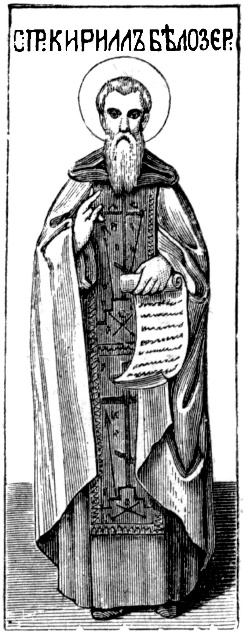
Преп. Кирилл, в мире Козма, родился в Москве от благородных родителей76 и в детстве получил приличное воспитание. Оставшись в юных летах сиротой, он по поручению родителей, жил у родственника своего, боярина Тимофея Васильевича Вельяминова, окольничего при дворе в. к. Димитрия Донского77. За тихий нрав и добрую жизнь боярин любил Козму и поручил ему надзор за слугами своего дома78. Но Козма не чувствовал расположения к светской жизни; напротив, рвался душой служить единому Господу. Он не открывал расположения своего благодетельному родственнику, потому что уверен был в несогласии Тимофея с его желаниями. Козма тайно молился Господу. И вот пришёл в дом боярина блаж. Стефан, известный основатель Махрицкой обители. Козма открыл ему душу свою, и преп. Стефан успел довести боярина до того, что он согласился с желаниями Козмы. Стефан привёл Козму в Симоновскую обитель к архимандриту Феодору. Тот облёкши его в иночество с именем Кирилла, поручил его подвижнику Михаилу, впоследствии епископу Смоленскому. Под руководством старца юный инок со всей ревностью вступил в подвиги иночества. Ночью старец читал псалтырь, а Кирилл, по его приказанию, клал поклоны; – но по первому удару колокола шёл к утрени. Он просил у наставника дозволения вкушать пищу через два или три дня; но опытный наставник не дал ему дозволения на то, а сказал, чтобы разделял он трапезу вместе с братиями каждый день, только не ел бы до сытости. Кирилл последовал заповеди старца, но так мало вкушал пищи, что едва ходил. Настоятель назначил ему послушание в хлебне, и он усердно носил воду, рубил дрова, раздавал хлеб. – По временам приходил в Симоновскую обитель преподобный Сергий Радонежский и прежде прочих посещал Кирилла в хлебне. Прозорливый старец видел, кто такой Кирилл и чем он будет впоследствии, и с любовью беседовал с Кириллом о спасении души. Из хлебни перевели Кирилла в поварню, и он, смотря здесь на пылающий огонь, говорил себе: смотри, Кирилл, не попасть бы тебе в вечный огонь». Девять лет трудился он в поварне и стяжал здесь такое умиление, что не мог без слёз вкушать хлеба. Братия, видя подвижническую жизнь Кирилла, стали отличать его своим уважением. Но он, боясь опасных обаяний славы человеческой, стал по временам творить юродства. В наказание за нарушение благочиния настоятель назначил ему в пищу только хлеб и воду, дней на 40; Кирилл с радостью выполнял это назначение. Как однако ни закрывал себя Кирилл, опытные понимали его; против его воли он был посвящён в иеромонаха. Выполняя чреду священнослужения с любовью и благоговением, он в свободное от служения время ставил себя на чреду послушника и занимался работами. Когда Феодор возведён был на кафедру архиепископа, братия избрали Кирилла в архимандрита обители. Это было в 1390 г. 79. Кирилл архимандрит не изменил образа своей жизни. Богатые и вельможные стали посещать его, чтобы слышать наставления его. Это смущало смиренный дух его, и он недолго оставался настоятелем обители. Как ни упрашивали его братия, он затворился в прежней кельи своей. На его место избран в архимандрита Сергий Азаков; поскольку же к Кириллу не переставали приходить и в иноческую келью за наставлениями, а это тревожило Сергия, – то Кирилл перешёл на старое Симоново – и здесь стал подвизаться. Шум недальнего города беспокоил Кирилла, а душа его стремилась к безмолвию. Он молил Богоматерь указать ему место полезное для спасения его. Раз по обычаю читал он ночью акафист Богоматери перед Её иконою и – услышал голос: «иди на Белозеро, – там тебе место». Вместе с тем заблистал свет, и из оконца Кирилл увидел на дальнем севере озарённое место. Услышав от друга своего Ферапонта, какова страна Белозерская, он с той же иконой Богоматери отправился на Белозеро, в сопровождении друга.
The Venerable Cyril, in the world Cosmas, was born in Moscow of noble parents76 and received a fitting upbringing in childhood. Left an orphan in his youth, he lived, by his parents' arrangement, with his relative, the boyar Timothy Vasilievich Velyaminov, an okolnichy at the court of Grand Prince Demetrius of the Don77. For his quiet disposition and good life, the boyar loved Cosmas and entrusted him with oversight of the servants of his house78. But Cosmas felt no inclination toward worldly life; on the contrary, his soul yearned to serve the one Lord. He did not reveal his inclination to his beneficent relative, because he was certain of Timothy's disagreement with his desires. Cosmas prayed secretly to the Lord. And behold, the blessed Stephen, the renowned founder of the Makhrishchi monastery, came to the boyar's house. Cosmas opened his soul to him, and the Venerable Stephen succeeded in bringing the boyar to agree with Cosmas's desires. Stephen led Cosmas to the Simonov monastery to Archimandrite Theodore. He clothed him in monasticism with the name Cyril and entrusted him to the ascetic Michael, afterwards bishop of Smolensk. Under the guidance of the elder, the young monk entered with all zeal into the labors of monasticism. At night the elder read the Psalter, while Cyril, at his command, made prostrations; but at the first stroke of the bell he went to Matins. He asked his instructor for permission to take food every two or three days; but the experienced instructor did not give him permission for that, but told him to share the meal with the brethren every day, only not to eat to satiety. Cyril followed the elder's command, but partook of so little food that he could barely walk. The abbot assigned him the obedience of working in the bakery, and he zealously carried water, chopped wood, and distributed bread. – From time to time the Venerable Sergius of Radonezh came to the Simonov monastery and visited Cyril in the bakery before all others. The clairvoyant elder saw who Cyril was and what he would become afterwards, and conversed lovingly with Cyril about the salvation of the soul. From the bakery Cyril was transferred to the kitchen, and there, looking at the blazing fire, he said to himself: "Take heed, Cyril, lest you fall into the eternal fire." For nine years he labored in the kitchen and acquired there such compunction that he could not eat bread without tears. The brethren, seeing Cyril's ascetic life, began to distinguish him with their respect. But he, fearing the dangerous allurements of human glory, began at times to act as a fool-for-Christ. As a punishment for breaking good order, the abbot assigned him only bread and water for food, for about 40 days; Cyril fulfilled this appointment with joy. However much Cyril concealed himself, the experienced understood him; against his will he was ordained a hieromonk. Fulfilling the order of sacred service with love and reverence, in his free time from service he placed himself in the order of a novice and occupied himself with labors. When Theodore was elevated to the cathedra of archbishop, the brethren chose Cyril as archimandrite of the monastery. This was in the year 1390.79 Cyril the archimandrite did not change his way of life. The rich and noble began to visit him to hear his instructions. This troubled his humble spirit, and he did not remain long as abbot of the monastery. However much the brethren entreated him, he shut himself up in his former cell. In his place, Sergius Azakov was chosen as archimandrite; but since people did not cease coming to Cyril even in his monastic cell for instruction, and this troubled Sergius, Cyril moved to the Old Simonovo – and there began to struggle. The noise of the nearby city disturbed Cyril, and his soul yearned for silence. He prayed to the Mother of God to show him a place profitable for his salvation. Once, as was his custom, he read the akathist to the Mother of God at night before Her icon, and he heard a voice: "Go to Belozersk – there is a place for you." At the same time a light shone, and through the window Cyril saw a place illuminated in the far north. Having heard from his friend Therapont what the Belozersk region was like, he set out for Belozersk with that same icon of the Mother of God, accompanied by his friend.
В Белозерской стороне, тогда глухой и малолюдной, долго ходили странники и взошли на гору Мяуру. Это самая высокая гора в окрестности Белозерской. Подошву её омывают волны озера Сиверского. Леса, луга, воды соединились здесь на огромном пространстве и образовали одно из прекраснейших мест России. С одной стороны, Шексна разливается извилинами по лугам необозримым, с другой несколько синих озёр разбросано среди густых лесов. – Преп. Кирилл увидел здесь то место, которое в видении назначено было для его пребывания, и пал благодарною душой перед Пречистой. – Сойдя с горы на площадь, окружённую лесом, поставил он крест, а вблизи его пустынники выкопали землянку.
In the Belozersk region, then wild and sparsely populated, the wanderers walked for a long time and ascended Mount Myaura. This is the highest mountain in the vicinity of Belozersk. The waves of Lake Siverskoye wash its foot. Forests, meadows, and waters joined here over a vast expanse and formed one of the most beautiful places in Russia. On one side, the Sheksna River spreads in meanders across boundless meadows; on the other, several blue lakes are scattered among dense forests. – The Venerable Cyril saw here that place which had been appointed for his dwelling in the vision, and he fell with a grateful soul before the Most Pure One. – Descending from the mountain to a clearing surrounded by forest, he set up a cross, and nearby the hermits dug a dugout.
Друг Ферапонт скоро удалился в другое место. В подземной кельи Кирилл не один год подвизался один, только по временам посещаемый крестьянами Авксентием и Матфеем, из которых последний впоследствии был пономарём обители его. Раз осматривал он с ними лесную сторону свою и, томимый странным сном, лёг уснуть под сосной; но едва закрыл глаза, как услышал голос: «Беги, Кирилл»; он вскочил и отскочил от места, как рухнулась огромная сосна, под которой лежал он. Ещё цел и ныне крест, сделанный Кириллом из этой сосны. Кирилл молился после того, чтобы Господь отнял от него тяжкий сон, и с того времени мог он по нескольку суток оставаться без сна. В другой раз рубил он лес, очищая место для огорода, как загорелись сухие сучья, и гонимый ветром дым окружил его так, что не знал он куда бежать. Явившийся в образе благодетеля его Тимофея взял его за руку и вывел за собой из огня. Живший не в дальности от кельи Кирилла крестьянин, волнуемый опасениями корысти, положил сжечь келью Кирилла. Не раз он подходил к келье, чтобы выполнить свой умысел, но поражаемый внезапным ужасом удалялся; раз успел он подложить огонь, но огонь погас. Тогда с слезами раскаяния исповедал он грех свой Кириллу и по его просьбе пострижен был в монашество. Вскоре после того пришли из Симоновой обители любимые Кириллом иноки Зеведей и Дионисий; Кирилл обрадовался им. Потом пришёл оттуда же инок Нафанаил, впоследствии келарь обители. Затем многие стали приходить к Кириллу и просили удостоить их иночества. Кирилл увидел, что время безмолвия его кончилось. – В 1397 г. построил он храм в честь Успения Богоматери80.
His friend Therapont soon withdrew to another place. In his underground cell Cyril struggled alone for several years, visited only from time to time by the peasants Auxentius and Matthew, the latter of whom afterwards became the sexton of his monastery. Once he was surveying his forested area with them and, overcome by a strange sleep, lay down to rest under a pine tree; but he had barely closed his eyes when he heard a voice: "Flee, Cyril"; he jumped up and sprang away from the spot just as the huge pine tree under which he had lain crashed down. The cross made by Cyril from this pine tree is still preserved to this day. After that Cyril prayed that the Lord would take away from him heavy sleep, and from that time he could remain without sleep for several days at a time. Another time he was cutting wood, clearing a place for a garden, when the dry branches caught fire, and the smoke, driven by the wind, surrounded him so that he did not know where to flee. One appearing in the form of his benefactor Timothy took him by the hand and led him out of the fire. A peasant living not far from Cyril's cell, agitated by fears of covetousness, resolved to burn Cyril's cell. More than once he approached the cell to carry out his intent, but, struck by sudden terror, he withdrew; once he succeeded in setting fire, but the fire went out. Then with tears of repentance he confessed his sin to Cyril and, at his request, was tonsured into monasticism. Soon after that, the monks Zebedee and Dionysius, beloved by Cyril, came from the Simonov monastery; Cyril rejoiced at them. Then the monk Nathanael, afterwards cellarer of the monastery, came from there as well. Afterwards many began to come to Cyril and asked to be deemed worthy of monasticism. Cyril saw that his time of silence had ended. – In the year 1397 he built a church in honor of the Dormition of the Mother of God80.
Когда в окрестности распространилась молва, что пришедший из Москвы архимандрит Кирилл устраивает в пустыне монастырь; то боярину Феодору пришло на мысль, что верно архимандрит принёс с собой много денег, и он послал слуг своих ограбить Кирилла. Но две ночи сряду подходили те к обители и видели вокруг обители ратных людей. Феодор подумал, что верно пришёл кто-нибудь из Московских вельмож к Кириллу и послал узнать, кто такой пришёл? Ему отвечали, что более недели, как никого из посторонних не было в обители. Тогда Феодор пришёл в чувство и, придя в обитель, со слезами исповедал Кириллу грех свой. Преподобный сказал ему: «будь уверен, сын мой Феодор, что ничего нет у меня, кроме одежды, которую видишь на мне, и нескольких книг». Боярин с того времени стал благоговейно уважать Кирилла и каждый раз, как только приходил к нему, приносил рыбу или что-нибудь другое. После того пришёл к нему молчальник Игнатий, муж высокой добродетели; в течении 30 лет жизни в обители Кирилловой он был после Кирилла первым примером подвижничества. Он никогда не ложился для сна и засыпал стоя, прислонясь к стене; бескорыстие же его было изумительное.
When rumor spread in the vicinity that the archimandrite Cyril, who had come from Moscow, was establishing a monastery in the wilderness, the boyar Theodore thought that the archimandrite must have brought much money with him, and he sent his servants to rob Cyril. But for two nights in a row they approached the monastery and saw armed men around the monastery. Theodore thought that surely some Moscow nobleman had come to Cyril and sent to find out who had come. They answered him that for more than a week no one from outside had been in the monastery. Then Theodore came to his senses and, coming to the monastery, with tears confessed his sin to Cyril. The Venerable One said to him: "Be assured, my son Theodore, that I have nothing except the clothing you see on me and a few books." From that time the boyar began to reverence Cyril devoutly, and each time he came to him he brought fish or something else. After that there came to him the silent Ignatius, a man of high virtue; during the 30 years of his life in Cyril's monastery he was, after Cyril, the first example of asceticism. He never lay down to sleep and fell asleep standing, leaning against the wall; his disinterestedness was astonishing.
Когда в обители Кирилловой умножилось число братий, преподобный дал для неё устав общежития и освящал его примером своей жизни. – «В церкви никто не смел беседовать, и никто не должен был выходить из неё прежде окончания службы; к св. Евангелию подходили по старшинству. За трапезу садились также каждый на своём месте и в трапезе была тишина; – в пищу предлагались только три кушанья. Весьма строго заповедал преподобный, чтобы ни при нём, ни после него, хмельных напитков не только не пили, но и не держали в обители. Из трапезы каждый молча шёл в свою келью, не заходя к другому. Никто не смел получать писем, ни подарков, помимо преподобного, – к нему приносили нераспечатанные письма; без его благословения и не писали писем. Деньги хранились в монастырской казне, – и ни у кого не было никакой собственности. Даже пить воду ходили в трапезу; в келье же ничего не держали, кроме икон и книг – и она никогда, не запиралась. Иноки старались один перед другим являться как можно раньше к службе Божией и на монастырские работы, подвизаясь не для людей, а для Господа. Когда случался недостаток в хлебе, и братия понуждали настоятеля послать за хлебом к христолюбцам, преподобный отвечал: «Бог и Пречистая Богоматерь не забудут нас, – иначе зачем и жить нам на земле?» И не дозволял докучать мирянам просьбами о подаянии.
When the number of brethren in Cyril’s monastery increased, the Venerable One gave it a cenobitic rule and hallowed it by the example of his own life. – “In church no one dared to converse, and no one was to leave it before the end of the service; they approached the holy Gospel according to seniority. They also sat down to the meal each in his own place, and there was silence during the meal; only three dishes were offered for food. The Venerable One strictly commanded that neither in his time nor after him should intoxicating drinks not only not be drunk, but not even kept in the monastery. From the meal each went silently to his own cell, without visiting another. No one dared to receive letters or gifts without the Venerable One’s knowledge—unopened letters were brought to him; without his blessing they did not even write letters. Money was kept in the monastery treasury, and no one had any personal property. They even went to the refectory to drink water; in the cell they kept nothing except icons and books, and it was never locked. The monks strove to outdo one another in appearing as early as possible for the service of God and for the monastery’s labors, striving not for men but for the Lord. When there was a shortage of bread and the brethren urged the superior to send for bread from Christ-lovers, the Venerable One replied: ‘God and the Most Pure Mother of God will not forget us—otherwise why should we even live on earth?’ And he did not allow them to trouble laymen with requests for alms.
Ученик Антоний раз в год посылаем был закупать нужное для обители: иначе никто не ходил из обители в мир. В последние годы преподобного боярин Роман, каждый год присылавший по 50 мер ржи, вздумал обеспечить обитель селом и прислал на него дарственную грамоту. Но преподобный, получив грамоту, рассудил так: если станем иметь сёла, из того выйдут заботы для братий о земле; явятся поселенцы и рядники, безмолвие иноческое нарушится. Потому благотворителю послан был такой ответ: «тебе угодно, человек Божий, дать село в дом Богоматери на пропитание братии: но вместо 50 мер ржи, которые ты давал каждый год, отпускай нам сто, если можешь, – мы будем довольны тем; а сёлами владей сам, – для братии они не полезны».
The disciple Anthony was sent once a year to purchase what was needed for the monastery; otherwise no one from the monastery went out into the world. In the last years of the Venerable One, the boyar Roman, who each year sent 50 measures of rye, conceived the idea of providing the monastery with a village and sent a deed of gift for it. But the Venerable One, having received the deed, reasoned thus: if we come to possess villages, cares about the land will arise for the brethren; settlers and contract laborers will appear, and monastic silence will be disturbed. Therefore the following answer was sent to the benefactor: “It pleases you, man of God, to give a village to the house of the Mother of God for the sustenance of the brethren; but instead of the 50 measures of rye which you gave each year, send us a hundred, if you are able—we shall be content with that; but keep the villages yourself—they are not profitable for the brethren.”
Преподобный до того проникнут был любовью к Господу, что при служении литургии и во время чтений церковных не мог удерживаться от благоговейных слёз; – особенно же лились они у него во время келейного правила.
The Venerable One was so filled with love for the Lord that during the celebration of the Divine Liturgy and during the church readings he could not restrain himself from reverent tears; they flowed especially abundantly during his cell rule.
Господь наградил угодника Своего даром прозорливости. Вот один пример из многих. Некто Феодор, поступив в обитель по уважению к преподобному, начал потом ненавидеть его до того, что не хотел смотреть на него и порывался выйти из обители. Молчаливый Игнатий удерживал его, но ненависть не угасала. Он пошёл в келью к преподобному и, взглянув на седины его, не мог от стыда выговорить ни слова. Преподобный сказал ему: «не скорби, брат мой; все ошибаются во мне, ты один знаешь правду и всё моё недостоинство; я – точно грешник непотребный». Отпуская его с миром, прибавил, что более не будет он смущаться, и Феодор пребывал покойно в обители.
The Lord rewarded His saint with the gift of foresight. Here is one example among many. A certain Theodore, having entered the monastery out of respect for the Venerable One, later began to hate him so much that he did not want to look at him and was eager to leave the monastery. The silent Ignatius restrained him, but the hatred did not abate. He went to the Venerable One’s cell and, looking at his gray hairs, could not utter a word from shame. The Venerable One said to him: “Do not grieve, my brother; all are mistaken about me, you alone know the truth and all my unworthiness; I am indeed a worthless sinner.” As he dismissed him in peace, he added that he would no longer be troubled, and Theodore remained peacefully in the monastery.
С даром прозорливости преподобный соединял дар исцелений. Из соседнего села крестьянин просил преп. Кирилла помолиться за больного товарища, у которого шла кровь из рта и ноздрей. Преподобный отвечал: «поверь, чадо, эта болезнь – не случайная, он наказан за прелюбодеяние; если исправится, верую Господу, будет здоров, – иначе ещё более будет страдать». Услышав о том, больной пришёл в ужас и положил твёрдое намерение исправиться; исповедав преподобному грех свой, он исцелел телом и душой. Многие другие больные получали исцеление по молитве преподобного. Один больной просил преподобного только о том, чтобы перед смертью удостоили его иночества. Преподобный постриг его; спустя несколько дней новый инок Далмат почувствовал близость смерти и просил приобщить его св. Таин. Священник несколько замедлил, и больной умер, прежде чем принесены были св. Дары. Смущённый иеромонах поспешил сказать о том преподобному, и огорчённый Кирилл затворился в келью, чтобы стать на молитву. – Немного спустя послушник, служивший Далмату, известил блаженного, что Далмат жив и просит св. Таин. Кирилл велел позвать иеромонаха; тот видел, что Далмат умер, но, исполняя волю аввы, пошёл с св. Дарами и застал Далмата сидящим на постели. Приобщившись св. Таин, Далмат простился со всеми и умер.
With the gift of foresight the Venerable One united the gift of healings. A peasant from a neighboring village asked Venerable Cyril to pray for a sick comrade, from whose mouth and nostrils blood was flowing. The Venerable One replied: “Believe me, child, this illness is not accidental; he is punished for adultery; if he repents, I trust in the Lord, he will be well—otherwise he will suffer even more.” Hearing this, the sick man was seized with terror and firmly resolved to reform; having confessed his sin to the Venerable One, he was healed in body and soul. Many other sick people received healing through the Venerable One’s prayer. One sick man asked the Venerable One only that he might be granted monastic tonsure before death. The Venerable One tonsured him; a few days later the new monk Dalmat sensed the nearness of death and asked to receive the Holy Mysteries. The priest delayed somewhat, and the sick man died before the Holy Gifts were brought. The troubled hieromonk hastened to tell the Venerable One, and the grieved Cyril shut himself in his cell to stand in prayer. A little later the novice who served Dalmat informed the blessed one that Dalmat was alive and asked for the Holy Mysteries. Cyril ordered the hieromonk to be called; he had seen that Dalmat was dead, but fulfilling the will of the abba, he went with the Holy Gifts and found Dalmat sitting on his bed. Having partaken of the Holy Mysteries, Dalmat bid farewell to all and died.
В одно время не достало вина для литургии, и пономарь сказал о том преподобному. Он велел принести к нему сосуды, и пустой сосуд оказался полным вина. Случился голод в окрестности. Преподобный велел раздавать хлеб из обители всем нуждающимся. Запасы, какие были в обители, были добыты трудами братии и частью доставлены благотворительностью сторонних; обыкновенно едва доставало их на год для братии. А во время голода, при всём том, что никому не отказывали в помощи, оскудения не было в обители, так что сами продавцы хлеба наконец говорили: «Кирилл, умноживший вино для литургии, умножает и хлеб в обители». «Во время голода, раздавая хлеб нищим, ты утолил голод, преподобный; напитай и меня, тающего от голода дел благих, да и я со всеми буду петь Господа во веки»81.
Once there was not enough wine for the Divine Liturgy, and the sexton told the Venerable One of this. He ordered the vessels to be brought to him, and the empty vessel was found full of wine. A famine occurred in the vicinity. The Venerable One ordered bread from the monastery to be distributed to all the needy. The stores that were in the monastery had been obtained by the labors of the brethren and partly supplied by the charity of outsiders; ordinarily they barely sufficed for a year for the brethren. But during the famine, despite the fact that no one was refused help, there was no shortage in the monastery, so that even the sellers of bread finally said: “Cyril, who multiplied the wine for the Divine Liturgy, also multiplies the bread in the monastery.” “During the famine, distributing bread to the poor, you satisfied hunger, O Venerable One; feed me also, who am wasting away from hunger for good deeds, that I too may with all sing of the Lord forever.”81
Ученики преподобного ловили по воле его рыбу на озере. Поднялась страшная буря, волны перебегали через лодку, и смерть готова была поглотить всех. Стоявший на берегу побежал сказать преподобному об опасности. Он, взяв в руки крест, поспешно пришёл на берег и осенив св. крестом озеро, успокоил волны82. – Весть о чудотворце Кирилле дошла до Белевского князя Михаила и его супруги Марии. Они семь лет скорбели о бесчадии и послали двух бояр с грамотой просить молитв св. Кирилла о разрешении неплодия их. Прозорливый Кирилл, ещё не читая грамоты, сказал посланным: «поелику вы, чада мои, совершили долгий и трудный путь: то верую Господу моему, Он даст князю вашему чадородие». В ту же ночь князь и княгиня видели одно и то же во сне: старец, украшенный сединами, с тремя сосудами в руке, сказал: «приими от меня, чего ты просил». Спустя три дня преподобный Кирилл велел келарю отпустить посланных и дать им на дорогу полтора хлеба, хотя с ними было до 8 человек. Изумлённые скудным подаянием, они просили прибавить им хлеба и рыбы; но преподобный, отпуская их, сказал, что довольно будет и того, что дано. И действительно хлеба не только достало на дорогу, но ещё принесли его на благословение и князю. Об этом рассказывала сама княгиня молчаливому Игнатию.
The disciples of the Venerable One were fishing on the lake at his bidding. A terrible storm arose, waves washed over the boat, and death was ready to swallow them all. A man standing on the shore ran to tell the Venerable One of the danger. He, taking a cross in his hands, hastened to the shore and, making the sign of the holy cross over the lake, calmed the waves.82 – The news of the wonderworker Cyril reached Prince Michael of Belev and his wife Maria. They had grieved for seven years over their childlessness and sent two boyars with a letter asking for the prayers of the Venerable Cyril for the resolution of their barrenness. The foresighted Cyril, without yet reading the letter, said to the messengers: “Since you, my children, have made a long and difficult journey, I trust in my Lord, He will give your prince offspring.” That same night the prince and princess both saw the same thing in a dream: an elder adorned with gray hairs, with three vessels in his hand, said: “Receive from me what you have asked.” Three days later the Venerable Cyril ordered the cellarer to dismiss the messengers and give them a loaf and a half of bread for the journey, although there were up to eight men with them. Astonished at the meager provision, they asked for more bread and fish; but the Venerable One, dismissing them, said that what was given would be sufficient. And indeed the bread not only sufficed for the journey, but they also brought some back as a blessing for the prince. The princess herself told this to the silent Ignatius.
Брат любимого преподобным Христофора, бывшего впоследствии настоятелем обители, сделался весьма болен. Смущённый Христофор пришёл к преподобному и сказал о брате. «Поверь мне, сын мой Христофор, отвечал преподобный, ни один из вас не умрёт прежде меня; после же моего отшествия многие пойдут вслед за мной». Тогда свирепствовала чёрная смерть. Но из братии при жизни преподобного никто не страдал от неё, выздоровел и Сосипатр.
The brother of Christopher, who was beloved by the Venerable One and later became abbot of the monastery, fell very ill. The troubled Christopher came to the Venerable One and told him about his brother. “Believe me, my son Christopher,” replied the Venerable One, “not one of you will die before me; but after my departure many will follow me.” At that time the Black Death was raging. But during the Venerable One’s lifetime none of the brethren suffered from it, and Sosipater also recovered.
Близкий к кончине преподобный призвал к себе всю братию, назначил ученика Иннокентия в игумена и строго заповедал не нарушать устава, его. В духовном своём завещании писал он: «вот я, грешный игумен Кирилл, вижу, что постигла меня старость, часто подвергаюсь разным болезням: Бог наказует меня человеколюбиво умножением болезней: они возвещают мне о смерти и грозном суде Спасителя. – Смутилось во мне сердце ради исхода, страх смерти напал на меня и покрыла меня тьма недоумения, – не знаю что делать? Но по слову пророка, возлагаю печаль мою на Господа: пусть творит, как хощет; Он же желает, чтобы все спаслись». – Поручив затем обитель покровительству Белозерского князя Андрея, прибавляет: «если кто не захочет жить по моему преданию и не станет слушать игумена: вели, государь, выслать тех из монастыря83». – От долгих стояний и старости ноги преподобного в последнее время его ослабли, и он в последние дни сидя совершал келейное правило. В день Св. Троицы совершил он последнее служение своё. Последнее слово его было к плакавшей братии: «не скорбите о моём отшествии; если получу дерзновение и труд мой угоден будет Господу, то не только не оскудеет обитель моя, но ещё больше распространится по отшествии моём; только любовь имейте между собой». Он блаженно почил на 90 году своей жизни, 9 июня 1427 г.84.
Nearing his end, the Venerable One summoned all the brethren, appointed the disciple Innocent as abbot, and strictly commanded that his rule not be violated. In his spiritual testament he wrote: “Behold, I, the sinful abbot Cyril, see that old age has overtaken me; I am often subject to various illnesses: God chastises me in His love for mankind by multiplying my illnesses; they announce to me death and the terrible judgment of the Savior. – My heart is troubled because of my departure, the fear of death has fallen upon me, and the darkness of perplexity has covered me—I know not what to do. But, according to the word of the prophet, I cast my care upon the Lord: let Him do as He wills; for He desires that all be saved.” – Then, entrusting the monastery to the protection of Prince Andrew of Beloozero, he adds: “If anyone does not wish to live according to my tradition and will not listen to the abbot: command, O sovereign, that such be expelled from the monastery.”83 – From long standing and old age, the Venerable One’s legs had grown weak in his last days, and he performed his cell rule sitting. On the day of the Holy Trinity he celebrated his last service. His final words to the weeping brethren were: “Do not grieve over my departure; if I obtain boldness and my labor is pleasing to the Lord, then not only will my monastery not be impoverished, but it will spread even more after my departure; only have love among yourselves.” He reposed blessedly in the 90th year of his life, on June 9, 1427.84
По смерти преподобного исполнилось предсмертное пророчество его о братии. Не прошло и одного года после его кончины, как из 62 человек братии переселилось из здешней жизни более 30. При игумене Иннокентии, который был игуменом только пять месяцев, преподобный являлся ученику своему Мартиниану с утешением для ученика своего Феодосия.
After the death of the Venerable One, his deathbed prophecy concerning the brethren was fulfilled. Not even a year had passed after his repose when, out of 62 brethren, more than 30 departed from this life. During the abbacy of Innocent, who was abbot only five months, the Venerable One appeared to his disciple Martinian with a word of comfort for his disciple Theodosius.
– Ещё при жизни Феодосий, пересказав желание одного боярина дать село монастырю, услышал от преподобного ответ: «при жизни моей не требую сёл, по смерти же моей делайте как хотите». Феодосий подумал, что это сказал огорчённый старец, и оскорбился тем; после же стал скорбеть, что навлёк на себя неудовольствие святого. Явившийся преподобный сказал Мартиниану: «скажи брату Феодосию, чтобы не скорбел и не докучал мне более, я против него ничего не имею». Около 1440 г. князь Михаил Андреевич Можайский, которому принадлежала и Белозерская страна, решился посетить вместе с супругой обитель преп. Кирилла. Супруга его страдала ногами. Ещё далеко они были от обители, как одному старцу представилось ночью, как-бы наяву, что он стоит у гроба блаженного Кирилла, и вот внезапно открылся гроб сам собой, и из него вышел преподобный как-бы живой и, сев, сказал: «чадо, не малые гости идут к нам, и в большой скорби; надобно нам помолиться за них, да избавит их Бог от скорби: они – наши кормители». Затем блаженный лёг, и гроб сам собой закрылся. Старец рассказал о том братии; спустя пять дней пришли благочестивые князь и княгиня помолиться в обитель, и княгиня получила исцеление. В 1448 г. уже чтили «преподобных старцев Сергия и Кирилла, как молитвенников перед Богом вместе с «св. Петром митрополитом и св. Леонтием, епископом Ростовским»85.
– Even during his lifetime, Theodosius, having conveyed the wish of a certain boyar to give a village to the monastery, heard from the Venerable One the reply: “During my life I do not require villages; after my death, do as you wish.” Theodosius thought that the elder had spoken thus out of vexation, and was offended by it; afterwards, however, he began to grieve that he had incurred the displeasure of the saint. The Venerable One, appearing, said to Martinian: “Tell brother Theodosius not to grieve and not to trouble me further; I have nothing against him.” Around the year 1440, Prince Michael Andreevich of Mozhaisk, to whom the Beloozero region also belonged, resolved to visit the monastery of the Venerable Cyril together with his wife. His wife suffered from an ailment in her legs. While they were still far from the monastery, it appeared to a certain elder during the night, as if in waking reality, that he was standing at the tomb of the blessed Cyril, and suddenly the tomb opened of itself, and the Venerable One came forth as if alive and, sitting down, said: “Child, no small guests are coming to us, and in great sorrow; we must pray for them, that God may deliver them from sorrow—they are our benefactors.” Then the blessed one lay down, and the tomb closed of itself. The elder told the brethren of this; five days later the pious prince and princess came to pray at the monastery, and the princess received healing. In 1448, “the Venerable elders Sergius and Cyril” were already honored “as intercessors before God together with St. Peter the Metropolitan and St. Leontius, Bishop of Rostov”85.
Поучительны памятники, оставшиеся после преп. Кирилла. Доселе целы два деревянные креста, устроенные руками преподобного, один четвероконечный, другой восьмиконечный; – от того и другого получаются исцеления, – улика неразумию порицателей четвероконечного креста. Цела та Смоленская икона Богоматери, с которой пришёл преподобный на Белозеро. Цела икона, изображающая преподобного Кирилла, писанная в 1424 г. преп. Дионисием Глушицким, т. е. при жизни преподобного: св. Кирилл изображён в рост, в старческих летах, с открытой головой, с лицом задумчивым, с руками, сложенными на персях, в мантии и аналаве. Сохраняются в обители фелонь и подризник преподобного из белого гаруса86. В пергаменном Евангелии преп. Кирилла кресты нарисованы двусоставные и трисоставные; в псалтири и каноннике его кресты двусоставные. – В четвероевангелии его, – имя Спасителя пишется сокращённо, как и слово Господь, но здесь же читается: «Иис Хрво ржство сице бе». Преподобный Кирилл любил духовное просвещение и поселил в обители своей эту любовь. По описи 1635 г. видим в его обители до 16 книг «чудотворца Кирилла» и по той же описи видим, что ни одна обитель не была тогда так богата рукописными книгами, как обитель Кириллова. По описи XVII века в ней хранилось до 2092 рукописей87. – Из числа рукописей, писанных самим преподобным, замечательна одна с объяснениями разным явлениям природы, взятыми из древнего естествоиспытателя Галена. Здесь есть статьи о морях, о облаках, громе, молнии и падающих звёздах. Этими сведениями блаженный пользовался для того, чтобы разгонять предрассудки народные о явлениях природы и показывать истинное значение этих явлений. – К объяснениям Галена здесь прибавлены и свои замечания. Напр. о падающих звёздах сказано: «о падающих звёздах одни говорят, что это падают звёзды, а другие, что это – злые мытарства. Но это и не звёзды и не мытарства, а отделение небесного огня; на сколько нисходят они вниз, растапливаются и опять сливаются в воздухе. Потому никто не видал их на земле, но всегда сливаются и рассыпаются они в воздухе; звёзды никогда не падают, только в пришествие Христово. Тогда небеса совьются и падут звёзды; равно и духи мытарств тогда пойдут в огонь вечный»88.
Instructive are the memorials that remain after the Venerable Cyril. To this day two wooden crosses, fashioned by the hands of the Venerable One, are preserved—one four-pointed, the other eight-pointed; healings are received from both—a refutation of the folly of those who revile the four-pointed cross. The Smolensk Icon of the Mother of God, with which the Venerable One came to Beloozero, is preserved. An icon depicting the Venerable Cyril, painted in 1424 by the Venerable Dionysius of Glushitsa, i.e., during the Venerable One’s lifetime, is preserved: St. Cyril is depicted full-length, in advanced years, with uncovered head, a pensive face, hands folded upon his chest, in a mantle and analavos. The monastery preserves the phelonion and sticharion of the Venerable One, made of white worsted86. In the parchment Gospel of the Venerable Cyril, crosses are drawn as two-part and three-part; in his Psalter and Canon-book, the crosses are two-part. – In his Tetraevangelion, the name of the Savior is written in abbreviated form, as is the word “Lord,” but here it is also read: “The birth of Jesus Christ was thus.” The Venerable Cyril loved spiritual enlightenment and instilled this love in his monastery. According to an inventory of 1635, we see in his monastery up to 16 books “of the Wonderworker Cyril,” and according to the same inventory we see that no other monastery was then as rich in manuscript books as the monastery of Cyril. According to an inventory of the 17th century, up to 2092 manuscripts were preserved there87. – Among the manuscripts written by the Venerable One himself, one is notable for containing explanations of various natural phenomena, taken from the ancient naturalist Galen. There are articles on seas, clouds, thunder, lightning, and falling stars. The blessed one used this knowledge to dispel popular superstitions about natural phenomena and to show the true meaning of these phenomena. – To Galen’s explanations, his own observations are added. For example, concerning falling stars it is said: “Concerning falling stars, some say that these are stars falling, while others say that they are evil toll-houses. But these are neither stars nor toll-houses, but a separation of heavenly fire; as far as they descend downward, they melt and again coalesce in the air. Therefore no one has seen them on the earth, but they always coalesce and scatter in the air; stars never fall, except at the coming of Christ. Then the heavens shall be rolled up and the stars shall fall; likewise the spirits of the toll-houses shall then go into the eternal fire”88.
Три послания преподобного, отличаясь простотой изложения, глубоко убедительны искренностью благочестия. В послании к великому князю Василию св. авва пишет: «чем более святые приближаются к Богу любовью, тем более видят себя грешными. Ты, государь, приобретаешь себе великую пользу душевную смирением своим, тем, что посылаешь ко мне грешному, нищему, страстному и недостойному, с просьбой о молитвах... Я, грешный, с братией своей рад, сколько силы будет, молить Бога о тебе, нашем государе. Но ради Бога будь и сам внимателен к себе и ко всему княжению, на котором Дух Святый поставил тебя пасти людей, искупленных кровью Христовой. Чем большей удостоен ты власти, тем более строгому подлежишь ответу. Воздай Благодетелю долг твой хранением святых заповедей Его и уклонением от путей, ведущих к погибели. Как на корабле если ошибётся наёмный гребец, вред от того бывает не важный; если же ошибётся кормчий, то губит весь корабль: так, государь, бывает и с князьями. Если согрешит боярин, наносит пакость себе, а не всем; но если согрешит сам князь, причиняет вред всем подчинённым ему. Не надмевайся же временной славой по шатанию суеты... Слышал я, что у тебя, великий князь, великое несогласие с твоими сродниками, князьями Суздальскими; ты выставляешь свою правду, а они – свою; кровь христиан льётся. Осмотрись, государь. Если они правы в чём-либо, уступи им смиренно; если в чём правда на твоей стороне, стой за правду. – Если они будут кланяться тебе: Бога ради, государь, окажи им милость, сколько можно. Я слышал, что они у тебя в услугах и от того-то поднялись на брань. Бога ради, государь, покажи к ним любовь и сострадание, дабы не погибли, блуждая в татарских странах. – Никакая власть, ни царская, ни княжеская, не может избавить нас от нелицемерного суда Божия; а если будешь любить ближнего как себя, если утешишь души скорбные и огорчённые: это много поможет тебе, государь, на страшном и праведном суде Христовом. Апостол Павел, ученик Христов, пишет: «аще имам веру горы преставляти и аще имам раздати все имение свое, любве же не имам, ничтоже польза ми есть» ... Люби же братию твою и всех христиан, и твоя вера в Бога и милостыня нищим угодны будут Господу89.
Three epistles of the Venerable One, distinguished by simplicity of expression, are deeply persuasive through the sincerity of their piety. In an epistle to the Grand Prince Basil, the holy abba writes: “The more the saints draw near to God through love, the more they see themselves as sinners. You, sovereign, acquire great benefit for your soul through your humility, in that you send to me, a sinful, poor, passionate, and unworthy man, with a request for prayers... I, a sinner, together with my brethren, am glad, as much as strength permits, to pray to God for you, our sovereign. But for God’s sake, be attentive yourself to yourself and to the whole principality, over which the Holy Spirit has placed you to shepherd people redeemed by the blood of Christ. The greater the authority with which you have been entrusted, the more severe the account you must render. Repay your debt to the Benefactor by keeping His holy commandments and by turning away from the paths that lead to destruction. As on a ship, if a hired oarsman errs, the harm from it is not great; but if the helmsman errs, he destroys the whole ship: so, sovereign, it is with princes. If a boyar sins, he brings harm upon himself, not upon all; but if the prince himself sins, he causes harm to all subject to him. Do not be puffed up with temporal glory through the wavering of vanity... I have heard that you, Grand Prince, have great discord with your kinsmen, the princes of Suzdal; you set forth your right, and they theirs; Christian blood is being shed. Look about you, sovereign. If they are right in anything, yield to them humbly; if the right is on your side, stand for the right. – If they bow down to you: for God’s sake, sovereign, show them mercy, as much as you can. I have heard that they are in your service, and for that reason they have risen up in strife. For God’s sake, sovereign, show them love and compassion, lest they perish, wandering in the Tatar lands. – No authority, neither royal nor princely, can deliver us from the impartial judgment of God; but if you love your neighbor as yourself, if you comfort sorrowful and afflicted souls, this will greatly help you, sovereign, at the terrible and righteous judgment of Christ. The Apostle Paul, a disciple of Christ, writes: ‘Though I have faith to remove mountains, and though I bestow all my goods to feed the poor, but have not love, it profiteth me nothing’... Love then your brethren and all Christians, and your faith in God and almsgiving to the poor will be acceptable to the Lord89.
В послании к князю Андрею Дмитриевичу Можайскому, с восторгом вспоминая о чудесном избавлении России от Тахтамыша, пишет, с какими расположениями надлежит быть после такого благодеяния. Ты властелин, пишет преподобный, в твоей отчине поставленный Богом удерживать людей от лихого обычая; смотри же, государь, чтобы судили суд праведно, как перед Богом, ни кривя; чтобы не было подлогов и поклёпов; судьи не брали бы подарков, а довольствовались своим урочным даянием... Наблюдай, государь, чтобы не было в твоей области корчм, – от них великая пагуба людям, – крестьяне пропиваются, а души их гибнут...Также пусть не будет у тебя таможенных сборов, – это деньги неправедные; где есть перевоз, государь, следует давать за труд. Пусть не будет в твоей вотчине ни разбоя, ни воровства. – Если не уймутся от злого дела, вели наказывать, кто чего стоит. Унимай подчинённых твоих от скверных слов и брани, – всё это гневит Бога. Если не потщишься управить всем тем, взыщется на тебе, потому что ты властелин над всеми людьми, поставленный Богом. Не ленись сам давать управу крестьянам: это вменится тебе выше поста и молитвы. Удерживайтесь от пьянства. Подавайте по силе милостыню. Вы не можете поститься и молиться – ленитесь. Пусть же милостыня восполнит недостатки ваши. Приказывайте петь молебны по церквам Спасителю и Матери Божией, заступнице христиан, и сами не ленитесь ходить в церковь. В церкви стойте со страхом и трепетом, представляя себе, что стоите вы как на небе. – Церковь – земное небо, в ней совершаются таинства Христовы. Береги себя, государь, стоя в церкви, не твори бесед и не говори праздных слов; если увидишь, что беседует в церкви кто-нибудь из бояр или простых людей, – запрещай им то, – ибо всё это гневит Бога»90.
In an epistle to Prince Andrew Dmitrievich of Mozhaisk, recalling with rapture the miraculous deliverance of Russia from Tokhtamysh, he writes with what dispositions one ought to be after such a benefaction. “You are a ruler,” writes the Venerable One, “set by God in your patrimony to restrain people from evil custom; see then, sovereign, that judgment be judged righteously, as before God, without crookedness; that there be no falsehoods or slanders; that judges take no bribes, but be content with their appointed allowance... Observe, sovereign, that there be no taverns in your domain—from them comes great ruin to people—the peasants drink themselves away, and their souls perish... Likewise, let there be no toll-collections in your domain—these are unrighteous money; where there is a ferry, sovereign, payment for labor should be given. Let there be neither robbery nor theft in your patrimony. – If they do not cease from evil deeds, have them punished, each according to his desert. Restrain your subjects from foul words and abuse—all this angers God. If you do not strive to set all this in order, it will be required of you, because you are the ruler over all people, appointed by God. Do not be lazy yourself to give justice to the peasants: this will be accounted to you above fasting and prayer. Refrain from drunkenness. Give alms according to your ability. You cannot fast and pray—you are lazy. Let almsgiving then make up for your shortcomings. Order that molebens be sung in the churches to the Savior and the Mother of God, the intercessor of Christians, and do not be lazy yourselves to go to church. In church stand with fear and trembling, imagining that you stand as in heaven. – The church is an earthly heaven; in it the mysteries of Christ are accomplished. Guard yourself, sovereign, standing in church; do not engage in conversations or speak idle words; if you see anyone, whether of the boyars or common people, conversing in church, forbid them—for all this angers God”90.
Звенигородского князя Юрия Дмитриевича преподобный утешал в скорби о болевшей супруге. И вместе писал: «ты, государь князь Юрий, писал, что давно желаешь видеться со мной. Бога ради, государь, не делай того. Я знаю, что по грехам моим выйдет из того искушение, если поедешь ко мне. Извещаю тебя наперёд, что нельзя тебе видеть нас: оставлю монастырь и уйду, куда Бог наставит. Вы думаете, что я тут добрый, святой человек. Нет, истинно я всех грешнее и несчастнее и исполнен срама. Не удивляйся сему, князь Юрий: слышу, что ты сам читаешь и знаешь Св. Писание и понимаешь, какой вред происходит от человеческой хвалы, особенно для нас слабых. Твоей отчины нет здесь. Если поедешь ты сюда, все люди станут говорить: для Кирилла поехал»91.
The Venerable One comforted Prince George Dmitrievich of Zvenigorod in his grief over his ailing wife. And together he wrote: “You, sovereign Prince George, wrote that you have long desired to see me. For God’s sake, sovereign, do not do that. I know that through my sins temptation would come of it if you were to come to me. I inform you beforehand that you cannot see us: I will leave the monastery and go where God directs. You think that I am a good, holy man here. No, truly I am more sinful and wretched than all and full of shame. Do not wonder at this, Prince George: I hear that you yourself read and know the Holy Scripture and understand what harm comes from human praise, especially for us who are weak. Your patrimony is not here. If you come here, all people will say: he went for Cyril’s sake”91.
«Истреби, Христе, страстные движения души моей, прогони леность, наставь ходить путём правым, молитвами угодника Твоего Кирилла, да величаю Тебя Подателя благ»92.
“Destroy, O Christ, the passionate movements of my soul, drive away sloth, guide me to walk in the right path, through the prayers of Your saint Cyril, that I may magnify You, the Giver of good things”92.
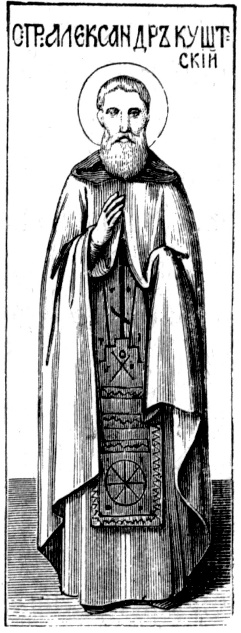
На пустынный остров Кубенского озера, в Спасокаменную обитель, является неизвестный молодой странник93, робко подходит он к инокам, стоявшим перед вратами обители, и смиренно кланяется. «Бог благословит тебя, чадо; что нужно тебе?» сказали иноки. Молодой человек отвечал, что желает видеть игумена. Хорошо, сказали добрые старцы. – Игуменом был Афонский постриженик Дионисий, который ввёл в Каменном монастыре строгий Афонский устав и примером жизни своей привлёк многих в уединённую обитель94. Братия привели странника к Дионисию. Пав к ногам настоятеля, молодой странник со слезами просил облечь его в иноческий образ. «Чадо! сказал ему игумен, понимаешь ли, что это место весьма скорбно и требует подвигов? Ты юн, – не можешь перенести всего». Странник отвечал: «Бог желает всем спасения, – Он привёл меня сюда, и всё, что повелишь, готов я исполнять, только не отвергай меня». Игумен велел ему служить братии. Этот молодой странник был родом из Вологды и назывался Алексием. Игумен вскоре по прибытии его в обитель облёк его в иноческое одеяние с именем Александра. Новый инок предал себя Богу, выполнял все послушания, соблюдал строгий пост, не ослабевая пребывал в молитве и сонливую леность прогонял рукоделием. Братия дивились подвигам инока. Блаженный возрастал в жизни духовной, и уважение братии к его духовной жизни было наконец так велико, что они смотрели на него, как на ангела Божия.
To the desolate island of Lake Kubenskoye, to the Saviour-on-the-Rock monastery, an unknown young wanderer appears93; timidly he approaches the monks standing before the gates of the monastery and humbly bows. “God bless you, child; what do you need?” said the monks. The young man replied that he wished to see the abbot. “Good,” said the kindly elders. – The abbot was Dionysius, a tonsured monk of Mount Athos, who had introduced the strict Athonite rule into the Stone Monastery and, by the example of his life, had drawn many to the secluded cloister94. The brethren brought the wanderer to Dionysius. Falling at the feet of the superior, the young wanderer with tears begged to be clothed in the monastic habit. “Child!” said the abbot to him, “do you understand that this place is most sorrowful and demands labours? You are young—you cannot bear it all.” The wanderer replied: “God desires the salvation of all—He has brought me here, and whatever you command, I am ready to fulfil; only do not reject me.” The abbot bade him serve the brethren. This young wanderer was by birth from Vologda and was called Alexis. Soon after his arrival at the monastery, the abbot clothed him in the monastic garb with the name Alexander. The new monk gave himself over to God, fulfilled all obediences, observed a strict fast, remained unweakened in prayer, and drove away drowsy sloth by handiwork. The brethren marvelled at the monk’s labours. The blessed one grew in the spiritual life, and the respect of the brethren for his spiritual life was at last so great that they looked upon him as an angel of God.
Тяготясь известностью в обители, которую посещали многие, и стремясь душой к подвигам, незримым людями, блаж. Александр помышлял, как бы найти ему пустыню по сердцу своему. Тайно оставив монастырь, отправился он искать безмолвного места и, обойдя многие пустынные места, пришёл на р. Сянжему, где были густой лес и озеро. Здесь поставил он себе кельицу и проводил жизнь в молитвах и в крайнем лишении нужного. Мало по малу стали приходить к нему люди и изумлялись жизни пустынника. Любитель безмолвия и смирения удалился и отселе. Он пришёл на берег Кубенского озера, на устье речки Кутты. Здесь встретил он преп. Евфимия, о котором прежде слышал, и провёл с ним несколько времени в духовных беседах. Потом просил он Евфимия уступить ему свою келью, предлагая взамен оставленную им на Сянжеме. Евфимий согласился и на прощанье оставил ему на благословение свой крест. Тихая пустыня очень понравилась блаж. Александру. Подойдя ближе к озеру, погрузил он крест и перед ним пролил молитву, дабы благословил Господь собрать здесь ревнителей крестного пути. Построив себе келью, одиноко копал он лопатой землю и сеял рожь для своего пропитания. Спустя некоторое время пришёл в его уединение старец; с ним он провёл пять лет, изнуряя плоть подвигами поста и трудов и очищаясь в душе молитвой. Когда пришёл ещё третий брат: «братья, сказал преподобный, желаю, если угодно Господу, построить на этом пустынном месте храм в честь Успения Богоматери». – Воля Господня да будет, отвечали они, радуясь желанию старца. Преподобный отправился в Ростов к бывшему игумену своему, а с 1418 г. архиепископу Дионисию – и тот с любовью благословил его устроить пустынную обитель с храмом. «Епископ же Дионисий, говорит благочестивый Паисий Ярославов, духовно поучив его и душеполезная словеса беседовав с ним, благослови его и рече: – о Св. Дусе возлюбленному сыну моему и сослужебнику нашего смирения Александру мир и благословение буди, и даст ему вся потребная на устроение пустынное»95. Заозерский князь Дмитрий Васильевич очень рад был тому, что являются новые молитвенники в его отчине. Местом пребывания князя было местечко, ныне село, Кубенское Устье, в 3 верстах от скита преп. Александра96. Особенно супруга князя Димитрия, княгиня Мария, часто присылала жизненные припасы для обители. Спустя несколько времени кн. Димитрий отправился на войну, а татары напали на его отчину, опустошили сёла на устье р. Кубены и пять татар прискакали в пустынь Александра. Преподобный покойно встретил их, осенил крестом, и враги креста Христова пали как мёртвые. Они пролежали без чувств несколько часов, пока преподобный не пробудил их от омертвения именем живоначальной Троицы97. По смерти кн. Димитрия княгиня отдала на его поминовение сельцо в пользу обители Александра. Раз она нечаянно пришла в обитель и вошла в храм, где блаженный Александр читал псалтырь в простоте пустынной, с обнажённой грудью, которую терзали насекомые. Преподобный огорчился таким посещением её и сказал: «не следует тебе, княгиня, надзирать за нашим убожеством». Княгиня смиренно просила прощения. Преподобный простил, но сказал в наставление: «корми свою нищету в доме». Возвратясь, она скоро занемогла и прислала просить молитв. Преподобный послал сказать: «пусть готовится к той жизни». Спустя 20 дней она скончалась. Раз поселянин захотел воспользоваться чужим добром. На монастырском гумне собрана была пшеница, плод трудов преподобного и братии, а рабочие пошли отдыхать. Поселянин насыпал мешок пшеницы, но никак не мог поднять. Преподобный застал его за этой работой и сказал: «напрасно ты, сын мой, поднимаешь не по силам». Обличённый вор бросился к ногам блаженного, но он велел ему ещё прибавить пшеницы и, сделав наставление вперёд не брать чужого, велел взять мешок и идти с Богом. Прощённый поселянин легко поднял благословенную ношу и пошёл, благословляя великодушного старца. Предчувствуя близость кончины своей, преподобный сказал пребывавшим с ним: «слабею я, – а вы терпите на этом месте, храните смирение и любовь взаимную». В день воскресный совершил литургию и причастился Св. Таин. Потом со слезами на коленах помолился за себя и за обитель свою, и на 68 году мирно предал дух свой Господу, 9 июня 1439 г. Преподобный «был роста среднего, телом весьма сухой, с головой умеренной величины, с лицом круглым, с бородой полной и круглой, доходившей до груди, с волосами русыми, перемешанными проседью, с очами кроткими».
Burdened by the fame in the monastery, which many visited, and striving in soul for labours unseen by men, the blessed Alexander pondered how he might find a desert to his heart. Secretly leaving the monastery, he set out to seek a silent place and, having gone around many desolate places, came to the River Syanzhema, where there were a dense forest and a lake. Here he built himself a little cell and passed his life in prayers and in extreme deprivation of necessities. Little by little, people began to come to him and marvelled at the life of the hermit. The lover of silence and humility withdrew also from there. He came to the shore of Lake Kubenskoye, at the mouth of the River Kutta. Here he met the Venerable Euthymius, of whom he had previously heard, and spent some time with him in spiritual conversations. Then he asked Euthymius to yield his cell to him, offering in exchange the one he had left on the Syanzhema. Euthymius agreed and, at parting, left him his cross as a blessing. The quiet desert greatly pleased the blessed Alexander. Drawing nearer to the lake, he planted the cross and before it poured forth a prayer, that the Lord would bless the gathering here of zealots of the way of the cross. Having built himself a cell, he alone dug the earth with a spade and sowed rye for his sustenance. After some time, an elder came to his solitude; with him he spent five years, mortifying the flesh by labours of fasting and toil and purifying his soul by prayer. When a third brother came as well: “Brethren,” said the Venerable One, “I desire, if it be pleasing to the Lord, to build on this desolate place a church in honour of the Dormition of the Mother of God.” – “May the will of the Lord be done,” they answered, rejoicing at the elder’s desire. The Venerable One set out for Rostov to his former abbot, and from 1418 A.D. Archbishop Dionysius—and he lovingly blessed him to establish a desert monastery with a church. “Bishop Dionysius,” says the pious Paisius Yaroslavov, “having taught him spiritually and conversed with him soul-profiting words, blessed him and said: ‘To my beloved son in the Holy Spirit and fellow-servant of our humility, Alexander, be peace and blessing, and may He grant him all things needful for the establishment of the desert’”95. Prince Demetrius Vasilyevich of Zaozerye was very glad that new intercessors were appearing in his patrimony. The prince’s place of residence was the settlement, now the village, of Kubenskoye Ustye, 3 versts from the skete of the Venerable Alexander96. Especially the wife of Prince Demetrius, Princess Maria, often sent provisions for the monastery. After some time, Prince Demetrius set off for war, and the Tatars attacked his patrimony, ravaged the villages at the mouth of the River Kubena, and five Tatars galloped into Alexander’s desert. The Venerable One calmly met them, made the sign of the cross over them, and the enemies of the cross of Christ fell as dead. They lay senseless for several hours, until the Venerable One awakened them from their deadness by the name of the Life-Creating Trinity97. After the death of Prince Demetrius, the princess gave a small village for his commemoration in favour of Alexander’s monastery. Once she came unexpectedly to the monastery and entered the church, where the blessed Alexander was reading the Psalter in the simplicity of the desert, with his chest bare, which insects were tormenting. The Venerable One was grieved by this visit of hers and said: “It is not fitting for you, princess, to oversee our poverty.” The princess humbly asked forgiveness. The Venerable One forgave her, but said as instruction: “Feed your poor at home.” Returning, she soon fell ill and sent to ask for prayers. The Venerable One sent word: “Let her prepare for that life.” Twenty days later she reposed. Once a peasant wished to take advantage of another’s goods. On the monastery threshing-floor wheat had been gathered, the fruit of the labours of the Venerable One and the brethren, and the workers had gone to rest. The peasant filled a sack of wheat, but could not lift it at all. The Venerable One found him at this work and said: “In vain, my son, do you lift what is beyond your strength.” The exposed thief threw himself at the feet of the blessed one, but he bade him add yet more wheat and, having given instruction not to take what is another’s in future, told him to take the sack and go with God. The forgiven peasant easily lifted the blessed burden and went, blessing the magnanimous elder. Foreseeing the nearness of his end, the Venerable One said to those who were with him: “I am growing weak—but you, endure in this place, preserving humility and mutual love.” On Sunday he celebrated the Liturgy and partook of the Holy Mysteries. Then with tears on his knees he prayed for himself and for his monastery, and in the 68th year of his life peacefully surrendered his spirit to the Lord, on 9 June 1439 A.D. The Venerable One “was of medium stature, very lean of body, with a head of moderate size, a round face, a full and round beard reaching to the chest, with light-brown hair mixed with grey, and with meek eyes.”
Святое тело преподобного положено было, по его завещанию, у полуденной стороны алтаря. Год спустя после его кончины, выросло над гробом его рябиновое деревцо. Раз в праздник Успения отрок из поселян отломил ветку от сего дерева, и внезапно разболелась рука его; родители привели сына на гроб преподобного, и больной исцелился. С тех пор народ стал брать ягоды с дерева на исцеление себе. Особенно одержимые духами нечистыми скоро исцелялись у гроба преподобного. Ученики в исполнение воли учителя построили тёплую церковь во имя свят. Николая и освятили её в день памяти блаж. учителя. Многие больные, которых приносили в эту церковь, видели преподобного вместе с свят. Николаем в молитвенном виде или кадящим храм; больные получали исцеление при гробе его. «По смерти его, говорит благочестивый Паисий, многа исцеления бывают у гроба его»98. Потому и в начале XVI века называли Александра пр. чудотворцем Куштским99, хотя служба ему была составлена после того100. Пустынь преподобного Александра ныне считается приписанной к Спасо-Каменскому монастырю101.
The holy body of the Venerable One was laid, according to his testament, on the south side of the altar. A year after his repose, a rowan tree grew up over his grave. Once, on the feast of the Dormition, a peasant youth broke a branch from this tree, and suddenly his hand became diseased; his parents brought the son to the grave of the Venerable One, and the sick one was healed. From that time, the people began to take berries from the tree for their healing. Especially those possessed by unclean spirits were quickly healed at the grave of the Venerable One. The disciples, in fulfilment of the teacher’s will, built a warm church in the name of St. Nicholas and consecrated it on the day of the memory of the blessed teacher. Many sick persons who were brought into this church saw the Venerable One together with St. Nicholas in a prayerful posture or censing the church; the sick received healing at his grave. “After his death,” says the pious Paisius, “many healings occur at his grave”98. Therefore, even at the beginning of the 16th century, Alexander was called the Venerable Wonderworker of Kushta99, although a service to him was composed later100. The hermitage of the Venerable Alexander is now considered attached to the Saviour-on-the-Rock Monastery101.
Так как не по злобе, а по недоумению и неведению великий Кирилл, проникнутый вообще духом Евангельского учения, несправедливо относился к умершему Иоанну Златоустому, то и не оставил Господь без вразумления верного служителя Своего. Однажды, в знаменательном сновидении, Кирилл увидел себя в прекрасном и величественном храме, где была Матерь Божия, окружённая множеством ангелов и святых. Среди святых увидел он Иоанна Златоуста, стоящего возле Богородицы с книгой учений и сияющего чудным светом. – Когда Кирилл пожелал приблизиться к Божией Матери, то св. Златоуст и прочие предстоящие отталкивали его и изгоняли из храма. Но Сама Божия Матерь препятствовала изгнанию Кирилла из храма и Своим посредничеством устроила примирение святителей... После этого видения, имев ещё случай слышать от св. Исидора Пелусиота разъяснение и обличение его в несправедливом мнении о дивном угоднике Божием, Кирилл сознал свой грех против вселенского святителя и, немедленно созвав собор епископов, составил духовное празднество в честь Златоуста и до конца жизни не переставал ублажать его.
Since it was not out of malice but out of perplexity and ignorance that the great Cyril, penetrated generally by the spirit of the Gospel teaching, acted unjustly toward the departed John Chrysostom, the Lord did not leave His faithful servant without admonition. Once, in a significant dream, Cyril saw himself in a beautiful and majestic church, where the Mother of God was, surrounded by a multitude of angels and saints. Among the saints he saw John Chrysostom standing near the Theotokos with a book of teachings and shining with a wondrous light. – When Cyril wished to approach the Mother of God, St. Chrysostom and the others standing by pushed him away and drove him from the church. But the Mother of God Herself hindered the expulsion of Cyril from the church and, by Her mediation, arranged a reconciliation of the hierarchs... After this vision, having also had occasion to hear from St. Isidore of Pelusium an explanation and reproof of his unjust opinion concerning the wondrous servant of God, Cyril acknowledged his sin against the ecumenical hierarch and, immediately convening a council of bishops, composed a spiritual celebration in honour of Chrysostom and, until the end of his life, did not cease to bless him.
Секта, возникшая ещё в III веке, со временем получившая сходство с учением фарисеев, так как, подобно им, гордясь строгостью своих постановлений и собственным превосходством, новатиане презрительно относились к другим, носили в отличие от них белую одежду, а главное, не признавали спасительного значения раскаяния и того, чтобы Церковь имела право снова принимать тех, которые однажды отступили от веры.
The sect, which arose as early as the 3rd century, over time acquired a resemblance to the teaching of the Pharisees, since, like them, being proud of the strictness of their regulations and their own superiority, the Novatians treated others contemptuously, wore white clothing in distinction from them, and, chiefly, did not acknowledge the salvific significance of repentance and that the Church had the right to receive again those who had once fallen away from the faith.
Сократ, рассказывая о происшествиях, относящихся к этому времени, прибавляет: «благоразумные из христиан не одобряли заботливости Кирилла об Аммоние, которого предал смерти Орест, ибо знали, что тот понёс казнь за безрассудство». Что касается до Ипатии, строгой жизни и любительницы философии, то смерти её одинаково причастны Кирилл и Орест (ради примирения которых она подвергалась гибели) и, как замечает в «Уч. об Отц. Церкви» § 212 архиеп. Фил. Чернпг., «язычник, обвиняющий Кирилла за Ипатию – худой судья в этом деле»...
Socrates, recounting the events relating to this time, adds: “The more prudent among the Christians did not approve of Cyril’s concern for Ammonius, whom Orestes had put to death, for they knew that he had suffered punishment for his rashness.” As for Hypatia, of strict life and a lover of philosophy, her death is equally attributable to Cyril and Orestes (for the sake of whose reconciliation she met her end) and, as Archbishop Philaret of Chernigov notes in “The Teaching on the Fathers of the Church” § 212, “a pagan accusing Cyril concerning Hypatia is a poor judge in this matter”...
Житие преподобного описано в прологе, до удаления на Белоозеро довольно полно, но потом очень кратко; пространно описана вся жизнь его иером. Пахомием Логофетом, по воле в. кн. Василия, со слов учеников преподобного. Это описание в минее м. Макария, в Синод. ркп. XV в. № 656, ркп. XVI в. № 90. Извлечение из пролога и минеи Макариевой в ч. минее св. Димитрия.
The Life of the Venerable One is described in the Prologue quite fully up to his departure to Beloozero, but then very briefly; his entire life is described at length by the hieromonk Pachomius the Logothete, at the will of Grand Prince Basil, from the words of the Venerable One's disciples. This account is found in the Menaion of Metropolitan Macarius, in Synodal manuscripts of the 15th century, No. 656, and of the 16th century, No. 90. An extract from the Prologue and the Menaion of Macarius is in the Chetyi-Minei of St. Demetrius.
Тимофей Васильевич Вельяминов окольничий был первым свидетелем завещания в. кн. Димитрия 1376 г. Он же поставлен вторым между боярами свидетелями второго завещания 1381 г. (Карамз. 5, пр. 116). В 1380 г. Тимофей Васильевич – воевода Владимирского ополчения, оставлен у Лопастни собирать пешие отряды. Соловьева ист. 3, 213. 388. 4, 357.
Timothy Vasilievich Velyaminov, an okolnichy, was the first witness to the will of Grand Prince Demetrius in 1376. He was also placed second among the boyar witnesses to the second will in 1381 (Karamz. 5, note 116). In 1380, Timothy Vasilievich was the voivode of the Vladimir militia and was left at Lopastnya to gather foot detachments. Soloviev's History 3, 213. 388. 4, 357.
Собр. грам. I, 148. В окружной грамоте того же 1448 г. блаж. Иона, митр. Московский, призывает «молитвы св. Кирилла». Ист. ак. I, 87. Служба пр. Кириллу у Царского № 563.
Collection of Charters I, 148. In the circular charter of the same year 1448, Blessed Jonah, Metropolitan of Moscow, calls for "the prayers of St. Cyril." Historical Acts I, 87. Service to the Venerable Cyril in Tsarsky's No. 563.
Древности Кириллова монаст., стр. 41. 42. 9. В чтен. общ. ист. 1859 г., кн. 3. Ист. иер. 4, 397–398. – По Кирилловской летописи (врем. общ. ист., кн. 6, смесь 50), Успенский храм Кириллова м. построен был в 1496 г. мастером Прохором Ростовским; а в 1521 г. написан «чудотворный образ Пречистые Богородицы, честного Ея Успения», писал его «муж благочестивый, Богобоязливый, Алексей Псковитин, по прозванию Малый». В древностях Кириллова мон. на основании описи 1621 г. образ назван «письма Рублева» (стр. 11. 12. 87)
Antiquities of the Kirillov Monastery, pp. 41, 42, 9. In Readings of the Society of History 1859, Book 3. History of the Hierarchy 4, 397–398. – According to the Kirillov Chronicle (Vremennik of the Society of History, Book 6, Miscellany 50), the Dormition Church of the Kirillov Monastery was built in 1496 by the master Prokhor of Rostov; and in 1521, 'the wonderworking icon of the Most Pure Theotokos, of Her honorable Dormition' was painted by 'a pious, God-fearing man, Alexis the Pskovite, by nickname Maly.' In the Antiquities of the Kirillov Monastery, on the basis of the 1621 inventory, the icon is called 'of Rublev's painting' (pp. 11, 12, 87).
Опись книг степенных монастырей 1635 г. М. 1848 г. – Обозрение рукописей пр. Кирилла – вь чтен. общ. ист. 1860 г., стр. 3. 4. 8. 9. 13. 20.
Inventory of Books of the Staged Monasteries 1635. Moscow, 1848. – Survey of the Manuscripts of the Venerable Cyril – in Readings of the Society of History 1860, pp. 3, 4, 8, 9, 13, 20.
См. Шевырева: поездка в Белозер. мон. 2, 23–25. Обозрение рукоп. пр. Кирилла – в чтен. общ. ист. 1860 г., стр. 30.
See Shevyrev: Journey to the Belozersk Monasteries 2, 23–25. Survey of the Manuscripts of the Venerable Cyril – in Readings of the Society of History 1860, p. 30.
Паисиево сказ. о Каменск. монаст. в Правосл. Собеседн. 1861 г. I, 260. Дионисий посвящен в архиеп. Рост. 12 июля 1418 г. и скончался 18 окт. 1426 г. Собр. л. VI, 141. VIII, 94.
Paisius's Account of the Kamenny Monastery in Orthodox Interlocutor 1861, I, 260. Dionysius was consecrated Archbishop of Rostov on July 12, 1418, and reposed on October 18, 1426. Collection of Chronicles VI, 141. VIII, 94.
Ист. иер. 3, 89. Энциклоп. лексикон Старчевского 4, 363. Пролог «князи Ярославстии Димитрий и Симеон сия о святом уведаста, велиею радостию возрадовастася». – Кн. Семен Васильевич, правнук св. кн. Феодора Ярославского, в 1420 г. уже не был в живых. Из трех сыновей кн. Димитрия Васильевича только один кн. Семён Кубенский имел детей. – Родословн. .кн. во временнике X, 54. 57. 58. 149. 234. Сл. Вологод. губ. ведом. 1843 г. № 37, 1844 г. № 26, 1846 г. № 13, 14.
History of the Hierarchy 3, 89. Starchevsky's Encyclopedic Lexicon 4, 363. Prologue: 'Princes of Yaroslavl, Demetrius and Simeon, learning of the saint, rejoiced with great joy.' – Prince Simeon Vasilievich, great-grandson of St. Prince Theodore of Yaroslavl, was no longer alive in 1420. Of the three sons of Prince Demetrius Vasilievich, only one, Prince Simeon Kubensky, had children. – Genealogical Book in Vremennik X, 54, 57, 58, 149, 234. Vologda Provincial Gazette 1843, No. 37; 1844, No. 26; 1846, Nos. 13, 14.
По летоп. (собр. л. 5. 263. 6, 143), Татары неожиданно нападали на Галич и Кострому в 1429 г. Вероятно в это же время было нападение и на берега Кубенского озера.
According to the chronicle (Collection of Chronicles 5, 263; 6, 143), the Tatars unexpectedly attacked Galich and Kostroma in 1429. Probably at the same time there was an attack on the shores of Lake Kubenskoye.
У Трехлетова триодь, с припиской: «в л. 7056 (1548) – писал сию книгу на Каменном многогрешный и недостойный в иноцех Геласия чернец, Каменской пострижник, в дом Пречистой, и Николе чудотворцу и преподобному чудотворцу Александру на Кушту... Бога ради исправляйте собою, а не клепите» (Ярослав. губ. ведом. 1855 г. № 32).
At Trekhletov's, a Triodion with a postscript: 'In the year 7056 (1548), the much-sinful and unworthy among monks, Gelasius the monk, a tonsured one of Kamenny, wrote this book for the house of the Most Pure One, and of Nicholas the Wonderworker and the Venerable Wonderworker Alexander on Kushta... For God's sake, correct it yourselves, and do not carp' (Yaroslavl Provincial Gazette 1855, No. 32).
Служба у Царского № 125. 563. Служба составлена вероятно в 1575, когда житие пр. Александра дополнено описанием чудес его. У Царского № 124. 134. 728 житие и 20 чудес, из которых последнее относится к 1575 г.
Service in Tsarsky's No. 125, 563. The service was probably composed in 1575, when the Life of the Venerable Alexander was supplemented with a description of his miracles. In Tsarsky's No. 124, 134, 728, the Life and 20 miracles, of which the last pertains to the year 1575.