Orthodox Translations

June 88 июня

Old Calendar: civil June 21 · New Calendar: civil June 8

History

Преподобного Ефрема, патриарха Антиохийского

Venerable Ephraim, Patriarch of Antioch

E1.TAI draft

Ефрем был префектом стран на Востоке в царствование Анастасия и Иустина. В это время (в 526-м г.) произошло землетрясение, разрушившее Антиохию; Ефрем ревностно помогал пострадавшим жителям и заслужил такое почитание в народе, что был избран (в 527 г.) патриархом вместо погибшего во время землетрясения патриарха Евфрасия. – Обладая твёрдой верой и образованным умом, Ефрем оказался на высоте своего сана и действовал ревностно и с успехом в защиту православия и в обличение еретиков (несториан и различных сект евтихианских).

Ephraim was prefect of the provinces in the East during the reigns of Anastasius and Justin. At that time (in the year 526) an earthquake occurred which destroyed Antioch; Ephraim zealously aided the afflicted inhabitants and earned such reverence among the people that he was chosen (in 527) as patriarch in place of Patriarch Euphrasius, who had perished during the earthquake. – Possessing a firm faith and an educated mind, Ephraim proved equal to the height of his rank and acted zealously and with success in defense of Orthodoxy and in the refutation of heretics (Nestorians and various sects of the Eutychians).

E1.0AI draft

Обращая на путь истины еретиков, Ефрем однажды явил и им чудесное доказательство в пользу своего правоверия. Один столпник, по неопытности, уклонился в ересь, и когда Ефрем стал убеждать его в заблуждении, то он возразил: «зачем нам много состязаться? ввергнемся в огонь: чья вера – правая, та сохранит своего исповедника невредимым» ... На такое требование чуда святитель ответил: «не следует испытывать того, что выше сил человеческих, но если тебе угодно искусить меня, то бросим в огонь одежды наши». Затем, сняв с себя омофор, положил его в огонь; по прошествии же некоторого времени извлёк его из огня невредимым. Это так подействовало на еретика, что он не пожелал больше препираться с человеком, имеющим власть творить чудеса, убедился в своём заблуждении и обратился к православию.

While turning heretics to the path of truth, Ephraim once showed them also a miraculous proof in favor of his own right belief. A certain Stylite, through inexperience, had fallen into heresy, and when Ephraim began to convince him of his error, he objected: "Why should we contend much? Let us cast ourselves into the fire: whichever faith is right will preserve its confessor unharmed." ... To such a demand for a miracle the Hierarch replied: "It is not fitting to test that which is beyond human strength, but if you wish to tempt me, let us cast our garments into the fire." Then, taking off his omophorion, he placed it in the fire; after some time he drew it out of the fire unharmed. This so affected the heretic that he no longer wished to dispute with a man who had the power to work miracles; he was convinced of his error and turned to Orthodoxy.

E1.1AI draft

– Се здрав еси, ктому не согрешай! – сказал ему тогда святитель.

– Behold, thou art made whole: sin no more! – the Hierarch then said to him.

E1.2AI draft

Преподобный Ефрем действовал не только делом, но и пером и оставил после себя несколько сочинений, написанных большей частью в защиту церковных догматов, но есть между ними и послания, и поучения, и слова на разные случаи. В одном из его сочинений решается пять вопросов: 1) ужели и ныне (2Кор.5:16) рождается Христос по плоти? – 2) Если Адам был сложного естества, то как он мог быть бессмертным? – 3) Как это, что Евангелист Иоанн (Ин.21:22) ещё и ныне пребывает? – 4) Если Адам создан бессмертным, то как не знал он, что последует из дела его? – 5) Какой смысл имеют слова: се Адам, яко един от Нас? (Быт.3:22).

The Venerable Ephraim labored not only by deed but also by the pen, and left behind him several writings, composed for the most part in defense of Church dogmas, but among them there are also epistles, homilies, and discourses on various occasions. In one of his works five questions are resolved: 1) Is Christ even now (2 Cor. 5:16) born according to the flesh? – 2) If Adam was of a composite nature, how could he be immortal? – 3) How is it that the Evangelist John (Jn. 21:22) still abides even now? – 4) If Adam was created immortal, how did he not know what would follow from his deed? – 5) What is the meaning of the words: Behold, Adam is become as one of Us? (Gen. 3:22).

E1.3AI draft

«Говорят, – пишет о патриархе Ефреме учёный патриарх Фотий, – что он сколько отличался другими славными делами, столько же славился и делами милосердия».

"They say," writes the learned Patriarch Photius concerning Patriarch Ephraim, "that as much as he was distinguished by other glorious deeds, so much was he also renowned for works of mercy."

E1.4AI draft

Шестой Вселенский Собор с похвалой отзывался о пастыре Антиохийском; пресвитер Анастасий называет его святейшим епископом.

The Sixth Ecumenical Council spoke with praise of the Shepherd of Antioch; the presbyter Anastasius calls him the most holy bishop.
E1.5AI draft

Преподобный Ефрем скончался в 545 году61.

The Venerable Ephraim reposed in the year 54561.

E1.6AI draft

Перенесение мощей св. муч. Феодора Стратилата

Translation of the Relics of the Holy Martyr Theodore Stratelates

E2.TAI draft

Из Ираклии, где пострадал, в г. Евхаиты, отечество его. Перенесение последовало вскоре после кончины, вследствие видения великомученика старому слуге своему. См. 8 февр. ведения о нём.

From Heraclea, where he suffered, to the city of Euchaita, his homeland. The translation took place soon after his death, as a result of a vision of the Great Martyr to his old servant. See the account of him under February 8.

E2.0AI draft

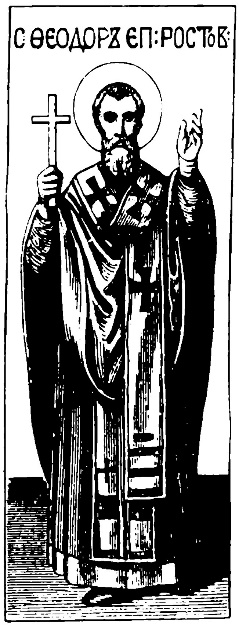
† Память о св. Феодоре, епископе Ростовском и чудотворце Суздальском

† Commemoration of St. Theodore, Bishop of Rostov and Wonderworker of Suzdal

E3.TAI draft
Engraving

Блаженный Феодор был посвящён в епископа Ростовского в 990 г., и в этом году построен им в Ростове из дубового дерева первый соборный храм в честь Богоматери, стоявший после того 168 лет62. Грубые язычники Ростова, принявшие и после того так худо св. Леонтия, весьма враждебно смотрели на первого христианского епископа Ростова. Много вытерпел от них разных оскорблений блаж. Феодор; но в 992 г. принуждён был удалиться из Ростова63. То самое, что мощи св. Феодора с незапамятных времён почивают в Суздальском соборе, показывает, что блаж. Феодор, изгнанный из Ростова, жил в поселении, сделавшемся впоследствии городом Суздалем, и что проповедь его в краю Суздальском, в первые два столетия входившем в круг Ростовской епархии, сохранилась в благодарной памяти края. О проповеди его в Суздальском краю говорит между прочим и стенная надпись 1635 г. над мощами его. «В л. 6498 (990), говорит она, первый благов. и вел. князь Владимир просвети Суздальскую землю святым крещением и паству вручи епископу Феодору». Согласно с летописью, просвещение Суздальского края св. Феодором надобно считать с 992 г.64. Так как по спискам Ростовских епископов XIV в. прежде св. Леонтия три раза поставляется в Ростове Феодор65, то это подаёт мысль, что св. Феодор из Суздальского уединения снова возвращался в Ростов на кафедру. Это подтверждается и ркп. житием св. Леонтия; здесь сказано о равноапостольном Владимире: «Феодора епископа посла в Ростов с князем Борисом» 66. поскольку же известно, что св. Борис был послан в Ростов в 1010 г. на место князя Ярослава, поступившего в Новгород; то прибытие св. Феодора в Ростов вместе с кн. Борисом было также не прежде 1010 г.67. В этот раз он пробыл в Ростове вероятно до 1014 г., пока не вызван был кн. Борис больным отцом в Киев. Страдальческая кончина св. Бориса и последовавшая за нею кровавая борьба Ярослава с братоубийцей Святополком благоприятны были только для фанатиков язычества, и блаженному епископу трудно было в такое время удержаться в Ростове. – В помянутом житии св. Леонтия сказано, что блаж. Феодор, прибыв с князем Борисом в Ростов, хотя усердно трудился над просвещением народа св. верой, но неверие глубоко пустило корни в народе, и проповедник «изгнан бысть». – По спискам Ростовских епископов после удаления Феодора из Ростова сюда прислан был Иларион; но и тот, как видно по другим источникам, от ненависти язычников скоро удалился из Ростова68. – По летописям не показан год кончины св. Феодора. По рассказу их об избиении женщин волхвами в Суздале в 1024 г. не видно, чтобы тогда был жив ревностный проповедник св. истины; но во всяком случае несомненно, что это свирепое восстание проповедников язычества было делом злости их, раздражённой успехами проповеди св. Феодора69. Таким образом блаженную кончину ревностного пастыря надобно отнести к 1023 г. Над гробницей святителя, почившего в Суздале, в ΧVΙ в. возложен дорогой покров с такой, шитой, надписью: «л. 7089 (1581), – молясь Пресв. Богородице и великому чудотворцу, епископу Феодору, Суздальскому, положила сей покров на великого чудотворца епископа Феодора князя Владимира Андреевича княгиня Евпраксия»70. – В 1633 г. Суздальский архиепископ писал в Суздальский девичий монастырь: «молитвы великих святителей и чудотворцев Суздальских Иоанна и Феодора да будут с вами»71.

The blessed Theodore was consecrated Bishop of Rostov in the year 990, and in that year he built in Rostov, from oak wood, the first cathedral church in honor of the Mother of God, which stood thereafter for 168 years62. The coarse pagans of Rostov, who even afterward received St. Leontius so ill, looked with great hostility upon the first Christian bishop of Rostov. The blessed Theodore endured many various insults from them; but in the year 992 he was forced to withdraw from Rostov63. The very fact that the relics of St. Theodore have from time immemorial reposed in the Suzdal cathedral shows that the blessed Theodore, driven out of Rostov, lived in a settlement which later became the city of Suzdal, and that his preaching in the Suzdal region, which in the first two centuries was included within the Rostov diocese, was preserved in the grateful memory of the region. His preaching in the Suzdal region is attested, among other things, by a wall inscription of 1635 above his relics. "In the year 6498 (990)," it says, "the first right-believing Grand Prince Vladimir enlightened the Suzdal land with holy baptism and entrusted the flock to Bishop Theodore." According to the chronicle, the enlightenment of the Suzdal region by St. Theodore must be reckoned from the year 99264. Since, according to the lists of Rostov bishops of the 14th century, Theodore is placed three times in Rostov before St. Leontius65, this suggests that St. Theodore returned from his Suzdal solitude to the Rostov see again. This is confirmed also by a manuscript Life of St. Leontius; there it is said of the Equal-to-the-Apostles Vladimir: "He sent Bishop Theodore to Rostov with Prince Boris"66. Since it is known that St. Boris was sent to Rostov in 1010 in place of Prince Yaroslav, who had gone to Novgorod, the arrival of St. Theodore in Rostov together with Prince Boris was likewise not before 101067. This time he remained in Rostov probably until 1014, until Prince Boris was summoned to Kiev by his ailing father. The martyric death of St. Boris and the bloody struggle that followed between Yaroslav and the fratricide Svyatopolk were favorable only to the fanatics of paganism, and it was difficult for the blessed bishop to hold his ground in Rostov at such a time. – In the aforementioned Life of St. Leontius it is said that the blessed Theodore, having arrived with Prince Boris in Rostov, though he labored diligently at enlightening the people with the holy faith, yet unbelief had struck deep roots in the people, and the preacher "was driven out." – According to the lists of Rostov bishops, after Theodore's departure from Rostov, Hilarion was sent there; but he too, as is evident from other sources, soon withdrew from Rostov because of the hatred of the pagans68. – The chronicles do not give the year of St. Theodore's death. From their account of the slaying of women by sorcerers in Suzdal in 1024, it is not evident that the zealous preacher of holy truth was then alive; but in any case it is beyond doubt that this savage uprising of the preachers of paganism was the work of their malice, provoked by the successes of St. Theodore's preaching69. Thus the blessed end of the zealous pastor must be assigned to the year 1023. Over the tomb of the Hierarch, who reposed in Suzdal, a precious cover was placed in the 16th century with the following embroidered inscription: "In the year 7089 (1581), – praying to the Most Holy Theotokos and the great Wonderworker, Bishop Theodore of Suzdal, Princess Eupraxia, wife of Prince Vladimir Andreevich, placed this cover upon the great Wonderworker Bishop Theodore"70. – In 1633 the Archbishop of Suzdal wrote to the Suzdal Convent: "May the prayers of the great Hierarchs and Wonderworkers of Suzdal, John and Theodore, be with you"71.

E3.0AI draft

Святого мученика Феофана

The Holy Martyr Theophanes

E4.TAI draft

Молодой и неопытный, увлечённый Турками в ислам, Феофан скоро однако же сознал своё гибельное заблуждение и, скрывшись от обманувших его, поступил в иночество, чтобы строгим подвижничеством искупить своё временное отступление от родной веры Христовой. Но он не был в состоянии ничем утолить терзаний своей совести и потому решился – в мученическом подвиге искать примирения с самим собой.

Young and inexperienced, drawn by the Turks into Islam, Theophanes soon however recognized his ruinous error and, having escaped from those who had deceived him, entered monasticism, that by strict asceticism he might atone for his temporary apostasy from his native faith in Christ. But he was unable by any means to soothe the torments of his conscience, and therefore resolved – to seek reconciliation with himself in the feat of martyrdom.

E4.0AI draft

Возвратясь на своё прежнее место, в Константинополь, Феофан скоро был узнан Турками, которые, схватив его, и привели к судье, свидетельствуя, что Феофан-магометанин выдаёт себя за христианина... Добровольный же мученик твёрдо заявил, что он – христианин и не изменит своей вере. Видя яростное волнение в народе по этому поводу, судья произнёс Феофану смертный приговор. Тогда Турки бросились на свою жертву и стали осыпать инока-исповедника жестокими побоями... но не удовольствовались этим; вырезали крестообразно ремни из спины его, обрезали уши и нос и наконец повесили на высоком столбе, выпытывая от него нового отступничества. Но твёрдость юноши была несокрушима. Выведенные из терпения фанатики бросили тогда мученика на ченгел – железную решётку с острыми зубьями кверху, растерзанный которыми окончательно, Феофан предал Богу свою, очищенную покаянием и страданием душу...

Having returned to his former place, Constantinople, Theophanes was soon recognized by the Turks, who seized him and brought him before the judge, testifying that Theophanes the Mohammedan was passing himself off as a Christian... The willing martyr firmly declared that he was a Christian and would not change his faith. Seeing the furious agitation among the people on this account, the judge pronounced the death sentence upon Theophanes. Then the Turks rushed upon their victim and began to shower the monk-confessor with cruel blows... but they were not satisfied with this; they cut strips crosswise from his back, cut off his ears and nose, and finally hanged him on a high post, trying to extort from him a new apostasy. But the youth's steadfastness was unshakable. Driven beyond patience, the fanatics then cast the martyr onto a chengel – an iron grating with sharp teeth pointing upward, by which he was finally torn apart, and Theophanes surrendered to God his soul, purified by repentance and suffering...

E4.1AI draft

Преподобной Мелании (старшей)

The Venerable Melania (the Elder)

E5.TAI draft

Преподобной Мелании (старшей), мирно скончавшейся в 410 г. (О ней см. в житии Мелании Римлянени (внуки её), память которой – 31-го декабря).

The Venerable Melania (the Elder), who reposed peacefully in the year 410. (Concerning her, see in the Life of Melania the Roman (her granddaughter), whose commemoration is on December 31.)

E5.0AI draft

Примечания Notes

См. «Ист. Уч. об Отц. Церкви» арх. Филарета Черн., ч. III, § 230.

See "History of the Teaching on the Fathers of the Church" by Archbishop Philaret of Chernigov, part III, § 230.

N61AI draft

Собр. л. I, 150. IV, 102. VI, 128. VII, 75. 314. IX, 65.

Collection of Chronicles I, 150. IV, 102. VI, 128. VII, 75. 314. IX, 65.

N62AI draft

Степен, кн. I, 153. Ркп. житие св. Феодора у Румянцева № 164.

Book of Degrees I, 153. Manuscript Life of St. Theodore at Rumyantsev, No. 164.

N63AI draft

Никон. л. I, 105. Ключарь Анания о граде Суздале, стр. 19–21, во времен. М. общ. ист. ч. 22. См. ещё прим. 37. Суздаль по летописям видим уже в 1024 г. Собр. л. 5, 135. 7, 328. 329. Ник. I, 130.

Nikon Chronicle I, 105. Ananias the Sacristan on the City of Suzdal, pp. 19–21, in the Proceedings of the Moscow Society of History, part 22. See also note 37. Suzdal is already seen in the chronicles in 1024. Collection of Chronicles 5, 135. 7, 328. 329. Nikon I, 130.

N64AI draft

Собр. л. IV, 102. VI, 128. IX, 14. Прежде св. Леонтия в Ростове «Феодор, Феогност, Феодор, Иларион, Феогност, Феодор». По житиям св. Леонтия и Аврамия (у пр. Макария 1, 200. 201), после Феодора занимал кафедру в Ростове не Феогност, а Иларион. Тоже по известию о сгоревшей первой Ростовской церкви: «а служило у той церкви епископов 7:1 епископ Феодор, 2 епископ Иларион, 3 епископ Леонтий чудотворец»... и пр. VII, 313. Не приходил ли Феогност в Ростов с случайным поручением правительства?

Collection of Chronicles IV, 102. VI, 128. IX, 14. Before St. Leontius in Rostov: "Theodore, Theognostus, Theodore, Hilarion, Theognostus, Theodore." According to the Lives of St. Leontius and Abraham (in Metropolitan Macarius I, 200. 201), after Theodore the see in Rostov was occupied not by Theognostus but by Hilarion. Likewise according to the account of the burned first Rostov church: "And there served at that church 7 bishops: 1 Bishop Theodore, 2 Bishop Hilarion, 3 Bishop Leontius the Wonderworker"... etc. VII, 313. Did not Theognostus come to Rostov with some temporary commission from the government?

N65AI draft

Музей Румянц. № 156 и 160. Распространённое житие св. Леонтия в Пр. собеседнике 1858 г. I, 301. 302.

Rumyantsev Museum No. 156 and 160. Expanded Life of St. Leontius in the Orthodox Interlocutor 1858, I, 301. 302.

N66AI draft

О св. Борисе и Глебе см. мая 2 ч.

Concerning Sts. Boris and Gleb, see May 2.

N67AI draft

В упомянутом (прим. 43) житии, св. Леонтия «той бысть первый епископ Ростову Феодор. – И крести Ростовскую землю и Суздальскую и церковь в Ростове во имя Владычицы нашея Богородицы Приснодевица Мария и устрой ю чудну вельми и – много поучив я вере христианстей; но не можете их уверити до конца, искони элому их неверствию укоренившуся. И изгнан бысть от них. Се же слыша патриарх (?), яко Феодор епископ многи люди крести, но не можаше их привести до конца в познание истинного Бога, но изгнан быв избежа от них; патриарх же паки вскоре избра от своего клироса Лариона именем». Краткое житие св. Леонтия: «бывшие там прежде него (Леонтия) епископы Феодор и Иларион удалились оттуда, не терпя неверия и гонения от народа».

In the aforementioned (note 43) life of St. Leontius: "The first bishop of Rostov was a certain Theodore. And he baptized the Rostov land and the Suzdal land, and built a church in Rostov in the name of our Lady the Theotokos, the Ever-Virgin Mary, and made it exceedingly wondrous, and taught them much in the Christian faith; but he could not convince them to the end, for their evil unbelief had been rooted in them from of old. And he was driven out by them. The patriarch (?), hearing this—that Bishop Theodore had baptized many people but could not bring them to the full knowledge of the true God, and having been driven out had fled from them—the patriarch again soon chose from his clergy one named Hilarion." The brief life of St. Leontius: "The bishops who were there before him (Leontius), Theodore and Hilarion, withdrew from that place, unable to bear the unbelief and persecution from the people."

N68AI draft

Никон. л. 1, 130. Собр. л. V, 135. VII, 329.

Nikon Chronicle, 1, 130. Collection of Chronicles, V, 135; VII, 329.

N69AI draft

Ключарь Анания о граде Суздале, стр. 117–148. Здесь документами доказано, что в честь св. Феодора епископа строились храмы и память его праздновалась 8 июня. Служба ему и святителю Иоанну написана была иноком Григорием, описавшим и жизнь преп. Евфимия, в конце XV в. У Анании показаны и чудеса святителя, стр. 148–153. Служба ему в ркп. XVII в. у Толстого 2 № 1911. Сл. Владимир. сборник, стр. 165. В одном списке святцев сказано: «преставися в л. 6981 г.» Это – очевидная ошибка. Если бы написали: открыты мощи в л. 6981 (1473), то это было бы вероятное показание.

The Key-Keeper Ananias, On the City of Suzdal, pp. 117–148. Here it is proven by documents that churches were built in honor of St. Theodore the Bishop and his memory was celebrated on June 8. A service to him and to Hierarch John was written by the monk Gregory, who also described the life of the Venerable Euthymius, at the end of the 15th century. Ananias also records the miracles of the Hierarch, pp. 148–153. A service to him is found in a 17th-century manuscript in Tolstoy's collection, 2, No. 1911. Vladimir Collection, p. 165. In one list of saints' calendars it is said: "He reposed in the year 6981." This is an obvious error. If it had been written: "His relics were uncovered in the year 6981 (1473)," that would be a probable indication.

N70AI draft

Ист. а. 3. 346.

Historical Acts, 3, 346.

N71AI draft