Иларион, сын придворного служителя, двадцати лет принял монашество в Далматском монастыре и был учеником пр. Григория Декаполита (20 ноября), там жившего тогда; через десять лет, проведённых в подвигах монастырского послушания, удостоен сана священства. По смерти игумена, братия хотела иметь себе его наставником, но он, бегая славы, удалился в некоторую обитель близ Никеи; открытый, убеждён был патриархом Никифором принять игуменство (в 806 году). Через девять лет, когда имп. Лев Армянин воздвиг гонение на православных, пр. Илариона принуждал он к своей ереси и отдал в распоряжение единомысленного себе патриарха Феодота, а этот держал его в тюрьме, томя голодом и жаждой. Монахи Далматского монастыря обещали царю исполнить его волю, если он возвратит им игумена их, и царь освободил Илариона. Но через год, уверившись в обмане со стороны монахов, послал туда военную силу, строго наказал всех, а Илариона заключил в тюрьму, потом посылал на заточение в разные монастыри около столицы (где игумены еретичествовали), где он терпел всякие озлобления. По смерти Льва (25 дек. 820) и пр. Иларион освобождён был, но в монастырь не возвратился, так как там игуменствовал еретик, а жил в поместье некоторой благочестивой вдовы, которая устроила ему келью с садиком при ней. Более семи лет прожил тут Иларион, а в царствование Феофила, снова нудимый к иконоборству, обличил царя в нечестии, наказан сто семьюдесятью ударами и выслан на остров Афузию (близ Константинополя, в Мраморном море), где и пробыл до смерти Феофила. По восстановлении же православия (842 г.) имп. Феодорой Иларион принял снова игуменство в Далматской обители и, прожив три лета, отошёл ко Господу.
Hilarion, the son of a court servant, received monastic tonsure at the age of twenty in the Dalmatian Monastery and was a disciple of the Venerable Gregory of Decapolis (November 20), who lived there at that time; after ten years spent in the labors of monastic obedience, he was deemed worthy of the priesthood. Upon the death of the abbot, the brethren wished to have him as their teacher, but he, fleeing glory, withdrew to a certain monastery near Nicaea; once discovered, he was persuaded by Patriarch Nikephoros to accept the abbacy (in the year 806). Nine years later, when the Emperor Leo the Armenian raised a persecution against the Orthodox, he compelled the Venerable Hilarion to adopt his heresy and placed him at the disposal of the like-minded Patriarch Theodotus, who kept him in prison, tormenting him with hunger and thirst. The monks of the Dalmatian Monastery promised the emperor to fulfill his will if he would return their abbot to them, and the emperor freed Hilarion. But after a year, having become convinced of the deception on the part of the monks, he sent a military force there, severely punished all, and confined Hilarion in prison; afterwards he sent him into exile in various monasteries near the capital (where the abbots were heretics), where he endured every kind of maltreatment. After the death of Leo (December 25, 820), the Venerable Hilarion was also freed, but he did not return to the monastery, since a heretic was abbot there; instead he lived on the estate of a certain pious widow, who built him a cell with a small garden adjoining it. Hilarion lived there for more than seven years, and during the reign of Theophilus, being again compelled to iconoclasm, he denounced the emperor for his impiety, was punished with one hundred and seventy blows, and was exiled to the island of Aphousia (near Constantinople, in the Sea of Marmara), where he remained until the death of Theophilus. After the restoration of Orthodoxy (842 A.D.) by the Empress Theodora, Hilarion again accepted the abbacy in the Dalmatian Monastery, and having lived three years, he departed to the Lord.
Родом из Египта, преп. Виссарион всецело посвятил себя на служение Богу с ранней молодости. Посетив многих великих подвижников пустыни, между прочим и св. Герасима за-Иорданского, он, проникнутый духом их, и сам окончательно отрешился от всего мирского, скитался по горам и пустыням, не имея не только постоянного крова, но даже редко останавливаясь и под чужим кровом. Едва прикрытый ветхой одеждой, не обращая внимания ни на зной, ни на холод, дни и ночи проводя в молитве, среди которой часто подолгу забывал даже о пище, Виссарион, в безмолвном возношении ума и сердца к Богу, как бы отделялся от всего земного и удостоился от Бога дара великих чудотворений. Однажды, молитвой и крестным знамением превратил горькую морскую воду в годную для пития, чтобы утолить изнемогавшего от жажды своего ученика. Молитвой низводил дождь во время засухи, переходил через реки, как бы по земле, исцелял больных.
A native of Egypt, the Venerable Bessarion wholly dedicated himself to the service of God from early youth. Having visited many great ascetics of the desert, among them also St. Gerasimus of the Jordan, he, being imbued with their spirit, himself finally renounced everything worldly, wandering through the mountains and deserts, having not only no permanent shelter, but even rarely stopping under another's roof. Barely covered by a worn-out garment, paying no heed either to heat or to cold, spending days and nights in prayer, during which he often forgot even food for long periods, Bessarion, in the silent elevation of mind and heart to God, was as if separated from everything earthly and was vouchsafed from God the gift of great wonderworking. Once, by prayer and the sign of the cross, he turned bitter seawater into water fit for drinking, in order to quench the thirst of his disciple who was growing faint. By prayer he brought down rain during a drought, crossed rivers as if on dry land, and healed the sick.
При безусловной строгости к самому себе, преп. Виссарион был крайне снисходителен к другим. Однажды, когда один впавший в согрешение инок был наказан запрещением стоять вместе с братией в храме, то Виссарион вышел из храма вместе с осуждённым иноком, говоря: «и я – грешник». – Убедительно наставлял он всех неусыпно бодрствовать и быть настороже против искушений, воздвигаемых злым духом, предупреждая, что эти искушения постигают человека внезапно, особенно в то время, когда душа его находится в мирном, спокойном и потому – как бы в беззаботном состоянии...
With unconditional strictness toward himself, the Venerable Bessarion was extremely indulgent toward others. Once, when a monk who had fallen into sin was punished by being forbidden to stand together with the brethren in the church, Bessarion went out of the church together with the condemned monk, saying: "I too am a sinner." — He earnestly admonished all to keep unceasing vigil and to be on guard against the temptations raised by the evil spirit, warning that these temptations overtake a man suddenly, especially at the time when his soul is in a peaceful, calm, and therefore, as it were, carefree state...
Подвизаясь неуклонно и достигнув высокого духовного совершенства, преп. Виссарион скончался в глубокой старости (в конце V века).
Having labored unswervingly and attained high spiritual perfection, the Venerable Bessarion reposed in extreme old age (at the end of the fifth century).
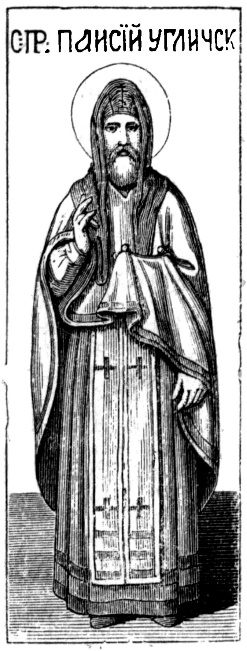
Отец пр. Паисия, в крещении Павла47, Иван Гавренев жил в Нерехотском стану в селе Богородском, на меже Кашина, и был верным слугой Угличского князя (с 1461 г.) Андрея Васильевича. Мать Павла, Есения Васильевна, была дочь полководца Василия Кожи и родная сестра пр. Макария Колязинского († 1483 г.). Павел в детстве обучен был чтению книг. Ещё при жизни родителей он бывал у дяди своего преп. Макария, а по смерти их он совсем перешёл в обитель и на 11 году возраста пострижен был преп. Макарием в иночество, с именем Паисия. – Под руководством опытного дяди, в тиши обители, юный инок рос по духу, не тревожимый опасными волнениями и советами мира; с юных лет научился он подвигам послушания, поста и молитвы. Он занимался списыванием душеполезных книг и между прочим написал книгу св. Григория Богослова. «Та книга, говорит жизнеописатель его, и до сего дня во обители преп. Макария, в Калязине». Не засоряемый впечатлениями мирскими и очищаемый подвигами самоотречения, дух его стал способен и к созерцанию мира духовного. Раз во время ночной молитвы явился ему ангел и сказал: «ты должен быть наставником для многих; ты выйдешь отсюда и будешь жить там, где тебе велят: так надобно для славы Божией». Паисий со страхом выслушал эту весть и пересказал наставнику своему преп. Макарию, но никому другому.
The father of the Venerable Paisius, who in baptism was named Paul47, Ivan Gavrenev, lived in the Nerekhta district in the village of Bogorodskoye, on the border of Kashin, and was a faithful servant of the Uglich prince (from 1461 A.D.) Andrew Vasilievich. Paul's mother, Esenia Vasilievna, was the daughter of the voivode Basil Kozha and the own sister of the Venerable Macarius of Kolyazin († 1483 A.D.). Paul in childhood was taught the reading of books. Even during the lifetime of his parents he visited his uncle, the Venerable Macarius, and after their death he moved entirely to the monastery and at the age of 11 was tonsured into monasticism by the Venerable Macarius, with the name Paisius. — Under the guidance of his experienced uncle, in the silence of the monastery, the young monk grew in spirit, untroubled by the dangerous agitations and counsels of the world; from his youth he learned the labors of obedience, fasting, and prayer. He occupied himself with copying soul-profiting books and, among other things, wrote the book of St. Gregory the Theologian. "That book," says his biographer, "remains to this day in the monastery of the Venerable Macarius, in Kalyazin." Not being clogged by worldly impressions and being purified by the labors of self-denial, his spirit became capable also of contemplating the spiritual world. Once during night prayer an angel appeared to him and said: "You must be a teacher for many; you will go forth from here and will live where you are commanded: this is necessary for the glory of God." Paisius heard this message with fear and related it to his teacher, the Venerable Macarius, but to no one else.
После чудного видения прошло несколько времени, как Угличский князь Андрей Васильевич просит преп. Макария отпустить к нему Паисия в Углич, для основания обители. Преподобный рад был доброму желанию князя и отпустил ученика. Паисий поселился в хижине, на левом берегу р. Волги, в 3 верстах от Углича и на первый раз построил из дерева храм Богоявления с несколькими кельями. – К Паисию собралось 10 братий, – и он ввёл строгое общежитие. Разлив реки разрушил недавние постройки, и труженик Божий поставил на другом месте, в 3 верстах от Углича, кельи и храм Покрова Богоматери. По настоянию князя, подвижник принял сан игумена. Благочестивый князь щедро подавал пособия для новой обители. В грамоте 1476 г. писал он: «я князь Андрей Васильевич жалую Покровского игумена Паисия или кто по нём будет, – дозволяю Покрову Пресв. Богородицы на сей стороне Волги, на берегу, от Рождественского оврага строить слободу, и кого призовут в эту слободу на житье из иных княжений, а не из моей отчины, те свободны от моих податей на 20 лет»48. В 1479 г. по желанию и с пособиями набожного князя Паисий начал строить каменный храм, и в 1482 г. новый храм освящён был в честь Покрова Богоматери49. Со стороны князя это был памятник благодарности Богу за рождение двух сыновей Димитрия и Иоанна, которых принимал от купели преп. Паисий50. Князь любил и уважал Паисия. «В дом Пречистой, Покрову её, и игумену Паисию» грамотой отдал он «на городище монастырь Николая» с 10 деревнями и земли, выкупленные «у Воскресенского архимандрита Нафанаила» с 11 деревнями51. – Но ни уважение князя, ни сан игумена не ослабляли подвижнической строгости в Паисии. Он сам копал землю, носил воду и в жестокие морозы ходил в одной власянице. Светская ветреность смеялась над трудолюбивым старцем, но к своему вреду. Раз молодой боярин ехал мимо обители и, увидав старца, заступом копающего землю, посмеялся над ним; но вдруг лошадь сбросила его с себя, и он упал без чувств; блаженный Паисий привёл его в чувство и кротко сказал: «не осуждай иноков». Печальная участь любимого князя Андрея, скончавшегося в темнице (в 1493 г.), и детей его, сосланных в заточение, только оживила в душе преподобного мысль, что в Царствие Божие входят путём скорбей многих. Преподобный просил в. князя за невинных детей, но это не облегчило участи их. – В скорбях времени и глубокой старости передал он управление обителью ученику своему Геннадию, после которого был и ещё, при жизни преподобного основателя, игумен Иона52. Преподобный продолжал подвиги молитвы. Немощи старости не удерживали его от участия в молитвах храма; каждый воскресный день и каждый праздник сам он совершал литургию и в глубокой старости. Когда же наконец ноги отказались служить, ослабленные дряхлостью и подвигами, он сидя совершал келейное правило. Преподобный почил от трудов на 107 году своей жизни, июня 6-го 1504 г.53.
Some time passed after the wondrous vision, when the Uglich prince Andrew Vasilievich asked the Venerable Macarius to release Paisius to him in Uglich, for the founding of a monastery. The Venerable One was glad of the prince's good desire and released his disciple. Paisius settled in a hut, on the left bank of the Volga River, 3 versts from Uglich, and at first built a wooden church of the Theophany with several cells. — Ten brethren gathered to Paisius, and he introduced strict cenobitic life. The flooding of the river destroyed the recent buildings, and the laborer of God set up cells and a church of the Protection of the Mother of God in another place, 3 versts from Uglich. At the insistence of the prince, the ascetic accepted the rank of abbot. The pious prince generously provided assistance for the new monastery. In a charter of 1476 he wrote: "I, Prince Andrew Vasilievich, grant to the Protection Abbot Paisius, or whoever shall be after him, — I permit the Protection of the Most Holy Theotokos on this side of the Volga, on the bank, from the Rozhdestvensky ravine to build a settlement, and whomever they summon to this settlement to live from other principalities, and not from my patrimony, those shall be free from my taxes for 20 years."48 In 1479, by the desire and with the assistance of the devout prince, Paisius began to build a stone church, and in 1482 the new church was consecrated in honor of the Protection of the Mother of God49. On the prince's part, this was a monument of gratitude to God for the birth of two sons, Demetrius and John, whom the Venerable Paisius received from the baptismal font50. The prince loved and respected Paisius. "To the house of the Most Pure One, to her Protection, and to Abbot Paisius," by charter he gave "the monastery of Nicholas on the hill" with 10 villages and lands redeemed "from the Resurrection Archimandrite Nathanael" with 11 villages51. — But neither the prince's respect nor the rank of abbot weakened the ascetic strictness in Paisius. He himself dug the earth, carried water, and in severe frosts went about in a single hair-shirt. Worldly frivolity laughed at the labor-loving elder, but to its own harm. Once a young boyar rode past the monastery and, seeing the elder digging the earth with a spade, mocked him; but suddenly the horse threw him off, and he fell unconscious; the blessed Paisius brought him to his senses and said gently: "Do not judge monks." The sad fate of the beloved Prince Andrew, who died in prison (in 1493), and of his children, exiled into confinement, only revived in the soul of the Venerable One the thought that one enters the Kingdom of God by the path of many sorrows. The Venerable One petitioned the Grand Prince for the innocent children, but this did not alleviate their fate. — In the sorrows of the time and in deep old age, he handed over the governance of the monastery to his disciple Gennadius, after whom there was also, during the lifetime of the Venerable founder, Abbot Jonah52. The Venerable One continued the labors of prayer. The infirmities of old age did not keep him from participation in the prayers of the church; every Sunday and every feast day he himself celebrated the Divine Liturgy, even in extreme old age. When at last his legs refused to serve him, weakened by decrepitude and labors, he performed his cell rule while sitting. The Venerable One reposed from his labors in the 107th year of his life, on June 6, 150453.
Мощи преп. Паисия почивают под спудом в соборном монастырском храме. Обитель, основанная подвигами его, пользовалась уважением ещё до прославления мощей его. В 1553 г. царь Иоанн Васильевич был по летописи «на Угличе у Покрова в монастыре»54. – В 1609 г. монастырь разорён был ляхами, настоятель и иноки умерщвлены55; а в 1610 г. от мощей преп. Паисия излились потоки исцелений: в одном году совершилось 25 чудес. Выставляем самые замечательные: жена красильщика Тимофея, три года бывшая больной, и кожевник Трофим, не владевший ни ногами, ни руками, исцелились у гроба преп. Паисия; у Афанасия Сафонова наросло на голове дикое мясо в гусиное яйцо, и он сильно страдал головной болью; но, когда у гроба преподобного священник осенил его крестом и окропил водой, нарост лопнул и головная боль кончилась. Вдова Евдокия, от сильной головной боли ослепшая, прозрела в Покровской обители. Василий Буренин, поднимавший тяжесть не по силам, страдал желудком до того, что не мог принимать пищи от рвот; так продолжалось полтора года. Раз ночью явился в окошке хижины его старец и сказал: «иди в обитель Паисия, – там исцелеешь». Недвижимый больной подумал: как ему идти? и в ту же минуту почувствовал облегчение болезни, встал, пошёл и, отслушав молебен, получил полное здоровье. Казначей Крутицкого митрополита Пафнутия Адриан, постриженник Паисиевой обители, в мятежное время схоронил серебро митрополичьего дома в тайном месте; когда же назначенный в строителя Паисиевой обители стал сдавать бывшее на руках его, то никак не мог отыскать схоронённого им серебра и за то задержан был в доме. Строителю Угличского Алексеевского монастыря является преп. Паисий и говорит: «скажи старцу Адриану, что серебро его не пропало, поискав найдёт он его». Адриан стал искать и скоро нашёл то, что считал уже пропавшим. У купца Никифора Пашина семилетний сын страдал сильными корчами в ногах; его лечили много, но без успеха; услыхав об одном очень искусном враче, отец отправился к нему по реке Волге с больным сыном. В сонной дремоте является ему преп. Паисий в белых ризах и говорит: «куда ты? Там не будет пользы твоему сыну; ступай в обитель Паисия, отслужи молебен, и сын твой будет здоров». Купец так и поступил и больной стал здоровым. – В 1610 г. освидетельствованы были мощи и чудеса преподобного56, и тогда же написана служба ему57.
The relics of the Venerable Paisius rest hidden beneath a bushel in the cathedral church of the monastery. The monastery, founded by his labors, enjoyed respect even before the glorification of his relics. In 1553, Tsar John Vasilievich was, according to the chronicle, “at Uglich, at the Monastery of the Protection”54. – In 1609, the monastery was destroyed by the Poles, and the abbot and monks were put to death55; and in 1610, streams of healings flowed from the relics of the Venerable Paisius: in one year, 25 miracles were performed. We set forth the most remarkable: the wife of the dyer Timothy, who had been ill for three years, and the tanner Trofim, who had no use of either his legs or his hands, were healed at the grave of the Venerable Paisius; Athanasius Safonov had grown on his head a growth of proud flesh the size of a goose egg, and he suffered greatly from headache; but when, at the grave of the Venerable One, the priest made the sign of the cross over him and sprinkled him with water, the growth burst and the headache ceased. The widow Eudocia, who had become blind from a severe headache, received her sight at the Protection monastery. Basil Burenin, who had lifted a weight beyond his strength, suffered from his stomach to such a degree that he could not take food due to vomiting; this continued for a year and a half. One night, an elder appeared at the window of his hut and said: “Go to the monastery of Paisius—there you will be healed.” The bedridden sick man thought: how could he go? and at that very moment he felt relief from his illness, arose, went, and after hearing a moleben, received full health. Adrian, the treasurer of Paphnutius, Metropolitan of Krutitsy, a tonsured monk of the Paisius monastery, hid the silver of the metropolitan’s house in a secret place during the time of rebellion; but when he who had been appointed builder of the Paisius monastery began to hand over what had been in his keeping, he could by no means find the silver he had hidden, and for that reason was detained at the house. The Venerable Paisius appeared to the builder of the Uglich Alexis monastery and said: “Tell the elder Adrian that his silver has not been lost; if he searches, he will find it.” Adrian began to search and soon found what he had already considered lost. The merchant Nicephorus Pashin had a seven-year-old son who suffered from severe convulsions in his legs; they treated him much, but without success; having heard of a very skillful physician, the father set out by the Volga River with his sick son. In a drowsy slumber, the Venerable Paisius appears to him in white robes and says: “Where are you going? There will be no benefit for your son there; go to the monastery of Paisius, have a moleben served, and your son will be healthy.” The merchant did so, and the sick man became healthy. – In 1610, the relics and miracles of the Venerable One were examined56, and at that time a service to him was also written57.
Благость небесная зовёт всех к спасению и блаженству, но не всех одинаково. Одни слышат призвание её ещё с юности, другие – в летах зрелых; тех возбуждает она от сна душевного необычайными мерами, других – обыкновенными способами; одним является в знамениях и чудесах, другим – в каком-либо событии жизни. Это – дело премудрости Божией, которая знает, кого и как позвать к себе. Наше же дело – внимать гласу Божию. Счастлив тот, кто, услышав голос Божий, верно следует ему, не изменяя до гроба. Таков был блаженный Иона Климецкий.
Heavenly goodness calls all to salvation and blessedness, but not all in the same way. Some hear its call from youth, others in mature years; some it rouses from the sleep of the soul by extraordinary measures, others by ordinary means; to some it appears in signs and wonders, to others in some event of life. This is the work of the wisdom of God, which knows whom and how to call to itself. Our task is to heed the voice of God. Blessed is he who, having heard the voice of God, faithfully follows it, not changing until the grave. Such was the blessed Jonah of Klimets.
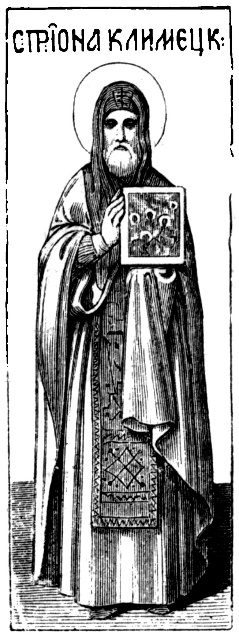
Новгородский посадник Иоанн Климентов оставил сыну своему много богатства; сын Иоанн спокойно занимался торговлей, как занимался и отец его. Не раз сын в Корельском насаде (большой лодке) переплывал обширное Онежское озеро, простирающееся на 200 вёрст. Но раз, возвращаясь из Повенца в Новгород с грузом соли, на средине озера застигнут он был страшной бурей. Долго насад носился по произволу волн; опасность погибели была в глазах. И эта-то опасность вызвала из души Иоанна решимость не жить более для мира. Иоанн просил у Господа избавления от грозной смерти лишь для того, чтобы провести остальное время в покаянии, для одного Господа. Молитва была услышана; насад выброшен был на прибрежную отмель. Иоанн со слезами благодарил Господа, и услышал голос: «Иоанн! здесь построишь ты обитель Св. Троице». Затем увидел он на можжевеловом кусту икону Св. Троицы. На отмели поставил он тогда же крест, поныне целый; на месте явления иконы – крест и часовню. Это было в 1490 г. Возвратясь в Новгород, блаж. Иоанн распорядился богатым имением своим, принял иночество с именем Ионы и, укрепясь в духовной жизни под руководством опытных старцев, отправился на остров. Здесь построил он один храм во имя Св. Троицы, другой – в честь св. Николая, которого призывал он во время опасности грозной, – построил кельи и приготовил нужное для обители иноков. Из бедной Нятинской обители, бывшей в 3 верстах от новой, вызвал он в свой монастырь братию; а между тем явились и из других мест с желанием служить Господу в безмятежной обители. По прошению блаж. Ионы митрополит Варлаам (1509–1525 г.) благословил дать для новых храмов антиминсы; святитель желал, чтобы Иона был настоятелем своей обители, но смиренный раб Божий уговорил Новгородского иеромонаха Тихона принять на себя должность игумена, а сам остался в числе братии обители. Он провёл остальное время в подвигах поста и молитвы, служа примером строгой иноческой жизни, и мирно почил 6 июня 1534 г. Святое тело его положено было у храма св. Николая; впоследствии построили здесь, над местом погребения часовню. По воле императрицы Елисаветы над нетленными мощами преподобного Ионы построен был каменный храм во имя прав. Захарии и Елисаветы58.
The Novgorod posadnik John Clementov left his son much wealth; the son John peacefully engaged in trade, as his father had done. Many times the son crossed the vast Lake Onega, stretching for 200 versts, in a Korelsk nasad (a large boat). But once, returning from Povenets to Novgorod with a cargo of salt, he was overtaken in the middle of the lake by a terrible storm. For a long time the nasad was tossed at the will of the waves; the danger of perdition was before his eyes. And it was this danger that drew from the soul of John a resolve to live no longer for the world. John asked the Lord for deliverance from a dreadful death only that he might spend the rest of his time in repentance, for the Lord alone. The prayer was heard; the nasad was cast up onto a coastal shoal. John with tears thanked the Lord, and heard a voice: “John! Here you will build a monastery to the Holy Trinity.” Then he saw on a juniper bush an icon of the Holy Trinity. On the shoal he then set up a cross, which remains whole to this day; at the place of the appearance of the icon—a cross and a chapel. This was in 1490. Returning to Novgorod, the blessed John disposed of his rich estate, received monasticism with the name Jonah, and, having strengthened himself in the spiritual life under the guidance of experienced elders, set out for the island. Here he built one church in the name of the Holy Trinity, another in honor of St. Nicholas, whom he had invoked during the time of the terrible danger—he built cells and prepared what was necessary for a monastery of monks. From the poor Nyatinsk monastery, which was 3 versts from the new one, he summoned brethren to his monastery; and meanwhile others came from other places with the desire to serve the Lord in the peaceful monastery. At the request of the blessed Jonah, Metropolitan Barlaam (1509–1525) blessed the giving of antimensions for the new churches; the Hierarch wished that Jonah should be the abbot of his monastery, but the humble servant of God persuaded the Novgorod hieromonk Tikhon to accept the office of abbot, while he himself remained among the brethren of the monastery. He spent the rest of his time in the labors of fasting and prayer, serving as an example of strict monastic life, and peacefully reposed on June 6, 1534. His holy body was placed by the church of St. Nicholas; later a chapel was built here over the place of burial. By the will of Empress Elizabeth, a stone church in the name of the Righteous Zacharias and Elizabeth was built over the incorrupt relics of the Venerable Jonah58.
Ркп. житие преп. Паисия описано не без многословия, в 1610 г. в Угличе. – Позже, в конце XVII в. составлено другое, более полное житие, но где довольно произволов. – Хотя поздний биограф и говорит, что он пользовался известиями, которые прежде были опущены; но а) несомненно, что: монастырскими грамотами не пользовался он; б) новые известия его оказываются то прямо неверными, то сомнительными и только кое-где верными.
The manuscript Life of the Venerable Paisius was written not without verbosity, in 1610 in Uglich. – Later, at the end of the 17th century, another, more complete Life was compiled, but one containing considerable arbitrary additions. – Although the later biographer says that he used accounts which had previously been omitted; yet a) it is certain that he did not use the monastery charters; b) his new accounts prove to be either directly false, or doubtful, and only here and there true.
А. э. № 102. Эта грамота показывает, что в ист. Иер. 5. 585 и в свед. о монаст. М. 1852 г., стр. 552, ошибочно отнесено основание монастыря к 1492 г.
Acts of the Archeographic Expedition, No. 102. This charter shows that in the History of the Hierarchy, 5, 585, and in the Information on Monasteries, Moscow, 1852, p. 552, the foundation of the monastery is erroneously assigned to 1492.
Позднее житие. По тому же позднему житию, при освящении храма были архиепископ Тихон «зело жития чистого и добродетельного», преп. Макарий Колязинский, игумены: Архангельский Георгий, Богоявленский Заволгский Никита, Никольский, что на Песку, Сергий; архимандриты: Алексеевский Нифонт и Макарьевский Власий; игумены: Улеменский Серапион, Учменский Гавриил и Богословский Герасим; из Ростова архимандриты: Борисоглебский Иоанн, Богоявленский Варлаам и Яковлевский Петроний; игумены: от Троицы с Варниц Иосиф, Белогостицкий Авраамий и Петровский Феодорит. – Тихон был Ростовским архиепископом 1490–1053 г. и потому не мог быть на освящении храма в сане архиепископа в 1482 г. Не был ли с 1481 до 1487 г. архиепископ другой Тихон? (Толстого святыни Ростова, стр. 74). – Перечень настоятелей замечателен по крайней мере по указанию на современные Паисиеву монастырю Угличские и Ростовские. Сл. Киселя ист. Угличск., стр. 335–343.
Later Life. According to the same later Life, at the consecration of the church were present Archbishop Tikhon, “of exceedingly pure and virtuous life,” the Venerable Macarius of Kolyazin, the abbots: George of the Archangel monastery, Nikita of the Theophany monastery beyond the Volga, Sergius of the Nicholas monastery on the Sand; the archimandrites: Niphon of the Alexis monastery and Blasius of the Macarius monastery; the abbots: Serapion of the Ulema monastery, Gabriel of the Uchma monastery, and Gerasim of the St. John the Theologian monastery; from Rostov, the archimandrites: John of the Boris and Gleb monastery, Barlaam of the Theophany monastery, and Petronius of the James monastery; the abbots: Joseph from the Trinity at Varnitsy, Abraham of the Belogostitsy monastery, and Theodoret of the Peter monastery. – Tikhon was Archbishop of Rostov from 1490 to 1053 and therefore could not have been at the consecration of the church in the rank of archbishop in 1482. Was there not another Tikhon archbishop from 1481 to 1487? (Tolstoy’s Shrines of Rostov, p. 74). – The list of abbots is remarkable at least for its indication of the Uglich and Rostov monasteries contemporary with that of Paisius. Cf. Kiselyov’s History of Uglich, pp. 335–343.
По пространному житию Паисия, кн. Димитрий и Иоанн родились в одном и том же 1479 г. и оба крещены Паисием, но Димитрий родился в 1478 г., а Иоанн – в 1479 г.
According to the lengthy Life of Paisius, Prince Demetrius and John were born in one and the same year, 1479, and both were baptized by Paisius, but Demetrius was born in 1478, and John in 1479.
Грамота янв. 28, 7005 (1497): «яз князь великий пожаловал Покровского игумена Геннадия з братиею», велел выдавать монастырю по 13 р. на свечи. Грамота 16 июня 7010 (1502 г.): «се яз князь в. Василеи Иван. всея Руси пожаловал есмы игумена Иону з братьею Покрова св. Богородицы», освободил от своего суда и повинностей монастырское сельцо Гвоздево в Бежецком стану (Яросл. губ. ведом. 1855 г. № 38 и 47).
Charter of January 28, 7005 (1497): “I, the Grand Prince, have granted the Protection Abbot Gennadius with the brethren,” ordering the monastery to be given 13 rubles for candles. Charter of June 16, 7010 (1502): “Behold, I, Grand Prince Basil Ivanovich of all Russia, have granted the Abbot Jonah with the brethren of the Protection of the Most Holy Theotokos,” freeing the monastery village of Gvozdevo in the Bezhetsk district from my court and obligations (Yaroslavl Provincial Gazette, 1855, Nos. 38 and 47).
Ркп. житие: «честную свою душу Господеви предаде – в л. 7012 (1504) м. июня в 6 д.». Святцы: «пр. Паисий игумен Покровского монастыря за Волгою против (Углича) преставися в л. 7012 (1504) м. июня в 6 д.».
Manuscript Life: “He gave up his honorable soul to the Lord—in the year 7012 (1504), on the 6th day of June.” Menologia: “The Venerable Paisius, abbot of the Protection monastery beyond the Volga opposite (Uglich), reposed in the year 7012 (1504), on the 6th day of June.”
Никон. л. 7, 262. В. кн. Василий Иванович грамотой 1521 г., данной Покров. игум. Герасиму, освободил от своего суда и повинностей монаст. села Угличского уезда. Грам. февр. 12, 1523 г., данной игум. Серапиону, предоставил ту же свободу по селу Архангельскому. Ярослав. губер. ведом. 1855 г. № 47).
Nikon Chronicle, 7, 262. Grand Prince Basil Ivanovich, by a charter of 1521 given to the Protection Abbot Gerasim, freed the monastery villages of Uglich district from his court and obligations. By a charter of February 12, 1523, given to Abbot Serapion, he granted the same freedom for the village of Arkhangelskoye (Yaroslavl Provincial Gazette, 1855, No. 47).
Ркп. описание жития и чудес преп. Паисия 1610 г. В грамоте 1665 г. «преп. чудотворец Паисий». Юрид. ак. 105.
Manuscript description of the life and miracles of the Venerable Paisius, 1610. In a charter of 1665, “the Venerable Wonderworker Paisius.” Legal Acts, 105.