Orthodox Translations

June 55 июня

Old Calendar: civil June 18 · New Calendar: civil June 5

History

Преп. аввы Дорофея

Venerable Abba Dorotheus

E1.TAI draft

Жил в царствование Анастасия, Юстина и Иустиниана и скончался около 620 г.

He lived during the reigns of Anastasius, Justin, and Justinian, and reposed around the year 620.

E1.0AI draft

Дорофей был учеником Иоанна Прозорливого в Палестинской обители аввы Серида (13 авг.); сверх того, сам обладавший значительными научными познаниями, приобретёнными им ещё в молодых годах, он, впоследствии, руководил и других в устроенной им Палестинской обители (напр. преп. Досифея, пам. которого – 19-го февр.), и по смерти своей оставил в руководство инокам свои наставления.

Dorotheus was a disciple of John the Seer in the Palestinian monastery of Abba Seridus (Aug. 13); moreover, possessing himself considerable scholarly knowledge, acquired in his early years, he later guided others in the Palestinian monastery he founded (for example, the Venerable Dositheus, whose commemoration is on February 19), and after his death left his instructions as a guide for monks.

E1.1AI draft

Назидательно описывает Дорофей свои занятия наукой в первой молодости. «Когда учился я внешнему учению, – пишет он, – то вначале весьма тяготился я учением, так что когда приходил брать книгу, то шёл как-бы к зверю. Но когда стал я принуждать себя, то Бог помог мне, и я так привык, что не знал, что ел, что пил, как спал от теплоты, ощущаемой при чтении. Никогда не могли завлечь меня за трапезу к кому-либо из друзей моих; даже не ходил я к ним и для беседы во время чтения, хотя любил я общество, любил и товарищей моих. Когда отпускал нас философ, и я умывался (ибо имел нужду каждый день прохлаждаться водой, так как иссыхал от чрезмерного чтения), то я отходил туда, где жил, не зная, что буду есть, ибо не хотел тратить времени для распоряжений насчёт пищи».

Dorotheus edifyingly describes his studies in early youth. "When I studied secular learning," he writes, "at first I was greatly burdened by study, so that when I came to take a book, I approached it as if it were a wild beast. But when I began to force myself, God helped me, and I became so accustomed that I did not know what I ate, what I drank, or how I slept, because of the warmth I felt while reading. My friends could never entice me to a meal; I did not even go to them for conversation during reading time, although I loved society and loved my companions. When the philosopher dismissed us and I washed myself (for I needed to cool myself with water every day, as I was dried out from excessive reading), I would go to where I lived, not knowing what I would eat, for I did not want to waste time making arrangements for food."

E1.2AI draft

Такое же усердие применял Дорофей и к жизни духовной, когда удалился в пустыню. «Когда пришёл я в монастырь, – пишет он, то говорил себе: если столько любви, столько теплоты было для внешней мудрости, так что от всего прочего я был свободен и привык к одному, тем более должно быть для добродетели, и тем укреплялся»29.

Dorotheus applied the same zeal to the spiritual life when he withdrew into the desert. "When I came to the monastery," he writes, "I said to myself: if there was so much love, so much warmth for external wisdom, that I was free from everything else and grew accustomed to it alone, how much more should there be for virtue, and thus I was strengthened."29

E1.3AI draft

Не оставалось отвлечённым это умственное и высокое духовное развитие Дорофея: он применял его к практической деятельности, с любовью служил больным и странникам. «В то время, – пишет он, – я только что встал от тяжкой болезни. И вот, приходят странники вечером, я проводил с ними вечер, – а там – погонщики верблюдов, и им приготовлял я нужное; много раз случалось, что, когда я отходил спать, встречалась ещё какая-либо нужда, и меня будили, – а затем наставал час бдения». Утомлялась природа человека при такой беспрерывной деятельности, переходящей с одного предмета на другой; чтобы успешнее преодолевать естественное изнеможение, Дорофей упросил одного брата будить его ко времени церковной службы, а другого – чтобы не допускал его дремать во время бдения.

This intellectual and lofty spiritual development of Dorotheus did not remain abstract: he applied it to practical activity, lovingly serving the sick and strangers. "At that time," he writes, "I had just recovered from a serious illness. And so, strangers would come in the evening, and I would spend the evening with them; then there were camel drivers, and I would prepare what they needed; many times it happened that when I went to sleep, some other need would arise, and I would be woken, and then the hour of the vigil would come." Human nature grew weary from such unceasing activity, passing from one task to another; to more successfully overcome natural exhaustion, Dorotheus asked one brother to wake him for the time of church services, and another not to let him doze during the vigil.

E1.4AI draft

«И поверьте, – прибавляет он, – я так уважал их, как бы от них зависело моё спасение» ...

"And believe me," he adds, "I respected them as if my salvation depended on them" ...

E1.5AI draft

Св. муч. Дорофея, епископа Тирского

Holy Martyr Dorotheus, Bishop of Tyre

E2.TAI draft

Дорофей святой, епископ Тирский, во время жестокого Диоклитианова гонения оставил престол свой и скрылся в незнаемых местах до умирения церкви Константином Великим. Тогда снова возвратился в Тир и управлял церковью до времён Юлиана Отступника. Избегая и теперь мучителей, он удалился во Фракию и впал в руки идолопоклонников, которые предали его жестоким пыткам в городе Одиссосе (нын. Варне) и умертвили (362 г.). Дорофею было тогда 107 лет. Ему принадлежали многие сочинения по Церк. истории, из коих кое-что дошло и до нас.

Saint Dorotheus, Bishop of Tyre, during the fierce persecution of Diocletian left his see and hid in unknown places until the peace of the Church under Constantine the Great. Then he returned again to Tyre and governed the Church until the time of Julian the Apostate. Fleeing the tormentors even then, he withdrew to Thrace and fell into the hands of idolaters, who subjected him to cruel tortures in the city of Odessus (present-day Varna) and put him to death (362 A.D.). Dorotheus was then 107 years old. He authored many works on Church history, some of which have come down to us.

E2.0AI draft

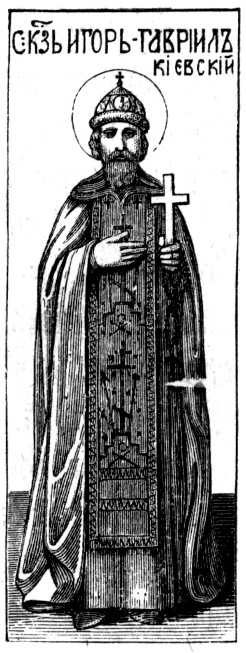
† Память о убиенном князе Игоре, Георгии, в иночестве Гаврииле, благоверном великом князе Киевском

† Commemoration of the murdered Prince Igor, George, in monasticism Gabriel, Right-believing Grand Prince of Kiev

E3.TAI draft
Engraving

Страдальческая смерть благов. князя Игоря была делом своеволия народного, воспитанного слабостями князей. Князь Игорь, сын Олега Святославича Черниговского, в крещении Георгий30, в 1146 г. вступил на престол великокняжеский, по смерти брата Всеволода. Хотя последний объявил его своим наследником, но воля Ольговича мало значила для России. – Ольговичей не любили, а дела Всеволода до того раздражали Киевлян, что только изворотливый ум Всеволода мог до времени удерживать возмущение. Потому вслед за тем, как Игорь вступил на престол, Киевляне просили в князя избавить их от тиунов Всеволода. Игорь обещал сменить грабителей-судей; но, не исполнив в скорости обещания, усилил неудовольствие народа. Киевляне тайно дали знать кн. Изяславу Мстиславичу, внуку любимого Мономаха, что они готовы признать его великим князем. Игорь знал опасность и требовал у родичей, князей Черниговских, помощи. Те торговались, требовали выгодных городов и удовлетворённые собрались на помощь. Но их медленность дала время заговорщикам обдумать и принять меры к исполнению плана. Потому, когда Игорь и его союзники приготовились к битве, вдруг увидели, что хоругвь Изяслава развевается в полках Киевских и Игорь остался с одними наёмными помощниками. После несчастной битвы пленный Игорь заключён был сперва в Выдубицкий монастырь, потом в оковах отослан в Переяславский Ивановский монастырь. – Так едва неделю пробыл он на великокняжеском престоле. Мечты власти исчезли. Лишённый всего, оставленный всеми, томимый оковами, Игорь обратился к себе самому, к своей вечности. В прошедшем мало было у него весёлых дней, но были и дела нелёгкие для совести. Брат Всеволод, восходя на Киевский престол (1139 г.), обещал Игорю Чернигов, а отдал двоюродному брату его Владимиру; Игорь не раз брался за оружие, чтобы отнять Чернигов у Владимира, но успеха не было. В 1141 г. он и брат Святослав настойчиво требовали у великого князя Черниговских волостей отказываясь от Киевской; хотели отнять у Вячеслава Переславль, обещанный им, – но были отражены; только блаженный Николай Святоша уговорил двоюродных братьев прекратить вражду; Игорю даны были три города на Днепре, в том числе Рогачев. В 1143 г. Игорь принимал участие в войне брата Всеволода с Галицким князем, – мир заключили на том условии, что Галицкий князь будет помогать Игорю в добывании Киева, по смерти Всеволода; через год – опять война с Галицким князем, по расчётам Ольговича Всеволода, не слишком дорожившего совестью31. – Так проходила жизнь в тревогах суеты, в ссорах и шуме военном, – грехи плодились. Из-за чего? В душе пусто и холодно. – Отец Игоря, известный Олег, не был наставником благочестия; но в числе ближайших родичей Игоря дяди Ярослав и Давид святой жизни, двоюродный брат Николай Святоша – высокий подвижник. Было у кого учиться и благочестию. Потому-то Игорь, даже в счастливое время, среди блеска и суеты, иногда желал расстаться с тревожным светом. Теперь, под тяжестью бед и скорбей, в душе его совершилась решительная перемена. Он горько каялся в грехах прошлых; скорби души кающейся в соединении с скорбями заключения темничного истощили силы его, и он поспешил просить себе милости – отречения от мира. – «Брат! я очень болен и прошу у тебя пострижения; хотел я того, когда ещё был князем; а теперь в нужде я сильно разболелся и не думаю, что останусь в живых»; так послал он сказать от себя великому князю. Изяслав сжалился и велел передать ему: «если была у тебя мысль о пострижении, то ты волен; а я тебя и без того выпускаю для твоей болезни». Его вынесли из темницы до того больного, что восемь дней не мог он ни пить, ни есть; но постриженный с именем Гавриила святителем Евфимием оздоровел; привезённый затем в Киевский Феодоровский монастырь, он просил игумена облечь его в схиму и стал жить для молитвы и труда. О его молитвенных подвигах говорит поздним потомкам икона Богоматери, перед которой молился он в последние дни свои. Блаженный Игорь расстался навсегда с миром и мечтами, но не расстались родичи его. Брат его Святослав не столько по любви к брату, сколько по расчётам власти и гордости, хотел во что бы то ни стало возвратить Игоря на престол великого князя. Ещё хуже были двоюродные братья Давидовичи. Сперва они положили отнять у двоюродных братьев их уделы и возбуждали в великом князе ненависть к Игорю. «Игорь зол и до тебя, и до нас, держи его крепко», говорили они Изяславу; а к Святославу послали сказать: «ступай вон из Новгорода Северского в Путивль». Началась кровопролитная война, в которую вовлекли Давидовичи и Изяслава. Война сперва шла счастливо для Давидовичей, но потом с помощью сильного Юрия Святослав приобретал победу за победой. Давидовичи переменили план действий. Они помирились с Ольговичем и хитростью хотели схватить и убить Изяслава. Коварные замыслы открылись. Изяслав, стоявший на Супое, послал бросить Давидовичам договорные грамоты; а Киевлянам дал знать о ковах Ольговичей и звал их на войну. Это было в 1147 г. Киевляне, собранные на вече, отвечали на зов любимого Мономаховича: «мы рады, что Бог сохранил тебя нам; идём за тобой все и с детьми». Но в это же время один из них сказал вслух: «мы готовы идти за князя, но прежде надобно решить другое дело: и при Изяславе Ярославиче злые люди выпустили из заточения Всеслава и поставили его князем себе, и зато много зла было нашему городу; теперь Игорь, враг нашего князя и нам, не в темнице, а в Феодоровском монастыре; убьём его и тогда пойдём к Чернигову за своим князем». Сотни голосов раздались: смерть Игорю, и народ бросился к монастырю. Брат Изяслава князь Владимир говорил им: «того брат мой не приказал вам; Игоря стерегут; пойдём к брату, как он велел нам». Киевляне отвечали: «мы знаем волю князя; но знаем и то, что добром не кончить с этим племенем ни вам, ни нам». – Напрасно удерживал их митрополит Климент. – «Не творите греха, дети, послушайтесь меня; иначе навлечёте на себя гнев Божий, а вражда между князьями не утолится», говорил он им. Они не хотели слушать ни его, ни тысяцкого, пошли к монастырю. – Владимир бросился на лошадь, чтобы мчаться туда же и спасти Игоря; но, принуждённый сделать большой крюк в пути, не мог и поспеть вовремя в монастырь, народ предупредил его. Игорь, стоявший в литургии, услыхал, чего хочет мятежная толпа. Он готовил себя ко всему мыслями о подвигах мучеников; потом пал в слезах и молился: «Господи! призри на немощь мою, чтобы, уповая на Тебя, мог я перенести всё; благодарю Тебя, что Ты смирил меня; удостой взять меня из этого мятежного и мрачного мира в Твой свет». Свирепые мятежники, не уважая святости храма Божия, ворвались в храм, схватили Игоря, сорвали с него мантию и повлекли из храма. – Игорь говорил им: «за что хотите вы убить меня как разбойника? Пусть вы нарушили клятву предо мной, – Бог вам простит; меня Он сподобил монашеского чина, и для меня довольно того». Мятежная толпа кричала: «убейте, убейте». С Игоря сорвали и подрясник, оставив в одной рубашке. «Несчастные! что вы делаете? Для меня – всё равно; наг я вышел из чрева, нагим и лягу в землю», говорил Игорь мятежным; но его повлекли к воротам. В это время подоспел Владимир. Игорь, увидав его, сказал: «брат! куда они ведут меня?» Владимир, соскочив с коня, разогнал толпу, одел Игоря своей епанчой32 и говорил Киевлянам: «братья мои! не делайте зла, не убивайте Игоря». Но толпа не слушала и начала бить Ольговича; Владимир также был осыпаем ударами; однако с помощью боярина Михаила успел он привести Игоря в дом матери своей и запер ворота. Но мятежники, избив Михаила, сорвав с него крест и цепь с золотой гривной, выломали ворота; увидав Игоря на сенях, разбили сени, стащили князя с них и повергли его без чувств на землю. Затем, привязав верёвку к ногам его, потащили с Мстиславова двора, на княж двор, к Десятинной церкви; отсюда, положив на попавшиеся дровни, повезли на Подол и бросили на площади. Так князь страдалец скончался 19 сентября 1147 г., в пятницу33.

The martyric death of the Right-believing Prince Igor was the work of popular willfulness, nurtured by the weaknesses of the princes. Prince Igor, son of Oleg Svyatoslavich of Chernigov, in baptism George30, ascended the throne of the Grand Prince in 1146, upon the death of his brother Vsevolod. Although the latter had declared him his heir, the will of an Olgovich meant little for Rus'. – The Olgovichi were not loved, and the deeds of Vsevolod had so irritated the Kievans that only the cunning mind of Vsevolod could for a time restrain rebellion. Therefore, as soon as Igor ascended the throne, the Kievans asked the prince to deliver them from Vsevolod's tiuns. Igor promised to replace the rapacious judges; but, not having fulfilled the promise quickly, he increased the people's displeasure. The Kievans secretly informed Prince Izyaslav Mstislavich, grandson of the beloved Monomakh, that they were ready to acknowledge him as Grand Prince. Igor knew the danger and demanded help from his kinsmen, the princes of Chernigov. They bargained, demanding advantageous cities, and, satisfied, gathered to help. But their slowness gave the conspirators time to devise and take measures for the execution of the plan. Therefore, when Igor and his allies prepared for battle, they suddenly saw that the banner of Izyaslav was waving in the Kiev regiments, and Igor was left with only his hired auxiliaries. After the unfortunate battle, the captive Igor was first confined in the Vydubitsky Monastery, then sent in chains to the Pereyaslavl Ivanovsky Monastery. – Thus he remained on the throne of the Grand Prince scarcely a week. The dreams of power vanished. Deprived of everything, abandoned by all, tormented by his chains, Igor turned to himself, to his own eternity. In the past he had few joyful days, but there were also deeds not easy for his conscience. Brother Vsevolod, ascending the Kiev throne (1139), promised Igor Chernigov, but gave it to his cousin Vladimir; Igor more than once took up arms to take Chernigov from Vladimir, but without success. In 1141, he and his brother Svyatoslav persistently demanded from the Grand Prince the Chernigov districts, refusing the Kiev one; they wanted to take from Vyacheslav Pereyaslavl, which had been promised them – but were repulsed; only the blessed Nicholas Svyatosha persuaded the cousins to end the enmity; Igor was given three towns on the Dnieper, including Rogachev. In 1143, Igor took part in his brother Vsevolod's war with the Galician prince – peace was concluded on the condition that the Galician prince would help Igor in obtaining Kiev upon Vsevolod's death; a year later – again war with the Galician prince, according to the calculations of the Olgovich Vsevolod, who did not value his conscience too highly31. – Thus life passed in the anxieties of vanity, in quarrels and the noise of war – sins multiplied. For what? The soul was empty and cold. – Igor's father, the notorious Oleg, was no teacher of piety; but among Igor's closest kinsmen were his uncles Yaroslav and David of holy life, and his cousin Nicholas Svyatosha – a great ascetic. There was someone from whom to learn piety. Therefore Igor, even in happy times, amidst splendor and vanity, sometimes desired to part with the troubled world. Now, under the weight of misfortunes and sorrows, a decisive change took place in his soul. He bitterly repented of the sins of the past; the sorrows of a penitent soul, combined with the sorrows of imprisonment, exhausted his strength, and he hastened to ask for mercy – renunciation of the world. – "Brother! I am very ill and ask you for tonsure; I desired it even when I was prince; but now in need I have fallen grievously ill and do not think I shall remain alive"; thus he sent word to the Grand Prince. Izyaslav took pity and ordered him to be told: "if you had the thought of tonsure, you are free; and I release you anyway because of your illness." He was carried out of the prison so ill that for eight days he could neither drink nor eat; but, tonsured with the name Gabriel by Hierarch Euthymius, he recovered; then, brought to the Kiev Theodore Monastery, he asked the abbot to clothe him in the schema and began to live for prayer and labor. His prayerful feats are testified to later descendants by the icon of the Mother of God before which he prayed in his last days. The blessed Igor parted forever with the world and its dreams, but his kinsmen did not part with him. His brother Svyatoslav, not so much out of love for his brother as out of calculations of power and pride, wanted at all costs to return Igor to the throne of the Grand Prince. Even worse were the cousins, the Davidovichi. At first they resolved to take away the appanages of their cousins and stirred up hatred in the Grand Prince against Igor. "Igor is evil toward you and toward us; keep him firmly," they said to Izyaslav; and to Svyatoslav they sent word: "get out of Novgorod-Seversk to Putivl." A bloody war began, into which the Davidovichi and Izyaslav were drawn. The war at first went favorably for the Davidovichi, but later, with the help of the powerful Yuri, Svyatoslav won victory after victory. The Davidovichi changed their plan of action. They made peace with the Olgovich and by cunning wanted to seize and kill Izyaslav. The treacherous designs were revealed. Izyaslav, standing on the Supoy, sent to throw the treaty charters at the Davidovichi; and he informed the Kievans of the intrigues of the Olgovichi and summoned them to war. This was in 1147. The Kievans, gathered at the veche, answered the summons of the beloved Monomakhovich: "we are glad that God has preserved you for us; we all go after you, with our children." But at the same time one of them said aloud: "we are ready to go for the prince, but first another matter must be settled: under Izyaslav Yaroslavich, evil men released Vseslav from captivity and set him up as prince for themselves, and much evil came to our city because of that; now Igor, the enemy of our prince and of us, is not in prison, but in the Theodore Monastery; let us kill him, and then we will go to Chernigov for our prince." Hundreds of voices rang out: death to Igor, and the people rushed to the monastery. Prince Vladimir, brother of Izyaslav, said to them: "my brother did not command you to do that; Igor is guarded; let us go to my brother, as he commanded us." The Kievans answered: "we know the prince's will; but we also know that you and we will not end well with this tribe." – In vain did Metropolitan Clement restrain them. – "Do not commit sin, children, listen to me; otherwise you will bring God's wrath upon yourselves, and the enmity between the princes will not be appeased," he said to them. They would not listen either to him or to the tysyatsky, and went to the monastery. – Vladimir rushed to his horse to gallop there as well and save Igor; but, forced to make a great detour on the way, he could not reach the monastery in time; the people forestalled him. Igor, standing at the Divine Liturgy, heard what the rebellious crowd wanted. He prepared himself for everything with thoughts of the feats of the martyrs; then he fell down in tears and prayed: "Lord! look upon my weakness, that, trusting in Thee, I may bear all; I thank Thee that Thou hast humbled me; vouchsafe to take me from this rebellious and gloomy world into Thy light." The savage rebels, respecting not the sanctity of the temple of God, burst into the church, seized Igor, tore off his mantle, and dragged him out of the church. – Igor said to them: "why do you want to kill me like a robber? Even if you have broken your oath to me – may God forgive you; He has vouchsafed me the monastic rank, and that is enough for me." The rebellious crowd cried: "kill him, kill him." They tore off Igor's inner cassock as well, leaving him in only a shirt. "Wretches! what are you doing? It is all the same to me; naked I came from the womb, naked I shall lie in the earth," said Igor to the rebels; but they dragged him to the gates. At that moment Vladimir arrived. Igor, seeing him, said: "brother! where are they leading me?" Vladimir, leaping from his horse, scattered the crowd, covered Igor with his own cloak32, and said to the Kievans: "my brothers! do no evil, do not kill Igor." But the crowd did not listen and began to beat the Olgovich; Vladimir also was showered with blows; yet with the help of the boyar Michael he managed to bring Igor into his mother's house and shut the gates. But the rebels, having beaten Michael, torn off his cross and chain with a golden grivna, broke down the gates; seeing Igor on the porch, they smashed the porch, dragged the prince down, and threw him senseless to the ground. Then, tying a rope to his feet, they dragged him from Mstislav's court, to the prince's court, to the Church of the Tithes; from there, placing him on a passing cart, they drove him to the Podol and threw him on the square. Thus the prince-martyr reposed on September 19, 1147, on a Friday33.
E3.0AI draft

Убийство совершилось и – начала утихать народная ярость. Видя окровавленного невинного страдальца, одни стали покрывать наготу его своими одеждами, другие брали кровь его на исцеление себе – от болезней. Тысяцкий Лазарь сказал народу: «вот вы убили Игоря, похороним же его теперь». Ему отвечали: «не мы его убили, но Ольгович и Давидовичи, потому что они умышляли убить нашего князя, и Бог защитил его». Тело святого князя отнесли в церковь святого Михаила, приходскую Новгородских купцов. – Здесь ночью явил Бог знамение: зажглись сами собой свечи над телом мученика. На утро в субботу митрополит послал Феодоровского игумена Ананию отпеть погребальное пение над князем в монастыре святого Симеона, построенном набожностью деда Игорева. Игумен облёк тело князя-инока в иноческие одежды и совершил погребальное пение34. Благочестивый игумен горько плакал и сказал вслух всем: «горе веку суетному и сердцам жестоким! Где любовь?» В то самое время загремел гром и затряслась земля и над церковью явился столп светлый. Народ в ужасе воскликнул: Господи, помилуй35.

The murder was accomplished and – the people's fury began to subside. Seeing the bloodied innocent sufferer, some began to cover his nakedness with their garments, others took his blood for their own healing – from illnesses. The tysyatsky Lazar said to the people: "behold, you have killed Igor; let us now bury him." They answered him: "it was not we who killed him, but the Olgovich and the Davidovichi, because they plotted to kill our prince, and God protected him." The body of the holy prince was taken to the church of St. Michael, the parish church of the Novgorod merchants. – There at night God showed a sign: candles lit by themselves over the body of the martyr. On the morning of Saturday, the Metropolitan sent the Theodore Monastery abbot Ananias to sing the funeral service over the prince in the monastery of St. Simeon, built by the piety of Igor's grandfather. The abbot clothed the body of the prince-monk in monastic garments and performed the funeral service34. The pious abbot wept bitterly and said aloud to all: "woe to the vain age and to cruel hearts! Where is love?" At that very moment thunder roared and the earth shook, and a pillar of light appeared above the church. The people cried out in terror: Lord, have mercy35.

E3.1AI draft

В 1148 г. Черниговские князья послали сказать Изяславу: «так как Игорь убит, пошёл к Богу, где и всем нам быть, то Бог всех нас и рассудит». Изяслав согласился на мир. И однако князь Георгий Долгорукий заставил Изяслава бежать из Киева на Волынь36. В 1150 г. «князь Святослав Ольгович перенёс мощи брата своего Игоря в Чернигов и их положили у Святого Спаса в тереме». Это было 5 июля37. – С того времени стали праздновать «память благоверного князя Игоря»38. – Икона Божией Матери, перед которой молился блаженный князь-инок, ныне находится в великой церкви Печерской лавры39.

In 1148, the princes of Chernigov sent word to Izyaslav: "Since Igor has been killed and has gone to God, where we all shall be, may God judge us all." Izyaslav agreed to peace. And yet Prince George Dolgoruky forced Izyaslav to flee from Kiev to Volhynia36. In 1150, "Prince Svyatoslav Olgovich translated the relics of his brother Igor to Chernigov, and they placed them at the Church of the Holy Savior in the chamber." This was on July 537. – From that time they began to celebrate "the memory of the Right-believing Prince Igor"38. – The Icon of the Mother of God before which the blessed prince-monk prayed is now in the great church of the Kiev-Pechersk Lavra39.

E3.2AI draft

«Всякая душа да будет покорна высшим властям: ибо нет власти не от Бога, а существующие власти от Бога учреждены. Посему противящийся власти противится Божию постановлению, а противящиеся подвергнутся осуждению» (Рим.13:2). Таково заключение жития святого князя Игоря!

"Let every soul be subject to the higher authorities: for there is no authority except from God, and the authorities that exist are established by God. Therefore whoever resists the authority resists the ordinance of God, and those who resist will bring judgment on themselves" (Rom. 13:2). Such is the conclusion of the life of the holy Prince Igor!

E3.3AI draft

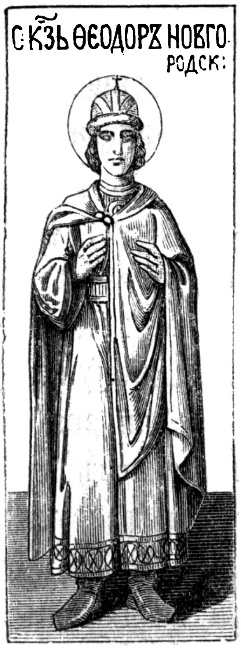
† Преставление благоверного князя Феодора Ярославича

† The Repose of the Right-believing Prince Theodore Yaroslavich

E4.TAI draft
Engraving

Святый князь Феодор был старший сын князя Ярослава Всеволодовича, родившийся в 1219 г. По летописям он и младший брат его Александр в 1228 г. оставлены были отцом в Новгороде, как представители его власти. И не прошло года, как поднявшийся мятеж принудил их тайно уехать к отцу; в конце 1230 г. Ярослав снова призван был Новгородцами и опять оставил у них княжить Феодора и Александра. В этот раз в Новгороде была жизнь весьма тяжёлая. Страшный голод и мор истребляли людей; а страшный пожар опустошил почти половину города. В 1232 г. юный князь Феодор должен был отправиться на войну. Великий князь Георгий посылал тогда сына своего Всеволода против Мордвы. – Князь Феодор Ярославич и князья Рязанский и Муромский участвовали в походе Всеволода против мятежных дикарей. В следующем году видим Феодора опять в Новгороде. Юный князь, по воле отца, должен был вступить здесь в брак; для него уже готова была невеста и гости собрались и пир был готов. Но не свадебным весельем окончились приготовления, а плачем погребальным: жених скончался. Это было 5 июня 1233 г.40. Тело юного князя положено было в Юрьеве монастыре41. В 1614 г. во время нашествия Шведов, ругавшихся над всем святым, гроб святого князя был вынут и открыт наглыми солдатами Шведскими. По известию 1634 г. «Немцы в церкви великомученика Георгия, в монастыре, ищущи поклажи, обрели человека цела и неразрушима в княжеском одеянии и, вынув из гробницы яко жива, поставили у церковной стены42. Митрополит Исидор, услышав о том, выпросил у Делагардия дозволение перенести гроб в Новгородский Софийский собор; в это время не только оказались нетленными мощи девственного князя, но они источили исцеления. Святые мощи с того времени покоятся открыто при входе в приделе святого Предтечи43.

The holy Prince Theodore was the eldest son of Prince Yaroslav Vsevolodovich, born in 1219. According to the chronicles, he and his younger brother Alexander were left by their father in Novgorod in 1228 as representatives of his authority. And not a year had passed before a rebellion that arose forced them to flee secretly to their father; at the end of 1230, Yaroslav was again summoned by the Novgorodians and again left Theodore and Alexander to reign in Novgorod. This time life in Novgorod was very grievous. A terrible famine and pestilence destroyed the people; and a terrible fire devastated nearly half the city. In 1232, the young Prince Theodore had to go to war. Grand Prince George then sent his son Vsevolod against the Mordvins. – Prince Theodore Yaroslavich and the princes of Ryazan and Murom took part in Vsevolod's campaign against the rebellious savages. The following year we see Theodore again in Novgorod. The young prince, by his father's will, was to enter into marriage there; a bride was already prepared for him, and guests had gathered, and the feast was ready. But the preparations ended not with wedding joy, but with funeral lamentation: the bridegroom reposed. This was on June 5, 123340. The body of the young prince was placed in the Yuriev Monastery41. In 1614, during the invasion of the Swedes, who mocked everything holy, the coffin of the holy prince was taken out and opened by insolent Swedish soldiers. According to a report from 1634, "the Germans, in the church of the Great Martyr George in the monastery, seeking treasure, found a man whole and incorrupt in princely attire, and taking him out of the tomb as if alive, they set him against the church wall42. Metropolitan Isidore, hearing of this, obtained permission from De la Gardie to translate the coffin to the Novgorod Cathedral of St. Sophia; at that time, not only were the relics of the virgin prince found incorrupt, but they also poured forth healings. The holy relics have since reposed openly at the entrance in the side-chapel of St. John the Forerunner43.

E4.0AI draft

«Будьте же и вы готовы; ибо, в который час не думаете, придёт Сын Человеческий» (Лк.12:40). «Со страхом и трепетом старайтесь о своём спасении» (Флп.2:12).

"Be you therefore ready also: for the Son of Man comes at an hour when you think not" (Lk. 12:40). "Work out your own salvation with fear and trembling" (Phil. 2:12).

E4.1AI draft

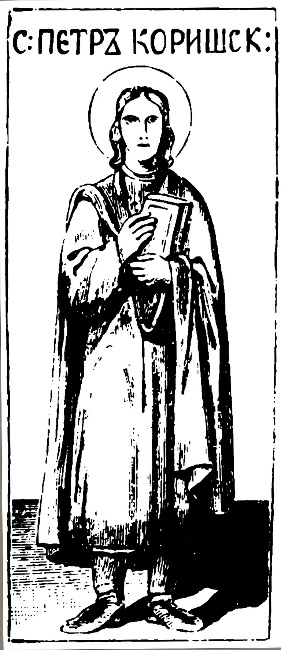
† Память о святом Петре Коришском

† The Memory of St. Peter of Koriš

E5.TAI draft
Engraving

В рукописи Рыльского монастыря читается житие преподобного Петра, в Коришской горе44.

In the manuscript of the Rila Monastery, the life of the Venerable Peter of Mount Koriš is read44.

E5.0AI draft

Не имея в руках сего жития, ограничиваемся сведениями о святом Петре Коришском, собранными недавним путешественником в местах подвигов святого Петра.

Not having this life in hand, we limit ourselves to information about St. Peter of Koriš gathered by a recent traveler to the places of St. Peter's ascetic labors.

E5.1AI draft

«По страшной трущобе, пишет путешественник, ехали мы более получаса, краем горы Мравиница, то поднимаясь, то опускаясь, и добрались наконец до площадки, образуемой скалами над глубоким ущельем. Здесь был выстроен Коришский монастырь. Он давно запустел и само село Кориша, расположенное несколько выше, в горах, перешло в руки Арнаутов, мусульман. Место, в котором спасался юный отшельник, святой Пётр Коришский, по своему уединению, по страшной пропасти и грозным скалам, которыми оно окружено, напоминает ту обитель, где теперь покоится тело его, Чернорецкий монастырь... Мы вошли в небольшую пещеру, в которой святой Пётр устроил церковь. В ней ещё довольно хорошо сохранился написанный на скале образ Спасителя; подле образа мы могли прочесть слова:

"Through a terrible thicket," writes the traveler, "we rode for more than half an hour along the edge of Mount Mravinitsa, now ascending, now descending, and finally reached a platform formed by rocks above a deep gorge. Here the Koriš Monastery was built. It had long been deserted, and the very village of Koriš, situated somewhat higher in the mountains, had passed into the hands of the Arnauts, Muslims. The place where the young hermit, St. Peter of Koriš, saved himself, by its solitude, by the terrible abyss and the grim rocks that surround it, recalls that monastery where his body now reposes, the Crna Reka Monastery... We entered a small cave in which St. Peter had built a church. In it, the image of the Savior painted on the rock is still fairly well preserved; next to the image we could read the words:

E5.2AI draft

«неимать

"He shall not

E5.3AI draft

ходити

walk

E5.4AI draft

в тме».

in darkness."

E5.5AI draft

Вблизи от этой пещеры находится другая ниже, но длиннее, в которой, как говорят, постился отшельник и в которой потом устроена была также церковь... несколько далее стоят развалины величественного здания. Царь Душан (1337–1351), чтобы почтить достойно память святого юноши, которого он знал и любил, вскоре после его смерти решился выстроить подле его пещеры большую великолепную церковь; но как было поместить её на склоне горы, где природа образовала лишь несколько небольших уступов и узких площадок? Душан смело бросил аркаду в глубину ущелья и на аркаде основал церковь. Арки стоят ещё почти невредимо, но церковь мусульмане разрушили; только уцелел большой кусок одной из стен, и именно той, которая стоит над самой пропастью, не примыкая к горе. На ней видны ещё образа, написанные в три ряда, один над другим»45. В другом месте тот же путешественник пишет: «в Чернорецкой церкви стоит рака с мощами юноши, святого Петра Коришского, который (кажется, во время Душана) вёл постническую жизнь в горах, близ Призрена. Когда была разрушена церковь, им там устроенная; то люди из села Брияки в Колашине, принадлежавшие к роду Косачи, перенесли его мощи в соседнюю с их селом церковь святого Архангела, построенную святым Иоанникием, и положили их тут. В раке хранилась и книга, которую святой Пётр Коришский, как рассказывают, всегда носил с собой; книга была ещё цела в прошлом году»46.

Near this cave there is another, lower but longer, in which, they say, the hermit fasted and in which a church was later also built... a little further stand the ruins of a majestic building. Tsar Dušan (1337–1351), wishing to worthily honor the memory of the holy youth whom he had known and loved, decided soon after his death to build a large magnificent church next to his cave; but how could it be placed on the slope of the mountain, where nature had formed only a few small ledges and narrow platforms? Dušan boldly threw an arcade into the depth of the gorge and founded the church on the arcade. The arches still stand almost undamaged, but the Muslims destroyed the church; only a large piece of one wall survived, and that one which stands over the very abyss, not adjoining the mountain. On it, images are still visible, painted in three rows, one above the other"45. In another place the same traveler writes: "In the Crna Reka church stands a reliquary with the relics of the youth, St. Peter of Koriš, who (it seems, in the time of Dušan) led an ascetic life in the mountains near Prizren. When the church he had built there was destroyed, people from the village of Briyaki in Kolašin, who belonged to the Kosača clan, translated his relics to the neighboring church of the Holy Archangel, built by St. Joannicius, and placed them there. In the reliquary was also kept a book which, as they say, St. Peter of Koriš always carried with him; the book was still intact last year"46.

E5.6AI draft

Святых мучеников Маркиана, Леонида, Аполлона

The Holy Martyrs Marcian, Leonides, Apollo

E6.TAI draft

Святых мучениковМаркиана, Леонида, Аполлона и других семи с ними, за исповедание имени Христова уморенных голодом и жаждой в Египте, в царствование Максимина (308–312 г.).

The holy martyrs Marcian, Leonides, Apollo and seven others with them, who were put to death by hunger and thirst in Egypt for confessing the name of Christ, in the reign of Maximinus (308–312 A.D.).

E6.0AI draft

Примечания Notes

Поучение аввы Дорофея (10) о целомудрии и треэвенном прохождении пути Божия. Христ. Чт. 1830 г.

Instruction of Abba Dorotheus (10) on chastity and the sober pursuit of the path of God. Christian Reading, 1830.

N29AI draft

В помяннике Елецкого монастыря: «кн.Георгия убиенного в Киеве»; в Любецком Синодике: «в. кн. Георгия Киевского, во иноцех Гавриила». – По летописям неизвестно ни имя крещения, ни имя иноческое св. кн. Игоря, – Хавский: «святый Игорь, он и Давид, Олегович» (см. Архангельский собор, стр. 11. М. 1862 г.). С чего это взято? Г. Хавский считает св. Игоря за одно с блаж. княз. Черниг. Давидом, современником св. еписк. Феоктиста (см. 6 авг.), потому что сей Давид восхваляется в степ. кн.; но блаж. кн. Давид был дядя св. кн. Игоря и сконч. в 1123 г.

In the diptych of the Yelets Monastery: "Prince George slain in Kiev"; in the Liubech Synodicon: "Grand Prince George of Kiev, in monasticism Gabriel." – According to the chronicles, neither the baptismal name nor the monastic name of St. Prince Igor is known. – Khavsky: "St. Igor, also David, Olgovich" (see the Archangel Cathedral, p. 11. M. 1862). From what is this taken? Mr. Khavsky identifies St. Igor with the blessed Prince of Chernigov David, a contemporary of St. Bishop Theoctistus (see August 6), because this David is praised in the Book of Degrees; but the blessed Prince David was the uncle of St. Prince Igor and reposed in 1123.

N30AI draft

Летописи у Погодина; исслед. VI, 73. 74.

Chronicles in Pogodin; Investigations VI, 73. 74.

N31AI draft

Владимир «сскочи с коня и огну и коръзном». См. «Русские святые» июня 31, пр. 218.

Vladimir "leaped from his horse and covered him with a cloak." See "Russian Saints" June 31, note 218.

N32AI draft

Степен. кн. I, 276: «убиша сент. в 9 день». Киев. л.: «к Богу отъиде сент. в 19 д. в пяток». Собр. л. II. 34. По Никон. л. (Собр. л. IX, 176): «убиен же бы в пяток». Соф. лет. (Собр. л.5:159): «убиша мес. сент. в 19 день». Пятница 1147 г. была 19, а не 9 сентября.

Book of Degrees I, 276: "he was slain on September 9." Kiev Chronicle: "he departed to God on September 19, on Friday." Collection of Chronicles II, 34. According to the Nikon Chronicle (Collection of Chronicles IX, 176): "he was slain on Friday." The Sophia Chronicle (Collection of Chronicles 5:159): "they slew him on the month of September on the 19th day." Friday in 1147 was the 19th, not the 9th of September.

N33AI draft

Собр. л. 2, 22–24. 32. 33. I, 136–138. Карамз. 2, пр. 398.

Collection of Chronicles 2, 22–24. 32. 33. I, 136–138. Karamzin 2, note 398.

N34AI draft

Степ. кн. I. 268. Ч.-мин. и пролог 5 июня.

Book of Degrees I, 268. Menology and Prologue for June 5.

N35AI draft

Собр. л. 2, 34–45. 53. «Везе на конец града в монастырь святому Симеону... Перенес. мощи – Игоря от святого Семена из Копырева конца». Копырев конец – между гор. Киселевкой и Скавицей, близ Константиновской улицы.

Collection of Chronicles 2, 34–45. 53. "He brought him to the end of the city, to the monastery of St. Simeon... He translated the relics of Igor from St. Simeon's from the Kopirev End." Kopirev End – between Mount Kiselevka and Skavitsa, near Konstantinovskaya Street.

N36AI draft

Собр. л. 2, 53. Ч.-мин. 5 июня.

Collection of Chronicles 2, 53. Menology for June 5.

N37AI draft

В сборнике XV в. у Румянцева № 406: «с вама же (Антонием и Феодосием) честно ублажаем князя Игоря приемша честно мучение, принесшаго жертву чисту Богови. Аще бо укоряюще Киане взложиша на (нь) честный черноризский образ: и в том въсприя нетленны венец, без укорныя славы сподобиша и себе же мукы вечныя».

In a 15th-century collection at Rumyantsev No. 406: "With them (Anthony and Theodosius) we honorably bless Prince Igor, who received honorable martyrdom, offering a pure sacrifice to God. For though the Kievans reproachfully placed upon him the honorable monastic habit, yet in it he received an incorruptible crown, and they were deprived of blameless glory and obtained for themselves eternal torments."

N38AI draft

Святыня Киева, стр. 20. К. 1850. Снимок у Фундуклея.

The Sanctity of Kiev, p. 20. K. 1850. Facsimile in Funduklei.

N39AI draft

Собр. л. 3, 43. 44–49. I, 196. 220.

Collection of Chronicles 3, 43. 44–49. I, 196. 220.

N40AI draft

Труды общ. ист. 3, 1, стр. 169–171, где выписки из летописей о месте погребения св. князя и его матери. – Владимирский сборник (М. 1857 г., стр. 78) повторяет старую ошибку, – вслед за скудными последователями смысла скудного.

Transactions of the Society of History 3, 1, pp. 169–171, where extracts from the chronicles about the place of burial of the holy prince and his mother. – The Vladimir Collection (M. 1857, p. 78) repeats the old error, following the meager followers of a meager understanding.

N41AI draft

Чтен. Общ. ист. 1862 г., кн. 4.

Readings of the Society of History, 1862, book 4.

N42AI draft

Опис. Румянц. муз., стр. 352. Надпись у Карамз. 4, пр. 39. След. псалтырь. Опис. Новг. Соф. соб., стр. 104.

Description of the Rumyantsev Museum, p. 352. Inscription in Karamzin 4, note 39. Following Psalter. Description of the Novgorod St. Sophia Cathedral, p. 104.

N43AI draft

Григоровича путешествие, стр. 187.

Grigorovich's Journey, p. 187.

N44AI draft

Гильфердинг в зап. геогр. общ. XIII, 217–219.

Hilferding in the Notes of the Geographical Society XIII, 217–219.

N45AI draft

Там же, стр. 162.

Ibid., p. 162.

N46AI draft