За обращение язычников в христианство претерпел истязания от игемона Иулиана в Сарде Ливийской, Синаоне Фригийском и Анкире Галатской; скончался в области Фракийской в Лидии, близ реки Ермы, при Валериане, в 259 г., после многих истязаний – отсечением главы. Между прочими истязаниями он был привязан к четырём сухим кольям, вбитым в землю, и в таком положении ему наносили такие удары, что кости его обнажились и земля облита была его кровью. Колья те прозябли, произрастили ветви и листья и сохранились в виде деревьев, листья которых источали чудные исцеления...
For converting pagans to Christianity, he endured tortures from the hegemon Julian in Sardis of Libya, Synaus of Phrygia, and Ancyra of Galatia; he died in the Thracian region at Lydia, near the river Hermus, under Valerian, in the year 259, after many tortures—by beheading. Among other torments, he was bound to four dry stakes driven into the ground, and in this position he was struck such blows that his bones were laid bare and the earth was drenched with his blood. Those stakes sprouted, put forth branches and leaves, and were preserved as trees, whose leaves worked wondrous healings...
Не было пределов изощрению истязаний, которым подвергались мученики за веру Христову. Но ни перед чем не уступало их мужество. Господь бодрствовал над ними и проявлял чудное хранение там, где испытание превышало меру сил человеческих. Так и Феодору, молодую, прекрасную девицу знатного рода – защитил Он, когда слепое, беспощадное озлобление посягало на святейшую из святынь – её девическую честь...
There were no limits to the refinement of tortures to which the martyrs for the Christian faith were subjected. But their courage yielded before nothing. The Lord watched over them and manifested a wondrous protection where the trial exceeded the measure of human strength. Thus also Theodora, a young, beautiful maiden of noble birth—He protected her when blind, merciless malice assailed the most sacred of sanctities—her maidenly honor...
Преданная в жертву насилию за то, что твёрдо исповедовала веру в Евангельскую истину, Феодора была чудно избавлена от предстоявшего ей бедствия христианином – воином Дидимом, который, смело пробившись через толпу в позорный дом, куда насильно привели мученицу, предложил ей, переменившись с ним одеждой, скрыться под видом воина, а сам остался здесь вместо неё...
Given over as a victim to violence because she firmly confessed her faith in the Gospel truth, Theodora was miraculously delivered from the calamity that awaited her by a Christian—the soldier Didymus, who, boldly forcing his way through the crowd into the house of shame where the martyr had been forcibly brought, proposed that she, exchanging clothes with him, should escape in the guise of a soldier, while he himself remained there in her stead...
Итак, не имевшую другого оружия, кроме молитвы – Господь защитил. Но когда обнаружился святой обман Дидима, то он был осуждён на смертную казнь. Узнав об этом, Феодора не пожелала быть виновницей его смерти и стала убеждать Дидима, что он не должен умирать за неё и что она сама должна и желает принять мученическую смерть за Христа. Но и Дидим не пожелал отказаться от мученического венца...
Thus, she who had no other weapon but prayer—the Lord protected her. But when the holy deception of Didymus was discovered, he was condemned to death. Learning of this, Theodora did not wish to be the cause of his death and began to persuade Didymus that he ought not to die for her and that she herself must and desired to suffer martyrdom for Christ. But Didymus likewise did not wish to renounce the martyr's crown...
– Если так, то всё же пусть я первая пойду под меч, – продолжала убеждать Дидима Феодора, – а ты после меня будь мучеником Христовым... Останься ты после меня, но не я после тебя... Ты сохранил меня от гибели, которая снова может предстоять мне... Предпошли же меня чистой ко Христу...
"If it be so, then let me at least be the first to go under the sword," Theodora continued to persuade Didymus, "and you, after me, be a martyr of Christ... Let you remain after me, but not I after you... You preserved me from destruction, which may again confront me... Send me on first, pure, to Christ..."
– Возлюбленная сестра! – возразил Дидим, – Господь, сохранивший тебя однажды чистой, может и всегда сохранить тебя, но не препятствуй мне, осуждённому на смерть, умереть за Христа и кровью моей омыть себя от грехов...
"Beloved sister!" Didymus replied, "The Lord, who once preserved you pure, can preserve you always, but do not hinder me, condemned to death, from dying for Christ and washing away my sins with my blood..."
Этот святой спор был прерван повелением преследователя христиан – отрубить им обоим головы... Св. Феодора первая преклонила под меч свою голову, а за ней принял смерть и Дидим. Тела их обоих были брошены в огонь.
This holy dispute was cut short by the order of the persecutor of Christians—to cut off both their heads... St. Theodora was the first to bow her head under the sword, and after her Didymus also received death. Both their bodies were cast into the fire.
Пришелец из Сирии, последовавший за великим учителем Иоанном Зедазнийским (пам. 7-го мая), с ним вместе пришёл в Иверию, в столицу её – Мцхет. Когда же Иоанн разослал учеников своих проповедовать Евангелие по разным странам, то Давид, по благословению Иоанна, избрал себе поприщем Тифлис (Тбилиси) и поселился в убогой пещере на полугоре, ныне называемой Мтацминдскою или Святой горой. Впоследствии Давид, вместе с учеником своим Лукианом, удалился в пустыню Гареджийскую (в 60-ти верстах от Тифлиса – на восток по левому течению Куры). Здесь, возложив надежду на Единого Бога, питавшего Израиля в пустыне, выбрали они место «прекрасное, безмятежное», но совершенно неудобное для жизни, «изобилующее недостатками и нуждами для телесного подкрепления», довольствовались одними корнями растений для удовлетворения голода, одной дождевой водой – для удовлетворения жажды; но когда зной, а потом мороз лишили их того и другого, и Лукиан стал унывать, Давид не поколебался в надежде на чудное промышление о людях всемогущего Бога, и действительно, в пустыню к отшельникам прибежали три самки оленей с оленятами, молоком которых и стали они пропитываться... «Да ядят бедные и насыщаются; да восхвалят Господа ищущие Его; да живут сердца ваши во веки!» (Пс.21:27) воспели отшельники вместе с царём Давидом в умилении благодарной души...
A stranger from Syria, who followed the great teacher John of Zedazeni (commemorated on the 7th of May), he came with him to Iberia, to its capital—Mtskheta. When John sent his disciples to preach the Gospel in various lands, David, with John's blessing, chose Tiflis (Tbilisi) as his field and settled in a humble cave on the hillside, now called Mtatsminda or the Holy Mountain. Later, David, together with his disciple Lucian, withdrew into the Gareji desert (60 versts from Tiflis—to the east along the left bank of the Kura). Here, placing their hope in the One God who fed Israel in the wilderness, they chose a place "beautiful, serene," but utterly unsuitable for life, "abounding in deficiencies and needs for bodily sustenance," contenting themselves with plant roots to satisfy hunger, and with rainwater alone to quench thirst; but when the heat, and then the frost, deprived them of both, and Lucian began to despair, David did not waver in his hope for the wondrous providence of almighty God for men, and indeed, three female deer with their fawns ran into the desert to the hermits, and they began to sustain themselves on their milk... "Let the poor eat and be filled; let those who seek the Lord praise Him; let your hearts live forever!" (Ps. 21:27) the hermits sang together with King David in the tenderness of a grateful soul...
Однажды, охотясь за зверями, зашли сюда охотники и, поражённые чудной жизнью отшельников, они разнесли молву о них среди окрестных жителей; тогда стали приходить сюда и поселяться любители безмолвия, которые постепенно образовали здесь 12 монастырей429. Решаясь поселиться здесь, чтобы подвизаться под руководством Давида, они должны были иссечь себе пещеры для жительства и вырыли колодцы – искусственные, в которые были спущены для дождевой воды каналы по направлению от высоких горных кряжей, окружающих пустыню, вниз в колодцы или каменные ямы. По прошествии нескольких лет, когда было устроено благосостояние всех обителей, Давид решился исполнить постоянное желание своё – посетить Иерусалим для поклонения св. местам. Поручив управление обителями Лукиану и пресвитеру Додо (пам. его 23-го мая), старец, с некоторыми учениками своими, отправился в путь. Когда они дошли до высот, с которых открылся перед ними Иерусалим, сердце Давида преисполнилось страха и трепета… – «Как дерзну я, – говорил он со слезами, – грешными стопами моими попирать следы ног Богочеловека» ... и, отпустив своих учеников, как более, чем он, достойных поклониться святым местам, сам Давид, в виду св. храма Гроба Господня, взял три камня со Святой земли и пошёл обратно... Но не утаилось от мира такое высокое смирение подвижника. По откровению, бывшему о нём в сонном видении Илии, патриарху Иерусалимскому, отправлены были посланные от патриарха, которые догнали его на пути и которым возвратил он два камня, взятые им со Св. земли, третий же Давид оставил у себя, по разрешению патриарха, «чтобы он отнёс его, как благодать, в свою пустыню, для памяти и извещения веры его» ... Слух о таком чудном происшествии разнёсся по всему Иерусалиму и окрестностям его. Давид же возвратился в свою пустыню, принеся камень с собой, который и теперь сохраняется на гробе его и источает благодатную силу исцелений всем с верою приходящим поклониться святому.
Once, while hunting for wild beasts, hunters came upon this place and, struck by the wondrous life of the hermits, they spread word of them among the neighboring inhabitants; then lovers of silence began to come here and settle, gradually forming 12 monasteries429. Resolving to settle here in order to struggle under David's guidance, they had to hew out caves for their dwelling and dug wells—artificial ones, into which channels were laid for rainwater, directed from the high mountain ridges surrounding the desert, down into the wells or stone pits. After several years, when the welfare of all the monasteries had been established, David resolved to fulfill his constant desire—to visit Jerusalem to venerate the holy places. Entrusting the governance of the monasteries to Lucian and the presbyter Dodo (his commemoration is on the 23rd of May), the elder, with some of his disciples, set out on the journey. When they reached the heights from which Jerusalem opened before them, David's heart was filled with fear and trembling... "How dare I," he said with tears, "tread with my sinful feet upon the footprints of the God-man's feet"... and, sending his disciples on as more worthy than he to venerate the holy places, David himself, in sight of the holy church of the Lord's Tomb, took three stones from the Holy Land and turned back... But such lofty humility of the ascetic did not remain hidden from the world. By a revelation concerning him in a dream-vision to Elias, the Patriarch of Jerusalem, messengers were sent by the patriarch, who overtook him on the way and to whom he returned two of the stones he had taken from the Holy Land; the third stone David kept for himself, with the patriarch's permission, "that he might carry it, as a blessing, into his desert, for remembrance and as a testimony of his faith"... The rumor of such a wondrous event spread throughout Jerusalem and its environs. David returned to his desert, bringing the stone with him, which is still preserved on his grave and pours forth the gracious power of healings to all who come with faith to venerate the saint.
Вскоре по возвращении, св. Давид получил во сне извещение о близкой кончине своей. Призвав братию, преподал он им спасительные наставления, потом, отслушав литургию, причастился св. Таин и на коленях, простёрши к небу руки, мирно скончался – в половине VI века. – Пустыня его прославилась и ещё многими святыми и чудотворцами.
Soon after his return, St. David received a revelation in a dream of his approaching end. Summoning the brethren, he gave them salvific instructions; then, having heard the Divine Liturgy, he partook of the Holy Mysteries and, on his knees, stretching his hands toward heaven, peacefully reposed—in the middle of the 6th century. His desert was glorified also by many other saints and wonderworkers.
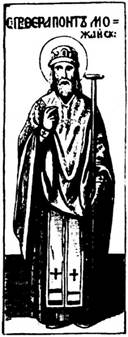
Преп. Ферапонт, в мире Феодор, происходил из рода дворян Поскочиных и родиной его был Волоколамск430. С юного возраста исполненный страха Божия, он думал только о том, как бы избавиться ему от мятежного мира. Он любил беседовать о благочестии и молил Господа – сподобить его ангельского жития. Избрав благоприятное время, он тайно ушёл из родительского дома и в Симоновой обители упросил настоятеля постричь его в иночество. Здесь с полным послушанием выполнял он чёрные работы и вместе с тем всегда бывал на бдениях храма и на молитве келейной. Тайные помыслы свои искренно открывал он старцу своему и тем соблюдал чистоту душевную и телесную. По временам слушал он наставления преп. Сергия. Настоятель, заметив его способности и усердие к выполнению послушаний, делал ему разные поручения, между прочим послал и в дальнюю Белозерскую сторону. С странническим посохом ходил он по пустынной Белозерской стороне и пленился тишиной лесов её. Возвратясь в Симонову обитель, он принёс с собой жажду уединения пустынного. Преподоб. Кирилл в это время жил уже на старом Симонове, в уединении. Стремясь душой к более глубокой тишине, спросил он Ферапонта: есть ли на Белом озере место, где бы можно было безмолвствовать иноку? Ферапонт отвечал, что их там много, и оба согласились тайно идти в пустынную сторону. Кирилл нашёл здесь место, указанное ему в видении: оба водрузили крест и выкопали землянки для жилища. Однако Ферапонт не долго пробыл с Кириллом и удалился за 15 вёрст, на место прекрасное, между двух озёр, для пребывания наедине с Господом431. Здесь расчистил он землю для насаждения овощей и, по преданию отцов пустынных, прогонял уныние безмолвия то трудом, то молитвой и бдением; не мало ему пришлось испытать страха и от разбойников, которые не терпя праведника близ себя, гнали его из пустыни. К нему стали приходить люди с желанием делить пустынные подвиги его. По их просьбе построил он храм в честь Рождества Богоматери и учредил общежитие. Это было в 1398 г. Прибытие старца иеромонаха обрадовало преподобного, так как сам он не хотел принять на себя ни старейшинства, ни иеромонашества. Он по-прежнему подвизался в тяжких работах, не упуская церковной службы и правила келейного. По временам ходил он для духовных бесед к преп. Кириллу. Братство его умножалось и пример преподобного одушевлял всех любовью к суровым подвигам. Люди зажиточные стали наделять обитель подаяниями. Братия просили преподобного, чтобы принял на себя управление обителью; преподобный говорил: «не я оградил это место, а Пречистая Богородица: Она и может наставить вас на всё полезное». Видя твёрдое нежелание старца принять на себя настоятельство над ними, они избрали себе игумена. Для всех, однако, преподобный оставался отцом и наставником. К нему в келью приходили за советами в смущениях душевных. По его мыслям располагалось всё в обители. Никто не смел держать в кельи что-нибудь, кроме икон святых, назидательных книг и орудий простого рукоделия. Братия занимались то списыванием книг, то плетением мрежей для ловли рыбы. В храме и трапезе наблюдалась глубокая тишина. Князь Андрей Дмитриевич Можайский, которому принадлежала и Белозерская страна, услышав о новой обители в его пустынной отчине, пожаловал новой обители землю и озёра, прислал утвари для храма её и просил молить за него432. Так «сей нищий воззва и Господь услыша и от всех скорбей его спасе» (Пс.33:7).
The Venerable Therapontus, in the world Theodore, was descended from the noble family of Poskochins and his birthplace was Volokolamsk430. From a young age, filled with the fear of God, he thought only of how he might deliver himself from the rebellious world. He loved to converse about piety and prayed to the Lord to grant him the angelic life. Choosing a favorable time, he secretly left his parental home and in the Simonov Monastery besought the abbot to tonsure him into monasticism. Here, with complete obedience, he performed menial labors and at the same time was always present at the vigils of the church and at cell prayer. He sincerely revealed his secret thoughts to his elder and thereby preserved purity of soul and body. At times he listened to the instructions of the Venerable Sergius. The abbot, noticing his abilities and zeal for fulfilling obediences, gave him various assignments, among other things sending him to the distant Beloozero region. With a pilgrim’s staff he walked through the desolate Beloozero region and was captivated by the silence of its forests. Returning to the Simonov Monastery, he brought with him a thirst for desert solitude. The Venerable Cyril at that time was already living at Old Simonovo, in seclusion. Striving in soul for deeper stillness, he asked Therapontus: “Is there a place on the White Lake where a monk could keep silence?” Therapontus replied that there were many such places, and both agreed to go secretly to the desert region. Cyril found there a place shown to him in a vision: both set up a cross and dug dugout cells for dwelling. However, Therapontus did not remain long with Cyril and withdrew 15 versts away, to a beautiful place between two lakes, to abide alone with the Lord431. There he cleared the land for planting vegetables and, according to the tradition of the desert fathers, drove away the despondency of silence now by labor, now by prayer and vigil; he had no little experience of fear also from robbers, who, unable to bear a righteous man near them, drove him from the desert. People began to come to him, desiring to share his desert struggles. At their request, he built a church in honor of the Nativity of the Mother of God and established a cenobitic community. This was in 1398. The arrival of an elder hieromonk rejoiced the venerable one, since he himself did not wish to take upon himself either eldership or the hieromonastic rank. He continued to struggle in heavy labors, not neglecting church services and the cell rule. At times he went for spiritual conversations to the Venerable Cyril. His brotherhood increased, and the example of the venerable one inspired all with love for severe ascetic feats. Wealthy people began to endow the monastery with alms. The brethren asked the venerable one to take upon himself the governance of the monastery; the venerable one said: “It is not I who have fenced this place, but the Most Pure Theotokos: She can also guide you to all that is profitable.” Seeing the elder’s firm unwillingness to accept the abbacy over them, they chose an abbot for themselves. For all, however, the venerable one remained a father and teacher. They came to his cell for advice in spiritual perplexities. Everything in the monastery was arranged according to his thoughts. No one dared to keep anything in his cell except holy icons, edifying books, and tools for simple handiwork. The brethren occupied themselves now with copying books, now with weaving nets for catching fish. Deep silence was observed in the church and at the refectory. Prince Andrew Dimitrievich of Mozhaisk, to whom the Beloozero region also belonged, having heard of the new monastery in his desert patrimony, granted the new monastery land and lakes, sent utensils for its church, and asked that they pray for him432. Thus “this poor man cried, and the Lord heard him, and saved him out of all his troubles” (Ps. 33:7).
Наместник Можайского князя, возвратясь с Белоозера, рассказал князю, каков подвижник бл. Ферапонт в его Белозерской стране. Князь, давно желавший построить обитель близ Можайска, послал боярина своего пригласить старца в Можайск для беседы с князем о нужном деле. Это приглашение обеспокоило старца, но он сказал: да будет воля Господня, и, согласно с мыслями братии, отправился в Можайск. «Господь воздаст тебе награду за труд твой, я же навсегда останусь твоим должником», сказал обрадованный князь при встрече с преподобным. Потом, открыв ему давнее желание, просил его принять на себя устроение новой обители. На первый раз преподобный отвечал только слезами, потом помолился Господу и согласился исполнить волю князя. При богатых средствах князя монастырь в честь Рождества Богородицы в Лужках, в версте от города, устроился скоро. Это было в 1408 г. Пр. авва пользовался уважением первосвятителя Фотия, который с любовью беседовал с ним о духовной жизни и облёк его саном архимандрита. Под надзором опытного аввы в новой обители процвела жизнь иноческая; число братии было значительное. Преп. авва повторял братии, жившей не вдали от города, наставление Апостольское: «ночь прошла, а день приблизился. Итак, отвергнем дела тьмы. Как днём станем ходить, не предаваясь пированиям и пьянству, сладострастию и распутству, распрям и зависти. Но облекитеся в Господа нашего Иисуса Христа и попечение о плоти не простирайте до похотей» (Рим.13:12–14). Преп. Ферапонт преставился в глубокой старости мая 27-го 1426 г. Св. мощи его почивают под спудом в соборном храме Лужецкой обители, источая чудеса для верующих. В Белозерской пустыни посвящён его имени храм433.
The viceroy of the Prince of Mozhaisk, returning from Beloozero, told the prince what an ascetic the blessed Therapontus was in his Beloozero region. The prince, who had long desired to build a monastery near Mozhaisk, sent his boyar to invite the elder to Mozhaisk for a conversation with the prince about a necessary matter. This invitation troubled the elder, but he said: “May the will of the Lord be done,” and, in accordance with the thoughts of the brethren, set out for Mozhaisk. “The Lord will reward you for your labor, and I shall forever remain your debtor,” said the overjoyed prince upon meeting the venerable one. Then, revealing to him his long-standing desire, he asked him to take upon himself the establishment of a new monastery. At first the venerable one answered only with tears, then he prayed to the Lord and agreed to fulfill the prince’s will. With the prince’s ample resources, the monastery in honor of the Nativity of the Theotokos at Luzhki, a verst from the city, was quickly built. This was in 1408. The venerable abba enjoyed the respect of the Primate Photius, who conversed with him lovingly about the spiritual life and invested him with the rank of archimandrite. Under the supervision of the experienced abba, monastic life flourished in the new monastery; the number of brethren was considerable. The venerable abba repeated to the brethren, who lived not far from the city, the Apostolic instruction: “The night is far spent, the day is at hand. Let us therefore cast off the works of darkness. Let us walk honestly, as in the day, not in rioting and drunkenness, not in chambering and wantonness, not in strife and envying. But put ye on the Lord Jesus Christ, and make not provision for the flesh, to fulfill the lusts thereof” (Rom. 13:12–14). The Venerable Therapontus reposed in extreme old age on May 27, 1426. His holy relics rest hidden beneath the ground in the cathedral church of the Luzhetsk Monastery, pouring forth miracles for the faithful. In the Beloozero hermitage, a church is dedicated to his name433.
В отдалённой от центра Грузии и необитаемой местности Гареджийской из 12-ти бывших прежде обителей красуются теперь только две, и те – полуразрушенные, высеченные в скалах. Остальные опустели и стоят в развалинах, представляя собой великолепное искусство древности.
In the remote and uninhabited region of Gareji, far from the center of Georgia, of the twelve monasteries that formerly existed, only two now stand adorned, and those half-ruined, hewn out of the rocks. The rest have become desolate and lie in ruins, presenting a magnificent art of antiquity.
Преп. Кирилл Белозерский писал к кн. Юрию: «был здесь брат твой, князь Андрей; здесь вотчина его и нам было необходимо отдать ему, государю нашему, поклон». А. э. I, 24. 28. 31.
The Venerable Cyril of Beloozero wrote to Prince George: "Your brother, Prince Andrew, was here; this is his patrimony, and it was necessary for us to bow down before him, our sovereign." A. E. I, 24. 28. 31.
Пролог 27 мая; ист. иер. 6, 850. 851. 855. 5, 26. Между рукоп. п. Филарета по описи 1630 г., «книга преп. отец Ферапонта и Мартемьяна». Иванова опис. госуд. арх. 292. Μ. 1849.
Prologue, May 27; History of the Hierarchy 6, 850. 851. 855. 5, 26. Among the manuscripts of Philaret according to the inventory of 1630, “the book of the venerable fathers Therapontus and Martemian.” Ivanov’s Description of the State Archive, 292. M. 1849.