Св. Михаил, после иночества в одном из монастырей близ Константинополя, посвящённый в митрополита Синадского, во Фригии, был одним из отцов Седьмого Вселенского собора, пользовался доверием императора Никифора, который в 805 году посылал его к халифу Гаруну для заключения мира, и в 811 году послан был к папе Льву с известием о воцарении Михаила. Но император Лев Армянин за несогласие с его нечестивым собором, постановившим уничтожить иконы, в 815 году сослал Михаила в крепость Евдокиаду, во Фракии, где он и умер в 818 году.
St. Michael, after monasticism in one of the monasteries near Constantinople, was consecrated Metropolitan of Synada in Phrygia. He was one of the fathers of the Seventh Ecumenical Council and enjoyed the trust of the Emperor Nicephorus, who in 805 sent him to the Caliph Harun to conclude peace, and in 811 sent him to Pope Leo with news of the accession of Michael. But the Emperor Leo the Armenian, for his disagreement with his impious council which decreed the destruction of icons, exiled Michael in 815 to the fortress of Eudociada in Thrace, where he died in 818.
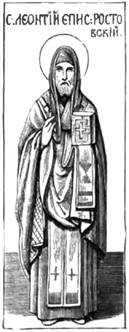
Св. Леонтий – один из самых великих святителей земли Русской363. Он велик по действиям земной жизни, как равноапостольный просветитель Ростовского края. Он велик на небе, как сильный молитвенник за землю Русскую.
St. Leontius is one of the greatest hierarchs of the Russian land363. He is great by the deeds of his earthly life, as an Equal-to-the-Apostles enlightener of the Rostov region. He is great in heaven, as a powerful intercessor for the Russian land.
По словам блаж. Симона, св. Леонтий был постриженником Печерского монастыря; в пещеру св. Антония пришёл он, конечно, не прежде 1032 г., так как Феодосий нашёл тогда у Антония только Никона. В епископа Ростову посвящён он прежде, чем Иларион, второй святитель из пещерян, поставлен был, в 1051 г., в митрополита364. В Ростове святитель встретил язычников упорных, суровых и диких. Предшественники его, Феодор и Иларион, первые Ростовские епископы, принуждены были бежать из Ростова от ярости язычников365. – Ростов до 1054 г. был в ведении великого князя Ярослава, жившего в Киеве; а по завещанию Ярослава, Ярославль, Белоозеро и всё Заволожье достались сыну его Всеволоду, который постоянно жил в южном Переяславле366. Таким образом св. Леонтий должен был бороться с язычеством в Ростове без близкой помощи князя367, а закоренелые язычники не хотели слушать его. Увещания и мольбы любви христианской пожалеть себя самих, не губить себя мраком и грехами, не склоняли заблудших к добру. Мало того, они осыпали святителя бранью, подвергли его побоям и выгнали из города. Но он решился не оставлять вверенного ему стада. Поселясь за городом близ ручья Брутовщицы, построил здесь небольшой деревянный храм архистратига Михаила368. Видя невозможность действовать с успехом прямо на застарелое поколение, окрепшее в язычестве, он обратился к поколению юному, ещё не испорченному: стал приглашать к себе детей, кормил их и ласкал; обласканные дети ходили к нему, а он учил их началам св. веры и потом крестил; за детьми вслед принимали слово веры и некоторые из возрастных. Зато старые закоренелые язычники сильно раздражались успехами св. веры. Святитель, «укрепясь силой крестной, постом и бдением», не смотрел на волнения слепцов и возвратился в соборный свой храм. Здесь он продолжал ласками приманивать к себе детей и учить их св. вере, – а в храме проповедовал о пустоте и нечестии идолослужения. Закоренелые язычники взволновались: огромной толпой, одни с дубинками, другие с оружием в руках, отправились они к собору, чтобы убить или выгнать Леонтия. Причт соборный испугался. Святитель был покоен и укреплял бывших с ним пресвитеров и диаконов. «Не бойтесь, дети, говорил он им. Без Божией воли ничего они не сделают нам». Он облёкся в священные ризы и повелел священникам и диаконам также облечься в ризы. Святитель, облачённый в святительские одежды, вышел к язычникам спокойный и твёрдый. Это спокойствие неземное, эта твёрдость небесная, являющаяся в виду смерти, поразили язычников; «увидев лицо его, подобное лицу ангела, они пали, одни – полумёртвые, другие слепые. Святой же молитвой восставил их и сотворил здоровыми». Он преподал им наставление в св. вере, полное духа и силы, и язычники приняли крещение369. С того времени учение небесное находило себе свободный доступ в народе Ростовском. Древняя летопись говорит: «св. Леонтий, священный епископ, просвети св. крещением град Ростов»370. «Тогда начал отходить от нас мрак идольский и воссиял свет благоверия», говорит древнее Ростовское слово в память Леонтия371. Новый летописец пишет: «древле чудотворец Леонтий Ростовский приводяше заблудящую Чудь в православную веру»372. Эти известия вместе с тем, как показывают нам бесплодную деятельность равноапостольного Леонтия в Ростове, дают видеть и то, что святителю Божию, при всей его ревности, не привелось довести до св. веры всю «заблудящую Чудь». И действительно, по житию св. Аврамия, «в Чудском конце Ростова» ещё стоял Велес, после св. Леонтия. Мало того, святитель рукоположил многих священников и диаконов; но Апостольский подвиг его окончился мученической смертью. Блаженный Симон, сказав, что из Печерского монастыря многие поставлены были в епископы, пишет: «первым был Ростовский епископ Леонтий священномученик, которого прославил Бог нетлением; это был первый (из пещерян) престольник; неверные мучили и убили его и он стал третьим (небесным) гражданином из Русской земли, получив вместе с двумя Варягами венец от Христа, за Которого пострадал»373. Когда это было? Известия молчат о годе кончины святого; но, по всей вероятности, это было в 1073 г., когда видим по летописи страшные злодейства проповедников Чудского язычества в пределах Ростовской епархии374.
According to the words of Blessed Simon, St. Leontius was a tonsured monk of the Kiev Caves Monastery; he came to the cave of St. Anthony, of course, not before 1032, since Theodosius then found only Nikon with Anthony. He was consecrated Bishop of Rostov before Hilarion, the second hierarch from the Caves, was appointed Metropolitan in 1051364. In Rostov the hierarch encountered stubborn, harsh, and wild pagans. His predecessors, Theodore and Hilarion, the first bishops of Rostov, were forced to flee from Rostov because of the fury of the pagans365. – Rostov until 1054 was under the authority of Grand Prince Yaroslav, who lived in Kiev; and by Yaroslav's testament, Yaroslavl, Beloozero, and all the Trans-Volga region fell to his son Vsevolod, who constantly lived in southern Pereyaslavl366. Thus St. Leontius had to struggle against paganism in Rostov without the close help of a prince367, and the inveterate pagans did not want to listen to him. The exhortations and entreaties of Christian love—to have pity on themselves, not to destroy themselves with darkness and sins—did not incline the erring to good. Moreover, they showered the hierarch with abuse, subjected him to beatings, and drove him out of the city. But he resolved not to abandon the flock entrusted to him. Settling outside the city near the stream Brutovshchitsa, he built there a small wooden church of the Archangel Michael368. Seeing the impossibility of acting successfully directly upon the older generation, hardened in paganism, he turned to the younger generation, not yet corrupted: he began to invite children to him, fed them and caressed them; the caressed children came to him, and he taught them the beginnings of the holy faith and then baptized them; following the children, some of the adults also received the word of faith. But the old inveterate pagans were greatly angered by the successes of the holy faith. The hierarch, "strengthened by the power of the Cross, by fasting and vigil," paid no heed to the agitation of the blind and returned to his cathedral church. Here he continued to attract children to himself with kindness and to teach them the holy faith, and in the church he preached about the emptiness and impiety of idol-worship. The inveterate pagans became agitated: in a huge crowd, some with clubs, others with weapons in their hands, they set out for the cathedral to kill or drive out Leontius. The cathedral clergy were frightened. The hierarch was calm and strengthened the presbyters and deacons with him. "Fear not, children," he said to them. "Without God's will they will do nothing to us." He vested himself in the sacred vestments and commanded the priests and deacons also to vest. The hierarch, vested in his hierarchal robes, went out to the pagans calm and firm. This unearthly calm, this heavenly firmness appearing in the face of death, struck the pagans; "seeing his face, like the face of an angel, they fell, some half-dead, others blind. The saint, by prayer, raised them up and made them whole." He gave them instruction in the holy faith, full of spirit and power, and the pagans received baptism369. From that time, heavenly teaching found free access among the people of Rostov. The ancient chronicle says: "St. Leontius, the sacred bishop, enlightened the city of Rostov with holy baptism"370. "Then the darkness of idolatry began to depart from us and the light of true faith shone forth," says an ancient Rostov discourse in memory of Leontius371. A later chronicler writes: "of old the wonderworker Leontius of Rostov brought the erring Chud to the Orthodox faith"372. These accounts, while showing us the fruitful activity of the Equal-to-the-Apostles Leontius in Rostov, also make it evident that the hierarch of God, for all his zeal, did not succeed in bringing all the "erring Chud" to the holy faith. And indeed, according to the Life of St. Avramius, "in the Chud end of Rostov" there still stood an idol of Veles after St. Leontius. Moreover, the hierarch ordained many priests and deacons; but his apostolic labor ended in a martyr's death. Blessed Simon, having said that many from the Kiev Caves Monastery were appointed bishops, writes: "The first was Leontius, Bishop of Rostov, a hieromartyr, whom God glorified with incorruption; he was the first (from the Caves) to occupy a see; the unbelievers tormented and killed him, and he became the third (heavenly) citizen from the Russian land, receiving together with the two Varangians a crown from Christ, for Whom he suffered"373. When did this happen? The accounts are silent about the year of the saint's repose; but in all probability it was in 1073, when we see in the chronicle terrible atrocities of the preachers of Chud paganism within the borders of the Rostov diocese374.
Мощи св. Леонтия открыты 23 мая 1164 г. Когда копали рвы для нового соборного храма, говорит древнее известие, «нашли гроб, покрытый двумя досками; в недоумении открыли гроб и увидели лицо (Леонтия) светящееся славой; ризы на нём как вчера надетые; столько лет минуло и не изменялось священное тело его»375. В руке держал он свиток, на котором написаны были пресвитеры и диаконы, поставленные его рукой376. Ныне св. мощи почивают в приделе собора, куда перенесены они из церкви св. Иоанна в 1230 г. февр. 25 д.377.
The relics of St. Leontius were uncovered on May 23, 1164. When they were digging trenches for a new cathedral church, says an ancient account, "they found a coffin covered with two boards; in perplexity they opened the coffin and saw the face (of Leontius) shining with glory; his vestments were as if put on yesterday; so many years had passed and his sacred body had not changed"375. In his hand he held a scroll, on which were written the presbyters and deacons ordained by his hand376. Now the holy relics rest in a side-chapel of the cathedral, where they were translated from the church of St. John in 1230, on February 25377.
В праздник святителя пономарь, отворив двери храма к утрени, увидел свечи зажжённые и святителя восставшего из гроба и молящегося с воздетыми к нему руками. Затем случилось, что небрежный клирик погасил негасимую свечу у гроба святителя, но зато наказан был расслаблением тела, глухотой и немотой, а покаявшись исцелился у раки святителя378. Ростовский князь Иван Александрович († 1400 г.) три раза исцелялся по молитве св. Леонтия, два раза в детстве, от глазной болезни, а в третий раз, уже женатый, от горячки. После пожара 1408 г. по освящении соборного храма «в один месяц совершилось до 40 чудесных исцелений – слепых, хромых, сухоруких, больных расслабленных». В летописи записали: в 1418 г., «молитвами святого чудотворца Леонтия» поставлен был новый епископ Ростову; равно в окружной грамоте свят. Ионы 1448 г. Леонтий «святый чудотворец»379. При великом князе Иоанне и при архиепископе Трифоне (1462–1467 г.) свирепствовала «короста», от которой многие и умирали; у раки св. Леонтия многие из этих больных получили исцеление. При том же архиепископе Захария, слуга князя, спорил с кафедрой об участке земли. «Обычай издавна бе и у прежних епископов, яко егда с кем спорное слово о земли, то священника с Леонтиевым крестом на размежевание посылают». Так поступили и теперь. Захария нашёл свидетелей лжи и с их помощью завладел участком. Но лишь только засеял он похищенный участок, как начал кричать, что та земля стоит над ним облаком и засыпает ему глаза; слепого в раскаянии привели к раке чудотворца и, когда архиепископ отслужил молебен св. Леонтию, Захария стал здоров380. – В 1521 г., во время неожиданного нашествия Махмет-Гирея, святитель Леонтий вместе с Московскими святителями являлся ходатаем перед Богом за Москву381.
On the feast of the hierarch, a sexton, opening the doors of the church for Matins, saw candles lit and the hierarch risen from the grave and praying with his hands raised up. Then it happened that a careless cleric extinguished the unquenchable candle at the tomb of the hierarch, but was punished with paralysis of the body, deafness, and muteness, and having repented, was healed at the reliquary of the hierarch378. Prince Ivan Alexandrovich of Rostov († 1400) was healed three times through the prayer of St. Leontius: twice in childhood, from an eye disease, and a third time, when already married, from a fever. After the fire of 1408, upon the consecration of the cathedral church, "within one month up to 40 miraculous healings occurred—of the blind, the lame, those with withered hands, and the paralyzed." In the chronicle they recorded: in 1418, "by the prayers of the holy wonderworker Leontius" a new bishop was appointed for Rostov; likewise, in the encyclical letter of St. Jonah of 1448, Leontius is called "the holy wonderworker"379. Under Grand Prince John and under Archbishop Tryphon (1462–1467), a "scab" raged, from which many died; at the reliquary of St. Leontius many of these sick received healing. Under the same Archbishop, Zachariah, a prince's servant disputed with the see about a plot of land. "There was a custom from of old among the former bishops, that when there was a dispute with someone about land, they would send a priest with Leontius' cross to mark the boundary." So they did now. Zachariah found false witnesses and with their help took possession of the plot. But as soon as he sowed the stolen plot, he began to cry out that that land stood over him like a cloud and filled his eyes; blind, in repentance he was brought to the reliquary of the wonderworker, and when the archbishop served a moleben to St. Leontius, Zachariah became well380. – In 1521, during the unexpected invasion of Makhmet-Girei, Hierarch Leontius together with the Moscow hierarchs appeared as an intercessor before God for Moscow381.
«Общник Апостолов, верный молитвенник перед Богом, святитель Леонтий! добродетелями достиг ты небесного, при сильной любви к Любящему тебя; неверных людей освятил ты верою. – Потому, ликуя с ангелами, стоишь пред престолом Царя всех, Христа Бога. Молися Ему, да спасет души наша»382.
"Companion of the Apostles, faithful intercessor before God, Hierarch Leontius! By virtues you attained the heavenly, with strong love for Him Who loves you; you sanctified unbelieving people with faith. – Therefore, rejoicing with the angels, you stand before the throne of the King of all, Christ God. Pray to Him that He may save our souls"382.
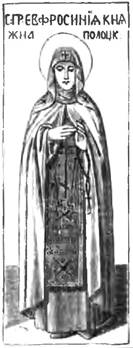
Препод. Евфросиния, по народному наименованию Предслава, была внучка владетельного князя Полоцкого Всеслава Брячиславича († 1101)383; отец её Святослав – Георгий был меньший из семи сыновей князя Всеслава. Родители воспитали Предславу в страхе Божьем и она оказывала такую любовь к учению, что изумляла тем родителей. Красота её стала привлекать князей, которые, лишь только достигла она 12 лет, искали руки её. Родители хотели обручить её с одним из прекрасных молодых князей; но сердце чистой девы было занято любовью к Небесному Жениху и она тайно удалилась в женскую иноческую обитель, где начальствовала тётка её, супруга князя Романа Всеславича384. Здесь, по неотступной просьбе, облечена она в иноческий образ под именем Евфросинии. Родители, узнав о том, горько плакали о ней, как бы о умершей, но предоставили её воле Господа. В первые годы вела она обыкновенную иноческую жизнь. Потом испросила у епископа Исаии дозволение жить в затворе, при соборном храме. Здесь, после молитв, занималась она списыванием книг и плату, какую получала за то, раздавала нищим. Потом, по особенному видению, бывшему ей и епископу, решилась она основать свой монастырь. Епископ, призвав дядю князя Бориса, бывшего владетельным (1119–1128)385, и отца его Георгия, объявил им: «вот я, при вашем правлении, даю Евфросинии место св. Спаса на сельце с тем, чтобы здесь был монастырь девичий; пусть никто и после меня не изменяет сего моего даяния». Так на загородном месте, принадлежавшем архиерейской кафедре, где по гребались Полоцкие архипастыри, основалась женская обитель св. Спаса. К благочестивой Евфросинии скоро собрались сёстры.
The Venerable Euphrosyne, known in the vernacular as Predslava, was the granddaughter of the ruling Prince of Polotsk, Vseslav Briacheslavich († 1101)383; her father Sviatoslav–George was the youngest of the seven sons of Prince Vseslav. Her parents raised Predslava in the fear of God, and she showed such love for learning that she amazed her parents thereby. Her beauty began to attract princes, who, as soon as she reached the age of twelve, sought her hand. Her parents wished to betroth her to one of the handsome young princes; but the heart of the pure maiden was occupied with love for the Heavenly Bridegroom, and she secretly withdrew to a women’s monastic community, where her aunt, the wife of Prince Roman Vseslavich, was abbess384. There, at her insistent request, she was clothed in the monastic habit under the name Euphrosyne. Her parents, learning of this, wept bitterly for her as for one dead, but committed her to the will of the Lord. In the first years she led the ordinary monastic life. Afterwards she asked Bishop Isaiah for permission to live in seclusion at the cathedral church. Here, after prayers, she occupied herself with copying books, and the payment she received for this she distributed to the poor. Then, after a special vision that appeared to her and to the bishop, she resolved to found her own monastery. The bishop, summoning her uncle Prince Boris, who was then ruling (1119–1128)385, and her father George, declared to them: “Behold, during your rule, I give to Euphrosyne the place of the Holy Savior on the estate, so that a women’s monastery may be here; let no one after me change this my gift.” Thus, on a suburban site belonging to the bishop’s see, where the archpastors of Polotsk were buried, the women’s monastery of the Holy Savior was founded. Sisters soon gathered around the pious Euphrosyne.
В 1130 году дом Полоцких князей подвергся тяжким скорбям, что не могло не печалить и Евфросинию. За то, что Кривские князья ослушались великого князя во время самое важное для всей России, не поспешили на помощь ему в войне с заклятыми врагами России Половцами, великий князь Мстислав захватил и выслал в Царьград князей Давида, Ростислава, Святослава – отца Евфросинии, и двух сыновей дяди её Рогвольда, с их семьями386. Младшая сестра Евфросинии Градислава принята ей в обитель и наречена Евдокией; дочь скончавшегося князя Бориса принесла к преподобной все дорогие вещи, приготовленные к браку, и навсегда отреклась от мира с именем Евпраксии. Так как сестра князей Всеславичей была в супружестве за сыном императора Алексея Комнина, то изгнанные из отечества князья приняты были в Царьграде не без ласки; император назначил им жалованье и они, вступив в службу, храбро воевали с Арабами387. Тем не менее князьям дорога была родина и по смерти Мстислава двое из них воротились в Полоцк в 1140 году, а другие ещё прежде того. По житию св. Евфросинии видно, что отец её и дядя Давид также возвратились на родину. – Нельзя не признать участия бл. Евфросинии в прекрасном поступке племянника её князя Василька, возвращённого в Полоцк (1132 года) любовью Полочан. Князь Всеволод, сын великого князя Мстислава, на пути в Псков, шёл мимо Полоцка. Василько легко мог отмстить теперь Всеволоду за бедствия, которые претерпели князья Полоцкие по распоряжению отца его Мстислава. Но Василько выехал на встречу Всеволоду, принял его в доме с любовью, проводил с почестью и князья дали клятву не помнить о том, что было прежде388. Во всяком случае этот поступок племянника был приятнейшим утешением для пр. Евфросинии.
In the year 1130, the house of the princes of Polotsk was subjected to grievous sorrows, which could not but grieve Euphrosyne as well. Because the princes of the Krivichi had disobeyed the Grand Prince at a time most important for all Russia, and had not hastened to his aid in the war with the sworn enemies of Russia, the Polovtsy, Grand Prince Mstislav seized and exiled to Constantinople the princes David, Rostislav, Sviatoslav—Euphrosyne’s father—and two sons of her uncle Rogvolod, together with their families386. Euphrosyne’s younger sister Gradislava was received into her monastery and named Eudocia; the daughter of the deceased Prince Boris brought to the Venerable one all the precious things prepared for her marriage, and forever renounced the world under the name Eupraxia. Since the sister of the Vseslavich princes was married to the son of Emperor Alexius Comnenus, the princes exiled from their fatherland were received in Constantinople not without kindness; the emperor assigned them a stipend, and they entered into service and fought bravely against the Arabs387. Nevertheless, the princes held their homeland dear, and after the death of Mstislav, two of them returned to Polotsk in 1140, while others had done so even earlier. From the Life of St. Euphrosyne it is evident that her father and her uncle David also returned to their homeland. — One cannot but acknowledge the participation of blessed Euphrosyne in the noble act of her nephew Prince Vasilko, who was restored to Polotsk (in 1132) by the love of the Polotskans. Prince Vsevolod, son of Grand Prince Mstislav, on his way to Pskov, passed by Polotsk. Vasilko could easily have now taken vengeance on Vsevolod for the calamities which the princes of Polotsk had suffered by the order of his father Mstislav. But Vasilko rode out to meet Vsevolod, received him into his house with love, escorted him with honor, and the princes swore an oath not to remember what had gone before388. In any case, this act of her nephew was a most pleasant consolation for the Venerable Euphrosyne.
Преподобная княжна, ревнуя о благолепии дома Божия, решилась, вместо ветхого деревянного храма, построить каменный храм Спасителю в своей обители. Храм, построенный при её молитвах, доселе цел. Он носит имя «Спас Юрьевича»389 и своим именем показывает, что в построении его участвовал пожертвованиями и отец преподобный князь Юрий. Построение его происходило около 1160 г. Для нового храма своего преподобная приготовила драгоценный напрестольный крест, сохранившийся до нашего времени. Надпись на нём говорит: «честьное древо безценно есть; а кованье его, злато и сребро и каменье жемчуг, в 100 гривень, а др... 40 гривень». По этой надписи оклад креста стоит 140 гривен серебра и так как гривна равнялась фунту сер. или 10 руб. нашим, то ценность оклада восходила до 1400 руб. сер., что в то время составляло сумму весьма значительную. В храме преп. Евфросинии, по сторонам хоров, целы ещё две тесные кельи, – в одной из них жила преподобная. Отсюда слушала она богослужение храма; а сквозь небольшое окно, пробитое в стене, открывались её взору обширные поля и вид города с его храмами.
The Venerable princess, zealous for the beauty of the house of God, resolved to build a stone church to the Savior in her monastery in place of the old wooden one. The church, built through her prayers, remains intact to this day. It bears the name “Savior of Yurievich”389 and by its name shows that the Venerable one’s father, Prince Yuri, also participated in its construction with donations. Its construction took place around the year 1160. For her new church, the Venerable one prepared a precious altar cross, which has been preserved to our time. The inscription on it says: “The precious wood is priceless; but its setting, gold and silver and stone and pearl, is 100 grivnas, and the other… 40 grivnas.” According to this inscription, the setting of the cross cost 140 grivnas of silver, and since a grivna was equal to a pound of silver or 10 rubles in our currency, the value of the setting amounted to 1400 silver rubles, which at that time was a very considerable sum. In the church of St. Euphrosyne, on the sides of the choir, two narrow cells are still intact—in one of them the Venerable one lived. From there she listened to the church services; and through a small window cut in the wall, the wide fields and the view of the city with its churches opened before her gaze.
Горя любовью к Спасителю и Богоматери, преподобная воспользовалась родственною связью с домом императоров Комнинов, чтобы выпросить одну из трёх икон, писанных, по преданию, Еванг. Лукой, – ту, которая тогда находилась в Ефесе. По её усердной просьбе имп. Мавуил и патр. Лука Хрисоверг прислали ей Ефесскую икону и она, украсив её ризой, поставила в своей Спасской церкви. Эта драгоценность доселе не утратилась: она стоит в Торопецком соборном храме, где поставила её в 1230 г. дочь Полоцкого князя Брячислава при вступлении в брак с благоверным Александром Невским.
Burning with love for the Savior and the Mother of God, the Venerable one made use of her family connection with the house of the Comnenus emperors to obtain one of the three icons painted, according to tradition, by the Evangelist Luke—the one which was then in Ephesus. At her earnest request, Emperor Manuel and Patriarch Luke Chrysobullus sent her the Ephesian icon, and she, adorning it with a riza, placed it in her Church of the Savior. This treasure has not been lost to this day: it stands in the cathedral church of Toropets, where it was placed in 1230 by the daughter of Prince Briacheslav of Polotsk upon her marriage to the Right-believing Alexander Nevsky.
Преп. игуменья, заботливая о славе имени Божия, усердно заботилась и о спасении сестёр своих о Господе. Древний жизнеописатель передаёт трогательную беседу, которой она возбуждала их к подвижничеству. «Я собрала вас о Господе, говорила преподобная, как кокош391 собирает птенцов; собирала словесных овец на духовную пажить. Паситесь же на заповедях Господних; возрастайте в добродетелях от силы в силу, чтобы я с радостью заботилась о вашем спасении и видела с утешением духовные плоды трудов. Стараюсь я сеять в вас слова Божии; но сердечные нивы ваши не остаются ли в прежнем виде? они не зреют; а время жатвы близится и лопата готова, чтобы отделить плевелы от пшеницы. Страшусь, не нашлись бы между вами плевелы и не преданы бы были огню негасимому. – Старайтесь, молю вас, старайтесь сохранить себя от грехов и спастись от геенны. – Творите из себя чистую пшеницу Христову, измелитесь в жерновах смирения, трудами постническими, чистотой, любовью, молитвами, чтобы быть хлебом сладким для Бога».
The Venerable abbess, solicitous for the glory of the name of God, also earnestly cared for the salvation of her sisters in the Lord. The ancient biographer relates a touching discourse with which she stirred them to asceticism. “I have gathered you in the Lord,” said the Venerable one, “as a hen391 gathers her chicks; I have gathered verbal sheep for spiritual pasture. Feed then on the commandments of the Lord; grow in virtues from strength to strength, so that I may care for your salvation with joy and see with consolation the spiritual fruits of labors. I strive to sow in you the words of God; but do the fields of your hearts remain as before? They do not ripen; and the time of harvest draws near, and the fan is ready to separate the chaff from the wheat. I fear lest there be found among you chaff, and that it be given over to the unquenchable fire. — Strive, I beseech you, strive to keep yourselves from sins and to be saved from Gehenna. — Make of yourselves pure wheat for Christ; be ground in the millstones of humility, by fasting labors, purity, love, prayers, that you may be sweet bread for God.”
Устроив обитель свою, дав ей правила, преп. Евфросиния уже в преклонных летах решилась выполнить давнее желание своё – посетить святые места Палестины. Горько было любимому и любившему её князю Вячеславу расставаться с ней. Преподобная в утешение ему говорила: буду молиться за себя и за вас в святых местах. Взор её открыл, что две юные дочери Вячеслава – Кириния и Ольга посвятят себя на служение Богу, и они потом пострижены были Полоцким епископом Дионисием († 1181 г.). Вверив обитель сестре своей Градиславе – Евдокии, преподобная отправилась на восток в сопровождении кн. Давида, уже знакомого с востоком; с ней отправилась и родственница Звенислава – Евпраксия. На пути своём она встретилась с императором Мануилом, шедшим против Венгров; потом в Константинополе была обласкана патр. Лукой. Она посетила св. Софию, поклонилась святыням и в других местах столицы восточной и продолжала путь в Иерусалим. Здесь, остановясь в Русском монастыре Пресв. Богородицы, святая княжна несколько раз ходила на поклонение живоносному гробу Господню и поставила над ним лампаду. Потом обошла разные места, ознаменованные жизнью Спасителя, и в Русском монастыре занемогла. После 24 дней болезни предала дух свой Господу, 23-го мая 1173 г.
Having established her monastery and given it a rule, the Venerable Euphrosyne, now in advanced years, resolved to fulfill a long-standing desire—to visit the holy places of Palestine. Bitter it was for the prince Viacheslav, who loved her and was beloved by her, to part from her. The Venerable one said to him for consolation: “I will pray for myself and for you in the holy places.” Her gaze revealed that Viacheslav’s two young daughters, Kirinia and Olga, would dedicate themselves to the service of God, and they were later tonsured by Bishop Dionysius of Polotsk († 1181). Entrusting the monastery to her sister Gradislava–Eudocia, the Venerable one set out for the East, accompanied by Prince David, who was already acquainted with the East; her relative Zvenislava–Eupraxia also went with her. On her way she met the Emperor Manuel, who was marching against the Hungarians; afterwards, in Constantinople, she was kindly received by Patriarch Luke. She visited Hagia Sophia, venerated the holy things in other places of the Eastern capital as well, and continued her journey to Jerusalem. Here, stopping at the Russian monastery of the Most Holy Theotokos, the holy princess went several times to worship at the life-giving Tomb of the Lord and placed a lamp over it. Then she went around various places marked by the life of the Savior, and fell ill at the Russian monastery. After an illness of twenty-four days, she gave up her spirit to the Lord, on the 23rd of May, 1173.
Тело почившей преподобной, по её завещанию, погребено было в обители преп. Феодосия, в паперти храма, там, где покоились матери преп. Саввы и Феодосия. Впоследствии и вероятно тогда, как Саладин (в 1187 г.) готовился снова взять Иерусалим, св. мощи её перенесены были в Киевские пещеры, где они нетленно почивают поныне392.
The body of the reposed Venerable one, according to her testament, was buried in the monastery of the Venerable Theodosius, in the narthex of the church, where the mothers of the Venerable Sabbas and Theodosius were laid to rest. Afterwards, and probably when Saladin (in 1187) was preparing to retake Jerusalem, her holy relics were translated to the Kiev Caves, where they rest incorrupt to this day392.
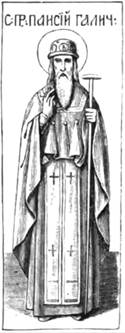
Обитель, где более 70 лет подвизался преп. Паисий394, первоначально называлась Николаевской, занимая берег Галичского озера, вблизи гор. Галича. При Димитрии Донском набожный боярин Иоанн Овин, при восстановлении упавшей обители, получил от неизвестного лица икону Божией Матери, поставил её в храме обители и в честь её назвал обитель Успенской. В 1433 г. великий князь Василий Тёмный, в войне с дядей князем Юрием, нарушившим недавний договор, овладел Галичем и перенёс чудотворную икону со всеми драгоценными украшениями её в Москву. Но это торжество Василия было непрочное и кратковременное. Князь Юрий, собравшись с силами, разбил Василия на голову, осадил затем Москву и взял св. икон395. Чудотворная икона возвратилась в Галичскую обитель и это событие празднуемо было всеми Галичанами. Игуменом обители был тогда преп. Паисий, подвизавшийся в ней с 1385 г. Князь Юрий перед своей кончиной (1434 г.) передал Галич третьему сыну своему Димитрию Красному396. Это был лучший из сыновей кн. Юрия. Он глубоко благоговел к святой иконе. Когда внук боярина Овина, бездетный Димитрий, впал в предсмертную болезнь, его посетили преп. Паисий, духовник его, и кн. Димитрий; преп. Паисий убеждал духовного сына достойно приготовиться к переходу в вечность и озаботиться на счёт вверенной дедом обители. Больной в присутствии князя передал обитель с святой иконой и всю свою отчину духовному отцу преп. Паисию, с тем непременным условием, дабы в обители устроено было полное общежитие. Преп. Паисий в точности исполнил волю благочестивого боярина, завёл в обители общежитие. Набожный князь Димитрий Красный во многом облегчал заботы преп. игумена о обители. Благоговея перед чудотворной иконой, он приказал написать список с неё и обложил новую икону драгоценным окладом. Готовясь к смерти, он просил преп. Паисия перенести тело его в Москву и доставить великому князю списанную им Овиновскую икону. Смерть сего князя была изумительна по своей особенности. За несколько дней до кончины он лишился слуха, вкуса и сна. Хотел причаститься св. Таин и долго не мог, – кровь лила у него из носу. Ему заткнули ноздри, чтобы дать причастие. Когда приобщился он св. Таин, то совсем успокоился и даже покушал ухи. Потом заснул. Но в поздний вечер увидели, что он умирает; прочитали отходную и все думали, что князь скончался; его одели, как мёртвого. – В полночь мнимый мертвец скинул с себя покров и, не открывая глаз, начал петь церковные песни. Перед утреней духовник Осия принёс св. Дары. Князь, взглянув, сказал: «радуйся, утроба Божественного воплощения», и причастился. Целые три дня князь пел и говорил о душеспасительных предметах, узнавал людей, но не слышал ничего. Наконец 22-го сентября 1440 года он умер. Тело его перенесли в Москву397. Когда преп. Паисий по завещанию кн. Димитрия явился в Москву с иконой Богоматери, его приняли здесь с торжеством: первосвятитель Иона, великий князь, бояре, народ благоговейно встретили святую икону. Великий князь просил благословения у преп. Паисия; но преп. игумен, покланясь великому князю, сказал: «не смею благословлять при великом святителе, сам имея нужду в его благословении». Великий князь тронут был рассудительным смирением игумена и сказал ему: «ты – истинно раб Божий и Богоматери». Икона внесена была в соборный храм. Святитель Иона почтил Паисия саном архимандрита. Великий князь вручил ему грамоту к своим наместникам, с предписанием оберегать обитель его от нападений неприятельских и от всяких неприятностей. Великий князь, помня, как строго наказан он был за дерзкое распоряжение своё с Овиновской св. иконой, положил почтительно возвратить в Галич св. икону, принесённую Паисием. Для сопровождения её до Галича отправились из Москвы два архимандрита398. – По памятникам Галичская Успенская обитель называется Паисиевым монастырём399. Это показывает, что преп. Паисий много потрудился как для хозяйственного её благоустройства, так и для основания в ней правил монашеской жизни. Преп. Паисий, достигнув глубокой старости, готовился к переходу в вечность молитвой. Причастившись св. Таин, он мирно преставился мая 23-го 1460 г. Мощи его почивают под спудом в соборном Успенском храме, где находится и чудотворная Овиновская икона Божией Матери400.
The monastery, where the Venerable Paisius labored for more than 70 years394, was originally called the Nikolaevskaya (St. Nicholas) monastery, occupying the shore of Lake Galich, near the city of Galich. Under Demetrius of the Don, the pious boyar John Ovin, while restoring the fallen monastery, received from an unknown person an icon of the Mother of God, placed it in the monastery church, and named the monastery the Dormition (Uspenskaya) Monastery in Her honor. In 1433, Grand Prince Basil the Dark, in his war with his uncle Prince Yuri, who had violated a recent treaty, took possession of Galich and transferred the wonderworking icon, with all its precious adornments, to Moscow. But this triumph of Basil was unstable and short-lived. Prince Yuri, having gathered his forces, utterly defeated Basil, then besieged Moscow and took the holy icon395. The wonderworking icon returned to the Galich monastery, and this event was celebrated by all the people of Galich. The abbot of the monastery at that time was the Venerable Paisius, who had been laboring in it since 1385. Prince Yuri, before his death (1434), gave Galich to his third son, Demetrius the Red396. He was the best of Prince Yuri’s sons. He deeply revered the holy icon. When the grandson of boyar Ovin, the childless Demetrius, fell into a mortal illness, he was visited by the Venerable Paisius, his spiritual father, and Prince Demetrius; the Venerable Paisius urged his spiritual son to prepare worthily for the passage into eternity and to concern himself with the monastery entrusted to him by his grandfather. The sick man, in the presence of the prince, transferred the monastery with the holy icon and all his patrimony to his spiritual father, the Venerable Paisius, on the indispensable condition that a full cenobitic rule be established in the monastery. The Venerable Paisius exactly fulfilled the will of the pious boyar and introduced the cenobitic life in the monastery. The devout Prince Demetrius the Red greatly lightened the cares of the venerable abbot for the monastery. Revering the wonderworking icon, he ordered a copy to be made of it and adorned the new icon with a precious riza. Preparing for death, he asked the Venerable Paisius to convey his body to Moscow and to deliver to the Grand Prince the Ovin icon he had copied. The death of this prince was astonishing in its peculiarity. Several days before his end, he lost his hearing, taste, and sleep. He wished to commune of the Holy Mysteries and for a long time could not—blood flowed from his nose. They stopped his nostrils in order to give him Communion. When he had partaken of the Holy Mysteries, he became completely calm and even ate some fish soup. Then he fell asleep. But late in the evening, they saw that he was dying; they read the prayers for the departure of the soul, and all thought that the prince had died; they dressed him as one dead. At midnight, the supposed dead man cast off his covering and, without opening his eyes, began to sing church hymns. Before Matins, his spiritual father Hosea brought the Holy Gifts. The prince, looking up, said: “Rejoice, O womb of the Divine Incarnation,” and received Communion. For three whole days the prince sang and spoke of soul-saving matters, recognized people, but heard nothing. Finally, on September 22, 1440, he died. His body was taken to Moscow397. When the Venerable Paisius, according to the will of Prince Demetrius, appeared in Moscow with the icon of the Mother of God, he was received there with triumph: the Hierarch Jonah, the Grand Prince, the boyars, and the people reverently met the holy icon. The Grand Prince asked for the blessing of the Venerable Paisius; but the venerable abbot, bowing to the Grand Prince, said: “I dare not bless in the presence of the great hierarch, having myself need of his blessing.” The Grand Prince was moved by the prudent humility of the abbot and said to him: “You are truly a servant of God and of the Mother of God.” The icon was brought into the cathedral church. The Hierarch Jonah honored Paisius with the rank of archimandrite. The Grand Prince gave him a charter to his viceroys, with an order to protect his monastery from enemy attacks and from all troubles. The Grand Prince, remembering how severely he had been punished for his presumptuous dealing with the holy Ovin icon, resolved to reverently return to Galich the holy icon brought by Paisius. Two archimandrites set out from Moscow to accompany it to Galich398. According to records, the Galich Dormition Monastery is called the Paisiev Monastery399. This shows that the Venerable Paisius labored much both for its economic well-being and for the establishment of the rules of monastic life in it. The Venerable Paisius, having reached a deep old age, prepared for his passage into eternity by prayer. Having partaken of the Holy Mysteries, he peacefully reposed on May 23, 1460. His relics rest hidden beneath the floor in the cathedral Dormition church, where the wonderworking Ovin Icon of the Mother of God is also located400.
Преп. Додо, подвизавшегося в Иверии, в Гареджийской пустыни под руководством св. Давида, и основателя обители (ныне находящейся в развалинах). При жизни удостоился дара чудотворений и скончался в преклонной старости в 623 г. – (О нём см. подр. в «жизнеоп. свв. Груз.» Сабинина и Всемирный календарь на 1874 г.).
The Venerable Dodo, who labored in Iberia, in the Gareja Desert under the guidance of St. David, and founder of a monastery (now in ruins). During his lifetime he was vouchsafed the gift of wonderworking and died at a very advanced age in the year 623. (For more on him, see the “Lives of the Georgian Saints” by Sabinin and the Universal Calendar for 1874.)
Оклеветанный, подобно целомудренному Иосифу, женой Персидского царя Ардамелеха и воспротивившийся настояниям царя, чтобы он принял магометанство, был осуждён царём на отсекновение головы мечом (в IX стол.). Мощи его видел в теле «аки живого» игумен Даниил в начале XII века, в лавре св. Саввы401.
Slandered, like the chaste Joseph, by the wife of the Persian king Ardamalech, and having resisted the king’s insistence that he accept Mohammedanism, he was condemned by the king to be beheaded by the sword (in the 9th century). His relics were seen in the flesh “as if alive” by Abbot Daniel at the beginning of the 12th century, in the Lavra of St. Sabbas401.
Житие св. Леонтия в кратком и распространённом виде издано в Правосл. Собеседнике, февр. 1858 г. Краткое житие писано по открытии мощей, около 1165 г.; оно называет кн. Андрея Боголюбского нашим князем, повелевающим в Ростове. – Пространное принадлежит 16 веку. Впрочем, по спискам видно, что краткое житие дополняемо было и прежде 16 века. В Сннод. р. б. 1459 г. № 637. XV в. № 550. XVI в. № 90. 948.
The Life of St. Leontius, in both a brief and an expanded form, was published in Pravoslavny Sobesednik, February 1858. The brief Life was written after the uncovering of the relics, around 1165; it calls Prince Andrew Bogolyubsky our prince, ruling in Rostov. The expanded Life belongs to the 16th century. However, from the manuscripts it is evident that the brief Life was supplemented even before the 16th century. In the Synodal Library: r. b. 1459, No. 637; 15th cent., No. 550; 16th cent., No. 90, 948.
По ркп. житию, св. Леонтий (преосв. Макария ист. I, 201. II, 273), поставлен в епископа в 992 г. – Это очевидная неправда. В кратком житии не определён год посвящения; но и это житие, как приметно, относит пребывание Леонтия в Ростове к первым временам христианства. Приняв же неосторожно одну ложную мысль, будто Леонтий рукоположен во Владимире, допустили и другую такую же, что он «родился и воспитался в Царьграде», именно потому, что епископы времени Владимирова были Греки. Дополнявший житие св. Леонтия в 16 в. прибавил к тому ещё сказку, что Леонтий посвящён п. Фотием (Преосв. Макария Ист. II, пр. 59). Св. Симон: «от того Печерскаго монастыря Пречистыя Богородицы мнози епископы поставлены быша и яко светила светлая осветиша всю Русскую землю святым крещением: первый Леонтий епископ Ростовский священномученик, его же Бог прослави нетлением и се бысть правыя престольник, его же невернии, много мучивше, убиша. И се третий гражданин бысть Русского мира, со онема Варягома венчался от Христа, Его же ради пострада». Памятники XII в. стр. 256.
According to the manuscript Life, St. Leontius (Metropolitan Macarius, History, I, 201; II, 273) was appointed bishop in 992. This is an obvious falsehood. The brief Life does not determine the year of his consecration; but even this Life, as is noticeable, places Leontius’s stay in Rostov in the earliest times of Christianity. Having incautiously accepted one false idea—that Leontius was ordained in Vladimir—they admitted another such idea, that he “was born and raised in Constantinople,” precisely because the bishops of Vladimir’s time were Greeks. The one who supplemented the Life of St. Leontius in the 16th century added to this a fable that Leontius was consecrated by Patriarch Photius (Metropolitan Macarius, History, II, note 59). St. Simon: “From that Pechersk monastery of the Most Pure Theotokos many bishops were appointed and, like bright lamps, illumined all the Russian land with holy baptism: first Leontius, Bishop of Rostov, Hieromartyr, whom God glorified with incorruption, and he was the true successor to the throne, whom the unbelievers, after much torment, killed. And he became the third citizen of the Russian world, crowned with Christ together with those two Varangians, for whose sake he suffered.” Monuments of the 12th Century, p. 256.
См. о св. Феодоре июня 8. Краткое житие св. Леонтия: «зде бо Апостоли не были». В Синодальном цветнике XVI в. (№ 687): «не бывшу никоему же Апостолу в Русской земли, но по истине Русскому языку милость Божия открыся».
See about St. Theodore, June 8. The brief Life of St. Leontius: “For the Apostles were not here.” In the Synodal Tsvetnik of the 16th century (No. 687): “No Apostle was ever in the Russian land, but truly the mercy of God was revealed to the Russian people.”
Только на короткое время был здесь Мономах в 1068 г. В завещании своём пишет он: «первый поход мой был в Ростов, по стране Вятячей; послал меня отец, когда сам пошёл в Курск. Затем ещё ходил я к Смоленску со Ставком Скордятичем»... Зачем был? По всей вероятности, для сбора дани. «И вручил я отцу три ста гривен золота», говорит он в описании путешествий своих.
Monomakh was here only for a short time in 1068. In his testament he writes: “My first campaign was to Rostov, through the land of the Vyatichi; my father sent me when he himself went to Kursk. Then I also went to Smolensk with Stavko Skordyatich”… Why was he there? In all probability, to collect tribute. “And I gave my father three hundred grivnas of gold,” he says in describing his travels.
Ркп. житие по второй редакции. – В кратком житии не сказано о том ни слова. Но и по летописи, на месте деревянного храма кн. Константин построил каменный храм Архангела, освящённый 25 ноябр. 1205 г.
Manuscript Life according to the second redaction. The brief Life says nothing about this. But according to the chronicle, on the site of the wooden church, Prince Constantine built a stone church of the Archangel, consecrated on November 25, 1205.
Слово на память св. Леонтия в правосл. собесед. 1858 г. I, 425. Издатель уверен, что оно писано около 1164 г. Но более вероятно, что сочинено оно около 1231 г. См. опис. муз. Румянц. № 156.
A Sermon on the memory of St. Leontius in Pravoslavny Sobesednik, 1858, I, 425. The editor is confident that it was written around 1164. But it is more probable that it was composed around 1231. See Description of the Rumyantsev Museum, No. 156.
Послание Симона по списку Акакия. См. пр. 361. По житию: «с миром отъиде к Богу». Слова верные, если означают только счастливое переселение к Богу. Иначе: а) то же краткое житие говорит: «непостыдно предался за веру». б) Только не полная ясность слов слишком краткого жития и заставляла вводить разные перемены в известие св. Симона о св. Леонтии. Один заменял слово: «священномученик» словами: «великий святитель», другой написал: «много мучивше» и опустил «убиша», оставив речь не конченной (христ. чтен. 1853 г. I, 283. Пр. Макария ист. I, пр. 59). Но слова Симона, как их ни извращали, все остаются с мыслью о мученической кончине св. Леонтия за веру. Иначе с чего бы ставить Леонтия на ряду с мучениками Варягами?
The Epistle of Simon according to the manuscript of Acacius. See note 361. According to the Life: “he departed to God in peace.” These words are true if they signify only a blessed departure to God. Otherwise: a) the same brief Life says: “he gave himself up without shame for the faith.” b) Only the incomplete clarity of the words of the overly brief Life led to the introduction of various changes into the account of St. Simon concerning St. Leontius. One replaced the word “Hieromartyr” with the words “great hierarch”; another wrote “after much torment” and omitted “they killed,” leaving the speech unfinished (Christian Reading, 1853, I, 283; Metropolitan Macarius, History, I, note 59). But the words of Simon, however they were distorted, all remain with the idea of the martyric death of St. Leontius for the faith. Otherwise, why would Leontius be placed on a par with the Varangian martyrs?
Собр. л. I, 220. V. VII. 137. Муз. Румянц. № 156. В уставе 1428 г. видим: «мая 23 обретение честного телеси св. отца нашего Леонтия епископа Ростовского, чудотворца». Здесь же тропарь ему. Муз. Румянцева 712. В Ладожском трефологе XI в. (Извест. акад. I, 187) служба св. Леонтию.
Collection of Chronicles, I, 220; V; VII, 137. Rumyantsev Museum, No. 156. In a Typicon of 1428 we see: “May 23, the uncovering of the honorable body of our holy father Leontius, Bishop of Rostov, Wonderworker.” Here also is his troparion. Rumyantsev Museum, 712. In the Ladoga Trefologion of the 11th century (News of the Academy, I, 187), there is a service to St. Leontius.
Ркп. минея Моск. дух. акад. № 73. Сказание о Захарии напеч. в чтен. Μ. общ. ист. Μ. 1848 г. № 2, стр. 61. 62. Оно же и два другие и Буслаева в христом. 735–741. В соборной грамоте 1488 г. архипастыри призывают помощь «великого святителя и чудотворца Леонтия». Ист. акт. I, 138. В 1519 г. «священа бысть церковь Леонтий чудотворец за Неглимной». Собр. л. VI, 263.
Manuscript menaion of the Moscow Theological Academy, No. 73. The account of Zacharias was printed in the Readings of the Moscow Society of History, Moscow, 1848, No. 2, pp. 61–62. It, along with two others, is also in Buslaev’s Christomathy, pp. 735–741. In the conciliar charter of 1488, the archpastors invoke the aid of “the great Hierarch and Wonderworker Leontius.” Historical Acts, I, 138. In 1519, “the church of Leontius the Wonderworker was consecrated beyond the Neglinnaya.” Collection of Chronicles, VI, 263.
«Житие и хожение пр. Евфросинии» дошло до нас в ркп. XIV в. (обзор дух. литературы. § 40). Оно же в ч. минее св. Димитрия и в минее Макария под 23 мая.
“The Life and Pilgrimage of the Venerable Euphrosyne” has come down to us in a manuscript of the 14th century (Survey of Spiritual Literature, § 40). It is also in the menaion of St. Demetrius and in the Menaion of Macarius under May 23.
Собр. л. 2. 15. Сыновья кн. Рогвольда Василий и Иоанн (Львов. л. I, 23). По Воскр. лет. 2, 239: «Вильняне взяша себе из Царя града князя Полоцкого Ростислава, Иоанна Рогвольдовича детей». – Князь Василько Рогвольдович в 1132 г. вызван был в Полоцк, на место Изяслава Мстяславича. В Полоцке с 1152 г. княжил Ростислав, сын Глеба Всеславича Минского: с 1158 г. был здесь кн. Рогвольд, сын Бориса Всеславича, а в 1161 г. Всеслав, сын Василька Рогвольдовича, скончавшийся в 1171 г. (Карамз. 2, пр. 269).
Collection of Chronicles, 2, 15. The sons of Prince Rogvolod, Basil and John (Lvov Chronicle, I, 23). According to the Resurrection Chronicle, 2, 239: “The Vilnians took for themselves from Constantinople the sons of the Polotsk prince Rostislav, John Rogvolodovich.” — Prince Vasilko Rogvolodovich was summoned to Polotsk in 1132, in place of Izyaslav Mstislavich. In Polotsk, from 1152, reigned Rostislav, son of Gleb Vseslavich of Minsk; from 1158, Prince Rogvolod, son of Boris Vseslavich, was there; and in 1161, Vseslav, son of Vasilko Rogvolodovich, who died in 1171 (Karamzin, 2, note 269).
По местной памяти храм и обитель находилась там, где ныне Латинское кладбище с костёлом Ксаверия, на полдороге из Спасской обители в город. При копании могил на кладбище находят остатки каменного здания, цемент и кладка которого одинаковы с кладкой Спасского храма. – Местом завладели паписты с 1681 г., когда Баторий передал все православные Полоцкие обители, в том числе и Спасскую, в руки иезуитов.
According to local memory, the church and monastery were located where the Latin Cemetery with the Church of St. Xavier now stands, halfway from the Spassky Monastery to the city. When digging graves in the cemetery, remains of a stone building are found, whose cement and masonry are identical to the masonry of the Spassky Church. — The place was seized by the Papists after 1681, when Batory transferred all Orthodox Polotsk monasteries, including the Spassky, into the hands of the Jesuits.
Ркп. житие пр. Паисия мало говорит о нём и не мало заключает в себе ошибок. Ж. м. внутр. дел 7, 22, стр. 5. 6.
The manuscript Life of the Venerable Paisius says little about him and contains not a few errors. Journal of the Ministry of Internal Affairs, 7, 22, pp. 5–6.
Ист. иер. 5, 450. Сведен. о монаст. стр. 157. Μ. 1852 г. В 1862 г. на землях Успенского монастыря жили поселяне в 608 дворах.
History of the Hierarchy, 5, 450. Information on Monasteries, p. 157, Moscow, 1852. In 1862, on the lands of the Dormition Monastery, peasants lived in 608 households.