Иоанн, уроженец торгового местечка Партенита (близ нынешней горы Аю-даг в Крыму), в юности посвятил себя на служение Богу, и когда епископ Готфский в 754 году подписался под определениями иконоборческого собора в Константинополе и тем заслужил высшую кафедру, митрополию Ираклийскую, то Готфы не захотели иметь епископа из Константинополя и избрали сего Иоанна, который впрочем не вдруг принял сан, а путешествовал на Богомолье в Иерусалим, где провёл три года; возвратившись, отправился в Грузию и тамошним католикосом посвящён в епископа. В 780 году, при императрице Ирине, послал Константинопольскому патриарху Павлу свиток с изложением веры (о почитании икон) и по удалении Павла (в августе 784 г.) приходил в Константинополь по делам церковным. Возвратясь, нашёл, что Хазары заняли своим гарнизоном Дори, главный город его епархии. Иоанн убедил властителя Готфии выгнать Хазар; но каган Хазарский вновь овладел этим местом, многих казнил, а Иоанна отдал под стражу. Верные помогли епископу бежать за море, в Амастриду, где он через четыре года и скончался (26-го июня 790 г.). Тело его в июле того же года перенесено в Готфию и похоронено в Партенитском монастыре св. Апостолов Петра и Павла.
John, a native of the trading town of Partenit (near the present-day Mount Ayu-Dag in the Crimea), dedicated himself in his youth to the service of God. When the Bishop of the Goths in 754 signed the decrees of the iconoclast council in Constantinople and thereby earned a higher see, the Metropolis of Heraclea, the Goths did not wish to have a bishop from Constantinople and elected this John. He, however, did not immediately accept the rank, but journeyed on pilgrimage to Jerusalem, where he spent three years; returning, he went to Georgia and was consecrated bishop by the Catholicos there. In 780, under the Empress Irene, he sent to the Patriarch of Constantinople, Paul, a scroll setting forth the faith (concerning the veneration of icons), and after the removal of Paul (in August 784), he came to Constantinople on church affairs. Returning, he found that the Khazars had occupied with their garrison Dory, the chief city of his diocese. John persuaded the ruler of Gothia to drive out the Khazars; but the Khazar Khagan again took possession of the place, executed many, and placed John under guard. The faithful helped the bishop to flee across the sea to Amastris, where after four years he reposed (on the 26th of June, 790). His body was translated in July of that same year to Gothia and buried in the Partenit monastery of the Holy Apostles Peter and Paul.
Святого священномученика Патрикия, епископа Прусского, и с ним трёх пресвитеров:Акакия, Менандра иПолиена. За обращение язычников в христианство обезглавлены в царствование Юлиана, в 362 году.
The Holy Hieromartyr Patricius, Bishop of Prusa, and with him three presbyters: Acacius, Menander and Polyenus. For converting pagans to Christianity they were beheaded in the reign of Julian, in the year 362.
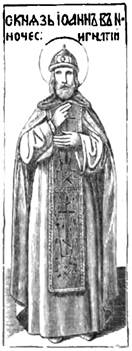
Князь Иоанн был сын Угличского князя Андрея Васильевича и внук великого князя Василия Тёмного278. – Он почти всю жизнь страдал за то только, что был из княжеского рода. В сентябре 1491 года отец его князь Андрей Васильевич был вызван из Углича в Москву. Ему объявили здесь, что по воле великого князя он лишается свободы, так как он – изменник, не выслал войска против татар. «Волен Бог да государь мой брат, отвечал Андрей, а Всевышний рассудит нас в том, что невинно лишаюсь свободы». Князя Андрея оковали цепями. В то же время послали в Углич и взяли под стражу сыновей его князя Иоанна и Димитрия. – Из Москвы отправили князя Андрея вместе с детьми его в Переяславскую темницу. Здесь 7 октября 1493 года он умер, а за год до того умерла мать князей Иоанна и Димитрия. Великий князь Иоанн велел похоронить брата в Московском Архангельском соборе, плакал, покаялся перед митрополитом, что поступил жестоко с братом. Но, когда митрополит ходатайствовал за живого князя Андрея и его детей, Иоанн говорил другое, – тогда отвечал он: «когда умру я, князь Андрей будет искать себе великого княжения и, если сам не добудет, поднимет смуты между детьми моими и станут они воевать друг с другом, а татары будут губить Русскую землю, – и труды мои пропадут»279. Это значит – для доброй цели употреблять средства всякого рода. По такой политике, без сомнения не христианской, а потому и не надёжной, дети Андрея отправлены были на Белоозеро в темницу, а отселе перевезли их в Вологду и по-прежнему держали в тюрьме. Так провёл князь Иоанн целые 32 года, не дыша чистым воздухом свободы в такой суровой тюрьме, каковы были тюрьмы тех времён.
Prince John was the son of the Uglich prince Andrew Vasilievich and the grandson of the Grand Prince Basil the Dark278. – He suffered almost his whole life only because he was of princely lineage. In September 1491, his father, Prince Andrew Vasilievich, was summoned from Uglich to Moscow. There it was declared to him that, by the will of the Grand Prince, he was deprived of his liberty, since he was a traitor, having not sent troops against the Tatars. "God and my sovereign brother are free to act," replied Andrew, "and the Most High will judge between us in this, that I am deprived of my liberty innocently." Prince Andrew was bound in chains. At the same time, they sent to Uglich and took into custody his sons, Prince John and Demetrius. – From Moscow, Prince Andrew was sent together with his children to the Pereslavl prison. There, on the 7th of October 1493, he died, and a year before that, the mother of Princes John and Demetrius had died. Grand Prince John ordered his brother to be buried in the Moscow Cathedral of the Archangel, wept, and repented before the Metropolitan for having acted cruelly toward his brother. But when the Metropolitan interceded for the living Prince Andrew and his children, John spoke otherwise – then he answered: "When I die, Prince Andrew will seek the grand principality for himself and, if he does not obtain it himself, will stir up strife among my children, and they will war against each other, and the Tatars will ravage the Russian land – and my labors will be lost."279 This means: for a good end, to employ means of every kind. According to such a policy, undoubtedly unchristian and therefore unreliable, the children of Andrew were sent to the prison at Beloozero, and from there they were moved to Vologda and kept still in prison. Thus Prince John spent a full thirty-two years, not breathing the pure air of freedom in such a harsh prison as were the prisons of those times.
С юных дней кроткий и Богобоязненный, находивший утешение только в изучении закона Божия, князь Иоанн и темницу находил для себя училищем благочестия; не только не роптал он на суровую участь свою, но благодарил за неё Господа, по примеру мучеников Божиих; он подвизался в молитве и в молитве находил для себя силу и утешение. Брат его Димитрий, старший его годом, не был столько твёрд духом и по временам сильно жаловался на жестокость дяди. Иоанн утешал брата теми высокими мыслями христианскими, которыми жила душа его. «К чему скорбеть, брат мой? говорил он Димитрию. Бог внушил вел. князю позаботиться о спасении душ наших. Не видишь ли, как мы далеки от мира, опасного для души? Всё, что есть в мире, похоть плоти, похоть очей и гордость житейская, не есть от Отца, но от мира (1Ин.2:16). Счастье наше, что мы разлучены с такими незавидными преимуществами мира. Тесен затвор наш? Но не тесным ли путём шли в Царство Небесное святые? Они терпели голод, стужу, побои, раны, темницу, потерю всего, но пели псалмы и утешались чтением слова Божия. Будем и мы подражать им, и нам дан будет венец нетления». Так блаженная душа смотрела на земную участь свою, как на строение благой премудрости Божией, обращающей и ошибочные дела людские в средства ко спасению. Так в блаженной душе за скорбью следовала терпеливость, за терпеливостью духовная опытность, за опытностью надежда, а надежда не оставляет в стыде (Рим.5:3–5). Наконец страдалец Божий сильно заболел и, чувствуя близость кончины своей, захотел облечься в иноческую одежду. Почему же давно он не облёкся в эту одежду? Тогда подозрительная политика людская конечно возвратила бы ему свободу. Но в таком случае брат Димитрий, не желавший иночества, не принявший его и перед смертью, остался бы один в темнице; а этого не хотела нежная любовь к брату. Да и для себя самого блаж. Иоанн находил лучшим местом темницу, как высказал он в утешение брату. Вот что значит любить полной душой тесный путь Христов! По желанию блаженного Прилуцкий игумен Михаил облёк его в иноческую одежду, назвав Игнатием. Страдалец рад был тому, причастился Святых Таин и, осеняя себя крестным знамением, сказал: «в руки Твои, Господи, предаю дух мой». Так перешёл он в вечный покой 19 мая 1523 года 45 л. от рождения280. Горько плакал брат Димитрий о потере утешителя и наставника – брата. Но, смотря на светлое лицо его, не имевшее вида мертвенности, и ощущая лёгкое благоухание, исходившее от почившего, успокоился уверенностью в его блаженной доле. Весь город собрался в темнице, услышав о преставлении блаженного князя: его уважали и в темнице далеко более, чем других владевших силой власти земной. Почивший князь-инок похоронен в Прилуцкой обители, под алтарём, близ преп. Димитрия. Во время погребения его совершилось несколько чудес от его мощей. Расслабленная Александра, услышав о погребении невинного страдальца князя, начала призывать помощь его и почувствовала облегчение; когда же она прикоснулась ко гробу его, то совершенно окрепла всеми членами. Больной Михаил, близкий к смерти, велел нести себя в церковь, где отпевали блаж. князя, и также выздоровел при его гробе. После погребения его каменщик Михаил, живший в слободе Прилуке, позван был устроить каменное надгробие над могилой блаженного. По дерзости невежества сел он на могилу и внезапно поражён был болезнью; долго страдая пришёл наконец в чувство, просил прощения у преп. Игнатия и – исцелел. Брат преп. Игнатия, ещё долго остававшийся в темнице, наконец погребён был по его желанию при ногах брата281. Икона Богоматери, – собственность братьев-узников, перед которой молились они в темнице, хранится в Вологодской темнице и граждане Вологды с благоговением притекают к ней, как ко гробу преп. Игнатия282. Церк. служба страдальцу князю известна по ркп. XVI века283.
From his youth meek and God-fearing, finding consolation only in the study of the law of God, Prince John found even the prison to be a school of piety for himself; not only did he not murmur at his harsh lot, but he thanked the Lord for it, following the example of the martyrs of God; he struggled in prayer and in prayer found for himself strength and consolation. His brother Demetrius, older than him by a year, was not so firm in spirit and at times complained bitterly of the cruelty of their uncle. John consoled his brother with those lofty Christian thoughts by which his soul lived. "Why grieve, my brother?" he said to Demetrius. "God has inspired the Grand Prince to care for the salvation of our souls. Do you not see how far we are from the world, which is dangerous for the soul? For all that is in the world, the lust of the flesh, the lust of the eyes, and the pride of life, is not of the Father, but is of the world (1 Jn. 2:16). It is our happiness that we are separated from such unenviable advantages of the world. Is our confinement narrow? But did not the saints walk the narrow path to the Kingdom of Heaven? They endured hunger, cold, beatings, wounds, prison, the loss of all things, yet they sang psalms and were consoled by the reading of the word of God. Let us also imitate them, and a crown of incorruption will be given to us." Thus the blessed soul regarded its earthly lot as the dispensation of the good wisdom of God, which turns even the erroneous deeds of men into means for salvation. Thus in the blessed soul, after sorrow came patience, after patience spiritual experience, after experience hope, and hope does not put to shame (Rom. 5:3–5). At last the sufferer of God fell grievously ill and, feeling the nearness of his end, desired to be clothed in the monastic habit. Why had he not long since been clothed in this habit? Then suspicious human policy would surely have restored his freedom. But in that case his brother Demetrius, who did not desire monasticism and did not receive it even before death, would have remained alone in prison; and this the tender love for his brother did not wish. And for himself, the blessed John found the prison to be the best place, as he had declared in consoling his brother. Such it is to love with one's whole soul the narrow path of Christ! At the desire of the blessed one, the Hegumen Michael of Priluki clothed him in the monastic habit, naming him Ignatius. The sufferer rejoiced at this, partook of the Holy Mysteries, and, signing himself with the sign of the cross, said: "Into Thy hands, O Lord, I commend my spirit." Thus he passed into eternal rest on the 19th of May, 1523, at the age of 45 from birth280. Bitterly did brother Demetrius weep over the loss of his comforter and teacher, his brother. But, looking upon his radiant face, which bore no appearance of death, and perceiving a light fragrance that issued from the reposed one, he was calmed by the certainty of his blessed lot. The whole city gathered at the prison, having heard of the repose of the blessed prince: they respected him even in prison far more than others who possessed the power of earthly authority. The reposed prince-monk was buried in the Priluki monastery, beneath the altar, near the Venerable Demetrius. During his burial, several miracles were performed from his relics. A certain paralyzed woman, Alexandra, having heard of the burial of the innocent sufferer prince, began to invoke his help and felt relief; when she touched his coffin, she was completely strengthened in all her limbs. A certain sick man, Michael, near death, ordered himself to be carried into the church where the funeral service was being sung for the blessed prince, and likewise was healed at his coffin. After his burial, a stonemason, Michael, who lived in the settlement of Priluki, was summoned to construct a stone tomb over the grave of the blessed one. Through the insolence of ignorance, he sat upon the grave and was suddenly struck with illness; suffering long, he at last came to his senses, asked forgiveness of the Venerable Ignatius, and was healed. The brother of the Venerable Ignatius, who remained long in prison, was at last buried, according to his wish, at the feet of his brother281. The icon of the Mother of God, the property of the imprisoned brothers, before which they prayed in prison, is preserved in the Vologda prison, and the citizens of Vologda reverently hasten to it, as to the grave of the Venerable Ignatius282. The church service to the sufferer prince is known from manuscripts of the 16th century283.
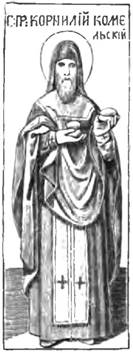
Преп. Корнилий родился в Ростове и воспитывался в Москве284. Родители его были люди богатые и знатные, по фамилии Крюковы285; они служили при дворе вел. кн. Марии, супруги вел. кн. Василия Тёмного, впоследствии инокини Марфы; при ней же служил и дядя Корнилия Лукиян, которому при смерти поручен был Корнилий отцом. Дядя Лукиян, удалясь от двора в Белозерскую обитель, взял Корнилия с собой; здесь, будучи 12 лет, Корнилий принял пострижение иноческое и выполнял послушание в хлебне. «Кто не знает Кирилловских хлебней?» говорит жизнеописатель его, давая тем знать о тяжести трудов, которые должен был нести молодой дворянин инок Корнилий. Но Корнилий не только трудился за себя, но охотно принимал на себя труды и за других. К тому же носил он тяжёлые вериги. В свободное от послушаний время занимался он списыванием книг. Совершив путешествие в Ростов, чтобы убедить младшего брата идти в монастырь, Корнилий отправился странствовать. Он был в Новгороде у св. Геннадия, который желал, но не мог, удержать его при себе. Преподобный поселился в пустыни, не вдали от Новгорода, и по временам приходил к мудрому святителю. Любитель безмолвия удалился и из пустыни, когда часто стали посещать её, и поселился в Савватиевой пустыни Тверской области. Это странствование по разным местам не было странствованием праздным: преподобный собирал опыты жизни духовной и терпел голод и жажду, холод и зной, для Господа286. – И в Савватиевой обители Корнилий не нашёл, чего искал, безмолвной тиши. Он перешёл в Вологодский Комельский лес, тогда ещё глухой и дикий. Это было при вел. кн. Иоанне в 1497 г.
The Venerable Cornelius was born in Rostov and was raised in Moscow284. His parents were wealthy and noble people, of the surname Kryukov285; they served at the court of the Grand Princess Maria, the wife of Grand Prince Basil the Dark, who later became the nun Martha; at her court also served Cornelius's uncle, Lukian, to whom Cornelius was entrusted by his father at his death. Uncle Lukian, withdrawing from court to the Belozersk monastery, took Cornelius with him; there, at the age of 12, Cornelius received the monastic tonsure and fulfilled the obedience of working in the bakery. "Who does not know the bakeries of the Kirillov monastery?" says his biographer, thereby indicating the heaviness of the labors which the young nobleman, the monk Cornelius, had to bear. But Cornelius not only labored for himself, but willingly took upon himself labors for others as well. Moreover, he wore heavy chains. In his free time from obediences, he occupied himself with copying books. Having made a journey to Rostov to persuade his younger brother to enter a monastery, Cornelius set out to wander. He was in Novgorod with St. Gennadius, who wished, but was unable, to keep him with him. The Venerable One settled in a hermitage not far from Novgorod, and from time to time came to the wise hierarch. A lover of silence, he withdrew even from the hermitage when people began to visit it frequently, and settled in the Sabbatieva hermitage in the Tver region. This wandering through various places was not idle wandering: the Venerable One gathered experiences of the spiritual life and endured hunger and thirst, cold and heat, for the Lord's sake286. – And in the Sabbatieva monastery, Cornelius did not find the silent stillness he sought. He moved to the Vologda Komel forest, then still wild and desolate. This was under Grand Prince John, in the year 1497.
В 45 верстах от Вологды и в 5 от Грязовца, поселился Корнилий в разбойничьем жилье и подвизался безмолвно; разбойники напали на жильё пустынника, но могли унести у него только книги. Потом стали собираться к нему любители безмолвия; он построил (1501 г.) деревянный храм Введения Богоматери во храм и митр. Симоном посвящён был в сан священства287. Решась жить в обществе братий, блаж. Корнилий не щадил себя для их пользы. Он сам наряду с другими трудился в лесу и в обители, рубил и очищал лес. Разбойники, досадуя на старца как на помеху ремеслу их, избили его до того, что едва добрёл он до кельи. Раз шёл он с братией по лесу и на него упало дерево, мимо которого другие прошли счастливо; последствием была тяжкая болезнь, от которой пролежал он на одре полтора года; а рана на голове его оставалась ещё долго. – Едва оправился он от этой болезни, как, будучи на работе, оскользнулся и покатился по рёбрам страшной стремнины; он разбился до того, что отчаявались в его жизни; но Господь сохранил раба Своего. – Не мало пришлось ему перенести огорчений и за само место, где основалась его пустынная обитель. На него жаловались даже вел. князю, будто он отнимает чужую собственность, тогда как заселял он непроходимый лес. Когда число братии его увеличилось, он построил (в 1512 г.) новый, более прежнего обширный, храм; – при этом одни из братий плотничали, другие писали иконы или занимались резной работой; третьи списывали книги. Корнилий построил и ещё храм – в честь начальника пустынной жизни Антония Великого; при тёплом храме устроена братская трапеза. – Для наблюдения за порядком в храме назначил он экклесиарха, а для хозяйственных дел – келаря; установил чин утренних и вечерних служб. В постоянное руководство всем членам духовного братства дал он письменный устав обители. Для больных и странников поставил больницу и странноприимный дом. – Если приходилось преподать кому-либо из братии наставление в присутствии других, старец не обличал его лично, а говорил против греха его. – Если же кто сам приходил исповедовать грех свой, для облегчения совести его возлагал епитимию.
Forty-five versts from Vologda and five from Gryazovets, Cornelius settled in a robbers’ dwelling and pursued asceticism in silence; the robbers attacked the hermit’s dwelling, but could carry away from him only books. Afterwards, lovers of silence began to gather to him; he built (in 1501) a wooden church of the Entry of the Most Holy Theotokos into the Temple and was consecrated to the priesthood by Metropolitan Simon287. Having resolved to live in a community of brethren, the blessed Cornelius did not spare himself for their benefit. He himself laboured alongside the others in the forest and in the monastery, cutting and clearing the forest. The robbers, vexed at the elder as an impediment to their trade, beat him so severely that he barely dragged himself to his cell. Once he was walking with the brethren through the forest, and a tree fell upon him, past which others had passed safely; the consequence was a grievous illness, from which he lay on his bed for a year and a half; and the wound on his head remained for a long time yet. – He had scarcely recovered from this illness when, while at work, he slipped and rolled down the ribs of a terrible precipice; he was so battered that they despaired of his life; but the Lord preserved His servant. – Not a little did he have to endure vexations even over the very place where his hermitage monastery was founded. Complaints were made against him even to the Grand Prince, as though he were taking away another’s property, whereas he was settling an impenetrable forest. When the number of his brethren increased, he built (in 1512) a new church, more spacious than the former; – at this, some of the brethren worked as carpenters, others painted icons or engaged in carving; still others copied books. Cornelius also built another church – in honour of the founder of the hermitic life, Anthony the Great; a common refectory for the brethren was arranged adjoining the heated church. – For the oversight of order in the church he appointed an ecclesiarch, and for economic affairs a cellarer; he established the order of the morning and evening services. For the constant guidance of all members of the spiritual brotherhood he gave a written rule of the monastery. For the sick and for strangers he set up a hospital and a house for the reception of pilgrims. – If it fell to him to give a teaching to any of the brethren in the presence of others, the elder did not rebuke him personally, but spoke against his sin. – If, however, someone himself came to confess his sin, he imposed an epitimia for the relief of his conscience.
Спаситель поучает нас: «будьте милостивы, как и Отец ваш милосерд есть. Давайте и дастся вам: мерою доброю, утрясённой и переполненной отсыплют вам в пазуху; ибо какой мерой мерите вы, такой же мерою возмерится и вам». (Лк.6:36,38). Преподобный особенно любил выполнять эту заповедь Спасителя. Он раздавал милостыню щедрою рукою и твёрдо верил обетованию Господа своего. – Случилось, что к дню праздника преподобного Антония запасы вышли и раздавать было нечего. Преподобный обратился к молитве и на рассвете дня праздничного посланный великого князя Василия принёс богатую милостыню, так что весь народ питался с избытком. Милосердие и вера его открылись в блистательном виде во время голода, посетившего Вологодскую страну. Для всех приходящих отворены были клети с мукой, хотя мука покупалась дорогой ценою. Родители оставляли детей у стен обители, не имея чем кормить их: преподобный устроил для них богадельню на монастырском дворе и кормил. Иные по два и три раза получали милостыню, во зло употребляя доброту старца, и приставники говорили о том старцу: но он приказывал подавать помощь всем просящим, без различия. За подвиги любви утешен он был видением. В праздник вел. Антония вечером после обычного правила, сел он отдохнуть и в тонком сне видит преп. Антония: Египетский отшельник приказывает ему идти за ним и выводит на обширное поле с грудами просфор и калачей. «Вот твои подаяния нищим, сказал небесный посетитель, собирай себе в полы». Корнилий стал собирать, но их так много собралось, что посыпались они из полы. Корнилий проснулся и с радостными слезами дивился видению. Потом рассказал он о том братии и заповедал, чтобы при жизни и по смерти его щедро подаваема была милостыня нищим.
The Savior teaches us: “Be ye merciful, as your Father also is merciful. Give, and it shall be given unto you: good measure, pressed down and shaken together and running over, shall they give into your bosom. For with the same measure that ye mete withal it shall be measured to you again” (Lk. 6:36, 38). The Venerable One especially loved to fulfill this commandment of the Savior. He distributed alms with a generous hand and firmly believed in the promise of his Lord. – It happened that by the day of the feast of the Venerable Anthony the stores had run out and there was nothing to distribute. The Venerable One turned to prayer, and at dawn on the feast day a messenger of Grand Prince Basil brought rich alms, so that all the people were fed abundantly. His mercy and faith were revealed in a brilliant manner during the famine that visited the Vologda region. The storehouses with flour were opened for all who came, although flour was bought at a high price. Parents left their children at the walls of the monastery, having nothing with which to feed them: the Venerable One set up an almshouse for them in the monastery courtyard and fed them. Some received alms two or three times, abusing the elder’s kindness, and the stewards told the elder about it: but he ordered help to be given to all who asked, without distinction. For his labours of love he was comforted by a vision. On the feast of the Great Anthony, in the evening after the usual rule, he sat down to rest and in a light sleep saw the Venerable Anthony: the Egyptian hermit commanded him to follow him and led him out onto a vast field heaped with prosphora and kalachi. “Behold your alms to the poor,” said the heavenly visitor, “gather them into your lap.” Cornelius began to gather, but so many of them had accumulated that they spilled out of his lap. Cornelius awoke and with joyful tears marvelled at the vision. Afterwards he told the brethren about it and commanded that during his life and after his death alms should be generously given to the poor.
Преподобный жил упованием на Господа, и Господь охранял его Своей защитой. За версту от обители поставил он часовню и в ней крест, с тем, чтобы проходящие могли оставлять здесь свою милостыню, не заходя в обитель; не хотел он, чтобы мирские люди тревожились для обители и тревожили иноков посещением. По его молитве в часовне были щедрые подаяния. Брат, приставленный тут, стал употреблять собственность обители в свою пользу, но был чудно обличён перед всеми. Когда братия после антидора пошли прикладываться к иконе Богоматери, виновный брат не был допущен до того невидимой силой и со слезами исповедал свой грех перед всеми.
The Venerable One lived in hope in the Lord, and the Lord guarded him with His protection. A verst from the monastery he set up a chapel and in it a cross, so that passers-by might leave their alms there without entering the monastery; he did not wish worldly people to trouble themselves for the monastery and to trouble the monks with their visits. Through his prayer there were generous offerings in the chapel. A brother appointed there began to use the monastery’s property for his own benefit, but was wondrously exposed before all. When the brethren, after the antidoron, went to venerate the icon of the Mother of God, the guilty brother was not permitted to do so by an invisible force and with tears confessed his sin before all.
Нашлись однако между братиями такие, которые покусились даже на жизнь преподобного настоятеля. Старец рано вышел из обители и с молитвой в сердце спокойно перешёл по мосту через р. Нурму. Приставленные к полевой работе два брата ждали его у моста, чтобы его убить; но им показалось, что с старцем идёт много людей. Они решились ждать обратного пути его по мосту и, сидя под мостом, опять увидели то же. – Объятые ужасом, со слезами раскаяния, пали они к ногам старца, испрашивая прощения в страшном грехе своём. Незлобивый старец простил их.
There were, however, found among the brethren some who even attempted the life of the Venerable Abbot. The elder went out early from the monastery and with prayer in his heart calmly crossed the bridge over the River Nurma. Two brethren assigned to field work were waiting for him at the bridge to kill him; but it seemed to them that many people were walking with the elder. They resolved to wait for his return across the bridge and, sitting under the bridge, again saw the same thing. – Seized with terror, with tears of repentance they fell at the elder’s feet, begging forgiveness for their terrible sin. The guileless elder forgave them.
Устроив обитель свою, старец, по случаю неудовольствий, поднятых против него некоторыми строптивыми людьми, решился удалиться в новое уединение. Напрасно уговаривали его лучшие из братии не оставлять обители своей. Сказав им, что он не расстанется с ней духом, он поручил управление обителью 12 ученикам, а сам с учеником Геннадием отправился искать себе уединения и за 70 вер. от своей обители, на Сурском озере, стал подвизаться в посте и молитве. В 1526 г. в. к. Василий с молодой супругой Еленой ходил на Богомолье в Кириллов монастырь288 – и на пути, посетив Корнилиеву обитель, узнал, что Корнилия нет в его обители. В. князь послал сказать Корнилию, что желает видеть его. Преподобный явился к в. князю в Вологду. Василий рад был свиданию с великим старцем; он просил его молить Господа и Богоматерь, дабы даровано было ему чадородие; потом изъявил желание, чтобы старец возвратился в свою обитель. Старец кротко объяснил в. князю, что дряхлость его имеет нужду в безмолвии. – В. князь назначил от себя оброчное содержание для Сурской пустыни, дал 50 рублей для Корнилиева монастыря и велел возобновить в последнем Антониев храм. Прожив два года в Сурском уединении, старец отправился в Москву просить дозволения – построить храм в Сурской пустыни. В. князь, дав слово искренним ученикам его возвратить его в обитель, решительно отказал старцу в просьбе и объявил, что должен он возвратиться в свой монастырь. Старец огорчился и скрылся из Москвы в Сергиеву лавру. В. князь прибыл сюда к празднику Богоявления и снова требовал, чтобы Корнилий шёл к своим ученикам. Корнилий повиновался и в. князь сказал ему: «слышал я, отче, что монастырь твой не имеет ни сёл, ни деревень: проси, что тебе нужно, – дам всё». Преподобный благодарил в. князя и просил утвердить за монастырём окружающую его землю с лесом, дабы братия спокойно, трудами рук своих, доставали себе хлеб. В. князь исполнил желание старца289.
Having established his monastery, the elder, on account of the displeasure raised against him by some obstinate people, resolved to withdraw into a new solitude. In vain did the best of the brethren urge him not to abandon his monastery. Having told them that he would not be parted from it in spirit, he entrusted the governance of the monastery to twelve disciples, and himself with his disciple Gennadius set out to seek solitude, and seventy versts from his monastery, on Lake Surskoye, began to struggle in fasting and prayer. In 1526, Grand Prince Basil with his young wife Elena went on pilgrimage to the Kirillov Monastery288 – and on the way, having visited the Korniliev Monastery, learned that Cornelius was not in his monastery. The Grand Prince sent word to Cornelius that he wished to see him. The Venerable One appeared before the Grand Prince in Vologda. Basil was glad to meet the great elder; he asked him to pray to the Lord and the Mother of God that childbearing might be granted to him; then he expressed the wish that the elder should return to his monastery. The elder gently explained to the Grand Prince that his infirmity needed silence. – The Grand Prince assigned from himself a quitrent allowance for the Surskaya hermitage, gave 50 rubles for the Korniliev Monastery, and ordered the Anthony church in the latter to be renewed. Having lived two years in the Surskaya solitude, the elder set out for Moscow to ask permission to build a church in the Surskaya hermitage. The Grand Prince, having given his word to his sincere disciples to return him to his monastery, decisively refused the elder’s request and declared that he must return to his own monastery. The elder was grieved and hid himself from Moscow in the Holy Trinity–St. Sergius Lavra. The Grand Prince arrived there for the feast of Theophany and again demanded that Cornelius go to his disciples. Cornelius obeyed, and the Grand Prince said to him: “I have heard, Father, that your monastery has neither villages nor hamlets: ask what you need – I will give everything.” The Venerable One thanked the Grand Prince and asked that the surrounding land with its forest be confirmed to the monastery, so that the brethren might peacefully, by the labour of their own hands, obtain bread for themselves. The Grand Prince fulfilled the elder’s wish289.
В обители с радостью встретили старца. Он принялся по-прежнему трудиться здесь и очищать лес для нивы. Раз в полдень братия отдыхали, а он собирал хворост; внезапно поднявшееся пламя обхватило вокруг него лес и едва не сгорел он, но поднявшийся ветер открыл ему дорогу среди пожара. Не взирая на старость, он не уклонялся ни от каких трудов по обители и первый являлся на церковную службу. – Одежду любил он самую бедную. Инок Закхей просил его, чтобы мантия Закхеева, связанная лыками, заменена была другой. Преподобный игумен отдал Закхею свою, а на себя надел Закхееву.
In the monastery the elder was joyfully received. He set to work as before, clearing the forest for a field. Once at noon the brethren were resting, and he was gathering brushwood; a suddenly rising flame surrounded the forest around him and he nearly burned, but a rising wind opened a path for him through the fire. Notwithstanding his old age, he did not avoid any labours in the monastery and was the first to appear for church services. – He loved the poorest clothing. The monk Zacchaeus asked him that his mantle, tied with bast, might be replaced with another. The Venerable Abbot gave his own to Zacchaeus, and put on Zacchaeus’s himself.
При старости лет управление умножившеюся братией было тяжело для преподобного, и он хотел провести остаток дней в Кирилловом монастыре, в затворе. Настоятельная просьба учеников возвратила его из Кириллова затвора в свою обитель; но он не принял на себя управления ею, а затворился в келье. – Слух о приближении татар встревожил учеников Корнилия, Когда сказали ему о татарах: «сотворям человеческое, сказал он, удалимся, чтобы иначе не явилась гордость и тщеславие›. И вместе с прочими ушёл в Белозерские пределы. Но неприятели не коснулись обители, устрашённые видением охраняющих воинов290. – Св. старец возвратился потом в свой затвор.
In his old age, the governance of the increased brotherhood was burdensome for the Venerable One, and he wished to spend the remainder of his days in the Kirillov Monastery, in seclusion. The insistent entreaty of his disciples brought him back from the Kirillov seclusion to his own monastery; but he did not take upon himself the governance of it, but shut himself up in his cell. – The news of the approach of the Tatars alarmed the disciples of Cornelius. When they told him about the Tatars: “Let us do what is human,” he said, “let us withdraw, lest otherwise pride and vainglory appear.” And together with the rest he went into the Belozersk region. But the enemies did not touch the monastery, frightened by the vision of guarding warriors290. – The holy elder afterwards returned to his seclusion.
Великий подвижник примером жизни своей и наставлениями воспитал мужей высокой духовной жизни. – Преп. Геннадий Любимский, пр. Кирилл Новоозерский, преп. Иродион Илозерский, пр. Адриан Пошехонский – основатели обителей, пр. Лаврентии Комельский были учениками его291. – Сила Божия, действовавшая в нём могущественно, действовала через него и в других, которых сердца были открыты для неё. – Осязаемый опыт тому был следующий: инок, посланный на работу, принесён был в монастырь едва живой, быв избит разбойниками. Преподобный велел позвать духовника, а сам пошёл к больному и лишь только коснулся перстом ран его, как тот встал здоровым.
The great ascetic, by the example of his life and by his instructions, nurtured men of high spiritual life. – The Venerable Gennadius of Lyubim, the Venerable Cyril of the New Lake, the Venerable Herodion of Ilozero, the Venerable Adrian of Poshekhonye – founders of monasteries, the Venerable Laurence of Komel were his disciples291. – The power of God, which acted mightily in him, acted through him also in others whose hearts were open to it. – A tangible experience of this was the following: a monk sent to work was brought to the monastery barely alive, having been beaten by robbers. The Venerable One ordered the spiritual father to be called, and himself went to the sick man, and no sooner had he touched his wounds with his finger than the latter rose up whole.
За год до смерти передал он управление обителью ученику своему Лаврентию. На четвёртой неделе после Пасхи, изнемогший от лет старец велел вести его в церковь, чтобы ещё раз причаститься Святых Таин. Возвратясь из церкви, простился со всеми, выслушал акафист Спасителю и Богоматери и тихо предал дух свой Господу; это было 19-мая 1537 г. на 82 году жизни.
A year before his death, he handed over the governance of the monastery to his disciple Laurence. In the fourth week after Pascha, the elder, weakened by years, ordered that he be led to church, that he might once more partake of the Holy Mysteries. Returning from church, he bade farewell to all, listened to the akathist to the Savior and the Mother of God, and quietly surrendered his spirit to the Lord; this was on the 19th of May, 1537 A.D., in the 82nd year of his life.
Преподобный оставил после себяустав иноческой жизни, отличающийся простотой и опытностью духовной. После предисловия 1 глава устава говорит о церковном благочинии; 2. о благочинии трапезы; 3. о пищи и питии; 4. о том, чтобы не пить и не есть нигде, как только в трапезе; 5. об одежде. «Каждый брат пусть имеет две одежды, одну ветхую, с заплатами, другую крепкую». Прочее – дело тщеславия и соблазн для братии. 6 глава: не следует просить себе ничего у сторонних, 7-я: не следует иметь никакой собственности. «Инок, имеющий в общежитии что-либо своё, малое ли или великое, чужд любви Божией... Устрашимся, чтобы в час, в который не знаем, не постигла нас смерть, и не застала совесть нашу осквернённой сребролюбием, чтобы не сказал нам Господь: «безумный, в сию ночь берут душу твою, а то, что собрал ты, кому будет?» Желающий сподобиться Божией благодати, здесь и там, должен быть с полным нестяжанием и с нищетой, подобно убожеству Христову». 8 гл.: не следует брать ничего без благословения настоятеля. 9-я: не должно ходить в трапезу безвременно. 10-я: на общей работе следует быть с молчанием и молитвой. 11-я: без особенной нужды не посещать ни родных, ни чужих. 12-я: не принимать подаяний для себя. «Если бы кто из великих людей или кто бы то ни был, захотел раздавать милостыню по рукам, пусть лучше не будет такой милостыни, нежели принимать её на разорение общежития». 13-я: не терпеть в обители хмельных напитков. «Всё то, говорится в заключении, написал я, недостойный и грешный инок Корнилий, моею рукою и предаю братии моей. Желаю, чтобы как при жизни моей, так и по смерти, соблюдалось это предание»293.
The Venerable One left behind a rule of monastic life, distinguished by its simplicity and spiritual experience. After the preface, the 1st chapter of the rule speaks of church decorum; the 2nd, of decorum at the refectory; the 3rd, of food and drink; the 4th, of not drinking or eating anywhere except in the refectory; the 5th, of clothing. "Let each brother have two garments: one old, patched, and the other sturdy." The rest is a matter of vainglory and a stumbling block for the brethren. The 6th chapter: one should not ask for anything from outsiders; the 7th: one should not possess any property. "A monk who has anything of his own in the cenobitic community, whether small or great, is a stranger to the love of God... Let us fear lest death overtake us at an hour we know not, and find our conscience defiled by love of money, lest the Lord say to us: 'Fool, this night your soul is required of you; and the things you have prepared, whose will they be?' He who desires to be vouchsafed the grace of God, both here and hereafter, must be in complete non-acquisition and poverty, like the poverty of Christ." The 8th chapter: one should take nothing without the blessing of the superior. The 9th: one should not go to the refectory at an untimely hour. The 10th: at common labors, one should be with silence and prayer. The 11th: without special need, one should not visit either relatives or strangers. The 12th: one should not accept alms for oneself. "If any great person or whoever it might be should wish to distribute alms by hand, let such alms rather not be given than be accepted to the ruin of the community." The 13th: intoxicating drinks are not to be tolerated in the monastery. "All this," it is said in the conclusion, "I, the unworthy and sinful monk Cornelius, have written with my own hand and entrust to my brethren. I desire that, both during my life and after my death, this tradition be kept"293.
Карамз. 8. пр. 94. 95. Родословная: «а князья, Андреевы дети Угличского: князь Иван, в иноцех Игнатий – да кн. Димитрий; в изымании их не стало; оба бездетны; оба лежат на Вологде у Спаса на Прилуке; да две дочери: Одна была за князем Андреем Дмитриевичем за Курбсейм, а другая за князем Иваном Семёновичем Кубенским». См. июля 27 дня.
Karamzin 8, note 94. 95. Genealogy: "And the princes, Andrei's children of Uglich: Prince Ivan, in monasticism Ignatius – and Prince Demetrius; they perished in captivity; both childless; both lie at Vologda, at the Savior on Priluka; and two daughters: one was married to Prince Andrei Dmitrievich Kurbsky, and the other to Prince Ivan Semyonovich Kubensky." See July 27.
Ркп. житие в импер. б. № 755; сочинитель говорит: «мы знаем обычай старца своего уклоняться похвал, но желаем передать письму, что видели и слышали из уст старца... Святого мы аще и недостойни есмы ученицы нарицатися, но рукоположение от святаго сподобихомся». – Более подробное у Ундольского № 329. 369, в Синодальн. ркп. № 608 с службою и уставом.
Manuscript Life in the Imperial Library No. 755; the author says: "We know the custom of our elder to shun praise, but we desire to commit to writing what we have seen and heard from the elder's mouth... Though we are unworthy to be called disciples of the saint, we have been vouchsafed ordination from the saint." – A more detailed account is in Undolsky's No. 329. 369, in the Synodal manuscript No. 608, with a service and a rule.
В ставленной грамоте: «Божиею милостию се аз Симон митрополит всея Руси поставил есмь дьяка инока Корнелия Фёдорова сына Крюкова» и проч. Ист. иер. 4, 660.
In the charter of ordination: "By the mercy of God, I, Simon, Metropolitan of All Rus', have ordained the deacon-monk Cornelius, Theodore's son Kryukov," etc. History of the Hierarchy 4, 660.
Ставленная грамота от 1 февр. 1501 г. в истор. иер. 4, 659. 660. В ркп. прологе ошибочно сказано, что святитель Геннадий принудил Корнилия принять сан священства. В житии Корнилия ученик его верно говорит, что Корнилий рукоположен Симоном, но ошибочно относит это к году поселения в Комельском лесу.
Charter of ordination dated February 1, 1501, in History of the Hierarchy 4, 659. 660. In the manuscript Prologue it is erroneously said that Hierarch Gennady compelled Cornelius to accept the priesthood. In the Life of Cornelius, his disciple correctly says that Cornelius was ordained by Simon, but erroneously refers this to the year of his settlement in the Komel forest.
Ркп. житие Корннлия и Геннадия. Грамота в. к. Василия Корнилиевой обители 1529 г. в ист. иер. 4, 704. 705. Прежде того в 1526 г. Корнилий с братией продал землю в Пошехонском уезде, которую дал им кн. Семён Андреевич Шелешпанский. – Юрид. акт. стр. 121. Несудимая грамота от 18 сент. 1532 г. в музее Румянцева стр. 83.
Manuscript Life of Cornelius and Gennady. Charter of Grand Prince Basil to the monastery of Cornelius in 1529, in History of the Hierarchy 4, 704. 705. Previously, in 1526, Cornelius with the brethren sold land in the Poshekhonye district, which had been given to them by Prince Semyon Andreevich Sheleshpansky. – Legal Acts, p. 121. Charter of immunity dated September 18, 1532, in the Rumyantsev Museum, p. 83.
О первых четырёх см. янв. 23, февр. 4, авг. 26, сент. 28. О последнем ркп. святцы: «преп. Лаврентий, игумен Комельский, ученик пр. Корнилия, преставися в л. 7000». В житии пр. Корнилия говорится, что Лаврентий был подвижник, постник и молитвенник, строго соблюдал устав Корнилия в обители и скончался спустя 10 лет после аввы, мая 16 д. 1547 г.
Concerning the first four, see January 23, February 4, August 26, September 28. Concerning the last, the manuscript calendar of saints: "Venerable Laurence, Abbot of Komel, disciple of Venerable Cornelius, reposed in the year 7000." In the Life of Venerable Cornelius it is said that Laurence was an ascetic, faster, and man of prayer, who strictly observed the rule of Cornelius in the monastery and died 10 years after the abba, on May 16, 1547 A.D.