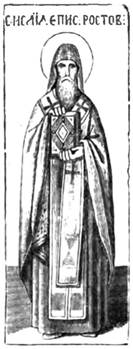
Св. Исаия родился в Киевском крае. С молодых лет возлюбив Господа, принял он иночество в Печерской обители преподобных Антония и Феодосия. Подвизаясь здесь с твёрдостью, он помощью благодати превзошёл многих в посте, молитве и других добродетелях. «Крепость в человеке, говорил древний старец, зависит не от природы человека, которая подвержена переменам, но от решительного намерения, укреплённого помощью Божией»223. Так стал известен великими подвигами иноческими блаженный Исаия! Когда блаженный Варлаам, игумен Димитриева монастыря, скончался на пути из Константинополя, «христолюбивый князь Изяслав избрал из братии великого монастыря Феодосиева Исаию, просиявшего иноческим житием, и назначил в игумена монастыря св. Димитрия». Это было в 1065 году224. 1078 году преподобный Исаия принимал участие в молитве Печерских отцов за прельщённого Никиту и в том же году «за высокую жизнь свою» поставлен в епископа городу Ростову225.
St. Isaiah was born in the region of Kiev. From his youth, having loved the Lord, he received monastic tonsure in the Monastery of the Caves of the Venerable Anthony and Theodosius. Struggling here with steadfastness, by the help of grace he surpassed many in fasting, prayer, and other virtues. "Strength in a man," said an ancient elder, "depends not on the nature of man, which is subject to change, but on a resolute intention, strengthened by the help of God."223 Thus did the blessed Isaiah become known for his great monastic labors! When the blessed Barlaam, abbot of the Monastery of St. Demetrius, reposed on the way from Constantinople, "the Christ-loving Prince Iziaslav chose from among the brethren of the great Monastery of Theodosius Isaiah, who shone forth in monastic life, and appointed him abbot of the Monastery of St. Demetrius." This was in the year 1065.224 In the year 1078, the Venerable Isaiah took part in the prayer of the Fathers of the Caves for the deluded Nikita, and in the same year, "for his lofty life," he was consecrated bishop for the city of Rostov.225
В Ростовской епархии ожидали св. Исаию тяжёлые подвиги. Вот что происходило в Ростовской области за 4 года до прибытия его на кафедру! «Случился, говорит летопись, голод в Ростовской области. Из Ярославля поднялись два волхва. Мы знаем, говорили они, кто удерживает обилие. Они отправились по Волге и куда придут в погост, указывают на лучших жён и говорят: эти удерживают хлеб, те – мёд, те – рыбу. К ним приводили своих сестёр, матерей и жён; а они обманом будто прорезывали за плечами и вынимали то жито, то рыбу. И убивали многих жён, а имение их забирали себе. Пришли они на Белоозеро – и с ними было до 300 человек. В то же время пришлось прийти от Святослава Яну, сыну Вашатину, для сбора дани. Белозерцы рассказали ему, что два кудесника избили множество жён по Волге и Шексне и пришли сюда. Ян, спросив, чьи они подданные, и узнав, что они – его князя, послал сказать бывшим с ними: выдайте мне волхвов, они – подданные моего князя. Те не послушались. Ян пошёл сам и без оружия. Отроки сказали ему: не ходи без оружия, – обесчестят тебя. Он велел отрокам вооружиться и они, в числе 12-ти, пошли с ним по лесу. Те также вышли против Яна. Когда Ян шёл с топором, трое из них подошли к Яну и сказали: ты идёшь на явную смерть, не ходи. Он велел их бить, а сам шёл далее. Они сунулись на Яна и один поднял топор на Яна, но промахнулся. Ян, оборотя топор, ударил обухом и приказал отрокам рубить их. Те убежали в лес. Тут убили Янова священника. Ян, войдя в город Белозерцев, сказал: если не поймаете мне этих волхвов, то остаюсь у вас на всё лето. Белозерцы пошли, поймали и привели их к Яну. «За что погубили вы столько людей?» спросил Ян. «Они удерживают обилие», отвечали волхвы: «если истребим их, будет изобилие хлеба; если угодно, мы в глазах твоих вынем жито, либо рыбу, или другое что!» Ян сказал: «Лжёте вы, Бог сотворил человека из земли, составленного из костей, жил и крови; другого ничего нет в нём». Они отвечали: «Мы знаем, как сотворён человек». – «Как же?» просил Ян. Они сказали: «Бог, мывшись в бане и вспотев, отёрся ветошью и бросил с неба на землю; сатана вступил в спор с Богом, кому творить из того человека? Диавол сотворил тело, а Бог вложил душу». – Ян сказал: «истинно прельстил вас бес; какому Богу вы веруете?» Они отвечали; «Тому, что в бездне... Боги говорят нам, что не сделаешь ты нам ничего худого; – мы должны явиться пред Святослава». Ян приказал их бить и вырвать бороды. Когда их били, Ян спросил: «что ж говорят вам боги?» – «Мы должны стать перед Святослава», отвечали они... Ян спросил возчиков: «убит ли ими кто из ваших родственников?» – У одного убита мать, говорили они, у того сестра, у третьего дети. «Мстите же им», сказал Ян. Те схватив убили и повесили их на дубе226.
Heavy labors awaited St. Isaiah in the Rostov diocese. This is what took place in the Rostov region four years before his arrival at the see! "A famine occurred," says the chronicle, "in the Rostov region. Two sorcerers arose from Yaroslavl. 'We know,' they said, 'who holds back abundance.' They went along the Volga, and wherever they came to a settlement, they pointed out the best women and said: 'These hold back grain, those hold back honey, those hold back fish.' To them were brought their sisters, mothers, and wives; and they, by deceit, as if cutting behind the shoulders, drew out either grain or fish. And they killed many women, and took their property for themselves. They came to Beloozero—and with them were up to 300 men. At the same time, Ian, son of Vyshata, happened to come from Sviatoslav to collect tribute. The people of Beloozero told him that two sorcerers had beaten many women along the Volga and the Sheksna and had come there. Ian, having asked whose subjects they were, and learning that they were subjects of his prince, sent word to those with them: 'Hand over the sorcerers to me; they are subjects of my prince.' They did not obey. Ian went himself, unarmed. His servants said to him: 'Do not go unarmed—they will dishonor you.' He ordered his servants to arm themselves, and they, twelve in number, went with him through the forest. Those also came out against Ian. When Ian was walking with an axe, three of them approached Ian and said: 'You are going to certain death; do not go.' He ordered them to be beaten, and went on himself. They rushed at Ian, and one raised an axe against Ian, but missed. Ian, turning the axe, struck with the blunt end and ordered his servants to cut them down. They fled into the forest. There they killed Ian's priest. Ian, entering the town of Beloozero, said: 'If you do not catch these sorcerers for me, I will remain with you all summer.' The people of Beloozero went, caught them, and brought them to Ian. 'Why have you destroyed so many people?' asked Ian. 'They hold back abundance,' answered the sorcerers; 'if we destroy them, there will be abundance of grain; if you wish, before your eyes we will draw out grain, or fish, or something else!' Ian said: 'You lie; God created man from the earth, composed of bones, sinews, and blood; there is nothing else in him.' They answered: 'We know how man was created.' 'How then?' asked Ian. They said: 'God, having washed in a bath and sweated, wiped Himself with a rag and threw it from heaven to earth; Satan entered into a dispute with God as to who should create man from that? The devil created the body, and God placed the soul.' Ian said: 'Truly the demon has deceived you; in what God do you believe?' They answered: 'In him who is in the abyss... The gods tell us that you will do us no harm—we must appear before Sviatoslav.' Ian ordered them to be beaten and their beards torn out. While they were being beaten, Ian asked: 'What then do the gods tell you?' 'We must stand before Sviatoslav,' they answered... Ian asked the carters: 'Has any of your relatives been killed by them?' 'One has had his mother killed,' they said, 'another his sister, a third his children.' 'Avenge yourselves on them, then,' said Ian. They seized them, killed them, and hanged them on an oak tree.226
Вот с какими людьми надлежало иметь дело святителю Исаии! Вот каких людей обширной Ростовской епархии, заключавшей тогда и Белозерскую и Суздальскую страну, надлежало учить св. вере и благочестию227.
Such were the people with whom Hierarch Isaiah had to deal! Such were the people of the vast Rostov diocese, which then included both the Beloozero and Suzdal regions, whom he had to teach the holy faith and piety!227
К сожалению, древнее известие о святителе не передаёт нам подробных сведений об Апостольской деятельности его. «Блаженный святитель, говорит оно, найдя в Ростове людей новокрещённых, ещё не утвердившихся в вере, усердно напоил их учением своим. Потом обходил поселения Ростовской и Суздальской областей, увещевал неверных веровать в Св. Троицу и просвещал св. крещением; где находил идолов, истреблял их огнём; верных убеждал быть неподвижными и непоколебимыми в вере»228. Вот всё, что говорит древнее житие св. Исаии о его трудах для св. веры! Сколько лет проведено им в таких подвигах? И по житию его, в борьбе с суеверием прожил он до половины 1089 г. и след. около 11-ти лет. В церковной службе св. Исаии видим ещё две черты проповеди св. Исаии: одну ту, что св. Исаия на местах суеверия строил святые храмы, другую ту, что он окончательно низложил язычество в Ростовско-Суздальской стороне229. Прекрасно выражен в одной стихире дух служения св. Исаии. Она поёт: «как назовём тебя, святитель? Ты – ангел, потому что бесплотно жил ты на земле; ты – Апостол, потому что научил благоверию Русские пределы; ты – мученик, потому что для Христа подвизался ты до смерти, обращая людей от тьмы нечестия и приводя на пажить благоведения»230. Утешением св. Исаии служило участие князя Владимира Мономаха в его служении. Набожный князь построил на свой счёт храм в Ростове и прислал для него одну из чудесных икон пр. Алипия231. В августе 1089 г. вместе с митрополитом Иоанном св. Исаия освящал великую Печерскую церковь, приглашённый, как говорит повесть о ней, ангелом Божиим232. Возвращаясь из Киева, он утешен был той любовью, с какой встретила его паства его. Блаженная кончина его последовала «на второе лето» по возвращении из Киева и след. в 1090 году233.
Unfortunately, the ancient account of the Hierarch does not convey to us detailed information about his Apostolic activity. "The blessed Hierarch," it says, "finding in Rostov people newly baptized, not yet confirmed in the faith, zealously watered them with his teaching. Then he went around the settlements of the Rostov and Suzdal regions, exhorted the unbelievers to believe in the Holy Trinity, and enlightened them with holy baptism; where he found idols, he destroyed them with fire; he urged the faithful to be immovable and unshaken in the faith."228 This is all that the ancient life of St. Isaiah says about his labors for the holy faith! How many years did he spend in such struggles? According to his life, he lived in the struggle against superstition until the middle of 1089, and consequently about eleven years. In the church service for St. Isaiah, we see two further features of St. Isaiah's preaching: one, that St. Isaiah built holy churches on the sites of superstition; the other, that he finally overthrew paganism in the Rostov-Suzdal region.229 The spirit of St. Isaiah's service is beautifully expressed in one sticheron. It sings: "How shall we call you, O Hierarch? You are an angel, for you lived incorporeally on earth; you are an Apostle, for you taught the Russian borders the true faith; you are a martyr, for you struggled for Christ unto death, turning people from the darkness of impiety and leading them to the pasture of the good tidings."230 The participation of Prince Vladimir Monomakh in his service served as a consolation to St. Isaiah. The pious prince built a church in Rostov at his own expense and sent for it one of the miraculous icons of the Venerable Alypius.231 In August 1089, together with Metropolitan John, St. Isaiah consecrated the great Church of the Caves, invited, as the story about it says, by an angel of God.232 Returning from Kiev, he was consoled by the love with which his flock met him. His blessed repose followed "in the second year" after his return from Kiev, and consequently in the year 1090.233
Когда в 1164 г. рыли рвы для нового Ростовского собора, которым заменялся сгоревший, тогда, говорит древнее известие, «нашли гроб блаженного Исаии; открывши его, увидели одежду и тело святителя нетленными и прославили Бога, Который благоволил прославить угодника Своего не только в жизни, но и по смерти; сколько лет прошло, а одежда и тело блаженного остались неприкосновенными для тления»234. Мощи святителя поставили тогда в церкви св. Иоанна, и так как каменный храм едва был окончен, как обрушился, то они перенесены в собор уже в 1231 году235. Между тем тогда же, как в первый раз обретены были св. мощи, они прославились чудесами и тогда же установлено праздновать память св. Исаии236.
When in 1164 ditches were being dug for the new Rostov cathedral, which replaced the one that had burned down, then, says an ancient account, "they found the coffin of the blessed Isaiah; having opened it, they saw the clothing and body of the Hierarch incorrupt, and they glorified God, Who was pleased to glorify His saint not only in life, but also after death; however many years had passed, the clothing and body of the blessed one remained untouched by corruption."234 The relics of the Hierarch were then placed in the church of St. John, and since the stone church was scarcely finished when it collapsed, they were transferred to the cathedral only in 1231.235 Meanwhile, at the very time when the holy relics were first uncovered, they were glorified by miracles, and at that time the celebration of the memory of St. Isaiah was established.236
«Приими, святитель Исаия, хвалу рабов недостойных и даруй нам безбедно переплыть неверное море сей жизни; вознеси за нас молитву к Богу и избавь от бед, гнетущих и ожидающих нас, да всегда величаем тебя»237.
"Accept, O Hierarch Isaiah, the praise of unworthy servants, and grant us to cross safely the uncertain sea of this life; offer up for us prayer to God, and deliver us from the afflictions that oppress and await us, that we may ever magnify you."237
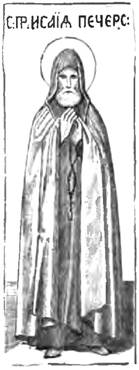
Жизнь пр. Исаии Печерского, нетленно почивающего в Антониевой пещере, не описана в патерике. У Кальнофойского он так обозначен: «преподобный старец Исаия трудолюбивый». Это даёт видеть, что подвигом жизни, которым препод. Исаия угодил Господу, был неутомимый труд, продолжавшийся и в старости. Он блаженно почил мая 15-го 1115 г. Память его совершается в обители 15-го мая по общей минее238.
The life of the Venerable Isaiah of the Kiev Caves, who reposes incorrupt in the Anthony Cave, is not described in the Patericon. By Kalnofoisky he is designated thus: "the venerable elder Isaiah, the labor-loving." This shows that the labor by which the Venerable Isaiah pleased the Lord was unflagging toil, which continued even into old age. He reposed blessedly on May 15, 1115. His memory is celebrated in the monastery on May 15 according to the general menaion.238
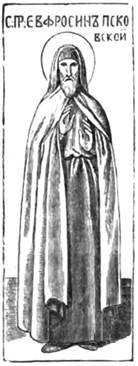
Родители преп. Евфросина, в мире Елеазара, были простые поселяне Псковского края239. Они желали, чтобы вступил он в брак, но он скрылся из дома их и на Снятной горе, что близ Пскова, принял монашество. Здесь он служил братии в поварне и пекарне и усердно молился Богу. Потом, по любви к безмолвию, удалился он на реку Толву и в 30-ти верстах от Пскова, построив себе келью, стал подвизаться в молитве и посте; это было в 1425 году240. Первым сожителем его в пустыни был инок Серапион; пробыв несколько времени у преподобного, он вздумал, без его благословения, строить себе келью на другом берегу Толвы, но наученный несчастием (повреждением ноги) остался навсегда послушником его241. Приходивших в пустыню Евфросин благословлял жить скитски. Когда число пустынников умножилось, по их просьбе Евфросин построил храм молитвы в честь трёх святителей, с тёплым приделом во имя преп. Онуфрия. Вместе с построением храма устроено было и общежитие. Преподобный был строг к себе, отказывал себе и в естественных утешениях. Раз пришла к нему мать, желая взглянуть на давно утраченного сына; Евфросин не отворил ей двери кельи своей, а упросил постричься где-либо в обители. По той же строгости к себе, не принял он на себя звания игумена, а предоставил его одному из учеников своих, сам же продолжал он жить уединённо. Благоговейные ученики почтили места уединённой молитвы его памятниками. Каменный крест сохраняет память о молитвах его в лесу, близ озера; деревянный столб на восточной стороне, за оградой обители, говорит о том же242.
The parents of the Venerable Euphrosynus, in the world Eleazar, were simple peasants of the Pskov region.239 They desired that he should enter into marriage, but he hid himself from their house and on Snyatnaya Hill, near Pskov, received monastic tonsure. Here he served the brethren in the kitchen and bakery and fervently prayed to God. Afterwards, out of love for silence, he withdrew to the River Tolva, and thirty versts from Pskov, having built himself a cell, he began to struggle in prayer and fasting; this was in the year 1425.240 His first companion in the hermitage was the monk Serapion; having spent some time with the Venerable One, he thought, without his blessing, to build himself a cell on the other bank of the Tolva, but taught by misfortune (an injury to his leg), he remained forever his novice.241 Euphrosynus blessed those who came to the hermitage to live in skete fashion. When the number of hermits increased, at their request Euphrosynus built a church of prayer in honor of the Three Hierarchs, with a warm side-chapel in the name of the Venerable Onuphrius. Together with the building of the church, a cenobitic community was also established. The Venerable One was strict with himself, denying himself even natural comforts. Once his mother came to him, wishing to look upon her long-lost son; Euphrosynus did not open the door of his cell to her, but begged her to be tonsured somewhere in a monastery. By the same strictness toward himself, he did not accept upon himself the rank of abbot, but entrusted it to one of his disciples, while he himself continued to live in seclusion. His reverent disciples honored the places of his solitary prayer with monuments. A stone cross preserves the memory of his prayers in the forest, near a lake; a wooden pillar on the eastern side, beyond the monastery enclosure, speaks of the same.242
«Вот я, раб Божий, инок Евфросин, ещё при жизни моей установляю о монастырской жизни, об усадьбах и постройках и о всём вообще. Поручаю всё это духовному отцу моему, игумену Харлампию, служителю Василия Великого, Григория Богослова и Иоанна Златоустого и преп. Онуфрия, а вместе и всей братии о Христе. Ни игумену, ни братии моей, ни келарю, ни живущим в поселении, ни служащим в обители, не следует пользоваться тем для себя, а всё употреблять на общую пользу. Если придёт брат и станет просить игумена и братию (о принятии его), то принимать его, как заведено. Если чернец или белец даёт что-нибудь в обитель по своей воле, для спасения души своей, то пусть даёт как милостыню, а не в складчину («а не вскуп»); складчины нет в монастыре; данного не искать на игумене и чернецах, поскольку дано то св. церкви, а не игумену и братии; пусть чернец или белец не ищут того на св. церкви. Правила св. отцов подвергают проклятию тех, которые отнимают приношение у св. церкви, и они умирают внезапной смертью. Надобно помнить, как Анания и Сапфира обещали дар свой Богу и потом солгали перед Господом и вдруг поражены были жестокой болезнью. Надобно страшиться такого дела: подобную обиду Себе отмщает Бог и здесь, и в будущей жизни. По правилам св. отцов, чернецы не должны вкушать пищу по кельям, кроме разве праздника, или особого угощения. Жёнам не бывать в монастыре, бани не иметь; немецких одежд не носить монахам, ни шуб с пухом. Если брат умрёт в монастыре, то отправлять по нём сорокоуст. Если мирянин послужит обители года два или три, то и по нём отправлять (сорокоуст). Кто будет обижать дом святителей и преп. отца Онуфрия, да будет под тяжестью святой Церкви. Свидетель всему тому игумен Харлампий, служитель святителей и преп. отца Онуфрия. Если умрёт игумен Харлампий, то кого возлюбят святители и преп. Онуфрий, кого по благословению игумена Харлампия изберут братия, тот пусть и будет игуменом. Да будет Бог помощником нам»243. Это завещание в кратком виде предлагает правила устава Евфросинова, сохранившегося до нашего времени. Вот замечательные мысли устава: настоятель не должен иметь ничего лишнего против братии, «ни ризы более нарядной и мягкой, ни пищи более вкусной» (гл. 3). Братия должна слушаться настоятеля со всей покорностью. «Послушание – лествица на небо; оно выше поста и пустынного подвига. Ангел Господний ходит за послушливым, считает шаги послушания и представляет их лицу Божию, как благовоние приятное; если же видит капли пота его, то приносит как кровь мученическую» (гл. 5). Куда бы настоятель ни послал на службу, должно идти без всяких отговорок и ослушания; «без благословения же настоятеля и особенно по своим каким-либо личным надобностям никуда не следует отлучаться» (гл. 16). Если кто начнёт противоречить настоятелю и заведёт спор и смуту, то запереть его в тёмное место, пока не покается; непокорного же и после вразумления высылать из монастыря, как гнилой член, и из внесённого им в монастырь ничего назад не отдавать (гл. 17). Странников питать в обители 3 дня, не требуя от них работы или платы (гл. 23)244.
“Behold, I, the servant of God, the monk Euphrosynus, while still in my lifetime establish rules concerning the monastic life, concerning the estates and buildings, and concerning everything in general. I entrust all this to my spiritual father, Abbot Charalampius, the servant of Basil the Great, Gregory the Theologian, and John Chrysostom, and of the Venerable Onuphrius, and together with him to all the brethren in Christ. Neither the abbot, nor my brethren, nor the cellarer, nor those living in the settlement, nor those serving in the monastery, should use anything for themselves, but should employ all for the common benefit. If a brother comes and asks the abbot and the brethren (to receive him), let them receive him as is established. If a monk or a layman gives something to the monastery of his own will, for the salvation of his soul, let him give it as alms, and not as a contribution (‘a ne vskup’); there is no contribution in the monastery; let what has been given not be sought from the abbot and the monks, since it has been given to the holy church, and not to the abbot and the brethren; let the monk or layman not seek it from the holy church. The rules of the holy fathers place under anathema those who take away an offering from the holy church, and they die a sudden death. One must remember how Ananias and Sapphira promised their gift to God and then lied before the Lord and were suddenly struck with a severe illness. One must fear such a deed: God avenges such an offense against Himself both here and in the future life. According to the rules of the holy fathers, monks should not eat food in their cells, except perhaps on a feast day or for a special treat. Women are not to be in the monastery, nor is there to be a bath; monks are not to wear German garments, nor fur-lined coats with down. If a brother dies in the monastery, let a forty-day memorial be performed for him. If a layman serves the monastery for two or three years, let a forty-day memorial be performed for him as well. Whoever shall offend the house of the hierarchs and the Venerable Father Onuphrius, let him be under the burden of the holy Church. Witness to all this is Abbot Charalampius, the servant of the hierarchs and the Venerable Father Onuphrius. If Abbot Charalampius dies, then whomever the hierarchs and the Venerable Onuphrius shall love, whomever the brethren shall choose with the blessing of Abbot Charalampius, let him be abbot. May God be our helper”243. This testament briefly sets forth the rules of the Rule of Euphrosynus, which has been preserved to our time. Here are the remarkable thoughts of the Rule: the superior should have nothing superfluous beyond the brethren, “neither a more ornate and soft garment, nor more tasty food” (ch. 3). The brethren must obey the superior with all submission. “Obedience is a ladder to heaven; it is higher than fasting and the ascetic labor of the hermitage. The Angel of the Lord walks with the obedient one, counts the steps of obedience, and presents them before the face of God as a sweet fragrance; if he sees the drops of his sweat, he offers them as martyr’s blood” (ch. 5). Wherever the superior sends for service, one must go without any excuses or disobedience; “without the blessing of the superior, and especially for one’s own personal needs, one should not go anywhere” (ch. 16). If anyone begins to contradict the superior and stirs up dispute and disturbance, let him be locked in a dark place until he repents; but the one who remains disobedient even after admonition is to be expelled from the monastery as a rotten member, and nothing of what he brought into the monastery is to be given back to him (ch. 17). Strangers are to be fed in the monastery for three days, without demanding work or payment from them (ch. 23)244.
В то время часто переходили из одной обители в другую, считая это духовной свободой, и то отдавали Богу в дар имущество, то хотели располагать им как собственностью. Один инок, отдав преп. Евфросину серебро на устроение обители, после стал жалеть о том. Преподобный велел отдать ему серебро. Инок удалился в другую обитель, но здесь скоро ослеп. Приведённый к Евфросину в раскаянии, по молитве его, исцелился душевно и телесно, прозрел245.
At that time, many often moved from one monastery to another, considering this spiritual freedom, and at one time they would give property to God as a gift, at another they wished to dispose of it as their own possession. One monk, having given silver to the Venerable Euphrosynus for the building of the monastery, later began to regret it. The Venerable one ordered the silver to be returned to him. The monk withdrew to another monastery, but there he soon became blind. Brought to Euphrosynus in repentance, through his prayer he was healed in soul and body, and received his sight245.
Преподобный Евфросин воспитал между учениками своими усердных подвижников благочестия. Таков был преп. Серапион, предваривший учителя кончиной за 8 месяцев; одежды его не хотел взять никто, даже из нищих; так она была ветха и плоха246. Таков был Досифей, составивший пустынное общежитие на великом озере, в честь святых Апостолов247. Игнатий был первым игуменом обители Евфросиновой и с ревностью совершал подвиги иноческие; родной брат его Харлампий был преемником его; другой брат Памфил также был игуменом и известен посланием об Иванове дне или против языческих суеверий сего дня248.
The Venerable Euphrosynus raised among his disciples zealous ascetics of piety. Such was the Venerable Serapion, who preceded his teacher in death by eight months; no one, not even among the beggars, wanted to take his garments, so worn and poor were they246. Such was Dositheus, who established a cenobitic hermitage on the Great Lake, in honor of the Holy Apostles247. Ignatius was the first abbot of the monastery of Euphrosynus and zealously performed monastic labors; his own brother Charalampius was his successor; another brother, Pamphilus, was also abbot and is known for an epistle concerning St. John’s Day, or against the pagan superstitions of that day248.
Подвижник Божий почил от трудов на 95 году жизни своей, 15 мая 1481 года. Он был роста среднего, сухой телом, с лицом кротким и очами приветливыми249.
The ascetic of God reposed from his labors in the 95th year of his life, on May 15, 1481. He was of medium stature, lean of body, with a meek face and kindly eyes249.
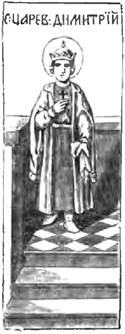
Св. Димитрий царевич, сын царя Иоанна Грозного и Марии Феодоровны из роду Нагих, родился в 1582 году 19 октября250. Близкий к смерти царь Иоанн назначил в удел царевичу с его материю Углич, а воспитание его вверил царскому советнику Бельскому251. Царь Феодор вскоре по восшествии на престол, по настоянию сильных бояр, опасавшихся соперничества Нагих, отправил царицу Марию с её сыном в Углич. Добрый царь горько плакал, прощаясь с единственным братом; он назначил царевичу пышный штат двора, но скорбел, что удаление брата в Углич не более, как заточение; воспитатель Бельский остался в Москве252. Годунов вскоре после того стал полновластным правителем России: добрый Феодор остался почти при одном имени царя, а всё делалось, как хотел Борис; иностранные дворы присылали Годунову дары наравне с царём. Между тем Борису известно было, что все в государстве, начиная с царя Феодора, признают Димитрия наследником престола и имя его поминалось в церквах. Сам Борис в разных делах Феодорова времени признавал Димитрия наследником престола. Когда в 1586 г. совет вельможей с выбранными народа предложил царю Феодору развестись с неплодной женой, сестрой Годунова, по её бесчадию, Годунов отвечал, что есть законный наследник престола, Димитрий253. В следующем году, когда Русские послы отправлялись на Варшавский сейм хлопотать о том, чтобы Польша признала Феодора царём своим, Годунов в наказе послам писал: «если паны начнут просить, чтобы государь назначил им на государство брата своего, то отвечать, что это невозможно, – царевич ещё молод, всего четырёх лет»254. Так Борис видел в Димитрии наследника престола. Но как с страстью к власти, как привыкшему распоряжаться всем с мощью самодержавного царя, отказаться от всяких надежд на продолжение власти? К несчастью, льстецы говорили Борису, что при Димитрии ждёт его не власть царского советника, а плаха, и что родственники царевича Нагие готовы отмстить ему за своё заточение255. Тревожимый опасениями за свою будущность и обольщаемый мечтами о власти, Борис стал действовать против царевича, как против личного врага своего. Сперва запретил он поминать имя его в церквах, давая знать России, что сын седьмой жены Иоанновой – не наследник престола. поскольку же Борису известно было, что много было таких, которые по тому самому, что оскорбительное распоряжение о царевиче принадлежало Борису, готовы всеми мерами действовать за царевича; то Борису смерть царевича казалась необходимой. Люди, поставившие судьбу свою в зависимость от судьбы Годунова, довели в нём эту мысль до убеждения256. Вследствие того дьяк Михаил Битяговский послан в Углич править земскими делами и хозяйством вдовой царицы. Вместе с ним явились в Углич сын Битяговского Даниил, племянник Никита Качалов и Осип Михайлов, сын мамки Димитриевой. И вот 15 мая «царевича в Угличе не стало»257. Как это случилось? Посланные из Москвы князь Василий Шуйский, окольничий Клешнин и дьяк Вылузгин доставили царю Феодору следственное дело, которым уверяли, что царевич, играя ножом с детьми в тычку, вдруг от падучей болезни упал и закололся258. Но это была только клевета, которой вновь оскорбляли имя св. царевича. Следствие, рассмотренное перед судом беспристрастия, оказывается жалким усилием закрыть правду в глазах царя Феодора. В нём не записали общего голоса Угличан, уверявшего следователей, что царевич убит. В нём старались не о том, чтобы открыть правду, а о том только, чтобы выставить царевича больным. Например, самый первый допрос был следующий: «которым обычаем царевича не стало? И что его болезнь?» В продолжение всего следствия вся заботливость следователей устремлена к тому, чтобы набрать как можно более голосов о болезни царевича. Напротив, если кто из допрашиваемых упоминает о насильственной смерти царевича, такое показание остаётся без всякого внимания, – не спрашивают: при ком это было? Кто убийцы? Как и когда убит царевич? Нежелание следователей открыть истину и желание закрыть её видно по показанию почти каждого ответчика259. Современники, за исключением услужливых слуг Бориса, и свои260, и чужие261 единогласно говорят, что царевича закололи убийцы, по желанию Годунова. Сам Шуйский в 1606 г. свидетельствовал перед целой Россией, что «царевич князь Димитрий Иванович, по зависти Бориса Годунова, яко ягня незлобиво, заклася, убит как невинный агнец»262. Ложь, которою хотели закрыть убийц и которой оскорбляли мученика, ясно открылась тогда, как в 1606 г. открыли гроб царевича; тогда нашли, что «в левой руке царевич держал полотенце, шитое золотом, а в другой орехи», в каком виде постигла его и смерть263. Если же правая рука его занята была орехами, то как мог он в той же руке держать нож? К тому же, в падучей болезни невозможны произвольные движения рукой, чтобы заколоть себя; если же царевич упал прямо гортанью на нож, гортань его была бы проколота, а не перерезана, как видят это теперь. Так царевич, невинный и чистый, был умерщвлён злодейски. По летописям и частью по самому следственному делу, злодейство совершилось так: 15 мая, в полдень, когда во дворце не было Нагих, мамка Волохова вынесла царевича на двор; сюда же сошла и кормилица, напрасно уговаривавшая мамку не носить царевича264. Убийцы уже дожидались жертвы. Осип Волохов, взяв царевича за руку, спросил: это у тебя, государь, новое ожерельице?» Ребёнок поднял голову и отвечал: «нет, старое». В эту минуту сверкнул нож, но убийца не захватил гортани и убежал. Димитрий упал. Кормилица пала на него, чтобы защищать его собой, и стала кричать. Битяговский и Качалов отняли у неё царевича и дорезали. Выбежала мать и стала кричать265. Соборный пономарь, видевший убийство, зазвонил в колокол, чтобы собрать народ. Михаил Битяговский бросился к колокольне остановить тревогу, но пономарь заперся в колокольне и продолжал тревогу266. Сбежавшийся народ, узнав о преступлении, по внушению Нагих, убил убийц – Михаила Битяговского и ещё 12 человек: несчастное самоуправство облегчило следователям средства закрыть главное преступление. Царевича погребли в Угличе.
St. Demetrius the Tsarevich, son of Tsar John the Terrible and Mary Feodorovna of the Nagoy family, was born in the year 1582 on the 19th of October250. The Tsar John, being near death, appointed the town of Uglich as an appanage for the Tsarevich together with his mother, and entrusted his upbringing to the Tsar’s counsellor Belsky251. Tsar Theodore, soon after his accession to the throne, at the insistence of the powerful boyars, who feared the rivalry of the Nagoy family, sent the Tsarina Mary with her son to Uglich. The good Tsar wept bitterly as he took leave of his only brother; he appointed a splendid court retinue for the Tsarevich, but grieved that the removal of his brother to Uglich was nothing other than an imprisonment; the tutor Belsky remained in Moscow252. Godunov soon after that became the absolute ruler of Russia: the good Theodore remained with scarcely more than the name of Tsar, while everything was done as Boris wished; foreign courts sent gifts to Godunov on a par with the Tsar. Meanwhile, Boris knew that everyone in the state, beginning with Tsar Theodore, acknowledged Demetrius as heir to the throne, and his name was commemorated in the churches. Boris himself, in various affairs of Theodore’s time, acknowledged Demetrius as heir to the throne. When in 1586 the council of nobles together with elected representatives of the people proposed to Tsar Theodore that he divorce his barren wife, Godunov’s sister, on account of her childlessness, Godunov replied that there was a lawful heir to the throne, Demetrius253. In the following year, when Russian envoys were sent to the Warsaw Diet to negotiate that Poland should recognize Theodore as its Tsar, Godunov wrote in the instructions to the envoys: “If the lords begin to entreat that the sovereign appoint his brother to rule over them, then answer that this is impossible—the Tsarevich is still young, only four years old”254. Thus Boris saw in Demetrius the heir to the throne. But how, with a passion for power, being accustomed to direct everything with the might of an autocratic Tsar, could he renounce all hopes of continuing his authority? Unfortunately, flatterers told Boris that under Demetrius what awaited him was not the power of a Tsar’s counsellor, but the executioner’s block, and that the Tsarevich’s relatives, the Nagoy family, were ready to take vengeance upon him for their imprisonment255. Troubled by fears for his own future and seduced by dreams of power, Boris began to act against the Tsarevich as against a personal enemy. First he forbade the commemoration of his name in the churches, giving Russia to understand that the son of John’s seventh wife was not the heir to the throne. Since Boris knew that there were many who, precisely because the insulting decree concerning the Tsarevich came from Boris, were ready to act in every way on behalf of the Tsarevich, the death of the Tsarevich seemed necessary to Boris. Men who had staked their fate on the fate of Godunov brought this thought in him to the point of conviction256. Consequently, the clerk Michael Bityagovsky was sent to Uglich to administer the zemstvo affairs and the household of the widowed Tsarina. Together with him there appeared in Uglich Bityagovsky’s son Daniel, his nephew Nikita Kachalov, and Osip Mikhailov, the son of Demetrius’s nurse. And then, on the 15th of May, “the Tsarevich in Uglich was no more”257. How did this happen? The envoys sent from Moscow—Prince Basil Shuisky, the okolnichy Kleshnin, and the clerk Vyluzgin—delivered to Tsar Theodore an investigative file, by which they asserted that the Tsarevich, while playing with a knife in a game of “prick” with children, suddenly fell in an epileptic fit and stabbed himself258. But this was merely a slander, by which the name of the holy Tsarevich was again insulted. The investigation, when examined before the tribunal of impartiality, proves to be a pitiful effort to conceal the truth from the eyes of Tsar Theodore. In it, the universal voice of the people of Uglich, who assured the investigators that the Tsarevich had been murdered, was not recorded. In it, they strove not to uncover the truth, but only to represent the Tsarevich as ill. For example, the very first interrogation was as follows: “In what manner did the Tsarevich come to his end? And what was his illness?” Throughout the entire investigation, all the diligence of the investigators was directed toward gathering as many testimonies as possible about the Tsarevich’s illness. On the contrary, if any of those interrogated mentioned the violent death of the Tsarevich, such a deposition was left without any attention—they did not ask: in whose presence did this happen? Who were the murderers? How and when was the Tsarevich killed? The unwillingness of the investigators to uncover the truth and their desire to conceal it is evident from the deposition of almost every respondent259. Contemporaries, with the exception of Boris’s obliging servants, both native260 and foreign261, unanimously say that the Tsarevich was stabbed to death by murderers, at Godunov’s desire. Shuisky himself, in 1606, testified before all Russia that “the Tsarevich Prince Demetrius Ivanovich, through the envy of Boris Godunov, like a guileless lamb, was slaughtered, killed like an innocent lamb”262. The lie with which they sought to cover the murderers and by which they insulted the martyr was clearly revealed when, in 1606, the Tsarevich’s coffin was opened; then they found that “in his left hand the Tsarevich held a towel embroidered with gold, and in the other, nuts,” in which state death had overtaken him263. If his right hand was occupied with nuts, how could he have held a knife in that same hand? Moreover, in an epileptic fit, voluntary movements of the hand to stab oneself are impossible; if the Tsarevich had fallen directly with his throat onto the knife, his throat would have been pierced, not cut, as they now see it. Thus the Tsarevich, innocent and pure, was wickedly put to death. According to the chronicles and partly from the investigative file itself, the crime was committed as follows: on the 15th of May, at midday, when the Nagoy family were not in the palace, the nurse Volokhova brought the Tsarevich out into the courtyard; the wet-nurse also came out, vainly urging the nurse not to take the Tsarevich out264. The murderers were already waiting for their victim. Osip Volokhov, taking the Tsarevich by the hand, asked: “Is this, O Sovereign, a new necklace you have?” The child raised his head and answered: “No, it is an old one.” At that moment a knife flashed, but the murderer did not catch the throat and fled. Demetrius fell. The wet-nurse threw herself upon him to shield him with her own body and began to scream. Bityagovsky and Kachalov tore the Tsarevich from her and finished him off. The mother ran out and began to scream265. The cathedral sexton, who had seen the murder, rang the bell to gather the people. Michael Bityagovsky rushed to the bell tower to stop the alarm, but the sexton locked himself in the bell tower and continued the alarm266. The people who had gathered, learning of the crime, at the instigation of the Nagoy family, killed the murderers—Michael Bityagovsky and twelve other men: this unfortunate act of mob justice made it easier for the investigators to conceal the principal crime. The Tsarevich was buried in Uglich.
Годунов вошёл на престол, но не долго усидел на нём. Явилась тень св. Димитрия – первый Лжедимитрий, и Борис погиб. Убит и самозванец. Шуйский взошёл на престол. Но Ляхи на место одного приготовили другого Лжедимитрия и волновали Россию. Царь Василий Шуйский решился выставить в Москве тело истинного царевича, чтобы рассеять обманы в глазах народа легковерного. С такими намерениями отправлены были в конце мая 1606 года митрополит Филарет, епископ Феодосий и четыре боярина в Углич за телом царевича. «Когда открыт был гроб царевича, так доносили от 28-го мая посланные царю, мощи оказались целы и невредимы, за исключением некоторых частей; лицо, волосы на голове, на костях плоть – невредимы; в левой руке тафтяная ширинка, саван, камчатый кафтанчик, сапожки, орехи в пригоршне – всё цело»; тогда же разные больные получали исцеление при гробе царевича Димитрия, о чём имеются письменные свидетельства267. Июня 3-го царь со всем двором и духовенством встретили св. мощи за городом; июня 5-го поставили их в Архангельском соборе, чтобы на другой день опустить в землю, но на другой день совершилось 13-ть чудесных исцелений, а 6-го числа 12-ть больных выздоровели при мощах царевича и – они оставлены навсегда открытыми в соборе. Тогда определили праздновать царевичу 19-го октября, 15-го мая и 3-го июня268.
Godunov ascended the throne, but did not long sit upon it. The shade of St. Demetrius appeared—the first False Demetrius—and Boris perished. The impostor was also killed. Shuisky ascended the throne. But the Poles, in place of one, prepared another False Demetrius and stirred up Russia. Tsar Basil Shuisky resolved to display the body of the true Tsarevich in Moscow, in order to dispel the deceptions in the eyes of the credulous people. With such intentions, at the end of May 1606, Metropolitan Philaret, Bishop Theodosius, and four boyars were sent to Uglich for the Tsarevich’s body. “When the Tsarevich’s coffin was opened,” so the envoys reported to the Tsar on the 28th of May, “the relics were found whole and undamaged, except for some parts; the face, the hair on the head, the flesh on the bones—undamaged; in the left hand a taffeta kerchief, the shroud, a damask caftan, little boots, nuts in the handful—all intact”; at that time various sick persons received healings at the Tsarevich Demetrius’s grave, of which there exist written testimonies267. On the 3rd of June, the Tsar with all his court and the clergy met the holy relics outside the city; on the 5th of June they were placed in the Archangel Cathedral, to be interred on the following day, but on that next day thirteen miraculous healings took place, and on the 6th twelve sick persons were healed at the Tsarevich’s relics—and they were left forever uncovered in the cathedral. It was then determined to celebrate the Tsarevich’s memory on the 19th of October, the 15th of May, and the 3rd of June268.
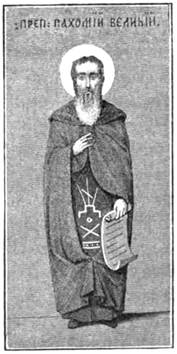
Пахомий, за высоту своей жизни получивший наименование Великого, был истинно достойно-избранным сосудом Божией благодати. Обращение его ко Христу совершилось таким образом: родом Египтянин, родившийся в семействе язычников, на 18-м году поступил Пахомий в военную службу – во время войны, бывшей между Константином Великим и Максимином (312 г.). Терпя различные тяготы, сопряжённые с передвижением войск в военное время, новобранец Пахомий был отрадно удивлён, когда встретил необычайно-приветливое обращение со стороны жителей одного Фиваидского города, через который случилось войску проходить.
Pachomius, who for the height of his life received the name of the Great, was truly a vessel worthily chosen for God’s grace. His conversion to Christ came about in the following manner: an Egyptian by birth, born into a family of pagans, at the age of eighteen Pachomius entered military service—during the war that took place between Constantine the Great and Maximinus (A.D. 312). Enduring various hardships connected with the movement of troops in wartime, the new recruit Pachomius was pleasantly astonished when he encountered an unusually kind treatment on the part of the inhabitants of a certain Thebaid city through which the army happened to pass.
– Что за жители этого города, которые снабдили нас и пищей, и одеждой, и утешили всяким добрым словом? – спросил молодой воин.
“What manner of people are the inhabitants of this city, who have supplied us both with food and clothing, and have comforted us with every kind word?” asked the young soldier.
– «Это – христиане, – отвечали ему, – это такие люди, которые всегда милостивы, гостеприимны, не мстительны даже ко врагам своим и всегда служат безвозмездно, ожидая воздаяния только от Единого Бога, Живущего на небесах».
“These are Christians,” they answered him, “these are people who are always merciful, hospitable, not vengeful even toward their enemies, and always serve without payment, expecting reward only from the One God, Who lives in the heavens.”
Сильное впечатление произвели на язычника такая встреча и такие отзывы о христианах, совершенно неизвестных ему до того времени... В глубине души своей он решил, что если сохранит его Бог, то по окончании войны он непременно присоединится к христианскому обществу. И действительно, как только он был отпущен, то, возвратясь в своё отечество, он поспешил обратиться к одному священнику в селении Хиновоскии, в Верхней Фиваиде и, получив от него наставление в христианской вере, принял святое крещение и причастился Таин Христовых. В ту же ночь он увидел во сне росу, падающую с неба и наполнившую ладонь правой руки его, и услышал при этом: «Уразумей, Пахомий, что это – знамение благодати, которую ниспосылает тебе Христос» ...
A powerful impression was made upon the pagan by such an encounter and such testimonies about Christians, who had been completely unknown to him until that time... In the depths of his soul he resolved that if God preserved him, then upon the conclusion of the war he would without fail join the Christian community. And indeed, as soon as he was released, returning to his homeland, he hastened to turn to a certain priest in the village of Chenoboskion, in Upper Thebaid, and having received from him instruction in the Christian faith, he received holy baptism and partook of the Mysteries of Christ. That same night he saw in a dream dew falling from heaven and filling the palm of his right hand, and he heard at the same time: "Understand, Pachomius, that this is a sign of the grace which Christ sends down upon you"...
С сердцем, преисполненным новых, неземных чувствований, Пахомий пожелал удалиться от мира. Он отошёл в Фиваидскую пустыню и здесь, под руководством известного по строгости подвижничества отшельника Паламона в продолжение нескольких лет утвердился на иноческом пути. Тогда преуспевшему в духовной жизни Пахомию Господь указал самому быть начальником и руководителем пустынножителей.
With a heart filled with new, unearthly feelings, Pachomius desired to withdraw from the world. He departed into the Thebaid desert, and here, under the guidance of the hermit Palamon, known for the strictness of his asceticism, he was established on the monastic path for the course of several years. Then the Lord indicated to Pachomius, who had prospered in the spiritual life, that he himself should be the superior and guide of desert-dwellers.
Близ горы, где жили Паламон с Пахомием, находилась пустыня, поросшая терновником и дикими травами. Сюда часто приходил Пахомий собирать топливо и среди работы в пустынной глуши, в полном уединении, он особенно любил предаваться молитве. И во время молитвы наполняла сердце его беспредельная любовь к людям, разгорался священный порыв служить для спасения других. Такими чувствами и внушениями подготовлял его Господь для деятельности, предстоящей ему...
Near the mountain where Palamon and Pachomius lived there was a desert overgrown with thorn-bushes and wild grasses. Hither Pachomius often came to gather fuel, and amid his labors in the desert wilds, in complete solitude, he especially loved to give himself to prayer. And during prayer his heart was filled with boundless love for people, and a sacred impulse blazed up within him to serve for the salvation of others. With such feelings and inspirations the Lord prepared him for the activity that lay before him...
Ходя однажды по пустыне, Пахомий отошёл дальше обыкновенного и достиг Тавенны, места, лежащего на берегу Нила, в округе Тентирском. Здесь он остановился и предался молитве; продолжительна и усердна была молитва его и в это время осенило его вдохновение поселиться на этом месте и устроить здесь монастырь... Ангел явился ему в виде схимника и вручил уставы и правила постнического жития.
Walking one day through the desert, Pachomius went farther than usual and reached Tabenna, a place lying on the bank of the Nile, in the district of Tentyra. Here he stopped and gave himself to prayer; long and fervent was his prayer, and at this time he was overshadowed by the inspiration to settle in this place and to establish a monastery here... An angel appeared to him in the form of a schemamonk and delivered to him the statutes and rules of the ascetic life.
Пахомий рассказал о своём видении Паламону. Вместе они осмотрели указанное место; старец благословил действовать сообразно бывшему откровению и Пахомий переселился в Тавенну. Не вполне однако же расстались подвижники, они ходили посещать друг друга до самой минуты кончины Паламона на руках ученика своего Пахомия.
Pachomius told Palamon of his vision. Together they examined the indicated place; the elder blessed him to act in accordance with the revelation that had occurred, and Pachomius moved to Tabenna. Not entirely, however, did the ascetics part; they went to visit one another until the very moment of Palamon's death in the arms of his disciple Pachomius.
С верой предпринял Пахомий устроение монастыря; при самом начале этого дела к нему прибыл брат его Иоанн, чтобы жить вместе, но вскоре между ними произошло разногласие. Иоанну, искавшему в пустыне безмолвия и уединения, не понравились широкие замыслы брата об обширной и многолюдной обители, и он противоречил и препятствовал ему в трудах его; Пахомий же, убеждённый, что действует по указанию Божию, не мог переносить противодейстия со стороны брата и однажды, почувствовав сильное движение гнева в душе своей, готов уже был отвечать брату взаимной укоризной, как вдруг сознал своё увлечение гневом и, затворившись с своей кельи, всю ночь провёл в слезах, скорби, что предался дурному чувству, и с сокрушением взывая к Богу: «Вижу, Господи, что мудрость плотская ещё владычествует во мне... Горе мне, в течение долгой жизни в пустыне не выучившемуся укрощать свой гнев! Как дерзну я руководить других, когда сам себя не умею побеждать?» И с того времени не стал спорить с братом, уступая ему во всём до конца его жизни. По смерти же его приступил к устроению монастыря. Мало по малу к нему стали собираться ученики; пока их было немного, Пахомий принял на себя все заботы о монастыре, чтобы ученики его, свободные от внешних забот, легче сосредоточивались и совершенствовались во внутренней жизни. Пахомий сам приготовлял всё необходимое для трапезы братии и всегда во всём был слугой своих учеников, предоставляя им только отраду делания духовного. Ученики дивились его подвигам, его любви, смирению и сохраняемой среди беспрерывной внешней деятельности собранности духа. Часто выражали они желание разделять их труды, но Пахомий возражал им: «Оставьте меня, разве следует жалеть о воле, который вертит колесо?» Таким образом, примером своим назидал Пахомий своих учеников, как совмещать внешнюю деятельность с созерцательной жизнью.
With faith Pachomius undertook the establishment of the monastery; at the very beginning of this work his brother John arrived to him, to live together, but soon a disagreement arose between them. John, who had sought in the desert silence and solitude, did not like his brother's broad designs for a spacious and populous monastery, and he contradicted and hindered him in his labors; Pachomius, however, convinced that he was acting according to God's direction, could not bear opposition from his brother, and once, feeling a strong movement of anger in his soul, was already ready to answer his brother with mutual reproach, when suddenly he recognized his being carried away by anger and, shutting himself in his cell, spent the whole night in tears, grieving that he had given himself over to an evil feeling, and with contrition crying out to God: "I see, O Lord, that carnal wisdom still rules in me... Woe is me, who in the course of a long life in the desert have not learned to curb my anger! How shall I dare to guide others, when I myself do not know how to conquer myself?" And from that time he did not argue with his brother, yielding to him in everything until the end of his life. After his death, however, he proceeded to the establishment of the monastery. Little by little disciples began to gather to him; while they were few, Pachomius took upon himself all the cares of the monastery, so that his disciples, free from external cares, might more easily concentrate and perfect themselves in the inner life. Pachomius himself prepared everything necessary for the meal of the brethren, and always in everything was a servant to his disciples, leaving to them only the delight of spiritual labor. The disciples marveled at his ascetic labors, at his love, humility, and the collectedness of spirit preserved amid unceasing external activity. Often they expressed the desire to share his labors, but Pachomius objected to them: "Leave me; is it fitting to pity the ox which turns the wheel?" Thus by his example Pachomius instructed his disciples how to combine external activity with the contemplative life.
Пахомий заботился не об одних своих учениках: узнав, что многие окрестные пастухи лишены счастья слышать слово Божие и причащаться св. Таин, он с согласия епископа Тентирийского выстроил для них церковь. Сам приходил к ним, чтобы наставлять их, и делал это так применительно к их сердечному пониманию, что даже многие язычники вразумлялись его беседами и принимали крещение в веру Христову.
Pachomius cared not only for his own disciples: learning that many of the neighboring shepherds were deprived of the happiness of hearing the word of God and partaking of the Holy Mysteries, he, with the consent of the bishop of Tentyra, built a church for them. He himself came to them to instruct them, and did this so adaptively to their heartfelt understanding that even many pagans were admonished by his conversations and received baptism into the faith of Christ.
Слава Пахомия распространялась и привлекала к нему множество учеников. Тогда Пахомий, положивший основание монашескому общежитию269, составил строгий монастырский устав, по которому монахи должны были жить в одном монастыре под начальством настоятеля, называвшегося аввой, т. е. отцом, или архимандритом, занимаясь молитвой и работой (земледелием, плетением корзин и циновок). Этот устав сделался впоследствии образцом уставов для других монастырей. Он был написан на Египетском языке, и в 404 году переведён блаженным Иеронимом на Латинский язык по верному Греческому списку.
The fame of Pachomius spread and attracted to him a multitude of disciples. Then Pachomius, who had laid the foundation of monastic cenobitic life269, composed a strict monastic rule, according to which monks were to live in one monastery under the authority of a superior, called an abba, i.e., father, or archimandrite, occupying themselves with prayer and work (agriculture, weaving of baskets and mats). This rule later became the model of rules for other monasteries. It was written in the Egyptian language, and in the year 404 was translated by Blessed Jerome into Latin from a faithful Greek copy.
Главными правилами для братии по этому уставу были: безусловное послушание и нестяжательность; при этом – труд, сопровождаемый молитвой. Во время работы иноки должны были соблюдать молчание; таким образом и при общежитии каждый мог вместе с тем быть и уединённым и безрассеянно держать в уме своём молитву. Поступая в монастырь, никто не должен был делать никакого денежного взноса и должен был отречься от всякой собственности; для содержания же обители все должны были одинаково трудиться. В скором времени пожелавших подчиниться руководству Пахомия было так много, что их пришлось расселить по нескольким монастырям (некоторые из прежде основанных монастырей поступили также под его управление): в каждом из них был особый настоятель; общим же руководителем и образцом для всех был Пахомий. Всякий вечер перед молитвой на ночь он беседовал с иноками и деятельно, неуклонно вёл их по пути совершенствования.
The chief rules for the brethren according to this rule were: unconditional obedience and non-acquisitiveness; with this — labor accompanied by prayer. During work the monks were to observe silence; thus even in the cenobium each one could at the same time be solitary and hold prayer in his mind without distraction. Upon entering the monastery, no one was to make any monetary contribution and was to renounce all property; for the maintenance of the monastery, however, all were to labor equally. In a short time those desiring to submit to the guidance of Pachomius were so many that they had to be settled among several monasteries (some of the previously founded monasteries also came under his administration): in each of them there was a particular superior; the common guide and model for all was Pachomius. Every evening before the night prayer he conversed with the monks and actively, unswervingly led them along the path of perfection.
На другом берегу Нила основал Пахомий женский монастырь; это случилось по следующему поводу. У Пахомия была в мире сестра, которая, слыша рассказы о чудной жизни своего брата, пожелала видеть и посетить его в Тавенне; узнав о прибытии её, он послал через привратника сказать ей, что он – жив и чтобы она не оскорбилась решением его уклониться от свидания с ней, но что если она хочет подражать его жизни, то он займётся построением особой кельи для неё... Поражена была сестра подвижника этим неожиданным предложением, но вместе с тем и тронуто было сердце её и загорелось желанием последовать совету брата. Тогда, избрав место для обители, называвшееся Мен, Пахомий велел братиям построить ей келью и не большую обитель вдали от мужского монастыря и постриг сестру свою в инокини. Когда собрались вокруг неё другие отшельницы, то Пахомий и им дал почти одинаковый с своим монастырём устав, и таким образом был основателем общежития и для инокинь.
On the other bank of the Nile Pachomius founded a women's monastery; this happened on the following occasion. Pachomius had a sister in the world who, hearing accounts of the wondrous life of her brother, desired to see and visit him at Tabenna; learning of her arrival, he sent word to her through the gatekeeper that he was alive and that she should not be offended by his decision to avoid a meeting with her, but that if she wished to imitate his life, he would undertake the building of a separate cell for her... Struck was the sister of the ascetic by this unexpected proposal, but at the same time her heart was touched and a desire blazed up to follow her brother's counsel. Then, choosing a place for the monastery called Men, Pachomius ordered the brethren to build her a cell and a small monastery at a distance from the men's monastery, and tonsured his sister as a nun. When other female recluses gathered around her, Pachomius gave them a rule almost identical to that of his own monastery, and thus he was the founder of the cenobitic life for nuns as well.
В непродолжительном времени сестра его сделалась достойной духовной матерью для вверившихся ей инокинь. Слава о подвигах Тавеннских инокинь распространилась, дошла до Запада и в Риме пробудила решимость на подвиги девства даже в знатнейших женщинах, как напр. богатая вдова Маркея (о которой писал блаженный Иероним).
In a short time his sister became a worthy spiritual mother for the nuns entrusted to her. The fame of the ascetic labors of the Tabennesiote nuns spread, reached the West, and in Rome awakened resolve for the labors of virginity even among the most noble women, as for example the rich widow Marcia (about whom Blessed Jerome wrote).
О монахах же Тавеннских Кассиан говорит: «хотя их было так много под руководством одного начальника, но они так покорны были ему в продолжение всей жизни, как и один здесь (на Западе) не был бы в продолжение даже немногого времени». И «эта покорность и послушание – таковы, что мы в своих монастырях не видывали никого, кто бы мог подражать им в течение только одного года».
Of the Tabennesiote monks Cassian says: "although there were so many of them under the guidance of one superior, they were so obedient to him throughout their whole life as not even one here (in the West) would be for even a short time." And "this submission and obedience are such that we in our monasteries have never seen anyone who could imitate them for even a single year."
Одним из главных занятий Тавеннских монахов было рукоделие. Между ними были всякого рода ремесленники, нужные для содержания общества. Занятия их, по словам Палладия, состояли в том, что «один возделывал землю, другой работал в саду, кто – на кузнице, на мельнице, в кожевне; иные ходили плотничать в мастерскую, иные валяли сукна, другие плели разного рода и величины корзины».
One of the chief occupations of the Tabennesiote monks was handicraft. Among them were craftsmen of every kind needed for the maintenance of the community. Their occupations, according to the words of Palladius, consisted in this: "one tilled the earth, another worked in the garden, another at the forge, at the mill, in the tannery; some went to do carpentry in the workshop, some fulled cloth, others wove baskets of various kinds and sizes."
Для перевозки товаров и для привоза из Александрии у общества Тавеннского было своих два судна. – Иногда начальник водил нескольких монахов на острова Нила и на гору, чтобы собирать тростник для делания циновок и корзин, или рубить деревья, или чтобы запастись травами, которые солили для пищи иноков, и в таких трудах они проводили до 15 дней.
For the transport of goods and for bringing supplies from Alexandria the Tabennesiote community had two ships of its own. — Sometimes the superior led several monks to the islands of the Nile and to the mountain, to gather reeds for making mats and baskets, or to cut trees, or to lay in stores of herbs, which were salted for the food of the monks, and in such labors they spent up to 15 days.
В Тавенне строго соблюдалось гостеприимство. Проходивших клириков или монахов принимали почтительно, обмывали им ноги, помещали в приёмных домах, устроенных близ ворот монастырских. Православным из них позволялось присутствовать и при Богослужении.
In Tabenna hospitality was strictly observed. Passing clerics or monks were received with respect, their feet were washed, and they were placed in guest houses built near the gates of the monastery. To the Orthodox among them it was permitted to be present also at the Divine services.
«Пахомий принимал в монастырь и детей, с той целью, чтобы дать им воспитание в духе христианского благочестия». «Мы должны иметь особенное попечение о детях, – говорил преподобный, – так повелел нам Господь: тогда можем надеяться, что Он будет милостив и к нашим душам».
"Pachomius received children into the monastery as well, with the purpose of giving them an upbringing in the spirit of Christian piety." "We must have especial care for children," said the Venerable one, "for so the Lord has commanded us: then we may hope that He will be merciful also to our souls."
Не щадил трудов своих и мудро управлял Пахомий многочисленной братией, число которых иные полагают до 10,000. Сверх того, ко дню Пасхи, как говорит блаженный Иероним, собиралось до 50,000. – Пахомий имел все качества, нужные для руководителя: высшее призвание, просвещение и чрезвычайные дары благодати. Отличительными чертами его были кротость и снисходительность. Беседа его с учениками была беседа отца с детьми. Когда беседа эта и наставления не достигали желаемой цели, то любовь его к несчастным разгоралась до высшего предела и находила исход только в молитве за них: «Господи! – взывал он всей душой, – Ты повелел любить ближнего, как самого себя; молю Тебя, помилуй этих слепцов! Воззри на них милостивым оком Твоего милосердия, помоги им проникнуться искренним раскаянием, всели в них страх оскорблять Тебя и любовь к своим обязанностям и стремление – в Тебе Одном полагать все своё счастье и надежду!»
Pachomius spared no labor and wisely governed the numerous brotherhood, the number of whom some estimate at up to 10,000. Moreover, toward the day of Pascha, as blessed Jerome says, as many as 50,000 would gather. – Pachomius possessed all the qualities necessary for a guide: a higher calling, enlightenment, and extraordinary gifts of grace. His distinguishing traits were meekness and forbearance. His conversation with his disciples was the conversation of a father with his children. When this conversation and instruction did not achieve the desired goal, his love for the unfortunate blazed up to its highest limit and found an outlet only in prayer for them: "O Lord!" he would cry out with all his soul, "Thou hast commanded us to love our neighbor as ourselves; I pray Thee, have mercy on these blind ones! Look upon them with the merciful eye of Thy compassion, help them to be penetrated with sincere repentance, instill in them the fear of offending Thee and love for their duties, and the striving to place all their happiness and hope in Thee alone!"
Сам Пахомий охотно принимал наставления от кого бы то ни было. Раз в Тавенне он вместе с братией плёл циновки. Мальчик, бывший при этом, сказал, что он не так делает. «Так покажи мне, дитя, – сказал Пахомий, – как надо делать?» Тот указал и Пахомий поблагодарил его270.
Pachomius himself willingly received instruction from anyone at all. Once in Tabenna he was weaving mats together with the brotherhood. A boy who was present said that he was not doing it correctly. "Then show me, child," said Pachomius, "how it should be done?" The boy showed him, and Pachomius thanked him270.
При всех своих добродетелях преподобный считал себя великим грешником. На власть свою над другими он смотрел не иначе, как на обязанность служить всем271, – и не терпел никакого отличия от других для самого себя272.
With all his virtues, the Venerable one considered himself a great sinner. He regarded his authority over others as nothing other than the duty to serve all271, – and he tolerated no distinction for himself above others272.
Влияние такого руководителя, служившего вместе с тем и образцом святости, не могло не оказаться в высшей степени благотворным, потому и общество Тавеннских монахов представляло образец достижения духовного совершенствования, – и хотя большая часть иноков была из простых поселян, необразованных и малограмотных, все они тем не менее «были полны мудрости Божественной, которую почерпали в слушании и исполнении Священного Писания и в просвещающем влиянии на них великого Пахомия». – Из монастыря Пахомий многие иноки заняли впоследствии епископские престолы.
The influence of such a guide, who was at the same time a model of holiness, could not but prove to be supremely beneficial; therefore the community of Tabennese monks presented a model of the attainment of spiritual perfection – and although the greater part of the monks were from simple peasants, uneducated and barely literate, all of them nevertheless "were filled with Divine wisdom, which they drew from hearing and fulfilling the Holy Scriptures and from the enlightening influence of the great Pachomius upon them." – From Pachomius's monastery, many monks later occupied episcopal thrones.
Руководя людей ко спасению, Пахомий старался умерять в иных порывы к особенным подвигам, побуждение к которым прозорливо объяснил он в некоторых случаях тщеславием... Так однажды не одобрил он в одном иноке желания мученичества за Христа. Но, когда этот инок, при страхе мучений, отрёкся от Христа, Пахомий не отверг его, обнадёжив его упованием на беспредельное милосердие Искупителя273.
While guiding people to salvation, Pachomius strove to moderate in some the impulses toward extraordinary ascetic feats, the motivation for which he perspicaciously explained in certain cases as vainglory... Thus once he did not approve in one monk the desire for martyrdom for Christ's sake. But when that monk, in fear of torments, denied Christ, Pachomius did not reject him, giving him hope by reliance on the boundless mercy of the Redeemer273.
Зорко следил опытный в духовном ведении наставник, чтобы чрезвычайные состояния облагодатствованных душ, сверхъестественные дары чудотворения и прозорливости не повредили смирению получивших дары эти, – и сам не смущался, когда исполнялась молитва его о чём-либо: «Для нас – всего полезнее то, что даёт милосердие Божие, – говорил он, – а наши просьбы, хотя и с чистым намерением приносимые, может быть, неприятны Богу»274.
The instructor, experienced in spiritual knowledge, kept a vigilant watch lest the extraordinary states of souls filled with grace, the supernatural gifts of wonderworking and perspicacity, harm the humility of those who had received these gifts – and he himself was not troubled when his prayer for something was fulfilled: "What is most beneficial for us is that which the mercy of God gives," he said, "but our requests, even if offered with a pure intention, may perhaps be displeasing to God"274.
Невидимое чудо исцеления души Пахомий учил предпочитать видимому чуду исцеления телесного. «Какое чудо выше, – говорил он, – исцелить ли слепого, или просветить помрачённого тьмой идолослужения? Я не знаю высшего чуда, как удержать язык от празднословия, душу от гордости, лености и всех пороков, и заставить человека по милосердию Божию переменить жизнь, исправить худые привычки».
Pachomius taught that the invisible miracle of the healing of the soul is to be preferred to the visible miracle of bodily healing. "Which miracle is greater," he said, "to heal a blind man, or to enlighten one darkened by the darkness of idolatry? I know of no higher miracle than to restrain the tongue from idle talk, the soul from pride, laziness, and all vices, and to compel a man, by the mercy of God, to change his life and correct his evil habits."
На вопрос, сделанный однажды Пахомию одним иноком относительно видений, он отвечал: «Такому грешнику, как я, не позволено желать иметь видения. Я восстал бы этим против воли Божией и впал бы в обольщение. Но вот самое чудесное видение: если ты увидишь лицо человека, в котором отражается чистота и глубокое смирение сердца; ибо какое лучшее видение, как видеть невидимого Бога обитающим в человеке, как в своём храме?»
In answer to a question once put to Pachomius by a monk concerning visions, he replied: "To such a sinner as I am, it is not permitted to desire to have visions. I would thereby rise up against the will of God and fall into delusion. But behold the most wondrous vision: if you see the face of a man in which is reflected the purity and deep humility of the heart; for what better vision is there than to see the invisible God dwelling in a man as in His temple?"
Велика была слава монастырей Пахомия при его жизни, и 50 лет спустя иноки Тавеннские ещё отличались строгостью жизни, но со временем исчез в них дух прежнего подвижничества, и прозорливость Пахомия предвидела это... Но когда, однажды, в сокрушении духа молился он, чтобы Господь предупредил и отвратил упадок духовной жизни в основанных им обителях, то его посетило чудное утешение: Иисус Христос явился ему в видении и сказал: «Семя твоё духовное не оскудеет до конца века. А из тех иноков, которые будут после тебя, многие явятся высшими нынешних иноков, потому что без руководителей спасутся; иные спасутся через напасти и скорби и явятся равными великим святым» ...
Great was the fame of Pachomius's monasteries during his lifetime, and 50 years later the Tabennese monks were still distinguished by the strictness of their life, but in time the spirit of former asceticism disappeared from them, and Pachomius's perspicacity foresaw this... But when, once, in contrition of spirit he prayed that the Lord might forestall and avert the decline of spiritual life in the monasteries he had founded, a wondrous consolation visited him: Jesus Christ appeared to him in a vision and said: "Thy spiritual seed shall not fail until the end of the age. And of those monks who shall come after thee, many will prove to be higher than the present monks, because they will be saved without guides; others will be saved through calamities and sorrows and will prove equal to the great saints" ...
И действительно, хотя не осталось почти и следа обителей Пахомиевых, но духом иночества проникнутый устав его руководил и руководит поныне благочестивых последователей его пути; и семени, посеянному им, – не истощиться вовек...
And indeed, although almost no trace of Pachomius's monasteries remains, his rule, imbued with the spirit of monasticism, has guided and still guides the pious followers of his path; and the seed sown by him shall never be exhausted...
Преподобный Пахомий скончался мая 9-го 348 года от заразительной язвы, открывшейся в его монастырях. За два дня до смерти он созвал начальников и строителей монастырей и сказал им: «Чувствую, что конец мой приближается. Помните, что я вам внушал. Будьте добры в молитвах и рассудительны во всех действиях. Не имейте общения с приверженцами Мелетия, Ария, Оригена. Сближайтесь только с теми, которые боятся Бога и могут принести вам пользу и душевное утешение своей беседой. Изберите между вами человека, который правил бы вами по духу Божию».
The Venerable Pachomius reposed on May 9th of the year 348 A.D. from a contagious plague that broke out in his monasteries. Two days before his death, he summoned the superiors and builders of the monasteries and said to them: "I feel that my end is approaching. Remember what I have taught you. Be kind in prayers and prudent in all actions. Have no fellowship with the adherents of Meletius, Arius, or Origen. Associate only with those who fear God and can bring you benefit and spiritual consolation by their conversation. Choose from among yourselves a man who will rule you according to the Spirit of God."
По желанию братии, он сам однако же назначил в преемники себе Петрония, а любимому своему ученику Феодору поручил попечение о ленивых из братии.
At the desire of the brotherhood, however, he himself appointed Petronius as his successor, and entrusted the care of the lazy among the brotherhood to his beloved disciple Theodore.
«Муж человеколюбивейший и весьма любезный Богу, так что мог предвидеть будущее и часто беседовал со святыми ангелами...» говорит о преподобном Пахомии Великом его жизнеописатель IV века, писавший со слов его учеников.
"A most philanthropic man and very beloved of God, so that he could foresee the future and often conversed with the holy angels..." says of the Venerable Pachomius the Great his biographer of the 4th century, who wrote from the words of his disciples.
Не должно быть пределов той осторожности, которую следует применять к мерам, карающим человека за его преступления или проступки, – и много существует примеров, доказывающих, что снисходительность и долготерпение доводили виновного человека до полного душевного спасительного переворота. Было бы только представлено емувремя раскаяться и бодрствовала бы только над нимлюбовь, которая «милосердствует, не раздражается, всё покрывает, всему верит, всего надеется, всё переносит, никогда не перестаёт»... (Посл. 1Кор.13:4,5,7,8).
There should be no limit to the caution that ought to be applied to measures that punish a man for his crimes or transgressions – and there are many examples proving that forbearance and long-suffering have brought a guilty man to a complete, soul-saving transformation. Only let time be given him to repent, and let love keep watch over him, which "is merciful, is not provoked, bears all things, believes all things, hopes all things, endures all things, never fails" (1 Cor. 13:4,5,7,8).
Один из примеров благодатного обращения, произведённого терпеливой любовью и крайней терпимостью, представляется в жизни воспоминаемого сегодня преподобного Силуана. – Он принадлежал к сословию комедиантов, но впечатлительной природе его не чужды были разнообразные стремления. Слава подвижничества современных монахов пробудила в нём желание причаститься к их жизни; поэтому он пришёл к общему отцу и руководителю в иноческой жизни – Пахомию и просил принять его в число учеников. Пахомий представлял увлекающемуся юноше все трудности этого пути, но, видя его ревностную готовность посвятить себя иноческой жизни, принял его в свою обитель. Несколько времени действительно с большим усердием исполнял свои новые обязанности молодой Силуан, но затем ревность его охладела, прежние, иные расположения, подавленные временно, пробудились вновь и начали действовать с возобновлённой силой. Рассеянность его, неуместная для инока шутливость, сопряжённая с глумлением и празднословием, развлекали и других и, служа посмешищем, Силуан производил соблазн среди сосредоточенной, сурово-строгой жизни иноков. Не раз Пахомий старался возбуждать в нём подобающее монаху настроение. Юноша на-время исправлялся, но потом снова рассеявался, ослабевал и увлекался вовсе несвойственным на его новом поприще образом действий. – Наконец старшие братия стали настаивать на том, чтобы Силуан был удалён из обители, и Пахомий, обличив при всех неправильность жизни недостойного инока, объявил ему, что он должен оставить монастырь. Тогда заявило себя в душе юноши преобладающее духовное стремление. С отчаянием припал он к ногам Пахомия и умолял не выгонять его, обещая, что совершенно исправит жизнь свою. Трудно было Пахомию поверить искренности несколько раз уже не оправдавшихся обещаний... но один из его лучших учеников – Петроний не мог вынести зрелища скорби сокрушённо-раскаивающегося брата; сострадательная любовь внушила ему доверие к его порыву, и он поручился за него, и просьбами своими удержал несчастного в обители на своём попечении.
One example of a grace-filled conversion wrought by patient love and extreme tolerance is presented in the life of the Venerable Silvanus, commemorated today. – He belonged to the class of comedians, but his impressionable nature was not alien to various aspirations. The fame of the asceticism of the contemporary monks awakened in him a desire to partake of their life; therefore he came to the common father and guide in monastic life – Pachomius – and asked to be received among the number of his disciples. Pachomius set before the impulsive youth all the difficulties of this path, but, seeing his zealous readiness to devote himself to the monastic life, he received him into his monastery. For some time the young Silvanus indeed fulfilled his new duties with great diligence, but then his zeal cooled; his former, other dispositions, temporarily suppressed, awakened anew and began to act with renewed force. His absent-mindedness, his jesting, unfitting for a monk, coupled with mockery and idle talk, distracted others as well, and, becoming an object of ridicule, Silvanus caused scandal amid the concentrated, severely strict life of the monks. More than once Pachomius tried to awaken in him the disposition befitting a monk. The youth would correct himself for a time, but then would again become distracted, grow weak, and be carried away by a manner of conduct utterly unsuitable to his new path. – Finally the elder brethren began to insist that Silvanus be removed from the monastery, and Pachomius, having reproved the unworthy monk's improper life before all, declared to him that he must leave the monastery. Then the predominant spiritual striving manifested itself in the youth's soul. In despair he fell at Pachomius's feet and begged him not to drive him out, promising that he would completely reform his life. It was hard for Pachomius to believe in the sincerity of promises that had already several times proved false... but one of his best disciples – Petronius – could not bear the sight of the sorrow of the contritely repenting brother; compassionate love inspired him with trust in his impulse, and he became surety for him, and by his entreaties kept the unfortunate one in the monastery under his own care.
И не ошиблась чуткая, вещая любовь. Силуан как бы преобразился. Смиренное сознание своей виновности так глубоко проникло его душу, что он не смел подымать глаза на братий; вместо празднословия он почти замолк и приник до такой степени, что без позволения не дерзал срывать травку... Обильные слёзы выражали умилённое и сокрушённое состояние его духа, – и ревность его не ослабевала. Утомясь иногда в поздние часы дня, он садился на полу своей кельи и ещё трудился над плетением циновок.
And this sensitive, prophetic love was not mistaken. Silvanus was as if transformed. A humble awareness of his guilt so deeply penetrated his soul that he dared not lift his eyes to the brethren; instead of idle talk he fell almost silent, and became so submissive that without permission he dared not pluck even a blade of grass... Abundant tears expressed the contrite and broken state of his spirit – and his zeal did not weaken. Sometimes, wearied in the late hours of the day, he would sit on the floor of his cell and still labor at weaving mats.
– «Могу ли не плакать я, – говорил он братии, – когда святые иноки прислуживают мне, тогда как я должен лобзать сам прах, попираемый ими... Я из комедиантов принят в число подвижников, познал истину, и до того вознерадел о своём спасении, что едва не выгнали меня из монастыря... Я страшусь, чтобы не разверзлась подо мною земля и не поглотила меня. Я вижу неизмеримость моих грехов и готов отдать жизнь, только бы получить прощение» ...
"Can I not weep," he said to the brethren, "when the holy monks serve me, whereas I ought to kiss the very dust they tread... I, from among the comedians, have been received into the number of ascetics, have come to know the truth, and have so neglected my salvation that I was nearly driven out of the monastery... I fear lest the earth open beneath me and swallow me up. I see the immeasurability of my sins and am ready to give my life, if only I might obtain forgiveness" ...
Видя такое искреннее покаяние, Пахомий признал и засвидетельствовал перед всеми его высоту. И Сам Господь прославил драгоценнейшее для Него – покаяние человека... Когда через восемь лет Силуан скончался, то преподобному Пахомию было открыто в видении, как множество сил небесных сретало душу его и представило к Господу, как жертву избранную и плод победы любви над грехом.
Seeing such sincere repentance, Pachomius acknowledged and testified before all to its height. And the Lord Himself glorified that which is most precious to Him—the repentance of man... When, after eight years, Silvanus reposed, it was revealed to the Venerable Pachomius in a vision how a multitude of heavenly hosts met his soul and presented it to the Lord as a chosen sacrifice and the fruit of love's victory over sin.
Нестор в житии Феодосия; ркп. житие св. Исаии в минее Макария; в кратком и распространённом виде издано оно в правосл. собеседнике 1858 г. I, 434–450. Здесь сказано, что св. Исаия поставлен в игумена в 1062 г., но преп. Варлаам скончался в 1065 г., см. о нём 19 ноября.
Nestor in the Life of Theodosius; manuscript Life of St. Isaiah in the Menaion of Macarius; it was published in both a brief and an expanded form in Pravoslavny Sobesednik, 1858, I, 434–450. Here it is said that St. Isaiah was appointed abbot in 1062, but the Venerable Barlaam reposed in 1065; see about him under November 19.
Нестор – там же; Поликарп о Никите. В ркп. житии сказано, что св. Исаия посвящён в епископа в 1077 г. митр. Иоанном. Но ни то, ни другое не верно. Иоанн был митрополитом 1080–1089 г., а в 1068–1079 г. был митрополитом Георгий.
Nestor—ibid.; Polycarp on Nikita. In the manuscript Life it is said that St. Isaiah was consecrated bishop in 1077 by Metropolitan John. But neither the one nor the other is correct. John was metropolitan from 1080 to 1089, while from 1068 to 1079 the metropolitan was George.
Собр. л. I, 74–77. 5, 143–145. 7, 338–340. Руднева ист. ересей и расколов Рус. Цер. 7–25. Μ. 1838 г. Летопись поставляет событие под 1070 г. Но оно рассказано здесь по связи с другим подобным. Ян, сын тысяцкого и сам тысяцкий, мог собирать дань именем Святослава на Белоозере только тогда, как Святослав 1073 г. сел в Киеве, взяв Белоозерскую и Ростовскую области взамен Черниговской, отданной Всеволоду.
Collection of Chronicles I, 74–77; 5, 143–145; 7, 338–340. Rudnev, History of Heresies and Schisms in the Russian Church, pp. 7–25. Moscow, 1838. The chronicle places the event under the year 1070. But it is recounted here in connection with another similar event. Yan, the son of a tysyatsky and himself a tysyatsky, could collect tribute in the name of Svyatoslav at Beloozero only when Svyatoslav, in 1073, sat in Kiev, having taken the Beloozero and Rostov regions in exchange for Chernigov, which was given to Vsevolod.
Ростовско-Суздальское княжество заключало в себе губернии: Ярославскую, Владимирскую, Нижегородскую. Костромскую, Вологодскую, части Олонецкой, Тверской и Московской.
The Rostov-Suzdal Principality included the provinces: Yaroslavl, Vladimir, Nizhny Novgorod, Kostroma, Vologda, parts of Olonets, Tver, and Moscow.
«Разжигаемый любовью Божией, более чем огнём, ты, отче, обходил города и сёла в Ростовской и Суздальской области, разорял идольные капища, созидал церкви и научил народы петь: слава силе Твоей, Господи!» (Песн. 4). «Благодатью Св. Духа ты до конца истребил оставшееся в Русской (Ростовской) земле идольское нечестие и явился крепким поборником православия» (Пес. 3). Эта служба составлена или поправлена при ц. Иоанне, так как молятся в ней за царя. Минея на май, Μ. 1646 г.
"Burning with love for God, more than with fire, thou, O father, didst go about the cities and villages in the Rostov and Suzdal region, didst destroy idol temples, build churches, and teach the peoples to sing: Glory to Thy power, O Lord!" (Ode 4). "By the grace of the Holy Spirit thou didst utterly uproot the remaining idolatrous impiety in the Russian (Rostov) land and didst appear as a mighty champion of Orthodoxy" (Ode 3). This service was composed or corrected under Tsar John, since they pray in it for the tsar. Menaion for May, Moscow, 1646.
Пролог 15 мая. Здесь сказано: «преставися в л. 6597 (1089), на второе лето по освящении церкви Печерской·. Ошибка в годе. Ркп. святцы: «преставися в л. 6597; обретены же быша мощи его в л. 6672 (1164) м. мая в 15 д.». День кончины – неизвестен.
Prologue, May 15. Here it is said: "He reposed in the year 6597 (1089), in the second year after the consecration of the Kiev Caves church." There is an error in the year. Manuscript saints' calendar: "He reposed in the year 6597; his relics were uncovered in the year 6672 (1164), on May 15." The day of his death is unknown.
Ркп. житие св. Исаии. В Несторовом житии пр. Феодосия после приведённых нами слов о св. Исаии, читается по спискам; «и тамо со святыми чтут его, прият бо от Бога чудотворения дар». Эти слова важны как отзыв древности о св. Исаии; но они не принадлежат пр. Нестору, жившему не далее 1115 года. Причтение Исаии к святым последовало в 1164 г. По ркп. житию: «архиепископ соборной церкви, видя, что образ св. Исаии все почитают и покланяются ему, а гроб его (в притворе собора) в небрежении, созывает 17 мая священников и касается чудоносного гроба пречудного отца, преносит оттуда в 1274 г. и полагает в новом гробе с честью, близ южных дверей, где и ныне он подаёт исцеление». Первым архиепископом Ростова был в 1390 г. Феодор; след. полное житие написано в XV в., а не в XIII, как полагает издатель. Память св. Исаии в святцах устава XVI в. у Толстого I. № 113.
Manuscript Life of St. Isaiah. In Nestor's Life of the Venerable Theodosius, after the words we have cited about St. Isaiah, it reads according to the copies: "and there with the saints they honor him, for he received from God the gift of wonderworking." These words are important as an ancient testimony concerning St. Isaiah; but they do not belong to the Venerable Nestor, who lived no later than 1115. The enrollment of Isaiah among the saints took place in 1164. According to the manuscript Life: "The archbishop of the cathedral church, seeing that all honor and venerate the icon of St. Isaiah, while his tomb (in the narthex of the cathedral) was neglected, summoned the priests on May 17 and touched the wonderworking tomb of the most wondrous father, translated him from there in 1274 and placed him with honor in a new tomb near the southern doors, where even now he grants healing." The first archbishop of Rostov was Theodore in 1390; consequently, the full Life was written in the 15th century, not in the 13th, as the publisher supposes. The memory of St. Isaiah is in the saints' calendar of a 16th-century Typikon in Tolstoy I, No. 113.
Пролог 15 мая. О пр. Евфросине писал охотник до сонных грёз о. Василий; описание его написано самым высокопарным слогом, до того, что по местам не доищешься смысла в словах. Оно в ркп. XVI в. Синод. б. № 634.
Prologue, May 15. About the Venerable Euphrosynus, a lover of sleepy dreams, Father Basil, wrote; his description is written in the most bombastic style, so that in places one cannot find the sense in the words. It is in a 16th-century manuscript of the Synodal Library, No. 634.
Ркп. святцы: «пр. Доснфей, игумен Верхнеостровский, преставился в л. 6990 окт. 8 д.». Словарь святых, СПб. 1836 г. стр. 99.
Manuscript saints' calendar: "The Venerable Dositheus, abbot of Verkhneostrovsky, reposed in the year 6990, October 8." Dictionary of Saints, St. Petersburg, 1836, p. 99.
Послание, писанное в 1505 г., изд. в чт. общ. ист. 1846 г. По рук. житию Игнатий рукоположен архиеп. Иоанном, что не могло быть, а разве арх. Евфимием I (1423–1430) … Что касается до того, что будто пр. Евфросин защищал сугубое аллилуия и ходил для неё в Константинополь к патриарху, то рассказ о том Василия не стоит никакого доверия, по еретическим бредням и по противоречиям истории и хронологии. Подробно показано это в ист. Рус. Ц. 3, 180–187 и в Христ. чт. 1853 г. Святитель Димитрий писал: «Евфросин святой – свят; а аллилуия его не мню быти свято: как хотелось кому, так и бредили без ума; разве кто невежа имеет веру такой лже». Румян. муз. № 407.
An epistle written in 1505, published in Readings of the Society of History, 1846. According to the manuscript Life, Ignatius was ordained by Archbishop John, which could not have been, but rather by Archbishop Euthymius I (1423–1430)... As for the claim that the Venerable Euphrosynus defended the double alleluia and went to Constantinople to the patriarch concerning it, Basil's account is not worthy of any trust, due to heretical ravings and contradictions with history and chronology. This is shown in detail in History of the Russian Church 3, 180–187 and in Christian Reading, 1853. St. Demetrius wrote: "Euphrosynus the saint is holy; but his alleluia I do not think to be holy: as anyone wished, so they raved without sense; unless some ignoramus has faith in such a lie." Rumyantsev Museum, No. 407.
Пролог мая 15. Святцы: «пр. Евфросин, игумен Тресвятительского монастыря, иже на Толве р., преставися в л. 6989 м. мая 15 д.»
Prologue, May 15. Saints' calendar: "The Venerable Euphrosynus, abbot of the Monastery of the Three Hierarchs, which is on the Tolva River, reposed in the year 6989, on May 15."
Кроме летоп. о мятежах и нового летописца, Палицын: «ласкатели и великих бед замысленницы, в десятерицу лжи составляют подходят к Борису и от многия смуты ко греху низводят».
Besides the chronicles of the rebellions and the New Chronicler, Palitsyn: "Flatterers and contrivers of great calamities, composing lies tenfold, approach Boris and from much turmoil lead him to sin."
Следственное дело о смерти царевича в собр. гос. грам. 2. № 60. И здесь видим в Угличе Битяговского с его шайкой. Прямее же показывают дело летописи.
The investigative file on the death of the tsarevich in Collection of State Charters 2, No. 60. Here too we see Bityagovsky with his gang in Uglich. The chronicles show the matter more directly.
Следственное дело, подробно разобранное мной в исследовании о смерти царевича, нап. в I кн. чтен. общ. ист. Μ. 1848 г. Здесь для примера указывается на некоторые улики нечистой совести следователей. Они заставляют многих говорить, что царевич закололся ножом. Но не спросили никого: где девался этот нож? да и видел ли кто его? Григорий Нагой обедал у себя в доме и, побежав по звону колокола, застал царевича живым; а Андрей Нагой обедал во дворце и, выбежав на крик: «царевича зарезали», нашёл его уже мёртвым, на руках кормилицы. Ясные противоречия и недомолвки и их не старались объяснить, опасаясь услышать ещё что-нибудь более неприятное. См. ещё пр. 261. 262.
The investigative file, analyzed in detail by me in a study on the death of the tsarevich, published in Book I of Readings of the Society of History, Moscow, 1848. Here, by way of example, some evidence of the unclean conscience of the investigators is pointed out. They make many say that the tsarevich stabbed himself with a knife. But they asked no one: where did this knife go? and did anyone even see it? Gregory Nagoy dined at his own house and, running at the sound of the bell, found the tsarevich alive; while Andrei Nagoy dined in the palace and, running out at the cry "the tsarevich has been murdered," found him already dead, in the arms of the nurse. Clear contradictions and omissions, and they did not try to explain them, fearing to hear something even more unpleasant. See also notes 261, 262.
П. Иов в грам. 1606 г.: «прият заклание неповинно от рук изменников своих». Палицын стр. 3, п. Гермоген в сказ. об убиении царевича, сочинитель Филаретовой рукописи, новый летописец стр. 35. Μ. 1853 г. говорят то же. По словам Морозовской летоп., сами убийцы перед смертью показали, что они исполнили волю Годунова. Киссель в истории Углича указывает ещё на 5 Угличских летописей почти современных смерти царевича.
Patriarch Job in a charter of 1606: "He received an innocent slaughter at the hands of his traitors." Palitsyn, p. 3; Patriarch Hermogenes in the Tale of the Murder of the Tsarevich; the author of the Philaret Manuscript; the New Chronicler, p. 35, Moscow, 1853, say the same. According to the words of the Morozov Chronicle, the murderers themselves before death showed that they had carried out Godunov's will. Kissel, in his History of Uglich, also points to five Uglich chronicles almost contemporary with the death of the tsarevich.
Бер: «подкупленные им (Годуновым) несколько человек зарезали царевича на том самом месте, где он обыкновенно игрывал», стр. 4. Паэрле стр. 2. Маржерет стр. 129. То же дипломатические акты Польши. См. в исследов. о смерти св. царевича стр. 6–11.
Bär: "Several men bribed by him (Godunov) murdered the tsarevich on that very spot where he usually played," p. 4. Paerle, p. 2. Margeret, p. 129. The same in the diplomatic acts of Poland. See in the study on the death of the holy tsarevich, pp. 6–11.
Извест. грам. Шуйского (пр. 259); рукопись Филарета и Карамз. 12, пр. 24. Четыре ореха, найденные в руке убиенного, нетленного царевича, доселе хранятся в Угличском храме св. царевича, что на крови, построенном ц. Михаилом. Они положены здесь в серебряном складне вместе с землёй, омоченой кровью царевича. Русская Старина I, 69.
Notification charter of Shuisky (note 259); manuscript of Philaret and Karamzin 12, note 24. Four walnuts found in the hand of the murdered, incorrupt tsarevich are still preserved in the Uglich church of the holy tsarevich "on the blood," built by Tsar Michael. They are placed there in a silver reliquary together with earth moistened with the tsarevich's blood. Russian Antiquity I, 69.
Кроме летоп. и следств. дело показало, что кроме Андрея не было во дворце ни Михаила, ни Григория Нагих и что с царевичем была Волохова и кормилица Ирина Жданова.
Besides the chronicles, the investigative file showed that, apart from Andrei, neither Michael nor Gregory Nagoy was in the palace, and that with the tsarevich were Volokhova and the nurse Irina Zhdanova.
По следств. делу, и именно по показанию Волоховой, царица первая произнесла имена убийц. Но она не была свидетельницей несчастия. Следов. она услыхала об этом от кого-нибудь! Кто же это такой? Следователи не показали, но показывает дело. Царица так определённо показывает трёх убийц – Давилу Битяговского, Качалова и Волохова, но не назвала Михаила Битяговского, главного врага её братьев и её самой. Итак, дело показывает, что летописи правы, говоря, что кормилица Жданова кричала о убийстве и убийцах, а в следствии это скрыто, на место же того выставлено показание о болезни царевича. Впоследствии продажную Волохову наградили имениями, а Жданову заключили в оковы.
According to the investigative file, and specifically according to Volokhova's testimony, the tsarina was the first to pronounce the names of the murderers. But she was not a witness to the misfortune. Consequently, she heard about it from someone! Who was that? The investigators did not show, but the matter shows. The tsarina so specifically names three murderers—Danila Bityagovsky, Kachalov, and Volokhov—but did not name Michael Bityagovsky, the chief enemy of her brothers and of herself. Thus, the matter shows that the chronicles are right in saying that the nurse Zhdanova cried out about the murder and the murderers, while in the investigation this was concealed, and in its place the testimony about the tsarevich's illness was put forward. Later, the venal Volokhova was rewarded with estates, while Zhdanova was put in chains.
В следственном деле несчастный пономарь, избегая бед, совсем запутался в показаниях. По его словам, соборный сторож Кузнецов первый начал звонить; его же, пономаря, заставил звонить стряпчий двора, Протопопов, и ударил в шею, сказав, что приказала звонить царица и что это приказано при Григории Нагом. Нагой показал, что Протопопов при нём не давал приказания, а сам пономарь говорил ему о приказании Протопопова и о том, что «прибегал к нему (пономарю) Михаила Битоговский и он заперся, на колокольню его не пустил». Протопопов показал, что Михайла Нагой, приехав на двор, приказал ему звонить в колокола и он приказал пономарю. Но Нагие повторяли, что они сами прибежали на звон колокола. И это вполне несомненно. К тому же, если по словам пономаря звон уже происходил, – уже звонил сторож Кузнецов, то не для чего было Протопопову толкать пономаря в шею и заставлять звонить. Следователи, не обратив внимания на путаницу в показаниях, не потребовали даже Кузнецова к ответам. Так и здесь само дело оправдывает показание летописей, что пономарь сам видел убийство и поспешил ударить в набат.
In the investigative file, the unfortunate sexton, seeking to avoid calamities, became entirely entangled in his testimony. According to his words, the cathedral watchman Kuznetsov was the first to begin ringing; he, the sexton, was compelled to ring by the court solicitor Protopopov, who struck him on the neck, saying that the tsarina had ordered the ringing and that this had been commanded in the presence of Gregory Nagoy. Nagoy testified that Protopopov had given no such order in his presence, but that the sexton himself had told him of Protopopov's order and of how "Michael Bityagovsky had run to him (the sexton), and he had locked himself in and would not let him onto the bell tower." Protopopov testified that Michael Nagoy, upon arriving at the court, ordered him to ring the bells, and he ordered the sexton to do so. But the Nagoys repeated that they themselves had run to the sound of the bell. And this is entirely beyond doubt. Moreover, if, according to the sexton's words, the ringing had already begun—the watchman Kuznetsov was already ringing—then there was no need for Protopopov to shove the sexton by the neck and compel him to ring. The investigators, paying no attention to the confusion in the testimony, did not even summon Kuznetsov for questioning. Thus here too the matter itself vindicates the testimony of the chronicles that the sexton himself saw the murder and hastened to sound the alarm bell.
Грамота царя в собр. гос. грам. 2. № 147. Грамота царицы в собр. гр. 2. № 148. То же в рукоп. Филарета у Карамз. 12. пр. 23–25. Шапочка царевича, суконная, с жемчугом и каменьями, – в Архангельском соборе. – Древн. Росс. гос. II, 25. 26.
The tsar's charter in Collection of State Charters, 2. No. 147. The tsarina's charter in Collection of Charters, 2. No. 148. Likewise in the manuscript of Philaret, cited in Karamzin, 12, notes 23–25. The tsarevich's cap, of cloth, with pearls and precious stones, is in the Archangel Cathedral.—Antiquities of the Russian State, II, 25, 26.
Те же грамоты в собр. гр. 2. № 147. 148. Рукп. Филарета у Карамз. 12. пр. 25. Новый летоп. стр. 77. Μ. 1853 г. Служба св. царевичу на 15 мая – у Толстого 2. № 190. Празднования 3 июня и 19 окт. отменены в 1768 г. Православное обозрение 1861 г. I, 299.
The same charters in Collection of Charters, 2. No. 147, 148. The manuscript of Philaret, cited in Karamzin, 12, note 25. The New Chronicler, p. 77. M. 1853. The service to the holy tsarevich on May 15—in Tolstoy, 2. No. 190. The commemorations of June 3 and October 19 were abolished in 1768. Orthodox Review, 1861, I, 299.
Положивший начало иноческой жизни Антоний Великий так говорит о введении Пахомием устава общежития – ученику его Закхею: «Вначале, как стал я монахом, не было ни одной киновии для воспитания других; но каждый из прежних монахов, после гонения, подвизался собою. После того, отец ваш устроил это благое дело при помощи Божией. Ещё прежде его хотел учредить то же другой, по имени Аот, но так как не от всего сердца старался, то и не получил желаемого. Великую же услугу оказал Пахомий, собрав такое множество братий».
Antony the Great, who laid the foundation of monastic life, speaks thus of Pachomius's introduction of the cenobitic rule, to his disciple Zacchaeus: "At first, when I became a monk, there was not a single cenobium for the training of others; but each of the former monks, after the persecution, struggled by himself. After that, your father accomplished this good work with God's help. Even before him, another, named Aot, had wished to establish the same, but since he did not strive with his whole heart, he did not obtain what he desired. Pachomius, however, rendered a great service in gathering so great a multitude of brethren."