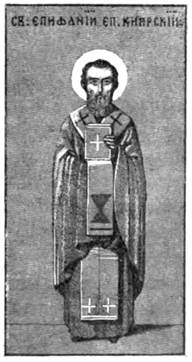
Простота, бесхитростность и теплота душевная делают душу особенно восприимчивой к правде и добру. Эти свойства часто заменяют недостаток благоприятных условий для умственного и нравственного воспитания и служат подготовкой для уразумения правого пути. Так было и в жизни св. Епифания. Родившийся от родителей Иудеев191 и, не смотря на то, что, оставшись в детстве сиротой, был он взят на воспитание учёным Иудеем, разумеется в духе противном христианству, во всяком случае – воспитавшийся не среди христианской обстановки, он, благодаря вышеупомянутым свойствам души своей, совершенно легко воспринял и усвоил истину Христова учения, как только случай привёл его встретиться с христианином...
Simplicity, guilelessness, and warmth of soul make the soul especially receptive to truth and goodness. These qualities often supply the lack of favorable conditions for intellectual and moral upbringing, and serve as preparation for understanding the right path. So it was in the life of St. Epiphanius. Born of Jewish parents191 and, notwithstanding the fact that, having been left an orphan in childhood, he was taken to be raised by a learned Jew, of course in a spirit opposed to Christianity—in any case, having been brought up not in a Christian environment—he, thanks to the aforementioned qualities of his soul, received and assimilated the truth of Christ's teaching with complete ease, as soon as chance brought him to meet a Christian...
Христианин этот был старец – инок Лукиан, которого встретил однажды на дороге юноша Епифаний, когда ехал осматривать одно из имений, доставшихся ему по смерти воспитавшего его Иудея. Среди разговора, завязавшегося между старцем и юношей, подошёл к ним нищий.
This Christian was an elder—the monk Lucian—whom the young Epiphanius once met on the road while traveling to inspect one of the estates that had come to him upon the death of the Jew who had raised him. In the midst of the conversation that arose between the elder and the youth, a beggar approached them.
Не было ничего и у самого Лукиана, но, сейчас же сняв с себя верхнюю одежду, он отдал её нищему, сказав: – «продай это в городе и купи себе хлеба».
Lucian himself had nothing, but immediately taking off his outer garment, he gave it to the beggar, saying: "Sell this in the city and buy yourself bread."
– Кто ты? и какая твоя вера? – спросил юноша, тронутый сострадательностью старца. Ответ христианина на эти вопросы поддержал действие благодати свыше, коснувшейся доброй и простой души юноши. «Впервые выслушав объяснение Евангельского учения, он был глубоко тронут и всем сердцем постиг и уверовал в него и склонил к тому же и сестру свою. В скором времени они вместе приняли святое крещение от Лукиана. Не медля нисколько осуществить на самом деле любовь свою к открывшемуся ему Христу, Епифаний роздал всй своё имение бедным, оставив только часть для скромного обеспечения своей сестры и для покупки для себя священных книг, и, поручив молодую сестру покровительству благочестивых женщин, оставил мир и поступил в монастырь. Здесь ревностно принялся он изучать священное Писание; при этом строго соблюдал все постановления иноческой жизни и так достойно подвизался на избранном им пути, что, будучи ещё иноком, был прославлен от Бога как говорится в житии его, даром чудотворений.
"Who are you? And what is your faith?" asked the youth, touched by the elder's compassion. The Christian's answer to these questions supported the action of grace from on high, which had touched the good and simple soul of the youth. "Having for the first time heard the explanation of the Gospel teaching, he was deeply moved and with all his heart comprehended and believed in it, and inclined his sister also to the same. In a short time they together received holy baptism from Lucian. Not delaying in the least to put into practice his love for the Christ who had been revealed to him, Epiphanius distributed all his property to the poor, keeping only a portion for the modest support of his sister and for the purchase of sacred books for himself, and having entrusted his young sister to the protection of pious women, he left the world and entered a monastery. Here he zealously undertook the study of the Holy Scriptures; at the same time he strictly observed all the statutes of the monastic life and so worthily struggled on the path he had chosen that, while still a monk, he was glorified by God, as is said in his Life, with the gift of wonderworking.
Затем и вся жизнь Епифания была сообразна с тем высоким по своей простоте и теплоте настроением, которой он обязан был своим внезапным и всецелым обращением ко Христу.
And then the whole life of Epiphanius was in keeping with that lofty disposition, simple and warm, to which he owed his sudden and complete conversion to Christ.
Чтобы изучить жизнь благочестивых пустынников, Епифаний отправился в Египет и видел вблизи Фиваиду и св. Антония. Возвратясь в отечество, он, привлечённый славой Палестинского пустынника Илариона, провёл несколько лет под его руководством и во всю последующую жизнь старался быть подражателем этого великого подвижника. В 364 г. когда Иларион, тяготясь своей известностью, удалился в Египет, а потом в Кипр, Епифаний также отошёл в пустыню. Здесь однажды он чуть не сделался жертвой диких Арабов, которые, кочуя толпой по пустыне и встретив Епифания, начали смеяться над его иноческой одеждой; один из них, не видевший больным глазом, в порыве жестокости замахнулся мечом на св. Епифания и вдруг получил внезапно исцеление: больной глаз его стал видеть... Он бросил меч и с удивлением рассказал товарищам об исцелении своего глаза. Поражённые этим чудом, кочевники взяли с собой Епифания и ходили с ним по пустыне, веруя, что он имеет силу защищать от всяких бед. – Епифаний воспользовался этим, чтобы просветить их словом Божиим, и успел в этом. Спустя некоторое время, Арабы простились с своим учителем, устроив ему жилище в пустыне; один же из них остался при Епифании, получил впоследствии святое крещение и был его учеником до конца жизни.
In order to study the life of pious hermits, Epiphanius set out for Egypt and saw the Thebaid and St. Anthony at close hand. Returning to his homeland, he, drawn by the fame of the Palestinian hermit Hilarion, spent several years under his guidance and throughout his subsequent life strove to be an imitator of this great ascetic. In 364, when Hilarion, burdened by his fame, withdrew to Egypt and then to Cyprus, Epiphanius also departed into the wilderness. Here he once nearly became the victim of wild Arabs, who, roaming in a crowd through the desert and encountering Epiphanius, began to mock his monastic garb; one of them, who could not see with a diseased eye, in a burst of cruelty raised his sword against St. Epiphanius and suddenly received sudden healing: his diseased eye began to see... He threw down his sword and with astonishment told his companions of the healing of his eye. Struck by this miracle, the nomads took Epiphanius with them and walked with him through the desert, believing that he had the power to protect them from all misfortunes. Epiphanius took advantage of this to enlighten them with the word of God, and succeeded in this. After some time, the Arabs took leave of their teacher, having built him a dwelling in the wilderness; one of them, however, remained with Epiphanius, later received holy baptism, and was his disciple to the end of his life.
Со временем собралось здесь вокруг кельи Епифания до 50-ти учеников и образовалась обитель; видя, что с каждым днём прибывает сюда всё больше и больше народа, Епифаний решился покинуть монастырь. Сначала, вместе с учеником своим Иоанном, он отправился в Иерусалим, потом – в Александрию, где обратил в христианство одного Еврейского законоучителя – Аквилу. В Фиваиде Епифаний встретился с учеником св. Антония – Пафнутием. На выраженное Епифанием желание пожить в Нитрийской пустыне, Пафнутий прозорливо возвестил ему будущее епископство, сказав: – Поживи со св. отцами, насладись беседами их, собери от них духовную пищу, которой ты будешь питать свою паству на Кипрском острове...
In time, up to fifty disciples gathered here around Epiphanius's cell, and a monastery was formed; seeing that more and more people kept arriving daily, Epiphanius resolved to leave the monastery. First, together with his disciple John, he went to Jerusalem, then to Alexandria, where he converted a certain Jewish teacher of the law—Aquila—to Christianity. In the Thebaid Epiphanius met Paphnutius, a disciple of St. Anthony. When Epiphanius expressed the desire to live in the Nitrian desert, Paphnutius prophetically announced to him his future episcopacy, saying: "Live with the holy fathers, delight in their conversations, gather from them spiritual food with which you will nourish your flock on the island of Cyprus..."
Тяготясь славой, разнёсшейся о нём и по Египту, Епифаний возвратился в отечество. Не застав тут Илариона, он отплыл в Кипр, где слушал наставления известного тогда аввы Григория. Около 367-го г., на 60-м году жизни, привелось Епифанию принять в управление церковь Саламинскую. Около 36-ти лет управлял он Кипрской епархией и заслужил общее почитание за свою строгую жизнь; ревность к вере, большую учёность; в особенности отличался он любовью к бедным. О щедрой благотворительности блаженного пишет Созомен: «Епифаний был щедр к пострадавшим от кораблекрушения ли, или по другой причине; так как своё имение давно растратил он, то расточал имущество церковное. Церковь Епифаниева была весьма богата. Многие из разных стран света, желая употребить богатства на благочестивые дела, и при жизни отдавали имение Церкви его, и умирая оставляли ей, так как уверены были, что Епифаний, как добрый распорядитель и любящий Бога, употребит подаяния их согласно с их желанием... Наконец, когда всё церковное имущество было издержано, внезапно некто входит в комнату, в которой жил эконом, и подаёт ему мешок со многими золотыми монетами» ...
Burdened by the fame that had spread about him even to Egypt, Epiphanius returned to his homeland. Not finding Hilarion there, he sailed to Cyprus, where he heard the instructions of the then-renowned Abba Gregory. Around the year 367, at the sixtieth year of his life, it fell to Epiphanius to take into his governance the Church of Salamis. For about thirty-six years he governed the Cypriot diocese and earned universal veneration for his strict life, zeal for the faith, and great learning; he was especially distinguished by his love for the poor. Sozomen writes of the blessed one's generous charity: "Epiphanius was generous to those who had suffered shipwreck or any other misfortune; for since he had long since spent his own property, he distributed the property of the Church. The Church of Epiphanius was very wealthy. Many from various parts of the world, wishing to use their riches for pious deeds, both gave their property to his Church during their lifetime and left it to her at death, for they were confident that Epiphanius, as a good steward and lover of God, would use their offerings according to their desire... Finally, when all the Church's property had been spent, suddenly someone enters the room where the steward lived and hands him a bag with many gold coins"...
В 382-м г. Епифаний посетил Рим, когда на Западе ожидали открытия собора (по делу о Максиме и Антиохийской кафедре) и папа Дамас созывал епископов со всей вселенной и в том числе восточных епископов, Павлина Антиохийского и Епифания Кипрского, известных всему миру святостью своей жизни. О пребывании Епифания в Риме рассказывается в «Житии св. Павлы», благочестивой патрицианки, которая принимала его тогда во дворце своём: «Великую радость возбудило прибытие таких мужей в благородных жёнах, проходивших среди Рима подвиги великих отшельников и устроивших в своих дворцах нечто подобное Фиваиде. Эти святые отшельники прибыли из таинственного Востока, откуда воссияла вера; они видели Иерусалим и все святые места; им были знакомы отцы пустынники, слава которых наполняла весь мир; они жили у них в послушании. Какие чудные рассказы можно было слушать из уст их! – Павла с благочестивым усердием поспешила встретить их и испросила у папы Дамаса позволение и честь принять в своём дворце св. Епифания. В течение трёх месяцев, проведённых св. епископами в Риме, она и её подруги пользовались их беседами. В этих беседах Павла в первый раз почувствовала желание удалиться от мира и уединиться в местах, освящённых воспоминаниями земной жизни Спасителя, которое и пришлось ей привести в исполнение впоследствии».
In 382 Epiphanius visited Rome, when in the West they awaited the opening of a council (concerning the matter of Maximus and the See of Antioch), and Pope Damasus was summoning bishops from all the world, including the Eastern bishops, Paulinus of Antioch and Epiphanius of Cyprus, known to the whole world for the holiness of their lives. Of Epiphanius's stay in Rome it is related in the "Life of St. Paula," a pious patrician woman who received him then in her palace: "Great joy did the arrival of such men arouse in the noble women who, in the midst of Rome, practiced the ascetic labors of the great hermits and had established in their palaces something like a Thebaid. These holy hermits had come from the mysterious East, whence the faith had shone forth; they had seen Jerusalem and all the holy places; they were acquainted with the desert fathers, whose glory filled the whole world; they had lived with them in obedience. What wondrous tales could be heard from their lips!—Paula with pious zeal hastened to meet them and obtained from Pope Damasus permission and the honor of receiving St. Epiphanius in her palace. During the three months that the holy bishops spent in Rome, she and her companions profited from their conversations. In these conversations Paula for the first time felt the desire to withdraw from the world and to seclude herself in places sanctified by the memories of the Savior's earthly life, which desire she was later able to fulfill."
Много лет спустя посетил Епифаний Павлу в её обители – в Вифлееме и удивился тому, что увидел здесь, «чего не видал и в пустыне: совершенный строй монастыря, ревностных дев – подвижниц, строгих и трудолюбивых иноков, необыкновенную духовную деятельность».
Many years later Epiphanius visited Paula in her monastery—in Bethlehem—and marveled at what he saw there, "which he had not seen even in the desert: the perfect order of the monastery, zealous virgins—ascetics, strict and industrious monks, extraordinary spiritual activity."
В 402 г. Епифаний отправился в Константинополь, где в то время архиепископом был Иоанн Златоустый. Цель путешествия его заключалась в том, чтобы побудить Иоанна произнести осуждение Нитрийских иноков (Иеракса и друг.), изгнанных Александрийским архиепископом Феофилом из Александрии и принятых Иоанном. Но в этом случае Епифаний действовал ошибочно, быв, по доверчивости своей, введён в заблуждение враждовавшим с ним Феофилом Александрийским, склонившим его произнести в Кипре осуждение Нитрийским инокам, будто бы виновным в оригенизме. Иоанн Златоуст, хотя и любил, и уважал Епифания, но отказался без рассмотрения дела осудить братьев; были и ещё епископы из приглашённых на собор по этому делу, которые не согласились с мнением Епифания. Тогда Епифаний, под влиянием наветов хитрых людей, хотел поразить осуждением самого Иоанна, но удержался.
In 402 Epiphanius set out for Constantinople, where at that time John Chrysostom was archbishop. The purpose of his journey was to urge John to pronounce condemnation upon the Nitrian monks (Hierax and others), who had been expelled from Alexandria by Theophilus, Archbishop of Alexandria, and received by John. But in this matter Epiphanius acted erroneously, having been, through his trustfulness, led astray by Theophilus of Alexandria, who bore enmity toward him and had induced him to pronounce in Cyprus condemnation upon the Nitrian monks, as though they were guilty of Origenism. John Chrysostom, although he loved and respected Epiphanius, refused to condemn the brethren without examining the matter; there were also other bishops among those invited to the council on this matter who did not agree with Epiphanius's opinion. Then Epiphanius, under the influence of the slanders of cunning men, wished to strike John himself with condemnation, but restrained himself.
Возвращаясь на о-в Кипр, Епифаний заболел и скончался (403 г.). С плачем и рыданием народ встретил тело святителя и перенёс его с корабля в созданную им церковь, где и был он предан погребению в присутствии святителей и иереев со всего Кипрского острова и многочисленного любившего своего милосердого пастыря народа. От мощей св. Епифания стали совершаться чудеса192.
Returning to the island of Cyprus, Epiphanius fell ill and reposed (403). With weeping and lamentation the people met the body of the Hierarch and carried it from the ship to the church he had built, where he was committed to burial in the presence of the Hierarchs and priests from all the island of Cyprus and a numerous people who loved their merciful pastor. From the relics of St. Epiphanius miracles began to be performed192.
По смерти престарелого Епифания осталось несколько его сочинений, между прочим: опровержение ересей – 20-ти, предшествовавших Христу, и 80-ти христианских, – и «изложение веры Церкви Апостольской». Он обладал значительною учёностью. Иероним говорит о нём, что он знал Еврейский, Сирский, Греческий и Латинский языки и вообще, знав лично святителя Епифания, он называет его: «самым превосходным пастырем, которого выше не было ни по зрелости лет, ни по знаниям, ни по качествам жизни, ни по отзыву света»193. Седьмой Вселенский собор называет Епифания отцом и учителем Вселенской Церкви.
After the death of the aged Epiphanius there remained several of his writings, among them: a refutation of heresies—the twenty that preceded Christ and the eighty Christian ones—and "An Exposition of the Faith of the Apostolic Church." He possessed considerable learning. Jerome says of him that he knew the Hebrew, Syriac, Greek, and Latin languages, and in general, having known St. Epiphanius personally, he calls him: "the most excellent pastor, than whom there was none higher either in maturity of years, or in knowledge, or in the qualities of his life, or in the testimony of the world"193. The Seventh Ecumenical Council calls Epiphanius a father and teacher of the Universal Church.
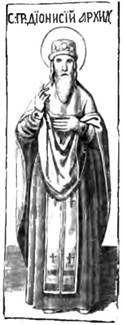
Уроженец города Ржева, в крещении Давид194, с юности отличался добрыми качествами – сердечной простотой и кротостью; шаловливые дети старались завлекать его в игры – он не хотел шалостей; в досаде на непохожего на них Давида, шалуны били его, – он переносил, побои терпеливо; грамоте учился охотно. Родители ещё в детстве его переселились в г. Старицу и здесь отец был старшиной Ямской слободы. – Когда Даниила, достиг лет отрочества, родители потребовали, чтобы вступил он в супружество. Он исполнил волю родителей, за примерно-добрую жизнь посвящён он в сан священства, но спустя 6 лет после брака, жена и двое детей его умерли. Тогда поступил он в Старицкую обитель и пострижен в иночество с именем Дионисия. – Убеждённый в важности знания св. истин для святой жизни, горячо любил он книжное учение. – Раз на рынок Московский, где продавались книги, пришёл высокий, стройный инок. Глаза всех обратились на него и один сказал ему вслух: зачем ты здесь, монах? Вместо того, чтобы оскорбиться дерзостью, монах отвечал: «да, брат, я точно такой грешник, как ты думаешь обо мне. Если бы я был настоящим иноком, не бродил бы я на рынке. Прости меня грешного». Окружавшие тронулись смирением инока и обратились с негодованием на дерзкого, называя его невеждой.
A native of the city of Rzhev, in baptism David194, from his youth he was distinguished by good qualities—heartfelt simplicity and meekness; playful children tried to draw him into their games—he did not want mischief; vexed at David, who was unlike them, the mischief-makers beat him—he endured the blows patiently; he learned to read willingly. His parents, while he was still a child, moved to the city of Staritsa, and here his father was elder of the Yamskaya settlement. When Daniel reached the years of adolescence, his parents demanded that he enter into marriage. He fulfilled his parents' will; for his exemplary and good life he was ordained to the priesthood, but six years after his marriage, his wife and two children died. Then he entered the Staritsa monastery and was tonsured into monasticism with the name Dionysius. Convinced of the importance of knowledge of the holy truths for a holy life, he ardently loved book-learning. Once, to the Moscow market, where books were sold, came a tall, stately monk. The eyes of all turned to him, and one man said to him aloud: "Why are you here, monk?" Instead of being offended by the insolence, the monk replied: "Yes, brother, I am indeed such a sinner as you think me to be. If I were a true monk, I would not be wandering about the market. Forgive me, a sinner." Those around were touched by the monk's humility and turned with indignation upon the insolent one, calling him an ignoramus.
«Нет, братцы, говорил им инок, не он невежда, а я; мне надобно знать и помнить, что моё дело сидеть в келье». Обидевший хотел просить прощения, но инок скрылся. Это был Дионисий Старицкий, казначей обители. В 1605 году посвящён он в архимандрита Старицкого монастыря. Искренней душой заботился он о благосостоянии своей обители. Поныне ещё целы здесь некоторые пожертвования его195. Он погребал вместе с двумя святителями жившего на покое в Старице патр. Иова. Блаженный патр. Гермоген ставил в пример другим Старицкого архимандрита. «Смотрите, говорит он, на Старицкого архимандрита: никогда не оставляет он церковного служения и он же всегда на царских собраниях». Когда дурные люди волновали народ против царя Василия, Старицкий архимандрит, по примеру патриарха, уговаривал беспокойных людей помнить, что они – христиане; раз изменники отчизны силой привели патриарха на лобное место и здесь простирали до того наглость свою, что толкали святителя, а иные бросали в него грязью; Дионисий безотлучно был при патриархе и сколько мог оберегал святителя, уговаривал народ не забывать страха Божия, удерживаться от своеволий преступных.
"No, brothers," the monk said to them, "it is not he who is the ignoramus, but I; I ought to know and remember that my business is to sit in my cell." The offender wanted to ask forgiveness, but the monk had disappeared. This was Dionysius of Staritsa, treasurer of the monastery. In 1605 he was ordained archimandrite of the Staritsa monastery. With a sincere soul he cared for the welfare of his monastery. To this day some of his donations remain here intact195. Together with two hierarchs he buried Patriarch Job, who lived in retirement at Staritsa. The blessed Patriarch Hermogenes held up the Staritsa archimandrite as an example to others. "Look," he said, "at the Staritsa archimandrite: he never abandons church services, and he is always present at the royal assemblies." When evil men stirred up the people against Tsar Basil, the Staritsa archimandrite, following the patriarch's example, urged the restless people to remember that they were Christians; once traitors to the fatherland forcibly brought the patriarch to the Place of Public Execution, and there carried their insolence so far that they shoved the hierarch, and some threw dirt at him; Dionysius was inseparably with the patriarch and, as much as he could, protected the hierarch, urging the people not to forget the fear of God and to refrain from criminal self-will.
В 1610 г. п. Гермоген определил Дионисия в архимандрита Сергиевой лавры, ещё не оправившейся после осады Поляков. Время было весьма тяжёлое. Москва была в руках Ляхов. Ляхи и бродяги свирепствовали в окрестностях Москвы. Толпы несчастных с разных сторон собирались к Сергиевой лавре и в каком виде! Одни были изломаны и обожжены; у других вырезаны ремни из спин и содраны волосы; те без руки или ноги, окалеченные; иные умирали на дороге или ожидали смерти, без призора. Собрав всю братию и слуг обители, св. Дионисий говорит им: «любовь христианская во всякое время помогает нуждающимся, тем более должна помогать в такое страшное время». «Кто в такой беде помогать может? Один Бог». Так отвечали ему с грустью безнадёжной. Св. Дионисий заплакал и сказал: «в искушениях нужна твёрдость. Нас избавил Господь от осады. Что если леность и скупость станет смирять нас и без осады?» – Что же нам делать? спросили. «Пусть каждый, отвечал Дионисий, делает всё, что может для других; а дом Святой Троицы не оскудеет». Слуги посоветовались между собой и объявили: «если вы, государи, будете давать нужное для пищи и одеяния, готовы мы положить жизнь свою». И вот закипела деятельность. Открыты дома и больницы для безкровных и больных в подмонастырских слободах. Братия, по убеждению Дионисия, решились довольствоваться овсяных хлебом и водой, чтобы сберечь пшеничный и ржаной хлеб для больных. Разосланы были нарочные отыскивать по лесам и дорогам изнемогших от истощения сил. Келейник Дионисия днём и ночью разносил больным и нищим полотенца и деньги196.
In 1610 Patriarch Hermogenes appointed Dionysius archimandrite of the Trinity–St. Sergius Lavra, which had not yet recovered from the siege by the Poles. The time was very grievous. Moscow was in the hands of the Poles. The Poles and vagabonds raged in the vicinity of Moscow. Crowds of the unfortunate gathered from various sides to the St. Sergius Lavra—and in what a state! Some were broken and burned; from others strips had been cut from their backs and their hair torn out; others were without an arm or a leg, maimed; still others were dying on the road or awaiting death, without care. Gathering all the brethren and servants of the monastery, St. Dionysius said to them: "Christian love at all times helps those in need, and all the more ought it to help in such a terrible time." "Who can help in such misfortune? God alone." Thus they answered him with hopeless grief. St. Dionysius wept and said: "In temptations firmness is needed. The Lord delivered us from the siege. What if laziness and avarice should humble us even without a siege?" "What then are we to do?" they asked. "Let each one," answered Dionysius, "do all that he can for others; and the house of the Holy Trinity will not fail." The servants consulted among themselves and declared: "If you, masters, will give what is needed for food and clothing, we are ready to lay down our lives." And so activity began to seethe. Houses and hospitals were opened for the homeless and the sick in the settlements around the monastery. The brethren, at Dionysius's persuasion, resolved to be content with oat bread and water, in order to save wheat and rye bread for the sick. Messengers were sent out to search the forests and roads for those exhausted by loss of strength. Dionysius's cell-attendant, day and night, carried towels and money to the sick and the poor196.
Дионисий от забот о частных бедствиях переходил к заботам о целой святой отчизне. Он писал в разные города христианские увещания. В 1610 году писал в Казань к строителю Амфилохию, задумавшему с родственником Шульгиным изменить Русскому правительству. Тогда же писано в Рязань с убеждением стать за отчизну197. От 13-го июля 1611 года Дионисий и келарь писали в Нижний-Новгород и другие Волжские города, умоляя о помощи Москве людьми и деньгами198. Когда же Ходкевич прибыл к Москве с новыми войсками, от 6-го октября они писали в Пермь и другие города с мольбой о поспешном сборе ратных людей на спасение веры и отечества; – а в Москву отправлены были монастырские слуги с свинцом и порохом, вынутыми из осадных монастырских орудий199. – Пожарский медлил в Ярославле с собранными силами. К нему один за другим посылаемы были иноки с убеждением поспешить на помощь Москве. Августа 11-го 1612 года архимандрит Дионисий на горе Волкуше благословил воинство на брань. К успокоению недоверявших успеху, ветер, дотоле противный, стал попутным православному воинству200. Соединившиеся под Москвой Пожарский и Трубецкой были не мирны между собой; правители России ссорились по капризам самолюбия, на гибель отчизны. «У семи пастухов – не стадо», говорил народ. Преподобный архимандрит писал правителям сердечное, красноречивое увещание о мире и любви201. Когда усилия друзей отчизны успели наконец выгнать Ляхов из Москвы, Дионисий был в числе первых, совершавших благодарное моление на лобном месте202.
From cares for private misfortunes Dionysius passed to cares for the whole holy fatherland. He wrote Christian exhortations to various cities. In 1610 he wrote to Kazan to the builder Amphilochius, who, together with his kinsman Shulgin, had conceived the intention of betraying the Russian government. At the same time he wrote to Ryazan with the exhortation to stand for the fatherland197. On July 13, 1611, Dionysius and the cellarer wrote to Nizhny Novgorod and other Volga cities, imploring aid for Moscow in men and money198. When Chodkiewicz arrived before Moscow with fresh troops, on October 6 they wrote to Perm and other cities with a plea for the speedy gathering of military men for the salvation of the faith and the fatherland; and to Moscow were sent monastery servants with lead and gunpowder taken from the monastery's siege weapons199. Pozharsky tarried in Yaroslavl with his gathered forces. To him, one after another, monks were sent with the exhortation to hasten to the aid of Moscow. On August 11, 1612, Archimandrite Dionysius on Volkushe Hill blessed the host for battle. For the reassurance of those who doubted success, the wind, which had until then been contrary, became favorable to the Orthodox host200. Pozharsky and Trubetskoy, who had united before Moscow, were not at peace with one another; the rulers of Russia quarreled over the whims of self-love, to the ruin of the fatherland. "With seven shepherds there is no flock," the people said. The Venerable archimandrite wrote to the rulers a heartfelt, eloquent exhortation to peace and love201. When the efforts of the friends of the fatherland finally succeeded in driving the Poles out of Moscow, Dionysius was among the first to offer a thanksgiving prayer at the Place of Public Execution202.
Надлежало теперь позаботиться и о восстановлении обители, сильно потрясённой бедствиями. Её башни и стены после осады были с трещинами; уцелевшие от огня кельи стояли почти без крыши; имения разорены и люди рабочие разбежались. По ходатайству Дионисия, царь подтвердил права лавры грамотами и повелел возвратить на свои места разбежавшихся земледельцев её. Деятельностью настоятеля мало по малу изглаждались следы разорения в обители.
It was now necessary to take thought also for the restoration of the monastery, greatly shaken by calamities. Its towers and walls after the siege were cracked; the cells that had survived the fire stood almost without roofs; the estates were ruined and the working people had fled. Through Dionysius's intercession, the Tsar confirmed the Lavra's rights by charters and commanded that its fugitive peasants be returned to their places. By the activity of the superior, the traces of ruin in the monastery were little by little erased.
Ещё не совсем окончились начатые поправки хозяйства по обители, как преп. Дионисий должен был начать подвиги для св. веры. – Царь поручил ему (грамотой от 8-го ноября 1616 г.) пересмотреть вместе с старцем Арсением и священником Иоанном требник, напечатанный в 1602 г.203. Дионисий и его сотрудники принялись за дело с живым усердием и не без пособий нужных: кроме древних Славянских списков, в том числе и требника м. Киприана, были у них Греческие требники204. Много и долго трудились исправители. Ошибок найдено множество и иные крайне грубые. «О воплощении Сына Божия в потребниках письменных и в служебниках выхода первых печатей обрелося, Яко Отец Бог с Сыном воплотися». – Исправители представили дело своё в Москву. Но здесь оглашены они были еретиками. В июле 1618 г. на соборе положили: «архим. Дионисий писал по своему изволу и за то архим. Дионисия да попа Ивана от Церкви Божией отлучаем, да не священствуют». Дионисия обвиняли в том, что «имя Св. Троицы велел в книгах марать и Духа Св. не исповедует, яко огнь есть». Это означало, что исправители полагали сделать перемены в славословиях Св. Троице, оканчивающих собой разные молитвы; а в чине водоосвящения исключали слово: «и огнем», как внесённое произволом невежества205. В защитительной речи преп. Дионисий писал: «писано во всех требниках письменных старых, в том числе и пергаменных, в молитве: Твоею бо волею от небытия в бытие привёл еси всяческая... Ты и ныне. Владыко, освяти воду сию Духом Твоим Святым. Так стоят слова в пергаменных и в бумажных списках, и в них нет слова: и огнем. Так и в списках, присланных из Москвы, – в книге м. Киприана (а Киприан м. – человек святой, – как все знают) и в двух других списках! Так и в Греческих книгах! Но не так в Московском печатном служебнике, где напечатано: Духом Твоим Святым и огнем. – Мы не знаем, с чего напечатано: и огнем. Мы думали, что напечатано так сообразно с словами Евангелиста Луки: Той Вы крестит Духом Св. и огнем. Но зная, что Евангелисты Марк и Матфей не сказали: и огнем, а только – Духом, приняли в основание слова Господа к Никодиму: аще кто не родится водою и Духом, не может внити в Царствие Небесное. Сам Евангелист Лука, предлагая обетование Господа, пишет: имате креститися Духом Св., но не сказал: и огнем. По книге Деяний Апостольских, в день Пятьдесятницы снисшел Дух Св. на Апостолов и явишася им разделени язы́цы яко огненни; не сказано: явились языки огненные, нояко огненни. Да и книга Деяний не определяет, в каком виде нисходил Дух Св. на крещающихся. – Крещением же огненным означается только испытание огненное»206. Весьма любопытно и поучительно, что говорил Арсений о прибавке слова: и огнем, в чине крещения. – Из числа 12 Славянских списков, писал он, в 10 не было этого слова; в одном приписано на поле: и огнем, и в другом то же слово написано выше строки; в печатном же требнике это слово поставлено уже в строке207. Вот происхождение прибавлений, за которые так упорно стоят ревнители мнимой старины! Преп. Дионисию пришлось вытерпеть много и много оскорблений незаслуженных. Положили заточить Дионисия в дальний монастырь; но так как по России бродили ещё шайки Ляхов и бродяг, то возвращённый в Москву Дионисий заперт в Новоспасский монастырь. Здесь томили его в дыму бани и морили голодом; приказали класть каждый день по 1000 поклонов. Преподобный, укрепляемый Господом, не только выполнял наложенную епитимию, но ещё от усердия своего клал другую 1000 поклонов каждый день. В праздничные дни водили его до обедни к митрополиту на смирение. На дворе владыки в оковах стоял он до вечерни в летний зной, не освежаемый и чашей студёной воды. Мало того, злобные невежды бранили и толкали его. Преподобный был весел как младенец. «Мне грозят Сибирью и Соловками, говорил он, но я рад тому, это жизнь мне». – Когда другие с состраданием говорили: что это за беда с тобой, отче? он отвечал: «беды нет никакой, а милость Божия; преподобный Иона митрополит смиряет меня по делам моим, чтобы не был я горд; беды и напасти времени – милость Божия; вот беда, если придётся гореть в геенском огне. Да избавит нас Бог от того!» Когда бедного узника везли на кляче по городу, народ кричал: «вот еретик, хочет вывести огонь из мира», и – бросал в него грязью. Преподобный переносил и это с незлобием младенца.
The repairs to the monastery economy were not yet fully completed when the Venerable Dionysius was obliged to undertake labors for the holy faith. – The Tsar commissioned him (by a charter of November 8, 1616) to review, together with the elder Arsenius and the priest John, the Euchologion printed in 1602203. Dionysius and his co-workers set to work with lively zeal and not without necessary aids: besides ancient Slavonic copies, including the Euchologion of Metropolitan Cyprian, they had Greek Euchologia204. The correctors labored much and long. A multitude of errors were found, some of them extremely crude. "Concerning the incarnation of the Son of God, it was found in written Euchologia and in service books of the first printings that God the Father was incarnate together with the Son." – The correctors presented their work in Moscow. But here they were denounced as heretics. In July 1618, a council decreed: "Archimandrite Dionysius wrote according to his own will, and for that we separate Archimandrite Dionysius and the priest John from the Church of God, that they may not officiate." Dionysius was accused of having "ordered the name of the Holy Trinity to be erased from the books and of not confessing the Holy Spirit, that He is fire." This meant that the correctors proposed to make changes in the doxologies to the Holy Trinity that conclude various prayers; and in the rite of the blessing of water they removed the words "and by fire," as having been inserted by the arbitrariness of ignorance205. In his defense, the Venerable Dionysius wrote: "It is written in all the old written Euchologia, including those on parchment, in the prayer: 'For by Thy will Thou hast brought all things from non-being into being... Do Thou now also, O Master, sanctify this water by Thy Holy Spirit.' Thus the words stand in the parchment and paper copies, and in them there is no word: 'and by fire.' So also in the copies sent from Moscow – in the book of Metropolitan Cyprian (and Metropolitan Cyprian is a holy man, as all know) and in two other copies! So also in the Greek books! But not so in the Moscow printed service book, where it is printed: 'by Thy Holy Spirit and by fire.' – We do not know why 'and by fire' was printed. We thought it was printed thus in accordance with the words of the Evangelist Luke: 'He shall baptize you with the Holy Spirit and with fire.' But knowing that the Evangelists Mark and Matthew did not say 'and by fire,' but only 'with the Spirit,' we took as our foundation the words of the Lord to Nicodemus: 'Unless one is born of water and the Spirit, he cannot enter the Kingdom of Heaven.' The Evangelist Luke himself, setting forth the promise of the Lord, writes: 'Ye shall be baptized with the Holy Spirit,' but did not say: 'and by fire.' According to the book of the Acts of the Apostles, on the day of Pentecost the Holy Spirit descended upon the Apostles, and there appeared unto them cloven tongues like as of fire; it is not said: tongues of fire appeared, but like as of fire. Moreover, the book of Acts does not determine in what form the Holy Spirit descended upon those being baptized. – By baptism with fire is signified only the trial of fire"206. It is very curious and instructive what Arsenius said about the addition of the words "and by fire" in the rite of baptism. – "Of the 12 Slavonic copies," he wrote, "in 10 this word was not present; in one it was added in the margin: 'and by fire,' and in another the same word was written above the line; in the printed Euchologion, however, this word was already placed in the line"207. Such is the origin of the additions for which the zealots of imaginary antiquity so stubbornly contend! The Venerable Dionysius had to endure very many undeserved insults. They decreed to imprison Dionysius in a distant monastery; but since bands of Poles and vagabonds were still roaming about Russia, Dionysius, brought back to Moscow, was shut up in the Novospassky Monastery. Here they tormented him in the smoke of a bathhouse and starved him; they ordered him to make 1000 prostrations each day. The Venerable One, strengthened by the Lord, not only fulfilled the imposed penance, but also, out of his zeal, added another 1000 prostrations each day. On feast days they led him before the Liturgy to the metropolitan for humiliation. In the vladyka's courtyard, in chains, he stood until Vespers in the summer heat, without being refreshed even by a cup of cold water. Moreover, the malicious ignorant reviled and shoved him. The Venerable One was cheerful as a child. "They threaten me with Siberia and Solovki," he said, "but I am glad of that; that is life for me." – When others said to him with compassion: "What is this misfortune that has befallen you, Father?" he replied: "There is no misfortune at all, but the mercy of God; the Venerable Metropolitan Jonah humbles me according to my deeds, that I may not be proud; the misfortunes and calamities of the time are the mercy of God; the real misfortune is if one must burn in the fire of Gehenna. May God deliver us from that!" When the poor prisoner was being taken on a nag through the city, the people shouted: "Here is the heretic, he wants to remove fire from the world," and threw mud at him. The Venerable One bore even this with the meekness of a child.
Главными обвинителями Дионисия на соборе были Сергиева монастыря «уставщик Филарет и головщик Логгин», с которыми имел дела архимандрит и по обители. Их дела и качества объясняют спор об исправлении книг и вместе открывают другие высокие подвиги преп. Дионисия. Головщик Логгин был прежде того справщиком книг при типографии и след. теперь стоял за личное своё дело. Он был «громогласный певец», но «хитрость грамматическую и философство книжное нарицал еретичеством». Преи. Дионисий по обязанности своей нередко вразумлял его в ошибочном произношении слов при пении и чтении, но гордый певец принимал это за оскорбление. Преподобный ввёл читать в храме беседы Златоустого, переведённые Максимом Греком; Логгину хотелось, чтобы всё делалось по его усмотрению, тогда как духовный вкус его был так тонок, что «море сладости казалось ему лужей негодной». Наглость его не знала границ. Преподобный уговаривал его со всей кротостью любви поберечь себя, и – без успеха. Логгин нагло оскорблял самого архимандрита. Раз Дионисий стал читать поучение. Логгин подбежав, вырвал у него книгу, – налой с книгой полетел, произошёл стук, гром, соблазн. Дионисий перекрестился и молча удалился на своё место. Логгин, прочитав поучение, подошёл к архимандриту и начал на него плевать и кричать. «Перестань, Логгин, не мешай Богослужению, – можем поговорить с тобой после утрени», говорит кроткий настоятель. Логгин выхватил у него из рук архимандричий посох, изломал его в куски и бросил Дионисию. Сошедши с своего места, преподобный стал перед иконой Богоматери и проплакал утреню. Логгин и после того не просил прощения у архимандрита, не смотря на увещания братии208. Уставщик Филарет был другом Логгина. Этот был ещё замечательнее. Он иночествовал в обители более 50 лет. Но «от простоты ненаучения две мысли мудрования не доброго на ум приидоша ему; первая мысль сицева: глаголаше, яко Господь наш Иисус Христос не прежде век от Отца родился; другая мысль ему бе, – содетеля Бога, непостижимого и неописанного, описана глаголаше и человекообразна суща». Итак, в одном и том же лице и самый тёмный невежда и дерзкий еретик! Не трудно заметить, что эти два лица очень близки по личным качествам к какому-нибудь Аввакуму или Лазарю. Преп. Дионисий скорбел о Филарете, говорил ему, что многолетние подвиги свои губит он самоволием невежества своего. Но это было подвигом, полезным для преп. Дионисия и напрасным для Филарета209. Логгин и Филарет, злобствуя на преп. Дионисия, не только донесли собору, что Дионисий еретичествует, «не исповедует Духа Св. огнем», но злым духом своим одушевили и царицу инокиню Марфу, мать царя Михаила. И негодование простодушной старицы против мнимого еретика отягчило участь Дионисия. «Дозволяю себе по праву, писал страдавший с Дионисием Арсений, смею сказать о возводящих на нас неправду, что не знают они ни православия, ни кривославия, проходят священные писания по буквам и не стараются понимать смысл их»210. Таковы всегда слепые ревнители старой буквы!
The chief accusers of Dionysius at the council were "the typicon-reader Philaret and the choir-director Loggin" of the Sergius Monastery, with whom the archimandrite also had dealings concerning the monastery. Their deeds and qualities explain the dispute about the correction of books and at the same time reveal other high labors of the Venerable Dionysius. The choir-director Loggin had previously been a corrector of books at the printing house and consequently now stood up for his own personal work. He was "a loud-voiced singer," but "grammatical skill and bookish philosophy he called heresy." The Venerable Dionysius, by virtue of his office, often admonished him concerning the erroneous pronunciation of words during singing and reading, but the proud singer took this as an insult. The Venerable One introduced the reading in church of the homilies of Chrysostom translated by Maximus the Greek; Loggin wanted everything to be done according to his own discretion, while his spiritual taste was so refined that "a sea of sweetness seemed to him a puddle of no account." His insolence knew no bounds. The Venerable One exhorted him with all the meekness of love to take care of himself, but without success. Loggin insulted the archimandrite himself with insolence. Once Dionysius began to read a homily. Loggin ran up, snatched the book from him; the analogion with the book fell, there was a noise, a crash, a scandal. Dionysius crossed himself and silently withdrew to his place. Loggin, having read the homily, approached the archimandrite and began to spit at him and shout. "Stop, Loggin, do not hinder the divine service; we can speak with you after Matins," said the meek superior. Loggin snatched the archimandrite's staff from his hands, broke it into pieces, and threw it at Dionysius. Descending from his place, the Venerable One stood before the icon of the Mother of God and wept through Matins. Even after that, Loggin did not ask forgiveness of the archimandrite, despite the admonitions of the brethren208. The typicon-reader Philaret was a friend of Loggin. He was even more remarkable. He had been a monk in the monastery for more than 50 years. But "from the simplicity of ignorance, two thoughts of unwholesome reasoning came into his mind; the first thought was this: he said that our Lord Jesus Christ was not begotten of the Father before the ages; the other thought he had was that he said that God the Creator, incomprehensible and indescribable, is described and is in human form." Thus, in one and the same person, both the darkest ignoramus and a bold heretic! It is not difficult to notice that these two persons are very close in personal qualities to some Avvakum or Lazarus. The Venerable Dionysius grieved over Philaret, telling him that he was destroying his many years of labors by the self-will of his ignorance. But this was a labor profitable for the Venerable Dionysius and vain for Philaret209. Loggin and Philaret, bearing malice against the Venerable Dionysius, not only reported to the council that Dionysius was heretical, "does not confess the Holy Spirit as fire," but also inspired with their evil spirit the Tsarina-nun Martha, the mother of Tsar Michael. And the indignation of the simple-hearted old woman against the supposed heretic aggravated the lot of Dionysius. "I permit myself by right," wrote Arsenius, who suffered together with Dionysius, "I dare to say of those who bring false accusations against us, that they know neither Orthodoxy nor heterodoxy; they read the sacred writings by the letter and do not strive to understand their meaning"210. Such are always the blind zealots of the old letter!
Иерусалимский патриарх Феофан, прибыв в 1619 году в Москву, обратил внимание любви на страдальца Дионисия. Он предложил патр. Филарету облегчить положение его, и в его оправдание указал на Греческий требник. Дионисий освобождён был из темницы. Совершенное же оправдание преп. Дионисию произнесено было не прежде, как получен был ответ о слове: «и огнем», от других Восточных патриархов. Патр. Феофан, посетив лавру, возложил на страдальца веры свой клобук.
The Patriarch of Jerusalem, Theophanes, having arrived in Moscow in 1619, turned his loving attention to the sufferer Dionysius. He proposed to Patriarch Philaret to lighten his condition, and in his justification pointed to the Greek Euchologion. Dionysius was freed from prison. Complete vindication of the Venerable Dionysius was pronounced only after a reply concerning the words "and by fire" was received from the other Eastern patriarchs. Patriarch Theophanes, having visited the Lavra, placed his own klobuk upon the sufferer for the faith.
«Келия устава не имать», говаривал преп. Дионисий. И в кельи, по горячей любви к Господу, большую часть времени проводил в молитве. В кельи читал он псалтирь с поклонами и с местами из Евангелия и Апостола. Он пел по шести и семи молебнов в сутки; кроме обычных канонов Иисусу и Богоматери с акафистами, пел каноны дневные, праздничные и разным святым. Спать ложился за три часа до благовеста к утрени, и однако, когда приходил к нему пономарь со свечой, он в малой мантии полагал 300 поклонов земных, потом, разбудив келейников, шёл в церковь. Он строго соблюдал церковный устав, не позволяя ничего убавлять против него. Сам читал и пел на клиросе. Признательный к благотворителям обители, он требовал, чтобы читались синодики на проскомидии; во время соборного служения все священники в епитрахили стояли в алтаре и поминали имена усопших вкладчиков. В каждую утреню обходил он церковь и осматривал, все ли в храме. Он выходил с братией и на работы монастырские. У него были и живописцы, и иконописцы, и мастера серебряных дел. Он усердно заботился о храмах не только обители, но и сёл монастырских, где построено им несколько новых храмов, особенно после разгрома Польского. Всё, что получал он для себя от благотворителей, употреблял он не на себя.
"The cell has no rule," the Venerable Dionysius used to say. And in his cell, out of fervent love for the Lord, he spent most of his time in prayer. In his cell he read the Psalter with prostrations and passages from the Gospel and the Apostle. He sang six or seven molebens each day; besides the usual canons to Jesus and the Mother of God with akathists, he sang the daily canons, festal canons, and canons to various saints. He went to sleep three hours before the bell for Matins, and yet, when the sexton came to him with a candle, he would make 300 prostrations in his small mantle, then, having awakened his cell-attendants, he would go to church. He strictly observed the church typicon, allowing nothing to be omitted from it. He himself read and sang on the kliros. Grateful to the benefactors of the monastery, he required that the diptychs be read at the Proskomedia; during the conciliar service, all the priests stood in the altar in their epitrachelia and commemorated the names of the departed donors. At every Matins he would go around the church and see whether all were in the temple. He also went out with the brethren to the monastery labors. He had painters, iconographers, and silversmiths. He zealously cared for the churches not only of the monastery, but also of the monastery villages, where he built several new churches, especially after the Polish devastation. Everything that he received for himself from benefactors he used not for himself.
При нём было в обители 30 иеромонахов и 15 иеродиаконов. Подвижническая жизнь его возбуждала и других к подвигам благочестия. По примеру смирения его даже старшие из братии не стыдились ходить звонить на колокольню.
Under him there were in the monastery 30 hieromonks and 15 hierodeacons. His ascetic life inspired others also to deeds of piety. Following his example of humility, even the eldest of the brethren were not ashamed to go and ring the bells in the bell tower.
Из учеников Дионисия особенно известен преп. Дорофей. В рукоп. святцах читаем: «преп. Дорофей, великий трудник, бысть ученик св. Дионисия Радонежского и преставися в лето 7130 (1622)». Симон пишет о Дорофее: «он был так твёрд в благочестии, что никогда не оставлял церковного Богослужения, исправлял должность пономаря в церкви чудотворца Никона и вместе с тем был канонархистом и книгохранителем. В келье выполнял он правило необыкновенное: читал всю псалтирь и клал до 1000 поклонов; при том же писал книги. Спал он очень мало и никогда не ложился для сна. Пищей его служил кусок хлеба и ложка толокна и притом не каждый день; только по убеждению архимандрита стал он есть хлеб с квасом». По известию Наседки, Дорофей, столько трудившийся для раненых и больных, много терпел неприятностей и по особенности своей жизни. Следившие за жизнью его замечали, что не едал он по три и по четыре дня, а иногда и целую неделю. Иные говорили о нём, что он – святой человек; другие же, видя его валяющимся у стены или печки, смеялись над ним, так над глупцом. «Раз и я, говорит Наседка, смеялся над ним вместе с другими. Дионисий, заметив это, строго посмотрел на меня. Спустя 10 лет, в духовной беседе в Москве напомнил я Дионисию о замечании его относительно Дорофея; авва сказал: «не спрашивай иноков о делах иноческих. Для нас беда открывать мирянам наши тайны. Писано: да не увесть шуйца, яже творит десница твоя». Я грешный стал просить объяснить мне это. «Вы миряне, сказал он, если услышите худое о чернецах, осуждаете их, на грех себе; а если услышите доброе, не ревнуете тому, а только хвалите, и из вашей похвалы выходит опасное искушение для нас, рождается гордость». На вопрос о значении строгого взгляда его говорил он: «вы смеялись над человеком святым, оттого, что жил он не по вашему. Мне известно, что не едал он по неделе, по 10 дней капли воды не бывало у него во рту; ходил босой, ногой, голодный, с неумытыми руками и лицом. Он мучился блудными помыслами и потому-то томил себя голодом и жаждой».
Among the disciples of Dionysius, the Venerable Dorotheus is especially known. In the manuscript menologia we read: "The Venerable Dorotheus, a great toiler, was a disciple of St. Dionysius of Radonezh and reposed in the year 7130 (1622)." Simon writes of Dorotheus: "He was so steadfast in piety that he never left the church services, fulfilled the office of sexton in the church of the Wonderworker Nikon, and at the same time was a canonarch and keeper of the books. In his cell he performed an extraordinary rule: he read the entire Psalter and made up to 1000 prostrations; moreover, he copied books. He slept very little and never lay down to sleep. His food was a piece of bread and a spoonful of oatmeal, and that not every day; only at the persuasion of the archimandrite did he begin to eat bread with kvass." According to the account of Nasedka, Dorotheus, who labored so much for the wounded and the sick, suffered many unpleasantries also because of the peculiarity of his life. Those who watched his life noticed that he did not eat for three or four days, and sometimes for a whole week. Some said of him that he was a holy man; others, seeing him lying about by the wall or the stove, laughed at him as at a fool. "Once I too," says Nasedka, "laughed at him together with others. Dionysius, noticing this, looked sternly at me. Ten years later, in a spiritual conversation in Moscow, I reminded Dionysius of his remark concerning Dorotheus; the abba said: 'Do not ask monks about monastic matters. It is a calamity for us to reveal our secrets to laymen. It is written: Let not thy left hand know what thy right hand doeth.' I, a sinner, began to ask him to explain this to me. 'You laymen,' he said, 'if you hear evil about monks, you condemn them, to your own sin; but if you hear good, you do not emulate it, but only praise it, and from your praise arises a dangerous temptation for us—pride is born.' To the question about the meaning of his stern look, he said: 'You laughed at a holy man because he did not live according to your ways. I know that he did not eat for a week, that for ten days not a drop of water was in his mouth; he went barefoot, on foot, hungry, with unwashed hands and face. He was tormented by lustful thoughts, and therefore he tormented himself with hunger and thirst.'"
После опустошений Польских в сёлах лавры храмы то были сожжены, то ограблены. Преп. архимандрит построил несколько церквей сельских, из которых иные ещё доселе целы. Ревностный о благолепии дома Божия, он имел в запасе всякую церковную утварь и, когда являлись просители, с любовью выдавал нужное для той или другой церкви.
After the Polish devastations, the churches in the villages of the Lavra were either burned or plundered. The Venerable Archimandrite built several rural churches, some of which are still intact to this day. Zealous for the beauty of the house of God, he kept every kind of church utensil in reserve, and when petitioners came, he lovingly gave out what was needed for this or that church.
Проведя жизнь в высоких подвигах любви к Господу, авва Дионисий мирно преставился 10 мая 1633 года и патр. Филарет сам отпевал его211.
Having spent his life in lofty deeds of love for the Lord, Abba Dionysius peacefully reposed on May 10, 1633, and Patriarch Philaret himself officiated at his funeral211.
В самый день кончины Дионисия священник лаврской слободы Феодор не мог видеть кончины его и сильно скорбел о том. Во сне видел он, что спешит с другими принять последнее прощание преп. Дионисия, но святой говорит ему: «для чего спешишь ты? Те благословения просят, оставаясь здесь, а ты скоро пойдёшь за мною». Спустя 8 дней Феодор скончался. Священник Ильинской, Пушкарной слободы, Феодор, лежал тяжко больным. В день вмч. Димитрия явился ему преп. Дионисий в полном облачении архимандрита, предшествуемый иноком с горящею свечой. Дионисий поднял больного за руку и велел иноку Досифею вести его в церковь. Здесь святой зажёг свечи перед иконами и сказал: «слава Тебе, Господи, что церковь преп. Илии устроилась». Больной проснулся здоровым; а храм действительно окончен был уже после кончины Дионисия. В 1640 г. преп. Дионисий являлся вместе с св. Алексеем преп. Никодиму Кожеозерскому с вестью о скорой кончине его212.
On the very day of Dionysius's death, the priest of the Lavra settlement, Theodore, could not witness his death and grieved greatly over this. In a dream he saw that he was hurrying with others to receive the last farewell of the Venerable Dionysius, but the saint said to him: "Why do you hurry? Those ask for a blessing, remaining here, but you will soon follow me." Eight days later, Theodore reposed. The priest of the Church of St. Elias in the Pushkarnaya settlement, Theodore, lay grievously ill. On the day of the Great Martyr Demetrius, the Venerable Dionysius appeared to him in full archimandrite vestments, preceded by a monk with a burning candle. Dionysius raised the sick man by the hand and ordered the monk Dositheus to lead him into the church. There the saint lit candles before the icons and said: "Glory to Thee, O Lord, that the church of the Venerable Elias has been completed." The sick man awoke healthy; and the church had indeed been finished only after Dionysius's death. In 1640, the Venerable Dionysius appeared together with St. Alexis to the Venerable Nicodemus of Kozheozero with news of his imminent death212.
По словам Симона, преп. Дионисий был роста высокого, статного, с лицом благолепным, с очами весёлыми, с брадою долгой и широкой; с него усопшего снят был портрет. Ныне в лавре хранится древний портрет его, с подписью: «образ св. Дионисия архимандрита Троицкого». Портрет сходен с описанием современника213.
According to the words of Simon, the Venerable Dionysius was tall of stature, well-built, with a comely face, cheerful eyes, and a long, broad beard; a portrait was taken of him after his repose. At present, an ancient portrait of him is preserved in the Lavra, with the inscription: "Image of St. Dionysius, Archimandrite of the Trinity." The portrait resembles the description of a contemporary213.
Защищение Дионисия приложено Симоном к житию Дионисия, но в печатном житии нет его; оно – в Синод. ркп. № 298 (Ин. 416) и другой № 192.
The Defense of Dionysius was appended by Simon to the Life of Dionysius, but it is not in the printed Life; it is in Synodal Manuscript No. 298 (In. 416) and another No. 192.
Послание к Салтыкову. Здесь же: «не довольно было уничтожить труды наши; возбудили на гнев и кроткое, незлобивое, сердце благов. госуд. и великой старицы инокини Марфы Ивановны».
Epistle to Saltykov. Here also: "It was not enough to destroy our labors; they aroused to anger even the meek, gentle heart of the Right-believing Sovereign and the great elder nun, Nun Martha Ivanovna."
Сказание Симона по ркп. О преп. Никодиме июл. 3. Служба преп. Дионисию напечатана вместе с житием его. Μ. 1824 г.
The Account of Simon according to the manuscript. On the Venerable Nicodemus, July 3. The Service to the Venerable Dionysius was printed together with his Life. M. 1824.