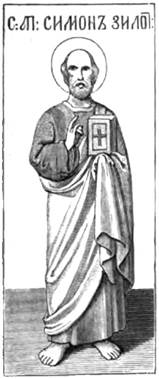
Апостола Симона должно отличать от Симона Петра, первоверховного Апостола, и другого Симона или Симеона, сродника Господня по плоти (Мф.13:55), который причисляется к 70-ти ученикам Христовым и почитается вторым епископом Иерусалимским, – преемником Апостола Иакова, брата Господня по плоти. Симон Апостол из дванадесяти родился в Кане Галилейской, по плоти брат Апостола Иуды и Господа (Мф.13:55), и называется также Кананитом (Мф.10:4; Мк.2:18) – по-еврейски, или Зилотом (Деян.1:13) – по-гречески; то и другое имя значит: ревнитель закона. Вероятно, что до Апостольства своего Симон принадлежал к обществу зилотов, которые были во время земной жизни Спасителя и особенно ревновали о исполнении закона Моисеева, подобно Финеесу, древле возревновавшему ревностью страху Господню (Числ.25:11; Сир.45:28; 1Макк.2:54). Некоторые думают, что к Симону зван был Иисус Христос с учениками на брак в Кану Галилейскую, где впоследствии построена была Равноапостольной царицей Еленой церковь. В служении Апостольском Симон назван Кананитом или ревнителем, говорит Никифор Баллист, по пламенной своей ревности и любви к Божественному Учителю Христу и к распространению Его Евангелия.
The Apostle Simon must be distinguished from Simon Peter, the foremost Apostle, and from another Simon or Simeon, a kinsman of the Lord according to the flesh (Mt. 13:55), who is numbered among the seventy disciples of Christ and is honored as the second bishop of Jerusalem, the successor of the Apostle James, the brother of the Lord according to the flesh. Simon the Apostle, one of the Twelve, was born in Cana of Galilee, a brother according to the flesh of the Apostle Jude and of the Lord (Mt. 13:55), and is also called Canaanite (Mt. 10:4; Mk. 3:18) in Hebrew, or Zealot (Acts 1:13) in Greek; both names mean: zealot of the law. It is probable that before his Apostleship, Simon belonged to the company of Zealots, who existed during the earthly life of the Savior and were especially zealous for the fulfillment of the law of Moses, like Phinehas, who was zealous with the zeal of the fear of the Lord (Num. 25:11; Sir. 45:28; 1 Macc. 2:54). Some think that it was to Simon that Jesus Christ was invited with His disciples to the marriage in Cana of Galilee, where later a church was built by the Equal-to-the-Apostles Empress Helen. In his Apostolic service, Simon is called Canaanite or Zealot, says Nikephoros Ballistes, because of his fervent zeal and love for the Divine Teacher Christ and for the spread of His Gospel.
По сошествии Святого Духа ревнитель закона Христова проповедал веру в Иудее, также в Эдессе, Сванетии, в пределах Осетин, в Абхазии – городе Севасте – нынешнем Сухуме. В сих местах Апостол Симон был с Андреем Первозванным, во время третьего его путешествия для проповеди Евангелия.
After the descent of the Holy Spirit, the zealot of the law of Christ preached the faith in Judea, also in Edessa, Svanetia, within the borders of the Ossetians, in Abkhazia, in the city of Sebastus—the present-day Sukhum. In these places the Apostle Simon was with Andrew the First-Called during his third journey for the preaching of the Gospel.
Симон Зилот скончался мученической смертью в Абхазии и погребён в городе Никопсии, лежавшем между Джигетией и Абхазией. Остатки сего города доселе местные жители показывают южнее Пицунды и Бамбор, верстах в 20-ти от Сухума, недалеко от морского берега, в одной запустевшей было церкви, но в 1875 году возобновлённой усердием великого князя Михаила Николаевича.
Simon the Zealot ended his life by a martyr's death in Abkhazia and was buried in the city of Nicopsis, which lay between Dzigetia and Abkhazia. The remains of this city are still shown by the local inhabitants south of Pitsunda and Bambor, about twenty versts from Sukhum, not far from the seashore, in a church that had once fallen into desolation but was restored in 1875 through the zeal of Grand Prince Michael Nikolaevich.
Пострадали в г. Леонтинах, в Сицилии, 251 года. Алфею отрезан язык, и он умер от истечения крови; Филадельф сожжён на железной решётке, а Киприан на сковороде. В 1517 году обретены мощи их (скрытые после 830-х годов, когда Арабы овладели Сицилией), и положены в церкви, выстроенной в честь их.
They suffered in the city of Leontini, in Sicily, in the year 251. Alphaeus had his tongue cut out and died from loss of blood; Philadelphus was burned on an iron grid, and Cyprian on a frying pan. In 1517 their relics were uncovered (having been hidden after the 830s, when the Arabs took possession of Sicily) and placed in a church built in their honor.
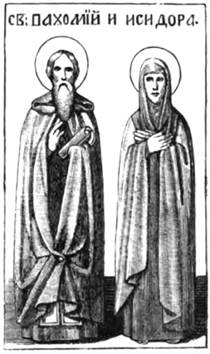
Когда св. Пахомий основал в верхней Фиваиде, в епархии Тентирской, Тавенское братство180, Господу угодно было, чтобы он же был здесь устроителем общежития и для инокинь. Вот как это было: Пахомий оставил в мире сестру. Желание видеть любимого брата и лично убедиться в тех чудесах, которые соединяли с именем Пахомия, привело сестру в Тавенну. Пахомий постоянно уклонялся от разговоров с женщинами; от родственных связей отказался он давно и душа его горела одной любовью к Господу. Когда привратник сказал Пахомию, что сестра желает видеть его; он велел сказать ей, что он жив и того довольно для неё, но пусть откажется она от надежды видеть его лично. Желая же подарить её добрым советом, прибавил: пусть она подумает, не захочется ли ей подражать его роду жизни. Примером её Бог, может быть, привлечёт к чистой жизни других жён, с ними она будет освящаться хвалами Богу, а это будет много значить для неё, для её вечности. Он просил её непоспешно и трезво обдумать предложение его и, если решится принять, объявить ему, и он займётся построением монастыря. Сестра его, не ожидавшая такого приёма, горько плакала, но, в это же время, Бог тронул сердце её дивной Своей благодатью: успокоясь от тревоги, она обдумала предложение и просила отвечать брату, что вполне решилась последовать его совету. Решимость сестры на святые подвиги доставила Пахомию живую радость. Он благодарил Бога за сестру и, немедля ни мало, принял все меры к постройке женской обители.
When St. Pachomius founded the Tabennesi brotherhood in the Upper Thebaid, in the diocese of Tentyra180, it pleased the Lord that he should also be the establisher of a cenobitic community for nuns there. This is how it came about: Pachomius had left a sister in the world. The desire to see her beloved brother and to be personally convinced of those miracles which were associated with the name of Pachomius brought the sister to Tabennesi. Pachomius constantly avoided conversations with women; he had long since renounced family ties, and his soul burned with love for the Lord alone. When the gatekeeper told Pachomius that his sister wished to see him, he ordered him to tell her that he was alive, and that was enough for her, but let her give up hope of seeing him in person. Wishing, however, to give her a good counsel, he added: let her consider whether she might not wish to imitate his way of life. By her example, God might perhaps draw other women to a pure life; with them she would be sanctified by praises to God, and this would mean much for her, for her eternity. He asked her to ponder his proposal unhurriedly and soberly, and if she decided to accept it, to inform him, and he would occupy himself with building a monastery. His sister, not expecting such a reception, wept bitterly, but at the same time, God touched her heart with His wondrous grace: calming herself from her distress, she considered the proposal and asked to answer her brother that she had fully resolved to follow his counsel. The sister's resolve for holy struggles brought Pachomius lively joy. He thanked God for his sister and, without any delay, took all measures for the construction of a women's monastery.
Избранное место для обители назвалось Мен и находилось на другом берегу Нила, тогда как монастырь иноков был на острове, посреди Нила. Поселясь в монастыре, новая отшельница проводила жизнь в страхе Божием и в святых трудах; как надеялся св. Пахомий, она вскоре стала духовной матерью многих отшельниц. Под влиянием советов великого аввы, она была достойной руководительницей вверившихся ей душ; наставлениями и примером собственным, отрешала сердца их от всего земного и возвышала души их к благам небесным, не гибнущим.
The chosen place for the monastery was called Men and was situated on the other bank of the Nile, while the monastery of the monks was on an island in the middle of the Nile. Settling in the monastery, the new recluse spent her life in the fear of God and in holy labors; as St. Pachomius had hoped, she soon became a spiritual mother to many recluses. Under the influence of the counsels of the great abba, she was a worthy guide for the souls entrusted to her; by her instructions and her own example, she detached their hearts from everything earthly and raised their souls to heavenly, imperishable blessings.
Св. Пахомий дал отшельницам почти одинаковый с своим монастырём устав; они не носили одного козьего кожуха181, который составлял одежду его монахов; не подстригали волосы и накрывали голову камилавкой, прикрывавшей голову и плечи182. Рукоделье их состояло в тканье льна и шерсти которые закупал для них Тавенский эконом.
St. Pachomius gave the recluses almost the same rule as his own monastery; they did not wear the goatskin181 which constituted the clothing of his monks; they did not cut their hair and covered their heads with a kamelavkion that covered the head and shoulders182. Their handiwork consisted of weaving linen and wool, which the Tabennesi steward purchased for them.
Ни один монах не был допускаем в женский монастыри без особенного дозволения; братья или родственники приходили очень редко и то в сопровождении испытанных старцев посещаемая сестра тоже была сопровождаема старицей. Не дозволялось ни подносить подарков, ни принимать их от кого бы то ни было, потому что монахини не могли иметь ничего собственного, а всё было общее. Всякая светская речь слух, новость, известие – были изгнаны из разговора, одними предметом его было – спасение души183.
No monk was admitted into the women's monastery without special permission; brothers or relatives came very rarely and then accompanied by tested elders, and the sister being visited was likewise accompanied by an elder nun. It was not permitted either to offer gifts or to accept them from anyone, because the nuns could have nothing of their own, but everything was common. Every worldly speech, rumor, news, or report was banished from conversation; its sole subject was the salvation of the soul183.
Монахи, приходившие для построек или других необходимых работ, не принимали даже пищи в женском монастыре но возвращались к себе. Священник и диакон приходили в церковь только для Богослужения. Первый духовный отец которому Пахомий доверил руководство сестёр, был инок Пётр, почтенный столько же по престарелым летам, сколько по святости своей жизни. Вдовы и девицы были одинаково принимаемы в эту обитель; здесь пострижены сёстры Петрония одного из первых учеников Пахомия; здесь же подвизались в иночестве мать, сестра и бабка Феодора Освященного, любимого ученика Пахомиева184.
Monks who came for building or other necessary works did not even take food in the women's monastery but returned to their own. The priest and deacon came to the church only for Divine services. The first spiritual father to whom Pachomius entrusted the guidance of the sisters was the monk Peter, venerable as much for his advanced age as for the holiness of his life. Widows and virgins were equally received into this monastery; there were tonsured the sisters of Petronius, one of the first disciples of Pachomius; there also struggled in monasticism the mother, sister, and grandmother of Theodore the Sanctified, the beloved disciple of Pachomius184.
Когда отшельница умирала, сёстры с пением псалмов, выносили тело на берег Нила, а монахи Тавенские, с таким же пением, неся оливковые или пальмовые ветки, переправлялись через реку, поднимали покойную и погребали на горе где было общее Тавенское кладбище185.
When a recluse died, the sisters, with the singing of psalms, carried the body to the bank of the Nile, and the Tabennesi monks, with the same singing, bearing olive or palm branches, crossed the river, lifted up the deceased, and buried her on the mountain where the common Tabennesi cemetery was185.
Слава о подвигах Тавенских инокинь дошла до запада. В Риме пробудила она решимость на подвиги девства даже в аристократках, какова была богатая вдова Маркея186. К Тавенским подвижницам относится то, что писал блаженный Августин в книге: о чистоте жизни кафолической Церкви. Отдав честь подвигам иноков и отшельников, он говорит: «монахини, следуя тем же правилам, служат Богу как бы ещё с большей чистотой и рвением; не только отделённые, но и отдалённые от монастырей мужских, пособие которых им нередко необходимо, они терпят, бодрствуют и соединяются с ними лишь в молитвах, милосердии и подвигах; ни один мужчина не может даже приближаться к обители женской и старцы испытанные, являясь туда лишь для доставления сёстрам житейских потребностей, никогда не входят в келью, а только в общие сени. Пустынницы изготовляют шерстяные и льняные изделия, как для себя, так и для братий, от которых, взамен, получают необходимое для жизни».
The fame of the struggles of the Tabennesi nuns reached the West. In Rome it awakened resolve for the struggles of virginity even among aristocratic women, such as the wealthy widow Marcea186. To the Tabennesi ascetics refers what the blessed Augustine wrote in his book On the Purity of the Life of the Catholic Church. Having given honor to the struggles of monks and hermits, he says: "The nuns, following the same rules, serve God as if with even greater purity and zeal; not only separated but also far removed from the men's monasteries, whose assistance is often necessary to them, they endure, keep vigil, and are united with them only in prayers, mercy, and struggles; no man may even approach the women's monastery, and tested elders, appearing there only to supply the sisters with the necessities of life, never enter a cell, but only the common vestibule. The recluses produce woolen and linen articles, both for themselves and for the brethren, from whom, in return, they receive what is necessary for life."
Во время Палладия, в Тавенском монастыре Мен было до четырёхсот сестёр. Высокой подвижницей была здесь св. Исидора, называвшаяся по-коптскиВаранкис187.
In the time of Palladius, in the Tabennesi monastery of Men there were up to four hundred sisters. A great ascetic here was St. Isidora, called in Coptic Barankis187.
Эта святая девственница томилась неудержимым желанием смирять и унижать себя, для очищения духа. Чтобы подвергаться от сестёр унижению и дурному обращению, она приняла на себя вид глупой и помешанной (юродивой), и так искусно вела дело своё, что все считали её действительно безумной. Она в точности исполняла слова Евангелия: иже хощет в вас вящший быти, да будет всем раб и всем слуга (Мф.20:26; Мк.16:43). Аще кто мнится мудр быти в вас в веце сем, буй да бывает, яко да премудр будет (1Кор.3:18). Вместо того, чтобы носить куколь и башмаки, она набрасывала на голову какую-нибудь тряпку и ходила босая. Она никогда не садилась за трапезу вместе с другими, а довольствовалась крошками и выливками из посуды, постоянно трудилась в кухне, выполняя все трудные работы, и была служанкой для всех. Многие из сестёр обращались с ней как с настоящей безумной; другие били её, глядели на неё с отвращением, почитая её бесноватой. Исидора переносила всё это покойно. Никто не слыхал от неё ни ответа грубого, ни ропота: чем жёстче бранили и унижали её, тем более она бывала весела.
This holy virgin was tormented by an irrepressible desire to humble and abase herself for the purification of her spirit. In order to be subjected by the sisters to humiliation and ill-treatment, she took upon herself the appearance of a foolish and insane woman (a fool-for-Christ), and so skillfully carried out her plan that everyone considered her truly mad. She exactly fulfilled the words of the Gospel: Whosoever will be great among you, let him be the servant of all and the minister of all (Mt. 20:26; Mk. 16:43). If any man among you seemeth to be wise in this world, let him become a fool, that he may be wise (1 Cor. 3:18). Instead of wearing a cowl and shoes, she threw some rag over her head and went barefoot. She never sat down at table with the others, but contented herself with crumbs and the rinsings from dishes; she constantly labored in the kitchen, performing all the difficult tasks, and was a servant to all. Many of the sisters treated her as a real madwoman; others beat her, looked upon her with disgust, considering her possessed. Isidora bore all this calmly. No one ever heard from her either a rude answer or a murmur: the harsher they scolded and humiliated her, the more cheerful she became.
Так упражняла она себя в мудром безумии Креста Господня. Только одному Богу была известна скрывавшаяся в ней добродетель и Он благой Судья, любящий возносить смиренных даже и в этой жизни, счёл нужным обнаружить наконец достоинства Исидоры. Ангел, явясь к великому Питириму (ученику св. Антония), жившему в Порфиритской пустыне, объявил ему: «пусть он не считает себя слишком добродетельным и не мечтает о своих подвигах; если хочет видеть душу несравненно совершеннейшую, то в Тавенской женской обители встретит покрытую ветхим платком девственницу, умеющую радоваться самому грубому и дурному обращению с ней всех сестёр и всегда усердную послушницу их, тогда как он, спокойно оставаясь телом в пустыне, мыслью носится по городам».
Thus she exercised herself in the wise folly of the Cross of the Lord. Only to God alone was the virtue hidden within her known, and He, the good Judge, Who loves to exalt the humble even in this life, saw fit at last to reveal the merits of Isidora. An angel, appearing to the great Pitirim (a disciple of St. Anthony), who lived in the Porphyrite desert, declared to him: "Let him not consider himself too virtuous and not dream of his own struggles; if he wishes to see a soul incomparably more perfect, then in the Tabennesi women's monastery he will meet a virgin covered with a worn headcloth, who knows how to rejoice at the very rude and ill treatment of her by all the sisters and is always a diligent servant to them, while he, remaining quietly in body in the desert, wanders in thought through the cities."
Питирим пришёл вТавенский женский монастырь и просил у настоятельницы дозволения видеть всех сестёр. Он был высоко уважаем за прославленную добродетель и долголетнее подвижничество в пустыне, и ему не могли отказать в его просьбе. Все монахини, кроме Исидоры, были представлены Питириму; но, не видя именно той, которая была указана ему Ангелом, он просил позвать остальных, и на ответ, что все перед его глазами, сказал: неправда, – он не видит между ними именно той, которая была указана ему Самим Богом.
Pitirim came to the Tabennesi women's monastery and asked the abbess for permission to see all the sisters. He was held in high esteem for his renowned virtue and his long years of ascetic labor in the desert, and they could not refuse his request. All the nuns, except Isidora, were presented to Pitirim; but, not seeing the very one who had been pointed out to him by the Angel, he asked that the rest be summoned, and when they answered that all were before his eyes, he said: "It is not true—I do not see among them the one who was pointed out to me by God Himself."
Тогда ему объявили, что нет только одной безумной. «Приведите её, отвечал он, и позвольте мне говорить с ней». Исидора, может быть предчувствуя, по внушению свыше, долженствовавшее случиться с ней, столь противное её глубокому смирению, сперва не хотела повиноваться, так что её привели почти силой. Когда увидел он голову Исидоры, покрытую тряпкой, он пал к ногам её с словами: «благослови меня, «амма» (мать)». Так называли подвижниц высокой духовной жизни. Она также пала к ногам его и сказала: «ты благослови меня».
Then they told him that only the one who was mad was missing. "Bring her," he replied, "and allow me to speak with her." Isidora, perhaps foreseeing by divine inspiration what was to happen to her, which was so contrary to her deep humility, at first did not wish to obey, so that they brought her almost by force. When he saw Isidora's head covered with a rag, he fell at her feet with the words: "Bless me, amma (mother)." Thus they called ascetics of high spiritual life. She also fell at his feet and said: "You bless me."
Невообразимо было удивление всех сестёр, при виде великого Питирима у ног безумной! «Отец, говорили они, не унижайте своей святости, ведь это безумная». «Вас, а не её, Бог лишил разумения, отвечал он им строго, я вижу это потому, что вы не поняли до сих пор её достоинств: она амма и вам и мне» (так называются там духовные матери): авва прибавил: «да пошлёт мне Бог милость в день судный быть с совершенствами безумия её».
Inconceivable was the astonishment of all the sisters at the sight of the great Pitirim at the feet of the madwoman! "Father," they said, "do not humble your holiness, for she is a madwoman." "It is you, not her, whom God has deprived of understanding," he answered them sternly; "I see this because you have not understood her merits until now: she is an amma both to you and to me" (thus are spiritual mothers called there). The abba added: "May God grant me mercy on the day of judgment to be with the perfections of her madness."
Тогда, не имея возможности не признать высокой добродетели сестры, которую столько и так долго унижали, все бросились к ногам Питирима, прося простить их невежество духовное, и каждая чистосердечно исповедала виновность свою перед Исидорой. Я насмехалась над ней, говорила одна; а я смеялась над покрывалом её, говорила другая; третья со скорбью сознавалась: я обливала её помоями. А я, несчастная, говорила четвёртая, так была дерзка, что сыпала в ноздри её горчицу. Каждая искренно открывала свою вину.
Then, being unable not to acknowledge the high virtue of the sister whom they had so much and so long humiliated, they all rushed to the feet of Pitirim, asking him to forgive their spiritual ignorance, and each sincerely confessed her guilt before Isidora. "I mocked her," said one; "And I laughed at her veil," said another; a third confessed with sorrow: "I poured slop water over her." "And I, wretch that I am," said a fourth, "was so bold as to sprinkle mustard into her nostrils." Each one openly revealed her fault.
Питирим молился о них Богу, да простит им грехи их, и после продолжительной беседы с Исидорой отправился обратно в пустыню. Уважение, которым окружили с этой минуты святую смиренницу, внимание, с каким замечали каждое её действие, каждое её слово, беспрерывные раскаяния и извинения в прежнем с ней обращении, тяготили смиренную Исидору, и она тайно скрылась из обители; после того осталось неизвестным, где окончила она жизнь для принятия венца вечной славы.
Pitirim prayed to God for them, that He would forgive them their sins, and after a long conversation with Isidora, he returned to the desert. The respect with which the holy humble one was surrounded from that moment, the attention with which every action of hers, every word of hers was noted, the unceasing repentance and apologies for their former treatment of her, weighed upon the humble Isidora, and she secretly withdrew from the monastery; after that it remained unknown where she ended her life to receive the crown of eternal glory.
Палладий повествует об этом в 420 году. Но далеко прежде него предложил «сказание о юродивой» св. Ефрем Сирин, посещавший пустыни Египта в 371 году188. Итак, св. Исидора окончила подвиги свои не после 365 года.
Palladius relates this in the year 420. But long before him, St. Ephraim the Syrian, who visited the deserts of Egypt in the year 371, set forth a "tale of the fool-for-Christ"188. Thus, St. Isidora ended her struggles not after the year 365.
Скитские отцы Иоанн Колов и брат его Даниил ревновали не только о своём спасении, но и о спасении других. Иоанн Колов говорил: «нельзя строить дома с верха, а начинают с основания». Что же это за основание? «Основание – любовь к ближнему, заботливая о его спасении», говорит авва. По этой-то любви авва любил говорить и делать полезное для других. Этой-то любовью возвращена была к Господу сбившаяся с доброго пути Таисия.
The Scetic fathers John Kolobos and his brother Daniel were zealous not only for their own salvation, but also for the salvation of others. John Kolobos said: "One cannot build a house from the top; one begins with the foundation." And what is this foundation? "The foundation is love for one's neighbor, which is solicitous for his salvation," says the abba. Out of this love, the abba loved to speak and do what was profitable for others. By this same love, Thais, who had strayed from the good path, was brought back to the Lord.
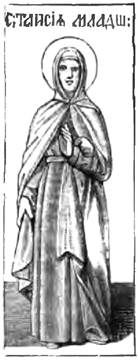
Таисия была дочь богатых и добрых родителей: они учили её добру и их уроки не были бесплодными в душе дочери. Оставшись сиротой, она обратила свой дом в приют для странников. Особенно находили у неё покой иноки скитские, посылавшиеся старцами по разным нуждам в город. Так не малое время принимала она с щедрой любовью пустынных отцов. Наконец средства её очень уменьшились. Пришлось самой знакомиться с нуждами и горечью нищеты. Явились к молодой девушке дурные люди и она, потеряв невинность, стала промышлять блудом в Александрии. Скитские старцы, услышав о том, сильно горевали о порче бедной девушки. В общем собрании сказано было Иоанну Колову: «тебе Бог дал мудрость; сестра Таисия, столько благотворившая нам и которой должны мы оказывать любовь за её добро, слышно, живёт худо; потрудись, авва, побывать у неё и поговорить ей, не придёт ли она в себя». Авва отправился. Прибыв в дом Таисии, просил он прислужницу сказать о нём госпоже Таисии. «Вы иноки обели и обобрали её», отвечала с гневом старая прислужница. Авва перенёс брань с кротостью. «Доложи могу я доставить ей хорошие вещи». Та доложила. «Да, очень может быть, сказала Таисия; иноки ходят по берегу моря и им попадаются дорогие вещи, жемчуг, каменья: пусть взойдёт». Авва, войдя, сел около Таисии и, взглянув на неё, залился слезами. «О чём ты плачешь, авва?» тревожно спросила Таисия. «Вижу, отвечал авва, сатана играет на щеках и в очах твоих: как не плакать мне!» Услышав это, Таисия, так много любившая прежде добро, почувствовала мерзость новой жизни своей189. «Есть ли покаяние для подобных мне, авва?» спросила она. «Есть», отвечал авва. «Веди же меня куда хочешь», сказала кающаяся грешница. И встав пошла за аввой. Тот, идя впереди, изумлялся и говорил себе: вот как бросила всё за один раз, не сделав и распоряжения о доме. Прибыв вечером в пустынное место, старец устроил для Таисии из песка ложе и, осенив её знамением креста, сказал: «спи спокойно». Потом, приготовив невдали и для себя такую же постель, помолился и уснул. Пробудясь в полночь, видит – какой-то светлый путь идёт от ложа Таисии к небу и Ангелы возносят душу. Он встал и, подойдя, толкнул Таисию. Оказалось, что она умерла. Смущённый всем тем, что случилось, он пал на землю и горячо молил Господа открыть Свою волю. И вот слышит голос: «и один час покаяния Таисии принят Господом и принят лучше, чем долгое, но неискреннее покаяние других»190.
Thais was the daughter of rich and good parents: they taught her what is good, and their lessons were not fruitless in the soul of their daughter. Left an orphan, she turned her house into a shelter for strangers. The Scetic monks, sent by the elders to the city on various needs, especially found rest with her. Thus for no small time she received the desert fathers with generous love. At last her means were greatly diminished. She herself had to become acquainted with the needs and bitterness of poverty. Evil people came to the young girl, and having lost her virginity, she began to practice harlotry in Alexandria. The Scetic elders, hearing of this, grieved greatly over the corruption of the poor girl. At a general gathering it was said to John Kolobos: "God has given you wisdom; sister Thais, who has done so much good for us and to whom we ought to show love for her kindness, is, it is heard, living badly; take the trouble, abba, to visit her and speak to her, that she might come to herself." The abba set out. Arriving at the house of Thais, he asked the maidservant to announce him to her mistress Thais. "You monks have beggared and stripped her," the old maidservant answered angrily. The abba bore the abuse with meekness. "Tell her that I can bring her good things." She told her. "Yes, it is very possible," said Thais; "monks walk along the seashore and find precious things, pearls, gems; let him come in." The abba, entering, sat down near Thais and, looking at her, burst into tears. "Why are you weeping, abba?" Thais asked anxiously. "I see," answered the abba, "Satan playing on your cheeks and in your eyes: how should I not weep!" Hearing this, Thais, who had once so loved what is good, felt the abomination of her new life189. "Is there repentance for such as me, abba?" she asked. "There is," answered the abba. "Lead me then wherever you wish," said the penitent sinner. And rising, she went after the abba. He, walking ahead, marveled and said to himself: "See how she has abandoned everything at once, without even giving orders about her house." Arriving in the evening at a desert place, the elder made a bed of sand for Thais and, making the sign of the cross over her, said: "Sleep in peace." Then, having prepared a similar bed for himself not far off, he prayed and fell asleep. Waking at midnight, he sees a certain luminous path going from Thais's bed to heaven and Angels bearing her soul. He rose and, approaching, nudged Thais. It turned out that she had died. Troubled by all that had happened, he fell to the ground and fervently prayed to the Lord to reveal His will. And behold, he hears a voice: "Even one hour of Thais's repentance has been accepted by the Lord, and accepted more than the long but insincere repentance of others"190.
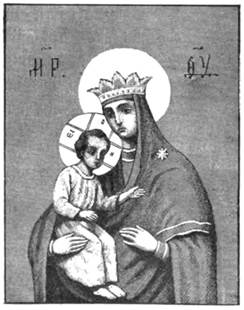
Находится в Киево-Братском монастыре, а прежде была местной в Вышгороде. Во время войны с Польшей (1659–1667) при переправе Крымских Татар, бывших в союзе с Поляками, через Днепр при Киевском Вышгороде, забраны были неприятелем из церкви иконы и доски. При этом случае Вышгородская местная икона Богоматери, утаённая от неверующих водами Днепра и принесённая к берегам Киевоподола, явилась в 1662 году в Киеве, где с радостью и с подобающей честью принята и принесена православными в Братский монастырь. Предание присовокупляет ещё, что один Татарин хотел на иконе переплыть Днепр против Братского монастыря. Икона поплыла сама и остановилась среди реки против монастыря. Плывший на ней начал кричать; из монастыря приплыли и взяли на лодку икону и татарина, который после сего крестился и постригся в монахи. С того времени она пребывает в Братской обители и по имени её называетсяБратской. Еженедельно в субботу и в субботу 5-й недели Великого поста, при стечении усердных Богомольцев, совершается перед чудотворной иконой акафист Богородице, своим предстательством ограждающей православных.
It is located in the Kiev-Brotherhood Monastery, and formerly was a local icon in Vyshgorod. During the war with Poland (1659–1667), at the crossing of the Crimean Tatars, who were in alliance with the Poles, across the Dnieper near Kiev's Vyshgorod, icons and boards were seized by the enemy from the church. On this occasion, the Vyshgorod local icon of the Mother of God, hidden from the unbelievers by the waters of the Dnieper and brought to the shores of Kiev-Podil, appeared in the year 1662 in Kiev, where it was received with joy and due honor and brought by the Orthodox to the Brotherhood Monastery. Tradition further adds that a certain Tatar wanted to cross the Dnieper on the icon opposite the Brotherhood Monastery. The icon floated by itself and stopped in the middle of the river opposite the monastery. The one floating on it began to cry out; from the monastery they rowed out and took the icon and the Tatar into a boat, and he afterwards was baptized and tonsured a monk. From that time it has remained in the Brotherhood monastery and is called Brotherhood after its name. Weekly on Saturday and on the Saturday of the 5th week of Great Lent, with a gathering of fervent pilgrims, an akathist to the Mother of God is performed before the wonderworking icon, who by her intercession protects the Orthodox.
О епархии Тентирской и о других епархиях верхней Фиваиды. Le-Quien orien. ehr. 2,607–616. Willsch. Kirchl. Geographie 1, 186, 442. Berlin. 1846.
On the Diocese of Tentyra and on other dioceses of Upper Thebaid. Le-Quien orien. ehr. 2,607–616. Willsch. Kirchl. Geographie 1, 186, 442. Berlin. 1846.
У Кассиана и Сульпиция Севера говорится: «Верхнее одеяние Египетских иноков – козья кожа, называемая милотью (длинной мантией). Это облачение козьей кожей означает умерщвление членов, обуздание всякой дерзости плотских страстей и то, что должны они жить под тяжестью добродетели. Сапог не носят по Евангельской заповеди, покрывают только ноги, когда требует слабость тела, или утренний зимний холод, или зной полуденный лета. Они носят сандалии, как дозволено заповедью Господней, но снимают их с ног, когда приступают к совершению или приобщению таинств». Vita patrum lib. IV, сар. 15. Менее других одежд понятна тут мафорта. Свида: «кредемнок – головная повязка, или мафорион». Фаворин: «мафорион – головное покрываю». Испдор Севильский (Origin. lib. 19, сар. 25): «стола – женское покрываю, которое покрыв голову, спускается с правого плеча на лево. Оно же по Латыни навивается ricinum, что попросту навивают мафортой». После сего, надобно признать в мафорие или мафорте Египетских иноков и инокинь то, что ныне называется клобуком, – покрывало, спускающееся с куколя (камилавки) на плечи. Св. Афанасий говорит деве: «куколь и наплечник должны быть без бахромы».
In Cassian and Sulpicius Severus it is said: "The outer garment of the Egyptian monks is a goatskin, called a melote (long mantle). This clothing in goatskin signifies the mortification of the members, the curbing of every insolence of fleshly passions, and that they ought to live under the weight of virtue. They do not wear boots, according to the Gospel commandment; they cover only the feet when bodily weakness requires it, or the morning winter cold, or the noonday heat of summer. They wear sandals, as is permitted by the Lord's commandment, but they take them off their feet when they approach the celebration or communion of the mysteries." Vita patrum lib. IV, cap. 15. Among these garments, the maphorta is the least understood. Suidas: "kredemnon – a headband, or maphorion." Phavorinus: "maphorion – a head covering." Isidore of Seville (Origin. lib. 19, cap. 25): "stola – a woman's covering, which, covering the head, falls from the right shoulder to the left. It is also called in Latin ricinum, which is commonly called a maphorta." After this, one must recognize in the maphorion or maphorta of the Egyptian monks and nuns what is now called a klobuk – a veil falling from the kukol (kamilauchion) onto the shoulders. St. Athanasius says to a virgin: "The kukol and the shoulder-piece should be without fringe."
Вот что говорится у Кассиаиа и Сульпиция Севера об одеянии Египетских иноков: «у Египетских иноков есть особенности сообразованные не столько с заботой о теле, сколько с требованиями нравственности. И чтобы постоянно помнить, что они должны хранить невинность и простосердечие детские, носят они небольшие наглавники (куколки), или камилавки. Одеваются в льняную рубашку, которая едва достаёт до пять; руки оставляют голыми, дабы недостаток рукавов внушал, что они отсечены от дел мирских; хитон стягивается поясом. Потом шею и плечи покрывают бедным покрывалом, что у них, как и у нас, навивается мафортой».
This is what is said in Cassian and Sulpicius Severus about the clothing of the Egyptian monks: "The Egyptian monks have peculiarities conformed not so much to care for the body as to the requirements of morality. And that they might constantly remember that they must preserve childlike innocence and simplicity, they wear small head-coverings (kukolia), or kamilauchia. They dress in a linen shirt which barely reaches the feet; they leave the arms bare, so that the lack of sleeves might remind them that they are cut off from worldly affairs; the tunic is fastened with a belt. Then they cover the neck and shoulders with a poor veil, which among them, as among us, is called a maphorta."
De puellarum disciplina regula 8. Pachomii: Hobstenii codex 2,30. S. Vita s. Pachomii cap. 28 in Patrol. Lat. T. 73, 248–249. Rufini de vita monacb. lib. III, n. 34.
De puellarum disciplina regula 8. Pachomii: Hobstenii codex 2,30. S. Vita s. Pachomii cap. 28 in Patrol. Lat. T. 73, 248–249. Rufini de vita monach. lib. III, n. 34.
Метафраст в описании жития св. Феодоры в Четье-Минее сент. 11, у Сурия ad IX sept. Извлечение Act. Sanct. Sept. T. 3, 788–791. Иные из частных случаев – сомнительны. Есть другое Греческое описание, но не издано. Fabr. bibi. gr. X, 332. Краткое извлечение в Менологе Василия; более пространное – в прологе на 11 сент. В Греческой минее синаксарь в стихах. Канон писан неизвестным.
Metaphrastes, in his account of the life of St. Theodora in the Chetya-Minea for September 11, and in Surius ad IX Sept. An extract from Act. Sanct. Sept. T. 3, 788–791. Some of the particular incidents are doubtful. There is another Greek account, but it has not been published. Fabr. bibl. gr. X, 332. A brief extract is found in the Menologion of Basil; a more extensive one in the Prologue for September 11. In the Greek Menaion, the synaxarion is in verse. The canon was written by an unknown author.