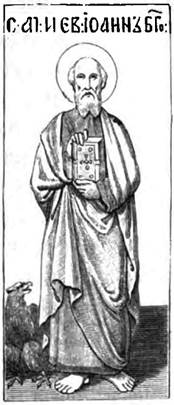
Св. евангелист Иоанн родом из Вифсаиды Галилейской, сын Зеведея – рыбаря и Соломии, меньший брат Иакова Зеведеева (Мф.4:21,27:56. сн. Мк.15:40,16:1). Родители Иакова и Иоанна были люди благочестивые, небогатые, простые и покорные воле Промысла. Отец не препятствовал сыновьям своим оставить свои занятия и его самого и последовать за Господом, их призывавшим. Мать вместе с другими благочестивыми жёнами сама следовала за Иисусом Христом, служила Ему имением своим (Мф.27:55–56. Лк.8:3), заботилась о приличном погребении Иисуса Христа, ходила на гроб Его, чтобы помазать тело Его драгоценными ароматами (Мк.16:1; Лк.23:56,24:1).
St. Evangelist John was a native of Bethsaida in Galilee, the son of Zebedee, a fisherman, and Salome, and the younger brother of James the son of Zebedee (Mt. 4:21, 27:56; cf. Mk. 15:40, 16:1). The parents of James and John were pious people, not wealthy, simple, and submissive to the will of Providence. The father did not hinder his sons from leaving their occupations and himself to follow the Lord, who was calling them. The mother, together with other pious women, herself followed Jesus Christ, served Him with her property (Mt. 27:55–56; Lk. 8:3), cared for the proper burial of Jesus Christ, and went to His tomb to anoint His body with precious spices (Mk. 16:1; Lk. 23:56, 24:1).
Сын Зеведея и Соломии – Иоанн был человек некнижный и простой (Деян.4:13). Первоначально он был расположен к Спасителю проповедью об Нём Крестителя. Когда Предтеча, указывая на Господа, воскликнул: «се Агнец Божий, вземляй грехи мира», двое из учеников его пошли за Иисусом (Ин.1:36–37). Один из них был Иоанн. Вместе с братом своим Иаковом он призван Господом в звание Апостола (Мф.4:21,10:2), от ловли рыб, на озере Геннисаретском (Мф.4:18–21; Лк.5:1–14). Подобно брату своему Иоанн наречён от Иисуса Христа Воанергесом, т. е. сыном громовым (Мк.3:17), в предзнаменование особенной ревности его о славе своего Учителя (Лк.9:54–55) и величия его Евангельской проповеди. «Богословие Иоанна, аки гром имеяше слышатися во всем мире и всю исполнити землю». По сказанию Иеронима, Иоанн призван в Апостольское служение в юношеском возрасте и был моложе прочих Апостолов, и потому долее всех их подвизался на земле. Через год после призывания Иоанн избран был Господом из множества учеников Его в число 12 Апостолов. Во время земной жизни Иисуса Христа Иоанн пользовался особенным Его благоволением, был возлюбленным Его учеником, его же, как неоднократно свидетельствует об нём Евангелие, любляше*Иисус* (Ин.13:23,19:26,21:20), по словам св. Златоуста, за его великую кротость и тихость. Вместе с Петром и Иаковом Иоанн удостоен был Господом находиться при воскресении дочери Иаира, при преображении Господнем и при молитве Спасителя в саду Гефсиманском. Когда Господь, для всегдашнего единения с верующими, возжелал установить таинство св. Причащения, Он послал Петра и Иоанна в Иерусалим приготовить для сего особенную горницу (Лк.22:8). Во время Тайной Вечери возлюбленный ученик возлежал на персях Господа (Ин.13:23,21:20). После объявления Иисусом Христом о близком Его предании, опечалившего Его учеников, по знаку Петра Иоанн один осмелился спросить у Господа о предателе (Ин. 13:21–26). Когда Иисус Христос указан был предателем и взят в саду Гефсиманском, все ученики разбежались; только Пётр и Иоанн следовали за Господом (Ин.18:15). Но и Пётр при страдании Его отрёкся от Него; Иоанн же один и при кресте Господа стоял. За столь великую любовь Иоанн высоко награждён был от Господа. С креста Иисус Христос заповедал ему быть у Пречистой Матери Своей вместо сына.
The son of Zebedee and Salome, John, was an unlettered and simple man (Acts 4:13). Initially, he was drawn to the Savior by the Forerunner's preaching about Him. When the Forerunner, pointing to the Lord, exclaimed: "Behold the Lamb of God, who takes away the sins of the world," two of his disciples followed Jesus (Jn. 1:36–37). One of them was John. Together with his brother James, he was called by the Lord to the rank of Apostle (Mt. 4:21, 10:2), from fishing on the Lake of Gennesaret (Mt. 4:18–21; Lk. 5:1–14). Like his brother, John was named Boanerges, that is, son of thunder, by Jesus Christ (Mk. 3:17), as a foreshadowing of his particular zeal for the glory of his Teacher (Lk. 9:54–55) and the grandeur of his Gospel preaching. "The theology of John, like thunder, was to be heard throughout the whole world and to fill the whole earth." According to Jerome's account, John was called to apostolic service at a youthful age and was younger than the other Apostles, and therefore he labored on earth longer than all of them. A year after his calling, John was chosen by the Lord from among His many disciples to be one of the 12 Apostles. During the earthly life of Jesus Christ, John enjoyed His particular favor, being His beloved disciple, whom, as the Gospel repeatedly testifies, Jesus loved (Jn. 13:23, 19:26, 21:20), according to St. Chrysostom, because of his great meekness and gentleness. Together with Peter and James, John was deemed worthy by the Lord to be present at the resurrection of Jairus's daughter, at the Lord's Transfiguration, and at the Savior's prayer in the Garden of Gethsemane. When the Lord, for the perpetual union with the faithful, wished to establish the mystery of Holy Communion, He sent Peter and John to Jerusalem to prepare a special upper room for this purpose (Lk. 22:8). During the Last Supper, the beloved disciple reclined on the Lord's breast (Jn. 13:23, 21:20). After Jesus Christ announced His imminent betrayal, which saddened His disciples, at a sign from Peter, John alone dared to ask the Lord about the betrayer (Jn. 13:21–26). When Jesus Christ was pointed out as the betrayer and was arrested in the Garden of Gethsemane, all the disciples fled; only Peter and John followed the Lord (Jn. 18:15). But even Peter denied Him during His Passion; John alone stood at the Lord's cross. For such great love, John was highly rewarded by the Lord. From the cross, Jesus Christ commanded him to be to His Most Pure Mother in place of a son.
В третий день по смерти Иисуса Христа Иоанн, услышав от Марии Магдалины о необретении тела Его во гробе, первый притёк ко гробу и виде и верова воскресению Христову (Ин.20:1–8). В тот же день вечером Иоанн вместе с другими учениками увидел и Самого Воскресшего Господа, а через восемь дней опять узрел Его (Ин.20:19–26). Потом Воскресший явился ученикам Своим на море Тивериадском, где был в числе их и св. Иоанн. После сего возлюбленный ученик Христов неоднократно встречал Воскресшего Господа; видел и славное вознесение Его на небо.
On the third day after the death of Jesus Christ, John, having heard from Mary Magdalene that His body was not found in the tomb, was the first to run to the tomb and saw and believed in the resurrection of Christ (Jn. 20:1–8). That same evening, John, together with the other disciples, saw the Risen Lord Himself, and eight days later he beheld Him again (Jn. 20:19–26). Afterwards, the Risen One appeared to His disciples on the Sea of Tiberias, where St. John was among them. After this, the beloved disciple of Christ met the Risen Lord many times; he also saw His glorious Ascension into heaven.
Наречённый сыном Пресв. Девы Марии, Иоанн не оставлял Её до её успения, последовавшего в седьмое десятилетие первого столетия по Р. Хр.; и оттого, быть может, по сошествии Св. Духа, Ап. Иоанн проповедал Евангелие большей частью в Иерусалиме и окрестностях его, и вместе с Ап. Петром потерпел первые узы и побои за слово Божие (Деян. III, IV, Деян.8:14,25; Гал.2:9), и, подобно Ап. Петру и Иакову, брату Господню, именуется в Писании столпом Церкви (Гал.2:9).
Named the son of the Most Holy Virgin Mary, John did not leave Her until Her Dormition, which occurred in the seventh decade of the first century A.D.; and perhaps for this reason, after the descent of the Holy Spirit, the Apostle John preached the Gospel for the most part in Jerusalem and its environs, and together with the Apostle Peter suffered the first bonds and beatings for the word of God (Acts III, IV, Acts 8:14, 25; Gal. 2:9), and, like the Apostle Peter and James, the Lord's brother, is called in Scripture a pillar of the Church (Gal. 2:9).
По успении Пресвятой Девы Марии, Ап. Иоанн принял на себя попечение об утверждении в вере Церквей Малоазийских, – Ефесской, Пергамской, Смирнской, Фиатирской, Сардийской, Филадельфийской, Лаодикийской, о которых было ему сказано в Откровении. Подобно Ап. Иакову и Петру, он не столько заботился о путешествиях для благовестия св. веры, сколько об утверждении её в одном месте, откуда она могла бы впоследствии распространяться и далее. Этим местом он избрал Ефес, и здесь жил с 67 или 68 года по Р. Хр.
After the Dormition of the Most Holy Theotokos, the Apostle John took upon himself the care of confirming in the faith the Churches of Asia Minor—those of Ephesus, Pergamum, Smyrna, Thyatira, Sardis, Philadelphia, and Laodicea, which were mentioned to him in the Revelation. Like the Apostles James and Peter, he was not so much concerned with traveling to proclaim the holy faith as with establishing it in one place, from which it could later spread further. He chose Ephesus as this place, and lived there from the year 67 or 68 A.D.
В царствование Домициана (81–95), который воздвиг на христиан второе от язычников гонение, св. Иоанн в Риме ввержен был в кипящее масло, но благодатью Божией остался невредим. В 94 году по Р. Хр. Апостол за своё свидетельство о Божественном Слове императором Домицианом сослан был в заточение на Патмос – один из островов Архипелага на Средиземном море, близ берегов Малой Азии, и сделался просветителем этого острова. Памятником пребывания здесь св. Ап. Иоанна доселе служит монастырь, основанный Алексеем Комниным на Патмосе во имя Богослова, и местное предание сохраняет места, освящённые присутствием Евангелиста Иоанна. Жители острова все христиане. Св. узнику за слово Божие на Патмосе – возлюбленному ученику Своему Господь явился и открыл таинственные судьбы св. Своей Церкви для ободрения и укрепления верующих. В глубоком уединении, во дни пламенной молитвы Апостола ему явлен был целый ряд таинственных видений, в которых представлена была борьба агнца со змием и торжество первого над последним. Господь повелел написать сии откровения и послать книгу Церквам Азийским в утешение и наставление христианам. Итак, на Патмосе в 94 году по Р. Хр. Иоанн написал Апокалипсис, т. е. откровение о будущей судьбе Церкви Христовой и всего мира (Апок.1:9), и послал книгу свою указанным Церквам. По восшествии Траяна на престол Римский, Иоанн получил свободу и возвратился в Ефес, где главным попечением св. Иоанна было соблюдение распространившейся веры в чистоте, утверждение Церкви и благочестия, при множестве появившихся лжеучителей. Для этой цели он всегда имел при себе много учеников, воспитывал их в истинной вере и благочестии и рукополагал в епископы для разных Церквей, так что Малоазийские Церкви во II веке большей частью производили от него преемство своего епископства.
During the reign of Domitian (81–95), who raised the second persecution of Christians by the pagans, St. John was cast into boiling oil in Rome, but by the grace of God remained unharmed. In the year 94 A.D., the Apostle, for his testimony concerning the Divine Word, was exiled by the emperor Domitian to Patmos—one of the islands of the Archipelago in the Mediterranean Sea, near the coast of Asia Minor—and became the enlightener of that island. A monument to St. Apostle John's sojourn here is the monastery founded by Alexius Comnenus on Patmos in the name of the Theologian, and local tradition preserves the places sanctified by the presence of the Evangelist John. The inhabitants of the island are all Christians. To the holy prisoner for the word of God on Patmos—His beloved disciple—the Lord appeared and revealed the mysterious destinies of His holy Church for the encouragement and strengthening of the faithful. In deep solitude, during the days of the Apostle's fervent prayer, a whole series of mysterious visions was revealed to him, in which the struggle of the lamb with the serpent and the triumph of the former over the latter was presented. The Lord commanded that these revelations be written down and the book sent to the Churches of Asia for the consolation and instruction of Christians. Thus, on Patmos in the year 94 A.D., John wrote the Apocalypse, that is, the revelation concerning the future fate of the Church of Christ and of the whole world (Rev. 1:9), and sent his book to the aforementioned Churches. Upon the accession of Trajan to the Roman throne, John received his freedom and returned to Ephesus, where St. John's chief concern was the preservation of the spread faith in purity, the establishment of the Church and piety, amidst the multitude of false teachers that had appeared. For this purpose, he always kept many disciples with him, educated them in the true faith and piety, and ordained them as bishops for various Churches, so that the Churches of Asia Minor in the second century mostly derived the succession of their episcopacy from him.
Среди соблазнов от лжеучителей верующие нуждались и в личных наставлениях Апостола. Посему он, не смотря на свои преклонные лета, нередко предпринимал путешествия, чтобы утверждать правоверующих и обращать заблудших. В это время около 97 года Апостол Иоанн написал свои соборные послания; первое из них ко всем христианам, а последние два к частным лицам. Из последних видно, что Апостол писал их или приготовляясь к путешествию, или во время путешествия по странам Малоазийским.
Amidst the temptations from false teachers, the faithful also needed the personal instructions of the Apostle. Therefore, despite his advanced years, he often undertook journeys to confirm the orthodox and to convert the erring. At this time, around the year 97, the Apostle John wrote his catholic epistles; the first of them is addressed to all Christians, and the last two to private individuals. From the latter, it is evident that the Apostle wrote them either while preparing for a journey, or during a journey through the regions of Asia Minor.
В какой степени св. Апостол Иоанн питал любовь к своим духовным чадам, чтобы их предохранить от влияния лжеучителей или отвлечь от пути порока, можно судить по рассказу о св. Иоанне древних современных писателей. Ученик св. Иоанна св. Поликарп, епископ Смирнский, рассказывает о своём учителе, св. Апостоле Иоанне, что он, пришедши однажды в Ефесе мыться и увидев в бане еретика Керинфа, выбежал вон, сказав: «убежим отсюда; может обрушиться баня, когда в ней Керинф, враг истины». Евсевий, передавая слова Климента Александрийского об отеческом попечении св. Иоанна о спасении грешных, говорит: «по смерти мучителя (Домициана) Иоанн возвратился с острова Патмоса в Ефес и по приглашению посетил ближайшие области язычников, частью для поставления епископов, частью для устроения церквей, а частью для принятия в клир некоторых лиц, указанных Святым Духом. Пришедши в один город неподалёку от Ефеса и преподавши утешение братии, он заметил между прочим юношу, видного телом, приятного лицом, чувствительного сердцем, и обратившись к начальствовавшему епископу, сказал: этого юношу особенно вверяю тебе, свидетельствуясь Церковью и Христом. Епископ принял юношу и обещал приложить о нём всё своё попечение. Старец, взяв к себе в дом порученного ему юношу, воспитывал его, надзирал за ним, блюл его и наконец просветил его крещением, и после сего ослабил заботливость и наблюдение над ним, потому что сообщил ему совершенного хранителя – печать Господню. Воспользовавшись ранним послаблением, юноша попал в общество праздных, развратных, способных на всякое худое дело. Сперва они завлекали его роскошными обедами, потом уводили с собой, отправляясь по ночам на грабительство, а наконец склоняли его и к тягчайшему. Юноша понемногу привыкал. Имея пылкую природу, он, подобно дикому и могучему коню, ринулся с прямого пути и, закусив удила, быстро мчался к погибели. Покорив товарищей своей власти и составив из них сборище разбойников, он сделался начальником их, и насилием, кровожадностью и бесчеловечием превзошёл всех».
To what degree St. Apostle John nurtured love for his spiritual children, in order to protect them from the influence of false teachers or to divert them from the path of vice, can be judged from a story about St. John told by ancient contemporary writers. A disciple of St. John, St. Polycarp, Bishop of Smyrna, relates of his teacher, St. Apostle John, that once, coming to bathe in Ephesus and seeing the heretic Cerinthus in the bathhouse, he ran out, saying: "Let us flee from here; the bathhouse may collapse while Cerinthus, the enemy of the truth, is in it." Eusebius, conveying the words of Clement of Alexandria concerning the fatherly care of St. John for the salvation of sinners, says: "After the death of the tyrant (Domitian), John returned from the island of Patmos to Ephesus and, upon invitation, visited the neighboring regions of the pagans, partly to appoint bishops, partly to establish churches, and partly to receive into the clergy certain persons indicated by the Holy Spirit. Coming to a city not far from Ephesus and having given consolation to the brethren, he noticed among others a youth, handsome in body, pleasant in face, sensitive in heart, and turning to the presiding bishop, he said: 'This youth I especially entrust to you, calling the Church and Christ to witness.' The bishop received the youth and promised to apply all his care to him. The elder, taking the youth entrusted to him into his own home, educated him, watched over him, guarded him, and finally enlightened him through Baptism, and after this relaxed his care and supervision over him, because he had given him a perfect guardian—the Lord's seal. Taking advantage of this early relaxation, the youth fell into the company of idle, dissolute men, capable of every evil deed. At first they enticed him with luxurious dinners, then they took him with them when they went out at night for robbery, and finally they inclined him to even worse things. The youth gradually became accustomed. Having an ardent nature, he, like a wild and powerful horse, rushed from the straight path and, taking the bit in his teeth, swiftly galloped to perdition. Having subjugated his comrades to his authority and formed them into a band of robbers, he became their leader, and surpassed them all in violence, bloodthirstiness, and inhumanity."
Между тем Апостол Иоанн снова пришёл туда и сказал епископу: «Возврати же нам залог, который я и Христос вверили тебе в присутствии Церкви, тобой управляемой». Епископ сначала изумился, думая, не оклеветали ли его в присвоении каких-либо денег, которых он не брал. – «Я хочу знать о юноше, о душе брата нашего», сказал Апостол. Тогда старец глубоко воздохнул и со слезами сказал: «Он умер! Умер для Бога, стал злым, развратным, главой разбоя и теперь, вместо Церкви, поселился на горе с своим сообществом». Тогда Апостол с великой скорбью поехал на гору, как мог скорее. Приближается к указанному месту. Сторожевые разбойники схватили его, но он не думал бежать или противиться. «Я затем и пришёл, говорит он, чтобы вы отвели меня к своему начальнику», который между тем ожидал его уже с оружием; но лишь только Иоанн подошёл, тот узнал и от стыда обратился в бегство. Апостол погнался за ним изо всех сил, забывая старость свою и крича ему вслед: «сын мой, что ты бежишь от меня, от твоего отца, от безоружного и старого, сын мой, пожалей меня и не бойся! Есть ещё надежда жизни, я буду отвечать за тебя Христу. Если нужно, рад умереть за тебя, как и Господь за нас; за твою душу я готов отдать свою. Остановись, поверь, Христос послал меня!» Юноша остановился, поник взором в землю, потом бросил своё оружие, затрясся и залился слезами. Старец подошёл к нему, юноша обнял его, и выражениями глубочайшей скорби умолял о прощении и вторично крестился в слезах, только прятал правую свою руку, которая давалась в знак мира и обещания верности (1Макк.11:50). Апостол уверял, клялся, что и для него приобретено Спасителем прощение грехов, умолял его, пал перед ним на колени, даже целовал его правую руку, как бы она была уже очищена покаянием, и таким образом опять привёл его в Церковь. После сего Иоанн часто молился об нём, вместе с ним содержал продолжительные посты, успокаивал его мысли разными назидательными беседами и, говорят, не прежде удалился, как совершенно уже возвратил его в недра Церкви.
Meanwhile the Apostle John came there again and said to the bishop: “Return to us the pledge which I and Christ entrusted to you in the presence of the Church which you govern.” The bishop was at first astonished, thinking that perhaps he had been slandered concerning the misappropriation of some money which he had not taken. “I wish to know about the youth, about the soul of our brother,” said the Apostle. Then the elder sighed deeply and said with tears: “He is dead! Dead to God; he has become evil, dissolute, the chief of a band of robbers, and now, instead of the Church, he dwells on the mountain with his company.” Then the Apostle, with great sorrow, set out for the mountain as quickly as he could. He draws near to the indicated place. The robber sentinels seized him, but he did not think of fleeing or resisting. “I have come for this very purpose,” he says, “that you should lead me to your chief,” who in the meantime was already awaiting him with weapons; but as soon as John drew near, he recognized him and, out of shame, turned to flee. The Apostle pursued him with all his might, forgetting his old age, and cried out after him: “My son, why do you flee from me, from your father, from an unarmed and old man? My son, have pity on me and fear not! There is still hope of life; I will answer for you to Christ. If need be, I am glad to die for you, even as the Lord died for us; for your soul I am ready to give my own. Stop, believe me, Christ has sent me!” The youth stopped, cast his eyes down to the ground, then threw down his weapons, trembled, and burst into tears. The elder drew near to him; the youth embraced him, and with expressions of deepest sorrow begged for forgiveness, and was baptized a second time in his tears, only hiding his right hand, which was given as a sign of peace and a pledge of faithfulness (1 Macc. 11:50). The Apostle assured him, swore that even for him forgiveness of sins had been obtained by the Savior, besought him, fell on his knees before him, even kissed his right hand, as if it were already cleansed by repentance, and thus brought him back again into the Church. After this, John often prayed for him, together with him observed lengthy fasts, calmed his thoughts with various edifying discourses, and, it is said, did not depart until he had fully restored him to the bosom of the Church.
Среди таких трудов и попечений св. Апостол оканчивал своё течение. Убедительные просьбы епископов и ходатайство целых Церквей побудили его изложить письменно то, что доселе благовествовал он устно, и пополнить три известные уже Евангелия новым Евангелием. Предание говорит, что св. Апостол приступил к сему делу не вдруг. Заповедав целой Церкви пост, он подобно Моисею удалился в гору с одним учеником своим. Там три дня и три ночи провёл он в пламенной молитве, и наконец после небесных знамений приказал ученику своему Прохору писать то, что услышит из уст его. Прохор услышал и начал писать: В начале бе Слово и проч. Евангелие от Иоанна написано в Ефесе вероятно около 102 года по Р. Хр. на Греческом языке. По предисловию же к сему Евангелию, принятому Церковью от Феофилакта, архиепископа Болгарского, а равно и по некоторым иным сказаниям, положенным Церковью перед Евангелием от Иоанна, в конце и перед Богослужебной книгой Апостол, Евангелие от Иоанна написано им «по тридцати двух летех вознесения Христова». Предание говорит, что, когда три прежде написанные Евангелия распространились между всеми и дошли до Иоанна – он предпринял дать своё об них свидетельство. «Он видев та, указа благодать истины, и елика они оставиша, той пополни, и елика сокращеннее реша, сей распростре во своем благовестии». По высоте учения Евангелия, особенно о Божестве и безначальном рождении Бога Слова, о Божестве и безначальном исхождении Святого Духа от Бога Отца, св. Евангелисту Иоанну преимущественно усвоено Церковью наименование Богослова, которое заимствовано из слов, составляющих начало Евангелия: в начале бе Слово и Слово бе к Богу и Бог бе Слово. Это наименование, со времён Апостольских известное, сделалось общеупотребительным в IV веке.
Amid such labors and cares, the holy Apostle was finishing his course. The urgent entreaties of the bishops and the intercession of whole Churches moved him to commit to writing what he had hitherto proclaimed orally, and to supplement the three already known Gospels with a new Gospel. Tradition says that the holy Apostle did not set about this work at once. Having enjoined a fast upon the whole Church, he withdrew, like Moses, to a mountain with one of his disciples. There he spent three days and three nights in fervent prayer, and finally, after heavenly signs, he commanded his disciple Prochorus to write down what he would hear from his lips. Prochorus heard and began to write: In the beginning was the Word, and so forth. The Gospel of John was written in Ephesus, probably about the year 102 A.D., in the Greek language. According to the preface to this Gospel, received by the Church from Theophylact, Archbishop of Bulgaria, and likewise according to certain other accounts placed by the Church before the Gospel of John, at the end and before the liturgical book of the Apostle, the Gospel of John was written by him “thirty-two years after the Ascension of Christ.” Tradition says that when the three previously written Gospels had spread among all and had come to John, he undertook to give his own testimony concerning them. “He, seeing these things, pointed out the grace of truth, and what they had omitted, he supplied, and what they had said more concisely, he expanded in his Gospel.” By reason of the sublimity of the teaching of the Gospel, especially concerning the Divinity and the eternal generation of God the Word, and concerning the Divinity and the eternal procession of the Holy Spirit from God the Father, the holy Evangelist John has been especially accorded by the Church the title of Theologian, which is taken from the words that form the beginning of the Gospel: In the beginning was the Word, and the Word was with God, and the Word was God. This title, known from Apostolic times, became commonly used in the fourth century.
В IV веке рукопись Евангелия от Иоанна найдена была в Иерусалиме. Филосторгий пишет: когда по приказанию Юлиана Отступника устрояемо было основание для храма Иудейского, один из камней, положенных на самый низ, сдвинувшись, открыл отверстие какой-то пещеры, выделанной в скале. Начальствовавшие над работами, желая узнать, что это за пещера, спустили в неё одного из работников. Там он увидел какой-то столб; положивши на него руку, работник нашёл на нём книгу, завёрнутую в тонкий и чистый плат, и, взяв находку, дал знак, чтобы его тащили назад. Быв вытащен, показал он книгу и привёл всех в изумление – особенно тем, что она имела вид книги новой и вовсе не бывшей в употреблении, равно как и тем, что её нашли в таком месте. Эту книгу, что ещё более привело язычников и Иудеев в изумление, тотчас развернули и в самом начале её прочитали следующие, большими буквами написанные слова:в начале бе Слово и Слово бе к Богу и Бог бе Слово. Вообще найденная книга заключала в себе всё Евангелие, благовествованное Богословствующими устами ученика.
In the fourth century, a manuscript of the Gospel of John was found in Jerusalem. Philostorgius writes: when, by order of Julian the Apostate, the foundation for the Jewish temple was being laid, one of the stones placed at the very bottom shifted, revealing the opening of a certain cave hewn in the rock. Those in charge of the works, wishing to know what this cave was, lowered one of the workmen into it. There he saw a kind of pillar; placing his hand upon it, the workman found on it a book wrapped in a fine and clean cloth, and, taking the find, gave a signal to be pulled back up. When he was drawn out, he showed the book and astonished everyone—especially because it had the appearance of a new book that had never been used, and likewise because it had been found in such a place. This book, which astonished the pagans and Jews even more, was immediately opened, and at its very beginning they read the following words, written in large letters: In the beginning was the Word, and the Word was with God, and the Word was God. In sum, the book that was found contained the entire Gospel proclaimed by the theologizing lips of the disciple.
Достигши глубокой старости и будучи уже не в силах сам приходить в церковь, св. Иоанн, как пишет блаж. Иероним, приносим был в священное собрание своими учениками и продолжал повторять любвеобильные слова: чадца*, любите друг друга. Св. Евангелист Иоанн жил на земле долее всех Апостолов. Имея более 100 лет от рождения своего, он мирно преставился в Ефесе, около 72 года после вознесения Господа. По древнему сказанию, Иоанн, почувствовав приближение своей смерти, велел приготовить для себя могилу, сам возлёг в неё, как на ложе, и мирно скончался, и погребён в Ефесе. День преставления св. Апостола Иоанна Церковь празднует *26 сентября, и торжественнее, нежели дни прочих святых славных и всехвальных Апостолов и Евангелистов, яко паче иных Христу Богу возлюбленного.
Having reached a great old age and being no longer able to come to church himself, St. John, as the blessed Jerome writes, was brought to the sacred assembly by his disciples and continued to repeat the loving words: Little children, love one another. The holy Evangelist John lived on earth longer than all the Apostles. Being more than one hundred years old from his birth, he peacefully reposed in Ephesus, about seventy-two years after the Ascension of the Lord. According to an ancient account, John, feeling the approach of his death, ordered a grave to be prepared for himself, lay down in it as on a bed, and peacefully fell asleep, and was buried in Ephesus. The Church celebrates the day of the repose of the holy Apostle John on September 26, and more solemnly than the days of the other holy, glorious, and all-praised Apostles and Evangelists, as one loved more than others by Christ God.
Честные мощи св. Иоанна, вскоре после погребения его, не были уже находимы во гробе посещавшими оный, но только благовонное миро, или тонкий некоторый воздух ежегодно 8-гомая истекал от гроба и подавал верующим благодатные исцеления. В воспоминание сих чудесных знамений, с древних времён установлен Церковью,8 мая, другой праздник в честь Апостола и Евангелиста Иоанна Богослова.
The precious relics of St. John, soon after his burial, were no longer found in the tomb by those who visited it, but only a fragrant myrrh, or a certain subtle air, flowed forth from the grave annually on May 8 and granted grace-filled healings to the faithful. In remembrance of these miraculous signs, from ancient times the Church established May 8 as another feast in honor of the Apostle and Evangelist John the Theologian.
В Черменецком Богословском монастыре, СПб. епархии, сего числа празднуют явление чудотворной иконы Иоанна Богослова около 1480 года.
In the Chermenetsky Theological Monastery of the St. Petersburg diocese, on this day they celebrate the appearance of the wonderworking icon of John the Theologian around the year 1480.
Арсений, родом из Римской патрицианской фамилии, ещё в молодых летах сделался известным по своему обширному образованию; при таких данных ему могло предстоять блистательное поприще, но по внутреннему своему настроению он смиренно искал не почестей земных, но просвещения духовного. Посвятив себя служению Церкви, он состоял уже в сане диакона, когда император Феодосий Великий пожелал иметь его наставником детей своих – Гонория и Аркадия. Тяжело было смиренному церковнослужителю принять на себя такую ответственную обязанность, из-за которой притом приходилось ещё жить при дворе, на виду. Но просьбы и убеждения Феодосия, чтобы Арсений послужил для такого важного дела, как воспитание будущих правителей государства, заставили Арсения (на 29-м году его жизни) согласиться на такое несоответственное с его личными целями предложение.
Arsenius, born of a Roman patrician family, became known in his youth for his extensive education; with such gifts a brilliant career might have awaited him, but by his inner disposition he humbly sought not earthly honors, but spiritual enlightenment. Having devoted himself to the service of the Church, he was already in the rank of deacon when the Emperor Theodosius the Great desired to have him as the teacher of his children—Honorius and Arcadius. It was difficult for the humble churchman to take upon himself such a responsible duty, which moreover required him to live at court, in the public eye. But the entreaties and persuasions of Theodosius that Arsenius should serve for so important a matter as the education of the future rulers of the state compelled Arsenius (in the twenty-ninth year of his life) to agree to this proposal, so inconsistent with his personal goals.
– Будь моим детям отцом больше, нежели я, – сказал Арсению император, поручая ему детей своих, – потому что гораздо труднее и важнее дать детям добрый разум, чем жизнь. Сделай души их добродетельными, предохрани их от соблазнов юности. Требуй от них полной покорности, как отец и учитель их...
“Be a father to my children more than I am,” said the emperor to Arsenius, entrusting his children to him, “for it is far more difficult and important to give children a good mind than to give them life. Make their souls virtuous; preserve them from the temptations of youth. Demand from them full obedience, as their father and teacher...”
Так и поступал Арсений, воспитывая царских сыновей. Преподавая им языки и науки, он старался в особенности внушить им христианские правила, желание угодить Богу и заслужить любовь народа. Но не удовлетворён был ревнитель возложенного на него дела успехом своего воспитательного влияния... Один из сыновей императора – Аркадий, не терпя строгости своего наставника, в необузданности своего нрава
Thus did Arsenius act, educating the imperial sons. Teaching them languages and sciences, he strove especially to instill in them Christian principles, the desire to please God, and to earn the love of the people. But the zealot for the work entrusted to him was not satisfied with the success of his educational influence... One of the emperor’s sons—Arcadius, unable to endure the strictness of his tutor, in the unbridledness of his temper
замыслил даже убить его... Предупреждённый об этом, огорчённый, не доверяющий своим силам и, сверх того, руководствуемый тайным голосом, внушавшим ему «бежать от людей и молчать», Арсений удалился от двора и скрылся в Египетскую Скитскую пустыню... Ему было тогда около 40 лет. Здесь встретился он с процветавшим в V-м веке святостью своей жизни пустынником – Иоанном Коловым и под его руководством продолжал своё духовное развитие и совершенствование... После нескольких лет строгого иноческого подвижничества, Арсений снова, побуждаемый таинственным голосом: бежать от людей и пребывать в молчании, потому что «молчание есть корень безгрешности», получил от Иоанна благословение предаться полному уединению и безмолвию в пустыне.
even plotted to kill him... Warned of this, grieved, distrustful of his own strength, and, moreover, guided by a secret voice that urged him “to flee from men and to be silent,” Arsenius withdrew from the court and hid himself in the Egyptian Skete desert... He was then about forty years old. There he met the hermit John Kolobos, who flourished in the fifth century in the holiness of his life, and under his guidance continued his spiritual development and perfection... After several years of strict monastic asceticism, Arsenius, again impelled by the mysterious voice: to flee from men and to abide in silence, because “silence is the root of sinlessness,” received from John a blessing to give himself over to complete solitude and stillness in the desert.
Один из братий скита спросил удалявшегося от них Арсения: отчего он их оставляет? – «Богу известно, как я люблю вас всех, – отвечал подвижник, – но нельзя в одно время быть и с людьми, и с Богом. Высших сил на небесах тысячи тысяч и тьмы тем, но все они имеют одну волю и единомысленно славят Бога. На земле же разнообразны воли и помышления человеческие: у каждого своя воля и мысль... Как же быть вместе и с людьми и с Богом?» ...
One of the brethren of the skete asked Arsenius, who was withdrawing from them, why he was leaving them? “God knows how I love you all,” answered the ascetic, “but it is impossible to be at the same time with men and with God. The higher powers in heaven are thousands of thousands and ten thousands of ten thousands, but they all have one will and with one mind glorify God. On earth, however, the wills and thoughts of men are diverse: each has his own will and thought... How then can one be together both with men and with God?”
Постоянной молитвой Арсения было: «Боже, не оставь меня; я не сделал перед Тобой ничего доброго, но по милости Твоей даруй мне положить начало!»
Arsenius’s constant prayer was: “O God, do not forsake me; I have done nothing good before Thee, but according to Thy mercy grant me to make a beginning!”
Когда ещё Арсений жил в скиту, то один из братий, услышав однажды, что великий подвижник просит совета у одного простого, неучёного старца, с удивлением спросил его: «Как это ты, изучивший Греческие и Римские науки, просишь наставления у простого, непросвещённого старца?» – «Правда, что я владею научным образованием, – отвечал Арсений, – но я не знаю даже азбуки того, что знает этот простой и неучёный человек, потому что, – заключил он в объяснение, – смирение есть начало всех добродетелей, как азбука – начало книжного учения».
When Arsenius still lived in the skete, one of the brethren, having once heard that the great ascetic was seeking counsel from a simple, unlearned elder, asked him with astonishment: “How is it that you, who have studied Greek and Roman sciences, seek instruction from a simple, unenlightened elder?” — “It is true that I possess a scholarly education,” replied Arsenius, “but I do not even know the alphabet of that which this simple and unlearned man knows, because,” he concluded in explanation, “humility is the beginning of all virtues, just as the alphabet is the beginning of book-learning.”
Скитаясь из одной пустыни в другую (по выходе из Скитской пустыни 10 лет провёл в Троене или Трогине, 3 года в Канопе, 2 последние года опять в Троене)154, Арсений возвращался по временам и в свою келью в скиту и «никто, – сказано в житии его, – не мог постигнуть образа жизни его»...
Wandering from one hermitage to another (after leaving the Skete Hermitage, he spent 10 years in Troene or Trogine, 3 years in Canopus, and the last 2 years again in Troene)154, Arsenius would from time to time return to his cell in the skete, and “no one,” it is said in his Life, “could comprehend the manner of his life”…
Слава о подвигах Арсения была распространена; из жития св. Евфимия видно, что ещё при жизни Арсения слава об его святости заставляла собирать сведения об его жизни155.
The fame of Arsenius’s ascetic labors was widespread; from the Life of St. Euthymius it is evident that even during Arsenius’s lifetime, the renown of his holiness caused people to gather information about his life155.
Бывший воспитанник Арсения – Аркадий, занимавший теперь престол Восточного императора, прислал ему письмо, в котором просил его простить ему заблуждения его молодого возраста, просил также отшельника – благословить его и брата его Гонория, занявшего престол Западной империи, и прислал ему дары. Арсений не отвечал письменно, но поручил на словах передать, что Бог простил обоих императоров и благословил их на мудрое управление; от даров же царских отшельник отказался, говоря, что он давно умер для мира и ни в чём не нуждается...
Arsenius’s former pupil, Arcadius, who now occupied the throne of the Eastern Emperor, sent him a letter in which he asked him to forgive the errors of his youth, also asked the hermit to bless him and his brother Honorius, who occupied the throne of the Western Empire, and sent him gifts. Arsenius did not reply in writing, but charged a messenger to say orally that God had forgiven both emperors and blessed them for wise governance; but the hermit refused the imperial gifts, saying that he had long been dead to the world and needed nothing…
Арсений питался своими трудами и никогда не принимал помощи от своих богатых родственников; когда же один из них, умирая, завещал ему наследство, то он отказался принять его, сказав: «Я умер прежде него: как же он, умерший недавно, делает меня наследником имения своего?» Обладая и научным и духовным просвещением, преподобный Арсений не считал себя достойным учить других. «Никогда не хотел он говорить о каком-либо спорном месте Писания, хотя и мог, если бы хотел; редко писал он и письма», – говорит об Арсении ученик его Даниил.
Arsenius sustained himself by his own labors and never accepted help from his wealthy relatives; when one of them, dying, bequeathed him an inheritance, he refused to accept it, saying: “I died before him; how then can he, who died recently, make me heir of his property?” Possessing both scholarly and spiritual enlightenment, the Venerable Arsenius did not consider himself worthy to teach others. “He never wished to speak about any disputed passage of Scripture, although he could have, had he wished; he rarely even wrote letters,” says his disciple Daniel concerning Arsenius.
Однако, как ни избегал он посетителей, многие приходили просить его наставлений; одному из таковых он однажды сказал: «Если мы воистину станем искать Бога, то Он Сам придёт к нам, и мы увидим Его; и если чистым житием удержим Его, то пребудет с нами».
Yet, however much he avoided visitors, many came to ask for his instructions; to one such he once said: “If we truly seek God, He Himself will come to us, and we shall see Him; and if by a pure life we hold Him fast, He will abide with us.”
Более 50-ти лет провёл в духовных подвигах св. Арсений Великий, в удалении от мира, и умер на 95-м году – в 449 или в начале 450 г. После него остались известными только его «изречения» и «наставления инокам», сохранившиеся в древних патериках или собраниях изречений пустынных отцов.
St. Arsenius the Great spent more than 50 years in spiritual labors, in withdrawal from the world, and died in his 95th year — in 449 or at the beginning of 450 A.D. After him, only his “sayings” and “instructions to monks” have remained known, preserved in the ancient patericons or collections of sayings of the desert fathers.
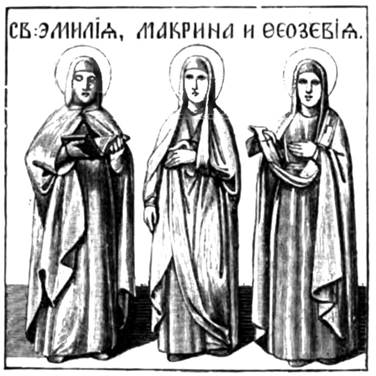
Блаженная Эмилия, в юных летах своих, сильно желала остаться девственницей до смерти. Но, рано лишившись матери и отца, у которого гнев императора отнял имущество и жизнь, принуждена была поступить не по желаниям своим. Редкая красота выставляла её предметом искательств молодёжи, так что был замысел похитить её. Безродство и опасности для души заставили её искать себе опоры в благочестивом муже, а общее мнение о высоких качествах адвоката Василия расположило согласиться отдать руку Василию.
Blessed Emilia, in her youthful years, greatly desired to remain a virgin until death. But, having lost her mother and father early — her father’s property and life having been taken by the emperor’s wrath — she was compelled to act contrary to her wishes. Her rare beauty made her an object of pursuit by young men, so that there was a plan to abduct her. Her lack of family and the dangers to her soul compelled her to seek support in a pious husband, and the general opinion of the high qualities of the advocate Basil disposed her to agree to give her hand to Basil.
Юная супруга Василия нашла себе великую наставницу в матери мужа своего св. Макрине. Бабка св. Василия Великого была дивная жена по уму и благочестью. Она была ученицей св. Григория чудотворца, епископа Неокесарийского. Во время Диоклитианова гонения, продолжавшегося при Галерии и Максимине, она и муж её были в числе тех, которые лучше решились скитаться из одного места в другое, терпеть нищету, голод и все беды, чем изменить вере. Они в 305 г. удалились в леса Понтские и семь лет пробыли скитальцами. В дремучем лесу лишены они были всякого человеческого пособия, доходили до крайнего недостатка в пище; но Бог, по молитве их, посылал им дивную помощь. Прекрасные козы, спускаясь с горы, легко подходили к ним и сами отдавались в их руки. Этот видимый покров Всевышнего подкреплял изгнанников в терпении и борьбе за веру. При Ликинии (в 320 г.) конфискованы были имения их. Макрина оставалась твёрдой в вере. Понятно, как много такая великая жена значила для молодой супруги Эмилии. Внук её, великий Василий, писал в своё время к Неокесарийцам: «О вере моей какое доказательство может быть яснее того, что воспитан я бабкой, блаженной женой, которая по происхождению ваша? Говорю о пламенной Макрине, от которой изучил я слова блаженнейшего Григория, которые и сама она сохранила, как дар предания, и на нас, ещё малютках, напечатлевала, образуя нас догматами благочестия»157.
The young wife of Basil found a great instructress in her husband’s mother, St. Macrina. The grandmother of St. Basil the Great was a wondrous woman in mind and piety. She was a disciple of St. Gregory the Wonderworker, Bishop of Neocaesarea. During the Diocletian persecution, which continued under Galerius and Maximinus, she and her husband were among those who chose rather to wander from one place to another, to endure poverty, hunger, and all misfortunes, than to betray the faith. In 305 A.D. they withdrew into the Pontic forests and spent seven years as wanderers. In the dense forest they were deprived of all human assistance and came to extreme want of food; but God, through their prayer, sent them wondrous help. Beautiful goats, coming down from the mountain, would readily approach them and give themselves into their hands. This visible protection of the Most High strengthened the exiles in patience and struggle for the faith. Under Licinius (in 320 A.D.) their estates were confiscated. Macrina remained steadfast in the faith. It is understandable how much such a great woman meant for the young wife Emilia. Her grandson, the great Basil, wrote in his time to the Neocaesareans: “What clearer proof of my faith can there be than that I was raised by my grandmother, a blessed woman who is by origin your fellow-citizen? I speak of the fervent Macrina, from whom I learned the words of the most blessed Gregory, which she herself preserved as a gift of tradition, and impressed upon us while we were still little children, forming us in the dogmas of piety”157.
Эмилия, с согласия мужа, кормила бедных, успокаивала странных, помогала больным, делала пожертвования храмам. Хотя родители обоих супругов лишены были почти всего состояния своего во время гонения за св. веру, но Бог, за добрые дела супругов, так умножил земную собственность их, что не было в том краю никого богаче их. Они владели землями в трёх провинциях, в Понте, в Каппадокии и в Малой Армении. Впоследствии каждый из детей имел на своей доле более, чем сколько получил отец. Когда родился сын Пётр, отец умер и на руках Эмилии осталось девятеро детей. Всех воспитала она в глубоком благочестии. Трое из них были епископами: Василий, Григорий, Пётр. Св. Григорий Назианзский с восторгом говорил об Эмилии: «Она подарила миру столько и таких светильников, сыновей и дочерей, брачных и безбрачных; она счастлива и плодовита, как никто. Три славных священника; одна участница в тайнах священства; и прочие – лик небожителей. Изумляюсь, какая это богатая семья Эмилии! Благочестивая кровь Эмилии – собственность Христа; таков корень! Превосходнейшая! вот награда твоему благочестью: слава сыновей твоих, с которыми у тебя одни желания»158. Сын Василий Великий с торжеством указывал врагам своим на то, что его учила вере мать его Эмилия159. Внучки Эмилии, дети одной из дочерей её, начальствовали в Кесарийской обители160.
Emilia, with her husband’s consent, fed the poor, gave rest to strangers, helped the sick, and made donations to churches. Although the parents of both spouses had been deprived of nearly all their property during the persecution for the holy faith, God, for the good deeds of the spouses, so multiplied their earthly possessions that there was no one richer than them in that region. They owned lands in three provinces: in Pontus, in Cappadocia, and in Lesser Armenia. Later, each of the children had in their portion more than the father had received. When their son Peter was born, the father died, and nine children remained in Emilia’s care. She raised them all in deep piety. Three of them became bishops: Basil, Gregory, and Peter. St. Gregory of Nazianzus spoke with rapture of Emilia: “She gave to the world so many and such great luminaries, sons and daughters, married and celibate; she is blessed and fruitful as no one else. Three glorious priests; one partaker in the mysteries of the priesthood; and the rest — a choir of heavenly citizens. I marvel at what a rich family Emilia’s is! The pious blood of Emilia is Christ’s own possession; such is the root! Most excellent one! This is the reward of your piety: the glory of your sons, with whom you share one desire”158. Her son Basil the Great triumphantly pointed out to his enemies that his mother Emilia had taught him the faith159. Emilia’s granddaughters, children of one of her daughters, presided over the convent in Caesarea160.
Старшая из детей Эмилии была Макрина и Макрина была помощницей матери для земли и неба. Богу угодно было, когда Эмилия была беременна в первый раз, возвестить ей об этой дочери и показать, чем будет дочь. Она видит во сне, будто носит на руках дочь и будто старец величественного вида, подойдя к ребёнку, три раза назвал её Фёклой. Эмилия проснулась и родила так легко, что едва кончился сон, родилась дочь. С того времени, мать и отец были убеждены, что данное дочери имя – предвозвестие о качествах дочери, близких к качествам св. девы Фёклы. В дом призвана была кормилица; но ребёнок почти не сходил с рук матери, был покоен только на её руках.
The eldest of Emilia’s children was Macrina, and Macrina was her mother’s helper for earth and heaven. It pleased God, when Emilia was pregnant for the first time, to reveal to her concerning this daughter and to show what the daughter would be. She saw in a dream that she was holding a daughter in her arms, and that an elder of majestic appearance, approaching the child, three times called her Thecla. Emilia awoke and gave birth so easily that scarcely had the dream ended when the daughter was born. From that time, the mother and father were convinced that the name given to the daughter was a foretelling of qualities in the daughter akin to those of St. Thecla the virgin. A nurse was summoned to the house; but the child scarcely left her mother’s arms, being at peace only in her arms.
Эмилия глубоко понимала обязанность матери. Если мужчина в толкотне жизни и заботе о ней не всегда внимателен к себе самому, то тем более далёк от него постоянный надзор за раскрытием склонности и понятий в детях. Потому преимущественно на матери лежит долг надзора за развитием душевных и телесных сил дитяти. Несчастна мать, которая не хочет знать своего призвания, столько высокого! Эмилия дорожила этим призванием. По-видимому, не беззаботна бывает иная мать о детях: но – по опыту оказывается, что она всё-таки не выполнила своего долга. Отчего это так? Оттого, что не тому и не так учила детей, чему и как должно учить. Воспитание Макрины тем более заслуживает внимания, что сама Эмилия приняла его за образец, по которому воспитывала других детей и особенно дочерей, и нельзя не пожелать, чтобы и другие родители следовали этому образцу. Греки начинали учение детей почти всегда с басен и некоторых пиитических произведений, точь-в-точь как наши милые педагоги-прогрессисты. Эмилия увидела, что в языческих произведениях много мыслей и картин, оскорбительных для чистой души. (Когда бы в прославляемых прогрессистами было меньше!) Потому, она приняла за учебные книги священные песни Давида и притчи Соломона. Из них выбирала она некоторые места молитвенные или хвалебные, или с уроками жизненной мудрости, и заставляла выучивать их наизусть. Так, чем бы ни занималась Макрина, священные стихи и наставления были постоянными её спутниками-надзирателями (а не распущенные педагоги?). Эмилия учила дочь и пению, но не давала ей петь песней Анакреона и Сафо. Всё, что могло оставлять в юной душе впечатления гнилости и смрада нравственного, мать удаляла от взора и слуха юности. Матери сами водили детей (долгом считают водить и ныне) в театр и амфитеатр. Эмилия признавала, что и то уже не вознаградимый вред от театральных сцен, что они отучают душу от любви к труду и приучают к легкомыслию и рассеянности161. Она обучала дочь женским рукодельям и домашнему хозяйству, тем более, что труд физический укрепляет её здоровье. Так ли ныне? Вот почтенный родитель и родительница гуляют с своими детьми. Около них идёт молодой человек. Меньшему семилетнему сыну стало жарко, и он снял с себя бархатный кафтанчик. Молодой человек тотчас же предлагает свои услуги, берёт и несёт кафтанчик, в котором весу фунт. Родительница вступилась и, взяв кафтанчик и передавая его сыну, говорит робко: «пусть приучается». Конечно, слава Богу и за то, что «пусть приучается!» Но, милая мамаша! добры ли вы к сыну и к себе, что сынок тяготится фунтиком тяжести, и вы готовите себе из него тяжести разного сорта? Не будьте ниже самки. После домашних занятий Эмилия водила дочь в храм Божий слушать священные песни и молитвы. Сын её, уже святитель, писал «юношам о том, как пользоваться языческими сочинениями»162: так много значила педагогика Эмилии.
Emilia deeply understood the duty of a mother. If a man, amid the bustle of life and his concern for it, is not always attentive to himself, then constant supervision over the unfolding of inclinations and concepts in children is even more remote from him. Therefore, the duty of overseeing the development of a child’s spiritual and physical powers lies primarily with the mother. Unhappy is the mother who does not wish to know her calling, so lofty a one! Emilia treasured this calling. Apparently, some mothers are not careless about their children; but—experience shows that she still did not fulfill her duty. Why is this so? Because she did not teach her children the right things in the right way, nor as they ought to be taught. The upbringing of Macrina is all the more worthy of attention because Emilia herself took it as a model, according to which she raised her other children, especially her daughters; and one cannot but wish that other parents would follow this model. The Greeks almost always began the education of children with fables and certain poetic works, exactly like our dear progressive pedagogues. Emilia saw that in pagan works there are many thoughts and images offensive to a pure soul. (If only there were fewer of them in what is praised by the progressives!) Therefore, she adopted the sacred songs of David and the proverbs of Solomon as textbooks. From them she selected certain passages—prayerful or praiseful, or containing lessons of life’s wisdom—and made them learn them by heart. Thus, whatever Macrina was occupied with, sacred verses and instructions were her constant companions and overseers (and not the dissolute pedagogues?). Emilia also taught her daughter singing, but did not allow her to sing the songs of Anacreon and Sappho. Everything that could leave impressions of rottenness and moral stench in a young soul, the mother removed from the sight and hearing of youth. Mothers themselves led their children (they consider it a duty to lead them even now) to the theater and amphitheater. Emilia acknowledged that even the harm from theatrical scenes is irreparable, in that they wean the soul from love of labor and accustom it to frivolity and dissipation161. She taught her daughter women’s handiwork and household management, all the more because physical labor strengthens her health. Is it so now? Here a respected father and mother are strolling with their children. A young man walks near them. The younger seven-year-old son became hot and took off his velvet caftan. The young man immediately offers his services, takes and carries the caftan, which weighs a pound. The mother intervened and, taking the caftan and handing it to her son, says timidly: “Let him get used to it.” Of course, thank God even for “Let him get used to it!” But, dear mamma! Are you kind to your son and to yourself, that your little son is burdened by a pound of weight, and you are preparing for yourself burdens of various sorts from him? Do not be lower than a female animal. After domestic occupations, Emilia led her daughter to the church of God to hear the sacred songs and prayers. Her son, already a hierarch, wrote “To Young Men on How to Profit from Pagan Writings”162: so much did Emilia’s pedagogy mean.
Макрина, пришедшая в возраст, была красавицей по телу и по душе. Обороняя душу её, скрывали её от взоров нескромных. Но некоторые успели видеть её, другие узнали о прекрасных качествах души её. Потому стали искать руки её. Отец выбрал для дочери достойного жениха и сказал об избранном; но Бог, готовивший для чистой голубицы другую атмосферу, устроил по-Своему. Тогда как избранный жених старался укреплять в семействе Макрины доброе мнение о себе защитой невинно-обвиняемых, послана ему болезнь и он скончался. Это решило будущность Макрины. Когда родители предлагали ей других женихов, она отвечала: «жених мой не умер, он только в отлучке; зачем же изменять ему?» Теперь Макрина более прежнего старалась быть полезной для матери. Несколько служанок не могли столько выполнить услуг, сколько выполняла одна Макрина. И мать нежно любила её. «Других детей», говорила она, «носила я лишь некоторое время, а с Макриной не разлучалась никогда». От этой связи дочери с матерью польза была для обеих, и польза неоценимая; мать управляла чувствами и помышлениями дочери, а дочь до такой степени заботилась о матери, что собственными руками пекла для неё хлеб и шила бельё. Когда умер отец семьи, Макрина была главной помощницею матери по управлению имениями, находившимися в разных областях. Важнее же было то, что Макрина имела влияние на нравственный быт всей семьи. Хотя мать стояла на высокой степени нравственной жизни; но Макрина нечувствительно вела её выше и выше, примером самоотверженной своей жизни. Она внушала брату Василию предаться исключительно изучению Евангельской мудрости. Она образовала Петра, быв для него второй матерью и наставницей. Когда все братья и сёстры могли уже заведовать собой, она склонила мать удалиться с ней в монастырь.
Macrina, having come of age, was a beauty in body and in soul. To guard her soul, they concealed her from immodest glances. But some managed to see her, others learned of the beautiful qualities of her soul. Therefore, they began to seek her hand. Her father chose a worthy bridegroom for his daughter and spoke of the chosen one; but God, who was preparing a different atmosphere for the pure dove, arranged things in His own way. Just as the chosen bridegroom was striving to strengthen the good opinion of himself in Macrina’s family by defending the innocently accused, an illness was sent upon him and he died. This decided Macrina’s future. When her parents proposed other bridegrooms to her, she answered: “My bridegroom is not dead, he is only away; why should I be unfaithful to him?” Now Macrina strove more than before to be useful to her mother. Several maidservants could not perform as many services as Macrina alone performed. And her mother loved her tenderly. “Other children,” she said, “I carried only for a time, but from Macrina I was never parted.” From this bond between daughter and mother there was benefit for both, and benefit beyond price; the mother governed the feelings and thoughts of her daughter, and the daughter cared for her mother to such a degree that she baked bread for her with her own hands and sewed linen. When the father of the family died, Macrina was the chief helper of her mother in managing the estates located in various regions. More important, however, was that Macrina had an influence on the moral life of the whole family. Although her mother stood on a high level of moral life, Macrina imperceptibly led her higher and higher, by the example of her self-sacrificing life. She inspired her brother Basil to devote himself exclusively to the study of Gospel wisdom. She formed Peter, being for him a second mother and instructress. When all the brothers and sisters could already manage themselves, she persuaded her mother to withdraw with her into a monastery.
В такой решимости мать и дочь построили обитель в Понте, на берегу реки Ириды, не вдали от горы Ивора. Там отстранив всё, что могло рассеивать их, изменили они образ жизни, служанок своих обратили в подруг своих и предались преимущественно молитве.
In this resolve, mother and daughter built a monastery in Pontus, on the bank of the river Iris, not far from Mount Ivor. There, having set aside everything that could distract them, they changed their way of life, turned their maidservants into their companions, and devoted themselves chiefly to prayer.
«В отношении пищи и питья не было в общине никакого различия, как и в отношении келий или убранства и других потребностей жизни. Неравенство состояний, сословий, значения в прежней светской жизни здесь не оставляло никакого следа. Жизнь, которую они вели, была так свята, добродетель так высока, что не умею описать. Их точность в исполнении обязанностей устава днём и ночью соответствовала рвению, которым они пламенели. Их можно было сравнить с теми блаженными душами, которые, выйдя из оков тела, парят к небу; сердца их так были очищены от всего земного, что, можно сказать, жили они как ангелы. Нельзя было уловить на них признака гнева, зависти, подозрения или ненависти. они отбросили от себя всю светскую суету, – желание отличия, известности, блеска. Наслаждение их заключалось в воздержании, слава в безвестности, богатство – в неимуществе, сила – в немощи; всё мирское стряхнули они с себя как пыль. Всякую минуту считали потерянной, если бы употреблена она была на что-нибудь наружное и гибнущее. Занятия их состояли в молитве и пении псалмов, не прерывавшемся ни днём, ни ночью».
“In regard to food and drink, there was no distinction in the community, just as there was none in regard to cells or furnishings and other necessities of life. The inequality of conditions, ranks, and importance in former worldly life left no trace here. The life they led was so holy, the virtue so high, that I know not how to describe it. Their exactness in fulfilling the duties of the rule by day and by night corresponded to the zeal with which they burned. They could be compared to those blessed souls who, having left the bonds of the body, soar to heaven; their hearts were so purified from everything earthly that, one might say, they lived like angels. No trace of anger, envy, suspicion, or hatred could be detected in them. They cast off from themselves all worldly vanity—the desire for distinction, renown, splendor. Their delight consisted in abstinence, their glory in obscurity, their wealth in poverty, their strength in weakness; they shook off everything worldly like dust. Every moment they considered lost if it were spent on anything external and perishable. Their occupations consisted of prayer and the singing of psalms, which ceased neither by day nor by night.”
Относительно житейских нужд помогал Макрине и обители блаженный Пётр, который ей был воспитан и который теперь платил ей за её добро усердными заботами о сестре и матери: он жил не вдали, в другом монастыре, который построен был матерью и где сперва подвизался св. Василий. Последний по временам также помогал сестре и матери.
With regard to worldly needs, blessed Peter helped Macrina and the monastery; he had been raised by her and now repaid her for her kindness with zealous care for his sister and mother: he lived not far away, in another monastery, which had been built by his mother and where St. Basil first labored in asceticism. The latter also occasionally helped his sister and mother.
Мать и дочь посещены были неожиданною потерей. Павкратий, второй сын Эмилии, принесён был мёртвым из пустыни вместе с слугой, и никто не мог объяснить причины смерти их. Макрина тем изумительнее была в этом случае, что потрясённая до глубины сердца потерей любимого брата, она до того превозмогла чувства свои мыслями веры, что успокоила тем и мать неутешную. «Не было ни воплей или стонов, ни слёз и других обыкновенных проявлений жестокой горести матери и сестры; было только всё достойное жён, посвятивших себя Богу».
Mother and daughter were visited by an unexpected loss. Pancratius, Emilia’s second son, was brought dead from the desert together with a servant, and no one could explain the cause of their death. Macrina was all the more astonishing in this case in that, shaken to the depths of her heart by the loss of her beloved brother, she so overcame her feelings with thoughts of faith that she thereby calmed even her inconsolable mother. “There were no wailings or groans, no tears or other usual manifestations of the cruel grief of mother and sister; there was only what was worthy of women who had consecrated themselves to God.”
Как сильна была духом блаженная Макрина, как близка была душа её к Господу, это открылось по особенному случаю. Под шеей Макрины, на груди, образовался чрезвычайный нарост: предполагали, что это – внутренний нарыв, и считали необходимым сделать хирургическую операцию, дабы иначе болезнь не распространилась на лёгкие и печень и не причинила смерти. Мать упрашивала Макрину согласиться на выполнение врачебного совета: врач дан Богом для пользы нашей, говорила нежная мать. Но высокая девственница решилась лучше переносить все страдания, чем обнажить тело своё перед глазами оператора. Она обратилась с надеждами к Господу. Пробыв при матери до всенощного бдения, она уединилась в моленную монастыря и провела там всю ночь в слезах, умоляя Небесного Врача явить над ней Свою волю. Взяв потом несколько земли, омоченной её слезами, она приложила её больной части тела. Надежды её не были обмануты. Возвратясь к матери, она сказала, что если желает ей выздоровления, то пусть осенит болящее место крестным знамением. Мать хотела исполнить это; но, приложив руку к груди дочери, заметила, что нарост исчез; остался только знак, как будто место уколото было иглой. «Богу угодно было», говорит св. Григорий, «оставить этот след как памятник совершившегося чуда».
How strong in spirit was blessed Macrina, how close her soul was to the Lord, was revealed on a particular occasion. Beneath Macrina’s neck, on her chest, an extraordinary growth formed: they supposed it to be an internal abscess, and considered it necessary to perform a surgical operation, lest otherwise the illness spread to the lungs and liver and cause death. Her mother begged Macrina to agree to follow the physician’s advice: a physician is given by God for our benefit, said the tender mother. But the exalted virgin resolved rather to endure all sufferings than to bare her body before the eyes of the operator. She turned with hope to the Lord. Having remained with her mother until the All-night Vigil, she withdrew to the monastery’s prayer room and spent the whole night there in tears, imploring the Heavenly Physician to manifest His will concerning her. Then, taking some earth moistened with her tears, she applied it to the diseased part of her body. Her hopes were not deceived. Returning to her mother, she said that if she wished for her recovery, let her make the sign of the cross over the diseased place. Her mother wished to do this; but, placing her hand on her daughter’s chest, she noticed that the growth had disappeared; only a mark remained, as if the place had been pricked with a needle. “It pleased God,” says St. Gregory, “to leave this trace as a memorial of the miracle that had taken place.”
Эмилия, достигнув глубокой старости, должна была наконец испытать общую долю смертных. Из детей её при ней были только Макрина и Пётр. Чувствуя близость кончины, она с невыразимой нежностью говорила присутствующим об отсутствующих и молитвой за детей окончилась святая жизнь её, мая 8, 375 года163.
Emilia, having reached a deep old age, had at last to experience the common lot of mortals. Of her children, only Macrina and Peter were with her. Feeling the nearness of her end, she spoke with inexpressible tenderness to those present about those who were absent, and with prayer for her children the holy life of Emilia ended, on May 8, in the year 375163.
Не прошло четырёх лет после того, и вот умер св. Василий Великий († янв. 1, 379 г.). Если смерть его погрузила всю Церковь в глубокую печаль, то как же должна была страдать Макрина, когда весть о его смерти дошла до её пустыни? Она понимала значение его для современной Церкви и она же была нежная сестра его. Но как золото очищается огнём, так душа великой девственницы, перейдя через три тяжкие для неё потери, отрешалась от земного.
Not four years had passed after that, when behold, St. Basil the Great reposed († Jan. 1, 379). If his repose plunged the whole Church into deep sorrow, how must Macrina have suffered when the news of his repose reached her hermitage? She understood his significance for the contemporary Church, and she was also his tender sister. But as gold is purified by fire, so the soul of the great virgin, having passed through three grievous losses, was being detached from the earthly.
Прошло 9 месяцев после того. В Антиохии был собор, на котором присутствовал св. Григорий Нисский. Он спешил видеться с сестрой Макриной после потери брата. «3а день до прибытия было мне, говорит он, во сне видение. Казалось, что несу я на руках мученические мощи и от них исходил такой свет, что я не мог смотреть на яркость его. Три раза в ночь было это видение. И я не мог понять значения видения; только какая-то грусть была в душе моей. Приближаясь к обители, где сестра проводила ангельскую жизнь, спросил я одного из многих встречавших меня: там ли брат мой? Он отвечал, что брат за четыре дня выехал, а сестра больна. Я поспешил; сердце моё сжалось во мне».
Nine months passed after that. There was a council in Antioch, at which St. Gregory of Nyssa was present. He hastened to see his sister Macrina after the loss of their brother. “The day before my arrival,” he says, “I had a vision in a dream. It seemed that I was carrying the relics of a martyr in my arms, and from them issued such a light that I could not look upon its brightness. Three times that night this vision appeared. And I could not understand the meaning of the vision; only a certain sadness was in my soul. As I drew near to the monastery where my sister was leading an angelic life, I asked one of the many who met me: Is my brother there? He answered that my brother had left four days before, and that my sister was ill. I hastened; my heart was constricted within me.”
По прибытии в обитель и храм её, «я пошёл к сестре в келью. Она лежала не на кровати, не на матраце, а на земле, на доске, покрытой власяницей; вместо подушки, под головой её была другая доска, наклонно положенная. Сестра была очень больна и, когда увидела меня, не имея возможности встать по слабости, приподнялась на нищенском своём одре, чтобы принять меня с честью. Я подбежал к ней, успокоил, уложил её; тогда, подняв руки к небу, сказала она: «благодарю Тебя, Господи Боже мой! Ты исполнил желание моё внушил рабу Твоему посетить Твою рабыню».
Upon arriving at the monastery and its church, “I went to my sister’s cell. She was lying not on a bed, not on a mattress, but on the ground, on a board covered with a haircloth; instead of a pillow, under her head was another board, placed at an incline. My sister was very ill, and when she saw me, not having the strength to rise, she raised herself up on her wretched bed to receive me with honor. I ran to her, calmed her, and laid her down; then, raising her hands to heaven, she said: ‘I thank Thee, O Lord my God! Thou hast fulfilled my desire and inspired Thy servant to visit Thy handmaiden.’”
Она старалась скрыть от нас тяжесть дыхания и, чтобы усладить печаль нашу о ней, усиливалась улыбаться, говорила с нами о предметах приятных для нас. Речь склонилась к покойному Великому Василию. Я не мог воспретить горести выразиться на моём лице. Но она, вдохновенная высокими мыслями, говорила нам с такой возвышенностью о дивном смотрении Божием, простирающемся на все случаи земной жизни, что моя душа, увлекаемая за ней, парила над всеми природными чувствами и улетала на небо. Потом я не мог надивиться, как она, снедаемая лихорадкой, которая лишила её сил и уже разлила по истощённому телу холодный пот, могла сохранить полную свободу мысли, как Иов, покрытый ранами. Она легко, тонко, возвышенно объясняла состояние души, жизнь, проводимую нами на земле, цель, для которой рождаемся мы, бессмертие, в которое облечётся некогда бренное тело наше, и почему мы должны вступать в новую жизнь. Слова текли из уст её, как из источника струя, которой ничто не останавливает164.
She tried to hide from us the heaviness of her breathing and, to sweeten our sorrow for her, strove to smile and spoke with us of subjects pleasant to us. The conversation turned to the departed Great Basil. I could not prevent grief from showing on my face. But she, inspired by lofty thoughts, spoke to us with such sublimity about the wondrous dispensation of God, which extends over all the events of earthly life, that my soul, drawn after her, soared above all natural feelings and flew to heaven. Afterwards I could not marvel enough how she, consumed by a fever which had robbed her of strength and already spread a cold sweat over her wasted body, could preserve full freedom of mind, like Job covered with wounds. She explained easily, subtly, and sublimely the state of the soul, the life we lead on earth, the purpose for which we are born, the immortality with which our perishable body will one day be clothed, and why we must enter into a new life. Words flowed from her lips like a stream from a spring which nothing can stop164.
Наконец она сказала мне; «пора тебе, брат, отдохнуть после тяжёлого и долгого пути». Какой отдых мог быть слаще слов её? Но я повиновался и в ближнем саду укрылся под тень дерев. Видение моё о мощах объяснилось, я рассказал о нём некоторым бывшим тут.
Finally she said to me: “It is time for you, brother, to rest after a hard and long journey.” What rest could be sweeter than her words? But I obeyed and, in the nearby garden, took shelter under the shade of the trees. My vision of the relics was explained; I told it to some who were there.
Святая сестра моя, издали проникая в мои мысли, прислала сказать нам, чтобы мы не сокрушались, – болезнь её – благо; она разумела смерть, о которой вздыхала она, чтобы скорее насладиться зрением Спасителя. Мы тотчас встали и пошли к ней. Не желая тратить на бесполезное последних минут жизни, она начала рассказывать о всём случившемся с ней с самого детства так, как будто читала по книге; исчисляла все благодеяния, которыми Бог взыскал отца нашего, мать, семейство, и благословляла Его из глубины души за Его милости. Я начал было говорить, сколько терпел я, когда сослан был за веру императором Валентом, и о других бедствиях смут церковных. «Перестанешь ли ты, сказала она, терять из вида все благодеяния, которыми обязан Богу? Бойся неблагодарности. Он наградил тебя милостями щедрее, чем родителей. Пусть отец мой прославился в молодости в делах общественных, доставивших ему уважение сограждан: но имя его не перешло за границы Понта. А твоё имя распространилось так далеко, что Церкви приглашают тебя, к тебе обращаются для восстановления между ними порядка и правил. Узнай, с глубокой благодарностью сердца, в этом милость Божию и действие молитв родителей наших».
My holy sister, penetrating my thoughts from afar, sent word to us not to grieve—her illness was a blessing; she meant death, for which she sighed, that she might more quickly enjoy the sight of the Savior. We immediately rose and went to her. Not wishing to waste the last moments of her life on useless things, she began to tell of everything that had happened to her from childhood, as if reading from a book; she enumerated all the blessings with which God had visited our father, mother, and family, and blessed Him from the depths of her soul for His mercies. I began to speak of how much I had suffered when I was exiled for the faith by the Emperor Valens, and of other calamities of the church disturbances. “Will you not cease,” she said, “to lose sight of all the blessings you owe to God? Fear ingratitude. He has rewarded you with mercies more generously than our parents. Let our father have been renowned in his youth in public affairs, which earned him the respect of his fellow citizens: but his name did not cross the borders of Pontus. But your name has spread so far that Churches invite you, they turn to you to restore order and rules among them. Recognize, with deep gratitude of heart, in this the mercy of God and the effect of our parents’ prayers.”
После слушания молитв всенощной и отдыха ночного, когда настало утро, мне нетрудно было убедиться, что это утро – последнее для больной, – лихорадка поглотила остаток сил страдалицы. Душа моя волновалась двумя чувствами, – горестью, потому что нежность сестры вызывала и во мне нежность к ней – святой; из уст её слышал я последние слова; другое чувство – изумление при виде невыразимого спокойствия, с каким ожидала она кончины.
After listening to the prayers of the All-night Vigil and a night’s rest, when morning came, it was not difficult for me to be convinced that this morning was the last for the sick woman—the fever had consumed the last remnant of the sufferer’s strength. My soul was agitated by two feelings—grief, because my sister’s tenderness awakened in me tenderness for her, the saint; from her lips I heard her last words; the other feeling was amazement at the sight of the inexpressible calm with which she awaited her end.
Солнце было уже близко к закату; сила и энергия разума её нимало не ослабевали. Она перестала говорить с нами. Сложив руки, неподвижно устремив глаза к жилищу Небесного Жениха (нищенское ложе её было обращено к востоку), разговаривала она с Ним сладко и так тихо, что мы с трудом расслышивали иные слова. Но мы понимали, что говорила она Ему: «Господи! Ты избавляешь нас от страха смерти... Конец жизни этой – начало жизни истинной... Ты оставляешь нас почивать на время и пробуждаешь звуком трубы при конце веков. Боже вечный, Которому принадлежу я от чрева матери моей, Которого я всегда любила всею силою моего сердца, Которому посвятила тело и душу! дай мне ангела светлого, который сопутствовал бы мне, привёл бы меня к святым отцам, в место покоя и прохлады. Ты, простивший, одного из распятых с Тобой, едва лишь он прибёг к Твоему милосердию, помяни и меня в Царствии Твоём. Ужасающая мгла да не отдалит меня от Твоих избранных; дух завистник да не воспрепятствует мне воспарить к Тебе; да исчезнут перед Тобой грехи мои. Ты прощаешь смертных, прости грехи, сотворённые мной по немощи природы, словом, мыслью, чтобы, оставляя это тело, почувствовала я себя очищенной от всякой скверны, и Ты принял бы мою душу, как благовоние пред Тобой!»
The sun was already near setting; the strength and energy of her mind did not weaken in the least. She ceased speaking with us. With folded hands, her eyes fixed immovably on the dwelling of the Heavenly Bridegroom (her wretched bed was turned to the east), she conversed with Him sweetly and so quietly that we could barely make out some words. But we understood that she was saying to Him: “Lord! Thou deliverest us from the fear of death... The end of this life is the beginning of true life... Thou leavest us to rest for a time and awakenest us with the sound of the trumpet at the end of the ages. O eternal God, to Whom I have belonged from my mother’s womb, Whom I have always loved with all the strength of my heart, to Whom I have dedicated body and soul! give me a bright angel to accompany me, to lead me to the holy fathers, to a place of rest and refreshment. Thou, Who forgave one of those crucified with Thee as soon as he had recourse to Thy mercy, remember me also in Thy Kingdom. Let no terrifying darkness separate me from Thy chosen ones; let no envious spirit hinder me from soaring to Thee; let my sins vanish before Thee. Thou forgivest mortals, forgive the sins committed by me through the weakness of nature, by word, by thought, so that, leaving this body, I may feel myself cleansed of every defilement, and Thou mayest receive my soul as incense before Thee!”
После этой умилительной и полной любви беседы со Спасителем, она осенила крестным знамением свои уста, очи и сердце. Когда смерклось и внесены были свечи, она открыла глаза и сказала, что желает читать всенощную, но голос изменил ей, она только мысленно молилась и читала псалмы, мы молчали. Окончив, она усиливалась поднять руку к лицу, чтобы перекреститься, – из груди её вырвался долгий и глубокий вздох, и жизнь её кончилась вместе с её молитвой.
After this touching and love-filled conversation with the Savior, she made the sign of the cross over her lips, eyes, and heart. When it grew dark and candles were brought in, she opened her eyes and said that she wished to read the All-night Vigil, but her voice failed her; she only prayed mentally and read the psalms, while we were silent. Having finished, she strove to raise her hand to her face to cross herself—a long and deep sigh escaped from her breast, and her life ended together with her prayer.
Отшельницы, заглушавшие в сердцах печаль и стоны из уважения к настоятельнице, – теперь, когда её не стало, огласили воздух рыданиями и воплями скорби.
The recluses, who had stifled sorrow and groans in their hearts out of respect for their abbess—now that she was no more, filled the air with weeping and cries of grief.
Вестиана, женщина благочестивая, которая, лишась мужа, избрала преп. Макрину в руководительницу жизни духовной, осталась при покойной, когда другие вышли. Святитель спросил: не признают ли нужным одеть усопшую в приличную сану её одежду? Позвали Лампадию и та отвечала, что почившая никогда не любила красивого одеяния, да и нет у ней другой, кроме той, которую видят на ней. «Не сохранилось ли у вас что-нибудь?» спросил святитель. Вот, отвечала Лампадия, изношенная мантия, намётка и башмаки – все её богатство. Сундуки и шкап – пусты; на земле у неё нет ничего.
Vestiana, a pious woman who, having lost her husband, had chosen the Venerable Macrina as her guide in the spiritual life, remained with the deceased when the others left. The Hierarch asked: did they not think it necessary to clothe the departed in a garment befitting her rank? They called Lampadia, and she answered that the departed had never loved beautiful clothing, and that she had no other than the one they saw on her. “Have you not preserved something?” asked the Hierarch. “Here,” answered Lampadia, “a worn-out mantle, a veil, and shoes—all her wealth. The chests and cupboard are empty; she has nothing on earth.”
Такова была бедность святой девственницы! Худая мантия, намётка и башмаки – вот все имущество настоятельницы, той, которая получила богатое наследство.
Such was the poverty of the holy virgin! A poor mantle, a veil, and shoes—such was all the property of the abbess, of one who had received a rich inheritance.
Вестиана, одевшая покойную, нашла под головою покойной шнурок, на котором был крест165, и маленькое железное кольцо166. «Разделим наследство», сказал святитель, «возьмите себе крест, а мне дайте
Vestiana, who had dressed the deceased, found under the head of the departed a cord on which was a cross165, and a small iron ring166. “Let us divide the inheritance,” said the Hierarch; “take the cross for yourselves, and give me
Слух о смерти преподобной созвал в обитель несметное множество людей всякого звания. Местный епископ прибыл со своим духовенством. Он и св. Григорий с старшими пресвитерами несли гроб до церкви Мучеников, где он поставлен близ гроба матери в фамильном склепе.
The news of the death of the Venerable One gathered an innumerable multitude of people of every rank to the monastery. The local bishop arrived with his clergy. He and St. Gregory, together with the senior presbyters, carried the coffin to the Church of the Martyrs, where it was placed near the mother’s tomb in the family crypt.
Блаженная Макрина совершала чудеса ещё в земной жизни своей, исцеляла больных, изгоняла бесов, чудесно умножала хлеб. Но, говорит святитель, люди неохотно верят тому, чего не видят своими глазами, и потому, чтобы не наводить на неверие, он не описывает чудес.
The blessed Macrina performed miracles even during her earthly life: she healed the sick, cast out demons, and miraculously multiplied bread. But, says the Hierarch, people are reluctant to believe what they do not see with their own eyes, and therefore, to avoid provoking unbelief, he does not describe the miracles.
«Вот памятник знаменитой девы. Ты конечно слышал о Макрине, старшей дочери великой Эмилии. Она скрывалась от очей всякого мужчины. Но теперь она на языке всех и слава её самая звучная»167.
“Here is the monument of a famous virgin. You have surely heard of Macrina, the eldest daughter of the great Emilia. She hid herself from the eyes of every man. But now she is on the lips of all, and her glory is the most resounding.”167
Странную ошибку допускали о Феозевии, ошибку оскорбительную особенно для святителя, того или другого. Феозевию, прославленную великим Богословом, считали супругой то св. Григория Нисского, то св. Григория Назианзского168. Отчего считали? Оттого, что не дали себе труда понять точное значение названия: ἱερέος σύζηγος, которым почтена Феозевия у Богослова. В отношении к Нисскому архипастырю надобно иметь в виду, что св. Богослов называет Феозевию сестрой Григория Нисского и дочерью великой Эмилии. Как же она могла быть женой родного брата своего? После того только язычество могло бы удержать за словами: ἱερέος σύζηγος значение супруги священника. У св. Богослова это означает, что Феозевия в звании диакониссы была верным товарищем брата, – ревностной помощницею ему в делах епископства. Затем легко понять, что слова: ἱερέος σύζηγος напрасно относили к супружеству Григория Назианзского. Он говорит: «моя Феозевия», но прямо говорить и то, что не разумеет он отношений телесных.
A strange error was made concerning Theosebia, an error especially offensive to one or the other Hierarch. Theosebia, glorified by the great Theologian, was considered the wife sometimes of St. Gregory of Nyssa, sometimes of St. Gregory of Nazianzus168. Why was she so considered? Because they did not take the trouble to understand the precise meaning of the title: ἱερέος σύζηγος, with which Theosebia was honored by the Theologian. With regard to the Archbishop of Nyssa, it must be borne in mind that St. Theologian calls Theosebia the sister of Gregory of Nyssa and the daughter of the great Emilia. How, then, could she be the wife of her own brother? Only paganism could have retained for the words ἱερέος σύζηγος the meaning of 'wife of a priest.' In St. Theologian, this means that Theosebia, in the rank of deaconess, was a faithful companion to her brother—a zealous helper to him in the affairs of the episcopate. It is then easy to understand that the words ἱερέος σύζηγος were wrongly applied to the marriage of Gregory of Nazianzus. He says: 'my Theosebia,' but he also says directly that he does not mean carnal relations.
«Слышу, по преставлении святой и блаженной сестры вашей, соблюдаешь ты изумительное терпение и мудрость, как муж благой, совершенный, предстоящий Богу, более других знающий и Божие и человеческое. То, что для других очень горько и тяжело, для тебя легко было – такую сестру, жившую с тобой, препроводить от себя, поместить в безопасное жилье, скажу словами священного Писания, яко же стог гумна, вовремя свезенный (Иов.5:26). Хотя вкусила она приятности жизни, однако по самому возрасту избавилась скорбей. Прежде нежели оплакала тебя, почтена от тебя прекрасным погребением, какое и должно быть для подобных жён. И сам я, поверь мне, желаю преставления, если не в одной мере с вами (это сказать о себе – было бы много), то не меньше вас. Но в состоянии ли мы что сделать против устава Божия, давно так мощного над нами, который похитил мою Феозевию (жившую для Бога называю своей, потому что духовное родство выше телесного), Феозевию, славу Церкви, украшение Христово, потребность нашего века, дерзновение женского пола, при такой красоте братьев отличавшуюся красотой блистательной, Феозевию действительно священную, товарища иерея, почтенную и достойную великих таинств. – Феозевию, о которой память сохранится и в будущем времени на бессмертных столпах, т. е. на душах всех тех, кто доныне знал её, и кто узнает впоследствии! И не дивись, если много раз повторяю имя её, потому что наслаждаюсь воспоминанием о блаженной. И таково моё ей надгробное, а тебе утешительное слово, которое в немногом заключает многое»169.
“I hear that, after the repose of your holy and blessed sister, you maintain an astonishing patience and wisdom, as a good and perfect man standing before God, knowing both divine and human things more than others. That which for others is very bitter and grievous was easy for you—to have such a sister, who lived with you, to send away from yourself, to place in a safe dwelling, to speak in the words of sacred Scripture, as a shock of corn cometh in in his season (Job 5:26). Though she tasted the pleasantness of life, yet by her very age she was delivered from sorrows. Before she could mourn for you, she was honored by you with a beautiful burial, such as is fitting for such women. And I myself, believe me, desire repose, if not in equal measure with you (to say this of myself would be too much), yet no less than you. But are we able to do anything against the ordinance of God, so long mighty over us, which has snatched away my Theosebia (her who lived for God I call mine, because spiritual kinship is higher than bodily), Theosebia, the glory of the Church, the adornment of Christ, the need of our age, the boldness of the female sex, who amid such beauty of brothers was distinguished by resplendent beauty, Theosebia truly sacred, the companion of a priest, honored and worthy of the great mysteries—Theosebia, whose memory shall be preserved even in future time on immortal pillars, that is, on the souls of all those who have known her until now, and who shall know her hereafter! And marvel not if I repeat her name many times, for I delight in the remembrance of the blessed one. And such is my funeral speech for her, and a word of consolation for you, which in few words contains much.”169
«И та Феозевия, дочь славной Эмилии, верный товарищ великого Григория, покрылась здесь священной землёю. Опора жён благочестивых, ты вовремя вышла из этой жизни»170.
“And that Theosebia, the daughter of the glorious Emilia, the faithful companion of the great Gregory, is here covered with sacred earth. O support of pious women, thou didst depart from this life in due time.”170
В надписи Эмилии отличает он Феозевию от других детей Эмилии так: «одна – участница в тайнах священства».
In the inscription for Emilia, he distinguishes Theosebia from the other children of Emilia thus: “one—a participant in the mysteries of the priesthood.”
Феозевия, «достойная великих таинств, участница в тайнах священства». Как диаконисса, она была действующим лицом при крещении жён; как диаконисса, она зрела совершение таинства евхаристии, что недоступно было мирянам, даже и мужчинам.
Theosebia, “worthy of the great mysteries, a participant in the mysteries of the priesthood.” As a deaconess, she was an active participant in the baptism of women; as a deaconess, she beheld the celebration of the mystery of the Eucharist, which was inaccessible to the laity, even to men.
«Избери – говорится епископу в древних правилах – диакониссу верную и святую для служения жёнам. Случается иногда, что в некоторые дома не можешь ты из-за неверующих послать диакона к жёнам, тогда для успокоения помысла людей худых, можешь послать диакониссу»171. Как диаконисса, Феозевия исполняла поручения епископа о жёнах в больницах, тюрьмах, при одрах смерти.
“Choose,” it is said to the bishop in the ancient canons, “a faithful and holy deaconess for the service of women. It happens sometimes that into certain houses you cannot, because of unbelievers, send a deacon to women; then, for the reassurance of the thought of evil men, you may send a deaconess.”171 As a deaconess, Theosebia carried out the bishop’s commissions concerning women in hospitals, prisons, and at deathbeds.
Недаром Богослов не раз называет Феозевию товарищем, верным товарищем великого Григория. Это название даёт нам видеть, что если страдал Григорий епископ, то страдала и Феозевия. В 375 году Григория, оклеветанного, ариане согнали с кафедры, и он три года, пока не умер Валент, скитался, переходя из одного места в другое. Ревностный пастырь не оставался и тогда в бездействии: «добро, тобой распространяемое, прочно, хотя сам ты и не имеешь прочного места», писал ему св. Богослов172. Феозевия, верный товарищ великого Григория, делила с братом-епископом скитальческую жизнь; она, по поручению епископа, действовала на жён в поддержании православия, теснимого арианской властью. Какое великое служение дивной девы!
It is not in vain that the Theologian repeatedly calls Theosebia the companion, the faithful companion of the great Gregory. This title lets us see that if Gregory the bishop suffered, then Theosebia also suffered. In the year 375, Gregory, being slandered, was driven from his see by the Arians, and for three years, until Valens died, he wandered, moving from one place to another. Even then the zealous pastor did not remain idle: “the good that is spread by thee is firm, though thou thyself hast no firm place,” St. Theologian wrote to him.172 Theosebia, the faithful companion of the great Gregory, shared the wandering life with her brother the bishop; she, by the bishop’s commission, acted upon women in maintaining Orthodoxy, which was oppressed by Arian authority. What a great ministry of a wondrous virgin!
Феозевия «действительно священная, опора жён благочестивых». Она диаконисса не по одному имени; она освящала себя ревностным служением святой вере и сёстрам.
Theosebia was “truly sacred, the support of pious women.” She was a deaconess not in name alone; she sanctified herself by zealous service to the holy faith and to her sisters.
Письмо, утешавшее брата о смерти Феозевии, писано в 385 году173. Значит, Феозевия, по возвращении брата на кафедру, ещё семь лет продолжала служение диакониссы.
The letter consoling the brother on the death of Theosebia was written in the year 385.173 This means that Theosebia, after her brother’s return to his see, continued the service of a deaconess for another seven years.
Память св. Феозевии января 10-го в тот же день, когда празднуется память св. Григория Нисского, которому она была такой усердной помощницей.
The memory of St. Theosebia is on January 10, on the same day that the memory of St. Gregory of Nyssa is celebrated, to whom she was such a zealous helper.
Главный источник сведений – слова св. Григория Нисского о жизни Макрины in. Act. Sanet, julii tom. IV, 589, s. iot. Nysseni opera ed. 1638 T. 2, 677 S. В Четье-Минее июля 19 сокращённо.
The main source of information is the words of St. Gregory of Nyssa on the life of Macrina in Acta Sanctorum, July, vol. IV, p. 589, and in the works of St. Gregory of Nyssa, ed. 1638, vol. 2, p. 677. In the Chet’i-Minei for July 19, it is given in abbreviated form.
Epist. 204 ad Neocsesar. Op. s. Basilii ed. Migne 4, 751. Твор. св. Василия 7, 69. В другом письме, против Евстафиан, говорит он: «то понятие о Боге, которое приобрёл я с детства от блаженной матери моей и бабки Макрины, и возрастало во мне». Ор. 4, 826. Твор. 7, 126. Римская Церковь славит память старшей Макрины янв. 14. В месяцесловах Греческой Церкви по какой-то странности не видно имени её в числе святых, тогда как и Григорий Нисский – в описании жизни младшей Макрины говорит о её исповеднических подвигах.
Epistle 204 to the Neocaesareans, in the works of St. Basil, ed. Migne, vol. 4, p. 751; Works of St. Basil, vol. 7, p. 69. In another epistle, against the Eustathians, he says: “that concept of God which I acquired from childhood from my blessed mother and grandmother Macrina, and which grew in me.” Works, vol. 4, p. 826; Works, vol. 7, p. 126. The Roman Church celebrates the memory of the elder Macrina on January 14. In the menologia of the Greek Church, for some strangeness, her name is not seen among the saints, whereas Gregory of Nyssa, in his description of the life of the younger Macrina, speaks of her confessional struggles.
Ор. s. Gregorii 4, 37. Сыновья Эмилии: Василий Кесарийский, Навкратий (рано убитый), Григорий Нисский, Пётр Севастийский, инок упоминаемый Филосторгием; дочери: Макрина, Феозевия, три другие неизвестные по имени.
Works of St. Gregory, vol. 4, p. 37. The sons of Emilia: Basil of Caesarea, Naucratius (slain early), Gregory of Nyssa, Peter of Sebaste, a monk mentioned by Philostorgius; daughters: Macrina, Theosebia, three others unknown by name.
«Театр – открытая школа невоздержания (ασελγιας)», говорит Василий Вел. Бес. 4, на шестоднев. Тертуллиан: «театр – привеллигированная зала бесстыдства и замок всяких гнусностей». De Spectac, с. 10. 17.
“The theatre is an open school of licentiousness (ασελγιας),” says Basil the Great, Homily 4 on the Hexaemeron. Tertullian: “the theatre is a privileged hall of shamelessness and a fortress of every abomination.” De Spectaculis, ch. 10, 17.
По римскому мартирологу память о св. Эмилии – мая 8 д. и ещё 30 мая «в Кесарии Каппадокийской память св. Василия и Еммелии супруги его, родителей св. Василия, которые во времена Максимина быв изгнаны жили в Понтских пустынях и после гонения, оставив детей наследниками добродетелей своих, почили в мире». Известие – неверное. Здесь смешан дед св. Василия с отцом.
According to the Roman Martyrology, the memory of St. Emilia is on May 8, and also on May 30: “In Caesarea in Cappadocia, the memory of St. Basil and Emmelia his wife, the parents of St. Basil, who, having been exiled in the times of Maximinus, lived in the Pontic deserts, and after the persecution, leaving their children heirs of their virtues, reposed in peace.” The information is inaccurate. Here the grandfather of St. Basil is confused with the father.
Св. Григорий впоследствии описал «разговор с сестрой Макриной о душе и бессмертии», изд. в переводе в 4 ч. творений св. Григория стр. 201–326. Здесь св. Григорий называет Макрину своей наставницей. Пусть в этом разговоре не все слова, усвояемые св. Макрине, принадлежать ей, – св. Григорий на свободе раскрыл предмет разговора с умиравшей и кое в чём дополнил разговор: но и тогда в Макрине видны не только изумительная твёрдость и глубина мысли, но и обширное знакомство с языческой философией. Пусть новые материалисты послушают Макрину, рассуждающую о духовности души; наверно не останутся без пользы, если только они сколько-нибудь дорожат истиной.
St. Gregory later described “a conversation with his sister Macrina on the soul and immortality,” published in translation in part 4 of the works of St. Gregory, pp. 201–326. Here St. Gregory calls Macrina his teacher. Let it be that not all the words attributed to St. Macrina in this conversation belong to her—St. Gregory freely developed the subject of the conversation with the dying one and supplemented the conversation in some things: but even then, in Macrina there is seen not only astonishing firmness and depth of thought, but also an extensive acquaintance with pagan philosophy. Let the new materialists listen to Macrina discoursing on the spirituality of the soul; they will surely not remain without benefit, if only they value the truth at all.
В житии св. Иоанна Милостивого, § 1, говорится об ученике его Захарии: «снял с себя, какой носил, серебряный крестик и отдал ему» (нищему) (Patr. Lat. 73, 341). Крест на шее носил мученик Прокопий при Диоклитиане (Concil. Nicaenum act. 4. Каллиста ист. 7, 15. Четь-Минея июл. 8), воин-христианин Орест (Четь-Мин. дек. 13).
In the life of St. John the Merciful, § 1, it is said of his disciple Zacharias: “he took off the silver cross he was wearing and gave it to him” (the beggar) (Patrologia Latina, vol. 73, p. 341). A cross on the neck was worn by the martyr Procopius under Diocletian (Council of Nicaea, act 4; Callistus, History, 7, 15; Chet’i-Minei, July 8), and the Christian soldier Orestes (Chet’i-Minei, December 13).
Думают, что это кольцо возложено было на руку Макрины при принятии ею иночества в знак обручения со Христом. В оправдание такой мысли приводят слова св. муч. Агнессы из истории страданий её: «перстнем Своим обручил меня Господь мой Иисус Христос и как невесту Свою увенчал венцом». О венце говорит Оптат Милевитский: «правил не дано, из какой шерсти должен быть венец и каким пурпуром должен быть покрыт» (Lib. 6, cont. Donat). Венец ныне кукуль инокини. О древних местных обрядах посвящения девы см. прибавл. к творен. отц. 1, 286, 287. Православн. собеседн. 1865 г. 3, 292.
It is thought that this ring was placed on the hand of Macrina at her reception of monasticism as a sign of betrothal to Christ. In justification of this thought, the words of the holy martyr Agnes from the account of her sufferings are cited: “With His ring did my Lord Jesus Christ betroth me, and as His bride He crowned me with a crown.” Concerning the crown, Optatus of Milevis says: “no rules are given as to what wool the crown should be made of and with what purple it should be covered” (Book 6, against the Donatists). The crown is now the koukoulion of a nun. On the ancient local rites of the consecration of a virgin, see Additions to the Works of the Fathers, vol. 1, pp. 286, 287; Pravoslavnyi Sobesednik, 1865, vol. 3, p. 292.
Супругой Григория Нисского называют Феозевию Вершинский в месяцеслове (стр. 7) и св. Димитрий в Четье-Минее янв. 10. Ириней (Краткие жития стр. 41. Μ. 1861 г.) так плетёт небылицы: «когда был он (Григорий) ещё пресвитером, то жена его Феозва была диакониссой; по посвящении в сан иерея они жили как брат с сестрой». Даже учёные Тейнеры (Einführung, enzwungen Thelosigkeit 1,2667. Altenburg 1845) не расстаются с мыслью о Феозевии супруге Нисского. Мураторий выдавал Феозевию за супругу Григория Назианзского.
Theosebia is called the wife of Gregory of Nyssa by Vershinsky in his Menologion (p. 7) and by St. Demetrius in the Chet’i-Minei for January 10. Irenaeus (Short Lives, p. 41, Moscow, 1861) weaves fables thus: “when he (Gregory) was still a presbyter, his wife Theosebia was a deaconess; after his ordination to the priesthood, they lived as brother and sister.” Even learned scholars like Theiner (Einführung, erzwungener Thelosigkeit, vol. 1, p. 2667, Altenburg, 1845) do not abandon the idea of Theosebia as the wife of Gregory of Nyssa. Muratori gave out Theosebia as the wife of Gregory Nazianzen.