В царствование Констанция, в 351 году, в дни Пятидесятницы, 7-го мая, в третьем часу дня (по нашему счету около девяти часов утра), в Иерусалиме явилось на небе знамение Креста Господня, начинаясь от горы, Голгофы и простираясь до горы Елеонской. Широта знамения Креста соответствовала длине; сияло оно светлее лучей солнечных. Все оставили дела свои и со страхом смотрели на дивное видение. Многие из Евреев и язычников уверовали во Христа. Св. Кирилл, епископ Иерусалимский, писал об этом знамении к Констанцию и убеждал его не отторгаться от православия.
In the reign of Constantius, in the year 351, during the days of Pentecost, on the 7th of May, at the third hour of the day (according to our reckoning, about nine o'clock in the morning), there appeared in Jerusalem a sign of the Cross of the Lord in the heavens, beginning from the hill of Golgotha and extending as far as the Mount of Olives. The breadth of the sign of the Cross corresponded to its length; it shone brighter than the rays of the sun. All left their occupations and looked with fear upon the wondrous vision. Many of the Jews and pagans believed in Christ. St. Cyril, Bishop of Jerusalem, wrote concerning this sign to Constantius and urged him not to separate himself from Orthodoxy.
Воин, чином центурион (сотник), служил в полку так наз. Марсовом. Когда вышло повеление имп. Максимиана принуждать христиан к идолопоклонству, то полковник, видя непреклонность Акакия, отослал его к воеводе в г. Перинф (нын. Ираклию), который бил его воловьими жилами и по щекам оловянными досками, но не мог отвратить от Христа. Когда после сего Акакий сидел в темнице, правитель Византии предписал Перинфскому воеводе представить узников в Византию; в числе узников представлен и Акакий. Через пять дней он был потребован на суд и обезглавлен 8 мая 303 года. Император Константин В. в честь его построил церковь в Ставродромии (часть города), где и почивали мощи его до времён иконоборцев, когда верные перенесли их, спасая от неистовства гонителей икон и мощей, в южно-Италийский город Скилакс (нын. Сквилаче).
A soldier, holding the rank of centurion (sotnik), he served in the legion called the Martian. When the decree of the Emperor Maximian went forth to compel Christians to idolatry, the colonel, seeing the steadfastness of Acacius, sent him to the voivode in the city of Perinthus (present-day Heraclea), who beat him with ox sinews and struck his cheeks with tin plates, but could not turn him from Christ. After this, while Acacius sat in prison, the governor of Byzantium ordered the voivode of Perinthus to present the prisoners to Byzantium; among the prisoners Acacius was also presented. After five days he was summoned to judgment and beheaded on the 8th of May, 303. The Emperor Constantine the Great built a church in his honor in Stavrodromium (a part of the city), where his relics rested until the times of the iconoclasts, when the faithful, saving them from the fury of the persecutors of icons and relics, translated them to the South Italian city of Scylax (present-day Squillace).
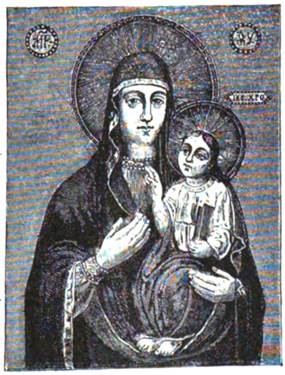
Св. икона, известная с давних времён, находится в Воскресенской (бывшей монастырской) церкви местечка Любеча, Чернигов. епархии. Св. Димитрий Ростовский в своём Дневнике говорит о многих чудесах от неё. Она была обновлена в Киеве 1701 г. и по распоряжению митрополита Варлаама Ясинского возвращена в Любеч двумя иеромонахами и поставлена в только что сооружённую церковь Воскресения в монастыре. В Киево-Софийском соборе имеется список с неё, привезённый из Любеча в 1690 году митрополитом Гедеоном. См. Архим*. Димитрия* Месяцеслов под 7 мая.
The holy icon, known from ancient times, is located in the Resurrection Church (formerly a monastery church) of the town of Lyubech, in the Chernigov diocese. St. Demetrius of Rostov, in his Diary, speaks of many miracles from it. It was restored in Kiev in 1701 and, by order of Metropolitan Barlaam Yasinsky, was returned to Lyubech by two hieromonks and placed in the newly built Church of the Resurrection in the monastery. In the Kiev-Sophia Cathedral there is a copy of it, brought from Lyubech in 1690 by Metropolitan Gideon. See Archim. Demetrius's Menaion under May 7.
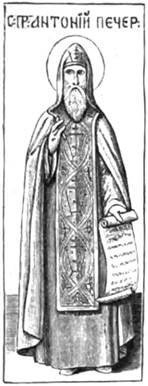
Преподобный Антоний – отец Русского иночества, воспитатель того крепкого христианского духа, без которого наружное иночество легко является и легко исчезает, и с которым иноческие учреждения остаются целы наперекор переворотам времени.
The Venerable Anthony is the father of Russian monasticism, the nurturer of that strong Christian spirit without which outward monasticism easily appears and easily vanishes, and with which monastic institutions remain intact despite the upheavals of time.
Блаж. Симон и Поликарп в своё время (в начале XIII в.) читали «житие святого Антония», пространное и подробное, в котором, хотя кратко, говорилось и об учениках его123. – К сожалению, не дошло до нас это драгоценное описание. Нам остаётся восстановлять образ дивного подвижника по отрывочным сведениям древности, при том осмотрительно.
The blessed Simon and Polycarp in their time (at the beginning of the 13th century) read "the life of St. Anthony," a lengthy and detailed account, which, though briefly, also spoke of his disciples123. – Unfortunately, this precious description has not come down to us. It remains for us to reconstruct the image of the wondrous ascetic from fragmentary information of antiquity, and that with caution.
Антоний, в мире Антипа, родился в местечке Любече, в 40 верстах от Чернигова124. – Здесь поныне показывается пещера, в которой юный Антипа испытывал силы свои для великих подвигов иночества125. – Бог положил ему на ум, говорит пр. Нестор, желание странствовать и странствуя достиг он св. горы (Афонской). Здесь он осмотрел многие обители чудные и, возжелав облещись в чернеческие ризы, молил игумена одной из обителей постричь его; тот возложил на него монашеский образ, назвав его Антонием, и учил его монашескому чину126. Слава дивных подвигов Афанасия Афонского, который ещё жив был в 997 г.127, влекла на Афон не только людей простых, но многих с иераршеских кафедр, даже из дальних стран128. Пр. Афанасий ввёл в своей лавре общежитие129. Но большая часть Афонских подвижников жили отшельнически, то по два и по три вместе, то совершенно наедине. Так под Афонским типиком X в. видим подписи 50 игуменов130. Многолюдство лавры не было по душе Антипы, он искал безмолвной тишины. По сведениям Афонским, избрал он Эсфигменову прибрежную скалу и духовным старцем его был Феоктист, игумен Эсфигменовой обители, красующейся в виду скалы. Игумен благословил его подвизаться в полюбившейся пещере, тем охотнее, что Антоний по близости мог иметь частое общение с старцем131. При самой подошве Афонской горы в X веке уже видим Болгарское поселение132. Афон с начала X в. был и приютом, и рассадником иночества в Славянских землях133. Так и рассудительный игумен Феоктист, после того, как увидел Антония окрепшим в иноческой жизни, сказал ему: «Антоний! иди в Россию, да будешь там и другим на пользу, благословением святой горы». Антоний повиновался. Прибыв в Киев, искал он себе места, где мог бы жить, как жил на Афоне. Варяжская пещера показывалась удобной для безмолвия. Гора Берестовая «по своей отвесной, почти отсечённой, высоте со стороны реки казалась неприступной. На ней в пещерах имели свой притон Варяги, разбойничавшие по Днепру». Антоний избрал пещеру злодеев для подвигов святых. «Это было в 1013 г.134. Но кровопролития и волнения, наставшие после кончины Владимира, заставили Антония удалиться опять на Афон и он подвизался там ещё несколько лет135. Потом игумен повторил ему прежний духовный совет. Он нашёл теперь в Киеве тишину. Это было в 1028 году136.
Anthony, in the world Antipas, was born in the town of Lyubech, 40 versts from Chernigov124. – Here to this day is shown a cave in which the young Antipas tested his strength for the great labors of monasticism125. – God put it into his mind, says the Venerable Nestor, a desire to travel, and traveling he reached the Holy Mountain (of Athos). Here he examined many wondrous monasteries and, desiring to be clothed in monastic garb, he begged the abbot of one of the monasteries to tonsure him; he placed upon him the monastic habit, naming him Anthony, and taught him the monastic rule126. The fame of the wondrous labors of Athanasius of Athos, who was still alive in 997127, drew to Athos not only simple people, but many from hierarchal sees, even from distant lands128. The Venerable Athanasius introduced the cenobitic life in his Lavra129. But the greater part of the Athonite ascetics lived as hermits, some two or three together, some completely alone. Thus, under the Athonite typicon of the 10th century, we see the signatures of 50 abbots130. The multitude of the Lavra was not to the liking of Antipas; he sought silent stillness. According to Athonite accounts, he chose the coastal rock of Esphigmenou, and his spiritual elder was Theoctistus, the abbot of the Esphigmenou monastery, which stands in view of the rock. The abbot blessed him to struggle in the cave he had come to love, the more willingly because Anthony, being nearby, could have frequent communion with the elder131. At the very foot of Mount Athos in the 10th century we already see a Bulgarian settlement132. Athos from the beginning of the 10th century was both a refuge and a nursery of monasticism in the Slavic lands133. Thus the prudent Abbot Theoctistus, after he saw Anthony strengthened in monastic life, said to him: "Anthony! Go to Russia, that you may be there for the benefit of others as well, by the blessing of the Holy Mountain." Anthony obeyed. Arriving in Kiev, he sought a place where he could live as he had lived on Athos. The Varangian cave seemed suitable for silence. The hill of Berestovo, "by its sheer, almost precipitous height from the side of the river, seemed inaccessible. On it, in caves, the Varangians, who plundered along the Dnieper, had their lair." Anthony chose the cave of malefactors for holy labors. "This was in 1013134. But the bloodshed and disturbances that arose after the death of Vladimir compelled Anthony to withdraw again to Athos, and he struggled there for several more years135. Then the abbot repeated to him his former spiritual counsel. He now found quiet in Kiev. This was in 1028136.
Преподобный Антоний не изменял раз избранного пути; он и теперь хотел жить отшельником. Ему полюбился безмолвный Днепровский холм, куда уединялся и благочестивый Иларион, впоследствии митрополит. Призвав тёплой молитвой благословение Божие, он выкопал себе при подошве холма пещеру и стал жить в ней137. В глубине смиренной души своей Антоний оставался и теперь только духовным сыном Афонской горы и трудился над собой для своей вечности. К его утешению, пещера его была далека от глаз людских. Берестовский холм покрыт был тогда густым, дремучим лесом. И однако о дивном пещернике узнали люди и стали приходить к нему. Он не хотел светить другим, но жизнь его светила и каким светом! Антоний жил для одного Господа; а для кого же и жить должны люди? В молитве, трудах и подвигах проводил он время, не давая себе покоя ни днём, ни ночью; сухой хлеб, и то через день, был его пищей; простая вода, и та в меру, – питьё его. Какая полная любовь ко Господу! Какое жертвование собой для Него! К дивному подвижнику приходили и оживлялись для лучшей жизни. Одни приносили ему необходимое для жизни, по чувству любви благой, и принимали благословение для дома своего; а некоторые решались и жить с ним. Никон, по сказанию Нестора, является в пещеру уже в сане иеромонаха; по известиям его и других, видим здесь прежде 1045 г. Моисея, Леонтия, Илариона, Феодосия138. «Киевский Антоний, говорит Нестор, прославился как великий Антоний Египетский», и это ещё при Ярославе. Вел. князь Изяслав, лишь только вступил на престол, приходил (1054 г.) и с дружиной просить молитв Антония в его пещере139. Антоний сиял светом дел своих, но хранил глубокое смирение. По смирению не принимал он на себя сана священства. За пострижение двух придворных – Варлаама и Ефрема Изяслав воздвиг гонение на пещеру Антониеву и Антоний готов был безответно удалиться из Киева с учениками. Княжий отрок прибежал и известил о том князя. Супруга Изяслава, родом Польская княжна, уговорила князя – оставить иноков в покое. «За какое-то дело, говорила она, изгнаны были черноризцы и много бед вышло из того в Польской нашей стороне». Изяслав приказал воротить уходивших иноков и – Антоний остался, также покорный и смиренный140.
The Venerable Anthony did not change the path he had once chosen; even now he wished to live as a hermit. He came to love the silent Dnieper hill, to which the pious Hilarion, later metropolitan, also withdrew. Calling down the blessing of God by fervent prayer, he dug himself a cave at the foot of the hill and began to live in it137. In the depth of his humble soul, Anthony even now remained only a spiritual son of Mount Athos and labored for himself for his own eternity. To his consolation, his cave was far from human eyes. The hill of Berestovo was then covered with a dense, impenetrable forest. Yet people learned of the wondrous cave-dweller and began to come to him. He did not wish to shine for others, but his life shone, and with what light! Anthony lived for the Lord alone; and for whom else should men live? In prayer, labors, and ascetic feats he spent his time, giving himself no rest either by day or by night; dry bread, and that only every other day, was his food; plain water, and that in measure, was his drink. What perfect love for the Lord! What self-sacrifice for Him! People came to the wondrous ascetic and were revived for a better life. Some brought him necessities for life, out of a feeling of good love, and received a blessing for their home; while others resolved to live with him. Nikon, according to the account of Nestor, appears in the cave already in the rank of hieromonk; from his accounts and those of others, we see here before 1045 Moses, Leontius, Hilarion, and Theodosius138. "Anthony of Kiev," says Nestor, "was glorified like the great Anthony of Egypt," and this was still under Yaroslav. Grand Prince Izyaslav, as soon as he ascended the throne, came (1054) with his retinue to ask for Anthony's prayers in his cave139. Anthony shone with the light of his deeds, but preserved deep humility. Out of humility he did not accept the rank of priesthood. For the tonsure of two courtiers – Barlaam and Ephraim – Izyaslav raised a persecution against Anthony's cave, and Anthony was ready to depart from Kiev with his disciples without a word. A princely servant ran and informed the prince of this. Izyaslav's wife, a Polish princess by birth, persuaded the prince to leave the monks in peace. "For some deed," she said, "black-robe monks were driven out, and much misfortune came of that in our Polish land." Izyaslav ordered the departing monks to be brought back, and Anthony remained, likewise obedient and humble140.
Число братии пещерной умножилось до 15 и по благословению Антония они устроили в пещере церковь с трапезой. Для любителя уединения такое общество казалось уже очень людным. Он сказал братии: «вот Бог собрал вас, братия, и над вами почивает благословение святой горы, данное мне постригшим меня игуменом, а от меня перешедшее на вас. Живите теперь сами, я назначу вам игумена, а сам хочу идти в другую гору жить наедине, как привык издавна». Назначив в игумена Варлаама, сам он, в расстоянии 100 саженей от прежней пещеры, выкопал себе новую пещеру, ту, которая и поныне называется Антониевой или ближней. Смирение его не хотело носить на себе звание игумена; власть передал он другим. Но уединяясь в новой пещере, он не переставал быть великим отцом и наставником для всех, по сознанию братии. В особенных случаях игумен и братия обращались к Антонию за наставлениями и любовь его не отказывалась давать советы и помогать. Так он не только одобрил (1057 г.) рассуждение братии о нужде построить монастырь на горе, но послал предложить от его имени вел. князю: «князь мой! Бог умножает братию, а место у нас тесное: не дашь ли ты нам ту гору, что над пещерой?» И вел. князь исполнил смиренную просьбу великого подвижника. Точно также сам Антоний назначил Феодосия в преемника Варлаама141. Любовь его к искренним подвижникам простиралась до того, что сам он носил пищу каждый день заключившемуся в затворе Исаакию, и это продолжалось 7 лет142. Дух его постоянно пребывал с братиями и крепкие молитвы его низводили на сердца их благодать небесную, возращавшую и укреплявшую их в жизни духовной. Его незримой помощью умножалось число братии у игумена Феодосия и обитель росла видимо. Преп. Нестор справедливо сказал: «много монастырей поставлено царями, боярами, богатством: но не таковы они, как поставленные слезами, постом, молитвой, бдением; Антоний не имел ни золота, ни серебра, но слезами и постом приобрёл он очень много»143.
The number of the cave brethren increased to fifteen, and with Anthony's blessing they built a church with a refectory in the cave. For a lover of solitude, such a community already seemed too populous. He said to the brethren: "Behold, God has gathered you, brethren, and upon you rests the blessing of the Holy Mountain, given to me by the hegumen who tonsured me, and from me passed on to you. Live now by yourselves; I will appoint a hegumen for you, and I myself wish to go to another mountain to live alone, as I have long been accustomed." Having appointed Barlaam as hegumen, he himself, at a distance of one hundred sazhens from the former cave, dug himself a new cave—that which to this day is called Anthony's, or the Near Cave. His humility did not wish to bear the title of hegumen; he entrusted authority to others. But while dwelling in seclusion in the new cave, he did not cease to be a great father and teacher for all, by the recognition of the brethren. On special occasions, the hegumen and the brethren turned to Anthony for guidance, and his love did not refuse to give counsel and help. Thus, he not only approved (in 1057 A.D.) the brethren's deliberation on the need to build a monastery on the mountain, but sent to propose on his behalf to the Grand Prince: "My prince! God is multiplying the brethren, and our place is cramped: will you not give us that mountain which is above the cave?" And the Grand Prince fulfilled the humble request of the great ascetic. In like manner, Anthony himself appointed Theodosius as Barlaam's successor141. His love for sincere ascetics extended so far that he himself carried food each day to Isaac, who had shut himself up in seclusion, and this continued for seven years142. His spirit constantly abided with the brethren, and his mighty prayers brought down heavenly grace upon their hearts, which nurtured and strengthened them in the spiritual life. By his unseen help, the number of brethren under Hegumen Theodosius increased, and the monastery grew visibly. The Venerable Nestor rightly said: "Many monasteries have been established by tsars, boyars, and wealth; but they are not such as those established by tears, fasting, prayer, and vigil. Anthony had neither gold nor silver, but by tears and fasting he acquired very much"143.
Изнурение тела постом, очищение духа молитвой и Богомыслием до того возвысили дух Антония, что в нём был не только дух совета и мудрости, но дух чудес и откровений чрезвычайных. Больные получали исцеление, принимая простую пищу Антония144. В 1067 г. Половцы вторглись в Россию. Князья Изяслав, Святослав и Всеволод решились сразиться с ними на реке Альте и пришли за благословением к Антонию. Антоний со слезами предсказал несчастную для них битву. Устрашённый тем военачальник «Симон, пав к ногам старца, молил о своём спасении. Блаженный сказал ему: сын мой, многие падут от меча острого, преследуемые врагами; вы будете смяты, изранены, потоплены в воде; но ты останешься жив и будешь положен в храме, который построен будет здесь». Слова великого Антония исполнились во всей точности. Князья потерпели сильное поражение на Альте. «Израненный Симон лежал среди убитых. Подняв взор к небу, увидел он церковь великую. Господи! сказал он, избавь меня от сей горькой смерти, молитвами Твоей Матери и преп. Антония и Феодосия. И внезапно какая-то сила исхитила его из среды мёртвых и он исцелел тотчас»145.
The mortification of the body by fasting, the purification of the spirit by prayer and the contemplation of God, so elevated Anthony's spirit that in him there was not only the spirit of counsel and wisdom, but also the spirit of miracles and extraordinary revelations. The sick received healing by partaking of Anthony's simple food144. In 1067 A.D., the Polovtsy invaded Rus'. The princes Izyaslav, Sviatoslav, and Vsevolod resolved to do battle with them on the river Alta and came to Anthony for a blessing. Anthony, with tears, foretold an unfortunate battle for them. Terrified by this, the voivode Simon, falling at the elder's feet, begged for his own salvation. The blessed one said to him: "My son, many shall fall by the sharp sword, pursued by enemies; you shall be crushed, wounded, drowned in water; but you shall remain alive and be laid in the church which shall be built here." The words of the great Anthony were fulfilled in all exactness. The princes suffered a severe defeat on the Alta. "Wounded, Simon lay among the slain. Lifting his gaze to heaven, he saw a great church. 'O Lord!' he said, 'deliver me from this bitter death, by the prayers of Your Mother and the Venerable Anthony and Theodosius.' And suddenly some power snatched him from among the dead, and he was healed at once"145.
Затем последовало искушение для святого. Вследствие несчастной битвы на Альте, Киевляне, недовольные вел. кн. Изяславом, заставили его бежать в Польшу, а Всеслава, которого Изяслав вопреки клятве держал в заключении, возвели на престол. Спустя 7 месяцев Изяслав возвратил себе Киев и начал гневаться на Антония «за Всеслава»; если Антоний и принимал бывшего темничника Всеслава, то конечно только в духе любви святой; но Изяслав считал это оскорблением себе и восстал с гневом на Антония. Услышав о неудовольствиях против Антония, Черниговский князь Святослав прислал за Любчанином Антонием и взял его в Черниговский Елецкий монастырь, незадолго перед тем основанный на месте явления иконы Богоматерней на ели146. Другу уединения особенно понравилась Болдина гора, покрытая лесом, и он ископал в ней себе пещеру; кн. Святослав, по его воле, построил подле пещеры храм прор. Илии и по благословению Антония скоро собрались здесь иноки147. Так смиренный Антоний и гонение на него обратил в славу Божию.
Then followed a trial for the saint. As a result of the unfortunate battle on the Alta, the people of Kiev, displeased with Grand Prince Izyaslav, forced him to flee to Poland, and set Vseslav—whom Izyaslav, contrary to his oath, had held in confinement—upon the throne. Seven months later, Izyaslav regained Kiev and began to be angry with Anthony "on account of Vseslav." If Anthony did receive the former prisoner Vseslav, it was certainly only in a spirit of holy love; but Izyaslav considered this an offense to himself and rose up in anger against Anthony. Hearing of the displeasure against Anthony, the Chernigov prince Sviatoslav sent for Anthony of Lyubech and took him to the Yelets Monastery in Chernigov, which had been founded shortly before on the site of the appearance of an icon of the Mother of God on a fir tree146. The friend of solitude was especially pleased with Boldina Hill, covered with forest, and he dug himself a cave there. Prince Sviatoslav, at his wish, built a church of the Prophet Elijah near the cave, and with Anthony's blessing, monks soon gathered there147. Thus the humble Anthony turned even the persecution against him into the glory of God.
Изяслав, уважавший в душе Антония, скоро почувствовал, что согрешил он перед человеком Божиим, неосторожно увлёкшись движением гневного самолюбия. Он послал упросить Антония возвратиться в Киев и Антоний возвратился в ту пещеру, в которой жил до удаления в Чернигов148. Для Антония за унижением земным следовала слава неба. В Печерскую обитель пришли из Константинополя четыре зодчих и спрашивали: «где строить церковь?» – «Что это значит? Кто прислал вас?» спросили их. Греки рассказали следующее: «Каждый из нас был в своём доме и к каждому рано утром пришёл посланный и сказал: «Царица зовёт тебя во Влахерн». Мы явились и увидели Царицу, окружённую свитой. – «Хочу построить Себе церковь в России, в Киеве; возьмите денег на три года и идите, стройте», сказала нам Царица. – Мы спросили: к кому пойдём мы, в незнаемую сторону? «Вот к ним – к Антонию и Феодосию, которые явятся там», сказала Царица, указав на двух стоявших вблизи Её. К чему нам так много денег? предложили мы. Царица отвечала: «сей Антоний лишь благословит вас на труд, отойдёт на вечный покой; на другой год последует за ним Феодосий. Итак берите денег больше. Впрочем, никто так не заплатят вам, как Я; Сама Я буду осматривать церковь и хочу пребывать в ней». – Она дала нам и мощи св. мучеников Артемия, Полиевкта, Леонтия, Акакия, Арефы, Иакова и Феодора. – «Это положите, сказала Она, в основание церкви; церковь будет Богородичная», и дала нам икону». Окончив рассказ, зодчие повторили вопрос: «где же строить церковь?» Антоний сказал: «подождите три дня». Затем обратился он к крепкой молитве и испросил чудесное указание на место храма. – По молитве святого, в одну ночь на избранном месте было сухо, а все окрестности покрыты были росой; в другую ночь одно оно оросилось, тогда как ближние места были сухи149. Благословение места для великой Печерской церкви было последним земным делом дивного Антония. – На 90 году своей жизни за год до кончины св. Феодосия, мая 7 дня 1073 г., он мирно предал дух свой Господу150.
Izyaslav, who in his soul respected Anthony, soon felt that he had sinned against the man of God, having been carelessly carried away by a movement of angry self-love. He sent to entreat Anthony to return to Kiev, and Anthony returned to that cave in which he had lived before his departure to Chernigov148. For Anthony, earthly humiliation was followed by heavenly glory. Four builders came to the Caves Monastery from Constantinople and asked: "Where are we to build the church?"—"What does this mean? Who sent you?" the brethren asked them. The Greeks related the following: "Each of us was in his own house, and to each, early in the morning, a messenger came and said: 'The Queen summons you to Blachernae.' We appeared and saw the Queen, surrounded by a retinue. 'I wish to build Myself a church in Rus', in Kiev; take money for three years and go, build it,' the Queen said to us. We asked: 'To whom shall we go, to an unknown land?' 'Here, to them—to Anthony and Theodosius, who will appear there,' said the Queen, pointing to two standing near Her. 'Why do we need so much money?' we proposed. The Queen answered: 'This Anthony will only bless you for the work, then depart to eternal rest; in the following year, Theodosius will follow him. Therefore take more money. However, no one will repay you as I will; I Myself will inspect the church and wish to dwell in it.' She also gave us the relics of the holy martyrs Artemius, Polyeuctus, Leontius, Acacius, Arethas, James, and Theodore. 'Place these,' She said, 'in the foundation of the church; the church shall be dedicated to the Theotokos,' and She gave us an icon." Having finished the account, the builders repeated the question: "Where, then, are we to build the church?" Anthony said: "Wait three days." Then he turned to fervent prayer and obtained a miraculous indication of the place for the church. Through the saint's prayer, on one night the chosen place was dry, while all the surrounding area was covered with dew; on another night, that place alone was bedewed, while the nearby places were dry149. The blessing of the site for the great Caves Church was the last earthly deed of the wondrous Anthony. In the ninetieth year of his life, one year before the repose of St. Theodosius, on May 7, 1073 A.D., he peacefully surrendered his spirit to the Lord150.
Мощи преп. Антония почивают под спудом, в той самой пещере, где подвизался он151. Глубокое смирение хранил он во всю земную жизнь свою; смирением закрывается он от славы человеческой и за гробом. – Не раз пытались открыть св. мощи его, но останавливаемы были силой. Кальнофойский пишет: «когда Москали захотели взять из гроба мощи святого, то святой, по воле Божией, раз прогнал огнём, чего и теперь есть знаки, а другой – водой»152.
The relics of the Venerable Anthony rest hidden, in that same cave where he struggled151. Deep humility he preserved throughout his entire earthly life; by humility he conceals himself from human glory even beyond the grave. More than once attempts were made to uncover his holy relics, but they were stopped by force. Kalnofoysky writes: "When the Muscovites wished to take the saint's relics from the tomb, the saint, by God's will, once drove them away with fire, of which there are still signs, and another time with water"152.
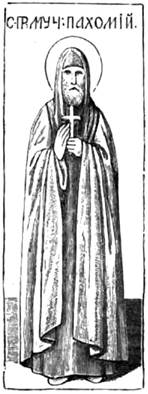
Блаженный Пахомий родился в Малороссии от родителей благочестивых. Ещё в молодых летах он был взят в плен татарами, которые продали его Турке, кожевнику, в гор. Усаки, что в Филадельфийском округе Анатолии. Покупщик, чтобы извлечь больше выгод из своей покупки, учил Пахомия кожевенному ремеслу, но старался научить и своей вере. Блаженный скоро понял ремесло, но ненавидел веру господина своего и всячески уклонялся от её обрядов. Турок не раз бранил невольника, не раз наказывал побоями и лишением пищи: мужественный раб Христов переносил всё за благочестие отеческое. В продолжении 27 лет неволи он с полным усердием служил господину своему и таким поведением приобрёл доверенность его к себе; Турок хотел даже видеть его зятем своим и готов был передать ему наследство, лишь бы он отрёкся от Христа. Добрый раб Христов хранил чистоту совести и богатство с утешениями брака сочёл пустотой, в сравнении с христианской верой, незаменимой ничем для вечности. – Господин его, убедясь в непоколебимости раба, не стал более насиловать совести его и за долгую службу дал ему свободу, предоставив ему идти куда хочет. Во время приготовления к пути Пахомий тяжко заболел и лежал почти без чувств. Соседние Турки, узнав, что невольник получил свободу, не приняв магометанства, положили, что не тому быть должно. Они одели больного в Турецкую одежду, хотя и не обрезали, а разгласили, что он отрёкся от Христа и стал магометанином. Исповедник Христов, глубоко огорчённый насилием, поспешил удалиться в Смирну и здесь, сбросив с себя турецкую одежду, отплыл на святую гору.
The blessed Pachomius was born in Little Russia of pious parents. While still in his youth, he was taken captive by the Tatars, who sold him to a Turk, a tanner, in the city of Usaki, in the Philadelphia district of Anatolia. The purchaser, in order to extract greater profit from his purchase, taught Pachomius the tanner's trade, but also tried to teach him his own faith. The blessed one quickly learned the trade, but he hated his master's faith and in every way avoided its rites. The Turk more than once reviled the slave, more than once punished him with beatings and deprivation of food; the courageous servant of Christ endured all for the sake of his ancestral piety. During the twenty-seven years of his captivity, he served his master with full zeal, and by such conduct he gained his master's trust; the Turk even wished to see him as his son-in-law and was ready to bequeath him his inheritance, if only he would renounce Christ. The good servant of Christ preserved purity of conscience and considered wealth with the comforts of marriage as emptiness in comparison with the Christian faith, irreplaceable by anything for eternity. His master, convinced of the slave's steadfastness, no longer forced his conscience and, for his long service, gave him his freedom, allowing him to go wherever he wished. During preparations for the journey, Pachomius fell gravely ill and lay almost unconscious. The neighboring Turks, learning that the slave had received his freedom without accepting Mohammedanism, decided that this should not be. They dressed the sick man in Turkish clothing, though they did not circumcise him, and spread the word that he had renounced Christ and become a Mohammedan. The confessor of Christ, deeply grieved by the violence, hastened to depart for Smyrna, and there, casting off the Turkish clothing, sailed to the Holy Mountain.
На Афоне в обители св. Павла, найдя иеромонаха строгой жизни Иосифа, блаженный открыл свою душу и упросил старца принять его к себе в послушание и постричь в иночество. Двенадцать лет провёл он под руководством Иосифа, изучая жизнь духовную. Потом, услышав о чудной жизни преподобного Акакия Капсокаливита, перешёл в суровую пустынь его и провёл с ним шесть лет. Здесь, питаясь трудами рук своих, он столько известен стал по совершенству жизни, что считался образцом для пустынных братий; особенно отличался он кротостью, приветливостью и добродушием. Но при всех добродетелях душа Пахомия жаждала ещё подвига исповеднического: он тревожился сомнением, не вылетели ли во время болезни его какие-либо слова отречения от Господа, когда Турки одели его в свои одежды, не посрамил ли он чем-либо имя христианина? Он открыл старцу Иосифу своё желание. Старец, полагая, что желание его – плод гордости духовной, строго бранил его за желание исповедничества. Пахомий оставался при своём желании. Духовник Иосиф испытывал его целый год, возлагая на него разные епитимии, и нашёл его готовым на всё. Затем оба они открывали свои мысли наиболее добродетельным отцам святой горы; но все одобрили тайную мысль Пахомия; а блаж. Акакий утверждал Пахомия на страдальческий подвиг молитвой и советами. Пахомий оставил святую гору, сопровождаемый духовником своим Иосифом.
On Athos, in the monastery of St. Paul, finding a hieromonk of strict life named Joseph, the blessed one opened his soul and begged the elder to receive him into obedience and to tonsure him into monasticism. Twelve years he spent under the guidance of Joseph, learning the spiritual life. Then, having heard of the wondrous life of the Venerable Acacius the Kapsokalyvite, he moved to his austere hermitage and spent six years with him. Here, nourishing himself by the labor of his own hands, he became so renowned for the perfection of his life that he was considered a model for the desert brethren; he was especially distinguished by meekness, affability, and good-nature. But with all his virtues, the soul of Pachomius still thirsted for the feat of confession: he was troubled by the doubt whether, during his illness, any words of denial of the Lord had escaped him, when the Turks clothed him in their garments, whether he had in any way dishonored the name of Christian. He opened his desire to the elder Joseph. The elder, supposing that his desire was the fruit of spiritual pride, sternly rebuked him for his desire for confession. Pachomius remained with his desire. The spiritual father Joseph tested him for a whole year, imposing various penances upon him, and found him ready for all things. Then both of them revealed their thoughts to the most virtuous fathers of the Holy Mountain; but all approved the secret thought of Pachomius; and the blessed Acacius confirmed Pachomius for the suffering feat with prayer and counsels. Pachomius left the Holy Mountain, accompanied by his spiritual father Joseph.
Прибыв в город Усаки, Иосиф остался в гостинице; а Пахомий пошёл прямо в дом господина своего и оттуда на базар, чтобы узнали его. Турки, узнав, схватили и повели его к судье; они объявили, что это – тот самый раб, который во время болезни отрёкся от Христа и оделся в зелёные одежды, а теперь ходит в монашеской одежде. Правда ли это? спросил судья. Пахомий отвечал: «и на уме у меня не было отрекаться от Христа: признавал и признаю христианскую веру святой и чистой, и готов перенести все муки за своё исповедание». Судья, осыпав его бранью, объявил, что так как раз отрёкся он от Христа, то не может более носить одежды христианской и должен выбрать одно из двух – или совсем отказаться от Христа, или принять смерть. В ответ на это услышали слова исповедника: «да не будет того, Христос Царь мой, чтобы я и тайной мыслью отрёкся от имени Твоего; готов я по любви к Тебе и в огонь и на всякую смерть». Судья велел бросить Пахомия в смрадную темницу.
Having arrived at the city of Usaki, Joseph remained at the inn; but Pachomius went straight to the house of his master and from there to the market, so that he might be recognized. The Turks, recognizing him, seized him and led him to the judge; they declared that this was that same slave who, during his illness, had denied Christ and put on green garments, and now goes about in monastic garb. "Is this true?" asked the judge. Pachomius answered: "It never entered my mind to deny Christ: I have acknowledged and do acknowledge the Christian faith as holy and pure, and I am ready to endure all torments for my confession." The judge, showering him with abuse, declared that since he had once denied Christ, he could no longer wear Christian garments and must choose one of two things—either to renounce Christ entirely, or to accept death. In answer to this, they heard the words of the confessor: "Let it not be, O Christ my King, that I should deny Thy name even in secret thought; I am ready, out of love for Thee, for both fire and every death." The judge ordered Pachomius to be thrown into a foul prison.
Пахомий сочёл темницу раем, хотя был в ней без всякого человеческого утешения. На третий день осудили его на смерть. Вести о том обрадовался он как самой сладкой вести; прославляя Бога, он провёл всю ночь на молитве. На рассвете представили его в суд и судья сказал: вот ты осуждён на смерть за твоё упорство; смотри, чтобы позже не каяться. Пахомий отвечал: «тысячу смертей готов перенести за Христа моего; пусть исполняют приговор». Исполнители казни повели связанного мученика за город, туда, где режут овец. Одни из Турок осыпали Пахомия бранью, другие уговаривали отречься от Христа: мученик шёл, углублённый в молитву, и на месте казни стал на колени. Палач в тревоге души медлил отсечь ему голову и шептал на ухо, чтобы отрёкся от Христа. Твёрдый подвижник отвечал: «не теряй напрасно времени, исполняй, что приказано». Тогда отсекли ему голову. Спустя три дня христиане взяли священные останки и погребли. Исполнитель казни помешался в уме и в страшных воплях умер. Духовник Иосиф, услышав о чудном подвиге Пахомия, прославил Бога и, придя на место, где ещё лежало тело мученика, говорил со слезами: «ты получил, чего давно желал, добрый сын мой Пахомий! моли же Господа о мне и о всех призывающих твоё имя». Спустя несколько времени напал на Иосифа страх малодушия: но в сонном видении явился ему мученик и сказал: «не бойся, старец, не потерпишь муки». С этими словами исчез страх в душе Иосифа. Одна благочестивая христианка тех мест, страдавшая с юных лет жестокой головной болью, призвав на помощь мученика, помазала каплями крови его больную голову и освободилась от многолетнего недуга своего; в память исцеления своего велела она написать лик мученика. Блаженный Пахомий пострадал в день Вознесения Господня, мая 7-го 1730 г. Священные останки его хранятся на острове Патмосе, в обители св. Иоанна Богослова, где каждый год совершается память его153.
Pachomius considered the prison a paradise, although he was in it without any human consolation. On the third day they condemned him to death. He rejoiced at the news as at the sweetest tidings; glorifying God, he spent the whole night in prayer. At dawn they brought him before the court, and the judge said: "Behold, you are condemned to death for your stubbornness; see that you do not repent later." Pachomius answered: "A thousand deaths am I ready to endure for my Christ; let them carry out the sentence." The executioners led the bound martyr outside the city, to the place where sheep are slaughtered. Some of the Turks showered Pachomius with abuse, others urged him to deny Christ: the martyr walked, absorbed in prayer, and at the place of execution knelt down. The executioner, troubled in soul, delayed cutting off his head and whispered in his ear that he should deny Christ. The steadfast ascetic answered: "Do not waste time in vain; do what you are commanded." Then they cut off his head. After three days, Christians took the sacred remains and buried them. The executioner went mad and died with terrible cries. The spiritual father Joseph, hearing of the wondrous feat of Pachomius, glorified God and, coming to the place where the martyr's body still lay, said with tears: "You have received what you long desired, my good son Pachomius! Pray now to the Lord for me and for all who call upon your name." After some time, a fear of faint-heartedness fell upon Joseph; but in a dream vision the martyr appeared to him and said: "Fear not, elder, you will not suffer torment." With these words, the fear vanished from Joseph's soul. A certain pious Christian woman of that region, who had suffered from youth with a severe headache, calling upon the martyr for help, anointed her aching head with drops of his blood and was freed from her long-standing ailment; in memory of her healing, she had an icon of the martyr painted. The blessed Pachomius suffered on the day of the Ascension of the Lord, May 7, A.D. 1730. His sacred remains are preserved on the island of Patmos, in the monastery of St. John the Theologian, where his memory is celebrated every year153.
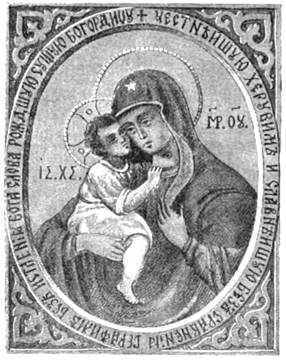
В 1491 году по Р. Хр. в Литовском княжестве, в местечке Жировицах, пастухи, пася стадо недалеко от леса, увидели в нём весьма яркий свет в виде пламени. Это необыкновенное явление возбудило их любопытство. Они подошли к лесу и увидели на дереве икону Богоматери в лучезарном сиянии. Благоговейный трепет и сильное сияние долго не позволяли им подойти к самому образу. Но когда свет, озарявший икону, мало по малу скрылся: пастухи, поклонившись образу Богоматери, сняли его с дерева и отнесли к своему господину Александру Солтану, подскарбию Литовскому. Он взял образ, запер его в ларец и захотел сообщить о явлении его своим знакомым. Для сего он немедленно пригласил их к себе; они с удивлением выслушали рассказ и пожелали видеть икону. Александр пошёл за ней, но иконы в ларце не было. Это очень изумило Александра, потому что незадолго перед сим он сам видел икону. Через несколько времени те же пастухи и на том же месте нашли опять сей образ Богоматери и опять принесли его к своему господину. Но Александр, почитая себя недостойным того, чтобы икона оставалась в его доме, тогда же дал обет – на месте явления иконы соорудить храм во имя Богоматери. Скоро создан был деревянный храм, и икона Богоматери поставлена в нём. Там стояла икона около десяти лет, не оскудно источая благодатные дары на всех, с верой притекающих к ней. Внезапно в церкви случился пожар и обратил её в пепел; сколько ни употребляли старания спасти икону Богоматери из огня, но все усилия остались тщетны; казалось, икона Богоматери погибла в пламени; так думали все и все сокрушались о её потере.
In the year 1491 A.D., in the Lithuanian principality, in the town of Zhirovitsy, shepherds, while pasturing a flock not far from the forest, saw in it a very bright light in the form of a flame. This extraordinary phenomenon aroused their curiosity. They approached the forest and saw upon a tree an icon of the Mother of God in a radiant splendor. Reverent awe and the strong radiance long prevented them from approaching the image itself. But when the light that illumined the icon gradually disappeared, the shepherds, having bowed down to the icon of the Mother of God, took it down from the tree and brought it to their master, Alexander Soltan, the Lithuanian sub-treasurer. He took the icon, locked it in a chest, and wished to inform his acquaintances of its appearance. For this purpose he immediately invited them to his home; they listened with astonishment to the account and desired to see the icon. Alexander went for it, but the icon was not in the chest. This greatly amazed Alexander, because shortly before he himself had seen the icon. After some time, the same shepherds again found this same icon of the Mother of God in the same place and again brought it to their master. But Alexander, considering himself unworthy that the icon should remain in his house, then and there made a vow to build a church in the name of the Mother of God on the site of the icon's appearance. Soon a wooden church was built, and the icon of the Mother of God was placed in it. There the icon stood for about ten years, unceasingly pouring forth gracious gifts upon all who with faith drew near to it. Suddenly a fire broke out in the church and reduced it to ashes; however much they strove to save the icon of the Mother of God from the fire, all efforts proved vain; it seemed that the icon of the Mother of God had perished in the flames; so thought everyone, and all grieved over its loss.
Однажды малолетние дети были на той горе, у подножия которой был сгоревший храм. Вдруг видят они вдали: некая дева в лучезарном сиянии сидит на камне; дети не осмелились подойти к ней, но поспешили известить о сём своих домашних. Весть дошла до священника. Принимая сказанное детьми видение за Божественное указание, все отправились на гору и, подходя к указанному камню, увидели на нём горящую свечу; когда же подошли к самому камню; нашли на нём икону Богоматери Жировицкой, нисколько не потерпевшую от пожара. Священник и жители Жировиц, несказанно обрадованные обретением иконы, взяли её и поставили в доме священника, потом с ревностью приступили к сооружению нового храма и, построив его в непродолжительном времени, освятили в честь Богоматери и поставили в нём чудную икону.
One day, young children were on that hill, at the foot of which the burned church had stood. Suddenly they saw in the distance: a certain maiden in radiant splendor sitting on a stone; the children did not dare approach her, but hastened to inform their household of this. The news reached the priest. Taking the vision reported by the children as a Divine indication, everyone set out for the hill, and approaching the indicated stone, they saw upon it a burning candle; when they drew near to the stone itself, they found upon it the Zhirovitsy Icon of the Mother of God, having suffered no harm from the fire. The priest and the inhabitants of Zhirovitsy, unspeakably rejoiced at the finding of the icon, took it and placed it in the priest's house; then with zeal they set about building a new church, and having constructed it in a short time, they consecrated it in honor of the Mother of God and placed the wonderworking icon in it.
Слова Симона об Иларионе приведены авгус. 28; об Онисифоре: «и ина такова обращении, брате Поликарпе, в житии святаго Антония». Об Афанасие. «Аще ли кому не верно мнится написанное се, да почтет житие св. Антония». – Полнкарп об Агапите: в житии же святого Антония вся жития их (подвижников современных Антонию) описана суть аще и вкратце речена. См. ещё прим. 132 и 146.
The words of Simon about Hilarion are given under August 28; about Onesiphorus: "And such you will find, brother Polycarp, in the life of St. Anthony." About Athanasius: "If anyone finds what is written here unbelievable, let him read the life of St. Anthony." – Polycarp about Agapius: "In the life of St. Anthony, all their lives (of the ascetics contemporary with Anthony) are described, though briefly told." See also notes 132 and 146.
Так по Густинской летописи (Собр. л.2:261). По Новгородской л. это было в 1012 г. (Собр. л.3:208). Преимущество за первой, как Киевской. По Кассиянову списку патерика Антонии был на Афоне при св. Владимире (Извес. акад. V, 154). О Варяжской пещере Кальнофойский. Сприга канон: «постницы разбойников обитания храмы Божия соделаша».
Thus according to the Gustyn Chronicle (Collection of Chronicles, vol. 2, p. 261). According to the Novgorod Chronicle this was in 1012 (Collection of Chronicles, vol. 3, p. 208). The preference belongs to the former, as a Kievan one. According to the Cassian copy of the Patericon, Anthony was on Athos under St. Vladimir (Proceedings of the Academy, vol. V, p. 154). Concerning the Varangian cave, Kalnofoisky. Spriha's canon: "The ascetics made the dwellings of robbers into temples of God."
Так по патерику Кассиянова списка (изв. акад. V, 154) и известие его о двукратном путешествии на Афон взято конечно из древнего жития Антониева (пр. 120). Нестор в летописи говорит об однократном путешествии на Афон. Но здесь – не жизнь Антония, а часть, да и в той под 1051 г. есть поставление Илариона в митрополита. Если же положим, что Антоний начал жить в Киевской пещере с 1051 г., то это было бы непримиримо ни с известиями о Моисее Угрине, Леонтии, Иларионе, Никоне и Феодосии, ни с известиями о самом Антонии. Как уместить в «немногие дни» одного и того же 1051 г. путешествие на Афон, обхождение тамошних обитателей, пострижение игуменом, изучение иноческой жизни, возвращение в Россию, искание здесь удобного места по обителям, поселение в пещере? Как согласить 40 лет пребывания в Киевской пещере, когда Антоний почил в 1073 г.?
Thus according to the Patericon of the Cassian copy (Proceedings of the Academy, vol. V, p. 154), and its account of a twofold journey to Athos is taken, of course, from the ancient life of Anthony (note 120). Nestor in the Chronicle speaks of a single journey to Athos. But here is not the life of Anthony, but a part, and even in that, under the year 1051, there is the installation of Hilarion as metropolitan. If we suppose that Anthony began to live in the Kievan cave from 1051, this would be irreconcilable both with the accounts of Moses the Hungarian, Leontius, Hilarion, Nikon, and Theodosius, and with the accounts of Anthony himself. How can one fit into the "few days" of one and the same year 1051 a journey to Athos, a visitation of the inhabitants there, tonsure by the abbot, the study of monastic life, a return to Russia, a search there for a suitable place among the monasteries, and a settlement in a cave? How can one reconcile the 40 years of dwelling in the Kievan cave, when Anthony reposed in 1073?
По печатному патерику Антоний во второй раз возвратился в Киев в 1017 г., но тогда не прекращались, а начались сильные волнения в России. По Густинской л. Антоний во второй раз пошёл на Афон в 1017 году и возвратился в 1027 г. (Собр. л. 2, 263. 266). «Уста усобиця и мятеж и бысть тишина велика на земли» в 1028 г. (Собр. л.1:64).
According to the printed Patericon, Anthony returned to Kiev a second time in 1017, but at that time strong disturbances in Russia were not ceasing, but beginning. According to the Gustyn Chronicle, Anthony went to Athos a second time in 1017 and returned in 1027 (Collection of Chronicles, vol. 2, pp. 263, 266). "Strife and rebellion ceased, and there was great peace on the earth" in 1028 (Collection of Chronicles, vol. 1, p. 64).
Собр. л. I, 67, 68. 255. Слова: «копая пещеру» были бы лишние у Нестора, если бы Антоний поселился в Иларионовой пещере, как того хотят иные (приб. к твор. отц. 9, 572). В Иларионовой пещере Антоний не жил уже и потому, что сам Иларион принял пострижение у Антония «от того пострижен бысть», пишет Симон. Да и ни в одном лучшем списке летописи не сказано: «вселися в ню» – в Иларионову пещеру, а сказано: «взлюби место се и вселися в не»; в древних патериках читали: «взлюби место се и вселися в не», или «вселися в нем». Собр. л. I, 67, 68. 255. Татищев 2, 111. Буткова ответ на новый вопрос о Несторе стр. 2–4. СПб. 1850 г.
Collection of Chronicles I, 67, 68. 255. The words "digging a cave" would be superfluous in Nestor if Anthony had settled in Hilarion's cave, as some wish (Add. to Works of the Fathers 9, 572). Anthony did not live in Hilarion's cave also because Hilarion himself received tonsure from Anthony—"by him was he tonsured," writes Simon. Moreover, in none of the better copies of the chronicle is it said: "he dwelt in it"—in Hilarion's cave—but it is said: "he loved this place and dwelt in it"; in the ancient patericons they read: "he loved this place and dwelt in it," or "he dwelt in it." Collection of Chronicles I, 67, 68. 255. Tatishchev 2, 111. Butkov's Reply to the New Question about Nestor, pp. 2–4. St. Petersburg, 1850.
Поликарп в житии Агапита, сказав, что Агапит был свидетелем, как св. Антоний молитвой исцелял больных, давая им вкушать своей пищи, в конце жития изъявляет сожаление о том, что случаи чудесного исцеления не описаны даже и в том полном житии св. Антония, которое известно было в его время. «Их же (св. иноков) воспомянув добродетельное житие, дивлюся, како премолчана бышя великая исправления (так он называет и выше исцеления) св. отца нашего Антония».
Polycarp, in the Life of Agapetus, having said that Agapetus was a witness of how St. Anthony healed the sick by prayer, giving them to eat of his own food, at the end of the Life expresses regret that the instances of miraculous healing were not described even in that full Life of St. Anthony which was known in his time. "Recalling their virtuous life (of the holy monks), I marvel how the great deeds (thus he also calls the healings above) of our holy father Anthony were passed over in silence."
Собр. л. II, 272. Нестор в житии Феодосия: «прииде – идеже и ныне чистое тело его лежит». По летописи, «ископа пещеру, яже есть под новым монастырем, в ней же сконча живот свой, жив в добродетели, не выходя ив пещеры лет 40 нигде же». Собр. л. I, 68. С какого времени считать 40 лет пребывания в пещере? С 1068 г. идя к началу жития. – В 1057 г. он только перешёл из одной пещеры в другую за 100 саженей; а в 1068 г. выходил он не только из пещеры, но и из Киева, в мир.
Collection of Chronicles II, 272. Nestor in the Life of Theodosius: 'he came—where even now his pure body lies.' According to the chronicle, 'he dug a cave, which is under the new monastery, in which he ended his life, living in virtue, not leaving the cave for 40 years anywhere.' Collection of Chronicles I, 68. From what time to count the 40 years of dwelling in the cave? From 1068, going back to the beginning of the Life.—In 1057 he only moved from one cave to another, 100 sazhens away; but in 1068 he went out not only from the cave but also from Kiev, into the world.
Сорб. л. III, 2. «В л. 6681 (1073) заложена бысть церкы Печерская Феодосием игуменом». Краткая Киев. л.: «преставися Антоний, игумен Печерский, благословив и знаменовав место церкви св. Богородицы» (Супрасл. л. 139). Но здесь ошибочно относится к 1074 г. кончина Антония и Феодосия. В Густин. л. и в 3 Новг. (Собр. л. II, 274. III, 208) год кончины Антониевой отнесён к году основания храма, но ошибочно выставлен 1071 г. Днём кончины пр. Антония по древним святцам поставлено 7 мая (Ист. Р. Ц. I, 235, 236). В минее Макария под 7 ч. мая «слово о св. Антоние Печерстем». Служба ему на 7 мая у Царского № 663. В святцах старинных (Синодальн. Апостола XVI в. по опис. Синод. р. 1, 339 и устава XII в. у Толстого, I, № 100) память о пр. Антоние также под 7 мая; а под 10 июля в уставе замечено: «соборная церкви св. Антонию не празднуют». Последняя заметка даёт видеть, что в то время лавра уже праздновала пр. Антонию 7 мая. – О древнем праздновании св. Антонию, хроме Симона и Поликарпа (пр. 120), неизвестный в сборнике XV в. (Румянцева № 406).
Collection of Chronicles III, 2. 'In the year 6681 (1073) the Pechersk church was founded by Abbot Theodosius.' The Short Kiev Chronicle: 'Anthony, Abbot of the Caves, reposed, having blessed and marked out the place for the church of the Holy Mother of God' (Suprasl Chronicle, 139). But here the death of Anthony is erroneously assigned to 1074; and the death of Theodosius is also assigned to that year. In the Gustyn Chronicle and in the 3rd Novgorod Chronicle (Collection of Chronicles II, 274; III, 208), the year of Anthony's death is assigned to the year of the foundation of the church, but the year 1071 is erroneously given. The day of the repose of Venerable Anthony, according to the ancient saints' calendars, is set as May 7 (Hist. of the Russian Church I, 235, 236). In the Menaion of Macarius under May 7: 'a discourse on St. Anthony of the Caves.' A service to him on May 7 in Tsarsky's No. 663. In the ancient saints' calendars (Synodal Apostle of the 16th century, according to the description of the Synodal Library, part 1, p. 339, and a Typikon of the 12th century in Tolstoy, I, No. 100), the memory of Venerable Anthony is likewise under May 7; and under July 10 in the Typikon it is noted: 'the cathedral church does not celebrate St. Anthony.' This last note shows that at that time the Lavra already celebrated Venerable Anthony on May 7.—Concerning the ancient celebration of St. Anthony, besides Simon and Polycarp (note 120), by an unknown author in a 15th-century collection (Rumyantsev No. 406).
Новый мартиролог Константинопольской Церкви. Венеция 1799 г. Ευαγγελικη σαλπιγξ ς. 327. Путеводитель по св. горе афонской стр. 92. 100. 107. СПб. 1864 г. Память пр. Пахомия празднуется мая 20; но день Вознесения Господня в 1730 г. был мая 7 д.
New Martyrology of the Church of Constantinople. Venice, 1799. Ευαγγελικη σαλπιγξ ς, p. 327. Guide to the Holy Mountain of Athos, pp. 92, 100, 107. St. Petersburg, 1864. The memory of Venerable Pachomius is celebrated on May 20; but the day of the Ascension of the Lord in 1730 was May 7.