Одним из явлений, наиболее характеризующих IV век по Р. Хр., было колебание Церкви Христовой различными ересями. Едва только успокоилась она после ужасов гонений, воздвигаемых языческими императорами, едва только укрепилась под сочувственным влиянием императора, которого именует она «Равноапостольным», как стали возникать опасности другого рода, которые могли угрожать ей полным разрушением, если бы не предначертано было искони, что «врата адовы не одолеют её» ...
One of the phenomena most characteristic of the fourth century A.D. was the shaking of the Church of Christ by various heresies. No sooner had she found rest after the horrors of the persecutions raised by the pagan emperors, no sooner had she been strengthened under the sympathetic influence of the emperor whom she calls "Equal-to-the-Apostles," than dangers of another kind began to arise, which might have threatened her with utter destruction, had it not been foreordained from the beginning that "the gates of hell shall not prevail against her"...
Но где преизбыточествовала опасность, там преизбыточествовала и чудная благодать и воздвигался могучий отпор адским силам в лице величественных столпов, ограждавших св. Церковь и оградивших её...
But where danger abounded, there also abounded wondrous grace, and a mighty resistance to the infernal powers was raised up in the person of majestic pillars who shielded the holy Church and shielded her...
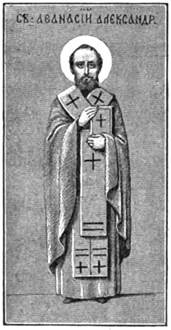
Одним из могущественнейших борцов против одного из величайших зол – в виде арианской ереси – был святитель Афанасий, архиепископ Александрийской Церкви.
One of the most powerful champions against one of the greatest evils—in the form of the Arian heresy—was the Hierarch Athanasius, Archbishop of the Church of Alexandria.
Ещё отроком выделялся он из своей среды своими замечательными дарованиями и страстной любознательностью, с которой изучал он св. Писание. При этом он имел случай получить превосходнейшее всестороннее образование в богатой средствами для этого Александрии, месте рождения его. Таким образом Божественному промыслу угодно было снабдить его всеми орудиями для той достославной борьбы, которую предстояло ему вести в продолжении большей части его 80-ти летней жизни. Первым шагом его на этом пути было сближение с епископом Александром, который проницательно усмотрел в юноше будущего знаменитого церковного деятеля, доверял ему все свои дела, поручал письменные отношения по делам церковным и поставил его в сан диакона на 23-м году его жизни (319 г.). В этом сане присутствовал Афанасий вместе с епископом Александром на Никейском Вселенском соборе и принимал энергичное и влиятельное участие в спорах с Арием, чем и возбудил против себя непримиримую вражду ариан, не перестававших с тех пор никогда неумолимо преследовать его всевозможными способами.
Even as a youth he stood out among his peers for his remarkable gifts and passionate curiosity, with which he studied the Holy Scriptures. Moreover, he had the opportunity to receive an excellent and comprehensive education in Alexandria, the city of his birth, which was richly endowed with the means for this. Thus Divine Providence was pleased to furnish him with all the instruments for that glorious struggle which he was to wage throughout the greater part of his eighty-year life. His first step on this path was his drawing close to Bishop Alexander, who, with penetrating insight, discerned in the youth a future eminent church figure, entrusted him with all his affairs, assigned him the written correspondence on church matters, and ordained him to the rank of deacon in the twenty-third year of his life (A.D. 319). In this rank, Athanasius, together with Bishop Alexander, attended the Ecumenical Council of Nicaea and took an energetic and influential part in the disputes with Arius, thereby arousing against himself the implacable enmity of the Arians, who from that time never ceased to persecute him relentlessly by every possible means.
В 326 г. св. Александр назначил его в преемники своей кафедры, что и было подтверждено общим голосом паствы и епископов, хотя и против воли самого Афанасия.
In A.D. 326, St. Alexander appointed him as his successor to the see, which was confirmed by the common voice of the flock and the bishops, although against the will of Athanasius himself.
Первые годы своего епископства Афанасий провёл довольно спокойно в мирном управлении делами Церкви, но уже в 331 году ариане, происками при дворе Константина, успели достигнуть возвращения из ссылки Ария и всех единомышленных с ним епископов; от Афанасия потребовалось, чтобы Арий принят был в общение с Церковью, но Афанасий с твёрдостью отказал принять в Церковь человека, отвергнувшего Божественность Христа. – «Еретики, – объяснил он императору, – вооружающиеся против Христа, не имеют ничего общего с истинными чадами Церкви Христовой».
The first years of his episcopate Athanasius spent quite peacefully in the tranquil administration of the affairs of the Church, but already in A.D. 331 the Arians, through intrigues at the court of Constantine, succeeded in obtaining the return from exile of Arius and all the bishops who shared his views. Athanasius was required to receive Arius back into communion with the Church, but Athanasius firmly refused to admit into the Church a man who had denied the Divinity of Christ. "Heretics," he explained to the emperor, "who arm themselves against Christ, have nothing in common with the true children of the Church of Christ."
Такое противодействие со стороны всеми уважаемого святителя озлобило ариан, и всякого рода клеветами на него они достигли на первый раз того, что император, видя сильное раздражение против Афанасия и с целью защитить его от врагов, угрожавших жизни его, повелел ему отправиться в Галлию, в гор. Трир, но тем не менее не уступил настойчивому желанию ариан – поставить кого-либо на место Афанасия в Александрии. И если Константин не возвратил его в Александрию, то, как свидетельствует сын его Констанс, это были только потому, что он уже не успел сделать этого при своей жизни, но завещал детям своим исполнить это его желание. На другой же год по смерти Константина, сыновья его возвратили Афанасия и всех заточённых и сосланных по проискам ариан епископов на их кафедры. Святитель был враждебно встречен арианами, поддерживаемыми теперь самим императором восточным Констанцием, державшимся их учения. Вскоре достигли они назначения вместо Афанасия – сообщника их Григория, который и прибыл в Александрию, в сопровождении сильного отряда войска. Немедленно начались в городе разбой и убийства и едва успел спасти жизнь свою Афанасий, поспешно укрывшись из Александрии. Он отправился в Рим и в «Послании к епископам всех церквей» изобразил все ужасы, совершённые в его глазах арианами, и умолял их подать помощь Церкви Александрийской. Живя в Риме, он обратил внимание на себя всего христианского общества своей строгой, безукоризненной жизнью; через него познакомилось оно с подвигами восточных отшельников, о которых на Западе мало имели понятия; полное богатым содержанием слово его имело большое влияние на усовершенствование общества в нравственной жизни. Афанасий возбудил полное сочувствие Римского епископа Юлия и западного императора Констанса, который потребовал от брата своего Констанция составления собора для рассмотрения дела Афанасиева и других епископов – исповедников. Обнаружившийся на соборе Сардийском (347 г.) бесчестный образ действий ариан поколебал несколько доверие к ним легкомысленного Констанция и в 348 г., отчасти также и из опасения прогневать брата своего Констанса и уже по смерти арианского епископа Григория, он допустил возвращение Афанасия в Александрию.
Such opposition on the part of the universally respected Hierarch enraged the Arians, and by every kind of calumny against him they succeeded, at first, in that the emperor, seeing the strong irritation against Athanasius and with the aim of protecting him from enemies who threatened his life, commanded him to depart for Gaul, to the city of Trier; nevertheless, he did not yield to the persistent desire of the Arians to place someone in the place of Athanasius in Alexandria. And if Constantine did not return him to Alexandria, it was, as his son Constans testifies, only because he had no longer time to do so during his own lifetime, but bequeathed to his children the fulfillment of this wish. In the very year after the death of Constantine, his sons restored Athanasius and all the bishops who had been imprisoned and exiled through the intrigues of the Arians to their sees. The Hierarch was met with hostility by the Arians, now supported by the Eastern Emperor Constantius himself, who adhered to their teaching. Soon they succeeded in appointing in place of Athanasius their accomplice Gregory, who arrived in Alexandria accompanied by a strong detachment of troops. Immediately, robbery and murder began in the city, and Athanasius barely managed to save his life by hastily fleeing from Alexandria. He set out for Rome and, in his "Epistle to the Bishops of All the Churches," depicted all the horrors perpetrated before his eyes by the Arians, and implored them to render aid to the Church of Alexandria. While living in Rome, he attracted the attention of the entire Christian community by his strict and blameless life; through him, the West became acquainted with the exploits of the Eastern hermits, of whom little was known there; his discourse, full of rich content, had a great influence on the improvement of society in moral life. Athanasius aroused the full sympathy of the Roman Bishop Julius and the Western Emperor Constans, who demanded from his brother Constantius the convocation of a council to examine the case of Athanasius and the other confessor-bishops. The dishonorable conduct of the Arians, revealed at the Council of Sardica (A.D. 347), somewhat shook the confidence of the fickle Constantius in them, and in A.D. 348, partly also from fear of angering his brother Constans and after the death of the Arian bishop Gregory, he permitted the return of Athanasius to Alexandria.
Настал некоторый отдых для святителя и он употребил его на уврачевание ран, нанесённых Церкви арианами. Усердно объяснял он истинное учение своей пастве, вразумлял впавших в заблуждение, укреплял в преданности единой истинной Церкви. И отрадно отзывалась паства на труды для неё своего пастыря! Все как бы воспрянули духом и стали проявлять возбуждённые в них словом Афанасия чувства – усиленным усердием к молитве и ко всякому доброму делу. Каждый дом тогда как бы изображал церковь по христианскому настроению и христианской деятельности живших в нём.
A period of respite came for the Hierarch, and he employed it in healing the wounds inflicted upon the Church by the Arians. He diligently explained the true teaching to his flock, admonished those who had fallen into error, and strengthened them in devotion to the one true Church. And the flock responded gratifyingly to the labors of their pastor for them! All seemed to revive in spirit and began to manifest the feelings aroused in them by the word of Athanasius through increased zeal for prayer and for every good work. Every household at that time seemed to represent a church in its Christian disposition and Christian activity.
В то же время боролся Афанасий и письменными актами и с убедительным, неопровержимым красноречием отстаивал истину христианского учения против лжи Ария.
At the same time, Athanasius also contended through written acts and, with convincing and irrefutable eloquence, defended the truth of Christian teaching against the falsehood of Arius.
«Допустив, – писал он, – что Сын существовал не от вечности, должны допустить, что Сын произошёл от кого-то вне Бога и мир, сотворённый Богом через Слово, сотворён Творцом, существующим вне Бога; если Сын не вечен, то было время, когда в Боге не было истины, так как Сын есть истина».
"If we admit," he wrote, "that the Son did not exist from eternity, we must admit that the Son originated from someone outside of God, and that the world, created by God through the Word, was created by a Creator existing outside of God; if the Son is not eternal, there was a time when there was no truth in God, since the Son is truth."
«Божественность Сына есть та же самая, которая принадлежит Отцу, а потому она и нераздельна: «Я и Отец одно. – Когда не верите Мне, верьте делам Моим, чтобы узнать и поверить, что Отец во Мне и Я в Нём» (Ин.10:31,38). Отец и Сын едино существо, но не в том отношении, чтобы одно было разделено на две части, которые кроме этого сами по себе ничего не означали бы, также и не в том, что это одно носило на себе два имени, так что один и тот же Бог иногда был бы Отцом, а иногда Сыном у Себя Самого. Хотя Отец и Сын два лица, потому что Отец есть Отец, а не Сын, и Сын есть Сын, а не Отец, – однако существо их одно».
"The Divinity of the Son is the very same that belongs to the Father, and therefore it is indivisible: 'I and the Father are one. — When you do not believe Me, believe My works, that you may know and believe that the Father is in Me and I in Him' (Jn. 10:31, 38). The Father and the Son are one in essence, but not in the sense that one is divided into two parts, which apart from this would signify nothing by themselves; nor in the sense that this one bears two names, so that the same God would sometimes be the Father and sometimes the Son to Himself. Although the Father and the Son are two persons, because the Father is the Father and not the Son, and the Son is the Son and not the Father, yet their essence is one."
Это единство св. Афанасий поясняет так: «Сияние есть свет, появляющийся не после солнца, свет не другой какой-либо, только заимствующий блеск от солнца, но это есть всецелое произведение солнца; такое произведение по необходимости составляет один свет с солнцем, и никто не скажет, что это – два света».
This unity St. Athanasius explains thus: "Radiance is light that appears not after the sun; it is not some other light, merely borrowing its brilliance from the sun, but it is the complete product of the sun; such a product necessarily constitutes one light with the sun, and no one will say that these are two lights."
На возражение ариан, что «Сын и Отец так составляют одно, как и об нас говорится: «Отче Святый! соблюди их во имя Твое, тех, которых Ты Мне дал, чтобы они были едино, как Мы. Да будут все едино: как Ты, Отче, во Мне и Я в Тебе, так и они да будут в Нас едино» (Ин.17:11,21), св. Афанасий отвечал: – «Такие помышления о себе означают безрассудную гордость, потому что единство, какое выставляется между Отцом и Сыном, не усвояется в Писании даже ангелам и прилагается нам только в пример, никогда, впрочем, недостижимый для нас, подобно тому, как заповедуется: будите совершенни, якоже Отец ваш Небесный совершен есть».
To the Arian objection that "the Son and the Father constitute one, just as it is said of us: 'Holy Father! keep them in Thy name, those whom Thou hast given Me, that they may be one as We are. Let them all be one: as Thou, Father, art in Me and I in Thee, so may they also be one in Us' (Jn. 17:11, 21)," St. Athanasius replied: "Such thoughts about oneself signify senseless pride, because the unity set forth between the Father and the Son is not attributed in Scripture even to angels, and is applied to us only as an example, never, however, attainable by us, just as it is commanded: 'Be ye perfect, as your Heavenly Father is perfect.'"
Неустрашимая и деятельная борьба Афанасия против ариан доводила злобу их до крайней степени, и по смерти поддерживавшего Афанасия императора Констанса они снова подчинили своему влиянию Констанция, который повелел силой низвести с престола Афанасия. Снова полилась кровь в Александрии; место великого святителя было занято полуязычником Георгием и св. Афанасий, спасшийся от преследования чудным образом, удалился в пустыню Египетскую. Но и в пустыне, скрываемый то в одной, то в другой кельях чтивших его отшельников, он следил за событиями в мире и не ослабевал в письменной борьбе против ложного учения Ариева. Между тем враги искали его; голова его была оценена, но Господь не предал сокрушению столпа Своей Церкви.
The fearless and active struggle of Athanasius against the Arians drove their malice to the extreme, and after the death of the emperor Constans, who had supported Athanasius, they again brought Constantius under their influence, who commanded that Athanasius be forcibly removed from his throne. Blood again flowed in Alexandria; the place of the great Hierarch was taken by the half-pagan George, and St. Athanasius, having escaped persecution in a miraculous manner, withdrew into the Egyptian desert. But even in the desert, hidden now in one, now in another cell of the hermits who revered him, he followed events in the world and did not weaken in his written struggle against the false teaching of Arius. Meanwhile, his enemies sought him; a price was set upon his head, but the Lord did not deliver the pillar of His Church to destruction.
При Юлиане, возвратившем из заточения и ссылки всех православных и еретических епископов – в виду того, что распри между ними будут содействовать к ослаблению самого христианства, – возвратился и Афанасий в Александрию. Но он проник в лукавые цели богоотступника и стремился противодействовать им своим влиянием. Не укрылась и от Юлиана сила влияния пастыря, покорявшая сердца даже язычников, и он предписал префекту «гнать его везде, где только можно» ...
Under Julian, who returned from imprisonment and exile all orthodox and heretical bishops—in view of the fact that the strife between them would contribute to the weakening of Christianity itself—Athanasius also returned to Alexandria. But he penetrated the crafty aims of the apostate and strove to counteract them by his influence. Nor did the power of the pastor's influence, which subdued even the hearts of pagans, escape Julian, and he ordered the prefect "to drive him out wherever possible"...
«Не смущайтесь, дети, – прозорливо говорил он про Юлиана, снова удаляясь из Александрии, – это только облачко: оно скоро исчезнет» ...
"Do not be troubled, children," he said prophetically of Julian, again departing from Alexandria, "this is only a little cloud; it will soon vanish"...
После скоро последовавшей затем гибели Юлиана в войне с Персами, св. Афанасий снова был вызван в Александрию почтительным письмом вступившего на императорский престол Иовиниана. Но не долго Церковь отдыхала под его управлением. В 364 г. вступил на престол Валент; владычество ариан возобновилось и настало время самых ужасных бедствий для Церкви. В 367 г. последовало снова изгнание и лишение кафедр всех православных епископов. Афанасий, предвидя борьбу своей паствы за удержание его на кафедре и желая предупредить смуты в городе, произвольно удалился из Александрии, но снова возвратился туда вследствие поразившего всех удивлением предписания Валента префекту: «оставить Афанасия в покое».
After the soon-following destruction of Julian in the war with the Persians, St. Athanasius was again summoned to Alexandria by a respectful letter of Jovian, who had ascended the imperial throne. But the Church did not rest long under his governance. In 364 A.D. Valens ascended the throne; the dominion of the Arians was renewed, and the time of the most terrible calamities for the Church arrived. In 367 A.D. there followed again the expulsion and deprivation of sees of all Orthodox bishops. Athanasius, foreseeing the struggle of his flock to retain him on the see and wishing to prevent disturbances in the city, voluntarily withdrew from Alexandria, but again returned there as a result of Valens’s instruction to the prefect, which struck everyone with amazement: “Leave Athanasius in peace.”
Таким образом, последние годы 70-ти-летнего старца, испытавшего уже пять гонений, были проведены им в Александрии, но всё же в постоянной борьбе против различных ересей, колебавших Церковь, и в неутомимых стараниях водворить мир и согласие в потрясаемой Церкви.
Thus, the last years of the seventy-year-old elder, who had already experienced five persecutions, were spent by him in Alexandria, but still in constant struggle against various heresies that shook the Church, and in untiring efforts to establish peace and concord in the shaken Church.
В 373 г. упокоился от земного подвига своего этот непоколебимый и могучий защитник Православия, пребыв до 80-ти летней жизни верным и самоотверженным конца своей служителем и столпом всей душой возлюбленной им Церкви Христовой.
In 373 A.D. this unshakable and mighty defender of Orthodoxy reposed from his earthly labor, having remained until his eightieth year of life a faithful and self-sacrificing servant and pillar to the end of the Church of Christ, which he loved with all his soul.
Много сочинений осталось после св. Афанасия, – и не было бы столько уклонений от Православия – в виде различных сект всё более и более, и в наше время в особенности, распространяющихся искателей религиозной правды вне Откровения, если бы они изучали со всем душевным вниманием вдохновенные писания этого и подобных ему вселенских учителей и отцов Церкви.
Many writings remained after St. Athanasius—and there would not be so many deviations from Orthodoxy in the form of various sects, more and more, especially in our time, spreading among seekers of religious truth outside Revelation, if they studied with all heartfelt attention the inspired writings of this and similar ecumenical teachers and fathers of the Church.
Христианское семейство: Еспер и Зоя и дети их Кириак и Феодул, родом из Фригии, были проданы в рабство одному богатому Римлянину, именем Катулу язычнику. В продолжение нескольких лет Еспер и Зоя усердно служили господам своим, помня и свято соблюдая слова Апостола: «Рабы, во всём будьте послушны господам вашим по плоти, не в глазах только служа им, как человекоугодники, но в простоте сердца, со страхом Божиим; и всё, что вы ни делаете, делайте от души, и как для Господа, а не для человеков, зная, что в воздаянии от Господа получите наследие, ибо вы служите Господу Иисусу Христу!» (Кол.3:21–24).
A Christian family: Hesperus and Zoe and their children Cyriacus and Theodulus, natives of Phrygia, were sold into slavery to a certain wealthy Roman, a pagan named Catullus. For several years Hesperus and Zoe diligently served their masters, remembering and sacredly observing the words of the Apostle: “Servants, be obedient in all things to your masters according to the flesh, not serving only when they are watching, as men-pleasers, but in singleness of heart, with the fear of God; and whatsoever ye do, do it heartily, as to the Lord, and not unto men, knowing that of the Lord ye shall receive the reward of the inheritance, for ye serve the Lord Jesus Christ!” (Col. 3:22–24).
– Уйдём от нечестивых, – говорили они своей матери, – ведь сама же ты научила нас Священному Писанию, в котором сказано, чтобы удаляться от нечестивых... и зачем скрываем мы от них нашу веру? Не лучше ли смело высказать господину нашему, что мы христиане? Если он убьёт нас, то мы знаем, что нам предстоит вечная жизнь с Христом Богом. Чего же бояться нам?
“Let us flee from the ungodly,” they said to their mother, “for you yourself taught us the Holy Scripture, in which it is said to flee from the ungodly... and why do we hide our faith from them? Is it not better to boldly declare to our master that we are Christians? If he kills us, we know that eternal life with Christ God awaits us. Why then should we fear?”
И не смотря на то, что Зоя, опасаясь, что дети её ещё слабы для исповеднического подвига, удерживала их в их святом рвении, Кириак и Феодул, встретившись однажды с господином своим, объявили ему, что они христиане... – «Души наши принадлежат Господу, – сказали они ему, – ты же не властен над нами, но только над нашими телами» ...
And despite the fact that Zoe, fearing that her children were still weak for the feat of confession, restrained them in their holy zeal, Cyriacus and Theodulus, having once met their master, declared to him that they were Christians... “Our souls belong to the Lord,” they said to him, “but you have no power over us, only over our bodies”...
Безумными показались эти слова тому, кто и не слыхал никогда о власти Владыки Небесного, – и Катул вознамерился испытать при удобном случае, что за люди рабы его и в какой вере воспитаны их дети. Уж не принадлежат ли они к числу ненавистных христиан, которые отвергают богов?
These words seemed insane to one who had never even heard of the authority of the Sovereign Lord of Heaven—and Catullus resolved to test, at a convenient opportunity, what kind of people his slaves were and in what faith their children were raised. Could they not belong to the number of the hated Christians, who reject the gods?
Скоро представился случай разъяснить недоумение господина относительно рабов своих. У Катула родился сын. Это радостное событие должно было, по обыкновению языческому, отпраздноваться торжественным жертвоприношением богам. В домашнем пире участвовали и слуги, вкушая от жертв идольских; таким образом и рабам, неизвестным до сих пор христианам, предложены были мясо и вино от жертвоприношения. Но как могли они прикоснуться к этой пище, осквернённой обрядом в честь языческих богов?
Soon an opportunity presented itself to resolve the master’s perplexity concerning his slaves. A son was born to Catullus. This joyful event was to be celebrated, according to pagan custom, with a solemn sacrifice to the gods. The servants also participated in the domestic feast, partaking of the idolatrous sacrifices; thus meat and wine from the sacrifice were offered to the slaves, hitherto unknown as Christians. But how could they touch this food, defiled by a rite in honor of pagan gods?
– Господи Боже! будь с нами! – тихо промолвила Зоя, – кроме Тебя, другого Бога не знаем. Утверди нас в этом исповедании! – и с этими словами вылила вино и выбросила мясо на землю, и зная, что ожидает её за этот поступок, с грустью, но вместе и с твёрдостью обратилась к мужу и детям:
“O Lord God! be with us!” Zoe quietly murmured, “besides Thee we know no other God. Confirm us in this confession!”—and with these words she poured out the wine and threw the meat to the ground, and knowing what awaited her for this act, with sorrow but also with firmness she turned to her husband and children:
– Не убоимся гнева Катула и мук, которым он предаст нас... Вытерпим их мужественно и соединимся все в царствии Христа Бога нашего! – сказала она им.
“Let us not fear the wrath of Catullus nor the torments to which he will deliver us... Let us endure them courageously and be united all together in the kingdom of Christ our God!” she said to them.
– На кого вы надеялись, что дерзнули так оскорбить святыню? – с гневом спросил у своих рабов господин, приказав привести их к себе, как только узнал о поступке Зои.
“In whom did you hope, that you dared so to insult the sacred?” the master asked his slaves with anger, having ordered them to be brought to him as soon as he learned of Zoe’s act.
– Будьте мужественны! терпите! – укрепляла их мать, с твёрдостью смотря, как палачи стругают острым железом обнажённые тела детей её.
“Be courageous! endure!” their mother strengthened them, looking with firmness as the executioners scraped the naked bodies of her children with sharp iron.
Ожесточённые удары и сожжение в огне всего христианского семейства было отзывом на эти слова со стороны зачерствелого язычника, и – четырьмя новыми жертвами – победами увенчалась вера Христова.
Fierce blows and burning in fire of the entire Christian family was the response to these words on the part of the hardened pagan, and—with four new victims—the faith of Christ was crowned with victories.
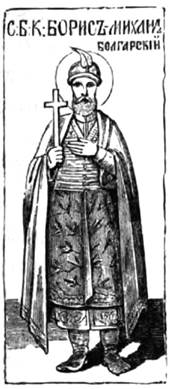
Правление князя Бориса, сына Звинича-Пресиама, третьего внука Грубошева39, омрачалась несчастиями во всё то время, пока оставался он язычником. Всё, что ни предпринимал он, не удавалось ему. Он хотел (843 года) воевать с Греками, но должен был продолжать перемирие. Решился отмстить (850 года) Сербам за неудачи отца своего Звинича, но поход кончился поражением Бориса, и он просил мира. Поход против Хорватов также не имел успеха. Попытка действовать в союзе с Паннонскими Славянами против Франков (в 853 году) окончилась поражением Бориса. В 860 году поразил Болгарию страшный голод, за которым следовал мор, народ погибал, а помощи не было ни откуда. К большему горю, Греки стали грозить войной40. Столько неудач и бед заставят и самого твёрдого задуматься. Борис, хотя и язычник, но неиспорченный, видел гнев Божий над Болгарией. За что этот гнев? Ему пришлось припомнить слова дяди – мученика Бояна, что христианская истина одержит победу над языческой ложью41. О всём подобном напоминала ему и сестра его. Она, ещё в нежном возрасте взятая в плен, воспитана была при Греческом дворе по началам христианства. По условиям мира с Грецией 852 года она отпущена была в Болгарию, а Борис освободил знаменитого пленника – учителя Куфару, который также говорил Борису о пустоте язычества. Да и многие десятки тысяч были уже христианами между Славянами подданными Бориса!.. Было у кого учиться христианству. За язычество Болгарии стояли княжеский двор Болгарский, его министры и вожди и Славяне, перешедшие с князем с правого берега Дуная: но что язычество приносит Болгарии? Время было кончить борьбу с христианством, которого истины так светлы, так чисты, так отрадны для духа. Так Борис решился принять христианскую веру. Он вошёл в сношение с Греческим императором о своём желании соединиться со Христом и заключил мир с Грецией, выгодный для Болгарии. Болгарам уступлено навсегда Загорье (южный скат Баланов), страна нужная им для поселения и очень выгодная в стратегическом отношении. «К Болгарам послан был епископ, который совершил крещение над Борисом, принявшим имя императора Михаила»42. Умный патриарх Фотий, приняв живое участие в просвещении Болгар, написал послание к князю Борису. Святитель изложил князю не только начала веры и жизни христианской, но и правила, как управлять народом. «Начав усердием к проповеди слова Божия, писал Фотий, не оканчивай небрежностью, а постарайся, чтобы конец соответствовал началу и жизнь вере. Созидай храмы во имя Божие и в честь святым по установлениям церковным; приучай народ собираться в них, дабы, в общем собрании умилостивляя Божество и принося Ему общее славословие, все утверждались в единомыслии и приобретали спасение и пользу»43. По примеру князя Бориса крестились некоторые из приближенных к нему. Но с большинством пришлось ещё бороться. Фанатики язычества, в том числе сильные вельможи, едва узнали о перемене веры князем, как подняли волнение за старую веру; целые десять областей подняты были боярами против Бориса; дело дошло до того, что в Предславе хотели убить Бориса и возвести на престол язычника. Михаил, оградив грудь свою святым крестом, с 48 придворными и 7 духовными лицами вышел к толпе мятежной и та в смятении рассеялась. На другой день 50 бояр, заправлявших бунтом, были схвачены и преданы смерти. Народ, оставшийся без подстрекателей мятежа, покорился Михаилу и стал понемногу креститься44. Так рассказывает об этом и один Болгарин – современник событий. «Я, говорил он, из новопросвещённого Болгарского народа, которого Бог просветил в эти времена избранником Своим Борисом, в крещении Михаилом. Силой Христовой и знамением креста победил он цепенелый, непокорный народ Болгарский. Бог привёл св. Иосифа, архиепископа, учителя и наставника, который устроил храмы и монастыри, поставил епископов, священников, игуменов, чтобы учили народ»45.
The reign of Prince Boris, son of Zvinitsa-Presiam, third grandson of Gruboshev39, was darkened by misfortunes for as long as he remained a pagan. Everything he undertook did not succeed. He wished (in the year 843) to wage war with the Greeks, but was compelled to continue the truce. He resolved to take vengeance (in the year 850) upon the Serbs for the failures of his father Zvinitsa, but the campaign ended in Boris’s defeat, and he sued for peace. A campaign against the Croats likewise had no success. An attempt to act in alliance with the Pannonian Slavs against the Franks (in the year 853) ended in Boris’s defeat. In the year 860 a terrible famine struck Bulgaria, followed by a pestilence; the people perished, and there was help from nowhere. To add to the grief, the Greeks began to threaten war40. So many failures and calamities would make even the most resolute man reflect. Boris, though a pagan, but not corrupted, saw the wrath of God upon Bulgaria. Why this wrath? He was led to recall the words of his uncle, the Martyr Boyan, that Christian truth would prevail over pagan falsehood41. His sister also reminded him of all such things. She, taken captive at a tender age, had been raised at the Greek court according to the principles of Christianity. By the terms of the peace with Greece in the year 852, she was released to Bulgaria, and Boris freed the renowned captive, the teacher Kufara, who also spoke to Boris of the emptiness of paganism. Moreover, many tens of thousands among the Slavs, Boris’s subjects, were already Christians!… There were those from whom to learn Christianity. On the side of Bulgarian paganism stood the Bulgarian princely court, his ministers and leaders, and the Slavs who had crossed with the prince from the right bank of the Danube: but what did paganism bring to Bulgaria? The time had come to end the struggle with Christianity, whose truths are so bright, so pure, so comforting to the spirit. Thus Boris resolved to accept the Christian faith. He entered into communication with the Greek emperor concerning his desire to unite himself with Christ, and concluded a peace with Greece advantageous for Bulgaria. The Zagorje region (the southern slope of the Balkan Mountains), a land needed by them for settlement and very advantageous in a strategic respect, was ceded to the Bulgarians forever. “A bishop was sent to the Bulgarians, who performed baptism over Boris, who took the name of the Emperor Michael”42. The wise Patriarch Photius, taking a lively part in the enlightenment of the Bulgarians, wrote an epistle to Prince Boris. The Hierarch set forth for the prince not only the principles of the faith and of Christian life, but also rules for how to govern the people. “Having begun with zeal for the preaching of the word of God,” wrote Photius, “do not end with negligence, but strive that the end may correspond to the beginning, and life to faith. Build churches in the name of God and in honor of the saints according to church ordinances; accustom the people to gather in them, so that, in common assembly propitiating the Godhead and offering Him common glorification, all may be confirmed in unanimity and acquire salvation and benefit”43. Following the example of Prince Boris, some of those close to him were baptized. But with the majority it was still necessary to struggle. The fanatics of paganism, among them powerful nobles, no sooner learned of the prince’s change of faith than they raised a disturbance for the old faith; entire ten regions were stirred up by the boyars against Boris; matters went so far that in Preslav they wished to kill Boris and place a pagan on the throne. Michael, having shielded his breast with the holy cross, went out with 48 courtiers and 7 clergy to the rebellious crowd, and it dispersed in confusion. The next day, 50 boyars who had directed the rebellion were seized and put to death. The people, left without instigators of the revolt, submitted to Michael and began little by little to be baptized44. Thus also a certain Bulgarian, a contemporary of the events, relates this. “I,” he said, “am from the newly-enlightened Bulgarian people, whom God enlightened in these times through His chosen one Boris, in baptism Michael. By the power of Christ and the sign of the cross he conquered the stubborn, disobedient Bulgarian people. God brought St. Joseph, the archbishop, teacher and instructor, who established churches and monasteries, appointed bishops, priests, and abbots, to teach the people”45.
К сожалению, миссионеры папы возмутили покой юной Болгарской Церкви и остановили на время успехи веры в Болгарии. «Римский священник Павел» с товарищами возбудил в князе Борисе, ещё мало знакомом с верой, множество сомнений о Церкви Восточной и в блистательном виде представил счастье, готовое для Бориса, покорного папе46. Князь, с одной стороны надеясь найти в владыке запада защиту против Немцев, теснивших Болгарию47, с другой желая видеть в Болгарии независимое церковное правление, в 866 году обратился к папе Николаю с просьбой прислать способных учителей и учредить в Болгарии патриаршество. Папа Николай рад был тому, что целый народ, притом соседний с ненавистным для него Константинополем, отдаётся в его руки48. Немедленно послал он (866 г.) к Борису двух бискупов своих с книгами и с обширным посланием49. Бискупы Павел и Формоз скоро довели дело до того, что женатые восточные священники оглашены были нечистыми и удалены от мест своих, над крещёнными в другой раз стали совершать Миропомазание, в храмах читали Символ с прибавлением Filioque, разрешили есть в пост молоко и яйца50. Борис, не получив для Болгарии патриаршества, просил папу по крайней мере посвятить понравившегося ему Формоза в архиепископа. Но папа удалил Формоза из Болгарии51. Между тем патриарх Фотий окружной грамотой известил патриархов о наглых дерзостях папы против веры и благочиния, совершающихся в Болгарии. Борис увидел свою ошибку и поспешил поправить её. Он снова предоставил восточным проповедникам продолжать дела звания своего, уже и потому, что Славяне, давно крестившиеся, не хотели знать папы и требовали себе восточных священников. Для того, чтобы раз навсегда развязаться с папой, при том без опасности для своей страны, он послал в 869 году в Константинополь предложить собору притязания папы на Болгарию. На западе поняли тогда же, что князь, посылая послов на восток, прощается с папою52. Посол князя Михаила говорил собору: «желаем знать от представителей великих патриархов, к какой Церкви принадлежим мы?» Послы папы протестовали против вопроса. Представители восточных патриархов говорят: «когда вы занимали страну, которой ныне владеете, кому она была подчинена и каких священников имела?» Посол Болгарского князя отвечал: «мы добыли её мечом от Греков и нашли в ней Греческих священников». Собор постановил: «присуждаем, чтобы земля Болгарская, которая в старину находилась под властью Греков и имела Греческих священников, отторгнутая от святой Константинопольской Церкви язычеством, ныне возвращена была ей через христианство». Получив решение собора, князь объявил решение бискупу, с тем, чтобы он с кзёндзами оставил Болгарию53. После того, не смотря ни на ласки, ни на угрозы папы, Борис не входил более ни в какие сношения с властолюбивым романизмом54. Крещение народа, остановленное насилиями папы, продолжалось спокойно при правильной деятельности восточных проповедников. Таким образом тот же 869 год, в который последовало осуждение собора властолюбию папы, был временем окончательного обращения Болгарской страны к святой, чистой вере55.
Unfortunately, the missionaries of the pope disturbed the peace of the young Bulgarian Church and for a time halted the progress of the faith in Bulgaria. “The Roman priest Paul” and his companions aroused in Prince Boris, still little acquainted with the faith, a multitude of doubts concerning the Eastern Church, and presented in a brilliant light the happiness ready for Boris should he be obedient to the pope46. The prince, on the one hand hoping to find in the Western lord protection against the Germans, who were pressing Bulgaria47, and on the other hand desiring to see an independent church administration in Bulgaria, turned in the year 866 to Pope Nicholas with a request to send capable teachers and to establish a patriarchate in Bulgaria. Pope Nicholas was glad that an entire people, moreover one neighboring to the hated Constantinople, was placing itself in his hands48. He immediately sent (in 866) to Boris two of his bishops with books and with an extensive epistle49. The bishops Paul and Formosus soon brought matters to the point that married Eastern priests were proclaimed unclean and removed from their places; over those already baptized they began again to perform Chrismation; in the churches they read the Creed with the addition of the Filioque; they permitted the eating of milk and eggs during the fast50. Boris, having not obtained a patriarchate for Bulgaria, asked the pope at least to consecrate the Formosus who had pleased him as archbishop. But the pope removed Formosus from Bulgaria51. Meanwhile, Patriarch Photius, by an encyclical letter, informed the patriarchs of the insolent audacities of the pope against the faith and good order taking place in Bulgaria. Boris saw his error and hastened to correct it. He again allowed the Eastern preachers to continue the work of their calling, already for the reason that the Slavs, long since baptized, did not wish to know the pope and demanded Eastern priests for themselves. In order to break with the pope once and for all, and without danger to his country, he sent in the year 869 to Constantinople to lay before the Council the pope’s claims upon Bulgaria. In the West they understood at once that the prince, sending envoys to the East, was bidding farewell to the pope52. The envoy of Prince Michael said to the Council: “We desire to know from the representatives of the great patriarchs, to which Church do we belong?” The pope’s envoys protested against the question. The representatives of the Eastern patriarchs said: “When you occupied the country which you now possess, to whom was it subject and what priests did it have?” The envoy of the Bulgarian prince answered: “We obtained it by the sword from the Greeks and found in it Greek priests.” The Council decreed: “We adjudge that the Bulgarian land, which in ancient times was under the authority of the Greeks and had Greek priests, having been torn away from the holy Church of Constantinople by paganism, should now be restored to it through Christianity.” Having received the decision of the Council, the prince announced it to the bishop, with the order that he and his priests should leave Bulgaria53. After that, despite both the caresses and the threats of the pope, Boris no longer entered into any relations with the power-loving Romanism54. The baptism of the people, halted by the violence of the pope, continued peacefully under the regular activity of the Eastern preachers. Thus the same year 869, in which the Council’s condemnation of the pope’s love of power took place, was the time of the final conversion of the Bulgarian land to the holy, pure faith55.
Блаженный Борис с любовью давал средства для восстановления храмов христианских, разрушенных язычеством, и для построения новых. Он делал всё, что мог, для вечных нужд своего народа и для славы Божией. Когда дошло до него известие о чудесах мучеников, которых мощи сокрыты были во время волнений язычества в Струмнице, он велел воздвигнуть храм в Брегальницкой епархии и туда перенести мощи святых. Мощи перенесены были с торжеством и по вере новых христиан совершилось много чудес для славы имени Христова56.
Blessed Boris lovingly provided means for the restoration of Christian churches destroyed by paganism, and for the building of new ones. He did all that he could for the eternal needs of his people and for the glory of God. When word reached him of the miracles of the martyrs, whose relics had been hidden during the disturbances of paganism in Strumitsa, he ordered a church to be erected in the Bregalnitsa diocese and the relics of the saints to be translated there. The relics were translated with solemnity, and through the faith of the new Christians many miracles were performed for the glory of the name of Christ56.
И православие, и просвещение ещё более расцвели в Болгарии, когда прибыли сюда ученики св. Мефодия, изгнанные из Моравии жадными до корысти Немцами. Михаил принял их с живейшей радостью и благодарил Господа, пославшего ему людей, столько нужных для Болгарии. Не мало времени жили они при дворе его и в домах вельмож Болгарских, как дорогие учители. Борис с любовью беседовал с ними. Престарелый государь учился под их руководством «древним историям и житиям святых», слушал из уст их наставления св. Писания на родном Славянском языке. Благоверный князь доставил Славянским проповедникам щедрые средства содержать училища для обучения детей закону Божию на Славянском языке и для приготовления полезных служителей храма Божия; открывал для них монастыри и кафедры, особенно там, где ещё слабо было христианство57. Усердием его постановлено было семь кафедральных храмов с кафедрами святительскими58. По желанию Бориса посвящён был для западной Болгарии другой архиепископ Агафон59, а место блаженного Иосифа впоследствии занял архиепископ Феофилакт60.
Both Orthodoxy and enlightenment flourished still more in Bulgaria when the disciples of St. Methodius, driven out of Moravia by the avaricious Germans, arrived here. Michael received them with the liveliest joy and thanked the Lord, Who had sent him men so needful for Bulgaria. For no little time they lived at his court and in the homes of the Bulgarian nobles as precious teachers. Boris conversed with them with love. The aged sovereign learned under their guidance “the ancient histories and lives of the saints,” and heard from their lips the instruction of Holy Scripture in his native Slavic tongue. The Right-believing Prince provided the Slavic preachers with generous means to maintain schools for teaching children the law of God in the Slavic language and for preparing useful servants of the house of God; he opened monasteries and sees for them, especially where Christianity was still weak57. Through his zeal, seven cathedral churches with hierarchal sees were established58. At Boris’s desire, another archbishop, Agathon, was consecrated for western Bulgaria59, and the place of blessed Joseph was later filled by Archbishop Theophylact60.
Состарившийся Борис устал властвовать. Он уже давно стал подвижником, но тайным. Являясь перед народом в одежде княжеской, скрывался он по ночам в храме и в уединении: покрытый простой одеждой, простёртый по земле, проводил он ночи в молитве61. После тяжёлой болезни передал он правление старшему сыну Владимиру, а сам удалился в монастырь для подвигов поста и молитвы. К скорби отца, сын оказался непохожим на родителя: жил распутно и, что ещё хуже, стал совращать народ с пути христианского. Четыре года старец терпел. Наконец, одушевясь ревностью, снял с себя иноческую одежду, оделся в платье князя-воина, с немногими верными ему погнался за сыном, захватил его и, чтобы отнять у него возможность вредить христианству, ослепил его; потом передал власть младшему сыну Симеону, а сам, верный обету, снова удалился в монастырь62. Он и в уединении заботился о распространении христианского просвещения, побуждал способных переводить полезные книги с Греческого на Славянский язык. Так один из них говорит о себе: «почтенный муж, дукс (князь), настаивал предо мною, когда я приходил к нему для посещения, приказывая и упрашивая переводить объяснения Евангелий; он напоминал мне: для священника нет другого занятия, кроме наставления; если принял он на себя эту службу, пусть выполняет её»63.
The aged Boris grew weary of ruling. He had long since become an ascetic, but a secret one. Appearing before the people in princely attire, he hid himself by night in the church and in solitude: covered with a simple garment, prostrate upon the ground, he spent his nights in prayer61. After a grievous illness, he handed over the rule to his eldest son Vladimir, and himself withdrew to a monastery for the labors of fasting and prayer. To the father's sorrow, the son proved unlike his parent: he lived dissolutely and, what was worse, began to lead the people astray from the Christian path. For four years the elder endured. At last, animated with zeal, he took off his monastic garb, clothed himself in the dress of a warrior-prince, and with a few faithful men pursued his son, seized him, and, to deprive him of the power to harm Christianity, blinded him; then he handed authority to his younger son Simeon, and himself, faithful to his vow, again withdrew to a monastery62. Even in seclusion he cared for the spread of Christian enlightenment, urging those of ability to translate useful books from Greek into the Slavic tongue. Thus one of them says of himself: "An honored man, a dux (prince), pressed me when I came to visit him, commanding and entreating me to translate commentaries on the Gospels; he reminded me: for a priest there is no other occupation than instruction; if he has taken upon himself this service, let him fulfill it"63.
Современник кн. Симеона записал: «в се убо лето 6415 инд. 14 (906)64 умре раб Божий, отец сего князя (Симеона), в благой вере живый, в добром исповедании Господа нашего Иисуса Христа, велик и честен и благоверен, господин наш, князь Болгаром, именем Борис, христианское же имя ему Михаил, мес. мая во 2 д. в субботнии вечер. Сей же Борис Болгары крестил есть во имя Отца и Сына и Св. Духа, аминь»65.
A contemporary of Prince Simeon recorded: "In this year 6415, indiction 14 (906)64, there died the servant of God, the father of this prince (Simeon), who lived in the good faith, in the good confession of our Lord Jesus Christ, great and honorable and right-believing, our lord, the Prince of the Bulgarians, by name Boris, and his Christian name was Michael, in the month of May, on the 2nd day, on Saturday evening. This same Boris baptized the Bulgarians in the name of the Father and of the Son and of the Holy Spirit, amen"65.
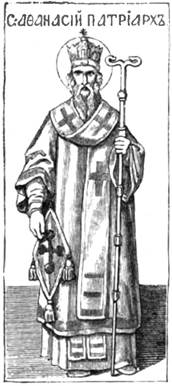
Святитель Афанасий Пателарий, патриарх Константинопольский, был уже вторым тружеником вселенского престола нового Рима, который искал себе помощи от благодетельной Церкви Российской, посреди бедствий, обуревавших его кафедру. Но первый из них, Иеремия, учредивши патриаршество на Руси, не был лишён своей кафедры, когда странствовал в пределах наших, хотя и подвергался однажды временному низложению; Афанасий же, более испытанный в скорбях, трижды восходил на высоту и нисходил с высоты вселенского престола и уже, с одним лишь громким титулом патриаршим, как странник, посетил гостеприимную державу Российскую. В пределах Малороссии, бывшей своей паствы, ибо тогда она ещё зависела от первосвятителей вселенских, положил он труженические свои кости в обители Лубенской, где они прославились нетлением. Сидящий и по смерти в богатой своей раке, будто на патриаршей кафедре, он представляется благоговейному взору как бы только что погрузившимся в непробудный сон. Глава его, осенённая митрой святительской, склонилась на правое плечо, и десница простёрта на коленах, для лобзания верующим, а в левой руке он держит свой пастырский жезл, как бы доселе управляя вселенской паствой. Так погребли его по чину и обычаю патриаршему, так и обрели спустя немного лет бодрствующим и по блаженной кончине.
St. Athanasius Patelarius, Patriarch of Constantinople, was already the second laborer of the ecumenical throne of the new Rome who sought help for himself from the beneficent Russian Church, in the midst of the calamities that buffeted his see. But the first of them, Jeremiah, having established the patriarchate in Rus, was not deprived of his see when he sojourned within our borders, although he did once undergo a temporary deposition; Athanasius, however, more tried in sorrows, thrice ascended the height and descended from the height of the ecumenical throne, and at last, with only the resounding title of patriarch, as a stranger visited the hospitable Russian realm. Within the borders of Little Russia, his former flock, for at that time it still depended on the first-hierarchs of the ecumenical throne, he laid his labor-worn bones in the Lubny monastery, where they have been glorified by incorruption. Seated even after death in his rich reliquary, as though upon the patriarchal throne, he appears to the reverent gaze as one who has only just fallen into an unbroken sleep. His head, overshadowed by the hierarchal mitre, is inclined to the right shoulder, and his right hand is extended upon his knees for the faithful to kiss, while in his left hand he holds his pastoral staff, as though even now governing the ecumenical flock. So they buried him according to the patriarchal rite and custom, and so they found him, after a few years, keeping watch even after his blessed end.
Остров Кандия на Средиземном море, древний Крит, был родиной блаженного Афанасия. Он происходил от благочестивых и благородных родителей, которые были в состоянии дать сыну своему высокое образование, светское и духовное. Неизвестно, где воспитывался юный подвижник, но Кандия, бывшая тогда под владычеством Венециан, процветала торговлей и могла иметь довольно средств для образования сынов своих; свидетельством тому могут служить святой Афанасий, которого современники называли философом, филологом, поэтом и отличным проповедником, и великий Лукарис Кирилл, также Критянин, пятнадцать лет патриаршествовавший на кафедре Александрийской и столько же на вселенской, в самую тяжкую эпоху для Церкви Греческой, обуреваемой тогда кознями иезуитов, против которых мужественно боролся Кирилл.
The island of Candia in the Mediterranean Sea, ancient Crete, was the birthplace of blessed Athanasius. He was descended from pious and noble parents, who were able to give their son a lofty education, both secular and spiritual. It is unknown where the young ascetic was educated, but Candia, then under the dominion of the Venetians, flourished in trade and could well have had sufficient means for the education of its sons; as evidence of this may serve St. Athanasius, whom his contemporaries called philosopher, philologist, poet, and excellent preacher, and the great Cyril Lucaris, also a Cretan, who patriarchated fifteen years on the see of Alexandria and as many on the ecumenical throne, in the very heaviest epoch for the Greek Church, then buffeted by the machinations of the Jesuits, against whom Cyril fought courageously.
Он вызвал из Кандии в Царьград, для проповеди слова Божия, знакомого ему Пателария, который славился красноречием и уже достиг, на родном своём острове, степени пресвитерской, по своим высоким добродетелям, пользуясь особенным благоволением местного архипастыря и любовью народной. Рукописное житие святителя, хранящееся в обители Лубенской, утверждает даже, будто Афанасий возведён был по общему избранию на престол митрополии Критской и, благодетельным своим влиянием перед властями Оттоманскими, спас её от неистовства врагов при завоевании острова; но покорение сие совершилось гораздо позже. Из современных актов церковных явствует, что Афанасий прямо из пресвитеров был поставлен патриархом Кириллом на первостепенную митрополию Солунскую.
He summoned from Candia to Constantinople, for the preaching of the word of God, his acquaintance Patelarius, who was renowned for eloquence and had already attained, on his native island, the rank of presbyter, by reason of his lofty virtues, enjoying the especial favor of the local archpastor and the love of the people. The manuscript Life of the hierarch, preserved in the Lubny monastery, even affirms that Athanasius was raised by common election to the throne of the metropolis of Crete and, by his beneficent influence before the Ottoman authorities, saved it from the fury of enemies at the conquest of the island; but that conquest took place much later. From contemporary church acts it is evident that Athanasius was appointed directly from presbyters by Patriarch Cyril to the first-ranking metropolis of Thessalonica.
Патриарх Цареградский, Парфений старший, хотя и не был расположен к Афанасию Пателарию, однако в грамоте своей царю Михаилу Феодоровичу, от 12-го августа 1643 года, писал: «что во время святейшего и блаженнейшего господина и Кирилла, патриарха старого, приехал в Константинополь некий священноинок, именем Афанасий, прозванием Пателарий, острова Критского; патриарх и архиереи, видя его бедного и в нужде, восприяли с великим милосердием и любовью, и был он патриарху советником, как одной с ним страны; немного времени спустя поставил его Кирилл митрополитом Солунским, вместо блаженной памяти митрополита господина Паисия, который остался на царское имя в России».
The Patriarch of Constantinople, Parthenius the Elder, although not well disposed toward Athanasius Patelarius, nevertheless wrote in his letter to Tsar Michael Theodorovich, of the 12th of August 1643: "That in the time of the most holy and most blessed lord Cyril, the old patriarch, there came to Constantinople a certain hieromonk, by name Athanasius, by surname Patelarius, of the island of Crete; the patriarch and the hierarchs, seeing him poor and in need, received him with great mercy and love, and he was a counselor to the patriarch, as one of the same country; a little while later Cyril made him Metropolitan of Thessalonica, in place of the metropolitan of blessed memory, Lord Paisius, who remained in Russia at the Tsar's invitation."
Та же участь ожидала и его преемника Афанасия, успокоившегося в гостеприимной России. Если же он был советником и соплеменником патриарха Кирилла, как утверждает сам Парфений, то конечно не действовал против него, чтобы заступить его кафедру, хотя и безуспешно было его кратковременное правление. Сам Афанасий, в грамоте своей к царю, от 24-го августа того же года, так о себе свидетельствует: «что братия его архиереи поставили его на вселенский престол, в помощь святейшему блаженнейшему Кириллу, чтобы согнать нового Кирилла Веррийского, и после того дали ему собором Солунский престол». Следственно нельзя верить позднейшим нареканиям, будто бы Афанасий, через посредство иезуитов, происками домогался Цареградского престола.
The same fate awaited his successor Athanasius, who found rest in hospitable Russia. If he was a counselor and fellow countryman of Patriarch Cyril, as Parthenius himself affirms, then surely he did not act against him in order to take his see, although his brief tenure was unsuccessful. Athanasius himself, in his letter to the Tsar, of the 24th of August of the same year, testifies of himself thus: "That his brethren the hierarchs placed him on the ecumenical throne, in aid to the most holy and most blessed Cyril, to drive out the new Cyril of Verria, and afterward they gave him by council the throne of Thessalonica." Consequently, one cannot believe the later reproaches that Athanasius, through the mediation of the Jesuits, sought the throne of Constantinople by intrigue.
Это тем вероятнее, что сам патриарх Кирилл, после своего удаления с престола, писал царю Михаилу Феодоровичу, нисколько не жалуясь на Афанасия: «что когда султан Мурат возвратил его из заточения с острова Родоса, после низложения Кирилла Веррийского, и велел ему быть в Цареграде, то, покамест он ехал, посадили на патриаршество иного, а когда приехал, то все к нему прибегли и учинили подобающую почесть, но на патриаршеское место он не хотел идти, пока не заплатят архиереи того, что посулили султану. Потом, же благодатью Божией и милостью царской, будем мы сидеть по-прежнему на патриаршестве; хотелось бы под старость успокоиться, но мир не оставляет». Всё это согласно с показанием Афанасия, которого избрали только для того, чтобы удалить недостойного Кирилла и дать время возвратиться великому Лукарису. Оттого вероятно и просидел он так мало на его кафедре, не более 28 дней. Нельзя однако слишком верить обвинениям патриарха Парфения против Афанасия, будто он причинил убытков великой Церкви на 50,000 ефимков, так как известно, что Кирилл Веррийский был причиной сего долга, и разорения церковного, посулив до 30,000 ефимков для подкупа властей турецких, чтобы только достигнуть престола; может быть нужно было употребить столько же, чтобы его низвергнуть; в случае же неуплаты угрожала опасность великой Церкви. Если сам великий Кирилл, при всей многолетней своей опытности, отказывался от престола, единственно по причине сих долгов, то мудрено ли было неопытному Афанасию запутаться в оных при столь смутных обстоятельствах.
This is the more probable in that Patriarch Cyril himself, after his removal from the throne, wrote to Tsar Michael Theodorovich, without in any way complaining of Athanasius: "That when Sultan Murad returned him from exile on the island of Rhodes, after the deposition of Cyril of Verria, and ordered him to be in Constantinople, then, while he was traveling, they placed another on the patriarchate, and when he arrived, all resorted to him and rendered him due honor, but he would not go to the patriarchal place until the hierarchs should pay what they had promised the sultan. Then, by the grace of God and the Tsar's mercy, we shall sit as before on the patriarchate; I would wish in old age to find rest, but the world does not leave one." All this agrees with the testimony of Athanasius, who was chosen only in order to remove the unworthy Cyril and to give time for the great Lucaris to return. Hence it is probable that he sat so short a time on his throne, no more than 28 days. One cannot, however, too readily believe the accusations of Patriarch Parthenius against Athanasius, that he caused losses to the Great Church of 50,000 efimki, since it is known that Cyril of Verria was the cause of this debt and of the church's ruin, having promised up to 30,000 efimki to bribe the Turkish authorities, merely to attain the throne; perhaps as much more was needed to cast him down; and in case of non-payment, danger threatened the Great Church. If the great Cyril himself, with all his many years of experience, refused the throne solely on account of these debts, it is no wonder that the inexperienced Athanasius became entangled in them amid such troubled circumstances.
Для того, чтобы понять те тяжкие испытания, через которые проходила воинствующая Православная Церковь на Востоке, во все продолжение XVII столетия, необходимо проследить исторически ряд её патриархов, которых частое низложение, по проискам иноверцев, потрясло и разорило вселенскую кафедру Цареграда. После великого Иеремии, который основал патриаршество в России и хотя был низлагаем, но скончался на своей кафедре, в 1594 году, начались беспрестанные смены вселенских патриархов. Матфей, Гавриил и Феофан не более как по полу году занимали сию кафедру, так что наконец избрали местоблюстителем вселенского престола знаменитого учёностью патриарха Александрийского Мелетия Ингу. Год спустя опять взошёл на кафедру Матфей, уже облечённый в схиму, и опять уступил на короткое время престол свой Неофиту, бывшему митрополиту Афинскому, скончался. однако на своей кафедре. Преемник его Рафаил, до насильственного заточения, вынужден был уступить туркам сам храм патриарший, во имя Всеблаженной, и довольствоваться небольшой церковью святого Григория. После него вторично был призван Неофит, и опять низложен, так что уже никто не решался· воссесть на вселенскую кафедру, обуреваемую столькими бедами.
In order to understand those grievous trials through which the militant Orthodox Church in the East passed throughout the whole of the seventeenth century, it is necessary to trace historically the succession of its patriarchs, whose frequent deposition, through the intrigues of the heterodox, shook and ruined the ecumenical see of Constantinople. After the great Jeremiah, who established the patriarchate in Russia and, although deposed, died upon his throne in 1594, there began incessant changes of the ecumenical patriarchs. Matthew, Gabriel, and Theophanes each occupied this see for no more than half a year, so that at last they chose as locum tenens of the ecumenical throne the patriarch of Alexandria, Meletius Pigas, renowned for learning. A year later Matthew again ascended the throne, now clothed in the schema, and again yielded his throne for a short time to Neophytus, the former Metropolitan of Athens, yet died upon his own throne. His successor Raphael, before his forcible exile, was compelled to yield to the Turks even the patriarchal church itself, dedicated to the All-Blessed One, and to content himself with the small church of St. Gregory. After him Neophytus was summoned a second time, and again deposed, so that no one any longer dared to sit upon the ecumenical throne, buffeted by so many calamities.
Тогда, по бывшему уже примеру, клир великой Церкви предложил опять местоблюстительство вселенской кафедры другому патриарху Александрийскому, мудрому Кириллу Лукарису, который уже 15 лет со славой управлял своей Церковью. Наконец избран был митрополит Патрасский Тимофей, который, в продолжение осьмилетнего довольно мирного патриаршества, успел расширить и украсить новый кафедральный храм свой и, что уже становилось довольно редким в те смутные времена, спокойно умер на своей кафедре. С назначением его преемника, Кирилла Лукариса, начались опять бури. Этот великий деятель пять раз был возводим и пять раз свергаем с вселенского престола и мученической смертью запечатлел наконец свой подвиг.
Then, following the precedent already set, the clergy of the Great Church again proposed the locum tenens of the Ecumenical Throne to another Patriarch of Alexandria, the wise Cyril Lucaris, who had already governed his own Church with glory for fifteen years. Finally, Timothy, Metropolitan of Patras, was chosen; during his eight-year, rather peaceful patriarchate, he succeeded in expanding and adorning his new cathedral church and, which was already becoming quite rare in those troubled times, died peacefully upon his own throne. With the appointment of his successor, Cyril Lucaris, the storms began anew. This great figure was five times raised up and five times cast down from the Ecumenical Throne, and at length sealed his feat with a martyr’s death.
Врагами и гонителями его были иезуиты, в то время чрезвычайно сильные при Порте Оттоманской; влиянием посланников Австрии и Франции они домогались распространить унию на Востоке и происками своими успели отнять святой Гроб и вертеп Вифлеемский у патриарха Иерусалимского Феофана; не могли они равнодушно видеть на вселенском престоле нового Рима столь великого поборника православия, каков был Кирилл Лукарис, уже известный им по своему высокому просвещению во время долгого его управления паствой Александрийской. Год спустя, Кирилл был оклеветан ими перед правительством турецким, за сношение с европейцами, и лишён кафедры, но два его преемника, Григорий и Анфим, не могли удержаться на шатком престоле Константинопольском: первый был сослан в заточение на остров Родос, а второй произвольно удалился на Афонскую гору, не чувствуя себя в силах держать кормило Церкви. Так как в это время были внутренние смуты в империи, султан Мустафа низвергнут с престола и воцарился Мурат, то друзья Кирилла, ревнители церковные, воспользовались благоприятным случаем, чтобы возвести его опять, в 1624 году, на вселенскую кафедру, и на этот раз патриаршество его продолжалось 8 лет..
His enemies and persecutors were the Jesuits, at that time exceedingly powerful at the Ottoman Porte; through the influence of the ambassadors of Austria and France, they strove to spread the union in the East, and by their intrigues succeeded in taking the Holy Sepulchre and the Cave of Bethlehem from Theophanes, the Patriarch of Jerusalem. They could not calmly behold upon the Ecumenical Throne of the New Rome so great a champion of Orthodoxy as was Cyril Lucaris, already known to them for his lofty learning during his long governance of the Alexandrian flock. A year later, Cyril was slandered by them before the Turkish government for his dealings with Europeans, and was deprived of his throne; but his two successors, Gregory and Anthimus, could not hold fast to the unstable throne of Constantinople: the first was exiled to the island of Rhodes, and the second withdrew of his own accord to Mount Athos, feeling himself unable to hold the helm of the Church. Since at that time there were internal disturbances in the empire—Sultan Mustafa was cast down from the throne and Murad reigned in his stead—the friends of Cyril, zealots for the Church, took advantage of the favorable opportunity to raise him again, in 1624, to the Ecumenical Throne, and this time his patriarchate lasted eight years.
Для того, чтобы удержаться на своей кафедре и противодействовать козням иезуитов и могущественных их покровителей, Кириллу не оставалось другого средства, как прибегнуть к покровительству двух протестантских посланников, Англии и Голландии, с которыми свёл короткое знакомство, когда ещё простым иноком путешествовал по Европе, для сбора милостыни в пользу Александрийской Церкви. Оба посланника находились в дружественных отношениях с Портой и противодействовали иезуитам, которые завели училище в предместьях Царьграда и, воспитывая даром бедных детей Греческих, совращали их в унию. Ревностный патриарх обличал лжеучителей в пастырских своих беседах и, чтобы утвердить православие, устроил типографию в Константинополе, вызвав для сего с острова Корфу учёного инока Григория Метаксу; с помощью его печатал благочестивые книги в опровержение тех обольстительных сочинений, которые во множестве печатали иезуиты и раздавали их детям, ещё неопытным в вере православной. Тогда иезуиты оклеветали его перед правительством, как хулителя магометанского закона, и ссылались в доказательство на катехизис патриарха Кирилла, изданный им ещё во время пребывания в Лондоне, в котором обличал ложное учение Магомета; они же утверждали, будто бы книга сия была недавно напечатана в новой типографии. Правительство турецкое, в порыве негодования, послало немедленно разорить типографию и уничтожить все станки. Начальник её Метакса едва успел спастись бегством. Не избежал бы смерти и сам патриарх, если бы вовремя не укрылся в дом Голландского посла, который вступился за страдальца и убедил великого визиря, что всё это клевета иезуитов.
In order to maintain himself upon his throne and to counteract the machinations of the Jesuits and their powerful patrons, Cyril had no other recourse than to turn to the protection of two Protestant ambassadors, those of England and Holland, with whom he had formed a close acquaintance when, as a simple monk, he had traveled through Europe to collect alms for the Alexandrian Church. Both ambassadors were on friendly terms with the Porte and opposed the Jesuits, who had established a school in the suburbs of Constantinople and, by educating poor Greek children free of charge, were perverting them to the union. The zealous patriarch denounced the false teachers in his pastoral discourses, and, to confirm Orthodoxy, set up a printing press in Constantinople, summoning for this purpose from the island of Corfu the learned monk Gregory Metaxas; with his help he printed pious books in refutation of those seductive writings which the Jesuits printed in great numbers and distributed to children still inexperienced in the Orthodox faith. Then the Jesuits slandered him before the government as a blasphemer of the Mohammedan law, and cited as proof the catechism of Patriarch Cyril, published by him during his stay in London, in which he denounced the false teaching of Mohammed; they also asserted that this book had recently been printed in the new press. The Turkish government, in a burst of indignation, immediately sent to destroy the press and smash all the equipment. Its director, Metaxas, barely managed to escape by flight. The patriarch himself would not have escaped death had he not timely taken refuge in the house of the Dutch ambassador, who interceded for the sufferer and convinced the Grand Vizier that all this was a slander of the Jesuits.
Таким образом ревностный Кирилл удержался на своём престоле. Но тем не удовольствовались иезуиты; они обвинили патриарха в протестантском образе мыслей и старались уверить в этом простодушных архиереев и клириков. Слух о том дошёл даже до России, так что православные послали к патриарху Иерусалимскому Феофану, жившему тогда в Яссах, узнать, справедливо ли это нарекание? и патриарх должен был собрать местный собор, чтобы окружным посланием оправдать великого поборника православия. Но два года спустя, происками иезуитов, явилась под именем Кирилла, книга, напечатанная в Женеве, исполненная кальвинского учения. Это окончательно потрясло святителя Кирилла на его кафедре и возбудило великое смятение в клире великой Церкви. Патриарх был обвинён перед правительством в измене и в исповедании франкской веры. Насильственно низвели его с престола и посадили другого Кирилла, Контариса, митрополита Веррийского, орудие иезуитов, который однако через неделю был низложен и сослан в заточение на остров Тенедос. Опять был призван Кирилл на вселенскую кафедру, но враги его не дремали и старались опять возвести Контариса, по самой близости места его заточения. Тогда все православные и клирики, чтобы только отклонить вторичное избрание Контариса, воспользовались расположением великого визиря к соотечественнику его по острову Кандии, Афанасию митрополиту Солунскому, и возвели его на вселенскую кафедру, в ожидании, пока возвратится великий Кирилл; и действительно, месяц спустя, он опять воссел на неё, накануне Пасхи. Это было в 1643 году.
Thus the zealous Cyril held his throne. But the Jesuits were not satisfied with this; they accused the patriarch of a Protestant cast of mind and strove to convince the simple-hearted bishops and clergy of this. The rumor even reached Russia, so that the Orthodox sent to Theophanes, the Patriarch of Jerusalem, then living in Iași, to inquire whether this accusation was just; and the patriarch was obliged to convene a local council in order to justify the great champion of Orthodoxy by an encyclical letter. But two years later, through the intrigues of the Jesuits, a book appeared under the name of Cyril, printed in Geneva, filled with Calvinist teaching. This finally shook the Hierarch Cyril upon his throne and aroused great confusion among the clergy of the Great Church. The patriarch was accused before the government of treason and of professing the Frankish faith. They forcibly removed him from his throne and installed another Cyril, Contaris, Metropolitan of Veroia, a tool of the Jesuits, who, however, was deposed a week later and exiled to the island of Tenedos. Again Cyril was summoned to the Ecumenical Throne, but his enemies did not slumber and strove again to elevate Contaris, because of the very proximity of his place of exile. Then all the Orthodox and clergy, in order only to avert the second election of Contaris, took advantage of the Grand Vizier’s favor toward his fellow countryman from the island of Crete, Athanasius, Metropolitan of Thessalonica, and raised him to the Ecumenical Throne, in expectation of the return of the great Cyril; and indeed, a month later, he again sat upon it, on the eve of Pascha. This was in 1643.
Хотя впоследствии патриарх Парфений писал к царю Михаилу Феодоровичу: «что Афанасию, после его удаления с патриаршей кафедры, дали опять митрополию Солунскую, со всеми доходами, дабы он там оставался смирно до конца своей жизни и не смущал великой Церкви в чём дал клятвенное обещание и получил себе во свидетельство патриаршую соборную грамоту», – нельзя однако не обратить внимания на то, что таким образом никогда не удалялись со вселенской кафедры отставные патриархи: они подвергались большей частью заточению на острова Архипелага, или должны были укрыться куда-либо в обитель в окрестностях Цареграда или на святую гору Афонскую. Если же Афанасий избежал общей участи низводимых с престола, и это по соборной грамоте всех архиереев, то без сомнения потому только, что был приглашён всеми архиереями занять место великого Кирилла, чтобы только отклонить недостойного Котнариса. Позднейшие же писатели, составлявшие перечень патриархов Константинопольских, не умели отличать этой черты и зная, что иезуиты были виной неоднократного низложения Кирилла, думали, что они же поставили на его место и Афанасия Пателария, как это сделали с Контарисом, тем более, что в продолжение трёх лет Пателарий и оба Кирилла постепенно сменяли друг друга.
Although later Patriarch Parthenius wrote to Tsar Michael Feodorovich: “that to Athanasius, after his removal from the patriarchal throne, they gave again the metropolis of Thessalonica, with all its revenues, so that he might remain there quietly until the end of his life and not disturb the Great Church—for which he gave a sworn promise and received as a witness the patriarchal conciliar charter”—yet one cannot but note that retired patriarchs were never removed from the Ecumenical Throne in this manner: they were for the most part subjected to exile on the islands of the Archipelago, or were obliged to take refuge somewhere in a monastery in the vicinity of Constantinople or on the Holy Mountain of Athos. If Athanasius escaped the common lot of those deposed from the throne, and this by a conciliar charter of all the bishops, it was undoubtedly only because he was invited by all the bishops to occupy the place of the great Cyril, solely to avert the unworthy Contaris. Later writers, who compiled the list of the Patriarchs of Constantinople, were unable to distinguish this feature, and knowing that the Jesuits were the cause of Cyril’s repeated depositions, thought that they also placed Athanasius Patelarius in his stead, as they had done with Contaris—the more so because, over the course of three years, Patelarius and both Cyrils gradually replaced one another.
Год спустя после своего четвёртого вступления на престол патриарший, великий Кирилл должен был опять его оставить и сослан, своими врагами, в заточение на остров Родос, а на его место вторично поставлен Афанасий, который держался на кафедре не более года и вынужден был уступить её тому же враждебному Кириллу Контарису, который сослал его также в Родос, по влиянию могущественного своего покровителя Байрама-паши, в 1635 году. Если бы Афанасий был действительно орудием иезуитов, то для чего им было низлагать его и опять возводить Контариса? Но через полтора года, с падением Байрама-паши, лишился своей кафедры и недостойный Контарис и сослан на тот же остров, куда заточены были, по его проискам, оба его предместника, Лукарис и Пателарий. Оба вместе были они возвращены из своего изгнания, повелением султана Мурата, по ходатайству всех архиереев и вельмож Константинопольских, и так как не было на лице Афанасия, чтобы заступить место Кирилла до его возвращения, то поставлен временно на патриаршую кафедру митрополит Ираклийский Неофит, которого сам Кирилл, в письме к царю Михаилу Феодоровичу, называет своим человеком и слугой. Не ранее как через год, когда уже несколько устроились денежные дела патриархии, расстроенные неоплатными долгами, по причине частой перемены патриархов (ибо в продолжение пятнадцати лет, с 1622 по 1637, 12 раз сменялись четыре патриарха), Неофит уступил кафедру учителю своему Кириллу, а Афанасий получил опять прежнюю свою митрополию Солунскую. Это свидетельствует, что он был в хороших отношениях с патриархами и всеми архиереями, без чего бы, конечно, не мог возвратиться на свою митрополию; она была укреплена за ним соборной грамотой и нового патриарха Парфения старшего, который вступил на кафедру после бедственной кончины обоих Кириллов.
A year after his fourth accession to the patriarchal throne, the great Cyril was again obliged to leave it and was exiled by his enemies to the island of Rhodes, and in his place Athanasius was installed a second time, who held the throne for no more than a year and was forced to yield it to the same hostile Cyril Contaris, who also exiled him to Rhodes, through the influence of his powerful patron Bairam Pasha, in 1635. If Athanasius had truly been a tool of the Jesuits, why would they have deposed him and again elevated Contaris? But a year and a half later, with the fall of Bairam Pasha, the unworthy Contaris also lost his throne and was exiled to the same island where, through his intrigues, both his predecessors, Lucaris and Patelarius, had been banished. Both were together returned from their exile by order of Sultan Murad, through the intercession of all the bishops and nobles of Constantinople, and since Athanasius was not present to take Cyril’s place until his return, Neophytus, Metropolitan of Heraclea, was temporarily placed upon the patriarchal throne—the same man whom Cyril himself, in a letter to Tsar Michael Feodorovich, calls his own man and servant. Not until a year later, when the financial affairs of the patriarchate, disordered by unpaid debts due to the frequent change of patriarchs (for in the course of fifteen years, from 1622 to 1637, four patriarchs had been replaced twelve times), had been somewhat settled, did Neophytus yield the throne to his teacher Cyril, while Athanasius again received his former metropolis of Thessalonica. This testifies that he was on good terms with the patriarchs and all the bishops, without which, of course, he could not have returned to his metropolis; it was confirmed to him by a conciliar charter of the new Patriarch Parthenius the Elder, who ascended the throne after the calamitous end of both Cyrils.
Враги Лукариса, неусыпно действовавшие, после полутора года его последнего патриаршества, успели возбудить против него султана Мурата, представив великого мужа Церкви изменником Порты Оттоманской, за тайные будто бы сношения с Россией. Кирилл был насильственно низложен и заключён в крепость близ Царьграда; там его задушили и священные останки мученика бросили в море, но благочестивая о нем память сохранилась в сердцах православных и православие его было гласно оправдано на соборах Ясском и Вифлеемском. Церковь вселенская чтит его, как одного из величайших своих подвижников. Коварный его гонитель и недостойный преемник Контарис скоро подвергся заслуженной казни. Не более года держался он на патриаршей кафедре. Ненавидимый всеми за низвержение достопамятного Кирилла, он сам, в свою очередь, был обвинён как клеветник перед султаном, который не простил ему смерти Лукариса, пожертвованного для удовлетворения его врагов. Контарис был низложен соборно и сослан в противолежащий Царьграду Халкидон, где был также задушен, по приказанию султана.
The enemies of Lucaris, who labored unceasingly, after a year and a half of his last patriarchate, succeeded in stirring up against him the Sultan Murad, representing the great man of the Church as a traitor to the Ottoman Porte, for supposed secret dealings with Russia. Cyril was forcibly deposed and confined in a fortress near Constantinople; there he was strangled, and the sacred remains of the martyr were cast into the sea, but the pious memory of him was preserved in the hearts of the Orthodox, and his Orthodoxy was openly vindicated at the Councils of Jassy and Bethlehem. The Universal Church honors him as one of her greatest ascetics. His treacherous persecutor and unworthy successor, Kontaris, soon suffered a deserved punishment. He held the patriarchal throne for less than a year. Hated by all for the overthrow of the memorable Cyril, he in his turn was accused as a slanderer before the Sultan, who did not forgive him the death of Lucaris, sacrificed to satisfy his enemies. Kontaris was deposed by a council and exiled to Chalcedon, lying opposite Constantinople, where he too was strangled, by order of the Sultan.
Две сии насильственные смерти, одна за другой, двух вселенских патриархов, привели в ужас всю Церковь Восточную. Парфений старший, из митрополитов Адрианопольских возведённый на осиротевшую кафедру Цареграда, в продолжение пяти лет мудро управлял Церковью, но и он был лишён своей кафедры и сослан на остров Кипр, а после него, в течение семи лет, два патриарха, Парфений младший и Иоанникий, постепенно возводимые и низводимые, занимали кафедру патриаршую, доколе, в 1651 году, не был опять на неё поставлен Афанасий третий.
These two violent deaths, one after the other, of two ecumenical patriarchs, struck terror into the whole Eastern Church. Parthenius the Elder, raised from the metropolitans of Adrianople to the orphaned throne of Constantinople, wisely governed the Church for the space of five years, but he too was deprived of his throne and exiled to the island of Cyprus; and after him, during seven years, two patriarchs, Parthenius the Younger and Joannicius, successively elevated and deposed, occupied the patriarchal throne, until in the year 1651 Athanasius the Third was again placed upon it.
Где же находился он во всё сие время, в продолжение пятнадцати лет, от возвращения своего с острова Родоса и до последнего избрания на патриаршую кафедру? – Без сомнения большей частью в Солунской своей епархии, доколе тяжкие долги, её обременявшие, и гонения турок не заставили его удалиться в Молдавию, где тогда властвовал могущественный господарь Василий Лупула, который был покровителем всех бедствующих патриархов и не щадил своих сокровищ для уплаты долгов святого Гроба и великой Церкви Константинопольской. Если бы не пожертвовал он, по ходатайству патриарха Иерусалимского Феофана, 42,000 червонных для поддержания Святых мест, то они бы окончательно впали в руки Латинян. Но влияние могущественного господаря было иногда вредно в Царьграде, при частой смене патриархов, потому что не всегда поддерживал он более достойных на сей высокой кафедре.
Where then did he remain during all this time, for the space of fifteen years, from his return from the island of Rhodes to his final election to the patriarchal throne? — Without doubt, for the most part in his metropolis of Thessalonica, until the heavy debts that burdened it and the persecutions of the Turks compelled him to withdraw to Moldavia, where the powerful hospodar Basil Lupula then ruled, who was the protector of all distressed patriarchs and spared not his treasures for the payment of the debts of the Holy Sepulchre and the Great Church of Constantinople. Had he not sacrificed, at the intercession of the Patriarch of Jerusalem Theophanes, 42,000 gold pieces for the support of the Holy Places, they would have fallen finally into the hands of the Latins. But the influence of the powerful hospodar was sometimes harmful in Constantinople, amid the frequent changes of patriarchs, because he did not always support the more worthy upon that high throne.
На пути из Царьграда в Солунскую свою митрополию, святитель Афанасий посещал неоднократно святую гору Афонскую, где думал навсегда уединиться, по любви своей к подвижнической жизни, но не безмолвие иноческое его ожидало. Там, в самом средоточии Святой горы, близ духовной её столицы Карей, где были и живые воды и благорастворённый воздух, на лучшем месте Афона, основал он себе уединённую келью, которая и доселе слывёт Сераем, иди дворцом, потому вероятно, что основателем её был патриарх. Но недолго мог там оставаться на безмолвии святитель, потому что его постоянно отвлекали заботы о его Солунской епархии. По крайней мере он положил доброе начало будущей Русской обители, сам того не ведая, что келья его со временем привлечёт тружеников Русских из той земли, где ему суждено было успокоить свои труженические кости. Сто лет спустя, другой изгнанник вселенского престола, патриарх Серафим, искал себе убежища в мирном приюте Афанасия и благолепно его украсил, достойно громкого названия Серая. Но вынужденный бежать оттуда во время Турецкой войны, при великой Екатерине, он нашёл себе последнее пристанище в той же мирной обители Лубенской, где опочил его предместник Афанасий. А ещё сто лет спустя, в бывшей кельи двух патриархов вселенских, при церкви святого Апостола Андрея Первозванного, основателя Византийской кафедры, устроился на Святой горе скит собственно Русский, как бы в вознаграждение за то гостеприимство, которое даровала Россия обоим патриархам.
On the way from Constantinople to his metropolis of Thessalonica, Hierarch Athanasius repeatedly visited the Holy Mountain of Athos, where he thought to seclude himself forever, out of love for the ascetic life; but it was not monastic silence that awaited him. There, in the very center of the Holy Mountain, near its spiritual capital of Karyes, where there were both living waters and a temperate air, on the best site of Athos, he founded for himself a solitary cell, which to this day is known as the Serai, or palace, probably because its founder was a patriarch. But the Hierarch could not long remain there in silence, for he was constantly distracted by cares for his Thessalonica diocese. At least he laid a good foundation for the future Russian monastery, not knowing himself that his cell would in time attract Russian laborers from that land where he was destined to lay to rest his toil-worn bones. A hundred years later, another exile from the ecumenical throne, Patriarch Seraphim, sought refuge in the peaceful retreat of Athanasius and adorned it beautifully, worthily of the grand name of Serai. But compelled to flee from there during the Turkish war, under the great Catherine, he found his last refuge in that same peaceful Lubny monastery where his predecessor Athanasius had reposed. And yet another hundred years later, in the former cell of the two ecumenical patriarchs, at the church of the Holy Apostle Andrew the First-called, the founder of the Byzantine throne, a skete properly Russian was established on the Holy Mountain, as if in recompense for the hospitality which Russia had granted to both patriarchs.
Сношения святителя Афанасия с Россией начались ещё до его патриаршества, вскоре после поставления на митрополию Солунскую. В 1631 году он дал от себя просительную грамоту к царю Михаилу Феодоровичу епископу Косме, который проживал на Святой горе, в Иверском монастыре; он послал через него государю в благословение частицу мощей святого Григория Паламы, архиепископа Солунского, и миро от святого великомученика Димитрия, умоляя помочь ему в бедственном положении и освободить от тяжкого долга. Константинопольский патриарх Кирилл Лукарис, благоприятствовавший Афанасию, писал также к царю о даровании милостыни митрополиту Солунскому, которого митрополия, от непостоянства и колебания времён, впала в тяжкий долг, более 5,000 рублей, и заложила в нечестивые руки все священные сосуды, так что по причине сих долгов оставалась без пастыря. поскольку же Афанасий решился, в такую годину, принять сан её митрополита, жертвуя собой благу Церкви, то ревностный патриарх Кирилл убедительно просил государя: «не оставить, щедрой своей милостыней, нового пастыря и содействовать освобождению от долгов его бедствующей митрополии». Такая же грамота была написана от вселенского архипастыря и к отцу государеву, патриарху Филарету Никитичу; но на сей раз, по трудным обстоятельствам государства, немного было отпущено милостыни в Солунь, только 30 рублей от царя и 15 от патриарха; таким образом малоуспешно было это посольство, вместе Солунское и Афонское.
The relations of Hierarch Athanasius with Russia began even before his patriarchate, soon after his appointment to the metropolis of Thessalonica. In 1631 he gave a supplicatory letter to Tsar Michael Theodorovich through Bishop Cosmas, who dwelt on the Holy Mountain, in the Iveron Monastery; through him he sent to the sovereign, as a blessing, a particle of the relics of St. Gregory Palamas, Archbishop of Thessalonica, and myrrh from the holy Great Martyr Demetrius, entreating him to help him in his distressed condition and to free him from a heavy debt. The Patriarch of Constantinople Cyril Lucaris, who favored Athanasius, also wrote to the Tsar concerning the granting of alms to the Metropolitan of Thessalonica, whose metropolis, from the inconstancy and fluctuation of the times, had fallen into heavy debt, more than 5,000 rubles, and had pledged all its sacred vessels into impious hands, so that by reason of these debts it remained without a shepherd. Since Athanasius had resolved, in such a time, to accept the dignity of its metropolitan, sacrificing himself for the good of the Church, the zealous Patriarch Cyril earnestly entreated the sovereign: "not to abandon, with his generous alms, the new shepherd, and to assist in freeing from debts his suffering metropolis." A similar letter was written by the ecumenical archpastor also to the Tsar's father, Patriarch Philaret Nikitich; but on this occasion, owing to the difficult circumstances of the state, but little alms was sent to Thessalonica, only 30 rubles from the Tsar and 15 from the Patriarch; thus this embassy, at once Thessalonian and Athonite, had little success.
Вторичное посольство от святителя Афанасия к государю, в 1641 году, было также из Солуни, уже после второго его патриаршества. Он писал, через архимандрита Григория Русского Пантелеймонова монастыря: «(от 9 июля) что на Святой горе они подпали игу нечестивых и безбожных Агарян и лишились городов своих и пречудных церквей, а потому прибегают к источнику милосердия царского величества, да отверзет недра свои и убогому его престолу, как творит всем монастырям и церквам». Ради благословения, душевного спасения и телесного здравия, Афанасий посылал с архимандритом, за своей красной печатью, миро святого славного великомученика Димитрия Солунского. С своей стороны архимандрит Пантелеймонский Григорий, в челобитной, какую подал царю Михаилу Феодоровичу, так выражался: «что митрополит Солунский Афанасий, с своими ближними людьми, велел бить челом великому государю, что они имеют на своей митрополии долгу 10,000 ефимков; а есть у них мощи иже во святых отца нашего Григория архиепископа Солунского, который творит много чудес. Не будет ли царского произволения принести в Москву святые сии мощи, благословенную руку, во освящение и исцеление и помощь великому его царству, с подлинными свидетельствами, а царствие ваше да пожалует всех их царским своим жалованьем, чтобы им можно было освободиться от такого великого долга». Однако и по сему челобитью послано было милостыни в Солунь только один сорок соболей, ценой в сорок рублей.
A second embassy from Hierarch Athanasius to the sovereign, in 1641, was also from Thessalonica, already after his second patriarchate. He wrote, through Archimandrite Gregory of the Russian Panteleimon Monastery: "(of July 9) that on the Holy Mountain they had fallen under the yoke of the impious and godless Hagarenes and had been deprived of their cities and most wondrous churches, and therefore they flee to the fountain of mercy of the royal majesty, that it may open its bosom also to his poor throne, as it does to all monasteries and churches." For the sake of blessing, spiritual salvation, and bodily health, Athanasius sent with the archimandrite, under his red seal, myrrh of the holy glorious Great Martyr Demetrius of Thessalonica. For his part, Archimandrite Gregory of Panteleimon, in the petition which he presented to Tsar Michael Theodorovich, expressed himself thus: "that the Metropolitan of Thessalonica Athanasius, with his close associates, had commanded to petition the great sovereign, that they have upon their metropolis a debt of 10,000 efimki; and they have the relics of our father among the saints Gregory, Archbishop of Thessalonica, who works many miracles. Would it not be the royal will to bring to Moscow these holy relics, the blessed hand, for sanctification and healing and help to his great kingdom, with true testimonies, and may your kingdom grant them all its royal bounty, that they might be freed from such a great debt." However, even by this petition there was sent in alms to Thessalonica only one forty of sables, to the value of forty rubles.
Сношения сии, через старцев Афонских, свидетельствуют, до какой степени близок был Святой горе святитель Афанасий, готовивший там себе последний приют в кельи Серайской.
These relations, through the elders of Athos, testify to how close Hierarch Athanasius was to the Holy Mountain, where he was preparing for himself a final refuge in the Serai cell.
В предпоследний год царствования Михаила Феодоровича прибыл в Москву, от святителя Афанасия, архимандрит его Игнатий, Солунского Димитриева монастыря, уже из Молдавии, ибо не мог старец долее держаться на бедствующей кафедре Солунской. От 24 августа 1643 года Афанасий писал к государю: «Великие и неудобоносимые беды понуждали нас, самодержавный великий царь, ходить из страны в страну, чтобы нам получить помощь и покой при старости, ибо меня поставили на вселенский престол братья мои архиереи, в помощь блаженнейшему и святейшему старому патриарху господину Кириллу, чтобы согнать нового Кирилла Веррийского, и после того дали мне собором Солунский престол; но я не могу получить себе покоя, от неодержимых долгов, и терплю многие тесноты, беды и гонения и даже темничное сидение, угрожающее гибелью. Не в силах будучи более сего терпеть, приезжал я с великой надеждой к благочестивому и Богохранимому государю Молдавскому, Иоанну Василию воеводе, верному советнику святого вашего царствия, к пространной его милости. Желательно было мне прибегнуть и к неизреченным щедротам царствия вашего, с великим упованием, чтобы мне получить освобождение от печалей своих и от немощи моей, но мне учинилась помеха; преждереченный благочестивый государь не дал мне разрешения отбыть, но научил меня и снабдил грамотой своей и людьми, чтобы я прежде от себя послал к святому вашему царствию преподобного отца архимандрита господина Игнатия. Отверзи щедроты милосердия своего, державный царь, приими нас всегдашних твоих нищих Богомольцев и поспеши милостью своею на помощь прехвальному престолу Солунскому, который погибает до конца от неверных Иудеев и Агарян; выкупи из рук их священные сосуды и ризы; они держат их у себя на поругание вере христианской. поскольку неизреченные милости творит повседневно Боговенчанное и самодержавное царствие ваше, то да будет и сей преславный престол Солунский утверждён и сподоблен христолюбивой благодати вашей; иного пристанища перед Богом не имеем. Ты, царь нам, всем православным христианам помощник и столп благочестия, и к тебе все, как отцу и утешителю, в печалях наших прибегаем; призри нас, святой царь, потому что, без вашей богатой милости и помощи, не возможно мне возвратиться и спастись от погибели, и митрополия наша разорится до конца от тяготы долгов наших, коих пятнадцать тысяч ефимков. По причине сего долга невозможно было терпеть и блаженные памяти господину Паисию, митрополиту Солунскому, и он бежал к сокровищу царствия вашего и у вас упокоился. От сих долгов отплатиться никогда невозможно, потому что росты большие, если не поспешит милость царствия вашего. Посему писали мы дерзновенно, да пожалуешь нас, державный царь, и будет беспрестанное воспоминание державного имени царского в той святой митрополии, а мздовоздатель Господь сохранит царствие ваше от всякого врага и супостата, да покоришь врагов своих подножию ног своих и узришь сыны сынов своих, и наследует, в глубокую твою старость, превысочайший престол твой плод чрева твоего; да воздаст тебе Господь неувядаемый венец в бесконечном Его Царствии ив радости, в лике святых блаженных».
In the penultimate year of the reign of Michael Feodorovich, there arrived in Moscow from Hierarch Athanasius his archimandrite Ignatius, of the Monastery of St. Demetrius of Thessalonica, already from Moldavia, for the elder could no longer hold himself upon the afflicted see of Thessalonica. On August 24, 1643, Athanasius wrote to the Sovereign: "Great and unbearable calamities have compelled us, autocratic Great Tsar, to wander from country to country, that we might obtain help and repose in our old age; for my brother hierarchs placed me upon the universal throne in aid of the most blessed and most holy old Patriarch, Lord Cyril, to drive out the new Cyril of Berrhoea, and afterwards they gave me by council the throne of Thessalonica; but I cannot obtain repose, owing to unrestrainable debts, and I suffer many constraints, calamities, and persecutions, even imprisonment threatening destruction. No longer able to endure this, I came with great hope to the pious and God-protected Sovereign of Moldavia, John Basil the Voivode, faithful counsellor of your holy tsardom, to his abundant mercy. It was my desire to flee also to the ineffable bounties of your tsardom, with great hope, that I might receive deliverance from my sorrows and from my infirmity; but an obstacle arose: the afore-mentioned pious Sovereign did not give me leave to depart, but instructed me and furnished me with his letter and with men, that I should first send to your holy tsardom the Venerable Father, Archimandrite Lord Ignatius. Open the bounties of your mercy, Sovereign Tsar; receive us, your ever-poor suppliants, and hasten with your mercy to the aid of the most praiseworthy throne of Thessalonica, which is perishing utterly at the hands of the faithless Jews and Hagarenes; redeem from their hands the sacred vessels and vestments; they hold them in mockery of the Christian faith. Since your God-crowned and autocratic tsardom daily works ineffable mercies, may this most glorious throne of Thessalonica also be confirmed and vouchsafed your Christ-loving grace; we have no other refuge before God. You are to us, to all Orthodox Christians, a helper and pillar of piety, and to you do we all flee, as to a father and comforter, in our sorrows; look upon us, holy Tsar, for without your rich mercy and help it is not possible for me to return and be saved from destruction, and our metropolis will be ruined utterly by the weight of our debts, which amount to fifteen thousand efimki. By reason of this debt it was impossible even for the late Lord Paisius, Metropolitan of Thessalonica, to endure, and he fled to the treasury of your tsardom and found repose with you. From these debts it is never possible to be freed, because the interest is great, unless the mercy of your tsardom hastens. Therefore have we written boldly, that you would show favor to us, Sovereign Tsar, and there shall be unceasing remembrance of the sovereign tsar's name in that holy metropolis; and the Lord, the recompenser, shall preserve your tsardom from every enemy and adversary, that you may subdue your enemies under the footstool of your feet and behold the sons of your sons, and that the fruit of your womb may inherit your most exalted throne in your deep old age; and may the Lord render you an unfading crown in His infinite Kingdom, and joy among the assembly of the blessed saints."
С тем же архимандритом писал государю о действительно бедственном состоянии бывшего патриарха Афанасия и Молдавский воевода Василий. Священник же Молдавской земли, Гавриил, так изложил в грамоте своей это бедственное состояние: «подобно волнам морским в прошлых годах, посещением Божиим, всякие беды возмутили великую Церковь Христову и погибель учинилась, как известно великому вашему царствию; пребывает же промеж наших архиереев и сей святейший господин наш Афанасий, премудрый по закону, митрополит святой митрополии Солунской, поставленник и сын духовный блаженной памяти господина Кирилла, старого вселенского патриарха, и родиной с ним же одного города. При ссылке древнего и святого патриарха, когда новый Кирилл, бывший Веррийский, без правды его лишил престола, то сей господин Афанасий, по собору преосвященных архиереев, для освобождения старого патриарха Кирилла, сел на вселенском престоле Константинопольском, покамест из ссылки привели его, и тогда опять святого Афанасия в Солуни соборно посадили на покой; но беды и мучения и темничное сидение, какие он потерпел, невозможно описать, святой царь, потому что ради старых долгов и новых, заложили церковные ризы и сосуды в нечестивые руки Агарянские и Иудейские; митрополия пребывает большее время заперта и погибает от великого долга, как корабль потопляется во глубине морской. Пребывая в такой неизреченной бедности, умыслил прибегнуть к тебе, христианскому и православному царю, в тихое пристанище и утешение, к твёрдому поборнику, чтобы ему освободить святой и великий престол Солунский и себе получить небольшое отдохновение. Когда он приехал сюда к благочестивому и православному государю, то князь Василий, воевода Молдавской земли, владетель верный и советник великого вашего царствия, приял его любительно с великим благочестием и честью, как подобает не только ради достоинства патриаршеского престола, но и ради премудрости и прочих чувств его; Молдавский владетель помог ему против силы своей. В Волошской земле, от старости и дорожных трудов, приключилась болезнь патриарху и не мог он сам приехать, но посылает людей своих к богатой милости великого вашего царствия, да отверзешь ему человеколюбие и милосердие своё; молим, да позимуешь сего архиерея погибшего, и сему превысокому престолу будешь помощник и заступник; ибо ты повседневно творишь милостыню, и сияешь как небесное солнце и согреваешь малых и великих, или как океан река волнами своими всю вселенную напояешь. Так и ныне, по прежнему вашему царскому милостивому обычаю, пожалуй сих погибших, святой царь; Вседержитель и всесильный Бог есть мздовоздатель царей и, подобно как глава ваша царским венцем венчана, так и в будущем веке будет увенчано царствие ваше венцем неувядаемым».
With the same archimandrite, the Moldavian Voivode Basil also wrote to the Sovereign concerning the truly calamitous state of the former Patriarch Athanasius. And Gabriel, a priest of the Moldavian land, thus set forth in his letter this calamitous state: "Like the waves of the sea in past years, by the visitation of God, all manner of calamities have troubled the great Church of Christ, and destruction has come to pass, as is known to your great tsardom; and among our hierarchs there abides also this most holy lord of ours, Athanasius, wise according to the law, Metropolitan of the holy metropolis of Thessalonica, the appointee and spiritual son of the late Lord Cyril, the old Ecumenical Patriarch, and a native of the same city with him. At the exile of the ancient and holy patriarch, when the new Cyril, formerly of Berrhoea, unrighteously deprived him of the throne, this Lord Athanasius, by the council of the most reverend hierarchs, for the deliverance of the old Patriarch Cyril, sat upon the universal throne of Constantinople, until they brought him back from exile, and then again they seated the holy Athanasius in Thessalonica by council, for repose; but the calamities and torments and imprisonment which he suffered cannot be described, holy Tsar, because by reason of old debts and new, the church vestments and vessels have been pledged into the impious hands of Hagarenes and Jews; the metropolis remains for the greater part of the time shut up, and is perishing from the great debt, like a ship sinking in the depth of the sea. Abiding in such ineffable poverty, he devised to flee to thee, the Christian and Orthodox Tsar, as to a calm haven and consolation, and to a firm champion, that he might deliver the holy and great throne of Thessalonica and obtain for himself a little respite. When he came here to the pious and Orthodox Sovereign, Prince Basil, Voivode of the Moldavian land, a faithful lord and counsellor of your great tsardom, he received him lovingly with great piety and honour, as was fitting not only by reason of the dignity of the patriarchal throne, but also by reason of his wisdom and his other gifts; the Moldavian lord helped him according to his power. In the Wallachian land, from old age and the toils of the journey, an illness befell the patriarch, and he could not come himself, but sends his men to the rich mercy of your great tsardom, that thou wouldst open to him thy loving-kindness and compassion; we pray that thou wouldst shelter this perishing hierarch, and be to this most exalted throne a helper and intercessor; for thou daily workest alms, and shinest like the heavenly sun, and warmest small and great, or like the ocean river, with its waves thou waterest all the universe. So also now, according to thy former royal merciful custom, show favour to these perishing ones, holy Tsar; the Almighty and all-powerful God is the recompenser of tsars, and as thy head is crowned with the royal crown, so in the age to come shall thy tsardom be crowned with an unfading crown."
Из дел не видно, сколько было отпущено милостыни, но без сомнения такая убедительная грамота не могла остаться без внимания. В самый год смерти царя Михаила Феодоровича, бывший патриарх Афанасий прислал ещё грамоту государю, от 24-го февраля 1654 года, которая принесена была в Москву уже после кончины царской, Греком Афанасием Ивановым, вместе с двумя другими грамотами от патриархов Парфения Цареградского и Никифора Александрийского. «Державный и Богом венчанный и Богом хранимый святой царь, писал Афанасий, принял я богатую и великую милостыню христианского вашего царствия, благодарим всегда до смерти живота своего и молим мздовоздаятеля Бога, да будешь здрав на многие лета и победитель, и царствуя на своём царском престоле, в мирном благостоянии, и в будущем царствии сподобишься неувядаемого венца, с ликами праведных. Милостыню вашего царского жалованья тотчас отдали мы должникам нашим св. митрополии Солунской, а святое имя царствия вашего и благочестивого царевича Алексия Михаиловича, сына вашего возлюбленного, и благочестивой царицы и великой княгини Евдокии Лукиановны, поминаем гласно во всей нашей области (а под нашей областью восемь епископов имеем), поминаем же беспрестанно день и ночь в святых молитвах. Буди ведомо царствию вашему, что ещё пребываю по сие число здесь, под кровом благочестивого христианского пресветлого государя, князя Василия воеводы, верного и возлюбленного друга державного вашего царствия, и ехать мне в свою область невозможно от должников Агарян и жидов. Помощник всем просящим, имеет он сокровище своё отверсто и милость его проливается ко всем бедным во множестве; как Нил река напояет всю Египетскую землю, так сотворил и сей благочестивый государь, заплатил долги несметные святого живодавцева гроба, и думает сотворить большую сей милостыню; от его благочестивых рук восприял я жалованье великого вашего царствия и молим, да не забудешь нас своим царским жалованьем, как сотворил доброе начало, так и довершишь доброе окончание, потому что долг наш велик. Если будет произволение царствия вашего, то воспомянешь нас с тем, кто сию нашу грамоту принесёт, господином Афанасием Ивановым, о Святом Духе возлюбленным нашим сыном. Он верный раб царствия нашего, добрый благоговейный муж, честный и достойный и имеет имя достохвальное по всем странам и всеми возлюблен, с ним да пожалует царствие ваше дать нам ответ. Дерзаем, молим и просим благоговейно, как нашего самодержца царя, поскольку нуждаюсь во всём и архиерейскими ризами разграблен, то молим святое ваше царствие, да пожалуешь нас архиерейской одеждой и шапкой властелинской, чтобы служить в них святую литургию и молить всеблагого Бога о вашем царском многолетнем здравии и благоденствии, победе и одолении на врагов».
From the records it is not evident how much alms was sent, but without doubt such a persuasive letter could not remain unheeded. In the very year of the death of Tsar Michael Feodorovich, the former Patriarch Athanasius sent yet another letter to the Sovereign, dated February 24, 1654, which was brought to Moscow only after the Tsar's death, by the Greek Athanasius Ivanov, together with two other letters from the Patriarchs Parthenius of Constantinople and Nicephorus of Alexandria. "Sovereign and God-crowned and God-preserved holy Tsar," wrote Athanasius, "we have received the rich and great alms of your Christian tsardom; we give thanks always unto death, and pray the recompensing God that thou mayest be healthy for many years and victorious, reigning upon thy royal throne in peaceful well-being, and in the future kingdom mayest thou be vouchsafed an unfading crown with the assemblies of the righteous. The alms of your royal bounty we immediately gave to the creditors of the holy metropolis of Thessalonica, and the holy name of your tsardom, and of the pious Tsarevich Alexis Michaelovich, thy beloved son, and of the pious Tsaritsa and Grand Princess Eudocia Lukianovna, we commemorate openly throughout all our region (and under our region we have eight bishops), and we commemorate unceasingly day and night in holy prayers. Be it known to your tsardom that I still remain to this day here, under the shelter of the pious Christian most radiant Sovereign, Prince Basil the Voivode, faithful and beloved friend of your sovereign tsardom, and it is impossible for me to go to my region, because of the creditors, Hagarenes and Jews. A helper to all who ask, he has his treasury open, and his mercy is poured out upon all the poor in abundance; as the river Nile waters all the land of Egypt, so also has this pious Sovereign done: he has paid the countless debts of the holy Life-giving Sepulchre, and thinks to do yet greater alms than this; from his pious hands I received the bounty of your great tsardom, and we pray that thou wilt not forget us with thy royal bounty; as thou hast made a good beginning, so also wilt thou complete a good ending, for our debt is great. If it be the will of your tsardom, thou wilt remember us with him who brings this our letter, Lord Athanasius Ivanov, our beloved son in the Holy Spirit. He is a faithful servant of your tsardom, a good, devout man, honourable and worthy, and has a name praiseworthy in all lands and beloved of all; with him may your tsardom be pleased to give us an answer. We make bold, we pray and ask reverently, as of our autocrat Tsar, since I am in need of all things and am despoiled of hierarchal vestments: we pray your holy tsardom that thou wouldst grant us hierarchal vestments and a hierarch's mitre, that in them we may serve the holy Liturgy and pray the all-good God for your royal long-lasting health and prosperity, victory and triumph over enemies."
За тем патриарх Афанасий сообщил некоторые известия государю о предпринимаемом походе султана против Мальты, и что требовал союза от Венециан, через их агента в Царьграде, который отказался, за что султан готовит войну и против Венецианского острова Крита. Сам же султан хочет идти, сухим путём, через Солунь, и там велел приготовить запас. Вместе с тем извещал, что в Риме назначен новый папа Климент IX, который помирился с Французским королём на тридцать лет. Подпись грамоты: «Афанасий, Божией милостью, бывший вселенский патриарх, а ныне настоятель св. митрополии Солунской, беспрестанный Богомолец Богохранимого вашего царствия».
After this, Patriarch Athanasius communicated some news to the sovereign concerning the Sultan's intended campaign against Malta, and that he had demanded an alliance from the Venetians through their agent in Constantinople, who refused, for which reason the Sultan is preparing war also against the Venetian island of Crete. The Sultan himself intends to go by land, through Thessalonica, and there ordered supplies to be prepared. At the same time he informed him that a new Pope, Clement IX, had been appointed in Rome, who had made peace with the French King for thirty years. The signature of the charter: "Athanasius, by the mercy of God, former Ecumenical Patriarch, and now superior of the holy Metropolis of Thessalonica, unceasing intercessor before God for your God-protected tsardom."
Не за себя только, но и за других ходатайствовал святитель Афанасий. Он писал к новому царю Алексею Михайловичу в пользу епископа Неофита, из города Кариополя ехавшего за милостыней в Россию, в сентябре 1645 года, свидетельствуя о бедственном его положении и умоляя: «да приимет его милостивым оком и в тихом образе, как правитель и отец всем; ибо державу самодержавствия вашего имеет весь благочестивый христианский народ во славу себе и в похвалу, и милость ваша наполет обидимых и утешает бедных и кручинных; да утешит святой царь и сего бедного архиерея, как носящего на себе образ Господа нашего Иисуса Христа».
Hierarch Athanasius interceded not only for himself, but also for others. He wrote to the new Tsar Alexis Mikhailovich on behalf of Bishop Neophytus, who was travelling from the city of Cariopolis to Russia for alms, in September 1645, testifying to his grievous situation and imploring: "that he may receive him with a merciful eye and in a gentle manner, as a ruler and father to all; for the whole pious Christian people hold the power of your autocracy for their own glory and praise, and your mercy fills the offended and comforts the poor and sorrowful; may the holy Tsar comfort this poor hierarch as well, as one bearing upon himself the image of our Lord Jesus Christ."
Ещё однажды писал патриарх Афанасий царю Алексею Михайловичу, в феврале 1646 года, через Цареградского Грека Афанасия Иванова и прислал государю частицу животворящего древа и мощей св. Анастасии узорешительницы, извещая его вместе с тем о войне турок на родном его острове Крите.
On another occasion, Patriarch Athanasius wrote to Tsar Alexis Mikhailovich, in February 1646, through the Constantinopolitan Greek Athanasius Ivanov, and sent to the sovereign a particle of the Life-giving Wood and relics of St. Anastasia the Deliverer from Bonds, informing him at the same time about the Turkish war on his native island of Crete.
Покамест бывший патриарх мирно обитал в Молдавии, под сенью великодушного своего покровителя господаря Василия Лупулы, горько бедствовала бывшая его кафедра Цареградская и в этом отчасти был виновен государь, по личной своей неприязни к патриарху Парфению Младшему и по расположению к его сопернику Иоанникию. Парфений, однажды ужо низложенный, вторично был возведён собором архиереев на место нелюбимого ими Иоанникия. Воевода Молдавский не мог ему простить, что он был некогда в числе недоброжелателей великого патриарха Кирилла Лукариса, и потому старался всеми средствами его низложить. Но исполнители его воли зашли слишком далеко; не только оклеветали они Парфения перед султаном и лишили кафедры, но те, которые везли его в ссылку, из числа воинов Турецких, мучительски умертвили его в ладье и бросили в море. Это навело ужас на весь клир и народ православный в Константинополе; произошло большое волнение на патриаршем дворе, один из виновников убийства был повешен на воротах раздражённым народом, и даже соборная церковь была запечатана, чего дотоле никогда не случалось в Царьграде.
While the former patriarch dwelt peacefully in Moldavia, under the shelter of his magnanimous protector, the Hospodar Basil Lupul, his former see of Constantinople suffered grievously, and in this the sovereign was partly to blame, by reason of his personal animosity toward Patriarch Parthenius the Younger and his favor toward his rival Joannicius. Parthenius, having once already been deposed, was a second time elevated by a council of hierarchs to the place of the Joannicius whom they disliked. The Moldavian Voivode could not forgive him for having once been among the ill-wishers of the great Patriarch Cyril Lucaris, and therefore strove by all means to depose him. But the executors of his will went too far; not only did they slander Parthenius before the Sultan and deprive him of his see, but those who were conveying him into exile, being Turkish soldiers, cruelly murdered him in the boat and cast him into the sea. This struck terror into the whole clergy and Orthodox people in Constantinople; a great disturbance arose at the patriarchal court; one of the perpetrators of the murder was hanged on the gates by the enraged people, and even the cathedral church was sealed up, which had never before happened in Constantinople.
Убийство Парфения случилось 16 мая 1551 года. Бывшего патриарха Иоанникия опять возвели на кафедру тотчас после низложения Парфения. Правительство Турецкое, которое пользовалось всеми случаями, чтобы разорять тяжкими налогами Церковь при частой смене патриархов, не оставило в покое Иоанникия. Великий визирь, употреблявший во зло своё могущество при малолетстве султана, возвёл клевету на Иоанникия, будто бы утаил у себя лазутчиков Немецких, и посадил его под стражу, не смотря на присягу шести сот священников и клириков, которые свидетельствовали о его невиновности. Он домогался, чтобы возведён был на кафедру патриаршую митрополит Тырновский Кирилл, но так как в это время последовала внезапная перемена самого визиря, то патриарх Иоанникий освободился из-под стражи, однако не получил своей кафедры.
The murder of Parthenius occurred on May 16, 1551. The former patriarch Joannicius was again elevated to the see immediately after the deposition of Parthenius. The Turkish government, which used every occasion to ruin the Church with heavy taxes during the frequent changes of patriarchs, did not leave Joannicius in peace. The Grand Vizier, who abused his power during the Sultan's minority, brought a false accusation against Joannicius, that he had allegedly concealed German spies, and placed him under guard, despite the oath of six hundred priests and clerics who testified to his innocence. He insisted that Metropolitan Cyril of Tarnovo be elevated to the patriarchal see, but since at that time a sudden change of the vizier himself occurred, Patriarch Joannicius was freed from custody, yet he did not receive his see.
Случилось в это время святителю Афанасию Пателарию приехать в Царьград из Молдавии, вероятно по нуждам Солунской своей епархии, а может быть и воевода Молдавский, который и сам был поражён нечаянной смертью патриарха Парфения, надеялся, что присутствие Афанасия в Цареграде, как друга великого Кирилла, обратит к нему внимание архиереев, ненавидевших Иоанникия. Так и было; все единодушно обратились к Афанасию и через пятнадцать лет, в третий и последний раз, возвели его на престол вселенский.
It happened at this time that Hierarch Athanasius Patellarius came to Constantinople from Moldavia, probably for the needs of his diocese of Thessalonica, and perhaps also because the Moldavian Voivode, who himself had been struck by the unexpected death of Patriarch Parthenius, hoped that the presence of Athanasius in Constantinople, as a friend of the great Cyril, would draw the attention of the hierarchs who hated Joannicius. And so it was; they all turned unanimously to Athanasius, and after fifteen years, for the third and last time, they elevated him to the ecumenical throne.
Однако не более семнадцати дней мог усидеть дряхлый старец на потрясённой столькими бурями патриаршей кафедре, потому что не в силах был удовлетворить алчности Турецкой. Он просил его отпустить с миром в Молдавию и не мог удержать за собой даже кафедры Солунской, по причине тех же смут и обременительных долгов. На его место возведён был муж опытный и крепкий силами, Паисий, митрополит Ларийский; Афанасий же удалился в Молдавию, под сень господаря Василия, который дал ему в управление, для мирного пристанища, обитель святителя Николая, близ города Галаца, но мысли и сердце престарелого Афанасия влекли его в Россию, где надеялся обрести себе помощь и нашёл последнее успокоение.
However, the decrepit elder could sit on the patriarchal throne, shaken by so many storms, for no more than seventeen days, because he was unable to satisfy Turkish greed. He asked to be dismissed in peace to Moldavia, and could not retain even the see of Thessalonica, on account of the same disturbances and burdensome debts. In his place was elevated an experienced and strong man, Paisius, Metropolitan of Larissa; Athanasius withdrew to Moldavia, under the shelter of Hospodar Basil, who gave him, for a peaceful refuge, the monastery of St. Nicholas near the city of Galatz, but the thoughts and heart of the aged Athanasius drew him to Russia, where he hoped to find help and found his final repose.
16-го апреля 1653 года приехали в Москву бывший патриарх Цареградский Афанасий и с ним архимандрит его Дионисий, келарь Даниил, экклесиарх Иоасаф, архидиакон Христофор, белый патриарший племянник Мирон и сверх того казначей, подъяк, конюший старец, келейник и четыре служки патриарших. В одно время с ними приехали к государю бить челом Гречане, Критского Успенского монастыря архимандрит Неофит с келарем Григорием, и города Салоники, Никольского монастыря архимандрит Христофор с келарем Феодором и ещё из города Янины, из обители Рождества Богородицы, архимандрит Досифей с келарем, племянником своим бельцом.
On April 16, 1653, there arrived in Moscow the former Patriarch of Constantinople Athanasius, and with him his archimandrite Dionysius, cellarer Daniel, ecclesiarch Joasaph, archdeacon Christopher, the patriarch's white-clergy nephew Myron, and in addition a treasurer, a subdeacon, a stable elder, a cell-attendant, and four patriarchal servants. At the same time there came to the sovereign to petition the Greeks: Archimandrite Neophytus of the Dormition Monastery of Crete with his cellarer Gregory, and Archimandrite Christopher of the St. Nicholas Monastery of the city of Thessalonica with his cellarer Theodore, and also from the city of Ioannina, from the Monastery of the Nativity of the Theotokos, Archimandrite Dositheus with his cellarer, his nephew, a layman.
Апреля 22-го, государь приказал быть у себя на дворе патриарху Афанасию, со всей его свитой и прибывшими с ним в одно время архимандритами; обряд царского приёма соответствовал только отчасти тому, какой был сделан за три года до сего патриарху Иерусалимскому Паисию, по строгому церемониалу нашего двора, ибо Паисий был действительный патриарх, Афанасий же, хотя и Цареградский, старшего престола, но уже оставивший престол свой, а таких ещё ни одного раза не было в Москве. За патриархом послан был пристав его Кузьмин, с Греческим переводчиком, и для него назначена государева лошадь с седлом не пышным, а старцы и архимандриты должны были идти пешие; патриарх слез с коня у посольского двора и там дожидался царского выхода, тогда как Иерусалимский, ехавший по случаю зимнего времени парой в санях, вышел гораздо ближе ко дворцу, на рундук Благовещенского собора и, нисколько не дожидаясь, шёл к царю; он был встречен тремя почётными встречами, Афанасий же не имел ни одной. Государь принимал его в столовой палате, в обыкновенном платье, а не в царском одеянии на престоле, и не в золотой палате, как Иеруеалимского, и бояре при нём были не в золотом, а в цветном платье. Окольничий являл Паисия государю, а здесь только думный дьяк Лопухин, говоря: «Великий государь, царь и великий князь Алексей Михайлович, всея Руси самодержец и многих государств обладатель, Цареградский бывший патриарх Афанасий и прочие старцы и бельцы вам, великому государю, челом ударили». Потом назвал он святыню, привезённую государю: образ Спасов в кивоте, крест деревянный резной, мощи Евангелиста Матфея, святое миро, составленное всеми четырьмя вселенскими патриархами; от архимандритов же: Янинского – резной крест, а от Критского – мощи св. Алексия Божия человека. После сего патриарх говорил речь, и государь позвал его к своей руке, спросив его о спасении, весьма коротко и без всякого титула: «Афанасий патриарх во спасении ли?» Государь велел сесть патриарху и объявить ему своё жалованье: кубок серебряный с золоченой крышей, камку, два атласа гладких, два сорока соболей и денег сто рублей. И в дарах была также разница против Иерусалимских. Два архимандрита получили по камке, по сороку соболей и денег по 12 руб., а келарю и прочим старцам сказано, что они получат из казны в своё время.
On April 22, the sovereign ordered Patriarch Athanasius, with all his retinue and the archimandrites who had arrived at the same time, to appear at his court; the ceremonial of the royal reception corresponded only in part to that which had been given three years earlier to Patriarch Paisius of Jerusalem, according to the strict ceremonial of our court, for Paisius was an actual patriarch, while Athanasius, although of Constantinople, the senior see, had already left his throne, and such a case had never before occurred in Moscow. The patriarch's attendant, Kuzmin, was sent for him with a Greek interpreter, and a royal horse with a modest saddle was assigned for him, while the elders and archimandrites were to go on foot; the patriarch dismounted from the horse at the Ambassadorial Court and there awaited the tsar's exit, whereas the Patriarch of Jerusalem, who because of the winter season had ridden in a pair of sleighs, had alighted much closer to the palace, at the porch of the Cathedral of the Annunciation, and without any waiting had gone to the tsar; he had been met with three ceremonial greetings, while Athanasius had not one. The sovereign received him in the Dining Hall, in ordinary dress, not in royal vestments on the throne, and not in the Golden Hall, as he had the Patriarch of Jerusalem, and the boyars with him were not in gold but in colored dress. An okolnichy had presented Paisius to the sovereign, but here only the Duma clerk Lopukhin did so, saying: "Great sovereign, tsar and grand prince Alexis Mikhailovich, autocrat of all Russia and possessor of many states, the former Patriarch of Constantinople Athanasius and the other elders and laymen bow to you, great sovereign." Then he named the holy objects brought to the sovereign: an icon of the Savior in a kivot, a carved wooden cross, relics of the Evangelist Matthew, holy myrrh compounded by all four ecumenical patriarchs; from the archimandrites: from the one of Ioannina—a carved cross, and from the one of Crete—relics of St. Alexis the Man of God. After this the patriarch spoke a speech, and the sovereign called him to his hand, asking him about his salvation, very briefly and without any title: "Patriarch Athanasius, are you in salvation?" The sovereign ordered the patriarch to be seated and to announce to him his favor: a silver cup with a gilded lid, damask, two smooth satins, two forty-sable sets, and one hundred rubles in money. And in the gifts there was also a difference compared to those given to the Patriarch of Jerusalem. The two archimandrites received each a piece of damask, a forty-sable set, and twelve rubles in money, while the cellarer and the other elders were told that they would receive from the treasury in due time.
Патриарх Иерусалимский был провожаем государем до дверей и отпущен в соборную церковь для слушания литургии и свидания с патриархом; Афанасий же отпущен прямо на подворье, куда послан ему корм с царского стола: следственно приём сделан ему более по чину митрополитов, нежели патриаршему.
The Patriarch of Jerusalem was accompanied by the sovereign to the doors and dismissed to the cathedral church to hear the Liturgy and meet with the patriarch; Athanasius, however, was dismissed directly to his lodging, where food from the tsar's table was sent to him: consequently, the reception given him was more according to the rank of metropolitans than of a patriarch.
Стольник Змиев послан был к Афанасию, на Кирилловское подворье, с яствами и питием. Ему велено было, если патриарх начнёт пить чашу государеву и подаст её стольнику, чтобы он молвил: «чаша царя и великого князя Алексея Михайловича всея Руси самодержца, его царского величества; дай, Господи, чтобы он, великий государь, благочестивый царь, с благочестивою царицей своей и благоверными царевнами здравы были на многия лета», и что патриарх про государево жалованье, или про что иное поговорит, обо всём том донёс бы государю. В июне месяце патриарх со всеми старцами своими просились на Богомолье в Сергиеву лавру и были туда отпущены. Там велено учинить им почесть и вручить дары, по тому примеру, как встречали Иерусалимского патриарха.
The stolnik Zmiyev was sent to Athanasius, at the Cyril's lodging, with dishes and drink. He was instructed that if the patriarch should begin to drink the sovereign's cup and hand it to the stolnik, he should say: "The cup of the tsar and grand prince Alexis Mikhailovich, autocrat of all Russia, his tsar's majesty; grant, O Lord, that he, the great sovereign, the pious tsar, with his pious tsaritsa and the right-believing tsarevnas, may be healthy for many years," and that whatever the patriarch might say about the sovereign's favor or anything else, he should report it all to the sovereign. In the month of June, the patriarch with all his elders asked permission to go on pilgrimage to the Trinity–St. Sergius Lavra, and they were sent there. They were ordered to be shown honor there and to be given gifts, following the example of how the Patriarch of Jerusalem had been received.
Патриарх Афанасий на крестном ходу в Сретенский монастырь 23-го июня лично просил государя: что святительские у него одежды все, омофор, саккос и митра, от многих лет обветшали, и чтобы государь пожаловал, велел обновить его святительскую одежду и вписать в синодик имена своих царских родителей. Посему велено было справиться в посольском приказе: сколько давано было на сей предмет патриархам и митрополитам, и приказано отпустить Афанасию, на облачение и на митру, 200 руб. из доходов Новгородских и деньгами ещё 18 руб., когда он будет в обители Новоспасской на Божественной литургии.
Patriarch Athanasius, during a procession of the cross to the Sretensky Monastery on the 23rd of June, personally petitioned the sovereign: that his hierarchal vestments—the omophorion, sakkos, and mitre—had all become worn out over many years, and that the sovereign might deign to order his hierarchal vestments renewed and to have the names of his own royal parents inscribed in the synodicon. Therefore, it was ordered that inquiry be made in the Ambassadorial Prikaz as to how much had been given for this purpose to patriarchs and metropolitans, and it was ordered that Athanasius be granted, for his vestments and mitre, 200 rubles from the revenues of Novgorod, and a further 18 rubles in money when he would be at the New Monastery of the Savior during the Divine Liturgy.
Патриарх подал от себя челобитную такого содержания: «за твою царскую милостыню, о твоём многолетнем царском здравии, Богомолец твой Афанасий, бывший Цареградский патриарх, должен вечно Бога молить и твоих царских праведных родителей всегда поминать, в Волошской земле, в городе Галаце, в монастыре великого чудотворца Николы, до скончания века, во все святые службы, дóндеже я, Богомолец твой, жив. Милосердый государь, царь, великий князь Алексей Михайлович, самодержец всей Руси, пожалуй меня, Богомольца своего государева, для своего царского многолетнего здравия, своей царской жалованной грамотой, с золотой печатью, как тебе милосердый Господь Бог известит, твоею царскою милостыней на пропитание, чтобы я мог из монастыря своего посылать к тебе, праведному государю, архимандрита своего ежегодно, покамест я, твой царский Богомолец, обретаюсь жив, а по смерти моей, из того монастыря, для твоей царской милостыни, моему архимандриту вели приезжать в третий год; да мне же, Богомольцу твоему, вели, государь, напечатать на своём дворе 500 разрешительных грамот, потому что как я ехал к тебе к Москве, через войско Запорожских казаков, в то, государь, время приходили на исповедь многие Черкасы и, по обычаю своему, просили у меня, Богомольца твоего, разрешительной грамоты, и мне было в те поры послать в Киев напечатать разрешительные грамоты не кого, а как я, Богомолец твой, из Москвы поеду назад, те, государь, Запорожокие казаки, начнут у меня, Богомольца твоего, разрешительных грамот просить, а иные вновь на дух приходить будут: царь государь, смилуйся, пожалуй». Внизу собственноручная подпись патриаршая по-гречески: «бывший Константинопольский Афанасий, благочестивейшего царя теплейший и неусыпный молитвенник». По сей челобитной выдана была жалованная грамота.
The Patriarch himself submitted a petition of the following content: "For thy royal alms, concerning thine own long-lived royal health, thy pilgrim Athanasius, the former Patriarch of Constantinople, is bound ever to pray to God and always to commemorate thy royal righteous parents, in the Wallachian land, in the city of Galatz, in the monastery of the great Wonderworker Nicholas, until the end of the age, during all the holy services, as long as I, thy pilgrim, am alive. Merciful sovereign, Tsar and Grand Prince Alexis Mikhailovich, Autocrat of All Rus', grant me, thy sovereign's pilgrim, for the sake of thine own long-lived royal health, thy royal charter of grant, with a golden seal, as the merciful Lord God may reveal to thee, with thy royal alms for my sustenance, so that I may send to thee, the righteous sovereign, my archimandrite every year, as long as I, thy royal pilgrim, remain alive; and after my death, from that monastery, for the sake of thy royal alms, command my archimandrite to come every third year. And to me, thy pilgrim, O sovereign, command that 500 letters of absolution be printed at thy court, because when I was traveling to thee in Moscow, through the army of the Zaporozhian Cossacks, at that time, O sovereign, many Cherkassians came to confession and, according to their custom, asked me, thy pilgrim, for a letter of absolution; and at that time I had no one to send to Kiev to have letters of absolution printed; and when I, thy pilgrim, travel back from Moscow, those Zaporozhian Cossacks, O sovereign, will begin to ask me, thy pilgrim, for letters of absolution, and others will come anew to confession: Tsar, sovereign, have mercy, grant this." At the bottom, the patriarch's own signature in Greek: "Athanasius, former Patriarch of Constantinople, the most fervent and vigilant intercessor for the most pious tsar." According to this petition, a charter of grant was issued.
Октября 29-го 1654 года государь и всё его царское семейство были у Спаса нерукотворенного образа, на своём дворе вверху, у обедни, а служил бывший Цареградский патриарх Афанасий и пели по клиросам Гречане. Это было дело Никона патриарха, который искал ввести порядок церковный Греческий и принял от Афанасия свиток литургии архиерейской. После обедня послан был патриарху стол царский, со стольником Нечаевым, а дьяк Пётр Арбеньев отвёз от царицы и царевен 1200 руб., соболями, которые взяты были из Сибирского приказа.
On the 29th of October, 1654, the sovereign and his entire royal family were at the service of the Icon of the Savior Not Made by Hands, in their court above, at the Liturgy, and the former Patriarch of Constantinople, Athanasius, served, and Greeks sang in the choirs. This was the doing of Patriarch Nikon, who sought to introduce the Greek church order and had received from Athanasius a scroll of the hierarchal Divine Liturgy. After the Liturgy, a royal table was sent to the patriarch with Stolnik Nechaev, and Dyak Peter Arbenyov delivered from the tsaritsa and the tsarevnas 1,200 rubles' worth of sables, which had been taken from the Siberian Prikaz.
Патриарх Афанасий подал ещё челобитную царю: «что слыша о неизреченной государевой милости, приехал он бить ему челом. Прежде сего, по прошению архиереев, иереев и клириков и прочих православных христиан, был он в патриаршестве в Царьграде и, видя нечестивых Агарян непостоянство и налоги, патриаршеский свой престол покинул. После того, по прошению архиереев же и клириков и прочих православных христиан, был он опять в Царьграде на патриаршеском престоле и, не во многих днях, начали на него Агаряне править султановы немалые подати, на визиря и на иных ближних людей почести; что он имел имения своего, всё роздал и остальное бусурманам, и ещё занял с великим ростом и, видя их ненасытность, призвал к себе архиереев и клириков и вельмож православных христиан и патриаршеский свой престол на соборе волей своей отдал, и ныне пребывает близ Дуная, в монастыре чудотворца Николы; опричь же государя к кому-либо прибегнуть и в долгах своих помочь получить ему не от кого, и потому государь пожаловал бы его, Богомольца своего, царским своим жалованьем, как его Бог известит».
Patriarch Athanasius also submitted a petition to the tsar: "that, hearing of the sovereign's ineffable mercy, he had come to bow before him. Before this, at the request of bishops, priests, and clerics, and other Orthodox Christians, he had been in the patriarchate in Constantinople and, seeing the inconstancy and exactions of the impious Hagarenes, he had abandoned his patriarchal throne. After that, again at the request of bishops, clerics, and other Orthodox Christians, he had been again in Constantinople on the patriarchal throne and, after not many days, the Hagarenes began to exact from him the sultan's considerable taxes, and honors for the vizier and other close persons; all the property he had, he gave away, and the remainder to the Mussulmans, and he also borrowed at great interest and, seeing their insatiability, he summoned to himself the bishops, clerics, and noble Orthodox Christians and, of his own will, gave up his patriarchal throne at a council, and now he dwells near the Danube, in the monastery of the Wonderworker Nicholas; apart from the sovereign, he has no one to turn to and no one from whom to obtain help in his debts, and therefore the sovereign might grant him, his pilgrim, his royal bounty, as God may reveal to him."
Государь приказал: выдать на отпуске, своего жалованья на милостыню, в половину против патриарха Иерусалимского Паисия, 2000 соболями, а его архимандриту и старцам выдано жалованье против патриарших Иерусалимских.
The sovereign ordered: to give, upon his departure, as his royal bounty for alms, half as much as was given to Patriarch Paisius of Jerusalem, 2,000 in sables, and his archimandrite and elders were given a bounty equal to that of the Jerusalem patriarch's.
Далее просил патриарх: «что он подал челобитную государеву боярину Борису Ивановичу Морозову, чтобы пожаловал ему государь панагию, для Божественной службы, и будет он, взирая на панагию сию, вечно молить Бога о государевом здравии»; просил и о местных иконах для своего монастыря в Молдавии: образ Вседержителя за престол, Богородицу с предвечным Младенцем, чудотворца Николая и Афанасия великого, великомучеников Димитрия и Георгия и Деисус, с 12-ю Апостолами и 12-ю праздниками, которые стоили 50 руб. по договору с иконописцами; государь милостиво приказал, 19-го ноября, выдать ему сии деньги для уплаты иконописцам.
Further, the patriarch petitioned: "that he had submitted a petition to the sovereign's boyar, Boris Ivanovich Morozov, that the sovereign might grant him a panagia for the Divine service, and that he, looking upon this panagia, would ever pray to God for the sovereign's health"; he also petitioned for local icons for his monastery in Moldavia: an image of the Pantocrator for behind the altar, the Theotokos with the Eternal Child, the Wonderworker Nicholas and Athanasius the Great, the Great Martyrs Demetrius and George, and a Deësis with the 12 Apostles and the 12 Feasts, which cost 50 rubles by agreement with the iconographers; the sovereign graciously ordered, on the 19th of November, that this money be given to him for payment to the iconographers.
Наконец, 12-го декабря, приказал государь быть у себя на дворе патриарху Афанасию, со всеми старцами, для прощального отпуска. За патриархом посыланы были сани с приставом, и он вышел у казённого двора, где ожидал царского выхода. На сей раз государь был в золотой палате и при нём бояре были в шубах; являл его государю дьяк Алмазов и весь чин был по первоначальному приёму. Жалованье ему объявлено соболями на 2000, как было сказано прежде. Архимандрит и все старцы допущены были к руке царской и стол им отпущен на подворье. После отпуска, подал патриарх ещё одну челобитную государю: «благодарение воздаю твоему величеству о твоём царском жалованье; прилично было бы, государь, языком изустно говорить сие твоему царскому величеству; только я, Богомолец твой, не разумея Русского языка, благодарю тебя сим письмом, потому что я прибрёл сюда от обиды нечестивых Агарян к державе твоей, волей своей оставив свой патриаршеский престол, от бусурманской обиды и многих налогов. И ты, праведный государь, по своему царскому рассмотрению, меня иностранца призрел, и своим царским многим жалованьем мою нужду исполнил и свою царскую жалованную грамоту, за своей золотой печатью, мне пожаловал, чтобы присылать мне, Богомольцу твоему, на всякий год, ради моего жалованья, по мой век. Твоя царская премногая милость как солнце сияет во всю вселенную, не только надо мной одним, Богомольцем твоим. Ныне ты, государь, на земле царь учинился православным христианам и убежище, а великий господин, святейший Никон, патриарх Московский и всея Руси, по благодати Божией, глава Церкви и исправление сущия православные христианские веры, приводит словесных Христовых овец во едино стадо, чтобы получить им Царство Небесное и слышать им глас Господень; «приидите, благословеннии Отца Моего, наследуйте Царствие Небесное искони со Мною»; к пастырю же, государь, глас Господень: «благий рабе и верный, вниди в радость Господа твоего». И я, Богомолец твой, за твоё царское неизреченное жалованье ко мне беспомощному, должен по свой век молить Господа Бога о твоём многолетнем здравии и покорении врагов видимых и невидимых к подножию твоему, и во весь Греческий род твоё царское благородие возвещать, потому что ты, великий государь, имеешь благодать от Бога к странным и нищим, и бедным и утеснённым, и из своих царских неисчётных сокровищ помощь творишь, сколько человеколюбец Бог одарил твоё величество; алчущие прибегают накормиться к тебе и жаждущие как на источник водный: так и мы, бедные, Божиим изволением, за своё согрешение, лишились государей, Греческих держателей, и живём ныне под областью неверного; только мы имеем столп твёрдый и утверждение веры и помощника в бедах тебя, великого государя, прибежище нам и освобождение.
Finally, on the 12th of December, the sovereign ordered Patriarch Athanasius, with all his elders, to be at his court for a farewell dismissal. A sleigh with a pristav was sent for the patriarch, and he came out to the Treasury Court, where he awaited the sovereign's exit. On this occasion, the sovereign was in the Golden Chamber, and the boyars with him were in fur coats; Dyak Almazov presented him to the sovereign, and the entire ceremony was according to the initial reception. His bounty was announced as 2,000 in sables, as had been said before. The archimandrite and all the elders were admitted to kiss the sovereign's hand, and a table was sent to them at their lodging. After the dismissal, the patriarch submitted yet another petition to the sovereign: "I give thanks to thy majesty for thy royal bounty; it would be fitting, O sovereign, to say this orally to thy royal majesty; only I, thy pilgrim, not understanding the Russian language, thank thee with this letter, because I came here from the oppression of the impious Hagarenes to thy dominion, of my own will having left my patriarchal throne, because of the Mussulman oppression and many exactions. And thou, the righteous sovereign, according to thy royal consideration, hast taken notice of me, a foreigner, and with thy abundant royal bounty hast fulfilled my need, and hast granted me thy royal charter of grant, with thy golden seal, that it be sent to me, thy pilgrim, every year, for my bounty, for my lifetime. Thy most abundant royal mercy shines like the sun throughout the whole universe, not only upon me alone, thy pilgrim. Now thou, O sovereign, hast become on earth a tsar and refuge for Orthodox Christians, and the great lord, His Holiness Nikon, Patriarch of Moscow and All Rus', by the grace of God, is the head of the Church and the correction of the true Orthodox Christian faith, bringing together the verbal sheep of Christ into one flock, that they may receive the Kingdom of Heaven and hear the voice of the Lord: 'Come, ye blessed of My Father, inherit the Kingdom of Heaven which is from the beginning with Me'; and to the shepherd, O sovereign, the voice of the Lord: 'Good and faithful servant, enter into the joy of thy Lord.' And I, thy pilgrim, for thy royal ineffable bounty to me, the helpless, am bound for my lifetime to pray to the Lord God for thy long-lived health and for the subjugation of visible and invisible enemies at thy footstool, and to proclaim thy royal nobility throughout the entire Greek race, because thou, great sovereign, hast grace from God toward strangers and the poor and needy and oppressed, and from thy inexhaustible royal treasures thou dost render aid, as much as the philanthropist God has endowed thy majesty; the hungry run to thee to be fed, and the thirsty as to a source of water: so also we, the poor, by God's will, for our own sin, have been deprived of sovereigns, the Greek rulers, and now live under the dominion of the infidel; only we have a firm pillar and foundation of the faith and a helper in troubles in thee, the great sovereign, a refuge and deliverance for us.
«А брату моему, государь, и сослужителю, великому господину, святейшему Никону, патриарху Московскому и всея Руси, освящать бы соборную Апостольскую Церковь Софии Премудрости Божией! Милосердый государь! пожалуй меня, Богомольца твоего: вели принять тетрадь, которую я тебе поднесу, чтобы тебе ведомо было обо всём, а словесно мне, иностранцу, перед твоим царским величеством, говорить не успеть, и дерзну я у тебя милости просить, так как ты учинился вкладчиком в монастырь чудотворца Николы, ибо ты изволил церковные одежды сделать из твоей царской казны, а благоверная государыня царица пожаловала церковные сосуды и кадило, и ты, пожалуй, соверши свою царскую милость и вели дать своё царское жалованье, серебряную чашу на освящение святой воды и честной животворящий крест; да в ту же церковь надобно на стенное писание 3,000 листов золота, а краски у нас готовы, и о том, как тебе, великому государю, Господь благоволит, ибо тобою вся Греческая земля утверждена и благословением великого господина, святейшего Никона патриарха. Царь государь, смилуйся». Внизу подпись по-гречески.
"And for my brother, O sovereign, and fellow-servant, the great lord, His Holiness Nikon, Patriarch of Moscow and All Rus', may he consecrate the cathedral Apostolic Church of Hagia Sophia, the Wisdom of God! Merciful sovereign! Grant me, thy pilgrim: command that the notebook which I shall present to thee be accepted, so that thou mayest be informed of everything; and orally I, a foreigner, cannot speak before thy royal majesty in time, and I dare to ask mercy of thee, since thou hast become a benefactor of the monastery of the Wonderworker Nicholas, for thou hast deigned to have church vestments made from thy royal treasury, and the right-believing sovereign lady tsaritsa has granted church vessels and a censer; and do thou, I pray, complete thy royal mercy and command that thy royal bounty be given: a silver vessel for the blessing of holy water and a precious life-giving cross; and also for that same church, 3,000 leaves of gold are needed for wall-painting, and the paints we have ready; and concerning this, as the Lord may deign for thee, great sovereign, for by thee the entire Greek land is confirmed and by the blessing of the great lord, His Holiness Patriarch Nikon. Tsar, sovereign, have mercy." At the bottom, a signature in Greek.
По сему челобитью велено сделать две ризы, сперва камчатные, потом из золотого атласа. В последних числах декабря отпущен был из Москвы патриарх Афанасий и, по его просьбе, велено было дать ему на дорогу корму, со всеми старцами, на две недели, сколько давали ему в Москве. Но не доехал патриарх до своей обители в Галац и, застигнутый на пути болезнью, остановился в обители Дубенской.
According to this petition, it was ordered to make two vestments, first of damask, then of gold atlas. In the last days of December, Patriarch Athanasius was dismissed from Moscow and, at his request, it was ordered that provisions be given to him, with all his elders, for two weeks on the road, as much as was given to him in Moscow. But the patriarch did not reach his monastery in Galatz and, being overtaken by illness on the way, stopped at the Dubensky Monastery.
Обитель сия, в благословенных пределах Малороссии, сооружена незадолго до прибытия святителя Афанасия, в 1619 г., по благословению епископа Перемышльского Исаии, соимённым ему игуменом Густинским, на иждивение княгини Раины Корибутовой, урождённой княжны Вишневецкой, которая была замужем за правителем, или старостой, области Овручской и, по своему православному происхождению, особенно покровительствовала православным. Церковь, во имя Преображения, была в то время ещё деревянная и довольно убогая по скромным началам святой обители; только сорок лет спустя, усердием гетмана Самойловича поставлена на её место нынешняя великолепная церковь, которая красуется на вершине лесистой горы, слывущей Фавором Игарским, по имени ближайшего селения, ибо она столь же высоко господствует над окрестными долинами, где между рощей извивается красивая речка Сула.
This monastery, within the blessed borders of Little Russia, was built shortly before the arrival of Hierarch Athanasius, in 1619, with the blessing of Isaiah, Bishop of Peremyshl, by the abbot of Hustyn who bore the same name, at the expense of Princess Raina Korybut, née Princess Vishnevetsky, who was married to the ruler, or starosta, of the Ovruch region and, by virtue of her Orthodox lineage, was a special patroness of the Orthodox. The church, dedicated to the Transfiguration, was at that time still wooden and quite poor, in keeping with the humble beginnings of the holy monastery; only forty years later, through the zeal of Hetman Samoilovich, was the present magnificent church built in its place, which adorns the summit of a wooded hill known as Iharsky Tabor, after the name of the nearest village, for it towers as high over the surrounding valleys, where the beautiful river Sula winds among the groves.
Время пребывания святителя Афанасия в обители Лубенской было весьма коротко, ибо не ранее февраля месяца он достиг её, на обратном пути из Москвы, вероятно уже истомлённый от долгого зимнего странствования, которое обременительно было для его старческих сил. Быть может хотел он дождаться здесь весны и отпраздновать Пасху, но Господь призвал его к себе на вечную Пасху, после многотрудного подвига, 5-го апреля 1654 года. Предчувствуя приближение кончины, святитель Афанасий составил краткое духовное завещание, в котором распределил часть принесённой им милостыни царской по различным церквам и монастырям Греческим и Волошским, оставив некоторую часть и Дубенской обители, в залог своей благодарности за оказанное ею гостеприимство.
The time of Hierarch Athanasius's stay at the Lubny Monastery was very brief, for he reached it no earlier than the month of February, on his return journey from Moscow, already exhausted, in all likelihood, from the long winter journey, which was burdensome for his aged strength. Perhaps he wished to await spring here and celebrate Pascha, but the Lord called him to His eternal Pascha, after his many-labored feat, on the 5th of April, 1654. Foreseeing the approach of his end, Hierarch Athanasius composed a brief spiritual testament, in which he distributed a portion of the royal alms he had brought to various Greek and Wallachian churches and monasteries, leaving a certain portion also to the Dubno Monastery, as a pledge of his gratitude for the hospitality it had shown him.
Ещё во время проезда своего через Чигирин, заранее отправил он в Яссы 8,000 талеров милостыни царской, для большей безопасности, через купцов Греческих Зота и внука его Ивана, взяв с них расписку, при свидетельстве двух своих присных, архимандрита Дионисия и иеромонаха Неофита, которые должны были представить сию расписку трём первостепенным игуменам Ясским: соборной церкви святой Параскевы и двух обителей архангела Михаила и св. Николая, чтобы от них получить посланные деньги. Из этой суммы душеприкащики святителя должны были послать на гору Синайскую 3,000 талеров, 300 во святой град Иерусалим и 300 в обитель святой мученицы Анастасии, обретавшуюся в Солунской его епархии, а 1,600 талеров были распределены на 20 великих монастырей святой горы Афонской. Никто из присных не был забыт умирающим перед его исходом. Двум своим племянникам, иноку Иеремии и Антонию, назначил он 1,000 талеров, и 100 тому, кто их доставит; по 100 талеров получили бывшие при нём четверо служителей, столько же иеромонах Неофит, и 80 архидиакон Христофор; но архимандриту Дионисию не было отказано денег неизвестно почему. Из тысячи четырёх сот талеров, которые находились на лицо, велел он употребить сто на своё погребение, а триста на сорокоуст и вечное поминовение за упокой души своей.
Even during his passage through Chigirin, he had sent ahead to Iași 8,000 thalers of royal alms, for greater safety, through the Greek merchants Zotos and his grandson Ivan, taking from them a receipt, witnessed by two of his close associates, Archimandrite Dionysius and Hieromonk Neophytos, who were to present this receipt to the three foremost abbots of Iași: those of the cathedral church of St. Paraskeva and of the two monasteries of the Archangel Michael and St. Nicholas, so that the money sent might be received from them. From this sum, the executors of the hierarch were to send 3,000 thalers to Mount Sinai, 300 to the holy city of Jerusalem, and 300 to the monastery of the holy Martyr Anastasia, which was in his diocese of Thessalonica, while 1,600 thalers were distributed among twenty great monasteries of the Holy Mountain of Athos. None of his close ones were forgotten by the dying man before his departure. To his two nephews, the monks Jeremiah and Anthony, he assigned 1,000 thalers, and 100 to the one who would deliver them; 100 thalers each were to be received by the four servants who were with him, the same amount by Hieromonk Neophytos, and 80 by Archdeacon Christopher; but Archimandrite Dionysius was not refused money, for some unknown reason. Of the one thousand four hundred thalers that were on hand, he ordered one hundred to be used for his burial, and three hundred for a forty-day memorial and eternal commemoration for the repose of his soul.
Царскую жалованную грамоту или хрисовуллу, писанную на багряном атласе, с золотой печатью, в сто червонных весом, св. Афанасий поручил своим душеприкащикам, архимандриту и иеромонаху, отнести в Галац, в свою обитель св. Николая чудотворца. Они же должны были доставить на гору Синайскую, по особенному его уважению к сей пустынной обители, которую вероятно посещал в юные свои годы, часть священной утвари при нём бывшей: саккос багряный, с митрой, панагией и полным облачением архиерейским, и серебряные сосуды с крестом и кадильницей; архиепископу же Синайскому Иосифу шубу соболью и атласный подрясник; другую шубу, покрытую чёрным сукном, оставлял святитель, на память по себе, игумену обители Лубенской – Петронию, а прочие келейные одежды архимандриту Дионисию и иеромонаху Неофиту; возок свой, с четырьмя конями, завещал игумену Ясскому, соборного храма св. Параскевы. В заключение же умолял, чтобы не было нарушено его завещание, ни со стороны духовных властей Греческих, ни Русских, состоявших под державой гетмана и паствой митрополита Киевского Сильвестра, и никто бы не тревожил, ради его наследства, верных его служителей. Посему, кроме игумена Петрония, завещание святителя скрепили своими руками: войт Лубенский, бурмистр, писарь местный и арендарь.
The royal grant charter, or chrysobull, written on purple atlas with a gold seal weighing one hundred gold pieces, St. Athanasius entrusted to his executors, the archimandrite and the hieromonk, to be taken to Galatz, to his monastery of St. Nicholas the Wonderworker. They were also to deliver to Mount Sinai, out of his particular reverence for that desert monastery, which he had probably visited in his youth, a portion of the sacred vessels that were with him: a purple sakkos, with a mitre, panagia, and full hierarchal vestments, and silver vessels with a cross and censer; to Joseph, Archbishop of Sinai, a sable fur coat and an atlas cassock; another fur coat, covered with black cloth, the hierarch left, as a remembrance of himself, to the abbot of the Lubny Monastery, Petronius, while the remaining cell garments went to Archimandrite Dionysius and Hieromonk Neophytos; his sleigh, with four horses, he bequeathed to the abbot of Iași, of the cathedral church of St. Paraskeva. In conclusion, he implored that his testament not be violated, either by the Greek spiritual authorities or by the Russian ones, who were under the dominion of the hetman and the flock of Sylvester, Metropolitan of Kiev, and that no one should trouble his faithful servants on account of his inheritance. Therefore, besides Abbot Petronius, the hierarch's testament was signed by the voyt of Lubny, the burgomaster, the local scribe, and the leaseholder.
Местное предание гласит, будто бы святитель Афанасий, восседая на горнем месте во время чтения Евангелия, предал душу свою небесному Пастыреначальнику; но такое предание вероятно основано на том, что усопший святитель погребён был сидящем, по древнему обычаю патриархов восточных. Игумен обители Дубенской, Петроний Левкович, совершил над ним погребение и опустил святителя в склеп, под амвоном деревянной церкви Преображения.
Local tradition relates that Hierarch Athanasius, while seated on the high place during the reading of the Gospel, gave up his soul to the heavenly Chief Shepherd; but such a tradition is probably based on the fact that the departed hierarch was buried in a seated position, according to the ancient custom of the Eastern patriarchs. The abbot of the Dubno Monastery, Petronius Levkovich, performed the burial over him and lowered the hierarch into a crypt, beneath the ambo of the wooden Church of the Transfiguration.
Показывают близ обители уединённый холм, где, по преданию, любил приходить молиться святитель Афанасий, и холм сей доселе слывёт святительским; но едва ли, по болезненному своему состоянию, мог он пользоваться, в зимнее время, краткой прогулкой. Ближе отнести частое молитвенное посещение сего холма другому патриарху Цареградскому Серафиму, который провёл несколько лет в уединении обители Дубенской.
Near the monastery they point out a secluded hill where, according to tradition, Hierarch Athanasius loved to come to pray, and this hill is still called the Hierarch's Hill; but it is doubtful whether, given his infirm state, he could have enjoyed a short walk in the wintertime. It is more likely that the frequent prayerful visits to this hill should be attributed to another Patriarch of Constantinople, Seraphim, who spent several years in the solitude of the Dubno Monastery.
Протекло не более десяти лет после блаженной кончины Афанасия, как уже были обретены нетленными его мощи. Митрополит Газский, Паисий Лигарид, посетил обитель Лубенскую и возвестил игумену Виктору бывшее ему на пути откровение, как явился ему сам святитель Афанасий и открыл о мощах своих, почивающих под соборным амвоном. Действительно, нетленными были обретены святые мощи, и митрополит, совещавшись с игуменом и братией, донёс о драгоценном сокровище, таившемся в недрах земли, восседавшему тогда на кафедре Киевской митрополии Иосифу Тунильскому, который управлял епархией южной России, как независимый экзарх патриаршей области Цареграда. С его соборного разрешения, митрополит Паисий, вместе с братией обители Дубенской, вынесли из-под спуда мощи святителя Афанасия и поставили их с правой стороны собора, февраля 1-го 1662 года; память же святителя установили праздновать 2-го мая, в день памяти соимённого ему великого патриарха Александрийского.
No more than ten years had passed after the blessed repose of Athanasius when his relics were already found incorrupt. Metropolitan Paisius Ligarides of Gaza visited the Lubny Monastery and announced to Abbot Victor a revelation that had come to him on the way, how Hierarch Athanasius himself had appeared to him and revealed the location of his relics, which were reposing beneath the cathedral ambo. Indeed, the holy relics were found incorrupt, and the metropolitan, having conferred with the abbot and the brethren, reported the precious treasure hidden in the bosom of the earth to Joseph Tunilsky, who then occupied the see of the Kiev Metropolis and governed the diocese of Southern Russia as an independent exarch of the patriarchal region of Constantinople. With his conciliar permission, Metropolitan Paisius, together with the brethren of the Dubno Monastery, brought out the relics of Hierarch Athanasius from beneath the bushel and placed them on the right side of the cathedral, on February 1st, 1662; the commemoration of the hierarch was established to be celebrated on May 2nd, the day of the memory of his namesake, the great Patriarch of Alexandria.
Мощи святителя Афанасия неоднократно были переносимы с места на место, по случаю построения или обновления храма Дубенского, где они почивают. Когда в 1684 году, благочестивый гетман войска Запорожского обоих берегов Днепра, Иоанн Самойлович, приступил, по просьбе Дубенского игумена Макария, к закладке нового великолепного собора Преображения Господня, то мощи святителя перенесены были под колокольню, в малую церковь великомученика Георгия, и там оставались до освящения собора в мае 1692 года. Митрополит Киевский Варлаам Ясинский, которого церковная область зависела уже не от вселенских патриархов, а прямо от патриарха Всероссийского, сам освящал церковь и с великим торжеством перенёс в неё нетленные мощи сидящего святителя, поставив их под аркой с правой стороны. Когда же нечаянно упали своды сего храма, в 1728 году, то, по благословению другого Варлаама – Ванатовича, также митрополита Киевского, опять коснулись св. мощей и перенесли в деревянную церковь архангела Михаила, что над святыми вратами, и опять во время страшного пожара, бывшего в 1736 году, ради безопасности, перенесли мощи святителя из деревянной в каменную трапезную церковь Благовещения, где они оставались до совершенного обновления соборного храма в 1743 году. Тогда митрополит Киевский Тимофей, бывший впоследствии Московским, торжественно перенёс их, августа в 26-й день, и поставил с левой стороны, позади клироса, у столба, против чудотворной иконы Дубенской Божией Матери, которая находится у правого столба. Был ещё пожар в 1773 году, в самый день храмового праздника, угрожавший совершенным истреблением обители. Испуганная братия вынесла мощи святителя уже без раки, на одном ковре, руками иерейскими, в ближайший сад с восточной стороны, и там оставались они два дня, при неумолкаемом перед ними чтении св. Евангелия, с возожжёнными вокруг свечами и курящимся фимиамом, а на третий день, когда совершенно миновала опасность, игумен Паисий соборно внёс их опять в храм, в уцелейшей их раке, которая впоследствии была заменена более драгоценной.
The relics of Hierarch Athanasius were repeatedly moved from place to place, on the occasion of the construction or renovation of the Dubno church where they repose. When, in 1684, the pious hetman of the Zaporozhian Host of both banks of the Dnieper, John Samoilovich, proceeded, at the request of Macarius, Abbot of Dubno, to lay the foundation of a new magnificent cathedral of the Transfiguration of the Lord, the relics of the hierarch were transferred to the bell tower, into the small church of the Great Martyr George, and there they remained until the consecration of the cathedral in May 1692. Metropolitan Barlaam Yasinsky of Kiev, whose ecclesiastical region was already dependent not on the Ecumenical Patriarchs but directly on the Patriarch of All Russia, himself consecrated the church and with great solemnity transferred into it the incorrupt relics of the seated hierarch, placing them under an arch on the right side. When, however, the vaults of this church unexpectedly collapsed in 1728, then, with the blessing of another Barlaam—Vanatovich, also Metropolitan of Kiev, the holy relics were again touched and transferred to the wooden church of the Archangel Michael, above the holy gates, and again, during a terrible fire that occurred in 1736, for the sake of safety, the relics of the hierarch were transferred from the wooden church to the stone refectory church of the Annunciation, where they remained until the complete renovation of the cathedral church in 1743. Then Metropolitan Timothy of Kiev, who later became Metropolitan of Moscow, solemnly transferred them on August 26th and placed them on the left side, behind the kliros, at a pillar, opposite the wonderworking Dubno Icon of the Mother of God, which is at the right pillar. There was another fire in 1773, on the very day of the patronal feast, which threatened the complete destruction of the monastery. The frightened brethren carried out the relics of the hierarch, already without a reliquary, on a single carpet, by the hands of the priests, into the nearest garden on the eastern side, and there they remained for two days, with the unceasing reading of the Holy Gospel before them, with lit candles all around and burning incense, and on the third day, when the danger had completely passed, Abbot Paisius, with the cathedral clergy, brought them back into the church, in their surviving reliquary, which was later replaced by a more precious one.
Во время двукратных пожаров, опустошивших обитель Дубенскую, в 1736 и 1785 годах, истребились монастырские записи о чудесах, бывших при открытии и перенесении мощей святителя Афанасия. Но не оскудевало усердие к блаженной его памяти во всех пределах южной России, и ежегодно стекаются многочисленные Богомольцы в обитель, ко 2-му мая, в день святителя Афанасия. Из новейших знамений записано, 25-го мая 1813 года, исцеление приезжавшей из Москвы княгини Волконской, которая после долголетней тяжкой болезни принесена была в церковь и положена на ковре, при мощах святителя, где слушала литургию и молебен, и таким же образом отнесена в гостинницу. В тот же вечер, как только услышала благовест к вечерне, поднялась она с болезненного одра своего и, к общему изумлению всех Богомольцев, сама собой пришла в церковь. Она объявила бывшему впоследствии игуменом Самуилу и прочей братии, что убеждена была ехать в Дубны троекратным повелением, слышанным ею во сне; ей даже представилась обитель в лесу, на вершине горы, и в ней сидящий святитель, которого имя было тогда известно великой России. Когда же услышала о нём от родственных ей Васильчиковых и Татищевых, поспешила в обитель, не смотря на свою старость и немощь, и получила желанное исцеление.
During the two fires that devastated the Dubensky monastery, in 1736 and 1785, the monastic records of the miracles that occurred at the uncovering and translation of the relics of St. Athanasius were destroyed. But the zeal for his blessed memory did not diminish throughout all the regions of southern Russia, and numerous pilgrims flock annually to the monastery on the 2nd of May, the feast day of St. Athanasius. Among the more recent signs, there is recorded, on the 25th of May 1813, the healing of Princess Volkonskaya, who had come from Moscow. After a long and grievous illness, she was brought into the church and laid on a carpet at the relics of the hierarch, where she heard the Divine Liturgy and a moleben, and was carried back to the guesthouse in the same manner. That same evening, as soon as she heard the bell for Vespers, she rose from her bed of sickness and, to the general astonishment of all the pilgrims, came to the church by herself. She declared to the future Abbot Samuel and the remaining brethren that she had been compelled to travel to Dubny by a threefold command heard in a dream; the monastery had even appeared to her in a forest, on the summit of a mountain, and in it the seated hierarch, whose name was then known to Great Russia. When she heard of him from her relatives the Vasilchikovs and Tatishchevs, she hastened to the monastery, despite her old age and infirmity, and received the desired healing.
В следующий год было другое исцеление при раке святителя, но уже более нравственное, нежели телесное. Человек, предавшийся от юности всем своим страстям и уже почти дошедший до умственного помешательства, почувствовал наконец нужду в покаянии и решился идти на Богомолье в Киев. По дороге зашёл он, с братом своим, в Дубны и там во время литургии, которой прежде не мог слушать по душевному расстройству, обратился молитвенно к святителю Афанасию, и внезапно исцелилась душевная его болезнь; припавши к мощам святителя, он целовал их со слезами раскаяния, и в ту минуту ему представилось, что сам святитель как бы живой перед ним сидит и лицо его, как лицо ангела Божия.
The following year, there was another healing at the shrine of the hierarch, but this time more moral than physical. A man who from his youth had given himself over to all his passions and had almost reached a state of mental derangement, at last felt the need for repentance and resolved to go on pilgrimage to Kiev. On the way, he stopped with his brother at Dubny, and there, during the Divine Liturgy, which previously he could not hear due to his spiritual disorder, he turned in prayer to St. Athanasius, and his mental illness was suddenly healed; falling down before the relics of the hierarch, he kissed them with tears of repentance, and at that moment it seemed to him that the hierarch himself sat before him as if alive, and his face was like the face of an angel of God.
В ближайшее к нам время, проживавшая в Орле благородная жена Елисавета Толстая, будучи уже при двери гроба от нервной горячки, получила нечаянно от своих родственниц икону святителя Афанасия. Как только внесли икону сию в дом её, она погрузилась в глубокий сон и тотчас после молебна почувствовала облегчение.
In times closer to us, a noblewoman, Elizabeth Tolstaya, living in Orel, being already at the door of death from a nervous fever, unexpectedly received from her relatives an icon of St. Athanasius. As soon as this icon was brought into her house, she fell into a deep sleep, and immediately after a moleben she felt relief.
Было несколько других случаев исцелений людей именитых и простых, которым являлся святитель, призывая их в свою обитель и там обещая помощь. Даже в дальней Сибири однажды явился он бесплодным супругам, которые скорбели о неимении чад, и утешил их обещанием, что скоро разрешится их неплодие. Они же принесли в обитель и дарованного им младенца, по молитве святителя.
There were several other cases of healings of people, both eminent and simple, to whom the hierarch appeared, summoning them to his monastery and promising them help there. Even in distant Siberia, he once appeared to a barren couple who grieved for their lack of children, and consoled them with the promise that their infertility would soon be resolved. They later brought to the monastery the child granted to them through the prayer of the hierarch.
Харьковская уроженка, солдатка Мария, три года страдавшая слепотой, приведена была родственниками в обитель угодника Божия Афанасия, и там на литургии, 18-го апреля 1844 года, во время херувимской песни, прозрела внезапно одним глазом, так что сама могла возжечь свечу перед ракой и поклониться мощам исцелившего её святителя.
A native of Kharkov, a soldier's wife named Maria, who had suffered from blindness for three years, was brought by her relatives to the monastery of the man of God Athanasius, and there, at the Divine Liturgy on the 18th of April 1844, during the Cherubic Hymn, she suddenly regained sight in one eye, so that she herself was able to light a candle before the reliquary and venerate the relics of the hierarch who had healed her.
Ещё три исцеления, на расстоянии нескольких лет, совершившиеся над одним и тем же лицом, купеческой дочерью города Полтавы, Евфросинией, в замужестве Велбасовой, свидетельствуют о неоскудевающей помощи святителя Афанасия, когда молитвенно к нему прибегают; они засвидетельствованы письменно в обители родственниками исцелевшей. Будучи ещё девицей, в 1829 году, она страдала глухотой и на праздник Казанской Божией Матери увидала во сне сидящего святителя Афанасия. Утром, при совершении молебна угоднику Божию, почувствовала, как будто кто возложил на неё руки, и в ту же минуту, в присутствии обрадованной её матери, миновалась её глухота. Год спустя, страдая нервной горячкой, она была привезена в обитель Дубенскую и, подъезжая к ней, почувствовала необычайную радость. После утрени, на молебне, ей показалось, как будто в груди у неё оторвалось нечто твёрдое и вслед затем прекратился удушливый кашель, и болезнь её совершенно оставила. Через семь лет, будучи уже в замужестве, она опять подверглась нервным припадкам, даже до обморока, и однажды, в сонном видении, увидела перед собою святителя Афанасия, который, по её молитве, снял с себя митру и прикоснулся болящей, повелевая ей встать и прославить Бога. При сих словах она пришла в себя и, спустя несколько дней, совершенно выздоровела.
Three more healings, occurring over a span of several years, performed upon the same person—Euphrosynia, a merchant's daughter from the city of Poltava, later married as Velbasova—testify to the unceasing help of St. Athanasius when one has recourse to him in prayer; they are attested in writing at the monastery by the relatives of the healed woman. While still a maiden, in 1829, she suffered from deafness, and on the feast of the Kazan Icon of the Mother of God, she saw in a dream the seated St. Athanasius. In the morning, during the celebration of a moleben to the man of God, she felt as if someone had laid hands upon her, and at that same moment, in the presence of her overjoyed mother, her deafness passed away. A year later, suffering from a nervous fever, she was brought to the Dubensky monastery, and upon approaching it, she felt an extraordinary joy. After Matins, during the moleben, it seemed to her as if something hard had torn loose in her chest, and thereupon her suffocating cough ceased, and her illness completely left her. Seven years later, being already married, she again fell subject to nervous fits, even to the point of fainting, and once, in a dream vision, she saw before her St. Athanasius, who, at her prayer, removed his mitre and touched the sufferer, commanding her to arise and glorify God. At these words she came to herself and, after a few days, was completely healed.
Много таких утешительных явлений милости Божией, через Его угодника Афанасия, сохранилось в памяти обители Дубенской, и они чаще совершаются при многочисленном стечении народа, бывающем ежегодно 2-го мая; ибо обитель сия совершает праздник своего заступника не в день блаженной его кончины, 5-го апреля, но в день его ангела, великого Афанасия, патриарха Александрийского. Усердие граждан Полтавских соорудило святителю великолепную серебряную раку, в 4 пуда весом, и святые мощи его были переложены с большим торжеством в сию раку 2-го мая 1819 года благоговейным епископом Полтавским Мефодием и настоятелем обители Дубенской Кириллом. Они поставлены на прежнем месте за клиросом, между столбами, под сенью придела святителя Николая, который устроен на хорах церковных. Таким образом Дюбенский чудотворец, высоко сидящий на патриаршей своей кафедре, с которой дарует исцеление притекающим к его покрову, сам как бы покоится под кровом другого великого угодника Божия, чудотворца Мурликийского, из мирной обители коего, в земле Молдавской, пришёл искать себе последнего приюта в гостеприимной и единоверной земле Русской (Извлечено из брошюры: «Жизнь св. Афанасия»).
Many such comforting manifestations of God's mercy, through His servant Athanasius, are preserved in the memory of the Dubensky monastery, and they occur most often during the great gatherings of people that take place annually on the 2nd of May; for this monastery celebrates the feast of its intercessor not on the day of his blessed repose, the 5th of April, but on the day of his angel, the great Athanasius, Patriarch of Alexandria. The zeal of the citizens of Poltava provided the hierarch with a magnificent silver reliquary, weighing 4 poods, and his holy relics were transferred with great solemnity into this reliquary on the 2nd of May 1819 by the reverent Bishop Methodius of Poltava and the abbot of the Dubensky monastery, Cyril. They were placed in their former location behind the kliros, between the pillars, under the canopy of the side-chapel of St. Nicholas, which is arranged in the choir loft of the church. Thus the Wonderworker of Dubno, seated high on his patriarchal throne, from which he grants healing to those who hasten to his protection, himself rests, as it were, under the shelter of another great man of God, the Wonderworker of Myra, from whose peaceful monastery in the land of Moldavia he came to seek a final refuge in the hospitable and co-religionist land of Russia (Extracted from the brochure: "The Life of St. Athanasius").
О жизни и кончине см. 24 июля. Святые их мощи перенесены во вновь сооружённую в Вышгороде церковь в 1072 г., и затем в Вышгороде же в каменную, построенную вместо деревянной, в 1115 г., 2-го же мая. С особенной торжественностью празднуется этот день в Переяславле Полтавском, где бывает крестный ход на место убийства св. Бориса; тут в 1839 году построена церковь, а до того была часовня, древнейшее упоминание о которой восходит к 1073 г.
For their life and end, see July 24. Their holy relics were translated into the newly built church in Vyshgorod in 1072 A.D., and then, in Vyshgorod, into a stone church built to replace the wooden one, in 1115 A.D., also on the 2nd of May. This day is celebrated with particular solemnity in Pereyaslavl Poltavsky, where a procession of the cross takes place to the site of the murder of St. Boris; there, in 1839, a church was built, and before that there was a chapel, the earliest mention of which dates back to 1073 A.D.
Сия святая икона явилась в г. Путивле у бывших Никольских ворот 2 мая 1635 г. в первом часу дня. Об этом явлении записано на киоте иконы. Находится в Путивльском монастыре (Архим*. Димитрия* Месяцеслов, вып. 3-й. Тамб. 1880).
This holy icon appeared in the city of Putivl at the former Nikolsky Gates on the 2nd of May 1635, in the first hour of the day. This appearance is recorded on the icon's kiot. It is located in the Putivl Monastery (Archim. Demetrius's Menaion, issue 3. Tambov, 1880).
Константин Багрянородный (de admin. imp. с. 32) называет Бориса сыном Пресиама: Πρεσιαμ του πατρος αυτου (Βορισης). По словам Феофилакта (о стр. муч.), Борис сын Звинича, а Звиничь брат Маломира и Бояна и след. внук Грубоша. Итак Пресиам и Звиничь – одно и то же лицо и после Маломира был на Болгарском престоле 830–840 г. Шафарик, обличая Энгеля в ошибках, сам не избавился от ошибки, считая Пресиама за одно лицо с Маломиром.
Constantine Porphyrogennetos (de admin. imp. c. 32) calls Boris the son of Presiam: Πρεσιαμ του πατρος αυτου (Βορισης). According to Theophylact (on the martyrs), Boris is the son of Zvinich, and Zvinich is the brother of Malomir and Boyan, and consequently the grandson of Grubosh. Thus Presiam and Zvinich are one and the same person, and after Malomir he was on the Bulgarian throne from 830–840 A.D. Shafarik, while exposing Engel's errors, himself did not escape error, considering Presiam to be the same person as Malomir.
Продолж. Константина р. 103. Кедрин 2, 541. Феофилакт о мучениках § 34. 55. Ныне в южном Загорье города Ески-Загора (старое Загорье) и Ени-Загора (новое Загорье).
Continuator of Constantine p. 103. Cedrenus 2, 541. Theophylact on the martyrs § 34. 55. Now in southern Zagoria, the towns of Eski-Zagara (Old Zagoria) and Eni-Zagara (New Zagoria).
Болгарск. синаксарь XIII в. в учении об отцах. И по свидетельствам Генезия (Regum lib. 4), Феофилакта (о муч.), Константина, к Михаилу отправлен был не один епископ, а со многими духовными лицами.
Bulgarian Synaxarion of the 13th century in the teaching on the Fathers. And according to the testimonies of Genesius (Regum lib. 4), Theophylact (on the martyrs), and Constantine, not one bishop was sent to Michael, but many clergy.
Responsa p. Nicolai ad consulta Bulgarorum in t. 22 Concil. у Анастасия de vit Pontif. p. 116. Ответы показывают, что вопросы к папе написаны были от имени Болгар под влиянием Римских миссионеров.
Responsa p. Nicolai ad consulta Bulgarorum in t. 22 Concil. in Anastasius de vit Pontif. p. 116. The responses show that the questions to the Pope were written in the name of the Bulgarians under the influence of the Roman missionaries.
П. Иоанн 8 писал 6 посланий к кн. Михаилу и 3 к его вельможам, Адриан 2 письма, домогаясь ласками и угрозами обратить Болгарию к папе, и всё осталось напрасным. Mansi concil. t. 24.
Pope John VIII wrote 6 epistles to Prince Michael and 3 to his nobles; Adrian 2 letters, seeking by flattery and threats to turn Bulgaria to the Pope, and all remained in vain. Mansi concil. t. 24.
Жизнь св. Климента § 4. «Они, хотя и поздно, вошли в вертоград Господа, призвавшего их Своей благодатью; призвание этого народа совершилось в дето от сотв. мира 6377 (869)».
Life of St. Clement § 4. "They, although late, entered the garden of the Lord, who called them by His grace; the calling of this people took place in the year from the creation of the world 6377 (869 A.D.)."
Феофилакт о мучениках § 37–46. В месяцеслове Ассеманова Евангелия XI в. под 29 августа: «память святым, иже на Струмвици: Тимотею, Теодору, Евстовию (Евсевию) и дружине их». По известию Феофилакта, Струмннцкие мученики пострадали при Юлиане ноябр. 28-го 362 г. Итак 28 августа день перенесения мощей в Брегальницу. По географии Мелетия, «Струмница – город Триваллов (Сербов) на конце Македонии, между Стримоном и Авгием, расположенный на горе обрывистой, отстоит на три дня пути от Скупы». – Ныне Струмница расположена при подошве горы, а на горе остаются развалины замка. Григоровича путеш. стр. 142. 143. Тафел замечает о описании мучеников: ubi additur, olim dictum fuisse Tiberiopolin, quod posterius mihi dubium videtur. De Thessalonica p. 294.0 Брегальнице см. апрель пр. 49 и 50.
Theophylact on the martyrs § 37–46. In the Menaion of the Assemanian Gospel of the 11th century, under August 29: "memory of the saints who were at Strumvitsa: Timothy, Theodore, Eustovius (Eusebius) and their company." According to the account of Theophylact, the Strumvitsa martyrs suffered under Julian on November 28, 362 A.D. Thus August 28 is the day of the translation of the relics to Bregalnitsa. According to the geography of Meletius, "Strumvitsa is a city of the Trivalli (Serbs) on the border of Macedonia, between the Strymon and the Augias, situated on a steep mountain, three days' journey from Skupi." – Now Strumvitsa is situated at the foot of the mountain, while the ruins of a castle remain on the mountain. Grigorovich's Travels pp. 142–143. Tafel remarks on the description of the martyrs: ubi additur, olim dictum fuisse Tiberiopolin, quod posterius mihi dubium videtur. De Thessalonica p. 294. On Bregalnitsa see April note 49 and 50.
У Барония (ad an. 1071 n. 19) приводится письмо Феофилакта, архиеп. Болгарского, где прямо говорится о семи кафедральных храмах, построенных кн. Борисом. В житии Климента сказано: «князь всю подвластную себе Болгарию опоясал семью храмами ϰαϑολιϰοις». Последнее слово означает храм кафедральный. Нестор в житии кн. Бориса и Глеба говорит о м. Иоанне: «тако отыде в свою кафоликами икклисия (Экклесия (др.-греч. ἐκκλησία; eklesia) – народное собрание в Древней Греции.– Редакция Азбуки веры.)». – Музей Румянцева стр. 201. В конце XIII века, во время преобладания Греческого, во Фракии, Мизии и Македонии было 5 митрополий: в Пловдиве, Одрине, Траянополе, Переяславце и Солуне и епископий – в первой – 10 (Великой, Быковы), в Одринской – 11 (Травицы, Правод, Дебелого), в третьей – 8 (Мокрой, Топора), в Переяславецкой – 6 (Обритого, Дуростена, Новой на р. Янтре, Вельбужда, Враны), в Солунской – 7 (Великой, Смоляны, Дроговнцы, Струмницы, Верей, Столбов). Имп. Льва список епархий у Тафеля de provin. р. 49. 50. Wiltsch kirchl. Statist. 1. 175.426–428.433· Кн. Борисом построены были кафедральные храмы не везде там, где они были прежде, в Видине (Водине) не было перед ним кафедры.
Baronius (ad an. 1071 n. 19) cites a letter of Theophylact, Archbishop of Bulgaria, which directly speaks of seven cathedral churches built by Prince Boris. In the Life of Clement it is said: "the prince girded all of Bulgaria subject to him with seven churches ϰαϑολιϰοις." This latter word means a cathedral church. Nestor, in the Life of Princes Boris and Gleb, says of Metropolitan John: "thus he departed to his catholic church (Ecclesia (Ancient Greek ἐκκλησία; eklesia) – a popular assembly in Ancient Greece.– Editors of the Alphabet of Faith.)". – Rumyantsev Museum, p. 201. At the end of the thirteenth century, during the predominance of the Greek [element], there were in Thrace, Moesia, and Macedonia 5 metropolises: in Plovdiv, Odrin, Trajanopolis, Preslavets, and Thessalonica; and bishoprics – in the first – 10 (Velika, Bykova), in the Odrin [see] – 11 (Travitsa, Pravod, Debelogo), in the third – 8 (Mokra, Topor), in the Preslavets [see] – 6 (Obritogo, Durosten, Nova on the river Yantra, Velbuzhd, Vrana), in the Thessalonica [see] – 7 (Velika, Smolyana, Drogovnitsa, Strumitsa, Vereya, Stolbov). The list of dioceses of Emperor Leo is in Tafel, de provin. p. 49. 50. Wiltsch, kirchl. Statist. 1. 175. 426–428. 433. Cathedral churches were built by Prince Boris not everywhere where they had existed before; in Vidin (Vodin) there was no see before him.
В Фульд. летоп.: mense novembri (anno 873) Agathon archiepiscopus, Basilii imperatoris legatus, ad renovandam pristinam amicitiam cum epistolis et muneribus ad Ludovicum Ratisboniam venit Assem. Calen. П, 209. В 879 г. на Константинопольском соборе присутствовал «Агафон Моравский» вместе с двумя епископами: Гавриилом Охридским и Симеоном Дебельским Asseman. Calend. III, 138. Агафон назывался Моравским, потому что епархия его простиралась на р. Мораве. Кафедра его, должно думать, находилась в Виддине – Бдыне. В определении импер. Андроника (1282 г.) сказано: «82 митрополита Виддинского; это – кафедра епископа Болгарии, но возведена в митрополию», р. 53 ed. Tafel.
In the Fulda Annals: mense novembri (anno 873) Agathon archiepiscopus, Basilii imperatoris legatus, ad renovandam pristinam amicitiam cum epistolis et muneribus ad Ludovicum Ratisboniam venit. Assem. Calen. II, 209. In 879, at the Council of Constantinople there was present "Agathon of Moravia" together with two bishops: Gabriel of Ochrid and Simeon of Debel. Asseman. Calend. III, 138. Agathon was called "of Moravia" because his eparchy extended along the river Morava. His see, it must be supposed, was in Vidin – Bdyn. In the decree of Emperor Andronicus (1282) it is said: "the 82nd metropolitan of Vidin; this is the see of the bishop of Bulgaria, but it was raised to a metropolis," p. 53 ed. Tafel.
Феофилакт оканчивает описание чудес Струмницких мучеников временем Симеона и след. при Симеоне; но он же посвятил своё сочинение ц. Петру и описал жизнь его – и след. скончался не раньше 967 г.; последнее согласно и с тем, что говорит он о себе в жизни Климента.
Theophylact concludes his description of the miracles of the Strumitsa martyrs with the time of Symeon, and consequently [wrote] under Symeon; but he also dedicated his work to Tsar Peter and described his life – and consequently died no earlier than 967; the latter agrees also with what he says of himself in the Life of Clement.
Феофилакт о мучен. § 36, 47–55. Регин у Перца (Monum. 1, 580), annal. metens. Hist. Franc. III. 310. 311). Время начального удаления кн. Бориса в монастырь определяется так: Климент с 885 г. 11 лет был учителем и в 898 году при кн. Симеоне возведён на кафедру архипастыря (см. июля 27 д.). Потому Владимир Борисович был владетельным князем 892–895 г. и Борис отказался от престола в начале 892 г. И по летописям Владимир оказывается владетельным князем с 892 г.
Theophylact on the martyrs § 36, 47–55. Regino in Pertz (Monum. 1, 580), annal. metens. Hist. Franc. III. 310, 311. The time of Prince Boris's initial withdrawal to the monastery is determined thus: Clement, from 885, was a teacher for 11 years, and in 898, under Prince Symeon, was raised to the see of chief pastor (see July 27). Therefore Vladimir Borisovich was a ruling prince in 892–895, and Boris renounced the throne at the beginning of 892. And according to the chronicles, Vladimir appears as ruling prince from 892.
Болгарин, современник кн. Симеона говорит о кн. Борисе: «и сподоби и Бог, да приим ангельски образ от льстиваго сего жития в вышнии Иерусалим к Христу преставися». Синаксарь XIII в.; на первом листе картина представляет князя с надписью: «свят Борис». Сомнение г. Срезневского о значении этой картины – напрасное. Русский св. кн. Борис всегда был изображаем вместе с кн. Глебом и никогда один, да и вся рукопись по языку – Болгарская.
A Bulgarian, a contemporary of Prince Symeon, says of Prince Boris: "and God vouchsafed him, that having received the angelic habit, from this deceitful life he departed to the heavenly Jerusalem, to Christ." Synaxarion of the 13th century; on the first leaf a picture represents the prince with the inscription: "holy Boris." The doubt of Mr. Sreznevsky as to the meaning of this picture is groundless. The Russian holy Prince Boris was always depicted together with Prince Gleb and never alone; and moreover the whole manuscript, by its language, is Bulgarian.