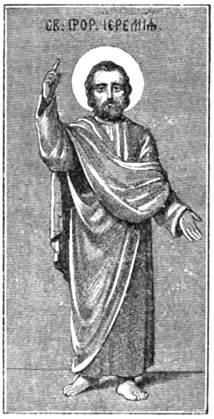
Иеремия был один из тех святых мужей, которых воздвигал Господь от времени до времени среди Своего избранного народа – для напоминания ему о правде Божией, которую забывал он, уклоняясь в заблуждения идолопоклонства и погрязая в своеволии необузданных страстей и порока.
Jeremiah was one of those holy men whom the Lord raised up from time to time among His chosen people—to remind them of the righteousness of God, which they forgot, turning aside into the delusions of idolatry and sinking into the self-will of unbridled passions and vice.
Свято хранившие веру во Единого истинного Бога и память об Его обетованиях, эти люди мужественно обличали зло и неправду, проповедовали истину, не отступали от неё до конца и неустрашимо шли на погибель от нечестивцев, не терпящих противодействия своему нечестию.
Holy keepers of the faith in the One true God and of the memory of His promises, these men courageously denounced evil and falsehood, preached the truth, did not depart from it to the end, and fearlessly went to their destruction at the hands of the ungodly, who could not bear opposition to their impiety.
Так и пророк Иеремия, живший за 600 лет до Р. Хр., вдохновляемый свыше, просвещал народ свой и действовал, как бы уже проникнутый тем откровением, которое через 6 слишком столетий после него услышал мир из уст Богочеловека в Его изречении: «Блаженны изгнанные за правду, ибо их есть Царство Небесное; блаженны вы, когда будут поносить вас и гнать, и всячески неправедно злословить за Меня. Радуйтесь и веселитесь, ибо велика ваша награда на небесах» (Мф.5:10–12).
Thus also the prophet Jeremiah, who lived 600 years before the birth of Christ, inspired from on high, enlightened his people and acted as if already penetrated by that revelation which, more than six centuries after him, the world heard from the lips of the God-Man in His words: "Blessed are they that are persecuted for righteousness' sake: for theirs is the kingdom of heaven. Blessed are ye, when men shall revile you, and persecute you, and shall say all manner of evil against you falsely, for my sake. Rejoice, and be exceeding glad: for great is your reward in heaven" (Mt. 5:10–12).
Сын священника Хелкии, жившего в г. Анафофе, в земле Вениаминовой, в царствование благочестивого царя Иудейского Иосии, едва только достиг Иеремия юношеского возраста, как его осенило Божественное вдохновение: «Прежде нежели Я образовал тебя во чреве, Я познал тебя, и прежде нежели ты вышел из утробы, Я освятил тебя, пророком для народов поставил тебя» ... (Иер.1:5), услышал чистый юноша голос Божий в сердце своём...
The son of the priest Hilkiah, who lived in the city of Anathoth, in the land of Benjamin, during the reign of the pious king of Judah, Josiah—Jeremiah had scarcely reached youthful age when Divine inspiration overshadowed him: "Before I formed thee in the belly I knew thee; and before thou camest forth out of the womb I sanctified thee, and I ordained thee a prophet unto the nations" (Jer. 1:5), the pure youth heard the voice of God in his heart...
«О, Господи Боже! – отозвался он в смирении своём, – я не умею говорить, ибо я ещё молод». Но Господь сказал ему: «Не говори: я молод, – ибо ко всем, к кому пошлю тебя, пойдёшь, и всё, что повелю тебе, скажешь. Не бойся их, ибо Я с тобой, чтобы избавлять тебя». И простёр Господь руку Свою, и коснулся уст Иеремии и сказал ему: «Вот, Я вложил слова Мои в уста твои. Смотри, Я поставил тебя в сей день над народами и царствами, чтобы искоренять и разорять, губить и разрушать, созидать и насаждать» (Иер.1:6–10).
"Ah, Lord God!" he responded in his humility, "behold, I cannot speak: for I am a child." But the Lord said to him: "Say not, I am a child: for thou shalt go to all that I shall send thee, and whatsoever I command thee thou shalt speak. Be not afraid of their faces: for I am with thee to deliver thee." And the Lord put forth His hand, and touched the mouth of Jeremiah, and said unto him: "Behold, I have put my words in thy mouth. See, I have this day set thee over the nations and over the kingdoms, to root out, and to pull down, and to destroy, and to throw down, to build, and to plant" (Jer. 1:6–10).
И было ещё слово Господне к Иеремии: «Препояшь чресла твои и встань, и скажи им всё, что Я повелю тебе; не малодушествуй перед ними, чтобы Я не поразил тебя в глазах их. Скажи им, что Я произнесу над ними суды Мои за все беззакония их, за то, что они оставили Меня, и воскуряли фимиам чужеземным богам и покланялись делам рук своих. И вот, Я поставил тебя ныне укреплённым городом, и железным столбом, медной стеной на всей этой земле, против царей Иуды, против князей его, против священников его и против народа земли сей. Они будут ратовать против тебя, но не превозмогут тебя; ибо Я – с тобой, чтобы избавлять тебя» (Иер.1:16–19).
And the word of the Lord came again to Jeremiah: "Gird up thy loins, and arise, and speak unto them all that I command thee: be not dismayed at their faces, lest I confound thee before them. Say unto them, that I will pronounce My judgments against them for all their wickedness, who have forsaken Me, and have burned incense unto other gods, and worshipped the works of their own hands. And I, behold, I have made thee this day a defenced city, and an iron pillar, and brasen walls against the whole land, against the kings of Judah, against the princes thereof, against the priests thereof, and against the people of the land. And they shall fight against thee; but they shall not prevail against thee; for I am with thee, saith the Lord, to deliver thee" (Jer. 1:16–19).
– «Возвратитесь, дети – отступники! – взывал он к народу Иудейскому от имени Божия, – возвратитесь, мятежные дети, и Господь исцелит вашу непокорность. Вот, Он предлагает вам путь жизни и путь смерти. С раннего утра производите суд и спасайте обижаемого от руки обидчика, не обижайте и не тесните пришельца, сироты и вдовы, и невинной крови не проливайте. Исправьтесь, чтобы гнев Божий не открылся, как огонь, и не воспылал неугасимо по причине злых дел ваших» ... (Иер.7).
"Return, ye backsliding children!" he cried out to the people of Judah in the name of God, "return, ye rebellious children, and the Lord will heal your stubbornness. Behold, He sets before you the way of life and the way of death. Execute judgment in the morning, and deliver him that is spoiled out of the hand of the oppressor; oppress not the stranger, the fatherless, and the widow, and shed no innocent blood. Amend your ways, lest the wrath of the Lord go forth like fire, and burn that none can quench it, because of the evil of your doings" (Jer. 7).
«Они сказали: нет Бога и беда не придёт на нас, и мы не увидим ни меча, ни голода. И пророки станут ветром, и слова Господня нет в них; над ними самими пусть это будет» ... (Иер.5:12–13).
"They have said: There is no God, and evil shall not come upon us; neither shall we see sword nor famine. And the prophets shall become wind, and the word is not in them: thus shall it be done unto them" (Jer. 5:12–13).
«Поэтому так говорит (через Иеремию) Господь Бог Саваоф: за то, что вы говорите такие слова, вот Я сделаю слова Мои в устах твоих (пророка) огнём, а этот народ – дровами, и этот огонь пожрёт их» (Иер.5:14).
"Therefore thus saith the Lord God of hosts (through Jeremiah): Because ye speak this word, behold, I will make my words in thy mouth (the prophet's) fire, and this people wood, and it shall devour them" (Jer. 5:14).
«Выслушай это (говорит Господь), народ глупый и неразумный, у которого есть глаза, а не видит, у которого есть уши, а не слышит. Меня ли вы не боитесь, предо Мной ли не трепещете? Я положил песок границей морю, вечным пределом, которого не перейдёт; и, хотя волны его устремляются, но превозмочь не могут; хотя они бушуют, но переступить его не могут. А у народа сего сердце буйное и мятежное, они отступили и пошли» ... (Иер.5:21–23).
"Hear now this (says the Lord), O foolish people, and without understanding; which have eyes, and see not; which have ears, and hear not. Fear ye not me? saith the Lord: will ye not tremble at my presence, which have placed the sand for the bound of the sea by a perpetual decree, that it cannot pass it: and though the waves thereof toss themselves, yet can they not prevail; though they roar, yet can they not pass over it? But this people hath a revolting and a rebellious heart; they are revolted and gone" (Jer. 5:21–23).
«Как клетка, наполненная птицами, дома их полны обмана; через это они и возвысились, и разбогатели. Сделались тучны, жирны, переступили даже всякую меру во зле; не разбирают судебных дел, дел сирот; благоденствуют и справедливому делу нищих не дают суда. Неужели Я не накажу за это? и не отомстит ли душа Моя такому народу, как этот? Изумительное и ужасное совершается в сей стране» ... (Иер.5:27–30).
"As a cage is full of birds, so are their houses full of deceit: therefore they are become great, and waxen rich. They are waxen fat, they shine: yea, they overpass the deeds of the wicked: they judge not the cause, the cause of the fatherless, yet they prosper; and the right of the needy do they not judge. Shall I not visit for these things? saith the Lord: shall not my soul be avenged on such a nation as this? An astonishing and horrible thing is committed in the land" (Jer. 5:27–30).
«Вот, Я приведу на вас, дом Израилев, народ издалека, народ сильный, народ древний, народ, которого языка ты не знаешь, и не будешь понимать, что он говорит. Колчан его, как открытый гроб; все они – люди храбрые. И съедят они жатву твою и хлеб твой, съедят сыновей твоих и дочерей твоих и волов твоих, съедят виноград твой и смоквы твои; разрушат мечом укреплённые города твои, на которые ты надеешься». «Итак слушайте, народы, и знай, собрание, что с ними будет; слушай, земля: вот, Я приведу на народ сей пагубу, плод помыслов их; ибо они слов Моих не слушали, и закон Мой отвергли» (Иер.5:15–17).
"Lo, I will bring a nation upon you from far, O house of Israel: it is a mighty nation, it is an ancient nation, a nation whose language thou knowest not, neither understandest what they say. Their quiver is as an open sepulchre; they are all mighty men. And they shall eat up thine harvest, and thy bread, they shall eat up thy sons and thy daughters and thine oxen: they shall eat up thy vines and thy fig trees: they shall impoverish thy fenced cities, wherein thou trustedst, with the sword." "Hear ye therefore, O ye nations, and know, O congregation, what is among them. Hear, O earth: behold, I will bring evil upon this people, even the fruit of their thoughts, because they have not hearkened unto my words, nor to my law, but rejected it" (Jer. 5:15–17).
«И будут трупы народа сего пищей птицам небесным и зверям земным, и некому будет отгонять их. И прекращу в городах Иудеи и на улицах Иерусалима голос торжества и голос веселия, голос жениха и голос невесты, потому что земля эта будет пустыней» (Иер.7:33–34).
"And the carcases of this people shall be meat for the fowls of the heaven, and for the beasts of the earth; and none shall fray them away. Then will I cause to cease from the cities of Judah, and from the streets of Jerusalem, the voice of mirth, and the voice of gladness, the voice of the bridegroom, and the voice of the bride: for the land shall be desolate" (Jer. 7:33–34).
«В то время выбросят кости царей Иуды, и кости князей его, и кости священников, и кости пророков, и кости жителей Иерусалима из гробов их» (Иер.8:1).
"At that time, saith the Lord, they shall bring out the bones of the kings of Judah, and the bones of his princes, and the bones of the priests, and the bones of the prophets, and the bones of the inhabitants of Jerusalem, out of their graves" (Jer. 8:1).
«И будут смерть предпочитать жизни все остальные, которые останутся от этого злого племени во всех местах, куда Я изгоню их», говорит Господь Саваоф... (Иер.8:3).
"And death shall be chosen rather than life by all the residue of them that remain of this evil family, which remain in all the places whither I have driven them, saith the Lord of hosts" (Jer. 8:3).
«Ты же не проси за этот народ, и не возноси за них молитвы и приношения, и не ходатайствуй передо Мной; Ибо Я не услышу тебя», – продолжает грозный Судия, обращаясь к Иеремии, в сердце которого читал Он, всеведущий, тяжкую боль об участи братски-любимого им народа, – «но скажи им, – продолжает Любвеобильный, как бы желая и среди кары исторгнуть народ Свой из безнадёжности, – разве упавши, не встают, и совратившись с дороги, не возвращаются?» (Иер.8:4).
"Therefore pray not thou for this people, neither lift up cry nor prayer for them, neither make intercession to me: for I will not hear thee," continues the terrible Judge, addressing Jeremiah, in whose heart He, the All-knowing One, read the grievous pain for the fate of the people he loved as brothers—"but say unto them," continues the Loving One, as if desiring even amidst punishment to snatch His people from despair, "Shall they fall, and not arise? shall he turn away, and not return?" (Jer. 8:4).
«Но они не послушали, и не преклонили уха своего, и жили по внушению и упорству злого сердца своего» ... (Иер.7:24). Боговдохновенные слова пророка приводили в ярость народ, возбуждаемый притом своими жрецами и лжепророками, и Иеремия подвергся жестоким преследованиям... Им овладело глубокое сокрушение сердечное, силы его стали ослабевать и в изнеможении души восклицал он: «Ты влёк меня, Господи, и я увлечён; Ты сильнее меня и превозмог; и я каждый день в посмеянии, всякий издевается надо мной. Ибо лишь только начну говорить я, кричу о насилии, вопию о разорении; потому что слово Господне обратилось в поношение мне и в повседневное посмеяние. И подумал я: не буду я напоминать о Нём и не буду более говорить во имя Его; но было в сердце моём, как бы палящий огонь, заключённый в костях моих, и я истомился, удерживая его, и не мог... Я слышал, как совещаются против меня, как прежние друзья мои говорят между собой: нападём на него и отмстим ему... Но со мной Господь, как сильный ратоборец, и потому не устоят преследующие меня, и посрамление их будет вечное, никогда не забудется» ... (Иер.20:7–11).
"But they hearkened not, nor inclined their ear, but walked in the counsels and in the imagination of their evil heart" (Jer. 7:24). The God-inspired words of the prophet enraged the people, who were also stirred up by their priests and false prophets, and Jeremiah was subjected to cruel persecutions... Deep contrition of heart seized him; his strength began to fail, and in the exhaustion of his soul he cried out: "O Lord, thou hast drawn me, and I was drawn: thou art stronger than I, and hast prevailed: I am in derision daily, every one mocketh me. For since I began to speak, I cry out of violence, I cry out of spoil; because the word of the Lord was made a reproach unto me, and a derision, daily. Then I said, I will not make mention of him, nor speak any more in his name. But it was in mine heart as a burning fire shut up in my bones, and I was weary with forbearing, and I could not stay... I heard how they take counsel against me, how my former friends say among themselves: Let us fall upon him, and take our revenge on him... But the Lord is with me as a mighty warrior: therefore my persecutors shall not stand, and their shame shall be everlasting, it shall never be forgotten" (Jer. 20:7–11).
Пророческое служение своё начал Иеремия в своём родном городе – Анафофе, но, преследуемый своими соотечественниками, он удалился в Иерусалим, но и здесь, как выше изложено, не избежал гонений. Чудно руководимый и подкрепляемый Богом, он, однако же, не уклонился от служения, к которому чувствовал Божественное призвание, и продолжал поучать народ и возвещать ему волю Господню и Его определения. Он постоянно и неустрашимо проповедовал среди собраний народных, и в храме, и у самого царского дворца. Однажды, когда он, по повелению Господню, возвещал народу о падении храма и самого города, он был схвачен за эти слова священниками и лжепророками, которые требовали, чтобы он был предан смерти...
Jeremiah began his prophetic ministry in his native city, Anathoth, but, persecuted by his fellow countrymen, he withdrew to Jerusalem; yet here too, as set forth above, he did not escape persecution. Wonderfully guided and strengthened by God, he nevertheless did not turn aside from the ministry to which he felt the Divine calling, and continued to teach the people and to declare to them the will of the Lord and His decrees. He preached constantly and fearlessly in the assemblies of the people, in the temple, and at the very royal palace. Once, when by the Lord's command he was announcing to the people the fall of the temple and of the city itself, he was seized for these words by the priests and false prophets, who demanded that he be put to death...
«И сказал тогда Иеремия всем князьям и всему народу: Господь послал меня пророчествовать против дома сего и против города сего все те слова, которые вы слышали. Итак исправьте пути ваши и дела ваши, и послушайтесь гласа Господа Бога вашего, и Господь отменит бедствие, которое изрёк на вас. А что до меня, вот я в ваших руках; делайте со мной, что в глазах ваших покажется хорошим и справедливым. Только твёрдо знайте, что если вы умертвите меня, то невинную кровь возложите на себя и на город сей, и на жителей его; ибо истинно Господь послал меня к вам сказать все те слова в уши ваши. Тогда князья и весь народ сказали священникам и пророкам: этот человек не подлежит смертному приговору, потому что он говорил нам именем Господа Бога нашего» (Иер.26:12–16).
"Then spake Jeremiah unto all the princes, and to all the people, saying, The Lord sent me to prophesy against this house and against this city all the words that ye have heard. Therefore now amend your ways and your doings, and obey the voice of the Lord your God; and the Lord will repent him of the evil that he hath pronounced against you. As for me, behold, I am in your hand: do with me as seemeth good and meet unto you. But know ye for certain, that if ye put me to death, ye shall surely bring innocent blood upon yourselves, and upon this city, and upon the inhabitants thereof: for of a truth the Lord hath sent me unto you to speak all these words in your ears. Then said the princes and all the people unto the priests and to the prophets; This man is not worthy to die: for he hath spoken to us in the name of the Lord our God" (Jer. 26:12–16).
Таким образом, освободясь от казни, Иеремия снова стал возвещать народу слышанное им от Господа, и предсказания его исполнились, но это не вразумляло упорствующих в грехах и в неверии Иудеев. Тогда снова излились угрозы Божии устами Его пророка. То было предвещание долговременного подчинения Иудеев власти чужого царя, разорения Иерусалима, запустения всей страны Иудейской. И действительно вскоре после того Иерусалим был осаждён и взят Навуходоносором, царём Вавилонским, который разорил храм и увёл в плен множество Иудеев. Над оставшимися он допустил быть царём – Иоакиму, поставленному царём над Иудеями фараоном Нехао, когда он завладел Иерусалимом. В это время лжепророки, желая быть приятными народу, ублажали его ложными обещаниями, что подчинённость его продолжится не долго и что пленники будут скоро освобождены. – Иеремия же, духом провидевший грядущие события, говорил другое; зная, что подчинение Иудеев будет долговременное, он увещевал их с покорностью принять это наказание Божие за их грехи и не возмущаться.
Thus, having been delivered from execution, Jeremiah again began to proclaim to the people what he had heard from the Lord, and his predictions were fulfilled, but this did not bring the Jews, who persisted in sins and unbelief, to their senses. Then the threats of God were again poured forth through the lips of His prophet. This was a foretelling of the long-term subjugation of the Jews to the power of a foreign king, the destruction of Jerusalem, and the desolation of the entire land of Judah. And indeed, soon after that, Jerusalem was besieged and taken by Nebuchadnezzar, king of Babylon, who destroyed the temple and led away many Jews into captivity. Over those who remained, he permitted Jehoiakim, who had been made king over the Jews by Pharaoh Necho when he took possession of Jerusalem, to reign. At this time, the false prophets, wishing to be pleasing to the people, flattered them with false promises that their subjugation would not last long and that the captives would soon be freed. Jeremiah, however, foreseeing future events in spirit, spoke otherwise; knowing that the subjugation of the Jews would be long-lasting, he exhorted them to accept this punishment from God for their sins with submission and not to rebel.
«Так говорит Господь, – передавал он народу: – ныне отдаю все земли сии в руку Навуходоносора, царя Вавилонского, раба Моего; и все народы будут служить ему и сыну его, и сыну сына его, доколе не придёт время и его земле, и ему самому, и будут служить ему народы многие и цари великие. И если какой народ и царство не захочет служить ему, Навуходоносору, царю Вавилонскому, и не подклонит выи своей под ярмо царя Вавилонского, этот народ Я накажу мечом, голодом и моровой язвой, – говорит Господь, – доколе не истреблю их рукою его... И вы не слушайте своих пророков и своих гадателей, и своих сновидцев, и своих волшебников, и своих звездочётов, которые говорят вам: не будете служить царю Вавилонскому, – ибо они пророчествуют вам ложь, чтобы удалить вас из земли вашей, и чтобы Я изгнал вас, и вы погибли»... (Иер.27:6–10).
"Thus says the Lord," he conveyed to the people: "now I give all these lands into the hand of Nebuchadnezzar, the king of Babylon, My servant; and all nations shall serve him, and his son, and his son's son, until the time of his own land also comes, and he himself; and many nations and great kings shall serve him. And it shall come to pass, that the nation and kingdom which will not serve him, Nebuchadnezzar king of Babylon, and which will not put its neck under the yoke of the king of Babylon, that nation I will punish with the sword, with famine, and with pestilence, says the Lord, until I have consumed them by his hand... Therefore hearken not to your prophets, nor to your diviners, nor to your dreamers, nor to your enchanters, nor to your sorcerers, which speak unto you, saying: Ye shall not serve the king of Babylon: for they prophesy a lie unto you, to remove you far from your land; and that I should drive you out, and ye should perish" (Jer. 27:6–10).
И к остатку старейшин между переселенцами, и к священникам, и к пророкам, и ко всему народу, которых Навуходоносор вывел из Иерусалима в Вавилон, послал такое письмо Иеремия из Иерусалима: «Так говорит Господь Саваоф, Бог Израилев: да не обольщают вас пророки ваши, которые среди вас, и гадатели ваши; и не слушайте снов ваших, которые вам снятся. Ложно пророчествуют они вам именем Моим; Я не посылал их, – говорит Господь. Ибо так говорит Господь: когда исполнится вам в Вавилоне семьдесят лет, тогда Я посещу вас и исполню доброе слово Моё о вас, чтобы возвратить вас на место сие. Взыщете Меня и найдёте, если взыщете Меня всем сердцем вашим. И буду Я найден вами, и возвращу вас из плена, и соберу вас из всех народов и из всех мест, куда Я изгнал вас, и возвращу вас в то место, откуда переселил вас» ... (Иер.29:8–14).
And to the remnant of the elders among the captives, and to the priests, and to the prophets, and to all the people, whom Nebuchadnezzar had carried away from Jerusalem to Babylon, Jeremiah sent this letter from Jerusalem: "Thus says the Lord of Hosts, the God of Israel: Let not your prophets who are among you deceive you, nor your diviners; and hearken not to your dreams which ye cause to be dreamed. For they prophesy falsely unto you in My name; I have not sent them, says the Lord. For thus says the Lord: After seventy years be accomplished at Babylon, I will visit you, and perform My good word toward you, in causing you to return to this place. And ye shall seek Me, and find Me, when ye shall search for Me with all your heart. And I will be found of you, and I will turn away your captivity, and I will gather you from all the nations, and from all the places whither I have driven you, and I will bring you again into the place whence I caused you to be carried away captive" (Jer. 29:8–14).
Между тем, доверяя лжепророкам, Иудеи только раздражались противоречащими их надеждам и желаниям скорого освобождения предсказаниями Иеремии и достигли того, что он был заключён в темницу. Тогда Иеремия, через ученика своего Варуха, который через окно темницы выслушивал и записывал слова своего учителя, повторил все пророчества, высказанные им до этого времени, и велел Варуху прочесть их народу. Варух прочёл свиток в присутствии народа и после того он передан был на прочтение самому царю. Слова пророка привели в ярость Иоакима, он сжёг свиток и приказал убить Иеремию и Варуха, но Бог сохранил их...
Meanwhile, trusting the false prophets, the Jews were only irritated by Jeremiah's predictions, which contradicted their hopes and desires for a speedy deliverance, and they succeeded in having him thrown into prison. Then Jeremiah, through his disciple Baruch, who listened through the prison window and wrote down the words of his teacher, repeated all the prophecies he had uttered up to that time, and commanded Baruch to read them to the people. Baruch read the scroll in the presence of the people, and afterwards it was given to the king himself to read. The words of the prophet enraged Jehoiakim; he burned the scroll and ordered Jeremiah and Baruch to be killed, but God preserved them...
Между тем, слова Иеремии не замедлили исполниться. Навуходоносор послал войско против Иоакима, отказавшегося платить ему дань – на основании уверений своих лжепророков, что скоро последует освобождение страны от чуждого ига. Нападение врагов совершилось так неожиданно, что в Иерусалиме не успели приготовиться к сопротивлению. Иоаким был убит и труп его был выброшен за город (как это и было предсказано Иеремией); более десяти тысяч Иудеев были уведены в плен в Вавилон. – Избранный на царство Иехония также, по пророчеству Иеремии, был уведён в плен Навуходоносором, который поставил царём в Иерусалиме Седекию.
Meanwhile, the words of Jeremiah were not slow to be fulfilled. Nebuchadnezzar sent an army against Jehoiakim, who had refused to pay him tribute, relying on the assurances of his false prophets that the country would soon be freed from the foreign yoke. The attack of the enemies came so unexpectedly that they had no time to prepare for resistance in Jerusalem. Jehoiakim was killed, and his corpse was thrown outside the city (as had been foretold by Jeremiah); more than ten thousand Jews were led away captive to Babylon. Jehoiachin, who was chosen to reign, was also, according to Jeremiah's prophecy, led away captive by Nebuchadnezzar, who set up Zedekiah as king in Jerusalem.
Седекия также совершал беззакония! Иеремия не переставал призывать всех к покаянию: «Выслушай слово Господне, царь Иудейский, сидящий на престоле Давидовом, ты, и слуги твои, и народ твой! – взывал вдохновенный избранник Божий, – так говорит Господь: производите суд и правду и спасайте обижаемого от рук притеснителя, не обижайте и не тесните пришельца, сироты и вдовы, и невинной крови не проливайте на месте сём. Если не послушаете слов Моих, то Мною клянусь, говорит Господь, что дом сей сделается пустым и города ваши необитаемыми. Я приготовлю истребителей, каждого с своими орудиями; и многие народы будут проходить через город сей и говорить друг другу: за что Господь так поступил с этим великим городом? – И скажут в ответ: за то, что они оставили завет Господа Бога своего, и поклонялись иным богам и служили им... Не плачьте об умершем и не жалейте о нём, но горько плачьте об отходящем в плен, ибо он уже не возвратится и не увидит родной страны своей. А царя Седекию, – говорит Господь, – слуг его и народ, и оставшихся в городе сём от моровой язвы, и меча и голода, предам в руки Навуходоносора, царя Вавилонского, и в руки врагов его, и в руки ищущих души их; и он поразит их острием меча, и не пощадит их, и не пожалеет, и не помилует» ...
Zedekiah also committed iniquities! Jeremiah did not cease to call all to repentance: "Hear the word of the Lord, O king of Judah, that sittest upon the throne of David, thou, and thy servants, and thy people!" cried the inspired chosen one of God, "Thus says the Lord: Execute judgment and righteousness, and deliver the spoiled out of the hand of the oppressor: and do no wrong, do no violence to the stranger, the fatherless, nor the widow, neither shed innocent blood in this place. But if ye will not hearken to My words, I swear by Myself, says the Lord, that this house shall become a desolation, and your cities uninhabited. For I will prepare destroyers, every one with his weapons; and many nations shall pass by this city, and they shall say every man to his neighbor: Wherefore hath the Lord done thus unto this great city? Then they shall answer: Because they have forsaken the covenant of the Lord their God, and worshipped other gods, and served them... Weep not for the dead, neither bemoan him: but weep sore for him that goeth away into captivity: for he shall return no more, nor see his native country. And Zedekiah the king, and his servants, and the people, and such as are left in this city from the pestilence, from the sword, and from the famine, I will deliver into the hand of Nebuchadnezzar king of Babylon, and into the hand of their enemies, and into the hand of those that seek their life: and he shall smite them with the edge of the sword; he shall not spare them, neither have pity, nor have mercy"...
Сокрушалось любвеобильное сердце пророка, устрашающего братий своих грозными бедствиями, предстоящими им; пламенно молился он об отвращении Божественной кары, и Милосердый Господь утешал его откровениями далёкого будущего: «Любовью вечной Я возлюбил тебя (Иудейский народ), и потому простёр к тебе Моё благоволение. Народ, уцелевший от меча, нашёл милость в пустыне; иду успокоить Израиля. Вот, Я приведу их из страны северной и соберу их с краёв земли; слепой и хромой, беременная и родильница вместе с ними, – великий сонм возвратится сюда. Они пошли со слезами, а Я поведу их с утешением; поведу их близ потоков вод, дорогой ровной, на которой не споткнутся... Слушайте слово Господне, народы, и возвестите островам отдалённым и скажите: Кто рассеял Израиля, Тот и соберёт его, и будет охранять его, как пастырь своё стадо. И придут они, и будут торжествовать на высотах Сиона... и душа их будет как напоённый водою сад, и они не будут уже более томиться... И изменю печаль их на радость, и утешу их, и обрадую их после скорби их» ...
The loving heart of the prophet was crushed as he terrified his brethren with the grievous calamities that awaited them; he prayed fervently for the averting of the Divine punishment, and the Merciful Lord comforted him with revelations of the distant future: "I have loved thee (the Jewish people) with an everlasting love: therefore with lovingkindness have I drawn thee. The people which were left of the sword found grace in the wilderness; even Israel, when I went to cause him to rest. Behold, I will bring them from the north country, and gather them from the coasts of the earth, and with them the blind and the lame, the woman with child and her that travaileth with child together: a great company shall return thither. They shall come with weeping, and with supplications will I lead them: I will cause them to walk by the rivers of waters in a straight way, wherein they shall not stumble... Hear the word of the Lord, O ye nations, and declare it in the isles afar off, and say: He that scattered Israel will gather him, and keep him, as a shepherd doth his flock. And they shall come and sing in the height of Zion... and their soul shall be as a watered garden; and they shall not sorrow any more at all... For I will turn their mourning into joy, and will comfort them, and make them rejoice from their sorrow"...
«Так говорит Господь: голос слышен в Раме, вопль и горькое рыдание; Рахиль плачет о детях своих и не хочет утешиться о них, ибо их нет. Так говорит Господь: удержи голос твой от рыдания и глаза твои от слёз, ибо есть награда за труд твой, и возвратятся они из земли неприятельской»... (Иер.31). «И напою я душу утомлённую, и насыщу всякую душу скорбящую» ... – прозревает затем в таинственном откровении Боговдохновенный пророк – величайшее утешение мира: пришествие в мир Спасителя... «Вот наступят дни, – говорит Господь, – когда Я исполню слово благое, которое Я дал дому Израилеву и дому Иудину. В те дни и в то время возвращу Давиду Отрасль праведную, и будет производить суд и правду на земле. В те дни спасён будет Иуда, и Иерусалим будет жить безопасно; и сие есть имя, которым нарекут Его: Господь – оправдание наше!» (Иер.33:14–16).
"Thus says the Lord: A voice was heard in Ramah, lamentation, and bitter weeping; Rachel weeping for her children refused to be comforted for her children, because they were not. Thus says the Lord: Refrain thy voice from weeping, and thine eyes from tears: for thy work shall be rewarded, and they shall come again from the land of the enemy" (Jer. 31). "For I will satiate the weary soul, and I will replenish every sorrowful soul"... then the God-inspired prophet, in a mysterious revelation, discerns the greatest consolation of the world: the coming of the Savior into the world... "Behold, the days come, says the Lord, that I will perform that good thing which I have promised unto the house of Israel and to the house of Judah. In those days, and at that time, will I cause the Branch of righteousness to grow up unto David; and He shall execute judgment and righteousness in the land. In those days shall Judah be saved, and Jerusalem shall dwell safely: and this is the name whereby they shall call Him: The Lord our righteousness!" (Jer. 33:14–16).
Между тем и для Седекии увещания пророка оставались гласом, вопиющим в пустыне... Подобно царям предшественникам своим, вместо того, чтобы вразумиться словами Иеремии об исправлении пути своего и о покорном перенесении наказания Божия за грехи народа, он продолжал творить беззакония и также поверил лжепророкам, ублажающим народ обещаниями скорого освобождения от власти царя Вавилонского, и отказался платить ему дань. Иеремию же за обличения его1 велел бросить в глубокий тинистый ров...
Meanwhile, for Zedekiah as well, the prophet's exhortations remained a voice crying in the wilderness... Like the kings his predecessors, instead of being admonished by Jeremiah's words to amend his ways and to bear the punishment of God for the sins of the people with submission, he continued to commit iniquities and also believed the false prophets, who flattered the people with promises of a speedy deliverance from the power of the king of Babylon, and refused to pay him tribute. As for Jeremiah, for his reproofs1 he ordered him to be thrown into a deep, muddy cistern...
Погруженный в тину по самую шею, едва не погиб Иеремия, но, встретив защитника в одном из приближённых царя, по имени – Авдемелехе, был извлечён из ямы и отведён в темницу2.
Sunk in the mire up to his neck, Jeremiah nearly perished, but, finding a defender in one of the king's courtiers, named Ebed-melech, he was drawn out of the cistern and taken to prison2.
Между тем слова его не замедлили исполниться. Иерусалим был осаждён царём Вавилонским, жители подверглись всем мукам голода во время продолжительной осады, и город наконец был взят. Сыновья Седекии в глазах его были умерщвлены; сам же Седекия, которому выкололи глаза, был в цепях отведён в Вавилон. Храм в городе был разрушен, жители уведены в плен; Иерусалим опустел, в стране Иудейской остались одни земледельцы, да пастухи...
Meanwhile, his words were not slow to be fulfilled. Jerusalem was besieged by the king of Babylon; the inhabitants suffered all the torments of famine during the long siege, and the city was finally taken. The sons of Zedekiah were slain before his eyes; Zedekiah himself, whose eyes were put out, was led away in chains to Babylon. The temple in the city was destroyed, the inhabitants were led away into captivity; Jerusalem was desolate; in the land of Judah only farmers and shepherds remained...
В то время, когда началось разрушение города, но прежде запустения церковного, освобождённый Иеремия взял скинию, устроенную Моисеем, и кивот завета со скрижалями, и при помощи священников и левитов отнёс эту святыню на гору Нафан, с которой открылась перед Моисеем обетованная земля... Здесь, положив в пещеру горы ковчег завета и алтарь кадильный, Иеремия заградил камнями вход в неё. Предание передаёт слова его, сказанные при этом случае священникам: «Господь отошёл от Сиона на небо и опять придёт с силой; а это будет, когда все народы станут поклоняться древу. Тогда Моисей вынесет из пещеры кивот завета, и Аарон разогнёт скрижали закона» ... Таким же образом скрыл Иеремия и огонь, постоянно со времён Моисея горевший в храме Иерусалимском; он скрыл его на дне глубокого и безводного колодца для того, чтобы Иудеи, по возвращении из плена Вавилонского, снова возожгли этот огонь в храме, который им предстояло построить.
At the time when the destruction of the city began, but before the desolation of the church, the liberated Jeremiah took the tabernacle which Moses had made, and the ark of the covenant with the tablets, and with the help of the priests and Levites carried this sanctuary to Mount Nafan, from which the promised land had opened before Moses... There, having placed the ark of the covenant and the altar of incense in a cave of the mountain, Jeremiah sealed the entrance with stones. Tradition transmits his words spoken on this occasion to the priests: "The Lord has departed from Zion to heaven and will come again with power; and this shall be when all nations worship the Tree. Then Moses will bring forth the ark of the covenant from the cave, and Aaron will unroll the tablets of the law"... In like manner Jeremiah also hid the fire which had burned continually in the temple of Jerusalem from the time of Moses; he hid it at the bottom of a deep and waterless well, so that the Jews, upon their return from the Babylonian captivity, might again kindle this fire in the temple which they were to build.
Когда был взят и разрушен Иерусалим, то «об Иеремии Навуходоносор дал такое повеление Навузардану, начальнику телохранителей: возьми его и имей его во внимании, и не делай ему ничего худого, но поступай с ним так, как он скажет тебе». Тогда «послали и взяли Иеремию со двора стражи, и поручили его Годолии (оставленному царём Вавилонским за князя земли Иудейской), отвести его домой, и он остался жить среди народа» (Иер.39:11,12,14). Печальная жизнь наступила теперь для уцелевших от смерти и плена порабощённых Иудеев; Иеремия продолжал призывать их к покаянию и возвещать им волю Божию; скорбя вместе с ними, он излил скорбь свою в песне, известной под названием: «Плач Иеремии»:
When Jerusalem was taken and destroyed, "concerning Jeremiah, Nebuchadnezzar gave this command to Nebuzaradan, the captain of the guard: 'Take him and look after him, and do him no harm, but deal with him as he tells you.'" Then "they sent and took Jeremiah from the court of the guard, and committed him to Gedaliah (whom the king of Babylon had left as governor of the land of Judah), to take him home, and he dwelt among the people" (Jer. 39:11,12,14). A sorrowful life now began for the enslaved Jews who had survived death and captivity; Jeremiah continued to call them to repentance and to declare to them the will of God; grieving together with them, he poured out his sorrow in a song known under the name: "The Lamentations of Jeremiah":
«Как помрачил Господь во гневе своём дщерь Сиона! С небес поверг на землю красу Израиля, и не вспомнил о подножии ног Своих в день гнева Своего».
"How hath the Lord covered the daughter of Zion with a cloud in His anger! He hath cast down from heaven unto the earth the beauty of Israel, and hath not remembered His footstool in the day of His anger!"
«Погубил Господь все жилища Иакова, не пощадил, разрушил в ярости Своей укрепления дщери Иудиной, поверг на землю, отверг царство и князей его, как нечистых».
"The Lord hath destroyed all the habitations of Jacob, and hath not spared; in His wrath He hath thrown down the strongholds of the daughter of Judah; He hath brought them down to the ground; He hath profaned the kingdom and its princes, and cast them down as unclean."
«Сидят на земле безмолвно старцы дщери Сионовой, посыпали пеплом свои головы, препоясались вретищем; опустили к земле головы свои девы Иерусалимские».
"The elders of the daughter of Zion sit upon the ground in silence; they have cast dust upon their heads, they have girded themselves with sackcloth; the virgins of Jerusalem have bowed their heads to the ground."
«Истощились от слёз глаза мои, волнуется во мне внутренность моя, и удалился мир от души моей; я забыл о благоденствии, и сказал я: погибла сила моя и надежда моя на Господа; потоки слез изливает око моё о гибели дщери народа моего; упал венец с головы нашей; горе нам, что мы согрешили!»
"Mine eyes do fail with tears, my bowels are troubled, and peace is removed from my soul; I have forgotten prosperity, and I said: My strength and my hope in the Lord is perished; mine eye poureth out rivers of tears for the destruction of the daughter of my people; the crown is fallen from our head; woe unto us, that we have sinned!"
«Ты, Господи, пребываешь во веки; престол Твой в род и род. Для чего совсем забываешь нас, оставляешь нас на долгое время? Обрати нас к Тебе, Господи, и мы обратимся; обнови дни наши, как древле... Неужели Ты совсем отверг нас, прогневался на нас безмерно?» ...
"Thou, O Lord, remainest forever; Thy throne from generation to generation. Wherefore dost Thou utterly forget us, and forsake us for so long a time? Turn us unto Thee, O Lord, and we shall be turned; renew our days as of old... Hast Thou then utterly rejected us? Art Thou exceedingly wroth against us?"...
Недолго Иеремия оставался в земле Иудейской; против воли своей он, вместе с пророком Варухом, должен был последовать в Египет за Иудеями, бежавшими туда от страха царского гнева за убиение поставленного над ними Годолии. Напрасно Иеремия советовал им оставаться в земле Иудейской, именем Божиим обещая им безопасное пребывание здесь и угрожая им страшными бедствиями в Египте по причине нападения на него Вавилонского царя; неисправимо-упорные Иудеи и в этот раз не послушали пророка и насильно увлекли его за собою в Египет.
Jeremiah did not remain long in the land of Judah; against his will, together with the prophet Baruch, he was compelled to follow into Egypt the Jews who had fled thither from fear of the king's wrath for the murder of Gedaliah, who had been set over them. In vain did Jeremiah advise them to remain in the land of Judah, promising them in the name of God a safe sojourn there and threatening them with terrible calamities in Egypt because of the attack of the king of Babylon upon it; the incorrigibly stubborn Jews again did not listen to the prophet and forcibly dragged him with them into Egypt.
Здесь прожил Иеремия четыре года и успел возбудить великое уважение к себе в Египтянах, видевших его святую жизнь и совершавшиеся по его молитве чудеса. Он и здесь продолжал пророчествовать, но и здесь ненавидели его Иудеи и, когда он повторил предсказание об истреблении Иудеев, пришедших в Египет, то они, в яростном негодовании на него, побили его каменьями... Пророчество же его не замедлило исполниться: в том же году Навуходоносор, овладев Египтом, повелел предать смерти всех бывших там Иудеев.
Here Jeremiah lived four years and succeeded in arousing great respect for himself among the Egyptians, who saw his holy life and the miracles wrought through his prayer. He continued to prophesy here as well, but here too the Jews hated him, and when he repeated the prediction of the destruction of the Jews who had come into Egypt, they, in furious indignation against him, stoned him to death... His prophecy was not slow to be fulfilled: in the same year Nebuchadnezzar, having taken possession of Egypt, ordered the death of all the Jews who were there.
Спустя 250 лет по кончине пророка Иеремии (в Тафнисе, в Нижнем Египте, – библейский Цоан), мощи его были перенесены отсюда Александром Македонским в построенный им в Египте город – Александрию, на месте, называемом Тетрафил, которое почиталось народом по множеству мощей пророческих, погребённых там.
Two hundred and fifty years after the death of the prophet Jeremiah (at Tahpanhes, in Lower Egypt – the biblical Zoan), his relics were transferred from there by Alexander the Great to the city he had built in Egypt – Alexandria, to a place called Tetraphil, which was revered by the people because of the multitude of prophetic relics buried there.
После пророка Иеремии осталось три книги: 1-ая из 56-ти глав, заключающих в себе вышеизложенные события и пророчества, 2-ая – Плач Иеремии и 3-я – послание его к отведённым в Вавилон пленным Иудеям.
After the prophet Jeremiah there remained three books: the first of 56 chapters, containing the above-described events and prophecies; the second – the Lamentations of Jeremiah; and the third – his epistle to the captive Jews who had been led away to Babylon.
Между прочим, Иеремия предсказал и жрецам Египетским падение идолопоклонства с рождением на земле Спасителя мира. Существует предание, что царь Птоломей видел, как Египтяне покланяются младенцу, положенному в яслях, и, когда спросил жрецов: что это означает, то они отвечали ему, что св. пророком (Иеремиею) заповедан этот обычай и что они ждут разрешения этой тайны...
Among other things, Jeremiah also foretold to the Egyptian priests the fall of idolatry with the birth of the Savior of the world on earth. There exists a tradition that King Ptolemy saw the Egyptians worshipping a child laid in a manger, and when he asked the priests what this meant, they answered him that this custom was commanded by the holy prophet (Jeremiah) and that they awaited the resolution of this mystery...
Спустя 400 лет по смерти Иеремии, Израильский полководец Иуда Маккавей, отправляясь в поход против царя Антиоха, видел в откровении пророка Иеремию молящимся за народ Иудейский с первосвященником Ониею; при этом Иеремия, подавая золотой меч Иуде Маккавею, сказал: «прими этот меч, дар Божий, и сокруши им врагов Израиля!»
Four hundred years after the death of Jeremiah, the Israelite commander Judas Maccabeus, setting out on a campaign against King Antiochus, saw in a revelation the prophet Jeremiah praying for the Jewish people together with the high priest Onias; at that time Jeremiah, handing a golden sword to Judas Maccabeus, said: "Take this sword, a gift from God, and with it crush the enemies of Israel!"
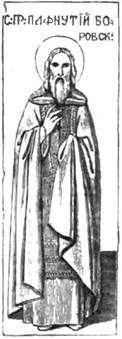
«Приятен для учеников и со-живущих подвижник добродетелей», так начинает своё описание жития пр. Пафнутия Вассиан, архиепископ Ростовский, некогда ученик Пафнутия. «Он может возбуждать их к подражанию, может руководить их даже и по смерти. Всего же приятнее, когда кто постарается изложить письменно деяния его. Не в короткое время, а во все времена он может возбуждать к подражанию ему и одушевлять любовью к добродетели. Так и мы решились кратко, избегая излишества, описать добродетельное и Богоугодное житие мужа, усовершившегося в добродетели»3.
"Pleasant to disciples and fellow-dwellers is the ascetic of virtues," thus begins his description of the life of the Venerable Paphnutius, Vassian, Archbishop of Rostov, once a disciple of Paphnutius. "He can stir them up to imitation, he can guide them even after death. But most pleasant of all is when someone takes pains to set down his deeds in writing. Not for a short time, but for all times he can stir up imitation of him and inspire love for virtue. So we also have resolved briefly, avoiding excess, to describe the virtuous and God-pleasing life of a man perfected in virtue"3.
Дед пр. Пафнутия был баскаком в Боровске и крестился с именем Мартина. Пафнутий, в крещении Парфений, родился в наследственном сельце Кудинове, в 3 верстах от Боровска, и в своё время обучен был грамоте. На 20 году, оставив дом родителей (Иоанна и Фотинии), поступил он в Боровский Высокий монастырь – Покрова Богородицы4; здесь был наставником его Никита, ученик пр. Сергия5. По смерти настоятеля Маркелла братия и Боровский князь Симеон Владимирович упросили его принять на себя начальство над обителью; посвящённый в игумена (1431 г.), он присоединил к подвигам инока подвиги пастыря вверенных ему душ и был искусным пастырем6. Дни проводил он в трудах монастырских, а ночь в молитвах, представляя своей жизнью образец подвижничества. Господь одарил его даром рассудительности; иногда бывали ему откровения во сне. Раз послан был по нуждам обители в село брат и пал там в грех плотской нечистоты. Пр. Пафнутий, совершив обычное правило, склонился, чтобы несколько почить, и видит прекрасный сад, с красивыми плодовитыми деревьями; одно дерево, очень красивое, вдруг упало; опечаленный тем Пафнутий, подняв вырванное дерево, опять посадил его, – оно шаталось и наклонялось к земле; но он поддержал его, утоптал около корня землю и утвердил. Проснувшись, опечалился уверенностью, что один из его духовных детей требует особенных забот о себе. Когда возвратился тот брат, преподобный сказал: «с тобой случилась неприятность?» Брат от стыда не хотел исповедать свой грех и даже не мог смотреть прямо в лицо отцу своему. Долго преподобный уговаривал его открыть больную душу свою, но наконец тот покаялся и преподобный исцелил душу его надеждой на благость Божию, готовую принимать кающегося.
The grandfather of the Venerable Paphnutius was a Baskak in Borovsk and was baptized with the name Martin. Paphnutius, in baptism Parthenius, was born in the hereditary village of Kudinovo, 3 versts from Borovsk, and in due time was taught to read and write. In his 20th year, having left the home of his parents (John and Photinia), he entered the Borovsk Vysoky Monastery of the Protection of the Theotokos4; here his instructor was Nikita, a disciple of the Venerable Sergius5. After the death of the abbot Marcellus, the brethren and Prince Simeon Vladimirovich of Borovsk entreated him to accept the leadership of the monastery; consecrated as abbot (1431 A.D.), he added to the labors of a monk the labors of a pastor of the souls entrusted to him and was a skillful shepherd6. The days he spent in monastic labors, and the night in prayer, presenting in his life a model of asceticism. The Lord endowed him with the gift of discernment; sometimes revelations were given to him in sleep. Once a brother was sent on monastery business to a village and fell there into the sin of fleshly impurity. The Venerable Paphnutius, having completed his usual rule, bent down to rest a little, and saw a beautiful garden with lovely fruit-bearing trees; one tree, very beautiful, suddenly fell; grieved by this, Paphnutius, lifting up the uprooted tree, planted it again – it swayed and bent toward the ground; but he supported it, trampled the earth around the root, and made it firm. Waking up, he was grieved by the certainty that one of his spiritual children required special care. When that brother returned, the Venerable One said: "Has something unpleasant happened to you?" The brother, from shame, did not want to confess his sin and could not even look directly into the face of his father. For a long time the Venerable One urged him to open his ailing soul, but at last he repented, and the Venerable One healed his soul with hope in the goodness of God, which is ready to receive the penitent.
На тридцатом году игуменства Пафнутий сделался тяжко болен и долго болел; в этом положении принял он на себя схиму. – Выздоровев от болезни, он отказался от игуменства и в 2 верстах от Боровска, в густом лесу, в долине между двумя реками, стал жить с одним братом. Это было 1444 года. Мало по малу начали приходит сюда братия; по благословению старца ставили они себе кельи и стали жить под руководством доброго наставника. – Когда умножилось число учеников и место расширилось, братия молили наставника, чтобы дозволил он устроить церковь для общих молитв. Он не запретил, и они построили деревянный храм в честь Рождества Богородицы. Боровскому князю Василию Ярославичу досадно было, что оставленный Пафнутием Высокий монастырь падает, а новая обитель на земле князя Суходольского начинает расцветать7; волнуемый грешными страстями, не раз посылал он слуг сжечь новую обитель, но те каждый раз попадались на глаза Пафнутию и братии; один из крещённых татар, отличавшийся дерзостью и удальством, вызвался, не смотря ни на что, выполнить волю князя. Преподобный встретил его и ласково спросил: «зачем ты, друг мой, пришёл к нам?» Эта ласка обезоружила удальца и он сознался в грехе своём. Преподобный простил его и с миром отпустил. Когда «нечестивый Мамотяк», сын Казанского царя Улу-Махмета, неожиданно вторгся в Россию с множеством татар, а великий кн. Василий не успев собрать достаточно войска, встретил татар у Суздаля: татары, разбив Русских, взяли многих в плен, в том числе и князя Василия Ярославича; это было в 1445 г.8. Находясь в плену, бедный князь пересмотрел свою жизнь и увидел, что несправедливо злился он на преподобного; он положил загладить грех свой любовью, если Господь освободит его. Преподобный с своей стороны молился за князя, и по его молитве князю удалось уйти из плена; по возвращении в дом свой князь немедленно пришёл к авве, испросил у него прощение и с того времени стал быть почтительным к нему.
In the thirtieth year of his abbacy, Paphnutius fell gravely ill and was sick for a long time; in this condition he received the schema. — Having recovered from his illness, he resigned the abbacy and, two versts from Borovsk, in a dense forest, in a valley between two rivers, began to live with one brother. This was in the year 1444. Little by little brethren began to come to this place; by the blessing of the elder they built themselves cells and began to live under the guidance of the good instructor. — When the number of disciples increased and the place was enlarged, the brethren besought the instructor to permit them to build a church for common prayer. He did not forbid it, and they built a wooden church in honor of the Nativity of the Theotokos. Prince Vasily Yaroslavich of Borovsk was vexed that the Vysoky monastery abandoned by Paphnutius was falling into decay, while the new monastery on the land of Prince Sukhodolsky was beginning to flourish7; agitated by sinful passions, he more than once sent servants to burn the new monastery, but each time they came into view of Paphnutius and the brethren; one of the baptized Tatars, distinguished by audacity and daring, volunteered, regardless of everything, to carry out the prince's will. The Venerable One met him and asked kindly: "Why have you come to us, my friend?" This kindness disarmed the daredevil, and he confessed his sin. The Venerable One forgave him and sent him away in peace. When "the impious Mamotyak," son of the Kazan Tsar Ulu-Makhmet, unexpectedly invaded Russia with a multitude of Tatars, and Grand Prince Vasily, not having managed to gather sufficient troops, met the Tatars at Suzdal: the Tatars, having defeated the Russians, took many captive, including Prince Vasily Yaroslavich himself; this was in the year 14458. While in captivity, the poor prince reviewed his life and saw that he had been unjustly angry with the Venerable One; he resolved to atone for his sin by love, if the Lord would free him. The Venerable One for his part prayed for the prince, and by his prayer the prince managed to escape from captivity; upon returning to his home, the prince immediately came to the abba, asked his forgiveness, and from that time became respectful toward him.
Преподобный не только был незлобив, когда оскорбляли его, но был терпелив в нуждах, и это терпение, одушевлённое упованием на Господа, низводило благодать на обитель. Раз подошёл праздник Пасхи, а в обители вовсе не было рыбы. Братия скорбели о том. «Не скорбите, братия, сказал он: Господь милосердый не оставит рабов своих без утешения». В Великую субботу в вечерню пономарь пошёл на малый источник взять воды для литургии и видит множество рыбы, «которая в том краю называется сижики, незначительной величины, но больше сельдей». Их собралось так много, – был разлив воды, – что как будто кто согнал их сюда, «и ни прежде, ни после, никогда не было их здесь так много». Пономарь поспешил сказать о том преподобному; рыболовы, по приказанию Пафнутия, закинули мрежу и вытащили так много рыбы, что её достало на всю светлую неделю.
The Venerable One was not only free from malice when he was insulted, but was patient in times of need, and this patience, animated by hope in the Lord, drew down grace upon the monastery. Once the feast of Pascha approached, and in the monastery there was no fish at all. The brethren grieved over this. "Do not grieve, brethren," he said: "the merciful Lord will not leave His servants without consolation." On Great Saturday at Vespers the sexton went to the small spring to draw water for the Liturgy and saw a multitude of fish, "which in that region are called sizhiki, of insignificant size, but larger than herrings." So many of them had gathered — there had been a flood of water — that it was as if someone had driven them together there, "and neither before nor after was there ever so many of them there." The sexton hastened to tell the Venerable One of this; the fishermen, by Paphnutius's command, cast the net and drew out so many fish that it sufficed for the whole Bright Week.
Далеко разносилась слава о подвижнике Пафнутии. При такой известности, «многие приходили к Пафнутию, чтобы жить с ним. В том числе приходит благородный молодой человек Иоанн (Санин), постригается руками его, отлагает всё мирское с лишением власов, нарекается Иосифом и весь остаётся в его воле». Это будущий основатель Волоколамской обители. Под руководством Пафнутия подвизались «дивный старец Иннокентий», Исаия, сродник блаженного, Вассиан, писатель жития и впоследствии архиепископ Ростовский, и многие другие. Было у кого учиться добру.
Far spread the fame of the ascetic Paphnutius. With such renown, "many came to Paphnutius to live with him. Among them came a noble young man, John (Sanin), was tonsured by his hands, put off all worldly things with the cutting of his hair, was named Joseph, and remained entirely in his will." This was the future founder of the Volokolamsk monastery. Under the guidance of Paphnutius there also struggled "the wondrous elder Innocent," Isaiah, a kinsman of the blessed one, Vassian, the writer of the Life and afterwards Archbishop of Rostov, and many others. There was from whom to learn what is good.
С того времени, как Пафнутий стал иноком, жизнь его шла так: в понедельник и пятницу ничего не ел он; в среду – сухой хлеб; в прочие дни кушал вместе с братией. Всегда бывал в трудах, сёк дрова, орошал растения, копал в саду землю, занимался другими тяжёлыми работами и никто прежде его не являлся ни на работе, ни на общем правиле молитвы. В зимнее время занимался чтением и рукоделием, плёл мрежи для ловли рыбы. К телу своему не дозволял касаться никому, а женскому полу не дозволен был и вход в обитель его; чистота девства сохранена им небесною. Тем не менее с того времени, как принял он схиму, не литургисал он, как обрекший себя на уединённую молитву смиренного схимника; только раз по нужде совершил он таинство. При наступлении праздника Пасхи послан был нарочный отыскать священника для служения, но священника не нашли. Преподобный, всегда рассудительный, в такой нужде сам совершил литургию и с глубоким умилением; по совершении литургии говорил он ученикам своим: «ныне душа моя едва осталась в теле». Когда было нужно, вступал он в разговор; а когда надобно было молчать, молчал; во всём любил нищету и бедность; о телесных нуждах не заботился. Относительно догматов веры наблюдал такую строгость, что если кто начинал говорить несогласно с Священным Писанием, не медля выгонял того из обители. Другой ученик преподобного Пафнутия так говорит о нём: «с ним жили мы несколько годов, видели его труды и скорби, подвиги ревнования, худость одеяния, твёрдую любовь к Богу, надежду на Пречистую Богородицу, надежду постоянно хранимую в уме и устах. Потому-то сподобился он и благодати Божией, по которой провидел сердечные помыслы и открывал их братии, исцелял болезни, получал всё, чего просил у Бога и Пречистой Богородицы. Он по жизни своей истинно превышал людей нынешнего времени»9.
From the time that Paphnutius became a monk, his life proceeded thus: on Monday and Friday he ate nothing; on Wednesday, dry bread; on the other days he ate together with the brethren. He was always at work, hewed wood, watered the plants, dug the earth in the garden, occupied himself with other heavy labors, and no one appeared before him either at work or at the common rule of prayer. In wintertime he occupied himself with reading and handiwork, weaving nets for catching fish. He allowed no one to touch his body, and to the female sex entry into his monastery was not permitted at all; the purity of virginity was preserved by him as heavenly. Nevertheless, from the time that he received the schema, he did not serve the Liturgy, as one who had devoted himself to the solitary prayer of a humble schemamonk; only once, out of necessity, did he perform the mystery. When the feast of Pascha approached, a messenger was sent to find a priest for the service, but no priest was found. The Venerable One, always prudent, in such necessity himself performed the Liturgy and with deep compunction; after the Liturgy he said to his disciples: "Now my soul barely remained in my body." When it was necessary, he entered into conversation; and when it was needful to be silent, he was silent; in everything he loved poverty and want; he took no care for bodily needs. Regarding the dogmas of the faith he observed such strictness that if anyone began to speak not in accordance with the Holy Scripture, he immediately drove him out of the monastery. Another disciple of the Venerable Paphnutius says of him thus: "We lived with him for several years, saw his labors and sorrows, his feats of zeal, the coarseness of his clothing, his firm love for God, his hope in the Most Pure Theotokos, a hope constantly preserved in his mind and on his lips. Therefore he was vouchsafed the grace of God, by which he foresaw the thoughts of the heart and revealed them to the brethren, healed illnesses, and obtained everything he asked of God and the Most Pure Theotokos. By his life he truly surpassed the people of the present time"9.
Обитель окружена была густой рощей, где водилось множество чёрных воронов. Любвеобильное сердце Пафнутия утешалось множеством этих птиц, как созданий Божиих, хотя и крикливых. Он положил заповедь не ловить и не убивать их, ни детей их. Сын городского воеводы, проезжая по лесу, натянул лук и убил одного ворона; он рад был, что удачно пустил стрелу, но когда хотел повернуть голову, не мог повернуть её, – она всё смотрела на сторону. Поняв причину беды своей, пришёл он к преподобному Пафнутию и, прося прощения, просил помолиться о нём. Преподобный с улыбкой сказал: «отмстил Бог за кровь ворона»; совершив в храме молебное пение, святой осенил больного крестом, и голова стала на своё место.
The monastery was surrounded by a dense grove, where a multitude of black ravens dwelt. The loving heart of Paphnutius was consoled by the multitude of these birds, as creatures of God, though noisy ones. He laid down a commandment not to catch or kill them, nor their young. The son of the city voivode, riding through the forest, drew his bow and killed one raven; he was glad that he had shot his arrow well, but when he wanted to turn his head, he could not turn it — it kept looking to one side. Understanding the cause of his misfortune, he came to the Venerable Paphnutius and, asking forgiveness, begged him to pray for him. The Venerable One said with a smile: "God has avenged the blood of the raven"; having performed a moleben in the church, the saint signed the sick man with the cross, and his head returned to its place.
Раз воры пришли ночью и взяли трёх рабочих волов монастырских. Но когда пошли с ними, то блуждали всю ночь около монастыря. Стало рассветать; они хотели бежать, но не могли; искавшие волов взяли воров и привели к преподобному. Пафнутий, преподав им наставление впредь не красть, велел накормить их и отпустил с миром.
Once thieves came by night and took three of the monastery's working oxen. But when they went off with them, they wandered all night around the monastery. Dawn began to break; they wanted to flee, but could not; those seeking the oxen took the thieves and brought them to the Venerable One. Paphnutius, having given them instruction not to steal henceforth, ordered that they be fed and sent them away in peace.
Два брата хотели тайно уйти из обители и уже собрали вещи на путь. После утреннего пения преподобный, заснув, видит: эфиоп бросает уголья на кельи тех братьев; отец погрозил ему и запретил бросать, чтобы не зажёг здания. Тот отвечал, что для того и бросает, чтобы зажечь. Проснувшись, преподобный тотчас послал за братьями и рассказал им своё видение; они сознались в своём преступном намерении и принесли самые узлы платья, готовые для дороги. – Другой брат бранил всё в обители и роптал на отца. В одно время видит он себя в храме вместе с прочими, подходит к нему отец и, бросив на него строгий взгляд, говорит: этот человек хульник, выведите его из церкви, и два мурина10, схватив его, с толчками потащили вон. Мгновенно пробудясь, инок прибежал в ужасе к преподобному и умолял простить его. – Раз после утрени преподобный отдыхал; ученик его Иосиф шёл к кельи его и лишь только подошёл, как Пафнутий открыл оконце кельи и, увидав Иосифа, сказал: «кто-то, сотворив молитву, сказал мне: «старец Константин отошёл ко Господу». И вот, отворив окно, никого не вижу кроме тебя». – «Я сейчас вышел от Константина, он ещё жив», отвечал Иосиф. Преподобный велел опять идти в келью старца, и тот нашёл его умершим.
Two brothers wanted to secretly leave the monastery and had already gathered their belongings for the journey. After Matins, the Venerable One, having fallen asleep, saw: an Ethiopian throwing coals upon the cells of those brothers; the father threatened him and forbade him to throw them, lest he set the buildings on fire. He answered that he was throwing them precisely in order to set them on fire. Waking up, the Venerable One immediately sent for the brothers and told them his vision; they confessed their criminal intention and brought the very bundles of clothing, ready for the road. — Another brother reviled everything in the monastery and murmured against the father. Once he saw himself in the church together with the rest; the father approaches him and, casting a stern glance at him, says: "This man is a blasphemer; cast him out of the church," and two Moors10, seizing him, dragged him out with shoves. Instantly waking, the monk ran in terror to the Venerable One and begged him to forgive him. — Once after Matins the Venerable One was resting; his disciple Joseph was walking toward his cell, and just as he approached, Paphnutius opened the little window of his cell and, seeing Joseph, said: "Someone, having made a prayer, said to me: 'The elder Constantine has departed to the Lord.' And behold, having opened the window, I see no one but you." — "I have just come from Constantine; he is still alive," answered Joseph. The Venerable One bade him go again to the elder's cell, and he found him dead.
Был в обители старец духовной жизни и очень древний. Он имел такой дар слёз, что они текли у него всегда, в келье и на правиле церковном. Он имел и дар прозорливости. Два брата любили друг друга, но не по Божией воле. Преподобный был очень недоволен тем и они решились выйти из обители. Во время литургии Евфимий, стоя в храме с обыкновенным для него умилением, видит: какой-то мурин, косматый, с шлемом на голове, начал крюком тащить тех братьев с клироса; крюк срывался и мурин снова цеплял его за одежды братьев. Начали читать Евангелие и мурин исчез из церкви. Потом опять явился и начал делать прежнее. Во время Херувимской песни опять исчез и потом опять явился. Когда же пришло время освящения Святых Даров, он исчез, как дым, и больше не являлся. Старец смотрел на всё это с трепетом и был как бы в исступлении. По окончании литургии подошёл он к преподобному и рассказал всё, что видел. Преподобный, призвав иноков, говорил им, чтобы не принимали они в сердце внушений вражьих, а приняв не таили бы их. Те с сокрушением приняли вразумление и исправились.
There was in the monastery an elder of spiritual life and very ancient. He had such a gift of tears that they flowed from him always, in his cell and at the church rule. He also had the gift of clairvoyance. Two brothers loved one another, but not according to the will of God. The Venerable One was very displeased with this, and they resolved to leave the monastery. During the Liturgy, Euthymius, standing in the church with his usual compunction, sees: some shaggy Moor, with a helmet on his head, began to drag those brothers from the kliros with a hook; the hook slipped off, and the Moor again caught it on the garments of the brothers. They began to read the Gospel, and the Moor disappeared from the church. Then he appeared again and began to do the same as before. During the Cherubic Hymn he disappeared again and then appeared once more. But when the time of the consecration of the Holy Gifts came, he vanished like smoke and appeared no more. The elder looked upon all this with trembling and was as if in ecstasy. After the end of the Liturgy he approached the Venerable One and told him everything he had seen. The Venerable One, having summoned the monks, told them not to receive into their hearts the suggestions of the enemy, and having received them, not to conceal them. They with contrition accepted the admonition and corrected themselves.
Преподобный говорил ученикам своим, что можно узнать по взору, добрыми ли кто занят мыслями, или худыми. Ученики дивились, но потом увидели и опыты тому в святом старце. Один новоначальный, не отучивший очей своих от мирской дерзости, за нуждой отлучась из обители, при встрече с женщинами, устремил на них очи и пленился похотью от долгого взора. Возвратясь в келью отца, застал он его за книгой. Отец взглянул на него и отвратясь сказал: «этот человек – не прежний». – Брат ужаснулся и рассказал всё жившему с ним Иосифу; тот советовал открыться во всём отцу и испросить прощение. Преподобный, выслушав кающегося, поучил и простил его. В другой раз преподобный сидел и читал книгу. Какой-то человек, сотворив молитву, спрашивал ученика его Иосифа, называя себя жителем одного с ним места. – Старец, никогда не видав этого человека, говорил Иосифу: «ступай, тебя спрашивает человек с злым взором». Иосиф вышел и, узнав знакомого, спросил его: зачем пришёл он? «Я хочу, отвечал он, быть монахом». Иосиф доложил о том преподобному. Он сказал: «накорми и отпусти его». Иосиф исполнил волю старца. Когда же возвратился в келью, отец сказал: «этот человек – убийца; он ещё в юности ударил инока ножом в чрево и умертвил». Другой человек, по имени Иван, служил по научению в Новгороде у одного князя и уморил господина ядом. Потом тревожимый совестью облёкся в иноческое одеяние и пришёл в обитель Пафнутиеву. – Преподобный, увидав его, сказал ученикам: «видите ли, этот человек не очистился от крови и иночеством?» Они удивились, но не посмели тогда спросить. После преподобный сказал одному ученику: «этот человек отравой умертвил князя Димитрия Шемаху; оттого-то и иночеством не очистился от крови». По летописям, смерть князя Димитрия Шемахи последовала в Новгороде 18-го июля 1453 года11 и по словам одних «князь Димитрий умре напрасно»12, по словам других «умре с отравы»13, иначе «даша ему лютого зелия»14 и давший отраву Шемяке был боярин и любимец его Иван Котов15. – К скорби своей, преподобный видел не этот один опыт неразборчивой в средствах политики людской. – Боровский князь Василий Ярославич, более 20 лет бывший верным союзником Василия Тёмного, в 1457 году внезапно взят был под стражу с тремя детьми и заперт в Углич, где он и умер; старший сын его с мачехой убежал в Литву; обширный удел Боровского князя присоединён был к владениям Василия Тёмного16. Таковы дела людские!
The Venerable One told his disciples that one could tell by a person's gaze whether he was occupied with good thoughts or evil ones. The disciples marvelled, but later they saw proof of this in the holy elder himself. One novice, who had not yet weaned his eyes from worldly boldness, having left the monastery out of necessity, upon meeting women fixed his eyes upon them and was captivated by lust from his prolonged gaze. Returning to the cell of the father, he found him at his book. The father looked at him and, turning away, said: "This man is not the same as before." The brother was horrified and told everything to Joseph, who lived with him; he advised him to confess everything to the father and ask forgiveness. The Venerable One, having heard the penitent, instructed him and forgave him. Another time the Venerable One was sitting and reading a book. A certain man, having made a prayer, asked his disciple Joseph, calling himself a dweller of the same place as he. The elder, never having seen this man, said to Joseph: "Go, a man with an evil look is asking for you." Joseph went out and, recognizing an acquaintance, asked him: why had he come? "I wish," he replied, "to become a monk." Joseph reported this to the Venerable One. He said: "Feed him and send him away." Joseph fulfilled the elder's will. When he returned to the cell, the father said: "This man is a murderer; he struck a monk in the belly with a knife in his youth and killed him." Another man, by the name of Ivan, served by instruction in Novgorod under a certain prince and poisoned his master. Then, troubled by his conscience, he put on the monastic habit and came to the monastery of Paphnutius. The Venerable One, seeing him, said to his disciples: "Do you see? This man has not been cleansed of blood even by monasticism?" They were astonished, but did not dare to ask then. Afterwards the Venerable One said to one disciple: "This man poisoned Prince Demetrius Shemyaka; that is why he has not been cleansed of blood by monasticism." According to the chronicles, the death of Prince Demetrius Shemyaka occurred in Novgorod on the 18th of July, 145311, and according to some "Prince Demetrius died suddenly"12, according to others "he died of poison"13, or else "they gave him a deadly potion"14, and the one who gave the poison to Shemyaka was his boyar and favourite, Ivan Kotov15. To his sorrow, the Venerable One saw not only this example of the indiscriminate politics of men. The Prince of Borovsk, Basil Yaroslavich, who for more than 20 years had been a faithful ally of Basil the Dark, was suddenly taken into custody in 1457 with his three children and imprisoned in Uglich, where he died; his eldest son fled with his stepmother to Lithuania; the vast appanage of the Prince of Borovsk was annexed to the domains of Basil the Dark16. Such are the deeds of men!
Когда число учеников умножилось в обители и в неё многие стали приходить для молитвы, преподобный решился построить каменный храм в честь Пречистой. При постройке его он сам носил кирпич, воду и другие материалы. Из иконописцев, украшавших храм, начальный Дионисий сильно страдал ногами и за болезнью не мог сам работать в храме. Преподобный, понуждая его к работе, сказал ему: «Бог простит тебя, Матерь Божия подаст здравие ногам твоим». Дионисий принялся за работу и выздоровел. Старец заповедал Дионисию и товарищам его – не есть мясного в обители и не носить в обитель, а пусть ходят в ближнее село. Раз, пообедав в селе, взяли они с собой жареное овечье стегно17, начинённое яйцами, чтобы повечерять в обители, а о заповеди аввы забыли. Сели вечерять, и когда первый стал есть, Дионисий увидал, что там, где были яйца, кишат черви. На самого Диописия напала свербёжь18 и всё тело покрылось струпьями. Он послал умолить преподобного о прощении и преподобный, преподав увещание, повёл больного в церковь, где отпет был за него молебен, покропил его св. водой, и тот выздоровел. По отзыву современника, храм дивно расписан был Митрофаном и Дионисием, лучшими живописцами земли Русской; он украшен был иконами, книгами и всякой утварью, так что дивились ему властители земли Русской. Преподобный торжествовал освящение его октября 26-го дня 1466 года19.
When the number of disciples in the monastery increased and many began to come there for prayer, the Venerable One resolved to build a stone church in honor of the Most Pure One. During its construction he himself carried brick, water, and other materials. Among the iconographers who adorned the church, the chief one, Dionysius, suffered greatly from his legs and, due to his illness, could not work in the church himself. The Venerable One, urging him to work, said to him: "God will forgive you, the Mother of God will grant health to your legs." Dionysius set to work and recovered. The elder commanded Dionysius and his companions not to eat meat in the monastery and not to bring it into the monastery, but to go to the nearest village. Once, after dining in the village, they took with them a roasted leg of mutton17, stuffed with eggs, intending to have supper in the monastery, but they forgot the abba's commandment. They sat down to supper, and when the first began to eat, Dionysius saw that where the eggs were, worms were swarming. Dionysius himself was seized with an itch18, and his whole body became covered with scabs. He sent to beg the Venerable One for forgiveness, and the Venerable One, after giving an admonition, led the sick man into the church, where a moleben was sung for him, sprinkled him with holy water, and he recovered. According to the testimony of a contemporary, the church was wondrously painted by Mitrophan and Dionysius, the best painters of the Russian land; it was adorned with icons, books, and all manner of vessels, so that the rulers of the Russian land marvelled at it. The Venerable One celebrated its consecration on October 26, 146619.
Некоторая боярыня, супруга Алексея Бабурина, которой сыновья после были иноками и жили вместе с Вассианом, биографом преподобного, весьма уважала пр. Пафнутия и часто посылала к нему детей своих с подарками и с просьбой о молитве за неё; с ней случилась болезнь и она мешалась в мыслях: ей виделись нечистые духи, страшившие её, и от того теряла она смысл. В этом состоянии явился ей старец, низкий ростом, сгорбленный, с седой и длинной бородой, в плохой одежде; он прогонял от неё духов, и. она приходила в себя; она слышала и голос: «Пафнутий Боровский прогонит от тебя бесов». Совсем выздоровев, пожелала она видеть святого; ей хотелось поверить, он ли являлся ей и прогонял духов? Она пришла с слугами к обители и, так как для жён не доступен был монастырь, остановилась у ворот. Чрез слуг своих упрашивала она учеников, как бы ей увидеть старца. Те, указав слугам на святого, сказали: вот он пойдёт к трапезе из церкви, тогда укажите ей. Но она, прежде чем указали ей слуги, увидав святого, выходившего из церкви, узнала его и со слезами говорила: истинно он прогонял от меня духов и даровал мне исцеление. Затем послала она богатую милостыню инокам, благодаря Бога и Пречистую Матерь Божию за своё исцеление.
A certain boyarina, the wife of Alexis Baburin, whose sons later became monks and lived together with Bassian, the biographer of the Venerable One, greatly respected Venerable Paphnutius and often sent her children to him with gifts and a request for prayers for herself. She fell ill and became confused in her mind: she saw unclean spirits that terrified her, and from this she lost her senses. In this state an elder appeared to her—short in stature, stooped, with a long grey beard, in poor clothing; he drove the spirits away from her, and she came to herself. She also heard a voice: "Paphnutius of Borovsk will drive the demons away from you." Having fully recovered, she wished to see the saint; she wanted to verify whether it was he who had appeared to her and driven away the spirits. She came with her servants to the monastery, and since women were not allowed inside the monastery, she stopped at the gate. Through her servants she begged the disciples to let her see the elder. They, pointing to the saint, said to the servants: "There he is, he will go to the refectory from the church; then point him out to her." But she, before the servants could point him out, seeing the saint coming out of the church, recognized him and said with tears: "Truly it was he who drove the spirits from me and granted me healing." Then she sent a rich alms to the monks, thanking God and the Most Pure Mother of God for her healing.
У одного из учеников заболел глаз и он, очень страдая от него, просил врачевства у преподобного. Отец дал ему свои чётки и приказал проговорить тысячу раз: «Господи Иисусе Христе, помилуй мя грешного». Тот, сильно страдая, едва послушался, но совершив 500 молитв, почувствовал, что глаз его здоров; от радости он прибежал к отцу с известием об исцелении глаза; от прозорливого старца не скрылось, что не 1000, а 500 молитв проговорил тот, и велел ему докончить.
One of the disciples had a sore eye and, suffering greatly from it, asked the Venerable One for a remedy. The father gave him his prayer rope and ordered him to say a thousand times: "Lord Jesus Christ, have mercy on me, a sinner." The disciple, suffering greatly, barely obeyed, but having completed 500 prayers, he felt that his eye was healed. From joy he ran to the father with the news of the healing of his eye. It was not hidden from the clairvoyant elder that he had said not 1000, but 500 prayers, and he ordered him to finish them.
В одно время братия сидела у преподобного, и так как от некоторых мирян получено было известие, что умер архимандрит в Симоновом монастыре, то рассуждали между собой, кто будет архимандритом? Блаженный, посмотрев на одного из учеников, Вассиана, брата Иосифова, сказал, улыбаясь: «вот Симоновский архимандрит!» Вассиан, хотя не в то время, точно был архимандритом Симоновским.
Once the brethren were sitting with the Venerable One, and since news had been received from some laymen that the archimandrite of the Simonov Monastery had died, they began to discuss among themselves who would become archimandrite. The blessed one, looking at one of the disciples, Bassian, the brother of Joseph, said, smiling: "Here is the Simonov archimandrite!" Bassian, though not at that time, did indeed later become archimandrite of Simonov.
Преподобный отец был весьма рассудителен. Потому не только иноки, но и мирские люди имели его своим духовным отцом. Он хорошо знал церковные правила и умел, как искусный врач, давать лекарства, приличные болезни. При приёме духовных детей не разбирал он лиц, не боялся сильных людей и не презирал бедняков, гордым не совсем был доступен, но с смиренными был ласков и обходителен.
The Venerable Father was very discerning. Therefore not only monks, but also lay people had him as their spiritual father. He knew the Church canons well and knew how, like a skilled physician, to give medicines suited to the illness. In receiving his spiritual children, he did not distinguish between persons, did not fear the powerful, and did not despise the poor; he was not entirely accessible to the proud, but was kind and affable with the humble.
Когда в один год был сильный голод, он кормил окрестных, так что каждый день питал до 1000 человек и ничего не оставил из запасов; зато в следующий год Господь для слёз бедности послал особенное плодородие.
When there was a severe famine one year, he fed the surrounding people, so that each day he fed up to 1000 persons and left nothing of his stores; but in the following year the Lord, for the tears of the poor, sent a special abundance.
Преп. старец в жизнь свою испытал довольно скорбей от удельной власти, сильной для своеволий и бессильной для защиты подчинённых ей. Потому-то, когда в последние годы его великий князь Иван Васильевич отдал князю Борису Васильевичу Вышгород и старцу Пафнутию сказали, что монастырь его достаётся князю Борису вместе с Вышгородом, Пафнутий говорил: «великий князь взял к себе у Ярославичей подобный нашему Сергиев монастырь; потому хотя бы и отдал он наш монастырь князю Борису, я прошу великого князя взять наш монастырь в свою власть; и великий князь не дал Пафнутиева монастыря». Так пишет ученик его Иосиф20.
The Venerable Elder endured many sorrows in his life from the appanage authorities, who were strong for arbitrary acts and powerless to protect those subject to them. That is why, when in his later years the Grand Prince Ivan Vasilievich gave the town of Vyshgorod to Prince Boris Vasilievich, and elder Paphnutius was told that his monastery would pass to Prince Boris together with Vyshgorod, Paphnutius said: "The Grand Prince took the monastery of St. Sergius, similar to ours, from the Yaroslavichi for himself; therefore, even if he should give our monastery to Prince Boris, I beg the Grand Prince to take our monastery under his own authority; and the Grand Prince did not give away the monastery of Paphnutius." Thus writes his disciple Joseph20.
Шестьдесят три года преп. Пафнутий провёл в иночестве и приблизился к кончине. В четверг на третьей неделе после Пасхи блаженный вместе с братией выходил на работу после утрени. Ему сказали, чтобы вышел после обедни: но он отвечал: нельзя мне выйти, есть нужное дело. После литургии был в трапезе. Потом пришёл к нему один из учеников Иннокентий и напомнил о работе. «Есть у меня другая нужда, отвечал он, – хочет разрешаться союз». В то же время известили, что князь Михаил Андреевич хочет быть в обители. Блаженный велел отвечать: пусть не приходит князь, – есть другое дело. На вечернее правило преподобный не пошёл, а велел Иннокентию читать в его келье и сказал о своём нездоровье. Отпуская от себя Иннокентия, сказал: когда придёт ещё четверток, буду свободен от немощи моей. В пятницу к литургии привели его под руки. Был он в тот день и на вечерне; когда стали петь панихиду о усопших, хотели отвести его в келью, но он не пошёл и сказал: эта панихида нужна мне, уже не услышу её. В субботу был у литургии и после того просили его покушать что-нибудь, так как ничего не ел он с четверга. «Знаю, что по правилам в субботу разрешается пост, сказал он; но мне надобно поговеть три дня пред причащением Святых Таин». Вечером исповедовался у духовника, был на всенощном бдении и стоял поддерживаемый учениками; «не слушать мне более всенощного бдения», сказал он. Во время литургии стоял с умилением и со слезами причастился Святых Таин. В тот день, по просьбе учеников, вкусил немного пищи; после того не велел никого пускать к себе. Окрестные жители и бояре, услышав, что Пафнутий болен, присылали к нему избранных людей для посещения и с милостыней, но он отвечал: «я сам теперь имею нужду в молитве любви». Наступил четверг. «Вот день Господень, веселитесь, други, сказал он; я говорил вам об этом четверге». Когда он выходил из кельи в церковь, дали знать, что идут посланные великим князем и митр. Геронтием. Он опечалился тем, воротился в келью и заперся в ней. Пришли ученики и он сказал: «тот, о ком говорите, что болен он, хочет, покаявшись, умереть; устал я, хочу отдохнуть до вечера, вечером пусть соберутся ко мне братия». Все поняли, что близка кончина его. Ученик его Иннокентий спросил: отче! Когда умрёшь ты, нужно ли звать протоиерея и священников на погребение? Святой сказал: никого не звать, чтобы не было шума в обители; пусть свои монастырские совершат погребение; могилу велел выкопать близ дверей храма. Вечером, когда при нём был один ученик, он пел: «блаженны непорочнии в путь ходящий в законе Господни», а припевал заупокойные стихи. Окончив псалом, стал петь: «святых лик обрете источник жизни» и потом начал со слезами молиться Богу и Божией Матери о спасении души своей и о обители. Собрались некоторые из учеников. Блаженный начал ворочаться слева направо и шептал слова. Потом положил руки крестообразно на грудь и, вздохнув три раза, предал душу свою в руки Божии, мая 1-го 1478 г.21. При отпевании преподобного от слёз и рыданий не могли ни петь, ни канонархать, – иные даже падали под тяжестью скорби; один только Иннокентий и то с трудом мог совершать надгробное пение; а братии было тогда 85 человек22.
The Venerable Paphnutius spent sixty-three years in monasticism and drew near to his end. On Thursday of the third week after Pascha, the blessed one went out with the brethren to work after Matins. He was told to go out after the Liturgy, but he answered: “I cannot go out; I have a necessary task.” After the Liturgy he was in the refectory. Then one of his disciples, Innocent, came to him and reminded him of the work. “I have another need,” he answered; “the bond wishes to be loosed.” At the same time, word was brought that Prince Michael Andreevich wished to visit the monastery. The blessed one ordered them to reply: “Let the prince not come—there is another matter.” The Venerable One did not go to the evening rule, but ordered Innocent to read in his cell, and spoke of his illness. As he dismissed Innocent from him, he said: “When Thursday comes again, I shall be free from my infirmity.” On Friday he was led by the arms to the Liturgy. He was also at Vespers that day; when they began to sing the panikhida for the departed, they wished to lead him to his cell, but he did not go and said: “This panikhida is needful for me; I shall not hear it again.” On Saturday he was at the Liturgy, and after that they asked him to eat something, since he had eaten nothing since Thursday. “I know that according to the rule, the fast is relaxed on Saturday,” he said; “but I must keep a three-day fast before receiving the Holy Mysteries.” In the evening he confessed to his spiritual father, was at the All-night Vigil, and stood supported by his disciples; “I shall hear the All-night Vigil no more,” he said. During the Liturgy he stood with compunction and with tears received the Holy Mysteries. That day, at the request of the disciples, he partook of a little food; after that he ordered that no one be allowed to come to him. The neighboring inhabitants and boyars, hearing that Paphnutius was ill, sent chosen men to visit him and with alms, but he answered: “I myself now have need of the prayer of love.” Thursday arrived. “Behold the day of the Lord; rejoice, friends,” he said; “I told you about this Thursday.” When he was going out of his cell to the church, word was given that envoys from the Grand Prince and Metropolitan Gerontius were coming. He was grieved by this, returned to his cell, and locked himself in. The disciples came, and he said: “He of whom you say that he is ill wishes, having repented, to die; I am weary, I wish to rest until evening; in the evening let the brethren gather to me.” All understood that his end was near. His disciple Innocent asked: “Father! When you die, should the protopriest and priests be summoned for the burial?” The saint said: “Summon no one, so that there be no disturbance in the monastery; let the monastery’s own people perform the burial.” He ordered the grave to be dug near the doors of the church. In the evening, when only one disciple was with him, he sang: “Blessed are the blameless who walk in the way, in the law of the Lord,” and chanted funeral verses. Having finished the psalm, he began to sing: “The choir of the saints has found the fountain of life,” and then began with tears to pray to God and the Mother of God for the salvation of his soul and for the monastery. Some of the disciples gathered. The blessed one began to turn from left to right and whispered words. Then he laid his hands crosswise on his chest and, sighing three times, gave up his soul into the hands of God, on May 1, 1478 A.D.21. At the funeral of the Venerable One, from tears and lamentations they could neither sing nor intone the canon—some even fell under the weight of grief; only Innocent, and that with difficulty, could perform the funeral chant; and the brethren at that time numbered eighty-five men22.
Ещё ученик преподобного написал службу преп. Пафнутию23. – Мощи его открыто почивают в приделе главного храма обители, и придел сей посвящён его имени24. По описи XVII века, в царской моленной хранились «посох, часть клобука, башмаки и онучки Пафнутия, чудотворца Боровского»25.
A disciple of the Venerable One also composed a service to the Venerable Paphnutius23. His relics repose uncovered in a side-chapel of the main church of the monastery, and this side-chapel is dedicated to his name24. According to a 17th-century inventory, in the Tsar’s prayer-room were preserved “the staff, part of the klobuk, shoes, and footcloths of Paphnutius, the Wonderworker of Borovsk”25.
Блаж. Макарий, до посвящения своего в митрополита, был архимандритом Виленского Троицкого монастыря. В 1495 году при венчании великого князя Литовского Александра с Еленой, дочерью великого князя Московского Иоанна, блаж. Макарий присутствовал в сане архимандрита Виленского, но уже назывался наречённым митрополитом. Великий князь Иоанн III желал, чтобы этот брак совершил «наречённый митрополит Макарий», но гордость Латинян хотела везде первенствовать и унижать православие; по её настоянию, брак Александра с Еленой в костёле совершил Виленский бискуп Войцех Табор, а в православном храме совершил придворный священник и духовник Елены – Фома; блаженному Макарию оставалось при том быть только свидетелем и тайным молитвенником. В том же 1495 г. «собрались епископы, так говорит современная летопись, Владимирский Вассиан, Луцкий Иона и поставили Макария архимандрита митрополитом Киева и Всей России. А к патриарху послали старца Дионисия и диакона инока Германа за благословением. Той же осенью прибыл из Царьграда посол патриарха Нифонта. Он сказал: «не поставляйте после сего митрополита, пока не получите благословения от нас, за исключением великой нужды». Они отвечали: «мы не отказываемся от древних обычаев соборной Цареградской Церкви и от благословения отца нашего патриарха. Мы учинили то по нужде, как и прежде поступали братия наши епископы при великом князе Витовте. И в правилах святых Апостолов и святых отцов написано: два или три епископа пусть без всякого сомнения поставляют епископа»26. Блаж. Макарий, по примеру предшественников своих, жил в Вильне: здесь посвятил он в 1495 году Кирилла в епископа Луцку. В Вильне личным сношением с великим князем Литвы святитель легко мог предупреждать происки и насилия папизма, равно помогать православию и в других нуждах. С другой стороны, Киев в те печальные времена оставался полуразрушенным и часто подвергался нападениям Крымских и Ногайских хищников. Татары два раза опустошали Волынь в 1496 г. и в марте 1497 г. два отряда их снова вторгались туда же, но оба были разбиты на голову и почти истреблены27. Попечительный пастырь давно желал осмотреть древнейшее место своей кафедры и святыни Киева. К тому побуждала его и настоятельная нужда привести в порядок Софийский собор, ограбленный паред тем татарами. После счастливых дел с татарами, решился он отправиться в Киев. Ему говорили о возможных опасностях пути, но он по делам долга своего предал себя воле Божией. Современный летописец, знавший Макария, оплакивает смерть его, встреченную на пути в Киев, как наказание за грехи паствы, а утешается ею, как залогом наград за святую ревность его. Он так пишет: «того же 1497 г. Мая 1-го дня, в первый день шестой недели после Великого дня (Пасхи), в понедельник, безбожные Перекопские татары убили преосвященного Киевского Макария, митрополита и архиепископа всей России». В селе Стриголове, Минской губернии, за пять миль от Мозыря28 «на реке Бчиче, нагнали они его совсем неожиданно. Они увели в свою землю бывших с ним и одних убили, других побрали в плен. Много волостей и мест ограбили и выжгли они и, взяв в полон множество людей, возвратились в своё место. Так Бог попустил по нашим грехам. Грешники мы от ног до головы. Но уповаем на Господа Бога. – Такая смерть с архиереем Божиим случилась для того, чтобы более награждён он был. Он отправился в Киев, желая помочь Софии церкви Божией, разорённой прежде того теми же нечестивцами... Ужасно, братия: если так случилось с архиереем Божиим, по попущению Божию, то мы как избежим гнева Божия за наши дела? Перед кончиной его, за 8 дней, некто открыл ему близкое разлучение души его с телом: но он, как человек, несколько усомнился. С самого того времени, как приняли мы крещение, никогда не случалось на земле Русской того, что случилось с этим архиереем Божиим. В суд и позор обратились мы за грехи наши»29. Так писал современник. И не напрасно утешался он за блаж. Макария при мысли о кончине его. Святое тело его прославлено нетлением. Оно покоится ныне в Софийском соборе открыто. Там же покоилось оно и при Кальнофойском, который описывал и два чуда, совершившиеся при мощах святителя в 1625 и 1634 г.30. В том же соборе хранится кипарисный крест святителя31.
The blessed Macarius, before his consecration as metropolitan, was archimandrite of the Trinity Monastery in Vilna. In 1495, at the wedding of the Grand Prince of Lithuania, Alexander, with Elena, daughter of the Grand Prince of Moscow, John, the blessed Macarius was present in the rank of archimandrite of Vilna, but was already called the appointed metropolitan. Grand Prince John III desired that this marriage be performed by “the appointed metropolitan Macarius,” but the pride of the Latins wished everywhere to take precedence and to humiliate Orthodoxy; at their insistence, the marriage of Alexander and Elena in the Catholic church was performed by the Bishop of Vilna, Wojciech Tabor, while in the Orthodox church it was performed by the court priest and Helena’s confessor, Thomas; the blessed Macarius was left only to be a witness and a secret intercessor in prayer. In that same year 1495, “the bishops assembled,” so says the contemporary chronicle, “Vassian of Vladimir, Jonah of Lutsk, and they appointed Macarius the archimandrite as Metropolitan of Kiev and All Russia. And they sent the elder Dionysius and the deacon-monk German to the patriarch for a blessing. That same autumn, an envoy of Patriarch Niphon arrived from Constantinople. He said: ‘Do not appoint a metropolitan after this until you receive a blessing from us, except in great necessity.’ They answered: ‘We do not reject the ancient customs of the conciliar Church of Constantinople nor the blessing of our father the patriarch. We did this out of necessity, as our brother bishops also did before under Grand Prince Vytautas. And in the canons of the holy Apostles and holy fathers it is written: let two or three bishops appoint a bishop without any doubt.’”26 The blessed Macarius, following the example of his predecessors, lived in Vilna: there in 1495 he consecrated Cyril as Bishop of Lutsk. In Vilna, through personal contact with the Grand Prince of Lithuania, the hierarch could easily forestall the intrigues and violence of papism, and likewise aid Orthodoxy in other needs. On the other hand, Kiev in those sorrowful times remained half-ruined and was often subject to attacks by Crimean and Nogai predators. The Tatars ravaged Volhynia twice in 1496, and in March 1497 two of their detachments again invaded the same region, but both were utterly defeated and almost annihilated27. The solicitous shepherd had long desired to inspect the most ancient seat of his cathedra and the holy things of Kiev. He was also impelled by the urgent need to put in order the Cathedral of St. Sophia, which had been plundered shortly before by the Tatars. After the successful dealings with the Tatars, he resolved to set out for Kiev. He was told of the possible dangers of the journey, but for the sake of the duties of his office he committed himself to the will of God. A contemporary chronicler, who knew Macarius, laments his death, encountered on the way to Kiev, as a punishment for the sins of his flock, and is consoled by it as a pledge of rewards for his holy zeal. He writes thus: “In the same year 1497, on the 1st day of May, the first day of the sixth week after the Great Day (Pascha), Monday, the godless Perekop Tatars killed the most reverend Macarius of Kiev, metropolitan and archbishop of all Russia.” In the village of Strigolovo, in Minsk province, five miles from Mozyr28, “on the river Bchicha, they overtook him completely unexpectedly. They led away into their land those who were with him, and killed some, and took others captive. They plundered and burned many districts and places, and, taking many people captive, returned to their own place. Thus God permitted it because of our sins. We are sinners from head to foot. But we hope in the Lord God. – Such a death befell the bishop of God so that he might be more greatly rewarded. He set out for Kiev, desiring to help the church of God, St. Sophia, which had been ruined before by those same impious men... Terrible it is, brethren: if such a thing happened to the bishop of God, by God’s permission, how shall we escape the wrath of God for our deeds? Before his end, eight days earlier, someone revealed to him the imminent separation of his soul from his body; but he, being human, doubted somewhat. From the very time we received baptism, never has such a thing happened in the Russian land as happened to this bishop of God. We have become a judgment and a reproach because of our sins.”29 Thus wrote a contemporary. And not in vain was he consoled for the blessed Macarius at the thought of his end. His holy body has been glorified by incorruption. It now reposes uncovered in the Cathedral of St. Sophia. There it also reposed at the time of Kalnofoysky, who described two miracles that occurred at the relics of the hierarch in 1625 and 163430. In the same cathedral is preserved the cypress cross of the hierarch31.
Родясь в Переяславле Залесском, преп. Герасим, в мире Григорий, ещё в юных летах усердно ходил в храм Божий32; святая жизнь преп. Даниила особенно увлекала его душу за собой и на 13-м году он уже со слезами просил св. старца принять его к себе. Даниил принял его к себе послушником; это было ещё тогда, как преподобный жил в Горицком монастыре. Герасим был «кожешвец» – сапожник и по воле старца усердно служил ремеслом своим бедной братии божедомья. На время оставлял он старца, чтобы слушать наставления подвижников и, по их совету возвратясь к Даниилу, принял пострижение от рук его. Это было тогда, как Даниил начал жить в Троицкой обители33. Он ревностно совершал подвиги поста и молитвы: принимал пищу через день и через два; постоянно выполнял келейное правило, а иногда всю ночь стоял на молитве. Преп. старцу усердно служил он в его заботах об обители, особенно при построении храмов и келий. Чистой и подвижнической жизнью Герасим снискал себе общее уважение не только в обители, но и за оградою её; – он стал известным и в Москве34. Это стало тяготить его; он желал безмолвного уединения. Открыв старцу свой помысл, он в первый раз встретил несогласие старца; но потом преподобный благословил его исполнить своё желание. Так, прожив до 26 лет под руководством преподобного Даниила, он вышел из обители его без всего, только с желанием работать Господу в уединении.
Born in Pereslavl-Zalessky, the Venerable Gerasimus—in the world Gregory—even in his youthful years diligently attended the church of God32; the holy life of the Venerable Daniel especially drew his soul after it, and in his thirteenth year he already with tears begged the holy elder to receive him. Daniel received him as a novice; this was still at the time when the venerable one lived in the Goritsky Monastery. Gerasimus was a “kozheshvets”—a shoemaker—and by the elder’s will he diligently served the poor brethren of the house of the wretched with his craft. For a time he left the elder to hear the instructions of ascetics, and, by their counsel returning to Daniel, he received the tonsure from his hands. This was at the time when Daniel began to live in the Trinity Monastery33. He zealously performed the feats of fasting and prayer: he took food every other day or every two days; he constantly fulfilled his cell rule, and sometimes stood all night in prayer. He diligently served the venerable elder in his cares for the monastery, especially in the building of churches and cells. By his pure and ascetic life, Gerasimus won universal respect not only in the monastery but also beyond its walls; he became known even in Moscow34. This began to weigh upon him; he desired silent solitude. Having opened his thought to the elder, he for the first time met with the elder’s disagreement; but afterwards the venerable one blessed him to fulfill his desire. Thus, having lived up to the age of twenty-six under the guidance of the Venerable Daniel, he left his monastery with nothing, only with the desire to labor for the Lord in solitude.
В 1528 году поселился он в Дорогобужском округе в таком диком лесном месте, что кроме змей и диких зверей никого там не было; по временам же скрывались там разбойники, так как не вдали проходила большая дорога, на которой они занимались своим промыслом. Блаженный Герасим поставил себе хижину и в ней стал подвизаться; промышлявшие дурным ремеслом не раз били его, стараясь прогнать его из своего соседства; пустынник терпел и молился: для пропитания своего у дороги на дереве повесил он кузовок и у проходящих испрашивал подаяние; иногда в его отсутствие кузовком его пользовались другие бедняки; он благодарил Бога. В хижине своей он жил, как птица, без печалей и забот о земле, хранимый и питаемый Господом. Впоследствии явился у него сторож – ворон; если недобрый человек подходил к кузовку и хижине, ворон поднимал крик и летая бил крыльями по лицу нежеланного посетителя; то же было с хищным зверем: тому клевал он глаза, пока не заставлял обратиться в бегство. По особенному видению перешёл он потом на Болдину гору, где над потоком Болдиным стоял огромный дуб. Отсюда хотели прогнать его поселяне; они били его палками, связали руки и ноги верёвками и хотели бросить в озеро, но один сказал: если убьём его, сами будем в ответе пред начальством; представим его к наместнику в Дорогобуж, вместе с добрым подарком нашим. С этим согласились. Наместник, получив хороший подарок, приказал немедленно представить к нему пустынника связанным. Когда был представлен к нему связанный и избитый Герасим, наместник осыпал его ругательствами и велел посадить в тюрьму, как бродягу. На всё это преподобный не сказал ни слова и только молился в душе своей. Помощь явилась тому, кто просил её. В то самое время входит к наместнику посланный царя из Москвы. Увидав пр. Герасима, которого видал вместе с преп. Даниилом у царя, он с глубоким уважением покловился ему и просил благословения. Наместник испугался. Дело кончилось тем, что наместник, испросив прощение у св. старца, объявил, что употребил всё зависящее от него, дабы покой его был ограждён, доставил ему от себя пожертвование и тогда же сделал должные распоряжения. С того времени имя св. старца стало в уважении и в его пустыню стали приходить ревнители благочестия. Преподобный с радостью принимал их. Сперва построена была молитвенная храмина для общих молитв и поставлена хижина. Потом преподобный отправился в Москву и там получил позволение на построение обители. Мало-помалу построены были храм Святой Троицы и келии для братий с трапезой. Храм освящён марта 9-го 1530 г. Преподобный сам трудился при постройках, трудился потом и для общежития вместе с другими. Молол жерновом рожь, даже и за других, пёк хлебы, рубил и носил дрова, мыл для братии свитки, прислуживал больным. Спал он мало и никогда лёжа. Пища его – хлеб с водой. Такая жизнь скоро собрала в обитель много иноков, и обитель преподобного стали посещать вельможи. Преподобный жил в уповании на Господа, и Господь устроял как сердца иноков, так и средства жизни земной. Раз украли двух волов обители; инок, которому поручено было смотрение за скотом, пришёл к Герасиму в страхе. Преподобный, взглянув на него, сказал: «не скорби, брат, повторяй с Иовом: Господь дал, Господь и взял». Это ещё более смутило инока, который ещё ни слова не говорил о пропаже настоятелю; он пал к ногам и просил прощения. Преподобный ласково простил его. «Благослови, отче, погнаться за ворами», сказал ободрившийся. «Брат! отвечал старец, кто гонится, не догонит убегающего; а убегающий скоро очутится вблизи преследующего». Инок на этот раз не понял слов; но спустя три дня воры сами привели волов в обитель. Преподобный отпустил виновных с наставлением – впредь приобретать хлеб честным трудом.
In the year 1528, he settled in the Dorogobuzh district in such a wild forest place that besides snakes and wild beasts there was no one there; at times, however, robbers hid there, since not far off ran a high road on which they plied their trade. The blessed Gerasimus set up a hut for himself and began to struggle in it; those who plied their evil trade beat him more than once, trying to drive him from their neighborhood; the hermit endured and prayed: for his sustenance he hung a little basket on a tree by the road and begged alms from passers-by; sometimes in his absence other poor folk made use of his basket; he thanked God. In his hut he lived like a bird, without sorrows or cares for the earth, preserved and nourished by the Lord. Afterwards a guard appeared for him—a raven; if an evil man approached the basket and hut, the raven would raise a cry and, flying, beat his wings against the face of the unwelcome visitor; the same happened with a wild beast: he would peck at its eyes until he forced it to flee. By a special vision he afterwards moved to Boldino Hill, where above the Boldino stream stood a huge oak. The villagers wanted to drive him away from there; they beat him with sticks, bound his hands and feet with ropes, and wanted to throw him into the lake, but one said: “If we kill him, we ourselves will be answerable to the authorities; let us present him to the vicegerent in Dorogobuzh, together with our good gift.” They agreed to this. The vicegerent, having received a good gift, ordered the hermit to be brought before him bound immediately. When the bound and beaten Gerasimus was presented to him, the vicegerent showered him with abuse and ordered him to be put in prison as a vagrant. To all this the venerable one said not a word and only prayed in his soul. Help came to him who asked for it. At that very moment a messenger of the Tsar from Moscow entered the vicegerent’s presence. Seeing the Venerable Gerasimus, whom he had seen together with the Venerable Daniel before the Tsar, he bowed to him with deep respect and asked for his blessing. The vicegerent was frightened. The matter ended with the vicegerent, having asked forgiveness of the holy elder, declaring that he had done everything in his power to ensure that his peace should be guarded, gave him a donation from himself, and at once made the necessary arrangements. From that time the name of the holy elder came to be held in respect, and zealots of piety began to come to his hermitage. The venerable one received them with joy. First a prayer-house was built for common prayers and a hut was set up. Then the venerable one set out for Moscow and there received permission to build a monastery. Little by little, a church of the Holy Trinity and cells for the brethren with a refectory were built. The church was consecrated on March 9, 1530. The venerable one himself labored at the building works, and afterwards labored for the cenobitic life together with others. He ground rye with a millstone, even for others, baked bread, chopped and carried wood, washed the brethren’s garments, and served the sick. He slept little and never lying down. His food was bread with water. Such a life soon gathered many monks into the monastery, and nobles began to visit the venerable one’s monastery. The venerable one lived in hope in the Lord, and the Lord ordered both the hearts of the monks and the means of earthly life. Once two oxen of the monastery were stolen; the monk entrusted with the care of the cattle came to Gerasimus in fear. The venerable one, looking at him, said: “Do not grieve, brother; repeat with Job: The Lord gave, and the Lord has taken away.” This troubled the monk even more, who had not yet said a word to the abbot about the loss; he fell at his feet and asked forgiveness. The venerable one gently forgave him. “Bless me, father, to pursue the thieves,” said the emboldened monk. “Brother!” answered the elder, “he who pursues does not overtake the one fleeing; but the one fleeing will soon find himself near the pursuer.” The monk did not understand the words at that time; but three days later the thieves themselves brought the oxen to the monastery. The venerable one dismissed the guilty ones with an admonition—henceforth to acquire bread by honest labor.
Кроме Болдина монастыря преподобный Герасим построил ещё Предтечев монастырь в Вязьме; потом в Брынском лесу, на реке Жиздре, основал обитель Введения во храм Богоматери. Древний повествователь говорит о Предтечевом монастыре: «до прихода преподобного, на этом месте не было никакого поселения; на реке Бездре стоял лес ольховый; здесь было приволье ворам и разбойникам». Так говорит о том и сам преподобный в завещании. «Бе, пишет он, на месте том прежде корчемником, блудником прибежище и разбойником и прочим играм бесовским, душегубство, убийство и кровопролитие». Дурные люди находились под защитой знатного боярина Телепнева-Оболенского, который недалеко отсюда имел своё поместье (Спас-Телепнево) и ездил проводить разгульную жизнь близ Вязьмы. Плохое житье было Вяземцам от удалых людей: ночь проводили они настороже в своих дворах, ограждённых высоким тыном. Преподобный Герасим, раз узнав о таком печальном состоянии края, решился сделать возможное для его улучшения. Он смело являлся в разбойничьи шайки и убеждал их исправиться. Не раз случалось, что проповедника били и прогоняли от себя, но это не охлаждало ревности его; в 1535 году основал он здесь иноческую обитель. Спустя 7 лет усильной проповеди и молитвы, по видению Предтечи, построен был храм в честь Предтечи. Братии собралось до 40 человек, и преподобный назначил им в настоятеля ученика своего Симеона, а сам обратился на другие подвиги.
Besides the Boldino Monastery, the Venerable Gerasimus also built the Forerunner Monastery in Vyazma; afterwards, in the Bryn Forest, on the Zhizdra River, he founded the Monastery of the Entry of the Mother of God into the Temple. The ancient narrator says of the Forerunner Monastery: “Before the coming of the venerable one, there was no settlement at this place; on the Bezdra River stood an alder forest; it was a haven for thieves and robbers.” The venerable one himself speaks thus in his testament. “There was,” he writes, “at that place formerly a refuge for tavern-keepers, fornicators, and robbers, and for other demonic games, soul-murder, killing, and bloodshed.” Evil men were under the protection of the noble boyar Telepnev-Obolensky, who not far from there had his estate (Spas-Telepnevo) and used to go to lead a dissolute life near Vyazma. The people of Vyazma had a hard life from these daring men: they spent the night on guard in their yards, fenced with high palisades. The Venerable Gerasimus, having once learned of such a sad state of the region, resolved to do what he could for its improvement. He boldly appeared among the robber bands and urged them to reform. It happened more than once that the preacher was beaten and driven away, but this did not cool his zeal; in 1535 he founded a monastic community there. Seven years later, after intense preaching and prayer, by a vision of the Forerunner, a church was built in honor of the Forerunner. Up to forty brethren gathered, and the venerable one appointed his disciple Simeon as their abbot, while he himself turned to other labors.
Также не легко было ему завести обитель на реке Жиздре. На это вызвала его просьба окрестных жителей. От Болдиной обители место Жиздринской пустыни в 300 верстах; преподобный, как всегда, ходил сюда пешком. Здесь сам он расчищал лес и строил постройки. Братии собралось и здесь до 40 человек, и игуменом оставлен ученик Пётр Коростелев.
It was also not easy for him to establish the monastery on the Zhizdra River. He was called to this by the request of the surrounding inhabitants. The place of the Zhizdra Hermitage was 300 versts from the Boldino Monastery; the venerable one, as always, walked there on foot. Here he himself cleared the forest and built the structures. Up to forty brethren also gathered here, and the disciple Peter Korostelev was left as abbot.
За 9 лет до смерти своей устроил он не вдали от Дорогобужа, в Сверховой луке, монастырь Рождества Богородицы. Здесь оставил он игуменом также одного из учеников своих.
Nine years before his death, he established, not far from Dorogobuzh, in Sverkhova Luka, the Monastery of the Nativity of the Mother of God. Here he also left one of his disciples as abbot.
В Болдиной обители он оставался игуменом до самой кончины; здесь под конец жизни его было братии до 140 человек. Он усердно вёл всех по путям спасения. В завещании своём писал он:
In the Boldino Monastery he remained abbot until his very end; here at the end of his life there were up to 140 brethren. He zealously led all along the paths of salvation. In his testament he wrote:
«Поставляйте в игумена из своих людей, из своей братии: они знают общежитие и порядки, как жил я по Боге с вами. У братии всё должно быть общее. Всякое монастырское дело надобно выполнять без ропота и ходить на монастырское служение по благословению настоятеля. Одежду носить из сукна, какую установил я. Если кто не захочет, то давать в год по 2 рубля игумену, священнику и диакону. Хмельного пития не держать в обители, за исключением кваса дрожжевого; тоже и для гостей. Ничего не держать в келье, кроме одежды, и та была бы от общины. Питаться всем в трапезе с безмолвием и тем, что Бог подаст, но слушать жития святых и поучения. Пища для всех одинаковая, как для братии, так и для игумена. Тою же пищей кормить и гостей. Если брат впадёт в прегрешение, смирять послушанием, но из монастыря не выгонять, разве только тогда, когда не послушает наказания. Странных и нищих не огорчать, а подавать им и на путь, что есть в обители. Игуменов почитать. Если кто из них начнёт жить не по Боге и не по чину монастырскому, то послать к нему в келью кого-либо из братии, чтобы поговорить с ним с духовным смирением. Во всех монастырских делах ничего не предпринимать без игумена и 12 старцев. Игумен пусть не отпускает своих постриженников в чужие монастыри. Так приказываю поступать во всех монастырях».
“Appoint as abbot from among your own people, from among your own brethren: they know the cenobitic life and the order, how I lived according to God with you. All things among the brethren must be common. Every monastic task must be performed without murmuring, and one must go to monastic service with the blessing of the abbot. Clothing is to be worn of cloth, such as I have established. If anyone does not wish this, then let two rubles a year be given to the abbot, the priest, and the deacon. Do not keep intoxicating drink in the monastery, except for yeast kvass; the same for guests. Keep nothing in the cell except clothing, and let that be from the community. Let all eat in the refectory in silence, of what God provides, but let them listen to the lives of the saints and teachings. Food is to be the same for all, both for the brethren and for the abbot. Feed guests with the same food. If a brother falls into transgression, humble him with obedience, but do not expel him from the monastery, except only when he does not heed correction. Do not grieve strangers and the poor, but give them, and for the journey, what there is in the monastery. Honor the abbots. If any of them begins to live not according to God and not according to the monastic rule, then send to him in his cell someone from the brethren to speak with him with spiritual humility. In all monastic affairs, undertake nothing without the abbot and twelve elders. Let the abbot not dismiss his own tonsured ones to other monasteries. Thus I command to act in all the monasteries.”
Под руководством преподобного воспитались строгие подвижники: блаженный Аркадий, скончавшийся в затворе35, и блаж.Антоний, почивший Вологодским епископом (1588 г.)36. Учениками его основано было несколько обителей: Баскакова в Сычевском уезде, Вознесенская на реке Угре в Юяновском, Подлесная-Николаева в Бельском уезде37.
Under the guidance of the venerable one, strict ascetics were nurtured: the blessed Arcadius, who reposed in seclusion35, and the blessed Anthony, who reposed as Bishop of Vologda (1588)36. By his disciples several monasteries were founded: Baskakova in Sychevsky District, the Ascension Monastery on the Ugra River in Yuyanovsky District, and Podlesnaya-Nikolaeva in Belsky District37.
Кончина преп. Герасима последовала в Болдиной обители 1-го мая 1554 года, на 65 году жизни его. Из чудес, совершённых преподобным в загробной жизни, приведём здесь два. Иеромонах Корнилий имел горячее усердие к преп. Герасиму и перед ракой его дал клятву – не выходить из его обители. Но потом он стал роптать на игумена, на трапезу и на устав обители. Игумен вразумлял его, – он ещё более ожесточился. Наконец он пошёл к гробнице преподобного и пал перед ней, испрашивая благословения выйти из обители, – как слышит: кто-то вышел из гробницы, сзади пригнул его к земле и не давал ему встать; вместе с тем почувствовал он расслабление во всём теле, потерял и зрение, и язык. В таком положении нашла его братия у гроба преподобного. Отслужили молебен, и в то время, как после рассказывал он, вышел из гроба преподобного лёгкий пламень, не жгучий, а тонкий, охватил всего больного, и он встал здоровым. – Инок Дионисий долго вёл жизнь осмотрительную, по преданию преподобного. Потом напали на него хульные помыслы и довели его до бешенства. За него совершили молебствие у гроба преподобного и к нему возвратился смысл. «Меня немилосердно мучили духи», так рассказывал он сам тогда же, «но теперь прншёл ко мне преподобный Герасим с Вологодским епископом Антонием (Дионисий был ученик епископа Антония) и с трудом прогнали от меня тёмных духов».
The repose of the Venerable Gerasimus occurred in the Boldino monastery on the 1st of May, 1554, in the 65th year of his life. Of the miracles performed by the venerable one after his repose, we shall adduce two here. The hieromonk Cornelius had a fervent zeal for the Venerable Gerasimus and before his reliquary made a vow not to leave his monastery. But afterwards he began to murmur against the abbot, against the refectory, and against the rule of the monastery. The abbot admonished him—he became even more hardened. At length he went to the tomb of the venerable one and fell before it, asking a blessing to leave the monastery—when he hears: someone came out from the tomb, bent him down from behind to the ground and would not let him rise; at the same time he felt a relaxation throughout his whole body, and lost both sight and speech. In such a state the brethren found him at the tomb of the venerable one. They served a moleben, and at that time, as he afterwards related, a light flame came forth from the tomb of the venerable one, not burning, but subtle, enveloped the whole sick man, and he rose up whole. — The monk Dionysius for a long time led a circumspect life, according to the tradition of the venerable one. Afterwards blasphemous thoughts attacked him and drove him to madness. A supplicatory service was performed for him at the tomb of the venerable one, and his reason returned to him. "Spirits tormented me mercilessly," he himself related at that time, "but now the Venerable Gerasimus came to me with the Bishop of Vologda, Anthony (Dionysius was a disciple of Bishop Anthony), and with difficulty drove the dark spirits away from me."
Стрельцы и жители Царевококшайска в 1648 году устроили в семи верстах от своего города монастырь по случаю явления на том месте, 1-го мая 1647 г., иконы Жен Мироносиц, которая и поныне славится чудотворениями.
The streltsy and inhabitants of Tsarevokokshaisk in 1648 built a monastery seven versts from their city on account of the appearance, on the 1st of May, 1647, at that place, of the Icon of the Myrrh-bearing Women, which even now is famed for miracles.
Между прочим, так обличал Иеремия лжепророка Ананию: «Не посылал тебя Господь и ты ложно обнадёживаешь народ! Посему так говорит Господь: вот Я сброшу тебя с лица земли; в этом же году ты умрёшь, потому что ты говорил вопреки Господу». И умер Анания в том же году, в 7-м месяце (Иер.28:15–17).
Among other things, Jeremiah thus rebuked the false prophet Hananiah: "The Lord did not send you, and you falsely encourage the people! Therefore thus says the Lord: Behold, I will cast you off the face of the earth; this same year you shall die, because you have spoken against the Lord." And Hananiah died in that same year, in the seventh month (Jer. 28:15–17).
Царица Елена украсила зданием место или ров в Иерусалиме, куда ввержен был Иеремия («Полн. месяц. Востока» архим. Сергия, т. II, ч. II, 120).
Empress Helena adorned with a building the place or pit in Jerusalem into which Jeremiah was cast ("The Complete Menology of the East" by Archimandrite Sergius, Vol. II, Part II, p. 120).
Ркп. житие преп. Пафнутия в минее м. Макария, в Синод. р. XVI в. № 818. Оно и с службой напечатано было в Μ. 1652 года. Сокращение жития в ч. минее мая 1. Вассиан так говорит об источниках сведений своих о Пафнутии: «он (Иосиф, впоследствии Волоколамский игумен) поведал нам о блаженном; иное слышали мы от других учеников его, каков дивный старец Иннокентий, священноинок Исаия, именуемый Чёрный, сродник его по плоти; другое видел я своими глазами, так как и я, окаянный, сподобился получить от него ангельский образ, именно на утрени Сретения Господня, и долго жил с ним, стоя на клиросе в лике певцов». Другое краткое житие пр. Пафнутия в сборн. Сергиевской лавры № 8.
Manuscript Life of the Venerable Paphnutius in the menaion of Metropolitan Macarius, in the Synodal Library, 16th c., No. 818. It, together with the service, was printed in Moscow in 1652. An abridgement of the Life is in the menaion for May 1. Bassian speaks thus of the sources of his knowledge about Paphnutius: "He (Joseph, afterwards Abbot of Volokolamsk) told us of the blessed one; some things we heard from his other disciples, such as the wondrous elder Innocent, the hieromonk Isaiah, called the Black, his kinsman according to the flesh; other things I saw with my own eyes, for I, wretched one, was vouchsafed to receive from him the angelic habit, namely at Matins of the Meeting of the Lord, and I lived long with him, standing on the cliros in the choir of singers." Another brief Life of the Venerable Paphnutius is in the collection of the Holy Trinity–St. Sergius Lavra, No. 8.
На месте Кудинова стоить теперь часовня. Высокий монастырь в путешествии к Русск. св. местам принят за одно с Высоцким. Напрасно. Тот был в Боровске, а Высокий – в Серпухове. Название Высокого вполне прилично бывшей обители, по месту. Местность, где находилась обитель и где теперь только городское кладбище, господствует над всей окрестностью.
On the site of Kudinov there now stands a chapel. The "High Monastery" in the "Journey to Russian Holy Places" is taken as one and the same with the Vysotsky Monastery. This is mistaken. The latter was in Borovsk, while the High Monastery was in Serpukhov. The name "High" is entirely fitting for the former monastery, by reason of its location. The locality where the monastery stood, and where now there is only the town cemetery, dominates the entire surrounding area.
По краткому житию, Парфения постригал Высоцкий архимандрит Маркелл, из Серпухова, приходивший для посещения старца Никиты; на Высоком тогда не было игумена; Пафнутий пострижен нояб. 30 д. Собр. л. VIII, 183.
According to the brief Life, Parthenius was tonsured by the Vysotsky Archimandrite Marcellus, who came from Serpukhov to visit the elder Nikita; at that time the High Monastery had no abbot; Paphnutius was tonsured on November 30. (Collection of Chronicles, VIII, 183.)
По краткому житию, Пафнутий пробыл на Высоком иноком и игуменом 30 лет, а основал новую обитель в 1444 году. По словам Вассиана, игуменом Высокого монастыря пробыл он до 13 лет, быв посвящён м. Фотием. Таким образом надобно положить, что Пафнутий посвящён в игумена в 1431 г. перед самой кончиной св. Фотия († июля 1431 года).
According to the brief Life, Paphnutius remained at the High Monastery as a monk and abbot for 30 years, and founded the new monastery in 1444. According to the words of Bassian, he was abbot of the High Monastery for up to 13 years, having been consecrated by Metropolitan Photius. Thus it must be supposed that Paphnutius was consecrated abbot in 1431, just before the death of St. Photius († July, 1431).
По краткому житию, Суходольским князем был Дмитрий Шемаха, а Боровским – Василий Ярославич. Летопись (у Карамз. VI, ир. 629): «пришел из монастыря Высокого, из Боровска, – прежде бо тамо игуменил при князе тамошняго отчича кн. Василия Ярославича».
According to the brief Life, the Prince of Sukhodol was Demetrius Shemakha, and the Prince of Borovsk was Basil Yaroslavich. The Chronicle (in Karamzin, VI, note 629): "He came from the High Monastery, from Borovsk—for before he had been abbot there under the prince of that patrimony, Prince Basil Yaroslavich."
Стегно́ – а, мн. стёгна, – устар. и обл. – Часть ноги от таза до коленного сгиба; бедро. – Редакция Азбуки веры.
Stegnó – a, pl. stëgna – obsolete and regional – The part of the leg from the hip to the knee joint; thigh. – Editorial Board of the "Azbuka Very" (Alphabet of Faith).
Тератургима Кальнофойского. К. 1636. Сказание о св. Макарии Μ. К. 1848. Густинская лет. говорит: «мощи его доселе лежат нетленны в св. Софии». Собр. л. 2, 360.
"Teraturgima" of Kalnofoisky. Kiev, 1636. "Discourse on St. Macarius," Moscow, Kiev, 1848. The Gustyn Chronicle says: "his relics lie incorrupt to this day in St. Sophia." Collection of Chronicles, 2, 360.
Ркп. житие пр. Герасима, написанное учеником его Антонием, впоследствии епископом Вологодским († 1588 г.), я дополненное чудесами в 1686 г., по списку Ундольского. Тоже в импер. б. № 711.
Manuscript Life of the Venerable Gerasimus, written by his disciple Anthony, afterwards Bishop of Vologda († 1588), and supplemented with miracles in 1686, according to the copy of Undolsky. Also in the Imperial Library, No. 711.