острова Керкиры (нын. Корфу) в 63 году по Р. Хр., и где устроили церковь во имя первомученика Стефана и обратили многих ко Христу. Узнал об этом правитель острова Керкилин, и заключил их в тюрьму, а в тюрьме сидели семь разбойников: Саторний*, Фавстиан, Иакисхол, Иануарий, Марсалий, Евфрасий* иМаммий; Апостолы обратили их и темничного стража ко Христу. Керкилин велел уверовавших узников бросить в котёл с растопленными смолой, серой и воском, а темничному сторожу отсечь руку, обе ноги и потом голову. Видя мучения исповедников Христовых, и дочь правителя, именем Керкира, уверовала, за что была умерщвлена стрелами. Все христиане бежали тогда на близ лежащий (в шести верстах) островок (вёрст десять в окружности) Питий (нын. Видо), а погнавшийся за ними Керкилин утонул среди моря. Святые Апостолы были выпущены из темницы и учили народ слову Божию. Но прибывший новый правитель острова вновь схватил их и подверг мукам, в коих Сосипатр и скончался, а Иасон силой слова и чудес обратил, наконец, к вере самого правителя и свободно проповедовал Евангелие. Немного он после того прожил, но положил твёрдое основание Церкви на острове, коей был первым епископом. Мощи обоих Апостолов доныне покоятся в храме, посвящённом имени их.
the island of Cercyra (now Corfu) in the year 63 A.D., and there they built a church in the name of the Protomartyr Stephen and converted many to Christ. The governor of the island, Cercylus, learned of this and cast them into prison; and in the prison there sat seven robbers: Saturnius, Faustian, Iacischolus, Januarius, Marsalius, Euphrasius, and Mammius. The Apostles converted them and the prison guard to Christ. Cercylus ordered the believing prisoners to be thrown into a cauldron of molten pitch, sulphur, and wax, and the prison guard to have his hand, both feet, and then his head cut off. Seeing the sufferings of the confessors of Christ, the governor's daughter, named Cercyra, believed, for which she was put to death by arrows. All the Christians then fled to a nearby islet (six versts away, about ten versts in circumference) called Pitys (now Vido), and Cercylus, who pursued them, drowned in the sea. The Holy Apostles were released from prison and taught the people the word of God. But the new governor who arrived on the island again seized them and subjected them to tortures, during which Sosipater died, while Jason, by the power of his word and miracles, finally converted the governor himself to the faith and freely preached the Gospel. He lived only a short while after that, but he laid a firm foundation for the Church on the island, of which he was the first bishop. The relics of both Apostles rest to this day in a church dedicated to their name.
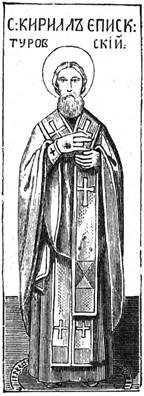
Великий святитель Русской Церкви, св. Кирилл, родился в Турове, на р. Припяти, от богатых родителей. Отказавшись от богатого наследства, он принял монашество в Туровском Борисоглебском монастыре, там же, где подвизался блаженный Мартин, которого посетили мученики364. Не довольствуясь строгой жизнью обыкновенного инока, блаж. Кирилл, по примеру великих столпников востока, заключил себя в столпе. Святость жизни его и его высокое просвещение обратили на него общее внимание: к нему обращались за советами для духовной жизни, и он, будучи на столпе, «многа Божественна Писания изложи»365. Потому естественно, что по смерти Туровского архипастыря общее желание избрало его в епископа Туровского. В звании архипастыря он присутствовал в 1162 г. на соборе, осудившем преступного по своей страшной гордости Владимирского епископа Феодора366, и принимал особенное участие в обличении его: «Феодорца, говорит древнее известие, за укоризну тако нарицаема, от Божественных Писаний ересь обличи». Пастве своей с ревностью предлагал он поучения в храме, и эти поучения столько прославили его, что в. кн. Андрей Боголюбский желал читать их и читал с уважением367. Блаж. пастырь по любви к уединённой жизни в 1182 г. оставил кафедру архипастыря и проводил последнее время своё в молитве. Но, не преставая любить спасение других, он по движениям св. любви писал наставления. Так писал он послание к избранному из белых священников Печерскому настоятелю Василию, на посвящении которого в авг. 1182 г. видим по летописи Туровского епископа Лаврентия368. Святитель-подвижник скончался 28 апр. 1183 г.
The great Hierarch of the Russian Church, St. Cyril, was born in Turov, on the River Pripyat, of wealthy parents. Having renounced a rich inheritance, he received monastic tonsure in the Turov Boris and Gleb Monastery, in the same place where the blessed Martin, visited by the martyrs, had struggled364. Not content with the strict life of an ordinary monk, the blessed Cyril, following the example of the great Stylites of the East, enclosed himself in a pillar. The holiness of his life and his lofty enlightenment drew general attention to him: people turned to him for counsel on the spiritual life, and he, while on the pillar, "composed many Divine writings"365. Thus it was natural that upon the death of the Turov archpastor, the general desire elected him bishop of Turov. In the rank of archpastor, he was present in 1162 at the council that condemned the Vladimir bishop Theodore, who was criminal in his terrible pride366, and he took a special part in refuting him: "Theodore, whom they called by the reproachful name 'the Theodorean,' he refuted as a heretic from the Divine Scriptures," says an ancient account. He zealously offered his flock teachings in the church, and these teachings so glorified him that Grand Prince Andrew Bogolyubsky desired to read them and read them with reverence367. The blessed pastor, out of love for the solitary life, left the archpastoral see in 1182 and spent his final time in prayer. But, never ceasing to love the salvation of others, he wrote instructions out of the impulses of holy love. Thus he wrote an epistle to the chosen superior of the Kiev Caves Monastery, Basil, who was from among the white clergy, at whose consecration in August 1182 we see in the chronicle the Turov bishop Laurence368. The Hierarch-ascetic reposed on April 28, 1183.
Он оставил для нас драгоценные памятники своего духовного просвещения. По древнему житию, он «златословесный учитель, светлым учением Богоразумия своего просветивший концы Русские».
He left for us precious monuments of his spiritual enlightenment. According to the ancient Life, he was "a golden-tongued teacher, who enlightened the ends of Russia with the bright teaching of his knowledge of God."
Ныне известны до 12 слов его369; 24 молитвы его и покаянный канон дышат самым живым благочестием и могут возбуждать и питать благочестие370.
Up to twelve of his homilies are known today369; his twenty-four prayers and a penitential canon breathe the most living piety and can arouse and nourish piety370.
«Слава Тебе, Христе Боже мой, что Ты удостоил меня видеть день преславного воскресения Твоего, в который Ты освободил души праведных, бывшие связанными во аде. Сей свободы и я желаю, Владыка мой! Разреши меня, связанного грехами многими. Да воссияет свет благодати Твоей в омрачённой душе моей. Знаю я неисчислимые щедроты Твои и Твоё человеколюбие неизреченное... Я несчастный, увлечённый любовью плотской в самоволие, вверг себя в смрадную тину греха и удалился от Твоей благодати. Быв Твоим сыном по рождению в духовной купели, оказался рабом греха. Потому стенаю из глубины сердечной и лью слёзы от боли душевной; помышляя о часе суда, весь изнемогаю. Как я явлюсь там? Какое слово скажу за грехи мои, какой ответ Судии услышу? Где скрою множество беззаконий моих? Нет и ни помощника, ни избавителя. Что мне делать, Господи мой, Господи! Не знаю, как приблизиться, чтобы получить спасение душе моей. Время – коротко. Хотя отныне пригвозди плоть мою к страху Твоему, чтобы не оказаться мне нагим и не быть посмешищем для демонов. Вот я, как дитя, пал погибельно, занятый врагом моим. Не было ещё грешника, как я. Злыми делами моими удалил я от себя ангела, хранителя души моей, и приблизил губителя, влагающего непотребное в моё сердце. Не оставь меня на совершенную погибель, Иисусе, – сладкое имя, создавший меня из земли и давший жизнь. Призри на смирение моё. Хотя без числа согрешил я, но не воздевал руки моей к чужому Богу, не отчаивался, сохраняя в душе Твою любовь к грешникам. Представляю Давида; он царь впал в любодеяния и совершил убийство, но, покаявшись перед Тобой, Богом и Творцом, стал достойным Твоей благости. И за Ахаза Ты Сам вещаешь пророку: не имам сотворити зла, яко видех его, како ходя сетует о гресех своих. Ей, Владыко мой! и ещё прибавлю, плача перед Тобой, о великих и неисцельных струпах моих: Манассия после идолослужения избил пророков Твоих, прогневал Тебя, Бога отцов его, и предан в наказание иноплеменнику; его скованного питали, как скота, травою; увидев же своё унижение и познав свои грехи, он возопил в оковах к Тебе, Богу и Творцу, и сверх ожидания избавлен был со славой. И я также всё худое сотворил в жизни моей и стал недостойным Твоей милости. Как дерзну скверными очами моими смотреть на Тебя? Как покажусь перед лицом Твоим, разодрав Боготканную одежду и осквернив плоть мою? Но очисти меня, Спасителю мой! Прости всё, как Бог! Призри на унижение моё, не помяни злобы грехов, которыми отяготил я бедную душу мою. Надеясь на милость Твою, вопию к Тебе воплем сильным, вспомни, Господи, слова пречистых уст Твоих; – Ты сказал: ищите – и обрящете, просите – и дастся вам. Не пришёл Ты, Владыко! звать праведных, а грешников, на покаяние; из них я первый. Против себя говорю о грехах моих; но, если бы и молчал я, Ты знаешь их. Приими меня, Премилостивый, как разбойника, мытаря, блудницу, блудного сына. За тем все отчаялись, а Ты принял их и сотворил жителями рая. Приими и моё покаяние, недостойного раба Твоего, Господи Иисусе Христе! Очистивший прокажённых! очисти скверны души моей; будь мне помощником, огради меня силой креста Твоего, утверди Св. Духом Твоим, прогони борющихся со мной. Пусть уста мои вещают великую милость Твою, что Ты – помощник в скорби моей. Спаси, Господи, раба Своего благоверного князя и помилуй всех христиан, молитвами Богородицы и всех святых. Ты – Бог наш и Тебе с умилением поклоняемся; все небесные силы хвалят Тебя, Отец, Сын и Дух Св., ныне и всегда и во веки веков, аминь».
"Glory to Thee, O Christ my God, that Thou hast vouchsafed me to see the day of Thy most glorious resurrection, on which Thou didst free the souls of the righteous that were bound in hades. This freedom I also desire, O my Master! Release me, who am bound by many sins. May the light of Thy grace shine forth in my darkened soul. I know Thine unnumbered compassions and Thine ineffable love for mankind... Wretch that I am, drawn by fleshly love into self-will, I have cast myself into the foul mire of sin and have withdrawn from Thy grace. Having been Thy son by birth in the spiritual font, I have proved to be a slave of sin. Therefore I groan from the depths of my heart and pour forth tears from the pain of my soul; thinking on the hour of judgment, I am utterly faint. How shall I appear there? What word shall I speak for my sins, what answer shall I hear from the Judge? Where shall I hide the multitude of my iniquities? There is neither helper nor deliverer. What shall I do, O my Lord, O Lord! I know not how to draw near to obtain salvation for my soul. The time is short. Henceforth, at least, nail my flesh to the fear of Thee, lest I be found naked and become a mockery for the demons. Behold, I have fallen like a child to destruction, occupied by my enemy. There has never been a sinner like me. By my evil deeds I have driven from me the angel, the guardian of my soul, and have drawn near the destroyer, who instills unseemly things into my heart. Leave me not to utter perdition, O Jesus—sweet name—who didst form me from the earth and give me life. Look upon my humility. Though I have sinned beyond number, yet I have not stretched out my hand to a strange god, I have not despaired, preserving in my soul Thy love for sinners. I set before me David: he, a king, fell into adultery and committed murder, but, repenting before Thee, God and Creator, he became worthy of Thy goodness. And concerning Ahaz, Thou Thyself dost say to the prophet: I will not do evil, for I have seen how he goes about mourning for his sins. Yea, O my Master! And I will add further, weeping before Thee, concerning my great and incurable wounds: Manasseh, after idolatry, slew Thy prophets, angered Thee, the God of his fathers, and was given over in punishment to a foreigner; bound in chains, he was fed grass like a beast; but seeing his humiliation and knowing his sins, he cried out in his bonds to Thee, God and Creator, and beyond expectation was delivered with glory. So also I have done every evil thing in my life and have become unworthy of Thy mercy. How dare I look upon Thee with my foul eyes? How shall I appear before Thy face, having torn the God-woven garment and defiled my flesh? But cleanse me, O my Savior! Forgive all, as God! Look upon my humiliation, remember not the malice of the sins with which I have burdened my poor soul. Hoping in Thy mercy, I cry to Thee with a mighty cry: Remember, O Lord, the words of Thy most pure lips; Thou didst say: Seek, and ye shall find; ask, and it shall be given you. Thou didst not come, O Master, to call the righteous, but sinners to repentance; of these I am the first. I speak against myself concerning my sins; but even if I were silent, Thou knowest them. Receive me, O Most Merciful, as the thief, the publican, the harlot, the prodigal son. For all these despaired, but Thou didst receive them and make them inhabitants of paradise. Receive also my repentance, O Lord Jesus Christ, of Thine unworthy servant! Thou who didst cleanse the lepers! Cleanse the defilement of my soul; be a helper to me, guard me by the power of Thy cross, strengthen me by Thy Holy Spirit, drive away those who war against me. Let my lips proclaim Thy great mercy, that Thou art a helper in my distress. Save, O Lord, Thy servant, the Right-believing Prince, and have mercy on all Christians, through the prayers of the Theotokos and of all the saints. For Thou art our God, and to Thee we bow down with compunction; all the heavenly powers praise Thee, Father, Son, and Holy Spirit, now and ever and unto the ages of ages. Amen."
«Становлюсь обличителем против себя самого в злых делах, которыми прогневал я Христа, преступая заповеди Его; передаю письму все помыслы, слова и дела, все скверны и беззаконие, в слух всему миру.
"I become an accuser against myself of the evil deeds with which I have angered Christ, transgressing His commandments; I commit to writing all thoughts, words, and deeds, all defilements and iniquity, for the hearing of all the world.
Доколе тебе, бедная душа, быть в узах, объятой страстями, обидами, немилосердием, гордостью, пьянством? Эти тенёта врага сведут тебя живую во ад. Воззови в покаянии: о, Христе мой! разорви узы греха и спаси меня.
How long, O wretched soul, wilt thou be in bonds, seized by passions, offenses, unmercifulness, pride, drunkenness? These snares of the enemy will lead thee alive into hades. Cry out in repentance: O my Christ! break the bonds of sin and save me.
Неумолкаемо славят огнедохновенными гласами полки серафимов Пресвятую Троицу, Содетеля всей твари. И я припадаю к Ней, прося прощения в грехах моих многих. О, милостивый Творец! хотя под конец спаси меня.
Unceasingly the hosts of seraphim glorify with fire-breathing voices the Most Holy Trinity, the Creator of all creation. And I fall down before Her, asking forgiveness for my many sins. O merciful Creator! at least at the end, save me.
Как глупые девы, не имею я светильника покаяния и не запасся маслом милосердия; напрасно толкаю в двери, затворённые для меня. Матерь Божия! избавь бедную душу мою от лютой муки».
Like the foolish virgins, I have no lamp of repentance and have not stored up the oil of mercy; in vain I knock at the doors that are shut to me. O Mother of God! deliver my poor soul from cruel torment."
«Помышляя по Адамски, впал я в бесовское; не держась закона, уклонился в беззаконие; возненавидев свет, заблудился в греховном мраке.
"Thinking in an Adamic manner, I have fallen into that which is demonic; not keeping the law, I have turned aside into lawlessness; hating the light, I have wandered in the darkness of sin.
Как милостивый, прими меня кающегося и подай мне прощение в грехах, которых так много. Пусть славлю я Отца и Сына и Св. Духа.
As the merciful One, receive me who repent and grant me forgiveness for my sins, which are so many. Let me glorify the Father and the Son and the Holy Spirit.
Всех я грешнее, но смею взглянуть на небо; припадая, вопию перед Тобой, Матерь Божия Пречистая, умилосердись надо мною, избавь меня вечного мучения».
I am more sinful than all, yet I dare to look to heaven; falling down, I cry before Thee, O Most Pure Mother of God, have mercy on me, deliver me from eternal torment."
«Если вспомню дела мои: нечаяние поражает меня: не выполнял я воли Божией и выполнял все похотения плоти, обольщённый врагом. Кто не знает о мне погибельном?
"If I recall my deeds: despair strikes me; I have not done the will of God and have fulfilled all the lusts of the flesh, deceived by the enemy. Who does not know of me, the perishing one?
Душа моя! горька темница и тяжелы оковы – злые твои страсти. Если не сбросишь их, сама себя отдаёшь ты бесам и будешь ими мучима.
O my soul! bitter is the prison and heavy the bonds—thy evil passions. If thou dost not cast them off, thou dost deliver thyself to the demons and shalt be tormented by them.
Как человек, согрешил я; но прости меня, как Бог, Ты Отче, Сыне и Св. Дух! Тебе покланяюсь я верно, и ищу Твоей милости до последнего вздоха.
As a man, I have sinned; but forgive me, as God, O Thou Father, Son, and Holy Spirit! To Thee I bow down faithfully, and I seek Thy mercy until my last breath.
Проповедуемая всеми христианами заступница и ходатаица перед Богом, – Мария Богоизбранная, Владычица! Приими молитву мою, подай прощение в грехах моих многих Твоими молитвами».
Proclaimed by all Christians as the intercessor and advocate before God—Mary, the Chosen of God, O Lady! Receive my prayer, grant forgiveness of my many sins through Thy prayers."
Наставление святителя Кирилла «о монашеском чине» достойно изучения по назидательности правил жизни и по высоким мыслям о страданиях Спасителя371.
The instruction of St. Cyril "on the monastic order" is worthy of study for the edification of its rules of life and for its lofty thoughts on the sufferings of the Savior371.
Подобно агнцам Ветхого Завета, заклавшимся на Пасху, ты приносишь себя в жертву Богу. Не будь же шелудив, ни хром, ни слеп, ни с ранами (Лев.22:22). Таких бросают псам и птицам на снедение. Берегись, как бы не быть здесь жильём духов нечистых, и не быть брошенным душою геенским птицам. Не будь шелудив грехами, не хромай попечениями о житейском, не будь слеп, живя бесплодно и заботясь только о чреве. По Ветхому закону, обет, великий или малый, должен быть приносим от чистого сердца. Да не будет и в твоих мыслях порочного колебания. Ты как свеча: волен в себе только до церковных дверей, а потом не смотря, как и что из тебя сделают. Ты как одежда: знай себя, пока не возьмут тебя в руки; а потом не заботься, если разорвут тебя и на тряпки. Имей свою волю только до монастыря; а приняв монашеский образ, отдай всего себя в послушание. Не скрывай в сердце ни малого своеволия, чтобы не умереть душою как Анания, которому сказал Пётр: зачем захотел ты искушать Духа Святого? Не человекам солгал ты, но Богу (Деян.5:4). Не будь нерадив о своём обете, чтобы не исполнилось на тебе слово Писания: лучше бы не узнавать истины, чем узнав уклониться от неё (2Пет.2:21). Со псом и свиньёй сравняешься, когда не исправишь души своей и опять возвратишься в мир.
Like the lambs of the Old Testament, which were slaughtered at Pascha, you offer yourself as a sacrifice to God. Be not mangy, nor lame, nor blind, nor with wounds (Lev. 22:22). Such are cast to dogs and birds for devouring. Beware, lest you be here a dwelling-place of unclean spirits, and lest you be cast, soul and all, to the birds of Gehenna. Be not mangy with sins, do not limp with cares for worldly things, be not blind, living fruitlessly and caring only for your belly. According to the Old Law, a vow, great or small, must be offered from a pure heart. Let there be no corrupt wavering in your thoughts either. You are like a candle: free in yourself only until the church doors, and then do not look to see how or what is made of you. You are like a garment: know yourself until you are taken in hand; and then do not worry if they tear you into rags. Keep your own will only until the monastery; but having received the monastic habit, give yourself entirely to obedience. Do not conceal even a little self-will in your heart, lest you die in soul like Ananias, to whom Peter said: why did you wish to tempt the Holy Spirit? You have lied not to men, but to God (Acts 5:4). Do not be negligent of your vow, lest the word of Scripture be fulfilled in you: it would be better not to know the truth than, having known it, to turn away from it (2 Pet. 2:21). You will be likened to a dog and a swine when you do not correct your soul and return again to the world.
Бог сказал Моисею: изведи из Египта людей Моих, Израиля, да вшедше наследят землю, юже обещал Аврааму (Исх.3:11,17) ... И ты, брат, желая последовать Христу, ведущему тебя на небо, держи на уме твоём, для чего удалился ты из мысленного Египта, из мира? Помни, ты желал обещанного Царства; ты не хотел томиться в греховной работе диаволу; ты отвращался от житейской суеты, от которой нет пользы душе, а только гибель; ты смущался женой и детьми. – Если пожелает иночества старец или больной, близкий к смерти, следует постричь его в мнишество: это – кости Иосифовы, которые принесли Евреи в землю обетованную... Пройди мерой море, т. е. забудь дела житейские, и как манну принимай от руки келаря хлеб, доставшийся без труда. Не люби богатой и мягкой одежды, но носи убогую, покрытую заплатами, пока не дойдёшь до горы Боголюбезных добродетелей. И тогда не ослабевай, а терпи, пока снидет с горы Моисей, неся скрижали с заповедями.
God said to Moses: Lead My people, Israel, out of Egypt, that they may enter and inherit the land which I promised to Abraham (Ex. 3:11,17) ... And you, brother, desiring to follow Christ, who leads you to heaven, keep in your mind why you withdrew from the mental Egypt, from the world? Remember, you desired the promised Kingdom; you did not wish to languish in the sinful slavery of the devil; you turned away from worldly vanity, from which there is no benefit to the soul, but only ruin; you were troubled by wife and children. – If an elder or a sick man near death desires monasticism, he should be tonsured into monasticism: these are the bones of Joseph, which the Jews brought into the Promised Land... Cross the sea by measure, i.e., forget worldly affairs, and like manna receive from the hand of the cellarer the bread that came without labor. Do not love rich and soft clothing, but wear poor garments covered with patches, until you reach the mountain of God-loving virtues. And even then do not grow weak, but endure until Moses comes down from the mountain, bearing the tablets with the commandments.
Не подражай живущим в монастыре без страха Божия, помышляющим только о чреве и одежде, надмевающимся говорливостью, со всеми спорящим, восхищающим честь и власть, для которых не один Христос, у которых своё учение, свои заповеди, составляемые по их воле. Ты, инок, знай заповеди и жизнь единого Христа, Который от рождения до распятия терпел досады и клеветы, поношение и раны за тебя. Готовь себя на терпение всех скорбей; подвизайся, не нарушай обета; мужайся, когда слышишь укоризны, – не уподобляйся противоречием нечистому сосуду, испущающему смрад. Помни о себе и о пострижении главы твоей, – ты носишь образ тернового венца Христова; неси крест свой, распинаясь вольным терпением, и победишь врага.
Do not imitate those living in the monastery without fear of God, who think only of their belly and clothing, who are puffed up with talkativeness, who argue with everyone, who snatch at honor and authority, for whom Christ is not one, who have their own teaching, their own commandments, composed according to their will. You, monk, know the commandments and the life of the one Christ, Who from His birth to His crucifixion endured insults and slanders, reproach and wounds for your sake. Prepare yourself to endure all sorrows; struggle, do not break your vow; take courage when you hear reproaches – do not become like an unclean vessel that emits a stench by contradiction. Remember yourself and the tonsure of your head – you bear the image of Christ's crown of thorns; carry your cross, crucifying yourself by voluntary endurance, and you will conquer the enemy.
Если желаешь вести жизнь небесную, по слову Писания, – наше житие на небесех; то храни заповедь, которую Христос, восходя в Иерусалим, дал ученикам: «хотяй быти в вас болий да будет всех мний и всем слуга» (Мк.9:37,10:43). Помни, что слышал при твоём пострижении: «се зде Христос невидимо стоит»; блюди, кому обещаваешися. Подумай, не более ли, чем на горе Синайской, окружён ты был огнём страха Божия?..
If you desire to lead a heavenly life, according to the word of Scripture – our life is in the heavens; then keep the commandment which Christ, going up to Jerusalem, gave to the disciples: "he who wishes to be greater among you shall be the least of all and the servant of all" (Mk. 9:37, 10:43). Remember what you heard at your tonsure: "here Christ stands invisibly"; watch to whom you promise yourself. Consider, were you not surrounded by the fire of the fear of God more than on Mount Sinai?..
Не соединяйся с сонмом Авирона, с мнихами, милующими тело своё, под предлогом праздника учреждающим особую трапезу с пивом, домогающимся взять власть над старейшими, не для Бога и не о своей пользе составляющим совет, а бесстыдно нападающим на эконома и келаря, как Корей с Дафаном и прочими на Моисея и Аарона. Для них Бог – чрево, по Апостолу, и слава в студе. За такие дела приходит гнев Божий на сынов противления, на мнихов, отвергающих свой обет и производящих мятеж в монастыре...
Do not join the company of Abiram, with monks who pity their own body, who under the pretext of a feast arrange a special meal with beer, who seek to seize power over their elders, who form a council not for God and not for their own benefit, but who shamelessly attack the steward and cellarer, like Korah with Dathan and the others against Moses and Aaron. For them, God is the belly, according to the Apostle, and glory is in shame. For such deeds the wrath of God comes upon the sons of disobedience, upon monks who reject their vow and cause rebellion in the monastery...
Внимай, что говорит Апостол Павел: «посла Бог Сына Своего, раждающася от жены, бывающа под законом». Смотри, как, по древнему образу сотворил Себе скинию из небесного золота. Он готовит Себя Самого на жертву. «Князи, говорится, людстии собрашася на Господа и на Христа Его» (Пс.2:3). Вместо муки крупичатой приносили хулы; вместо масла плевали на святое лицо Его; вместо тука (жира) били Его по щекам; купили Его ценой, весом серебра, – это – известный сикль.
Listen to what the Apostle Paul says: "God sent His Son, born of a woman, subject to the law." See how, according to the ancient pattern, He made Himself a tabernacle of heavenly gold. He prepares Himself for sacrifice. "The princes of the people," it is said, "gathered together against the Lord and against His Christ" (Ps. 2:3). Instead of fine flour they brought blasphemies; instead of oil they spat upon His holy face; instead of fat they struck Him on the cheeks; they bought Him for a price, by weight of silver – this is the known shekel.
Подобно тому и монах исполнением закона и заповедей творит своё тело скинией Святому Духу, приносит себя в жертву Господу умом чистым, принося, как муку, молитву Господу и вместо масла – слёзы, вместо тука – воздыхания сердечные.
Likewise the monk, by the fulfillment of the law and the commandments, makes his body a tabernacle for the Holy Spirit, offers himself as a sacrifice to the Lord with a pure mind, bringing, like flour, prayer to the Lord, and instead of oil – tears, instead of fat – heartfelt sighs.
Пояс – осуждение на крестную смерть, которой обожен Адам. Ибо водим был связанный по Писанию: опоясан правдой и истиной, обвит по рёбрам своим (Ис.11:5).
The belt – the condemnation to death on the cross, by which Adam was deified. For He was led bound, according to Scripture: girded with righteousness and truth, wound about His ribs (Is. 11:5).
Кольца (обеди) указывают на царский сан Его. «Ведоша Его к Пилату связана, глаголюще: распни Его, яко Сей Себе царя творит». И это было по пророчеству: «связати цари их путы», чтобы бесчестие Адамова изгнания предал Он как узду царям. Ибо те, если носят на своём сане сие поношение, спасаются374.
The rings (obedi) indicate His royal rank. "They led Him bound to Pilate, saying: crucify Him, for He makes Himself king." And this was according to the prophecy: "to bind their kings with fetters," so that the dishonor of Adam's exile He might give as a bridle to kings. For they, if they bear this reproach in their rank, are saved374.
Эфуд означает, когда Христос стал перед архиереем, и Каиафа сказал: «вы не весте, единому подобает умрети за люди». Это сказал он, смотря в эфуд. «Тъгда закрывъше платком лице Его, бьяхуть И, глаголюще: прорцы нам, Христе, кто есть ударий – Тя?» Провидцы, зря в эфуд, прорицали»376.
The ephod signifies when Christ stood before the high priest, and Caiaphas said: "you do not know, it is fitting that one should die for the people." He said this, looking into the ephod. "Then, covering His face with a cloth, they struck Him, saying: prophesy to us, O Christ, who is it that struck Thee?" The seers, looking into the ephod, prophesied"376.
По этому образцу чернецу даётся малая мантия, но с тем, чтобы держал закон не на груди, не на лице, а за плечами377.
According to this pattern, the monk is given a small mantle, but with the condition that he keep the law not on his chest, not on his face, but behind his shoulders377.
Четвероугольной ризе Аароновой соответствует во Христе то, что распявшие Его разделили ризы Его, и Он тем покрыл четыреконечный мир.
To the four-cornered robe of Aaron corresponds in Christ the fact that those who crucified Him divided His garments, and He thereby covered the four-cornered world.
Христовы воины – монахи носят на себе также четыреконечную мантию, Божий покров, подобный тому облаку, который простёрт был над Израилем в пустыне. И монах – отрок Божий, Израиль.
Christ's soldiers – monks – also wear a four-cornered mantle, God's protection, like the cloud that was spread over Israel in the wilderness. And the monk is a child of God, Israel.
Вместо всесожигаемого священнического Агнца, Тот, Который принял на Себя образ смертного Адама, прободается в рёбра и сожигается Духом Св. с пролиянием крови и воды.
Instead of the priestly Lamb of the whole burnt offering, He Who took upon Himself the image of mortal Adam is pierced in the side and consumed by the Holy Spirit with the outpouring of blood and water.
По сему образцу епископы носят омофор на раменах своих и полагают душу свою за порученных им людей, исхищая их учением из ада грехов».
According to this pattern, bishops wear the omophorion on their shoulders and lay down their soul for the people entrusted to them, snatching them by teaching from the hell of sins.
В заключение смиренный святитель говорит: «если кто из мудрых иначе будет толковать: мы не станем противоречить. Я не жнец, а собираю колосья; я не художник в книжных делах. Мы, люди простые, более всего просим молитв у вашего старейшинства, во Христе Иисусе Господе нашем».
In conclusion, the humble Hierarch says: "if any of the wise interpret otherwise: we shall not contradict. I am not a reaper, but I gather ears of grain; I am not an artist in bookish matters. We, simple people, most of all ask for prayers from your elderhood, in Christ Jesus our Lord."
«Если бы говорил я от себя: вы делали бы хорошо, не а приходя (в храм). Но я возвещаю вам слово Господа, читаю вам грамоту Христову. Когда кто приносит грамоту царскую или княжескую в город подвластным: не допытываются, каков по жизни принесший, богат ли он или беден, грешник ли или праведник? А со вниманием выслушивают только, что читается, и заботятся о том, как бы чего не проронить... И если бесчинный человек произведёт при том шум, то прогоняют Его побоями, как пакостника. Если же и для земного царя столько внимания: ещё более вы должны оказывать внимание здесь, где Владыка Господь беседует с ангелами. Потому-то умоляю вас, пришедших сюда, – вразумляйте не приходящих, чтобы ходили в храм... Не понимаете, что поётся? Научу вас и большему того, если станете внимать и учиться. Если же не будете внимательны, я умолкну, а вы будете осуждены за то, что имели учителя да не внимали. Не для меня приходите в церковь, – я грешник, – но для Евангельской проповеди и Апостольского учения. – Скажите мне, братия, если при восходе солнца станет кто-нибудь закрывать свои глаза, с нежеланием видеть свет, и будет говорить: для меня мрак лучше света, – одобрите вы его, или же осудите? То же и слово учения. Божие слово называется в писании светом, при том таким, который выше всякого видимого света. Видимый свет озаряет плотские очи, а тот – душевные. Если бы раздавал я вам каждый день или мёд или пиво: не стали ли бы вы ходить даже без зова? Вы перегоняли бы друг друга. Но вот я раздаю слова Божии, лучшие золота и дорогих каменьев, более сладкие, чем мёд и сот, и вы лишаетесь их, не приходя в церковь! Я порицаю и осуждаю тех, которые не ходят в церковь слушать слово Божие; но вас приходящих хвалю и благословляю».
“If I were speaking from myself, you would do well not to come (to church). But I proclaim to you the word of the Lord, I read to you the epistle of Christ. When someone brings a royal or princely charter into a city to its subjects, do they inquire into the life of the one who brought it, whether he is rich or poor, a sinner or a righteous man? They only listen attentively to what is read, and take care not to miss anything... And if a disorderly person makes a noise, they drive him out with blows, as a nuisance. If there is so much attention for an earthly king, how much more attention ought you to show here, where the Lord Master converses with angels. Therefore I beseech you who have come here—instruct those who do not come, that they may go to church... Do you not understand what is sung? I will teach you even greater things, if you will attend and learn. But if you are not attentive, I will fall silent, and you will be condemned because you had a teacher and did not attend. Do not come to church for my sake—I am a sinner—but for the Gospel preaching and the Apostolic teaching. Tell me, brethren, if at sunrise someone were to close his eyes, unwilling to see the light, and were to say: darkness is better for me than light, would you approve him, or would you condemn him? So it is with the word of teaching. The word of God is called light in Scripture, and such a light as is above every visible light. Visible light illumines the bodily eyes, but that light illumines the soul. If I were to distribute to you every day either honey or beer, would you not come even without being summoned? You would outdo one another. But behold, I distribute the words of God, better than gold and precious stones, sweeter than honey and the honeycomb, and you deprive yourselves of them by not coming to church! I rebuke and condemn those who do not go to church to hear the word of God; but you who come, I praise and bless.”
Пролог по списку Румянцева № 322. Царского № 396. В печатном прологе 28 апр. видим несколько перемен и пропусков против подлинника, писанного ещё тогда, как надлежало молить Господа, да избавит „от безбожных Агарян, присно мучащих ны“, следовательно, не позже как в конце XIII в.
Prologue according to the Rumyantsev manuscript No. 322. Tsarsky No. 396. In the printed Prologue for April 28, we see several changes and omissions compared to the original, which was written at a time when it was still necessary to pray to the Lord to deliver “from the godless Hagarenes, who ever torment us,” consequently, no later than the end of the 13th century.
„Андрею же Боголюбскому князю многа послания написа от Евангельских и пророческих писаний, яже-суть чтомы на праздники Господские“. Эти слова ясно говорят, что сочинения, которые посылались к князю Андрею, то же, что поучения на Господские праздники. Как писания, читанные кн. Андреем, извлечены из Евангельских и пророческих писаний, так содержанием ныне известных праздничных слов св. Кирилла служат Евангельские чтения. Этим однако не говорим мы того, что только десять слов, изданные Калайдовичем (памяти. XII в. М. 1821), и были написаны св. Кириллом.
“To Prince Andrew Bogolyubsky he wrote many epistles from the Gospel and prophetic writings, which are read on the Lord’s feasts.” These words clearly indicate that the works sent to Prince Andrew are the same as the homilies on the Lord’s feasts. Just as the writings read by Prince Andrew were drawn from the Gospel and prophetic writings, so the content of the now-known festal homilies of St. Cyril consists of Gospel readings. By this, however, we do not say that only the ten homilies published by Kalaydovich (Monuments of the 12th Century, Moscow, 1821) were written by St. Cyril.
Калайдович издал 14 поучений, в том числе 10 слов, 1 похвальное и 3 частные наставления (Памятники XII в. М. 1824 г.). Но слово на Пятидесятницу (стр. 86) по лучшим спискам принадлежит Клименту епископу Болгарскому; да и по слогу оно – не сочинение красноречивого Туровского пастыря. Слово о мытарствах (стр. 92–101) ни в лучших списках не приписывается св. Кириллу Туровскому, ни содержанием своим не подходит к учению того, кто везде на первом месте ставит св. Писание. Слово о премудрости (XI) простотой своей указывает в сочинителе простого инока и ни в одном списке не приписывается св. Кириллу. Взамен того в Волоколамском сборнике XVI в. есть слово Кирилла Туровского на Великую субботу, не изданное Калайдовичем. В ркп. Царского XIV в. № 3619 читается: „наказание того же Кирилла: приимем от хранилища“.
Kalaydovich published 14 homilies, including 10 homilies, 1 encomium, and 3 private instructions (Monuments of the 12th Century, Moscow, 1824). But the homily for Pentecost (p. 86) belongs, according to the best manuscripts, to Clement, Bishop of Bulgaria; and by its style it is not a composition of the eloquent pastor of Turov. The homily on the Toll-houses (pp. 92–101) is neither attributed to St. Cyril of Turov in the best manuscripts, nor does its content correspond to the teaching of one who everywhere places Holy Scripture first. The homily on Wisdom (XI), by its simplicity, points to a simple monk as its author, and is not attributed to St. Cyril in any manuscript. In place of these, in a Volokolamsk collection of the 16th century, there is a homily of Cyril of Turov for Holy Saturday, not published by Kalaydovich. In the manuscript of Tsarsky, 14th century, No. 3619, we read: “instruction of the same Cyril: let us receive from the storehouse.”
Молитвы св. Кирилла Туровского в прежние времена не раз были издаваемы: Молитвенник. Вильно 1596. 1635 г. Следованная псалтырь, Острог 1598 г. Сл. Сахарова библиографию № 102. 108. 319. Некоторые молитвы и несколько песней канона напеч. в Извест. акад. т. 5. 249–258. 6, 300. В Православном Собеседнике изданы все молитвы, и отчётливо. Казань 1857. – Слог молитв изменён в ркп., но канон сохранился почти в целости.
The prayers of St. Cyril of Turov were published more than once in former times: Prayer Book, Vilna, 1596, 1635; The Psalter with Commentary, Ostrog, 1598; see Sakharov’s Bibliography, Nos. 102, 108, 319. Some prayers and several hymns of the canon were printed in the Bulletin of the Academy, vol. 5, pp. 249–258; vol. 6, p. 300. All the prayers were published, and clearly, in The Orthodox Interlocutor, Kazan, 1857. The style of the prayers has been altered in the manuscripts, but the canon has been preserved almost in its entirety.
Учение напеч. в памятниках XII в., стр. 102–116. Передавая его на Русском языке, удерживаем тексты св. Писания в том точном виде, в каком предложены они у св. Кирилла.
The instruction was printed in Monuments of the 12th Century, pp. 102–116. Rendering it in Russian, we retain the texts of Holy Scripture in the exact form in which they are presented by St. Cyril.
Кадман, кажется, тоже, что кожух, казить, исказить, делать скопцом. Это – подрясник, хитон, власяница, одеяние из шерсти грубой.
Kadman seems to be the same as kozhukh, meaning to kazit, to distort, to make a eunuch. This is a cassock, a chiton, a hair-shirt, a garment of coarse wool.
„Обеди“ – кольца одежды Аароновой (Исх.28:22–28) – сопоставляются с украшением λωϱον Византийской царской одежды. В одном списке Кормчей вместо –„обеди златы“ – дски златы.
“Obedi”—the rings of Aaron’s garment (Ex. 28:22–28)—are compared with the ornament λωϱον of the Byzantine imperial garment. In one manuscript of the Kormchaya, instead of “obedi zlaty” we find “dski zlaty.”
Аналав – ныне парамант. Кассиан об иноках (instit. lib. 1. с. b): „носят двойные плетёнки – из шерсти, называемые у Греков аналавами“. – В памяти. Моск. древности 128 изображён парамант с праздниками XIV в. Здесь оттиснуты изображения праздников с надписями против каждого: Благовещение, Рождество Христово, Сретение, Крещение, Воскрешение Лазаря, Вход в Иерусалим, Преображение, Распятие, Воскресение, Сошествие Св. Духа, Успение Богородицы. Это те же праздники, какие видим у Никифора Каллиста в XIV в. По Дю-канжу и Гоару у Греков парамант – такой же, какой ныне употребляется Русскими инокамп: четвероугольный лоскут с изображением креста на спине и крест на груди; то и другое держится тесьмами.
Analav—now the paraman. Cassian on monks (Instit. lib. 1, c. b): “They wear double plaited cords of wool, called by the Greeks analavs.” In the Monuments of Moscow Antiquities, p. 128, a paraman with the feasts of the 14th century is depicted. Here are impressed images of the feasts with inscriptions opposite each: Annunciation, Nativity of Christ, Meeting, Baptism, Raising of Lazarus, Entry into Jerusalem, Transfiguration, Crucifixion, Resurrection, Descent of the Holy Spirit, Dormition of the Theotokos. These are the same feasts as we see in Nicephorus Callistus in the 14th century. According to Du Cange and Goar, among the Greeks the paraman is the same as that now used by Russian monks: a quadrangular piece of cloth with an image of a cross on the back and a cross on the chest; both are held by cords.
Прорицали, смотря собственно не на эфуд, а на „слово судное“, лежавшее на груди поверх эфуда. Собственно, об эфуде у блажен. Кирилла говорится далее, там, где говорит он о „четвероскутной ризе Аароновой“.
They prophesied, looking not at the ephod itself, but at the “word of judgment” which lay on the chest over the ephod. Properly, the ephod is spoken of by Blessed Cyril further on, where he speaks of the “four-square robe of Aaron.”