Ликиний, управлявший Восточной Римской Империей то время, как Константин был властителем на Западе, соблюдал мир с своим соправителем в первое время по разделении империи; он даже из угождения Константину, покровителю христиан, также издал несколько указов в их пользу, но, утвердившись в своей власти, он открыто стал на стороне язычников и преследовал христиан в областях, находившихся под его управлением.
Licinius, who governed the Eastern Roman Empire at the time when Constantine was ruler in the West, maintained peace with his co-ruler in the first period after the division of the empire; he even, to please Constantine, the protector of Christians, issued several decrees in their favor, but, having established himself in his power, he openly took the side of the pagans and persecuted Christians in the regions under his rule.
В это время много женщин христианок сделались жертвами его беспутного права. Между прочими обратил он своё внимание на одну молодую девушку – христианку, по имени – Глафиру, находившуюся при дворе его супруги – Констанции. Он поручил одному царедворцу передать Глафире, что она так дорога ему, что он желает жениться на ней и готов удалить свою супругу Констанцию...
At this time many Christian women became victims of his licentious character. Among others, he turned his attention to a young maiden—a Christian, by the name of Glaphyra—who was at the court of his wife, Constantia. He entrusted one of his courtiers to convey to Glaphyra that she was so dear to him that he wished to marry her and was ready to remove his wife Constantia...
Оскорблённая и испуганная таким предложением чистая христианка поспешила сообщить о нём Констанции и просила защитить её от незаконных замыслов Ликиния. Чтобы спасти молодую девушку от преследований Ликиния, Констанция распустила слух, что Глафира заболела и умерла, между тем, тайно удалила её из Никомидии. Переодетая в мужское платье, сопровождаемая верными служителями, Глафира, после продолжительного путешествия, прибыла в Понтийский город Амасию. Этот город так понравился ей, что она пожелала остаться в нём. Случайно познакомились она и её спутники с здешним жителем – христианином Квинтием, который, узнав, что они–христиане, предложил им помещение у себя в доме, познакомил их с другими христианами, бывшими в городе, и с самим епископом Василием, всеми уважаемым за его святую жизнь. Когда Глафира рассказала ему о причине, заставившей её уехать из Никомидии, то епископ посоветовал ей избегать всякого знакомства, опасаясь, что если какой-нибудь неосторожный разговор подаст повод догадываться и узнать, кто она, то ни ей самой, ни другим христианам в городе не избежать будет преследований.
Offended and frightened by such a proposal, the pure Christian hastened to inform Constantia of it and begged her to protect her from the unlawful designs of Licinius. To save the young maiden from the persecutions of Licinius, Constantia spread a rumor that Glaphyra had fallen ill and died, while secretly removing her from Nicomedia. Disguised in men's clothing, accompanied by faithful servants, Glaphyra, after a long journey, arrived at the Pontic city of Amasea. This city pleased her so much that she wished to remain in it. She and her companions happened to become acquainted with a local inhabitant—a Christian named Quintius, who, learning that they were Christians, offered them lodging in his house, introduced them to other Christians in the city, and to the bishop Basil himself, who was respected by all for his holy life. When Glaphyra told him the reason that had compelled her to leave Nicomedia, the bishop advised her to avoid all acquaintance, fearing that if some careless conversation should give occasion to suspect and discover who she was, then neither she herself nor the other Christians in the city would escape persecution.
Не смотря однако же на это предупреждение и разные предосторожности, опасения епископа оправдались. – В это время был он занят постройкой первой христианской церкви в Амасии. Глафира отнеслась к этому делу с полным сочувствием, пожертвовала на храм все богатые подарки, которыми наделила её Констанция, расставаясь с ней, и сверх того отправила к Констанции письмо, в котором, извещая, где и как она устроилась, просила её доставить средства для окончания строящейся церкви. Констанция сочувственно отозвалась на это письмо, прислала щедрые дары в церковь и при этом сама написала Василию, прося его не оставлять своим покровительством Глафиру...
Notwithstanding this warning and various precautions, however, the bishop's fears were justified. At this time he was occupied with the construction of the first Christian church in Amasea. Glaphyra responded to this work with full sympathy, donating to the church all the rich gifts with which Constantia had endowed her when parting with her, and moreover sent a letter to Constantia, in which, informing her where and how she had settled, she asked her to provide means for the completion of the church under construction. Constantia responded sympathetically to this letter, sent generous gifts to the church, and also wrote herself to Basil, asking him not to leave Glaphyra without his protection...
Переписка эта была открыта при дворе Ликиния, и когда ему было донесено о ней, то он приказал немедленно привести в Никомидию Глафиру и епископа Василия. Но случилось так, что, прежде чем дошло его повеление до Амасии, Глафира скончалась. Василия же в оковах повезли в Никомидию; за ним последовали туда преданные ему клирики: Парфений и Феотим. По прибытии в Никомидию, Василий был немедленно заключён в темницу, а клирики его поселились по близости от неё, в доме одного христианина, по имени Ельпидифора. Этот благочестивый человек успел с помощью денег уговорить тюремного сторожа допускать его и клириков во всякое время к Василию, и таким образом, беспрепятственно проводя вместе дни и ночи, эти люди укреплялись и услаждались беседой и молитвой.
This correspondence was discovered at the court of Licinius, and when he was informed of it, he ordered that Glaphyra and Bishop Basil be brought immediately to Nicomedia. But it happened that, before his command reached Amasea, Glaphyra had died. Basil, however, was taken in chains to Nicomedia; his devoted clerics, Parthenius and Theotimus, followed him there. Upon arriving in Nicomedia, Basil was immediately thrown into prison, while his clerics settled nearby, in the house of a Christian named Elpidiphorus. This pious man, by means of money, succeeded in persuading the jailer to allow him and the clerics access to Basil at all times, and thus, spending days and nights together without hindrance, these men were strengthened and delighted by conversation and prayer.
Накануне того дня, когда епископ должен был явиться на суд, он в присутствии своих друзей провёл всю ночь в молитве и чтении псалмов. «Аще вселюся в последних моря, и тамо рука Твоя наставит меня и удержит меня десница Твоя» ... – повторял он, как-то особенно останавливая своё внимание на этих словах...
On the eve of the day when the bishop was to appear before the court, he spent the whole night in prayer and the reading of psalms in the presence of his friends. "If I dwell in the uttermost parts of the sea, even there shall Thy hand lead me, and Thy right hand shall hold me" ...—he repeated, dwelling with particular attention on these words...
Излив душу свою в слёзной молитве, Василий сказал своим друзьям: «братия, испытание приближается... Не страшитесь, не изнемогайте от предстоящей скорби, но оставайтесь мужественны и непоколебимы в вере; возводите очи душевные к Тому, Кто может спасти нас. На Него неуклонно взирайте, Он один может превратить печаль в радость и труд в покой. Знайте, друзья мои, что в эту ночь Господь открыл мне, каков будет мой конец и какую славу дарует Он мне, рабу Своему. Вы же не печальтесь, но, возвратившись, укрепляйте братьев своих. Изберите в епископы Евтихия, сына Каллистова».
Having poured out his soul in tearful prayer, Basil said to his friends: "Brethren, the trial draws near... Fear not, nor faint from the impending sorrow, but remain courageous and steadfast in the faith; lift up the eyes of your soul to Him Who is able to save us. Look unswervingly to Him; He alone can turn sorrow into joy and labor into rest. Know, my friends, that this night the Lord has revealed to me what my end will be and what glory He will grant me, His servant. But do not grieve; rather, return and strengthen your brethren. Choose Eutychius, the son of Callistus, as bishop."
Скоро после того он был потребован на суд; с твёрдостью возражал он на все обвинения и отказался от помилования на том условии, чтобы отречься от Христа. Тогда произнесён был над ним смертный приговор. Идя на казнь, он пел псалмы, молился о верующих, о прекращении язычества и повторял слова: – «ни скорбь, ни теснота, ни муки, ни огонь, ни смерть не могут отлучить меня от любви Христовой» ... Потом, обратясь к палачу, сказал: «исполни, друг, приказанное тебе!» – и преклонил под меч свою голову.
Soon after, he was summoned to the court; with firmness he refuted all the accusations and refused a pardon on the condition that he renounce Christ. Then the death sentence was pronounced upon him. Going to his execution, he sang psalms, prayed for the faithful, for the cessation of paganism, and repeated the words:—"Neither tribulation, nor distress, nor torments, nor fire, nor death can separate me from the love of Christ"... Then, turning to the executioner, he said: "Perform, friend, what is commanded you!"—and bowed his head under the sword.
По убиении мученика останки его были брошены в море. Извещённые тайным откровением Ельпидифор и диаконы Парфений и Феотим обрели их близ Синопа и перевезли в Амасию, где и предали их погребению в новосозданном храме.
After the martyr's slaying, his remains were thrown into the sea. Informed by a secret revelation, Elpidiphorus and the deacons Parthenius and Theotimus found them near Sinope and transported them to Amasea, where they committed them to burial in the newly-built church.
Жизнь Василия была описана Иоанном, пресвитером Никоиндийским, который сам посещал мученика в темнице и был очевидцем его кончины, другие же сведения получил от Ельпидифора и двух диаконов, сопровождавших святителя и близких ему.
The life of Basil was written by John, a presbyter of Nicoindia, who himself visited the martyr in prison and was an eyewitness of his end; other information he received from Elpidiphorus and the two deacons who accompanied the hierarch and were close to him.
О св. Василии Амасийском упоминает в своей речи против ариан св. Афанасий Великий и называет его одним из великих защитников православия. Он присутствовал и подписался на двух известных соборах в 314 году: Гангрском и Неокесарийском 307.
St. Athanasius the Great mentions St. Basil of Amasea in his discourse against the Arians and calls him one of the great defenders of Orthodoxy. He was present and signed at two well-known councils in the year 314: Gangra and Neocaesarea 307.
В последней половине XIV столетия в молодом причетнике Устюжского собора благодатью Божией загорелось желание посвятить свою жизнь просвещению Зырян, диких сынов лесов северных 308.
In the latter half of the fourteenth century, in a young clerk of the Ustyug cathedral, by the grace of God, a desire was kindled to devote his life to the enlightenment of the Zyrians, wild sons of the northern forests 308.
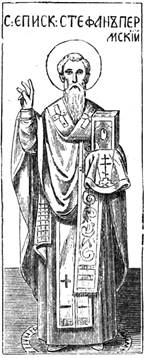
В Устюге, торговом городе, Стефан, сын причетника Симеона и Богобоязненной Марии, ещё в юных летах показывал в себе необыкновенные дарования, в год выучился бегло читать книги и потом, между занятиями причетника, любил разговаривать с Зырянами на торгу. Увлекаемый желанием лучшей жизни и просвещения, отправился он в кафедральный город своей страны. Ещё «млад сый постригся в чернцы, в граде Ростове у св. Григория Богослова в монастыре, нарицаемом Затвор, близ епископьи, яко многи книги бяху ту»; любознательный молодой человек избрал для уединения Богословский монастырь именно потому, что здесь было много книг, а близость кафедры епископской представляла и другие средства для образования. Он с неутомимой любовью занимался книгами. Биограф его Епифаний с утешением воспоминает, как бывало спорили они между собой «то о каких-либо событиях, то о слове, то о каком-либо стихе или строке». Стефан написал своей рукой много книг, которые, как говорит Епифаний, служат памятниками его Богомыслия: «желая же большего просвещения, он обучился и Греческому языку». По ркп. житию св. Петра царевича, в Ростове, при епископе Кирилле, «в кафедральной церкви св. Богородицы левый клирос Гречески пояху, а правый – Русскы». Так блаж. Стефан имел удобства ознакомиться и с Греческим языком и с книгами Греческой церкви. Зырянский язык знаком ему был ещё на родине, в Устюге, по близким сношениям там с соседями Зырянами; а теперь занимался он им с тем, чтоб быть в состоянии не только говорить с Зырянами, но и предлагать им на их языке учение веры Христовой. Он составил Зырянскую азбуку и перевёл несколько церковных книг на язык Пермский309. Впрочем, решаясь на подвиг Апостольский, он обогащался не одними знаниями и не одними человеческими пособиями: он проводил жизнь в посте и молитве, обучал душу смирению, кротости, терпению, любви, чтобы переносить все неприятности и скорби для Господа, без вреда делу веры и своей душе. За чистоту жизни посвящён он в иеродиакона Арсением, епископом Ростовским, тогда как пострижение его в иноки совершил игумен Максим при епископе Парфении. Иноческие подвиги его в Ростове продолжались около 10 лет310.
In Ustyug, a trading town, Stephen, the son of the clerk Simeon and the God-fearing Mary, even in his youthful years showed extraordinary gifts; in one year he learned to read books fluently, and afterwards, amidst his duties as a clerk, he loved to converse with the Zyrians at the marketplace. Drawn by a desire for a better life and enlightenment, he set out for the cathedral city of his country. While still young, he was tonsured a monk in the city of Rostov, at the monastery of St. Gregory the Theologian, called the "Zatvor" (the Recluse), near the bishop's see, "for many books were there"; the inquisitive young man chose the Theological Monastery for his solitude precisely because there were many books there, and the proximity of the episcopal see offered other means for education. He occupied himself with books with untiring love. His biographer Epiphanius recalls with comfort how they used to dispute with each other "sometimes about certain events, sometimes about a word, sometimes about some verse or line." Stephen copied many books with his own hand, which, as Epiphanius says, serve as monuments of his contemplation of God: "Desiring greater enlightenment, he also learned the Greek language." According to the manuscript Life of St. Peter the Prince, in Rostov, under Bishop Cyril, "in the cathedral church of the Holy Theotokos, the left choir sang in Greek, and the right in Russian." Thus blessed Stephen had the opportunity to become acquainted both with the Greek language and with the books of the Greek Church. The Zyrian language was familiar to him from his homeland in Ustyug, through close dealings there with the neighboring Zyrians; and now he studied it with the aim of being able not only to speak with the Zyrians, but also to offer them the teaching of the faith of Christ in their own language. He composed a Zyrian alphabet and translated several church books into the Permian language 309. However, resolving upon an apostolic feat, he enriched himself not only with knowledge and not only with human aids: he led a life of fasting and prayer, training his soul in humility, meekness, patience, and love, so as to bear all unpleasantness and sorrows for the Lord's sake, without harm to the work of faith and his own soul. For the purity of his life, he was ordained a hierodeacon by Arsenius, Bishop of Rostov, while his tonsure as a monk had been performed by Abbot Maximus under Bishop Parthenius. His monastic labors in Rostov continued for about ten years 310.
Приготовив себя таким образом к званию проповедника веры язычникам, блаж. Стефан явился в Москву к правившему митрополией Герасиму, епископу Коломенскому, и просил благословения на свои намерения. «Благослови меня, владыка, хочу идти в страну языческую, Пермь, говорил Стефан; учить св. вере людей неверных; решился я или привести их ко Христу, или сложить у них голову за Христа моего». Пастырь увидел в Стефане особенное звание Божие к великому делу и одушевил его на подвиг своим наставлением. Он посвятил его в иеромонаха, снабдил антиминсами, св. миром и другими священными вещами, – а в. князь обезопасил его грамотами. Это было тогда, как по кончине св. Алексия Митяй отправился в Царьград за посвящением, в 1379 г.311
Having thus prepared himself for the calling of a preacher of the faith to the pagans, blessed Stephen appeared in Moscow before Gerasimus, Bishop of Kolomna, who was governing the metropolitanate, and asked for a blessing upon his intentions. "Bless me, Vladyka; I wish to go to the pagan land of Perm," said Stephen; "to teach the holy faith to unbelieving people; I have resolved either to bring them to Christ, or to lay down my head among them for my Christ." The shepherd saw in Stephen a special calling of God to a great work and inspired him for the feat with his instruction. He ordained him a hieromonk, supplied him with antimensions, holy chrism, and other sacred items, while the Grand Prince secured him with charters. This was at the time when, after the repose of St. Alexis, Mityai had set out for Constantinople for consecration, in the year 1379 311.
Из Устюга блаж. Стефан спустился по северной Двине до впадения в неё р. Вычегды: здесь начинались тогда поселения Зырян-язычников. «И нача, яко овча посреде волков, посреди рода строптива и развращенна ходити и проповедати Христа», говорит Епифаний. Много трудов, много борьбы, много лишений и скорбей надлежало ему вытерпеть. Кроме дикости Зырян, язычество с его страстями стояло лицом к лицу перед ним, с непримиримою злостью против св. истины. Воипель и золотая баба были главные идолы Зырян312. Кроме того, они поклонялись деревьям, камням, огню; разные животные в виде истуканов также были предметом благоговейного почтения их; верили они в духов добрых и злых, и знали великого, недоступного для поклонения духа, служители суеверия выставляли из себя необыкновенных людей – кудесников (волхвов) и тунов (прорицателей), и для личных выгод готовы были защищать старое заблуждение всеми мерами. Блаженный Стефан решился на всё для св. веры313.
From Ustiug, the blessed Stephen sailed down the Northern Dvina to the confluence of the Vychegda River: there, at that time, began the settlements of the pagan Zyrians. "And he began, like a sheep in the midst of wolves, to walk in the midst of a perverse and crooked generation and to preach Christ," says Epiphanius. Many labors, much struggle, many privations and sorrows he had to endure. Besides the savagery of the Zyrians, paganism with its passions stood face to face before him, with irreconcilable malice against holy truth. Voipel and the Golden Woman were the chief idols of the Zyrians312. Moreover, they worshipped trees, stones, and fire; various animals in the form of statues were also objects of their reverent veneration; they believed in good and evil spirits, and knew of a great spirit, inaccessible to worship, whose servants—the sorcerers (wizards) and the tunas (soothsayers)—set themselves up as extraordinary men, and for personal gain were ready to defend the old delusion by every means. The blessed Stephen resolved to do all for the holy faith313.
Первое Зырянское поселение, которое встретил он при устье Вычегды, было Котлас, или по прежнему Пырас. Здесь приняли Московского проповедника радушно: о нём ещё не узнали волхвы. Он крестил здесь жителей и основал храм314. Продолжая путь свой по правому берегу Вычегды, он проповедовал язычникам имя Христово и ставил там и здесь часовни и кресты, как самые понятные для простых людей книги новой веры315. Наконец он остановился при слиянии р. Выми с Вычегдой, там, где тогда было главное гнездо Зырян, откуда простирались они далее по Вычегде, Выми и Сысоле316. Здесь, где жила самая знать Зырян, Стефан с особенной ревностью стал проповедовать небесные истины. Простые сердцем с изумлением слушали нового проповедника и потом крестились. Сперва немного было таких, которые решались расстаться с привычным суеверием. Блаженный Стефан благодарил и за то Господа, и построил при устье Выми храм в честь Благовещения, «праздника начального из всех праздников», празднуемого в марте, «начальном из всех месяцей». Он открыл в нём Богослужение на Зырянском языке, дабы каждый мог сам сличать учение христианское с мыслями и делами суеверия. Но невежество было слишком велико, – оно требовало вразумления ещё более поразительного. Предметом самого высокого благоговения служила для Зырян «прокудливая берёза», громадная по толщине и вышине, стоявшая на возвышенном месте. К ней собирались Зыряне с разных сторон и приносили лучшие добычи звероловства. Стефан, поставивший себе келью не вдалеке от берёзы, пользовался собраниями суеверов к берёзе, чтобы учить их святой истине. Но она же была самым сильным препятствием успеху его проповеди. Она, так давно чтимая, держала в очаровании умы и сердца суеверов. Название «прокудливой» дали ей от того, что о ней рассказывали вещи, то пугавшие, то восторгавшие воображение суеверов. Св. Стефан помолился Богу и решился рассчитаться с прокудливым духом. Он срубил и потом сжёг прокудливую берёзу. Он понимал, что возбудит тем злобу фанатиков, но – предал себя в волю Божию. Язычники, узнав о гибели божества своего, сбежались, готовые убить Стефана. Не отвечая ни на брань, ни на угрозы, он молился Господу. Спокойствие и кротость, с какими встречал близкую смерть св. Стефан, поразили Зырян; других удержал от убийства и страх перед Москвой за посла её. Когда волнение несколько утихло, проповедник сказал Зырянам: «судите сами, сильны ли боги ваши, когда не могут защищать себя от огня? Боги ли они, когда так немощны, да и не имеют не только смысла, но и слуха, и зрения? И от меня слабого не умело защитить себя ваше божество. Не таковы же ли и все другие боги ваши? Не таков Бог христианский. Он всё видит, всё знает и Всемощен, когда создал весь мир и о всём промышляет. И как Он благ, особенно к знающим Его! Я желаю вам добра, проповедуя вам истинного Бога, Он будет любить вас, будет благотворить вам, когда станете чтить Его искренно». Эта проповедь, сильная поразительной очевидностью, обратила многих Зырян к святой вере. Св. Стефан построил на месте «прокудливой берёзы» храм в честь Архангела Михаила, низложителя духов тьмы317.
The first Zyrian settlement he encountered at the mouth of the Vychegda was Kotlas, or, as it was formerly called, Pyras. Here the Moscow preacher was received cordially: the sorcerers had not yet learned of him. He baptized the inhabitants there and founded a church314. Continuing his journey along the right bank of the Vychegda, he preached the name of Christ to the pagans and set up chapels and crosses here and there, as the most understandable books of the new faith for simple people315. At last he stopped at the confluence of the Vym River with the Vychegda, where the main nest of the Zyrians then was, from whence they spread further along the Vychegda, the Vym, and the Sysola316. Here, where the very nobility of the Zyrians dwelt, Stephen began to preach the heavenly truths with particular zeal. The simple-hearted listened with astonishment to the new preacher and then were baptized. At first, there were few who resolved to part with their accustomed superstition. The blessed Stephen gave thanks to the Lord even for this, and built a church at the mouth of the Vym in honor of the Annunciation, "the feast which is the beginning of all feasts," celebrated in March, "the beginning of all months." He opened divine services in it in the Zyrian language, so that each might himself compare Christian teaching with the thoughts and deeds of superstition. But ignorance was too great—it required an even more striking admonition. The object of the highest veneration for the Zyrians was the "mischievous birch," enormous in girth and height, standing on an elevated place. The Zyrians gathered to it from various sides and brought the best spoils of the hunt. Stephen, who had built his cell not far from the birch, used the gatherings of the superstitious at the birch to teach them holy truth. But it was also the strongest obstacle to the success of his preaching. It, so long revered, held the minds and hearts of the superstitious in enchantment. They gave it the name "mischievous" because they told things about it that both frightened and enraptured the imagination of the superstitious. St. Stephen prayed to God and resolved to settle accounts with the mischievous spirit. He cut down and then burned the mischievous birch. He understood that he would thereby arouse the malice of the fanatics, but he surrendered himself to the will of God. The pagans, learning of the destruction of their deity, rushed together, ready to kill Stephen. Answering neither abuse nor threats, he prayed to the Lord. The calmness and meekness with which St. Stephen met his imminent death struck the Zyrians; others were restrained from murder by fear of Moscow for its envoy. When the commotion had somewhat subsided, the preacher said to the Zyrians: "Judge for yourselves, are your gods strong, when they cannot defend themselves from fire? Are they gods, when they are so powerless, and have not only no understanding, but neither hearing nor sight? And from me, a weak man, your deity could not protect itself. Are not all your other gods the same? Not such is the Christian God. He sees all, knows all, and is Almighty, for He created the whole world and provides for all. And how good He is, especially to those who know Him! I wish you well, preaching to you the true God; He will love you, He will do good to you, when you honor Him sincerely." This sermon, powerful by its striking evidence, turned many Zyrians to the holy faith. St. Stephen built on the site of the "mischievous birch" a church in honor of the Archangel Michael, the overthrower of the spirits of darkness317.
Любопытные приходили слушать христианское Богослужение, отдавали ему преимущество перед языческим; но оставались в язычестве только потому, что оно было давнее, принятое от отцов. Фанатики заблуждения готовы были убить Стефана; не смотря и на грамоты Московские. Они делали обиды разного рода и Стефану и принявшим христианство Зырянам, с намерением вызвать последних на ссоры и драки. Но учитель христианской любви и сам переносил обиды благодушно и учеников своих обучал тому же. Это спокойное перенесение всех неприятностей, это непобедимое ничем терпение, сильно поражали Зырян; они собрались наконец в большом числе и в общем совете решили, что Стефан – чудный учитель, за обиды, за оскорбления платит любовью и прощением; как не слушаться его? Они явились сами к Стефану с просьбой крестить их в его веру. Св. Стефан благодарил Господа за сильную благодать Его. Теперь новые чада веры стали сами истреблять предметы прежнего своего поклонения, рубили священные деревья и сокрушали идолов: богатые меха куниц, соболей, которые там и здесь висели при божествах, приносили они св. Стефану. Но он не хотел пользоваться ничем и всё предавал огню; он только дозволил служившему при нём Зырянину Матвею употребить полотно для обвёртывания ног. Это бескорыстие христианского проповедника служило похвалой опять св. вере; оно показывало, что христианский проповедник любит свою веру только для неё самой, тогда как служители суеверия защищают суеверие только из видов корысти. Зыряне понимали это, и обратившиеся к святой вере ещё более стали любить её а колебавшиеся обращались ко Христу с убеждениями твёрдыми. Св. Стефан построил ещё на устье Выми храм св. Николаю. Он завёл при храмах и училища. «Научи грамоте Пермстей, заповедуя учити часословец и осмогласник и песница Давидова»; при этом разбирал он учащихся по способностям, с тем, чтобы «овых в попы поставити, овых в диаконы»; иных научил он и писать по-Пермски.
The curious came to listen to Christian divine service, giving it preference over the pagan; but they remained in paganism only because it was ancient, received from their fathers. The fanatics of error were ready to kill Stephen, despite the Moscow charters. They inflicted injuries of various kinds both on Stephen and on the Zyrians who had accepted Christianity, with the intention of provoking the latter to quarrels and fights. But the teacher of Christian love himself bore injuries with good spirit and taught his disciples the same. This calm endurance of all unpleasantness, this invincible patience, strongly struck the Zyrians; at last they gathered in great number and in a general council decided that Stephen was a wonderful teacher, who for offenses and insults repaid with love and forgiveness; how could they not obey him? They themselves came to Stephen with a request to baptize them into his faith. St. Stephen gave thanks to the Lord for His mighty grace. Now the new children of faith began themselves to destroy the objects of their former worship, cutting down sacred trees and smashing idols: the rich furs of martens and sables, which hung here and there at the deities, they brought to St. Stephen. But he would not use anything and consigned it all to the fire; he only allowed the Zyrian Matthew, who served him, to use some linen cloth for wrapping his feet. This disinterestedness of the Christian preacher again served as a praise to the holy faith; it showed that the Christian preacher loves his faith only for its own sake, whereas the servants of superstition defend superstition only out of motives of gain. The Zyrians understood this, and those who had turned to the holy faith began to love it even more, while those who wavered turned to Christ with firm convictions. St. Stephen built another church at the mouth of the Vym, dedicated to St. Nicholas. He also established schools at the churches. "He taught the Permian alphabet, commanding them to teach the Horologion, the Octoechos, and the Psalms of David"; at the same time, he sorted the learners by ability, so that "some he might appoint as priests, others as deacons"; and some he also taught to write in Permian.
Старейшина Вымычей, он же и главный жрец, Пама, живший в Княж-Погосте, где и поныне видны следы древнего укреплённого местечка318, восстал против распространявшейся св. веры. «С чего вы оставляете веру отцов ваших? И говорил он Зырянам. Как можете вы слушаться пришедшего из Москвы, которая угнетает вас податями? И кого слушаете? Молодого, неизвестного вам проповедника, тогда как я – ваш отец и из вашего рода?» Он вступил в жаркий спор с св. Стефаном. «У вас христиан, говорил Пама, один Бог; а у нас много помощников и на суше и на воде, подающих нам счастливую ловлю в лесах, и её избытками снабжающих Москву, орду и дальние страны; они сообщают нам в волхвовании тайны, недоступные вам». Христианский учитель отвечал, что истинный Бог – один, – Всемогущество – одно; бессилие же богов-идолов очевидно по опытам. После долгих споров, Пама в оправдание своей веры и богов своих вызвался пройти сквозь огонь и воду и того же требовал от Стефана. – «Я не повелеваю стихиями, отвечал смиренный Стефан; но христианский Бог – велик, иду с тобой». Пама затрепетал и молил избавить его от верной смерти. «Вы – свидетели», сказал Стефан собравшемуся народу, – «сам он потребовал решить спор о вере огнём и водой, и однако не хочет креститься. Чем считать теперь Паму? Что с ним делать?» – «Обманщика предать смерти, сказал народ; если пустить его, прибавил он, Пама наделает тебе пакостей». «Нет», отвечал святой, «Христос не послал меня предавать кого-либо смерти, а послал учить. Пама не хочет принять спасительной веры; пусть упорство его накажет его, но не я. А для того, чтобы не сеял он плевел на ниве Божией, его следует удалить из Вымской страны». И Пама был выгнан. С сообщниками своими удалился он на Обь и между берёзовыми Остяками основал селение Алтым319. Благодарный за победу над Намой, св. Стефан построил храм св. Николаю на Вышере320.
The elder of the Vym people, who was also the chief priest, Pama, living in Knyazh-Pogost, where even now traces of an ancient fortified place are visible318, rose up against the spreading holy faith. "Why do you abandon the faith of your fathers?" he said to the Zyrians. "How can you listen to one who came from Moscow, which oppresses you with taxes? And whom do you listen to? A young preacher, unknown to you, while I am your father and of your own kin?" He entered into a heated dispute with St. Stephen. "You Christians," said Pama, "have one God; but we have many helpers, both on land and on water, who grant us successful hunting in the forests, and with its abundance we supply Moscow, the Horde, and distant lands; they reveal to us in sorcery secrets inaccessible to you." The Christian teacher replied that the true God is one—Almighty Power is one; the powerlessness of the idol-gods is evident from experience. After long disputes, Pama, to justify his faith and his gods, offered to pass through fire and water and demanded the same of Stephen. "I do not command the elements," answered the humble Stephen; "but the Christian God is great; I will go with you." Pama trembled and begged to be delivered from certain death. "You are witnesses," said Stephen to the assembled people, "he himself demanded that the dispute about faith be decided by fire and water, and yet he does not wish to be baptized. What are we to consider Pama now? What is to be done with him?" "Let the deceiver be put to death," said the people; "if you let him go," they added, "Pama will do you mischief." "No," answered the saint, "Christ did not send me to put anyone to death, but sent me to teach. Pama does not wish to receive the saving faith; let his stubbornness punish him, but not I. And that he may not sow tares in the field of God, he should be removed from the Vym country." And Pama was driven out. With his accomplices he withdrew to the Ob and among the Berezovo Ostyaks founded the settlement of Altym319. Grateful for the victory over Pama, St. Stephen built a church to St. Nicholas on the Vyshera320.
В 1383 г. Стефан отправился в Москву и, рассказав в. князю Димитрию и м. Пимену о всём происшедшем у Зырян, представил, что для них нужен епископ, – край так далеко от Ростова, а Зырян, разбросанных по разным местам, крещено до 1000 чел.321. Когда стали гласными в Москве дела Стефана, лучшие с уважением говорили о нём322; другие же толковали: «для чего было изобретать новые письмена? Прежде не было грамотности в Перми. К чему новизны? Если же и нужна грамотность, довольно и Русской». Гордые своим невежеством, они называли св. проповедника не иначе, как храпом. Но так толковали, замечает Епифаний, люди скудные смыслом. В. князь Димитрий был в восторге от подвигов Стефана. Собор нашёл, что после Стефана нет более способного для кафедры епископской у Зырян, и св. Стефан (зимой 1383 г.) посвящён был в епископа323. Отпущенный с дарами вел. князя, который давно знал и любил его324, святитель, прибыв к своей пастве, поставил кафедру в Устьвыме; здесь при храме Благовещения устроил он монастырь325. Он посвятил способных из Зырян в причетники, диаконы и священники326. «И попове его, говорит умный современник, Пермским языком служаху обедню, заутреню же и вечерню, и кононархи его по Пермским книгам кононархаху, певцы же всяко пение Пермски возглашаху». Прекрасная картина! картина близкая к действительности Апостольских времён!
In 1383, Stephen set out for Moscow and, having related to Grand Prince Demetrius and Metropolitan Pimen all that had taken place among the Zyrians, represented that they needed a bishop—the region was so far from Rostov, and of the Zyrians, scattered in various places, up to 1000 persons had been baptized321. When Stephen's deeds became known in Moscow, the better sort spoke of him with respect322; others, however, reasoned: "Why was it necessary to invent new letters? Formerly there was no literacy in Perm. To what end such novelties? If literacy be needed at all, the Russian suffices." Proud in their ignorance, they called the holy preacher nothing but a snorer. But so reasoned, notes Epiphanius, men of scanty understanding. Grand Prince Demetrius was enraptured by Stephen's labors. The Council found that after Stephen there was no one more capable for the episcopal see among the Zyrians, and St. Stephen (in the winter of 1383) was consecrated bishop323. Dismissed with gifts from the Grand Prince, who had long known and loved him324, the Hierarch, having arrived among his flock, established his see at Ust-Vym; here, at the church of the Annunciation, he founded a monastery325. He ordained capable men from among the Zyrians as readers, deacons, and priests326. "And his priests," says a wise contemporary, "served the Liturgy, Matins, and Vespers in the Permian tongue, and his canonarchs chanted the canons from Permian books, and the singers raised every hymn in Permian." A beautiful picture! A picture close to the reality of Apostolic times!
Святителю надлежало ещё осмотреть свою паству, чтобы видеть, как живут в вере новые верующие, и, если можно, содействовать новым успехам веры. Во время путешествия своего вместе с догматами истинной веры преподавал он правила семейной и гражданской жизни, миролюбиво решал споры, помогал бедным. Во многих местах с утешением видел он достойные плоды своей проповеди, мир и любовь в сношениях взаимных между теми, которые прежде были так дики и злы. Но не везде увидел он приятное. Жители большего селения Гама, в 30 верстах выше Яренска, недружелюбно приняли его и тогда, как в первый раз он был у них, – и тогда хотели они убить его; однако, некоторые из них приняли крещение. – Когда же он опять прибыл к ним, совращённые кудесниками и тунами (прорицателями), нагло смеясь, говорили ему, что они опять «едят белок». Больно было слышать это святителю. «Слепой народ! Пусть будет Гам слепым!» сказал он с скорбью. С того времени поныне волость эту называют: «слепой Гам»; мало того, жители Гама поныне близоруки и подслеповаты, и их называют «слепородами». Другой случай, передаваемый преданием, поразителен, в другом тоне. В с. Тулиме, в 25 верстах ниже Яренска, одна женщина, видя худую обувь праведника, дала ему новые портянки. Святый, благословляя простосердечную благотворительность, сказал, что это место будет торговым, и оно было таким, не взирая на недостаток удобств для торговли327.
The Hierarch had yet to survey his flock, to see how the new believers lived in the faith, and, if possible, to further the new successes of the faith. During his journey, together with the dogmas of the true faith, he taught the rules of family and civil life, peacefully settled disputes, and helped the poor. In many places he beheld with consolation the worthy fruits of his preaching—peace and love in mutual dealings among those who had formerly been so wild and fierce. But not everywhere did he see what was pleasing. The inhabitants of the large village of Gama, 30 versts above Yarensk, received him unkindly even when he first came among them—then too they had wished to kill him; nevertheless, some of them accepted baptism. When he came to them again, those who had been seduced by sorcerers and tuns (soothsayers), laughing insolently, told him that they had again "begun eating squirrels." It was painful for the Hierarch to hear this. "Blind people! Let Gam remain blind!" he said with sorrow. From that time to this day that district is called "blind Gam"; moreover, the inhabitants of Gam are to this day weak-sighted and half-blind, and they are called "blind-born." Another incident, handed down by tradition, is striking in a different tone. In the village of Tulim, 25 versts below Yarensk, a woman, seeing the poor footwear of the righteous one, gave him new footcloths. The saint, blessing her simple-hearted charity, said that this place would become a trading center—and so it was, notwithstanding the lack of conveniences for trade327.
Святитель был истинным отцом для своих Зырян во всех их нуждах и бедах. В 1385 г. напали Вогулы на поселения Зырян, расположенные по верховью Вычегды и по Сысоле. Святитель послал за военной помощью в Устюг; – жителям Устьвымя велел быть готовыми для встречи неприятеля, собраться с оружием на два холма у собора; сам же совершал всенародное моление о помощи Божией. – Готовый положить душу свою за детей своих, он отправился сам, в полном облачении, с духовенством и некоторыми Зырянами вверх по Вычегде, на лодках, на встречу врагам. Вогулы издали заметили ладью Стефана; лицо его казалось им грозным и сам он – как бы мечущим стрелы. Приняв его за страшного волхва, они бросились бежать и оставили всё награбленное у Зырян328. После того Зыряне страдали от сильного голода, озимый хлеб испортился от холодной весны, а летние проливные дожди докончили погибель растений. Поля оставались незасеянными и хлеб вздорожал до неслыханной цены. – Вопли голодных терзали душу святителя; он открыл житницы своего дома, раздавал одним безденежно хлеб, другим ссужал деньги. – Голод усиливался и в дальних деревнях достигал плачевной крайности; многие бежали из своих жилищ и, имея пищей только древесную кору, едва полуживыми являлись в Устюг. Святитель употреблял всё, что мог, для смягчения страшного бедствия: несколько раз выписывал хлеб из Устюга, а потом из Вологды 329. Естественно, что вследствие такого голода Зыряне не в состоянии были платить подати, которую вымогали у них тиуны великого князя. Святитель отправил послание к вел. князю, где изобразил бедствия, постигшие Пермь, и меры, употреблённые им, просил временной льготы для бедного народа. Великий князь облегчил участь Перми: недоимки прежних годов были прощены, на год избавился народ от подати, а траты кафедры щедро вознаграждены тем, что к ней приписана часть сёл соседних с Устьвымем. Народ, услышав о милости великого князя, вздохнул свободно. Святитель простёр заботливость свою ещё далее. Когда жители засевали поля, он давал им семена; если кому надобно было приобрести звероловные снаряды, и те покупал Стефан, – а потом помогал выгодно сбывать промыслы330. Между тем в конце 1386 года путешествовал он в Новгород, с просьбами о том, чтобы вече обуздало своеволия и наглости Новгородской вольницы, производившей грабежи в Перми, по Каме и Волге, и разорявшей поселения по Вычегде. Великий князь в то же время наказал за то же Новгород силой оружия. Святитель Перми был принят в Новгороде с честью; вече щедро заплатило за убытки, понесённые Зырянами, и строго запретило ушкуйникам касаться Стефановой паствы331.
The Hierarch was a true father to his Zyrians in all their needs and misfortunes. In 1385 the Voguls attacked the Zyrian settlements located along the upper Vychegda and along the Sysola. The Hierarch sent for military aid to Ustyug; he ordered the inhabitants of Ust-Vym to be ready to meet the enemy, gathering with weapons on the two hills by the cathedral; he himself offered public prayer for God's help. Ready to lay down his soul for his children, he set out himself, in full vestments, with the clergy and some Zyrians, up the Vychegda in boats, to meet the enemies. The Voguls noticed Stephen's boat from afar; his face seemed terrible to them, and he himself as one hurling arrows. Taking him for a fearsome sorcerer, they fled and abandoned all that they had plundered from the Zyrians328. After that the Zyrians suffered from a severe famine: the winter grain was ruined by the cold spring, and the summer torrential rains completed the destruction of the crops. The fields remained unsown, and grain rose to an unheard-of price. The cries of the hungry tore at the Hierarch's soul; he opened the granaries of his house, giving bread to some without payment, and lending money to others. The famine intensified and in distant villages reached a lamentable extremity; many fled from their dwellings and, having only tree bark for food, barely half-alive made their way to Ustyug. The Hierarch used everything he could to soften the terrible calamity: several times he ordered grain from Ustyug, and then from Vologda329. Naturally, as a result of such famine, the Zyrians were unable to pay the tribute that the Grand Prince's tiuns extorted from them. The Hierarch sent an epistle to the Grand Prince, in which he depicted the calamities that had befallen Perm and the measures he had taken, and asked for a temporary relief for the poor people. The Grand Prince lightened the lot of Perm: the arrears of previous years were forgiven, the people were freed from tribute for a year, and the expenses of the see were generously compensated by the addition to it of a portion of the villages neighboring Ust-Vym. The people, hearing of the Grand Prince's mercy, breathed freely. The Hierarch extended his care even further. When the inhabitants sowed their fields, he gave them seed; if anyone needed to acquire hunting equipment, Stephen bought that too—and afterwards helped them profitably sell their catch330. Meanwhile, at the end of 1386, he traveled to Novgorod, with requests that the veche curb the willfulness and insolence of the Novgorod freebooters, who were committing robberies in Perm, along the Kama and the Volga, and ravaging the settlements along the Vychegda. The Grand Prince at the same time punished Novgorod for the same by force of arms. The Hierarch of Perm was received in Novgorod with honor; the veche generously compensated the losses suffered by the Zyrians and strictly forbade the ushkuiniki to touch Stephen's flock331.
В 1390 г. св. Стефан был в Москве. Здесь нужно было просить нового великого князя об обуздании чиновников его, которые в отдалённом крае делали насилия всякого рода и заставляли Зырян страдать жестоко. В это путешествие, поспешая в Москву, не мог он быть, хотя и хотел, в обители преп. Сергия; остановясь в 10 верстах, он сотворил молитву и сказал: «мир тебе, духовный брате!» Преподобный сидел тогда за трапезой и встав поклонился, и сказал: «радуйся и ты, Христов пастырь; мир Божий да пребывает с тобой»332. В Москве святитель Пермский нашёл особенное внимание к себе и со стороны первосвятителя России, и со стороны великого князя. Вместе с митрополитом Киприаном был он в Твери на соборе, судившем Тверского епископа Евфимия. А новый великий князь Василий и его бояре одарили Пермского святителя богатыми дарами. С помощью этих даров блаж. Стефан построил при своей обители странноприимный дом, где с любовью принимал и покоил беспомощную бедность. Благосклонный приём святителя в Москве много значил и для Пермских гражданских властей, – он смирил их своеволия333.
In 1390 St. Stephen was in Moscow. Here it was necessary to ask the new Grand Prince to restrain his officials, who in that distant region were committing violence of every kind and causing the Zyrians to suffer cruelly. On this journey, hastening to Moscow, he could not, though he wished, visit the monastery of the Venerable Sergius; stopping 10 versts away, he made a prayer and said: "Peace be with you, spiritual brother!" The Venerable one was then sitting at table, and rising, he bowed and said: "Rejoice also, shepherd of Christ; the peace of God abide with you"332. In Moscow, the Hierarch of Perm found particular attention paid to him both by the first-hierarch of Russia and by the Grand Prince. Together with Metropolitan Cyprian he was in Tver at the council that judged the Tver bishop Euthymius. And the new Grand Prince Basil and his boyars presented the Hierarch of Perm with rich gifts. With the help of these gifts, blessed Stephen built at his monastery a house of hospitality, where he lovingly received and gave rest to helpless poverty. The favorable reception of the Hierarch in Moscow meant much also for the Permian civil authorities—it humbled their willfulness333.
В 1392 г. ревностный пастырь избавил Зырян от Вятчан. Те, выгнанные из мест своих татарами, хотели поселиться между Зырянами, к их стеснению, и даже начали грабить Зырян. Святитель убедил Вятчан искать своей собственности, и они выгнали из своих мест татар334. Кроме того, известна и ещё услуга его краю: он положил конец злодействам разбойника Корт-Айки, от имени которого получило своё имя селение Корткерос, в 44 верстах от Усть-сысольска335.
In 1392 the zealous pastor delivered the Zyrians from the Viatkans. These, driven from their places by the Tatars, wished to settle among the Zyrians, to their detriment, and even began to plunder the Zyrians. The Hierarch persuaded the Viatkans to seek their own possessions, and they drove the Tatars from their places334. Besides this, another service of his to the region is known: he put an end to the villainies of the robber Kort-Aika, from whose name the settlement of Kortkeros, 44 versts from Ust-Sysolsk, received its name335.
Как много разливал благодеяний на Зырян попечительный пастырь их, – это выражает Епифаний, в плаче Перми о смерти Стефана. «Лишились мы, так оплакивает у него потерю Стефана народ, лишились мы попечителя и ходатая своего. Он молился о спасении душ наших перед Богом, а князю предлагал жалобы наши, печаловался о льготе для нас и о наших пользах; перед боярами и начальниками был усердным заступником нашим; много раз избавлял он от насилий, работ, тиунских взяток и облегчал нам подати. Даже Новгородские ушкуйники, эти разбойники, слушались слов его и не грабили нас. Прежде были мы насмешкой для соседних язычников – Лопи, Вогуличей, Югри и Пинеги, и он избавил нас от них».
How many blessings the solicitous pastor poured out upon the Zyrians—this Epiphanius expresses in the lament of Perm over Stephen's death. "We have lost,"—thus in his account the people bewail the loss of Stephen—"we have lost our caretaker and intercessor. He prayed for the salvation of our souls before God, and to the prince he presented our complaints, grieving for relief for us and for our welfare; before boyars and rulers he was our zealous advocate; many times he delivered us from violence, forced labors, tiun exactions, and lightened our tributes. Even the Novgorod ushkuiniki, those robbers, heeded his words and did not plunder us. Formerly we were a mockery to the neighboring pagans—the Lapps, Voguls, Yugra, and Pinega—and he delivered us from them."
Епифаний, не бывший сам на месте подвигов св. Стефана, не определяет, до каких пределов простиралась проповедь св. Стефана в Перми. Но он говорит: «и церкви строил он и монастыри заводил и в чернецы постригал и игуменов ставил». Это показывает, что св. Стефан не только сам распространял и утверждал святую веру, но употреблял в её пользу и деятельность других. Таким образом понятно, что пределы епархии просветителя Пермского не были тесны. По известию Епифания, Стефан начал проповедь от устья Вычегды и простёр сперва до Устьвымя. Идя по той же реке на восток, встречаем в верховьях её пустынь Спасскую Ульяновскую, в 165 верстах от Устьсысольска336, а другую – в 60 верстах от этого города, называвшуюся его именем, Стефановской. – В последней обители ещё в прошлом столетии некоторые церковные стихи пели на Зырянском языке337. И так вот кроме кафедральной две обители, не поименованные Епифанием. К ним надобно ещё прибавить обители Устьвымскую, Архангельскую и Яренскую Архангельскую, известную по запискам338, потом Цылибинскую, в 28 верстах от Яренска, на левом берегу Вычегды; начальник её блаж. Димитрий был усердным насадителем христианства и память его чтится как подвижника Божия339. Итак, вот указания на пределы Стефановой епархии на западе, юге и востоке! На север шла она по Выми, но едва ли простиралась до Печоры, где действовали другие проповедники гораздо позже св. Стефана340.
Epiphanius, who was not himself present at the place of St. Stephen's labors, does not determine to what limits St. Stephen's preaching in Perm extended. But he says: "and churches he built, and monasteries he founded, and he tonsured monks and appointed abbots." This shows that St. Stephen not only himself spread and confirmed the holy faith, but also employed the labors of others for its benefit. Thus it is clear that the limits of the diocese of the Enlightener of Perm were not narrow. According to Epiphanius's account, Stephen began his preaching from the mouth of the Vychegda and extended it first to Ust-Vym. Going along the same river eastward, we encounter in its upper reaches the Spasskaya Ulyanovsk hermitage, 165 versts from Ust-Sysolsk336, and another—60 versts from that town—called by his name, Stefanovskaya. In the latter monastery, even in the last century, some church hymns were sung in the Zyrian language337. And so, besides the cathedral, there are two monasteries not named by Epiphanius. To these must be added the Ust-Vym monastery, the Arkhangelsk monastery, and the Yarensk Arkhangelsk monastery, known from records338, then the Tsylibinsk monastery, 28 versts from Yarensk, on the left bank of the Vychegda; its superior, blessed Demetrius, was a zealous planter of Christianity, and his memory is honored as that of a man of God339. And so, here are indications of the limits of Stephen's diocese to the west, south, and east! To the north it extended along the Vym, but scarcely reached the Pechora, where other preachers labored much later than St. Stephen340.
В начале 1396 г. святитель Стефан ещё раз отправился в Москву, но уже более не возвращался к своим детям. Проведя 18 лет в Апостольских трудах, он скончался 26 апреля. Святое тело его положено было «в монастыре Спаса за стеной», что ныне Спас на бору, на дворе царского дворца341. Здесь и по ныне покоятся мощи его под спудом342.
At the beginning of 1396, Hierarch Stephen once more set out for Moscow, but was never again to return to his children. Having spent eighteen years in Apostolic labors, he reposed on April 26. His holy body was laid to rest "in the monastery of the Savior beyond the wall," which is now the Savior on the Bor, in the courtyard of the royal palace341. Here his relics remain hidden beneath the ground to this day342.
Ещё блаж. Фотий митрополит называл Стефана человеком Божиим и великим святителем343. М. Симон в 1501 году писал в Пермь: «молитвы святых великих чудотворцев Петра, Алексия и Леонтия и Стефана, епископа Пермского, да будут с вами»344. Служба святителю Стефану написана была ещё Сербом Пахомием, «по повелению владыки Филофея», Пермского епископа с 1472 г.345. Прекрасная хвалитная стихира сей службы: «приидите, ныне новопросвещенные соборы, почтем достойно песнями и хвалами отца и благодетеля, породившего нас пакибытием крещения и выведшего из тмы на свет; воззовем глаголя: Господи! молитвами угодника Твоего Стефана спаси и ущедри всех, от души благочестно воспевающих Тебя»346.
Even the blessed Metropolitan Photius called Stephen a man of God and a great hierarch343. Metropolitan Simon in 1501 wrote to Perm: "the prayers of the holy great wonderworkers Peter, Alexis, and Leontius, and of Stephen, Bishop of Perm, be with you"344. The service to Hierarch Stephen was written by Pachomius the Serb, "by the command of Vladyka Philotheus," Bishop of Perm from 1472345. A beautiful praise sticheron of this service reads: "Come, ye newly enlightened assemblies, let us worthily honor with songs and praises the father and benefactor who begot us through the rebirth of baptism and led us from darkness to light; let us cry out, saying: O Lord! by the prayers of Thy servant Stephen, save and have mercy upon all who from the soul piously sing Thee"346.
Нельзя не жалеть, что очень немногое сохранилось до нашего времени из письменных трудов Пермского просветителя. Кроме Пермской азбуки, да и той не целой347, известна Зырянская литургия, но далеко не полная348. По словам Епифания, св. Стефаном переведены были на Зырянский язык: часослов, псалтырь, избранные чтения из Евангелия и Апостола, и паремии, стихирарь, октоих, литургия и несколько служб праздничных. – И всё это потеряно для нас, за исключением заупокойных Евангелия и Апостола. – Не дошло до нас и послание святителя к великому князю Димитрию с ходатайством за несчастных Зырян349. Сохранились только некоторые вещи святителя: полотняный саккос350, посох351, святцы на дереве352, две иконы – Спасителя и свят. Николая353, крест деревянный354, наконец образ Св. Троицы, стоявший в Воже в 30 верстах от Яренска, а потом в Цылибе, ныне же глубоко чтимый в Вологодском соборе.
One cannot but regret that very little has been preserved to our time from the written labors of the enlightener of Perm. Besides the Permian alphabet, and even that not complete347, the Zyrian Liturgy is known, but far from complete348. According to the words of Epiphanius, St. Stephen translated into the Zyrian language: the Horologion, the Psalter, selected readings from the Gospel and the Apostle, and the paroemias, the sticherarion, the Oktoechos, the Liturgy, and several festal services. — And all this is lost to us, with the exception of the funerary Gospel and Apostle. — Neither has the epistle of the hierarch to Grand Prince Demetrius, interceding for the unfortunate Zyrians, come down to us349. Only certain belongings of the hierarch have survived: a linen sakkos350, a staff351, a calendar of saints on wood352, two icons — of the Savior and of St. Nicholas353, a wooden cross354, and finally an image of the Holy Trinity, which stood in Vozha, 30 versts from Yarensk, and afterwards in Tsyliba, and is now deeply venerated in the Vologda cathedral.
Биограф св. Стефана Лазаревича пишет о Сербских иноках: «много избранников является в обителях и много между ними молчальников, беседующих только с шумом листьев, с птицами небесными и с журчанием вод потока. Единственное дело их воспевать прославляемого в Троице Бога, Которого непрерывными песнями хвалят ангелы».
The biographer of St. Stephen Lazarevich writes of the Serbian monks: "many chosen ones appear in the monasteries, and many among them are hesychasts, conversing only with the rustling of leaves, with the birds of heaven, and with the murmuring of the waters of the stream. Their sole work is to sing praise to God glorified in the Trinity, Whom the angels praise with unceasing hymns."
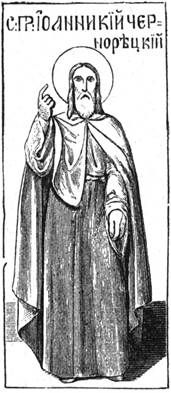
«Мы спустились к Ибру, переправились в брод через реку, и стали подыматься по густому лесу. Через полчаса открылась такая величественная масса скал, какую редко можно увидеть даже в Герцеговине, этом отечестве скал. Место это называется «Чёрная река». Красноватая масса гранита возвышается почти отвесно, представляя на верху то правильно окружённые очертания, то зубцы и острия. В этом граните находится церковь. К самой скале прилеплен ряд келий, которых наружная, выбеленная каменная стена с шестью маленькими окошечками, выдающаяся на ровной поверхности утёса, напоминает о гнёздах ласточек на доме: только нет карниза, поддерживающего это человеческое гнездо, а оно опирается на незаметном уступе скалы. Подле утёса, составляя с ним почти прямой угол, но не прикасаясь к нему, стоит другая гора, поросшая лесом, по которой ведёт тропинка. Против церкви она образует маленькую площадку; площадка соединяется с кельями узеньким деревянным мостом, ведущим к деревянной галерее, которой обнесён ряд келий. Сломайте мосток, и кельи с своей церковью отделены будут пропастью от целого мира. – Церковь, я сказал, в самом утёсе, только алтарь выходит наружу, полукруглой стеной, которая стоит в ряду келий, увенчанная небольшим крестом и украшенная двумя образами al fresco: св. архангела Михаила и св. Петра Коришскаго. – Вас ведут низким и совершенно тёмным проходом, который, кажется, образован самой природой, в пещеру довольно обширную и в одном месте весьма высокую. Вам показывают в стене пещеры небольшое ущелье: здесь сиживал святой отшельник Иоанникий; под этим углублением видна выемка, где он опирал ноги, с боку другая, где он клал локоть. Сесть можно только в самом тягостном положении, согнувшись и выставив голову вперёд. – В этой пещере, на этом кресле, прожил Иоанникий 70 лет. – Я попробовал сесть, и в одну минуту всё платье было мокро: через скалу непрестанно сочится вода, и поверхность пещеры никогда не высыхает. В другом месте показывают углубление, где вода скопляется и течёт струёй; это углубление, говорят, пустынник выкопал своими ногтями, чтобы иметь воду. – Из этой пещеры вы входите в другую побольше, где св. Иоанникий устроил церковь св. архангела Михаила. – Она также совершенно темна, также и сыра, как другая пещера356.
"We descended to the Ibar, forded the river, and began to climb through a dense forest. After half an hour there opened such a majestic mass of cliffs as one can rarely see even in Herzegovina, that homeland of cliffs. This place is called the 'Black River.' A reddish mass of granite rises almost sheer, presenting at the top now regularly enclosed outlines, now crenellations and points. In this granite is situated the church. To the very cliff is affixed a row of cells, whose outer, whitewashed stone wall with six little windows, protruding on the level surface of the crag, recalls the nests of swallows on a house: only there is no cornice supporting this human nest, but it rests on an imperceptible ledge of the rock. Beside the crag, forming with it almost a right angle, but not touching it, stands another mountain overgrown with forest, along which a path leads. Opposite the church it forms a small platform; the platform is connected with the cells by a narrow wooden bridge leading to a wooden gallery with which the row of cells is enclosed. Break the little bridge, and the cells with their church will be separated by an abyss from the whole world. — The church, I said, is in the very crag, only the altar protrudes outward, with a semicircular wall which stands in the row of cells, crowned with a small cross and adorned with two images al fresco: of the holy archangel Michael and of St. Peter of Korisha. — You are led through a low and completely dark passage, which seems to have been formed by nature itself, into a rather spacious cave, in one place quite high. They show you in the wall of the cave a small crevice: here the holy hermit Joannicius used to sit; beneath this hollow is visible a notch where he rested his feet, on the side another where he placed his elbow. One can sit only in the most burdensome position, bent over and thrusting the head forward. — In this cave, on this seat, Joannicius lived for 70 years. — I tried to sit, and in one minute all my clothing was wet: through the rock water continually oozes, and the surface of the cave never dries. In another place they show a hollow where water collects and flows in a stream; this hollow, they say, the hermit dug out with his own fingernails, in order to have water. — From this cave you enter another, larger one, where St. Joannicius built a church of the holy archangel Michael. — It is also completely dark, and also as damp as the other cave356.
По синаксарю Сербляка отшельник Иоанникий, родившийся в Зете, на поморье, в ранней молодости поселился на р. Ибре в Чернорецкой скале. Тут он подвизался как суровый постник, отказавшийся от себя. Некоторые иноки, увидав самоотверженную жизнь его, остались жить при нём с тем, чтобы безответно слушаться советов его. Отшельник, спустя некоторое время, предложил им устроить храм и монастырь. Благая мысль, при помощи Божией, приведена была в исполнение. – Когда распространился слух о новой жизни Иоанникия, то многие явились на скалу для духовных подвигов. Иоанникия стали хвалить даже в лицо. Это сильно беспокоило того, кто так любил смирение и тишину. Предав братию Господу и благодати Его, он удалился с любимой скалы. В недальней девицкой пустыне поселился он в пещере, при потоке холодной воды. И здесь мирно предал дух свой Господу, в конце XIII стол.357.
According to the synaxarion of the Serbljak, the hermit Joannicius, born in Zeta, on the seacoast, settled in early youth on the river Ibar in the Black River cliff. Here he struggled as a severe faster, having renounced himself. Certain monks, seeing his self-denying life, remained to live with him, so as to obey his counsels without question. The hermit, after some time, proposed to them to build a church and a monastery. The good thought, with God's help, was brought to fulfillment. — When the rumor of Joannicius's new life spread, many came to the cliff for spiritual struggles. Joannicius began to be praised even to his face. This greatly troubled him who so loved humility and stillness. Committing the brethren to the Lord and His grace, he withdrew from his beloved cliff. In the nearby Devich hermitage he settled in a cave, by a stream of cold water. And here he peacefully surrendered his spirit to the Lord, at the end of the XIII century357.
Мощи св. Иоанникия покоятся в монастыре девицком, который построен был Юрием Бранковичем (1427–1456 г.) в благодарность за исцеление дочери его.
The relics of St. Joannicius rest in the Devich monastery, which was built by George Brankovich (1427–1456) in gratitude for the healing of his daughter.
Сербская Церковь поёт преподобному: «Божественных послушав заповедей, в молчании пребыл еси через все житие свое и, быв в поношении в отечествии своем, питался еси желанием истинные славы».
The Serbian Church sings to the Venerable: "Having hearkened to the divine commandments, you abided in silence through all your life and, having been reproached in your fatherland, you were nourished by the desire for true glory."
«Желание Христовы стяжав, затворил еси чувства своя от всего тленнаго и мимотекущаго и подвигами души своея возшел еси на высоту, блаженне».
"Having acquired the desire for Christ, thou didst shut thy senses from all that is corruptible and fleeting, and by the labors of thy soul thou didst ascend to the height, O blessed one."
«Преподобне отче, гласа Евангелия Господня послушав, мир оставил еси, ни во чтоже вменив богатство и славу, и живый в уединении, всем взывал еси оттуду: возлюбите Бога и обрящете благодать, ничто же предпочтите любви, да егда приидет во славе Своей, обрящете упокоение со всеми святыми: ихже молитвами, Христе, сохрани и спаси души наша»358.
"O Venerable Father, having hearkened to the voice of the Lord's Gospel, you left the world, counting as nothing wealth and glory, and living in solitude, you cried out from thence to all: Love God and you will find grace; prefer nothing to love, that when He comes in His glory, you may find rest with all the saints. By their prayers, O Christ, preserve and save our souls"358.
Ркп. житие св. Стефана, описанное Епифанием, учеником преп. Сергия, в Синодальн. ркп. XVI в. № 420. 555, в минее м. Макария изд. в 4 ч. Памят. стар. Руск. лит.; сокращёние в ч.-минее апр. 26. Епифаний в предисловии пишет: „я убогий инок, движимый любовью, положил написать, в память будущим родам, кое что из доброго и чудного жития пр. отца нашего Стефана, епископа Перми, – о его рождении и детстве, о юности и первых подвигах иночества, о священстве и святительстве, до самого преставления. О всём том собирал я сведения там и здесь: об ином слышал от учеников его, – так узнал я о его учительстве и пастырском управлении; другое видел своими глазами или слышал от него, так как много раз беседовал с ним; прочее принял от старых людей, которых спрашивал о нём“. Повесть Епифания многословна, но не богата известиями о Пермских деяниях Стефана. Краткое житие 26 апр. в муз. Румянцева, стр. 603.
Manuscript life of St. Stephen, written by Epiphanius, disciple of the Venerable Sergius, in the Synodal manuscript of the XVI century, No. 420, 555, in the menaion of Metropolitan Macarius, published in 4 parts, Monuments of Ancient Russian Literature; an abridgement in the Chet'i-Minei for April 26. Epiphanius writes in the preface: "I, a poor monk, moved by love, have resolved to write, in memory for future generations, something of the good and wondrous life of our Venerable Father Stephen, Bishop of Perm — of his birth and childhood, of his youth and first monastic struggles, of his priesthood and hierarchal service, until his very repose. Concerning all this I gathered information here and there: of some things I heard from his disciples — thus I learned of his teaching and pastoral governance; other things I saw with my own eyes or heard from him, since I conversed with him many times; the rest I received from old men whom I questioned about him." The account of Epiphanius is verbose, but not rich in information about Stephen's Permian deeds. A brief life for April 26 in the Rumyantsev Museum, p. 603.
Епифаний: „и добре обдержание и помысл, еже идти в Пермьскую землю и учити ее... еже издавна то у него здумано бяше“. – На образе св. Стефана XVII в., стоящем в иконостасе кремлевской Спасской церкви, читается надпись: „св. Стефан епископ, родом бе великия России града Устюга, сын клирика, соборные церкви св. Богородицы, иже на Устюге, именем Симеона, и матери Марии, и первый епископ Перми бысть, иже научи вере Христове и крести, и грамоту по их языку состави в л. 6880 (1372 г.). Преставися в лето 6904; тело же его положено во святом храме сём“ (Снегирева памятники 127). В 1372 г. Стефан находился ещё в Ростове; и след. ещё в Ростове составил он Зырянскую азбуку. Епифаний о времени перевода книг: „яко мню от создания миру в л. 6883 (1375)“. – Но он же говорит, что Стефан занимался переводом книг и между Зырянами. – О греческом языке собр. л. 6, 128. 129. Епифаний: „желая же большего разума, яко образом любомудрия, изучися и Греческой грамоте и книги Греческие извыче и добре почиташе я и присно имеяше я у себе; и бяше умея глаголати тремя языки, и такоже и грамоты три умеяше, яже есть Русски, Гречески и Пермски“.
Epiphanius: "and well did he hold the intention and thought, to go to the Permian land and teach it... for long had this been devised by him." — On an icon of St. Stephen of the XVII century, standing in the iconostasis of the Kremlin Church of the Savior, is read the inscription: "St. Stephen, bishop, by birth of Great Russia, of the city of Ustiug, son of a cleric of the cathedral church of the Most Holy Theotokos at Ustiug, by name Simeon, and of mother Maria, and was the first bishop of Perm, who taught the faith of Christ and baptized, and composed a script in their language in the year 6880 (1372). He reposed in the year 6904; his body was laid in this holy church" (Snegirev's Monuments, 127). In 1372 Stephen was still in Rostov; and consequently, it was still in Rostov that he composed the Zyrian alphabet. Epiphanius on the time of the translation of the books: "I think, from the creation of the world, in the year 6883 (1375)." — But he also says that Stephen was occupied with translating books among the Zyrians as well. — On the Greek language, Collected Chronicles 6, 128, 129. Epiphanius: "Desiring greater understanding, as a form of wisdom, he learned also the Greek script and became versed in Greek books and read them well and always kept them with him; and he was able to speak three languages, and likewise knew three scripts, namely Russian, Greek, and Permian."
Епифаний. Почтенный поклонник „святыни Ростова великого“ (М. 1860 г.) признаёт Парфения за одно лицо с еписк. Петром, на том основании, что „в степенной книге упоминаются три епископа Ростовские, посвящённые св. Алексием: Игнатий, Пётр и Арсений”. Но: а) список лиц, посвящённых св. Алексием, даже в новой редакции, не полон (см. Русские святые февр. 12); б) Парфений поставляется преемником Петра и предшественником Арсения в списке Ростов. архипастырей XV в. (Собр. л. VI, 126. VIII, 69); в) Пётр скончался в 1365 г., а Арсений возведён на кафедру в 1374 г. Ужели же после 1365 до 1374 г. вовсе не было архипастыря в Ростове?
Epiphanius. The venerable devotee of the "sanctity of great Rostov" (Moscow, 1860) acknowledges Parthenius as the same person as Bishop Peter, on the grounds that "in the Book of Degrees, three bishops of Rostov are mentioned, consecrated by St. Alexis: Ignatius, Peter, and Arsenius." But: a) the list of persons consecrated by St. Alexis, even in the new edition, is incomplete (see Russian Saints, February 12); b) Parthenius is placed as the successor of Peter and the predecessor of Arsenius in the list of Rostov archpastors of the 15th century (Collection of Chronicles 6, 126; 8, 69); c) Peter reposed in 1365, while Arsenius was elevated to the see in 1374. Could it truly be that from 1365 to 1374 there was no archpastor at all in Rostov?
Епифаний. В степ. кн. 1, 524 сказано, что Стефан поставлен в пресвитера Герасимом епископом Коломенским. Тоже в прологе и в летоп. собр. л. VIII, 69. VI, 129.
Epiphanius. In the Book of Degrees 1, 524, it is said that Stephen was ordained presbyter by Gerasimus, Bishop of Kolomna. The same is found in the Prologue and in the chronicles, Collected Chronicles 8, 69; 6, 129.
Епифаний: „суть же у них стари кумиры к ним же издалеча прохожаху и от дальних мест поминки приношаху; – а за три дни и за четыри и за неделю со всяцем тщаньем приносы и поминки присылаху“. М. Симон в 1501 г. писал в Пермь: „а кумиром бы есте не служили, ни треб их не принимали, ни Воипелю болвану не молитесь по древнему обычаю” (Ист. ак. 1. № 112). Как Герберштейн (*Rer. Мозсоѵ. р. 56), так *Гванини (Moscoviae descriptio р. 15. ed. Starzevscy), говорят, что идол золотой бабы, с сыном её на коленях, и с внуком, около ног, стоял на устье Оби, в обдорской стране; последний прибавляет, что ему поклонялись, кроме Обдорцев, Югры, Вогуличи и другие соседние народы. В 1846 г. на левом берегу р. Туй, впадающей в р. Каму, в городище, найдены оловянный истукан, серебряное блюдо, чаша с татарской надписью и монеты Сассанидов 852–1276 г. Ж. м. внутр. дел 1858 г., ч. 29, отд. 3, стр. 49. 55.
Epiphanius: "They have ancient idols, to which they came from afar and brought offerings from distant places; and for three days, and four, and a week, they sent gifts and offerings with all diligence." Metropolitan Simon in 1501 wrote to Perm: "Do not serve idols, nor accept their sacrifices, nor pray to the idol Voipel according to the ancient custom" (Historical Acts 1, No. 112). Both Herberstein (Rer. Moscov. p. 56) and Guagnini (Moscoviae descriptio p. 15, ed. Starzevsky) say that the idol of the Golden Woman, with her son on her knees and a grandson at her feet, stood at the mouth of the Ob, in the Obdorian land; the latter adds that it was worshipped not only by the Obdorians, but also by the Yugra, Voguls, and other neighboring peoples. In 1846, on the left bank of the Tuya River, which flows into the Kama River, at an ancient settlement, a tin idol, a silver dish, a cup with a Tatar inscription, and Sassanid coins from 852–1276 were found. Journal of the Ministry of Internal Affairs, 1858, part 29, section 3, pp. 49, 55.
Собр. лет. 5, 250. „Епископ Стефан, Божий человек, живяше посреди неверных человек, – молящихся идолом, огню, воде, каменю и золотой бабе и кудесником и волхвом и древью“. В Никои, л. 4, 267 прибавлено: „солнцу, волам, козам“. Сл. Вест. геогр. общ. за 1855 г. 4. 167–190.
Collection of Chronicles 5, 250. "Bishop Stephen, a man of God, lived among unbelieving people—who prayed to idols, to fire, to water, to stone, and to the Golden Woman, and to sorcerers and magicians and trees." In the Nikon Chronicle 4, 267, it is added: "to the sun, to oxen, to goats." See Bulletin of the Geographical Society for 1855, 4, 167–190.
Надеждин в Энциклоп. лекс. XII, 299. Жители по р. Вычегде от устья и за Яренск давно уже обрусели (там же, стр. 250); по Зырянские названия сёл показывают собой, что здесь живут бывшие Зыряне. Ныне Зырянский язык начинается от дер. Менюги в 20 вер. выше Яренска.
Nadezhdin in the Encyclopedic Lexicon 12, 299. The inhabitants along the Vychegda River from its mouth and beyond Yarensk have long since become Russified (ibid., p. 250); but the Zyrian names of the villages show that former Zyrians live here. Today the Zyrian language begins from the village of Menyuga, 20 versts above Yarensk.
Епифаний: „всякому хотящему шествовати в Пермскую землю удобствен путь есть от града Устьвыма р. Вычегдой вверх, дóндеже снидет в самую Пермь“. По книге „большого чертежа“ при впадении Выми, называемой здесь р. Птицей, стоял гор. Пермь. „А по р. Вычегде с верху с правые стороны, град старая Пермь, от Усть-вычегды, 140 вёрст. Река Птица пала в р. Вычегду, с вышния страны под градом, под старою Пермью“. Изд. 1846 г., стр. 191. 193.
Epiphanius: "For anyone wishing to journey to the Permian land, the most convenient route is from the town of Ustvym up the Vychegda River, until one comes into Perm itself." According to the "Book of the Great Map," at the confluence of the Vym, here called the Ptitsa River, stood the town of Perm. "And along the Vychegda River, on the right side from the upper reaches, the town of Old Perm, 140 versts from Ust-Vychegda. The Ptitsa River flows into the Vychegda River, from the upper side, under the town of Old Perm." Edition of 1846, pp. 191, 193.
Четь-минея; повесть об Устьвымском Архангельском монастыре (Волог. вед. за 1850 г. № 9). В последней рассказывается ещё о построении укреплений Зырянами, по воле Стефана. Это согласно с местностью и обстоятельствами края. Но рассказ, будто четыре раза поражаемы были слепотой непокорные Зыряне и потом были исцеляемы, едва ли не вымысел позднего Зырянина. Современник Епифаний не говорит о том ни слова.
Chetya-Minea; the tale of the Ustvym Archangel Monastery (Vologda Gazette for 1850, No. 9). The latter also recounts the building of fortifications by the Zyrians, at Stephen's command. This is consistent with the locality and circumstances of the region. But the story that the disobedient Zyrians were struck with blindness four times and then healed is hardly anything other than the invention of a later Zyrian. The contemporary Epiphanius says not a word about it.
Так говорят по преданию жители Алтыма. – Абрамов в Ж. М. просв. за декабрь. Хвалитная стихира св. Стефану: „суетное буесловие жестокаго и злобнаго пан-сотника отразил ты и прогнал его, как волхва, от Христова стада, а народ Божий научал Апостольски. Потому ныне собравшись любомудренно, почитаем память твою, святитель“.
So say the inhabitants of Altym by tradition. — Abramov in the Journal of the Ministry of Public Education for December. The laudatory sticheron to St. Stephen: "You repelled the vain babbling of the cruel and malicious pan-sotnik and drove him away, as a sorcerer, from Christ's flock, and taught the people of God in apostolic manner. Therefore, now gathered wisely, we honor your memory, O hierarch."
Собр. л. 6. 129. Той же (Стефан) идолы сокруши, и крести тамо, еще же в попех, люди многия, яко до тысящи“. Тоже Степ. кн. 1,524. 525. У Епифания число обращённых – 700.
Collection of Chronicles 6, 129. "The same (Stephen) destroyed idols and baptized there, even as a priest, many people, up to a thousand." Likewise the Book of Degrees 1, 524, 525. In Epiphanius, the number of converts is 700.
Епифаний: „мнози же, паче в Москве, реша: сей есть в истину философ; новый той бысть Константин, нарицаемый Кирилл, иже сотвори грамоту Словенскую в 38 слов (букв): такоже исей сложил числом четыре между двемя десятьма (24) слов (букв), подобъяся Греческие письмени“.
Epiphanius: "Many, especially in Moscow, said: 'This is truly a philosopher; he is a new Constantine, called Cyril, who created the Slavonic alphabet of 38 letters; likewise this one composed a number of twenty-four letters, imitating the Greek script.'"
Собр. л. 5, 239. 6, 129. Ист. иер. 1, 395. По Никон. л. 4, 140. В одном месяце посвящены были – в Переяславле Савва для Сарая, в Костроме Михаил для Смоленска, во Владимире Стефан для Перми. По житию Стефана, „по Тахтамышеве рати (1382 г.) на другую зиму, егда Михаил епископ Смоленский поставлен бысть, тогда и сей (Стефан) с ним в едино время поставлени быша“. – Сл. собр. л. III, 92. 133. 232.
Collection of Chronicles 5, 239; 6, 129. History of the Hierarchy 1, 395. According to the Nikon Chronicle 4, 140. In one month were consecrated: in Pereyaslavl, Sabbas for Sarai; in Kostroma, Michael for Smolensk; in Vladimir, Stephen for Perm. According to the Life of Stephen, "after Tokhtamysh's raid (1382), the following winter, when Michael, Bishop of Smolensk, was consecrated, then this one (Stephen) was consecrated with him at the same time." — See Collection of Chronicles 3, 92, 133, 232.
Епифаний: „наипаче же князю зело за честь поставление его, бе бо ему знаем зело и любляше его издавна“. На содержание кафедры в. князь отдал Устьвымскую волость с её пашнями и лугами, и Устьвым с тех пор назывался в грамотах „городом владычним“. Вологод. Ведом. за 1850 г. № 6.
Epiphanius: "The consecration was especially a great honor for the prince, for he knew him very well and had long loved him." For the support of the see, the Grand Prince gave the Ustvym volost with its fields and meadows, and from then on Ustvym was called in documents "the vladyka's town." Vologda Gazette for 1850, No. 6.
Епифаний, говоря о построении сего храма, пишет: „идеже последи создана бысть обитель его большая, еже потом и епископия его наречена бысть“.
Epiphanius, speaking of the building of this church, writes: "where afterwards his great monastery was built, which later was also called his episcopal see."
Четь-минея апр. 26. Епифаний: „колькраты многа лодьями жита привозя от Вологды в Пермь и сия вся истрсаше не на ино что, еже на свой промысл, но точью же на потребу странным и приходящим и прочим всем требующим“.
Chetya-Minea, April 26. Epiphanius: "How many times did he bring grain by boat from Vologda to Perm, and all this he spent not on his own needs, but only for the needs of strangers and visitors and all others who were in want."
Об Устьвымской Архангельской ист. иер. 6, 566–580. Яренская Архангельская обитель находилась на месте нынешней Яренской Покровской церкви. Вологод. вед. за 1850 г. № 9.
On the Ustvym Archangel Monastery, History of the Hierarchy 6, 566–580. The Yarensk Archangel Monastery was located on the site of the present Yarensk Church of the Protection. Vologda Gazette for 1850, No. 9.
Ист. иер. 6, 649. 650. Две древние иконы преп. Димитрия находятся в часовне над гробницей его. Словарь святых, стр. 86. 87. СПб. 1836 года.
History of the Hierarchy 6, 649, 650. Two ancient icons of the Venerable Demetrius are in the chapel above his tomb. Dictionary of Saints, pp. 86, 87. St. Petersburg, 1836.
Троицкий монастырь, в 600 вер. от Устьсысольска (Ист. Иер. 5, 560), по всей вероятности, основан при св. Ионе. – Что же касается до монастырей Коряжемского и Сойгинского, то их напрасно включают в круг подвигов св. Стефана (Энциклоп. лексик. XII, 249. 417); – они основались гораздо позже св. Стефана. См. о пр. Логине и Симоне.
The Trinity Monastery, 600 versts from Ustsysolsk (History of the Hierarchy 5, 560), was in all probability founded under St. Jonah. — As for the Koryazhma and Soyga monasteries, they are wrongly included in the sphere of St. Stephen's labors (Encyclopedic Lexicon 12, 249, 417); they were founded much later than St. Stephen. See on the Venerable Longinus and Simon.
Собр. л. 6, 128. 129. Степ. кн. 1, 523–525. Никон. л. 4, 267. 268. Сказ. ркп. жития краткого в Муз. Румяпц., стр. 603.
Collection of Chronicles 6, 128, 129. Book of Degrees 1, 523–525. Nikon Chronicle 4, 267, 268. Tale of the manuscript short Life in the Rumyantsev Museum, p. 603.
Ист. Акт. 1. № 169. По царской грамоте июля 2 1601 г. в Верхотурье послан из Москвы „образ Стефана Пермского чудотворца” – Врем. Общ. Ист. кн. 25 смесь стр. 8.
Historical Acts 1, No. 169. By a royal charter of July 2, 1601, an "icon of Stephen the Wonderworker of Perm" was sent from Moscow to Verkhoturye — Proceedings of the Society of History, book 25, miscellany, p. 8.
Спис. Румянц. Муз., стр. 595. Царского № 563. В минее Макария житие его с надписью: „апр. 26 память иже во святых отца нашего Стефана, епископа и учителя Перми”. Толстого 1. № 292. 306.
List of the Rumyantsev Museum, p. 595. Tsarsky No. 563. In the Menaion of Macarius, his Life is inscribed: "April 26, the memory of our father among the saints Stephen, Bishop and Teacher of Perm." Tolstoy 1, Nos. 292, 306.
Сборник служб святых Русских 1698 г. Служба св. Стефану, писанная Пахомием, по благословению владыки Филофея (1472–1501 г.) помещена и в печ. минее, только без акростиха. – Последний у Востокова в Музее стр. 595.
Collection of Services to Russian Saints, 1698. The service to St. Stephen, written by Pachomius, with the blessing of Vladyka Philotheus (1472–1501), is also included in the printed Menaion, only without the acrostic. — The latter is in Vostokov's Museum, p. 595.
Песни литургии с прибавлением заупокойных Евангелия и Апостола – в 3 т. записок Лепехина. Другой список литургии – в Библ. Общ. Ист. № 99.
The hymns of the Liturgy with the addition of the funeral Gospel and Apostle — in volume 3 of Lepekhin's Notes. Another copy of the Liturgy — in the Library of the Society of History, No. 99.
В Фризовой летописи гор. Устюга сказано: „по закрытии Устьвымской кафедры большая часть книг и церковных утварей отправлена в Москву. Остатки же как книг, так древних Зырянских идолов и других примечательных редкостей увезены в 1779 г. генерал-губернатором Мельгуновым“. Северн. Архив 1822 г. 2. 327. Где последние? В описи Хутыня монаст. 1642 г. „Книга сборник, в полдесть, Стефана Пермского“ (Зап. Археол. Общ. IX, 520). Теми же словами эта книга означена и в описи 1653 г. (Ундольского опись книгам, стр. 32). – Что это такое? Епифаниево житие св. Стефана? Или какое-либо Стефаново собрание сочинений?
In the Fries Chronicle of the town of Ustyug it is said: "After the closure of the Ustvym see, the greater part of the books and church utensils were sent to Moscow. The remnants, both of books and of ancient Zyrian idols and other notable rarities, were taken away in 1779 by Governor-General Melgunov." Northern Archive, 1822, 2, 327. Where are the latter? In the inventory of the Khutyn Monastery for 1642: "A book, a miscellany, in quarto, of Stephen of Perm" (Notes of the Archaeological Society 9, 520). The same book is also listed in the inventory of 1653 (Undolsky's Inventory of Books, p. 32). — What is this? Epiphanius's Life of St. Stephen? Or some collection of Stephen's works?
Посох с изображениями и с описанием жизни святителя – в Пермском кафедральном соборе. Обкладка с надписями устроена без сомнения после св. Стефана, потому что последняя надпись говорит: „они невернии взрадовася о смерти“. Но сам посох – собственность святителя.
A staff with images and a description of the hierarch's life — in the Perm Cathedral. The mounting with inscriptions was undoubtedly made after St. Stephen, because the last inscription says: "the unbelievers rejoiced at his death." But the staff itself is the property of the hierarch.
Икона Спасителя чудотворная в Иртовской церкви, в 7 вер. от Яренска. Икона свят. Николая, также чудотворная, – в Чердынском соборе. Пермск. ведом. 1347 г. № 14.
A wonderworking icon of the Savior in the Irtov Church, 7 versts from Yarensk. An icon of St. Nicholas, also wonderworking, — in the Cherdyn Cathedral. Perm Gazette, 1347, No. 14.
Гильфердинг (в. Зап. Геогр. Общ. XIII, 161) полагает, что преп. Иоанникий жил при деспоте Юрии Бранковиче 1427–1456 г. Но это – ошибка, которая допущена и в сербляке. По месяцеслову 1329 г. видно, что преподобный почил прежде 1320 г. Путешественник и сербляк введены в ошибку известием о том, что св. Иоанникием исцелена была дочь Бранковича (Ibid., стр. 289. 290). Это исцеление – дело загробной деятельности святого.
Hilferding (in the Notes of the Geographical Society 13, 161) supposes that the Venerable Joannicius lived under the despot George Branković, 1427–1456. But this is an error, which is also admitted in the Serbjak. According to the menologion of 1329, it is evident that the Venerable One reposed before 1320. The traveler and the Serbjak were led into error by the report that St. Joannicius healed the daughter of Branković (ibid., pp. 289, 290). This healing is a work of the saint's posthumous activity.